The phrase “Apple scale” gets thrown around casually in supply chain leaks, but it has a very specific meaning inside Cupertino’s hardware orbit. It is not about whether a device exists, or even whether it works, but whether an entire ecosystem of suppliers can support millions of units with Apple-level tolerances, yields, margins, and timelines. For AR glasses, that distinction is the line between an impressive lab demo and a product that can realistically ship to consumers.
This matters because Apple has been building AR prototypes for well over a decade, and has quietly run pilot programs multiple times. What’s different in the current rumor cycle is not that components exist, but that suppliers are reportedly being asked to think in volumes, capex commitments, and multi-year roadmaps that only make sense if Apple is preparing to move beyond experimentation. Understanding where those signals sit on the prototype-to-production spectrum is key to judging whether 2026 talk is credible or premature.
What follows is a breakdown of how Apple typically moves from concept to mass market, and which specific supply chain behaviors suggest a product is crossing that threshold rather than looping through another internal trial.
Prototype Scale: Proof of Concept Without Commercial Consequences
At the prototype stage, Apple’s supply chain footprint is intentionally small and flexible. Component orders are measured in the thousands, sometimes tens of thousands, and are often split across multiple vendors to compare performance rather than secure capacity. Yields can be poor, costs can be irrational, and parts can be hand-selected or manually calibrated.
🏆 #1 Best Overall

- World’s First HDR10 AR Display – Experience over 10 billion colors and ultra-deep contrast on a massive 201-inch virtual display. Compared to standard LCD screens, HDR10 delivers brighter highlights and richer blacks, making movies, Netflix streaming, and gaming more immersive at home, in bed, or on flights.
- Vision 4000 Chip with AI SDR-to-HDR Upscaling – Co-developed with Pixelworks, this processor enhances color, sharpness, and motion clarity in real time. Enjoy smooth 120Hz visuals for PS5, Steam Deck, Switch 2, and mobile gaming without lag or motion blur.
- 3D Movie Glasses for Immersive Viewing – Watch native 3D films or convert 2D videos into 3D with AI depth enhancement. Transform any room into a private cinema experience with theater-like depth and realism—perfect for movie nights or travel entertainment.
- Audio by Bang & Olufsen – Four precision speakers deliver immersive 360° spatial sound for movies and gaming. Use whisper mode for private listening in public spaces. Optional Sound Tube accessory boosts volume up to 15dB (sold separately).
- Universal USB-C Compatibility – No WiFi or Apps Required. Connect directly to iPhone 17/16/15 (USB-C models), Android phones, MacBook, iPad, Steam Deck, and PlayStation consoles. Designed without internal power storage for a lighter frame and true plug-and-play simplicity—instant setup wherever you go.
This is where Apple’s early AR glasses efforts lived for years. Micro-displays with limited brightness consistency, waveguides with visible distortion at the edges, and custom silicon running far outside normal power envelopes are all acceptable at this phase. Comfort, battery life, and durability are evaluated qualitatively, not against mass-market expectations.
Crucially, prototype scale does not require suppliers to retool factories, lock in long-term material contracts, or prioritize Apple over other customers. It is a signal of intent to explore, not to ship.
Pilot Runs: When Apple Tests Manufacturability, Not Just Technology
Pilot production is where many Apple rumors originate, and where confusion often sets in. At this stage, Apple is no longer asking “can this work?” but “can this be made repeatedly, predictably, and within our quality envelope?” Volumes increase into the low six figures, and assembly partners begin running near-final manufacturing processes.
For AR glasses, pilot signals would include waveguide suppliers refining coating uniformity at higher throughput, micro-display makers tuning brightness and efficiency trade-offs for sustained wear, and battery partners testing ultra-thin cells for real-world cycle life rather than lab benchmarks. This is also where comfort and wearability constraints start to bite, because even small weight imbalances or heat hotspots become unacceptable when multiplied across thousands of users.
Apple has run pilots for AR hardware before without committing to launch. The original Vision Pro itself went through extended pilot phases as Apple wrestled with yield, weight, and cost issues. Pilot activity alone is meaningful, but not decisive.
“Apple Scale”: Capacity Commitments That Are Hard to Walk Back
True Apple scale begins when suppliers are asked to invest ahead of confirmed revenue. This includes dedicated production lines, long-term equipment depreciation schedules, and material procurement sized for millions of units per year. For most suppliers, this level of commitment only happens when Apple has internally aligned on a launch window.
In the AR glasses context, this would show up as optics partners expanding waveguide capacity beyond niche enterprise demand, micro-display vendors allocating a meaningful share of next-generation fabs, and silicon teams finalizing low-power SoCs that trade peak performance for all-day efficiency. Battery suppliers would need to support not just thin form factors, but consistent energy density at scale, with safety margins appropriate for face-worn devices.
Assembly partners matter just as much. Lightweight, glasses-style wearables demand tolerances closer to luxury eyewear than consumer electronics, while still meeting Apple’s durability standards for daily use. Scaling that kind of hybrid manufacturing is non-trivial and not something partners do speculatively.
Separating Confirmed Signals From Informed Interpretation
What we can say with confidence is that Apple has the technical capability to build AR glasses today, just as it did years ago. What changes the conversation is whether suppliers are being pushed to think in terms of sustained output, not optional experimentation. Reports of capacity planning, equipment purchases, or exclusivity agreements carry far more weight than sightings of components or engineering samples.
However, Apple is also known for deliberately over-preparing supply chains, even for products that slip or get re-scoped. Vision Pro’s long gestation is a reminder that scale readiness does not guarantee timing. It does, however, narrow the window and raise the cost of cancellation.
Why This Threshold Matters for Wearables Beyond Glasses
If Apple truly commits to AR glasses at scale, the implications ripple far beyond a single product category. Supply chain investments in micro-displays, low-power silicon, and lightweight materials directly benefit future wearables, including smartwatches, health-focused devices, and hybrid accessories that blur traditional categories.
For consumers and industry watchers, “Apple scale” is the clearest indicator that AR glasses are being treated not as a moonshot, but as a platform. It suggests a product designed for daily comfort, reliable battery life, seamless software integration, and long-term ecosystem support, rather than a limited showcase. That distinction is why the current supply chain chatter deserves closer scrutiny than past cycles, even with Apple’s well-earned reputation for patience.
The Supply Chain Signals That Actually Count: What Analysts Watch When Apple Is Serious
Once rumors reach the point where suppliers are being asked to think in years rather than quarters, the conversation changes. At that stage, analysts stop caring about leaked renders or one-off component sightings and start tracking whether Apple is quietly forcing its ecosystem to behave as if a launch is inevitable. That shift is subtle, but it leaves fingerprints across optics, silicon, power, and manufacturing in ways that are hard to fake.
Optics: Yield, Not Breakthroughs, Is the Real Tell
For AR glasses, the optics stack is still the hardest constraint, not because the technology is unknown, but because it is unforgiving at scale. Waveguides, diffractive elements, and prescription-compatible lens assemblies all suffer from yield challenges that explode costs if volumes are low or tolerances drift. When suppliers invest in yield-improvement tooling rather than pure R&D, it suggests expectations of millions of units, not thousands.
Recent supply chain chatter has focused less on new optical architectures and more on process stability, including tighter control over refractive uniformity and coatings durability for daily wear. That aligns with a product intended to be worn like glasses all day, where comfort, weight balance, and long-term clarity matter as much as raw field of view. Apple does not lock in this kind of optical maturity unless it believes the form factor is close to consumer-ready.
Micro-Displays: Capacity Reservations Trump Resolution Leaks
Display rumors are often noisy, but capacity planning is not. Whether Apple ultimately uses microLED, advanced OLED-on-silicon, or a hybrid approach, the key signal is suppliers being asked to reserve production lines well ahead of final specs. That typically happens 18 to 24 months before a mass-market launch, especially when display sizes are non-standard and yields are still improving.
What stands out in current reports is not a leap in resolution, but discussions around sustained output and binning strategies. That implies Apple is optimizing for consistency, battery efficiency, and thermal behavior rather than headline specs. For face-worn devices, stable brightness and low power draw directly translate into real-world wearability, fewer heat complaints, and acceptable battery life across a full day, all priorities Apple historically refuses to compromise.
Custom Silicon: Power Budgets Reveal Intentions
Apple’s silicon roadmap is often misread through performance metrics alone, but AR glasses are defined by power envelopes, not peak throughput. When analysts hear about ultra-low-power coprocessors, sensor fusion blocks, or display drivers being tuned for always-on use, it suggests a product designed for continuous wear rather than short sessions. That is a fundamentally different goal than Vision Pro.
The most credible signal here is not a brand-new chip, but derivatives of existing architectures optimized for efficiency and thermal silence. That mirrors Apple Watch’s evolution, where comfort, battery longevity, and predictable performance mattered more than raw speed. If AR glasses are following that path, it reinforces the idea of a 2026-class product meant to disappear on the face, not announce itself.
Batteries and Materials: Incremental Gains, Major Consequences
Battery rumors rarely excite consumers, but they matter enormously to analysts. For AR glasses, even small improvements in energy density or packaging can determine whether weight stays under a psychologically important threshold. Reports of suppliers being pushed to deliver thinner cells with tighter dimensional tolerances are consistent with Apple aiming for eyewear-like comfort rather than head-mounted compromise.
Materials choices tell a similar story. Lightweight alloys, advanced polymers, and surface finishes that resist skin oils and micro-scratches are not glamorous, but they are essential for daily usability. When these materials move from prototype quantities to contracted volumes, it suggests Apple is past the concept phase and into refinement for long-term wear, durability, and perceived quality.
Manufacturing Partners: When Assembly Lines Stop Being Optional
Perhaps the strongest signal of all is when manufacturing partners are asked to commit dedicated capacity. Glasses-style AR devices sit at an uncomfortable intersection between consumer electronics and luxury eyewear, demanding precision assembly, optical alignment, and cosmetic finishing at scale. Few partners can do this, and fewer still will invest without confidence in sustained orders.
Analysts pay close attention to whether partners are hiring specialized labor, installing new metrology equipment, or reconfiguring lines specifically for face-worn devices. These moves are expensive and hard to reverse, which is why they tend to correlate closely with real launch windows. For Apple, this is where intent becomes operational reality.
How This Cycle Compares to Past Apple AR and Wearable Signals
Compared to earlier AR and VR rumor cycles, the current one is notably less about experimentation and more about optimization. Vision Pro’s supply chain buildup was visible, but it was clearly scoped for limited volumes and premium positioning. The emerging AR glasses signals look closer to Apple Watch’s early ramp, where suppliers were coached toward reliability, comfort, and repeatability.
That does not guarantee a 2026 launch, but it does make a prolonged delay more costly. Apple has walked away from ambitious hardware before, but it rarely pushes multiple suppliers toward “Apple scale” unless the product fits a long-term platform strategy. This is why analysts are treating the current supply chain moves with more seriousness than previous AR whispers.
Why These Signals Matter Beyond AR Glasses
Even if timelines shift, the investments being made do not exist in isolation. Advances in low-power silicon, micro-displays, battery packaging, and lightweight materials inevitably flow into other wearables. Smartwatches benefit from display efficiency and sensor fusion, while future health devices gain from miniaturized power systems and comfort-focused materials.
For consumers watching the Apple ecosystem, these supply chain signals hint at a broader recalibration of what wearables can be. They point toward devices designed for all-day comfort, seamless software integration, and quiet reliability, rather than novelty. That is the deeper reason analysts care less about flashy leaks and more about whether suppliers are being asked to build like Apple means it.
Optics and Displays: Micro‑OLED, Waveguides, and the Quiet Capacity Build-Out
If earlier sections traced how intent becomes operational reality, optics are where that reality gets expensive fast. Displays and waveguides are not modular components Apple can casually source late in the cycle. They demand long lead times, yield learning, and supplier commitment well before a product is publicly acknowledged.
What makes the current rumor wave notable is not a single breakthrough claim, but a pattern of parallel investments across micro‑OLED capacity, waveguide processing, and optical metrology. Individually, each move could be dismissed as speculative. Taken together, they resemble the early scaffolding of an Apple-scale display ecosystem.
Micro‑OLED: From Vision Pro Volumes to Wearable Economics
Micro‑OLED is the obvious starting point, because Apple has already validated it in Vision Pro. Sony’s high‑resolution micro‑OLED panels proved the visual ceiling Apple wants, but they also exposed the economic problem: yields, costs, and power draw that only make sense at low volume and high price.
Recent supply chain chatter points to a shift away from boutique production toward capacity that can support millions of units annually. This includes new backplane processes, tighter defect tolerances, and expanded driver IC integration to reduce power and thickness. Those are not Vision Pro optimizations; they are face‑worn, all‑day wearable requirements.
Crucially, this does not imply Apple will simply shrink Vision Pro displays. AR glasses demand lower brightness than VR, different pixel density tradeoffs, and extreme power efficiency to protect battery life and thermal comfort. Suppliers investing in these variants are responding to specific briefs, not generic display roadmaps.
Waveguides: The Real Bottleneck Apple Cannot Ignore
If micro‑OLED sets image quality, waveguides determine whether AR glasses are viable at all. Unlike displays, waveguides have no mature, high‑yield consumer electronics precedent at scale. Every major approach, whether diffractive, reflective, or hybrid, carries compromises in brightness, color uniformity, eye box, and manufacturability.
What stands out in current reports is not a sudden technical win, but quiet spending on tooling and inspection. New lithography steps, tighter bonding processes, and expanded optical test capacity suggest suppliers are being asked to improve consistency, not just demonstrate prototypes. That kind of work is slow, unglamorous, and deeply tied to production timelines.
Rank #2

- Giant Virtual Screen – Immersive Theater Anywhere: Step into a breathtaking virtual screen up to 500 inches, transforming movies, games, and apps into larger‑than‑life experiences. Whether you’re commuting, flying, or unwinding at home, your personal cinema travels with you—bringing immersive entertainment wherever life goes.
- Premium Display Quality – Smooth, Sharp, and True-to-Life: XREAL 1S delivers ultra‑smooth viewing with a 120Hz refresh rate in 3DoF mode and a 90Hz global refresh that eliminates flicker and blur. Every unit is individually color‑tuned for precise, natural hues. The redesigned optical engine boosts clarity by 9%, delivering crisp detail from center to edge. Advanced optical alignment ensures each image point locks perfectly to your eye, keeping visuals sharp, vivid, and lifelike.
- Spatial Viewing Modes – Work, Watch, and Play on Your Terms: Shape your environment with XREAL 1S. Effortlessly switch between 0DoF follow mode, 3DoF anchor mode, Ultrawide Mode (32:9 or 21:9), Real 3D Mode, and Side-View Mode — ideal for both deep focus and entertainment. Pair with XREAL Eye to unlock 6DoF spatial anchoring, allowing for total freedom of movement while your screen stays pinned.
- Native 3DoF Spatial Screen – Plug & Play Freedom: XREAL 1S brings your AR experience to life with native 3DoF spatial viewing powered by the X1 chip. No apps, no setup — simply connect to any USB‑C DP‑enabled device and step straight into expansive spatial content. With rock‑solid stability and smooth head tracking, every session feels natural and comfortable, free from motion sickness and distractions, keeping you fully immersed.
- REAL 3D – Instant Spatial Depth for Everything You Watch: XREAL 1S debuts the world’s first on‑glasses REAL 3D spatial technology, instantly transforming all your content—from games and movies to apps and photos—into true 3D with a single switch. Experience richer depth and lifelike visuals across everything you watch or play, supported at up to 30fps with just 90–100ms latency for smooth, natural viewing.
Apple has historically been ruthless about rejecting components that cannot scale predictably. For waveguide partners, the signal appears to be clear: prove you can hit uniformity, comfort, and durability targets repeatedly, or you will not be part of the platform. That pressure alone narrows the field to companies willing to bet heavily on Apple alignment.
Yield, Metrology, and the Cost of All‑Day Comfort
One underappreciated aspect of optics scaling is metrology. Measuring micro‑OLED uniformity, waveguide distortion, and optical alignment at volume requires specialized equipment and trained operators. Several suppliers have reportedly expanded optical inspection lines rather than raw output, a move that only makes sense if yield improvement is a gating factor.
For AR glasses, this matters directly to comfort and wearability. Poor yield often translates into heavier optical stacks, thicker housings, or aggressive binning that drives up cost. Apple’s historical focus on balance, weight distribution, and long‑term comfort suggests it would rather delay than ship optics that compromise daily usability.
This mirrors early Apple Watch development, where display lamination and cover glass yields quietly dictated case thickness and curvature. The difference now is that any optical misstep sits directly in front of the user’s eyes, magnifying its impact.
Why “Apple Scale” Optics Signal More Than Experimentation
Scaling optics to Apple volumes is not something suppliers do on hope alone. Tooling amortization, cleanroom expansion, and process R&D lock partners into multi‑year commitments. These are the kinds of investments that become painful if a program is canceled or indefinitely delayed.
That does not mean a 2026 launch is guaranteed. Apple has walked away before. But it does mean the company is behaving less like an experimenter and more like a platform builder, laying down supply chain infrastructure that can support iteration over time.
For observers trying to separate noise from signal, optics and displays offer one of the clearest lenses. They move slowly, cost real money, and resist hype. When suppliers quietly start building capacity as if AR glasses will need to be manufactured like a watch rather than a dev kit, it suggests Apple is thinking in years, not demos.
Custom Silicon and Sensors: From Vision Pro Learnings to Glasses-Class Efficiency
If optics set the physical constraints of AR glasses, custom silicon determines whether those constraints can be lived with all day. Here, too, supply chain behavior is shifting from exploratory to operational, reflecting lessons Apple learned the hard way with Vision Pro’s power, thermal, and latency tradeoffs.
Vision Pro proved Apple can deliver staggering spatial compute, but it also clarified what cannot scale to a glasses form factor. The supply chain now appears to be responding to that reality, prioritizing efficiency per milliwatt over peak capability.
From M-Series Muscle to Wearable-Class Compute
Vision Pro’s M2 and R1 pairing was a statement product architecture, but it is not a template for glasses. Multiple semiconductor partners have reportedly been engaged on significantly smaller custom packages, closer in philosophy to Apple Watch SiP designs than Mac-class SoCs.
These efforts point to aggressive functional consolidation: sensor fusion, display control, ISP, and low-latency wireless tightly integrated into a single wearable-focused platform. The emphasis is not raw throughput, but sustained performance without active cooling, hotspot discomfort, or runaway battery drain.
This mirrors Apple Watch’s evolution, where each generation quietly shifted more system functions on-die to reduce power leakage and board complexity. For glasses, those gains translate directly into lighter frames, better weight balance, and longer usable sessions rather than headline benchmarks.
Sensor Fusion as the Real Bottleneck
Cameras get the attention, but inertial and environmental sensors are where glasses live or die. AR glasses require constant IMU polling, eye and head tracking, ambient light awareness, and spatial anchoring, all without introducing perceptible latency or motion sickness.
Suppliers expanding capacity in MEMS gyros, accelerometers, and low-power depth-adjacent sensing are a telling signal. These components are being tuned not just for accuracy, but for synchronized operation at lower clock speeds, which reduces power draw while preserving responsiveness.
Apple’s historical strength here is not any single sensor, but the fusion stack that makes imperfect inputs feel coherent. Scaling that fusion to Apple volumes suggests confidence that the software, silicon, and sensor tolerances are finally converging.
Vision Pro Lessons: Power, Heat, and Human Factors
One of Vision Pro’s clearest lessons was that thermal comfort is as important as performance. External battery packs and premium materials mitigated the issue, but glasses remove those escape hatches.
Supply chain chatter increasingly centers on advanced packaging, not process nodes alone. Fan-out wafer-level packaging, stacked memory, and ultra-short interconnects all help reduce both power loss and heat density, which directly impacts skin contact comfort.
This is where Apple’s wearables DNA shows up again. Like Apple Watch, the goal is not maximum sustained load, but predictable, skin-safe behavior across an entire day of intermittent use.
Cameras Without the Camera Bump Problem
AR glasses still need cameras, but not smartphone-class modules. Suppliers appear to be working on smaller, fixed-focus sensors optimized for computer vision rather than photography, with lower resolutions but higher sensitivity and faster readout.
That distinction matters. It allows thinner housings, reduced lens stacks, and lower processing overhead, all of which feed back into battery life and frame aesthetics.
Apple has made similar tradeoffs before, prioritizing functional adequacy over spec-sheet dominance when the human experience benefits. In glasses, avoiding a visible camera bulge may matter more than megapixels.
Scaling SiP Like a Watch, Not a Headset
Perhaps the strongest signal is how manufacturing partners are being prepared. Reports point to System-in-Package lines being expanded along wearables-style volume assumptions, not niche headset runs.
This implies expectations of millions of units annually, where yield consistency and long-term supplier margins matter more than experimental flexibility. That kind of scaling only works if Apple believes the silicon architecture is stable enough to iterate, not reinvent, year over year.
It does not confirm a 2026 launch on its own. But combined with optics investments and sensor pipeline tuning, it suggests Apple is aligning its silicon strategy with a product meant to be worn like a watch, not showcased like a prototype.
Power, Thermals, and Wearability Constraints: Battery Chemistry as the Real Bottleneck
If silicon packaging hints at Apple-scale ambition, battery constraints are where those ambitions are most visibly tested. Everything discussed so far, cameras, SiP density, and thermal predictability, ultimately collapses into a single question: how much energy can be carried on the face without compromising comfort, safety, or aesthetics.
Unlike phones or even watches, AR glasses cannot rely on mass to hide limitations. There is no thick caseback, no strap volume to distribute heat, and no tolerance for noticeable warmth across the temples or nose bridge during normal use.
Why Energy Density Matters More Than Raw Capacity
The problem is not battery capacity in isolation, but volumetric energy density within extremely thin, irregular shapes. Temple arms and nose bridges impose hard geometric limits that are far less forgiving than a watch case or smartphone chassis.
Suppliers familiar with Apple Watch battery programs point to incremental gains rather than chemistry revolutions. These include stacked pouch cells, custom-shaped lithium-polymer packs, and higher silicon content anodes that trade cycle longevity for near-term density gains.
That tradeoff is telling. It suggests Apple is optimizing for predictable daily usage over multi-day endurance, aligning with an intermittent AR use model rather than continuous display-on time.
Thermal Budget Is a Skin-Safety Problem, Not a Performance One
Thermals in glasses are governed by skin contact, not throttling thresholds. Even modest heat accumulation near the temples can trigger discomfort long before silicon hits critical temperatures.
This is why supply chain discussions increasingly link battery chemistry to power delivery efficiency. Lower internal resistance reduces both wasted energy and heat, which directly affects perceived comfort during navigation, notifications, or short camera-assisted tasks.
Apple’s watch experience is instructive here. The company has repeatedly favored conservative thermal envelopes over peak performance, ensuring devices feel inert against the skin even under load.
Why External Batteries and Tethers Keep Reappearing
Rumors of external battery packs, whether pocket-based or necklace-style, should not be dismissed as design compromises. They are an acknowledgment that chemistry progress alone may not close the gap by 2026.
From a supply chain perspective, this allows Apple to decouple compute and optics scaling from battery breakthroughs. Glasses can ship with realistic on-face endurance while heavier energy storage remains off-body, similar to early Apple Watch usage patterns with frequent top-ups.
Rank #3

- XREAL's Self-Developed X1 Spatial Computing Chip: Delivers Native 3DoF tracking with ultra-low 3ms M2P latency, ensuring stable visuals even during rapid movements. With the optional XREAL Eye, full 6DoF spatial anchoring. It delivers high processing power, seamless compatibility with devices, and distortion-free visuals through advanced stabilization.
- The New Optic Engine-X-Prism Optics: XREAL’s advanced lens and projection system—ultra-slim, precision-engineered optics that project a large, sharp virtual screen right in front of your eyes, while still letting you see your real surroundings clearly. With a best-in-class 57° FOV, Optic Engine 4.0 recreates the feeling of watching a massive 171-inch screen from four meters away—all in lightweight, compact design. Its advanced anti-glare design minimizes reflections and light interference, enhancing clarity and immersion.
- Experience True AR with 6 DoF, Spatial Anchor Anytime: Pairing with XREAL Eye, anchor your screen anywhere in your room, so it stays perfectly fixed in place—even as you walk around, lean in, or change your position. Unlike 3DoF, which keeps the screen at a constant distance relative to your head movements, 6DoF keeps your virtual screen locked to a real spot in your space for true spatial freedom and a more natural, immersive AR experience.
- REAL 3D – Turn everything you watch into an immersive 3D experience: REAL 3D Now Available on All One Series Glasses, instantly transforming all your content—from games and movies to apps and photos—into true 3D with a single switch. Experience richer depth and lifelike visuals across everything you watch or play.
- 57°FOV, 171'' Spatial Screen – More Immersive Visual Experience: Experience a virtual screen starting at 171 inches wide, filling your view with blockbuster visuals, thanks to XREAL’s advanced optics and industry-leading 57° FOV. Powered by Sony’s 0.55' Micro-OLED display technology and a smooth 120Hz refresh rate, get swept into your games or movies with immersion that rivals traditional home theaters—without the size, setup, or space concerns.
This approach also buys time. Battery suppliers can continue iterating without gating the entire product roadmap on a single materials breakthrough.
Manufacturing at Scale Forces Conservative Battery Choices
Scaling to Apple-level volumes constrains experimentation. Exotic chemistries that work in lab runs or low-volume wearables rarely survive the yield, safety, and certification requirements of tens of millions of units.
Current supplier signals favor well-understood lithium-based solutions with aggressive packaging optimization rather than solid-state or lithium-metal cells. Those remain promising, but not yet manufacturable at Apple’s required consistency and margin profile.
This mirrors Apple Watch’s evolution, where real gains came from packaging, power management, and software efficiency rather than headline battery chemistry shifts.
Wearability Is the Ultimate Constraint
Battery decisions cascade into every aspect of wearability. Weight distribution affects nose pressure, temple tension, and long-term comfort, especially for prescription lens users.
Materials like titanium or reinforced polymers can offset some mass, but they cannot erase it. The lighter the energy source, the more freedom designers have to focus on frame ergonomics, lens thickness, and all-day wear confidence.
Seen through this lens, battery chemistry is not just a technical bottleneck but the gating factor for mainstream adoption. Until energy storage aligns with human comfort thresholds, AR glasses remain constrained to careful, deliberate use rather than ambient computing.
That is why supply chain movement in batteries is watched so closely. It is not about chasing specs, but about unlocking the moment when glasses stop feeling like technology and start feeling like eyewear.
Manufacturing Partners and Assembly Strategy: Foxconn, Luxshare, and the Glasses Problem
If battery chemistry defines what is physically possible, manufacturing strategy defines what can actually ship. As AR glasses move from a research project into a consumer product category, Apple’s supply chain behavior around assembly partners becomes one of the clearest indicators of intent.
Glasses are not an iPhone shrunk down, nor an Apple Watch scaled sideways. They sit at an uncomfortable intersection of consumer electronics, optical precision, and human ergonomics, and that combination stresses even Apple’s most experienced manufacturing partners.
Why Glasses Break Traditional Assembly Models
AR glasses introduce tolerances closer to prescription eyewear than smartphones. Optical alignment, lens bonding, waveguide placement, and micro-display calibration all demand sub-millimeter precision that must hold under thermal expansion, sweat exposure, and daily handling.
This is fundamentally different from assembling a rectangular slab or a sealed wearable puck. Frames flex, temples bend, and small shifts can degrade image clarity, eye box alignment, or long-term comfort, making yield consistency far harder to maintain at scale.
For Apple, this turns final assembly into a quality bottleneck rather than a throughput problem. The question is not how fast factories can run, but how many units meet optical and ergonomic standards without rework.
Foxconn’s Role: Systems Integration at Unmatched Scale
Foxconn remains Apple’s default choice when a product demands deep systems integration across silicon, displays, batteries, and mechanicals. Its involvement in AR glasses supply chain discussions points to a product that is no longer exploratory but architecturally defined.
Foxconn excels at managing complex, multi-board assemblies, thermal paths, and antenna systems, all of which are relevant if Apple’s glasses rely on external compute devices or distributed processing. Its experience with iPhone-level volumes suggests Apple is modeling scenarios well beyond a developer-only launch.
However, Foxconn is less optimized for eyewear-style mechanical finishing. That limitation explains why it appears positioned as a core integrator rather than the sole assembly solution.
Luxshare and the Rise of Precision Wearable Assembly
Luxshare’s growing role is more telling. Over the past decade, Luxshare has evolved from a connector supplier into Apple’s go-to partner for small, high-precision wearables like AirPods and Apple Watch subassemblies.
Glasses align closely with Luxshare’s strengths: lightweight mechanicals, tight tolerances, adhesive-driven assembly, and high cosmetic standards on parts users touch all day. Temple arms, hinge mechanisms, and internal flex routing all resemble problems Luxshare already solves at scale.
If Foxconn handles the “computer,” Luxshare increasingly looks positioned to handle the “eyewear.” That division of labor mirrors how Apple split responsibilities on Watch between system assembly and band or enclosure specialization in its early generations.
Why Dual-Sourcing Signals Apple-Level Volumes
Apple rarely dual-sources assembly partners unless volumes justify the overhead. Training parallel production lines, duplicating quality systems, and managing cross-partner yields only makes sense when tens of millions of units are on the table over a product’s lifecycle.
For AR glasses, this suggests Apple is not planning a niche launch comparable to Vision Pro. Instead, it points toward a product expected to sell more like Watch or AirPods over time, even if initial generations ramp conservatively.
This is the “Apple scale” inflection point. Suppliers begin investing in dedicated tooling, automated optical inspection, and yield-improvement processes only when long-term demand looks credible.
Assembly Location and Geopolitical Risk Management
Another signal is geographic diversification. Early indications suggest Apple is exploring assembly footprints beyond China, including Vietnam and potentially India, for at least parts of the glasses production chain.
This is not just about tariffs or geopolitics. Glasses require skilled manual labor during early ramps, and spreading production reduces the risk that a single factory’s yield issues delay an entire launch.
Apple Watch followed a similar path, starting with concentrated production before expanding once processes stabilized. AR glasses appear to be entering that same transitional phase.
The Yield Problem Is the Timeline Problem
Manufacturing partners do not gate AR glasses on raw technology readiness. They gate on yields that can support Apple’s margin structure without compromising comfort, durability, or optical performance.
Every supplier signal points to Apple still working through that final constraint. Optics can be built, silicon can be integrated, and batteries can be packaged, but doing all three simultaneously at eyewear-level tolerances is the unsolved equation.
That is why manufacturing strategy matters more than any single component rumor. When Foxconn and Luxshare both start behaving as if glasses are a repeatable, scalable product rather than a bespoke device, the launch window narrows fast.
How This Cycle Differs From Past Apple AR/VR Rumors: Separating 2026 Reality From Déjà Vu
Apple AR glasses rumors are not new, and long-time watchers have been trained to be skeptical. What makes the current cycle different is not louder leaks or more confident timelines, but the behavior of the supply chain underneath them.
Previous rumor waves were driven by prototypes, talent acquisition, and speculative roadmaps. This one is being shaped by capital expenditure, yield engineering, and multi-year supplier commitments that only appear when a product is moving out of exploratory mode.
Past Cycles Were About Possibility, Not Production
From roughly 2016 through the early 2020s, Apple AR glasses rumors followed a familiar pattern. Reports centered on waveguide breakthroughs, secret demo units, and internal disagreements over form factor, battery life, and use cases.
Those cycles rarely showed evidence of suppliers building for volume. Optics partners talked about feasibility, display makers referenced sample lines, and assemblers treated glasses as a low-volume, high-variability project similar to early Apple Watch Edition experiments.
In supply chain terms, that is the difference between an R&D program and a product line. The former optimizes for learning; the latter optimizes for repeatability.
Vision Pro Changed the Supplier Playbook
Vision Pro was never meant to be Apple’s mass-market AR product, but it served a critical function. It forced Apple’s partners to industrialize spatial computing components at a level they had never attempted before.
Rank #4

- 360-inch Immersive Visual Experience: Immerse yourself in a breathtaking visual journey with our Rokid Max AR Glasses. Its expansive 360-inch Micro-OLED display, enhanced by 600 nits of brightness, delivers stunning and vibrant visuals. Whether you're watching movies or gaming, every detail comes to life, providing an unparalleled viewing experience.
- Expanded Field of View, Ultra-Smooth Gameplay: Say goodbye to visual constraints. With a wide 50° field of view, your vision is no longer limited, ensuring an immersive experience. The 120Hz refresh rate ensures ultra-smooth screen transitions, rendering visuals in a silkier, more lifelike manner. Say goodbye to ghosting – our technology elevates picture quality, delivering a truly immersive and high-definition viewing experience.
- Customized Vision for Every User: Rokid Max is designed to cater to all users, including those who are near-sighted(Astigmatism users are not supported now). Featuring diopter adjustment (up to 600 degrees), these glasses can be tailored to your specific needs. Simply turn the dial on top of the glasses to achieve the most comfortable and clear view, enhancing your movie-watching and gaming experience.
- Extensive Compatibility: The Rokid Max ar Glasses do not require internal charging or batteries. Rokid Max works seamlessly with various devices via USB-C over Display Port, wireless adapter, or HDMI, including Switch, ROG Ally, Steam Deck, PS 5, most smart phones, tablets, computers, and more, easily integrates into your tech ecosystem. (Please check if your cell phone model is compatible before purchasing)
- Constant comfort: Adjustable nose pads, 75g ultra-lightweight, and carefully calibrated front-to-back balance ensure a comfortable fit for almost any face.
Micro-OLED yields, optical calibration workflows, thermal management around custom silicon, and multi-sensor fusion all moved from lab concepts to commercial realities. Even at low volumes, Vision Pro proved that Apple could demand consumer-electronics reliability from components once considered research-grade.
That matters because today’s glasses rumors are not asking suppliers if something can be built. They are asking how fast it can be built at eyewear tolerances, with acceptable comfort, durability, and battery life.
Component Signals Are Now Converging, Not Diverging
In earlier cycles, component readiness was staggered. Displays might advance while batteries lagged, or optics improved while silicon power efficiency remained a bottleneck.
This time, the signals are converging. Display suppliers are discussing brightness and lifetime targets aligned with outdoor wear. Battery partners are focused on shape optimization and energy density rather than raw capacity. Silicon teams are emphasizing sensor offload and idle efficiency, not peak performance.
That convergence is rare and usually precedes a defined product window. It suggests Apple is no longer waiting for a single breakthrough, but tuning an already viable stack to hit comfort and all-day usability thresholds.
Supplier Behavior Now Mirrors Apple Watch’s Pre-Launch Phase
The closest historical parallel is not early AR rumors, but the years immediately before the original Apple Watch launch. In that period, suppliers began investing in specialized tooling, automated inspection, and yield improvement before the product was ever announced.
The current glasses supply chain shows similar traits. Assembly partners are planning for skilled manual labor during early ramps, followed by automation once processes stabilize. Materials suppliers are optimizing for weight, skin contact comfort, and long-term wear rather than one-off builds.
This is the kind of preparation that assumes iteration, not cancellation.
Rumor Quality Has Shifted From Feature Claims to Process Leaks
Another key difference is the nature of the information leaking out. Past cycles were dominated by speculative features: holograms, full-field displays, or replacement-iPhone narratives.
Current reporting is far more procedural. It references yield targets, assembly locations, component sourcing strategies, and production sequencing. Those details are less exciting, but they are also harder to fabricate and more costly for suppliers to discuss casually.
When rumors become boring, they often become more credible.
Why 2026 Is a Plausible Window, Not a Promise
None of this guarantees a 2026 launch, and Apple has walked away from near-finished hardware before. Yield problems can persist, comfort targets can slip, and software readiness can lag hardware.
What the supply chain does indicate is that Apple is operating as if glasses will ship, not as if they might. Tooling timelines, capacity reservations, and geographic diversification all assume a product that needs support for years, not quarters.
That distinction is the real break from déjà vu. The question is no longer whether Apple wants to make AR glasses, but whether the final manufacturing equation can close on Apple’s terms without compromising daily wearability, battery life, or long-term reliability.
Timeline Scenarios for 2026: Soft Launch, Developer Hardware, or Consumer Breakthrough?
If the supply chain is behaving as if a product will ship, the remaining uncertainty is not intent but form. Apple has multiple ways to introduce a new platform without committing to a full consumer-scale rollout, and the signals suppliers are responding to can support more than one outcome.
The most useful way to read 2026 is not as a single launch date, but as a decision window in which Apple chooses how much risk to absorb publicly versus internally.
Scenario One: A Quiet, Limited “Soft Launch”
The most conservative interpretation is a low-volume, regionally constrained release that looks more like Apple Watch Edition in 2015 than an iPhone-scale debut. This would prioritize fit, comfort, and real-world wear data over immediate sales impact.
From a supply chain perspective, this aligns with current signs of controlled capacity. Optics suppliers are reportedly reserving line time rather than expanding factories outright, suggesting initial volumes measured in the low hundreds of thousands, not millions.
In this scenario, materials choices matter more than feature breadth. Lightweight frames, skin-safe coatings, and conservative thermal envelopes would be favored over wider field-of-view or brighter displays that risk heat and battery penalties.
For users, that likely means limited battery life, tightly constrained use cases, and a software experience that feels intentionally narrow. Think notifications, lightweight spatial widgets, and glanceable information rather than immersive AR.
Scenario Two: Developer Hardware Disguised as a Product
Another credible path is a device that is technically sold to consumers but functionally aimed at developers. Apple has precedent here, from early Apple Watch hardware to the transition kits used during major Mac architecture shifts.
Supply chain signals supporting this include unusually high emphasis on yield characterization and diagnostic tooling. Those investments matter most when Apple expects frequent hardware iteration and close feedback loops with software teams.
In this case, micro-display suppliers scaling to Apple-level volumes is less about immediate sales and more about guaranteeing consistent developer targets. Apple needs developers to trust that screen resolution, brightness, and optical stack geometry will not change radically year to year.
The user experience would likely be constrained but stable. Battery life might only support a few hours of active use, but comfort and balance would be tuned for longer wear. Software compatibility with iPhone and Watch would be the real headline, not standalone capability.
Scenario Three: A True Consumer Breakthrough
The most aggressive outcome is also the hardest to execute. This is the version where Apple believes it has solved enough of the comfort, battery, and optics triangle to ship glasses that feel like an accessory, not a prototype.
Here, the supply chain tells a different story. Silicon partners would need to be delivering custom low-power SoCs at scale, battery suppliers would need confidence in new form factors, and assembly partners would be planning automation sooner rather than later.
Some of those signals are emerging, particularly around battery energy density improvements and wafer allocation for ultra-low-power compute. Others, like fully automated optical alignment at scale, remain less visible.
If Apple pulls this off, daily wearability becomes the defining metric. Frame weight, nose bridge pressure, thermal dissipation, and even hinge durability matter as much as display specs. This would be less like buying a gadget and more like choosing eyewear you live with.
Why the Supply Chain Still Leans Toward the Middle Ground
Reading all three scenarios against current evidence, the middle path looks most consistent. Suppliers are scaling, but cautiously. They are investing in repeatability, not yet in sheer volume.
That suggests Apple wants hardware in real users’ hands in 2026, but not at a scale that forces compromises. The company appears more willing to accept limited availability than to risk a product that fails the comfort and reliability bar that defines long-term wearables.
For the broader wearables market, this matters. A developer-first or soft consumer launch still resets expectations around what glasses can be, just as the first Apple Watch reshaped smartwatches long before it became a mass-market device.
The supply chain is not betting on hype. It is betting on iteration.
What Apple AR Glasses Would Mean for the Wearables Stack Beyond Smartwatches
If the supply chain is indeed preparing for something closer to Apple scale rather than a niche experiment, the implications ripple far beyond a single product category. AR glasses would not replace the Apple Watch, but they would fundamentally rearrange how Apple thinks about wearable roles, workloads, and daily wear time.
The watch has been Apple’s anchor wearable because it earns its place on the body through health tracking, notifications, and all-day comfort. Glasses, if they reach acceptable weight, thermal, and battery thresholds, introduce a second always-on interface that competes for attention, power budgets, and software priority.
💰 Best Value
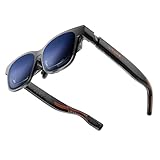
- 【A 1200P ULTRA SHARP DISPLAY YOU’LL NEVER FORGET — EVEN SHARPER THAN VITURE PRO】Step into a jaw-dropping 152” virtual screen with revolutionary 1200P resolution that feels like 4K — powered by VITURE’s proprietary optical “secret sauce.” Text is razor-sharp, delivering a clarity that’s even sharper than the award-winning VITURE Pro, making this the sharpest XR display ever created. * Important * Please remove the protective film from the front camera (located in the center of the frame) before use. ***VITURE XR Glass is compatible with virtually any USB-C device capable of video and power output.
- 【THE BEST JUST GOT BETTER — IMMERSIVE 52° FOV & CINEMA-QUALITY COLORS】Enjoy a wider, more natural 52° field of view that completely immerses you. With industry-leading 1000 nits brightness, a silky-smooth 120Hz refresh rate, and Hollywood-grade color accuracy (DeltaE < 2), everything looks stunning — whether you’re gaming outdoors or working under bright lights.
- 【ALL THE FLEXIBILITY YOU’LL EVER NEED】Available in two sizes to fit different IPD ranges, featuring a larger yet snug frame with flexible arms, a magnetic ergonomic nose pad, and tilt-adjustable temples — all designed for all-day comfort and a perfect fit for everyone.
- 【PREMIUM TRANSLUCENT DESIGN WITH FIRST-OF-ITS-KIND DYNAMIC LIGHT EFFECTS】The first of its kind — illuminate your victory. Sync colors and animations to match your gaming persona or productivity mode, creating a true conversation starter that reflects your style. Customize your vibe (coming soon) with the first programmable RGB lighting ever in XR glasses.
- 【HARMAN AUDIO EVOLVED — FULLER, RICHER, UPGRADED】Dive into a soundscape crafted by HARMAN’s audio experts. Enjoy deeper bass, crisper highs, and a fuller, more immersive audio experience — whether battling enemies or taking an important call.
A Shift From Single-Device Wearables to a Coordinated Stack
Apple’s current wearable strategy is built around complementary roles. The Watch handles health sensors, haptics, and glanceable data, while the iPhone remains the compute and connectivity hub.
AR glasses would force a more explicit division of labor. Suppliers scaling ultra-low-power silicon and display drivers suggests Apple is exploring glasses that offload heavy compute to the iPhone or Watch, rather than duplicating it.
This matters because it changes the definition of “standalone.” Instead of independence, Apple may optimize for orchestration, where each wearable does less individually but more together.
Why Optics and Micro-Displays Signal a New Wearable Tier
Smartwatches pushed OLED yields and low-temperature polysilicon displays to new volumes a decade ago. AR glasses demand a different leap, especially around micro-OLED, waveguides, and optical engines small enough for consumer frames.
Reports of expanded capacity planning at micro-display suppliers are notable not because they confirm a product, but because these investments only make sense with multi-year commitments. No supplier expands this class of fabrication for a single developer kit.
For wearables broadly, this accelerates a trickle-down effect. The same display efficiency gains required for glasses will influence future Watch displays, HUD-style accessories, and even ring or clip-on form factors.
Battery Form Factors Become the New Bottleneck
Smartwatches are constrained by case volume but benefit from predictable shapes and wrist-based heat dissipation. Glasses break both assumptions.
Supplier movement toward custom-shaped lithium cells, higher silicon-anode blends, and more aggressive energy density targets points to a wearable that cannot rely on brute-force capacity. This is about extending useful wear time without adding grams to the face.
If Apple normalizes these battery advances at scale, it reshapes expectations for all wearables. Multi-day smartwatches, slimmer health trackers, and lighter audio wearables become more achievable as suppliers amortize R&D across categories.
Manufacturing Signals Hint at Eyewear-Level Expectations
Unlike watches, glasses live or die by fit and finish. Frame alignment, hinge durability, nose bridge pressure, and lens coating consistency are not optional refinements.
Assembly partners reportedly investing in semi-automated optical alignment and tighter mechanical tolerances suggests Apple is borrowing more from eyewear manufacturing than consumer electronics. That crossover is significant.
For the wearables stack, it implies Apple sees future devices less as gadgets and more as personal accessories. Comfort, materials, and long-term wearability start to outweigh raw spec competition.
Software Pressure Extends Beyond watchOS
The Apple Watch reshaped expectations around glanceable UI and haptics. AR glasses would push similar pressure onto spatial UI, persistent context, and passive information delivery.
This would not just affect a hypothetical glasses OS. It would influence how watchOS, iOS, and even macOS handle notifications, handoff, and sensor fusion.
Developers would be forced to think in terms of surfaces rather than screens. That shift has consequences for battery life, interaction models, and which wearable becomes the primary interface at any given moment.
Credibility Compared to Past AR Cycles
Apple has cycled through AR rumors for nearly a decade, often triggered by patents or executive commentary. What feels different now is the alignment of multiple supply chain layers moving in parallel.
Silicon allocation, battery R&D, optics scaling, and manufacturing prep rarely synchronize unless a timeline exists, even if that timeline remains flexible. This does not guarantee a mass-market launch in 2026, but it does suggest a product intended to leave the lab.
For wearables beyond smartwatches, that intent matters more than ship dates. It signals Apple is preparing for a world where the wrist is no longer the only place wearables live, and where the stack expands upward rather than outward.
Reading Between the Lines: What to Believe, What to Discount, and What Comes Next
The picture that emerges from these overlapping signals is not a single smoking gun, but a pattern. Apple rarely confirms future products, but it does leave fingerprints in how aggressively it prepares its suppliers for scale, yield, and repeatability. Interpreting those fingerprints correctly is the difference between credible forecasting and recycled rumor.
What’s Credible: Scale Before Specs
The most believable element in the current rumor cycle is not a specific feature set, but the move toward Apple-scale readiness across multiple tiers of the supply chain. Optics partners expanding capacity for waveguides and lens coatings, battery suppliers prototyping thin, curved cells, and assembly lines investing in eyewear-grade tolerances all point to volume ambition, not just experimentation.
Apple does not ask suppliers to build for tens of millions of units unless it intends to eventually ship at that level. Even Vision Pro, a niche product by Apple standards, benefited from years of upstream investment that quietly de-risked future form factors. AR glasses fit that same long arc, just with a more aggressive emphasis on comfort, weight distribution, and daily wearability.
Why “Apple-Level” Volumes Matter
Scaling to Apple volumes is less about demand forecasts and more about manufacturing discipline. It requires yield stability, multi-source redundancy, and cost curves that only make sense when a product is expected to live for several generations, not a single splashy launch.
For suppliers, this is a signal that Apple is no longer asking “can this be built?” but “can this be built reliably, globally, and at consumer price points.” That distinction is critical, because it suggests a device intended for broad adoption rather than developer-only experimentation.
What to Discount: Over-Specific Timelines and Feature Leaks
Where skepticism is warranted is around precise launch dates and detailed spec sheets tied to 2026. Apple’s internal timelines are notoriously fluid, especially for category-defining products that sit at the intersection of hardware, software, and human ergonomics.
Claims about exact display resolutions, all-day battery life in first-gen frames, or fully standalone operation should be treated as aspirational rather than guaranteed. Apple has historically been willing to ship with constraints if the experience is coherent, but equally willing to delay if comfort, thermals, or optics fall short of its standards.
Interpreting the Silicon and Battery Signals
Custom silicon work is often cited as proof of imminence, but context matters. Apple routinely designs chips years ahead of shipping products, and not every prototype reaches consumers.
What’s more telling is the parallel pressure on battery chemistry and power management. Glasses demand consistent performance at low thermal envelopes, and suppliers exploring new form factors suggest Apple is optimizing for wear duration and comfort, not peak compute. That aligns with a product meant to be worn passively, like a watch, rather than actively, like a headset.
Manufacturing Prep as the Quietest Tell
The least glamorous signals are often the most reliable. Reports of assembly partners retraining staff, retooling for optical alignment, and borrowing processes from traditional eyewear manufacturing point to a device that must feel personal, not technical.
Unlike phones or watches, glasses amplify any flaw in balance, hinge stiffness, or material finish within minutes of wear. Apple’s apparent willingness to absorb that complexity suggests confidence that the category is ready to move from concept to consumer expectation.
What Comes Next for the Wearables Stack
If AR glasses arrive in some form around 2026, the immediate impact will not be replacement, but redistribution. The Apple Watch would remain the primary biometric and haptic device, while glasses become a contextual display layer, handling glanceable information, navigation, and ambient notifications.
This division of labor has implications for battery life, software priorities, and daily usability across the ecosystem. Developers would design experiences that flow between wrist, face, and phone, rather than competing for attention on a single screen.
A Measured Conclusion
Taken together, the supply chain shifts suggest Apple is serious about AR glasses as a mass-market wearable, even if the exact shape of the first release remains flexible. The credible story is about preparation and intent, not guarantees or countdown clocks.
For informed observers, the takeaway is simple: when suppliers start moving at Apple speed, something is coming. Whether it lands in 2026 or slightly beyond, the groundwork being laid now signals that the future of wearables is expanding upward, and the wrist is about to share the spotlight.