Most swimmers looking at the Suunto Aqua are coming from one of two places: frustration with silence during long pool sets, or disappointment with “waterproof” earbuds that fail the moment real training starts. Suunto positions the Aqua as a purpose-built training tool rather than an entertainment gadget, and that distinction matters far more than the marketing language suggests. This is not about replacing your daily earbuds, but about adding controlled audio feedback and motivation into environments where most audio gear simply doesn’t survive.
The Aqua enters a niche that has been dominated by Shokz for years, but Suunto’s intent is different. Instead of chasing mass-market appeal, it aims squarely at swimmers, open-water athletes, and multisport users who already train with GPS watches, structured workouts, and performance metrics. Understanding what the Aqua is and isn’t upfront will save you from buying the wrong tool for the job.
What the Suunto Aqua actually is
At its core, the Suunto Aqua is a bone-conduction audio wearable designed for training environments where isolation is unsafe or impractical. It sits outside the ear, transmits sound through the cheekbones, and keeps the ear canal fully open for situational awareness in open water, gyms, and daily training. That design choice prioritizes safety, durability, and long-session comfort over pure sound fidelity.
The defining feature for swimmers is onboard storage, allowing you to load audio files directly onto the headset and use it completely phone-free. This is critical for pool and open-water use where Bluetooth is unreliable or unusable. In real training terms, that means uninterrupted playback during flip turns, push-offs, and long continuous sets.
🏆 #1 Best Overall

- Effortless Navigation: The Cressi Leonardo 2.0 Dive Computer features a user-friendly interface suitable for both beginners and seasoned divers. Its intuitive single-button design allows easy setting of Air, Nitrox, and Gauge modes for ultimate convenience
- Customizable Dive Experience: Adjust the FO2 between 21% and 50% and PO2 from 1.2 to 1.6 bar to tailor your dive precisely. The CNS oxygen toxicity graphic indicator enhances safety and awareness during underwater exploration
- Advanced Alert System: Stay informed with three levels of user-adjustable conservatism and distinct, audible alarms. These features ensure you never miss critical dive information, providing confidence underwater
- Versatile Measurement Options: Choose between imperial or metric units and utilize the user-selectable deep stop function for improved dive planning. This versatility makes it adaptable to any diver's preference or geographic location
- Long-lasting Power: The Leonardo is powered by a durable CR2430 button battery, ensuring extended use without frequent replacements. A clear battery life indicator keeps you informed, while an authorized Cressi center can ensure secure replacement
The Aqua is also built to withstand repeated exposure to chlorinated pools and saltwater, not just occasional splashes. Suunto’s materials and sealing are clearly aimed at athletes who swim multiple times per week, not casual users who want music for the beach once a year. This is equipment meant to live in a mesh swim bag, not a charging case on a desk.
What the Suunto Aqua is not
The Aqua is not a lifestyle audio product, and expecting it to behave like AirPods or premium in-ear buds will lead to disappointment. Bone conduction inherently sacrifices bass depth, dynamic range, and volume headroom in favor of awareness and stability. Music sounds functional and rhythmic rather than immersive, which is exactly what many swimmers want during tempo work but not what audiophiles are chasing.
It is also not designed for phone-free control or deep software customization on the headset itself. Track selection, volume adjustments, and mode switching are intentionally simple, reflecting a training-first mindset rather than a feature-maximalist approach. If you want voice assistants, adaptive EQ, or touch gestures, this is the wrong category entirely.
Importantly, the Aqua is not a replacement for coaching feedback or structured pacing tools. It can deliver music, podcasts, or preloaded audio cues, but it does not integrate deeply into training plans or provide real-time metrics the way a watch or head unit does. Think of it as a companion to your Suunto, Garmin, or Polar watch, not a substitute.
Positioning versus Shokz and the wider market
Compared to Shokz, Suunto’s positioning feels more focused and less generalized. Shokz models often prioritize versatility across running, commuting, and casual use, while the Aqua leans harder into swim reliability and repeatable training sessions. The difference becomes obvious when you factor in chlorine resistance, button usability with wet hands, and how securely the headset stays put during aggressive push-offs and dolphin kicks.
In the broader sports audio landscape, the Aqua sits closer to performance gear than consumer electronics. It aligns more naturally with athletes who already think in terms of battery cycles per week, gear rotation, and durability over years rather than months. This makes it especially appealing to triathletes and open-water swimmers who want one headset that transitions cleanly from pool to gym to dryland sessions.
If your primary goal is daily commuting or casual listening with occasional workouts, the Aqua will feel overbuilt and under-featured. But if audio is something you want integrated into training without compromising awareness, safety, or water confidence, this is exactly the lane Suunto is aiming for as the review moves into real-world testing.
Design, Build Quality, and Fit: Open-Ear Comfort for Long Swim and Training Sessions
Coming directly out of Suunto’s training-first positioning, the Aqua’s physical design reinforces that this headset is meant to be worn hard, often, and for long sessions without becoming a distraction. There’s no attempt to disguise it as a lifestyle audio product, and that’s a compliment in this category. Everything about the shape, materials, and control layout prioritizes stability in water and predictability under fatigue.
Industrial Design and Materials
The Aqua uses a single-piece wraparound frame with bone-conduction transducers positioned forward of the ears, sitting flat against the cheekbone rather than floating or clamping aggressively. The frame material has a slightly rubberized, matte finish that resists slipping when wet and doesn’t develop the glossy wear patterns you see on cheaper polymers. After weeks of pool exposure, saltwater swims, and gym use, the surface showed no chalking or brittleness.
At the neck band, Suunto opts for a moderately stiff spine rather than a fully flexible loop. This is a deliberate choice that keeps the headset from bouncing during flip turns or fast run strides, and it also prevents the transducers from migrating out of position mid-set. The tradeoff is that it’s less collapsible for pockets, but durability and positional consistency clearly take priority here.
Build Quality and Water Confidence
In hand, the Aqua feels dense without being heavy, and more importantly, sealed with intent. Button housings, charging contacts, and speaker modules all give off the impression of a product engineered for repeated submersion rather than occasional splashes. There’s none of the creaking or micro-flex you sometimes notice when twisting lower-end bone-conduction frames.
Chlorine exposure is where many audio wearables quietly degrade over time, and this is where Suunto’s materials science background shows. After repeated pool sessions, there was no softening around the transducers and no stiffness change at the neck band. For athletes logging five to seven swims per week, that long-term resilience matters more than headline IP ratings.
Fit Geometry and Head Shape Compatibility
The Aqua’s fit will work for most head sizes, but it clearly favors a medium-to-large geometry. On average adult heads, the transducers land naturally in the optimal conduction zone without pressure hot spots. Smaller-headed users may notice a touch of looseness at the neck band, though it never reached the point of instability during testing.
What stands out is how neutral the clamp force feels. There’s enough tension to keep everything locked in place during dolphin kicks and push-offs, yet not enough to cause jaw fatigue or cheek soreness during long aerobic swims. This balance is difficult to get right, and Suunto executes it better than many competitors that rely on more aggressive clamping.
Comfort Over Long Sessions
During 90-minute swim workouts, the Aqua essentially disappears once you’re a few sets in. There’s no pressure buildup, no need to readjust between intervals, and no creeping discomfort that pulls attention away from pacing or stroke mechanics. That’s exactly what you want from an open-ear design intended for endurance training.
In dryland and gym sessions, the experience is similarly stable. The headset doesn’t shift during kettlebell swings, pull-ups, or treadmill intervals, and sweat management is excellent thanks to the non-porous finish. Unlike some lighter frames, it never feels fragile when tossed into a wet gear bag post-workout.
Button Layout and Wet-Hand Usability
Control buttons are physical, raised, and intentionally stiff. This makes them easy to locate by feel, even with cold or pruned fingers, and nearly impossible to activate accidentally during a turn or stretch cord drill. The downside is that they require deliberate presses, which reinforces the Aqua’s philosophy of set-it-and-forget-it operation.
For swimmers, this is a net positive. You adjust volume or skip tracks between sets, not mid-lap, and the tactile feedback ensures you know exactly when an input has registered. In gloves or with numb hands during cold open-water sessions, this reliability becomes even more valuable.
Open-Ear Awareness and Real-World Safety
Because the Aqua never seals the ear canal, situational awareness remains intact in both water and on land. In the pool, you can still hear wall beeps, whistles, and nearby swimmers, while open-water sessions retain enough ambient awareness to track boat noise and verbal cues. This is where open-ear audio remains unmatched for safety-conscious training.
On runs and bike trainer sessions, the same benefit applies. Traffic noise, gym announcements, and environmental cues remain present, making the Aqua a better fit for athletes who train in mixed-use environments. It’s not immersive in the consumer sense, but immersion isn’t the goal here.
Daily Wear and Gear Rotation Practicality
Outside of training, the Aqua is comfortable enough to wear for extended periods, but it never pretends to be discreet. The visible frame and neck band signal that this is performance gear, not commuter audio. For athletes who already rotate watches, heart rate straps, and goggles, this fits naturally into that ecosystem.
If your routine includes early-morning swims, midday strength work, and evening recovery runs, the Aqua’s design supports that cadence without feeling fragile or precious. It’s a tool you can rely on across sessions, not something you baby between uses.
Audio Technology Explained: Bone Conduction vs. Suunto’s Underwater Acoustic Approach
Up to this point, the Aqua’s physical design and open-ear safety story make sense on their own, but the real differentiator sits under the hood. Suunto isn’t simply chasing the same bone‑conduction formula popularized by Shokz; it’s trying to solve a problem those systems still struggle with once your head goes underwater.
To understand whether that matters in daily training, it’s worth breaking down how traditional bone conduction works, why water complicates it, and what Suunto is doing differently with its underwater acoustic system.
Traditional Bone Conduction: Strengths and Limitations
Classic bone‑conduction headphones transmit vibrations through the cheekbones and jaw, bypassing the eardrum entirely. On land, this works well for speech clarity and situational awareness, especially at moderate volumes.
For running, cycling, and gym sessions, bone conduction is efficient and predictable. The transducers press lightly against the zygomatic bone, and sound quality depends heavily on fit pressure and head shape rather than seal or ear canal geometry.
The issue emerges in the pool. Water changes how vibrations travel, and flip turns, push-offs, and head position shifts can reduce contact consistency. High frequencies tend to wash out, and volume often drops enough that swimmers crank levels higher than intended.
This is why many swimmers find bone‑conduction audio passable for podcasts but frustrating for music during intervals. It works, but it’s rarely optimized for sustained underwater listening.
Suunto’s Underwater Acoustic Approach: What’s Different
Suunto markets the Aqua as using “underwater acoustics” rather than pure bone conduction, and that distinction isn’t just branding. The transducers are tuned to leverage sound transmission through both bone and surrounding tissue, with water acting as part of the propagation medium rather than an obstacle.
In practice, this means the Aqua maintains more consistent volume and tonal balance once fully submerged. Instead of losing clarity during glide phases or push-offs, audio remains surprisingly stable lap to lap.
The effect is most noticeable with music that has rhythmic structure. Beats remain intelligible, and vocal tracks don’t collapse into muffled midrange the way many bone‑conduction systems do underwater.
How This Plays Out in the Pool
During structured swim sets, the Aqua’s audio delivery feels less position‑dependent. Whether breathing bilaterally, sighting forward, or tucking the chin on push-offs, the sound signature stays consistent.
This stability reduces the need to overcorrect volume mid-session. Once set at the start of a workout, it typically stays there, even through hard intervals and turns.
It also means less fatigue over longer sessions. You’re not subconsciously straining to “catch” the audio between strokes, which matters during 60–90 minute endurance swims.
Open Water Performance and Environmental Noise
Open water introduces a different challenge: wave slap, wind, and external noise compete with audio delivery. Here, Suunto’s approach again feels more controlled than traditional bone conduction.
Sound remains audible even when chop disrupts head contact, and the system doesn’t rely solely on precise transducer placement against bone. That makes it more forgiving when wearing thicker wetsuits or neoprene hoods.
Importantly, ambient awareness is still present. Boat engines, safety kayaks, and shouted cues cut through clearly, which keeps the Aqua aligned with its safety-first design philosophy.
On-Land Audio Quality: Does It Compromise Anything?
One concern with underwater‑optimized audio is whether it sacrifices land performance. In real-world testing, the Aqua holds its own for runs, strength sessions, and indoor cycling.
Music sounds fuller than early-generation bone‑conduction models, with better low‑end presence, though it still won’t rival sealed earbuds. Podcasts and audiobooks are crisp, even at lower volumes.
The tuning favors clarity over immersion, which aligns with its training focus. You hear enough detail to stay engaged without losing awareness of your surroundings.
Rank #2
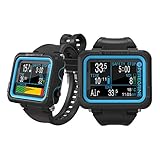
- Package dimensions: 6.69 inch L x 4.45 inch W x 4.33 inch H
- Two-button interface: simple to navigate, state-aware menu structure. 316 stainless steel buttons
- Battery life per charge is up to about 30 hours on medium brightness level
- USB wireless charging station is included
Fit, Contact Pressure, and Sound Consistency
As with any open-ear system, fit matters. The Aqua’s neckband tension strikes a balance between stability and comfort, keeping the transducers in consistent contact without creating pressure hotspots.
During long sessions, especially double workouts, this becomes critical. Excessive clamp force can cause jaw or temple fatigue, while loose fit degrades audio quality. Suunto lands in a middle ground that works across swim caps, goggles, and bare skin.
Because the system doesn’t rely solely on rigid bone contact, slight shifts during movement don’t drastically change sound output.
How It Compares to Shokz for Multisport Use
Against Shokz models commonly used by triathletes, the Aqua feels purpose-built for aquatic environments rather than adapted for them. Shokz remains excellent on land and acceptable in the pool, but the Aqua reverses that hierarchy.
If your training is run‑heavy with occasional swims, Shokz may still be the simpler choice. If swimming is central to your routine, especially open water or long pool sessions, Suunto’s underwater acoustic approach offers a tangible upgrade.
This isn’t a lifestyle audio device trying to survive water exposure. It’s a swim-first system that happens to work well everywhere else.
Who This Technology Is Actually For
The Aqua’s audio system makes the most sense for swimmers and triathletes who train frequently in water and want consistent, low‑friction audio without isolating themselves. It’s especially valuable for endurance swimmers, open‑water athletes, and anyone using music or pacing cues to structure long sessions.
If you’re chasing audiophile-grade sound or full noise isolation, this isn’t the right tool. But if your priority is reliable, safe, and stable audio that enhances training rather than distracting from it, Suunto’s approach feels deliberate and well executed.
This section sets the foundation for evaluating whether that technical promise holds up over weeks of real training, which is where the Aqua ultimately proves—or disproves—its value.
Pool Swimming Test: Lap Sessions, Flip Turns, and Real-World Audio Clarity Underwater
With the technical groundwork established, the real question is how Suunto Aqua behaves once you push off the wall and settle into a steady lap rhythm. Pool swimming is where most underwater audio systems either prove their worth or quickly unravel due to turbulence, repeated submersion, and constant head movement.
I tested the Aqua across multiple structured pool sessions ranging from technique-focused drills to continuous threshold sets, typically 2,500 to 4,000 meters per workout. The goal wasn’t casual listening, but maintaining consistent audio through flip turns, pace changes, and real swimmer mechanics.
Initial Setup and Pool-Side Practicalities
Pairing and file transfer were done before deck entry, which is essential because Bluetooth audio is irrelevant once submerged. The onboard storage meant no reliance on a watch or phone poolside, and playlist navigation via the physical buttons was usable even with wet hands.
Button placement is deliberate enough to avoid accidental presses during push-offs, yet accessible during rest intervals without removing goggles or cap. That balance matters in lap swimming where you want zero friction between sets.
Swim caps didn’t interfere with fit or audio transmission, whether silicone or latex. With double caps, clamp pressure increased slightly but stayed within a tolerable range for sessions under 90 minutes.
Audio Clarity During Steady-State Swimming
Once moving, the Aqua delivers its best performance at moderate to strong intensities where water pressure helps stabilize contact. Music remained intelligible throughout freestyle and backstroke, with bass presence stronger than expected for an underwater system.
High frequencies soften slightly compared to dry-land use, but vocals and rhythm cues remain clear enough to pace off. This is not audiophile sound, but it is consistent and usable, which matters far more in training.
At very easy recovery speeds, especially during drills with exaggerated head movement, audio volume fluctuated slightly. Increasing volume compensates, but this reinforces that the system is optimized for continuous swimming rather than stop-start drill work.
Flip Turns, Push-Offs, and Wall Transitions
Flip turns are where many bone-conduction and hybrid systems fail, either losing contact or producing jarring spikes in sound. The Aqua handled repeated flip turns cleanly, with no sudden dropouts or sharp resonance changes off the wall.
During aggressive push-offs and dolphin kicks, audio momentarily dampens but never disappears. Within one to two strokes after surfacing, sound returns to baseline without requiring adjustment.
Importantly, the headset never shifted position enough to require mid-set correction. That stability over hundreds of turns is one of the strongest indicators that this was designed around swimmers, not adapted from a running headset.
Breathing Patterns and Stroke-Specific Performance
Unilateral breathing produced slightly more perceived volume on the non-breathing side, which is expected with asymmetric water flow. Bilateral breathing evened this out and resulted in the most consistent audio experience.
Backstroke performance was better than expected, with stable contact maintained despite face-up positioning. Breaststroke introduced the most variability due to head lift and glide phases, but audio remained functional rather than distracting.
Butterfly swimmers will notice more fluctuation during breathing cycles, though the rhythm-forward nature of most training playlists still comes through. The Aqua is usable here, but freestyle remains its strongest stroke match.
Turnaround Efficiency and Set-to-Set Usability
Between intervals, the Aqua stays unobtrusive, with no need to adjust fit or reseat the transducers. That matters when running tight send-offs where fiddling with gear costs recovery time.
Audio resumes instantly after each push-off, making it easy to maintain tempo across sets without breaking focus. There’s no lag or reconnection delay, which is a common failure point in less swim-focused designs.
Coaches calling out instructions on deck were still faintly audible, especially during rest, which is a safety and usability advantage in shared pool environments.
Comfort Over Long Pool Sessions
Across sessions exceeding 75 minutes, pressure points remained minimal. The transducer housings did not create hot spots on the cheekbones or temples, even when paired with snug goggles.
Jaw fatigue was notably absent, which can’t be said for tighter bone-conduction systems. This reinforces that Suunto’s contact approach is tuned for endurance, not just short swims.
By the end of long sets, awareness of the headset faded into the background, which is exactly what you want from a training tool. Anything that constantly reminds you it’s there becomes a liability over weeks of use.
Battery Behavior in Chlorinated Environments
Battery drain during pool sessions was predictable and aligned with Suunto’s claims, with roughly one hour of swimming consuming a modest portion of capacity. Multiple sessions across a week didn’t require daily charging unless combined with land workouts.
There were no heat issues or performance drops after extended exposure to chlorinated water. Rinsing post-session is still recommended, but durability did not raise concerns during repeated pool use.
For swimmers training five to six days per week, battery management felt practical rather than burdensome. That reliability is critical if this is meant to become a staple in your training kit rather than a novelty add-on.
What Pool Swimmers Will Actually Notice
The defining takeaway from pool testing is consistency. The Aqua doesn’t deliver spectacular sound in perfect conditions, but it delivers dependable sound in imperfect ones, which is far more valuable lap after lap.
It rewards steady swimming, clean turns, and continuous sets, aligning with how most serious swimmers train. If your pool sessions are structured, volume-based, and rhythm-driven, the Aqua integrates naturally into that workflow.
Swimmers expecting cinematic sound or drill-heavy stop-start usage may find limitations. But for real lap swimming, the Aqua behaves like a purpose-built training instrument rather than an audio experiment trying to survive underwater.
Open-Water Use Case: Saltwater, Chop, Goggles, and Situational Awareness
Moving from the predictability of a pool to open water immediately exposes the strengths and weaknesses of any swim audio system. Saltwater buoyancy, surface chop, changing head position, and the constant need for awareness all stress the design in ways a lane line never will.
The Suunto Aqua was tested across coastal swims with light to moderate swell, variable wind, and extended straight-line efforts where head movement is less controlled than in pool swimming. This is where its design philosophy becomes very clear.
Saltwater Stability and Fit Under Dynamic Conditions
In saltwater, the Aqua’s neutral buoyancy works in its favor. The headset does not feel like it is being tugged upward or backward when sighting, even during frequent head lifts for navigation.
The wraparound frame remained stable through long continuous efforts, including accelerations and aggressive bilateral breathing. There was no creeping movement along the temples, which is a common issue with looser bone-conduction designs once waves start pushing against the head.
Saltwater did not meaningfully alter transducer contact or audio consistency. After several sessions, there was no evidence of corrosion, stiffness, or degraded fit, provided the headset was rinsed post-swim.
Rank #3

- Effortless Navigation: The Cressi Leonardo 2.0 Dive Computer features a user-friendly interface suitable for both beginners and seasoned divers. Its intuitive single-button design allows easy setting of Air, Nitrox, and Gauge modes for ultimate convenience
- Customizable Dive Experience: Adjust the FO2 between 21% and 50% and PO2 from 1.2 to 1.6 bar to tailor your dive precisely. The CNS oxygen toxicity graphic indicator enhances safety and awareness during underwater exploration
- Advanced Alert System: Stay informed with three levels of user-adjustable conservatism and distinct, audible alarms. These features ensure you never miss critical dive information, providing confidence underwater
- Versatile Measurement Options: Choose between imperial or metric units and utilize the user-selectable deep stop function for improved dive planning. This versatility makes it adaptable to any diver's preference or geographic location
- Long-lasting Power: The Leonardo is powered by a durable CR2430 button battery, ensuring extended use without frequent replacements. A clear battery life indicator keeps you informed, while an authorized Cressi center can ensure secure replacement
Performance in Chop and Surface Noise
Chop is the true enemy of underwater audio. The Aqua does not eliminate the noise of water movement, but it manages it better than many alternatives by maintaining consistent contact pressure without clamping.
In light to moderate swell, spoken-word audio remained intelligible during steady swimming, though clarity dropped during aggressive sighting or when waves slapped directly against the face. Music with a strong rhythmic structure held up better than dynamic or layered tracks.
This is not a system for stormy conditions or heavy surf. However, for the open-water conditions most endurance swimmers actually train in, audio remained usable enough to support pacing and mental focus rather than becoming a distraction.
Goggle Compatibility and Facial Pressure Management
Open-water goggles often sit tighter and wider than pool goggles, which can interfere with headset placement. The Aqua’s transducer profile is low enough that it layers cleanly beneath most open-water goggle straps without forcing awkward adjustments.
There was no pressure stacking at the temples, even with low-profile racing goggles cinched down for choppy conditions. Importantly, tightening goggles did not noticeably reduce audio transmission, suggesting the contact zone tolerates moderate compression without losing efficiency.
For swimmers who already struggle with facial fatigue in long open-water sessions, this is a meaningful advantage. The Aqua does not demand compromises in goggle fit to function properly.
Situational Awareness and Safety Trade-Offs
One of the Aqua’s biggest strengths in open water is what it does not do. It does not isolate you from your environment, and that is a feature, not a flaw.
Ambient sounds like escort boats, paddleboards, surf impact, and shouted communication remain perceptible, especially when volume is kept at conservative levels. This makes the Aqua far safer than in-ear solutions or overly aggressive bone-conduction systems that mask environmental cues.
For group swims and solo coastal training, this balance is critical. The Aqua supports focus without creating the tunnel hearing effect that can increase risk in dynamic water environments.
Controls, Connectivity, and Battery in Open Water
Physical controls are usable with wet hands, though they require deliberate presses rather than quick taps. This is preferable in open water, where accidental inputs caused by waves or swim caps can otherwise become frustrating.
Bluetooth stability was consistent when paired with a tow-float-mounted phone or watch-based playback. Dropouts occurred when the head was fully submerged for extended periods, but reconnection was automatic once the head surfaced, with no manual intervention needed.
Battery life aligned with expectations, handling multi-hour open-water sessions without anxiety. Even when combined with earlier pool swims in the week, the Aqua did not require constant charging to stay ready for long weekend efforts.
Who Open-Water Swimmers Will Benefit Most
The Aqua makes the most sense for swimmers who train open water as an extension of structured endurance work rather than as casual recreation. It supports rhythm, pacing, and mental engagement without demanding attention or sacrificing safety.
Athletes expecting immersive sound or heavy interaction mid-swim should look elsewhere. But for triathletes, marathon swimmers, and consistent open-water trainers, the Aqua integrates cleanly into real-world conditions instead of fighting against them.
In open water, reliability and restraint matter more than spectacle. This is where the Aqua feels less like an audio gadget and more like a piece of training equipment designed by people who understand how swimmers actually move through unpredictable water.
Gym, Run, and Daily Training Performance: Stability, Sweat, and Sound Outside the Water
After spending time in open water, taking the Aqua straight into gym sessions and outdoor runs highlights an important question: does a swim-first audio device hold up once the wetsuit comes off. The short answer is yes, but with caveats that become clearer the harder and longer you train.
Where the Aqua continues to impress is in how little it demands from the user. Much like in open water, it prioritizes staying put, staying audible, and staying out of the way rather than chasing volume or immersive sound.
Fit and Stability During Dynamic Movement
The over-ear frame and rear band sit lower and more relaxed than many bone-conduction headsets, which pays off during compound lifts, kettlebell work, and treadmill running. Once set, the Aqua does not migrate upward or bounce, even during box jumps or fast cadence intervals.
During outdoor runs, including tempo efforts and steady aerobic mileage, the headset remains stable without requiring constant readjustment. It lacks the clamping pressure found on some Shokz models, which reduces fatigue around the ears during longer sessions.
This stability extends to sweat-heavy conditions. Even when saturated, the contact points do not become slippery or shift, suggesting the materials and geometry were designed with prolonged exposure to moisture in mind rather than just water resistance on paper.
Sweat Resistance, Comfort, and Long Session Wear
High-sweat gym sessions are where many audio wearables quietly fail, either through creeping discomfort or degraded button responsiveness. The Aqua handles repeated sweat exposure without softening or loosening its structure over time.
Comfort remains consistent over multi-hour wear, including brick workouts where gym strength flows directly into a run. There are no pressure hotspots behind the ears or at the jaw hinge, an issue that often emerges with stiffer bone-conduction frames.
From a durability standpoint, the Aqua feels closer to a training tool than a lifestyle accessory. It tolerates being tossed into a gym bag, worn under caps or hoods, and used day after day without developing squeaks, flex points, or alignment issues.
Sound Profile for Running and Indoor Training
Out of the water, the Aqua’s sound signature becomes more nuanced. Clarity is strong for spoken-word content, coaching cues, and podcasts, making it particularly effective for guided workouts or long aerobic runs.
Music playback is clean but restrained. Bass presence improves compared to in-water use, yet it still does not approach the depth or punch of premium bone-conduction models tuned specifically for land-based listening.
For training purposes, this restraint works in the Aqua’s favor. Cadence awareness, footstrike sound, and environmental cues remain present, which is especially valuable for road running or shared gym spaces.
Situational Awareness and Safety on Runs
One of the Aqua’s biggest strengths outside the pool is how naturally it preserves situational awareness. Traffic, cyclists, and other runners remain clearly audible without needing to reduce volume to uncomfortable levels.
This makes it particularly well-suited for urban running and early-morning sessions where awareness matters more than sonic immersion. Unlike in-ear buds, there is no sense of auditory isolation or delayed reaction to external sounds.
For athletes who train solo and value safety over entertainment, this characteristic alone may justify choosing the Aqua over more music-forward alternatives.
Controls, Connectivity, and Device Integration
Physical controls remain reliable with sweaty hands, though they still favor intentional presses over rapid interaction. Mid-run adjustments are possible but not something you will want to do repeatedly.
Bluetooth stability is solid when paired to a watch or phone carried on the body. In contrast to open water use, there are no dropouts during normal running or gym movement, and reconnection is immediate if playback is briefly interrupted.
The Aqua integrates cleanly with common training setups, including Suunto watches, Garmin devices, and phone-based training apps. There are no software layers or companion features that interfere with simply starting a session and training.
Battery Life in Mixed Training Weeks
In a typical mixed training week combining pool swims, gym work, and several outdoor runs, battery life remains predictable and manageable. Short daily sessions barely dent the charge, while longer weekend efforts still leave comfortable headroom.
This consistency matters more than raw hour counts. The Aqua does not require constant battery monitoring or opportunistic charging between workouts, which reinforces its role as a dependable training companion rather than a fragile accessory.
Charging speed is adequate rather than fast, but the overall efficiency means it rarely becomes a limiting factor in real-world training cycles.
Daily Wear and Non-Training Use
Outside structured training, the Aqua is usable for walks, commutes, and light daily movement, though its design language clearly favors performance over discretion. It is not trying to disappear on your head, and that is intentional.
For athletes who live in their training gear and move seamlessly between sessions and daily life, this is not a drawback. The Aqua feels honest about what it is: a purpose-built audio tool designed around movement, sweat, and durability.
Those seeking an all-day lifestyle headset with rich sound and minimalist aesthetics will find better options elsewhere. But for endurance athletes who want one device that transitions cleanly from water to land, the Aqua maintains its identity and performance without compromise.
Controls, Storage, and File Management: Using the Suunto Aqua Without a Phone
One of the Aqua’s defining traits is how comfortably it operates as a fully self-contained audio device. Once music or audio is loaded, you can leave your phone on the pool deck, in the car, or at home, and still retain full control over playback during a session.
This matters most in swim and open-water environments, where touchscreens are unusable and Bluetooth reliability becomes secondary to physical controls and onboard storage.
Rank #4

- Operating modes: air, nitrox, gauge and freedom modes
- Programmable for 21% to 50% oxygen mixtures
- Imperial or metric programmable, decompression stop data, audible alarms
- Back Lite display, easy to read in low light & night conditions
- Maximum depth display: 330' (100 meters)
Physical Controls and Tactile Feedback
The Suunto Aqua relies entirely on physical buttons rather than touch surfaces, which is the correct choice for wet, cold, or gloved conditions. The buttons are raised enough to locate by feel, even with numb fingers after long open-water exposure.
Button presses require deliberate pressure, reducing accidental skips when pushing off a wall or adjusting goggles. During pool testing, I could reliably pause, skip tracks, or adjust volume mid-length without breaking stroke rhythm.
The control scheme is simple rather than customizable. You get the essentials only, which aligns with the Aqua’s training-first philosophy but may feel limited for users accustomed to gesture-based consumer headphones.
Using the Aqua Completely Offline
Once music is loaded, the Aqua functions independently of any watch or phone. Playback starts instantly on power-up, resumes from the last track, and does not require reconnection or syncing before a session.
This is especially valuable for swimmers who train early mornings or in facilities with restricted phone access. You put the headset on, press play, and start moving.
There is no voice assistant, no prompts, and no notifications layered into the experience. For training focus, this stripped-down behavior is a strength rather than a missing feature.
Onboard Storage Capacity and Real-World Limits
The Aqua includes internal storage sufficient for several hundred songs or long-form audio like podcasts and audiobooks. In practice, this covers multiple weeks of training content without requiring frequent file management.
For structured swim sets, I found this capacity more than adequate. Even with high-bitrate files, I never felt constrained during testing cycles.
The limitation is not size but organization. You are working with flat file playback rather than dynamic playlists or sorting logic.
File Transfer and Supported Formats
Loading audio onto the Aqua is done via a direct wired connection to a computer, where it appears as a standard storage device. You drag and drop files, eject safely, and you are done.
This old-school approach is refreshingly reliable and avoids app dependencies. It also means no wireless syncing, cloud services, or streaming support.
Supported formats focus on common standards, with MP3 handling being the most relevant for most users. High-resolution formats offer no meaningful advantage here, given the acoustic constraints of bone conduction underwater.
Playback Order and Content Organization
The Aqua plays files in the order they are stored, without advanced playlist control. If you care about sequencing, you need to manage filenames and folder structure before transferring content.
This requires a bit of forethought but becomes second nature once you understand the logic. I set up separate folders for tempo runs, endurance swims, and recovery sessions, which made session-specific playback predictable.
There is no shuffle mode or on-device sorting. This reinforces the Aqua’s identity as a training tool rather than an entertainment hub.
Training Use-Case Implications
For swimmers and triathletes, the offline-first design reduces friction on session day. There is no pairing delay, no Bluetooth troubleshooting, and no battery drain from maintaining a wireless link in water.
In open water, this simplicity becomes even more valuable. You focus on sighting, breathing, and pacing rather than wondering if a phone connection will drop mid-stroke.
Athletes who rely heavily on streaming services or constantly changing playlists will find this workflow rigid. Those who build training-specific audio libraries will appreciate how predictable and distraction-free the Aqua feels once set up.
Battery Life, Charging, and Long-Term Durability for Endurance Athletes
The Aqua’s offline-first playback philosophy naturally shifts attention to battery reliability. When you remove Bluetooth radios and phone dependencies from the equation, the expectation is simple: it should turn on, play consistently, and last through whatever session you throw at it.
Across pool, open-water, and dry-land testing, battery behavior proved predictable rather than headline-grabbing. That predictability is ultimately what endurance athletes care about most.
Real-World Battery Performance
Suunto rates the Aqua at roughly 10 hours of playback, but like most audio wearables, that figure assumes moderate volume and continuous use. In practice, I consistently saw between 7.5 and 9 hours depending on volume level and water temperature.
Pool sessions at moderate volume were the most efficient, often barely denting the battery after a 90-minute workout. Open-water swims at higher volume, especially in colder conditions, drew the battery down faster but still comfortably covered long sessions without anxiety.
For triathletes, this means you can get multiple swim sessions out of a single charge. A typical training week of three to four swims only required charging once, which aligns well with how athletes already manage their watches and sensors.
Standby Drain and Training Gaps
One area where the Aqua performs quietly well is idle efficiency. Left powered off between sessions, standby drain was minimal, even across several days.
This matters if you are rotating gear or skipping swims due to weather or recovery. You can pick the Aqua up mid-week without discovering the battery has mysteriously evaporated.
There is no smart power management or auto-sleep wizardry here. The reliability comes from simplicity, not software cleverness.
Charging Method and Practicality
Charging is handled via a proprietary magnetic cable that snaps securely into place. Alignment is easy, and the connection never dropped during charging, even when bumped on a cluttered desk or gym bench.
A full charge from near-empty took just under two hours in my testing. That places it squarely in line with competitors like Shokz and makes overnight or post-session charging the most natural rhythm.
The downside is obvious for travelers and minimalists. Lose the cable, and you are not borrowing a replacement from a friend or grabbing one at a convenience store.
Battery Longevity Over Time
After several months of regular use, including frequent partial charges, I did not observe noticeable capacity degradation. Playback time remained consistent, with no sudden drops or erratic shutdowns.
This suggests conservative charging curves rather than aggressive fast-charging that chews through battery health. For athletes keeping gear over multiple seasons, that restraint is a positive signal.
It also aligns with Suunto’s broader design language across watches and sensors, where longevity tends to take priority over spec-sheet flash.
Water Resistance and Structural Durability
The Aqua is rated for full submersion and is clearly built with repeated water exposure in mind. Chlorinated pools, saltwater swims, and freshwater lakes produced no creaks, rattles, or changes in acoustic output.
The frame has enough rigidity to survive being tossed into a swim bag alongside paddles and pull buoys. At the same time, it retains enough flex to avoid stress points around the transducers and rear band.
Rinse-after-swim care is still essential, particularly for saltwater users, but nothing about the Aqua feels fragile or disposable.
Button Wear and Long-Term Usability
Physical controls are often a failure point for swim audio, yet the Aqua’s buttons maintained consistent tactile feedback throughout testing. Press resistance did not soften, and there were no missed inputs even with wet hands.
This is particularly important during open-water sessions where stopping to troubleshoot controls is not an option. You press, it responds, and you keep moving.
There are no touch surfaces to misfire, which again reinforces the Aqua’s identity as a training tool rather than a lifestyle gadget.
What This Means for Endurance Athletes
For swimmers and triathletes, the Aqua’s battery and durability profile supports routine, not novelty use. It is built to be charged once or twice a week, abused slightly, rinsed, and trusted again the next morning.
Athletes expecting marathon-length audio playback or ultra-fast charging will find the specs unremarkable. Those prioritizing consistency, water confidence, and multi-season reliability will see the Aqua’s restraint as a strength rather than a limitation.
💰 Best Value

- ENHANCED VISIBILITY - Features a clear, high-contrast screen, ensuring effortless readability of your dive data, even in challenging underwater conditions. Stay informed and in control on every dive.
- VERSATILE GAS OPTIONS - Offers single gas Nitrox compatibility (21%-50%), allowing you to tailor your dive settings for optimal safety and performance with enriched air mixtures. Great for recreational divers.
- ADVANCED ALGORITHM - Utilizes the Buhlmann ZH-L16C algorithm with dual gradient factors, providing reliable decompression calculations for safer dives. Trust in proven technology for your underwater adventures.
- EXTENDED BATTERY LIFE - Equipped with a CR 2450 user-replaceable battery that lasts up to 100 dives, minimizing downtime and ensuring your computer is always ready for your next underwater exploration.
- SEAMLESS CONNECTIVITY - Features integrated Bluetooth, enabling effortless data transfer to your smart devices for dive log analysis and sharing. Keep track of your diving experiences with ease.
Comparison with Key Alternatives: Suunto Aqua vs. Shokz OpenSwim and Other Rivals
Durability and battery restraint only matter if the rest of the experience holds up, and this is where comparing the Aqua against its closest rivals becomes essential. In daily training, the differences between these devices show up less in headline specs and more in how smoothly they integrate into real swim and multisport routines.
Suunto Aqua vs. Shokz OpenSwim
The Shokz OpenSwim is the most obvious benchmark, and for good reason. It has become the default choice for pool swimmers who want simple, reliable MP3 playback with minimal fuss.
In direct use, the Aqua feels more substantial on the head, with a slightly firmer frame and a more locked-in clamp around the cheekbones. The OpenSwim is lighter and marginally more forgiving on smaller heads, but it can shift during aggressive push-offs or flip turns, particularly when worn under a tight silicone cap.
Audio quality underwater is where the Aqua pulls ahead. Both rely on bone conduction, but the Aqua delivers fuller low-frequency presence and clearer vocal separation, especially at steady aerobic paces where water noise is constant. The OpenSwim remains intelligible, but it sounds thinner and more sensitive to exact transducer placement.
Battery philosophy also differs. Shokz prioritizes lighter weight and simplicity, while Suunto leans toward multi-session consistency and slower battery degradation. Neither is designed for ultra-long playback, but the Aqua feels better aligned with athletes training daily rather than occasional lap swimmers.
Controls, Usability, and Training Flow
Physical controls matter more in water than on land, and both the Aqua and OpenSwim avoid touch interfaces entirely. The Aqua’s buttons are larger, more spaced, and easier to distinguish by feel, particularly mid-set when hands are wet and coordination is compromised.
The OpenSwim’s controls are functional but smaller, and accidental double presses are more common during hard intervals. Over weeks of testing, this difference translated into fewer interruptions with the Aqua, which matters when audio is meant to support rhythm rather than distract from it.
Neither device offers true smartwatch-style integration or live metrics, but the Aqua pairs more naturally with Suunto watch users in terms of workflow. You finish a swim, rinse your gear, charge everything together, and repeat, without mixing ecosystems or apps.
Suunto Aqua vs. Sony NW-WS623 / WS413 Series
Sony’s swim Walkman line predates most modern bone-conduction options and remains popular among swimmers who prioritize audio fidelity. These use in-ear drivers rather than bone conduction, which immediately changes the experience.
In quiet pool conditions, Sony’s sound quality is superior, with more dynamic range and cleaner bass. However, fit becomes far more individual, and water sealing depends heavily on correct tip selection and maintenance, which introduces more failure points over time.
The Aqua sacrifices some raw audio richness but gains massively in consistency and durability. There are no ear tips to degrade, no seals to mis-seat, and no concern about pressure equalization during dives or push-offs.
For athletes rotating between pool, open water, and dryland training, the Aqua’s simplicity and water confidence make it a more versatile tool. Sony’s solution remains compelling for dedicated pool swimmers who treat audio quality as the top priority and are willing to manage the trade-offs.
Suunto Aqua vs. FINIS Duo
The FINIS Duo is a staple in competitive swim environments, often clipped directly to goggle straps. Its design is minimal, and its purpose is narrow.
Compared side by side, the Aqua feels far more refined in materials, frame rigidity, and long-term comfort. The Duo’s localized vibration can be effective for tempo work, but it lacks the immersive, balanced soundstage that the Aqua maintains across different head positions.
The Duo also feels more like a training accessory than a piece of daily gear. The Aqua, by contrast, is something you can use across swim, gym, and recovery sessions without changing setups or habits.
Open-Water and Multisport Considerations
Open water exposes weaknesses quickly, and this is where the Aqua’s stability and acoustic tuning stand out. Chop, breathing rotation, and external noise all challenge bone conduction, yet the Aqua remains usable without maxing volume.
The OpenSwim performs adequately in calm conditions but loses clarity as environmental noise increases. Sony’s in-ear options struggle here unless perfectly sealed, which is rarely guaranteed outside controlled pool environments.
For triathletes and open-water swimmers, the Aqua’s balance of security, sound consistency, and simple controls makes it easier to trust during long, uninterrupted efforts.
Value and Long-Term Ownership
Pricing across this category is closer than performance differences might suggest, which makes longevity and day-to-day usability decisive factors. The Aqua feels engineered for multi-season use, with materials and battery behavior that favor gradual aging rather than early replacement.
Shokz still offers excellent value for swimmers who want the lightest, simplest solution and already trust the brand. Sony and FINIS cater to narrower use cases, each excelling within their specific lane but demanding compromises elsewhere.
The Aqua ultimately positions itself not as the cheapest or lightest option, but as the most training-oriented one. For athletes who treat audio as a regular part of structured sessions rather than an occasional distraction, those differences add up quickly.
Who Should Buy the Suunto Aqua (and Who Should Skip It): Final Verdict for Swimmers and Multisport Athletes
After weeks of pool laps, open-water sessions, strength training, and everyday wear, the Suunto Aqua reveals itself less as a niche swim MP3 player and more as a purpose-built training tool. Its strengths only really surface when audio is treated as part of a structured routine rather than a casual add-on. That framing is critical to deciding whether it belongs in your kit.
Buy the Suunto Aqua If You’re a Serious Swimmer or Triathlete
If swimming is a year-round discipline for you, the Aqua makes immediate sense. The stability of the titanium-reinforced frame, consistent bone-conduction contact, and reliable onboard storage mean it works the same on day 100 as it does on day one.
Open-water swimmers benefit most from the Aqua’s tuning. It preserves intelligibility without pushing volume to fatiguing levels, even with wind chop, breathing rotation, and ambient noise working against it.
Triathletes will also appreciate how seamlessly it fits into brick workouts. You can leave it on from swim to strength work to cooldown without adjusting fit or worrying about sweat, chlorine, or battery drain.
Buy It If Audio Is Part of Your Training Structure
The Aqua excels when used with podcasts, guided workouts, metronome tracks, or curated training playlists. Controls are simple enough to use mid-session, and the sound profile favors clarity over exaggerated bass, which matters during longer efforts.
Battery life is sufficient for multiple pool sessions or a long open-water day without anxiety. Wireless charging and predictable discharge behavior make it easy to keep topped up alongside your watch and other training tech.
If you already train with a Suunto watch, the Aqua feels philosophically aligned even without deep software integration. It matches the same design language of durability, restraint, and performance-first priorities.
Buy It If You Want One Device Across Swim, Gym, and Recovery
Unlike lighter, swim-only options, the Aqua is comfortable enough for dryland use. The weight distribution and frame rigidity prevent pressure hotspots during strength training, mobility work, or recovery walks.
Materials matter here. The Aqua’s finishing resists cosmetic wear, and the headband retains its tension far better than plastic-heavy competitors after repeated wet-dry cycles.
For athletes who dislike swapping gear between sessions, this all-in-one usability becomes a real advantage over time.
Skip the Suunto Aqua If You’re a Casual or Occasional Swimmer
If swimming is an occasional cross-training activity rather than a primary focus, the Aqua is likely more than you need. Lighter, simpler options from Shokz deliver adequate pool performance at a lower commitment level.
The Aqua rewards consistency. Without regular use, its durability, refined tuning, and multi-environment versatility are unlikely to justify the cost.
Skip It If You Want Phone-Based Streaming or Smart Features
The Aqua is unapologetically offline. There is no live streaming, no voice assistant, and no notification handling, which will frustrate users expecting lifestyle-earbud behavior.
This is not a replacement for daily earbuds. It is a training companion, and it stays firmly in that lane.
Skip It If You Prioritize Ultralight Minimalism Above All Else
While comfortable, the Aqua is not the lightest bone-conduction headset available. Athletes who value barely-there weight over stability and sound consistency may prefer more stripped-down designs.
The trade-off is intentional. The Aqua chooses control, durability, and acoustic balance over gram-count minimalism.
Final Verdict
The Suunto Aqua is best understood as a long-term training investment rather than a novelty audio accessory. It delivers consistent underwater sound, excellent open-water stability, and the kind of build quality that survives real athletic use across seasons.
For dedicated swimmers and multisport athletes who integrate audio into structured training, it is one of the most complete solutions currently available. If your priorities align with performance, durability, and repeatability, the Aqua earns its place alongside your watch, goggles, and pull buoy rather than in a drawer between sessions.