The Suunto Ocean exists because a growing number of divers are tired of choosing between a dedicated dive computer that lives in a gear bag and a sports watch they wear every day. It is not Suunto trying to turn a smartwatch into a dive computer, nor is it a dive computer awkwardly stretched into daily fitness use. It is a purpose-built hybrid that sits deliberately between those worlds, aiming to cover real diving, real training, and real daily wear without forcing compromises that matter underwater.
If you are coming from a Suunto D-series, EON, or Zoop-style dive computer, the Ocean will immediately feel more lifestyle-oriented but not less serious about safety or decompression logic. If you are coming from a multisport watch like a Suunto Vertical, Garmin Fenix, or Apple Watch Ultra, it will feel more conservative in smart features but far more focused and trustworthy when submerged. Understanding that balance is the key to deciding whether the Ocean makes sense for you.
A true dive-first multisport watch, not a smartwatch with a dive app
At its core, the Suunto Ocean is a full recreational dive computer that happens to be worn on the wrist full-time. It supports air and nitrox diving, freediving, and snorkeling, with Suunto’s established decompression algorithms and dive safety philosophy carried over from its dedicated dive line. This means depth accuracy, ascent rate monitoring, surface interval tracking, and gas management are treated as primary functions, not optional software features.
Crucially, dive mode is hardware-level, not dependent on cloud syncs, subscriptions, or phone connectivity. Once you enter the water, the Ocean behaves like a self-contained dive computer with physical button control and a high-contrast display designed to remain legible at depth. That distinction matters for divers who value predictability and consistency over app-driven flexibility.
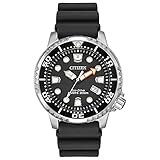
🏆 #1 Best Overall

- Stainless Steel case with Black Resin Band
- Black Dial with date window at 3 O'clock
- Luminous markers and hour hands; sweep second hand
- Anti-reverse bezel
- Water-resistant to 200 M (660 feet)
Designed for active divers who train year-round
The Ocean is aimed squarely at divers who do more than dive. Think recreational scuba divers who also run, cycle, lift, swim, or paddle regularly, or freedivers who cross-train with endurance and strength work. The watch includes a full multisport training suite with GPS-based outdoor sports, heart rate tracking, recovery metrics, and structured training insights that extend well beyond what most dive computers offer.
Unlike typical dive computers, the Ocean is comfortable enough and visually restrained enough to be worn daily. Its case dimensions, weight distribution, and strap system are tuned for all-day wear rather than just exposure suits and dry gloves. This makes it viable as a single device for logging morning workouts, daily activity, and weekend dives without swapping hardware.
Where it sits compared to traditional dive computers
Compared to console-style or puck dive computers, the Suunto Ocean prioritizes wearability and versatility over maximum technical expandability. You do not get multi-gas trimix support or advanced technical diving features, and it is not designed to replace an EON Core or Perdix for deep, staged decompression diving. Instead, it targets the vast majority of recreational divers who stay within no-decompression or light deco limits and want their dive computer to integrate seamlessly into everyday life.
The benefit is a single, always-ready device with excellent battery efficiency in dive mode and no need to remember, charge, or pack a separate computer. The trade-off is that highly specialized technical divers will still want a dedicated tool built specifically for that discipline.
Where it sits compared to multisport smartwatches
Against modern multisport watches, the Ocean is more conservative but more trustworthy underwater. It does not try to replicate the full smartwatch ecosystem of notifications, third-party apps, or LTE connectivity. Instead, it focuses on reliability, battery longevity, and clear data presentation in environments where touchscreens and app layers often struggle.
Battery life is a strong differentiator here. The Ocean is built to handle repeated dive days without daily charging, while still offering respectable GPS endurance for endurance training. For athletes who value predictable battery behavior and minimal maintenance, this approach is often preferable to feature overload.
Who the Suunto Ocean is for, and who it is not
The Suunto Ocean is for recreational scuba divers, freedivers, and water-sports athletes who want one serious device that respects dive safety while supporting structured training and daily wear. It suits divers who log multiple trips a year, train consistently between dives, and appreciate Suunto’s conservative, safety-first approach to decompression and recovery.
It is not aimed at hardcore technical divers pushing advanced gas mixes, nor at users who expect a smartwatch replacement with extensive app ecosystems and phone-like functionality. Understanding those boundaries makes the Ocean easy to evaluate on its own terms, as a carefully balanced tool rather than an attempt to be everything at once.
Design, Build Quality, and Wearability: A True Dive Instrument You Can Wear Daily
Once you accept the Suunto Ocean’s positioning as a safety-first dive computer that also happens to be a capable multisport watch, its physical design starts to make immediate sense. Everything about the hardware prioritizes clarity, robustness, and predictability over fashion-led minimalism or smartwatch theatrics.
This is not a device trying to disappear on the wrist. Instead, it aims to feel like professional equipment that remains comfortable enough to wear from the dive deck straight into daily training and normal life.
Case design and dimensions: Purposeful, not oversized
The Ocean uses a large, round case that clearly references Suunto’s dive heritage rather than its slimmer lifestyle watches. On paper, it is undeniably substantial, but in practice it avoids the wrist-dominating bulk that plagues many dedicated dive computers.
The diameter and thickness are driven by screen readability, internal pressure resistance, and battery capacity rather than aesthetics. Importantly, the lug geometry curves downward aggressively, which helps the watch sit flatter than its dimensions suggest, even on medium-sized wrists.
For divers accustomed to puck-style computers or console units, the Ocean actually feels compact. For smartwatch users stepping up from slimmer fitness watches, it will feel more like a tool than a fashion accessory, but not an unreasonable one.
Materials and construction: Built for salt, pressure, and time
Suunto leans heavily into proven materials rather than experimental ones. The case construction emphasizes structural rigidity, corrosion resistance, and long-term durability in saltwater environments.
The bezel and case elements are designed to take knocks from ladders, tanks, and rocky entries without compromising integrity. This is not a polished, jewelry-like finish that demands babying; it is meant to pick up wear marks as part of its working life.
Water resistance is well beyond recreational diving requirements, and the Ocean is engineered as a true dive instrument rather than a smartwatch with an added dive mode. That distinction matters, especially over years of repeated exposure to pressure cycles and saltwater.
Display and legibility: Optimized for underwater reality
The screen is one of the Ocean’s strongest design decisions. Instead of chasing ultra-high resolution or flashy colors, Suunto prioritizes contrast, font size, and information hierarchy.
Underwater, data fields are large, clearly separated, and readable at a glance, even in low visibility or when task-loaded. This is critical when managing ascent rates, safety stops, or gas time, where hesitation or misreading can have real consequences.
Above water, the display remains legible in bright sunlight and during training sessions. It may not feel as visually rich as AMOLED-based smartwatches, but it is far more consistent across lighting conditions and significantly more battery-efficient.
Buttons over touch: Reliability where it matters
Suunto sticks with a button-driven interface, and for a dive-focused device, this is the correct call. Physical buttons are reliable with gloves, wet hands, and cold fingers, and they continue to function when touchscreens become unpredictable.
The button layout is intuitive after minimal familiarization, with distinct tactile feedback that makes operation possible without looking at the watch. This is especially valuable underwater, where muscle memory reduces cognitive load.
For daily use, the buttons feel slightly more utilitarian than consumer smartwatches, but the trade-off is confidence. The Ocean never leaves you guessing whether an input registered, which is exactly what you want in a safety-critical device.
Strap system and comfort: From wetsuit to all-day wear
Out of the box, the Ocean ships with a long, flexible strap designed to fit securely over thick wetsuits and drysuits. The material balances stretch and firmness well, preventing micro-movements underwater without cutting off circulation.
On bare wrist, the strap remains comfortable for extended wear, including sleep tracking and long training days. Ventilation channels and material softness reduce sweat buildup compared to stiffer dive straps of the past.
Crucially, the strap attachment system allows for easy swaps. Many users will choose to fit a shorter silicone strap or textile option for daily wear, instantly making the Ocean feel more like a multisport watch and less like dive gear.
Weight distribution and real-world wearability
Despite its size, the Ocean wears better than expected thanks to balanced weight distribution. The case does not feel top-heavy, and the strap integration keeps the watch stable during running, swimming, and strength training.
During sleep, the watch is noticeable but not intrusive for most users. This matters because recovery tracking and overnight metrics are part of the Ocean’s broader training ecosystem, and a watch that comes off at night breaks that continuity.
For smaller wrists, the Ocean will always feel like a serious instrument rather than a discreet wearable. That is a trade-off inherent to combining a true dive computer with daily wear, and Suunto leans toward function over invisibility.
Aesthetic identity: Clearly a Suunto, clearly a tool
Visually, the Ocean aligns more closely with Suunto’s expedition and dive lineage than with modern smartwatch trends. The design language is restrained, functional, and unmistakably utilitarian.
This works in its favor for users who appreciate honest tool design. It does not pretend to be a luxury watch or a lifestyle accessory, but it also avoids looking awkward outside of the water.
In everyday settings, it reads as a serious sports watch rather than specialist dive equipment. For many divers, that balance is exactly the point: a watch that reflects what they do, without needing to explain itself.
Display, Controls, and Underwater Usability
If the Ocean’s case and strap establish it as a serious tool, the display and control system are what determine whether it actually works when conditions are hostile. Visibility, input reliability, and information hierarchy matter far more underwater than they do on land, and this is where many smartwatch‑derived dive solutions fall apart.
Display technology and readability underwater
Suunto uses a high‑resolution AMOLED display on the Ocean, a deliberate departure from the transflective panels traditionally favored by dedicated dive computers. On paper, this raises concerns for some divers, but in practice the implementation is well judged.
Brightness is sufficient to cut through murky water, low light, and shaded wreck interiors, with strong contrast between data fields. Large numerals for depth, dive time, and no‑decompression limits remain legible at a glance, even when you are task‑loaded or wearing a thick mask.
Color is used sparingly rather than decoratively. Key safety‑critical elements stand out clearly, while secondary data stays visually subordinate, reducing the risk of misreading information under stress.
AMOLED trade‑offs: battery and behavior
The OLED panel allows for crisp text, smooth animations, and flexible layout design, but it does demand intelligent power management. Suunto addresses this by limiting unnecessary screen activity during dives and prioritizing static, high‑contrast screens when submerged.
There is no always‑on display underwater in the traditional smartwatch sense. Instead, the screen remains responsive and easily readable when raised or interacted with, balancing visibility with battery preservation across multi‑dive days.
For divers accustomed to always‑visible LCD dive computers, this behavior may feel different at first. After a few dives, most users adapt quickly, and the clarity advantage becomes more noticeable than the behavioral change.
Button‑first control logic, optimized for gloves
Touchscreens and water are a notoriously unreliable pairing, especially at depth or with neoprene gloves. Suunto wisely treats the Ocean as a button‑driven device during dives, minimizing reliance on touch input when it matters.
The physical buttons are large, well spaced, and offer firm tactile feedback. This makes menu navigation, dive mode confirmation, and post‑dive review possible even with thick cold‑water gloves or reduced dexterity.
Button mapping follows Suunto’s established dive logic rather than generic smartwatch conventions. Critical actions require deliberate presses, reducing the chance of accidental input when brushing against gear or inflator hoses.
Menu structure and information hierarchy
Underwater usability is not just about seeing the screen, but about understanding it instantly. The Ocean’s dive screens are structured around primary safety data first, with optional secondary fields configurable before the dive.
Rank #2
- Iconic Promaster watches with advanced functions designed to venture to the deepest depths.
- 3 Hand, Date
- Silver-Tone Stainless Steel
- Luminous Hands and Markers and Anti-Reflective Mineral Crystal
- 200 Meters Water Resistant and 5 Year Limited Warranty, ISO Compliant
Depth, time, ascent rate, and decompression status occupy predictable, consistent positions on the display. This consistency matters, especially for divers transitioning from traditional Suunto dive computers.
For advanced users, additional data fields such as gas information, compass bearing, or dive profile cues can be enabled without cluttering the screen. Recreational divers can keep things simpler, which reduces cognitive load underwater.
Compass and navigation usability
The digital compass is particularly well executed. It is stable, easy to read, and usable mid‑dive without excessive button presses or menu digging.
Locking a bearing is intuitive, and the display provides clear directional feedback rather than abstract numeric data. This is useful for navigation drills, reciprocal headings, and low‑visibility environments.
While it does not replace a dedicated navigation slate or analog compass for technical dives, it is more than sufficient for recreational and advanced recreational use.
Haptic feedback and underwater alerts
The Ocean relies on a combination of visual alerts and vibration feedback. Underwater, vibration is subtle but noticeable through the wrist, providing an extra layer of awareness without being distracting.
Ascent rate warnings, depth alerts, and decompression notifications are clear and timely. The alerts feel purposeful rather than intrusive, which is critical for maintaining situational awareness.
Sound alerts are naturally limited underwater, so the emphasis on visual clarity and vibration is the correct design choice.
Real‑world underwater ergonomics
In use, the Ocean behaves like a dive computer first and a smartwatch second. Screen interactions are predictable, inputs are deliberate, and nothing feels overly delicate or consumer‑grade once submerged.
The case size helps here. The large display and generous spacing make quick glances effective, which is exactly what you want when managing buoyancy, monitoring a buddy, or navigating a site.
For divers coming from wrist‑mounted dive computers, the transition is smooth. For smartwatch users entering the dive world, the Ocean provides guardrails that encourage safer, more disciplined underwater habits without unnecessary complexity.
Dive Computer Capabilities: Scuba, Freediving, and Decompression Logic Explained
All of the interface and ergonomics discussed so far only matter if the underlying dive computer logic is trustworthy. This is where the Suunto Ocean leans heavily on the brand’s long-standing dive pedigree, rather than trying to reinvent decompression theory for the smartwatch era.
At its core, the Ocean is a fully featured dive computer that happens to live inside a multisport watch. It supports recreational scuba, advanced recreational profiles, and dedicated freediving modes, with clear separation between each so settings, alerts, and algorithms don’t bleed across disciplines.
Scuba diving modes and supported profiles
For scuba divers, the Suunto Ocean supports single-gas air and nitrox diving, which will cover the vast majority of recreational and travel diving scenarios. Nitrox mixes can be configured with adjustable oxygen percentages and maximum PO2 limits, allowing conservative or more aggressive personal preferences.
The watch handles no-decompression dives, multi-level profiles, and decompression dives automatically without requiring mode changes mid-dive. Once you exceed NDLs, decompression ceilings, stop depths, and required stop times are clearly displayed, using Suunto’s familiar visual logic rather than dense numerical tables.
What’s notably absent is trimix and CCR support. This is not a technical dive computer, and Suunto is clear about that positioning. If your diving regularly involves helium, staged decompression with multiple gases, or overhead environments, you’ll still want a dedicated technical unit.
Suunto Fused RGBM 2 decompression algorithm
The Ocean uses Suunto’s Fused RGBM 2 algorithm, which combines traditional dissolved gas modeling with bubble dynamics. In practical terms, this means the computer reacts not just to depth and time, but also to ascent behavior, repetitive dives, and microbubble formation.
Compared to older Suunto models, Fused RGBM 2 is more flexible and less aggressively conservative out of the box, especially for divers with good ascent control. That said, it still errs on the side of safety compared to some Bühlmann-based computers set with low gradient factors.
Personal adjustment levels are available, allowing divers to increase conservatism for cold water, strenuous conditions, or personal risk tolerance. This is particularly useful for divers who want consistency between a wrist-based watch and a console or backup computer using a similar philosophy.
Ascent control, safety stops, and decompression clarity
Ascent rate monitoring is continuous and easy to interpret, with clear visual cues and vibration alerts if you push beyond recommended limits. Rather than punishing brief spikes, the Ocean looks at sustained ascent behavior, which feels more realistic in dynamic conditions.
Safety stops are automatically prompted on eligible dives, with countdowns that are hard to miss but not visually overwhelming. If a mandatory decompression stop is required, the screen prioritizes ceiling depth and time remaining, reducing the risk of misinterpretation under stress.
One of the Ocean’s strengths is how it presents decompression information without clutter. You’re rarely forced to hunt for critical data, which matters when task loading increases late in the dive.
Freediving mode and apnea-specific features
Freediving is handled as a completely separate mode, with its own alerts, metrics, and recovery tracking. This is important, as mixing scuba-style logic with apnea diving would be both confusing and unsafe.
In freedive mode, the Ocean tracks depth, dive time, surface intervals, and dive count with high-resolution sampling. Depth and time alerts can be customized for training, safety, or discipline-specific needs, such as constant weight or free immersion.
Surface interval tracking is particularly well implemented, encouraging adequate recovery between dives. While it doesn’t replace formal freediving training or coaching, it provides meaningful guardrails for recreational and intermediate apnea divers.
Gauge mode and training flexibility
For divers who want full control over their dive planning or are following tables or external planning software, the Ocean includes a gauge mode. In this mode, the watch acts purely as a depth timer, without decompression calculations or prompts.
This is useful for freedivers cross-training with scuba, instructors running drills, or experienced divers who prefer to separate planning from execution. Switching into gauge mode is deliberate, reducing the risk of accidental misuse.
It’s another example of Suunto respecting established dive practices rather than forcing everything into a single “smart” experience.
Dive logging, profiles, and post-dive analysis
After the dive, profiles sync cleanly into the Suunto app, where depth curves, ascent rates, water temperature, and dive times are displayed clearly. The visual presentation is more modern than many legacy dive computer platforms, without sacrificing technical detail.
For divers who also train across multiple sports, having dive logs alongside running, cycling, or strength sessions creates a more holistic picture of workload and recovery. While the Ocean doesn’t attempt advanced decompression analysis post-dive, it gives enough information for self-review and learning.
Battery impact during diving is also worth noting. Even with bright screens and haptic alerts, multi-day dive trips are easily manageable without daily charging, which is a key differentiator versus many consumer smartwatches pressed into dive duty.
Who the dive computer side of the Ocean is really for
Taken as a whole, the Suunto Ocean’s dive capabilities are best suited to recreational and advanced recreational divers who value clarity, safety, and integration with an active lifestyle. It is not chasing the most aggressive decompression or technical extremes.
Instead, it delivers a balanced, conservative-leaning system that rewards good diving behavior and reduces cognitive load underwater. For divers who want one device that genuinely works as both a dive computer and a serious sports watch, this is where the Ocean starts to justify its existence.
Safety, Sensors, and Dive-Specific Tools That Matter in the Real World
Once you look past headline dive modes and decompression logic, the Ocean’s real value shows up in the smaller, less glamorous safety tools that quietly shape every dive. This is where Suunto’s long dive heritage is most obvious, and where the watch feels closer to a true dive computer than a smartwatch with a pressure sensor bolted on.
Depth, temperature, and pressure sensing you can trust
At the core is a dedicated depth sensor designed for continuous underwater use, not opportunistic readings. Depth updates are stable, lag is minimal, and the watch avoids the jitter that can plague consumer wearables when hovering near the bottom or during slow ascents.
Water temperature is sampled throughout the dive rather than only at the surface. That matters for cold-water divers, where thermoclines can influence both comfort and gas consumption, and it also improves the accuracy of dive logs for later review.
The Ocean is rated for serious depth rather than pool-level immersion, and it’s built to comply with established dive instrument standards rather than general water resistance ratings. In practical terms, that means fewer compromises and less ambiguity about whether the watch is actually intended to be used as primary dive equipment.
Ascent rate monitoring and safety stops that don’t get in the way
Ascent rate control is one of the most critical safety functions on any dive computer, and Suunto’s implementation remains deliberately conservative. The Ocean uses clear visual indicators and haptic alerts rather than aggressive alarms, encouraging smoother ascents without creating panic or distraction.
Safety stop handling is similarly well judged. The watch tracks stop depth and duration accurately, and it communicates deviations clearly without overwhelming the diver with warnings for minor fluctuations. This approach works particularly well for newer divers who are still learning buoyancy control.
Importantly, the Ocean prioritizes ascent behavior over raw numbers. Instead of forcing you to constantly stare at the screen, it nudges you when something matters, then fades back into the background when you’re doing things right.
Digital compass and underwater navigation
The built-in digital compass is pressure-rated for underwater use and calibrated specifically for diving. Headings are stable enough for basic navigation tasks like out-and-back swims, reciprocal headings, and simple search patterns.
The display prioritizes readability over fancy graphics, which is exactly what you want underwater. Large bearing indicators and minimal clutter make it usable even in low visibility or with thick gloves.
Rank #3
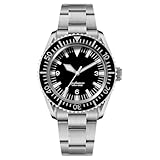
- Japanese Sweeping Quartz Movement: Features the sophisticated Japan VH31 quartz movement with a true smooth sweeping seconds hand. This offers the visual elegance and continuous motion of a luxury mechanical watch, combined with the renowned accuracy and reliability of quartz timekeeping.
- Sapphire Elegance or K1 Durability: Sapphire "Bubble" for Vintage Scratch Resistance or Tough K1 Glass. Both options feature a 3-layer anti-reflective coating that cuts glare for superior underwater and sunlight readability, offering either top-tier luxury or proven resilience with exceptional clarity.
- Professional-Grade 300M Water Resistance Design: Engineered for serious performance with a screw-down crown and case back, passing tests for 10 BAR (100 meters) water resistance. Its robust construction is designed to a 300-meter standard, making it a reliable companion for swimming, snorkeling, and all water sports.
- Superior Legibility Day and Night: Presents a clean, high-contrast enamel black or blue dial. The dial, hands, and markers are coated with Super Luminous BGW-9 for an exceptionally bright and long-lasting blue glow, ensuring perfect readability in any lighting condition.
- Premium Unidirectional Sapphire Bezel for Functional Precision: Features a 120-click unidirectional rotating bezel with a scratch-proof sapphire crystal insert. This premium component is not only exceptionally durable but also provides critical functionality for timing dives, workouts, or any elapsed interval with utmost precision and tactile feedback, serving as an essential tool on your wrist.
For shore divers and instructors, having a reliable compass integrated into the dive computer reduces the need for additional instruments and simplifies pre-dive checks.
Alarms, alerts, and why restraint matters
The Ocean allows customization of depth, time, ascent rate, and safety-related alerts, but it doesn’t encourage alarm overload. Suunto’s philosophy here is that alerts should reinforce awareness, not replace it.
Haptic feedback works well underwater and is more effective than sound in many real-world conditions. Visual alerts are clear and legible, even when task-loaded or sharing attention with a buddy.
This restrained alert system aligns with how experienced divers actually operate. You stay informed without becoming dependent on constant prompts, which is an underrated safety feature in itself.
Freediving-specific tools that respect breath-hold discipline
For freedivers, the Ocean includes dedicated apnea timers, surface interval tracking, and depth alarms that support structured training. The watch does not attempt to gamify freediving or blur lines between scuba and apnea disciplines.
Surface time tracking is particularly useful for divers following conservative recovery ratios. The Ocean makes this information visible without pushing risky optimization or competitive metrics.
The separation between freedive and scuba modes is intentional and important. It reduces the chance of cross-mode confusion and reinforces good practice for divers who move between disciplines.
What’s missing: air integration and why that matters to some divers
One notable omission is wireless tank pressure integration. The Ocean does not pair with transmitters, meaning remaining gas is not tracked on the watch.
For many recreational divers, this is a reasonable trade-off, especially if they already rely on an SPG or prefer simpler setups. For others, particularly those accustomed to fully integrated dive computers, this may be a deal-breaker.
Suunto’s decision here keeps the Ocean slimmer, lighter, and more wearable as a daily sports watch, but it does position it closer to traditional non-integrated dive computers rather than high-end technical units.
Surface GPS, entry/exit tracking, and dive context
GPS is used intelligently before and after the dive rather than during it. Entry and exit points can be logged, giving useful context for shore dives, drift dives, and dive site exploration.
This feature shines when reviewing dives later in the app, where surface tracks and underwater profiles combine to tell a complete story of the session. It’s not essential for safety, but it meaningfully improves situational awareness and post-dive learning.
For divers who travel frequently or dive unfamiliar sites, this added layer of context is surprisingly valuable.
Durability, materials, and real-world wearability
The Ocean’s case construction balances ruggedness with everyday comfort. Sapphire crystal resists scratches from gear handling and boat ladders, while the case materials are corrosion-resistant enough for repeated saltwater exposure.
Despite its dive credentials, the watch remains wearable outside the water. Lug design, strap flexibility, and overall weight make it realistic to wear all day, not just during training or diving.
That matters because safety tools are only useful if the device is actually on your wrist when you need it. The Ocean succeeds by avoiding the bulky, single-purpose feel that keeps many dive computers in a gear bag between trips.
How all of this comes together underwater
Individually, none of these tools are revolutionary. Collectively, they create a calm, predictable dive experience that supports good decision-making rather than competing for attention.
The Ocean doesn’t try to replace dive training or override judgment. Instead, it reinforces fundamentals through reliable sensors, conservative feedback, and thoughtful design choices.
For divers who want a single device that behaves like a proper dive computer underwater and a serious sports watch on land, this safety-first approach is what ultimately separates the Suunto Ocean from most smartwatch-based dive solutions.
Multisport and Training Features: How Serious an Athlete’s Watch Is It?
Once you step out of the water, the Suunto Ocean smoothly shifts roles rather than feeling like a dive computer pretending to be a sports watch. That transition matters, because many divers who cross-train or compete don’t want to swap devices between the ocean, the gym, and the trail.
Suunto’s long history in endurance sports is clearly present here. The Ocean isn’t positioned as a lifestyle smartwatch with a few fitness add-ons; it’s built as a genuine training tool that happens to be dive-capable.
Sports modes and activity coverage
Out of the box, the Ocean supports a wide range of sports profiles, including running, trail running, cycling, open-water swimming, pool swimming, rowing, strength training, hiking, skiing, and triathlon-style multisport modes. Transitions between sports are clean, with configurable data screens that mirror what experienced athletes expect rather than what casual users tolerate.
For water athletes in particular, open-water swim tracking benefits from Suunto’s mature stroke detection and GPS smoothing algorithms. It’s not just logging distance; it’s building coherent sessions that align well with perceived effort and pace.
Compared to dive-first computers that bolt on a “fitness mode,” the Ocean behaves like a proper multisport watch that happens to understand water.
Training metrics and physiological insight
The Ocean uses Suunto’s established training load and recovery framework rather than chasing every new metric trend. You get training load, recovery time estimates, and long-term progress tracking that focus on consistency and fatigue management instead of daily score-chasing.
Heart rate variability trends, resting heart rate, and sleep duration all feed into this broader picture. While it doesn’t try to gamify readiness the way some mainstream smartwatches do, the data is presented in a way that experienced athletes can interpret and act on.
For divers, this is particularly relevant. Monitoring recovery, sleep quality, and cumulative fatigue has real implications for safe diving, especially during multi-day trips or liveaboards.
Heart rate tracking: strengths and limitations
Wrist-based optical heart rate is solid for steady-state endurance sessions like running, hiking, and cycling. In real-world use, it tracks closely enough to chest straps for aerobic work, especially when the watch is worn snugly on the wrist.
As with most optical sensors, high-intensity intervals and strength training introduce more variability. Athletes who rely on precise heart rate zones can pair an external chest strap via Bluetooth, which the Ocean supports reliably.
This flexibility keeps the watch relevant for both recreational athletes and more structured training plans without forcing compromises.
GPS accuracy and outdoor performance
Suunto’s GPS performance has traditionally favored stability over aggressive smoothing, and that philosophy carries over here. Tracks are clean, consistent, and believable, particularly in open terrain, coastal paths, and mountainous areas.
Multi-band GNSS support improves reliability in challenging environments like forested trails or urban canyons. Importantly for divers who train outdoors, the GPS behavior feels predictable rather than erratic, which builds trust over time.
Battery-efficient GPS modes also allow longer sessions without sacrificing track integrity, a practical advantage for ultra-distance athletes and long adventure days.
Battery life in training context
Battery performance is one of the Ocean’s quiet strengths. In standard GPS training modes, it comfortably handles long endurance sessions without the constant anxiety of watching percentages drop.
When you factor in diving, training, sleep tracking, and daily wear, the Ocean still avoids the “nightly charger” routine common with many smartwatches. That matters on dive trips where power access can be inconsistent and training sessions stack up quickly.
For athletes who train daily and dive regularly, this balanced battery strategy is more valuable than headline-grabbing but unrealistic maximums.
Daily smartwatch features and usability
The Ocean supports smartphone notifications, basic media controls, alarms, and activity tracking without trying to replace your phone. The interface is clean, responsive, and focused on clarity rather than visual flash.
Screen readability is excellent outdoors, and the physical buttons remain reliable when wet, sweaty, or gloved. That tactile control reinforces the watch’s tool-like identity rather than pushing it into touchscreen-heavy smartwatch territory.
Comfort also plays a role here. Despite its dive-ready build, the case size and weight remain manageable for all-day wear, including sleep tracking, which is critical for recovery metrics.
How it compares to other multisport watches
Against mainstream multisport smartwatches, the Ocean feels more conservative but also more purposeful. It doesn’t overwhelm with novelty metrics, yet it delivers the fundamentals with accuracy and consistency.
Compared to dive computers with token fitness features, the gap is much wider. The Ocean supports structured training, long-term progression, and meaningful physiological insight in a way most dive-first devices simply don’t attempt.
For athletes who genuinely train year-round and dive as part of an active lifestyle, this balance is where the Suunto Ocean makes its strongest case.
Rank #4
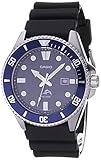
- 3-Hand Analog.Bezel Function : Unidirectional
- Anti-Reverse Rotating Bezel
- Date Display
- 200M Water Resistant
Battery Life and Charging: Dive Days, Training Weeks, and Expedition Reality
Battery performance is where the Suunto Ocean quietly reinforces its identity as a serious tool rather than a lifestyle smartwatch with dive ambitions. Instead of chasing extreme headline numbers in one mode, Suunto has tuned the Ocean to survive real weeks that include diving, training, recovery tracking, and everyday wear without demanding constant charging.
This matters because dive trips rarely involve a single activity. A typical day might include a morning boat dive, an afternoon strength or mobility session, and GPS training on rest days, all layered on top of sleep tracking and notifications.
Battery life in dive mode
In dive mode, the Ocean is rated to handle multiple days of recreational diving on a single charge, rather than a fixed number of hours that only applies in ideal conditions. For typical no-decompression dives with conservative settings, users can realistically expect several days of diving before recharge becomes necessary.
This aligns well with how divers actually operate. Liveaboards and resort trips usually involve two to four dives per day, and the Ocean’s battery drain during surface intervals remains modest, especially with the AMOLED display dimmed appropriately underwater.
The watch also avoids aggressive battery-saving shortcuts during dives. Screen refresh remains responsive, dive data stays clear, and there’s no sense that core safety functionality is being compromised to preserve power.
Training modes and GPS endurance
Outside of diving, the Ocean’s GPS endurance comfortably supports long endurance sessions. In standard multi-band GPS training modes, it handles marathon-length runs, long rides, or extended hikes without forcing compromises mid-session.
For athletes stacking training days back-to-back, this consistency is more valuable than ultra-long expedition modes that rely on heavily reduced tracking fidelity. The Ocean is designed for accurate daily training rather than occasional extreme efforts.
If you do prioritize battery over precision, Suunto’s adjustable GPS modes still allow meaningful extension of runtime. That flexibility is especially useful on travel days or multi-sport weekends when charging opportunities are limited.
Smartwatch use, recovery tracking, and real-world drain
In day-to-day smartwatch use, the Ocean lands firmly in the multi-week category rather than the nightly-charge routine common with AMOLED-based competitors. With notifications enabled, sleep tracking active, and regular training sessions, a full charge can realistically last well over a week.
This longer cadence changes how the watch feels in daily life. You stop thinking about battery management and start treating it like a piece of equipment rather than a gadget that constantly needs attention.
Sleep tracking and recovery metrics run quietly in the background without creating noticeable overnight drain. That makes the Ocean viable for athletes who rely on HRV and recovery data as part of structured training.
Charging system and travel practicality
Charging is handled via Suunto’s proprietary USB charging puck, which snaps securely into place. While not as universal as USB-C direct charging, the connection is stable and tolerant of travel wear, moisture, and repeated use.
Charging speed is practical rather than flashy. A full recharge doesn’t take all night, but it’s also not designed for ultra-fast top-ups between dives. In practice, plugging in during dinner or overnight every several days fits naturally into trip routines.
For expedition or remote travel, this predictable charging behavior is an advantage. Power banks, solar setups, or shared charging stations are far easier to manage when the device doesn’t demand frequent attention.
Expedition reality versus marketing numbers
What ultimately stands out is how closely the Ocean’s real-world performance matches its intended use. Suunto hasn’t optimized the battery around a single extreme scenario at the expense of everything else.
Divers who train regularly will find the Ocean’s battery life far more forgiving than many AMOLED smartwatches, while athletes coming from dedicated dive computers will appreciate how little additional charging overhead structured training introduces.
In practical terms, this means fewer compromises, fewer forgotten chargers, and fewer moments of deciding which activity to track because the battery might not survive the day. That reliability is exactly what a dive sports watch should deliver.
Software Ecosystem, Suunto App, and Connectivity
Once battery anxiety fades into the background, the software experience becomes the deciding factor in whether a watch feels like a tool you trust or a gadget you tolerate. With the Ocean, Suunto leans heavily on a mature ecosystem rather than chasing novelty, and that choice shapes how the watch integrates into both dive planning and daily training.
The Ocean runs on Suunto’s current-generation watch platform, sharing its core architecture with recent Suunto multisport models. That matters because dive functionality is not isolated in a separate app layer; it lives inside the same system that handles training load, recovery, navigation, and daily metrics.
Suunto App as the central hub
The Suunto App is the nerve center for everything the Ocean records, from recreational dives to interval runs and sleep tracking. Pairing is straightforward over Bluetooth, and sync reliability is notably strong, even when the watch has accumulated multiple long dives or multi-hour GPS activities.
Dive logs sync automatically with depth profiles, water temperature, gas usage (where applicable), surface intervals, and ascent behavior presented in a clean, readable timeline. For divers transitioning from standalone dive computers, this feels familiar but far more accessible, especially when reviewing dives on a larger phone screen.
What Suunto gets right is context. Dives are not siloed away from the rest of your training history; they coexist with swims, rides, strength sessions, and recovery metrics, giving a realistic picture of cumulative stress rather than treating diving as a separate universe.
Dive log depth, clarity, and export options
For post-dive analysis, the Ocean’s logs are detailed without becoming cluttered. Depth curves, dive time, temperature changes, ascent rates, and safety stops are easy to interpret, even for newer divers reviewing their behavior for the first time.
More experienced divers will appreciate the ability to export dives for backup or integration into external logbook platforms. While Suunto App may not replace specialized technical dive planning software, it covers the needs of recreational and advanced recreational divers cleanly and reliably.
Importantly, the app does not push social features aggressively. Sharing dives is optional, and private logging remains private, which aligns well with divers who treat logs as safety records rather than social media content.
Training analytics and recovery integration
Where the Ocean separates itself from traditional dive computers is how seamlessly dive activity feeds into training analytics. Suunto’s load, recovery, and HRV-based insights account for dives as part of overall stress, rather than ignoring them or treating them as passive time.
This is especially relevant for freedivers, spearfishers, and scuba instructors who may dive frequently while maintaining structured endurance or strength programs. The software acknowledges that repeated dives have physiological cost, even if they don’t look like traditional cardio sessions.
Sleep tracking, readiness indicators, and long-term trends are presented conservatively. Suunto avoids exaggerated readiness scores, instead offering steady, pattern-based insights that reward consistency over daily micromanagement.
Navigation, maps, and offline capability
For topside activities, the Ocean uses Suunto’s offline map system, with routes and points of interest synced through the app. Maps are clear, battery-efficient, and practical for hiking, trail running, or navigating unfamiliar coastal areas during dive travel.
Route planning is handled in the app and pushed to the watch, keeping the on-device interface focused and uncluttered. This design philosophy carries over into diving, where the watch prioritizes legibility and reliability over customization overload.
For expedition-style travel, offline functionality is a real advantage. Once maps and routes are loaded, the Ocean remains fully usable without data connectivity, which aligns well with remote dive destinations.
Connectivity, notifications, and daily usability
Bluetooth connectivity is stable, and background syncing rarely interrupts daily use. Firmware updates arrive through the app and install reliably, without the extended downtime or failed updates that plague some smartwatch ecosystems.
Smartphone notifications are present but restrained. You can receive calls, messages, and app alerts, but interaction remains minimal, reinforcing that the Ocean is a sports instrument first and a smartwatch second.
There is no onboard cellular connectivity, music storage, or voice assistant. For this category of device, that absence is intentional rather than a limitation, preserving battery life and reducing software complexity that could interfere with core dive functions.
Platform philosophy and long-term support
Suunto’s ecosystem philosophy favors stability over constant interface churn. Updates tend to refine existing features, improve algorithms, or add depth to supported sports rather than reinventing the user experience every year.
For buyers considering the Ocean as a long-term piece of equipment, this matters. Dive computers and serious training watches are not replaced annually, and Suunto’s track record of maintaining software support across multiple hardware generations reinforces confidence.
Ultimately, the Ocean’s software ecosystem feels purpose-built rather than trend-driven. It respects the reality that divers and multisport athletes want their data accurate, accessible, and dependable, without requiring daily interaction or constant configuration to stay useful.
How the Suunto Ocean Compares: Dedicated Dive Computers vs Multisport Smartwatches
Seen in context of Suunto’s conservative software philosophy, the Ocean sits deliberately between two established categories. It borrows the safety-first thinking of a traditional dive computer while adopting the daily versatility of a multisport training watch.
That hybrid positioning is what makes comparisons tricky, because the Ocean is not trying to replace every device equally. Instead, it prioritizes realistic use cases for divers who also train, travel, and live with their watch on their wrist.
Against dedicated dive computers: what you gain and what you give up
Compared to purpose-built dive computers like Suunto’s own EON series or Shearwater’s Perdix line, the Ocean immediately feels more compact and wearable. Case thickness, lug geometry, and strap flexibility are tuned for all-day comfort rather than just exposure suit use, making it viable as a daily watch.
Underwater, core recreational dive functions are fully covered. Air and nitrox support, a modern Bühlmann-based decompression model, clear ascent rate feedback, and legible depth and time fields align closely with what most non-technical divers actually use on real dives.
Where the Ocean differs is in depth of configurability. Dedicated dive computers allow granular gas switching, trimix support, extensive display field customization, and redundancy options that matter for technical or expedition-level diving.
💰 Best Value

- Luminescent Hands And Indices, Collected In A Coin Edge Bezel And Screw Down Crown
- Japanese Miyota Movement For Precision Time Keeping On Your Wrist Watch
- Finished With A High Grade Rubber Strap And Tang Buckle That Brings Style To A Sturdy Sport Watch
- Water Resistant Up To 10 Atm 100 Meters 330 Feet Suitable For Swimming And Snorkeling.
- Comprehensive Warranty All Stuhrling Timepieces include a 2 Year Comprehensive Warranty
For those profiles, the Ocean is not a replacement. It lacks the redundancy philosophy, screen real estate, and modular expandability expected in technical dive environments, particularly for mixed gas or overhead diving.
The trade-off comes back on land. Traditional dive computers become inert once the dive ends, while the Ocean transitions immediately into recovery tracking, sleep analysis, GPS-based training, and travel navigation without changing devices.
Dive safety and interface philosophy
One area where the Ocean aligns more closely with dedicated dive computers is interface restraint. Alerts are deliberate, data fields are not overloaded, and color use underwater prioritizes contrast rather than decoration.
This conservative approach reduces cognitive load, especially in low visibility or task-loaded scenarios. It reflects Suunto’s long-standing belief that a dive computer should guide decisions rather than invite constant interaction.
Touch input is disabled during dives, relying on physical buttons that remain reliable with gloves or cold fingers. That decision alone separates it from many smartwatch-first designs that struggle underwater.
Against multisport smartwatches: where the Ocean pulls ahead
When compared to mainstream multisport watches with added dive modes, the Ocean’s advantage is credibility. Its dive algorithms, depth sensor accuracy, and failure-state behavior are built from Suunto’s dive lineage rather than adapted from fitness-first hardware.
Many smartwatches treat diving as a feature; the Ocean treats it as a primary function. That shows in ascent rate enforcement, decompression clarity, and post-dive surface interval handling that feels familiar to experienced divers.
Battery behavior is another differentiator. Dive mode endurance is predictable and conservative, avoiding the aggressive power management shortcuts that some smartwatch ecosystems rely on to hit headline battery numbers.
The physical build also reflects underwater priorities. Materials, sealing, and button feel are closer to a dive instrument than a lifestyle wearable, even though finishing and proportions remain refined enough for everyday wear.
Where multisport smartwatches still lead
Despite its strong positioning, the Ocean does not try to outsmart a full smartwatch ecosystem. There is no app store, no music playback, and no voice assistant, which may matter for users accustomed to phone-replacement features.
Training analytics are comprehensive but not maximalist. You get reliable heart rate data, recovery insights, structured workouts, and multisport profiles, but not the dense algorithm layering or social competition tools found in some platforms.
For athletes who prioritize daily engagement, third-party integrations, or smartwatch lifestyle features over diving, a non-dive multisport watch may still feel more engaging.
One watch versus two: practical ownership considerations
The Ocean’s real competition is not a single device, but the idea of carrying both a dive computer and a training watch. For many recreational divers and freedivers, the Ocean simplifies travel, charging routines, and data management into a single platform.
That simplification has tangible benefits. Fewer failure points, fewer cables, and a single logbook that connects dives to training load and recovery patterns.
For divers operating at the technical edge, the Ocean works best as a secondary or backup device rather than a primary computer. For everyone else, it often replaces two devices without meaningful compromise.
Value positioning in the current market
Priced closer to premium multisport watches than entry-level dive computers, the Ocean asks buyers to value versatility and long-term use. Its finishing, sapphire protection, and robust strap system reinforce that it is built to be worn daily, not just occasionally submerged.
Against high-end dive computers, the value equation shifts toward lifestyle integration and training support. Against smartwatches, the value lies in trust, restraint, and underwater reliability.
Ultimately, the Ocean defines its own lane. It is not the deepest technical tool nor the smartest daily companion, but for divers who train seriously and want one dependable instrument across environments, it occupies a space that few competitors address convincingly.
Limitations, Trade-Offs, and Who Should (or Shouldn’t) Buy the Suunto Ocean
By now, the Ocean’s positioning should be clear: it is deliberately balanced rather than extreme. That balance is also where its compromises live, and understanding them is essential before treating it as an all-in-one replacement for either a high-end dive computer or a fully featured smartwatch.
Dive limitations to understand before committing
The Suunto Ocean is built first for recreational scuba and freediving, not for mixed-gas or expedition-level diving. It does not target trimix, CCR workflows, or the kind of configurability expected by technical divers running staged decompression with multiple gases.
Air integration is another clear dividing line. If tank pressure data on the wrist is a non-negotiable part of your diving, the Ocean will feel incomplete compared to dedicated dive computers designed around transmitters and redundancy.
For most recreational profiles, this is not a safety concern. But it does mean that divers accustomed to full console replacement or highly specialized dive planning will see the Ocean more naturally as a companion or backup rather than a sole primary device.
Freediving depth versus specialization
For freedivers, the Ocean offers a capable and well-executed experience, with depth tracking, surface intervals, and clear underwater visibility. It works extremely well for training, cross-training, and recreational depth ranges.
Where it stops short is at the extreme end of competitive freediving. Dedicated freedive computers still offer deeper specialization, simplified interfaces, and in some cases greater depth headroom designed specifically for repetitive deep sessions.
If freediving is your primary discipline and pushing personal depth limits is the goal, a single-purpose freedive computer may still feel more appropriate. If freediving is part of a broader water-sports and training lifestyle, the Ocean fits far more naturally.
Smartwatch trade-offs in daily use
On land, the Ocean behaves like a restrained multisport watch rather than a lifestyle smartwatch. There is no cellular connectivity, no app ecosystem to speak of, and no ambition to replace your phone.
Features like voice assistants, contactless payments, or rich third‑party apps are simply outside its scope. Notifications are reliable but basic, and interaction stays focused on training, recovery, and activity tracking.
For many athletes and divers, this is a strength rather than a weakness. But users coming from an Apple Watch or Wear OS device should expect a quieter, more purpose-driven daily experience.
Battery, display, and real-world wearability compromises
The Ocean’s bright, modern display improves clarity both underwater and on land, but it does carry battery trade-offs compared to older transflective designs. Dive mode and GPS-heavy training will demand more frequent charging than purely passive watches.
Physically, this is a substantial watch. The case size, sapphire crystal, and reinforced construction give it reassuring durability, but smaller wrists may find it visually dominant or feel its presence during all-day wear.
Comfort is helped by Suunto’s strap system and weight distribution, yet this is still a tool watch first. If ultra-light comfort or discreet styling matters more than ruggedness, the Ocean may feel like more watch than you want.
Software ecosystem and long-term platform considerations
Suunto’s software philosophy favors clarity and stability over constant feature churn. Training analytics are solid, recovery insights are useful, and the dive log integration is clean and dependable.
What you will not find is the rapid iteration or social gamification seen in some competing ecosystems. Third-party integrations exist, but they are selective rather than expansive.
For users who value consistency and data trustworthiness, this approach ages well. For those who enjoy experimenting with new apps, widgets, or competitive features, it may feel conservative.
Who the Suunto Ocean makes the most sense for
The Ocean is ideally suited to recreational scuba divers and freedivers who train regularly across multiple sports and want one device they can trust in water, mountains, and daily life. It excels for divers who travel, value simplicity, and want their dive data connected to recovery and training load.
It also makes sense for endurance athletes who dive seasonally and want a watch that does not sit idle between trips. In that role, the Ocean replaces a dive computer without sacrificing serious multisport capability.
For instructors, guides, or experienced divers operating well within recreational limits, it offers a dependable, professional-feeling tool that integrates cleanly into everyday training.
Who should look elsewhere
Technical divers, mixed-gas divers, and anyone who requires air integration or deep customization should treat the Ocean as a secondary device at best. Dedicated dive computers remain the right choice for those profiles.
Likewise, users who prioritize smartwatch lifestyle features, app ecosystems, or phone-replacement convenience will find better value in non-dive smartwatches. The Ocean does not try to compete in that space, and it shows.
If your diving is infrequent and your primary goal is a highly interactive smartwatch, the Ocean may feel underutilized.
Final perspective
The Suunto Ocean succeeds because it does not chase extremes. It chooses reliability, clarity, and cross-environment consistency over feature excess, and that choice defines both its strengths and its limitations.
As a single watch for divers who train seriously, it remains one of the most coherent solutions on the market. Not perfect, not universal, but thoughtfully engineered for people who live between water, sport, and everyday life rather than switching devices at every boundary.