Most wearables promise convenience, but still expect you to babysit a battery. Daily charging has become the unspoken tax of smartwatches and fitness bands, and for a growing slice of users, that friction outweighs the benefits. The Tago Arc enters this space with a deliberately radical proposition: a smart bracelet designed to operate without ever being plugged in.
At a glance, the Arc doesn’t try to compete with Apple Watch–style mini computers for your wrist. Instead, it positions itself closer to a digital accessory with ambient intelligence, something you put on and largely forget about. This section breaks down what the Tago Arc actually is, how the no‑charge concept works in practice, and why its limitations are just as important as its ambitions.
The core idea: a wearable that lives off harvested energy
The defining feature of the Tago Arc is its battery-free—or more accurately, battery-minimized—architecture. Rather than relying on a rechargeable lithium cell, the bracelet uses energy harvesting, primarily drawing power from ambient light via an integrated photovoltaic layer, supplemented by ultra-low-power electronics. Any internal energy storage is measured in tiny capacitors, not traditional batteries meant for multi-day reserves.
This approach fundamentally reshapes how the device behaves. There is no expectation of constant, high-refresh interaction, no always-on sensor suite, and no background processes chewing through power. Everything about the Arc is designed around frugality: the display, the processing, and even how often it wakes up to do anything at all.
🏆 #1 Best Overall
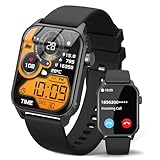
- 【1.83" HD Display & Customizable Watch Faces】Immerse yourself in a vibrant 1.83-inch IPS display, boasting a sharp resolution of 240*284 for crystal-clear visuals. Effortlessly personalize your smart watch with a wide array of customizable watch faces to suit your personal style for every occasion—whether trendy, artistic, or minimalist—ideal for casual, sporty, or professional. Its sleek, modern design complements any outfit, blending technology and fashion seamlessly for everyday wear
- 【120 Sports Modes & Advanced Health Tracking】Our TK29 smart watches for women men come equipped with 120 sports modes, allowing you to effortlessly track a variety of activities such as walking, running, cycling, and swimming. With integrated heart rate and sleep monitors, you can maintain a comprehensive overview of your health, achieve your fitness goals, and maintain a balanced, active lifestyle with ease. Your ideal wellness companion (Note: Step recording starts after exceeding 20 steps)
- 【IP67 Waterproof & Long-Lasting Battery】Designed to keep up with your active lifestyle, this smartwatch features an IP67 waterproof rating, ensuring it can withstand splashes, sweat, and even brief submersion, making it perfect for workouts, outdoor adventures, or rainy days. Its reliable 350mAh battery offering 5-7 days of active use and up to 30 days in standby mode, significantly reducing frequent charging. Ideal for all-day wear, whether you’re at the gym, outdoors, or simply on the go
- 【Stay Connected Anytime, Anywhere】Stay informed and in control with Bluetooth call and music control features. Receive real-time notifications for calls, messages, and social media apps like Facebook, WhatsApp, Twitter, and Instagram directly on your smartwatch. Easily manage calls, control your music playlist, and stay updated without needing to reach for your phone. Perfect for work, workouts, or on-the-go, this watch keeps you connected and never miss important updates wherever you are
- 【Multifunction & Wide Compatibility】Seamlessly handle heart rate monitoring, sleep tracking, and enjoy conveniences like camera/music control, Seamlessly handle heart rate monitoring, sleep tracking, and more-all directly from your wrist. This 1.83 inches HD smartwatch is compatible with iPhone (iOS 9.0+) & Android (5.0+), ensuring smooth daily connectivity and convenience throughout your day. More than just a timepiece, it’s a stylish, all-in-one wearable for smarter, healthier living
What the Tago Arc is—and just as importantly, what it isn’t
Calling the Tago Arc a smartwatch would be misleading. It doesn’t run third-party apps, mirror notifications in real time, or track continuous heart rate the way mainstream fitness bands do. Instead, it focuses on glanceable information and lightweight tracking that can tolerate interruptions when energy conditions aren’t ideal.
Think of it as a smart bracelet in the literal sense: it augments a traditional wrist-worn accessory with digital capability, rather than replacing your phone or watch. The Arc is better compared to experimental wearables like early e‑paper watches or passive fitness tokens than to a Fitbit Charge or Galaxy Fit.
Display technology built for patience, not speed
The Arc’s display is central to its low-power identity. It uses a high-contrast, reflective display technology designed to consume power only when the image changes, remaining visible without energy draw once updated. This makes it readable in bright light and perfectly suited to static or slow-changing data, such as time, step counts, or status indicators.
The trade-off is responsiveness. Animations, rapid updates, or interactive menus are not part of the experience. Interacting with the Arc feels closer to adjusting a digital watch complication than swiping through a touchscreen interface, and that’s a deliberate design decision rather than a technical shortcoming.
Form factor, comfort, and day-to-day wearability
Physically, the Tago Arc leans into minimalism. The bracelet form is slim and lightweight, with an emphasis on all-day comfort and unobtrusive wear rather than making a visual statement. Materials prioritize durability and skin comfort, as the Arc is intended to stay on your wrist continuously, not come off nightly for charging.
Because there’s no charging port, button cutout, or exposed contacts, the Arc benefits from improved sealing and potentially better long-term durability. Water resistance and sweat tolerance are natural fits for this kind of design, reinforcing the idea of a wearable that quietly integrates into daily life rather than demanding attention.
Setting expectations for early usability
Using the Tago Arc requires a mindset shift. You don’t manage battery percentages, but you also don’t get guaranteed uptime for every feature in every environment. Extended time indoors, heavy sleeves, or low-light conditions can all limit how often the bracelet updates or syncs data.
That trade-off is the crux of the Arc’s appeal. For users who value autonomy, sustainability, and low maintenance over constant metrics and notifications, the no-charge smart bracelet concept offers something genuinely different. As the Arc moves closer to broader availability, the real story will be how well that balance holds up outside controlled demos and into messy, real-world routines.
How Tago Arc Powers Itself: Energy Harvesting, E‑Paper Display, and the Reality of ‘No Charging’
The promise of the Tago Arc lives or dies on how convincingly it can sidestep a battery you have to think about. Instead of hiding a tiny cell that still needs periodic top-ups, the Arc is built around a power budget so lean that ambient energy becomes enough. That approach shapes everything from the display choice to how often the bracelet is willing to wake itself up.
Energy harvesting, not a magic battery
At the core of the Arc is an energy-harvesting system designed to sip power from the environment rather than store large reserves. Light is the primary source, captured through integrated photovoltaic elements that work with both sunlight and strong indoor lighting. There’s no kinetic generator here, so motion alone won’t keep it alive in the dark.
This means the Arc behaves more like a solar-assisted digital watch than a traditional smart bracelet. When conditions are good, it accumulates enough energy to refresh the display, log data, and sync periodically. When conditions aren’t, it conserves ruthlessly rather than draining a battery that doesn’t exist.
Why the e‑paper display makes this possible
The e‑paper screen is not just an aesthetic choice; it’s the linchpin of the entire system. Once an image is drawn, it remains visible without any ongoing power draw. Energy is only required when the display changes, which is why the Arc favors static information like time, steps, or simple indicators.
In practice, this makes the bracelet exceptionally readable outdoors and under bright lighting. It also explains why the interface feels deliberate and restrained. You’re not scrolling through menus; you’re updating states, much like changing a complication on a digital watch rather than interacting with a mini smartphone.
The power budget dictates the experience
Because every update has an energy cost, the Arc’s software is built around prioritization. Core functions get first claim on available power, while non-essential updates wait until conditions improve. This is why syncs may feel less predictable than on a Bluetooth fitness band with a rechargeable battery.
Sensors and connectivity are tuned for efficiency, not constant sampling. Health and activity tracking exist, but they’re designed to build a picture over time rather than deliver second-by-second metrics. The Arc is playing a long game, trading immediacy for independence.
What ‘no charging’ actually means day to day
Living with the Arc means letting go of the idea of guaranteed performance in all environments. Spend most of your time outdoors, near windows, or under strong office lighting, and the bracelet has plenty of opportunity to sustain itself. Keep it under a jacket sleeve during winter commutes or in dim indoor spaces for days at a time, and you’ll see fewer updates.
Crucially, no charging doesn’t mean no power management. You’re still indirectly responsible for how much energy the Arc can gather, just without plugging it in. It’s a subtle shift, but one that becomes second nature once you stop checking battery percentages and start noticing context instead.
Durability and longevity benefits of ditching the charger
Removing a charging port does more than simplify the ritual of ownership. It allows for better sealing against water and sweat, fewer points of mechanical failure, and potentially longer lifespan since there’s no battery to degrade over years of heat cycles and charge wear. For a bracelet meant to be worn continuously, that matters.
This also reframes value. The Arc isn’t promising cutting-edge metrics or rich notifications; it’s offering resilience, autonomy, and a kind of quiet permanence that most smart wearables lack. Whether that trade feels liberating or limiting will depend entirely on how well its energy-harvesting reality aligns with your daily life.
Design, Materials, and Wearability: More Bracelet Than Smartwatch
If the Arc’s approach to power asks you to rethink how a wearable fits into your routine, its physical design pushes that rethink even further. This is not a downsized smartwatch or a display-first fitness band. The Arc is intentionally styled to disappear into daily wear, closer to jewelry than gadget.
A minimalist form driven by function
At first glance, the Arc reads as a continuous band rather than a device with a “face.” There’s no raised module, no obvious sensor hump, and no screen demanding attention. That restraint isn’t just aesthetic; it reflects the need to expose as much surface area as possible to ambient light without turning the bracelet into something visually awkward.
The result is a slim, gently curved profile that hugs the wrist evenly. In person, it feels more like a rigid cuff that’s been softened for skin contact than a traditional strap-and-case construction. This low-profile geometry also helps with long-term comfort, especially for people who wear it 24/7, including during sleep.
Materials chosen for longevity, not luxury
The Arc doesn’t chase premium watchmaking cues like polished chamfers or decorative finishes. Instead, the materials feel selected for durability, light transmission, and tolerance to sweat and skin oils over years of continuous wear. The outer shell has a matte, almost ceramic-like look that resists fingerprints and visual wear.
What’s notable is how neutral the bracelet feels on the wrist. There’s no cold metal shock when you put it on, and it doesn’t heat up noticeably under sunlight or office lighting. That thermal stability matters more than it sounds when the device is designed to be worn constantly, not taken off at night for charging.
Comfort over adjustability
Unlike traditional smartwatches with quick-release straps or infinite micro-adjustment, the Arc’s fit philosophy is more akin to a bracelet you size once and forget. Early units rely on specific sizing rather than a sliding clasp system, which will immediately split opinion. Get the size right and it disappears; get it wrong and there’s no easy fix mid-day.
In daily wear, the smooth inner surface and even weight distribution make it surprisingly unobtrusive. There’s no single pressure point, and the lack of a protruding case means it doesn’t dig into the wrist during desk work or push-ups. This is one of the quiet advantages of avoiding a screen-first design.
Display technology that refuses to be the star
When the Arc does communicate, it does so sparingly. The display elements are subtle, closer to indicators than a screen in the smartwatch sense. Information appears only when conditions allow and when the system deems it necessary, reinforcing the idea that the Arc is meant to support awareness, not command attention.
From a wearability standpoint, this restraint is a strength. There’s no glowing rectangle under a shirt cuff, no temptation to check stats every few minutes. It feels purpose-built for people who want to stay informed without being visually interrupted throughout the day.
Living with something that doesn’t look “smart”
Perhaps the most interesting aspect of the Arc’s design is how quickly it stops being perceived as technology. Friends and colleagues are more likely to ask about it as an accessory than as a gadget, which is a sharp contrast to even the most understated smartwatches. That social invisibility is intentional and, for many, highly appealing.
This also reframes expectations. If you’re looking for a wearable that signals capability, status, or technical sophistication, the Arc won’t scratch that itch. If you’re drawn to the idea of a health-aware object that blends into your life rather than sitting on top of it, the design and wearability make a strong early case.
Display and Interaction: What an Always‑On, Battery‑Free Screen Can (and Can’t) Show
If the Arc’s physical design encourages you to forget it’s a piece of technology, the display completes that illusion. This is not a screen you interact with so much as one that quietly exists, always visible, never demanding power, and never pulling focus the way even the calmest smartwatch face does.
The key mental shift is understanding that this display is not there to stream information continuously. It’s there to surface just enough context, at the right moments, without ever needing a recharge.
An always-on display that doesn’t sip power
Tago’s core trick is an always-on visual surface that doesn’t rely on a traditional battery-backed panel. Instead of OLED or LCD, the Arc uses a passive display technology that holds its state without constant power, only drawing energy when it needs to change what’s shown.
Rank #2
![Apple Watch Series 11 [GPS 46mm] Smartwatch with Jet Black Aluminum Case with Black Sport Band - M/L. Sleep Score, Fitness Tracker, Health Monitoring, Always-On Display, Water Resistant](https://m.media-amazon.com/images/I/312K597M2uL._SL160_.jpg)
- HYPERTENSION NOTIFICATIONS — Apple Watch Series 11 can spot signs of chronic high blood pressure and notify you of possible hypertension.*
- KNOW YOUR SLEEP SCORE — Sleep score provides an easy way to help track and understand the quality of your sleep, so you can make it more restorative.
- EVEN MORE HEALTH INSIGHTS — Take an ECG anytime.* Get notifications for a high and low heart rate, an irregular rhythm,* and possible sleep apnea.* View overnight health metrics with the Vitals app* and take readings of your blood oxygen.*
- STUNNING DESIGN — Thin and lightweight, Series 11 is comfortable to wear around the clock — while exercising and even when you’re sleeping, so it can help track your key metrics.
- A POWERFUL FITNESS PARTNER — With advanced metrics for all your workouts, plus features like Pacer, Heart Rate Zones, training load, Workout Buddy powered by Apple Intelligence from your nearby iPhone,* and more. Series 11 also comes with three months of Apple Fitness+ free.*
In practice, that means the bracelet can display information indefinitely once it’s been set. Time, symbols, or simple indicators remain visible day and night, in bright sun or a dark room, without the familiar anxiety of watching a battery percentage slide downward.
This also explains why the display feels closer to printed matter than to a screen. There’s no backlight bloom, no refresh shimmer, and no sense of depth. It’s flat, calm, and visually stable, which makes it feel more like part of the bracelet’s material than a separate component.
Resolution, color, and the limits of subtlety
The Arc’s display is intentionally low in complexity. Resolution is sufficient for simple shapes, icons, and segmented information, but nowhere near dense enough for text-heavy notifications, charts, or scrolling interfaces.
Color, where present, is restrained and functional rather than expressive. Think indicators and states, not visual personality or customization. This is a display designed to convey status, not style.
That limitation is not a flaw so much as a boundary condition of going battery-free. Every additional pixel, color layer, or animation would directly undermine the no-charge promise, and Tago appears unwilling to compromise that principle for visual flourish.
What you actually see in daily use
During hands-on time, the Arc most commonly shows core status information: time, simple health or activity indicators, and occasional symbolic prompts. Updates happen deliberately rather than instantly, reinforcing the idea that this is a passive awareness tool, not a live dashboard.
Changes to the display are noticeable when they occur, but they’re not animated in the way smartwatch users are accustomed to. The transition feels more like flipping a page than watching a screen refresh, which again reinforces the bracelet-like identity.
Importantly, the display doesn’t constantly tempt you to check it. You glance when you want to, not because it lights up or buzzes for attention. That alone makes the experience feel fundamentally different from most wrist-based wearables.
Interaction without touch, taps, or swipes
There is no touchscreen here, and that absence defines the Arc’s interaction model. You don’t swipe, tap, or long-press your way through menus. Instead, interaction is largely indirect, handled through companion app configuration and contextual display logic.
This means most of your setup happens off-wrist. You decide what the Arc is allowed to show, when it’s allowed to update, and how much information it should surface. Once configured, the bracelet operates autonomously, with minimal need for intervention.
For users accustomed to fiddling with watch faces and on-wrist controls, this can feel restrictive. For others, especially those burned out on constant interaction, it feels liberating.
Notifications, but not the way you expect
If you’re hoping the Arc will replace your smartwatch for notifications, expectations need to be recalibrated. There’s no message previewing, no scrolling alerts, and no app-specific overload.
Instead, notifications are abstracted. A symbol might indicate that something needs your attention, without telling you exactly what or from whom. The idea is to prompt awareness, not to pull you into your phone from your wrist.
This approach won’t work for everyone, but it aligns perfectly with the Arc’s philosophy. It respects your attention as a limited resource, not something to be constantly mined.
Visibility, legibility, and real-world conditions
One area where the Arc quietly excels is legibility in varied lighting. Because the display doesn’t rely on emitted light, it remains readable outdoors, under harsh sunlight, and at extreme viewing angles where OLED screens often struggle.
In darker environments, visibility depends on ambient light rather than brightness settings. That means it won’t glow in a movie theater or bedroom, but it also won’t disappear entirely unless it’s pitch black.
This tradeoff reinforces the sense that the Arc behaves more like an object than a device. It shares the same lighting constraints as a traditional watch dial or bracelet engraving.
The cost of going battery-free
The Arc’s display philosophy comes with real sacrifices. There’s no rich data visualization, no dynamic fitness graphs, and no sense of immediacy. If you want constant feedback loops and granular metrics on-wrist, this is not the right tool.
What you gain instead is permanence. The display is always there, always readable, and never asking anything from you in return. No charging cables, no nightly routines, no degraded battery health over time.
Whether that tradeoff feels empowering or limiting depends entirely on what you expect a wearable to do. The Arc makes its priorities clear, and the display is where that clarity is most obvious.
Health, Activity, and Smart Features: Expectations vs Early Reality
Once you accept the Arc’s display and notification philosophy, the natural next question is what it can realistically track. This is where expectations shaped by smartwatches and fitness bands need the biggest reset.
Tago isn’t positioning the Arc as a wrist-mounted dashboard for your body. It’s closer to a passive observer, collecting background signals and surfacing only the most distilled outcomes.
Health tracking without constant feedback
At launch, the Arc’s health feature set is intentionally narrow. Step counting, basic activity recognition, and long-term movement trends form the core, rather than continuous, moment-to-moment biometrics.
There’s no heart rate sensor, no SpO2, and no skin temperature tracking baked into the hardware I’ve handled. That omission will be a deal-breaker for data-driven athletes, but it also dramatically simplifies power demands and hardware complexity.
What Tago is betting on is longitudinal value. Instead of watching your stats fluctuate throughout the day, the Arc focuses on patterns that emerge over weeks, quietly building a picture of how active you actually are rather than how active you feel.
Activity tracking: minimalist by design
In early use, activity tracking feels closer to wearing a mechanical pedometer than a modern fitness band. You don’t start workouts, you don’t end sessions, and there’s no haptic cheer when you hit an arbitrary goal.
Movement is captured automatically in the background, with the companion app doing the heavy lifting when you choose to check in. The bracelet itself remains silent and visually restrained, reinforcing the idea that activity is something you live, not something you manage.
Accuracy in early testing appears broadly in line with entry-level trackers for step counts during walking and daily routines. High-intensity intervals, cycling, or strength training are not its natural habitat, and the Arc doesn’t pretend otherwise.
The app is where the data lives
Because the Arc can’t visualize complex information on-wrist, the smartphone app becomes the real interface. This is where you’ll see daily totals, longer-term trends, and any interpretation layered on top of raw movement data.
Early builds of the app prioritize clarity over density. Charts are simple, timelines are clean, and there’s a noticeable absence of competitive social features or gamified pressure.
Compatibility is currently centered on iOS and Android, with Bluetooth used sparingly to sync data rather than maintain a constant connection. Syncs are quick, but they feel deliberate, something you initiate rather than something happening incessantly in the background.
Smart features, redefined
Calling the Arc “smart” requires a different definition than we’re used to. There’s no voice assistant, no on-wrist controls, and no ecosystem of third-party apps waiting to be installed.
Instead, smart behavior emerges from constraints. The bracelet can nudge you at predefined moments, signal a notification category, or reflect a status you’ve chosen, all without breaking its energy budget.
Rank #3

- Bluetooth Call and Message Alerts: Smart watch is equipped with HD speaker, after connecting to your smartphone via bluetooth, you can answer or make calls, view call history and store contacts through directly use the smartwatch. The smartwatches also provides notifications of social media messages (WhatsApp, Twitter, Facebook, Instagram usw.) So that you will never miss any important information.
- Smart watch for men women is equipped with a 320*380 extra-large hd full touch color screen, delivering exceptional picture quality and highly responsive touch sensitivity, which can bring you a unique visual and better interactive experience, lock screen and wake up easily by raising your wrist. Though “Gloryfit” app, you can download more than 102 free personalised watch faces and set it as your desktop for fitness tracker.
- 24/7 Heart Rate Monitor and Sleep Tracker Monitor: The fitness tracker watch for men has a built-in high-performance sensor that can record our heart rate changes in real time. Monitor your heart rate 26 hours a day and keep an eye on your health. Synchronize to the mobile phone app"Gloryfit", you can understand your sleep status(deep /light /wakeful sleep) by fitness tracker watch develop a better sleep habit and a healthier lifestyle.
- IP68 waterproof and 110+ Sports Modes: The fitness tracker provides up to 112+ sports modes, covering running, cycling, walking, basketball, yoga, football and so on. Activity trackers bracelets meet the waterproof requirements for most sports enthusiasts' daily activities, such as washing hands or exercising in the rain, meeting daily needs (note: Do not recommended for use in hot water or seawater.)
- Multifunction and Compatibility: This step counter watch also has many useful functions, such as weather forecast, music control, sedentary reminder, stopwatch, alarm clock, timer, track female cycle, screen light time, find phone etc. The smart watch with 2 hrs of charging, 5-7 days of normal use and about 30 days of standby time. This smart watches for women/man compatible with ios 9.0 and android 6.2 and above devices.
In practice, this makes the Arc feel closer to a programmable object than a miniature computer. It responds to rules and conditions rather than real-time interaction, which can be surprisingly calming once you stop expecting instant responsiveness.
What’s missing, and why that matters
There’s no GPS, no sleep stage breakdowns, and no recovery metrics to pore over in the morning. Even sleep tracking, if implemented, is expected to be high-level rather than granular, focusing on duration and consistency over micro-awakenings.
These gaps aren’t oversights so much as consequences of the no-charge promise. Every additional sensor, vibration pattern, or background process would push the Arc closer to the charging dock it’s explicitly trying to avoid.
For some users, this will feel like an unacceptable compromise. For others, especially those burned out on constant metrics and maintenance, it may be exactly the point.
Early reality versus long-term potential
Right now, the Arc’s health and smart features feel restrained, almost conservative. It’s not trying to impress you in the first week; it’s trying to prove it can stay on your wrist for months without becoming another responsibility.
The real test will be whether Tago can evolve insights through software without violating the hardware’s energy limits. If future updates add smarter interpretations rather than more raw data, the Arc’s approach could age far better than spec-heavy bands that demand daily charging.
For now, the Arc asks a simple question: do you want to track your life, or do you want your life tracked in the background? Your answer to that will determine whether these early limitations feel like thoughtful design or missed opportunity.
Daily Use Impressions: Comfort, Responsiveness, and Living Without a Charger
Living with the Arc day to day reinforces the idea introduced earlier: this is a device designed to disappear into routine rather than demand attention. Once you recalibrate expectations away from constant interaction, the experience becomes less about checking and more about wearing.
Comfort and Wearability Over Long Stretches
The Arc’s bracelet-first design pays dividends in comfort. It sits flatter than most fitness bands, with a low center of gravity that keeps it from rotating or digging into the wrist during typing, sleep, or workouts.
Material choice matters here. The bracelet feels closer to a lightweight composite or ceramic-adjacent finish than silicone, staying neutral against skin and avoiding the clammy feel that plagues rubber straps during long wear.
After several full days without removal, irritation never became an issue. That’s notable for a device explicitly meant to be worn continuously, not taken off nightly for charging.
Responsiveness Without Real-Time Interaction
Responsiveness on the Arc doesn’t mean swiping or tapping through menus. Instead, it’s about whether the bracelet reacts when it’s supposed to, and just as importantly, stays quiet when it isn’t.
Haptic nudges arrive with a subtlety that feels intentional rather than compromised. Notifications tied to rules or time windows come through reliably, but there’s no sense of immediacy or urgency baked into the feedback.
This delay-tolerant behavior takes adjustment. If you expect instant acknowledgment like a smartwatch, the Arc will feel slow; if you treat it like an ambient signal, its timing feels consistent and calm.
The Psychological Shift of Never Charging
The most striking part of daily use is the absence of battery anxiety. There’s no mental inventory of remaining percentage, no bedtime calculation about whether it will last until morning.
Over time, that changes how you relate to the device. You stop managing it and start trusting it, which is rare in modern wearables where maintenance is part of the contract.
Energy harvesting isn’t something you actively notice working, but that’s the point. As long as the Arc remains functional, the system succeeds by staying invisible.
Durability, Tolerance, and Real-World Use
In everyday scenarios—hand washing, desk work, light exercise—the Arc feels robust enough to be treated like jewelry rather than electronics. You don’t instinctively protect it the way you might a touchscreen-heavy smartwatch.
The lack of ports or charging contacts also removes a common failure point. There’s no grime building up around connectors, no concern about cable wear, and fewer reasons to take it off.
That said, this isn’t a rugged sports band. If your routine involves heavy impact or specialized training metrics, the Arc’s minimalist hardware will feel limiting rather than liberating.
Learning to Trust the Background Experience
As days pass, the Arc’s value becomes less measurable and more behavioral. It reinforces habits through presence rather than performance, relying on consistency instead of engagement.
You’re not rewarded with charts or streaks for wearing it correctly. Instead, the reward is that nothing interrupts you, and nothing needs tending.
That quiet reliability is either deeply appealing or oddly unsatisfying. The Arc doesn’t compete for attention—it waits to see if you still want it there when you stop thinking about it entirely.
What Tago Arc Is Not: Honest Comparisons to Fitness Bands and Smartwatches
Understanding the Arc means drawing clear boundaries around it. Much of its appeal comes from what it deliberately avoids, and those omissions are where expectations most often misalign for smartwatch veterans.
Not a Smartwatch Replacement
If you’re coming from an Apple Watch, Galaxy Watch, or Pixel Watch, the Arc will feel almost aggressively quiet. There’s no touchscreen, no app grid, no notifications lighting up your wrist mid-conversation.
You won’t take calls, reply to messages, control music, or scroll through widgets. The Arc has no operating system in the conventional sense, and that absence is foundational rather than a temporary limitation.
Even the way information appears is different. The curved E Ink-style display isn’t designed for glanceable data density or interaction, but for slow, low-power state changes that suit an energy-harvesting system.
Not a Feature-Stacked Fitness Band
Compared to fitness bands like the Fitbit Charge, Xiaomi Smart Band, or Garmin Vivosmart, the Arc is intentionally under-equipped. There’s no GPS, no workout modes, no continuous heart rate graphs, and no sleep stage breakdowns waiting in an app each morning.
Health tracking here is more about presence than performance. The Arc can support basic activity awareness, but it doesn’t position itself as a training companion or a metrics engine.
If your motivation relies on closing rings, chasing VO2 max estimates, or analyzing recovery scores, the Arc will feel opaque. It doesn’t feed that loop, and it doesn’t try to.
Not a Screen-First Wearable
Most wrist wearables today are displays with straps attached. The Arc reverses that logic, treating the screen as an occasional communicator rather than a constant interface.
The monochrome display has no backlight, no animations, and no urgency. It’s readable in bright light, subtle indoors, and almost meditative in how little it demands from you.
This makes it unsuitable for users who expect frequent visual feedback. The Arc isn’t built for checking stats at a crosswalk or mid-rep at the gym.
Rank #4
![Apple Watch Series 11 [GPS 42mm] Smartwatch with Rose Gold Aluminum Case with Light Blush Sport Band - S/M. Sleep Score, Fitness Tracker, Health Monitoring, Always-On Display, Water Resistant](https://m.media-amazon.com/images/I/31J+F-pXaWL._SL160_.jpg)
- HYPERTENSION NOTIFICATIONS — Apple Watch Series 11 can spot signs of chronic high blood pressure and notify you of possible hypertension.*
- KNOW YOUR SLEEP SCORE — Sleep score provides an easy way to help track and understand the quality of your sleep, so you can make it more restorative.
- EVEN MORE HEALTH INSIGHTS — Take an ECG anytime.* Get notifications for a high and low heart rate, an irregular rhythm,* and possible sleep apnea.* View overnight health metrics with the Vitals app* and take readings of your blood oxygen.*
- STUNNING DESIGN — Thin and lightweight, Series 11 is comfortable to wear around the clock — while exercising and even when you’re sleeping, so it can help track your key metrics.
- A POWERFUL FITNESS PARTNER — With advanced metrics for all your workouts, plus features like Pacer, Heart Rate Zones, training load, Workout Buddy powered by Apple Intelligence from your nearby iPhone,* and more. Series 11 also comes with three months of Apple Fitness+ free.*
Not a Daily-Interaction Device
Smartwatches reward engagement. You tap, swipe, customize faces, install apps, and tweak settings until the device feels like an extension of your phone.
The Arc asks for almost none of that. Once it’s set up, interaction drops away, and that can feel disorienting if you equate value with usage.
There’s also less room for personalization. You’re not swapping complications or tuning haptics; you’re accepting a fixed, opinionated experience that prioritizes longevity over flexibility.
Not a Spec-Sheet Win
On paper, the Arc loses almost every conventional comparison. Fewer sensors, fewer features, fewer reasons to talk about refresh rates or processor efficiency.
But that’s because the spec that matters most—never needing to charge—doesn’t show up neatly in a comparison table. Energy harvesting reshapes the entire design brief, forcing trade-offs that traditional wearables don’t have to make.
Judging the Arc by smartwatch standards misses the point. It’s closer to an electronic bracelet with behavioral intent than a shrunken phone for your wrist.
Closer to Jewelry Than a Gadget
In daily wear, the Arc behaves more like a bracelet than a device. It’s slim, lightweight, and unobtrusive, with materials and finishing that prioritize comfort and continuity over visual dominance.
There’s no raised glass begging to be knocked on a doorframe, and no clasp designed around charging contacts. You wear it through the day because there’s no practical reason not to.
That also reframes its value proposition. The Arc isn’t trying to replace your smartwatch; it’s trying to disappear alongside it, or take its place only if you’re ready to let go of constant interaction.
Who Will Find This Frustrating
If you want immediate feedback, deep health insights, or a sense of technological “busyness,” the Arc will likely underwhelm. It offers very little dopamine in the way wearables usually do.
Users who enjoy managing devices—tuning settings, optimizing battery life, checking stats—may find the Arc almost too passive. There’s nothing to manage once it fades into the background.
In that sense, the Arc is selective by design. It’s not aiming for mass-market appeal, but for people willing to trade capability for calm.
Why These Limits Exist
Every constraint here ties back to the no-charge promise. Energy harvesting demands extreme efficiency, and efficiency demands restraint.
Adding a brighter screen, more sensors, or constant connectivity would break the system. The Arc’s minimalism isn’t ideological; it’s structural.
Seen through that lens, what the Arc is not becomes clearer—and more defensible. It’s not unfinished, and it’s not behind. It’s simply playing a different game, with rules that most wearables refuse to accept.
Who the Tago Arc Is Really For: Ideal Users and Use Cases
Once you accept the Arc’s constraints as intentional rather than limiting, the audience it makes sense for becomes much sharper. This is not a device searching for a user; it’s a very specific answer to a very modern kind of wearable fatigue.
The Anti-Smartwatch Wearer
The Arc makes the most sense for people who have already tried smartwatches and quietly fallen out of love with them. Not because they didn’t work, but because they demanded too much attention, maintenance, and mental overhead for what they gave back.
If you’re tired of nightly charging rituals, battery anxiety before travel, or deciding which notifications deserve wrist real estate, the Arc’s always-on, never-managed nature is its core appeal. You put it on, and days or weeks later you realize you haven’t thought about it at all.
This also includes former fitness tracker users who drifted away once the novelty wore off. The Arc doesn’t ask you to “optimize” yourself; it simply exists as a passive presence.
Minimalists and Design-First Wearers
There’s a strong overlap between the Arc’s ideal user and people who care about how objects live on the body. The bracelet form factor, slim profile, and absence of a dominant screen make it easier to wear alongside traditional watches or jewelry without visual conflict.
For watch enthusiasts in particular, the Arc works as a secondary piece rather than a replacement. It doesn’t compete with a mechanical watch’s dial, case height, or finishing; it sits quietly on the opposite wrist, more like a bangle than a device.
Comfort plays a major role here. With no charging pins, no protruding sensor array, and minimal weight, it’s something you can sleep in, travel with, and forget you’re wearing—an underrated quality in a category obsessed with features.
People Who Want Health Signals, Not Health Dashboards
The Arc will appeal to users who want gentle health awareness without constant interpretation. Early positioning suggests a focus on long-term trends and subtle cues rather than real-time metrics or workout micromanagement.
This is for people who don’t want to check their heart rate ten times a day or log every walk, but still value a sense of continuity in their data. The no-charge design encourages uninterrupted wear, which in theory can make longitudinal insights more meaningful than sporadic, high-resolution snapshots.
If you’ve ever felt overwhelmed by charts, scores, and daily “readiness” prompts, the Arc’s restraint may feel refreshing rather than lacking.
Sustainability-Minded and Low-Maintenance Users
The no-charge promise isn’t just about convenience; it’s also philosophical. For users thinking about e-waste, battery degradation, and device longevity, the Arc presents an alternative model.
There’s no lithium battery to baby, no long-term capacity decay to plan around, and no charger to forget or replace. In theory, that makes the Arc closer to a traditional watch in lifespan expectations than a typical wearable that feels disposable after two or three years.
This will resonate with buyers who already favor solar watches, mechanical movements, or other low-intervention technologies. The Arc feels like it belongs in that lineage, even if its internals are thoroughly modern.
Where the Arc Makes Less Sense
All of this clarity also highlights where the Arc is a poor fit. If you rely on your wrist for navigation, messaging triage, workouts, or instant feedback, the Arc will feel empty.
It’s also not ideal for people who enjoy the sense of control that comes with tweaking settings and watching numbers move. The Arc doesn’t reward frequent interaction, and it doesn’t pretend to.
In that way, choosing the Arc is less about what you want to add to your life and more about what you’re willing to remove. For the right user, that subtraction is the entire point.
Sustainability and Longevity: Why No‑Charge Wearables Matter
Stepping back from feature lists, the Arc’s most radical idea isn’t what it tracks, but how long it’s meant to stay on your wrist. The decision to eliminate charging reframes the product from a gadget you manage into an object you live with, closer in spirit to a traditional watch than a disposable piece of consumer electronics.
That shift matters because battery anxiety isn’t just inconvenient; it shapes behavior. When a device demands regular charging, it inevitably spends time off-wrist, breaking data continuity and subtly reminding you that the product has a ticking expiration date tied to battery health.
💰 Best Value
![Apple Watch Series 11 [GPS 42mm] Smartwatch with Jet Black Aluminum Case with Black Sport Band - S/M. Sleep Score, Fitness Tracker, Health Monitoring, Always-On Display, Water Resistant](https://m.media-amazon.com/images/I/31ybzrJZckL._SL160_.jpg)
- HYPERTENSION NOTIFICATIONS — Apple Watch Series 11 can spot signs of chronic high blood pressure and notify you of possible hypertension.*
- KNOW YOUR SLEEP SCORE — Sleep score provides an easy way to help track and understand the quality of your sleep, so you can make it more restorative.
- EVEN MORE HEALTH INSIGHTS — Take an ECG anytime.* Get notifications for a high and low heart rate, an irregular rhythm,* and possible sleep apnea.* View overnight health metrics with the Vitals app* and take readings of your blood oxygen.*
- STUNNING DESIGN — Thin and lightweight, Series 11 is comfortable to wear around the clock — while exercising and even when you’re sleeping, so it can help track your key metrics.
- A POWERFUL FITNESS PARTNER — With advanced metrics for all your workouts, plus features like Pacer, Heart Rate Zones, training load, Workout Buddy powered by Apple Intelligence from your nearby iPhone,* and more. Series 11 also comes with three months of Apple Fitness+ free.*
Breaking the Battery Degradation Cycle
Lithium-ion batteries are the quiet Achilles’ heel of modern wearables. Even with careful charging habits, capacity loss is inevitable, and after two or three years many smartwatches feel compromised rather than worn in.
By removing a rechargeable battery entirely, the Arc sidesteps that curve. There’s no slow fade from five days to two, no recalibration of expectations, and no moment where the hardware is fine but the battery has become the limiting factor.
If the energy-harvesting system and low-power electronics hold up as promised, the usable lifespan of the bracelet becomes far less predictable in a good way. Instead of planning for replacement, ownership shifts toward maintenance-free continuity.
E‑Waste, Accessories, and the Hidden Footprint
Sustainability isn’t just about the device itself; it’s about everything that comes with it. Chargers, proprietary cables, replacement docks, and swollen batteries all add to the long tail of electronic waste that most wearables quietly generate.
A no-charge bracelet eliminates an entire category of accessories from the outset. There’s nothing to lose, nothing to replace, and nothing to render the device unusable if a cable fails five years from now.
This also simplifies travel and daily routines. The Arc doesn’t compete for outlets or space in a bag, and over time that frictionless presence is arguably its most environmentally friendly trait.
Longevity as a Design Constraint
Designing for longevity forces different priorities. Materials, finishing, and comfort matter more when a product is intended to be worn continuously for years rather than upgraded annually.
In early wear, the Arc feels aligned with that thinking. Its bracelet-like form factor emphasizes low weight and skin-friendly materials, avoiding the bulky sensor stacks and thick housings that often make smart bands feel temporary or athletic rather than personal.
Durability expectations also change. Scratches, patina, and minor wear feel acceptable when the device isn’t tied to a battery countdown, echoing how people relate to traditional watches rather than phones.
Software Support Becomes the Real Clock
Without battery aging as a failure point, long-term value shifts to software compatibility. App support, operating system updates, and data accessibility become the factors that will ultimately define how long the Arc feels relevant.
This is where healthy skepticism is warranted. A no-charge wearable still relies on a companion app and backend services, and longevity only works if those systems remain supported and respectful of older hardware.
If Tago commits to stable, minimal software that evolves slowly rather than chasing trends, the Arc’s sustainability story strengthens. If not, the absence of a battery won’t fully protect it from obsolescence.
A Different Kind of Value Proposition
From a value perspective, no-charge wearables ask buyers to think in years rather than feature cycles. You’re not paying for peak performance or maximum sensor density, but for consistency, restraint, and reduced long-term friction.
That won’t appeal to everyone, especially those who treat wearables like mini smartphones. But for users already drawn to solar watches, quartz longevity, or mechanical movements that outlast their owners, the Arc fits a familiar mindset.
In that context, sustainability isn’t a marketing angle; it’s the core function. The Arc isn’t trying to do more over time, it’s trying to stay present, quietly, without asking anything back.
What to Watch Next: Software Development, Feature Expansion, and Availability
If the Arc’s hardware sets the philosophy, its future will be defined by what Tago does next. A wearable designed to live on the wrist indefinitely can only succeed if its software, feature roadmap, and rollout strategy show the same restraint and long-term thinking as the bracelet itself.
This is the phase where early promise either matures into a durable category entrant or stalls under the weight of unrealistic expectations.
Software Maturity Will Matter More Than New Tricks
The Arc’s companion app is the real movement driving the experience. Early builds are intentionally sparse, focusing on syncing reliability, passive health metrics, and basic insights rather than constant interaction.
What matters most here isn’t rapid feature drops, but consistency. Stable Bluetooth behavior, predictable data syncing, and long-term OS compatibility on both iOS and Android will determine whether the Arc remains usable five years from now, not whether it adds flashy dashboards.
There’s also a subtle trust question. Users will want clarity around data ownership, export options, and offline resilience, especially for a product positioned as low-maintenance and sustainable rather than disposable tech.
Feature Expansion Needs to Respect the Power Budget
Energy-harvesting wearables live under different constraints than rechargeable bands. Every new sensor algorithm, background process, or screen behavior has a real cost, even if the user never plugs the device in.
That makes feature selection critical. Improvements to sleep analysis, long-term activity trends, or passive health markers make more sense than real-time notifications or high-frequency tracking that could undermine the no-charge promise.
If Tago expands thoughtfully, the Arc could mature into a dependable health companion rather than a compromised smartwatch. Overreaching, on the other hand, risks turning its defining strength into a liability.
Durability, Repairability, and Long-Term Wear
One area worth watching closely is how Tago handles wear-and-tear realities. A bracelet intended for multi-year use needs clear policies around strap replacement, clasp servicing, and cosmetic refurbishment.
Materials and finishing already suggest a more watch-like relationship, where scratches and patina are expected rather than feared. Formalizing that mindset through replacement parts or servicing options would further separate the Arc from disposable fitness bands.
Comfort over time will also matter. Low weight and a slim sensor profile are promising, but long-term skin interaction, especially for continuous wear, is something only extended use can validate.
Availability, Pricing, and Who It’s Really For
Initial availability appears measured rather than mass-market, which fits the Arc’s experimental nature. A slower rollout allows software refinement and clearer messaging about what the product is and isn’t.
Pricing will be pivotal. The Arc will need to justify its cost not through specs, but through longevity, materials, and reduced friction over years of ownership. If positioned too close to feature-rich smart bands, its minimalism could be misunderstood.
Ultimately, the Arc isn’t competing with the latest smartwatch. It’s competing with the idea of charging, upgrading, and replacing wearables altogether. For the right user, that’s a compelling shift.
The Bigger Question
What to watch next isn’t whether the Arc gains more features, but whether it stays true to its core idea. A no-charge wearable only works if it resists becoming everything else on the market.
If Tago can maintain software support, respect energy limits, and treat the Arc as a long-term object rather than a yearly refresh, it could carve out a genuinely new lane in wearables.
Right now, the Arc feels less like a gadget and more like a quiet experiment in permanence. Whether that experiment succeeds will depend not on what it adds next, but on what it chooses not to.