If you’ve been waiting for the Apple Watch SE 2 to fall back to holiday-level pricing, this is the moment you were hoping for. The SE 2 has quietly slid to its lowest price since last Black Friday, undercutting its usual sale range and landing squarely in impulse-buy territory for iPhone users who’ve been on the fence. This isn’t a minor coupon drop either—it’s a meaningful reset that changes the value equation of Apple’s most affordable smartwatch.
Right now, the SE 2 is available for prices we typically only see during November doorbuster events, not a random point in the retail calendar. For first-time smartwatch buyers or anyone upgrading from an aging Series 3, Series 4, or original SE, this deal removes much of the cost hesitation without forcing compromises on performance or software support. The key question isn’t whether it’s cheap—it’s whether it’s the right Apple Watch to buy at this price.
What follows breaks down exactly how low the price has fallen, how it compares to normal SE 2 pricing and newer Apple Watch models, and who should lock this deal in now versus who might be better off waiting or spending more. If you’re trying to make a fast, confident buying decision, this snapshot is designed to get you there quickly.
How low the Apple Watch SE 2 has fallen
At select major retailers, the Apple Watch SE 2 GPS model has dropped to prices matching or beating its Black Friday lows, with the 40mm version dipping as low as $179 and the larger 44mm model hovering around $199. That’s a substantial cut from Apple’s $249 and $279 list prices, and notably lower than the $219–$229 range the SE 2 typically settles into during routine sales. Cellular models are also discounted, though the best value remains firmly with the GPS versions for most buyers.
🏆 #1 Best Overall
![Apple Watch SE (2nd Gen) [GPS 40mm] Smartwatch with Midnight Aluminum Case with Midnight Sport Band S/M. Fitness and Sleep Trackers, Crash Detection, Heart Rate Monitor, Retina Display](https://m.media-amazon.com/images/I/31G1GuLbQ0L._SL160_.jpg)
- WHY APPLE WATCH SE — All the essentials to help you be motivated and active, keep connected, track your health, and stay safe. watchOS 11 brings more intelligence, personalization, and connectivity. With features like Fall Detection and enhanced workout metrics, Apple Watch SE is an incredible value.
- STAY CONNECTED — Send a text, take a call, listen to music and podcasts, use Siri, or call for help with Emergency SOS.* Apple Watch SE (GPS) works with your iPhone or Wi-Fi to keep you connected.
- HEALTH AND SAFETY FEATURES — Get insights into your health, including notifications if you have an irregular heart rhythm* or an unusually high or low heart rate. Get help when you need it with Fall Detection, Crash Detection, and Emergency SOS.* Automatically notify loved ones when you arrive at your destination with Check In.*
- SIMPLY COMPATIBLE — It works seamlessly with your Apple devices and services.* Unlock your Mac automatically. Find your devices easily. Pay and send money with Apple Pay.
- SWIMPROOF AND FASHIONABLE — 50m water resistance.* Three finishes. And a color-matched back case made with a production process that reduces its carbon emissions.
What makes this drop stand out is timing. Outside of Black Friday, Prime Day, or back-to-school promotions, the SE 2 rarely falls below the $200 mark for long, and when it does, stock tends to be limited by color or size. Seeing multiple configurations hit these prices simultaneously suggests retailers are actively clearing inventory rather than running a short-lived flash deal.
Why this price matters in the current Apple Watch lineup
At this level, the SE 2 starts to encroach on budget fitness trackers and older refurbished Apple Watches, while offering a far smoother long-term ownership experience. You’re getting Apple’s S8 SiP, which still feels quick in daily use, watchOS updates for years to come, and core health features like heart rate tracking, crash detection, sleep tracking, and emergency SOS. Battery life remains a realistic all-day affair, typically stretching to around 18 hours with mixed use, which is in line with the rest of Apple’s lineup.
Compared to the newer Series 9 and Ultra models, you do give up an always-on display, ECG, blood oxygen sensing, and the brighter OLED panel. At full price, those omissions can feel significant, but at Black Friday-level pricing, the SE 2’s trade-offs are much easier to justify, especially if you care more about notifications, activity tracking, and Apple ecosystem integration than advanced health metrics.
Who should buy at this price—and who should think twice
This deal makes the most sense for first-time Apple Watch buyers, iPhone users upgrading from much older models, and anyone who wants a lightweight, comfortable daily wearable without paying flagship money. The SE 2’s aluminum case keeps it light on the wrist, it works with the full range of Apple bands, and its durability is more than sufficient for workouts, sleep tracking, and everyday wear. For students, families, or gift buyers, this is about as safe a purchase as Apple Watches get.
If you already own a Series 7, Series 8, or Series 9, this price alone isn’t a compelling reason to downgrade or sidegrade. Likewise, if advanced health features like ECG readings or an always-on display are must-haves, spending more on a Series model—or waiting for deeper discounts there—will make more sense. But if your goal is maximum Apple Watch functionality per dollar, this is one of the strongest SE 2 buying windows we’ve seen outside of Black Friday itself.
Why This Price Matters: Historical Pricing Context and How Rare This Deal Is
After laying out who this deal makes sense for, the next question is whether this is actually a moment worth acting on—or just another routine dip. For the Apple Watch SE 2, this price point is notable because it almost never sticks around outside of major retail events.
Where the Apple Watch SE 2 usually sits price-wise
Since launch, the SE 2 has held remarkably close to its retail pricing, especially compared to older Apple Watch generations that quickly slid into permanent discount territory. Outside of holiday sales, most retailers tend to shave a modest amount off, but the watch typically hovers well above true “budget” smartwatch pricing.
In normal sales cycles, you’ll see light discounts that bring it down just enough to look appealing, without undercutting Apple’s own positioning. Those everyday deals rarely cross into impulse-buy territory, particularly for the larger case sizes or cellular variants.
Why Black Friday pricing is the real benchmark
Black Friday is when the SE 2 historically sees its deepest cuts, often dropping by a meaningful margin compared to the rest of the year. Those discounts are usually aggressive enough to blur the line between buying new versus refurbished, which is exactly where value-focused buyers start paying attention.
What makes the current deal stand out is that it matches those late-November lows without the usual caveats. There’s no requirement to bundle accessories, activate cellular plans, or settle for refurbished stock, which is often what happens when prices fall this far outside the holidays.
How rare this price drop actually is
Since last Black Friday, pricing on the SE 2 has rebounded and stabilized, even as newer Apple Watch models have entered the lineup. Apple has been careful not to let the SE undercut the Series models too aggressively, which limits how often retailers are willing to push discounts this deep.
Seeing the SE 2 return to its Black Friday floor in a quieter retail window is unusual. These dips tend to be short-lived, often tied to limited inventory pushes or competitive price matching rather than long-term price resets.
How this compares to refurbished and older models
At this level, the SE 2 starts to overlap with certified refurbished Series 6 and even some older Series 7 units. The difference is that you’re getting a brand-new watch with full battery health, Apple’s latest safety features like crash detection, and a longer runway for watchOS updates.
For many buyers, that long-term software support and peace of mind outweighs the appeal of a slightly older “higher-end” model. The SE 2’s S8 SiP still feels responsive, the aluminum case keeps it light and comfortable for all-day wear, and compatibility with Apple’s entire band ecosystem makes it easy to personalize.
Should you wait for a better deal—or buy now?
Based on past pricing patterns, meaningful drops below Black Friday levels are extremely rare unless Apple is clearing inventory ahead of a refresh. With the SE line typically updating more slowly than the flagship models, there’s little evidence that a permanent price cut is imminent.
If you’re waiting for this watch to become dramatically cheaper brand new, history suggests you’ll be waiting a long time. For buyers who already decided the SE 2 fits their needs, this pricing window represents one of the safest opportunities to buy without second-guessing what you might have missed later.
Apple Watch SE 2 at a Glance: What You Get (and What You Don’t) in 2026
With the price question largely settled, the more important decision is whether the Apple Watch SE 2 still delivers the right mix of features in 2026. At this new low, it’s less about chasing specs and more about understanding exactly what Apple kept, what it cut, and how that plays out in daily use.
The core experience: fast, fluid, and still very “Apple Watch”
At the heart of the SE 2 is Apple’s S8 System in Package, the same chip used in the Series 8. In real-world terms, that means smooth animations, quick app launches, and zero hesitation when navigating watchOS, even by 2026 standards.
Day-to-day interactions feel indistinguishable from more expensive models for basic tasks. Notifications arrive instantly, Siri requests process quickly, and fitness tracking runs reliably in the background without draining performance.
Design, sizing, and comfort for all-day wear
The SE 2 comes in 40mm and 44mm aluminum cases, both paired with Ion‑X glass. It’s not a luxury finish, but it’s light, durable, and comfortable enough to forget you’re wearing it after a few hours.
The rounded case design hasn’t changed much over the years, and that’s a good thing. It sits flat on the wrist, works well during sleep tracking, and avoids the top-heavy feel some larger smartwatches suffer from during workouts.
Display: clear and bright, but not always on
The Retina OLED display remains sharp and easy to read outdoors, even without the higher brightness levels of newer Series models. Text, workout metrics, and watch faces all look crisp at typical viewing distances.
What you don’t get is an always-on display. The screen wakes on wrist raise or tap, which saves battery but means you can’t glance at the time mid-meeting or mid-run without a deliberate gesture.
Health and safety features that matter most to mainstream users
The SE 2 covers the essentials well. You get continuous heart rate monitoring, high and low heart rate alerts, irregular rhythm notifications, sleep tracking, and full workout support across Apple’s fitness ecosystem.
Apple’s newer safety additions are here too, including crash detection and fall detection. For many buyers, especially first-time smartwatch users or family buyers, those features carry more real-world value than advanced medical sensors.
What’s missing compared to higher-end Apple Watches
There’s no ECG app, no blood oxygen tracking, and no temperature sensing. If you rely on those features for health insights or already use them on a current Series model, the SE 2 will feel like a step back.
Rank #2

- WHY APPLE WATCH SE - All the essentials to help you monitor your fitness, keep connected, track your health, and stay safe. Now up to 20 percent faster, with features like Crash Detection and enhanced workout metrics, it’s a better value than ever.
- EASILY CUSTOMIZABLE - Available in a range of sizes and colors, with dozens of bands to choose from and watch faces with complications tailored to whatever you’re into.
- HEALTH AND SAFETY FEATURES - Get help when you need it with Crash Detection, Fall Detection, and Emergency SOS. Get deep insights into your health, including notifications if you have an irregular rhythm or an unusually high or low heart rate.
- SIMPLY COMPATIBLE - It works seamlessly with your Apple devices and services. Unlock your Mac automatically. Find your devices with a tap. Pay and send money with Apple Pay. Apple Watch requires an iPhone 8 or later with the latest iOS version.
You also miss out on fast charging and the ultra-wideband chip for Precision Finding. Charging takes longer, and location-based features tied to UWB simply aren’t part of the SE experience.
Battery life and charging reality in 2026
Apple still rates the SE 2 for up to 18 hours of battery life, and that estimate remains realistic. Most users can get through a full day with activity tracking, notifications, and sleep tracking, but it’s not a multi-day watch.
Because there’s no fast charging, topping up requires more planning. Overnight charging remains the most practical routine, especially if you plan to track sleep consistently.
Software support and ecosystem compatibility
As of 2026, the SE 2 continues to support current versions of watchOS, giving it access to Apple’s latest interface refinements, fitness updates, and security improvements. That long software runway is a major advantage over older refurbished models.
It pairs seamlessly with modern iPhones and supports Apple Pay, Family Setup (with limitations), and the full App Store. Band compatibility is also excellent, working with Apple’s extensive back catalog of 40mm and 44mm straps.
Who this watch makes sense for at this price
At its lowest price since Black Friday, the SE 2 is ideally suited to first-time Apple Watch buyers, iPhone users upgrading from a Series 3, Series 4, or original SE, and anyone who wants Apple’s core smartwatch experience without paying for premium sensors.
It’s also a strong pick for buyers who value long-term software support, light weight, and dependable performance over cutting-edge health metrics. For those users, the current deal shifts the SE 2 firmly into “easy to recommend” territory.
Who should consider spending more—or skipping it entirely
If an always-on display, ECG readings, or faster charging are must-haves, stretching your budget to a newer Series model makes more sense. The SE 2 is intentionally streamlined, and no discount changes those limitations.
Android users, or buyers seeking multi-day battery life and rugged hardware, should also look elsewhere. The SE 2 is deeply tied to the Apple ecosystem, and its strengths only fully shine when paired with an iPhone.
Who Should Buy the Apple Watch SE 2 at This Price
With the pricing now dipping to its lowest point since last Black Friday, the Apple Watch SE 2 shifts from being a “safe alternative” to a genuinely compelling buy. The value equation changes meaningfully at this level, especially when you weigh Apple’s long-term software support and ecosystem advantages against what you’re giving up versus newer models.
First-time smartwatch buyers who want a low-risk entry into Apple Watch
If you’ve never owned a smartwatch before, this is one of the cleanest on-ramps into Apple’s ecosystem. The SE 2 delivers Apple’s core experience—notifications, activity rings, heart rate tracking, Apple Pay, Siri, and crash detection—without overwhelming you with niche health metrics you may never use.
Physically, it’s also an easy watch to live with. The 40mm and 44mm aluminum cases are slim, light on the wrist, and comfortable for all-day wear, even during sleep tracking, which matters more for newcomers than spec-sheet bragging rights.
Upgraders coming from Series 3, Series 4, or the original SE
For owners of older Apple Watch models, the SE 2 represents a practical reset button. Performance is noticeably smoother thanks to the S8 chip, watchOS feels more responsive, and you regain access to features that older watches have lost through software attrition.
At this price, the upgrade feels justified even if your current watch technically still works. You’re buying back years of software support, improved safety features like crash detection, and far better compatibility with modern iPhones and apps.
iPhone users who want reliability over cutting-edge sensors
Not everyone needs ECG readings, blood oxygen measurements, or temperature sensing. If your priorities are dependable notifications, accurate activity tracking, and seamless integration with your iPhone, the SE 2 still nails the fundamentals.
The lack of an always-on display is noticeable on paper, but in daily use many buyers adjust quickly. At this discounted price, the trade-off feels far more reasonable than it does at full MSRP.
Deal-focused buyers who want Apple quality without Series pricing
This is where the current deal matters most. Historically, the SE line only becomes truly attractive when it drops well below its launch price, and this is one of those moments.
Compared to newer Series models that often cost significantly more even when discounted, the SE 2 delivers a better cost-to-utility ratio right now. You’re paying for the essentials, not the bleeding edge, and that’s exactly what many deal hunters want.
Buyers who plan to keep their watch for several years
Apple’s software support track record makes the SE 2 especially appealing if you’re not planning to upgrade again anytime soon. As of 2026, it remains fully supported with current watchOS releases, which is something refurbished older models can’t reliably promise.
That longevity matters more at a discounted price, where the cost per year of ownership drops sharply. If you want something you can strap on daily without worrying about near-term obsolescence, the SE 2 fits that brief well.
Who should still think twice, even at this price
If an always-on display fundamentally changes how you interact with a watch, or if advanced health tracking is central to your buying decision, the SE 2 will still feel compromised. No discount can add hardware features it simply doesn’t have.
Likewise, users who hate daily charging or want a tougher, more outdoors-focused device may find better value elsewhere. This deal makes the SE 2 very appealing, but it doesn’t turn it into a different kind of watch than Apple intended.
Who Should Skip This Deal (and What to Buy Instead)
Even at its lowest price since last Black Friday, the Apple Watch SE 2 isn’t automatically the right buy for everyone. The discount makes its compromises easier to accept, but those compromises are still very real depending on how you use a smartwatch day to day.
Below are the buyers who should pause before jumping on this deal, along with better-fitting alternatives that make more sense for their needs.
Buyers who want an always-on display, no exceptions
If you expect to glance at your wrist and see the time without raising your arm, the SE 2 will continue to frustrate you. Apple’s raise-to-wake is responsive, but it doesn’t replicate the convenience or subtlety of an always-on OLED panel in meetings, workouts, or quick checks.
In this case, the Apple Watch Series 8 or Series 9 is the more satisfying option, especially if you can find one discounted or refurbished. You gain an always-on display, a brighter screen outdoors, and additional health sensors that extend the watch’s usefulness over time.
Rank #3
![Apple Watch SE 3 [GPS 40mm] Smartwatch with Starlight Aluminum Case with Starlight Sport Band - S/M. Fitness and Sleep Trackers, Heart Rate Monitor, Always-On Display, Water Resistant](https://m.media-amazon.com/images/I/31YiTby0pOL._SL160_.jpg)
- HEALTH ESSENTIALS — Temperature sensing enables richer insights in the Vitals app* and retrospective ovulation estimates.* You’ll also get a daily sleep score, sleep apnea notifications,* and be alerted if you have a high or low heart rate or an irregular rhythm.*
- GREAT BATTERY LIFE — Enjoy all-day, 18-hour battery life. Then charge up to twice as fast as SE 2* and get up to 8 hours of battery in just 15 minutes.*
- ALWAYS-ON DISPLAY — Now you can read the time and see the watch face without raising your wrist to wake the display.
- A GREAT FITNESS PARTNER — SE 3 gives you a healthy number of ways to track your workouts. With real-time metrics and Workout Buddy powered by Apple Intelligence from your nearby iPhone,* you’ll hit your goals like never before.
- STAY CONNECTED — Send a text, take a call, listen to music and podcasts, use Siri, and get notifications. SE 3 (GPS) works with your iPhone or Wi-Fi to keep you connected.
Health-focused users who want deeper insights
The SE 2 covers the basics well, including heart rate tracking, sleep stages, and crash detection. What it lacks are the more advanced metrics that some users rely on daily, such as ECG readings, blood oxygen monitoring, and wrist temperature trends.
If health tracking is the primary reason you’re buying a smartwatch, the Series 8 or Series 9 again makes more sense, even at a higher cost. Those sensors aren’t gimmicks for everyone, but for users managing fitness goals, recovery, or health conditions, they meaningfully change how the watch is used.
Battery-life-first buyers who hate daily charging
At roughly a full day of use per charge, the SE 2 behaves like most modern Apple Watches. For many users that’s manageable, but if charging every night feels like a chore, no discount fixes that reality.
This is where stepping outside the Apple Watch lineup may be smarter. Devices like the Garmin Venu Sq or Fitbit Sense offer multi-day battery life while still delivering strong fitness tracking, though you’ll give up Apple’s tight iPhone integration and polish in exchange.
Outdoor and durability-focused users
The SE 2 is lightweight and comfortable, with an aluminum case that works well for everyday wear. However, it’s not designed for repeated impacts, extreme environments, or extended outdoor adventures where durability and battery endurance matter more than app convenience.
If hiking, trail running, or long outdoor sessions define your usage, the Apple Watch Ultra or a rugged Garmin model is a better investment. They cost more, but you’re paying for tougher materials, larger displays, and batteries that can handle days away from a charger.
Android users or buyers considering a platform switch
This may sound obvious, but it’s worth stating clearly: the Apple Watch SE 2 only works with an iPhone. If you’re even considering switching to Android in the near future, this deal becomes far less attractive no matter how good the price looks today.
For cross-platform flexibility or Android-first users, Samsung’s Galaxy Watch lineup or Google’s Pixel Watch delivers a more future-proof experience. You won’t get Apple’s ecosystem advantages, but you also won’t be locked into hardware that stops working if your phone changes.
Style-first buyers who want a watch-like presence
While comfortable and well-finished for a smartwatch, the SE 2 still looks unmistakably like a piece of consumer tech. The aluminum case and digital-first design won’t scratch the itch for buyers who want something that feels more like a traditional timepiece on the wrist.
If aesthetics matter as much as features, you may be better served by a hybrid smartwatch or a classic mechanical watch paired with a simpler fitness tracker. That combination often delivers better long-term satisfaction for style-conscious buyers.
For everyone else, especially iPhone users upgrading from much older Apple Watch models or buying their first smartwatch, the SE 2’s current price makes its limitations easier to live with. But if any of the scenarios above describe how you actually use a watch, skipping this deal may save you money and frustration in the long run.
SE 2 vs Series 9 vs Series 8: How the Budget Apple Watch Stacks Up Right Now
After weighing who the SE 2 is and isn’t for, the natural next question is how much you’re really giving up compared to Apple’s higher-end models. With the SE 2 now dropping to its lowest price since Black Friday, the value gap between Apple’s budget watch and its premium lineup has rarely been this stark.
Right now, the decision isn’t about whether the Series 9 or Series 8 are better watches on paper. They are. The real question is whether their extra features justify paying significantly more when the SE 2 is suddenly so much cheaper.
Design, materials, and real-world wearability
At a glance, all three watches look unmistakably Apple. They share the same rounded rectangular case, Digital Crown, and familiar strap system, which means bands are interchangeable across generations.
The SE 2 sticks to aluminum only, with a glass front that’s slightly more prone to scratches than the sapphire crystal used on stainless steel Series 8 and Series 9 models. In daily use, though, the SE 2 wears lighter on the wrist, especially in the 40mm size, making it comfortable for all-day wear and sleep tracking.
Series 8 and Series 9 feel more premium, particularly in stainless steel finishes, but they’re also heavier and noticeably more expensive. If your watch lives under a sleeve most of the time, the SE 2’s simpler materials rarely feel like a real compromise.
Display differences you’ll actually notice
This is one of the clearest hardware gaps. Series 8 and Series 9 feature an always-on Retina display, while the SE 2 does not.
In practice, that means the SE 2’s screen stays off until you raise your wrist or tap it. Some users adapt instantly, while others miss being able to glance at the time mid-meeting or during a workout.
Brightness is also higher on the newer models, especially the Series 9, which improves outdoor visibility. That said, the SE 2’s display is still sharp, responsive, and perfectly usable for notifications, workouts, and everyday interactions.
Performance, chips, and day-to-day speed
The SE 2 runs on Apple’s S8 SiP, the same processor used in the Series 8. Series 9 moves ahead with the newer S9 chip, which brings slightly faster performance and enables on-device Siri processing.
In real-world use, the SE 2 doesn’t feel slow. Apps open quickly, animations are smooth, and watchOS runs reliably without lag for typical tasks like workouts, messages, and music control.
Unless you care about Siri requests being processed directly on the watch or future AI-driven features, performance alone is not a strong reason to skip the SE 2 at today’s price.
Health and safety features: what’s missing, what’s not
This is where Apple draws the clearest line between budget and premium. The SE 2 covers core essentials like heart rate monitoring, crash detection, fall detection, emergency SOS, and activity tracking.
What it lacks are advanced sensors found on Series 8 and Series 9, including ECG, blood oxygen monitoring, and temperature sensing for cycle tracking insights. If you actively use these metrics or have health reasons to monitor them, the SE 2 may feel limiting.
For first-time smartwatch buyers or users upgrading from a Series 3 or original SE, these omissions often don’t matter. Many people simply want reliable fitness tracking, notifications, and safety features, all of which the SE 2 handles well.
Battery life and charging expectations
All three watches are rated for roughly 18 hours of battery life, and in reality, usage patterns matter more than model choice. The SE 2 comfortably lasts a full day with notifications, workouts, and occasional GPS use.
Rank #4
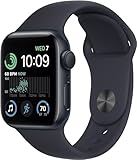
- WHY APPLE WATCH SE - All the essentials to help you monitor your fitness, keep connected, track your health, and stay safe. Now up to 20 percent faster, with features like Crash Detection and enhanced workout metrics, it’s a better value than ever.
- EASILY CUSTOMIZABLE - Available in a range of sizes and colors, with dozens of bands to choose from and watch faces with complications tailored to whatever you’re into.
- HEALTH AND SAFETY FEATURES - Get help when you need it with Crash Detection, Fall Detection, and Emergency SOS. Get deep insights into your health, including notifications if you have an irregular rhythm or an unusually high or low heart rate.
- SIMPLY COMPATIBLE - It works seamlessly with your Apple devices and services. Unlock your Mac automatically. Find your devices with a tap. Pay and send money with Apple Pay. Apple Watch requires an iPhone 8 or later with the latest iOS version.
Series 8 and Series 9 offer fast charging, which can be genuinely convenient if you top up while showering or getting ready. The SE 2 charges more slowly, but for overnight chargers, this difference rarely affects daily routines.
None of these models are multi-day watches, so if battery endurance is a priority, you’re looking at the wrong category entirely.
Pricing context: why the SE 2 deal matters right now
This is where the equation shifts dramatically. With the SE 2 hitting its lowest price since last Black Friday, it now undercuts the Series 9 by a wide margin and often costs significantly less than discounted Series 8 stock, when available.
At typical pricing, the SE 2 can feel like a compromise. At this deal level, it starts to look like the rational choice for most iPhone users who don’t need advanced health sensors or an always-on display.
If you’re upgrading from a Series 3, Series 4, or first-generation SE, the jump in speed, safety features, and software support is substantial. Paying extra for Series 9 features you may never use becomes harder to justify when the SE 2 delivers the core Apple Watch experience for so much less.
Which one makes sense for buyers right now
Choose the SE 2 if you want the most affordable entry into the Apple Watch ecosystem, value comfort and simplicity, and are motivated by this rare price drop. It’s especially compelling for first-time buyers and anyone replacing an aging Apple Watch that’s nearing the end of software support.
Series 8 still makes sense if you find it discounted close to SE 2 pricing and want advanced health tracking without paying Series 9 money. Series 9 is best reserved for buyers who want the latest display tech, on-device Siri, and maximum longevity, regardless of price.
At its current low, the SE 2 isn’t just the budget option. It’s the point where Apple’s smartwatch lineup offers the strongest balance of cost, capability, and everyday usability for the widest range of buyers.
Real-World Use: Battery Life, Performance, Fitness Tracking, and Everyday Wearability
At this price, the SE 2 stops being a spec-sheet exercise and starts being about how it fits into daily life. The core Apple Watch experience lives or dies on consistency, and this is where the SE 2 quietly earns its value.
Battery life in everyday routines
In real-world use, the Apple Watch SE 2 reliably delivers a full day with margin to spare. Expect roughly 18 to 24 hours with notifications, a workout or two, sleep tracking, and occasional GPS use, which mirrors Apple’s official rating but feels realistic rather than optimistic.
Most users will settle into a nightly charging habit, and the slower charging compared to Series 8 and 9 only becomes noticeable if you rely on quick top-ups. If you’re coming from a Series 3 or SE 1 with aging battery health, the SE 2 will feel like a meaningful reset rather than a lateral move.
For deal-focused buyers, this matters because battery anxiety is often what pushes people toward pricier models. At this price, the SE 2’s endurance is good enough that paying more for incremental charging speed rarely makes sense.
Performance and day-to-day responsiveness
Powered by Apple’s S8 SiP, the SE 2 feels fast in daily use, with smooth app launches, responsive animations, and no noticeable lag when navigating watchOS. Notifications arrive instantly, Siri requests process quickly via the paired iPhone, and switching between apps feels effortless.
If you’re upgrading from a Series 3 or Series 4, the speed difference is dramatic. Even compared to the first-generation SE, the SE 2 feels snappier under heavier multitasking, particularly with newer versions of watchOS that tax older chips.
This level of performance is one of the strongest arguments for buying now. At its current low price, you’re getting modern Apple Watch responsiveness without paying for Series 9 features that don’t materially change everyday interactions.
Fitness tracking that covers the essentials
The SE 2 handles core fitness tracking exceptionally well, covering outdoor runs, walks, cycling, strength training, swimming, and Apple’s full Activity ring system. GPS accuracy is solid for the price, heart rate tracking is consistent, and workout data syncs seamlessly with the Health app on iPhone.
What you don’t get are advanced health sensors like ECG, blood oxygen, or temperature tracking. For buyers who actively monitor specific health metrics, that’s a real limitation, and the Series 8 or 9 may still justify the premium.
For everyone else, especially casual exercisers or first-time smartwatch users, the SE 2 delivers more than enough insight to build healthier habits. At this deal price, it’s hard to argue that the missing sensors outweigh the substantial savings.
Comfort, sizing, and everyday wearability
The SE 2’s lightweight aluminum case makes it one of the most comfortable Apple Watches to wear all day and night. Available in 40mm and 44mm sizes, it suits a wide range of wrists, and the thinner feel compared to stainless steel models makes it less intrusive during sleep tracking.
Build quality remains high, with clean case finishing, solid water resistance for swimming, and access to Apple’s extensive band ecosystem. Whether paired with the included sport band, a fabric loop, or a third-party strap, it transitions easily from workouts to workdays.
For buyers considering value over luxury materials, this is a strength rather than a compromise. The SE 2 feels purpose-built for daily wear, not occasional use, which aligns perfectly with its new, more aggressive pricing.
Living with watchOS over the long term
Software support is where the SE 2 quietly future-proofs your purchase. It runs the latest version of watchOS smoothly and should continue receiving updates for years, something older Apple Watches are rapidly aging out of.
Safety features like Fall Detection, Crash Detection, and Emergency SOS are present and easy to forget about until they matter. For families, first-time users, or anyone replacing a watch that no longer receives updates, this adds real peace of mind.
At this lowest-since-Black-Friday price, the SE 2’s long software runway becomes a key buying argument. You’re not just saving money today, you’re reducing the likelihood of needing another upgrade anytime soon.
Best Configurations to Buy on Sale: Case Size, GPS vs Cellular, and Band Choices
Once you’ve decided the Apple Watch SE 2 makes sense at this price, the next decision is configuration. This is where buyers can accidentally overspend or, just as easily, miss the version that delivers the best long-term value.
Because this deal brings the SE 2 down to pricing we typically only see during major holiday sales, it’s worth being selective. Not every size or connectivity option benefits equally from discounts, and some combinations make far more sense for most users.
💰 Best Value

- WHY APPLE WATCH SE — All the essentials to help you monitor your fitness, keep connected, track your health, and stay safe. Now up to 20 percent faster, with features like Crash Detection and enhanced workout metrics, it’s a better value than ever.
- CELLULAR CONNECTIVITY — Send a text, make a call, and stream music without your iPhone, even while traveling internationally. Cellular lets you do it all without your iPhone nearby.
- HEALTH AND SAFETY FEATURES — Get help when you need it with Crash Detection, Fall Detection, and Emergency SOS. Get deep insights into your health, including notifications if you have an irregular rhythm or an unusually high or low heart rate.
- SIMPLY COMPATIBLE — It works seamlessly with your Apple devices and services. Unlock your Mac automatically. Find your devices with a tap. Pay and send money with Apple Pay. Apple Watch requires an iPhone 8 or later with the latest iOS version.
- SWIMPROOF AND STYLISH — Water resistant to 50 meters. Three finishes. And a redesigned, color-matched back case made with a new production process that reduces its carbon emissions over 80 percent.
40mm vs 44mm: which case size makes sense on sale
The 40mm SE 2 is the better value buy for most wrists, especially at today’s pricing. It’s noticeably lighter, sits more discreetly under sleeves, and remains comfortable for sleep tracking, all while delivering the same performance and battery life as the larger model.
The 44mm version makes sense if you prioritize screen real estate. The larger display is easier to read during workouts, navigation, or quick message glances, and it’s better suited to users with larger wrists who find the 40mm cramped.
From a deal perspective, the 40mm is usually discounted more aggressively and drops to a lower absolute price. If you’re upgrading from a Series 3, Series 4, or first-generation SE, the 40mm already feels like a meaningful step up in screen clarity and responsiveness without paying extra just for size.
GPS vs Cellular: where most buyers should save their money
For the vast majority of buyers, the GPS-only Apple Watch SE 2 is the smart pick at this sale price. It handles fitness tracking, notifications, Apple Pay, safety features, and everyday smartwatch tasks perfectly as long as your iPhone is nearby or connected via Wi‑Fi.
The Cellular model adds standalone connectivity, but it comes with two costs: a higher upfront price and a monthly carrier fee. Unless you regularly leave your phone behind on runs, walks, or commutes, the added freedom rarely justifies the premium.
At today’s lowest-since-Black-Friday pricing, the GPS model hits a value sweet spot that’s hard to ignore. You’re essentially getting the core Apple Watch experience at a price that undercuts newer Series models by a wide margin, without sacrificing speed, software support, or safety features.
Band choices: don’t overpay at checkout
When buying on sale, the included band should be treated as a temporary starting point, not a reason to spend more. Apple’s Sport Band is comfortable, durable, and water-resistant, making it perfectly suited for workouts and daily wear.
Upgrading to pricier band options at checkout rarely makes financial sense, especially when the watch itself is discounted. Apple’s own bands are easy to swap later, and the third-party ecosystem offers high-quality sport loops, fabric straps, and leather alternatives at a fraction of Apple’s pricing.
If you’re trying to maximize value, choose the base Sport Band and put the savings toward accessories later. The SE 2’s lightweight aluminum case and neutral design pair well with almost any strap, making it one of the most flexible Apple Watches to personalize over time.
The configuration that makes the most sense at this price
For most buyers, the standout deal is the 40mm GPS Apple Watch SE 2 with the standard Sport Band. This combination delivers the best balance of comfort, features, and price, and it’s the configuration that benefits most from the current discounts.
The 44mm GPS model is worth considering if readability matters more than compactness, but Cellular variants are best reserved for users who know they’ll use standalone connectivity frequently. Otherwise, you’re paying more today and every month after for features you may rarely use.
At this pricing, the right configuration turns the SE 2 from a “good for the money” option into an easy recommendation. Choosing wisely ensures you’re not just buying a cheap Apple Watch, but the version that fits your lifestyle without unnecessary compromises.
Buy Now or Wait? Deal Longevity, Upcoming Apple Releases, and Final Verdict
With the right configuration identified, the remaining question is timing. Is this one of those rare Apple Watch deals worth jumping on immediately, or is patience likely to pay off even more?
How long this deal is likely to last
Historically, Apple Watch SE pricing follows a predictable rhythm: deep cuts around Black Friday, lighter discounts through winter, then gradual normalization heading into spring and summer. Seeing the SE 2 drop back to its lowest Black Friday-level pricing outside a major shopping event is unusual.
Retailers typically use this kind of pricing either to clear inventory ahead of new announcements or to stimulate demand during a slower sales window. In both cases, these deals tend to be short-lived, often disappearing within days rather than weeks.
Once stock levels tighten, prices usually rebound quickly, sometimes by $30–$50 overnight. If you’re seeing this price at a major retailer today, it’s best to assume it’s a “while supplies last” situation rather than a new long-term baseline.
Upcoming Apple Watch releases and why they matter (or don’t)
Apple is expected to announce new Apple Watch models in its usual September window, including updates to the flagship Series line. While there are ongoing rumors about refreshed designs or new health features, none of those changes are likely to directly replace or obsolete the SE 2.
Apple positions the SE as its value-focused model, and historically, SE updates arrive on a slower cadence than the main Series watches. Even if a new SE were announced later this year, it would almost certainly launch at full price, not anywhere close to today’s discounted levels.
More importantly, the current SE 2 still benefits from Apple’s modern silicon, smooth watchOS performance, and long-term software support. For buyers coming from a Series 3, Series 4, or first-generation SE, the real-world jump in speed, reliability, and safety features will feel immediate, regardless of what Apple announces next.
Who should buy now
If you’re a first-time Apple Watch buyer with an iPhone, this is one of the safest entry points Apple has offered in months. You get excellent daily usability, accurate fitness tracking, solid battery life for all-day wear, and seamless integration with iOS without paying for features you may not need yet.
Upgraders coming from older models will also benefit disproportionately at this price. Faster app launches, smoother animations, better durability, and features like Crash Detection make the SE 2 feel meaningfully modern, even without an always-on display.
Deal hunters should take note as well. Since this matches last Black Friday pricing, the odds of seeing a significantly lower price before the end of the year are slim unless you’re willing to gamble on limited clearance stock.
Who might want to wait or look elsewhere
If you specifically want advanced health features like ECG, blood oxygen monitoring, or an always-on display, the SE 2 will still feel like a compromise, even at a discount. In that case, waiting for a sale on the Series 9 or newer models may make more sense.
Users deeply invested in standalone Cellular use may also want to pause and reassess. The upfront discount is attractive, but monthly carrier fees add up quickly, and many buyers ultimately find GPS-only models sufficient.
Finally, if you already own a Series 7 or newer Apple Watch, this deal won’t move the needle much. The SE 2 is a value play, not a meaningful upgrade for recent flagship owners.
Final verdict: a rare “easy yes” Apple deal
At this price, the Apple Watch SE 2 hits a sweet spot Apple doesn’t often allow outside of Black Friday. It delivers the essential Apple Watch experience—speed, comfort, safety features, and long-term software support—at a cost that feels genuinely accessible.
For most buyers, especially those choosing the 40mm or 44mm GPS model with the standard Sport Band, this is a buy-now deal rather than a wait-and-see situation. You’re not just saving money versus newer models; you’re avoiding unnecessary spending without giving up what actually matters in daily wear.
If you’ve been on the fence about getting an Apple Watch, or waiting for “the right price,” this is it. Deals like this don’t come around often, and when they do, they rarely stick around for long.