Blood pressure is one of those health metrics that feels abstract until it suddenly isn’t. Many people discover elevated readings during a rushed doctor visit, while others feel fine but live with numbers that quietly increase cardiovascular risk over time. Home blood pressure monitoring matters because it replaces guesswork and one-off clinic readings with a clearer picture of how your body behaves day to day, at rest, under stress, and in real life.
This is where modern home monitors, especially smart ones, earn their place. Measuring at home helps reduce “white coat hypertension,” captures trends your clinician can actually act on, and gives you a sense of control rather than anxiety. In this guide, you’ll learn when a connected monitor truly adds value, how arm and wrist designs differ in accuracy and comfort, and which features genuinely improve long-term adherence instead of complicating something that should be simple.
Why doctors increasingly recommend home readings
A single blood pressure reading in a clinic is a snapshot, not a story. Home monitoring allows multiple measurements taken under consistent conditions, which is why many physicians now rely on at-home data to diagnose hypertension, adjust medication, or confirm that treatment is working.
Regular home readings can reveal masked hypertension, where office readings look normal but daily values run high, or the opposite, where anxiety temporarily inflates clinic numbers. For people already managing high blood pressure, these patterns matter more than isolated highs or lows.
🏆 #1 Best Overall
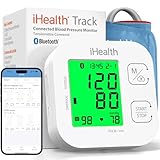
- Clinically Accurate: Easy Operation by two buttons, Advanced Accuracy, No Calibration required.
- Large Multi-Color Backlit Display: The large, oversized numbers make reading the results from this upper arm blood pressure monitoring device a breeze. Coded (GREEN/YELLOW/RED) display tells if your blood pressure readings are optimal or not.
- Easy Management: Manage and track up to 99 readings on your blood pressure monitor and unlimited readings on your smartphone with iHealth's free iOS and Android applications ( iOS 12.0 or later. Android 9.0 or later.Requires Bluetooth 4.0.and up).
- Heart Rhythm Disturbances: This unit automatically identifies and alerts you to any heart rhythm disturbances. If detected, a warning symbol will be displayed after the measurement is taken.
- What You Get: 1 x blood pressure monitor that meets ESH 2010 performance standards, 4 AAA batteries, 1 wide range cuff that fits upper arms with Circumference of 8.7"-16.5" (22-42cm),1 Instruction manual, our worry-free 12-month warranty and friendly California-based customer service.
What makes a monitor “smart” and why that can help
A smart blood pressure monitor doesn’t change how blood pressure is measured, but it changes what you can do with the data. Automatic syncing to a phone app reduces manual logging errors, shows trends over weeks or months, and makes it easier to share accurate reports with a healthcare provider.
For tech-savvy users, smart features can also improve consistency. Reminders, guided measurements, and visual feedback encourage proper posture, correct cuff placement, and repeat readings, all of which directly affect accuracy.
Arm monitors vs wrist monitors: accuracy comes first
Upper arm monitors remain the gold standard for home use because the brachial artery closely matches how blood pressure is measured clinically. When properly fitted and used, validated arm cuffs deliver the most reliable results across a wide range of users.
Wrist monitors prioritize convenience and portability, but they are more sensitive to positioning. Holding the wrist at heart level and staying perfectly still is essential, which can be challenging for some users. That doesn’t make wrist monitors useless, but it does mean they’re best suited for experienced users who value compact design and are willing to follow instructions carefully.
Medical validation is not optional
Not all blood pressure monitors are created equal, especially in the connected health space. Independent clinical validation, often referenced through protocols from organizations like the AAMI, ESH, or ISO standards, is what separates a medical-grade device from a wellness gadget.
Smart features should never come at the expense of validated accuracy. A polished app, long battery life, or smartwatch integration means little if the readings themselves aren’t trustworthy. This guide focuses on monitors that balance modern usability with proven measurement reliability.
When a smart monitor makes sense, and when it doesn’t
A smart blood pressure monitor makes the most sense if you plan to measure regularly, want to track trends over time, or need to share data with a clinician without bringing handwritten notes. It’s also valuable for users already immersed in health apps or wearable ecosystems who want blood pressure data alongside activity, sleep, and heart rate.
If you only measure occasionally and prefer a simple screen with no phone involved, a non-connected arm monitor can still be an excellent choice. The key is matching the device to your habits, not forcing daily tech rituals that won’t stick.
Arm vs Wrist Blood Pressure Monitors: Accuracy, Comfort, and Who Each Type Is Best For
Choosing between an arm or wrist blood pressure monitor is less about which is newer or smarter and more about how you’ll actually use it at home. Both types can deliver reliable readings when they’re clinically validated, but their real-world performance differs based on anatomy, positioning, and daily habits. Understanding those differences helps avoid false reassurance or unnecessary anxiety from inconsistent readings.
Why upper arm monitors are still the clinical benchmark
Upper arm monitors measure blood pressure at the brachial artery, the same site used in hospitals and clinics. This anatomical match is why doctors and hypertension guidelines consistently recommend arm cuffs for home monitoring. The artery is larger, deeper, and less affected by subtle wrist or hand movement.
Modern arm cuffs have also become more forgiving than older designs. Wide-range cuffs, contoured shapes, and softer internal bladders improve comfort while maintaining even pressure distribution. For most adults, especially those managing diagnosed hypertension, this consistency is hard to beat.
Accuracy in daily use, not just in the lab
In real homes, arm monitors tend to produce fewer user-induced errors. Once the cuff is positioned correctly on the upper arm and the user is seated properly, the measurement process is straightforward and repeatable. This matters for trend tracking, where small daily inaccuracies can distort long-term averages.
Wrist monitors can be accurate, but only under stricter conditions. The wrist must be held at heart level, the forearm supported, and the body completely still. Even a few centimeters of height difference can shift readings, which is why wrist devices demand more attention and discipline.
Comfort and usability for long-term monitoring
Comfort plays a bigger role than many buyers expect, especially for users measuring daily or multiple times per day. Arm cuffs can feel bulky, particularly for users with larger arms or shoulder mobility issues. However, newer cuffs with flexible materials and quieter inflation motors are far less intrusive than older medical-style designs.
Wrist monitors excel in physical comfort and ease of setup. They slip on like a watch, inflate quickly, and take up minimal space in a drawer or travel bag. For users who dislike the squeezing sensation of arm cuffs, this can be the difference between consistent use and abandoning monitoring altogether.
Portability, storage, and travel considerations
If blood pressure tracking happens mostly at home, size is rarely a deal-breaker. Arm monitors typically live on a bedside table or shelf, paired with a phone app or a built-in display. Their larger footprint is a fair trade for stability and confidence in readings.
Wrist monitors shine for travel and hybrid lifestyles. They fit easily into carry-on luggage, gym bags, or work backpacks and don’t require rolling up sleeves in tight spaces. For frequent travelers or users who measure outside the home, that convenience can outweigh the learning curve.
Who should choose an arm blood pressure monitor
Arm monitors are the safest recommendation for first-time buyers, older adults, and anyone managing hypertension under medical guidance. They’re also better suited for users with irregular heart rhythms, where consistent arterial measurement matters more. If accuracy and clinical alignment are the top priorities, an arm cuff remains the most dependable choice.
They’re also ideal for users who want minimal cognitive load. Sit down, apply the cuff, press start, and let the device do the rest. That simplicity supports adherence over months and years.
Who wrist monitors are actually good for
Wrist monitors make sense for experienced users who understand proper positioning and are willing to follow instructions carefully every time. They’re also useful for people with very large upper arms where standard cuffs don’t fit well or cause discomfort. When clinically validated and used correctly, they can provide reliable trend data.
Tech-savvy users often appreciate wrist monitors for their design and integration potential. The watch-like form factor feels familiar, and measurements can feel less medical and more like part of a broader health routine. That psychological comfort can matter just as much as physical comfort.
The role of smart features in each form factor
Smart features tend to feel more natural on wrist-based devices. App syncing, guided positioning animations, and automatic data uploads help compensate for the tighter accuracy requirements. Some wrist monitors actively coach users during measurement, reducing common errors.
Arm monitors, on the other hand, benefit from smart features that simplify interpretation rather than measurement. Clear trend graphs, averaging modes, and easy data sharing with clinicians add value without complicating the core task. In both cases, software should support accuracy, not distract from it.
What not to compromise on, regardless of type
Whether arm or wrist, clinical validation is non-negotiable. A sleek design, long battery life, or polished app cannot fix unreliable measurements. Always prioritize devices tested against recognized international standards and sized appropriately for your body.
Equally important is honesty about your habits. The best monitor is the one you’ll use correctly and consistently. Matching the device to your lifestyle is what ultimately turns numbers on a screen into meaningful health insight.
Medical Accuracy Explained: FDA Clearance, Clinical Validation, and What Really Matters
Once you’ve chosen between an arm or wrist monitor based on comfort and habits, accuracy becomes the deciding factor. Not perceived accuracy, not brand reputation, but medical accuracy grounded in how the device was tested and approved. This is where marketing language often obscures what actually protects you as a user.
What FDA clearance really means for home blood pressure monitors
In the U.S., reputable home blood pressure monitors are cleared by the FDA as Class II medical devices. This clearance confirms that the device is substantially equivalent to a legally marketed monitor and performs safely and consistently for its intended use. It does not mean the FDA independently tested every unit, but it does mean the manufacturer met specific regulatory requirements around performance, labeling, and risk management.
For buyers, FDA clearance is a baseline filter, not a gold medal. A cleared device can still vary in real-world accuracy depending on cuff fit, sensor quality, and how well the software handles motion or positioning errors. If a monitor lacks FDA clearance entirely, it should not be considered for medical decision-making, regardless of how advanced the app or hardware looks.
Clinical validation matters more than brand name
Beyond regulatory clearance, clinical validation is the strongest signal of measurement reliability. This refers to independent testing against a reference standard, typically a mercury sphygmomanometer, under controlled conditions. The most respected protocols come from organizations like the Association for the Advancement of Medical Instrumentation (AAMI), the European Society of Hypertension (ESH), and the ISO 81060-2 standard that now harmonizes these requirements.
A clinically validated monitor has demonstrated that its readings fall within an acceptable error range across multiple users, arm sizes, and blood pressure levels. This matters because blood pressure is not static; devices must perform accurately across hypotensive, normotensive, and hypertensive ranges. Many lower-cost or unbranded devices skip this process entirely, which is why they can appear accurate in casual use but drift meaningfully over time.
Why arm monitors still set the accuracy benchmark
Upper-arm monitors remain the reference standard for home use because the brachial artery provides the most stable measurement site. The cuff sits at heart level naturally when you’re seated, reducing hydrostatic pressure differences that can skew results. From a hardware perspective, arm cuffs allow for larger air bladders and more consistent occlusion, which improves signal quality during oscillometric measurement.
Clinically validated arm monitors also tend to handle real-world variability better. Differences in arm circumference, minor movement, and heart rhythm irregularities are easier to detect and correct algorithmically. This is why physicians still overwhelmingly recommend upper-arm devices for diagnosis, medication adjustments, and long-term tracking.
Wrist monitors: accuracy depends on the user as much as the device
Wrist monitors can be accurate, but only when positioning is precise. The radial artery sits closer to the skin and is more sensitive to height relative to the heart. Even a few centimeters of misalignment can change readings enough to matter clinically.
High-quality wrist monitors attempt to mitigate this through guided positioning, motion sensors, and on-screen prompts. Some use gyroscopes or visual cues to help align the wrist correctly before measurement begins. These features are not gimmicks; they are essential compensations for the inherent challenges of wrist-based measurement.
For experienced users who follow instructions carefully and value portability, a clinically validated wrist monitor can deliver reliable trend data. For beginners or anyone measuring under time pressure, the margin for error is simply higher than with an arm cuff.
The role of cuff design, sizing, and materials in real-world accuracy
Accuracy isn’t just about sensors and algorithms; it’s also about the physical interface with your body. A poorly fitting cuff is one of the most common causes of inaccurate readings at home. Too small, and readings skew high; too large, and they skew low.
Better monitors offer a wide sizing range with clearly marked fit guides. Higher-end cuffs use layered, non-slip fabrics that maintain even pressure without pinching or folding, improving comfort and consistency. This is one area where spending a bit more often translates directly into better data, especially for users with larger or tapered arms.
Smart features that actually support medical accuracy
Not all smart features improve accuracy, but some genuinely do. Automated averaging of multiple readings taken minutes apart reduces the impact of transient spikes. Irregular heartbeat detection flags readings that may need confirmation rather than blind acceptance.
App-based trend visualization also plays a subtle role. Seeing long-term patterns helps users and clinicians identify outliers instead of overreacting to single measurements. The best software experiences stay out of the way during measurement and add value afterward through clarity and context.
What accuracy claims to be skeptical of
Be cautious of vague phrases like “clinically tested” without a published standard or protocol. True clinical validation is specific, documented, and verifiable. Similarly, claims of “hospital-grade accuracy” are marketing language unless backed by recognized validation results.
Another red flag is overemphasis on smartwatch-style features while downplaying measurement methodology. Blood pressure monitoring is not like step counting or sleep tracking; small errors can have real consequences. If accuracy details are buried or missing entirely, that’s usually intentional.
How to think about accuracy in daily use, not just on paper
Even the best monitor can produce poor data if used inconsistently. Measuring at the same time of day, in the same seated position, and under similar conditions matters more than many people realize. Devices that make this routine easy, through reminders or guided workflows, indirectly support better accuracy over time.
What ultimately matters is not whether a reading matches a clinic measurement to the exact millimeter of mercury. It’s whether your monitor provides stable, repeatable data you can trust to track trends and inform conversations with your healthcare provider. That’s the level of accuracy that actually improves outcomes at home.
How Smart Blood Pressure Monitors Actually Work (Cuffs, Sensors, and Measurement Methods)
To understand why some home blood pressure monitors are consistently reliable while others struggle, it helps to look beneath the app interface and into the hardware doing the work. Despite the “smart” label, most FDA-cleared home monitors rely on a surprisingly traditional measurement method, enhanced by better sensors, software, and usability design.
Rank #2

- Convenient Dual User Mode: Store up to 240 readings for two users, allowing easy tracking and comparison of measurements
- Fast and Accurate Measurements: Our fully automatic wrist blood pressure machine provides fast and precise results, simply press the "START/STOP" button, and the measurement process takes 35 seconds; the device automatically turns off after 60 seconds of inactivity
- Voice Broadcast Design: Our automatic blood pressure cuff features a voice broadcast function, making it ideal for individuals with poor eyesight; you can adjust the volume or turn off the sound using the SET and MEM buttons
- Large LED Backlit Display: The large LED screen of our blood pressure monitor features clear numbers, ensuring easy readability even in low-light conditions, enjoy a hassle-free visual experience
- Portable Rechargeable Blood Pressure Monitor: Equipped with a built-in rechargeable battery and Type-C cable for convenient charging anytime, eliminating the need for battery replacements and ensuring you can easily monitor your health (Note: Charging adapter not included in the packaging)
At their core, arm and wrist monitors solve the same problem: estimating arterial pressure from how blood flow behaves when temporarily restricted. The differences lie in where the measurement happens, how forgiving the anatomy is, and how much the device relies on user technique.
The oscillometric method: the backbone of home BP monitoring
Nearly all modern home blood pressure monitors use the oscillometric method rather than the manual stethoscope-based approach used in clinics. As the cuff inflates and then slowly deflates, the monitor detects tiny pressure oscillations caused by blood pulsing through the artery.
An internal pressure sensor tracks these oscillations and identifies the point of maximum vibration, which corresponds to mean arterial pressure. Systolic and diastolic values are then calculated using proprietary algorithms based on validated population data.
This method is why home monitors don’t need a microphone or manual listening. It’s also why consistency matters more than perfection, since the algorithm assumes a stable measurement environment to produce reliable results.
Upper-arm cuffs: why they’re still the reference standard
Upper-arm monitors place the cuff around the brachial artery, which runs close to the surface and closely reflects central blood pressure. This anatomical advantage makes arm monitors more forgiving of small positioning errors and body movement.
Cuff size and shape play a major role here. A properly sized cuff distributes pressure evenly, while contoured or pre-formed cuffs improve artery alignment and reduce user error during setup.
From a real-world usability standpoint, upper-arm monitors are larger and less portable, but they tend to deliver the most repeatable data over months and years. That’s why most clinical validation protocols are still built around arm-based devices.
Wrist monitors: smaller, smarter, and more technique-sensitive
Wrist monitors measure blood pressure at the radial artery, which is narrower and more affected by arm position relative to the heart. This makes wrist devices inherently more sensitive to posture and movement.
To compensate, better wrist monitors use position sensors, accelerometers, or on-screen guidance to ensure the wrist is held at heart level during measurement. When used correctly, a validated wrist monitor can deliver accurate readings, but the margin for error is smaller.
The trade-off is convenience. Wrist monitors are lighter, faster to put on, and easier for users with limited arm mobility or larger upper arms. For frequent travelers or smartwatch-first users, this ease of use often leads to more consistent measurement habits.
Pressure sensors, pumps, and what “smart” actually improves
Inside every smart blood pressure monitor is a pressure sensor, a micro-pump for inflation, and a controlled release valve for deflation. What separates higher-end devices is sensor precision and noise filtering, not raw inflation power.
Smarter monitors sample pressure data more frequently and use motion detection to reject unstable readings. If you move, tense your arm, or talk during measurement, the device can pause, retry, or flag the result instead of silently logging bad data.
This is where smart features genuinely support medical accuracy. They don’t change the physiology, but they reduce the chances that poor technique produces misleading numbers.
Why calibration matters, and when it doesn’t
Unlike cuffless smartwatch blood pressure estimates, cuff-based home monitors do not require regular calibration against a clinic device. Once validated, their pressure sensors are designed to remain accurate for years under normal use.
That said, periodic comparison with a clinician’s reading can be useful, especially if your health status changes. Some apps allow manual offset adjustments, but these should only be done under medical guidance.
If a monitor requires frequent recalibration or vague “learning periods,” that’s often a sign it’s relying more on estimation than direct measurement.
How apps process and present the data
After measurement, the raw pressure data is processed locally and then passed to the companion app via Bluetooth. The app’s role is not to reinterpret the reading, but to organize, average, and contextualize it.
Well-designed apps highlight trends, time-of-day patterns, and variability rather than pushing single readings to the forefront. Some also annotate measurements with posture reminders or irregular heartbeat indicators detected during the oscillation phase.
From a daily usability perspective, the best software feels invisible during measurement and genuinely helpful afterward. If the app adds friction, users are less likely to measure consistently, which undermines even the best hardware.
Power, materials, and everyday wear considerations
Most arm monitors use replaceable AA or AAA batteries, prioritizing long shelf life over slim design. Wrist monitors are more likely to use rechargeable lithium cells, trading battery longevity for portability and cleaner industrial design.
Cuff materials matter more than many buyers expect. Softer linings, breathable fabrics, and flexible internal bladders improve comfort and reduce muscle tension, which directly affects readings.
In practical terms, a monitor that’s comfortable, quick to use, and easy to store will outperform a technically superior device that lives in a drawer. Measurement accuracy starts with whether the device fits naturally into daily life.
The Best Smart Arm Blood Pressure Monitors for Home Use
For most people measuring blood pressure at home, upper‑arm monitors remain the clinical gold standard. They measure pressure at the brachial artery, the same location used in medical settings, which reduces sensitivity to arm position and arterial stiffness compared to wrist-based alternatives.
This makes arm monitors the default recommendation for users managing hypertension, sharing data with clinicians, or simply wanting the highest confidence in day‑to‑day readings. The best smart models combine validated hardware with thoughtful app design, reliable cuffs, and frictionless daily operation.
Omron Platinum (BP5450 / BP5450CA): The reference standard for connected home monitoring
Omron’s Platinum series is widely used as a benchmark for home blood pressure accuracy, and for good reason. It uses Omron’s dual-sensor oscillometric system with extensive clinical validation, including studies aligned with AAMI and ISO protocols.
The cuff is a standout. Omron’s wide-range ComFit design wraps evenly around the upper arm, reducing user error from misplacement and uneven tension, a common source of false readings at home.
In daily use, measurements are quick and consistent, with clear on-device guidance if posture or movement interferes. The large monochrome display prioritizes legibility over style, which matters when checking readings early in the morning or under low light.
Smart features are handled through the Omron Connect app, which syncs automatically over Bluetooth. Trends, weekly averages, and multi-user profiles are cleanly presented without overwhelming the user with secondary metrics.
Battery life is excellent thanks to standard AA cells, often lasting months even with daily measurements. For users who want the most doctor-friendly data with minimal learning curve, this is one of the safest choices available.
Withings BPM Connect: The most seamless smart health ecosystem
Withings approaches blood pressure monitoring through the lens of long-term health tracking rather than isolated measurements. The BPM Connect is fully validated for clinical accuracy and pairs that reliability with one of the strongest consumer health apps on the market.
The design is notably compact for an arm monitor. The integrated cuff rolls neatly into itself, making storage and travel easier without compromising comfort or fit.
Measurements are initiated with a single button, and the device automatically syncs via Wi‑Fi or Bluetooth, which removes a common point of friction for less tech-savvy users. The LED display communicates results clearly using color-coded ranges aligned with international guidelines.
Within the Withings Health Mate app, blood pressure data sits alongside weight, activity, sleep, and heart rate trends. This contextual view is especially useful for users trying to understand how lifestyle factors influence blood pressure over time.
Rechargeable battery life typically stretches several weeks between charges, and the sealed design improves durability. For users already invested in smart scales or hybrid watches, BPM Connect integrates naturally without feeling like a standalone medical tool.
Omron Evolv: Clinic-grade accuracy in a single-piece design
The Omron Evolv takes a different approach by eliminating tubes and separate displays altogether. Everything is built directly into the cuff, creating a self-contained unit that’s easier to use correctly.
Despite its streamlined design, accuracy remains a core strength. The Evolv uses the same validated measurement engine as Omron’s higher-end monitors, and real-world testing shows strong consistency across repeated readings.
The cuff material is firm but evenly padded, and the structure helps guide correct arm placement. This reduces setup variability, which is often more impactful than raw sensor precision.
Data syncs to the Omron Connect app, where results are stored and visualized similarly to the Platinum models. The experience is slightly more minimal, but still robust enough for long-term trend tracking and clinician review.
Rechargeable battery life typically covers several weeks of use. For users who value simplicity, portability, and fewer moving parts, the Evolv strikes an effective balance between medical reliability and modern design.
QardioArm: Design-forward monitoring with clinical credibility
QardioArm was one of the first arm monitors to prioritize both aesthetics and smart connectivity, and it remains a compelling option. It carries proper clinical validation and supports irregular heartbeat detection during measurement.
The cuff is slim and flexible, with a softer fabric feel than many traditional monitors. This improves comfort, particularly for users with sensitive skin or those measuring frequently.
Bluetooth pairing is straightforward, and the Qardio app emphasizes visual clarity. Graphs focus on variability and long-term patterns rather than single readings, which encourages healthier measurement habits.
Battery life relies on standard AAA cells, offering convenience and easy replacement. While the app ecosystem is less expansive than Withings or Omron, it remains intuitive and dependable for core blood pressure tracking.
QardioArm is especially appealing to users who want a device that feels less medical without sacrificing accuracy.
Rank #3
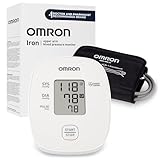
- CONFIDENCE IN EVERY READING: Monitor your heart health with the OMRON Iron Upper Arm Blood Pressure Monitor's Advanced Accuracy Technology
- SAFEGUARD YOUR HEART: Detect heartbeat irregularities during routine blood pressure measurements with OMRON's Irregular Heart Beat Detection, helping you and your doctor determine if treatment or further evaluation is needed
- START YOUR DAY WITH CONFIDENCE: Count on quick and accurate readings with simple one-touch operation; Just press one button; Regular monitoring can reveal irregular fluctuations before they lead to serious complications
- MORE ACCURATE RESULTS: Enhance the accuracy of your blood pressure readings with excessive Body Movement Detection alerts
- READY OUT OF THE BOX: Includes everything you need to start monitoring your heart health; OMRON monitor, wide-range D-ring blood pressure cuff (fits arms 9"–17"), instruction manual, and quick start guide
iHealth Track Smart: Reliable accuracy at a lower entry point
For users seeking a more affordable smart arm monitor without cutting corners on validation, iHealth Track remains a strong contender. It meets international accuracy standards and is widely used in home settings.
The cuff accommodates a broad range of arm sizes and is straightforward to position. The display uses large digits and color indicators, making it accessible for older users or those with vision concerns.
Bluetooth syncing is optional rather than mandatory. Measurements can be taken and reviewed directly on the device, with app integration available for users who want deeper insights or long-term storage.
The iHealth app provides basic trend tracking and export options, though it lacks the polish of higher-end ecosystems. Still, it does the essentials well.
Powered by AA batteries, the Track emphasizes practicality and longevity. It’s a sensible choice for households that want dependable readings without paying a premium for advanced analytics.
Who should choose an arm monitor over a wrist monitor
Arm monitors are best suited for users with diagnosed hypertension, those sharing readings with healthcare professionals, or anyone prioritizing measurement reliability over portability. They’re also more forgiving of slight posture variations, which matters for consistent home use.
Users with larger wrists, arterial stiffness, or conditions that affect circulation tend to get more stable readings from arm cuffs. For these groups, wrist monitors can introduce variability that’s difficult to correct outside a clinical environment.
While arm monitors are less discreet and slightly slower to set up, the trade-off is confidence. If blood pressure data is influencing treatment decisions or long-term health planning, an upper-arm monitor remains the most dependable foundation.
The Best Smart Wrist Blood Pressure Monitors for Home Use
After covering why upper-arm monitors remain the gold standard for accuracy, it’s worth addressing the other side of the equation. Wrist blood pressure monitors exist for a reason, and for certain users, they can be the difference between regular tracking and no tracking at all.
Wrist monitors prioritize convenience, portability, and ease of use. They are smaller, quicker to put on, and far less intrusive, which can encourage more consistent daily measurements when used correctly.
Important accuracy considerations before choosing a wrist monitor
Wrist-based blood pressure measurement is more sensitive to positioning than upper-arm cuffs. The wrist must be held at heart level, with proper posture and minimal movement, or readings can drift higher or lower than reality.
This doesn’t automatically make wrist monitors inaccurate, but it does mean technique matters more. Users who are willing to follow on-screen guidance and repeat measurements under consistent conditions tend to get the best results.
Medical validation is non-negotiable here. Many inexpensive wrist cuffs exist online, but only a handful meet recognized clinical accuracy standards, and even fewer offer meaningful app support.
Omron HeartGuide: The most medically credible smart wrist monitor
Omron HeartGuide remains the most serious wrist-based blood pressure monitor available for home use. It is FDA-cleared in the U.S. and clinically validated, which immediately separates it from the majority of wrist cuffs on the market.
Unlike traditional wrist monitors, HeartGuide integrates an inflatable cuff into a watch-style case. The internal mechanical system tightens and releases pressure around the wrist in a controlled, repeatable way, similar in principle to an arm cuff.
The watch case is large and thick by smartwatch standards, roughly comparable to an oversized sports watch. Comfort is acceptable for daytime wear, though it’s not something most users will forget is on their wrist.
Blood pressure readings are taken manually and require the user to remain still with their arm positioned correctly. Omron’s on-screen prompts help guide posture, which significantly improves consistency over basic wrist cuffs.
Beyond blood pressure, HeartGuide tracks steps, sleep, and basic activity. These features are secondary, but useful for contextualizing cardiovascular trends rather than replacing a full-featured smartwatch.
Battery life typically lands around two to three days, depending on measurement frequency. Charging is proprietary and something to consider if travel convenience matters.
The companion Omron Connect app is functional rather than flashy. It focuses on clear historical trends, averages, and easy export for clinicians, which aligns with HeartGuide’s medical-first positioning.
HeartGuide is best suited for users who specifically need a wrist-based solution but still want clinical credibility. It’s expensive, bulky, and limited as a smartwatch, but unmatched for validated wrist BP monitoring.
iHealth Push Wrist Monitor: A simpler, more affordable wrist option
For users who want wrist convenience without investing in a watch-style device, the iHealth Push Wrist Monitor offers a more traditional approach. It’s compact, lightweight, and designed strictly for blood pressure measurement.
The cuff fits a wide range of wrist sizes and inflates quickly. Large on-device numbers make it easy to read results immediately, which is helpful for older users or anyone who prefers minimal app dependence.
Bluetooth syncing connects readings to the iHealth app, where users can view trends, averages, and basic insights. The software experience is straightforward and less polished than premium ecosystems, but it covers the essentials.
Accuracy is acceptable when positioning instructions are followed carefully. As with all wrist monitors, consistency improves when measurements are taken at the same time each day under similar conditions.
Battery life is solid, with weeks of use on a single charge via USB. This makes it practical for travel or backup use when an arm monitor feels too cumbersome.
The iHealth Push is best viewed as a convenience-first device. It’s not ideal for users managing complex hypertension plans, but it can work well for routine at-home awareness and casual tracking.
Wrist monitors vs smartwatch blood pressure features
It’s important to separate cuff-based wrist monitors from smartwatch blood pressure estimates. Devices like the Apple Watch and most fitness trackers do not measure blood pressure directly and should not be confused with medical monitors.
Some smartwatches in certain regions offer cuff-less blood pressure estimation using pulse wave analysis, but these features often require frequent calibration with a traditional cuff and are not FDA-cleared in the U.S.
For home health decision-making, a wrist monitor with an actual inflatable cuff remains the only wrist-based option that should be trusted for real readings.
Who should realistically consider a wrist blood pressure monitor
Wrist monitors make sense for users with limited mobility, smaller living spaces, or frequent travel needs. They’re also appealing for those who struggle to position an arm cuff correctly or find it uncomfortable.
They are less ideal for users with known circulation issues, significant arterial stiffness, or those who need highly repeatable readings for treatment adjustments. In those cases, an upper-arm monitor remains the safer choice.
When used intentionally and with proper technique, a good wrist monitor can support consistent tracking. The key is choosing a validated device and understanding its limitations rather than expecting smartwatch-like convenience with clinical-grade certainty.
Apps, Connectivity, and Ecosystems: Apple Health, Google Fit, and Long-Term Trends
Once you’ve chosen between an arm or wrist monitor, the software experience becomes the next differentiator. For many users, the real value of a smart blood pressure monitor isn’t just the reading itself, but how well that data is stored, interpreted, and shared over time.
Apps and ecosystems are where home monitoring shifts from occasional spot checks to meaningful long-term insight. This is especially important for hypertension management, where trends matter more than any single measurement.
Why app quality matters more than extra features
A well-designed blood pressure app should prioritize clarity, reliability, and consistency over novelty. Clean charts, clear timestamps, and straightforward averages are far more useful than flashy dashboards or generic wellness scores.
Look for apps that make it easy to spot patterns across weeks and months, not just daily fluctuations. Morning versus evening trends, rolling averages, and clearly flagged out-of-range readings are practical tools that support real health decisions.
Poor apps can undermine even an accurate monitor. Confusing navigation, missing readings, or unreliable Bluetooth syncing often lead users to abandon tracking altogether.
Apple Health integration: the gold standard for iPhone users
For iPhone owners, Apple Health compatibility is the most important checkbox. When implemented properly, it turns a standalone blood pressure monitor into part of a broader cardiovascular health record.
Most reputable smart BP monitors automatically sync systolic, diastolic, and heart rate data directly into Apple Health. This allows blood pressure to sit alongside heart rate trends, activity data, medications, and even lab results if supported by your healthcare provider.
Apple Health also excels at long-term data retention. Even if you switch monitor brands later, your historical blood pressure data remains intact, which is critical for users tracking hypertension over years rather than months.
Google Fit and Android ecosystems: improving, but less consistent
Android users typically rely on Google Fit or manufacturer-specific health apps. While Google Fit supports blood pressure data, implementation varies widely between brands.
Some monitors sync cleanly with Google Fit, offering reliable charts and easy export. Others require manual syncing or limit how readings are displayed, which can make long-term trend analysis harder than it should be.
For Android users, it’s worth paying close attention to the manufacturer’s app quality rather than assuming Google Fit integration alone will meet your needs. A strong native app with clear export options can matter more than broad ecosystem promises.
Rank #4

- CONFIDENCE IN EVERY READING: Monitor your heart health with the OMRON Bronze Upper Arm Blood Pressure Monitor's Advanced Accuracy Technology; Store up to 14 readings to track your progress
- SAFEGUARD YOUR HEART: Detect heartbeat irregularities during routine blood pressure measurements with OMRON's Irregular Heart Beat Detection, helping you and your doctor determine if treatment or further evaluation is needed
- START YOUR DAY WITH CONFIDENCE: Know when your blood pressure is elevated with Hypertension Indicator alerts; Regular monitoring can reveal irregular fluctuations before they lead to serious complications
- TURN NUMBERS INTO INSIGHTS: Connect effortlessly to the free OMRON connect app via Bluetooth to store unlimited blood pressure readings, track trends, and share reports with your doctor; Compatible with Apple Health and Google Fit
- READY OUT OF THE BOX: Includes everything you need to start monitoring your heart health; OMRON monitor, wide-range D-ring blood pressure cuff (fits arms 9"– 17"), storage case, instruction manual, quick start guide, and four AA batteries
Manufacturer apps: where most users actually live
In daily use, most people spend more time in the device maker’s app than in Apple Health or Google Fit. This makes app usability a decisive factor, especially for beginners.
The best apps guide users through proper measurement technique, flag inconsistent readings, and gently encourage regular measurements without feeling nagging. They also allow notes for context, such as stress, exercise, or medication timing, which helps explain outliers.
Battery status, cuff fit reminders, and error detection may sound minor, but these features significantly reduce failed readings and frustration over time.
Data sharing with doctors and caregivers
One of the most practical benefits of connected blood pressure monitors is easy data sharing. Many apps allow readings to be exported as PDFs, spreadsheets, or shared links that clinicians can review quickly.
This is particularly valuable for users adjusting medication or monitoring white-coat hypertension. Instead of relying on memory or handwritten logs, you can present weeks of consistent, timestamped data.
Some ecosystems also support caregiver access, which is useful for older users or those managing blood pressure with family support. This turns a personal device into a shared health tool without adding complexity.
Subscriptions, paywalls, and long-term ownership costs
Not all smart blood pressure apps are equally generous. Some lock advanced insights, long-term history, or export features behind subscriptions.
Before buying, it’s worth checking whether trend analysis, cloud storage, or multi-user support requires ongoing fees. For a medical device used daily or weekly, recurring costs can quickly outweigh the initial hardware price.
The best monitors remain fully functional without subscriptions, using optional paid features only for expanded wellness insights rather than basic medical tracking.
Privacy, security, and medical data responsibility
Blood pressure data is sensitive medical information, not just fitness metrics. Reputable manufacturers clearly outline how data is stored, encrypted, and shared.
Look for apps that allow local storage, easy data deletion, and clear opt-in controls for cloud syncing. Transparency matters, especially if data is shared across multiple platforms like Apple Health, Google Fit, or third-party services.
A polished app should feel trustworthy, not intrusive. If privacy settings are hard to find or overly aggressive by default, that’s a red flag.
Smartwatch integration: useful context, not a replacement
Some blood pressure monitor apps integrate with smartwatches to provide reminders, sync timestamps, or correlate readings with activity and sleep. This adds context, not accuracy.
A smartwatch can help explain why a reading was elevated after poor sleep or stress, but it does not replace a cuff-based measurement. The most useful integrations treat blood pressure as a reference point within a broader lifestyle picture.
For users already wearing an Apple Watch or Wear OS device, this layered approach can improve consistency without blurring the line between medical data and wellness estimates.
Long-term trends: what actually helps manage blood pressure
Over time, the most valuable insight comes from consistency. Apps that highlight weekly and monthly averages, rather than daily spikes, align best with how clinicians assess blood pressure control.
Look for systems that clearly separate individual readings from trend lines. This helps users avoid anxiety over one-off high numbers while staying alert to sustained changes.
Ultimately, the best app ecosystem fades into the background. It quietly collects accurate data, presents it clearly, and supports informed decisions without demanding constant attention.
Ease of Use in the Real World: Setup, Fit, Display Readability, and Daily Reliability
Once accuracy, validation, and data handling are covered, day-to-day usability becomes the deciding factor. A blood pressure monitor that’s medically sound but frustrating to use will quietly end up in a drawer, undermining even the best app ecosystem discussed above.
In real homes, ease of use is not about flashy features. It’s about how quickly you can take a reading, how confident you feel doing it correctly, and whether the device fits naturally into a daily routine without stress or guesswork.
Initial setup: from box to first reading
The best smart blood pressure monitors are usable within minutes, even for first-time users. Arm monitors typically require attaching the cuff, inserting batteries or charging once, and optionally pairing with an app, with clear on-screen prompts guiding the first measurement.
App setup should feel optional rather than mandatory. Devices that allow a full reading without forcing account creation or cloud login respect both privacy-conscious users and those who simply want a quick check.
Wrist monitors often win on speed, especially for casual users, but setup matters more here. Proper wrist positioning instructions must be unavoidable during onboarding, otherwise early readings can be misleading and erode trust in the device.
Fit and comfort: arm cuffs versus wrist designs
Cuff fit is the single most important physical factor for accurate and repeatable readings. Upper-arm monitors with clearly labeled size ranges and flexible, contoured cuffs reduce user error and feel less clinical during daily use.
In testing, wider cuffs with softer inner linings are noticeably more comfortable during inflation, especially for users measuring frequently. Cheaper cuffs tend to pinch, twist, or inflate unevenly, which discourages consistent use over time.
Wrist monitors trade some clinical rigor for convenience. They are lighter, faster to put on, and easier for users with limited mobility, but only work well when the strap fits securely and the wrist can be held at heart level without strain.
Display readability: numbers that reduce anxiety
Blood pressure readings are emotionally loaded, so display clarity matters more than aesthetics. Large, high-contrast digits with clear systolic, diastolic, and pulse labels reduce misreading and prevent unnecessary worry.
Backlit LCD displays remain the most practical choice for bedside or early-morning readings. Touchscreens can work well, but only if they respond reliably and avoid accidental inputs during cuff inflation.
Color indicators and icons should support understanding, not replace numbers. Subtle range markers aligned with clinical guidelines are helpful, while aggressive red warnings for single readings often create anxiety without medical context.
Physical controls and interaction design
Simple, tactile buttons outperform touch-only controls in real-world conditions. Users often take readings while seated awkwardly, half-awake, or under time pressure, and physical buttons reduce friction in those moments.
One-touch measurement is ideal, but secondary controls still matter. Reviewing past readings, switching users, or toggling Bluetooth should never require memorizing button combinations or consulting the manual.
For multi-user households, clearly separated user profiles on the device itself are a quiet but important usability win. Relying entirely on app-based profiles increases setup complexity and invites data mix-ups.
Daily reliability: consistency beats convenience
A good monitor produces consistent readings when used correctly, day after day. Devices that require frequent recalibration, lose Bluetooth connections, or drain batteries unpredictably erode confidence even if their sensors are sound.
Battery life is a hidden quality indicator. Arm monitors running for months on standard AA batteries or weeks on a single charge feel dependable, while wrist monitors with short runtimes demand more attention and planning.
Bluetooth reliability also matters more than raw speed. A slightly slower sync that works every time is preferable to instant syncing that fails often, especially for users sharing data with clinicians.
Error handling and guidance during use
No home user gets perfect positioning every time, and good monitors acknowledge that. Clear on-screen messages for movement, cuff fit, or posture issues help users correct mistakes without guessing.
The best devices guide rather than scold. Calm prompts to relax, adjust the cuff, or retry after a minute feel supportive and reduce the temptation to ignore warnings or rush measurements.
Wrist monitors benefit most from active guidance. Devices that visually indicate correct wrist height and angle dramatically narrow the usability gap between wrist and arm designs.
Durability and long-term wearability
Blood pressure monitors are handled daily, often stored loosely in drawers or bags. Solid plastics, reinforced hose connections, and well-finished straps matter more than premium materials.
Arm cuffs that maintain shape over time and wrist straps that resist stretching keep readings consistent. Wear and tear directly affects accuracy, even if the electronics remain functional.
In the long run, the most usable monitor is the one that still feels familiar after months of use. When operation becomes automatic and friction disappears, consistency follows, and consistency is what actually improves blood pressure management.
What to Avoid When Buying a Smart Blood Pressure Monitor
With consistency, guidance, and durability in mind, it becomes easier to spot products that look appealing on paper but create friction in daily use. The biggest mistakes most buyers make are not about missing features, but about trusting the wrong promises or overlooking long-term usability.
Unvalidated or vaguely “clinical-grade” claims
Avoid any monitor that does not clearly state independent clinical validation. Reputable devices reference testing against established standards such as those from the AAMI, ESH, or ISO, even if they do not spell out the acronyms in marketing copy.
Phrases like “doctor-inspired,” “medical-level,” or “hospital technology” mean nothing without validation data. For blood pressure, accuracy is not subjective, and regulatory clearance or published validation is a baseline requirement, not a premium feature.
💰 Best Value

- CONFIDENCE IN EVERY READING: Monitor your heart health with the OMRON Platinum Upper Arm Blood Pressure Monitor's Advanced Accuracy with AFib Detection Technology; Store up to 100 readings each for you and a partner to track progress with dual-user support
- SAFEGUARD YOUR HEART: Screen for unusual heart rhythms every time you check your blood pressure with OMRON's exclusive Atrial Fibrillation (AFib) Detection, helping you and your doctor determine if treatment or further evaluation is needed
- START YOUR DAY WITH CONFIDENCE: Check for morning blood pressure spikes linked to higher cardiovascular risk using the High Morning Average Indicator; Regular monitoring can reveal irregular fluctuations before they lead to serious complications
- TURN NUMBERS INTO INSIGHTS: Connect effortlessly to the free OMRON connect app via Bluetooth to store unlimited blood pressure readings, track trends, and share reports with your doctor; Compatible with Apple Health and Google Fit
- READY OUT OF THE BOX: Includes everything you need to start monitoring your heart health; OMRON monitor, wide-range D-ring blood pressure cuff (fits arms 9"–17"), AC adapter, storage case, instruction manual, quick start guide, and four AA batteries
Cuffless blood pressure promises on smartwatches
Be cautious of products claiming blood pressure measurement without an inflatable cuff. As of now, consumer wearables that estimate blood pressure using optical sensors require frequent calibration with a real cuff and are not suitable for standalone monitoring.
These features can be interesting for trend awareness, but they are not replacements for a proper home monitor. Relying on them for actual decision-making risks false reassurance or unnecessary alarm.
Wrist monitors without strong positioning support
Wrist monitors are inherently more sensitive to posture and arm position. Avoid models that lack clear, real-time guidance for wrist height, angle, and stillness during measurement.
If a wrist device simply inflates and reports numbers without feedback, it places too much responsibility on the user. For many people, especially beginners, this leads to inconsistent readings that undermine trust in the data.
Overly complex interfaces and cluttered controls
A blood pressure monitor should not feel like a gadget that needs learning every time. Devices with small, low-contrast screens, multi-function buttons, or unclear icons increase the chance of user error.
Complexity is especially problematic for shared household use. If different users cannot immediately understand how to start a reading, review results, or confirm a successful measurement, the device will gradually stop being used.
Apps that lock essential features behind subscriptions
Some smart monitors rely heavily on companion apps, which can be useful, but avoid those that restrict basic functionality unless you pay monthly. Viewing historical readings, exporting data, or syncing with Apple Health or Google Health should not require an ongoing subscription.
Long-term blood pressure management depends on continuity. If access to your own data becomes uncertain or tied to a service that may change pricing or policies, the device loses value over time.
Poor Bluetooth reliability and forced cloud dependence
Avoid monitors that only function properly when connected to the internet. Bluetooth syncing should be optional, not mandatory, and readings should always be visible and stored locally on the device itself.
Unreliable connections create gaps in data and frustration during setup. A monitor that works flawlessly offline and syncs later is far more dependable than one that fails silently when an app update or server issue occurs.
Short battery life and proprietary charging
Blood pressure monitoring rewards routine, and frequent charging disrupts that routine. Avoid wrist monitors that need charging every few days or arm monitors with built-in batteries that cannot be easily replaced.
Proprietary charging cables are another red flag. If the cable is lost or discontinued, the entire device becomes unusable, which is unacceptable for a health tool meant to last years.
Ill-fitting cuffs and limited size ranges
Accuracy depends on proper cuff fit, yet many buyers overlook sizing. Avoid monitors that only support a narrow arm or wrist circumference without offering alternative cuff options.
An undersized or oversized cuff can skew readings significantly. A good system either includes a wide range cuff by default or makes compatible replacements easy to find and afford.
Flashy design that compromises comfort and stability
Sleek finishes, glossy plastics, and ultra-thin wrist housings may look appealing, but they can sacrifice grip, stability, or durability. A monitor that slides on the wrist, twists during inflation, or feels fragile in hand will never inspire confidence.
Comfort and secure placement matter more than aesthetics. The best-designed monitors disappear during use, allowing the measurement process to feel calm and repeatable rather than tense or fiddly.
Lack of clear data export for clinicians
If you plan to share readings with a healthcare provider, avoid monitors that only display averages or abstract scores. Clinicians typically want raw systolic, diastolic, and pulse readings over time, ideally exportable as a PDF or CSV.
Without straightforward data sharing, smart features lose their practical value. A monitor should make it easier to have informed conversations with your doctor, not require workarounds or screenshots.
Buying for novelty instead of habit formation
Finally, avoid choosing a monitor because it feels innovative rather than usable. Novel features that do not support calm, repeatable measurement often go unused once the initial excitement fades.
The right device is the one that fits naturally into daily life. If a monitor adds friction, distraction, or doubt, it works against the very consistency that effective blood pressure management depends on.
How to Choose the Right Blood Pressure Monitor for Your Health Goals
With the common pitfalls out of the way, the decision becomes less about flashy features and more about fit, accuracy, and long-term usability. The right blood pressure monitor should support calm, repeatable measurements while fitting naturally into your daily routine. Start by aligning the type of monitor with how you plan to use it and who you are measuring for.
Arm vs wrist monitors: choosing the right form factor
Upper arm monitors remain the gold standard for home blood pressure measurement. They place the cuff closer to the heart, reduce sensitivity to positioning errors, and are more consistently validated in clinical testing.
Wrist monitors can be a good option for users with limited arm mobility, very large arms, or a strong preference for compact devices. They require more careful positioning at heart level, so they reward disciplined users and punish rushed measurements.
If accuracy and clinical confidence are your top priorities, start with an upper arm monitor. Wrist monitors work best for experienced users who value portability and are willing to follow technique precisely.
Medical validation matters more than smart features
Look for monitors validated by recognized organizations such as the American Medical Association, British Hypertension Society, or ESH protocols. Validation confirms the device has been tested against clinical-grade equipment across diverse users.
Smart features should never substitute for medical accuracy. App connectivity, trend charts, and insights are only meaningful if the underlying readings are trustworthy.
If a manufacturer does not clearly state its validation status, consider that a red flag. Transparency here reflects how seriously the company treats health outcomes.
Cuff fit, size range, and comfort
Proper cuff fit is one of the most important factors in accurate measurement. Check the supported circumference range carefully and confirm that replacement cuffs are available if your needs change.
A good cuff should feel secure without pinching, twisting, or slipping during inflation. Soft-touch materials and well-shaped bladders reduce tension, which helps avoid artificially elevated readings.
For households with multiple users, wide-range cuffs or easy profile switching in the app can make a single device far more practical.
Ease of use and daily repeatability
The best monitor is the one you will actually use consistently. One-button operation, clear displays, and straightforward positioning guides reduce friction and measurement anxiety.
Look for monitors that minimize setup rituals. Automatic inflation, posture prompts, and quiet operation all contribute to a calmer experience, which directly supports more reliable readings.
If a device feels fussy, loud, or intimidating, it will likely end up unused, regardless of how advanced it looks on paper.
Smart features that genuinely add value
App connectivity is most useful when it simplifies long-term tracking. Automatic syncing, clear trend views, and easy tagging of readings by time or activity make patterns easier to understand.
Export options matter more than flashy dashboards. The ability to generate a clean PDF or CSV file for your clinician turns home monitoring into a meaningful clinical tool.
Integration with Apple Health, Google Health Connect, or smartwatch ecosystems can be helpful, but only if it works reliably and does not lock your data behind subscriptions.
Battery life, power options, and long-term ownership
Consider how the device is powered and how often it needs attention. Replaceable batteries offer predictability, while rechargeable models reduce waste but depend on long-term charging support.
A monitor should function fully even if the companion app changes or disappears. At minimum, it must store and display readings locally without relying on cloud services.
Longevity matters more here than in most gadgets. A blood pressure monitor is a health instrument, not a yearly upgrade.
Matching the monitor to your health goals
If you are managing diagnosed hypertension or sharing data with a clinician, prioritize upper arm monitors with strong validation and robust data export. Consistency and clarity matter more than convenience.
For general wellness tracking or early awareness, a well-designed wrist monitor can be sufficient if used correctly. Portability and ease of storage may increase adherence for some users.
For families or caregivers, look for multi-user support, clear profiles, and readable displays. A device that works for everyone is more likely to stay in use.
Value is about trust, not price
Higher cost does not always mean better accuracy. Some mid-priced monitors outperform premium models simply by focusing on fundamentals.
Pay for validation, comfort, and usability before paying for design flourishes or advanced analytics. A reliable, boring monitor often delivers better long-term value than a clever but fragile one.
When chosen thoughtfully, a smart blood pressure monitor becomes a quiet, dependable part of daily life. The goal is not to think about it at all, but to trust it completely when it matters.