In extreme sports, the difference between capturing the moment and missing it often comes down to what you can realistically wear, not what you can theoretically mount. When you’re dropping into a chute, punching through whitewater, or hanging off a paragliding line, stopping to aim a camera isn’t just inconvenient, it can be dangerous. Wearable action cameras exist because athletes need cameras that disappear into the experience while still delivering usable, immersive footage.
This is where many buyers get tripped up. On paper, most action cameras promise the same things: 4K video, stabilization, waterproofing, and rugged builds. In practice, cameras designed to be worn on the body behave very differently from traditional box-style action cams, especially once you factor in weight, balance, heat, battery constraints, and how they integrate with helmets, goggles, or harnesses.
Understanding why wearable action cameras matter, and how they fundamentally differ from standard action cams, is the first step toward choosing the right tool for your sport rather than just the most popular model on the shelf.
Wearability Changes Everything: Weight, Balance, and Safety
The defining trait of a wearable action camera is not video resolution, it’s how little you notice it once you’re moving. Cameras designed for chest mounts, helmet mounts, mouth mounts, or magnetic body mounts prioritize low mass, compact dimensions, and balanced weight distribution to reduce neck strain and fatigue. Even a difference of 30 to 40 grams can become obvious after a full day of skiing or mountain biking.
🏆 #1 Best Overall

- 4K Ultra HD action camera: Professional 4K30Fps & 2.7K30Fps video with 20MP photos at up to 30 frames per second for incredible photos, which is 4 times the resolution of traditional HD cameras.
- Smooth Stabilization: Built-in Electronic Image Stabilization (EIS) delivers steady and smooth videos. It can enable excellent footage even you or the object is in fast-moving.
- 131ft waterproof camera: AKASO EK7000 is designed to withstand extreme environments, together with durable waterproof case. With the accessories, transform it for indoor and outdoor activities.
- Wireless wrist remote control sports camera: With a wrist 2.4G remote, you can capture the world in an all-new way. Controlling the camera, framing shots or recording video is convenient. (THE REMOTE IS NOT WATERPROOF)
- Built-in Wi-Fi, edit & share your action in minutes: Just download App(AKASO GO) on your phone or tablet and connect with this action camera. Wi-Fi signal ranges up to 10 meters. MicroSD card is not included.
Standard action cams are often optimized for versatility and image quality first, which makes them excellent on poles, tripods, or vehicles but less ideal on the human body. Their cube-like shape and protruding lenses can create leverage during impacts, increasing the risk of mounts breaking or cameras snagging on branches, lines, or terrain. Wearable-focused designs aim to minimize snag points and sit closer to the body for both comfort and safety.
In real-world use, this directly affects how long you actually record. Athletes are far more likely to keep a lightweight, body-hugging camera mounted for an entire session, which means more usable footage and fewer missed moments compared to a heavier camera that gets removed halfway through the day.
POV Authenticity vs Cinematic Flexibility
Wearable action cameras are built around point-of-view capture, prioritizing what the athlete sees over what looks best from an external perspective. This influences lens choice, field of view, and stabilization tuning. Many wearable cameras use ultra-wide lenses and aggressive horizon leveling to maintain a natural, head-aligned perspective even during rapid movements or rotations.
Standard action cams, by contrast, are designed to be angle-agnostic. They excel at third-person shots, follow cams, and static scenic footage where framing can be adjusted manually or with accessories. While they can be worn, their footage often feels more detached unless mounted very deliberately.
For sports like trail running, climbing, skiing, and kitesurfing, wearable cameras create footage that feels immediate and visceral because the camera moves exactly as the athlete moves. That authenticity matters not just for storytelling, but for skill review, coaching, and performance analysis, where understanding body position and line choice is more valuable than cinematic flair.
Durability Isn’t Just About Waterproof Ratings
Extreme sports expose cameras to a mix of forces that spec sheets rarely explain well. Sudden impacts, sustained vibration, sweat, saltwater, freezing temperatures, and rapid altitude or pressure changes all stress a camera differently than casual use. Wearable action cameras are often engineered with these realities in mind, using sealed housings, fewer moving parts, and simplified interfaces that work reliably with gloves or numb fingers.
Battery behavior is a major differentiator here. Smaller wearable cameras typically trade raw battery capacity for thermal efficiency and predictable drain, which can be more reliable in cold or high-motion environments. Larger standard action cams may offer longer runtimes on paper but suffer from overheating, shutdowns, or inconsistent stabilization when pushed hard.
Ease of use also becomes critical. Wearable cameras emphasize one-button operation, voice control, or automatic recording triggers because athletes cannot safely interact with touchscreens mid-activity. This design philosophy reduces cognitive load and allows the camera to function as a passive recorder rather than another piece of gear demanding attention.
Integration With the Wearable Tech Ecosystem
Modern wearable action cameras increasingly behave like part of a broader wearable ecosystem rather than standalone devices. Companion apps, smartwatch controls, GPS overlays, and sensor data integration allow footage to be synchronized with speed, elevation, heart rate, or route data. This is especially valuable for athletes who already rely on smartwatches or bike computers for training and navigation.
Standard action cams often support these features, but wearable-focused models tend to streamline the workflow for athletes who want to record, review, and share without extensive editing. Faster wireless transfers, automatic highlight detection, and cloud-based backups reduce friction after long days in the field.
For buyers, this distinction matters because the best wearable action camera isn’t necessarily the one with the highest bitrate or biggest sensor. It’s the one that fits seamlessly into your sport, your body, and your existing gear, while reliably capturing footage in conditions where stopping to think about the camera simply isn’t an option.
Key Buying Factors That Actually Matter: Durability, Stabilization, POV Mounting, and Battery in the Real World
Once you move past spec sheets and marketing claims, a handful of factors consistently determine whether a wearable action camera succeeds or fails in real use. These are the elements that show up after hours of vibration, repeated impacts, cold starts, and moments when you cannot afford to think about your camera at all.
This is where wearable-focused cameras separate themselves from traditional action cams, not through headline resolution numbers, but through how well they survive, stabilize, mount, and power themselves during actual movement.
Durability Isn’t Just About Water Resistance
Durability in wearable action cameras is less about surviving a single dramatic crash and more about enduring thousands of micro-stresses. Constant vibration from handlebars, helmet chatter, body impacts, and temperature swings expose weaknesses in seals, mounts, and internal connections long before outright breakage occurs.
Materials matter here. Magnesium frames, rubberized housings, recessed lenses, and sealed buttons consistently outlast glossy plastic shells, especially when mounted directly to the body. Cameras designed for wearable use often avoid removable doors and exposed ports, reducing failure points that can compromise waterproofing over time.
Water resistance ratings alone can be misleading. A camera rated for deeper submersion may still struggle with repeated spray, mud, sweat, and pressure changes unless the sealing system is designed for frequent exposure rather than occasional dives.
Stabilization That Works With Your Body, Not Against It
Electronic stabilization has improved dramatically, but not all systems behave well when the camera is attached to a moving human instead of a rigid mount. Aggressive stabilization can introduce warping, horizon snapping, or delayed corrections that feel unnatural when footage is captured from the chest, helmet, or shoulder.
Wearable-oriented cameras tend to tune stabilization for high-frequency body movement rather than vehicle-mounted motion. This results in footage that feels more grounded, preserving natural head movement while filtering out jitter from steps, breathing, and muscle engagement.
Frame rate flexibility also plays a role. Cameras that maintain strong stabilization at higher frame rates allow you to choose between cinematic motion and slow-motion analysis without sacrificing clarity or introducing motion artifacts during fast transitions.
POV Mounting Is a Design Philosophy, Not an Accessory List
Mounting versatility is not just about how many mounts are included in the box. It’s about whether the camera’s weight, shape, and button placement are optimized for being worn for hours without shifting, digging in, or subtly changing angle during movement.
True POV footage requires alignment with the athlete’s line of sight. Chest-mounted cameras capture context and body movement but demand excellent stabilization, while helmet-mounted options need careful balance to avoid neck fatigue and vibration-induced shake. Smaller, lighter wearable cameras often outperform larger action cams here simply because they stay where you put them.
Mount security is equally critical. Magnetic mounts, latch systems, and low-profile clips must resist torsion and repeated impacts without loosening. The best systems allow quick removal while remaining rock-solid once locked, especially when gloves or cold hands are involved.
Battery Life Is About Predictability, Not Maximum Runtime
Quoted battery life numbers rarely reflect real-world wearable use. Cold temperatures, high frame rates, wireless connections, and constant motion all drain batteries faster than controlled lab tests suggest.
Wearable cameras often favor smaller batteries with stable discharge curves over large cells that overheat or shut down unpredictably. Consistent 45–90 minute runtimes that repeat reliably are more valuable than a theoretical two-hour maximum that only works under ideal conditions.
Charging behavior matters just as much. Cameras that support fast charging, pass-through power, or quick battery swaps integrate better into multi-day trips and training routines. In practice, knowing exactly how long your camera will last is far more important than chasing the longest possible spec-sheet figure.
Reliability Under Cognitive Load
In extreme sports, the camera must work when your attention is elsewhere. One-button recording, tactile controls, clear status LEDs, and dependable voice commands reduce the need for visual confirmation and repeated checks.
Missed clips often happen not because of poor video quality, but because the camera failed to start recording, overheated, or shut down without warning. Wearable cameras that prioritize simple feedback and conservative thermal management tend to capture more usable footage over time.
This reliability becomes a safety factor as well. A camera that demands frequent interaction or troubleshooting mid-activity is not just inconvenient, it can actively distract from the sport itself.
Best Overall Wearable Action Camera for Extreme Sports (No-Compromise Performance Pick)
When all the priorities discussed above collide in the real world, stabilization, reliability, predictable battery behavior, and mounting security, one camera consistently rises to the top across the widest range of extreme sports. The GoPro Hero12 Black remains the most complete no-compromise wearable action camera you can buy right now.
It is not the lightest, cheapest, or most specialized option, but it is the camera that fails the least often when conditions are chaotic and margins are thin. That reliability under cognitive and physical load is exactly what separates a “best on paper” camera from a true best overall pick.
Why the GoPro Hero12 Black Wins Overall
The Hero12 Black’s biggest advantage is how little it asks of the user once recording starts. HyperSmooth 6.0 stabilization with full Horizon Lock works across more frame rates and resolutions than most competitors, meaning you don’t have to plan your settings around stabilization limitations before heading out.
In practice, this translates to usable footage from helmet, chest, bite, and pole mounts even when rotation, vibration, and impacts stack together. Snowboarding through chopped-up terrain, trail running with aggressive arm swing, or riding technical enduro trails all benefit from stabilization that stays locked without introducing wobble or aggressive cropping.
The camera’s 5.3K video at up to 60 fps gives you flexibility after the fact. You can crop, reframe, or stabilize further in post without sacrificing final output quality, which is especially valuable when POV framing isn’t perfect in fast-moving sports.
Image Quality That Holds Up in Real Conditions
GoPro’s image processing is tuned for contrast-heavy, high-motion environments rather than controlled cinematic scenes. The Hero12’s 1/1.9-inch sensor delivers reliable dynamic range in bright snowfields, desert glare, and mixed forest lighting without frequent exposure hunting.
Colors lean slightly punchy out of the camera, but remain consistent clip to clip, which matters more than absolute color accuracy when stitching together multi-day or multi-angle edits. Low-light performance is solid for dawn patrols and shaded trails, though this is still not a night-action specialist.
The key advantage is predictability. You can trust that footage from different days, mounts, and temperatures will match closely enough that editing stays efficient instead of corrective.
Stabilization and Horizon Control for True Wearable Use
HyperSmooth 6.0 remains the benchmark for wearable stabilization. It is particularly strong at absorbing micro-vibrations from helmet and chest mounts, where many cameras struggle with high-frequency chatter.
Horizon Lock works reliably even during full rotations, which is not a gimmick for sports like BMX, park skiing, or kiteboarding. The ability to keep footage level without thinking about camera orientation reduces setup time and mental overhead before sessions.
Importantly, stabilization performance does not collapse at higher resolutions or frame rates, which is where many competitors still force compromises.
Battery Life and Thermal Behavior You Can Plan Around
With the Enduro battery, the Hero12 delivers consistent 60–90 minute runtimes depending on resolution, temperature, and wireless usage. More importantly, it does so repeatedly without sudden thermal shutdowns or unpredictable drops in performance.
Rank #2

- CAPTURE ADVENTURE IN 4K60FPS: Record stunning 4K60FPS video and 30MP photos with sharp precision. Shoot up to 60 frames per second of crystal-clear stills, providing 4 times the resolution of standard HD cameras. Perfect for high-action environments like snowboarding, biking, motocross, hiking, climbing, skateboarding, skydiving and ziplining
- DUAL SCREEN DESIGN: This action camera features a dual screen design, including a 2.0-inch touch-sensitive HD rear screen and a 1.4-inch non-touch front screen. The intuitive interface allows for easy adjustments to settings, seamless switching between shooting modes, and convenient previewing and playback, while also catering to your selfie needs
- EXCEPTIONAL STABILIZATION PERFORMANCE : Built-in six-axis electronic image stabilization (EIS) provides exceptional anti-shake performance for steady and smooth videos, eliminating the frustration of shaky footage. Whether capturing thrilling adventures or everyday moments, this feature ensures smooth footage even in fast motion, letting you relive your experiences with clarity and confidence
- UNDERWATER ADVENTURE READY: This underwater camera, with its rugged waterproof case, allows dives up to 132 feet, letting you capture underwater adventures without fear of damage. Perfect for water sports like snorkeling, surfing, diving, swimming, motorboating, kayaking, and rafting, it ensures you never miss a moment of your aquatic experiences
- CONVENIENT REMOTE CONTROL: This video camera comes with a wrist 2.4G remote, allowing you to easily control the camera, frame shots, and record video with convenience. (Note: The remote is not waterproof.)
GoPro quietly improved thermal management by removing GPS in this generation, and the result is a camera that stays recording longer in hot conditions and remains more stable in the cold. For wearable use, this consistency matters more than headline runtime figures.
Fast USB-C charging and widespread availability of spare batteries make it easy to integrate into multi-session days. Swapping batteries with gloves on is still manageable thanks to the familiar latch system.
Mounting Ecosystem and Wearability
At 154 grams with battery, the Hero12 is not ultralight, but its mass is well-balanced for helmet and chest mounting. The folding mounting fingers are robust, widely compatible, and proven under repeated impacts.
This is where GoPro’s ecosystem still dominates. From low-profile helmet mounts to bite mounts, chest harnesses, magnetic quick-release adapters, and third-party solutions, there is no sport where mounting options feel limiting.
For athletes who change sports or mounting styles frequently, this flexibility reduces the need to buy into multiple camera platforms.
Controls, Feedback, and Software Experience
One-button recording, tactile buttons, and clear front and rear screens make operation intuitive even under stress. Voice commands are reliable enough to be useful when helmets or gloves make physical interaction awkward.
The Quik app remains functional rather than elegant, but pairing is stable and footage transfer is predictable. Preset-based shooting modes allow you to configure once and then forget about settings during activity.
This reinforces the Hero12’s core strength: once configured, it stays out of the way and lets you focus on the sport.
Who This Camera Is For
The GoPro Hero12 Black is the best choice for athletes who want one camera to cover multiple extreme sports without compromises. It suits riders, skiers, climbers, paddlers, and adventure travelers who value reliability and stabilization over absolute minimal weight.
If your priority is the smallest possible camera or discreet everyday wear, other models will make more sense. But if you want the highest chance of coming home with stable, usable footage regardless of conditions, this remains the safest and most complete wearable action camera you can buy today.
Best Wearable Action Camera for Helmet, Chest, and POV Mounting (Hands-Free First-Person Capture)
After covering full-size action cameras like the Hero12, it’s worth narrowing the focus to a different priority altogether. For some sports and shooting styles, the goal isn’t maximum image quality or lens flexibility, but true hands-free first-person capture that feels almost invisible once you’re moving.
This is where ultra-compact wearable cameras earn their place, especially for helmet, chest, or body-mounted POV footage where weight, size, and mounting stability matter more than interchangeable batteries or large touchscreens.
Top Pick: Insta360 GO 3
If your primary goal is lightweight, unobtrusive POV recording, the Insta360 GO 3 is currently the most refined wearable action camera on the market. It’s not trying to replace a full-size action cam, and that clarity of purpose is exactly why it excels for helmet and chest mounting.
The camera itself weighs just 35 grams, which is a transformative difference compared to traditional action cameras. On a helmet, this means less neck fatigue on long rides. On a chest mount, it sits flatter and moves less, producing footage that feels more natural and less “bobble-headed.”
POV Stability and Real-World Footage
Despite its tiny size, the GO 3 delivers surprisingly usable video for first-person perspectives. It records up to 2.7K, which is more than enough for social content, YouTube, and training review, especially when paired with Insta360’s FlowState stabilization.
In real-world use, stabilization performs best when the camera is mounted close to the body, such as on a helmet chin mount, chest harness, or magnetic pendant. High-impact vibration from handlebars or uneven terrain can still creep in, but for skiing, trail running, climbing, and casual riding, the footage remains smooth and watchable.
Low-light performance is predictably limited due to the small sensor, but in daylight or well-lit conditions, colors are natural and highlights are controlled better than expected from such a compact device.
Mounting System and Wearability
The GO 3’s magnetic mounting system is its defining advantage. The camera snaps securely into helmet mounts, pivot stands, chest mounts, or the included magnetic pendant worn under clothing, creating a true body-cam style POV.
For chest and body mounting, the pendant is particularly effective. It keeps the camera centered, reduces side-to-side sway, and allows you to capture authentic eye-level footage without straps or harnesses. For sports where freedom of movement matters, like climbing, parkour, or trail running, this setup feels far less restrictive than traditional mounts.
Helmet mounting is equally effective, especially for chin mounts where the camera’s low profile minimizes wind drag and reduces the risk of snagging branches or obstacles.
Battery Life and the Action Pod Advantage
On its own, the GO 3’s battery life is limited to short bursts, typically around 45 minutes depending on resolution and stabilization settings. This is the trade-off for its size, and it’s something buyers need to be realistic about.
The included Action Pod fundamentally changes how the camera is used. It acts as a charging case, remote control, and flip-screen monitor, extending total runtime to roughly 2.5 hours. For multi-session days, this setup works well if you’re comfortable recording in clips rather than continuous footage.
For long, uninterrupted recording like full downhill runs or endurance events, larger cameras still have the edge. But for highlights, POV storytelling, and quick-hit content, the GO 3’s battery strategy is workable once you adapt your shooting habits.
Controls, App Experience, and Workflow
Physical controls on the camera itself are minimal, which is intentional. Most users will rely on the Action Pod screen or the Insta360 app for framing, mode selection, and file management.
The Insta360 app is one of the strongest parts of the ecosystem. Auto-editing tools, horizon leveling, and quick exports make it easy to turn raw POV clips into finished content without a desktop workflow. For creators who prioritize speed over manual color grading, this software advantage shouldn’t be underestimated.
Voice control is functional in calm environments, but like most action cameras, it becomes unreliable in high wind or helmeted situations.
Durability and Use in Extreme Environments
The GO 3 is water-resistant and durable enough for rain, snow, and light impacts, but it’s not designed to take the same level of abuse as a full-size action camera in a protective housing. For skiing, trail running, gym training, and travel, durability is more than sufficient.
For high-speed motorsports, downhill MTB crashes, or repeated hard impacts, the small size becomes both an advantage and a liability. It’s less likely to snag or twist mounts, but it’s also easier to lose if a mount fails. Careful mounting and regular checks are essential.
Who This Camera Is For
The Insta360 GO 3 is the best wearable action camera for athletes who prioritize comfort, minimal weight, and authentic first-person perspective over cinematic quality. It’s ideal for runners, climbers, skiers, commuters, casual riders, and creators who want a camera they can forget they’re wearing.
If you want a camera that disappears during activity and captures natural POV footage without straps, bulk, or constant adjustment, this is the most compelling option available right now. For users coming from larger action cameras, it works best as a complementary tool rather than a replacement, filling the gap where true hands-free capture matters most.
Best Ultra-Light and Body-Mounted Action Camera for High-Impact Sports
For athletes who found full-size action cameras intrusive or impractical in the last section, this category is where wearable cameras truly separate themselves. Ultra-light, body-mounted designs prioritize freedom of movement and natural point-of-view footage over raw image quality or long recording sessions.
Right now, one camera clearly defines this space.
Top Pick: Insta360 GO 3 / GO 3S
The Insta360 GO 3 remains the reference point for ultra-light action cameras, especially in high-impact sports where weight, balance, and mounting security matter more than resolution specs. At just over 35 grams for the camera module, it’s light enough to clip to clothing, helmets, or chest mounts without altering body mechanics.
That low mass becomes critical in sports like trail running, parkour, climbing, gymnastics, and skiing, where even small shifts in weight can affect technique or fatigue over long sessions.
Design Philosophy and Real-World Wearability
Unlike cube-style action cameras, the GO 3 is designed to be worn rather than mounted. Its pill-shaped body, magnetic mounting system, and included accessories allow it to sit flush against the body with minimal leverage during sudden movements or impacts.
In real use, this dramatically reduces mount failures. There’s less torque during crashes, jumps, or abrupt stops, which is exactly where heavier cameras tend to twist loose or snap mounts entirely.
The camera is comfortable enough to wear for hours, even directly against the skin during runs or gym sessions. That’s something no traditional action camera can realistically claim.
Video Quality vs Stability Trade-Offs
Video tops out at 2.7K rather than 4K, which may sound limiting on paper. In practice, the difference matters far less for POV footage intended for social platforms, coaching review, or casual content creation.
What matters more is stabilization, and Insta360’s FlowState stabilization remains class-leading in this size category. Footage from chest or head mounts stays surprisingly smooth, even during sprinting or uneven terrain.
Low-light performance is predictably limited due to the small sensor, but for daylight sports and indoor training environments, results are consistently usable.
Rank #3

- 4K30fps Video & 20MP Photo: Capture every detail of life’s most beautiful moments with video resolutions from 4K 30fps to 1080P 60fps and 20MP photos so you can relive them anytime, anywhere. Start recording the wonders of your life.
- 170° Adjustable View Angle and Image Stabilization: With four customizable viewing angles of 170°, 140°, 110°, and 70°, capture the perfect perspective for any situation. Built-in smart gyroscope technology ensures shock-resistant and stable shooting, leading to incredibly smooth, professional-looking footage that stands out from the competition.
- Sport Camera with Wifi and HDMI: This action camera comes equipped with both Wi-Fi and HDMI capabilities, allowing you to quickly and effortlessly share and edit videos with the free app. Simply download the app on your phone or tablet and connect with the camera. With a Wi-Fi signal range of up to 10 meters and an HDMI port for TV connectivity, you can easily share your exciting experiences with friends and family in high quality and on a bigger screen.
- 131FT Waterproof Camera and Dual Screen: Place your action camera into the waterproof case and securely fasten it, then you can dive below 40 meters. This underwater camera is ideal for water sports such as swimming, surfing, diving, etc. Equipped with a 2“ rear screen and 0.96” front screen, you can effortlessly shoot in various scenarios, ensuring you get the perfect shot every time.
- Free Valuable Accessories: This underwater camera comes with a USB Dual Charger and 2 rechargeable 1050mAh batteries, each battery can record up to 90 minutes. We have optimized some accessories for the new version of Brave 4 to make it more suitable for bicycle/motorcycle activities. The kits are available for most kinds of cameras even Gopro. The remote wristband is not waterproof.
Mounting Versatility for High-Impact Activities
The mounting ecosystem is where the GO 3 really shines. The magnetic pendant, Easy Clip, pivot stand, and adhesive mounts cover most body-mounted scenarios without requiring aftermarket hardware.
For high-impact sports, the key advantage is redundancy. You can combine magnetic attachment with clips or adhesives to reduce the chance of loss, something experienced athletes quickly learn to prioritize.
Helmet mounting works best on flatter surfaces or under visors, where the camera remains protected and unobtrusive. Chest mounting delivers the most stable footage for running and skiing, while shoulder or collar mounts offer a more natural eye-line perspective for climbing and cycling.
Battery Life and the Action Pod Advantage
On its own, the camera records in short bursts, which aligns with its intended use. Continuous recording drains the internal battery quickly, but that’s where the Action Pod becomes essential rather than optional.
The Pod not only extends battery life significantly but also provides a usable screen for framing and playback. For multi-hour days, the workflow typically involves wearing the camera untethered, then docking it between sessions to recharge and offload clips.
This modular approach suits high-impact sports better than sealed designs. You’re less likely to damage a screen or battery during activity, and replacements are cheaper if something does go wrong.
Durability in Crashes, Sweat, and Weather
The GO 3 is water-resistant and handles sweat, snow, and rain without issue. For most non-motorized sports, durability is more than adequate.
That said, this is not a camera designed for repeated high-speed ground impacts. In downhill mountain biking or motorsports, it should be considered a secondary angle rather than a primary crash cam.
Its strength lies in avoiding impacts altogether through size and placement, not absorbing them like a fully housed action camera.
How It Compares to Alternatives
DJI’s Action 2 comes closest in spirit, offering a modular design and compact footprint. However, it’s still heavier, more rigid, and less comfortable for true body-mounted use, especially during running or contact-heavy sports.
Legacy options like the GoPro Session once filled this niche but lack modern stabilization, software support, and mounting flexibility. In practice, the GO 3 has inherited that role and refined it significantly.
For athletes who want cinematic footage or helmet-mounted crash protection, traditional action cameras still make sense. But for hands-free, wearable capture, none match the balance of size, stability, and ecosystem offered here.
Who Should Choose an Ultra-Light Body Camera
This category is best for athletes who value movement quality over production quality. Runners, climbers, skiers, gymnasts, martial artists, and everyday commuters will benefit most from a camera that stays out of the way.
If your priority is capturing what an activity feels like rather than what it looks like from the outside, the Insta360 GO 3 remains the most purpose-built solution available today.
Best Wearable Action Camera for Water Sports, Snow Sports, and Harsh Environments
If ultra-light body cams prioritize invisibility, harsh-environment cameras prioritize survival. Water sports, snow sports, and expedition-style use demand sealed housings, reliable physical controls, cold-weather battery performance, and stabilization that holds together when conditions deteriorate.
This is where traditional action cameras, worn on the body rather than simply handheld, still dominate. They are heavier and more noticeable, but they trade subtlety for confidence when things get wet, frozen, sandy, or violent.
Top Pick: GoPro HERO12 Black for All-Conditions Reliability
For athletes who need one camera that can do everything reasonably well, the GoPro HERO12 Black remains the safest recommendation. It is not the lightest or the newest conceptually, but its reliability across water, snow, and impact-heavy sports is unmatched.
The HERO12 is waterproof to 10 meters without a housing, meaning surfers, kiteboarders, and whitewater paddlers can run it naked without worrying about seals or doors. For diving or repeated wave impact, the optional dive housing extends that depth dramatically without affecting usability.
Stabilization and Horizon Control in Real Conditions
HyperSmooth remains GoPro’s defining advantage in chaotic environments. It handles vibration, sudden yaw, and uneven terrain better than most competitors when mounted to helmets, chest rigs, or boards.
Horizon Lock is particularly valuable for snow sports and board sports. When carving aggressively or landing unevenly, the footage stays readable rather than disorienting, which matters just as much for safety review as it does for sharing clips.
Cold-Weather Battery Performance
Battery performance in cold environments is where many action cameras fail quietly. The HERO12’s Enduro battery chemistry performs noticeably better in sub-zero conditions than older GoPro generations and most budget rivals.
In skiing and mountaineering use, expect around 60–70 minutes of continuous recording at high stabilization settings in cold weather. Keeping a spare battery inside a jacket pocket remains essential, but the camera itself is no longer the weak link.
Mounting Versatility for Water and Snow
GoPro’s mounting ecosystem is still the most mature by a wide margin. Board mounts, helmet mounts, chest harnesses, bite mounts, pole mounts, and third-party accessories are abundant and well-tested.
For water sports, the bite mount paired with a floaty backdoor remains one of the most reliable POV solutions available. For snow sports, chest mounts offer the best balance of stability and perspective, while helmet mounts shine for first-person terrain awareness.
Best Alternative: DJI Osmo Action 4 for Low-Light and Cold Exposure
DJI’s Osmo Action 4 has quietly become a serious competitor for harsh environments, especially where light levels are inconsistent. Its larger sensor performs better at dusk, in overcast snow conditions, and underwater where light falloff is severe.
The Action 4 is also waterproof to 18 meters without a housing, which is a meaningful advantage for surfers and freedivers who want fewer accessories. Physical buttons are large and glove-friendly, a small but important detail in winter use.
Stabilization vs Color Science Trade-Offs
DJI’s RockSteady stabilization is excellent, but it prioritizes smoothness over aggressive horizon correction. In flowing activities like skiing or kayaking, footage looks natural and fluid, but extreme rotations are handled slightly better by GoPro.
Color science out of the Action 4 is more neutral and less contrast-heavy. For creators who prefer minimal grading, DJI’s footage often looks better straight out of camera, particularly underwater and in flat lighting.
Wearability Considerations in Harsh Environments
Neither the HERO12 nor the Action 4 is truly “wearable” in the ultra-light sense. At roughly 150 grams with battery, they are always noticeable when body-mounted.
That said, in water and snow sports, that weight is often an advantage. A heavier camera resists chatter, stays planted on mounts, and feels less toy-like when subjected to spray, ice, or repeated vibration.
When a 360 Camera Makes Sense: Insta360 X4
For certain harsh-environment athletes, a 360 camera can replace multiple angles with a single mount. The Insta360 X4 excels for skiing, snowboarding, and paddle sports where reframing later is more valuable than traditional composition.
The trade-off is durability. While water-resistant and rugged, exposed lenses are vulnerable to scratches in crashes or icy environments. Protective lens guards are mandatory, and image quality still lags slightly behind single-lens action cameras in low light.
Ease of Use with Gloves, Wet Hands, and Fatigue
Physical controls matter more than touchscreens in harsh conditions. Both GoPro and DJI offer responsive top and side buttons that can be operated with gloves or numb fingers.
Voice control is useful on paper but unreliable in wind and surf. In practice, preset-based shooting modes and simple one-button recording are what actually get used when conditions are hostile.
Who Should Choose a Harsh-Environment Wearable Camera
Surfers, sailors, divers, skiers, snowboarders, and expedition travelers should prioritize sealed designs, battery resilience, and stabilization over size. These cameras are tools first and content devices second.
If your camera needs to survive immersion, freezing temperatures, and the occasional hard impact without thinking about it, a full-size wearable action camera like the GoPro HERO12 Black or DJI Action 4 remains the most dependable choice available today.
Best Wearable Action Camera for Content Creators and Everyday Adventure
Once you move out of genuinely harsh environments, priorities shift quickly. Absolute ruggedness gives way to comfort, convenience, and how easily a camera fits into daily life without feeling like specialized equipment.
For content creators, hikers, cyclists, travelers, and casual adventure athletes, the best wearable action camera is often the one you actually keep on your body all day. That’s where ultra-light modular cameras begin to outperform traditional action cams, even if they give up a little raw image quality.
Why “Wearable” Matters More Than Rugged for Everyday Use
In everyday adventure scenarios, weight and bulk are the enemies of creativity. A camera that pulls on a shirt collar, bounces on a chest mount, or demands constant adjustment tends to get left in the bag.
True wearable cameras prioritize sub-40 gram bodies, magnetic mounting, and hands-free operation. The goal is frictionless capture, not maximum survivability in surf or sub-zero conditions.
Rank #4

- Ultra HD 4K60FPS Video & 20MP Photo: Capture Every Moment in Stunning Detail with action camera 4K at ultra-crisp 60FPS video and 20MP images for your adventures. Whether you're vlogging, riding, diving, or snowboarding, the high-resolution 4k camera for video recording ensures every moment is captured clearly. Perfect for POV camera use on a motorcycle or helmet.
- Dual Screens action camera 4k+ Touch Display : More Power and Control on the Go. Stay in control with a 2" rear IPS touch screen and 1.4" front display—ideal for framing selfies or vlogging. Comes with 2×1350mAh rechargeable batteries for extended shooting. Easily switch modes, preview footage, or adjust settings even on the move.
- EIS Stabilization for Smooth Shots: Capture stable, shake-free footage with built-in Electronic Image Stabilization (EIS), making it a great 4k action camera with stabilization as a motorcycle camera, head camera, bike camera, helmet-mounted camera, video camera for trail adventures. (EIS is supported only at 4K30FPS resolution or lower.)
- Your Best Underwater Camera Snorkeling: With the included waterproof housing, this Waterproof Camera ready design allows you to explore depths of up to 131 feet. Ideal for waterproof camera underwater, diving, and surfing. (Note: Waterproof only when the case is installed.)
- WiFi, Remote & Expandable Storage: Share Instantly, Record More. Connect this sports camera 4k action camera to the smart app via WiFi to control, view, and share videos wirelessly. Includes a remote control and supports up to 256GB card (memory card not included). Perfect for use as a , action cam, or waterproof action camera, under water cameras for snorkeling .
Top Pick: Insta360 Go 3S
For content creators and everyday adventurers, the Insta360 Go 3S stands out as the most genuinely wearable action camera available today. At just over 35 grams for the camera module itself, it disappears on the body in a way no traditional action cam can.
Magnetic mounting is the secret sauce here. The included magnetic pendant, clip mounts, and adhesive options make POV capture effortless whether you’re walking through a city, cycling, hiking, or filming casual B-roll without stopping to set up a shot.
Video Quality and Stabilization in Real-World Use
The Go 3S records up to 4K video, a meaningful upgrade over previous Go models, and stabilization is excellent for walking, cycling, and light trail movement. It won’t match a full-size GoPro or DJI camera when terrain gets violent, but that’s not its intended use case.
In good daylight, footage looks clean, sharp, and social-media ready with minimal color grading. Low light remains the weak point, especially indoors or at dusk, where noise and softness become noticeable.
Everyday Battery Strategy and the Action Pod Advantage
On its own, the camera module offers short recording bursts rather than marathon sessions. This is by design, encouraging clip-based storytelling rather than continuous recording.
The Action Pod changes the equation. It acts as a charging case, remote control, and flip-screen monitor, extending battery life significantly and making the system feel like two cameras in one. You can wear the module, then dock it for longer handheld shots without changing devices.
Comfort, Mounting, and All-Day Wearability
This is where the Go 3S earns its recommendation. Worn under a shirt, clipped to a hat, or mounted magnetically to a backpack strap, it remains comfortable for hours.
There’s no neck strain, no bouncing chest rig, and no psychological barrier to pressing record. For creators capturing moments rather than orchestrating shots, that matters more than specs.
Durability and Water Resistance for Casual Adventure
The camera module is water-resistant and handles rain, sweat, and shallow water without issue. It’s not built for repeated crashes, saltwater abuse, or rocky impacts, and it shouldn’t replace a traditional action cam for those scenarios.
For everyday adventure, though, its durability is sufficient, especially when paired with sensible mounting and realistic expectations.
Software Experience and Creator Workflow
Insta360’s mobile app remains one of the best in the category for fast edits, auto highlights, and social-ready exports. AI-assisted reframing and stabilization tuning reduce the time between capture and posting.
This camera is designed for creators who shoot often and edit quickly, not those who want to manually tweak every clip in desktop software.
Who This Camera Is Actually For
The Insta360 Go 3S is ideal for vloggers, travel creators, cyclists, runners, hikers, parents, and anyone documenting daily life with movement. It’s also excellent as a secondary POV camera alongside a primary action cam or mirrorless setup.
If your adventures are more about frequency than intensity, and comfort matters as much as image quality, this is the wearable action camera that fits naturally into everyday life rather than demanding you adapt to it.
Stabilization, Video Quality, and Audio Explained: What Specs Matter for Fast Motion and Rough Terrain
Comfort and wearability decide whether you’ll actually use a wearable camera, but once you’re moving fast or hitting rough terrain, stabilization, video quality, and audio are what separate watchable footage from clips that never leave your phone. This is the point where spec sheets start to matter, but only if you understand how they translate to real-world motion.
Stabilization: The Single Most Important Feature for Action Sports
In extreme sports, stabilization does more for perceived image quality than resolution ever will. Modern wearable action cameras rely on electronic image stabilization that uses gyroscope data to digitally smooth footage in real time or during post-processing.
Look for multi-axis gyro-based stabilization systems rather than basic digital smoothing. Systems like HyperSmooth, FlowState, or RockSteady don’t just reduce shake; they actively correct pitch, roll, and yaw caused by body movement, terrain chatter, and impacts.
There is a tradeoff. Strong stabilization crops into the sensor, which narrows field of view and slightly reduces sharpness. Cameras with larger sensors handle this better because they have more image data to work with before cropping becomes noticeable.
Horizon Lock and Why It Matters for Body-Mounted POV
Horizon leveling is critical if you’re chest-mounting, helmet-mounting, or clipping a camera off-axis. Without it, every carve, lean, or jump tilts the frame and quickly becomes nauseating to watch.
The best wearable cameras offer full horizon lock at specific resolutions and frame rates. This allows the camera to rotate the image dynamically, keeping the horizon flat even if your body rotates 360 degrees.
For sports like mountain biking, snowboarding, motocross, and trail running, horizon lock often makes the difference between usable POV footage and clips that feel chaotic and disorienting.
Resolution vs Frame Rate: What Actually Matters at Speed
High resolution sounds appealing, but frame rate is usually more important for fast motion. Shooting at 4K 60fps or 2.7K 120fps captures motion more cleanly than 5.3K or 8K at lower frame rates.
Higher frame rates reduce motion blur, which is especially noticeable when riding through trees, rocks, or technical terrain. They also allow for cleaner slow-motion playback without sacrificing smoothness.
Ultra-high resolutions make sense if you plan to reframe aggressively in post or crop vertically for social platforms. Otherwise, prioritize frame rate and stabilization headroom over sheer pixel count.
Sensor Size, Dynamic Range, and Why Specs Don’t Tell the Whole Story
Sensor size has a direct impact on dynamic range and low-light performance. Larger sensors capture more light per frame, which means better shadow detail and less noise during early mornings, forested trails, or overcast conditions.
Dynamic range matters more than many buyers realize. In action sports, you’re often dealing with bright skies and dark ground in the same shot. Cameras with strong HDR processing preserve detail without blowing highlights or crushing shadows.
Be cautious with always-on HDR modes. While they improve exposure balance, they can introduce ghosting or unnatural contrast during very fast movement. The best cameras let you toggle HDR selectively depending on the sport and lighting.
Lens Field of View and Distortion Control
Wide lenses are essential for POV footage, but extreme wide modes introduce distortion that can make terrain look flatter and speed harder to judge. Some cameras now offer linear or de-warped modes that correct fisheye distortion in-camera.
For helmet and chest mounts, ultra-wide works well because it captures handlebars, skis, or arms, anchoring the viewer in the action. For body-worn or magnetic mounts, a slightly narrower field of view often looks more natural and cinematic.
The key is flexibility. Cameras that allow switching between ultra-wide, wide, and linear modes give you control without forcing heavy post-processing.
Rolling Shutter and Impact Handling
Rolling shutter is the jello-like wobble that appears during hard hits or rapid vibration. While action cameras don’t use mechanical shutters, better sensors and faster readout speeds reduce this effect significantly.
If you ride motorcycles, downhill bikes, or snowmobiles, rolling shutter performance becomes visible quickly. Cameras designed for extreme vibration environments tend to produce more stable geometry during impacts and rough landings.
This is an area where real-world testing matters more than specs. Two cameras with identical resolutions can behave very differently once they’re mounted to a helmet at 40 mph.
Audio Quality: Often Overlooked, Still Important
Built-in microphones on wearable cameras are designed for convenience, not broadcast-quality sound. Wind noise is the biggest enemy, especially above running speeds or in open environments.
Look for cameras with multi-mic arrays and wind reduction algorithms that adapt based on speed and direction. These systems won’t eliminate wind entirely, but they can preserve voice clarity and ambient sound better than single-mic setups.
For creators who care about commentary, external audio support via Bluetooth or wired adapters is a major upgrade. Even a compact wireless mic clipped inside a helmet or jacket can transform the perceived quality of your footage.
Matching Specs to Your Sport and Shooting Style
Trail runners, hikers, and cyclists benefit most from strong stabilization, horizon lock, and lightweight mounting, even if resolution is modest. The smoother the footage, the more immersive it feels.
Motorsports, downhill riding, and snow sports demand higher frame rates, better rolling shutter control, and durable stabilization under constant vibration. Here, reliability and consistency matter more than creative features.
For daily adventure and casual creators, balanced video quality, easy stabilization, and usable audio often outperform spec-heavy cameras that require constant tweaking. The best wearable action camera is the one that delivers clean footage without forcing you to think about settings while you’re in motion.
Mounting Ecosystem, Accessories, and Wearability: How Each Camera Integrates With Your Sport
Once video quality and stabilization are sorted, mounting becomes the real differentiator. A camera that looks great on paper can fail completely if it shifts, rattles, or becomes uncomfortable after 20 minutes of movement.
💰 Best Value
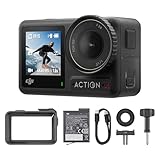
- The Essential Combo includes DJI Osmo Action 4, 1 battery, 1 Quick-Release Adapter Mount, and more accessories, making it a great introductory choice for first-time action camera users looking to capture 4K footage.
- Superior Low-Light Performance with 1/1.3-inch Sensor - Struggling with grainy footage in low light? This action camera 4K uses 2.4μm pixel size for crisp results. Auto white balance adjusts color for true-to-life, flicker-free shots, even underwater.
- Pro-Grade Color Science - Worried your videos lack real-life colors? 10-bit color depth captures subtle shades, while D-Log M preserves more detail and dynamic range for professional editing later. This action camera helps you enhance vibrant scenery.
- Cold-Resistant, Long-Lasting Battery - Tired of your camera dying in the cold? The 1770mAh battery lasts up to 150 minutes [6] and works in temps as low as -20°C (-4°F). Plus, with waterproofing up to 18m [3], DJI Osmo Action 4 is ready for outdoor adventures.
- See More, Feel More - Want to capture more action and scenery? Shoot in 4K at 120fps with a 155° ultra-wide field of view. Minimal cropping means immersive FPV footage. Use it as a motorcycle camera or underwater camera and enjoy stunning sceneries!
This is where ecosystems matter more than individual accessories. The depth, reliability, and sport-specific design of mounts directly affect whether a camera becomes part of your kit or stays in your bag.
Helmet, Chest, and Body Mounting: POV That Actually Feels Natural
Helmet mounting remains the gold standard for immersive POV, but execution varies dramatically. GoPro’s curved and flat adhesive mounts still set the benchmark for long-term reliability, especially on vented bike helmets and motorcycle lids exposed to heat and wind.
DJI’s helmet mounts are nearly as secure, but the slightly taller camera profile means wind resistance is more noticeable at speed. For motorsports and downhill riding, this can translate into extra neck fatigue over long sessions.
Chest mounts offer a more grounded perspective and reduce head movement artifacts. GoPro’s Chesty remains the most stable and adjustable, while third-party chest rigs often struggle to keep cameras from bouncing during running or technical descents.
Handlebar, Frame, and Equipment Mounts for Bikes and Boards
Cyclists and riders benefit from rigid mounting points, but vibration is the enemy. GoPro’s metal bicycle and roll bar mounts handle high-frequency chatter better than plastic-only designs, especially on gravel or trail surfaces.
DJI’s mounting hardware is lighter, which helps on ultralight builds, but it transmits slightly more vibration unless paired with strong in-camera stabilization. In real-world testing, this matters more on hardtail mountain bikes and motorcycles than on road setups.
For board sports like skiing, snowboarding, and kitesurfing, low-profile adhesive mounts and bite mounts shine. GoPro’s bite mount is still the most comfortable for short clips, while Insta360’s lighter cameras reduce jaw fatigue if you’re filming longer sequences.
Insta360 and Modular Wearability: When Size Changes the Game
Insta360 approaches wearability differently by shrinking the camera rather than reinforcing mounts. The Insta360 GO series excels for runners, climbers, and casual adventure athletes who want hands-free capture without feeling a camera at all.
Magnetic mounts clipped to shirts, hydration vests, or chest plates feel liberating, but they are not designed for high-impact crashes or sustained vibration. This makes them ideal for trail running, hiking, and gym-based training, not downhill racing or motorsports.
For full-size Insta360 models like the Ace Pro or X-series, the mounting ecosystem is solid but relies more heavily on proprietary adapters. This adds flexibility for creative angles but can complicate quick swaps mid-session.
Quick-Release Systems and Mid-Session Adaptability
Quick-release mounts have become essential for athletes who change angles during a single outing. GoPro’s newer magnetic-latch system is fast and secure, though it adds bulk compared to the classic two-prong mount.
DJI’s magnetic quick-release is arguably the fastest to operate with gloves, making it a standout for winter sports and cold-weather riding. The trade-off is a slightly looser tolerance, which can introduce micro-movement if mounts aren’t perfectly aligned.
For creators who switch between helmet, chest, and handheld shots, these systems dramatically reduce downtime. If you often miss moments because re-mounting takes too long, this feature alone can justify a camera upgrade.
Wearability Over Time: Weight, Heat, and Fatigue
Weight distribution matters more than raw grams. A heavier camera mounted close to the helmet shell often feels better than a lighter camera perched higher on an extension arm.
GoPro and DJI cameras both generate noticeable heat during high-frame-rate recording, which can become uncomfortable when mounted near the forehead in hot climates. Proper airflow and minimal padding between mount and helmet help more than most people expect.
Smaller cameras reduce fatigue, but battery life becomes the limiting factor. Ultra-compact designs often require frequent charging or external power, which can interrupt long rides or multi-hour adventures.
Battery Mods, External Power, and Cold-Weather Accessories
Extended battery mods and external power banks expand usability but affect wearability. GoPro’s battery grip and pass-through doors are well-sealed, yet they increase bulk and can interfere with chest mounts or tight helmet setups.
DJI’s batteries perform slightly better in cold environments, which matters for skiing, snowmobiling, and alpine climbing. Fewer battery swaps mean less exposure to snow and moisture during sessions.
For expedition-style users, the availability of official weather-sealed accessories is critical. Third-party power solutions may work, but they often compromise water resistance or mounting security.
Choosing the Right Ecosystem for Your Sport
If your sport involves speed, impact, and repeated vibration, prioritize ecosystems with proven adhesive mounts, metal hardware, and minimal flex. GoPro remains the safest choice here, simply because every mount has been stress-tested by millions of riders.
For creators who value fast transitions, glove-friendly operation, and clean modularity, DJI’s mounting system offers excellent usability with slightly less rugged redundancy. It rewards careful setup and precise alignment.
If comfort, discretion, and everyday wearability matter more than crash survivability, Insta360’s approach opens creative possibilities traditional action cameras can’t match. The key is being honest about how hard you’ll push your gear.
Mounting isn’t an accessory decision; it’s a core part of how the camera integrates with your body and your sport. Get this wrong, and even the best sensor and stabilization won’t save your footage.
Which Wearable Action Camera Should You Buy? Sport-by-Sport Recommendations and Final Verdict
Once you understand mounting, battery trade-offs, and ecosystem strength, the decision becomes far more personal. The best wearable action camera isn’t the one with the highest spec sheet, but the one that disappears into your movement while reliably capturing usable footage. With that in mind, here’s how the leading options shake out when matched to real sports and real conditions.
Motorsports, MTB, and High-Vibration Riding
For motocross, downhill mountain biking, road cycling, and anything involving sustained vibration, GoPro remains the most dependable choice. The Hero series’ stabilization handles high-frequency chatter better than most, and the ecosystem of helmet, chin, chest, and bar mounts is unmatched for rigidity and long-term durability.
Battery life is average, but predictable, and GoPro’s thermal management works well at speed. If your footage comes from fast descents, engine noise, or rocky trails, this is the platform that fails least often.
Skiing, Snowboarding, and Cold-Weather Sports
Cold changes everything, and DJI’s Osmo Action line consistently performs better here. Batteries hold voltage longer in freezing conditions, touchscreens remain responsive with gloves, and the camera boots quickly even after sitting in sub-zero air.
Image quality in flat light is excellent, with cleaner shadow detail during overcast days. For skiers and snowboarders who want fewer battery swaps and dependable operation on chairlifts and summits, DJI is the smarter cold-weather companion.
Surfing, Kitesurfing, and Watersports
Water sports prioritize sealing, lens protection, and simple operation. GoPro’s waterproofing without a case and easily replaceable lens covers make it ideal for saltwater abuse and accidental board impacts.
DJI is a close second, with excellent waterproof ratings, but GoPro’s accessory depth, especially bite mounts and board mounts, gives it the edge for surfers. If you spend more time rinsing sand than charging batteries, rugged simplicity matters more than menu elegance.
Climbing, Mountaineering, and Expedition Travel
For climbers and expedition users, weight, reliability, and power management outweigh resolution. DJI’s longer cold-weather battery performance and straightforward interface reduce distractions when conditions are serious.
That said, many climbers still choose GoPro for helmet mounting stability and the availability of third-party accessories worldwide. If you’re traveling remotely and need replacements fast, GoPro’s global ecosystem becomes a safety factor, not just a convenience.
Running, Hiking, and Lightweight POV Capture
This is where Insta360 shines. Ultra-light cameras like the Insta360 Go series are comfortable for hours, barely noticeable on a cap or chest strap, and ideal for casual POV storytelling.
Image quality and low-light performance are limited compared to larger cameras, but stabilization remains impressive for the size. For runners, thru-hikers, and travelers who value comfort over cinematic depth, this trade-off is often worth it.
Everyday Adventure, Travel, and Content Creation
If your camera needs to transition from helmet to handheld to travel vlog, DJI offers the best balance of usability and image quality. The interface is intuitive, the screens are bright, and the footage requires minimal post-processing.
GoPro still produces excellent results, but its menus and color profiles reward users willing to tweak settings. DJI feels more forgiving, especially for creators who want consistent output without constant adjustment.
Social Media, Creative Angles, and Discreet Wear
Insta360’s broader lineup excels at creative freedom. Wearable clips, magnetic mounts, and 360-degree capture unlock angles traditional cameras can’t touch, especially in urban or lifestyle settings.
These cameras are not built for repeated crashes or heavy vibration. If discretion, spontaneity, and creative flexibility matter more than survivability, Insta360 offers the most interesting tools.
Final Verdict: Buy for Your Sport, Not the Spec Sheet
If your priority is maximum durability, mounting security, and proven reliability under impact, GoPro remains the safest investment. It’s the camera you choose when failure isn’t an option and replacement parts need to be easy to find anywhere in the world.
If you want cleaner low-light footage, better cold-weather performance, and a smoother user experience, DJI’s action cameras deliver outstanding real-world usability. They reward athletes and creators who value efficiency and consistency.
If comfort, creativity, and all-day wearability define your use case, Insta360 fills a niche no traditional action camera can. Just be honest about how hard you’ll push it.
The right wearable action camera should feel like an extension of your body and your sport. Choose the ecosystem that matches your movement, your environment, and how much attention you want to give your gear while you’re out there doing what you love.