The hybrid smartwatch was supposed to be the adult in the room. It promised the familiarity of a real watch—hands, dial, proportions you could wear with a jacket—while quietly adding steps, notifications, and sleep tracking without demanding nightly charging or a glowing rectangle on your wrist. For a moment in the mid-2010s, it felt like the obvious compromise for enthusiasts who liked watches but lived in a connected world.
If you searched for restraint instead of raw computing power, the hybrid category seemed tailor-made for you. Brands from Fossil Group to Withings, Skagen to Mondaine, pitched the idea that smart didn’t have to look smart. What followed, however, was not a dramatic failure, but something more insidious: stagnation, confusion, and gradual irrelevance.
Understanding why the category rose so quickly—and then quietly collapsed—is essential before talking about how anyone, Casio included, could revive it without repeating the same mistakes.
The original appeal: real watches that happened to be connected
At its peak, the hybrid smartwatch solved three real pain points. Battery life stretched from weeks to months thanks to coin-cell or low-drain rechargeable systems, cases stayed under 12–13 mm thick, and dials remained legible in sunlight without OLED glare. For watch wearers used to 38–42 mm cases on leather straps, hybrids felt natural on the wrist.
🏆 #1 Best Overall
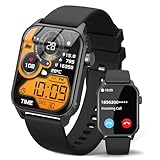
- 【1.83" HD Display & Customizable Watch Faces】Immerse yourself in a vibrant 1.83-inch IPS display, boasting a sharp resolution of 240*284 for crystal-clear visuals. Effortlessly personalize your smart watch with a wide array of customizable watch faces to suit your personal style for every occasion—whether trendy, artistic, or minimalist—ideal for casual, sporty, or professional. Its sleek, modern design complements any outfit, blending technology and fashion seamlessly for everyday wear
- 【120 Sports Modes & Advanced Health Tracking】Our TK29 smart watches for women men come equipped with 120 sports modes, allowing you to effortlessly track a variety of activities such as walking, running, cycling, and swimming. With integrated heart rate and sleep monitors, you can maintain a comprehensive overview of your health, achieve your fitness goals, and maintain a balanced, active lifestyle with ease. Your ideal wellness companion (Note: Step recording starts after exceeding 20 steps)
- 【IP67 Waterproof & Long-Lasting Battery】Designed to keep up with your active lifestyle, this smartwatch features an IP67 waterproof rating, ensuring it can withstand splashes, sweat, and even brief submersion, making it perfect for workouts, outdoor adventures, or rainy days. Its reliable 350mAh battery offering 5-7 days of active use and up to 30 days in standby mode, significantly reducing frequent charging. Ideal for all-day wear, whether you’re at the gym, outdoors, or simply on the go
- 【Stay Connected Anytime, Anywhere】Stay informed and in control with Bluetooth call and music control features. Receive real-time notifications for calls, messages, and social media apps like Facebook, WhatsApp, Twitter, and Instagram directly on your smartwatch. Easily manage calls, control your music playlist, and stay updated without needing to reach for your phone. Perfect for work, workouts, or on-the-go, this watch keeps you connected and never miss important updates wherever you are
- 【Multifunction & Wide Compatibility】Seamlessly handle heart rate monitoring, sleep tracking, and enjoy conveniences like camera/music control, Seamlessly handle heart rate monitoring, sleep tracking, and more-all directly from your wrist. This 1.83 inches HD smartwatch is compatible with iPhone (iOS 9.0+) & Android (5.0+), ensuring smooth daily connectivity and convenience throughout your day. More than just a timepiece, it’s a stylish, all-in-one wearable for smarter, healthier living
Most early hybrids used a conventional quartz base with a stepper motor for the hands, paired with a small Bluetooth module. Movements were simple, robust, and cheap to service compared to full smartwatches with sealed batteries and proprietary screens. Comfort was excellent, weight was low, and durability was closer to a normal daily watch than a fragile mini-computer.
Crucially, hybrids asked less of the user. You didn’t need to think about app ecosystems, watch faces, or software updates every month. They tracked steps, buzzed for calls, and stayed out of the way, which aligned perfectly with the mindset of traditional watch enthusiasts dipping a toe into wearables.
Where the category started to fracture
The cracks appeared when hybrids tried to justify their existence against rapidly improving full smartwatches. As Apple, Samsung, and Garmin pushed better health sensors, brighter screens, and expanding app support, hybrids remained functionally shallow. Step counts, basic sleep estimation, and notification vibrations began to feel underwhelming rather than refreshingly simple.
At the same time, many hybrid brands chased fashion instead of substance. Fossil Group flooded the market with near-identical models across multiple sub-brands, often sharing the same module, same limitations, and same mediocre apps. Case finishing and dial design varied, but the user experience underneath was static and, in some cases, unreliable.
Software became the silent killer. Companion apps were frequently buggy, poorly maintained, or abandoned within a few years. Firmware updates were rare, data syncing was inconsistent, and long-term platform support—critical for any connected product—was treated as an afterthought rather than a responsibility.
Neither fish nor fowl: the identity crisis
Hybrids also struggled with positioning. To smartwatch buyers, they looked outdated and underpowered, offering none of the visual richness or fitness depth expected at similar prices. To watch collectors, the connected elements felt disposable, destined to become obsolete long before the case, hands, or bracelet wore out.
This tension was made worse by pricing. Many hybrids sat in the $200–$400 range, overlapping directly with entry-level Apple Watches, Wear OS models, and serious fitness watches from Garmin and Polar. When faced with a choice, consumers often picked the device that clearly did more, even if it needed daily charging.
Meanwhile, traditional watch buyers increasingly questioned the value of paying mechanical-watch money for a quartz watch tied to an app that might not exist in five years. The emotional permanence that makes watches collectible was fundamentally at odds with the rapid depreciation of consumer electronics.
The quiet collapse no one announced
There was no single moment when the hybrid smartwatch died. Instead, releases slowed, marketing budgets shrank, and once-prominent models quietly disappeared from brand websites. Withings pivoted toward health-first designs with screens, Fossil announced its exit from smartwatch hardware entirely, and fashion brands retreated back to pure quartz.
Retailers noticed the shift before consumers did. Sell-through rates softened, returns increased due to app issues, and staff found it harder to explain why a hybrid made sense next to a discounted Apple Watch SE. The category didn’t fail spectacularly; it simply stopped making sense for most buyers.
What remains today is a thin scattering of models that feel frozen in time, offering the same features they did years ago while the rest of the wearable market has moved on. That stagnation, more than any single flaw, is what put the hybrid smartwatch on life support—and why any attempt at revival must start by acknowledging how thoroughly the first wave lost its way.
Why Consumers Fell Out of Love: Battery Anxiety, Bland Design, and Feature Confusion
By the time the hybrid smartwatch category stalled, consumers weren’t confused about what hybrids were supposed to be. They were confused about why they should tolerate the compromises any longer. What initially looked like a sensible middle ground slowly revealed itself as an awkward no-man’s-land between two far more confident product categories.
Hybrids promised balance, but in practice they delivered friction. Each of the category’s core selling points eroded under real-world use, daily charging habits, and evolving expectations shaped by both mechanical watches and full smartwatches.
Battery anxiety never really went away
Battery life was meant to be the hybrid smartwatch’s trump card. Compared to daily-charging Apple Watches or Wear OS devices, a quoted six months or even a year on a coin cell sounded liberating.
In reality, battery performance was inconsistent and poorly communicated. Add step tracking, notifications, sleep monitoring, and background Bluetooth syncing, and that six-month claim often collapsed into three or four months, sometimes less.
For traditional watch owners accustomed to multi-year quartz battery changes or solar-powered peace of mind, this still felt like maintenance. For smartwatch owners, it didn’t feel meaningfully better than charging every few days, especially when battery replacement often required a service visit rather than a cable.
Rechargeable hybrids introduced their own frustrations. Models with sealed lithium cells aged like consumer electronics, not watches, with noticeable capacity loss after two or three years and no clear replacement path.
Casio’s long-standing success with Tough Solar highlights how badly the category misread expectations. Hybrid buyers didn’t just want longer battery life; they wanted to stop thinking about battery life altogether.
Designs that pleased no one
Visually, many hybrids played it painfully safe. Cases hovered around 40–44mm with generic round profiles, flat mineral crystals, and dial furniture that looked like stock catalog parts rather than considered watch design.
To enthusiasts, these watches lacked the finishing cues that justify emotional attachment. Brushed cases were often basic, polished accents were minimal, and handsets were chosen more for legibility with sub-dials than for character or proportion.
At the same time, smartwatch buyers saw them as dated. Fixed dials with tiny complication sub-registers felt static next to OLED displays, while notification indicators were abstract and unintuitive compared to a screen that simply shows the message.
Even wearability suffered. Many hybrids were thicker than expected due to stacked modules, yet offered none of the visual payoff of a mechanical movement or the functional density of a true smartwatch.
Casio’s appeal has always come from unapologetic design language, whether it’s a square G-Shock, a steel digital with sharp edges, or a compact resin case that disappears on the wrist. Most hybrids lacked that confidence, and consumers noticed.
Feature sets that were hard to explain and harder to trust
Perhaps the most damaging issue was feature confusion. Hybrids asked buyers to understand what they didn’t do as much as what they did.
Step counting, basic sleep tracking, vibration alerts, and phone controls sounded reasonable on a spec sheet. In practice, accuracy varied, sync failures were common, and app interfaces often felt underdeveloped compared to Apple Health, Garmin Connect, or even Fitbit.
Notification handling was especially problematic. Some models filtered alerts poorly, others relied on cryptic hand movements or tiny sub-dials, and few offered customization that felt intuitive during daily use.
Health features lagged behind expectations as well. As heart-rate monitoring, SpO2, and stress tracking became standard on entry-level smartwatches, hybrids felt increasingly behind while still asking premium-adjacent prices.
Casio’s historical strength has been function clarity. A G-Shock tells you exactly what it does, how to use it, and why it matters, without an onboarding tutorial or companion app dependency.
The app problem no one wanted to talk about
Even when the hardware was acceptable, software eroded trust. Apps were frequently buggy, slow to update, or quietly abandoned as brands shifted strategy or exited the category entirely.
This reinforced a fear unique to watch buyers: obsolescence by neglect. A stainless steel case, sapphire crystal, and comfortable bracelet mean little if the watch’s core functions depend on software that stops working after an OS update.
Unlike phones, watches are expected to last. Mechanical watches age gracefully, quartz watches remain functional for decades, and even digital Casios from the 1980s still tell time perfectly.
Hybrids broke that unspoken contract. They asked consumers to accept a product with the lifespan of consumer electronics, wrapped in the emotional language of watchmaking.
When “compromise” became the defining feature
Individually, none of these flaws were fatal. Together, they defined the category.
Hybrids didn’t offer the immersive experience of a smartwatch, the permanence of a traditional watch, or the bulletproof simplicity of a digital tool watch. They existed as explanations rather than instincts, requiring sales staff to justify them rather than letting the product speak.
This is where Casio’s opportunity quietly emerges. The brand understands durability as a value system, battery life as a design philosophy, and usability as something earned through restraint, not feature creep.
Consumers didn’t fall out of love with the idea of a hybrid smartwatch. They fell out of patience with products that felt uncertain about what they were supposed to be.
Competitors That Missed the Mark: Fossil Group, Withings, Garmin Hybrids, and the Limits of the Model
If hybrids failed because they felt uncertain about their purpose, the brands that championed them often amplified that uncertainty rather than resolving it. Each major player approached the category from a different starting point—fashion, health, or sport—but all ran into the same structural limits.
They didn’t just struggle with execution. They revealed where the hybrid smartwatch model itself breaks down when design philosophy, software support, and long-term ownership expectations are misaligned.
Rank #2
![Apple Watch Series 11 [GPS 46mm] Smartwatch with Jet Black Aluminum Case with Black Sport Band - M/L. Sleep Score, Fitness Tracker, Health Monitoring, Always-On Display, Water Resistant](https://m.media-amazon.com/images/I/312K597M2uL._SL160_.jpg)
- HYPERTENSION NOTIFICATIONS — Apple Watch Series 11 can spot signs of chronic high blood pressure and notify you of possible hypertension.*
- KNOW YOUR SLEEP SCORE — Sleep score provides an easy way to help track and understand the quality of your sleep, so you can make it more restorative.
- EVEN MORE HEALTH INSIGHTS — Take an ECG anytime.* Get notifications for a high and low heart rate, an irregular rhythm,* and possible sleep apnea.* View overnight health metrics with the Vitals app* and take readings of your blood oxygen.*
- STUNNING DESIGN — Thin and lightweight, Series 11 is comfortable to wear around the clock — while exercising and even when you’re sleeping, so it can help track your key metrics.
- A POWERFUL FITNESS PARTNER — With advanced metrics for all your workouts, plus features like Pacer, Heart Rate Zones, training load, Workout Buddy powered by Apple Intelligence from your nearby iPhone,* and more. Series 11 also comes with three months of Apple Fitness+ free.*
Fossil Group: Design First, Longevity Last
Fossil Group was once the category’s loudest advocate, pushing hybrids across Fossil, Skagen, Diesel, Michael Kors, and Emporio Armani. The appeal was obvious: familiar 40–44mm cases, decent finishing, real hands, and straps that felt like watches, not gadgets.
Under the dial, however, most relied on basic quartz movements with stepper motors layered onto minimal sensors. Battery life was acceptable on paper—often six months or more—but real-world reliability varied, particularly as Bluetooth connections degraded or firmware updates stalled.
The deeper issue was trust. Fossil’s repeated exits from smartwatch platforms, shifting app strategies, and eventual withdrawal from hybrid development sent a clear signal to consumers: these were seasonal products, not enduring ones. In a category already anxious about software obsolescence, Fossil reinforced every fear buyers had.
Withings: Health Credibility, Watch Ambivalence
Withings approached hybrids from the opposite direction, prioritizing health tracking over watch culture. The ScanWatch line offered impressive clinical adjacencies: ECG, SpO2, sleep apnea detection, and multi-week battery life in a steel case with sapphire.
On paper, it was the most “serious” hybrid available. On the wrist, it often felt like a medical device wearing a watch costume.
The dials were clean but emotionally flat, the cases thick for their diameter, and the finishing competent rather than compelling. More importantly, the experience lived in the app, not the watch. The hardware existed to feed data upward, not to stand confidently on its own.
For health-first buyers, a full smartwatch eventually made more sense. For watch enthusiasts, Withings never fully spoke their language.
Garmin Hybrids: Sport DNA in a Casual Shell
Garmin’s hybrid experiments—most notably the vívomove series—were technically impressive. Hidden OLED displays, robust fitness tracking, multi-day battery life, and deep integration with Garmin’s ecosystem set them apart functionally.
The problem was identity. These were Garmin sports computers pretending to be casual watches, and the illusion rarely held.
Case sizes skewed large, thickness compromised comfort under cuffs, and the partially digital dials often felt visually confused. They appealed to existing Garmin users looking for a dressier option, but failed to attract traditional watch buyers who valued clarity and restraint.
The Structural Limits Exposed
Across these brands, a pattern emerges. Hybrids that leaned too hard into software felt disposable. Hybrids that leaned into health became clinical. Hybrids that leaned into sport never truly escaped their tool-watch bulk.
None solved the core contradiction: hybrids ask consumers to accept software dependency without delivering software indispensability.
Battery life was better than smartwatches, but not transformative. Design was better than wearables, but rarely timeless. Features were fewer than smartwatches, but still required an app to justify their existence.
Why This Matters for Casio
These failures don’t mean the hybrid concept is broken beyond repair. They mean it has been framed incorrectly.
Fossil treated hybrids as fashion SKUs. Withings treated them as health terminals. Garmin treated them as lifestyle accessories for athletes. None treated them as tools first.
Casio’s opportunity exists precisely because it does not need to pretend a hybrid is something it isn’t. The brand has already trained consumers to value clarity, restraint, battery longevity, and function-led design.
The competitors didn’t just miss the mark. They showed, in high resolution, exactly where the line is—and how dangerous it is to cross it.
What the Hybrid Was Supposed to Be vs. What It Became in the Real World
From the outset, the hybrid smartwatch was pitched as a compromise without compromise. It would look like a proper watch, wear like a proper watch, and last like a proper watch—while quietly delivering the most useful parts of the smartwatch experience in the background.
In theory, this was the antidote to glowing slabs and nightly charging rituals. In practice, the category drifted, fractured, and slowly lost the confidence of both watch buyers and tech consumers.
The Original Promise: A Watch First, Electronics Second
The early hybrid ideal was refreshingly modest. Analog timekeeping, physical hands, a familiar case profile, and measured proportions that didn’t shout “device” from across the room.
Smart features were meant to be additive, not dominant. Step counting without a dashboard obsession, notifications without screens demanding attention, and battery life measured in months rather than days.
Crucially, the hybrid was supposed to age like a watch. Software would assist, but the object on the wrist would still make sense even if the app faded into irrelevance.
What Consumers Actually Got
What reached the market was often something else entirely. Many hybrids ended up being smartwatches in denial—bloated with sensors, tethered to companion apps, and dependent on firmware updates just to function reliably.
Cases grew thicker to accommodate motors, screens, and batteries. Dial layouts became cluttered with subdials that existed solely to point at abstract metrics rather than legible information.
Instead of feeling like a timeless object with discreet intelligence, many hybrids felt like compromised gadgets wearing a traditional costume.
The Software Dependency Trap
The category’s quiet downfall was software reliance without software payoff. Hybrids asked users to install apps, create accounts, and sync data—yet delivered experiences that felt thin compared to full smartwatches.
Notifications were often crude. Fitness data lacked depth or accuracy. Health metrics arrived late, inconsistently, or without meaningful context.
Once users realized they were still managing software—without gaining the rich interaction, app ecosystems, or visual feedback of an Apple Watch or Galaxy Watch—the rationale collapsed.
Design Drift and the Loss of Watchmaking Discipline
Many brands underestimated how sensitive watch buyers are to proportion and restraint. Case diameters crept past 42mm. Thickness exceeded what a cuff-friendly daily watch should tolerate.
Finishing often told the story. Flat mineral crystals, shallow dials, stamped indices, and generic cases undermined credibility with enthusiasts who notice these details instantly.
Straps were another tell. Silicone bands masquerading as leather, proprietary lug systems, and limited sizing options reminded buyers that this was a device first, watch second.
Battery Life: Better, But Not Enough
Hybrid battery life was always marketed as a win, but the real-world advantage was narrower than advertised. Weeks instead of days sounded impressive, until users realized they were still charging more often than a quartz watch—and still managing power settings.
Once screens were added, even subtly, endurance dropped further. OLED cutouts, backlights, and vibration motors all took their toll.
The result was an awkward middle ground: not liberating enough to forget about charging, not powerful enough to justify the inconvenience.
The Identity Crisis No One Solved
Ultimately, hybrids struggled because they couldn’t answer a simple question: who is this for? Traditional watch buyers found the tech intrusive and the design compromised. Smartwatch users found the features limited and the experience underwhelming.
Retail positioning didn’t help. Hybrids were often shelved next to fashion watches or wearables, rarely given the contextual storytelling that explains why restraint is a feature, not a flaw.
Without a clear identity, the category became vulnerable to indifference. Not hated, not loved—just quietly ignored.
Why This Failure Was Structural, Not Inevitable
The decline of hybrids wasn’t caused by consumer rejection of the concept. It was caused by execution that misunderstood why people still wear watches at all.
Rank #3

- Bluetooth Call and Message Alerts: Smart watch is equipped with HD speaker, after connecting to your smartphone via bluetooth, you can answer or make calls, view call history and store contacts through directly use the smartwatch. The smartwatches also provides notifications of social media messages (WhatsApp, Twitter, Facebook, Instagram usw.) So that you will never miss any important information.
- Smart watch for men women is equipped with a 320*380 extra-large hd full touch color screen, delivering exceptional picture quality and highly responsive touch sensitivity, which can bring you a unique visual and better interactive experience, lock screen and wake up easily by raising your wrist. Though “Gloryfit” app, you can download more than 102 free personalised watch faces and set it as your desktop for fitness tracker.
- 24/7 Heart Rate Monitor and Sleep Tracker Monitor: The fitness tracker watch for men has a built-in high-performance sensor that can record our heart rate changes in real time. Monitor your heart rate 26 hours a day and keep an eye on your health. Synchronize to the mobile phone app"Gloryfit", you can understand your sleep status(deep /light /wakeful sleep) by fitness tracker watch develop a better sleep habit and a healthier lifestyle.
- IP68 waterproof and 110+ Sports Modes: The fitness tracker provides up to 112+ sports modes, covering running, cycling, walking, basketball, yoga, football and so on. Activity trackers bracelets meet the waterproof requirements for most sports enthusiasts' daily activities, such as washing hands or exercising in the rain, meeting daily needs (note: Do not recommended for use in hot water or seawater.)
- Multifunction and Compatibility: This step counter watch also has many useful functions, such as weather forecast, music control, sedentary reminder, stopwatch, alarm clock, timer, track female cycle, screen light time, find phone etc. The smart watch with 2 hrs of charging, 5-7 days of normal use and about 30 days of standby time. This smart watches for women/man compatible with ios 9.0 and android 6.2 and above devices.
Watches succeed because they are self-contained, legible, durable, and emotionally durable. Most hybrids treated those traits as secondary concerns.
This is where the gap remains. The hybrid didn’t fail because it was unnecessary. It failed because it stopped behaving like a watch, while never fully committing to being a computer.
Casio’s Unmatched Advantages: Durability, Decade-Long Battery Life, and Digital Credibility
If hybrids failed because they forgot how to behave like watches, Casio starts from the opposite premise. Its core competencies align almost perfectly with the unresolved gaps that doomed the category: resilience, autonomy, legibility, and trust earned through use rather than marketing.
Where others tried to soften technology into something fashionable, Casio has spent four decades proving that digital functionality can coexist with clarity, toughness, and emotional durability.
Durability as a Design Philosophy, Not a Spec Sheet
Casio does not treat durability as a checkbox; it is the organizing principle behind the product. G-Shock’s shock resistance, 200-meter water resistance, reinforced resin cases, screw-down steel casebacks, and protected buttons were engineered for abuse long before “rugged” became a smartwatch marketing trope.
This matters for hybrids because durability is not just about survival, but confidence. A watch that can be worn without hesitation—during travel, work, exercise, or sleep—removes the anxiety that quietly erodes daily use.
Casio already understands ergonomics at scale. Compact lug-to-lug dimensions, lightweight resin or titanium construction, and balanced case profiles mean even large-looking models sit comfortably on smaller wrists for long-term wear.
Battery Life That Resets Expectations, Not Just Improves Them
The hybrid category promised freedom from charging, then quietly walked it back. Casio never made that compromise in the first place.
Solar-assisted quartz movements, ultra-low-power LCDs, and Bluetooth modules designed for intermittent syncing allow Casio watches to operate for years, not weeks. In models like the G-Shock Tough Solar or Pro Trek lines, battery life is measured in calendar years, with passive light exposure maintaining charge indefinitely for most users.
This is not a marginal advantage; it fundamentally changes the user relationship. When a connected watch behaves like a traditional quartz piece—always on, always accurate, never needy—it restores the psychological simplicity that hybrids lost.
Digital Credibility Earned Before Smartphones Existed
Unlike fashion brands licensing tech, or tech companies learning watchmaking on the fly, Casio built its reputation on digital timekeeping itself. World time, alarms, timers, perpetual calendars, multi-band radio sync, and sensor integration were refined decades before apps entered the picture.
This heritage matters because restraint feels intentional when it comes from mastery. When Casio limits notifications or omits touchscreens, it reads as editorial discipline, not technical limitation.
The result is an interface that prioritizes glanceability and muscle memory. Physical buttons, segmented displays, and predictable navigation outperform touch controls in motion, low light, gloves, or stress—exactly the contexts where watches prove their value.
Manufacturing Scale Without Disposable Thinking
Casio operates at a scale most hybrid brands can’t match, but without turning products into short-lived gadgets. Movements are modular, cases are standardized, and parts availability extends for years, not product cycles.
This has downstream effects on value. Affordable pricing, global service networks, and proven reliability make ownership low-risk, even for first-time buyers experimenting with connected features.
In a market burned by discontinued apps and unsupported hardware, longevity is not nostalgia—it is a competitive advantage.
A Brand People Already Trust on Their Wrist
Casio does not need to convince consumers that it belongs on the wrist. From F-91Ws to Mudmasters, the brand spans students, soldiers, engineers, collectors, and everyday wearers across generations.
That trust lowers the barrier to experimentation. A Casio hybrid would not be asking buyers to believe in a new category; it would simply extend a familiar relationship with modern restraint.
In a segment defined by identity confusion, Casio’s greatest advantage may be clarity. It knows what a watch is, why people wear one, and how little technology is required to make it better rather than louder.
Learning from Casio’s Own Experiments: G-Shock Connected, Pro Trek Smart, and What Worked (and Didn’t)
Casio did not arrive late to connected watches—it arrived early, then paused, recalibrated, and quietly learned. Unlike brands that chased feature parity with Apple or Samsung, Casio treated connectivity as an accessory to timekeeping rather than a replacement for it.
Those internal experiments matter now because they reveal something rare in this category: a company that has already stress-tested both extremes of the hybrid spectrum. Casio has built minimalist Bluetooth companions and full touchscreen smartwatches, and it has lived with the consequences of both.
G-Shock Connected: Hybridity Done the Casio Way
The G-Shock Connected line, spanning models like the GMW-B5000, GA-B2100, and Mudmaster GG-B100, represents Casio’s most philosophically coherent approach to smart features. These watches remain unmistakably G-Shocks in size, materials, and intent, using resin or steel cases, mineral or sapphire crystals, and traditional button-driven modules.
Bluetooth exists here to serve the watch, not the wrist phone. Time sync, world time management, alarm configuration, activity logs, and basic notifications are handled through the Casio Watches app, but the watch remains fully functional without it.
Battery life is the quiet triumph. Solar-assisted modules routinely deliver months of operation, stretching into years with light exposure, and never require nightly charging. For users burned by smartwatches that die mid-hike or mid-trip, this alone redefines what “smart enough” can mean.
Where these models stumble is ambition. Notifications are limited, fitness tracking is rudimentary, and the software experience feels utilitarian rather than evolving. Yet that restraint is also why these watches are still worn years after purchase, rather than sold when the next OS update breaks compatibility.
Pro Trek Smart: When Casio Tried to Play Silicon Valley’s Game
The Pro Trek Smart series, including the WSD-F20, F21HR, and WSD-F30, marked Casio’s most explicit attempt to compete in the mainstream smartwatch arena. Running Android Wear and later Wear OS, these watches featured full-color touchscreens, GPS, heart rate monitoring, and third-party app support.
On paper, they were compelling outdoor tools. Dual-layer displays allowed a monochrome always-on mode beneath the LCD, cases were built to genuine outdoor standards, and physical buttons complemented touch input better than most Wear OS peers.
In practice, the compromises were brutal. Battery life ranged from a day to two in full smartwatch mode, with extended timekeeping modes that essentially turned the watch into a passive digital display. The cases were large and heavy, often exceeding 50mm, making daily wear a challenge outside niche users.
Most critically, Casio surrendered control of the user experience. Software updates, app stability, and long-term support were dictated by Google’s shifting priorities, not Casio’s product philosophy. When Wear OS stagnated, so did the watches, and Casio eventually exited the category entirely.
Edifice and the Quiet Middle Ground
Often overlooked are Casio’s Edifice Connected models, which split the difference between G-Shock toughness and Pro Trek ambition. These analog-digital hybrids used Bluetooth for time sync, calendar functions, and phone finder features, wrapped in slimmer steel cases suited for daily wear.
They highlighted an important lesson: connectivity works best when it enhances analog clarity rather than competing with it. Hands always told the time, subdials conveyed status, and the app existed primarily to remove friction, not to add layers of interaction.
Yet even here, Casio stopped short of deeper health or lifestyle integration. Step counts, sleep tracking, or meaningful wellness data were absent, leaving these watches feeling smart-adjacent rather than truly hybrid in the modern sense.
What Casio Learned—and Why It Matters Now
Taken together, these experiments map the boundaries of the hybrid smartwatch problem. Go too light on features and you risk irrelevance; go too heavy and you inherit the failures of short battery life, bloated software, and rapid obsolescence.
Casio’s advantage is that it has already paid the tuition. It knows that physical buttons outperform touchscreens in rain and gloves, that solar charging changes ownership psychology, and that users forgive limited features if the watch never becomes a chore.
Perhaps most importantly, Casio learned that independence matters. The more a watch relies on third-party platforms, cloud services, or aggressive update cycles, the less it aligns with why people buy watches in the first place.
The hybrid smartwatch did not fail because the idea was wrong. It failed because too many brands forgot that watches are worn, not managed—and Casio’s own history shows it understands that distinction better than most.
Redefining the Hybrid: What a Modern Casio Hybrid Smartwatch Should Actually Do—and Not Do
If Casio were to re-enter the hybrid space today, the goal should not be to chase Apple, Garmin, or Samsung at the edges of their ecosystems. The lesson from its own history is that hybrids succeed only when they respect the watch first, and let technology work quietly in the background. That means drawing firm boundaries around functionality, rather than treating restraint as a limitation.
Start With an Actual Watch, Not a Disguised Screen
A modern Casio hybrid should be legible, intuitive, and complete even if the phone is turned off. Analog hands must remain the primary timekeeping interface, driven by a quartz movement that prioritizes accuracy, shock resistance, and service longevity over novelty. Subdials and discreet LCD windows can convey information, but the watch should never feel like it is waiting for software to wake up.
Rank #4
![Apple Watch Series 11 [GPS 42mm] Smartwatch with Rose Gold Aluminum Case with Light Blush Sport Band - S/M. Sleep Score, Fitness Tracker, Health Monitoring, Always-On Display, Water Resistant](https://m.media-amazon.com/images/I/31J+F-pXaWL._SL160_.jpg)
- HYPERTENSION NOTIFICATIONS — Apple Watch Series 11 can spot signs of chronic high blood pressure and notify you of possible hypertension.*
- KNOW YOUR SLEEP SCORE — Sleep score provides an easy way to help track and understand the quality of your sleep, so you can make it more restorative.
- EVEN MORE HEALTH INSIGHTS — Take an ECG anytime.* Get notifications for a high and low heart rate, an irregular rhythm,* and possible sleep apnea.* View overnight health metrics with the Vitals app* and take readings of your blood oxygen.*
- STUNNING DESIGN — Thin and lightweight, Series 11 is comfortable to wear around the clock — while exercising and even when you’re sleeping, so it can help track your key metrics.
- A POWERFUL FITNESS PARTNER — With advanced metrics for all your workouts, plus features like Pacer, Heart Rate Zones, training load, Workout Buddy powered by Apple Intelligence from your nearby iPhone,* and more. Series 11 also comes with three months of Apple Fitness+ free.*
Case dimensions matter here. A 40–42mm diameter, under 12mm thick, with compact lug-to-lug would place it firmly in everyday-wear territory rather than outdoor instrument bulk. Steel, resin, or carbon-core constructions should be chosen for comfort and durability, not to signal “tech.”
Battery Life Is the Feature That Enables Everything Else
Any Casio hybrid that needs weekly charging has already failed its core audience. Solar-assisted charging should be non-negotiable, paired with a low-power Bluetooth module that can realistically deliver months—or years—of real-world use. The psychological difference between charging a watch and simply wearing it cannot be overstated.
This is where Casio still holds a structural advantage over nearly every competitor. Tough Solar has already trained consumers to expect autonomy, not dependency. A hybrid that preserves that expectation immediately separates itself from the disposable smartwatch cycle.
Connectivity Should Remove Friction, Not Create It
Bluetooth connectivity should exist to make the watch easier to live with, not to turn it into a wrist-based notification feed. Automatic time syncing, world time management, calendar alignment, and daylight saving adjustments are the baseline. Phone finder, button-based music control, and configurable alarms add value without demanding attention.
Notifications should be selective and intentional. Call alerts, calendar reminders, and priority messages are enough, delivered via subtle hand movement, a small LCD cue, or vibration rather than flashing prompts. If every app demands space on the dial, the hybrid has lost its purpose.
Health Tracking, but Casio-Appropriate
Ignoring wellness entirely no longer works, but Casio does not need to become a sports science company to stay relevant. Step counting, basic activity time, and sleep duration can be handled with low-power sensors that do not require constant user input. The data should be readable at a glance on the watch and optional in the app, not locked behind charts and scores.
Heart rate monitoring is optional, not essential. If included, it should prioritize trend awareness over medical precision, with the understanding that hybrid buyers value consistency and battery life more than granular metrics. The watch should never nag the wearer to move, breathe, or hydrate.
The App Should Feel Like a Tool, Not a Platform
Casio’s companion app must be fast, stable, and boring—in the best sense. Its role is configuration, data review, and firmware stability, not engagement farming. No accounts, no subscriptions, no cloud dependency for basic functions.
This also means long-term software support without feature creep. A hybrid watch should work the same way five years from now as it does on day one, even if the app receives maintenance updates. Stability builds trust, and trust keeps watches on wrists.
Physical Controls Over Touch, Every Time
Buttons are not a nostalgic choice; they are a usability advantage. They work in rain, with gloves, and without looking, reinforcing Casio’s reputation for functional design. A hybrid that relies on touch input immediately sacrifices one of the brand’s clearest strengths.
Tactile feedback also reinforces the sense that this is a piece of equipment, not an accessory trying to behave like a phone. That distinction matters deeply to the audience Casio already understands.
What a Casio Hybrid Should Explicitly Refuse to Do
There should be no app store, no voice assistant, and no attempt to mirror a smartphone UI. These features demand constant processing, rapid update cycles, and user attention, all of which conflict with the ownership model Casio excels at. The moment a hybrid needs a roadmap, it stops being a watch.
Likewise, Casio should resist the temptation to chase “smart” prestige through price inflation. The sweet spot is attainable value: a watch that feels overbuilt, thoughtfully designed, and refreshingly calm in daily use. The hybrid category does not need saving through more features—it needs saving through better judgment.
Design, Wearability, and Movement Philosophy: How Casio Can Respect Watch Culture While Adding Connectivity
If Casio gets the software out of the way, the hardware has to do the cultural heavy lifting. Design is where most hybrids fail, not because they look bad in isolation, but because they ignore the physical expectations watch people bring to the wrist. A Casio hybrid should feel like a watch first, with connectivity quietly embedded rather than visually announced.
Start With Real Watch Proportions, Not Smartwatch Templates
Hybrid watches often collapse under smartwatch case logic: thick mid-cases, awkward lug geometry, and oversized diameters meant to justify screens that barely get used. Casio should target disciplined dimensions, ideally 38–41mm in diameter and under 11mm thick, with compact lug-to-lug lengths that wear naturally across wrist sizes.
This is where Casio’s experience with decades of global sizing data becomes an advantage. The company already knows how to design watches that disappear on the wrist, whether it’s a 5610 square or a modest three-hand Edifice. A hybrid should wear like those references, not like a softened fitness tracker.
Analog First Means the Dial Must Carry the Identity
A hybrid dial should never look like a screen waiting to turn on. Applied markers, proper chapter rings, restrained text, and legible handset geometry are non-negotiable if Casio wants credibility with enthusiasts and collectors. Sub-displays or small digital windows should serve specific functions, not exist to prove the watch is “smart.”
Casio’s success with ana-digi layouts shows restraint can still be expressive. The dial should read as complete even when every smart feature is disabled, because many owners will spend most of their time using it exactly that way.
Movement Philosophy: Quartz Precision, Not Compromised Mechanics
This is not the place for mechanical hybrids or pseudo-automatic marketing narratives. Casio should lean fully into high-quality quartz with step motors capable of precise hand alignment, low power consumption, and reliable re-centering after smart functions activate. Mechanical purity is irrelevant if the hands drift or lag.
Solar charging should be standard, not aspirational. Casio’s Tough Solar systems already solve the core anxiety that killed most hybrids: battery replacement and recharge fatigue. A hybrid that can realistically run for months, or years, without user intervention immediately separates itself from the category’s failures.
Hands, Feedback, and the Importance of Physical Motion
One of the quiet joys of a well-designed hybrid is seeing the hands move with intent. Whether it’s a brief sweep to indicate a notification, a quick alignment for world time, or a discreet repositioning during activity tracking, motion should feel deliberate rather than gimmicky.
Casio has the engineering depth to get this right, but it requires restraint. No spinning theatrics, no constant hand parking, and no animations that drain power for novelty. The movement should behave like an instrument, not a demo reel.
Materials and Finishing That Age Like a Watch, Not a Gadget
Hybrids often fail the long-term test because they look dated once the tech inside becomes irrelevant. Casio should prioritize stainless steel, hardened resin, or titanium options with honest surface finishing that wears in rather than out. Brushed surfaces, bead-blasting, and muted polishing hide age better than glossy coatings or painted accents.
This also means resisting the urge to over-brand. Subtle caseback engraving, restrained dial text, and minimal tech callouts help the watch remain wearable even if the owner stops using the smart features entirely.
Straps, Bracelets, and the Reality of Daily Wear
Comfort is not optional when a watch is meant to be worn every day. Lug widths should stick to standard sizes like 18mm or 20mm, enabling easy strap swaps and long-term personalization. Proprietary attachments may improve water resistance, but they kill enthusiast goodwill.
Casio should offer both resin straps tuned for all-day comfort and well-executed bracelets with solid end links and tool-free micro-adjustment. A hybrid that can move seamlessly from office to travel to weekend wear has a far better chance of staying on the wrist.
Durability Still Matters More Than Elegance
Respecting watch culture does not mean abandoning Casio’s reputation for toughness. At least 100 meters of water resistance, sapphire or hardened mineral crystals, and meaningful shock protection should be baseline expectations. A hybrid should survive real use without the owner treating it like fragile electronics.
This is where Casio can outflank competitors who chased fashion credibility at the expense of resilience. A watch that looks refined but behaves like a Casio reinforces trust in a way no feature list can.
Connectivity Should Never Dictate the Case Design
Antennas, sensors, and charging components must adapt to the watch, not the other way around. Casio’s engineers should be empowered to prioritize symmetry, balance, and wrist comfort over marginal gains in signal strength or sensor placement. If a feature compromises wearability, it should be rethought or removed.
The end goal is simple but rare: a hybrid watch that someone would still choose to wear even if the phone stays in a bag all day. When design and movement philosophy lead, connectivity becomes an enhancement rather than a liability.
Battery, Sensors, and Software: Building a ‘Low-Noise’ Smart Platform That Justifies Its Existence
If connectivity is meant to enhance a watch rather than dominate it, the internal architecture has to be radically simpler than what most hybrid brands pursued. The category didn’t fail because consumers rejected smart features outright; it failed because those features demanded too much attention, too much charging, and too much tolerance for half-finished software. Casio’s opportunity begins by treating battery life, sensors, and software as supporting actors, not headline attractions.
Battery First, Always—Because Charging Kills Emotional Attachment
The single biggest reason hybrids lost relevance is that they quietly inherited smartwatch charging anxiety without delivering smartwatch capability. A hybrid that needs weekly charging but only offers notifications and step counting feels like a bad trade almost immediately. Casio should target measured battery life in months, not days, with solar assist as a non-negotiable pillar rather than a marketing flourish.
Casio already owns this space technically and psychologically. Tough Solar, combined with ultra-low-power Bluetooth LE and aggressive sleep states, should allow six to twelve months of real-world use with notifications enabled, and effectively indefinite operation for users who disable connectivity. That kind of longevity reframes the hybrid as a watch that happens to be connected, not a gadget pretending to be horological.
Solar Isn’t Enough—Power Management Has to Be Ruthless
Solar charging alone won’t save a bloated feature set. Sensors should wake only when explicitly needed, radios should sync in brief, scheduled bursts, and the watch should default to autonomous operation the moment it leaves Bluetooth range. Casio’s engineers excel at this kind of restraint, and it is precisely the discipline competitors lacked.
This is where hybrids like Fossil and early Withings faltered. They layered features reactively, chasing spec-sheet parity with full smartwatches, and paid for it in idle drain and degraded user trust. Casio must do the opposite by deciding what not to power before deciding what to include.
Sensors With Purpose, Not Parity
A hybrid does not need an ECG, SpO2, or skin temperature sensor to justify itself. In fact, adding health metrics that are poorly contextualized or inconsistently sampled undermines credibility with both enthusiasts and casual users. Casio should limit sensors to those it can support continuously, accurately, and without battery penalty.
That likely means an accelerometer for step and activity tracking, a basic heart rate sensor tuned for trends rather than medical claims, and ambient temperature only if it does not compromise caseback comfort. Barometers, GPS, and continuous health monitoring belong in Casio’s Pro Trek and G-Shock ecosystems, not in a lifestyle hybrid meant to disappear on the wrist.
Comfort Is a Sensor Issue Too
Caseback architecture matters as much as sensor selection. Raised optical modules, sharp transitions, and hot spots are tolerated on sports watches but not on something worn all day under a cuff. A hybrid should feel closer to a traditional three-hander in profile and weight distribution, even if that means accepting less aggressive biometric ambition.
💰 Best Value
![Apple Watch Series 11 [GPS 42mm] Smartwatch with Jet Black Aluminum Case with Black Sport Band - S/M. Sleep Score, Fitness Tracker, Health Monitoring, Always-On Display, Water Resistant](https://m.media-amazon.com/images/I/31ybzrJZckL._SL160_.jpg)
- HYPERTENSION NOTIFICATIONS — Apple Watch Series 11 can spot signs of chronic high blood pressure and notify you of possible hypertension.*
- KNOW YOUR SLEEP SCORE — Sleep score provides an easy way to help track and understand the quality of your sleep, so you can make it more restorative.
- EVEN MORE HEALTH INSIGHTS — Take an ECG anytime.* Get notifications for a high and low heart rate, an irregular rhythm,* and possible sleep apnea.* View overnight health metrics with the Vitals app* and take readings of your blood oxygen.*
- STUNNING DESIGN — Thin and lightweight, Series 11 is comfortable to wear around the clock — while exercising and even when you’re sleeping, so it can help track your key metrics.
- A POWERFUL FITNESS PARTNER — With advanced metrics for all your workouts, plus features like Pacer, Heart Rate Zones, training load, Workout Buddy powered by Apple Intelligence from your nearby iPhone,* and more. Series 11 also comes with three months of Apple Fitness+ free.*
Casio’s experience with slim digital modules and flat-backed cases gives it an advantage here. A well-integrated sensor array that doesn’t announce itself every time the wrist flexes is part of the low-noise philosophy, even if it never appears on a spec sheet.
Software That Knows When to Get Out of the Way
Most hybrid software failed because it tried to be a smartwatch companion instead of a quiet utility layer. Constant prompts, redundant notifications, and opaque health dashboards trained users to disengage. Casio should design its software to be checked occasionally, not managed daily.
The app should do three things exceptionally well: set the watch once, surface long-term trends clearly, and stay out of the way afterward. If a user opens it once a week or once a month, that should be considered success, not a retention problem.
Notifications as Signals, Not Streams
Notification handling is where hybrids most often betray their promise. Buzzing for every message trains users to either disable the feature or remove the watch entirely. Casio should default to filtered, intentional alerts—calls, calendar events, and user-defined priority apps—delivered with subtle vibration patterns rather than aggressive haptics.
This respects both the wearer and the watch itself. A hybrid should feel like it’s tapping you on the shoulder, not grabbing your arm, and that distinction is as much software tuning as it is hardware design.
Cross-Platform Compatibility Without Platform Dependence
Casio cannot afford to build a hybrid that feels better on one phone ecosystem than another. The watch must retain full core functionality on both iOS and Android, with no features held hostage by OS-level permissions or proprietary frameworks. Anything that risks being broken by a phone update should be treated with extreme caution.
This is another place where minimalism wins. A simpler feature set is inherently more resilient, easier to maintain globally, and far less likely to become obsolete halfway through the watch’s physical lifespan.
Longevity as a Software Requirement
A hybrid watch should remain functional for a decade, even if app updates stop after five years. Timekeeping, alarms, world time, and basic activity tracking must continue independently, without cloud dependence or forced account creation. Casio understands this expectation better than most, because its customers already assume their watches will outlast their phones.
Designing software with an end-of-life plan is not pessimism; it is respect for the product and the buyer. In a category haunted by abandoned platforms, this alone could become a decisive differentiator.
The Payoff: Technology That Earns Its Place
When battery life is measured in seasons, sensors are chosen with restraint, and software behaves like a background utility, the hybrid smartwatch finally makes sense again. It stops asking to be managed and starts offering quiet competence instead. That is the point where technology justifies its existence inside a watch case, rather than constantly reminding you it’s there.
The Strategic Opportunity: Who the Casio Hybrid Is For, How It Should Be Priced, and Why the Market Is Ready Again
If the previous sections explain how a hybrid should work, this is where it becomes clear why it should exist at all. The category didn’t fail because the idea was flawed; it failed because it was aimed at the wrong people, priced with the wrong assumptions, and launched into a market that wasn’t ready to be honest about its own fatigue.
Casio is uniquely positioned to correct all three, not by inventing a new audience, but by finally listening to one that already exists.
The Real Audience: Watch People Who Are Tired of Smartwatches
The ideal Casio hybrid buyer is not a first-time smartwatch customer. They are far more likely to be someone who has owned an Apple Watch, a Galaxy Watch, or a Garmin, and quietly fallen out of love with the experience.
They value notifications, step tracking, and alarms, but resent daily charging, fragile cases, and screens that dominate the wrist. Many already rotate between a mechanical watch and a digital Casio, choosing convenience or character depending on the day.
This customer does not want their watch to become their primary interface to the digital world. They want it to remain a watch first, with discreet assistance layered underneath.
The Secondary Audience: Casio Loyalists Who Never Wanted a Smartwatch
Equally important is Casio’s existing base, particularly G-Shock, Pro Trek, and Edifice owners who have avoided smartwatches entirely. These buyers already trust Casio’s build quality, shock resistance, water resistance, and battery claims because they’ve lived with them for years.
For this group, the barrier has never been price or complexity; it has been philosophy. Touchscreens, daily charging, and app-first design feel incompatible with the way they use a watch.
A hybrid that preserves physical buttons, legible analog or memory-in-pixel displays, solar charging, and multi-year battery life gives them modern utility without forcing a lifestyle change. That is a far more persuasive upgrade path than any full smartwatch pitch.
Why Previous Hybrids Missed the Mark
Most hybrids tried to compete upward, framing themselves as “almost smartwatches” rather than unapologetically limited tools. That led to bloated companion apps, unreliable health metrics, and prices that crept too close to entry-level Apple and Samsung models.
Others leaned too far into fashion, using generic quartz movements, thin cases, and fragile construction that looked good in product shots but felt disposable in daily wear. Once the software support ended, there was nothing left to justify keeping the watch.
Casio’s advantage is that it doesn’t need to pretend its hybrid replaces a smartwatch. It only needs to be the best watch that happens to be connected.
Pricing: Where Credibility and Value Actually Meet
The pricing window for a successful Casio hybrid is narrower than many brands realize, but it is very real. The sweet spot sits roughly between USD $180 and $350, depending on materials and line positioning.
At the lower end, resin-cased, solar-powered models with Bluetooth sync, vibration alerts, step tracking, and world time would directly replace aging G-Shock Connected models and undercut most competitors on longevity. At the upper end, steel or titanium cases, sapphire crystals, screw-down crowns, and refined finishing could comfortably coexist with mid-tier mechanical watches.
What Casio must avoid is pricing that implies rapid obsolescence. A $500 hybrid invites direct comparison with mechanical watches that can last generations, and smartwatches that offer far more features. A $250 hybrid that lasts ten years feels like a rational purchase, not a gamble.
Value Beyond the Spec Sheet
The value proposition cannot be framed in features alone. It has to be framed in time, both literal and figurative.
A hybrid that runs for six to twelve months on a rechargeable battery, or indefinitely with solar assist, fundamentally changes how it fits into daily life. Add 100 meters of water resistance, real lume or LED illumination, comfortable lug geometry, and a strap or bracelet that doesn’t need replacing after a year, and the watch earns trust through use.
Casio has always been good at this kind of quiet value. The hybrid simply extends it into a connected context.
Why the Market Is Finally Ready Again
The smartwatch honeymoon period is over. Battery anxiety, subscription creep, data fatigue, and visual sameness have created an opening that did not exist a decade ago.
Consumers are more willing to accept limitations if those limitations are honest and intentional. A watch that doesn’t try to track everything, display everything, or monetize everything feels refreshing in 2026 in a way it did not in 2016.
At the same time, mechanical watch interest has normalized. Buyers now understand what a watch is, what it isn’t, and why they might want something in between.
Casio’s Strategic Advantage: Trust and Patience
Casio does not need explosive growth for a hybrid line to succeed. It can afford to think in product cycles measured in years, not quarters, and to support models long after launch.
That patience is rare in consumer electronics and deeply valued in watchmaking. It allows Casio to promise stability, backward compatibility, and continuity, qualities that hybrid buyers quietly crave.
In a category defined by abandoned apps and dead platforms, the brand most likely to win is the one least interested in chasing trends.
The Opportunity in Plain Terms
The hybrid smartwatch doesn’t need saving by innovation. It needs saving by restraint, clarity, and respect for the wrist.
Casio already understands durability, usability, and long-term ownership better than almost any brand in the industry. If it applies those principles consistently to a modern hybrid, the category doesn’t just survive—it finally grows into what it was always supposed to be.
Not a smarter watch, but a better one.