Most runners have been trained to think in straight lines: pace, distance, heart rate, maybe cadence if they’re feeling advanced. Jumping feels like something that belongs on a basketball court or in a plyometrics session, not embedded inside a running shoe logging every mile. That assumption is exactly why jump-derived metrics are so powerful for runners—and why smart footwear like Under Armour’s takes a different approach than wrist-based wearables.
Every running stride is, biomechanically speaking, a small jump repeated hundreds or thousands of times. Your body leaves the ground, absorbs impact, stores elastic energy, and propels itself forward again. By measuring the vertical and temporal characteristics of those micro-jumps, smart shoes can reveal how efficiently you generate force, how much energy you waste, and how fatigue subtly changes your mechanics long before your pace drops.
This section unpacks why jump metrics matter in distance running, how they connect to real-world performance and injury risk, and why foot-mounted sensors are uniquely positioned to capture this data with more context than a smartwatch ever could.
Running Is a Series of Repeated Jumps
At its core, running is not rolling motion like cycling or swimming—it’s ballistic. Each stride includes a flight phase where neither foot is in contact with the ground, followed by rapid deceleration and re-acceleration. The height, duration, and stiffness of that motion are what jump metrics are actually quantifying.
🏆 #1 Best Overall
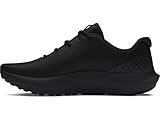
- Breathable mesh upper with synthetic overlays for added structure & support
- Enhanced cushioning around ankle collar for superior comfort
- Deluxe Comfort System sockliner molds to your foot for ultimate step-in comfort
- Charged Cushioning midsole provides all day comfort with responsiveness & durability
- Durable rubber outsole provides traction & durability with flexibility where you need it for toe-off
Metrics such as vertical oscillation, flight time, and ground contact time are all derivatives of jump mechanics. A higher or longer “jump” per stride isn’t automatically better, but how those values scale with speed tells a detailed story about running economy. Smart shoes measure these forces directly at the point of contact, rather than inferring them from arm swing or torso movement.
Jump Height Isn’t the Goal—Efficiency Is
This is where runners often misunderstand jump data. In basketball, jump height is a performance outcome. In running, excessive vertical displacement is usually a cost. If you’re pushing too much force upward instead of forward, you’re burning energy without increasing speed.
Under Armour’s smart shoes focus less on raw jump height and more on how consistently and efficiently force is applied. Subtle increases in vertical displacement at the same pace can indicate fatigue, form breakdown, or overstriding. Over time, these patterns correlate strongly with wasted energy and increased injury risk.
Ground Contact Time Reveals Strength, Fatigue, and Injury Risk
Ground contact time is one of the most actionable jump-related metrics for runners. It represents how long your foot stays on the ground during each stride, essentially how quickly you can absorb impact and rebound. Shorter, stable contact times at a given pace generally reflect better leg stiffness and neuromuscular efficiency.
As fatigue sets in, ground contact time often increases before heart rate or pace changes. Because smart shoes measure this directly underfoot using accelerometers and pressure-sensitive data, they can detect asymmetries between left and right legs that a wrist-based device might miss entirely. Those asymmetries are often early warning signs of compensations that precede overuse injuries.
Flight Time and Elastic Energy Storage
Flight time—the period when both feet are off the ground—is closely tied to how effectively your tendons and muscles store and release elastic energy. Too little flight time can indicate shuffling mechanics, while too much can suggest bounding inefficiency.
What makes shoe-based measurement valuable is consistency tracking. Under Armour’s platform looks at how flight time changes across a run, not just the average. A gradual reduction can signal neuromuscular fatigue, while erratic changes may point to pacing errors or terrain adaptation issues.
Why Smart Shoes See What Smartwatches Miss
Smartwatches estimate jump-related metrics indirectly, relying on wrist motion and algorithms that assume consistent arm swing and posture. That works reasonably well for cadence and pace, but it introduces noise when analyzing force production and contact mechanics.
Sensors embedded in the midsole experience the impact forces directly. They capture acceleration, deceleration, and timing at the exact moment force is applied and released. This results in cleaner ground contact data, more reliable asymmetry detection, and better sensitivity to small mechanical changes that matter over long training cycles.
From Basketball Science to Distance Running Performance
The science behind jump measurement didn’t start with runners—it came from court sports where explosive power and load management are critical. What’s changed is the realization that endurance athletes benefit just as much from understanding how force is applied repeatedly over time.
For runners, jump metrics are less about explosiveness and more about durability, economy, and consistency. They help explain why two runners at the same pace can feel dramatically different levels of fatigue, and why one stays healthy while the other breaks down. That’s the real value smart running shoes are trying to unlock, and it starts with treating every stride as the jump it truly is.
Inside Under Armour’s Smart Shoe Platform: HOVR, Sensors, and Embedded Intelligence
If every stride is effectively a small jump, then the shoe becomes the most logical place to measure it. Under Armour’s smart shoe platform is built around that premise, combining a mechanically tuned midsole with embedded sensors that experience the same forces your body does.
Rather than treating the shoe as a passive object, UA designed it as a data capture surface. The result is a system that links cushioning behavior, ground contact timing, and vertical motion into a single mechanical narrative of how you run.
HOVR Foam as a Measurement Surface, Not Just Cushioning
HOVR foam isn’t just about softness or energy return; it provides a predictable mechanical response under load. When your foot strikes the ground, the foam compresses in a repeatable way, which helps sensors interpret force-related signals more consistently.
This matters because inconsistent foam deformation introduces noise into acceleration data. A midsole that behaves the same way at mile one and mile eight allows the system to distinguish changes in your mechanics from changes in the shoe itself.
From a runner’s perspective, HOVR sits in a balanced zone. It’s neither a marshmallow nor a rigid racing slab, which keeps ground contact times readable without muting impact forces to the point where signal resolution suffers.
The Embedded Sensor Pod: What’s Actually Inside the Shoe
At the core of UA’s smart shoes is a sealed sensor module embedded directly into the midsole. This module houses a multi-axis accelerometer capable of capturing vertical, lateral, and fore-aft acceleration hundreds of times per second.
Unlike foot pods clipped to laces, this sensor is fixed relative to the shoe structure. That stability improves repeatability when measuring ground contact time, cadence, stride length, and vertical oscillation derived from flight time.
Power comes from a small internal battery designed to last months rather than days. Because the shoe records data locally and syncs later, there’s no need for always-on Bluetooth during a run, which reduces power draw and avoids connectivity dropouts.
How Jump Dynamics Are Inferred from Raw Acceleration
The shoe doesn’t directly measure jump height or force in the way a force plate would. Instead, it identifies precise moments of foot strike and toe-off by detecting rapid changes in acceleration.
Ground contact time is calculated as the interval between initial impact and final propulsion. Flight time is measured as the period where acceleration patterns indicate neither foot is in contact with the ground, which becomes the foundation for estimating vertical displacement.
Because the sensor is directly under your center of mass during stance, these timing measurements tend to be cleaner than wrist-based estimates. The system isn’t guessing when your foot hits the ground; it feels it.
From Raw Signals to Actionable Metrics
Once the data syncs to Under Armour’s software ecosystem, most commonly via MapMyRun, algorithms translate raw acceleration into runner-facing metrics. Cadence, stride length, pace, and ground contact time emerge first, followed by trend-based insights tied to fatigue and efficiency.
What’s important is that UA emphasizes change over time rather than absolute perfection. Small shifts in ground contact time or flight consistency across a run are more meaningful than whether your vertical oscillation is labeled as “ideal.”
This is where the platform earns its value. It’s less about telling you how you compare to elite runners and more about showing when your mechanics begin to drift under load.
Accuracy, Limitations, and What the Data Can’t Do
Shoe-based sensors excel at timing-related metrics, but they don’t directly measure force in newtons or watts. Any interpretation of impact force or stiffness is inferred from acceleration patterns, not directly sensed pressure.
Surface variability can also influence readings. Soft trails, uneven terrain, and extreme inclines change how forces are absorbed and released, which can affect comparability between runs.
That said, for road and treadmill running, consistency is the platform’s strength. The same sensor, in the same location, experiencing the same mechanical inputs, produces trend data that’s often more reliable than multi-sensor fusion attempts elsewhere on the body.
Daily Usability: Comfort, Durability, and Compatibility
From a wearability standpoint, the smart versions of UA’s running shoes feel no different from their non-sensor counterparts. The sensor pod is fully encapsulated, adding negligible weight and no noticeable stiffness underfoot.
They’re compatible with iOS and Android, require no calibration rituals, and don’t demand you carry a watch if you don’t want one. Runs can be recorded phone-free and synced later, which appeals to runners who value simplicity.
Durability is also a quiet win here. The electronics are designed to survive sweat, rain, temperature swings, and the repeated high-impact loading that defines running—something wrist wearables never experience directly.
Why Embedded Intelligence Changes the Value Equation
The real differentiator isn’t a single metric but the way all of them are anchored to the same mechanical reference point. When cadence, ground contact time, and flight time are all derived from the foot, their relationships make more biomechanical sense.
This embedded intelligence turns the shoe into a long-term observer of how you move, not just how fast you go. Over weeks and months, that perspective reveals patterns no GPS trace or heart rate graph can show on its own.
In the context of jump science, this is where theory meets reality. Every stride leaves a signature, and Under Armour’s platform is built to read it from the only place that truly feels the jump: the ground.
The Physics of a Jump: What the Shoe Is Actually Measuring at Takeoff and Landing
With the sensor anchored at ground level, the “jump” in running becomes less of a metaphor and more of a measurable mechanical event. Every stride includes a rapid deceleration at landing, a brief period of force application, and a ballistic phase where your center of mass is airborne.
Under Armour’s smart shoes don’t measure force directly, but they are exceptionally good at capturing the timing and magnitude of these transitions. That timing is the foundation for nearly every jump-related metric the platform reports.
Takeoff: Detecting the Moment You Leave the Ground
At takeoff, the shoe’s inertial sensor detects a rapid change in vertical acceleration as the foot unloads and leaves contact with the ground. This point is identified algorithmically when acceleration crosses a threshold consistent with loss of ground contact.
From here, the system starts a clock. The duration between this takeoff event and the subsequent landing event becomes flight time, one of the most revealing indicators of how much vertical impulse you’re generating each stride.
Longer flight time generally means more vertical displacement, which can correlate with inefficiency for distance runners. The shoe isn’t judging intent, but it’s faithfully reporting how much you’re bouncing.
Flight Phase: What Happens When Nothing Is Touching the Ground
During flight, the sensor is effectively in free fall along with your foot. The acceleration signal smooths out, dominated primarily by gravity, which makes this phase surprisingly easy to identify cleanly compared to impact events.
Using basic kinematic relationships, the platform can estimate vertical oscillation by modeling how long you’re airborne and how quickly you decelerate into landing. This is an estimation, not a direct measurement, but it’s grounded in well-understood physics.
Because the sensor is on the foot rather than the torso, the vertical numbers tend to skew slightly higher than chest-based systems. That doesn’t make them wrong, but it does mean comparisons across devices should be made cautiously.
Landing: Impact, Braking, and Ground Contact Time
Landing produces the sharpest acceleration spike of the entire stride. The shoe experiences a rapid deceleration as your foot strikes the ground and your body’s momentum is redirected.
Rank #2

- Mesh Upper: The mesh upper offers a comfortable, breathable feel.
- Foam Midsole: The foam midsole delivers intuitive cushioning through comfort-focused rocker geometry.
- Cushione Outsole: The outsole has an intuitive Nike design and flex grooves in the forefoot that create a comfortable and cushioned effect as you run.
- Touch Points: Touch points at the heel and tongue create a natural feel as you take the shoes on and off.
- What's New? Mesh on upper is more breathable than the Revolution 7, helping keep you cool.
This spike marks the beginning of ground contact time, the interval where force is being applied to the ground to support and propel your body forward. The end of this window is detected when acceleration patterns indicate unloading and toe-off.
Shorter ground contact times at a given pace often reflect better elastic energy use and neuromuscular stiffness. The shoe captures this reliably because it’s feeling the impact directly, not through layers of joints and soft tissue.
Force Without Force Sensors: What’s Inferred, Not Measured
It’s important to be precise about what’s happening here. Under Armour’s smart shoes do not contain force plates or pressure sensors, so they aren’t measuring ground reaction force in newtons.
Instead, force-related insights are inferred from acceleration magnitude, timing, and body mass assumptions entered in the app. Peak impact, braking intensity, and propulsive patterns are all modeled from these signals.
For runners, this distinction matters less than consistency. While absolute force values may not match lab-grade equipment, trends over time are highly repeatable under similar conditions.
Efficiency Signals: Linking Jump Mechanics to Running Economy
When flight time increases without a corresponding increase in speed, it often signals wasted vertical motion. The shoe flags this relationship by tying cadence, stride length, and flight time to pace.
Conversely, efficient runners tend to show stable or decreasing flight time as pace increases, paired with shorter ground contact times. These patterns emerge clearly when the same foot-mounted sensor is used run after run.
This is where smart footwear adds value beyond a smartwatch. Wrist-based systems infer these mechanics indirectly, while the shoe is measuring the events at the point where physics actually happens.
Accuracy in the Real World: What to Trust and What to Contextualize
On consistent surfaces like roads and treadmills, takeoff and landing detection is remarkably robust. The signal-to-noise ratio at the foot is high, making temporal metrics like ground contact time and cadence especially trustworthy.
Vertical oscillation and force-related estimates are more sensitive to surface compliance and footwear cushioning. A softer midsole or trail terrain will alter how impacts are absorbed before they reach the sensor.
Understanding these limits doesn’t diminish the data’s usefulness. It sharpens it, turning jump metrics into context-aware tools rather than absolute judgments about form or performance.
Ground Contact Time, Flight Time, and Vertical Oscillation Explained
Seen together, these three metrics form the backbone of what Under Armour’s smart shoes mean by “jump science.” They describe how long your foot stays on the ground, how long your body is airborne, and how much you move up and down with each step.
Because the sensor lives in the shoe rather than on the wrist, these measurements are derived directly from foot strike and toe-off events. That placement is what allows the system to resolve timing differences measured in milliseconds, which is where meaningful performance signals actually live.
Ground Contact Time: Where Efficiency Is Won or Lost
Ground contact time is the duration your foot spends in contact with the ground during each stride. Under Armour calculates this by detecting the initial impact spike when the foot lands and the rapid acceleration change that occurs at toe-off.
Shorter ground contact times generally correlate with better running economy at moderate to fast paces. They suggest that the runner is applying force efficiently and transitioning quickly into the next stride rather than lingering on the ground.
That said, shorter is not always better. At easy or recovery paces, slightly longer contact times are normal and often healthier, especially for heavier runners or those prioritizing durability over speed.
How the Shoe Measures It
The foot-mounted accelerometer experiences a sharp deceleration at landing, followed by a relatively stable period, and then a distinct unloading phase as the foot leaves the ground. This pattern is consistent enough that the algorithm can identify contact duration without pressure sensors.
Because the sensor is rigidly coupled to the shoe, it avoids the soft-tissue wobble and arm-swing artifacts that can contaminate wrist-based estimates. This is why ground contact time from smart shoes tends to be more repeatable run to run than smartwatch-derived equivalents.
Surface and midsole softness still matter. A highly cushioned shoe slightly smooths the impact spike, which can shift absolute values, but relative changes across runs remain reliable when footwear is consistent.
Flight Time: The Airborne Phase Between Steps
Flight time represents how long both feet are off the ground between strides. It is calculated as the gap between toe-off on one foot and initial contact on the other.
In running, some flight time is unavoidable and even necessary at higher speeds. Problems arise when flight time increases without a corresponding increase in pace, indicating excess vertical motion rather than forward propulsion.
Under Armour’s system ties flight time closely to cadence and stride length. This lets the app highlight when you are “bounding” upward instead of moving efficiently down the road.
Why Flight Time Is a Double-Edged Metric
Elite runners often display very short flight times at submaximal paces, conserving energy by staying low and quick. Sprinters, by contrast, intentionally increase flight time to maximize force and speed over short distances.
For everyday runners, context is everything. An uptick in flight time during intervals can be appropriate, while the same change during a steady aerobic run may signal fatigue or loss of form.
Smart shoes excel here because they show how flight time evolves within a run. Seeing it creep upward late in a workout often reveals efficiency breakdowns before pace visibly drops.
Vertical Oscillation: Measuring Bounce, Not Speed
Vertical oscillation estimates how much your center of mass moves up and down with each stride. Under Armour infers this from the vertical component of acceleration at the foot, integrated over time.
Higher oscillation means more energy spent lifting the body rather than driving it forward. Lower oscillation generally aligns with smoother, more economical running, especially over long distances.
This metric is highly sensitive to shoe cushioning, terrain, and running style. A plush trainer or trail surface will dampen impact differently than a firm road shoe, affecting how oscillation appears in the data.
Interpreting Oscillation Without Overcorrecting
It is tempting to chase the lowest possible vertical oscillation, but that can backfire. Excessively suppressing vertical movement often leads to overstriding or stiffness, increasing injury risk.
The more useful lens is stability. Consistent oscillation at a given pace suggests repeatable mechanics, while sudden spikes often coincide with fatigue, form breakdown, or terrain changes.
Because the sensor is at the foot, oscillation here reflects what the shoe experiences, not a lab-measured center of mass. That distinction matters, but the trend data remains valuable for self-coaching.
Putting the Three Metrics Together
Ground contact time, flight time, and vertical oscillation should never be read in isolation. A runner with short contact time but excessive oscillation may look powerful but waste energy, while long contact with low oscillation can indicate underpowered mechanics.
Under Armour’s software emphasizes relationships rather than raw numbers. It highlights when changes in one metric drive unintended changes in another, which is where actionable insight emerges.
This integrated view is the real advantage of smart footwear. By measuring events exactly where the body meets the ground, the shoes turn abstract biomechanics concepts into signals runners can actually feel, test, and refine over time.
From Force to Efficiency: How UA Estimates Power, Impact, and Running Economy
Once ground contact time, flight time, and oscillation are established, Under Armour’s system moves from describing motion to inferring effort. This is where raw acceleration becomes a proxy for force, and where the shoe starts translating biomechanics into performance-relevant estimates.
The key idea is not direct measurement but constrained inference. By knowing when the foot is on the ground, how fast it decelerates and reaccelerates, and how consistently this pattern repeats, UA can model how much mechanical work is being done each stride.
How Foot-Based Sensors Approximate Force
Force, in strict physics terms, requires knowing mass and acceleration. The shoe already measures acceleration, and body mass is provided by the runner during setup, allowing UA to estimate peak and average ground reaction forces during stance.
These forces are not lab-grade force plate readings. Instead, they are time-aligned force proxies derived from how sharply the foot decelerates at impact and how quickly it transitions into propulsion.
Because the sensor sits at the foot, it captures impact transients more directly than a wrist-based device. This makes it particularly sensitive to changes in strike pattern, shoe cushioning, and surface firmness.
Impact Loading and What the Shoe Actually Feels
Impact metrics in UA’s ecosystem focus on loading rate rather than absolute force. Loading rate reflects how quickly force is applied at initial contact, which is strongly associated with injury risk in repetitive running.
A rapid spike in acceleration at footstrike indicates a harsher impact, often seen with overstriding or fatigued mechanics. A smoother rise suggests better shock absorption through ankle, knee, and hip flexion.
Importantly, the shoe measures impact as experienced by the footwear itself. A highly cushioned midsole can reduce peak accelerations even if the runner’s internal joint loading remains unchanged, which is why comparisons should always be made within the same shoe model.
Estimating Running Power Without a Power Meter
Running power in UA’s system is a modeled output rather than a directly measured signal. It combines estimated force, stride frequency, and horizontal velocity to approximate mechanical work per unit time.
Rank #3

- THIS WOMEN'S SHOE IS FOR: Prepare for smooth transitions with the Glycerin 22, featuring DNA Tuned, the latest midsole technology that seamlessly blends and integrates dual-size cells, ensuring a balance of luxurious cushioning and energetic toe-offs. This Glycerin 22 is a certified PDAC A5500 Diabetic shoe and has been granted the APMA Seal of Acceptance. Predecessor: Glycerin 21.
- NEUTRAL SUPPORT: Provides neutral support while offering the maximum amount of cushioning. Ideal for road running, cross training, the gym, or wherever you might want to take them! Predecessor: Glycerin 21. Look for the Brooks Glycerin GTS 22 for the same style with added support.
- DNA TUNED CUSHION: Cutting-edge cushion technology with larger cells in the heel to provide soft, plush landings, while smaller cells in the forefoot invite responsive toe-offs.
- ACCOMMODATING FIT: The newly engineered double jacquard knit upper delivers a flexible and accommodating fit, combining durability with exceptional breathability.
- SMOOTH, STABLE TRANSITIONS: The broad platform stabilizes your foot while the tuned heel and forefoot smooth heel-to-toe transitions.
This differs from cycling, where power meters directly measure torque. In running, power is context-dependent, influenced by terrain, wind, and elasticity of the musculoskeletal system.
UA’s advantage comes from foot-level timing precision. By anchoring power estimates to exact contact and toe-off events, the system avoids some of the smoothing errors seen in GPS-heavy wrist-based power calculations.
Why Foot Placement Improves Power Stability
Wrist-based running power often fluctuates erratically due to arm swing and GPS noise. The shoe’s IMU operates in a mechanically quieter environment, leading to more stable stride-to-stride estimates.
This stability matters more than absolute accuracy for training. A power metric that responds consistently to fatigue, pace changes, or hill gradients is more useful than one that claims lab equivalence but drifts unpredictably.
In practice, runners tend to see tighter power bands at steady paces and clearer spikes during surges, intervals, or form breakdown late in a run.
From Mechanical Work to Running Economy
Running economy is not measured directly by the shoe. Instead, UA infers efficiency trends by relating estimated power output to pace and heart rate data synced from a watch.
If pace improves while estimated power remains stable, the system interprets this as improved economy. Conversely, rising power at the same pace suggests declining efficiency, often due to fatigue or poor mechanics.
This relational approach mirrors how coaches assess efficiency in the real world. Economy is less about a single number and more about how effort scales with speed over time.
Sensitivity to Terrain, Shoes, and Fatigue
Because force and power estimates rely on acceleration patterns, they are highly sensitive to environmental changes. Hills, cambered roads, and soft trails all alter how force is applied and absorbed.
Shoe construction also plays a significant role. A firmer, lower-stack trainer will typically show higher impact loading and clearer propulsion signals than a max-cushion shoe, even at identical paces.
Fatigue introduces its own signature. As form deteriorates, contact times lengthen, impact spikes increase, and estimated power often rises disproportionately to speed, flagging inefficiency before pace visibly drops.
How Accurate Is This Compared to a Watch?
In absolute terms, UA’s force and power numbers should not be treated as interchangeable with lab measurements or instrumented treadmills. The system prioritizes internal consistency over external validation.
Where it outperforms most watches is in detecting subtle mechanical changes. Foot-mounted sensors excel at identifying shifts in strike timing, loading patterns, and propulsion symmetry that wrist-based devices often miss.
For runners focused on form, durability, and long-term efficiency rather than headline wattage, this trade-off is usually worthwhile.
What This Means for Real-World Training Decisions
The real value lies in pattern recognition. Seeing impact loading creep upward over weeks can prompt earlier shoe replacement or strength work before pain appears.
Tracking power relative to pace during tempo runs helps identify sustainable effort levels without relying solely on heart rate, which lags during intensity changes.
By anchoring efficiency insights to the moment the foot meets the ground, UA’s smart shoes turn abstract concepts like force and economy into feedback runners can actually act on, step by step.
How Accurate Are Smart Shoes? Sensor Placement vs Wrist-Based Wearables
The accuracy conversation ultimately comes down to where the data is captured. Once you accept that force, contact time, and propulsion all originate at ground contact, sensor placement becomes more important than raw processing power.
Smart shoes and wrist-based wearables are not measuring the same event from different angles. They are measuring different events entirely, then trying to infer the same outcome.
Why Sensor Location Matters More Than Algorithms
A foot-mounted sensor experiences the actual collision between the runner and the ground. Every spike in acceleration, every millisecond of contact time, and every propulsion phase is recorded at the source.
A wrist sensor, by contrast, measures the body’s response after force has already traveled through the ankle, knee, hip, spine, and arm swing. That signal is delayed, filtered, and mixed with unrelated motion before it ever reaches the accelerometer.
No amount of algorithmic smoothing can fully reconstruct what happened at the foot if the sensor never experienced it directly.
Impact, Contact Time, and Jump Dynamics
Under Armour’s smart shoes measure vertical and horizontal acceleration at the midsole, allowing them to detect landing stiffness, contact duration, and rebound timing with high temporal precision. This is critical for jump-related metrics like vertical oscillation and reactive strength indicators.
Wrist-based wearables estimate these same values indirectly, often using cadence and arm movement as proxies. That approach works reasonably well at steady paces but degrades quickly when form changes, terrain varies, or fatigue sets in.
In biomechanical terms, the shoe knows when you left the ground and when you came back. The watch has to guess.
Sampling Rates and Signal Noise
Smart shoes benefit from cleaner data because the foot follows a predictable, repetitive path. There is minimal extraneous movement compared to the wrist, which rotates, flexes, and absorbs vibration with every stride.
This cleaner signal allows for higher confidence detection of micro-changes, such as a few milliseconds of increased contact time or subtle asymmetries between steps. These are often the earliest indicators of fatigue or inefficiency.
Wrist wearables must aggressively filter noise, which improves stability but sacrifices sensitivity.
Power and Force Estimation: Relative Accuracy vs Absolute Truth
Neither smart shoes nor watches measure force directly. Both rely on physics models that translate acceleration into estimates of power and loading.
The difference is consistency. Because shoe-based sensors see the same mechanical event every step, their estimates tend to be more repeatable within the same runner and shoe setup.
Wrist-based power can be useful for pacing, but it is more vulnerable to form drift, arm carriage changes, and external disruptions like wind or hills.
Terrain and Form Changes
When terrain changes, the foot adapts instantly. Smart shoes capture that adaptation in real time, whether it’s increased braking on downhills or longer contact times on soft surfaces.
Wrist wearables often smooth these transitions, which can mask how aggressively the body is compensating. This makes watches better for general effort tracking and shoes better for mechanical analysis.
If your goal is understanding how your body responds to the ground, shoes provide the clearer window.
Battery Life, Durability, and Practical Accuracy
Accuracy also depends on whether the sensor can collect uninterrupted data. Under Armour’s smart shoes prioritize low-power accelerometers, allowing battery life measured in weeks or months rather than hours.
Because the sensor is sealed within the midsole, it avoids sweat exposure and impact damage common to clip-on foot pods. The trade-off is limited sensor access and fewer firmware updates compared to watches.
In daily use, this reliability often translates to more complete datasets, which quietly improves accuracy over time.
Software Interpretation Still Matters
Even with ideal placement, data is only as useful as the software interpreting it. Under Armour’s platform focuses on trend tracking rather than lab-grade absolutes, emphasizing changes over weeks rather than single-run precision.
Wrist ecosystems typically offer broader health metrics, GPS mapping, and heart rate integration, but their biomechanical insights are more generalized.
Smart shoes narrow the scope but sharpen the lens, which is why their insights often feel more actionable for form-focused runners.
Which Is Actually More Accurate?
For measuring pace, distance, and cardiovascular load, wrist-based wearables remain highly effective and convenient. For capturing jump dynamics, ground contact behavior, and efficiency shifts rooted in mechanics, smart shoes hold the advantage.
Accuracy is not about which device is smarter. It is about which one is closer to the physics of running itself.
Jump Data in the Real World: What Runners Can Actually Learn and Improve
Once you accept that smart shoes are closer to the physics of running than wrist wearables, the next question is practical: what does jump data actually tell you when you lace up and head outside?
Rank #4

- MAX AIRFLOW SUPPORT: Lightweight mesh upper with a breathable pattern that boosts ventilation and keeps feet cool during long-distance training for consistent comfort
- ENHANCED MIDFOOT CONTROL: Strategic overlays deliver secure structure that stabilizes each stride on roads, tracks, and gym surfaces
- SOFT STEP-IN FEEL: Smooth liner creates plush cushioning that reduces friction and enhances comfort from first step to final mile
- ENERGY-FORWARD RESPONSE: Impact-absorbing foam provides dynamic rebound that helps maintain speed and reduces fatigue on extended runs
- LIGHTWEIGHT TRACTION: High-wear rubber zones offer durable grip designed to handle daily mileage while keeping the shoe flexible and fast
Under Armour’s smart shoes are not asking runners to become sports scientists. They translate jump-derived metrics into patterns that reflect how efficiently you move, how fatigue changes your mechanics, and where performance leaks quietly occur.
Why Jump Metrics Matter Even If You Never Jump
Running is a series of controlled, low-amplitude jumps. Every stride involves loading the body, storing elastic energy, and re-projecting mass forward and upward.
Metrics like flight time, vertical oscillation, and contact time all stem from this jump cycle. Under Armour’s shoes use accelerometer data to model how force is applied and released, even when the vertical movement is subtle.
This is why jump science remains relevant for distance runners, not just sprinters or plyometric-focused athletes.
Detecting Efficiency, Not Just Speed
One of the most useful real-world insights is efficiency drift. As fatigue sets in, many runners increase vertical motion without realizing it, effectively jumping higher while moving no faster.
The shoe can detect longer flight times paired with slowing cadence, a signal that energy is being wasted vertically. Over weeks of training, this trend becomes obvious in the data even when pace and heart rate look unchanged.
Wrist wearables often miss this nuance because they infer movement from arm swing rather than ground interaction.
Understanding Ground Contact Under Fatigue
Ground contact time is not inherently good or bad. What matters is how it changes relative to speed, terrain, and fatigue.
Under Armour’s platform highlights when contact time lengthens late in runs, especially on harder surfaces. This often reflects reduced leg stiffness or compensatory loading as muscles tire.
For runners dealing with recurring aches or plateaued performance, these patterns can point toward strength deficits rather than aerobic limitations.
Left-Right Balance and Asymmetry Awareness
While Under Armour’s shoes do not perform full force-plate-level asymmetry analysis, they can flag consistent discrepancies in impact timing or loading patterns.
Small asymmetries are normal, but when one side consistently shows longer contact or altered jump characteristics, it can indicate lingering injury compensation or uneven strength development.
This kind of feedback is difficult to capture accurately from the wrist and is often invisible without lab testing.
Terrain, Footwear, and Surface Adaptation
Jump data becomes especially revealing when runs are compared across surfaces. Softer terrain typically increases contact time while reducing peak impact, while harder surfaces do the opposite.
The shoe sensor captures how your mechanics adapt automatically. Over time, runners can see whether trail runs increase efficiency or whether road running encourages excessive vertical movement.
This insight can inform shoe rotation, surface selection, and recovery planning in a way pace charts alone cannot.
Training Adjustments That Actually Translate
The most valuable aspect of jump data is not the metric itself but the behavioral feedback loop it creates. Runners often adjust cadence, posture, or strength routines based on trends they can see improving week to week.
For example, plyometric or calf-strength work often shows up as reduced contact time and more stable flight metrics at the same pace. The data reinforces whether those interventions are working without requiring maximal effort tests.
This makes the platform particularly useful for self-coached runners who want evidence-based feedback without lab access.
What Jump Data Cannot Do
It is important to be clear about limitations. Jump-derived metrics do not directly measure force in newtons, nor do they diagnose injury risk with certainty.
Environmental factors, shoe cushioning changes over time, and individual running styles all influence the readings. Under Armour’s software smooths these variables to highlight trends, not absolutes.
Runners who expect single-run verdicts will be disappointed. Those who value longitudinal insight tend to benefit the most.
Where Shoes Add Value Beyond Watches
Smartwatches excel at effort tracking, navigation, and all-day health monitoring. Smart shoes add value when the goal is understanding how efficiently the body interacts with the ground.
Jump data bridges the gap between feel and mechanics. It explains why a run felt harder even when the numbers looked fine, or why pace improved without obvious cardiovascular gains.
For runners focused on form, durability, and long-term performance, that perspective can be transformative.
Smart Shoes vs Smartwatches: When Foot-Based Metrics Add Real Value
The distinction between smart shoes and smartwatches becomes clearer once you understand where each device physically sits in the biomechanical chain. Watches observe the runner from the arm outward, while shoes measure performance at the point where movement actually begins.
That difference in placement fundamentally shapes what each platform can measure well, what it estimates indirectly, and where meaningful blind spots appear.
Why Sensor Location Matters More Than Specs
A smartwatch infers running mechanics through wrist-mounted accelerometers, gyroscopes, GPS, and sometimes barometric data. Even with advanced algorithms, these signals are several joints removed from ground interaction and must be reconstructed mathematically.
Under Armour’s smart shoes place inertial sensors directly in the midsole, capturing vertical oscillation, contact timing, and flight dynamics at the source. This removes layers of estimation and reduces noise caused by arm swing, terrain vibration, or watch fit.
In biomechanical terms, fewer assumptions equal cleaner data when the goal is understanding how force moves through the foot and into the body.
Ground Contact and Jump Metrics: Direct vs Inferred
Many premium watches report ground contact time, cadence, and vertical ratio, but these are model-based outputs. They work well at steady paces, yet accuracy can drift during speed changes, fatigue, or uneven surfaces.
Smart shoes measure impact timing and airtime directly, using high-frequency sampling tuned specifically for foot strikes. Jump height, flight time, and contact consistency emerge from raw mechanical events rather than filtered proxies.
This is why foot-based systems often detect subtle efficiency changes that wrist devices smooth over or miss entirely.
Force, Efficiency, and the Limits of Each Platform
Neither smart shoes nor watches measure force in absolute units like a force plate. What shoes do better is capture repeatable patterns related to force application, such as how quickly you leave the ground or how stable your landing mechanics are over time.
Smartwatches excel at contextualizing effort through heart rate, pace, elevation, and energy expenditure. They explain how hard the body is working, not necessarily how efficiently it is working.
When runners confuse effort metrics with mechanical efficiency, progress can stall. Foot-based data fills that gap by showing whether improved fitness is translating into cleaner movement.
Accuracy in the Real World, Not the Lab
Under Armour’s approach prioritizes consistency over absolute precision. The sensors are calibrated to detect trends across weeks and months, not to replace laboratory motion capture.
Because the sensor is embedded in the shoe, fit variability is lower than wrist-based wearables, where strap tightness and placement dramatically affect readings. This improves repeatability, especially for cadence-linked and contact-based metrics.
For self-coached runners, reliability over time often matters more than single-run accuracy claims.
Battery Life, Software, and Daily Usability
Smart shoes operate with ultra-low-power sensors designed to last months between charges, avoiding the daily battery anxiety common with GPS watches. There is no screen, no interaction during the run, and no distraction from pacing alerts or notifications.
Data syncs automatically to Under Armour’s ecosystem, typically through MapMyRun, where metrics are processed post-run rather than live. This shifts the experience from real-time coaching to reflective analysis.
Watches remain superior for navigation, structured workouts, music control, and all-day health tracking, areas where shoes are intentionally minimal.
Comfort, Durability, and Wear Considerations
Embedding sensors in footwear raises valid concerns about durability and ride quality. Under Armour’s implementations are designed to be mechanically isolated so cushioning, flexibility, and weight remain comparable to non-smart trainers.
💰 Best Value

- THIS WOMEN'S SHOE IS FOR: Runners or walkers focused on improving their fitness, the Revel 8 offers a smooth, distraction-free ride to power through your workouts. Its unique mesh upper combines style and performance, giving you the casual look you want without compromising on the support and comfort you need. This Brooks Revel 8 has been granted the APMA Seal of Acceptance. Predecessor: Revel 7.
- ENGINEERED FOR COMFORT: Adaptable DNA Loft v2 cushioning provides underfoot comfort for any activity that adapts to your stride, weight, and speed to help protect you by deflecting impact away from your body.
- BREATHABLE MESH UPPER: The updated engineered mesh upper offers superior structure, a sleek design, and enhanced breathability, keeping your feet cool and comfortable during every run or workout.
- ROADTACK OUTSOLE: The RoadTack rubber outsole is lightweight, durable, and designed for optimal rebound, providing superior traction and responsiveness to keep you moving with confidence.
- VERSATILE DESIGN: A sleek design that’s ready for both your toughest workouts and casual outings, effortlessly transitioning from run to rest while maintaining a stylish, modern edge.
Unlike foot pods or clip-on sensors, there is nothing to adjust or forget to attach. The tradeoff is that data quality depends on shoe condition, meaning metrics can subtly change as midsoles break down.
This makes smart shoes especially useful for understanding how wear affects mechanics and when a pair may be nearing retirement.
When Smart Shoes Truly Outperform Smartwatches
Foot-based metrics add real value when the goal is improving running economy, reducing unnecessary vertical motion, or monitoring mechanical fatigue. They shine during form-focused blocks, return-to-run phases, and long-term efficiency tracking.
For runners primarily chasing pace, mileage, or race logistics, a smartwatch alone is often sufficient. But when two runs look identical on paper yet feel completely different, shoes are more likely to explain why.
Used together, watches and smart shoes form a complementary system: one tracking how hard you work, the other revealing how well your body turns that work into forward motion.
Limitations, Caveats, and Common Misinterpretations of Jump Metrics
As smart shoes shift the focus from pace and heart rate to how force is applied into the ground, jump-derived metrics can feel more scientific and more precise. That perception can be misleading if the data is taken at face value, without understanding what the sensors can and cannot truly capture.
Under Armour’s jump and ground contact metrics are powerful when used in context, but they are not lab-grade force plate replacements. Knowing where the boundaries lie is what separates meaningful insight from performance noise.
Jump Height Is Not a Direct Measure of Power
One of the most common misunderstandings is equating higher jump height with greater athletic power or better running performance. Jump height in smart shoes is inferred from flight time, not from direct force measurement, which means it reflects how long both feet are off the ground rather than how much force was produced.
A runner can increase flight time by altering technique, such as exaggerating push-off or stiffening the ankle, without actually improving force efficiency. In running, especially over distance, excessive vertical displacement often signals wasted energy rather than improved performance.
This is why Under Armour’s ecosystem treats jump height as a contextual indicator, not a goal metric. It is most useful when compared against pace, fatigue, and consistency, not chased in isolation.
Ground Contact Time Is Influenced by Speed, Surface, and Footwear
Lower ground contact time is often marketed as a hallmark of elite runners, but interpreting it without context can lead to flawed conclusions. Faster running naturally reduces contact time, regardless of form, while softer surfaces or highly cushioned shoes tend to increase it.
Smart shoes measure contact time very close to the point of force application, which improves precision compared to wrist-based estimates. However, changes in shoe foam, outsole wear, or even temperature can subtly affect how long the foot stays loaded on the ground.
A rising ground contact time does not automatically mean deteriorating form. It may reflect fatigue management, terrain adaptation, or a deliberate pacing strategy during longer runs.
Symmetry Metrics Are Not the Same as Injury Risk Scores
Left-right balance and symmetry data are often interpreted as injury predictors, but the relationship is far more nuanced. Minor asymmetries are normal, stable, and sometimes performance-enhancing, especially in runners with a dominant side or a history of adaptation.
Under Armour’s smart shoes can detect shifts in loading patterns over time, which is valuable for spotting sudden changes rather than chasing perfect symmetry. A gradual, consistent imbalance is usually less concerning than a rapid deviation from an athlete’s own baseline.
These metrics are best used as trend monitors during return-to-run phases or high-volume blocks, not as standalone diagnostic tools.
Jump Metrics Are Snapshot Indicators, Not Continuous Force Curves
Unlike laboratory force plates, smart shoes do not capture full force-time curves across every millisecond of stance. They rely on accelerometers and gyroscopes to infer loading characteristics, which means peak force values are estimates rather than direct measurements.
This limitation matters most when runners attempt to interpret metrics like impact or stiffness as absolute values. The data is internally consistent, making it excellent for comparisons within the same athlete and shoe, but less reliable for comparing across different systems or brands.
The real strength lies in longitudinal tracking. Watching how your own metrics evolve across weeks and shoe lifecycles is far more informative than comparing numbers with training partners.
Shoe Wear and Midsole Degradation Can Skew the Data
Because sensors are embedded in the shoe itself, they experience the same mechanical aging as the foam and structure around them. As midsoles compress and rebound characteristics change, jump and contact metrics can drift even if the runner’s technique remains constant.
This is not a flaw so much as a feature, but it requires interpretation. A gradual increase in contact time or drop in rebound efficiency may reflect shoe fatigue rather than physiological decline.
Smart shoes are uniquely positioned to highlight when footwear is influencing mechanics, but runners must resist the urge to attribute every metric change to their own performance.
Single-Run Data Is Often Misleading
Jump metrics are inherently sensitive to warm-up quality, fatigue, terrain variability, and even mental focus. A single run, especially a short or uneven one, rarely provides enough signal to draw meaningful conclusions.
Under Armour’s analytics are designed around pattern recognition across multiple runs, where noise averages out and trends emerge. Reacting to day-to-day fluctuations can lead to unnecessary form tinkering or training anxiety.
The value appears when metrics are reviewed weekly or monthly alongside pace, volume, and perceived effort.
Smart Shoes Do Not Replace Coaching or Body Awareness
Perhaps the most important caveat is that jump metrics describe outcomes, not intent. They show what happened at the foot-ground interface, but they do not explain why it happened or whether a change is desirable for a specific athlete.
Without an understanding of biomechanics or coaching context, runners may attempt to “optimize” numbers that are already appropriate for their body type, injury history, or race goals. This can increase injury risk rather than reduce it.
Smart shoes work best as mirrors, not instructors. They reflect movement patterns with impressive clarity, but the interpretation still requires judgment, patience, and an understanding of individual variability.
Who Benefits Most from Under Armour’s Smart Running Shoes—and Who Doesn’t
Seen through the lens of sensor drift, pattern recognition, and interpretation limits, Under Armour’s smart running shoes reveal a clear truth: they are not universally valuable, but for the right runner, they can be uniquely insightful. The benefit depends less on speed or experience level and more on how a runner engages with data over time.
Understanding where these shoes shine, and where they add little, is essential before treating jump metrics as a meaningful training input rather than just another dashboard curiosity.
Runners Focused on Efficiency, Not Just Speed
Runners interested in improving how they move rather than simply how fast they run stand to gain the most. Metrics like ground contact time, vertical oscillation, and takeoff consistency provide feedback on efficiency trends that GPS pace alone cannot capture.
This is especially useful for runners plateauing despite consistent mileage, where mechanical inefficiencies may be quietly limiting performance. Over weeks of data, the shoes can reveal whether improvements in fitness are translating into better force application or simply masking inefficiencies with higher effort.
Form-Conscious Runners and Self-Coached Athletes
Athletes without access to regular coaching often struggle to validate whether technique changes are helping or hurting. Smart shoes offer an objective reference point, showing whether a new cadence focus or strength block is altering contact patterns or rebound behavior.
While the shoes do not explain why changes occur, they do confirm that something has changed. For disciplined runners who experiment cautiously and review trends patiently, this feedback loop can be surprisingly powerful.
Runners Managing Load, Fatigue, or Injury Risk
Jump-derived metrics are particularly sensitive to neuromuscular fatigue, often shifting before pace or heart rate do. A gradual rise in contact time or drop in elastic response can flag accumulating fatigue even when workouts still feel manageable.
For runners returning from injury or increasing volume, this can act as an early-warning system rather than a diagnostic tool. The value lies in noticing patterns that suggest it may be time to adjust training, not in chasing a specific “ideal” number.
Data-Oriented Runners Who Already Use Wearables Well
Smart shoes make the most sense for runners who already understand how to contextualize data from watches, heart rate sensors, or power meters. These users tend to recognize noise, respect long-term averages, and avoid overreacting to single runs.
For them, foot-level sensing complements wrist-based metrics by filling in the mechanical side of the performance equation. The shoes add depth, not redundancy, when integrated thoughtfully into an existing ecosystem.
Who Gains Little from Smart Running Shoes
Runners who prefer intuitive, feel-based training may find smart shoes distracting rather than empowering. If data review feels like a chore or creates anxiety, the constant availability of metrics can undermine enjoyment and consistency.
Similarly, beginners still adapting to basic running load often lack the stable baseline needed for jump metrics to be meaningful. Early improvements tend to come from general fitness gains, not fine-grained mechanical optimization.
Why Smart Shoes Are Not a Shortcut to Better Form
It is tempting to believe that more sensors automatically lead to better technique, but this is rarely the case. Without biomechanical literacy or external guidance, runners may misinterpret normal variability as a flaw that needs fixing.
In this context, smart shoes can create false precision, encouraging runners to chase marginal gains that may not align with their physiology or goals. The technology measures outcomes accurately, but it does not assign value or intent to those outcomes.
The Bottom Line
Under Armour’s smart running shoes are best viewed as long-term observational tools, not real-time coaches or performance hacks. They excel at revealing trends in how force, contact, and rebound evolve across training cycles and shoe life.
For runners willing to engage with the data patiently and critically, they offer insights that watches alone cannot provide. For everyone else, they remain an impressive piece of sports technology whose true value only emerges when paired with understanding, restraint, and context.