Subscription fatigue has quietly become one of the biggest friction points in modern wearables. It’s no longer just about buying a device; it’s about committing to an ongoing toll to unlock insights your own body generates, month after month. The Luna Band enters this landscape with a deliberately provocative promise: an AI-powered wearable that delivers its full feature set without any recurring fees.
At a glance, Luna looks like a slim, minimalist smart band rather than a traditional watch, prioritizing comfort, all-day wearability, and low visual footprint over screens and complications. The pitch is straightforward but ambitious—continuous health tracking, AI-driven insights, and adaptive coaching, all paid for upfront rather than drip-fed through subscriptions. For buyers increasingly wary of platforms like Fitbit Premium, Whoop, or even Garmin Connect’s expanding paid layers, that positioning alone is enough to demand closer scrutiny.
What follows is not just a question of what Luna claims to do, but how it plans to do it sustainably. The real story sits at the intersection of on-device intelligence, cloud dependence, long-term software support, and whether “no monthly fees” actually means no compromises.
A smart band built around AI-first assumptions
The Luna Band positions itself less as a fitness tracker with AI bolted on, and more as an AI system that happens to live on your wrist. Instead of emphasizing step counts or workout modes upfront, Luna frames its core value around pattern recognition—using machine learning models to interpret sleep quality, recovery trends, stress load, and daily readiness from a combination of biometric signals.
🏆 #1 Best Overall

- 24/7 Heart Rate Monitor :This blood pressure watch supports real-time dynamic heart rate, blood oxygen, blood pressure ,Sleep Tracking,temperature monitoring so you can know more about your physical condition
- 1.10 inch AMOLED HD Touch screen: The Stopwatch pairs flawlessly with the Skin-friendly fitness straps, while its 1.10 inch AMOLED HD Touch Color Screen design and multitude of invigorating watch faces blow you away any moment
- 25 Sport Modes Activity Tracker: you can select any number of sports modes in the app as your exclusive sports mode to record your sports data.can record all daily health data such as steps, distance, and calorie consumption in the App "Keep Health"
- 5 ATM Waterproof activity & fitness trackers :step counter for walking Designed according to waterproof and dustproof standard, you can wear it when washing hands, taking bath, swimming, diving or getting caught in the rain will not damage your watches
- Multiple Convenient Functions :This smart band has multiple functions such as remote photography, mobile search, drinking water reminder, sedentary reminder, menstrual reminder cycle, real-time weather display, etc
Sensor-wise, Luna operates in familiar territory for this category: optical heart rate monitoring, heart rate variability, blood oxygen saturation, skin temperature trends, motion data, and sleep staging. None of these are novel individually, but the brand’s claim rests on how these inputs are fused together, analyzed continuously, and translated into guidance without locking interpretation behind a paywall. The band itself is designed for 24/7 wear, with a lightweight housing, soft-touch strap materials, and a low-profile form factor that favors sleep comfort over wrist presence.
Battery life expectations align with premium smart bands rather than full smartwatches, with multi-day endurance that avoids daily charging anxiety. That matters because Luna’s AI ambitions rely on uninterrupted data streams; frequent charging gaps undermine the very insights it promises to deliver.
Why “no subscription” is the real differentiator
In today’s wearable market, hardware margins are increasingly secondary to recurring revenue. Whoop famously gives away hardware to sell analytics access, Fitbit has gated deeper insights behind Premium, and even historically one-time-purchase brands are experimenting with paid coaching layers. Luna is explicitly rejecting that model, arguing that users should not rent access to their own health data.
This approach immediately reshapes the value equation. Paying once for hardware that includes advanced analytics feels refreshingly old-school, but it also raises legitimate questions about longevity. AI models require ongoing refinement, server costs don’t disappear, and mobile platforms evolve quickly. Luna’s bet appears to be a hybrid approach: heavier on-device processing paired with selective cloud support, reducing the need for constant server-side computation that drives subscription economics.
For consumers, this could mean more predictable ownership and fewer feature amputations down the line. For Luna, it means the upfront price has to carry not just sensors and materials, but years of software development baked into the cost.
How Luna compares to subscription-heavy rivals
Against bands like Whoop, Fitbit Charge, or even Samsung’s Galaxy Fit line, Luna’s hardware footprint is competitive but not radically differentiated. Where it diverges is in how insights are framed and delivered. Instead of dashboards filled with locked tiles and upgrade prompts, Luna emphasizes narrative-style feedback—daily summaries, trend alerts, and contextual nudges that aim to feel more like a personal analyst than a data dump.
That said, early claims suggest Luna may trade breadth for depth. Hardcore athletes accustomed to granular workout metrics, sport-specific modes, or ecosystem integrations may find Luna’s focus narrower than platforms built for training load analysis or competitive performance. Compatibility is also a key factor; Luna supports mainstream smartphone platforms, but its openness to third-party health apps, data exports, and cross-platform syncing will matter greatly to power users.
In other words, Luna is not trying to replace a Garmin or Apple Watch outright. It’s positioning itself as a quieter, more opinionated alternative for users who care less about screens and more about understanding how they’re actually doing.
The unanswered questions behind the promise
A no-subscription AI wearable sounds ideal, but it shifts scrutiny elsewhere. How often will Luna’s algorithms be updated, and for how long after purchase? What happens if cloud services are reduced or sunset in three or four years? And how transparent is the company about what processing happens locally versus remotely?
There’s also the question of accuracy and accountability. AI-driven insights live or die on trust, and without independent validation or long-term user data, Luna’s recommendations remain largely unproven. Early adopters are effectively betting that the company’s models mature over time rather than stagnate once the hardware sale is complete.
Still, the fact that Luna is even attempting this model is significant. Whether it becomes a genuine disruption or a cautionary tale will depend less on marketing polish and more on how well it balances ambition, honesty, and long-term support in a market that has trained users to expect ongoing costs.
Why ‘No Monthly Fees’ Is the Real Hook: The Subscription Problem in Modern Wearables
The unanswered questions around Luna’s long-term support naturally lead to a bigger issue hanging over the entire category. Over the last five years, subscriptions have quietly shifted from optional add-ons to structural requirements in modern wearables. What Luna is really challenging is not a feature set, but an economic model that many users have come to resent.
How subscriptions became normalized
Health wearables didn’t start this way. Early Fitbits, Pebbles, and basic smart bands delivered their full value upfront, with software updates treated as part of the purchase rather than a service tier.
As sensors improved and cloud-based analytics grew more sophisticated, companies began gating “insights” behind paywalls. Today, devices like Whoop, Oura Ring, and Fitbit effectively sell hardware at a discount while monetizing interpretation, recovery scores, readiness metrics, and long-term trend analysis through recurring fees.
The real cost of “cheap” hardware
The sticker price of a wearable no longer reflects its true cost of ownership. A $299 ring or $199 band can quietly turn into a $500–$700 investment over two or three years once subscriptions are factored in.
This changes the psychological contract between brand and user. You’re no longer just buying a device; you’re renting access to your own data, and the moment you stop paying, the experience often degrades into a glorified step counter.
What actually gets locked behind the paywall
Most subscription tiers don’t unlock new sensors or better raw data collection. They unlock interpretation: sleep staging trends, stress correlations, recovery guidance, AI-driven summaries, and coaching-style recommendations.
In other words, the exact layer Luna is positioning as its core value. By offering AI-generated insights, summaries, and contextual feedback without a monthly fee, Luna is attacking the most frustrating part of the current model rather than competing on hardware specs alone.
Why this matters more for AI-driven wearables
AI wearables lean heavily on pattern recognition over time. The more data they accumulate, the more personalized and useful they become, which makes subscription gating feel especially punitive.
Users are asked to commit not just money, but patience, trusting that long-term trends will eventually pay off. When those insights disappear behind a canceled subscription, it undermines the very promise of continuous, longitudinal health understanding.
The trade-off companies don’t like to discuss
Subscriptions provide predictable revenue that funds server costs, algorithm refinement, and regulatory compliance. Removing them forces a company to either price hardware higher, limit cloud dependency, or accept thinner margins.
Luna’s no-fee stance implies heavier on-device processing, tighter infrastructure control, or a bet that initial hardware sales can sustain ongoing development. Each of those paths carries risk, especially in a market where competitors are effectively charging users for every month of insight generation.
How Luna’s approach reframes value
By bundling AI interpretation into the purchase price, Luna reframes the device as a finished product rather than a service portal. The band’s comfort-first design, minimal interface, and narrative-style feedback make more sense in this context, as the experience is meant to feel complete from day one.
For buyers burned by locked dashboards and expiring features, this is less about saving money and more about restoring trust. Whether Luna can maintain that trust over years of software updates is still unknown, but the appeal of owning the full experience outright is undeniable in a subscription-fatigued market.
Inside Luna’s AI Promise: How Its On-Device Intelligence Is Supposed to Work
Coming directly out of Luna’s no-subscription positioning, the obvious question is where the intelligence actually lives. If there is no monthly fee underwriting constant cloud computation, Luna has to push far more responsibility onto the band itself and the companion app than most mainstream wearables attempt today.
That architectural choice is what Luna keeps pointing to when it talks about “on-device AI.” It is not claiming a wrist-worn ChatGPT, but rather a tightly scoped system designed to interpret health and behavioral data locally, then deliver conclusions without a permanent server dependency.
What “on-device AI” realistically means on a smart band
In practical terms, Luna’s AI promise appears closer to embedded machine learning models than a conversational assistant. These models are optimized to run on low-power processors, handling classification, trend detection, and anomaly recognition rather than open-ended reasoning.
This is the same general category of intelligence used for sleep staging, activity detection, and stress estimation on other wearables. The difference Luna is betting on is how much of that processing happens locally instead of being offloaded to the cloud for analysis and refinement.
The upside is clear: reduced data transmission, faster feedback, and fewer ongoing server costs. The limitation is equally obvious: model complexity, update cadence, and long-term learning are constrained by hardware and firmware rather than elastic cloud infrastructure.
The data Luna is building its intelligence around
Luna’s AI stack is centered on continuous biometric inputs that smart bands already excel at collecting. Heart rate variability, resting heart rate trends, sleep duration and sleep phase estimation, activity intensity, and recovery markers form the core dataset.
Where Luna aims to differentiate is not raw metrics, but how they are synthesized. Instead of surfacing dashboards filled with charts, the system prioritizes contextual summaries, pattern-based insights, and narrative-style feedback that attempts to explain what changed and why it might matter.
This approach aligns with the band’s minimalist hardware design and comfort-first wearability. If the user interface on the wrist remains intentionally limited, the intelligence has to do more interpretive work behind the scenes to justify its presence.
Local processing versus cloud learning
Luna’s claim of on-device intelligence does not mean zero cloud involvement. Firmware updates, model improvements, and data backups will still rely on external infrastructure, likely mediated through the smartphone app.
The key distinction is that day-to-day insight generation is designed to function without a constant round trip to remote servers. That allows Luna to avoid locking advanced analysis behind a paywall, but it also raises questions about how quickly models can improve and adapt at scale.
Subscription-based rivals continuously retrain algorithms using aggregated user data, refining accuracy over time. Luna’s approach suggests slower, more deliberate updates, trading rapid evolution for predictability and ownership.
Personalization without perpetual payments
AI-driven wearables live or die on personalization, and this is where Luna’s model is most ambitious. The band is designed to build individual baselines locally, comparing today’s data against the user’s own historical norms rather than population averages.
Rank #2

- 【Superb Visual Experience & Effortless Operation】Diving into the latest 1.58'' ultra high resolution display technology, every interaction on the fitness watch is a visual delight with vibrant colors and crisp clarity. Its always on display clock makes the time conveniently visible. Experience convenience like never before with the intuitive full touch controls and the side button, switch between apps, and customize settings with seamless precision.
- 【Comprehensive 24/7 Health Monitoring】The fitness watches for women and men packs 24/7 heart rate, 24/7 blood pressure and blood oxygen monitors. You could check those real-time health metrics anytime, anywhere on your wrist and view the data record in the App. The heart rate monitor watch also tracks different sleep stages for light and deep sleep,and the time when you wake up, helps you to get a better understanding of your sleep quality.
- 【120+ exercise modes & All-Day Activity Tracking】There are more than 120 exercise modes available in the activity trackers and smartwatches, covering almost all daily sports activities you can imagine, gives you new ways to train and advanced metrics for more information about your workout performance. The all-day activity tracking feature monitors your steps, distance, and calories burned all the day, so you can see how much progress you've made towards your fitness goals.
- 【Messages & Incoming Calls Notification】With this smart watch fitness trackers for iPhone and android phones, you can receive notifications for incoming calls and read messages directly from your wrist without taking out your phone. Never miss a beat, stay in touch with loved ones, and stay informed of important updates wherever you are.
- 【Essential Assistant for Daily Life】The fitness watches for women and men provide you with more features including drinking water and sedentary reminder, women's menstrual period reminder, breath training, real-time weather display, remote camera shooting, music control,timer, stopwatch, finding phone, alarm clock, making it a considerate life assistant. With the GPS connectivity, you could get a map of your workout route in the app for outdoor activity by connecting to your phone GPS.
This longitudinal context is what enables features like recovery guidance, sleep quality interpretation, and behavioral nudges without requiring a premium tier. In theory, the longer you wear Luna, the more useful it becomes, without hitting a subscription ceiling.
The unanswered question is how deep that personalization can go without cloud-scale learning. Subtle pattern recognition, especially around stress, fatigue, and mental load, often benefits from broader datasets than a single user can generate.
Battery life and silicon realities
Running intelligence locally has direct implications for battery life. Luna’s hardware has to balance continuous sensing with intermittent bursts of computation, all while remaining comfortable enough to wear overnight.
Early indications suggest Luna is prioritizing efficiency over raw processing power, using scheduled analysis windows rather than constant inference. That is a sensible compromise for a band-sized device, but it may limit how real-time certain insights can be.
Compared to full smartwatches with larger batteries and more powerful chipsets, Luna’s AI will likely feel quieter and less intrusive. For many users, that restraint may actually be a feature rather than a drawback.
How this stacks up against subscription-driven rivals
Devices from companies like Whoop, Oura, and Fitbit Premium lean heavily on cloud-based AI to justify recurring fees. Their strength lies in aggressive algorithm development, frequent feature expansion, and increasingly sophisticated health modeling.
Luna’s counter-argument is ownership and simplicity. By keeping intelligence bundled into the hardware purchase, it removes the psychological friction of paying to unlock your own data.
Whether this is genuinely disruptive depends on execution. If Luna’s insights feel shallow or repetitive, the lack of a subscription will not compensate. If, however, the on-device models deliver consistently relevant, well-explained feedback, it challenges the assumption that meaningful AI requires an ongoing toll.
The trust equation at the heart of Luna’s AI pitch
Ultimately, Luna’s AI promise is as much about trust as technology. Processing data locally reduces exposure, lowers dependency on external services, and reassures users that features will not vanish behind a canceled payment.
That trust is fragile. Long-term support, transparent update policies, and honest communication about what the AI can and cannot do will determine whether Luna’s approach feels empowering or merely economical.
For now, Luna is asking buyers to believe that intelligence does not have to be rented to be valuable. The coming months will reveal whether that belief holds up once the band moves from promise to wrist time.
Health and Lifestyle Tracking Breakdown: What Data Luna Collects (and What It Doesn’t)
If Luna’s AI pitch hinges on trust and restraint, its health tracking suite reflects the same philosophy. Rather than attempting to replicate the breadth of a full smartwatch or the depth of a subscription-backed platform, Luna focuses on a narrower set of signals that can be captured reliably by a slim, wrist-worn band.
That selectivity matters. The data Luna chooses to collect defines both the quality of its insights and the limits users will inevitably encounter.
Core biometrics: heart rate, motion, and recovery signals
At the foundation is continuous heart rate monitoring via an optical sensor array, paired with accelerometers and a gyroscope for movement detection. This enables standard metrics such as resting heart rate, activity intensity, and daily exertion levels, rather than minute-by-minute cardiovascular analytics.
Luna appears less interested in real-time performance coaching and more focused on identifying patterns across days. Expect trend-based insights like elevated resting heart rate over time or correlations between activity load and perceived fatigue, rather than alerts that interrupt workouts or meetings.
Recovery is inferred rather than explicitly measured. Without clear indications of ECG hardware or advanced bioimpedance sensors, Luna’s recovery scoring likely leans on heart rate variability estimates, sleep duration, and activity balance rather than clinical-grade measurements.
Sleep tracking without lab-grade ambition
Sleep is a central pillar of Luna’s lifestyle narrative, but again, with deliberate constraints. The band tracks sleep duration, timing, and broad stage estimation using movement and heart rate patterns.
This places Luna closer to mainstream fitness bands than to devices like Oura that invest heavily in sleep science and cloud-trained models. The benefit is consistency and battery efficiency; the trade-off is less granularity around sleep architecture, disturbances, or nuanced sleep debt modeling.
Importantly, Luna does not position itself as a diagnostic sleep device. Users looking for apnea detection, detailed respiration analysis, or medically oriented insights will find those features absent, at least in its current form.
Activity tracking focused on daily life, not elite training
Luna tracks steps, general activity minutes, and intensity zones, but it does not appear to be chasing multisport credibility. There is little indication of built-in GPS, advanced sport profiles, or per-workout analytics that runners and cyclists expect from performance-oriented wearables.
Instead, activity data feeds into lifestyle context. The AI’s role is to interpret how movement interacts with sleep, stress, and energy levels, not to optimize splits or VO2 max estimates.
For users who want a passive, always-on record of how active their days are, this approach makes sense. For athletes or data maximalists, it will feel limited by design.
Stress and mental load: inferred, not measured
Luna references stress tracking, but this is almost certainly derived from indirect markers like heart rate variability trends and movement patterns. There is no evidence of dedicated electrodermal activity sensors, which some competitors use to bolster stress detection claims.
The result is a softer interpretation of mental load. Luna may flag periods of sustained physiological strain or irregular patterns, but it is unlikely to offer moment-to-moment stress alerts or guided interventions.
This aligns with Luna’s quieter AI posture. Stress is treated as a long-term lifestyle signal, not a condition to be gamified or constantly surfaced.
What Luna does not track is just as important
Notably absent are features that drive many subscription ecosystems. There is no indication of blood oxygen saturation tracking during the day, no skin temperature trends, and no menstrual or hormonal cycle modeling built into the platform.
Nutrition logging, hydration tracking, and detailed body composition analysis also appear outside Luna’s scope. These omissions reduce data complexity and processing demands, but they also narrow the AI’s contextual understanding.
For some users, this will feel refreshingly minimal. For others, especially those accustomed to richly layered dashboards, it may feel like a step backward.
Data ownership, local processing, and practical implications
Because Luna emphasizes on-device analysis, the data it collects must remain manageable in volume and variability. This likely explains why Luna avoids high-frequency or sensor-heavy metrics that would require constant cloud synchronization.
From a privacy standpoint, this is reassuring. From a usability perspective, it means insights are built from stable, repeatable signals rather than experimental metrics that change with every firmware update.
The open question is how transparent Luna will be about raw data access. If users can export their underlying metrics easily, Luna’s restrained tracking could still coexist with deeper third-party analysis. If not, the simplicity becomes more restrictive.
Comfort, wearability, and sensor realism
All of this tracking depends on real-world wearability. A band-sized device, likely using lightweight materials and a soft-touch strap, is easier to keep on overnight and during low-intensity days than a bulky smartwatch.
That comfort improves data continuity, which may matter more than sensor count. Consistent wear produces cleaner trends, even if the metrics themselves are simpler.
Still, smaller form factors also limit sensor size and placement. Luna’s data should be interpreted as directional guidance, not definitive measurement.
The practical takeaway for prospective buyers
Luna collects enough health and lifestyle data to support reflective, habit-oriented insights without overreaching into medical or elite fitness territory. It deliberately avoids the most subscription-dependent metrics, reinforcing its one-time-purchase philosophy.
Whether that feels empowering or insufficient depends on expectations. Luna is not trying to be everything; it is trying to be enough, without asking for more money later.
Rank #3

- Inspire 3 is the tracker that helps you find your energy, do what you love and feel your best. All you have to do is wear it.Operating temperature: 0° to 40°C
- Move more: Daily Readiness Score(1), Active Zone Minutes, all-day activity tracking and 24/7 heart rate, 20+ exercise modes, automatic exercise tracking and reminders to move
- Stress less: always-on wellness tracking, daily Stress Management Score, mindfulness sessions, relax breathing sessions, irregular heart rhythm notifications(2), SpO2(3), menstrual health tracking, resting heart rate and high/low heart rate notifications
- Sleep better: automatic sleep tracking, personalized Sleep Profile(1), daily detailed Sleep Score, smart wake vibrating alarm, sleep mode
- Comfortably connected day and night: calls, texts & smartphone app notifications(4), color touchscreen with customizable clock faces, super lightweight and water resistant to 50 meters, up to 10 day battery life(5)
Hardware Fundamentals That Matter: Design, Comfort, Sensors, Battery Life, and Durability
If Luna’s software philosophy is about restraint, its hardware choices appear to follow the same logic. This is a band-first wearable designed to disappear on the wrist, prioritizing consistency of wear over visual impact or spec-sheet theatrics.
Design language and physical proportions
The Luna Band favors a low-profile, screen-light approach that sits closer to a Whoop or minimalist fitness band than a traditional smartwatch. The housing looks compact and softly contoured, avoiding sharp edges that can cause pressure points during sleep or long sedentary days.
That restraint has practical benefits. A smaller module is easier to wear 24/7, less likely to snag on clothing, and visually neutral enough to pass as a wellness accessory rather than a gadget competing with a mechanical watch.
Materials, strap ergonomics, and real-world comfort
Luna appears to rely on lightweight polymer or composite materials rather than metal, which keeps mass down and thermal comfort up. Paired with a flexible, soft-touch strap, this should reduce sweat buildup and skin irritation during overnight wear.
Comfort matters here more than aesthetics. An AI wearable that depends on longitudinal data trends gains more accuracy from uninterrupted wear than from premium finishing or luxury materials.
Sensor selection and placement trade-offs
Rather than chasing every available biometric, Luna focuses on a core sensor suite that can operate reliably on-device. Expect optical heart rate monitoring, motion tracking via accelerometer, and basic sleep-state inference rather than advanced metrics like ECG or multi-wavelength blood oxygen trends.
This narrower approach aligns with Luna’s local-processing model. Fewer sensors mean lower power draw, simpler calibration, and more predictable data quality, but also limits the depth of physiological insight compared to subscription-heavy rivals.
Battery life as a strategic differentiator
Battery longevity is where Luna’s hardware philosophy becomes most tangible. By avoiding power-hungry displays, continuous GPS, or constant cloud syncing, the band is positioned to last multiple days, potentially stretching into week-long territory depending on usage.
That endurance changes behavior. Less frequent charging increases compliance, especially for sleep and recovery tracking, which in turn improves the reliability of the AI insights Luna is built around.
Charging method and daily friction
Luna likely uses a proprietary charging puck or clip rather than wireless charging. While less elegant than Qi-based solutions, this choice typically delivers faster, more efficient charging for small wearables.
The real question is convenience. If charging can be done quickly during a shower or desk break, Luna avoids becoming another device users forget to put back on.
Durability, water resistance, and lifestyle realism
A band designed for constant wear needs to survive daily life without special treatment. Water resistance suitable for showers, workouts, and incidental splashes is effectively mandatory, even if Luna avoids positioning itself as a hardcore sports tracker.
Durability here is less about extreme conditions and more about resilience to routine abuse. Scratches, strap fatigue, and sensor degradation over time will matter far more to long-term satisfaction than headline specs.
Compatibility and ecosystem considerations
Hardware does not exist in isolation, and Luna’s band must play nicely with modern smartphones. Broad iOS and Android compatibility is essential, especially given the lack of a subscription that might otherwise subsidize ongoing platform development.
Without a larger hardware ecosystem, Luna’s physical design needs to age well. If the band remains comfortable, durable, and unobtrusive after a year of wear, it reinforces the value proposition of paying once and keeping the device longer.
The hardware philosophy in context
Viewed holistically, Luna’s hardware is not trying to impress in a display case. It is engineered to support a specific behavioral model: wear it constantly, charge it rarely, and let the software do the interpretation quietly in the background.
That makes the band feel more like infrastructure than a gadget. For users burned out on feature bloat and monthly fees, that may be exactly the point, even if it means accepting clear and intentional limitations.
The App and Ecosystem Question: Insights, Coaching, and Long-Term Value Without a Paywall
If the band itself is meant to fade into the background, the app is where Luna’s philosophy either holds together or quietly falls apart. Hardware comfort and battery life only matter insofar as they feed a software experience users trust enough to check daily, not just during the novelty phase.
This is also where Luna’s no-subscription promise is most exposed. Insight generation, trend analysis, and AI-driven coaching are precisely the features most competitors now lock behind monthly fees.
What “no subscription” actually means in practice
Luna positions its app as fully functional out of the box, with no delayed unlocks or premium tiers lurking behind trial periods. That implies access to longitudinal health trends, AI summaries, and personalized nudges without recurring payments, a sharp contrast to platforms like Fitbit Premium or Whoop’s membership model.
The trade-off is sustainability. Without subscription revenue, Luna must fund cloud compute, model updates, and ongoing app development through hardware margins alone, which raises reasonable questions about how aggressively features will evolve over time.
AI insights versus raw data dumps
Rather than overwhelming users with charts, Luna appears to focus on interpretation. The emphasis is less on granular metrics and more on synthesized takeaways, such as sleep quality patterns, recovery readiness, or behavioral correlations that emerge over weeks rather than days.
This approach aligns with the band’s minimal hardware design. Without a screen demanding interaction, the app becomes a periodic check-in rather than a constant dashboard, which may appeal to users fatigued by data micromanagement.
Coaching without constant upsells
AI-driven coaching is where most wearables drift into subscription territory, often justifying fees with “personalized” plans and adaptive guidance. Luna claims to deliver contextual prompts and habit-level recommendations without monetizing each layer of advice.
The open question is depth. Gentle nudges and pattern recognition are feasible without heavy compute, but truly adaptive coaching that rivals paid platforms may be harder to sustain without ongoing revenue streams.
Platform compatibility and data portability
For a no-paywall product, compatibility matters even more. Luna’s app needs to function reliably across iOS and Android, integrate with system-level health platforms, and avoid becoming a data silo that traps users over time.
Equally important is exportability. If Luna allows users to retain and migrate their historical data, it strengthens trust and reinforces the idea that ownership does not end if the company changes direction or priorities.
Update cadence and long-term confidence
Subscription-free platforms live or die by update discipline. Regular firmware and app updates signal commitment, while stagnation quickly undermines even the most generous pricing model.
Early adopters will be watching how Luna handles bug fixes, feature refinements, and model improvements in the first year. Without visible momentum, the no-fee promise risks feeling less like consumer-first design and more like a short-term marketing differentiator.
How Luna’s ecosystem compares to paid rivals
Compared to subscription-heavy competitors, Luna is clearly not trying to win on feature volume. Instead, it bets on coherence, asking whether most users truly need advanced performance analytics or if consistent, readable insights are enough.
For buyers frustrated by paying indefinitely to access their own data, this restraint could feel refreshing. For power users accustomed to deep dives and granular controls, Luna’s ecosystem may feel intentionally, and sometimes frustratingly, limited.
The real test: value after the honeymoon period
The absence of a paywall lowers the barrier to entry, but it also shifts expectations. Users will judge Luna not on how much it offers, but on how useful those insights remain after months of routine wear.
If the app continues to surface meaningful patterns without demanding attention or money, it validates the entire product thesis. If insights plateau early, the no-subscription model stops being a feature and becomes a reminder of what is missing.
How Luna Compares to Subscription-Based Rivals Like Whoop, Oura, Fitbit, and Garmin
Seen in the context of established players, Luna’s positioning becomes clearer. It is not trying to replace every function offered by Whoop, Oura, Fitbit, or Garmin, but to question whether their subscription layers have become inseparable from the core experience.
That framing matters, because most frustrations with modern wearables are not about sensors or comfort, but about being charged continuously for insights derived from data your hardware already captured.
Luna vs Whoop: simplicity against performance obsession
Whoop remains the gold standard for recovery-centric wearables, with deep strain metrics, cardiovascular load analysis, and sport-specific tracking that borders on clinical. Its fabric band is lightweight and comfortable, but the experience is inseparable from the subscription, which is effectively the product.
Rank #4
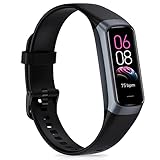
- 【All-day Health Monitor】The fitness tracker watch will automatically track your real-time heart rate, blood pressure and blood oxygen throughout the day to help you better understand your health. Equipped with a high-performance chipset, the fitness tracker automatically analyzes your overall sleep quality (deep/light/wake time) at night and gives you a nightly sleep score in the app to help you adjust your lifestyle and make you healthier.
- 【Smart Notification Remider】 With Bluetooth connection to your phone, it can support incoming calls/text alerts/APP message notifications (WhatsApp/Facebook/Instagram etc.), you will never miss your important messages. With the fitness watch, you can also perform sedentary reminder, water reminder, alarm clock, stopwatch, remote control photo, find devices, etc. to make your life healthier and smarter.
- 【25 Sports Modes】 Fitness tracker supports 25 professional sports modes, you can choose any number of sports modes as your exclusive sports modes in the app, such as walking, running, swimming, yoga, etc. and track your steps, heart rate, distance and calories to help you stay motivated, accomplish your sports goals, record your sports data, and make your sports more scientific.
- 【Long Battery Life】The fitness watch uses magnetic fast charging to provide a better battery life experience. It takes 1-2 hours to fully charge and can be used for up to 7 days of regular use and 15 days of standby. Compatible mobile phone system: android5.0 (inclusive) and IOS9.0 (inclusive) or above.
- 【1.1" AMOLED Touch Color Screen】AMOLED HD touch color screen is designed with clear and bright display, providing you with high quality touch and visual experience. This smartwatch includes a large number of original dials and supports custom dials.
Luna takes the opposite approach. Instead of granular strain scores and daily readiness percentages tuned for athletes, it appears focused on trend-level guidance around sleep quality, stress patterns, and baseline activity.
For endurance athletes or competitive trainers, Luna will feel underpowered. For everyday users who want to understand how sleep, stress, and movement interact without feeling judged by a recovery score, Luna’s restraint may feel healthier and more sustainable.
Luna vs Oura: ring-grade polish versus wrist-based flexibility
Oura’s strength lies in its refined sleep tracking, temperature sensing, and a mature app experience that translates raw biometrics into lifestyle guidance. Its hardware is discreet and premium, but sizing, comfort during workouts, and durability remain common friction points.
Luna’s wrist-worn form factor trades subtlety for versatility. A band allows easier optical sensor placement, better heart-rate stability during movement, and simpler charging and sizing, especially for users who dislike wearing rings overnight.
The biggest differentiator is cost structure. Oura’s subscription is relatively modest, but unavoidable if you want meaningful insights. Luna’s promise is that sleep stages, readiness cues, and AI-generated summaries remain fully accessible without a monthly fee, even if they lack Oura’s depth and long-term refinement.
Luna vs Fitbit: fewer features, fewer walls
Fitbit sits in an awkward middle ground. Its hardware is affordable and familiar, but many of its most useful health insights, including advanced sleep analysis and readiness metrics, are locked behind Fitbit Premium.
Luna’s appeal here is philosophical rather than technical. Instead of offering a vast menu of metrics and selectively monetizing them, Luna appears to offer a narrower, fully unlocked experience from day one.
Fitbit still wins on ecosystem breadth, third-party integrations, and family-friendly features. Luna’s bet is that many users never fully exploit Fitbit’s depth anyway, and would prefer clarity over quantity if it means escaping recurring fees.
Luna vs Garmin: lifestyle intelligence versus training dominance
Garmin is not really a direct competitor, but it is an unavoidable benchmark. Its devices are unmatched for GPS accuracy, battery life, outdoor durability, and sport-specific analytics, often running for days or weeks without charging.
Luna is not built for ultramarathons, cycling power zones, or multi-band GNSS tracking. It is a lifestyle wearable first, designed to be worn continuously rather than strategically during training sessions.
Where Garmin focuses on performance data ownership through hardware investment, Luna emphasizes insight ownership by removing software toll gates. For users uninterested in maps, intervals, or VO2 max charts, Luna’s lighter approach may feel more aligned with daily life.
AI insights: where Luna narrows the gap
Across all these competitors, AI is increasingly used as a narrative layer rather than a raw analytics engine. Whoop, Oura, and Fitbit all frame insights through coaching language, but often reserve the most contextual guidance for paying users.
Luna’s differentiator is that its AI summaries and pattern recognition are positioned as core functionality, not an upsell. The success of this approach depends heavily on how adaptive and personalized those insights become over time.
If Luna’s AI merely restates surface-level trends, it will feel thin compared to paid rivals. If it learns behavioral context, lifestyle rhythms, and long-term baselines without charging extra, it could meaningfully close the experiential gap despite fewer sensors.
Hardware, comfort, and daily wearability trade-offs
Subscription-based rivals benefit from years of iteration in materials, fit, and sensor placement. Oura’s ceramic rings, Whoop’s fabric bands, and Garmin’s rugged composites all reflect refined manufacturing pipelines.
Luna’s hardware appears more utilitarian, prioritizing comfort, lightness, and all-day wear rather than premium finishing. That may limit its luxury appeal, but it aligns with a product meant to disappear on the wrist rather than announce itself.
Battery life will also be scrutinized. If Luna can deliver multi-day endurance comparable to Whoop or Fitbit without aggressive power-saving compromises, it strengthens the argument that subscriptions are not required to sustain modern wearable performance.
The real comparison is psychological, not technical
Ultimately, Luna is competing less with feature checklists and more with fatigue. Many users are simply tired of paying indefinitely for access to their own health narratives.
Whoop, Oura, Fitbit, and Garmin justify their subscriptions with depth, polish, and continuous development. Luna challenges whether that depth is essential for most people, or whether a well-executed, subscription-free experience can meet users where they actually are.
That question does not have a universal answer. But by forcing the comparison, Luna exposes how normalized recurring fees have become in wearables, and why even a technically modest alternative can feel quietly disruptive.
Privacy, Data Ownership, and AI Processing: Trade-Offs Behind the No-Fee Model
The promise of no monthly fees inevitably shifts scrutiny toward how data is handled, processed, and potentially monetized. If Luna is not charging users for ongoing AI insights, the obvious question becomes where the computational costs live and what compromises make that possible.
In wearables, privacy is never just a policy issue. It is deeply tied to hardware capability, battery capacity, and the architectural choices behind where intelligence actually runs.
On-device AI versus cloud dependence
Luna’s pitch leans heavily on local AI processing, suggesting that at least some pattern recognition and summarization happens on the band itself or on the paired phone rather than in the cloud. That approach reduces server costs, lowers latency, and minimizes continuous data uploads, all of which support a subscription-free model.
The trade-off is computational ceiling. Compact processors optimized for low power draw are excellent at trend detection and basic contextual inference, but they struggle with deeper longitudinal modeling that cloud-based systems like Whoop or Oura continuously refine.
In practical terms, Luna’s AI may feel more immediate and privacy-friendly, but less adaptive over months and years. Users should expect solid daily insights rather than the kind of evolving predictive models that require massive off-device compute.
What “data ownership” really means in practice
Luna positions user data as owned by the wearer, not rented back through a paywall. That distinction matters psychologically, especially for users frustrated by losing access to historical health data when subscriptions lapse.
However, ownership does not necessarily mean isolation. Most wearables still rely on anonymized aggregation to improve algorithms, and Luna is unlikely to be an exception if it wants its AI to improve without charging users.
The key difference will be transparency and control. Whether users can fully export raw data, delete cloud backups, or opt out of model training will define how meaningful Luna’s ownership claims actually are.
No subscription does not mean zero monetization
A subscription-free model does not eliminate financial incentives around data; it simply reshapes them. Luna appears to rely on hardware margins and possibly optional premium features, integrations, or future devices to sustain development.
That approach aligns more closely with traditional consumer electronics than with modern health platforms. It also means long-term software support is a business risk rather than a guaranteed revenue stream, which could affect how frequently AI models are refined or features expanded.
For buyers, this introduces a different kind of uncertainty. Instead of worrying about rising fees, they must trust that Luna’s one-time purchase economics can support meaningful updates over the product’s lifespan.
Privacy advantages tied to simpler sensing
Luna’s more modest sensor array indirectly supports its privacy narrative. Fewer sensors mean less granular biometric data, which reduces both analytical depth and exposure risk.
Compared to wearables tracking skin temperature trends, blood oxygen variations, or continuous ECG signals, Luna’s dataset is narrower and easier to process locally. That constraint makes on-device AI more feasible and lowers the need for constant cloud synchronization.
For some users, this is a feature rather than a limitation. The band collects enough data to be useful without feeling medically intrusive, which may appeal to those wary of hypersurveillance on the wrist.
Battery life, firmware updates, and hidden costs
Local processing and reduced cloud dependence can improve battery life, but only if firmware is carefully optimized. AI workloads, even lightweight ones, still tax low-power chipsets when run continuously.
Regular firmware updates will be critical, not just for features but for security and model refinement. Without subscription revenue, Luna must absorb these costs internally, raising questions about update cadence two or three years down the line.
💰 Best Value
![SAMSUNG Galaxy FIT 3 [2024] 1.6' AMOLED Display | 14 Days Battery Life | 100+ Watchfaces | 100+ Exercise Modes | International Model - (Gray)](https://m.media-amazon.com/images/I/41nTjvUQRPL._SL160_.jpg)
- Vibrant 1.6” AMOLED Display – Large, high-res screen with smooth touch for easy navigation
- 5ATM & IP68 Water Resistance – Swim-ready and dust-resistant for active lifestyles
- Up to 14 Days Battery Life – Powerful 208mAh battery for long-lasting performance
- 101+ Workout Modes with Auto Detection – Automatically tracks common workouts for seamless fitness tracking. Advanced Health Tracking – Includes sleep coaching, SpO2, heart rate, and snore detection
- International Model No Warranty in the US. Compatible with Android and iOS devices. Samsung Pay - Not Supported.
This is where the no-fee model faces its quietest test. Longevity in wearables is not about launch promises, but about whether privacy-respecting, AI-driven functionality can remain current without asking users to pay again later.
Unanswered Questions and Potential Red Flags: Accuracy, Updates, and Business Sustainability
The absence of a subscription removes one layer of friction, but it exposes others. As Luna positions itself as an AI-forward band rather than a traditional fitness tracker, the questions shift from price to proof: how accurate is it, how long will it improve, and how does the company keep the lights on without recurring revenue.
Accuracy without medical-grade validation
Luna’s promise hinges on interpretation rather than raw sensing, which makes accuracy harder to benchmark. With a simpler sensor stack, the AI’s value depends on how reliably it can infer trends from heart rate, motion, and sleep signals that are already well-covered territory for established players.
So far, there is little public data around clinical validation, peer-reviewed testing, or third-party accuracy comparisons. That does not disqualify the product, but it places Luna closer to lifestyle guidance than health instrumentation, despite the AI framing.
For users accustomed to Apple, Garmin, or Fitbit benchmarks, this ambiguity matters. Insightful summaries are only as trustworthy as the data beneath them, and early adopters may need to accept a wider margin of error, especially for sleep staging or recovery-style metrics.
AI insights versus scripted logic
Another open question is how adaptive Luna’s AI truly is. Many wearables already use rule-based systems dressed up as intelligence, offering personalized-seeming advice that is largely pre-scripted.
If Luna’s models genuinely learn from individual behavior over time, updates and tuning become essential. Without clear disclosure on whether the AI evolves on-device, via firmware updates, or through periodic model refreshes, it is difficult to gauge how “smart” the band will feel after six months of daily wear.
This matters for long-term engagement. Static insights grow stale quickly, regardless of how novel they feel at launch.
Firmware support as the real long-term cost
Hardware in a band form factor is relatively fixed: display size, vibration motor strength, strap comfort, and casing durability are all known quantities once shipped. Software is where longevity lives or dies.
Regular firmware updates are expensive, particularly for AI features that need retraining, optimization, and security patching. Without subscription income, Luna must fund this through hardware sales alone, which can work at scale but is fragile for a young platform.
The risk is not abandonment, but stagnation. Even quarterly updates can feel slow in an AI-driven product category where competitors iterate continuously behind paywalls.
Battery life trade-offs under real-world AI use
On paper, local processing and fewer sensors should support strong battery life. In practice, always-on inference, background pattern detection, and frequent haptic or screen interactions can erode those gains.
Until independent testing confirms multi-day endurance under normal use, battery claims remain theoretical. A band that needs frequent charging undermines its role as a passive, always-there companion, regardless of how elegant the insights may be.
Charging habits also affect comfort and wearability. A slim, lightweight band loses its advantage if users remove it nightly due to power anxiety.
Business sustainability beyond the first generation
The largest unanswered question is not technical but economic. A no-fee model works best when paired with a clear roadmap of future devices, accessories, or enterprise partnerships that can subsidize software development.
If Luna plans to rely on hardware refresh cycles alone, early buyers are effectively betting on the company’s ability to grow fast enough to support past customers. That is a reasonable gamble for enthusiasts, but a meaningful consideration for mainstream buyers expecting multi-year support.
In that sense, Luna’s approach is refreshingly honest but also exposed. It asks users to trade predictable subscription costs for faith in execution, restraint, and long-term commitment—an exchange that will only make sense if the band delivers consistently, quietly, and over time.
Is Luna Genuinely Disruptive or Clever Marketing? Who This Band Is (and Isn’t) For
All of those risks funnel into a simple question: is Luna actually changing the wearable playbook, or is it repackaging familiar trade-offs under a more appealing pricing story?
The answer, predictably, sits somewhere in the middle. Luna is not a miracle band that outsmarts Apple, Google, or Whoop overnight, but it is poking at a pressure point the industry has largely ignored: growing subscription fatigue among users who already paid for the hardware.
Where Luna’s approach genuinely stands apart
The most disruptive thing Luna does is not its sensors or form factor, but its refusal to monetize insight access. In a market where readiness scores, recovery trends, and long-term analytics increasingly sit behind paywalls, Luna’s promise reframes AI as a built-in feature rather than a rented service.
If its on-device models can meaningfully contextualize sleep, activity, and stress patterns without cloud dependence, that is a quiet but important shift. It challenges the assumption that useful AI guidance must be continuously upsold, even if the depth of insight remains more conservative than subscription-heavy rivals.
There is also something refreshingly focused about Luna’s hardware philosophy. By staying band-first rather than smartwatch-adjacent, it prioritizes comfort, low profile wear, and passive data capture over screens, apps, and lifestyle sprawl.
Where marketing may be doing some heavy lifting
“No subscription” does not automatically mean “no compromises.” Luna’s AI is likely narrower in scope than platforms that pool years of user data across millions of devices and iterate models weekly in the cloud.
Without advanced cardio metrics, rich third-party integrations, or deep historical comparisons, Luna may feel less like a coach and more like a thoughtful observer. For some users, that restraint will feel elegant; for others, it may feel underpowered once the novelty fades.
There is also the reality that AI branding has become shorthand for expectations Luna may not fully meet. Pattern detection and adaptive insights are valuable, but they are not the same as conversational assistants, predictive health alerts, or medical-grade analytics.
Who Luna makes the most sense for
Luna is best suited to users who want long-term health awareness without feeling financially tethered to their wrist. If you value sleep consistency, activity balance, and trend-level insight more than performance optimization, its approach aligns well with daily life.
It also fits people who dislike bulky watches or screens competing for attention. A slim, lightweight band with soft-touch materials and minimal interaction demands works best when worn 24/7, including overnight, where many smartwatches still struggle for comfort.
Early adopters who enjoy backing emerging platforms will also appreciate Luna’s transparency. You are not paying monthly, but you are implicitly investing in the company’s ability to grow, update, and refine its software over time.
Who should probably look elsewhere
If you are an endurance athlete, data maximalist, or someone who thrives on granular metrics and competitive benchmarking, Luna may feel too restrained. Platforms like Garmin, Whoop, or Apple still dominate when it comes to depth, ecosystem integration, and rapid feature evolution.
The same applies to users who expect their wearable to double as a smartwatch replacement. Notifications, apps, payments, and rich displays are not Luna’s focus, and it does not pretend otherwise.
Finally, buyers who prioritize guaranteed long-term support over philosophical alignment may hesitate. Established brands with subscription revenue simply have more predictable resources to sustain aggressive software roadmaps.
So, disruption or clever positioning?
Luna does not reinvent what a wearable can measure, but it meaningfully questions how those measurements are monetized. That alone gives it relevance in a market drifting toward recurring fees by default.
Whether this model proves disruptive depends less on launch features and more on discipline over time. If Luna can deliver steady, thoughtful improvements without creeping monetization, it becomes a proof point that AI wearables do not have to nickel-and-dime their users.
At its best, Luna is not a rebellion against subscriptions, but a reminder that trust, restraint, and long-term value can still be competitive advantages. For the right user, that may be more compelling than any headline-grabbing feature list.