For decades, smartglasses chased mass-market fantasies like notifications in your peripheral vision or hands-free selfies, and largely failed to justify their existence. But for people with macular degeneration, glaucoma, retinitis pigmentosa, or post-stroke visual field loss, the promise is far more concrete: seeing faces again, reading signs, navigating a sidewalk without fear. That shift from novelty to necessity is why eye disease has become one of the most serious and fastest-growing use cases for AR smartglasses.
At the same time, the price tags have exploded, often landing between $3,000 and $15,000 depending on the system and configuration. That sticker shock isn’t about luxury materials or brand cachet; it’s about the brutal technical and regulatory reality of trying to replace or augment a damaged human visual system. Understanding why these devices exist, and why they cost so much, requires looking at both the medical need and the engineering underneath.
Why vision loss is an ideal AR problem
Eye disease is fundamentally an information problem, not always a hardware one. In many conditions, the eyes still capture visual data, but the signal is distorted, incomplete, or arrives in the wrong place in the visual field. AR smartglasses exploit this gap by capturing the scene with cameras, processing it in real time, and re-presenting it in a form the user can still interpret.
This is especially powerful for central vision loss from macular degeneration, where magnification, contrast enhancement, and image remapping can push critical details into healthier peripheral vision. It also applies to tunnel vision from glaucoma or retinitis pigmentosa, where edge detection and visual compression can help users understand what’s happening outside their remaining field of view.
🏆 #1 Best Overall
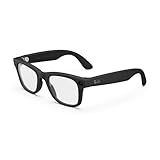
- #1 SELLING AI GLASSES - Tap into iconic style for men and women, and advanced technology with the newest generation of Ray-Ban Meta glasses. Capture photos and videos, listen to music, make hands-free calls or ask Meta AI questions on-the-go.
- UP TO 8 HOURS OF BATTERY LIFE - On a full charge, these smart AI glasses can last 2x longer than previous generations, up to 8 hours with moderate use. Plus, each pair comes with a charging case that provides up to 48 hours of charging on-the-go.
- 3K ULTRA HD: RECORD SHARP VIDEOS WITH RICH DETAIL - Capture photos and videos hands-free with an ultra-wide 12 MP camera. With improved 3K ultra HD video resolution you can record sharp, vibrant memories while staying in the moment.
- LISTEN WITH OPEN-EAR AUDIO — Listen to music and more with discreet open-ear speakers that deliver rich, quality audio without blocking out conversations or the ambient noises around you.
- ASK YOUR GLASSES ANYTHING WITH META AI - Chat with Meta AI to get suggestions, answers and reminders straight from your smart AI glasses.
The convergence of aging, access, and unmet need
The global population is aging rapidly, and age-related eye disease is rising faster than traditional assistive care can scale. Low-vision specialists are scarce, custom optical aids are slow to adapt, and many patients fall into a gray zone where they are not legally blind but cannot function comfortably with standard glasses or magnifiers.
AR smartglasses promise something traditional aids cannot: software-driven adaptability. A single device can switch between magnification, high-contrast modes, face recognition, text-to-speech, and navigation cues, often with simple gesture or voice control. For users whose vision changes over time, that flexibility is not a luxury, it’s survival.
What these systems actually do in real-world use
Unlike consumer AR glasses, medical-focused smartglasses are less about holograms and more about aggressive visual processing. They rely on forward-facing cameras, depth sensors, and high-brightness microdisplays to manipulate the live visual feed with minimal latency. Even a delay of 30 to 50 milliseconds can cause disorientation or nausea for someone relying on the system to walk safely.
Most systems allow users to dial in magnification levels, adjust contrast curves, invert colors, or lock onto text and faces. Some also incorporate AI-based object recognition, reading street signs aloud or highlighting obstacles, turning vision into a hybrid of sight and assisted perception.
Why traditional glasses and magnifiers aren’t enough anymore
Conventional low-vision aids are optically clever but fundamentally static. A magnifier enlarges everything, including visual noise, and quickly becomes exhausting for extended use. Prism glasses can shift images but cannot adapt dynamically as the environment changes.
AR smartglasses replace static optics with software-defined vision. That means the same hardware can behave like a magnifier in a grocery store, a reading aid at home, and a navigation assistant outdoors. The value proposition isn’t sharper vision, but usable vision across more of daily life.
The real reasons these smartglasses cost so much
The hardware alone is expensive. High-resolution microdisplays must be bright enough to compete with daylight, cameras need excellent low-light performance, and onboard processors must handle constant video manipulation without overheating or draining the battery in under an hour. Comfort also matters, since many users wear these devices for several hours a day, forcing careful weight distribution, custom nose bridges, and medical-grade materials.
Then there’s the software. Algorithms must be tuned for low vision, not entertainment, and validated across a wide range of visual impairments. Add regulatory compliance, clinical testing, customer training, and ongoing software support, and these devices start to resemble medical equipment more than consumer electronics.
Medical regulation quietly shapes the market
Some AR smartglasses for eye disease are classified as FDA-registered medical devices, while others skirt the line as assistive technology. That distinction affects everything from how claims can be marketed to whether insurance reimbursement is possible. Clinical validation, even at a limited level, adds years and millions of dollars to development timelines.
This regulatory burden is also why big consumer tech companies move cautiously in this space. The margins are thinner, the liability is higher, and the user base demands reliability over novelty. Smaller, specialized companies have stepped in instead, building devices that prioritize function over fashion.
Who these devices are really for right now
Despite the excitement, AR smartglasses for eye disease are not a universal solution. They work best for people with residual vision who can still interpret images when enhanced, not for total blindness. Users also need the cognitive and physical ability to learn the system, adjust settings, and tolerate wearing a relatively bulky device.
For the right users, however, the impact can be life-changing, restoring independence in ways that traditional aids cannot. That narrow but deeply motivated audience explains both the focus on eye disease and the willingness to pay prices that would be unthinkable in mainstream wearables.
What Eye Conditions These AR Smartglasses Actually Aim to Help — From Macular Degeneration to Hemianopia
Given the regulatory hurdles and the narrow group of users who can truly benefit, it’s not surprising that these AR smartglasses target a specific set of vision disorders. They are designed less as general-purpose “vision boosters” and more as adaptive tools for predictable, well-understood patterns of vision loss.
What unites these conditions is residual vision. The glasses don’t restore eyesight or replace the visual system; instead, they manipulate visual input in ways that help the brain make better use of what remains.
Age-related macular degeneration and central vision loss
Age-related macular degeneration, or AMD, is the single most common target for medical-grade AR smartglasses. In AMD, central vision deteriorates while peripheral vision often remains relatively intact, making tasks like reading, recognizing faces, or seeing fine detail extremely difficult.
AR glasses address this by digitally shifting, magnifying, or duplicating central image content into healthier areas of the retina. Some systems allow users to “project” a magnified window slightly off-center, training themselves to rely on eccentric viewing rather than the damaged fovea.
In practical use, this means text can be enlarged without forcing the user to lean inches from a page, and faces can be recognized at conversational distances. The trade-off is a reduced field of view and a learning curve that can take weeks, especially for older users.
Diabetic retinopathy and patchy vision loss
Diabetic retinopathy often causes uneven vision loss, with blurred areas, dark spots, or fluctuating clarity depending on lighting and blood sugar levels. This irregularity makes it harder for traditional magnifiers or static aids to be effective.
AR smartglasses can dynamically enhance contrast, adjust brightness in real time, and selectively sharpen edges to improve object recognition. Some systems also allow users to switch modes depending on whether they’re reading, navigating indoors, or walking outside.
These benefits can meaningfully improve daily tasks, but they don’t stabilize vision or slow disease progression. Users still need ongoing medical care, and visual fatigue can be an issue during longer sessions due to constant image processing.
Glaucoma and peripheral vision narrowing
Glaucoma typically affects peripheral vision first, gradually creating a tunnel-vision effect. This makes navigation hazardous, even when central acuity remains relatively strong.
Certain AR glasses attempt to address this by compressing or remapping wide-field visual information into the remaining visible area. Obstacles detected at the edges of the camera’s field can be highlighted or visually pulled inward to alert the user.
While promising in controlled environments, this approach has limits. Compressing visual space can distort depth perception, and many users find it mentally exhausting to interpret remapped surroundings for extended periods.
Hemianopia and post-stroke visual field loss
Hemianopia, often caused by stroke or brain injury, results in the loss of one half of the visual field in both eyes. The eyes themselves may be healthy, but the brain no longer processes information from one side.
AR smartglasses can act as a visual cueing system, detecting motion or objects on the blind side and signaling the user through visual overlays or subtle alerts. Some platforms also mirror content from the missing field into the intact side.
This can significantly improve safety when walking or navigating unfamiliar spaces, but it doesn’t restore true binocular awareness. Most clinicians see these systems as a complement to visual rehabilitation therapy rather than a replacement.
Retinitis pigmentosa and inherited retinal diseases
Inherited retinal conditions like retinitis pigmentosa often involve progressive peripheral vision loss, night blindness, and reduced contrast sensitivity. Users may retain a narrow central visual island for years.
AR smartglasses help by boosting contrast, amplifying low-light scenes, and enhancing edges to make obstacles and pathways more visible. Thermal or depth-sensing features, when available, can further improve navigation in challenging environments.
However, as these diseases progress, the window of usefulness narrows. Once visual input becomes too limited, the benefits of image enhancement drop sharply, underscoring the importance of timing and realistic expectations.
What these devices do not meaningfully treat
Despite marketing language that sometimes implies otherwise, AR smartglasses are not effective for total blindness. They also offer limited benefit for conditions dominated by double vision, severe nystagmus, or advanced optic nerve damage.
They are also not a substitute for prescription eyewear, surgery, injections, or disease-modifying treatments. At best, they sit alongside those interventions, filling gaps where traditional aids fall short.
A common thread: functional vision, not medical correction
Across all these conditions, the goal is functional improvement rather than clinical correction. The glasses aim to help users read a menu, recognize a loved one, or navigate a sidewalk independently, even if their underlying visual acuity remains unchanged.
That distinction matters, especially given the price tags. These devices are tools for daily living, not cures, and their value depends heavily on whether they align with a user’s specific pattern of vision loss and lifestyle needs.
How Vision-Enhancing AR Works in Practice: Cameras, Displays, Computer Vision, and AI
What ultimately separates medical-grade AR smartglasses from novelty headsets is not the idea of overlaying information, but how quickly and reliably they transform the real world into something the user can actually see. For people with low vision, every millisecond of delay, every drop in contrast, and every ounce of weight matters.
Under the hood, these devices behave less like screens on your face and more like real-time visual translators. They capture the environment, process it aggressively, and re-present it in a form the remaining visual system can still interpret.
Cameras as synthetic eyes
Vision-enhancing AR glasses rely on outward-facing cameras to act as a proxy for damaged or underperforming eyes. Most systems use one or two wide-angle RGB cameras positioned near eye level, sometimes supplemented by depth sensors or infrared cameras.
Rank #2
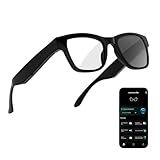
- 3-in-1 AI Glasses: Enjoy ① AI Voice Assistant (Powered by ChatGPT, Gemini & Deepseek), ② Stylish Photochromic Lenses Glasses, and ③ Bluetooth Open-Back Headphones, all in one.
- Free Talk Translation: Automatically detects and translates over 160 languages in real-time, allowing seamless work and translation without touching your phone or glasses.
- Voice, Video & Photo Translation: Supports over 98% of global languages, offering fast and accurate translations—ideal for international travel, business meetings, or cross-cultural communication.
- AI Meeting Assistant: Converts recordings from smart glasses into text and generates mind maps, making it easier to capture and organize meeting insights.
- Long Battery Life, Bluetooth 5.4 & Eye Protection: Up to 10 hours of music and 8 hours of talk time, with easy Type-C charging. Bluetooth 5.4 ensures stronger, stable connections, while photochromic lenses block UV rays and blue light, protecting your eyes in any environment.
The camera choice is critical. A wider field of view helps users with tunnel vision regain situational awareness, while higher dynamic range improves usability in glare-heavy or low-light environments that commonly defeat compromised retinas.
Unlike smartphone cameras optimized for photography, these sensors prioritize low latency and consistent exposure. The goal is not a beautiful image, but a stable, interpretable one that updates fast enough to feel natural while walking.
Displays designed for compromised vision
After capture and processing, the image is fed into near-eye displays that sit just millimeters from the eyes. Most current medical AR glasses use micro-OLED or micro-LED displays with very high brightness and pixel density.
Brightness matters more than resolution for many eye diseases. Users with macular degeneration or diabetic retinopathy often need intense luminance and exaggerated contrast to distinguish shapes, especially indoors.
Display placement is equally important. Some systems project the image into a specific part of the visual field, allowing users to align content with their strongest remaining vision rather than forcing full-field coverage.
Real-time image processing: contrast, edges, and magnification
Between camera and display sits the core of the system: real-time image processing. This is where raw video is transformed into something more usable for damaged visual pathways.
Common techniques include edge detection to outline objects, contrast enhancement to separate foreground from background, and selective magnification that enlarges only key areas rather than the entire scene.
Unlike optical magnifiers, digital zoom can be dynamic. Users may zoom into a sign, then instantly return to a wider view for navigation, often controlled by buttons, touchpads, or voice commands built into the glasses.
Computer vision for understanding the scene
More advanced devices go beyond image enhancement and attempt to understand what the camera is seeing. This is where computer vision comes into play.
Object detection can identify doors, people, vehicles, or obstacles and highlight them visually. Text recognition can isolate and enhance words on menus, signs, or screens, sometimes converting them into high-contrast overlays.
For users with severe contrast loss, this semantic understanding can be more valuable than raw visual clarity. Knowing where the doorway is matters more than seeing every texture on the wall.
AI-driven personalization and adaptive modes
Artificial intelligence increasingly shapes how these glasses behave over time. Instead of fixed visual presets, some systems learn which enhancements a user relies on most and surface those modes automatically.
For example, a device may detect low-light conditions and switch to aggressive contrast boosting, or recognize reading posture and activate text-focused magnification without manual input.
This adaptability is especially important given the diversity of eye diseases. Two users with the same diagnosis may need entirely different visual profiles, and AI helps reduce the friction of constant manual adjustment.
Latency, processing power, and the comfort tradeoff
All of this processing must happen fast enough to avoid motion sickness or disorientation. In practice, usable systems aim for end-to-end latency below 50 milliseconds, which requires powerful onboard processors or tethered compute units.
That processing power has consequences. Heavier frames, warmer surfaces, and limited battery life are common complaints, with many devices lasting only two to four hours of continuous use.
Designers constantly balance performance against wearability. Lighter glasses are more comfortable but less capable, while more powerful systems can feel bulky for all-day use, especially for older users or those with neck strain.
Why this feels different from traditional low-vision aids
Traditional aids like magnifiers or closed-circuit televisions are static and task-specific. Vision-enhancing AR glasses, by contrast, attempt to follow the user through daily life, switching contexts on the fly.
This is both their promise and their weakness. When everything works together, users gain a sense of visual continuity that no single-purpose aid can offer. When it doesn’t, the complexity can become a barrier rather than a benefit.
Understanding how these components interact helps explain why prices are high, results vary widely, and expectations need careful calibration before calling any of these devices a breakthrough.
Meet the Key Players: eSight, Envision, IrisVision, and Other Medical-Grade AR Glasses
With the technical foundations in mind, it becomes easier to understand why only a handful of companies operate in this space. Building AR glasses that meaningfully improve functional vision is less about flashy overlays and more about reliability, tuning depth, and regulatory credibility.
Most of today’s medical-grade AR glasses are not mass-market products. They are expensive, specialized systems aimed at people with moderate to severe vision loss, often sold through clinical channels rather than consumer electronics stores.
eSight: The established name in electronic vision enhancement
eSight is one of the longest-running companies in electronic low-vision eyewear, with roots that predate the current AR hype cycle. Its glasses are designed primarily for people with central vision loss from conditions like macular degeneration, diabetic retinopathy, and Stargardt disease.
Rather than projecting synthetic AR graphics, eSight relies on a high-resolution forward-facing camera and near-eye displays to present a digitally enhanced view of the real world. Users can adjust magnification, contrast, brightness, and color filters in real time, either through physical controls or a companion app.
The hardware reflects its medical focus. The frames are bulky compared to consumer smart glasses, with noticeable weight on the nose and temples, and battery life typically lands around three to four hours of continuous use. That makes eSight better suited for structured tasks like reading, cooking, or watching events than for all-day wear.
Clinically, eSight has some of the strongest validation in the category, with multiple studies showing improvements in visual acuity and task performance for specific user groups. The tradeoff is cost, often in the several-thousand-dollar range, and a learning curve that requires training and adjustment.
Envision Glasses: AI-first vision assistance for everyday tasks
Envision approaches the problem from a different angle, prioritizing computer vision and artificial intelligence over raw magnification. Built on modified smart glasses hardware, Envision focuses on helping users who are blind or have severe low vision interpret their surroundings rather than simply enlarging them.
Key features include real-time text recognition, object identification, scene description, and facial recognition, all delivered through audio feedback. Instead of relying on visual enhancement alone, Envision turns visual data into spoken information, which can be more useful for users with minimal usable vision.
From a wearability standpoint, Envision glasses are lighter and closer to consumer AR frames than many medical competitors. Battery life varies depending on usage but generally supports a few hours of active AI processing, with standby extending longer during passive use.
Envision’s strength is situational awareness rather than visual clarity. It excels at reading signs, menus, or documents and navigating unfamiliar spaces, but it does not attempt to restore visual detail in the same way as camera-based magnification systems. For many users, it functions more like an intelligent companion than a visual prosthesis.
IrisVision: Smartphone-powered AR with a VR-style form factor
IrisVision sits somewhere between medical device and consumer tech experiment. The system uses a Samsung smartphone inserted into a VR-style headset, leveraging the phone’s camera, processor, and display to deliver visual enhancement.
This design allows IrisVision to offer high-resolution imagery, aggressive magnification, and customizable visual modes without building all hardware from scratch. Users can tailor contrast, edge enhancement, and color profiles for different conditions, making it adaptable to a wide range of eye diseases.
The downside is comfort and social acceptability. The headset is large, front-heavy, and not something most users would wear casually in public. Battery life is tied to the smartphone and can drain quickly under continuous camera and processing load, often limiting sessions to a few hours.
Clinically, IrisVision has received FDA clearance for low-vision assistance, which gives it legitimacy in medical settings. In practice, it tends to work best as a stationary or indoor aid, replacing traditional desktop magnifiers rather than acting as a true everyday wearable.
Other notable medical-grade and hybrid contenders
Beyond the headline names, several smaller or emerging players are experimenting with variations on the same theme. Some focus on retinal projection systems, while others explore lightweight waveguide displays paired with belt-mounted compute units to reduce head weight.
There are also crossover devices that blur the line between consumer AR and assistive tech. Modified versions of mainstream smart glasses, paired with accessibility-focused software, aim to lower costs and improve aesthetics, though they often lack regulatory approval or clinical validation.
Rank #3

- 【AI Real-Time Translation & ChatGPT Assistant】AI glasses break language barriers instantly with AI real-time translation. The built-in ChatGPT voice assistant helps you communicate, learn, and handle travel or business conversations smoothly—ideal for conferences, overseas trips, and daily use.
- 【4K Video Recording & Photo Capture 】Smart glasses with camera let you capture your world from a first-person view with the built-in 4K camera. Take photos and record videos hands-free anytime—perfect for travel moments, vlogging, outdoor adventures, and work documentation.
- 【Bluetooth Music & Hands-Free Calls 】Camera glasses provide Bluetooth music and crystal-clear hands-free calls with an open-ear design. Stay aware of your surroundings while listening—comfortable for long wear and safer for commuting, cycling, and outdoor use.
- 【IP65 Waterproof & Long Battery Life】 Recording glasses are designed for daily wear with IP65 waterproof protection against sweat, rain, and dust. The built-in 290mAh battery provides reliable performance for workdays and travel—no anxiety when you’re on the go.
- 【Smart App Control & Object Recognition】Smart glasses connect to the companion app for easy setup, file management, and feature control. They support AI object recognition to help identify items and improve your daily efficiency—perfect for travel exploration and a smart lifestyle.
What unites all of these products is compromise. Systems that deliver the most visual benefit tend to be heavier and more expensive, while lighter, sleeker designs usually offer narrower functionality. No current device fully replaces natural vision, and none works equally well across all eye diseases.
For potential users, the key is matching the device to the problem. Someone with usable peripheral vision but poor central acuity may benefit from magnification-heavy systems like eSight or IrisVision, while someone with profound vision loss may gain more independence from AI-driven tools like Envision.
Real-World Use Cases: Reading, Mobility, Face Recognition, and Daily Independence
Once the hardware trade-offs are understood, the real test for these AR smartglasses is how they perform in everyday situations. The difference between a meaningful assistive device and an expensive demo often comes down to whether users can rely on it repeatedly, outside controlled environments, without fatigue or frustration.
Reading and Near-Field Tasks
Reading remains the most immediately transformative use case for vision-focused AR glasses. Devices like eSight, IrisVision, and Vision Buddy excel at magnifying text on books, mail, medication labels, and screens, often replacing handheld magnifiers or desktop CCTV systems.
What makes AR glasses different is head-tracked magnification. Instead of dragging paper under a lens, users move naturally, with text stabilized and enhanced in their field of view through contrast boosting, edge sharpening, or color remapping tailored to specific conditions like macular degeneration or diabetic retinopathy.
The limitation is endurance. Continuous camera use and display processing are power-hungry, and wearing a front-heavy headset for extended reading sessions can cause neck strain, especially for older users or those with balance issues.
Mobility and Environmental Awareness
Mobility support is where the gap between promise and reality becomes most apparent. While many manufacturers market their systems as outdoor-capable, only a subset meaningfully improve navigation rather than simply enlarging the scene.
AI-driven glasses like Envision and OrCam approach mobility differently, using computer vision to identify obstacles, read signs, and announce landmarks through audio. This is particularly valuable for users with severe central vision loss or conditions like retinitis pigmentosa, where visual enhancement alone may not be sufficient.
However, these systems are assistive rather than autonomous. They do not replace white canes or guide dogs, and latency, camera field-of-view limits, and inconsistent object recognition mean users must remain actively engaged with their surroundings.
Face Recognition and Social Interaction
Social independence is an often-overlooked challenge of vision loss, and face recognition is one of the most emotionally impactful features these glasses offer. AI-enabled devices can identify known individuals, announce names through bone-conduction audio, and even provide contextual cues like facial expressions or approximate age.
For users with prosopagnosia, advanced glaucoma, or severe low vision, this can reduce anxiety in workplaces, family gatherings, and public spaces. The benefit is less about novelty and more about restoring confidence during everyday interactions.
Privacy and accuracy remain concerns. Face databases require setup and maintenance, recognition can fail in poor lighting or crowded scenes, and some users are uncomfortable with the social implications of wearing always-on cameras in public.
Household Tasks and Daily Independence
Beyond headline features, these glasses often prove their value in small, repeated tasks. Identifying food packaging, matching clothing colors, reading appliance displays, or checking expiration dates are mundane activities that cumulatively define independence.
Audio-first systems shine here, as they allow users to keep their hands free while receiving contextual information. Battery life and software reliability matter more than raw display quality in these scenarios, since interruptions quickly erode trust in the device.
Comfort also becomes critical. Lighter frames, adjustable nose bridges, and balanced weight distribution determine whether a device becomes part of a daily routine or stays in a drawer despite its capabilities.
Who Actually Benefits Most
In practice, no single pair of AR smartglasses serves all users equally. People with moderate low vision who retain some functional sight often benefit most from visual enhancement systems, while those with profound vision loss tend to gain more from AI-driven audio assistance.
Cost remains a major barrier. With prices often ranging from several thousand dollars to well over five figures, these devices compete not just with other wearables but with established assistive technologies that may already meet a user’s needs at lower cost.
For the right user, though, these glasses can compress multiple tools into one wearable system. When the technology aligns with the condition, lifestyle, and tolerance for its limitations, it can meaningfully expand what independence looks like on a daily basis.
Medical Device Reality Check: FDA Clearance, Clinical Evidence, and Prescription Pathways
After weighing who benefits most, the next reality check is regulatory status. The moment smartglasses claim to diagnose, treat, or meaningfully mitigate eye disease, they stop being consumer electronics and enter the world of medical devices, with all the friction that entails.
This distinction matters because FDA clearance, clinical evidence, and prescription access often determine whether these expensive glasses are usable, reimbursable, or even recommended by clinicians.
When Smartglasses Become Medical Devices
In the U.S., most vision-focused AR smartglasses fall under Class I or Class II medical devices if they are marketed for low vision assistance rather than general wellness. That typically means going through the FDA’s 510(k) clearance process or, less commonly, a De Novo pathway if no suitable predicate device exists.
Products like eSight and IrisVision have pursued FDA clearance by positioning themselves as electronic vision enhancement systems rather than diagnostic tools. They do not cure eye disease, but they aim to improve functional vision for conditions such as macular degeneration, diabetic retinopathy, glaucoma-related vision loss, and optic nerve damage.
By contrast, devices like OrCam or Envision Glasses generally avoid FDA oversight by framing themselves as assistive AI tools for reading and object recognition. That makes them easier to sell and update, but it also means they are not regulated as medical devices and cannot claim clinical efficacy.
FDA Clearance Does Not Mean Clinical Proof
One of the most common misconceptions is that FDA clearance equals proven effectiveness. In reality, most low vision smartglasses are cleared based on safety and substantial equivalence to earlier devices, not on large-scale randomized clinical trials.
Clinical evidence in this space tends to focus on functional outcomes. Studies often measure improvements in reading speed, face recognition accuracy, task completion time, or patient-reported quality of life rather than changes in visual acuity itself.
The evidence is encouraging but narrow. Many trials involve small sample sizes, short testing periods, and highly motivated users who receive professional training, which does not always reflect real-world, long-term use at home.
Condition-Specific Limits of the Technology
These glasses are often marketed broadly, but their effectiveness varies sharply by diagnosis. Central vision loss conditions like age-related macular degeneration respond better to magnification and contrast enhancement than peripheral vision loss from advanced glaucoma or retinitis pigmentosa.
No current AR smartglasses restore visual fields or regenerate damaged retinal cells. What they offer is adaptive workarounds, using cameras, displays, and audio to reroute information in ways the user can still process.
This is why eye care professionals tend to evaluate these devices as part of low vision rehabilitation, not as standalone solutions. Fit, training, and expectation-setting matter as much as the hardware itself.
Prescription and Clinical Access Pathways
Some FDA-cleared smartglasses are sold directly to consumers, but many perform best when obtained through a low vision clinic. In these settings, optometrists or ophthalmologists assess visual function, configure software profiles, and train users on real-world tasks.
Prescription requirements vary. Certain manufacturers require a clinician referral or prescription, while others strongly recommend it without enforcing it at checkout. This gray area reflects the hybrid nature of these products, sitting between medical devices and consumer electronics.
The clinical route adds cost and time, but it often improves outcomes. Users who receive professional setup and follow-up training are more likely to integrate the glasses into daily routines rather than abandoning them after the novelty fades.
Insurance Coverage and the Cost Reality
Despite FDA clearance, insurance coverage remains rare. Medicare does not currently cover electronic vision enhancement systems, and private insurers typically classify them as assistive devices rather than durable medical equipment.
Some users access funding through vocational rehabilitation programs, veterans’ benefits, nonprofit grants, or employer accommodations. These pathways are inconsistent and often require extensive documentation.
For most buyers, the purchase is out-of-pocket. That makes regulatory clarity even more important, because the price premium is justified less by luxury materials or display resolution and more by clinical positioning and support infrastructure.
Why This Regulatory Gray Zone Matters
The lack of standardized clinical benchmarks makes comparison difficult. Two devices with similar price tags may differ drastically in regulatory status, evidence base, and clinical support, even if their marketing claims sound similar.
Rank #4
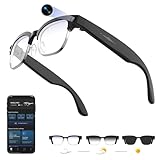
- 【8MPW Camera & 1080P Video and Audio】:These camera glasses feature an 800W camera that outputs sharp 20MP photos and smooth 1080P 30fps videos. Ultra-Clear Video + Powerful Anti-Shake tech+ Built-in dual microphones, you can capture crystal-clear video and audio together -sharply restoring details, perfect for vlogging, travel, and everyday moments
- 【Real-time AI translation Smart Glasses with Camera】:Instantly translate multiple major languages, breaking down language barriers in an instant—no phone required. Ideal for office settings, travel, academic exchanges, international conferences, watching foreign videos, and more
- 【Voice Assistant Recognition and Announcement】:Powered by industry-leading AI large models such as Doubao AI and OpenAI's GPT-4.0. AI voice wake-up lets you ask questions, recognize objects, and get answers on the go. Automatically recognizes objects, menus, landmarks, plants, and more, quickly analyzing the results and announcing them in real time. It instantly becomes your mobile encyclopedia on the go
- 【Bluetooth 5.3 Connection and Automatic Sync to Phone】:Equipped with a low-power BT5.3 chip and Wi-Fi dual transmission technology, offering ultra-low power and high-speed transmission. Captured images and videos are transferred to your phone in real time, eliminating manual export and eliminating storage worries
- 【290mAh Ultra-Long Battery Life】:Ultra-light at 42g, it's made of a durable, skin-friendly material, as light as a feather. Lenses are removable. Its simple, versatile design makes it a comfortable and comfortable wearer. 290mAh ultra-long battery life, 12 hours of music playback and 2 hours of photo or video recording, making it a perfect travel companion
For users with progressive eye disease, this uncertainty can lead to frustration or misplaced expectations. Understanding whether a device is FDA-cleared, clinically evaluated, or purely assistive helps set realistic goals before thousands of dollars change hands.
In this space, regulatory status is not a seal of superiority, but it is a signal. It tells you how seriously the manufacturer treats safety, clinical integration, and long-term use beyond a flashy demo.
Wearability Matters: Comfort, Battery Life, Field of View, and All-Day Practicality
Regulatory status and clinical intent may justify the price, but day-to-day wearability determines whether these AR smartglasses actually help or end up in a drawer. For users with low vision or progressive eye disease, comfort and stamina matter as much as software features.
Unlike consumer AR headsets designed for short bursts, medical-focused smartglasses are meant to be worn during errands, work, and social interaction. That sets a higher bar for ergonomics, power management, and visual comfort over hours, not minutes.
Comfort Is Not Optional When Vision Is Already Strained
Most medical AR smartglasses weigh significantly more than traditional eyeglasses, often landing in the 250–400 gram range once cameras, displays, and batteries are included. That weight sits forward on the face, increasing pressure on the nose bridge and ears, especially during prolonged use.
Manufacturers try to offset this with padded nose supports, adjustable arms, and counterbalanced battery placement. Even so, users with neck sensitivity, migraines, or balance issues may struggle with extended sessions, particularly in the early adaptation phase.
Fit customization is critical because small alignment errors can reduce image clarity or cause eye fatigue. This is one reason clinician-assisted fitting improves outcomes, as proper interpupillary distance and display positioning directly affect comfort and usability.
Battery Life Shapes How and Where the Glasses Get Used
Battery life remains one of the biggest constraints separating medical AR glasses from everyday eyewear. Typical real-world usage ranges from two to six hours, depending on brightness, camera use, and whether advanced features like edge detection or OCR are running continuously.
Some systems rely on tethered battery packs worn on a belt or in a pocket, which extends runtime but adds friction to daily use. Others integrate everything into the frame, trading longer battery life for added weight and heat near the temples.
For many users, these limitations push the glasses into a task-based role rather than all-day wear. They come out for reading mail, navigating unfamiliar spaces, or recognizing faces, then go back into a case once the battery dips.
Field of View Can Help or Hurt Depending on the Disease
Field of view is not universally better when it is larger. Wide displays can overwhelm users with central vision loss or introduce distortion for those with peripheral vision deficits.
Many medical AR glasses deliberately restrict or customize the displayed field, prioritizing clarity and magnification over immersion. Some allow users to reposition the virtual image to match their remaining functional vision, which is more useful than sheer display size.
This tailored approach reflects clinical reality: macular degeneration, glaucoma, and retinitis pigmentosa each benefit from different visual strategies. A flexible field of view matters more than headline specs borrowed from gaming-focused AR hardware.
Heat, Noise, and Social Acceptability Matter More Than Marketing Suggests
Active cameras and processors generate heat, which can become noticeable on the face during longer sessions. Even modest warmth can discourage use for people already managing sensory sensitivity or discomfort related to their condition.
Audible fan noise or shutter sounds may seem minor, but they affect confidence in quiet environments like offices or public transit. Social comfort plays a real role in adherence, especially when the glasses are visibly larger than standard eyewear.
Designs have improved, but most medical AR smartglasses still signal “assistive device” rather than blending in. For some users, that visibility is empowering; for others, it limits when and where they feel comfortable wearing them.
All-Day Practicality Often Means Strategic, Not Continuous, Use
Despite aspirations of all-day augmentation, most users settle into patterns of intermittent use. The glasses become a tool deployed at specific moments, not a constant visual layer like prescription lenses.
This reality is not a failure of the technology but a reflection of its current maturity. Until weight drops, batteries last longer, and thermal management improves, practicality will favor intentional use over continuous wear.
For buyers evaluating these expensive systems, understanding this distinction is essential. The value lies in targeted independence gains, not in replacing natural vision or functioning as invisible, always-on eyewear.
Price vs. Value: Who Should Consider Spending $3,000–$6,000 on Vision AR Glasses?
Once you accept that most vision AR glasses are used strategically rather than all day, the price question shifts. The real issue is not whether $3,000–$6,000 is expensive, but whether the independence gained during those critical moments justifies the cost.
These devices sit in an unusual middle ground between consumer electronics and medical equipment. They are priced like luxury laptops, yet evaluated more like prosthetic tools, where value is measured in regained function rather than specs per dollar.
What You Are Actually Paying For
The headline cost is driven less by display panels and more by specialized optics, real-time image processing, and low-volume manufacturing. Unlike mass-market smart glasses, many vision-focused AR systems are produced in limited runs and tuned for clinical use cases.
You are also paying for software that prioritizes latency, contrast enhancement, edge detection, and magnification stability over visual flair. In practical terms, that means fewer “wow” moments but more consistent performance when reading signs, recognizing faces, or navigating unfamiliar spaces.
Support and onboarding matter here as well. Some vendors include remote fitting, vision profile customization, and ongoing software updates that adapt the system as a user’s condition progresses, which is rare in typical consumer wearables.
Who Tends to See the Highest Return on Investment
People with moderate to severe central vision loss from macular degeneration often see the clearest benefit. Being able to reposition text or faces into healthier peripheral vision can meaningfully extend independence in daily tasks like shopping, cooking, or reading mail.
Users with tunnel vision from retinitis pigmentosa or advanced glaucoma may also benefit, particularly from contrast enhancement and edge outlining. However, the gains tend to be task-specific rather than universally transformative, which makes expectations management critical.
Professionals who need situational awareness to work safely, such as navigating offices, campuses, or transit systems, often justify the cost more easily than casual users. If the glasses reduce reliance on a guide or companion even part of the time, the value equation changes quickly.
Who May Struggle to Justify the Cost
For individuals with mild vision impairment that is well-corrected by traditional low-vision aids, the jump in functionality may feel incremental rather than dramatic. In those cases, a $200–$800 electronic magnifier or tablet-based solution can cover many of the same needs.
People expecting these glasses to restore vision or function like everyday prescription eyewear are likely to be disappointed. The weight, battery life, and thermal limits discussed earlier mean they remain tools, not replacements for natural sight.
Cost can also be a barrier for users without access to insurance reimbursement, grants, or employer support. While some systems qualify for partial coverage under assistive technology programs, many purchases are still out-of-pocket.
Comparing AR Glasses to Traditional Assistive Vision Tech
Compared to handheld magnifiers, AR glasses offer hands-free operation and faster context switching, which matters for mobility and multitasking. That convenience is difficult to quantify but often cited as the primary reason users stick with them.
However, traditional aids remain lighter, simpler, and more socially invisible. A pocket magnifier never needs charging, never overheats, and never draws attention, which still makes it the better choice in many everyday scenarios.
The most satisfied users tend to combine tools rather than replace them. AR glasses become the high-impact option reserved for moments where other aids fall short.
Is This a Breakthrough or a Niche Investment?
At current prices, vision AR glasses are best understood as a premium assistive category rather than a mass-market breakthrough. They represent a meaningful step forward in adaptive vision technology, but not a universal solution.
For the right user, the value is not abstract or speculative. It shows up in confidence, autonomy, and reduced dependence during specific tasks that matter deeply to quality of life.
For everyone else, waiting may be the smarter move. As components shrink, battery efficiency improves, and clinical validation expands, the same core benefits are likely to become more accessible over time.
💰 Best Value

- #1 SELLING AI GLASSES - Move effortlessly through life with Ray-Ban Meta glasses. Capture photos and videos, listen to music, make hands-free calls or ask Meta AI* questions on-the-go. Ray-Ban Meta glasses deliver a slim, comfortable fit for both men and women.
- CAPTURE WHAT YOU SEE AND HEAR HANDS-FREE - Capture exactly what you see and hear with an ultra-wide 12 MP camera and a five-mic system. Livestream it on Facebook and Instagram.
- LISTEN WITH OPEN-EAR AUDIO — Listen to music and more with discreet open-ear speakers that deliver rich, quality audio without blocking conversations or the ambient noises around you.
- GET REAL-TIME ANSWERS FROM META AI — The Meta AI* built into Ray-Ban Meta’s wearable technology helps you flow through your day. When activated, it can analyze your surroundings and provide context-rich suggestions - all from your smart AI glasses.
- CALL AND MESSAGE HANDS-FREE — Take calls, text friends or join work meetings via bluetooth straight from your glasses.
How These Glasses Compare to Traditional Low-Vision Aids and Mainstream Smart Glasses
Seen in context, disease-focused AR smart glasses sit in a narrow but important space between low-tech assistive tools and consumer smart eyewear. They borrow ideas from both worlds, yet behave very differently in daily use.
Against Traditional Low-Vision Aids
Compared to optical magnifiers, monoculars, and CCTV-style desktop systems, AR glasses fundamentally change posture and workflow. Vision processing happens at eye level, keeping hands free and reducing the constant head-down movement that many users find tiring or unsafe.
The real advantage shows up in dynamic environments. Tasks like walking through a store, reading signs while moving, or tracking faces during conversation are awkward with handheld aids but more natural with head-worn displays.
That said, traditional aids still win on simplicity and endurance. A $50 optical magnifier weighs almost nothing, never needs charging, and delivers predictable results without software quirks or calibration drift.
Compared to Tablet- and Phone-Based Vision Apps
Modern smartphones offer impressive accessibility features, including magnification, contrast enhancement, OCR, and text-to-speech. For stationary tasks like reading mail or menus, a phone or tablet can deliver similar functional outcomes at a fraction of the cost.
AR glasses differentiate themselves by reducing friction. There is no need to aim a camera, adjust distance, or hold a device steady, which matters for users with tremors, arthritis, or fatigue.
However, phones remain far more versatile. They benefit from faster processors, better cameras, frequent software updates, and broad app ecosystems that medical AR platforms struggle to match.
How They Differ From Mainstream Smart Glasses
Consumer smart glasses like Ray-Ban Meta or early camera-based wearables prioritize lifestyle features such as audio, notifications, and casual capture. Their displays, if present at all, are not designed for sustained visual correction or clinical-grade image manipulation.
Medical-oriented AR glasses use higher-brightness displays, lower-latency video pipelines, and aggressive real-time processing. Features like edge enhancement, selective magnification, and field remapping are tuned specifically for conditions like macular degeneration or diabetic retinopathy.
The trade-off is bulk and aesthetics. Vision-assist glasses are heavier, thicker, and more obviously technical, which affects comfort and social acceptance during extended wear.
Comfort, Battery Life, and Daily Wearability
Traditional aids and consumer glasses tend to disappear once in use, while AR vision systems rarely do. Weight distribution, heat buildup near the temples, and limited battery life mean most users treat them as session-based tools rather than all-day eyewear.
Battery life typically ranges from two to four hours of active use, with performance sometimes throttled to manage heat. This is acceptable for targeted tasks but frustrating for users hoping for continuous assistance.
Fit and adjustability also matter more here. Many systems require careful alignment to match the user’s remaining vision, making them less forgiving than off-the-shelf consumer glasses.
Software Experience and Long-Term Support
Traditional low-vision aids have effectively zero learning curve. AR glasses introduce menus, profiles, firmware updates, and occasional bugs, which can be intimidating for users who simply want vision help, not another device to manage.
On the upside, software-driven systems can improve over time. New vision modes, better OCR accuracy, and refined disease-specific presets can extend the useful life of the hardware.
Consumer smart glasses benefit from massive platform backing, while medical AR devices depend on smaller companies. That makes long-term support, replacement parts, and update cadence an important consideration before investing.
Cost, Value, and Who Each Option Serves Best
From a pure cost-performance standpoint, traditional aids and mobile devices remain unbeatable. They cover a wide range of needs for hundreds rather than thousands of dollars.
AR smart glasses justify their price only when their unique strengths align with the user’s condition and daily routines. For someone with central vision loss who needs mobility and situational awareness, they can unlock capabilities no other tool offers.
For users with milder impairments or primarily static tasks, the premium often buys convenience rather than necessity. In those cases, simpler solutions still deliver better value with fewer compromises.
Breakthrough or Niche Tool? The Future of AR Smartglasses in Vision Health
All of this leads to the unavoidable question: are AR smartglasses for vision health the start of a genuine shift in how eye disease is managed, or an expensive niche that will remain on the margins?
The honest answer, at least for now, sits somewhere in between. These devices are neither miracle cures nor gimmicks, but highly specialized tools whose value depends almost entirely on the user’s diagnosis, lifestyle, and tolerance for trade-offs.
Where AR Smartglasses Truly Shine
AR smartglasses make the strongest case for users with permanent, non-correctable vision loss where traditional optics fail. Conditions like age-related macular degeneration, Stargardt disease, retinitis pigmentosa, and certain post-stroke visual field deficits are the most commonly targeted.
In these scenarios, the technology is not about sharpening vision but reallocating it. By remapping visual information, enhancing contrast, and providing contextual cues, AR systems help users navigate environments, recognize faces, and read signage in ways that magnifiers and static aids cannot.
Mobility is the key differentiator. Unlike handheld magnifiers or phone-based solutions, head-worn AR keeps the hands free and maintains spatial awareness, which is critical for walking, shopping, or navigating unfamiliar spaces.
Why They Are Not for Everyone
Despite the promise, AR smartglasses are a poor fit for many vision issues. They do little for refractive errors, early-stage disease, or conditions well-managed by glasses, contact lenses, or standard low-vision aids.
There is also the physical reality of wearing them. Even the best-designed systems are heavier and warmer than normal eyewear, with battery life that limits continuous use. For many users, they function more like a power tool than a daily accessory.
The learning curve cannot be ignored. Menu systems, gesture controls, voice commands, and visual presets require time and patience, which may be unrealistic for some older users or those seeking immediate, frictionless assistance.
Clinical Validation and Medical Credibility
One of the biggest hurdles separating breakthrough from hype is clinical evidence. While several AR vision systems are FDA-cleared or CE-marked as assistive devices, large-scale, long-term outcome data is still limited.
Most studies focus on task performance improvements rather than quality-of-life metrics over years of use. That makes it harder for clinicians, insurers, and patients to justify the high upfront cost.
This also explains why adoption has been strongest in rehabilitation settings rather than consumer retail. When introduced alongside occupational therapy and vision training, AR glasses tend to deliver more consistent and measurable benefits.
The Cost Curve and What Needs to Change
Price remains the single biggest barrier. At several thousand dollars per unit, AR smartglasses compete not just with low-vision aids, but with smartphones, tablets, and even human assistance.
For broader adoption, three things need to happen. Hardware must get lighter and cooler, battery life must extend beyond a few hours, and pricing must come down enough to feel proportionate to the benefit delivered.
Equally important is ecosystem maturity. Long-term software support, compatibility with future phones or cloud services, and reliable customer service will matter as much as raw optical performance.
Looking Ahead: Incremental Progress, Not Overnight Disruption
The future of AR smartglasses in vision health is likely to be evolutionary rather than revolutionary. Expect steady gains in computer vision, AI-powered scene understanding, and disease-specific customization rather than sudden breakthroughs.
As components shrink and consumer AR investments spill over into medical applications, today’s bulky systems could become tomorrow’s slimmer, longer-lasting devices. That convergence may ultimately blur the line between medical wearables and mainstream smart eyewear.
For now, AR smartglasses remain a powerful but selective solution. For the right user with the right condition, they can be genuinely life-changing. For everyone else, they are an impressive glimpse of what vision assistance may become, rather than what it already is.
In that sense, these pricey AR smartglasses are both a breakthrough and a niche tool. Their impact is real, but only when expectations are grounded in practical reality rather than futuristic promise.