The T‑Touch Connect Solar exists because a certain kind of watch buyer has never been fully satisfied by either side of the modern wristwear divide. Traditional Swiss watches deliver longevity, tactility, and emotional value, but stop short of offering navigation, activity tracking, or connected convenience. Full smartwatches deliver features in abundance, but often feel disposable, visually generic, and fundamentally at odds with the rituals that draw people to watches in the first place.
Tissot’s intent here is neither to out‑feature an Apple Watch nor to disguise a smartwatch as a mechanical icon. Instead, the T‑Touch Connect Solar is positioned as a long-life instrument watch with digital augmentation, built to Swiss manufacturing standards and designed to remain relevant for years rather than product cycles. Understanding what Tissot is trying to build, and just as importantly what it is deliberately avoiding, is essential to judging this watch fairly.
A hybrid first, a smartwatch second
At its core, the T‑Touch Connect Solar is still a watch, not a wrist computer. It uses a Swiss-made quartz movement with solar charging, analog hands, and a tactile sapphire crystal that enables touch-based interaction without relying on a full-color display. The always-on analog timekeeping and low-energy digital layer immediately place it closer to traditional horology than to mainstream smartwatches.
This design choice dictates nearly everything else about the experience. Notifications are filtered and minimal, health tracking is basic, and the operating system is purpose-built rather than app-driven. Tissot is prioritizing autonomy, reliability, and legibility over constant engagement, which will resonate with buyers who find modern smartwatches noisy, distracting, or short-lived.
🏆 #1 Best Overall
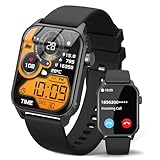
- 【1.83" HD Display & Customizable Watch Faces】Immerse yourself in a vibrant 1.83-inch IPS display, boasting a sharp resolution of 240*284 for crystal-clear visuals. Effortlessly personalize your smart watch with a wide array of customizable watch faces to suit your personal style for every occasion—whether trendy, artistic, or minimalist—ideal for casual, sporty, or professional. Its sleek, modern design complements any outfit, blending technology and fashion seamlessly for everyday wear
- 【120 Sports Modes & Advanced Health Tracking】Our TK29 smart watches for women men come equipped with 120 sports modes, allowing you to effortlessly track a variety of activities such as walking, running, cycling, and swimming. With integrated heart rate and sleep monitors, you can maintain a comprehensive overview of your health, achieve your fitness goals, and maintain a balanced, active lifestyle with ease. Your ideal wellness companion (Note: Step recording starts after exceeding 20 steps)
- 【IP67 Waterproof & Long-Lasting Battery】Designed to keep up with your active lifestyle, this smartwatch features an IP67 waterproof rating, ensuring it can withstand splashes, sweat, and even brief submersion, making it perfect for workouts, outdoor adventures, or rainy days. Its reliable 350mAh battery offering 5-7 days of active use and up to 30 days in standby mode, significantly reducing frequent charging. Ideal for all-day wear, whether you’re at the gym, outdoors, or simply on the go
- 【Stay Connected Anytime, Anywhere】Stay informed and in control with Bluetooth call and music control features. Receive real-time notifications for calls, messages, and social media apps like Facebook, WhatsApp, Twitter, and Instagram directly on your smartwatch. Easily manage calls, control your music playlist, and stay updated without needing to reach for your phone. Perfect for work, workouts, or on-the-go, this watch keeps you connected and never miss important updates wherever you are
- 【Multifunction & Wide Compatibility】Seamlessly handle heart rate monitoring, sleep tracking, and enjoy conveniences like camera/music control, Seamlessly handle heart rate monitoring, sleep tracking, and more-all directly from your wrist. This 1.83 inches HD smartwatch is compatible with iPhone (iOS 9.0+) & Android (5.0+), ensuring smooth daily connectivity and convenience throughout your day. More than just a timepiece, it’s a stylish, all-in-one wearable for smarter, healthier living
Why Swiss-made still matters here
Unlike many hybrids that outsource software and electronics development, Tissot has leaned heavily on in-house engineering within the Swatch Group ecosystem. The movement, case, and final assembly are Swiss-made, and the finishing reflects that heritage, with sharp transitions, well-executed brushing, and a sapphire crystal that feels more tool-watch than gadget.
This matters for long-term ownership. The 47.5mm titanium case is large but light on the wrist, the 100 meters of water resistance supports real-world use, and the solar charging system dramatically reduces battery anxiety. Tissot is signaling that this is a watch you live with for years, not something you replace when a battery degrades or software support ends.
What Tissot is intentionally leaving out
The most common criticism of the T‑Touch Connect Solar comes from comparing it directly to Garmin, Samsung, or Apple. There is no app ecosystem, no voice assistant, no music storage, and no rich third-party fitness analytics. GPS is present but utilitarian, and health metrics focus on activity and movement rather than medical-grade insight.
These omissions are not oversights; they are philosophical boundaries. Tissot is avoiding the arms race of features that require frequent hardware updates, cloud dependence, and aggressive power consumption. In doing so, it accepts that this watch will never satisfy users who want deep training metrics, LTE connectivity, or smartwatch-as-phone-replacement behavior.
A different definition of value
Positioned at a price well above most hybrids but below luxury mechanical sports watches, the T‑Touch Connect Solar asks buyers to reassess what value means in a connected watch. You are paying for materials like titanium and sapphire, Swiss labor, a proprietary solar system, and a platform designed for durability rather than novelty.
For some, that price will feel unjustifiable given the restrained software experience. For others, especially those already comfortable spending four figures on a non-connected watch, the value proposition makes more sense: a rugged, Swiss-made instrument that adds modern utility without sacrificing identity or longevity.
Who this watch is really for
The ideal owner is not upgrading from a Series 9 Apple Watch or a Garmin Fenix. They are more likely coming from a mechanical tool watch, a previous T‑Touch model, or a quartz sports watch and want selective connectivity without surrendering watchmaking values. They care about how the case is finished, how the watch wears over a long day, and whether it still feels relevant five years from now.
Seen through that lens, the T‑Touch Connect Solar is not trying to win the smartwatch market. It is carving out a narrower, more deliberate space where Swiss watchmaking and modern digital utility coexist without either one overwhelming the other.
Case, Materials, and Wearability: Traditional Swiss Tool Watch First, Smartwatch Second
If the software philosophy sets the boundaries of what the T‑Touch Connect Solar will and will not try to be, the case and materials make its priorities unmistakable. This is a Swiss tool watch in form and execution, with smart functionality integrated into an already robust physical platform rather than dictating its design.
Titanium construction and dimensions
The T‑Touch Connect Solar is housed in a 47mm titanium case, a size that immediately signals outdoor and instrument-watch intent rather than lifestyle smartwatch discretion. On paper, that diameter sounds imposing, but titanium keeps the weight in check and prevents the watch from feeling top-heavy during extended wear.
Thickness sits around 15mm, driven partly by the solar sapphire crystal and partly by the layered construction needed to support touch sensitivity without sacrificing durability. It wears tall rather than slab-like, with a case profile that slopes gently downward to help it settle on the wrist instead of perching awkwardly.
Lug-to-lug length is substantial, and this is not a watch that flatters small wrists. For wrists under roughly 17cm, the footprint will feel assertive at best and overwhelming at worst, regardless of how light the titanium is.
Tool-watch finishing over luxury polish
Finishing is intentionally utilitarian. The case features predominantly brushed surfaces with minimal polishing, reinforcing the watch’s positioning as an outdoor instrument rather than a luxury statement piece.
Edges are clean and precise but not decorative, and the overall impression is closer to a modern titanium dive watch than anything resembling a consumer electronics product. This restraint is important, because it keeps the watch from aging stylistically as smartwatch trends change.
The rotating bezel, depending on version, is either ceramic or titanium, with engraved markings that are legible and purposeful. It operates mechanically rather than digitally, reinforcing the analog-first mindset that defines the entire T‑Touch lineage.
Sapphire crystal with integrated solar and touch layers
The sapphire crystal is one of the most technically interesting components of the watch. It integrates both photovoltaic cells and a capacitive touch layer, allowing the dial itself to function as an input surface without compromising scratch resistance.
In daily use, the crystal feels no different from a conventional sapphire in terms of hardness or clarity. There is no plasticky softness or visible segmentation, which is a common compromise in many hybrid watches attempting touch functionality.
The solar layer is discreet and effective, charging continuously from ambient light rather than requiring direct sun exposure. This contributes directly to the watch’s multi-month autonomy and reduces anxiety around battery degradation over years of ownership.
Water resistance and real-world durability
With 100 meters of water resistance, the T‑Touch Connect Solar is suitable for swimming, heavy rain, and general outdoor abuse. This is not a dive watch in the ISO sense, but it is far more water-capable than most connected watches at this price point.
Pushers and crown feel solid, with reassuring resistance and no rattle. Unlike many smartwatches that rely on sealed touch-only interaction, the physical controls here make the watch usable with gloves, wet hands, or in cold conditions.
Shock resistance and temperature tolerance are in line with expectations for a Swiss sports quartz watch, reinforcing the idea that this is meant to be worn continuously rather than babied like a fragile piece of consumer tech.
Strap options and long-term comfort
Tissot offers the T‑Touch Connect Solar on rubber straps, textile options, and titanium bracelets, all using standard lugs rather than proprietary attachment systems. This is a small but meaningful decision that supports long-term ownership and easy customization.
The rubber strap variants are particularly well-suited to the case size, helping counterbalance the watch’s visual mass while remaining comfortable over long days. Breathability is adequate, though the caseback does remind you that this is a large watch during intense activity.
On the titanium bracelet, the watch feels more traditionally Swiss and less overtly sporty, but the added weight shifts the balance toward all-day desk wear rather than extended outdoor use. Micro-adjustment is present, but not as refined as modern high-end sports bracelets.
How it wears compared to full smartwatches
Compared to an Apple Watch Ultra or Garmin Fenix, the T‑Touch Connect Solar feels less like a computer strapped to the wrist and more like a conventional sports watch that happens to be connected. There is no glowing screen demanding attention, and the analog hands anchor it visually in the world of traditional horology.
Sleep tracking is possible, but the size and thickness make it less comfortable overnight than slimmer wearables. This is a watch you wear because you want to, not one you forget is there.
Over weeks of use, the defining advantage becomes psychological as much as physical. It never feels obsolete, never visually dates itself, and never reminds you that a new model is inevitable next year. That sense of permanence is something full smartwatches, regardless of price, still struggle to offer.
Solar Power and the Quartz Movement: How the Lightmaster Technology Shapes Ownership
If the previous sections explain why the T‑Touch Connect Solar feels psychologically closer to a traditional watch, its power system explains why it behaves like one over the long term. This is where Tissot’s Lightmaster technology and Swiss quartz engineering quietly redefine what “living with a smartwatch” can mean.
Rather than chasing daily or weekly charging cycles, the T‑Touch Connect Solar is designed around continuity. You put it on, you wear it, and power becomes something you almost never think about.
Lightmaster Solar Technology: Invisible, but Central
Tissot’s Lightmaster system uses solar cells integrated beneath the sapphire crystal, allowing the entire dial surface to act as a light collector without visible panels. In normal lighting, including indoor environments, the watch is constantly topping up its energy reserve.
This is not the aggressive, fast-charging solar approach seen in some outdoor watches, but a steady, conservative system tuned for longevity. A few hours of daylight exposure can sustain weeks of use, and even desk-bound wearers will typically remain energy-positive.
Crucially, the solar layer does not compromise dial legibility or finishing. The dial still reads as a functional Swiss sports watch, not a piece of exposed technology, which reinforces the idea that the electronics are subordinate to the watch, not the other way around.
Swiss Quartz at the Core, Not a Miniature Computer
At the heart of the T‑Touch Connect Solar is a Swiss-made quartz movement developed specifically for this hybrid platform. Timekeeping remains quartz-precise regardless of whether smart features are enabled, paused, or ignored entirely.
This separation matters. Unlike full smartwatches, where the entire system lives or dies by battery health and software support, the Tissot always remains a watch first, even if the connected layer becomes secondary over time.
From an ownership perspective, this drastically lowers anxiety. There is no looming lithium-ion battery degradation curve tied to daily charging, and no sense that the watch becomes useless the moment software support slows.
Battery Life in Real Use, Not Marketing Cycles
In typical mixed usage with notifications, step tracking, and occasional touch interactions, the watch can operate indefinitely with normal exposure to light. Even with limited sunlight, it can run for months in a low-power state while maintaining accurate time.
Compared to an Apple Watch or Garmin, this sounds almost alien, but that is precisely the point. The T‑Touch Connect Solar is not optimized for maximum data collection or constant screen interaction, and its power consumption reflects that restraint.
For owners, this translates into a radically different habit. Charging becomes an exception rather than a routine, and many users will go years without ever connecting a cable.
Long-Term Reliability and Service Reality
Solar quartz has a proven track record in Swiss and Japanese watchmaking, and Tissot’s implementation benefits from that institutional knowledge. The rechargeable cell is designed to last many years, and when replacement eventually becomes necessary, it follows familiar watch service pathways rather than consumer electronics disposal cycles.
Rank #2
![Apple Watch Series 11 [GPS 46mm] Smartwatch with Jet Black Aluminum Case with Black Sport Band - M/L. Sleep Score, Fitness Tracker, Health Monitoring, Always-On Display, Water Resistant](https://m.media-amazon.com/images/I/312K597M2uL._SL160_.jpg)
- HYPERTENSION NOTIFICATIONS — Apple Watch Series 11 can spot signs of chronic high blood pressure and notify you of possible hypertension.*
- KNOW YOUR SLEEP SCORE — Sleep score provides an easy way to help track and understand the quality of your sleep, so you can make it more restorative.
- EVEN MORE HEALTH INSIGHTS — Take an ECG anytime.* Get notifications for a high and low heart rate, an irregular rhythm,* and possible sleep apnea.* View overnight health metrics with the Vitals app* and take readings of your blood oxygen.*
- STUNNING DESIGN — Thin and lightweight, Series 11 is comfortable to wear around the clock — while exercising and even when you’re sleeping, so it can help track your key metrics.
- A POWERFUL FITNESS PARTNER — With advanced metrics for all your workouts, plus features like Pacer, Heart Rate Zones, training load, Workout Buddy powered by Apple Intelligence from your nearby iPhone,* and more. Series 11 also comes with three months of Apple Fitness+ free.*
This is where the T‑Touch Connect Solar quietly outperforms most smartwatches in sustainability and long-term value. You are buying into a serviceable timepiece, not a sealed gadget with an expiration date.
It also aligns with Tissot’s decision to keep the software lean. Fewer background processes and no third-party app ecosystem reduce power strain and future-proof the hardware against obsolescence.
Trade-Offs Versus Full Smartwatches
The conservative power architecture does impose limits. There is no always-on color display, no GPS mapping sessions measured in days, and no rich app environment running continuously in the background.
For buyers expecting smartwatch-style intensity, the experience can feel restrained. But for those who value autonomy, reliability, and minimal intervention, this restraint is the feature, not the flaw.
In practice, Lightmaster technology shapes ownership by shifting priorities. The watch rewards consistency over interaction, and presence over performance metrics, reinforcing its identity as a Swiss watch that happens to be connected, not a smartwatch pretending to be a watch.
Touchscreen Sapphire and Interface Logic: The Unique T-Touch Interaction Explained
If the power philosophy defines how often you interact with the T‑Touch Connect Solar, the sapphire touchscreen defines how that interaction actually feels. This is where Tissot’s decades-long T‑Touch lineage becomes critical context, because the interface logic is not borrowed from smartphones or smartwatches, but from an entirely different design tradition.
Rather than treating the display as a constantly active control surface, Tissot uses touch as a deliberate, mode-based input layered onto a conventional analog watch.
Sapphire Crystal as an Input Surface, Not a Screen
The defining feature is the touch-sensitive sapphire crystal itself, not a touchscreen display in the modern sense. Beneath the crystal sits a low-power memory-in-pixel LCD that only illuminates when needed, leaving the dial visually dominant most of the time.
This distinction matters. You are touching sapphire, not glass bonded to a high-refresh OLED panel, which preserves the tactile and visual character of a traditional sports watch while still enabling digital interaction.
Sapphire’s hardness also brings a durability advantage. Scratches that would permanently mar an Apple Watch or many Garmin models simply do not register here, reinforcing the idea that this watch is built for years of wear rather than rapid upgrade cycles.
Activating the Interface: Intentional by Design
Interaction begins with intent. A press of the crown or upper pusher wakes the digital layer, at which point the crystal becomes responsive to touch inputs mapped to specific zones around the dial.
This eliminates accidental activation entirely. You can brush sleeves, gloves, rain, or gear across the crystal without triggering menus, something that cannot be said for most capacitive smartwatch displays.
The result is slower, yes, but also calmer. The watch never demands attention, and the user initiates every interaction consciously.
Zone-Based Touch Logic and Function Selection
Instead of swipe-based navigation, the T‑Touch relies on directional taps aligned with the dial layout. Touching specific areas corresponds to functions like notifications, activity tracking, weather, compass, or alarms.
This system feels alien if your muscle memory is trained on smartphone gestures, but it becomes logical once you accept that the dial itself is the map. The analog hands act as reference points, grounding the experience in watchmaking rather than UI abstraction.
There is a learning curve, particularly in remembering which zones call which functions. Tissot mitigates this by keeping the function list intentionally short, avoiding the menu sprawl that plagues many smartwatches.
Crown and Pushers: Mechanical Logic Still Rules
Touch input is only part of the equation. The crown and pushers remain essential, handling confirmation, scrolling, and mode switching with mechanical clarity.
This hybrid control scheme has two benefits. First, it reduces reliance on touch precision, which can be compromised by gloves or cold weather. Second, it reinforces long-term usability, as physical controls age more gracefully than gesture-heavy interfaces.
Compared to an Apple Watch’s digital crown or Garmin’s button-only systems, Tissot’s approach feels more balanced, combining tactile certainty with selective touch convenience.
Display Behavior and Information Density
The LCD display is monochrome and modest in resolution, but this is a conscious trade-off. Information is presented clearly and sparingly, prioritizing legibility over visual flair.
There are no animated transitions or dense data dashboards. Instead, you get concise readouts for steps, heart rate summaries, notifications, and outdoor tools like compass and altitude trends.
This restraint aligns with the power strategy discussed earlier. The interface gives you what you need, then gets out of the way, preserving both battery life and the watch’s visual identity.
Real-World Usability: Gloves, Water, and Daily Wear
In daily use, the touch sapphire proves more reliable than expected. It works consistently with light gloves and remains responsive when wet, conditions that often frustrate capacitive smartwatch screens.
Because the display is not always on and the touch layer is dormant until activated, there is also less anxiety about accidental inputs during sport or work. The watch behaves predictably, even in environments where full smartwatches can feel fragile or over-sensitive.
This makes the T‑Touch Connect Solar particularly appealing for users who split time between office wear and outdoor activity, without wanting to swap watches or baby their tech.
How It Compares to Apple Watch and Garmin Interfaces
Against an Apple Watch, the Tissot feels almost stubbornly minimal. There are no swipes, no app grids, and no visual customization beyond functional settings.
Compared to Garmin, the difference is philosophical rather than technical. Garmin optimizes for data depth and athletic performance, while Tissot optimizes for longevity, clarity, and horological continuity.
Neither approach is objectively better, but they serve different users. The T‑Touch interface will frustrate anyone seeking instant data immersion, yet it will delight those who want connectivity without surrendering the soul of a Swiss watch.
Who This Interface Is Actually For
The T‑Touch Connect Solar’s interface is not designed to impress in a showroom demo. It is designed to disappear into ownership, becoming second nature over time.
For traditional watch enthusiasts curious about smart features, this is one of the few interfaces that respects established habits rather than trying to overwrite them. For smartwatch users, it demands adjustment and patience.
Ultimately, the touchscreen sapphire and its interface logic encapsulate the entire philosophy of the watch. This is not a screen-first device wearing a watch costume, but a watch that selectively allows digital interaction, on its own terms.
Smart Features in Practice: Notifications, Activity Tracking, and What’s Missing
Living with the T‑Touch Connect Solar day to day reinforces the same philosophy seen in its interface. Smart features are present, but always subordinate to the watch’s identity as a Swiss-made instrument rather than a wrist computer. This section is where that restraint is most apparent, for better and for worse.
Notifications: Filtered, Discreet, and Intentionally Limited
Notifications on the T‑Touch Connect Solar are handled with notable discipline. Incoming calls, messages, and app alerts appear as brief text prompts on the monochrome display, accompanied by a vibration that is firm but never intrusive.
There is no scrolling through long messages or interacting beyond acknowledgement. You see who is calling, the first line of a message, or the name of the app, and that is the end of the interaction.
In practice, this works well for users who want awareness without distraction. Compared to an Apple Watch or even a Garmin, the Tissot feels more like a polite tap on the shoulder than a demand for attention.
Notification filtering is managed through the Tissot app and is essential to the experience. Left unconfigured, the watch can feel overly busy; properly set up, it becomes a calm extension of the phone rather than a mirror of its chaos.
What you do not get are quick replies, voice dictation, emojis, or actionable notifications. That omission is deliberate, but it will feel limiting for anyone accustomed to replying from the wrist.
Activity Tracking: Capable, Consistent, but Not Performance-Focused
The T‑Touch Connect Solar tracks core activity metrics including steps, calories, distance, sleep, and basic sports sessions. It also includes an integrated GPS, which immediately places it ahead of many fashion-led hybrids and allows for phone-free activity tracking.
GPS acquisition is slower than a dedicated sports watch, but accuracy is solid once locked. Routes are recorded reliably, and post-activity data syncs cleanly to the companion app.
Rank #3

- Bluetooth Call and Message Alerts: Smart watch is equipped with HD speaker, after connecting to your smartphone via bluetooth, you can answer or make calls, view call history and store contacts through directly use the smartwatch. The smartwatches also provides notifications of social media messages (WhatsApp, Twitter, Facebook, Instagram usw.) So that you will never miss any important information.
- Smart watch for men women is equipped with a 320*380 extra-large hd full touch color screen, delivering exceptional picture quality and highly responsive touch sensitivity, which can bring you a unique visual and better interactive experience, lock screen and wake up easily by raising your wrist. Though “Gloryfit” app, you can download more than 102 free personalised watch faces and set it as your desktop for fitness tracker.
- 24/7 Heart Rate Monitor and Sleep Tracker Monitor: The fitness tracker watch for men has a built-in high-performance sensor that can record our heart rate changes in real time. Monitor your heart rate 26 hours a day and keep an eye on your health. Synchronize to the mobile phone app"Gloryfit", you can understand your sleep status(deep /light /wakeful sleep) by fitness tracker watch develop a better sleep habit and a healthier lifestyle.
- IP68 waterproof and 110+ Sports Modes: The fitness tracker provides up to 112+ sports modes, covering running, cycling, walking, basketball, yoga, football and so on. Activity trackers bracelets meet the waterproof requirements for most sports enthusiasts' daily activities, such as washing hands or exercising in the rain, meeting daily needs (note: Do not recommended for use in hot water or seawater.)
- Multifunction and Compatibility: This step counter watch also has many useful functions, such as weather forecast, music control, sedentary reminder, stopwatch, alarm clock, timer, track female cycle, screen light time, find phone etc. The smart watch with 2 hrs of charging, 5-7 days of normal use and about 30 days of standby time. This smart watches for women/man compatible with ios 9.0 and android 6.2 and above devices.
Heart rate monitoring is continuous and adequate for general fitness awareness. During steady activities like walking, hiking, or cycling, readings are consistent, though not as responsive during interval-based training.
This is not a watch designed for athletes chasing marginal gains. There are no advanced training metrics, recovery insights, VO2 max estimates, or performance coaching tools.
Compared to Garmin, the gap is obvious, but it is also contextual. The Tissot is for people who want to log activity without turning exercise into a data project.
The Companion App: Functional, Sparse, and Still Maturing
The Tissot app mirrors the watch’s restrained approach. It presents activity summaries, notification controls, and basic settings in a clean, uncluttered layout.
Data visualization is serviceable rather than inspiring. Trends are visible, but there is little in the way of deep analysis or long-term insights.
Sync stability has improved with updates, but it still lacks the polish of Apple Health or Garmin Connect. Occasional delays or manual refreshes are part of ownership, though rarely deal-breaking.
Where the app succeeds is in staying out of the way. You open it when you need it, not because it constantly demands engagement.
Battery Life and Solar Reality in Daily Use
Battery behavior is one of the T‑Touch Connect Solar’s defining strengths. In mixed use with notifications and occasional GPS activity, it can run for weeks without external charging.
Solar charging meaningfully extends autonomy rather than acting as a marketing flourish. Regular exposure to daylight genuinely offsets power consumption, especially for users who spend time outdoors.
Unlike most smartwatches, battery anxiety simply does not exist here. This has a profound effect on how the watch is worn, treated, and trusted over time.
What’s Missing, and Why That Matters
There is no music storage, streaming control, or wireless earbuds pairing. There is no contactless payment system, no voice assistant, and no third-party app ecosystem.
Health features stop well short of smartwatch territory. You will not find ECG, blood oxygen tracking, skin temperature sensing, or irregular rhythm notifications.
Mapping is limited to post-activity review rather than on-watch navigation. There are no turn-by-turn prompts or downloadable maps.
These omissions define the product as much as its inclusions. The T‑Touch Connect Solar is not trying to replace your phone, nor is it trying to compete head-on with full smartwatches.
For some buyers, these gaps will be immediate deal-breakers. For others, they are the very reason the watch feels sustainable, legible, and emotionally aligned with traditional watch ownership.
The key is understanding that this is not a compromised smartwatch. It is a consciously edited hybrid, built around longevity, restraint, and the idea that smart features should support a watch, not subsume it.
Software, App Ecosystem, and Longevity: Tissot OS vs Apple, Garmin, and Wear OS
All of the omissions outlined previously make more sense once you understand Tissot OS as a deliberate, closed system rather than an underdeveloped one. This is not software designed to win feature checklists, but to age gracefully alongside a traditionally built Swiss watch.
The real comparison, then, is not about what Tissot OS can do today, but how it behaves over five, ten, or even fifteen years compared to mainstream smartwatch platforms.
Tissot OS: Purpose-Built, Closed, and Intentionally Conservative
Tissot OS is a proprietary operating system developed specifically for low-power hybrid use. It runs on the watch’s AMOLED touch display while coordinating with physical pushers and the tactile sapphire crystal interface that defines the T‑Touch lineage.
Navigation is simple, hierarchical, and intentionally shallow. You are never more than a few gestures away from core functions like notifications, activity tracking, compass, altimeter, or weather, and the learning curve is minimal for anyone accustomed to digital watches.
There is no app store, no downloadable watch faces beyond Tissot’s curated selection, and no third-party integrations beyond what Tissot has explicitly built. This constraint is precisely what keeps the system fast, legible, and stable.
Crucially, Tissot OS never feels like it is fighting the watch. The UI respects the circular display, the physical dimensions, and the fact that this is a 47.5 mm titanium sports watch first, not a miniature smartphone on the wrist.
iOS and Android Compatibility: Functional, Not Symmetrical
The T‑Touch Connect Solar works with both iOS and Android, but the experience is not identical. Notification handling is more flexible on Android, while iOS users encounter the familiar limitations imposed by Apple’s ecosystem.
Notifications arrive reliably, but interaction is minimal. You can read them, clear them, and manage basic filtering, but you cannot respond, dictate, or act on them beyond acknowledgment.
This reinforces the watch’s philosophy: it informs without inviting distraction. Compared to an Apple Watch, where notifications become interactive endpoints, the Tissot remains a passive display layer.
For many traditional watch wearers, this is not a drawback. It restores the hierarchy where the phone remains the primary computing device, and the watch acts as a companion rather than a surrogate.
Apple Watch: Software Power, Hardware Obsolescence
Apple Watch remains the benchmark for smartwatch software. watchOS offers unmatched app depth, health analytics, and system integration, especially for iPhone users deeply embedded in Apple’s ecosystem.
However, that power comes at the cost of longevity. Apple Watches are functionally obsolete within five to six years, not because the hardware fails, but because software support ends and batteries degrade in sealed cases.
The contrast with the T‑Touch Connect Solar is stark. Where Apple builds devices with a defined upgrade cycle, Tissot builds a watch that assumes decades of ownership, even if its smart functions eventually feel dated.
This is not a matter of better or worse, but of fundamentally different product philosophies. One is consumer electronics. The other is horology with embedded software.
Garmin: Fitness Depth and Long-Term Software Commitment
Garmin occupies a middle ground between Apple and Tissot. Its watches offer deep fitness metrics, robust GPS navigation, and long battery life, often measured in days or weeks rather than hours.
Garmin Connect is vastly more comprehensive than the Tissot app, particularly for athletes. Training load, recovery metrics, VO2 max, and route planning are areas where Tissot does not compete at all.
Yet Garmin watches still feel like tools rather than timepieces. Their design language prioritizes performance over finishing, and their software complexity can feel overwhelming for users who are not data-driven.
Longevity is better than Apple, but still tied to firmware updates and platform evolution. A ten-year-old Garmin is unlikely to feel fully supported, even if it still functions.
Wear OS: Flexibility with a Cost
Wear OS offers openness and third-party app support, but at the expense of battery life and system efficiency. Even with recent improvements, most Wear OS watches require daily charging and rely heavily on cloud services.
For a solar-powered hybrid like the Tissot, Wear OS would be fundamentally incompatible with its design goals. The processing demands alone would undermine the watch’s defining autonomy.
This highlights an important point: Tissot OS is not limited because it is underpowered, but because it is optimized for an entirely different energy and ownership model.
Updates, Support, and the Reality of Hybrid Longevity
Tissot has committed to firmware updates, but expectations must be realistic. Updates tend to focus on stability, bug fixes, and minor feature refinements rather than transformative new capabilities.
This is not a platform that will suddenly gain contactless payments or advanced health sensors via software. The hardware and OS are tightly aligned, and the roadmap is conservative by design.
Rank #4
![Apple Watch Series 11 [GPS 42mm] Smartwatch with Rose Gold Aluminum Case with Light Blush Sport Band - S/M. Sleep Score, Fitness Tracker, Health Monitoring, Always-On Display, Water Resistant](https://m.media-amazon.com/images/I/31J+F-pXaWL._SL160_.jpg)
- HYPERTENSION NOTIFICATIONS — Apple Watch Series 11 can spot signs of chronic high blood pressure and notify you of possible hypertension.*
- KNOW YOUR SLEEP SCORE — Sleep score provides an easy way to help track and understand the quality of your sleep, so you can make it more restorative.
- EVEN MORE HEALTH INSIGHTS — Take an ECG anytime.* Get notifications for a high and low heart rate, an irregular rhythm,* and possible sleep apnea.* View overnight health metrics with the Vitals app* and take readings of your blood oxygen.*
- STUNNING DESIGN — Thin and lightweight, Series 11 is comfortable to wear around the clock — while exercising and even when you’re sleeping, so it can help track your key metrics.
- A POWERFUL FITNESS PARTNER — With advanced metrics for all your workouts, plus features like Pacer, Heart Rate Zones, training load, Workout Buddy powered by Apple Intelligence from your nearby iPhone,* and more. Series 11 also comes with three months of Apple Fitness+ free.*
The upside is predictability. What you buy today will behave largely the same years from now, without forced redesigns, feature removals, or ecosystem shifts.
Just as important, the watch remains fully functional as a timepiece even if smart features eventually become less relevant. The solar quartz movement does not expire when software trends move on.
Long-Term Ownership: Software as a Supporting Actor
Viewed through a traditional watchmaking lens, Tissot OS is best understood as a complication rather than a platform. It adds utility without redefining the object itself.
This makes the T‑Touch Connect Solar uniquely resilient in a category dominated by rapid obsolescence. Even if the app ecosystem stagnates, the watch retains its core identity, build quality, and usability.
For buyers seeking the latest features, constant evolution, and ecosystem lock-in, Apple, Garmin, or Wear OS watches remain better choices.
For those who want a Swiss-made watch that happens to be smart, rather than a smartwatch pretending to be a watch, Tissot’s restrained software approach is not a weakness. It is the entire point.
Battery Life and Real-World Autonomy: Where Solar Actually Changes the Game
If Tissot OS defines the philosophy of the T‑Touch Connect Solar, battery life is where that philosophy becomes tangible on the wrist. This is the point where the watch stops behaving like a smartwatch and starts behaving like a modern instrument built on traditional watchmaking assumptions.
Unlike most hybrids that still require routine charging rituals, the T‑Touch Connect Solar reframes autonomy as a background condition rather than a daily concern. You wear it, it gathers light, and it keeps going.
Solar as a Structural Advantage, Not a Gimmick
The photovoltaic cells are integrated beneath the sapphire crystal, invisibly harvesting light without compromising dial legibility or finishing. This is not a decorative solar ring or a marginal assist; it is the primary energy source for the ETA-developed solar quartz movement.
In real-world use, ambient indoor light contributes meaningfully, while outdoor exposure accelerates replenishment. You do not need to think in terms of “charging sessions” so much as simply wearing the watch as intended.
This immediately separates the T‑Touch from USB-dependent hybrids, which often feel like compromised smartwatches with extended batteries rather than truly autonomous watches.
Connected Mode vs Standalone Mode: What the Numbers Actually Mean
In connected mode with notifications, activity tracking, and sensors active, Tissot rates the watch in the range of months rather than days. In practice, with mixed indoor and outdoor wear, the battery level tends to plateau rather than drain, assuming regular exposure to light.
Switching to standalone mode pushes autonomy even further, into territory that feels closer to traditional quartz ownership. At that point, the watch behaves like a solar-powered sports instrument that happens to have dormant smart capabilities.
The key takeaway is not the exact number of months, but the absence of anxiety. Battery percentage becomes informational rather than urgent.
How This Compares to Garmin, Apple, and Wear OS Watches
Garmin’s best endurance models still require weekly or biweekly charging, especially once GPS and sensors are used heavily. Apple Watch remains a daily charge device, regardless of generation or optimization.
Even long-life Wear OS hybrids depend on scheduled charging, which anchors them psychologically to a consumer electronics lifecycle. The T‑Touch Connect Solar simply exits that conversation.
This is not because it does more with less power, but because it deliberately does less in exchange for independence. That trade-off is intentional and central to its identity.
Daily Wear Reality: Travel, Rotation, and Forgetting the Charger
For frequent travelers, the solar system is transformative. You can pack the watch without its cable, rotate it with mechanical pieces, and return weeks later without finding a dead device.
The 47.5 mm titanium case is substantial but light, and its comfort encourages regular wear, which in turn sustains the battery. Even desk-bound days contribute enough energy to prevent meaningful depletion.
This makes the watch uniquely rotation-friendly, something most smartwatches fundamentally are not.
Longevity Beyond the Battery Cycle
Perhaps the most underappreciated benefit is what solar power means five or ten years down the line. Lithium battery degradation is inevitable in conventional smartwatches, often rendering them disposable once capacity drops.
The solar quartz architecture here aligns with traditional service intervals rather than replacement cycles. Energy storage is designed to last, and the watch does not become obsolete simply because it can no longer hold a charge for 18 hours.
In that sense, autonomy is not just about convenience today, but about preserving the watch’s relevance as a physical object over time.
Where Solar Does Not Magically Solve Everything
Solar power does not turn the T‑Touch into a fitness watch with always-on GPS or continuous heart rate sampling. Heavy sensor use will still consume energy faster than light can replace it.
Tissot’s solution is restraint, not excess capacity. The system works because the feature set respects the limits of sustainable energy rather than fighting them.
For users expecting smartwatch behavior with solar as a bonus, this will feel limiting. For those who value independence from chargers, it feels liberating.
Why Autonomy Defines the Ownership Experience
Battery life is not just a spec here; it shapes how the watch fits into your life. You stop managing it and start wearing it.
This reinforces everything discussed earlier about software as a supporting actor rather than the star. The watch exists first as a timekeeping instrument, and only second as a connected device.
In that context, solar power is not an upgrade. It is the foundation that makes the entire hybrid concept coherent.
Daily Wear Experience: Accuracy, Legibility, Comfort, and Tool Watch Credibility
Living with the T‑Touch Connect Solar day to day reinforces the idea introduced by its autonomy: this is a watch you forget to manage. Once that mental burden disappears, attention naturally shifts to the fundamentals that matter in long-term wear—accuracy, readability, comfort, and whether it earns its place as a modern tool watch rather than a novelty hybrid.
Timekeeping Accuracy: Quartz Precision Without the Smartwatch Anxiety
At its core, the T‑Touch Connect Solar remains a high-precision Swiss quartz watch, and it behaves accordingly. In daily use, accuracy is effectively perfect by mechanical standards, with no perceptible drift over weeks of wear. This consistency is quietly reassuring, especially for enthusiasts accustomed to regulating expectations with mechanical movements.
Unlike full smartwatches that rely on constant syncing to mask internal inaccuracies, the T‑Touch does not feel dependent on its connection to stay honest. Bluetooth synchronization is there as a backup, not a crutch. The result is timekeeping that feels authoritative rather than contingent on software behaving itself.
There is also a psychological difference worth noting. Because the watch does not need daily charging, accuracy is never compromised by a dead battery, sleep mode, or power-saving limitation. It is always on, always correct, and always behaving like a watch first.
Legibility: Analog Clarity Meets Purposeful Digital Restraint
Legibility is one of the T‑Touch Connect Solar’s strongest real-world attributes. The analog dial is clean, high-contrast, and unmistakably Swiss in its discipline, with applied markers and hands that prioritize immediate readability over decoration. The lume is functional rather than theatrical, but sufficient for genuine low-light use.
The digital layer, activated through the sapphire touch crystal, is intentionally restrained. Information appears when summoned, then disappears, preserving the integrity of the analog display. This avoids the visual clutter that plagues many hybrid watches attempting to do too much at once.
In bright sunlight, the reflective LCD remains readable, aided by the very solar transparency that powers the watch. There is no reliance on aggressive backlighting or AMOLED brightness tricks, which reinforces the tool-watch character rather than pushing it toward consumer electronics aesthetics.
Comfort and Wearability: Substantial Without Becoming Fatiguing
On the wrist, the T‑Touch Connect Solar strikes a careful balance between presence and practicality. The case has real mass and dimensional authority, but it is well-distributed, avoiding the top-heavy feel common in sensor-laden smartwatches. This makes it surprisingly comfortable over long days, even on smaller wrists that might be intimidated by the numbers on paper.
The titanium construction plays a significant role here. It delivers durability and perceived quality without the cold heaviness of steel, and it disappears into daily wear faster than expected. Paired with either the rubber strap or titanium bracelet, the watch feels secure rather than restrictive.
Crucially, comfort extends beyond physical ergonomics. There is no need to remove the watch for charging, sleep tracking anxiety, or battery preservation rituals. It behaves like a normal watch, which paradoxically makes it more comfortable than many devices explicitly designed for comfort.
💰 Best Value
![Apple Watch Series 11 [GPS 42mm] Smartwatch with Jet Black Aluminum Case with Black Sport Band - S/M. Sleep Score, Fitness Tracker, Health Monitoring, Always-On Display, Water Resistant](https://m.media-amazon.com/images/I/31ybzrJZckL._SL160_.jpg)
- HYPERTENSION NOTIFICATIONS — Apple Watch Series 11 can spot signs of chronic high blood pressure and notify you of possible hypertension.*
- KNOW YOUR SLEEP SCORE — Sleep score provides an easy way to help track and understand the quality of your sleep, so you can make it more restorative.
- EVEN MORE HEALTH INSIGHTS — Take an ECG anytime.* Get notifications for a high and low heart rate, an irregular rhythm,* and possible sleep apnea.* View overnight health metrics with the Vitals app* and take readings of your blood oxygen.*
- STUNNING DESIGN — Thin and lightweight, Series 11 is comfortable to wear around the clock — while exercising and even when you’re sleeping, so it can help track your key metrics.
- A POWERFUL FITNESS PARTNER — With advanced metrics for all your workouts, plus features like Pacer, Heart Rate Zones, training load, Workout Buddy powered by Apple Intelligence from your nearby iPhone,* and more. Series 11 also comes with three months of Apple Fitness+ free.*
Tool Watch Credibility: Digital Functions With Mechanical Discipline
The T‑Touch name carries decades of tool-watch heritage, and the Connect Solar does not abandon that lineage. Functions like altimeter, barometer, compass, and weather trend are presented with clarity and purpose, not buried behind app-centric logic. They feel like instruments, not features.
Interaction through the touch-sensitive sapphire crystal remains one of the most distinctive elements of the experience. It is not as fast as a smartwatch touchscreen, but it is precise, deliberate, and robust. This reinforces the sense that the watch is designed for intentional use rather than constant fiddling.
Compared to Garmin or Apple Watch models, the T‑Touch lacks depth in health analytics and fitness metrics. What it offers instead is credibility as a wrist-mounted instrument that can handle real-world conditions without feeling disposable or obsolete in three years.
Bridging Two Worlds Without Imitating Either
What becomes clear over daily wear is that the T‑Touch Connect Solar refuses to chase smartwatch norms. Notifications are selective, interactions are measured, and nothing competes with the primary function of telling time clearly and reliably.
This restraint may frustrate users expecting a Swiss-made Apple Watch alternative. For others, it is exactly the point. The watch earns trust not through feature volume, but through consistency, durability, and a sense of permanence rarely found in connected devices.
In daily life, that translates into a watch you wear because it works, not because you are managing it. And that, more than any spec sheet, defines its success as a Swiss-made hybrid.
Comparative Context: T-Touch Connect Solar vs Garmin, Apple Watch, and Other Hybrids
Placing the T‑Touch Connect Solar in context clarifies its intent more than any standalone specification list. It does not compete head‑to‑head with mainstream smartwatches on features, nor does it fully align with fashion‑first hybrids. Instead, it occupies a narrow but deliberate space where Swiss tool‑watch values intersect with selective digital utility.
Against Apple Watch: Philosophy Over Firepower
Compared to the Apple Watch, the T‑Touch Connect Solar immediately feels less like a device and more like a watch. The titanium case, sapphire crystal, and 100‑meter water resistance prioritize durability and longevity in a way Apple’s aluminum or steel cases, despite their refinement, do not attempt to match.
Functionally, the gap is obvious and intentional. Apple Watch dominates in health tracking, third‑party apps, voice assistants, and deep iOS integration, while Tissot limits notifications to essentials and avoids app sprawl entirely. What the T‑Touch offers instead is freedom from daily charging, software churn, and planned obsolescence cycles that define the Apple ecosystem.
Comfort and wearability also diverge in daily use. The Apple Watch is lighter and more ergonomic for fitness and sleep tracking, but it constantly asks for attention through alerts and battery management. The T‑Touch disappears until needed, behaving like a conventional watch that happens to have digital instruments.
Against Garmin: Instrument vs Performance Computer
Garmin is the most logical comparison given the T‑Touch’s outdoor credentials. Both brands speak to users who value navigation, environmental data, and real‑world robustness, yet they approach the problem from opposite directions.
A Garmin Fenix or Instinct offers vastly superior GPS accuracy, training metrics, heart‑rate analytics, and sport profiles. These watches are purpose‑built performance computers, often with polymer cases and utilitarian finishing that emphasize function over refinement.
The T‑Touch Connect Solar, by contrast, presents altitude, compass, and weather data as situational tools rather than continuous tracking metrics. There is no training load, no VO2 max, and no recovery advice, but there is a sense of trust in the hardware itself. Titanium construction, Swiss assembly, and solar autonomy give it a permanence that many Garmins, despite their capability, struggle to convey after a few hard seasons.
Against Fashion Hybrids: Substance Over Subtlety
When compared to hybrid watches from brands like Withings, Fossil, or Skagen, the T‑Touch Connect Solar feels far more serious and mechanically honest. Most fashion hybrids rely on basic step tracking, minimal displays, and sealed rechargeable batteries that quietly degrade over time.
Tissot’s solar quartz movement, derived from Swatch Group’s connected ecosystem, is designed for long service intervals and predictable aging. The display is always legible, the touch sapphire is functional rather than decorative, and the case finishing reflects traditional Swiss tool‑watch standards rather than lifestyle branding.
Where fashion hybrids aim to hide their technology, the T‑Touch acknowledges it openly. This makes it thicker, larger, and more assertive on the wrist, but also far more transparent in purpose.
Software Experience and Long-Term Ownership
Software is where the T‑Touch Connect Solar most clearly separates itself from full smartwatches. The companion app is restrained, functional, and largely invisible once initial setup is complete. Updates are infrequent, and feature expansion is conservative, which may frustrate tech enthusiasts but reassures long‑term owners.
By avoiding dependency on cloud services or app marketplaces, Tissot reduces the risk of future incompatibility. The watch continues to tell time, display environmental data, and manage notifications even if smartphone ecosystems evolve. This stands in contrast to Apple and Garmin, whose devices are deeply tied to ongoing software support.
For buyers who think in decades rather than upgrade cycles, this distinction matters. The T‑Touch is closer in spirit to a quartz tool watch with digital assistance than to a smartwatch with a countdown timer.
Value Proposition: Price, Materials, and Intent
At its price point, the T‑Touch Connect Solar competes uncomfortably on paper with feature‑rich smartwatches. An Apple Watch Ultra or Garmin Fenix offers more raw capability for similar money. Neither, however, offers Swiss manufacturing, titanium finishing as standard, or true solar autonomy without a charging cable.
Value here is not transactional but philosophical. You are paying for materials, restraint, and the confidence that the watch will age gracefully rather than expire technologically. For buyers who measure value in longevity and wrist presence rather than metrics and notifications, the equation makes sense.
In comparative terms, the T‑Touch Connect Solar is not the smartest, fastest, or most connected option. It is, however, one of the few hybrids that feels comfortable standing next to traditional Swiss watches while still acknowledging the modern world.
Who the T-Touch Connect Solar Is Really For—and Who Should Look Elsewhere
By this point, it should be clear that the T‑Touch Connect Solar is not trying to win a specification war. Its appeal rests on intent, restraint, and longevity, which naturally narrows its audience. That selectiveness is not a flaw but the defining characteristic of the watch.
This Watch Makes Sense If You Think Like a Watch Collector
The ideal T‑Touch Connect Solar buyer already appreciates traditional watches and wants modern assistance without surrendering to a disposable tech cycle. If you own mechanical pieces, quartz tool watches, or even vintage digital icons, the T‑Touch fits neatly into that rotation without feeling like an alien object on the wrist.
Its 47mm titanium case wears large on paper but lighter and more balanced than expected, especially on rubber. The finishing is unmistakably Swiss industrial rather than consumer-electronics sleek, and that matters to buyers who care about how a watch ages rather than how it looks on day one.
Solar charging, a tactile sapphire touchscreen, and a movement designed for multi‑year relevance appeal to owners who want autonomy. This is a watch you put on and forget about charging, syncing, or optimizing, while still benefiting from basic notifications, activity tracking, and environmental sensors.
It’s Ideal for Professionals Who Want Boundaries with Technology
For people who live with smartphones but do not want to wear one, the T‑Touch Connect Solar strikes a rare balance. Notifications are filtered and glanceable, not addictive, and there is no pressure to respond, customize endlessly, or manage apps on the wrist.
The software’s conservative approach is a strength for this audience. Limited updates and a closed ecosystem mean fewer surprises and less risk of obsolescence, making it appealing to professionals who value stability over novelty.
Compatibility with both iOS and Android without platform favoritism further reinforces its neutrality. The watch remains a watch first, regardless of which phone you carry today or replace tomorrow.
Outdoor and Tool-Watch Enthusiasts Will Appreciate the Hardware More Than the Software
The T‑Touch lineage has always leaned toward outdoor utility, and that continues here. Altimeter, barometer, compass, and weather trend data are presented clearly and accessed intuitively through the touchscreen and pushers.
Durability is a major selling point. Titanium construction, sapphire crystal, 100 meters of water resistance, and solar independence make it a reliable companion for travel, hiking, or everyday wear in demanding environments.
However, fitness tracking remains functional rather than comprehensive. If structured training plans, advanced recovery metrics, or ecosystem-driven analysis are priorities, this will feel limited.
You Should Look Elsewhere If You Expect a True Smartwatch Experience
Buyers coming from an Apple Watch, Samsung Galaxy Watch, or Garmin should recalibrate expectations. There is no app store, no voice assistant, no music storage, and no continuous heart-rate monitoring at the level offered by mainstream wearables.
The display, while legible and durable, prioritizes battery efficiency and longevity over animation or resolution. Interaction is deliberate, not fluid, and that is by design rather than technical limitation.
If you enjoy frequent feature updates, third-party apps, or tightly integrated health ecosystems, the T‑Touch Connect Solar will feel constrained. It resists being the center of your digital life.
It Is Not a Value Play for Spec Hunters
Measured purely by features per dollar, the T‑Touch struggles against flagship smartwatches. For similar money, competitors offer LTE, advanced sensors, and far more software capability.
What you are paying for instead is Swiss manufacturing, premium materials, solar technology, and a philosophy that prioritizes durability over disruption. This value proposition only works if those qualities matter to you.
Seen through that lens, the price becomes easier to justify, especially when compared to other luxury-adjacent hybrids that lack Tissot’s manufacturing scale and long-term support confidence.
Final Perspective: A Watch for the Long Term, Not the Next Update
The Tissot T‑Touch Connect Solar is for buyers who want technology to serve the watch, not the other way around. It bridges traditional Swiss tool-watch thinking with selective modern functionality in a way few competitors attempt, let alone execute convincingly.
It will not replace a full smartwatch, and it does not try to. Instead, it offers a compelling alternative for those who want modern relevance without digital dependency.
If you value materials, autonomy, and longevity over constant evolution, the T‑Touch Connect Solar stands as one of the most coherent hybrid watches available today.