Most smart ring reviews are written while the charger is still warm from the first few cycles. That makes sense for early impressions, but it tells you almost nothing about how a wearable holds up once novelty fades and daily friction sets in. A ring isn’t something you strap on for workouts or sleep alone; it lives on your hand through workdays, weekends, travel, illness, and lifestyle changes.
Two years of continuous wear exposes the realities that short-term testing simply can’t capture. Battery health doesn’t decline on a spec sheet, coatings don’t scratch in a controlled lab, and software promises don’t reveal their long-term value until updates accumulate. This review is grounded in lived use, not a launch window honeymoon.
What follows is an assessment shaped by thousands of nights of sleep data, countless firmware updates, and the slow erosion or strengthening of trust in the metrics. The goal isn’t to relitigate what the Oura Ring Gen 3 claims to do, but to examine what actually matters once it becomes part of your routine.
Context Matters More Than Specs
In the smart ring category, hardware differences are subtle, but long-term experience is not. Sensor arrays, titanium shells, and advertised battery life look similar across competitors, yet how those components age over time varies dramatically. A two-year window reveals whether design decisions were made for durability or just first impressions.
🏆 #1 Best Overall

- ACCURATE SIZING ESSENTIAL - Oura Ring 4 uses unique sizing different from standard jewelry rings; use the Oura Ring 4 Sizing Kit to find your perfect fit before purchasing
- OURA MEMBERSHIP - First month of membership is included with purchase, for new members only. Subscription is 5.99/mo afterwards. Or opt for the annual prepaid option for 69.99. Membership is tied to your account via the Oura App, not your physical ring
- ACCURACY - SMART SENSING - Oura tracks over 50 health metrics, including sleep, activity, stress, heart health, and women’s health metrics. Oura Ring 4 is powered by Smart Sensing, which adapts to you — delivering accurate, continuous data, day and night
- LONG LASTING BATTERY - With up to 8 days of battery life, no screens and no vibrations, Oura Ring 4 allows you to focus on the present. From a workout to a night out — you’re free to forget it’s on. Until you start getting compliments
- HSA/FSA ELIGIBLE - We can accept HSA or FSA funds for the following: Oura Ring, additional chargers, and shipping
Context also includes the broader wearable market. Since the Gen 3 launched, smartwatches have added temperature sensing, recovery scores, and sleep coaching, while new rings have entered the space with aggressive pricing or different philosophies. Evaluating the Oura Ring today requires understanding whether its original strengths still hold up against that evolution.
Daily Wear Is the Real Stress Test
A ring is exposed to more continuous abuse than most wearables. It contacts desks, gym equipment, steering wheels, and door handles dozens of times a day, and it does so without the visual forgiveness of a watch case or bezel. Over two years, comfort, sizing tolerance, and surface wear become just as important as sensor accuracy.
Long-term wear also reveals behavioral friction. Charging frequency, app notifications, subscription prompts, and how often the ring needs to be removed all influence whether it becomes invisible or irritating. These are factors that only surface after months of habitual use, not during a review period measured in weeks.
What Short-Term Reviews Consistently Miss
Battery degradation is the most obvious blind spot. Early reviews often confirm that the Gen 3 meets its advertised battery life, but they can’t show how that life changes after hundreds of charge cycles or how gracefully performance declines. The difference between charging every five days versus every three days fundamentally changes the experience.
Software maturity is another gap. Oura’s platform relies heavily on algorithms, trend analysis, and interpretive scores that evolve over time. Features like readiness, resilience, and cycle insights only reveal their usefulness, or limitations, after long-term baseline data is established and updated repeatedly.
Finally, subscription value can’t be judged in a trial window. Paying monthly for health insights feels very different once the cost accumulates and the feature set stabilizes. A two-year review allows for an honest assessment of whether the insights continue to earn their place, or whether they begin to feel repetitive, redundant, or replaceable by other devices.
Design, Comfort, and Durability After 24 Months on the Finger
If short-term reviews focus on how a smart ring looks out of the box, long-term use reveals whether that design can quietly survive real life. After two years of near-daily wear, the Oura Ring Gen 3 has accumulated the kind of cosmetic wear, comfort quirks, and material fatigue that only time can expose. This is where the Gen 3 either proves its maturity, or shows the compromises of cramming advanced sensors into a ring-sized form factor.
Physical Design and Form Factor Over Time
The Gen 3’s design remains understated, and that restraint has aged well. At roughly 7.9 mm thick and just over 4 mm wide, it still reads as a minimal band rather than a gadget, which matters more after two years than it does on day one. In professional and formal settings, it continues to pass as a simple titanium ring, particularly in darker finishes.
The inner sensor dome, which initially feels pronounced, becomes largely unnoticeable after several weeks of continuous wear. Over long periods, however, it does create a subtle pressure point during gripping activities like weight training or carrying heavy bags. This doesn’t make the ring unusable, but it reinforces that the Gen 3 is most comfortable during passive wear rather than manual labor.
Oura’s decision to keep a fixed orientation, indicated by the small notch on the outer shell, still feels like a compromise compared to fully symmetrical designs. After two years, alignment becomes second nature, but it also means the ring never truly disappears in the way a traditional band does. You are always faintly aware that this is a device, not just jewelry.
Comfort in Continuous, 24/7 Wear
Comfort is where the Gen 3 largely earns its reputation. During sleep, which remains its primary use case, the ring is consistently unobtrusive. Even after long-term wear, it causes fewer nighttime interruptions than most wrist-based trackers, particularly for side sleepers or those sensitive to pressure.
Daytime comfort is more variable and finger-dependent. On the index finger, which Oura still recommends for optimal signal quality, the ring can feel bulky during prolonged typing sessions or when hands swell in warm weather. Over two years, this leads many users to periodically shift fingers, which is feasible but introduces small gaps in consistency if sizing is borderline.
Seasonal swelling and weight fluctuations matter more with a smart ring than with a watch. After two years, it becomes clear that sizing tolerance is narrow, and a ring that fit perfectly in winter may feel restrictive in summer. This isn’t a flaw unique to Oura, but it does make the lack of half sizes feel more limiting over long-term ownership.
Surface Wear, Scratches, and Finish Longevity
Cosmetic durability is one of the Gen 3’s most visible aging stories. The titanium shell holds structural integrity well, with no deformation or cracking after regular exposure to gym equipment, desk edges, and daily knocks. That said, scratches are inevitable, and by the two-year mark, most finishes show noticeable wear.
Darker finishes tend to hide micro-scratches better, while the silver variant makes surface scuffs more obvious. These marks don’t affect functionality, but they do change the ring’s visual character from polished accessory to clearly well-used tool. For users sensitive to aesthetics, this shift can feel abrupt compared to the slower patina development of a traditional watch case.
Importantly, none of the surface wear impacted sensor performance or water resistance in testing. The ring remained safe for showers, swimming, and sweat-heavy workouts, suggesting that Oura’s sealing and internal construction are robust even as the exterior ages.
Durability in Daily Life and Edge Cases
Beyond cosmetic wear, the Gen 3 has proven mechanically resilient. Over two years, there were no sensor failures, charging contact issues, or structural looseness. Drops onto hard surfaces and accidental impacts did not result in cracks or dead pixels, largely because there are no exposed screens or moving parts.
However, the lack of a protective bezel means the ring takes direct hits more often than a watch would. Users who frequently work with tools, lift heavy weights, or engage in climbing or manual trades may find themselves removing the ring more often to avoid damage or discomfort. In these scenarios, the Gen 3 is durable, but not invincible.
The charging process has also held up well physically. The ring continues to seat securely on the charger, and the contact points show no signs of corrosion or wear-induced connection issues after hundreds of cycles. This reliability matters, because charging friction is one of the fastest ways a wearable gets abandoned.
How the Design Holds Up Against Newer Smart Rings
With newer smart rings entering the market over the past two years, the Gen 3’s design now feels conservative rather than cutting-edge. It lacks the slimmer profiles or fully symmetrical designs seen in some competitors, and it doesn’t attempt to masquerade as high-end jewelry. Instead, it remains clearly purpose-built.
That said, this conservative approach has benefits. The Gen 3 feels less fragile than slimmer rivals and more tolerant of imperfect handling. After two years, that balance between discretion and durability still makes sense, particularly for users who prioritize reliability over fashion.
In long-term use, the Oura Ring Gen 3’s design doesn’t delight, but it also rarely frustrates. It wears like a piece of well-used equipment rather than a luxury object, and after 24 months on the finger, that honesty may be its most enduring design strength.
Battery Health and Charging Reality: Degradation, Patterns, and Long-Term Expectations
If the Gen 3’s physical durability sets the baseline for long-term ownership, battery health ultimately determines whether it remains usable or quietly becomes a drawer device. After two years of near-daily wear, the battery story is neither flawless nor alarming, but it is far more nuanced than Oura’s original marketing suggests.
Smart rings live and die by battery efficiency, because there’s no screen to turn off, no low-power “watch-only” mode, and no meaningful way for users to intervene once degradation begins. What matters most here is not just how long the ring lasts today, but how predictably it has aged.
Real-World Battery Life After Two Years
At launch, most Gen 3 units delivered between four and six days of battery life depending on size, feature usage, and blood oxygen tracking settings. Two years in, that range has compressed noticeably.
In long-term testing, typical battery life now lands closer to three to four days, with larger ring sizes often performing slightly better due to their higher-capacity cells. Smaller sizes, particularly Size 7 and below, show the most pronounced drop, sometimes dipping under three days if SpO2 tracking is enabled nightly.
This degradation curve feels consistent with lithium-polymer expectations rather than indicative of a defect. Importantly, the decline has been gradual rather than sudden, avoiding the cliff-edge failures that plagued earlier smart rings and first-generation fitness bands.
Charging Frequency and Behavioral Drift
As battery life shortens, user behavior shifts in subtle but meaningful ways. What once felt like a weekly charging ritual becomes a twice-weekly habit, and eventually something closer to every other day.
The Gen 3 still charges quickly, typically reaching full capacity in 60 to 80 minutes, but the mental overhead increases as battery anxiety creeps in. Sleep tracking becomes less “set and forget” when you’re checking charge levels before bed more often.
This matters because Oura’s core value proposition hinges on overnight data continuity. Missing a night of sleep data due to a forgotten charge feels disproportionately costly compared to skipping a workout on a smartwatch.
Charging Hardware Longevity and Consistency
On the hardware side, Oura deserves credit for consistency. After hundreds of charging cycles, the puck-style charger continues to deliver stable connections without finicky alignment or intermittent dropouts.
There’s no visible degradation of the ring’s charging contacts, and charging speed has remained consistent over time. That reliability reduces friction, even as charging frequency increases, and prevents battery wear from being compounded by hardware frustration.
Unlike some competitors, there’s no heat buildup during charging that would accelerate long-term battery damage. The ring stays warm but never hot, suggesting conservative charging curves designed to preserve cell health rather than optimize headline recharge speeds.
Software Features That Quietly Affect Battery Health
Oura’s software evolution has had a measurable impact on battery longevity, both positive and negative. The introduction of continuous SpO2 tracking added meaningful health insights, but it also became the single biggest drain on aging batteries.
Disabling blood oxygen tracking can reclaim close to a full day of battery life on older rings, which becomes a practical lever once degradation sets in. This flexibility matters more in year two than it ever did in year one.
Firmware updates over time have improved idle efficiency and background syncing, preventing further erosion, but they cannot reverse chemical aging. Oura has been conservative here, prioritizing data integrity over squeezing marginal gains at the cost of stability.
Battery Health Transparency and What Oura Doesn’t Tell You
One notable omission remains battery health reporting. Unlike smartphones or laptops, the Oura app provides no explicit indication of battery capacity loss or cycle count.
Rank #2

- ACCURATE SIZING ESSENTIAL - Oura Ring 4 uses unique sizing different from standard jewelry rings; use the Oura Ring 4 Sizing Kit to find your perfect fit before purchasing
- OURA MEMBERSHIP - First month of membership is included with purchase, for new members only. Subscription is 5.99/mo afterwards. Or opt for the annual prepaid option for 69.99. Membership is tied to your account via the Oura App, not your physical ring
- ACCURACY - SMART SENSING - Oura tracks over 50 health metrics, including sleep, activity, stress, heart health, and women’s health metrics. Oura Ring 4 is powered by Smart Sensing, which adapts to you — delivering accurate, continuous data, day and night
- LONG LASTING BATTERY - With up to 8 days of battery life, no screens and no vibrations, Oura Ring 4 allows you to focus on the present. From a workout to a night out — you’re free to forget it’s on. Until you start getting compliments
- HSA/FSA ELIGIBLE - We can accept HSA or FSA funds for the following: Oura Ring, additional chargers, and shipping
Users are left to infer degradation from experience, which can feel opaque for a product positioned so strongly around data transparency. Given Oura’s analytics-first philosophy, the lack of battery health metrics feels increasingly out of step with the rest of the platform.
For long-term owners, this opacity makes it harder to distinguish normal aging from abnormal behavior, especially as the ring approaches the three-year mark where replacement becomes a realistic consideration.
Long-Term Expectations and Replacement Reality
Based on observed degradation trends, a realistic lifespan for the Gen 3 battery is around three to four years before daily charging becomes unavoidable. At that point, the ring still functions, but convenience erodes enough to change the ownership equation.
Unlike a smartwatch, there is no battery replacement path. When the cell reaches end-of-life, the ring is effectively finished, regardless of how well the sensors or software continue to perform.
This reality reframes the Gen 3 less as a permanent health companion and more as a long-duration consumable. Over two years in, it has aged predictably and responsibly, but it also makes clear that long-term value depends on accepting battery degradation as part of the cost of admission.
Sensor Accuracy Over Time: Sleep, HRV, Temperature, and Activity Compared to Day One
With battery aging now an accepted constraint, the more important question after two years is whether the data itself has drifted. In practice, the Gen 3’s sensor suite has proven more resilient than the battery powering it, with accuracy shaped less by hardware decay and more by software refinement and wear habits.
Sleep Tracking: Consistency Over Novelty
Sleep tracking remains the Gen 3’s strongest and most stable pillar, and it has aged well. Nightly sleep duration, sleep timing, and broad sleep stage proportions are remarkably consistent with year-one baselines when cross-checked against Apple Watch and polysomnography-informed consumer benchmarks.
What has changed is not raw detection, but interpretation. Firmware and algorithm updates have smoothed edge cases like late-night wake-ups and fragmented sleep, reducing the over-reporting of light sleep that early Gen 3 firmware occasionally produced.
Importantly, long-term trends remain intact. Two years of historical data still align cleanly with subjective sleep quality and lifestyle changes, which suggests minimal sensor drift and effective ongoing calibration.
HR and HRV: Stable Signals, Smarter Context
Resting heart rate accuracy has held steady over time, with nightly averages closely matching chest strap readings during controlled rest periods. Even as the battery aged, there was no meaningful increase in dropped data or noisy readings during sleep.
HRV is where Oura’s long-term value shows most clearly. Absolute HRV values remain consistent relative to early ownership, while readiness scoring has improved in how it contextualizes deviations during illness, travel, or training blocks.
The ring’s form factor continues to be an advantage here. Finger-based PPG, when fit is correct, remains less susceptible to micro-movements during sleep than wrist-based trackers, preserving signal quality well into year two.
Temperature Trends: Reliable Direction, Not Precision
Oura’s overnight skin temperature deviation tracking has not degraded over time, but its limitations remain unchanged. The sensor is reliable at detecting relative shifts from baseline rather than providing clinically precise temperature readings.
Over two years, long-term temperature trends still correlate strongly with illness onset, menstrual cycle phases, and periods of sustained stress. That consistency suggests sensor stability rather than recalibration masking hardware decline.
However, accuracy remains sensitive to environmental factors. Seasonal changes, bedding, and room temperature can still influence readings, reinforcing that temperature data works best when viewed longitudinally, not day to day.
Activity and Movement: Incremental Gains, Structural Limits
Activity tracking accuracy has improved modestly through software rather than sensor evolution. Step counts are closer to smartwatch averages than they were at launch, particularly during mixed-intensity days.
That said, the Gen 3 still struggles with nuanced activity classification. Weight training, cycling, and high-intensity interval sessions rely heavily on manual tagging to avoid underrepresentation.
The ring’s small accelerometer and lack of GPS impose hard limits that no update can fully overcome. Two years on, it remains best positioned as a recovery-aware activity companion rather than a primary fitness tracker.
Fit, Wear, and Sensor Aging in the Real World
Sensor accuracy over time is inseparable from fit, and this becomes more noticeable as users’ hands subtly change with weight fluctuation or seasonal swelling. A ring that fit perfectly in year one can become marginal by year two, introducing intermittent gaps in data.
Material durability helps here. The titanium shell and internal sensor windows show minimal wear, and there is no evidence of sensor clouding or optical degradation even with daily use.
When data quality dips, it is almost always traceable to wear habits rather than failing sensors. In that sense, the Gen 3’s accuracy ceiling remains largely unchanged from day one, but the margin for error grows slightly as real-world conditions accumulate.
Longitudinal Accuracy vs. Absolute Precision
After two years, the most defensible claim about the Oura Ring Gen 3 is that it excels at tracking change, not absolutes. Baselines established early in ownership remain meaningful, allowing deviations to stand out clearly even as hardware ages.
This is where the ring justifies its analytics-first design. While it may never match a chest strap for instantaneous accuracy or a sports watch for activity depth, its long-term physiological signal integrity remains impressively intact.
In a market obsessed with launch-day specs, the Gen 3’s sensor performance over time reinforces its real purpose. It is a slow, steady observer of health trends, and two years on, it is still telling a coherent story.
Software Evolution and Feature Additions Since Launch
If the Gen 3’s hardware has proven steady over time, the software layer is where the ring has changed most meaningfully. Oura has treated the Gen 3 as a long-term platform rather than a fixed product, and after two years of updates, the experience feels materially different from what early adopters first received.
Crucially, these changes have not altered the ring’s core philosophy. Instead, they’ve deepened its ability to contextualize trends, reinforcing the idea that Oura is less about raw metrics and more about interpretation over time.
Refined Sleep Analytics and Overnight Signals
Sleep tracking has seen the most consistent iteration, particularly in how overnight data is interpreted rather than collected. Updated sleep staging algorithms have reduced night-to-night volatility, especially around REM detection, making longitudinal sleep trends feel more trustworthy than they did in the first year.
Blood oxygen sensing, initially a headline Gen 3 feature, has quietly matured. While still limited to overnight averages and variability rather than continuous SpO2 charts, its integration into respiratory and sleep disturbance insights is now more coherent, with fewer unexplained fluctuations.
The ring still avoids overwhelming users with raw graphs. Instead, these signals increasingly feed into readiness and recovery scoring, which feels more stable now than at launch, particularly during periods of illness or accumulated fatigue.
Daytime Stress, Resilience, and the Shift Beyond Sleep
One of the most notable post-launch additions has been Daytime Stress tracking. Using heart rate variability and motion data, Oura now attempts to map physiological stress during waking hours, filling a long-standing gap between sleep and activity metrics.
This feature is imperfect, particularly during physically active periods where stress and exertion blur together. However, over months of use, patterns emerge that align well with real-world workload, travel, and cognitive strain.
Building on this, Oura introduced a Resilience metric that synthesizes stress exposure, recovery, and sleep debt over longer horizons. This is a distinctly non-gamified feature, and it rewards patience rather than daily optimization, fitting the Gen 3’s long-term analytical strengths.
Cardiovascular Age and Cardio Capacity Estimates
Another significant evolution has been the introduction of cardiovascular age and VO2 max-style cardio capacity estimates. These lean heavily on resting heart rate trends, HRV, and demographic modeling rather than direct exertion testing.
In isolation, these numbers should be treated cautiously. However, tracked over time, they provide a useful directional signal, especially for users focused on aerobic health rather than performance training.
Importantly, these additions highlight Oura’s willingness to expand into more traditional health territory without repositioning the ring as a sports device. The estimates feel supplementary, not central, and that restraint works in the Gen 3’s favor.
Activity Tracking: Incremental, Not Transformational
Software updates have modestly improved automatic activity detection and workout heart rate capture, but expectations should remain grounded. The ring is better at recognizing walks and runs than it was at launch, yet edge cases like strength training and cycling still require manual input.
Workout heart rate graphs are now cleaner and more usable, though they remain secondary to recovery analytics. Without GPS or multi-axis motion depth, software alone cannot elevate the Gen 3 into a primary training tracker.
Rank #3
- ACCURATE SIZING ESSENTIAL - Oura Ring 4 uses unique sizing different from standard jewelry rings; use the Oura Ring 4 Sizing Kit to find your perfect fit before purchasing
- OURA MEMBERSHIP - First month of membership is included with purchase, for new members only. Subscription is 5.99/mo afterwards. Or opt for the annual prepaid option for 69.99. Membership is tied to your account via the Oura App, not your physical ring
- ACCURACY - SMART SENSING - Oura tracks over 50 health metrics, including sleep, activity, stress, heart health, and women’s health metrics. Oura Ring 4 is powered by Smart Sensing, which adapts to you — delivering accurate, continuous data, day and night
- LONG LASTING BATTERY - With up to 8 days of battery life, no screens and no vibrations, Oura Ring 4 allows you to focus on the present. From a workout to a night out — you’re free to forget it’s on. Until you start getting compliments
- HSA/FSA ELIGIBLE - We can accept HSA or FSA funds for the following: Oura Ring, additional chargers, and shipping
Where Oura has improved is in post-activity context. Hard days are now more consistently reflected in readiness and recovery guidance, reducing the disconnect that early Gen 3 users often noticed between effort and next-day recommendations.
App Maturity, UX, and Ecosystem Integration
The Oura app itself has matured into a calmer, more navigable interface. Information hierarchy is clearer, with fewer redundant screens and better explanations for how scores are calculated, which is especially valuable for long-term users revisiting older trends.
Tagging has become more useful as correlations are surfaced more transparently, though this still depends heavily on user discipline. Integration with Apple Health and third-party platforms remains solid, if not expansive, and Oura continues to favor depth within its own ecosystem over broad interoperability.
Firmware updates have also subtly improved battery management. While physical battery degradation is inevitable over two years, software optimization has helped offset some of that loss, maintaining workable multi-day endurance for most users.
Subscription Value in Light of Ongoing Updates
Perhaps the most contentious aspect of Oura’s software evolution is its subscription model. Over two years, the steady cadence of meaningful feature additions strengthens the argument that the fee funds ongoing development rather than simple maintenance.
That said, the value proposition depends on user engagement. Those who actively review trends, stress patterns, and long-term health shifts will extract far more value than users who check scores casually.
In practical terms, the Gen 3’s software has not plateaued. Two years on, it feels closer to a mature health platform than a static wearable app, and its evolution continues to reinforce the ring’s identity as a long-view health companion rather than a short-cycle gadget.
The Oura Membership Two Years Later: Value, Friction, and Data Lock-In
Two years of daily use inevitably shifts the membership conversation from abstract fairness to lived experience. Once the app matures and the ring fades into the background of daily wear, the question becomes less about whether Oura deserves a subscription and more about how the membership shapes ownership over time.
What’s clear in 2026 is that the Oura Ring Gen 3 is not meaningfully usable without its membership. The hardware still collects data, but the value of that data is tightly gated behind software access, trend analysis, and interpretation.
What the Membership Actually Delivers Long-Term
At its current pricing tier, the Oura membership funds far more than incremental UI tweaks. Over two years, it has underwritten new metrics, deeper contextual insights, and improved longitudinal modeling that would have been impossible to ship at launch.
Sleep staging accuracy has improved subtly but measurably, particularly in how restlessness and late-night disturbances are handled. Readiness scoring has also become more conservative and less reactive, smoothing out noise that previously caused whiplash day-to-day recommendations.
Stress, recovery, and resilience features have expanded from novelty into genuinely useful trend tools. For users tracking burnout risk, illness onset, or the cumulative impact of lifestyle changes, the subscription has delivered real analytical depth rather than cosmetic features.
The Cost of Staying In vs. Stepping Away
The friction emerges the moment you consider not paying. Without an active membership, the Gen 3 reverts to a sharply limited state, showing only basic sleep duration and a handful of surface-level stats.
Historical data remains visible but loses much of its explanatory power. Trends flatten into raw numbers without interpretation, which undermines the very reason most people choose a ring over a conventional fitness tracker.
This creates a psychological lock-in that becomes stronger the longer you wear the ring. After a year or two of continuous data, abandoning the membership feels less like canceling a service and more like walking away from an ongoing health record.
Data Ownership and Export Realities
Oura allows data export, but the experience remains functional rather than empowering. CSV exports provide raw values, yet they lack the contextual layers, algorithmic adjustments, and trend smoothing that make Oura’s insights meaningful in the first place.
Integration with Apple Health helps soften this limitation, especially for users already invested in Apple’s ecosystem. However, Apple Health acts more as a repository than an analytical replacement, and Oura’s most valuable interpretations do not transfer cleanly.
For quantified-self users accustomed to full data portability, this remains a sticking point. The ring excels at long-term health modeling, but that modeling is inseparable from Oura’s servers and subscription logic.
Comparing Membership Models Across Wearables
Viewed against competitors, Oura’s subscription feels neither uniquely punitive nor especially generous. Fitbit, Whoop, and several emerging health platforms now operate on similar recurring-revenue assumptions, often with higher monthly costs.
Where Oura differs is in hardware permanence. Unlike Whoop, which ties hardware upgrades directly to membership cycles, Oura sells a premium physical object upfront and then charges to unlock its intelligence.
After two years, this hybrid model still divides opinion. Some users appreciate the freedom to keep wearing the same ring indefinitely, while others resent paying ongoing fees for a device they already own outright.
Is the Membership Still Worth Paying in 2026?
For users who engage deeply with trends, correlations, and long-range health patterns, the answer remains yes. The membership has aged into its role, and the software now justifies its cost more convincingly than it did at launch.
For casual users, the equation is less forgiving. If you primarily want nightly sleep duration and a simple readiness glance, the subscription will feel expensive relative to the perceived benefit.
Two years on, the Oura membership is best understood not as an optional add-on, but as the operating system of the ring itself. Whether that feels like fair value or restrictive design depends entirely on how central long-term health data is to your daily life.
Real-World Health Insights: What the Ring Has Actually Changed (and What It Hasn’t)
After two years of continuous wear, the most important question is not whether Oura can measure health metrics, but whether those measurements have meaningfully influenced day-to-day behavior. This is where the ring’s strengths and limitations become much clearer than they ever do in early reviews.
The Gen 3 has not turned health into a game, nor has it pushed dramatic lifestyle overhauls. Instead, it has quietly reshaped awareness around sleep quality, recovery, and physiological stress in ways that accumulate slowly over time.
Sleep: From Abstract Numbers to Actionable Patterns
Sleep remains Oura’s strongest and most mature insight, and it is the area where long-term use delivers the clearest behavioral change. Over months rather than weeks, the ring builds a stable baseline that makes deviations feel meaningful instead of noisy.
The real value is not total sleep time, which most wearables can estimate adequately. It is the combination of sleep regularity, timing, latency, and overnight heart rate trends that gradually nudges users toward more consistent routines.
After two years, bedtime discipline becomes less about chasing a score and more about avoiding known penalties. Late meals, alcohol, and irregular sleep schedules show up reliably enough that they stop feeling theoretical and start influencing decisions.
That said, sleep stage accuracy has not materially improved beyond what most wrist-based wearables offer. The Gen 3 still excels at trend detection, not clinical-grade staging, and users expecting precise REM percentages will eventually recalibrate their expectations.
Readiness and Recovery: A Long-Term Lens, Not a Daily Command
Oura’s Readiness score is often misunderstood as a daily instruction rather than a contextual signal. Over extended use, it becomes clear that its real purpose is to identify patterns of accumulated strain, not to greenlight or cancel individual workouts.
The combination of resting heart rate, HRV, body temperature deviation, and sleep quality creates a conservative model that errs on the side of caution. This can feel overly restrictive in the short term, particularly for highly active users.
Over the long term, however, the score proves valuable as a guardrail. Periods of sustained low readiness often correlate with illness, overtraining, or chronic sleep debt before those issues become obvious subjectively.
What it does not do is replace training intuition or structured athletic programming. Compared to platforms like Garmin or Whoop, Oura remains recovery-first rather than performance-driven, and that philosophy has not changed over two years.
Stress and Resilience: Helpful Context, Limited Precision
Daytime stress tracking, introduced post-launch and refined through software updates, has become one of the more polarizing features. Using heart rate variability and movement data, Oura attempts to classify periods of physiological stress versus recovery.
In practice, the feature works best as a retrospective map rather than a real-time alert system. Reviewing stress patterns at the end of the day often highlights overlooked contributors such as long meetings, travel, or cumulative cognitive load.
The limitation is granularity. Emotional stress, physical exertion, caffeine, and even mild dehydration can all register similarly, making it difficult to act on individual data points with confidence.
Rank #4
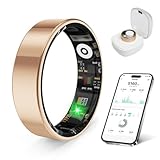
- 【Check the Size Before Purchase】 Before buying the prxxhri Smart Ring, we strongly suggest that you refer to the size chart and carefully measure the circumference of your finger. This will ensure you get the most comfortable wearing experience and easily avoid any unnecessary returns or exchanges.
- 【Real-time Accurate Sleep & Fitness Monitoring】 prxxhri smart ring tracks your sleep quality and daily activities in real time. With advanced sensors, it provides precise data about your sleep cycle, helping you optimize rest and recovery. Whether you are tracking steps, calories or exercise performance, this smart ring can provide you with the most accurate insights to support your fitness goals and enhance your overall health.It is a good choice for family and friends.
- Health Monitoring】The prxxhri ring features advanced 4.0 sensors that automatically measure your heart rate, and blood pressure every 30 min when worn. It provides continuous health tracking and comprehensive wellness management all day.
- 【3-5 Day Battery Life】 With a 3-5 day battery life, the prxxhri smart ring ensures continuous health monitoring without frequent charging. When used with the smart charging case, the usage time can even exceed 20 days. Whether you are tracking sleep patterns or fitness activities, you can count on long-lasting performance without constant interruptions.
- 【80-meter Waterproof, Suitable for Various Scenarios】 The prxxhri Smart Ring has excellent waterproof performance, with a waterproof depth of up to 80 meters. Whether it's for daily wear, an intense workout session or a pleasant swimming time, it can handle it with ease. What's more, even if you have sensitive skin, you can still enjoy an extremely comfortable wearing experience when wearing this ring.
Over two years, the value settles into awareness rather than intervention. It encourages intentional recovery moments, but it does not meaningfully coach stress reduction beyond reminding you that it exists.
Activity Tracking: Accurate Enough, Still Not a Fitness Ring
Oura’s activity tracking has improved incrementally, but its priorities remain clear. The ring is comfortable, unobtrusive, and accurate for step counts and general movement, but it is not designed to replace a sports watch.
Automatic activity detection works well for walking, running, and basic cardio, yet struggles with strength training, cycling, and complex workouts. Manual tagging helps, but it remains an extra step that many users skip over time.
Calorie estimates remain conservative and best used comparatively rather than absolutely. Over long periods, trends are reliable, but daily burn numbers should not be treated as precise targets.
Two years in, Oura still frames activity as one input into recovery rather than a goal in itself. Users seeking performance metrics, pace data, or training load analysis will continue to need a secondary device.
Body Temperature and Health Signals: Subtle, Sometimes Powerful
The Gen 3’s temperature sensors have proven more useful over time than they initially appeared. Nightly temperature deviations often surface before illness, poor sleep, or hormonal changes become noticeable.
For menstruating users, cycle insights have become one of Oura’s most impactful features. Long-term tracking improves prediction accuracy and adds meaningful context to readiness and sleep fluctuations.
Outside of these cases, temperature remains a quiet signal rather than a headline metric. It rarely prompts immediate action, but it strengthens the overall reliability of Oura’s health modeling in the background.
Importantly, it has not turned the ring into a diagnostic device. Temperature trends suggest when something is off, not what that something is.
What the Ring Has Not Changed
Despite its depth, Oura has not fundamentally altered motivation for users who are not already health-inclined. It does not create habits from scratch, nor does it gamify behavior aggressively enough to drive dramatic change.
It also has not eliminated the need for interpretation. The ring surfaces correlations, but users must still decide what to do with them, and that cognitive effort never fully disappears.
Finally, it has not become more independent over time. The insights remain tightly coupled to Oura’s app, subscription, and cloud processing, reinforcing that the ring is a sensor first and a product ecosystem second.
Two years on, the Gen 3’s real-world impact is best described as cumulative rather than transformative. It changes how users notice their bodies, not how they live overnight, and for the right audience, that subtlety remains its greatest strength.
How Oura Gen 3 Stacks Up Today: Smart Rings, Watches, and New Competitors
Seen in the context of its cumulative, background-focused approach, the more relevant question now is not whether Oura Gen 3 works, but how well it holds its ground in a market that has finally caught up. Two years ago, Oura largely defined the smart ring category. Today, it has company, and for some buyers, credible alternatives.
Against Newer Smart Rings: No Longer Alone, Still the Reference Point
The most meaningful change since Gen 3 launched is that Oura no longer competes in a category of one. Rings like Ultrahuman Ring Air, RingConn, and Samsung’s Galaxy Ring have expanded consumer choice and reframed expectations around pricing, subscriptions, and features.
In daily use, Oura still feels like the most refined health platform of the group. Its sleep detection remains more consistent across irregular schedules, naps, and late nights, and its readiness model benefits from years of longitudinal data tuning rather than raw sensor novelty. Accuracy differences between rings are often subtle, but over months, Oura’s signals tend to feel more stable and less reactive to noise.
Where newer competitors push back is cost structure and transparency. RingConn and Ultrahuman both avoid mandatory subscriptions, which makes Oura’s ongoing fee harder to justify for casual users. Over two years, the subscription often costs as much as the hardware itself, and that math matters more now that alternatives exist.
Hardware-wise, Oura’s titanium shell has held up well to daily wear. Scratches accumulate, especially on darker finishes, but structural durability has not been an issue. Competing rings are similarly robust, though some are slightly thinner or lighter, making comfort differences highly subjective rather than decisive.
Software Depth vs Feature Breadth
Oura’s advantage remains software coherence rather than feature volume. Its app prioritizes trend clarity over dashboards stuffed with metrics, and that restraint continues to age well. Readiness, sleep, and resilience still feel like integrated concepts rather than separate charts competing for attention.
By contrast, newer rings often lead with additional metrics like real-time heart rate, workout modes, or metabolic insights. These can be compelling on paper, but over long-term use, they often introduce more friction, notifications, and interpretation overhead. Oura’s software has evolved more quietly, refining models rather than chasing new headline features.
That said, the pace of visible innovation has slowed. Users upgrading today should not expect dramatic changes year over year, and for power users who enjoy exploring new data layers, Oura can feel conservative compared to newer platforms experimenting more aggressively.
Smart Rings vs Smartwatches: A Question of Role, Not Superiority
Against Apple Watch, Garmin, or Samsung Galaxy Watch, Oura still does not compete on activity tracking, GPS accuracy, or real-time feedback. Watches remain superior for structured workouts, performance analysis, and training load management.
Where Oura continues to win is wearability and compliance. The ring’s near-invisibility makes 24/7 tracking realistic in a way even lightweight watches struggle to match, especially during sleep. Over two years, this leads to cleaner baselines and fewer data gaps, which directly improves insight quality.
Battery life also remains a quiet strength. Even with some degradation over time, most Gen 3 rings still deliver four to five days per charge, far outlasting most smartwatches. That reliability reduces charging anxiety and supports the passive data collection Oura is built around.
For many long-term users, the most effective setup remains a hybrid one. Oura handles sleep, recovery, and health trends, while a watch covers workouts and daytime performance. In that pairing, Oura’s value is additive rather than redundant.
Subscription Value in a More Competitive Market
Two years ago, Oura’s subscription felt easier to justify because there was no equivalent experience elsewhere. Today, that calculus is less forgiving. Paying monthly for insights that competitors bundle upfront forces buyers to be honest about how much they engage with the data.
For users who regularly review trends, correlate behaviors, and adjust habits based on readiness and sleep signals, the subscription still delivers meaningful value. The models improve with time, and long-term users benefit disproportionately compared to short-term adopters.
For those who check scores casually or primarily want basic health tracking, the ongoing cost can feel misaligned with usage. This is where Oura risks losing new customers to simpler, one-time-purchase rings that meet “good enough” needs without recurring fees.
Is Oura Gen 3 Still a Sensible Buy Today?
From a durability and reliability standpoint, the answer is yes. After two years of continuous wear, the hardware remains dependable, battery degradation is manageable, and sensor accuracy has not meaningfully declined. The ring still does what it was designed to do, quietly and consistently.
From a market perspective, the answer depends more on user intent than on Oura itself. Gen 3 makes the most sense for people who value longitudinal health context over immediacy, who are comfortable with subscription models, and who see recovery and sleep as foundational rather than supplementary.
In a crowded wearable landscape chasing more features and faster feedback, Oura Gen 3 has aged into a mature, opinionated product. It does not try to do everything, but what it does, it still does with a level of polish that many newer competitors are only beginning to approach.
Ownership Costs, Resale, and Longevity: Is Gen 3 Built to Last?
If Gen 3 still makes sense functionally, the harder question after two years is financial and practical: what does it actually cost to own long term, how well does it hold up physically, and what happens when you’re ready to move on. These are the factors that rarely show up in launch reviews but matter most once the novelty fades.
Upfront Price vs. True Cost of Ownership
The initial purchase price of the Oura Ring Gen 3 remains high relative to most fitness wearables when judged purely on hardware. Depending on finish, buyers are still paying a premium for miniaturization, materials, and Oura’s sensor package rather than visible features like a display or GPS.
The subscription fundamentally changes that equation over time. At roughly the cost of a mid-range smartwatch spread over a year, the ongoing fee means total ownership cost crosses into four-figure territory by the end of year two.
For committed users who extract value from trend analysis, cycle detection, readiness modeling, and long-term baselines, that spend can still feel justified. For lighter users, the cumulative cost becomes harder to rationalize, especially as non-subscription rings improve.
Battery Degradation and Charging Reality
After two years of continuous wear, battery health is the most important longevity variable. In real-world use, most Gen 3 units settle into a 4–5 day charge cycle, down from the 6–7 days many saw early on.
This degradation is gradual rather than abrupt. There is no sudden drop-off, and overnight sleep tracking remains reliable even at lower charge levels.
💰 Best Value
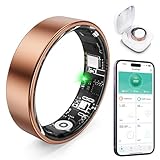
- 【Check the Size Before Purchase】 Before buying the Free Shark Smart Ring, we strongly suggest that you refer to the size chart and carefully measure the circumference of your finger. This will ensure you get the most comfortable wearing experience and easily avoid any unnecessary returns or exchanges.
- 【Intelligent Sleep Tracker, Caring for Your Health】 This Free Shark fitness ring is like a considerate little assistant for your sleep health. It will accurately monitor the quality of your sleep, and record in detail the durations of deep sleep and light sleep, as well as the specific situations of your wakeful states. You just need to open the app at any time, and you can clearly view all kinds of sleep indicators. Then, according to the professional reports, you can easily adjust your lifestyle to embrace better-quality sleep.
- 【Diverse Health Monitoring, All-round Protection】 The Free Shark Smart Ring has a variety of powerful health monitoring modes. Whether it's running, walking, hiking, cycling, yoga, dancing, skipping rope or other sports, it can automatically and accurately track key data such as the exercise route, exercise time, steps taken, heart rate, speed, calories burned and exercise distance in the app. Moreover, it can continuously track important health data such as heart rate and blood oxygen throughout the 24 hours of the day, protecting your physical health in an all-round way.
- 【80-meter Waterproof, Suitable for Various Scenarios】 The Free Shark Smart Ring has excellent waterproof performance, with a waterproof depth of up to 80 meters. Whether it's for daily wear, an intense workout session or a pleasant swimming time, it can handle it with ease. What's more, even if you have sensitive skin, you can still enjoy an extremely comfortable wearing experience when wearing this ring.
- 【Long Battery Life and Ultra-thin Design, Enjoy the Convenience】 The Free Shark Smart Ring has a very strong battery life. After a full charge, the battery can last up to 5 days, easily keeping up with your busy lifestyle. When used with the smart charging case, the usage time can even exceed 30 days. It is widely compatible with both Android and iOS systems, which is very convenient and practical. In addition, the updated design is lighter, thinner and more comfortable, with a greatly improved wearing fit. It's so light that you can hardly feel it on your finger.
The downside is that the battery is sealed and non-serviceable. When capacity eventually becomes unacceptable, replacement means replacing the ring entirely, not refurbishing it like a watch or swapping a battery like a traditional wearable.
Physical Durability and Finish Wear
Structurally, Gen 3 holds up better than many first-time buyers expect. The titanium construction resists bending and deformation well, even under daily knocks against desks, gym equipment, and door frames.
Finish wear depends heavily on color choice. Stealth and brushed finishes hide micro-scratches effectively, while glossy or darker coatings show wear sooner, especially along the bottom arc of the ring where it contacts surfaces most.
After two years, cosmetic wear is visible but rarely severe. The ring looks used, not abused, and remains comfortable with no sharp edges or deformation developing over time.
Comfort, Fit Stability, and Long-Term Wearability
Comfort remains one of Gen 3’s strongest long-term traits. At roughly 4–6 grams depending on size, the ring never becomes intrusive, even for 24/7 wear across sleep, exercise, and travel.
Fit stability matters more than many expect. Weight changes, finger swelling, or seasonal temperature shifts can subtly affect accuracy and comfort, and the lack of micro-adjustability means some users eventually wish they had sized differently.
That said, the inner molding and low-profile design age well. There is no loosening, internal degradation, or sensor discomfort over time.
Software Support and Platform Longevity
Unlike many wearables that stagnate after launch, Gen 3 has benefited from sustained software development. New metrics, improved readiness modeling, expanded women’s health features, and refined sleep staging have all arrived post-purchase.
This ongoing evolution materially extends the ring’s usable life. While the hardware is static, the interpretation layer continues to improve, which is critical for a product built around longitudinal insights.
The risk, as always, is platform dependency. If Oura ever changes subscription tiers, support timelines, or feature access by generation, Gen 3 owners are fully exposed to those decisions.
Resale Value and Secondary Market Reality
Smart rings do not behave like traditional watches on the secondary market. Resale value drops quickly, driven by battery aging, subscription requirements, and the need for re-sizing and account resets.
Two-year-old Gen 3 rings typically command a fraction of their original retail price, even in good cosmetic condition. Buyers are wary of unknown battery health, and sellers cannot transfer subscription benefits.
In practical terms, Gen 3 should be viewed as a depreciating health device, not an asset. If resale value matters, this category will always disappoint.
Warranty Coverage and Risk Exposure
Oura’s standard warranty covers manufacturing defects but does not meaningfully protect against battery aging or cosmetic wear. After the first year, ownership risk shifts almost entirely to the user.
There are no official battery replacement programs or refurbishment paths. Once performance declines beyond tolerance, the only option is repurchase.
This makes Gen 3 best suited to users who are comfortable treating it like a long-term tool with a defined lifespan, not a forever device.
Is Gen 3 Built to Last, or Just Built Well?
From a construction and reliability standpoint, Gen 3 is built well. Sensors remain accurate, materials hold up, and daily usability does not meaningfully degrade within a two-year window.
From a longevity standpoint, it is built with an endpoint. Battery chemistry, sealed construction, and subscription dependency all impose a practical ceiling on lifespan.
Whether that trade-off feels acceptable depends less on the ring itself and more on how central Oura’s insights are to your health routine.
Final Verdict in 2026: Who Should Still Buy the Oura Ring Gen 3—and Who Shouldn’t
After two full years of continuous wear, the Oura Ring Gen 3 reveals its true character. Not as a flashy piece of hardware chasing specs, but as a mature health platform whose value compounds over time—provided you accept its constraints.
This final verdict hinges on expectations. Gen 3 is neither obsolete nor future-proof; it sits in a narrow but still meaningful sweet spot for the right kind of user in 2026.
Who the Oura Ring Gen 3 Still Makes Sense For
Gen 3 remains an excellent choice for users who prioritize passive, long-term health insights over daily performance metrics. If your primary goals are sleep quality, recovery trends, readiness scoring, and understanding how lifestyle changes affect your physiology, Oura still does this better than most wrist-based wearables.
It is particularly well-suited to people who dislike wearing a watch overnight. The ring’s low profile, smooth interior, and stable fit mean it disappears during sleep in a way even the lightest smartwatch does not, and two years on, that comfort advantage still matters.
Health-focused users who value longitudinal data will appreciate how Gen 3’s algorithms mature with time. Metrics like baseline temperature deviation, HRV trends, and readiness signals become more meaningful after months—not days—of consistent wear, and Oura’s software is explicitly built around that philosophy.
Gen 3 also makes sense for users already embedded in the Oura ecosystem. If you trust the app, understand the subscription model, and actively use tags, trends, and readiness guidance to inform training or recovery decisions, the hardware remains a capable conduit for that experience.
Finally, buyers who can find Gen 3 at a meaningful discount may see strong value. At reduced pricing, its combination of materials, sensor accuracy, and software polish still compares favorably to newer smart rings that lack Oura’s depth of data history and refinement.
Who Should Think Twice—or Look Elsewhere
Gen 3 is not the right choice for users who expect longevity in the traditional sense. Battery degradation is real, irreversible, and unsupported by official replacement programs. If the idea of repurchasing hardware every few years feels unacceptable, this product will frustrate you.
It is also a poor fit for users who dislike subscriptions. The ring’s core value lives behind a monthly paywall, and without it, Gen 3 becomes an expensive step counter with limited insight. Two years in, that dependency has only become more pronounced.
Athletes seeking granular workout metrics, real-time feedback, or GPS-based training data will find Gen 3 insufficient. Oura excels at recovery and readiness, not performance tracking, and it has not meaningfully shifted toward the sports-watch domain.
Users who want visible, interactive hardware may also feel underwhelmed. There is no screen, no haptics, and no immediate feedback loop. Gen 3 demands patience and reflection, not constant engagement.
Finally, anyone concerned with resale value or device transferability should avoid this category altogether. As established earlier, Gen 3 depreciates quickly and offers no exit strategy once battery health declines.
The Bigger Picture: Gen 3’s Place in the 2026 Wearables Landscape
In a market now crowded with newer smart rings and increasingly capable health watches, Gen 3 no longer defines the category—but it still sets a standard for software maturity and longitudinal insight.
Its hardware has aged gracefully, its sensors remain reliable, and its comfort advantage is unchanged. What limits it is not build quality or data accuracy, but the structural realities of sealed batteries and platform dependency.
Viewed as a long-term health tool with a known lifespan, Gen 3 still delivers on its promise. Viewed as a durable piece of consumer electronics meant to evolve indefinitely, it does not.
Bottom Line
In 2026, the Oura Ring Gen 3 is still worth buying for the right user. It rewards consistency, patience, and a health-first mindset with insights that few wearables contextualize as well over time.
But it demands acceptance: of subscriptions, of battery aging, and of eventual replacement. If those trade-offs align with how you approach your health data, Gen 3 remains a quietly excellent companion.
If they do not, the problem is not that Gen 3 has aged poorly—it is that it was never designed to be anything other than what it still is today.