Choosing between the Ultrahuman Ring Air and RingConn Gen 2 is less about which ring is “better” on paper and more about which philosophy of health tracking fits your daily life. Both target people who want serious biometric insight without wearing a watch, yet they interpret that mission very differently in how they collect, interpret, and present data.
If you are weighing these two, you are likely already comfortable with concepts like HRV, sleep stages, recovery scores, and readiness metrics. What matters now is how much guidance you want versus how much autonomy, how often you plan to check your data, and whether your priorities lean toward performance optimization or long-term wellness stability.
This section breaks down the type of user each ring is clearly built for, translating hardware choices, software design, and real-world wearability into practical lifestyle fit. By the end, it should be obvious which ring aligns with how you actually live, train, sleep, and recover.
Ultrahuman Ring Air is built for performance-driven optimizers
The Ultrahuman Ring Air is designed for users who actively want to interact with their data throughout the day. It appeals to people who already think in terms of training load, metabolic health, circadian rhythm alignment, and daily readiness rather than just general wellness trends.
🏆 #1 Best Overall
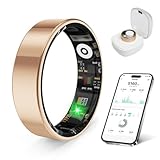
- 【Check the Size Before Purchase】 Before buying the prxxhri Smart Ring, we strongly suggest that you refer to the size chart and carefully measure the circumference of your finger. This will ensure you get the most comfortable wearing experience and easily avoid any unnecessary returns or exchanges.
- 【Real-time Accurate Sleep & Fitness Monitoring】 prxxhri smart ring tracks your sleep quality and daily activities in real time. With advanced sensors, it provides precise data about your sleep cycle, helping you optimize rest and recovery. Whether you are tracking steps, calories or exercise performance, this smart ring can provide you with the most accurate insights to support your fitness goals and enhance your overall health.It is a good choice for family and friends.
- Health Monitoring】The prxxhri ring features advanced 4.0 sensors that automatically measure your heart rate, and blood pressure every 30 min when worn. It provides continuous health tracking and comprehensive wellness management all day.
- 【3-5 Day Battery Life】 With a 3-5 day battery life, the prxxhri smart ring ensures continuous health monitoring without frequent charging. When used with the smart charging case, the usage time can even exceed 20 days. Whether you are tracking sleep patterns or fitness activities, you can count on long-lasting performance without constant interruptions.
- 【80-meter Waterproof, Suitable for Various Scenarios】 The prxxhri Smart Ring has excellent waterproof performance, with a waterproof depth of up to 80 meters. Whether it's for daily wear, an intense workout session or a pleasant swimming time, it can handle it with ease. What's more, even if you have sensitive skin, you can still enjoy an extremely comfortable wearing experience when wearing this ring.
This ring suits athletes, frequent exercisers, and quantified-self enthusiasts who appreciate granular metrics and are willing to adjust behavior based on daily feedback. Ultrahuman’s emphasis on dynamic recovery scores, stress trends, movement timing, and optional metabolic integrations makes it feel closer to a performance tool than a passive tracker.
If you like opening an app multiple times a day to check readiness, understand why a score changed, and experiment with routines to improve it, the Ring Air’s software philosophy will resonate. It rewards curiosity and consistency, but it can feel demanding if you prefer a more hands-off experience.
RingConn Gen 2 is built for long-term wellness and low-maintenance tracking
RingConn Gen 2 is clearly optimized for users who want reliable health insights with minimal friction. It is aimed at people who care deeply about sleep quality, stress balance, and cardiovascular trends but do not want to constantly manage or interpret complex data.
This ring fits professionals, travelers, and health-conscious users who value stability over daily optimization. Its app focuses on clarity and trend-based insights, offering understandable scores and summaries that make sense even if you only check them once per day or a few times per week.
If your ideal wearable quietly tracks in the background, lasts for days without charging, and surfaces only the most meaningful insights, RingConn’s approach feels calmer and more sustainable. It prioritizes consistency and ease of use over experimentation and performance tuning.
Different comfort and wearability priorities shape the user experience
Ultrahuman Ring Air is among the lightest smart rings available, and that design choice directly supports active users. During workouts, sleep, or all-day wear, it tends to disappear on the finger, which matters if you are stacking it alongside a smartwatch or training strap.
RingConn Gen 2, while still comfortable, has a slightly more substantial feel that aligns with its durability-first philosophy. The added mass is rarely an issue during sleep or daily wear, but users sensitive to ring presence may notice it more during intense activity or overnight.
Those who prioritize near-invisibility and minimal finger fatigue will likely prefer Ultrahuman’s physical design. Users who value a more solid, reassuring build that feels less delicate may gravitate toward RingConn.
Software philosophy defines how involved you need to be
Ultrahuman’s app is built for engagement and interpretation. It assumes the user wants to understand why a metric changed and how different behaviors, such as late meals, intense workouts, or poor sleep timing, influence recovery and readiness.
RingConn’s app assumes the opposite starting point. It focuses on surfacing clear outcomes rather than deep causal chains, making it easier for users who want answers without analysis.
Neither approach is inherently better, but they demand different levels of attention. Ultrahuman suits users who enjoy data literacy, while RingConn suits users who want insight without cognitive load.
Budget sensitivity and subscription tolerance matter more than expected
Ultrahuman Ring Air appeals to users who are comfortable investing upfront for a premium experience that emphasizes ongoing feature development and advanced insights. The value proposition makes the most sense if you plan to actively use the data and explore its deeper layers.
RingConn Gen 2 is better aligned with users who want predictable ownership costs and strong core functionality without ongoing financial commitment. Its appeal grows over time as battery longevity and subscription-free access reduce friction.
If you dislike feeling locked into an ecosystem or worrying about future fees, RingConn’s model will feel safer. If you see health tracking as an evolving toolkit and are willing to engage deeply with it, Ultrahuman’s ecosystem feels more rewarding.
How each ring fits into a broader wearable ecosystem
Ultrahuman Ring Air works best for users already immersed in fitness platforms, training plans, or advanced health tracking routines. It complements smartwatches and chest straps rather than replacing them, acting as a recovery and readiness anchor.
RingConn Gen 2 is more self-contained and better suited to users who want the ring to be their primary health tracker. It integrates smoothly into daily life without demanding additional devices or complex workflows.
If your goal is to enhance an existing performance-focused setup, Ultrahuman fits naturally. If your goal is to simplify health tracking down to a single, reliable device, RingConn aligns better with that mindset.
Design, Materials, and Comfort: Thickness, Weight, Sizing, and 24/7 Wearability Compared
Once you move past software philosophy and pricing models, physical design becomes the deciding factor. A smart ring only works if it disappears on your finger, especially when you’re asking it to collect data every minute of the day and night.
Both Ultrahuman Ring Air and RingConn Gen 2 aim for minimalism, but they arrive there through slightly different priorities that become noticeable over long-term wear.
Materials and overall construction quality
Ultrahuman Ring Air is built from aerospace-grade titanium with a matte exterior finish that prioritizes lightness over visual presence. The surface treatment resists fingerprints and micro-scratches well, but it leans more technical than jewelry-like in appearance.
RingConn Gen 2 also uses a titanium alloy shell, but with a smoother, more refined finish that feels closer to a traditional ring. In daily wear, it blends more easily with watches and conventional jewelry, especially in professional settings.
Both rings use a non-metallic inner lining to house sensors and improve skin contact. RingConn’s inner surface feels slightly smoother to the touch, while Ultrahuman’s interior prioritizes sensor stability over softness.
Thickness and profile on the finger
Ultrahuman Ring Air is one of the thinnest smart rings currently available, measuring roughly 2.4 to 2.5 mm thick depending on size. That low profile is immediately noticeable, especially if you’re coming from a first-generation smart ring or a bulkier tracker.
RingConn Gen 2 is marginally thicker, sitting closer to 2.6 mm, but the difference is subtle rather than dramatic. In practice, the extra fraction of a millimeter mainly shows up when gripping objects or during strength training.
If absolute slimness is your top priority, Ultrahuman holds a small but meaningful edge. If you’re more sensitive to edge rounding and how the ring transitions against your finger, RingConn’s slightly fuller profile may feel more natural.
Weight and long-term finger fatigue
Weight is where Ultrahuman Ring Air clearly leans into its name. Depending on ring size, it typically falls in the 2.4 to 3.6 gram range, making it one of the lightest smart rings on the market.
RingConn Gen 2 is still lightweight by any reasonable standard, generally landing between 3 and 4 grams depending on size. The difference sounds minor on paper, but during sleep or extended typing sessions, lighter rings tend to disappear more effectively.
For users who are highly sensitive to finger fatigue or plan to wear the ring continuously without breaks, Ultrahuman’s lighter build is easier to forget. RingConn remains comfortable, but you’re slightly more aware of its presence during the first few days.
Sizing accuracy and fit consistency
Both companies provide sizing kits, and using them is non-negotiable for accurate data and comfort. Ultrahuman’s sizing runs closer to traditional US ring standards, while RingConn’s sizes can feel marginally snugger depending on finger shape.
Ultrahuman relies on a subtle orientation marker to guide correct sensor placement, which can occasionally rotate during the day on slimmer fingers. RingConn’s internal balance and shape reduce rotation slightly, improving consistency for users with tapered fingers.
Neither ring tolerates poor sizing well. A half-size mismatch can affect comfort, sleep wearability, and even data reliability, making the sizing process more important than brand choice.
Comfort during sleep, exercise, and all-day wear
For sleep tracking, Ultrahuman Ring Air’s low weight and thin profile make it exceptionally easy to wear overnight. Side sleepers and users who curl their hands during sleep will appreciate how little it presses into adjacent fingers.
RingConn Gen 2 performs nearly as well at night, but its slightly thicker edge can be felt more during clenched-hand positions. That said, many users adapt within a week and stop noticing it entirely.
During workouts and manual tasks, RingConn’s smoother edges and more rounded shape reduce pressure points when gripping weights or tools. Ultrahuman feels lighter but slightly sharper at the edges, which some users notice during resistance training.
Durability, water resistance, and real-world abuse
Both rings are designed for true 24/7 wear, including showers, hand washing, and swimming. Their titanium shells handle everyday knocks well, though neither is immune to cosmetic wear over time.
Ultrahuman’s matte finish tends to hide scratches better, while RingConn’s smoother surface can show scuffs more clearly but also feels easier to clean. Structurally, both feel robust enough for long-term use without babying.
If your lifestyle includes frequent physical work or gym sessions, RingConn’s slightly more rounded design may feel more forgiving. If discretion and minimal presence matter more, Ultrahuman’s featherweight build is harder to beat.
Which ring disappears better on your finger
Ultrahuman Ring Air excels at becoming invisible, particularly for users who value lightness, thinness, and sleep comfort above all else. It feels purpose-built for continuous biometric tracking with minimal physical intrusion.
RingConn Gen 2 trades a small amount of slimness for a more traditional ring feel and improved tactile comfort during active use. It integrates more naturally into daily life if you want a smart ring that also feels like a normal accessory.
Neither approach is objectively superior. The better choice depends on whether you want the lightest possible tracker or a ring that balances technology with familiar ergonomics.
Sensor Hardware and Biometric Tracking: What Each Ring Measures (and How Reliably)
Once comfort and wearability are settled, sensor quality becomes the real differentiator. Both Ultrahuman Ring Air and RingConn Gen 2 aim to extract clinically inspired insights from a very small surface area, but they prioritize slightly different metrics and signal strategies to get there.
At a high level, both rings rely on optical heart-rate sensing, motion sensors, and skin temperature tracking. The differences show up in how often those sensors sample, which wavelengths they use, and how the raw data is filtered into daily insights you can actually trust.
Rank #2

- ACCURATE SIZING ESSENTIAL - Oura Ring 4 uses unique sizing different from standard jewelry rings; use the Oura Ring 4 Sizing Kit to find your perfect fit before purchasing
- OURA MEMBERSHIP - First month of membership is included with purchase, for new members only. Subscription is 5.99/mo afterwards. Or opt for the annual prepaid option for 69.99. Membership is tied to your account via the Oura App, not your physical ring
- ACCURACY - SMART SENSING - Oura tracks over 50 health metrics, including sleep, activity, stress, heart health, and women’s health metrics. Oura Ring 4 is powered by Smart Sensing, which adapts to you — delivering accurate, continuous data, day and night
- LONG LASTING BATTERY - With up to 8 days of battery life, no screens and no vibrations, Oura Ring 4 allows you to focus on the present. From a workout to a night out — you’re free to forget it’s on. Until you start getting compliments
- HSA/FSA ELIGIBLE - We can accept HSA or FSA funds for the following: Oura Ring, additional chargers, and shipping
Optical heart rate tracking and signal stability
Ultrahuman Ring Air uses a multi-LED photoplethysmography array tuned for continuous heart rate and heart rate variability tracking, with particular emphasis on nighttime signal quality. Sampling frequency increases during sleep, which is where Ultrahuman derives most of its recovery, stress, and readiness insights.
In practice, Ultrahuman’s heart rate data tends to be very stable overnight, even for restless sleepers. During daytime movement, it favors consistency over aggressiveness, sometimes smoothing short spikes rather than chasing every transient change.
RingConn Gen 2 also relies on an optical PPG sensor array, but it places more emphasis on maintaining signal lock during daytime activity. Its heart rate tracking reacts slightly faster during walking and light exercise, which can make it feel more responsive during active hours.
For structured workouts, neither ring replaces a chest strap. Between the two, RingConn generally handles motion artifacts a bit better during hand movement, while Ultrahuman delivers cleaner long-duration trends.
Heart rate variability and recovery metrics
Both rings calculate HRV primarily during sleep, where finger-based measurements are most reliable. Ultrahuman leans heavily into HRV as a core signal, using it to drive recovery scores, stress assessments, and metabolic insights throughout the app.
Ultrahuman’s HRV trends are smooth and conservative, which makes week-over-week changes easy to interpret. It is less prone to dramatic daily swings, but that also means it may underplay acute stressors for some users.
RingConn Gen 2 also tracks nocturnal HRV, but presents it in a more simplified context focused on readiness and balance. The raw variability is comparable, though RingConn’s scoring system tends to show sharper day-to-day changes, which some users find more motivating and others find noisy.
Blood oxygen (SpO2) monitoring
RingConn Gen 2 includes dedicated red and infrared LEDs for blood oxygen saturation tracking during sleep. Measurements are taken periodically rather than continuously, which helps preserve battery life while still identifying meaningful overnight dips.
In real-world use, RingConn’s SpO2 data aligns well with spot checks from fingertip pulse oximeters, especially during stable sleep periods. It is particularly useful for users monitoring altitude adaptation or suspected breathing disturbances.
Ultrahuman Ring Air does not position SpO2 as a primary metric in the same way. While it focuses more on cardiovascular trends and metabolic signals, users specifically looking for regular blood oxygen insights may find RingConn more satisfying in this area.
Skin temperature sensing and trend detection
Both rings include skin temperature sensors designed to track deviation from personal baselines rather than absolute values. This approach is better suited for detecting recovery strain, illness onset, or hormonal shifts than reading exact temperatures.
Ultrahuman excels at contextualizing temperature changes alongside training load and sleep quality. Small overnight increases are often reflected quickly in readiness and stress metrics, making the signal feel actionable rather than abstract.
RingConn Gen 2 tracks temperature changes reliably but treats them as a supporting metric. Temperature data is visible and useful, but less tightly woven into daily guidance compared to Ultrahuman’s ecosystem.
Movement sensors, sleep staging, and activity detection
Each ring uses a combination of accelerometers and gyroscopes to detect movement, posture changes, and sleep phases. Sleep staging is broadly similar between the two, with light, deep, and REM sleep estimates that track well with established consumer wearables.
Ultrahuman tends to be slightly more generous with deep sleep classification, which benefits recovery-focused users but can overestimate depth during fragmented nights. RingConn’s staging is a bit more conservative and sometimes flags wake periods more aggressively.
For general activity tracking, RingConn detects steps and low-intensity movement more consistently throughout the day. Ultrahuman prioritizes metabolic load and recovery impact over step counts, which may appeal more to performance-oriented users than casual movers.
Data reliability and long-term consistency
Neither ring is designed to chase second-by-second precision. Instead, both aim for repeatable trends over weeks and months, where finger-based sensing performs best.
Ultrahuman’s strength lies in long-term signal stability, especially during sleep and recovery analysis. RingConn’s advantage is versatility, capturing a broader set of daily health markers with solid reliability.
If your primary goal is deep recovery insight driven by stable overnight data, Ultrahuman’s sensor strategy feels more focused. If you want a wider snapshot of overall health, including SpO2 and responsive daytime tracking, RingConn Gen 2 offers a more rounded biometric package.
Sleep Tracking and Recovery Insights: Depth, Accuracy, and Actionable Feedback
Building on differences in temperature handling, the real separation between Ultrahuman Ring Air and RingConn Gen 2 becomes clear once you look at how raw sleep data is interpreted and turned into recovery guidance. Both rings collect broadly similar overnight signals, but they diverge sharply in how much meaning they extract from them.
Sleep depth, staging nuance, and night-to-night sensitivity
Both rings estimate light, deep, and REM sleep using finger-based motion and heart rate variability patterns, which generally outperform wrist wearables for overnight consistency. In stable conditions, total sleep time and REM trends tend to align closely between the two.
Ultrahuman leans into physiological interpretation, often smoothing staging data across the night to emphasize recovery-relevant sleep blocks. This makes trends easier to read over time, but it can occasionally underplay brief awakenings if you toss and turn without fully waking.
RingConn Gen 2 is more literal in its detection. Micro-awakenings and fragmented sleep tend to show up more clearly, which can be helpful if you are troubleshooting sleep disruptions but may feel harsher on nights that were subjectively fine.
Recovery scoring and readiness logic
Ultrahuman’s recovery insights are tightly centered on sleep as the foundation of readiness. Overnight HRV, resting heart rate, temperature deviation, and sleep depth all feed into a daily recovery score that is clearly framed around what your body can handle today.
The strength here is coherence. When sleep quality dips, Ultrahuman’s readiness feedback usually reflects it immediately, often accompanied by specific explanations tied to stress load or late-day activity.
RingConn Gen 2 also provides recovery-style metrics, but they are less dominant within the app hierarchy. Sleep contributes meaningfully, yet it shares space with SpO2 trends, resting heart rate, and daytime activity, resulting in a more general wellness picture rather than a strict readiness gate.
Actionable feedback and coaching style
Ultrahuman excels at translating sleep data into concrete suggestions. Poor recovery is often paired with guidance on training intensity, caffeine timing, or sleep consistency, making the feedback feel purpose-built for people actively managing performance and energy.
The tone is proactive rather than reactive. Instead of simply flagging a bad night, the app explains why it matters and what to adjust, which reduces the need for users to interpret raw charts on their own.
RingConn’s feedback is calmer and more observational. It highlights trends and flags deviations but generally stops short of prescribing changes, which may appeal to users who prefer insight without behavioral nudging.
Accuracy expectations and real-world trust
Neither ring is intended to replace clinical sleep studies, and both can misclassify edge cases like late-night reading, quiet wakefulness, or disrupted travel sleep. What matters more is internal consistency, and both perform well here over weeks of use.
Ultrahuman’s sleep metrics tend to feel more stable night to night, especially for users with regular schedules. RingConn’s data can fluctuate more, but that sensitivity sometimes helps surface subtle issues like creeping sleep fragmentation or oxygen dips.
In practice, Ultrahuman rewards users who think in terms of recovery trends and training cycles. RingConn better suits those who want to monitor sleep as one part of a broader health dashboard without tying every night directly to performance decisions.
Naps, irregular schedules, and edge cases
Ultrahuman detects naps reliably and folds them into recovery calculations, though they are treated as supplementary rather than equal to core nighttime sleep. This works well for athletes and shift workers who rely on strategic rest.
RingConn also captures naps but tends to log them more conservatively, sometimes requiring clearer periods of inactivity to classify them as sleep. For users with highly irregular schedules, this can mean occasional undercounting.
If your lifestyle includes split sleep or recovery-focused naps, Ultrahuman’s handling feels more accommodating. If your priority is clean overnight data with minimal interpretation, RingConn’s stricter approach may feel more trustworthy.
Activity, Movement, and Fitness Use Cases: Passive Tracking vs. Training Support
Where the sleep and recovery philosophies diverge, activity tracking is where that split becomes most tangible. Both Ultrahuman Ring Air and RingConn Gen 2 measure movement continuously, but they interpret and use that data in very different ways.
At a high level, Ultrahuman treats daily movement as a variable that directly influences recovery, readiness, and training decisions. RingConn treats movement as a contextual health signal, useful for understanding lifestyle patterns but rarely positioned as performance input.
Daily movement and step tracking
Both rings track steps, active time, and general movement using accelerometers rather than GPS, which keeps battery drain low and comfort high. In real-world use, step counts from both devices tend to fall within a reasonable margin of a smartwatch, though neither is designed for precision race metrics.
Ultrahuman places daily movement into a broader metabolic and recovery framework. Steps are less about hitting a universal goal and more about balancing strain, sleep, and readiness, especially when paired with its recovery score.
RingConn presents steps and activity duration in a simpler, more traditional dashboard. You see how much you moved, how that compares to your baseline, and whether you were generally more or less active than usual.
For users who like to contextualize movement as part of a performance cycle, Ultrahuman feels more intentional. For users who want a clean record of how active their days are without layered interpretation, RingConn stays out of the way.
Exercise recognition and workout logging
Neither ring is meant to replace a sports watch for structured workouts, but Ultrahuman makes a stronger attempt to engage with exercise data. It supports manual workout logging and can factor elevated heart rate and movement intensity into strain and recovery calculations.
Rank #3

- ACCURATE SIZING ESSENTIAL - Oura Ring 4 uses unique sizing different from standard jewelry rings; use the Oura Ring 4 Sizing Kit to find your perfect fit before purchasing
- OURA MEMBERSHIP - First month of membership is included with purchase, for new members only. Subscription is 5.99/mo afterwards. Or opt for the annual prepaid option for 69.99. Membership is tied to your account via the Oura App, not your physical ring
- ACCURACY - SMART SENSING - Oura tracks over 50 health metrics, including sleep, activity, stress, heart health, and women’s health metrics. Oura Ring 4 is powered by Smart Sensing, which adapts to you — delivering accurate, continuous data, day and night
- LONG LASTING BATTERY - With up to 8 days of battery life, no screens and no vibrations, Oura Ring 4 allows you to focus on the present. From a workout to a night out — you’re free to forget it’s on. Until you start getting compliments
- HSA/FSA ELIGIBLE - We can accept HSA or FSA funds for the following: Oura Ring, additional chargers, and shipping
This is particularly noticeable for strength training, indoor cardio, or gym-based sessions where GPS is irrelevant but physiological load still matters. Ultrahuman’s app reflects these efforts back into readiness metrics, even if the activity itself is logged with limited granularity.
RingConn is more conservative here. It recognizes periods of higher activity and heart rate but does not strongly differentiate between casual movement and intentional training unless patterns are very clear.
If you regularly train but do not want to wear a watch during workouts, Ultrahuman offers more practical value. RingConn is better suited to users who exercise casually or prefer to log workouts elsewhere.
Training load, recovery impact, and readiness
Ultrahuman’s biggest strength in activity tracking is how movement affects downstream metrics. A hard day does not just increase an activity number; it visibly alters recovery scores, sleep expectations, and next-day readiness.
This creates a feedback loop that encourages smarter pacing rather than simply doing more. Over time, users begin to recognize how late workouts, long walks, or high step days affect sleep quality and morning recovery.
RingConn tracks activity without strongly tying it to recovery consequences. You can observe correlations manually, but the app rarely frames activity as something that needs adjustment for performance reasons.
For athletes, frequent exercisers, or anyone thinking in terms of training stress, Ultrahuman’s approach feels more aligned. For users who want activity logged without being told to modify behavior, RingConn’s neutrality can be appealing.
Passive activity tracking and lifestyle monitoring
RingConn excels as a passive lifestyle tracker. Its movement data works well for identifying long-term trends such as declining activity, extended sedentary periods, or gradual changes in daily routines.
This makes it particularly useful for health-conscious users focused on general wellness, aging, or habit awareness rather than performance. The data is easy to review and rarely feels judgmental or intrusive.
Ultrahuman also tracks passively, but the framing is more performance-oriented by default. Even low-intensity movement is interpreted through the lens of metabolic health and recovery balance.
If your goal is awareness without pressure, RingConn fits more naturally into the background. If you want your ring to quietly influence how you structure your days, Ultrahuman is more assertive.
Comfort, wearability, and activity compliance
Both rings are lightweight, low-profile, and comfortable enough to wear during most activities, including sleep and light workouts. The Ultrahuman Ring Air’s titanium build and thin profile make it especially unobtrusive during gym sessions or all-day wear.
RingConn Gen 2 feels slightly more substantial on the finger, which some users prefer for stability, especially during repetitive hand movements. Neither ring interferes significantly with grip, but weight sensitivity may matter during strength training.
Because activity tracking is only as good as wear time, comfort becomes a functional feature. Users who forget they are wearing the ring tend to get more consistent movement data, which slightly favors Ultrahuman for all-day compliance.
Who each approach works best for
Ultrahuman Ring Air is better suited to users who see activity as an input to recovery and performance. If you train regularly, care about readiness, or want movement to influence daily decisions, its activity framework feels purposeful.
RingConn Gen 2 is better for users who want activity data to sit quietly alongside sleep, heart rate, and oxygen trends. If your priority is health monitoring rather than training optimization, its passive approach is easier to live with.
Neither ring replaces a dedicated fitness watch, but they serve different philosophies. One nudges you toward smarter effort, while the other records your life as it unfolds.
App Experience and Data Presentation: Ultrahuman App vs. RingConn App in Daily Use
The philosophical differences between Ultrahuman Ring Air and RingConn Gen 2 become most obvious once you open their apps. Both platforms are stable, well-designed, and mobile-first, but they prioritize very different relationships between the user and their data.
Ultrahuman treats the app as an active coaching interface, while RingConn treats it as a quiet health dashboard. That distinction shapes everything from navigation to how metrics are explained and surfaced day to day.
Onboarding, layout, and first impressions
Ultrahuman’s onboarding is structured and intentional, asking about goals, training habits, sleep priorities, and metabolic interests. From the first session, it frames the ring as a performance and recovery tool rather than a passive tracker.
The home screen is dense but purposeful, with Recovery Score, Sleep Index, Movement, and metabolic signals all visible at a glance. It can feel information-heavy initially, but the hierarchy becomes clearer after a few days of use.
RingConn’s onboarding is faster and less interrogative, with minimal goal-setting beyond basic health preferences. The app opens to a clean, calm dashboard that highlights sleep, heart rate, SpO₂, and activity trends without demanding immediate interpretation.
Daily metrics and how they are framed
Ultrahuman emphasizes readiness and optimization, frequently contextualizing your data against recent strain, sleep debt, and recovery balance. Metrics are rarely shown in isolation, and most are paired with short explanations that suggest how to adjust your day.
For example, elevated resting heart rate or reduced HRV is framed as a signal to reduce training intensity or prioritize recovery inputs. This can be motivating for users who want guidance, but it may feel directive if you prefer neutrality.
RingConn presents similar raw data, but with far less interpretation layered on top. Heart rate, HRV, temperature trends, and oxygen saturation are shown as longitudinal graphs, encouraging pattern recognition rather than action.
Sleep analysis and overnight insights
Both apps handle sleep well, but with different priorities. Ultrahuman’s sleep view emphasizes sleep efficiency, timing consistency, and how sleep quality feeds into next-day recovery.
Sleep stages are visualized clearly, and disturbances are often connected to factors like late movement or elevated nighttime heart rate. The app subtly pushes you to see sleep as an adjustable performance lever.
RingConn’s sleep presentation is calmer and more clinical. It focuses on duration, stage distribution, breathing rate, and oxygen stability, with fewer nudges about what you should change.
For users managing long-term health or simply tracking sleep hygiene, this hands-off approach feels reassuring rather than demanding.
Trends, history, and long-term visibility
Ultrahuman excels at short- to mid-term trend analysis, especially for users who train or experiment with routines. Weekly and monthly views clearly show how changes in sleep, movement, or recovery inputs affect readiness scores.
The app is optimized for iterative adjustment, making it easy to answer questions like whether a new training block or bedtime routine is helping.
RingConn’s strength lies in long-term health monitoring. Its historical views emphasize stability, averages, and deviations over time, which is useful for spotting gradual changes in cardiovascular or respiratory health.
The presentation feels closer to a personal health record than a coaching tool, which aligns well with its overall philosophy.
Notifications, nudges, and mental load
Ultrahuman is more proactive with notifications and insights, especially around recovery, readiness, and metabolic balance. These nudges are generally thoughtful, but they do add cognitive load if you are already tracking multiple devices.
Users who enjoy being guided will appreciate this, while others may need to fine-tune notification settings to avoid fatigue.
RingConn keeps notifications minimal and largely informational. Alerts focus on abnormal readings or significant deviations rather than daily performance commentary.
This makes the app easier to live with in the background, particularly for users who want data without constant prompts.
Subscription model and feature access
Ultrahuman’s app experience is tied to an ongoing subscription, which funds continuous feature development and deeper analytics. The upside is frequent updates and evolving insights, but it does mean the full experience is gated behind recurring cost.
RingConn does not require a subscription, and all core metrics and historical data remain accessible after purchase. This simplicity is appealing for users who want predictable ownership without ongoing fees.
The difference is not about capability so much as philosophy: Ultrahuman sells an evolving service, while RingConn sells a finished product.
Platform compatibility and ecosystem integration
Both apps support iOS and Android and integrate with common health platforms like Apple Health and Google Health Connect. Ultrahuman tends to push data outward more aggressively, making it easier to combine with training apps or nutrition tools.
RingConn’s integrations are more conservative but reliable, focusing on health data continuity rather than ecosystem expansion.
Rank #4
- ACCURATE SIZING ESSENTIAL - Oura Ring 4 uses unique sizing different from standard jewelry rings; use the Oura Ring 4 Sizing Kit to find your perfect fit before purchasing
- OURA MEMBERSHIP - First month of membership is included with purchase, for new members only. Subscription is 5.99/mo afterwards. Or opt for the annual prepaid option for 69.99. Membership is tied to your account via the Oura App, not your physical ring
- ACCURACY - SMART SENSING - Oura tracks over 50 health metrics, including sleep, activity, stress, heart health, and women’s health metrics. Oura Ring 4 is powered by Smart Sensing, which adapts to you — delivering accurate, continuous data, day and night
- LONG LASTING BATTERY - With up to 8 days of battery life, no screens and no vibrations, Oura Ring 4 allows you to focus on the present. From a workout to a night out — you’re free to forget it’s on. Until you start getting compliments
- HSA/FSA ELIGIBLE - We can accept HSA or FSA funds for the following: Oura Ring, additional chargers, and shipping
Neither app feels constrained by platform limitations, but Ultrahuman is better suited to users already embedded in performance-oriented digital ecosystems.
Which app fits your daily rhythm better
Ultrahuman’s app is best for users who want their data to actively shape decisions. If you enjoy checking readiness in the morning and adjusting effort based on feedback, its assertive presentation feels purposeful.
RingConn’s app is better for users who want insight without instruction. If your priority is quiet health awareness that accumulates value over time, its restrained design is easier to trust and live with daily.
Both apps are well-executed, but they ask very different things of the user. One invites engagement and optimization, while the other offers observation and continuity.
Health Insights and Advanced Metrics: Stress, Readiness, Metabolism, and Long-Term Trends
The philosophical differences between Ultrahuman and RingConn become most apparent once you move beyond raw data and into interpretation. Both rings collect similar foundational signals, but they diverge sharply in how those signals are translated into stress awareness, recovery guidance, metabolic context, and long-term health understanding.
Stress tracking and nervous system insights
Both rings rely heavily on heart rate variability trends, resting heart rate, and skin temperature deviation to infer stress, but the way stress is surfaced feels very different. Ultrahuman frames stress as a dynamic, moment-to-moment state, with intra-day stress timelines that encourage immediate behavioral adjustment.
RingConn’s stress tracking is quieter and more retrospective. Instead of pushing alerts or recommendations, it emphasizes daily and weekly stress balance, helping users identify patterns tied to work cycles, sleep debt, or sustained lifestyle pressure.
In real-world use, Ultrahuman’s approach suits users who want feedback during the day, while RingConn’s model favors those who prefer reflection over intervention. Neither is inherently more accurate, but the psychological impact of how stress is presented is meaningfully different.
Readiness, recovery, and daily capacity
Ultrahuman’s Readiness Score is one of its most central metrics, combining sleep quality, HRV trends, resting heart rate, skin temperature shifts, and recent activity load. The score is designed to influence decisions immediately, particularly around training intensity, caffeine intake, and recovery strategies.
RingConn also offers a readiness-style metric, but it is positioned more as a health status indicator than a performance gatekeeper. It focuses on whether your body is returning to baseline over time rather than whether today is optimal for pushing limits.
For athletes or structured exercisers, Ultrahuman’s readiness model feels more actionable. For general wellness users, RingConn’s readiness is easier to contextualize without feeling restrictive or prescriptive.
Metabolic health and energy regulation
This is where Ultrahuman clearly differentiates itself. The Ring Air is part of a broader metabolic platform, with optional integration into Ultrahuman’s glucose monitoring ecosystem, allowing users to correlate sleep, stress, exercise, and nutrition with metabolic responses.
Even without glucose hardware, Ultrahuman emphasizes circadian rhythm alignment, stimulant timing, and recovery windows as part of metabolic health. The app frequently connects overnight metrics to daytime energy stability and crash avoidance.
RingConn takes a more conservative stance, focusing on indirect metabolic indicators such as sleep consistency, overnight heart rate trends, and long-term temperature baselines. It does not attempt to model metabolism explicitly, but instead supports it through habit-level insights.
If metabolic optimization and energy experimentation are priorities, Ultrahuman offers more depth. If metabolic health is viewed as a byproduct of good sleep and low stress, RingConn’s approach is sufficient and less demanding.
Long-term trends and health continuity
RingConn excels at longitudinal tracking. Its charts prioritize month-over-month and quarter-over-quarter views, making it easy to see whether your baseline is improving, stagnating, or drifting in the wrong direction.
Ultrahuman also provides long-term views, but they are often framed through the lens of ongoing optimization rather than passive observation. Trend data is frequently paired with suggestions, experiments, or prompts to adjust behavior.
For users managing burnout recovery, chronic stress, or general wellness maintenance, RingConn’s long-term stability tracking feels grounded and reassuring. For users who enjoy treating health as an evolving system to tune, Ultrahuman’s trend interpretation feels more engaging.
Data confidence, accuracy, and interpretation style
Both rings benefit from finger-based optical sensors, which generally outperform wrist wearables for overnight heart rate and HRV consistency. In practice, sleep-stage distribution and overnight trends are broadly comparable between the two, with differences appearing more in interpretation than raw measurement.
Ultrahuman tends to expose more variability and short-term fluctuation, which can feel empowering or anxiety-inducing depending on the user. RingConn smooths data more aggressively, reinforcing trust in long-term direction rather than daily noise.
This difference matters less for accuracy and more for temperament. Ultrahuman rewards curiosity and experimentation, while RingConn rewards patience and consistency.
Who benefits most from each insight model
Ultrahuman Ring Air is best suited to users who want their ring to function as an active health coach. If you enjoy checking metrics daily, adjusting routines, and experimenting with sleep, training, or nutrition inputs, its advanced insights feel purposeful and motivating.
RingConn Gen 2 is better aligned with users who value health awareness without constant engagement. If your goal is to build a reliable personal health record and notice slow but meaningful trends, its advanced metrics feel calm, stable, and trustworthy.
Both rings deliver meaningful health insights, but they speak very different languages. Choosing between them is less about which tracks more and more about how much conversation you want with your data.
Battery Life, Charging, and Real-World Longevity: What You’ll Actually Get Per Charge
How often you need to think about charging ends up shaping your entire relationship with a smart ring. Battery life influences not just convenience, but also how consistently your data remains uninterrupted, especially for sleep, recovery, and long-term trend tracking discussed earlier.
Ultrahuman Ring Air and RingConn Gen 2 take very different approaches here, and the gap between marketing claims and lived experience is where the real distinction becomes clear.
Advertised battery life vs. daily reality
Ultrahuman Ring Air is positioned as a performance-oriented ring, and its battery behavior reflects that priority. In real-world use, most users can expect roughly four to five days per charge, with lighter usage sometimes stretching closer to six.
That estimate assumes continuous sleep tracking, daytime heart rate monitoring, and periodic app syncs. Enabling more frequent checks, running workouts, or regularly opening the app to explore insights tends to pull it closer to the lower end of that range.
RingConn Gen 2 plays a longer game. In typical daily use, it consistently delivers around eight to ten days on a single charge, sometimes more if you’re not frequently interacting with the app.
The key difference is consistency. RingConn’s battery drain is slow and predictable, reinforcing its identity as a background health recorder rather than an always-on interactive coach.
Charging methods and friction in daily life
Ultrahuman uses a compact charging puck that the ring rests on, similar in concept to many true wireless earbuds. A full charge generally takes around two hours, and partial top-ups are effective if you build them into a routine.
The downside is that you need to remember to do it. There’s no buffer if you forget, and once the battery runs low, you’re choosing between wearing the ring untracked or taking it off entirely.
RingConn Gen 2 includes a portable charging case, and this changes the experience dramatically. The case itself holds multiple recharges, allowing you to top up the ring several times before the case needs power.
In practice, this means you can travel for over a week without packing a cable and still keep continuous data coverage. For users who dislike managing charging schedules, this is one of RingConn’s most quietly impactful advantages.
Battery drain during sleep, workouts, and stress tracking
Both rings are optimized for overnight tracking, but Ultrahuman’s higher-resolution data sampling shows up in battery behavior. Nights with restless sleep, elevated heart rate, or temperature deviations tend to drain slightly more power due to increased sensor activity.
Daytime stress monitoring and manual workout tracking also carry a noticeable battery cost. This isn’t inefficient design so much as a trade-off for granularity and responsiveness.
RingConn’s overnight battery drain is remarkably steady. Sleep duration, restlessness, and HRV variability don’t meaningfully change consumption, which reinforces its long-term trend philosophy.
Even during days with higher stress or movement, battery loss remains gradual. The ring feels designed to preserve longevity first, even if that means fewer moment-to-moment checks.
Longevity over months and years, not just days
Battery aging is rarely discussed but matters for a device intended to be worn daily. Ultrahuman’s smaller battery and faster charge cycles mean it will accumulate more charge cycles over time, which can modestly impact long-term capacity after heavy use.
Ultrahuman partially offsets this with frequent firmware optimization, and battery performance has improved incrementally through updates. Still, users should expect to maintain a regular charging habit throughout ownership.
RingConn’s slower discharge rate and less frequent charging naturally reduce long-term battery stress. Over months of use, this contributes to more stable capacity retention and fewer noticeable changes in runtime.
For users planning to wear their ring continuously for years rather than upgrading quickly, this difference may matter more than the headline battery numbers.
💰 Best Value

- 【Check the Size Before Purchase】 Before buying the prxxhri Smart Ring, we strongly suggest that you refer to the size chart and carefully measure the circumference of your finger. This will ensure you get the most comfortable wearing experience and easily avoid any unnecessary returns or exchanges.
- 【Real-time Accurate Sleep & Fitness Monitoring】 prxxhri smart ring tracks your sleep quality and daily activities in real time. With advanced sensors, it provides precise data about your sleep cycle, helping you optimize rest and recovery. Whether you are tracking steps, calories or exercise performance, this smart ring can provide you with the most accurate insights to support your fitness goals and enhance your overall health.It is a good choice for family and friends.
- Health Monitoring】The prxxhri ring features advanced 4.0 sensors that automatically measure your heart rate, and blood pressure every 30 min when worn. It provides continuous health tracking and comprehensive wellness management all day.
- 【3-5 Day Battery Life】 With a 3-5 day battery life, the prxxhri smart ring ensures continuous health monitoring without frequent charging. When used with the smart charging case, the usage time can even exceed 20 days. Whether you are tracking sleep patterns or fitness activities, you can count on long-lasting performance without constant interruptions.
- 【80-meter Waterproof, Suitable for Various Scenarios】 The prxxhri Smart Ring has excellent waterproof performance, with a waterproof depth of up to 80 meters. Whether it's for daily wear, an intense workout session or a pleasant swimming time, it can handle it with ease. What's more, even if you have sensitive skin, you can still enjoy an extremely comfortable wearing experience when wearing this ring.
Which ring fits your charging tolerance
If you’re already accustomed to charging smartwatches or earbuds every few days, Ultrahuman Ring Air’s battery life won’t feel burdensome. The trade-off is faster access to insights, more responsive metrics, and a ring that feels actively engaged with your behavior.
RingConn Gen 2 is better suited to users who want their ring to fade into the background. Fewer charging interruptions, a forgiving case-based system, and longer stretches of uninterrupted data make it feel more like a passive health archive than a gadget that demands attention.
Neither approach is objectively better. The right choice depends on whether you prefer frequent touchpoints with your health data or long, quiet stretches where the ring simply does its job without asking anything from you.
Subscriptions, Pricing, and Overall Value: Upfront Cost vs. Long-Term Ownership
After battery behavior and charging tolerance, cost structure is the next factor that quietly shapes daily ownership. Not just what you pay on day one, but how the ring fits into your budget over two, three, or even five years.
Both Ultrahuman Ring Air and RingConn Gen 2 deliberately avoid one of the biggest pain points in this category. There is no mandatory subscription required to access core health data on either platform.
Subscription model: a rare point of parity
Ultrahuman Ring Air provides full access to sleep tracking, recovery scores, HRV trends, metabolic insights, and readiness-style guidance without a monthly fee. Software updates, algorithm refinements, and new features are included as part of ownership rather than gated behind a paywall.
RingConn Gen 2 follows the same philosophy. Sleep stages, stress metrics, recovery indicators, and long-term trend views remain available without ongoing payments.
For buyers coming from platforms like Oura or Whoop, this alone materially changes the value equation. Over several years of use, the absence of a subscription can easily outweigh modest differences in upfront pricing.
Upfront pricing and what you actually get
Ultrahuman Ring Air typically sits at the higher end of the smart ring price spectrum. Depending on finish and regional availability, pricing usually lands in the mid-to-high $300 range.
RingConn Gen 2 is generally positioned slightly lower. In most markets, it undercuts Ultrahuman by a noticeable margin while still including a sizing kit, charging case, and full app access.
Both rings are built from lightweight titanium alloys and aim for continuous wear comfort, but Ultrahuman leans into a more refined industrial finish. RingConn prioritizes durability and practicality, especially with its protective charging case that doubles as a travel accessory.
Hidden ownership costs and replacement realities
With any smart ring, sizing accuracy matters because battery and electronics are sealed. Both brands provide sizing kits, which helps avoid costly exchanges, but replacement outside warranty is effectively a full repurchase.
Ultrahuman’s faster charge cycles may slightly accelerate long-term battery wear, which could factor into replacement timelines for heavy users. RingConn’s slower discharge profile may extend usable lifespan before battery degradation becomes noticeable.
Accessories are minimal for both platforms. Ultrahuman offers optional bands and finishes, while RingConn’s ecosystem remains more utilitarian, with fewer add-ons but fewer temptations to spend extra.
Software value over time
Ultrahuman places strong emphasis on continuous software evolution. New metabolic features, training adaptations, and health experiments appear regularly, making the ring feel more capable the longer you own it.
RingConn’s software updates arrive less frequently, but the platform prioritizes stability and clarity. Metrics rarely change meaningfully overnight, which appeals to users who value consistency over experimentation.
This difference doesn’t show up on a spec sheet, but it affects perceived value over months of use. Ultrahuman feels like a living platform, while RingConn feels like a finished instrument.
Which ring delivers better long-term value
If you want maximum feature velocity and are comfortable paying a bit more upfront for a ring that continues to evolve, Ultrahuman Ring Air offers strong long-term value despite its higher purchase price. The lack of a subscription ensures those improvements do not compound into recurring costs.
RingConn Gen 2 delivers exceptional value for users who want reliable health tracking at a lower initial cost and minimal ongoing engagement. Its slower battery aging, included charging case, and stable software experience favor owners planning to wear the same ring for years.
In practical terms, neither ring becomes expensive to own over time. The real difference is whether you want your investment to fund innovation and new insights, or predictability and quiet consistency.
Final Verdict and Buying Recommendations: Which Ring Should You Choose and Why?
At this point, the decision between Ultrahuman Ring Air and RingConn Gen 2 comes down less to raw capability and more to philosophy. Both rings cover the fundamentals of sleep, recovery, and daily readiness well, but they interpret what a smart ring should be in very different ways.
Think of Ultrahuman as a fast-moving health platform that happens to live on your finger. RingConn, by contrast, is a restrained, purpose-built instrument designed to fade into the background while quietly doing its job.
Choose Ultrahuman Ring Air if you want insight density and ongoing innovation
Ultrahuman Ring Air is the better choice for users who actively engage with their health data and enjoy learning from it. Its app places heavy emphasis on context, trends, and actionable guidance, especially around sleep optimization, training recovery, and metabolic health.
If you like seeing new features roll out, experimenting with emerging health metrics, or tying recovery data closely to workouts and lifestyle decisions, Ultrahuman’s software-first approach will feel rewarding. The platform evolves noticeably over time, which keeps long-term ownership feeling fresh rather than static.
This ring also suits users who already think in terms of readiness scores, sleep efficiency, and strain management. You will get more value if you open the app daily and treat the insights as inputs for decision-making rather than passive records.
Choose RingConn Gen 2 if you want simplicity, stability, and long wear comfort
RingConn Gen 2 is better suited to users who want reliable health tracking without frequent interaction or feature churn. The app is clean, predictable, and unlikely to surprise you with redesigned dashboards or shifting metrics.
Its lighter engagement style makes it ideal for people who want to monitor sleep, stress, and recovery trends without feeling nudged to optimize every variable. You can check in when you want, trust the data, and otherwise forget the ring is there.
The included charging case, slower battery degradation profile, and conservative software updates all reinforce RingConn’s long-term, low-maintenance appeal. For many users, that consistency is not a drawback but a feature.
Which ring is better for sleep, recovery, and daily health tracking?
For sleep tracking specifically, both rings perform at a high level, capturing sleep stages, duration, heart rate, and variability with comparable accuracy. Ultrahuman adds more interpretive layers, translating sleep quality into readiness and performance guidance.
RingConn presents sleep data more neutrally, focusing on trends and baseline comparisons rather than prescriptive advice. If you want your ring to tell you what your sleep means, Ultrahuman does more of that work for you.
For recovery and readiness, Ultrahuman again takes the lead in depth, while RingConn excels in clarity. Neither approach is objectively better, but they serve different user mindsets.
Comfort, design, and everyday wearability considerations
Both rings are comfortable enough for 24/7 wear, including sleep, workouts, and daily tasks. Ultrahuman’s ultra-light build and refined finishes make it feel more like a piece of modern jewelry, especially in professional or social settings.
RingConn prioritizes functional durability and ergonomic fit, which may appeal to users who value practicality over aesthetics. Its design is less expressive, but it disappears on the hand, which many long-term wearers appreciate.
If visual design and material finishing matter to you as much as the data, Ultrahuman holds a slight edge. If you simply want something that stays out of the way, RingConn does that exceptionally well.
Value, pricing, and long-term ownership outlook
Neither ring charges a subscription, which already places both ahead of much of the wearable market. Ultrahuman’s higher upfront cost is offset by aggressive feature development and a sense that the product grows with you.
RingConn’s lower entry price, bundled charging case, and slower-paced evolution make it feel more like a one-time investment. You buy it, wear it, and trust it to behave the same way year after year.
Over several years of ownership, the real cost difference is minimal. The deciding factor is whether you value innovation velocity or ownership stability more.
The bottom line
Choose Ultrahuman Ring Air if you want a smart ring that actively interprets your health, adapts to your lifestyle, and continues to evolve through software. It is best for curious, data-engaged users who enjoy turning insights into action.
Choose RingConn Gen 2 if you want dependable health tracking with minimal friction, fewer distractions, and a calmer ownership experience. It is ideal for users who value consistency, long battery longevity, and a set-it-and-forget-it approach.
Both rings succeed at what they set out to do. The right choice is not about which ring is better, but which one aligns more closely with how you want to interact with your health every day.