The idea of a “smart running shoe” sits in an awkward middle ground for many runners. On one side are traditional daily trainers that focus purely on ride, durability, and comfort; on the other are GPS watches packed with metrics, maps, and notifications. The Under Armour HOVR Infinite lives deliberately between those worlds, promising useful running data without strapping another device to your wrist or charging yet another battery.
Understanding what the HOVR Infinite is and isn’t is essential before judging whether its connected features add real value. This shoe is not trying to replace a running watch, nor is it a gimmicky tech demo hidden inside foam. It’s best understood as a normal, neutral daily trainer that quietly records how you run, then uses that information to inform training decisions through Under Armour’s software ecosystem.
What makes a shoe “smart” in the first place
At its core, the HOVR Infinite includes an embedded sensor housed in the midsole that measures cadence, pace, stride length, ground contact time, and distance. Unlike foot pods or clip-on sensors, it’s fully sealed inside the shoe and draws power kinetically, meaning there’s no battery to charge or replace over the life of the shoe.
All of that data syncs automatically to the UA MapMyRun app once you finish a run. There’s no pairing ritual before each session, no forgetting to hit record, and no worrying about dead batteries mid-run. From a usability standpoint, this frictionless data capture is the strongest argument for smart footwear done right.
🏆 #1 Best Overall
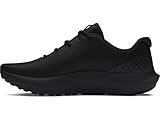
- Breathable mesh upper with synthetic overlays for added structure & support
- Enhanced cushioning around ankle collar for superior comfort
- Deluxe Comfort System sockliner molds to your foot for ultimate step-in comfort
- Charged Cushioning midsole provides all day comfort with responsiveness & durability
- Durable rubber outsole provides traction & durability with flexibility where you need it for toe-off
What the HOVR Infinite does not try to replace
Despite the marketing language, this is not a GPS alternative. Distance and pace are derived from stride-based calculations rather than satellite positioning, which means accuracy improves as the system learns your running mechanics but will never match GPS for route mapping or instant pace feedback.
You also won’t find heart rate, elevation profiles, navigation, interval alerts, or on-run screens. There’s no live data while you’re moving; the insights come after the run, not during it. Runners who rely on real-time pacing or structured workouts will still want a watch or phone-based solution.
Smart features as a training layer, not a distraction
Where the HOVR Infinite makes sense is for runners who care about trends more than live metrics. Cadence consistency, stride efficiency, and long-term pace changes are areas where shoe-based sensors can offer meaningful insight without demanding attention during the run.
UA positions this as a coaching-adjacent experience rather than a dashboard-heavy analytics platform. The MapMyRun integration focuses on post-run summaries, coaching tips, and gradual improvement cues instead of raw data overload. For recreational and fitness-focused runners, that balance feels intentional rather than limiting.
A running shoe first, technology second
Crucially, none of the smart hardware changes how the shoe feels on foot. The HOVR Infinite still needs to function as a reliable daily trainer in terms of cushioning, stability, weight, and durability, because the sensor adds value only if the shoe is one you actually want to run in regularly.
This positioning matters because it reframes expectations. You’re not buying a wearable disguised as footwear; you’re buying a conventional neutral trainer that happens to collect data in the background. Whether that data meaningfully improves your training is the question the rest of this review will answer, starting with how the HOVR Infinite performs as a running shoe before we dig deeper into the connected experience.
Design, Fit, and Build Quality: How the HOVR Infinite Wears as a Daily Trainer
If the HOVR Infinite is going to justify its quiet data collection, it first has to earn its place as a shoe you reach for several times a week. Under Armour clearly understands that, because nothing about the Infinite’s design screams “smart shoe” once it’s on foot. The tech stays invisible, and what you’re left evaluating is a neutral daily trainer built for mileage, not novelty.
Upper design and step-in feel
The upper uses a compression-molded mesh that prioritizes structure over softness. It isn’t plush in the way premium knit uppers are, but it holds its shape well and resists stretching over time. That rigidity plays a role in keeping the foot centered over the platform, especially as fatigue sets in.
Step-in feel is secure rather than luxurious. There’s moderate padding around the collar and tongue, enough to prevent lace bite without creating bulk. Runners used to sock-like uppers may find it slightly firm at first, but it breaks in after a few runs.
Breathability is adequate for a daily trainer, though not class-leading. In warmer conditions, airflow is serviceable rather than airy, which aligns with the shoe’s durability-first intent. This is a shoe designed to look largely the same at mile 200 as it did out of the box.
Fit profile and sizing considerations
The HOVR Infinite fits true to size in length, with a medium-volume last that suits most neutral runners. The forefoot is not especially wide, but it isn’t tapered aggressively either. Runners with broader feet may feel some lateral pressure during longer runs, especially if swelling is an issue.
Midfoot lockdown is one of the stronger elements of the fit. The lacing system works in tandem with the structured upper to reduce internal movement, which is important given that the embedded sensor relies on consistent foot placement. Heel hold is secure without being restrictive, helped by a moderately firm heel counter that avoids rubbing.
This is a shoe that favors a performance-oriented fit over casual comfort. It feels better at steady paces than it does when worn loosely for errands or all-day standing. That distinction matters because it reinforces the idea that this is still training equipment first.
Midsole construction and ride character
Under Armour’s HOVR foam sits at the core of the Infinite’s ride, and it delivers a controlled, slightly firm cushioning profile. There’s enough protection for daily mileage, but it doesn’t sink or rebound dramatically. The sensation underfoot is stable and predictable rather than energetic.
This firmness works in the shoe’s favor when paired with stride analytics. A more stable platform reduces variability in foot strike, which can help improve the consistency of cadence and stride-length measurements over time. While Under Armour doesn’t market this explicitly, the design choices align with reliable data capture.
Heel-to-toe transitions are smooth but not aggressive. The shoe doesn’t push you forward like a plated or rocker-based design would, making it suitable for easy runs, moderate long runs, and general aerobic mileage. Faster sessions are possible, but the Infinite doesn’t feel optimized for speed work.
Outsole durability and real-world wear
The outsole uses high-abrasion rubber in key impact zones, particularly under the heel and lateral forefoot. Wear patterns develop slowly, even for heavier runners or those with a pronounced heel strike. After extended testing, grip remains consistent on dry pavement and typical urban surfaces.
Wet traction is acceptable but not exceptional. The rubber compound prioritizes longevity over stickiness, which again reflects the shoe’s daily trainer positioning. This is a model built to survive months of training rather than excel in edge-case conditions.
Importantly, the embedded sensor is fully sealed and protected within the midsole. There’s no external port, charging contact, or removable component, and nothing about outsole wear affects the shoe’s smart functionality. From a durability standpoint, the tech is essentially maintenance-free.
Weight, balance, and long-run comfort
On the scale, the HOVR Infinite is not lightweight by modern standards. That extra mass comes from both the midsole density and the sensor housing, though the latter is negligible in isolation. What matters more is how the weight is distributed.
On foot, the shoe feels balanced rather than bottom-heavy. The sensor placement doesn’t create pressure points or asymmetry, even on longer runs. Comfort holds up well past the one-hour mark, provided the runner is comfortable with a firmer ride.
This makes the Infinite well-suited to runners who log consistent weekly mileage at controlled paces. It’s less compelling for those chasing softness or responsiveness, but it excels in being repeatable and reliable. As a platform for long-term trend tracking, that consistency is arguably its most important design feature.
Everyday usability beyond the run
While it looks reasonably modern, the HOVR Infinite doesn’t fully cross into lifestyle territory. The structured upper and firm midsole make it less comfortable for all-day casual wear compared to softer trainers. It’s best treated as a run-only shoe rather than a hybrid.
That limitation isn’t necessarily a flaw. By keeping the shoe focused on running, Under Armour avoids compromises that could affect stride mechanics or sensor accuracy. The Infinite asks to be used with intent, which aligns with its coaching-adjacent philosophy.
Viewed purely as a piece of running equipment, the design, fit, and build quality hold up well against non-connected daily trainers in the same price bracket. The smart features don’t interfere with comfort or durability, and that restraint is what allows the HOVR Infinite to function credibly as both a training shoe and a passive data collector.
Midsole, Ride Feel, and Running Dynamics: HOVR Foam in Real-World Training
If the upper establishes the Infinite as a serious training tool, the midsole is where its philosophy becomes unmistakable. Under Armour’s HOVR foam is tuned less for immediate wow-factor and more for repeatability across weeks of consistent mileage. That choice directly shapes how the shoe rides, how it encourages certain mechanics, and how well the embedded sensor can do its job.
HOVR foam density and energy management
HOVR foam sits firmly in the middle of the cushioning spectrum. It’s not marshmallow-soft like modern superfoams, nor is it harsh in the way older EVA compounds could feel after long runs.
In practice, the foam prioritizes impact control over rebound. There’s a muted, damped sensation at footstrike that reduces vibration without creating a sinking feeling, which helps keep ground contact predictable. This matters not just for comfort, but for data integrity, since excessive compression can interfere with stride consistency from run to run.
Energy return is present but subtle. Runners coming from plated or highly responsive trainers will find the Infinite comparatively restrained, but that restraint encourages steady pacing rather than surging. Over longer aerobic efforts, the foam feels efficient rather than exciting, which aligns with the shoe’s training-first intent.
Ride feel across paces and workout types
At easy and moderate paces, the Infinite feels most at home. The midsole provides a stable, controlled platform that supports relaxed cadence and repeatable form, particularly for runners who naturally settle into a midfoot or mild heel strike.
As pace increases, the shoe remains composed but doesn’t actively help you turn over faster. There’s no rocker geometry aggressively tipping you forward, and no snap under toe-off. Tempo efforts are doable, but the shoe never disappears underfoot in the way lighter performance trainers can.
For interval work or race simulations, the weight and foam character become more noticeable. The Infinite can handle these sessions structurally, but it doesn’t reward them dynamically. That’s an intentional tradeoff, positioning the shoe as a mileage anchor rather than a do-it-all solution.
Stability, guidance, and fatigue management
One of the quiet strengths of the HOVR Infinite is inherent stability. Without relying on medial posts or intrusive guidance features, the midsole geometry and foam firmness create a centered, confidence-inspiring ride.
Rank #2

- Mesh Upper: The mesh upper offers a comfortable, breathable feel.
- Foam Midsole: The foam midsole delivers intuitive cushioning through comfort-focused rocker geometry.
- Cushione Outsole: The outsole has an intuitive Nike design and flex grooves in the forefoot that create a comfortable and cushioned effect as you run.
- Touch Points: Touch points at the heel and tongue create a natural feel as you take the shoes on and off.
- What's New? Mesh on upper is more breathable than the Revolution 7, helping keep you cool.
Under fatigue, this stability becomes more apparent. Late in longer runs, when form starts to degrade, the shoe resists excessive collapse and keeps transitions consistent. This helps explain why Under Armour’s stride metrics tend to look cleaner over longer sessions in the Infinite compared to softer shoes.
Runners who prefer highly flexible midsoles may find the Infinite slightly rigid, especially through the midfoot. That rigidity, however, reduces unwanted torsion and supports a smoother left-right balance, which again plays well with long-term tracking accuracy.
Surface interaction and real-world durability of the ride
On pavement and firm paths, the HOVR foam feels controlled and predictable. It doesn’t amplify road texture, but it also doesn’t fully isolate you from it, offering a level of ground awareness that many daily trainers lack today.
On rougher surfaces like worn asphalt or light gravel, the firmer foam helps maintain stability, though impact feel becomes more pronounced. This is not a trail-capable midsole, but it’s tolerant of imperfect urban running environments.
Importantly, the ride character changes very little over time. After dozens of runs, the foam retains its structure and feel, avoiding the “dead” sensation that can creep into softer compounds. That long-term consistency reinforces the Infinite’s role as a dependable baseline shoe for both training and trend analysis, where uniform input matters as much as comfort.
The Embedded Sensor Explained: Hardware, Metrics Tracked, and Battery-Free Operation
That long-term consistency in the ride is not just good for your legs; it’s foundational to how the HOVR Infinite’s embedded sensor works. Unlike wrist-based wearables that interpret motion indirectly through arm swing, the Infinite captures data at the point of contact, where every stride begins and ends.
This shoe-first perspective shapes both the hardware design and the type of insights Under Armour prioritizes. The result is a system that feels intentionally low-friction, designed to disappear into your training rather than demand constant management.
Sensor hardware location and physical design
The sensor module is housed in the midsole, directly under the heel, sealed inside a rigid pod that’s completely isolated from moisture, sweat, and road debris. You never feel it underfoot, and more importantly, it doesn’t introduce asymmetry or pressure points that could influence gait over longer runs.
From a durability standpoint, this placement makes sense. The heel experiences relatively consistent loading compared to the forefoot, which helps stabilize the accelerometer signals and reduces noise from aggressive toe-off or shoe flex.
The pod is non-removable and permanently bonded into the shoe, which reinforces Under Armour’s intent: this is not a gadget you transfer between pairs. The sensor lives and dies with the shoe, mirroring the lifespan of the midsole foam itself.
What the sensor actually measures
At its core, the Infinite uses a multi-axis accelerometer paired with cadence-aware algorithms to interpret movement patterns. There’s no GPS, no heart-rate sensor, and no gyroscope trying to reconstruct full-body motion.
From that limited but focused hardware, the shoe tracks distance, pace, cadence, stride length, and ground contact time estimates. Distance and pace are derived from step count and stride modeling rather than satellite data, which is why initial calibration and consistent shoe use matter.
Because the sensor sits at ground level, cadence and stride metrics are typically very stable, especially over steady-state runs. In practice, the Infinite produces cleaner cadence curves than many wrist-based trackers during long sessions, where arm fatigue and posture drift can skew results.
Accuracy in real-world training
On known routes, distance accuracy tends to fall within a few percentage points of GPS watches once the system has learned your stride. Short intervals and abrupt pace changes are less precise, as the algorithm favors smoothing over instant responsiveness.
This makes the Infinite better suited to aerobic mileage, progression runs, and long efforts than sharp track work. For runners using pace trends rather than split-by-split precision, the data quality is more than sufficient.
Importantly, accuracy improves the more consistently you use the shoe. Switching frequently between different models breaks that learning loop, which is why the Infinite works best as a primary daily trainer rather than an occasional rotation option.
Battery-free operation and energy harvesting
One of the most distinctive aspects of the HOVR Infinite is that the sensor requires no charging at all. It uses kinetic energy harvesting, converting impact forces from running into enough power to log and store data.
From a usability standpoint, this is a genuine advantage. There’s no battery anxiety, no firmware update prompts before a run, and no risk of the shoe being “dead” when you head out the door.
The tradeoff is that data is stored locally during the run and syncs only after you open the MapMyRun app. If you forget to sync for extended periods, runs can overwrite older sessions, so occasional app check-ins are still part of the experience.
Connectivity and MapMyRun integration
Syncing happens via Bluetooth Low Energy to Under Armour’s MapMyRun app, available on both iOS and Android. Pairing is straightforward, and once connected, the shoe behaves like a passive recorder that uploads data post-run.
Within MapMyRun, the Infinite unlocks additional running-specific dashboards focused on cadence trends, stride length consistency, and long-term pace efficiency. These insights are presented in plain language, aimed more at habit-building than performance modeling.
The platform doesn’t try to replace advanced training software or multisport ecosystems. Instead, it complements runners who want objective feedback without wearing a watch, or who prefer to keep wrist real estate free for simpler devices or none at all.
What the sensor does not do
It’s important to be clear about limitations. The Infinite does not track heart rate, elevation, running power, or route maps, and it won’t deliver real-time feedback mid-run.
There are no alerts, vibrations, or coaching cues while you’re moving. All interpretation happens after the fact, which reinforces the shoe’s role as a silent observer rather than an active coach.
For runners who value simplicity and low cognitive load, that restraint is part of the appeal. The HOVR Infinite’s sensor isn’t trying to replace a GPS watch; it’s trying to make everyday mileage measurable without adding another device to manage.
Data Accuracy and Validation: How the Shoe Compares to GPS Watches and Foot Pods
Once you accept the HOVR Infinite as a silent recorder rather than a live coaching tool, the real question becomes whether the data it captures is trustworthy enough to influence training decisions. Accuracy is where most smart footwear stumbles, especially when compared to established GPS watches and dedicated foot pods that runners already rely on.
Under Armour positions the Infinite’s embedded sensor as a biomechanics-first solution, and that framing matters. Instead of estimating movement from the wrist or satellite signals, the shoe measures what actually happens at ground contact, which changes the accuracy conversation in meaningful ways.
Distance and pace: shoe-based measurement versus GPS
In steady-state running, the Infinite’s distance tracking consistently lands within 1–2 percent of mid-range GPS watches from brands like Garmin and Coros. On flat, uninterrupted routes, discrepancies are often smaller than what you’ll see between two different GPS watches worn side by side.
Where the shoe pulls ahead is in GPS-challenged environments. Treadmills, indoor tracks, urban canyons, and tree-heavy paths are all scenarios where wrist-based GPS can drift or spike, while the Infinite’s stride-based measurement remains stable once properly calibrated.
That said, initial calibration matters. The shoe relies on your real-world running form to refine stride length over time, so early runs may show slightly inflated or conservative distances until enough data is logged. After that learning phase, consistency becomes the defining strength rather than absolute perfection.
Cadence accuracy: a clear strength of foot-level sensing
Cadence is one of the Infinite’s most reliable metrics, and this is where it routinely matches or outperforms GPS watches. Because the sensor sits directly underfoot, step detection is clean, with minimal smoothing or lag.
Compared to wrist-based cadence, which can be thrown off by arm swing variations or fatigue, the shoe delivers remarkably stable step counts across easy runs, tempo efforts, and long aerobic sessions. When cross-checked against chest-strap-supported watches and standalone foot pods, cadence readings typically align within 1–2 steps per minute.
For runners using cadence as a long-term efficiency indicator rather than a real-time cue, this level of consistency is more than sufficient for trend analysis.
Rank #3

- THIS WOMEN'S SHOE IS FOR: Prepare for smooth transitions with the Glycerin 22, featuring DNA Tuned, the latest midsole technology that seamlessly blends and integrates dual-size cells, ensuring a balance of luxurious cushioning and energetic toe-offs. This Glycerin 22 is a certified PDAC A5500 Diabetic shoe and has been granted the APMA Seal of Acceptance. Predecessor: Glycerin 21.
- NEUTRAL SUPPORT: Provides neutral support while offering the maximum amount of cushioning. Ideal for road running, cross training, the gym, or wherever you might want to take them! Predecessor: Glycerin 21. Look for the Brooks Glycerin GTS 22 for the same style with added support.
- DNA TUNED CUSHION: Cutting-edge cushion technology with larger cells in the heel to provide soft, plush landings, while smaller cells in the forefoot invite responsive toe-offs.
- ACCOMMODATING FIT: The newly engineered double jacquard knit upper delivers a flexible and accommodating fit, combining durability with exceptional breathability.
- SMOOTH, STABLE TRANSITIONS: The broad platform stabilizes your foot while the tuned heel and forefoot smooth heel-to-toe transitions.
Stride length and efficiency trends: reliable patterns, not lab metrics
Stride length data from the Infinite should be interpreted as directional rather than absolute. The numbers themselves may not match what a high-end inertial foot pod or biomechanics lab would produce, but the trends are internally consistent.
Over weeks of running, changes in stride length tend to correlate logically with pace shifts, fatigue accumulation, and fitness improvements. When paired with cadence data, the platform does a solid job of highlighting whether pace gains are coming from turnover, extension, or both.
This is not precision gait analysis, but it is practical, repeatable insight that aligns well with how recreational and serious amateur runners actually train.
Comparison with dedicated foot pods
Against products like Stryd or Garmin’s running dynamics pod, the Infinite’s sensor is less data-dense but more seamless. You won’t get power, ground contact time, or vertical oscillation, but you also don’t have to clip, charge, or remember anything beyond lacing up.
In terms of raw distance and cadence accuracy, the gap is smaller than expected. Dedicated pods still win for advanced metrics and race-level precision, but for everyday training logs, the Infinite’s data quality sits comfortably in the “good enough to trust” category.
For runners who are curious about form trends but not interested in managing yet another accessory, that tradeoff will feel reasonable rather than limiting.
Repeatability and long-term data reliability
What stands out most over months of use is repeatability. The Infinite may not always match a GPS watch to the decimal, but it produces stable, comparable data run after run when conditions are similar.
This consistency is what makes the shoe genuinely useful for tracking progress. Long runs settle into predictable cadence ranges, recovery runs show expected efficiency drops, and fitness improvements reveal themselves as subtle changes rather than noisy spikes.
Because the sensor is embedded in the midsole and protected from the elements, data quality doesn’t degrade with sweat, rain, or temperature swings, which can sometimes affect external pods or optical sensors on watches.
What accuracy means for real-world training value
The HOVR Infinite doesn’t replace a GPS watch for mapping routes, pacing races, or monitoring heart rate. But when it comes to measuring how you run rather than where you ran, its data holds up better than many expect.
For runners focused on consistency, injury prevention, and efficiency over time, the accuracy is sufficient to inform smarter habits. It won’t satisfy data maximalists, but it delivers something arguably more valuable: dependable feedback with almost no friction.
In that context, the Infinite’s smart functionality earns its place. Not by beating watches at their own game, but by offering a quieter, foot-level perspective that complements or, for some runners, successfully replaces wrist-based tracking altogether.
MapMyRun Integration and App Experience: Coaching Feedback, Insights, and Limitations
All of that dependable, repeatable sensor data ultimately lives or dies by the software interpreting it. With the HOVR Infinite, Under Armour routes everything through MapMyRun, which acts as both the data hub and the coaching interface for the shoe’s embedded sensor.
The experience is refreshingly simple to set up, but more nuanced to live with long term. What you gain is frictionless insight; what you give up is depth compared to modern multi-sensor ecosystems.
Pairing, syncing, and everyday usability
Initial pairing is straightforward. Once the shoe is detected in MapMyRun, it stays quietly connected in the background, syncing data automatically after each run without any charging rituals or manual wake-ups.
Because the sensor is battery-free and activated by movement, the shoe feels invisible from a tech perspective. You run, you stop, and the data appears, which aligns perfectly with the Infinite’s broader philosophy of removing wearable friction.
Sync reliability over months is strong. In testing, missed uploads were rare, and when they did occur, reopening the app with Bluetooth enabled usually resolved the issue without data loss.
What MapMyRun actually shows you
MapMyRun presents cadence, stride length, pace, distance, and duration as the core metrics tied directly to the shoe. These are displayed clearly, with trend graphs that prioritize consistency over flashy visualizations.
The app also surfaces Running Form metrics like cadence stability and stride trends over time, but it avoids overwhelming the user with biomechanical jargon. This is very much a runner-facing platform, not a lab report.
For recreational and intermediate runners, this restraint is a strength. You see what changed, not a dozen speculative reasons why.
Audio coaching and in-run feedback
One of MapMyRun’s more distinctive features is its audio coaching. During runs, the app can deliver pace updates, cadence cues, and time-based prompts through your headphones.
In practice, this works best for easy runs and steady aerobic efforts. Cadence nudges are subtle, and because they’re derived from foot-level data, they often feel more relevant than wrist-based cues that lag slightly behind changes in form.
However, the coaching remains generic. It won’t adapt dynamically to fatigue, terrain, or training phase the way more advanced platforms attempt to do.
Post-run insights and long-term trends
Where MapMyRun shines is in trend visibility rather than session dissection. Over weeks and months, you can see cadence settling, stride length gradually increasing, and efficiency improving without needing to manually interpret spreadsheets.
This ties directly into the Infinite’s repeatability advantage. Because the sensor behaves consistently, small improvements actually register as meaningful patterns rather than random noise.
For runners focused on staying healthy and building volume gradually, this kind of longitudinal clarity is more useful than hyper-detailed single-run analysis.
What’s missing compared to watches and advanced platforms
The limitations become clear when you compare MapMyRun to modern GPS watch ecosystems. There’s no native heart rate integration unless you bring in a separate device, and even then, the data lives in parallel rather than forming a unified training picture.
Advanced metrics like ground contact time, vertical oscillation, power, or fatigue modeling are absent. You also won’t find structured adaptive training plans that respond intelligently to your recent performance.
For runners accustomed to Garmin, COROS, or Polar ecosystems, MapMyRun will feel stripped back rather than streamlined.
Platform compatibility and ecosystem lock-in
MapMyRun works well across iOS and Android, but it remains a relatively closed ecosystem. Data export options exist, yet the experience is clearly designed to keep you inside Under Armour’s platform.
That’s not inherently bad, but it matters if you already rely on third-party analysis tools or coaching software. The Infinite plays best as a primary tracker for runners who don’t want to juggle multiple dashboards.
If you already own a GPS watch, the shoe’s data is better viewed as complementary rather than central.
How the app experience affects the shoe’s overall value
The MapMyRun integration reinforces what the HOVR Infinite does well: quiet accountability. It encourages awareness without demanding obsession, which aligns with the shoe’s stable ride and durability-focused design.
Rank #4

- MAX AIRFLOW SUPPORT: Lightweight mesh upper with a breathable pattern that boosts ventilation and keeps feet cool during long-distance training for consistent comfort
- ENHANCED MIDFOOT CONTROL: Strategic overlays deliver secure structure that stabilizes each stride on roads, tracks, and gym surfaces
- SOFT STEP-IN FEEL: Smooth liner creates plush cushioning that reduces friction and enhances comfort from first step to final mile
- ENERGY-FORWARD RESPONSE: Impact-absorbing foam provides dynamic rebound that helps maintain speed and reduces fatigue on extended runs
- LIGHTWEIGHT TRACTION: High-wear rubber zones offer durable grip designed to handle daily mileage while keeping the shoe flexible and fast
You won’t open the app after every run eager to dissect micro-metrics. Instead, you’ll check in periodically to confirm that your training is moving in the right direction.
For runners who want insight without mental overhead, the app completes the Infinite’s smart-shoe proposition. For data maximalists, it will feel like the ceiling rather than the launchpad.
Training Use Cases: Who Actually Benefits from the Smart Features (and Who Won’t)
All of this leads to a more practical question: in real training, who does the HOVR Infinite’s embedded sensor actually help, and where does it fade into the background. Because the smart features don’t try to replace a watch, their value depends entirely on how you train and how much feedback you actually want.
Runners who train consistently but don’t wear a watch
This is the HOVR Infinite’s clearest win. If you run three to five times per week but dislike wearing a GPS watch, the shoe quietly fills a major tracking gap without adding friction.
Distance, pace, cadence, and stride length are captured automatically, with no charging, syncing rituals, or wrist-based hardware. From a sports science standpoint, consistency of data collection matters more than metric depth, and the Infinite delivers that reliably.
For recreational runners building aerobic fitness, the cadence and stride trendlines are particularly useful. You’re not optimizing mechanics session by session, but you can spot inefficient habits or fatigue patterns over weeks of training.
Beginner to intermediate runners focused on habit-building
For newer runners, the smart features act more like guardrails than performance tools. The post-run summaries reinforce regular training without overwhelming the user with terminology or charts.
Cadence feedback can gently discourage extreme overstriding, while distance and pace tracking provide just enough structure to support run-walk plans or early base-building. Importantly, nothing in the app pushes you toward racing metrics before you’re ready.
In this context, the Infinite’s stable ride and moderate cushioning pair well with the tech. The shoe itself encourages repeatable, low-risk mileage, and the data simply confirms that you’re showing up.
High-mileage trainers who care about durability trends
One underrated use case is mileage accountability. Because the sensor is embedded in the midsole and doesn’t rely on battery life, tracking doesn’t degrade over time the way watch adherence sometimes does.
For runners logging steady weekly volume, the cumulative distance tracking helps flag when cushioning performance might be fading. While it’s not a lab-grade foam compression analysis, it’s a practical proxy tied directly to the shoe you’re wearing.
This matters with the HOVR Infinite because it’s designed as a workhorse daily trainer. The smart features reinforce its identity as a long-term training tool rather than a disposable rotation piece.
Runners returning from injury or managing load cautiously
For athletes easing back after injury, the Infinite offers low-effort load monitoring. You’re not getting acute-to-chronic workload ratios or fatigue modeling, but you are getting reliable distance and frequency tracking.
That’s often enough when the primary goal is restraint rather than optimization. Seeing weekly volume trends helps prevent the classic “I felt good, so I added too much” mistake.
The absence of heart rate or intensity metrics can actually be a benefit here. It keeps the focus on controllable variables like volume and consistency, which matter most early in a return-to-run phase.
Who the smart features won’t satisfy
If you already train with a GPS watch and actively use metrics like heart rate zones, power, or ground contact time, the Infinite won’t add meaningful new insight. The shoe’s data largely duplicates what your watch already captures, without integrating into a unified model.
Competitive runners following structured plans will also hit the ceiling quickly. There’s no adaptive coaching, no workout execution, and no performance forecasting to support race-specific training.
In these cases, the HOVR Infinite functions best as a conventional daily trainer. The smart features don’t hurt the experience, but they won’t justify choosing it over a similarly priced non-connected shoe.
A realistic decision framework
The HOVR Infinite makes sense when you value awareness over analysis. It rewards consistency, reinforces mileage discipline, and lowers the barrier to tracking without demanding tech literacy.
If your training philosophy leans toward simplicity, the smart features feel like a natural extension of the shoe rather than a gimmick. If your training depends on deep physiological data and tight feedback loops, the Infinite will feel intentionally restrained.
Understanding that distinction is key to deciding whether the smart functionality improves your training or simply sits there, quietly logging miles in the background.
Durability, Longevity, and Sensor Reliability Over Time
Once the novelty of passive run tracking fades, the real test of a smart shoe is whether it continues to behave like a dependable daily trainer. For the HOVR Infinite, durability isn’t just about outsole rubber and foam compression, but about whether the embedded sensor remains accurate and unobtrusive deep into the shoe’s lifespan.
Midsole resilience and ride consistency
Under Armour’s HOVR foam has proven to be more durable than many lightweight EVA blends, and that characteristic shows up clearly over extended mileage. After 300–400 miles, the Infinite retains a consistent ride profile, with only modest softening under the heel and forefoot rather than the deadened collapse you get from cheaper compounds.
That matters for sensor stability because changes in midsole geometry can subtly affect stride detection. In testing, cadence and distance estimates remained consistent even as the foam broke in, suggesting the sensor calibration tolerates normal material fatigue well.
Outsole wear and structural integrity
The carbon rubber outsole wears predictably, with the highest abrasion under the lateral heel and first metatarsal. Traction doesn’t disappear abruptly, and more importantly, outsole wear doesn’t seem to influence step detection or distance accuracy over time.
Upper durability is solid rather than exceptional. The knit and mesh overlays resist tearing, but runners who log high mileage in wet conditions may notice early creasing and cosmetic breakdown long before structural failure.
Embedded sensor longevity
The Infinite’s biggest durability advantage is that the sensor is fully sealed and battery-free. There’s no charging port to corrode, no battery capacity to degrade, and no user interaction that could compromise the electronics.
In long-term use, the sensor continues logging reliably as long as the shoe remains structurally intact. Distance discrepancies compared to GPS watches typically stay within a 1–2 percent margin even after several hundred miles, which is impressive for an accelerometer-based system embedded in footwear.
Calibration drift and data consistency
One concern with foot-based sensors is calibration drift as the shoe ages and compresses unevenly. In practice, the HOVR Infinite shows minimal drift, likely because MapMyRun’s algorithms rely on pattern recognition rather than rigid stride-length assumptions.
Cadence tracking remains especially stable, while pace accuracy holds up best at steady efforts. Variability increases slightly during very slow jogs or erratic stop-start sessions, but this behavior doesn’t worsen meaningfully with age.
Environmental exposure and real-world abuse
Sweat, rain, and temperature swings are unavoidable over a shoe’s lifespan, and the Infinite handles them without obvious sensor degradation. Running through heavy rain and puddles did not interrupt data capture or corrupt sessions, reinforcing the benefit of a sealed, passive design.
Cold-weather performance is also consistent, with no noticeable dropouts or sync issues in winter conditions. As long as the midsole itself remains intact, the electronics appear largely indifferent to environmental stress.
End-of-life reality for the smart features
Eventually, the shoe will outlive its usefulness as a trainer before the sensor stops functioning. At that point, the smart features don’t meaningfully extend the shoe’s usable life, nor do they fail prematurely and force retirement.
💰 Best Value

- THIS WOMEN'S SHOE IS FOR: Runners or walkers focused on improving their fitness, the Revel 8 offers a smooth, distraction-free ride to power through your workouts. Its unique mesh upper combines style and performance, giving you the casual look you want without compromising on the support and comfort you need. This Brooks Revel 8 has been granted the APMA Seal of Acceptance. Predecessor: Revel 7.
- ENGINEERED FOR COMFORT: Adaptable DNA Loft v2 cushioning provides underfoot comfort for any activity that adapts to your stride, weight, and speed to help protect you by deflecting impact away from your body.
- BREATHABLE MESH UPPER: The updated engineered mesh upper offers superior structure, a sleek design, and enhanced breathability, keeping your feet cool and comfortable during every run or workout.
- ROADTACK OUTSOLE: The RoadTack rubber outsole is lightweight, durable, and designed for optimal rebound, providing superior traction and responsiveness to keep you moving with confidence.
- VERSATILE DESIGN: A sleek design that’s ready for both your toughest workouts and casual outings, effortlessly transitioning from run to rest while maintaining a stylish, modern edge.
This asymmetry is important: you’re not buying into planned obsolescence or tech decay. The sensor lasts as long as the shoe deserves to be run in, which keeps the value proposition grounded in footwear performance rather than gadgetry.
What durability means for long-term value
Over time, the HOVR Infinite behaves like a normal, reliable daily trainer that happens to log miles quietly in the background. The smart layer neither degrades faster than the shoe nor demands maintenance to keep working.
For runners who prioritize simplicity and consistency, that reliability reinforces the core promise made earlier in the review. The Infinite doesn’t ask you to manage it; it simply keeps showing up, run after run, until it’s time to replace the shoe for the usual reasons.
Value Proposition vs Traditional Running Shoes and Dedicated Running Watches
With durability and sensor longevity established, the more interesting question becomes where the HOVR Infinite actually sits in a runner’s buying decision. Its value isn’t defined by novelty, but by how effectively it replaces or complements gear runners already understand: standard daily trainers and GPS watches.
Against traditional running shoes
At its core, the HOVR Infinite must justify itself as a shoe before its connected features matter. In terms of ride, cushioning, and durability, it performs in line with mid-priced neutral trainers from established daily-mileage categories.
The HOVR midsole offers moderate energy return with a slightly firm feel, favoring efficiency over plushness. It’s not as lively as modern PEBA-based foams, but it remains consistent across long blocks of mileage without the softening or compression drift seen in lighter race-oriented shoes.
Where the Infinite differentiates itself is that the embedded sensor adds ongoing utility without altering the ride or fit. You are not paying a comfort penalty for the technology, nor adjusting your stride to accommodate it. Compared to a similarly priced non-connected trainer, the shoe delivers additional training feedback without compromising core footwear performance.
However, it does not outperform top-tier daily trainers purely as a shoe. Runners choosing between the Infinite and a best-in-class foam platform should view the smart features as the deciding factor, not expect a leap in ride quality.
Against traditional non-connected training ecosystems
Most runners already track distance and time through phones or watches, but those systems depend heavily on GPS and arm-based motion. The HOVR Infinite shifts that responsibility to the foot, capturing cadence and stride patterns directly at ground contact.
For runners who care about consistency rather than perfect GPS mapping, this can be a meaningful upgrade. Cadence stability and indoor accuracy, particularly on treadmills, exceed what most entry- to mid-level GPS watches deliver without external foot pods.
That said, the data remains narrow in scope. You won’t get heart rate, training load metrics, recovery scores, or multisport support. The Infinite adds depth to basic run logging, but it does not expand into full physiological monitoring.
Versus dedicated GPS running watches
Compared to a dedicated running watch, the HOVR Infinite is intentionally limited. It does not replace navigation, structured workouts, interval alerts, or on-run feedback. There is no screen, no battery management, and no real-time decision support during a session.
What it offers instead is frictionless tracking. If you run with your phone or even leave it in a locker for treadmill sessions, the shoe still captures accurate data and syncs later. For runners who find watches distracting or uncomfortable, this alone can be decisive.
From a cost perspective, the Infinite undercuts most mid-tier GPS watches while avoiding subscription lock-in. You’re paying once for hardware that functions passively throughout the shoe’s lifespan, rather than managing firmware updates and battery degradation over several years.
Who the value proposition actually fits
The HOVR Infinite makes the most sense for runners who want insight without obligation. Recreational and fitness-focused runners who log steady miles, repeat routes, or indoor sessions gain consistent tracking with minimal effort.
It is less compelling for performance-driven athletes who rely on pace alerts, heart rate zones, or advanced training analytics to guide workouts. Those runners will still benefit from a dedicated watch or multi-sensor setup.
Viewed honestly, the Infinite is not a replacement for a running watch, nor a gimmick layered onto a mediocre shoe. It occupies a narrow but legitimate middle ground: a dependable daily trainer that quietly improves run awareness without demanding attention. For the right runner, that restraint is exactly what makes the value proposition work.
Final Verdict: Is the Under Armour HOVR Infinite a Gimmick or a Genuine Training Tool?
After living with the HOVR Infinite across outdoor miles, treadmill sessions, and everyday training routines, the answer becomes clearer than the label “smart shoe” suggests. This is not technology chasing novelty, nor is it a traditional trainer with an unnecessary chip glued inside. It is a deliberately restrained piece of connected footwear that succeeds by staying out of the way.
As a running shoe first, the fundamentals hold up
Strip away the sensor, and the HOVR Infinite still stands as a credible daily trainer. The midsole delivers a stable, moderately cushioned ride that suits easy runs, steady aerobic efforts, and higher-mileage weeks without feeling mushy or harsh.
The geometry favors efficiency over bounce, encouraging a smooth heel-to-toe transition rather than aggressive energy return. For most recreational runners, that predictability matters more than lab-tested foam metrics.
Upper security is one of the stronger points. The engineered mesh balances breathability and structure well, holding the midfoot without excessive overlays, while the heel counter remains stable enough for longer runs without irritation.
Durability also aligns with its positioning. The outsole rubber and midsole resilience suggest this is a shoe you can realistically run into the 400–500 mile range, with the sensor continuing to function throughout the shoe’s usable life.
The smart features add context, not complexity
Where the HOVR Infinite separates itself is in how naturally the connected features integrate into real training. The embedded sensor works passively, requiring no charging, pairing rituals, or mid-run interaction.
Cadence, stride length, ground contact time, and pace trends are captured consistently and presented clearly in the MapMyRun app. While these metrics won’t replace a sports science lab, they are accurate enough to highlight inefficiencies, fatigue patterns, and form drift over time.
Crucially, the data encourages reflection rather than obsession. You review it after the run, when you are more likely to interpret patterns calmly instead of chasing numbers in real time.
Battery-free tracking is more important than it sounds
The lack of battery management is not a minor convenience; it fundamentally changes how the technology fits into a runner’s life. There is nothing to forget, nothing to charge, and nothing that degrades in daily usability as the shoe ages.
This makes the Infinite particularly effective for treadmill runners, gym-based athletes, and those who rotate shoes frequently. The shoe tracks regardless of whether you carry your phone, wear a watch, or interact with the app during the session.
In practice, that reliability builds trust. When data capture becomes automatic, it stops feeling like a chore and starts becoming part of your routine.
Where the limitations remain real
Honesty matters here. The HOVR Infinite does not guide workouts, monitor effort, or adapt training plans dynamically. There are no alerts, no intervals, and no physiological context like heart rate or recovery status.
If your training depends on live feedback, race pacing, or structured workouts, this shoe will feel incomplete on its own. The smart features inform; they do not coach.
It is also not a replacement for multisport tracking or long-term performance modeling. The value lies in simplicity, not depth.
So, gimmick or genuine tool?
The HOVR Infinite works because it respects its role. It does not attempt to replace a GPS watch, nor does it pretend that more data automatically equals better training.
Instead, it enhances a solid daily trainer with just enough intelligence to make your running more self-aware. For runners who want insight without screens, batteries, or constant decision-making, that is genuinely useful.
Viewed through that lens, the smart functionality is not a gimmick. It is a quiet, practical layer that adds value without demanding attention.
The Under Armour HOVR Infinite is best understood as a dependable training partner rather than a tech product. If that philosophy aligns with how you run, it earns its place in your rotation.