Virtual reality and augmented reality get lumped together constantly, yet they solve very different problems and fit into daily life in very different ways. If you’ve ever wondered why a VR headset feels like a gaming console you put on your face, while AR glasses are pitched as something you might wear all day, you’re already circling the real distinction.
This section strips away the jargon and marketing language to explain what actually separates VR from AR in practice. We’ll look at how each technology works, what it demands from your body and attention, and why those differences matter for wearables, productivity, fitness, and everyday use over the next decade.
By the end of this section, you should be able to look at any headset or pair of smart glasses and immediately understand where it fits, what it’s good at, and whether it realistically belongs in your daily routine or only in specific moments.
Virtual reality replaces your world entirely
Virtual reality puts you inside a fully digital environment and blocks out the physical world. When you wear a VR headset, the displays sit directly in front of your eyes, your field of view is filled, and everything you see is generated by software rather than reality.
🏆 #1 Best Overall
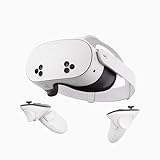
- NO WIRES, MORE FUN — Break free from cords. Game, play, exercise and explore immersive worlds — untethered and without limits.
- 2X GRAPHICAL PROCESSING POWER — Enjoy lightning-fast load times and next-gen graphics for smooth gaming powered by the SnapdragonTM XR2 Gen 2 processor.
- EXPERIENCE VIRTUAL REALITY — Take gaming to a new level and blend virtual objects with your physical space to experience two worlds at once.
- 2+ HOURS OF BATTERY LIFE — Charge less, play longer and stay in the action with an improved battery that keeps up.
- 33% MORE MEMORY — Elevate your play with 8GB of RAM. Upgraded memory delivers a next-level experience fueled by sharper graphics and more responsive performance.
This complete immersion is VR’s greatest strength and its biggest limitation. It’s why VR excels at gaming, simulations, training, and immersive fitness, but also why it’s inherently isolating and hard to integrate into everyday life.
From a hardware perspective, VR demands more. Headsets need high-resolution displays, fast processors, precise motion tracking, and enough battery or external power to drive all of it. Comfort becomes a balancing act between weight, heat, head straps, and pressure distribution, which is why even the best VR headsets are something you use for sessions, not something you forget you’re wearing.
Augmented reality adds to your world instead of replacing it
Augmented reality keeps you grounded in the real world and layers digital information on top of it. AR glasses or headsets let you see your surroundings while adding floating text, maps, notifications, or 3D objects that appear anchored to real space.
The key difference is awareness. With AR, you can walk, talk, check your phone, look at your watch, or interact with other people without removing the device. That makes AR far more compatible with daily tasks, work environments, and wearable form factors.
Technically, AR trades raw immersion for subtlety. Displays are often transparent or waveguide-based, brightness must fight daylight, and visuals are usually simpler. But AR devices can be lighter, more comfortable, and closer to something you’d wear for hours, which is why companies like Apple, Meta, Google, and Samsung see AR as the long-term wearable play.
Immersion versus integration is the real dividing line
The simplest way to separate VR and AR is this: VR asks you to step out of your life, while AR tries to fit into it. VR is about presence in a digital space; AR is about enhancing the physical space you already occupy.
This difference shows up immediately in use cases. VR is ideal for focused experiences like gaming, virtual workouts, therapy, design visualization, and training simulations where distraction-free immersion matters. AR shines in navigation, productivity overlays, contextual notifications, remote assistance, and glanceable information that complements what you’re already doing.
For wearables, this distinction is critical. Devices meant to be worn all day must respect comfort, battery life, social acceptability, and safety. Blocking your vision entirely works for a workout or a game, but not for commuting, working, or moving through public spaces.
How each technology fits into health, fitness, and work
In fitness, VR creates motivation through immersion. Boxing games, rhythm workouts, and virtual environments can push intensity and engagement far beyond a flat screen, but they require space, time, and intentional setup.
AR approaches fitness more like a smartwatch on your face. Think pace indicators during a run, form cues during strength training, route overlays while cycling, or real-time biometrics pulled from a wearable ecosystem. It’s less dramatic, but far easier to integrate consistently.
At work, VR is powerful for training, collaboration, and design reviews, especially when physical presence isn’t possible. AR, however, aligns better with everyday productivity, from floating calendars and notifications to step-by-step instructions, translations, or data overlays while keeping hands free.
Why VR and AR feel so different to wear
Comfort and wearability expose the gap between these technologies more than spec sheets ever will. VR headsets tend to be heavier, warmer, and more fatiguing, even as designs improve and pancake lenses reduce bulk.
AR glasses face different challenges, like limited battery life, narrower fields of view, and less visually rich graphics. But they benefit from lighter frames, better balance, and the psychological comfort of maintaining eye contact and situational awareness.
This is why VR headsets feel like devices you use, while AR glasses aim to feel like something you wear. That distinction matters enormously if the goal is mainstream adoption rather than niche enthusiasm.
Plain-English takeaway before we go deeper
Virtual reality is about escaping into digital worlds with maximum immersion, and it works best in focused, intentional sessions. Augmented reality is about blending digital information into real life, and it works best when it’s subtle, persistent, and wearable.
Understanding this separation sets the stage for the bigger question that follows: which of these technologies can realistically move from impressive demos to everyday wearables that people rely on, much like smartwatches today.
Hardware Reality Check: Headsets, Glasses, and Why Form Factor Decides Everything
Once you move past demos and developer videos, hardware reality is where the AR versus VR debate becomes brutally honest. What you can wear comfortably, repeatedly, and socially acceptable matters more than pixel counts or processor names.
Form factor isn’t a design detail here; it’s the deciding factor that determines whether these technologies live on your desk or on your face every day.
VR headsets: Powerful, improving, and still session-based
Modern VR headsets have made real progress in optics and ergonomics. Pancake lenses, better weight distribution, and higher-resolution displays have dramatically improved clarity and reduced eye strain compared to first-generation devices.
But even the best VR headsets remain large, enclosed objects. They sit proud on the face, trap heat, and rely on straps, facial interfaces, and counterweights to manage mass rather than eliminate it.
That physical reality shapes how VR is used. You don’t casually put on a headset to check a message or glance at your calendar the way you glance at a smartwatch.
Comfort ceilings and why they matter
VR discomfort isn’t just about weight; it’s cumulative fatigue. Neck strain, facial pressure, thermal buildup, and motion sensitivity all stack up over time, even for experienced users.
Most people naturally cap VR sessions at 30 to 90 minutes. That’s perfectly fine for gaming, training, or immersive experiences, but it makes VR ill-suited for persistent, background computing.
This is why VR excels as a destination device rather than a constant companion.
AR glasses: Lighter, subtler, and constrained by physics
AR glasses attack the problem from the opposite direction. Instead of maximizing immersion, they prioritize balance, thinness, and visual transparency.
Most current AR glasses weigh closer to a chunky pair of sunglasses than a headset. Materials like lightweight plastics, aluminum frames, and minimal padding dominate because every gram matters on the bridge of your nose.
The trade-off is immediately visible. Narrower fields of view, simpler graphics, and brightness limitations are the price paid for something you can realistically wear for hours.
Battery life exposes the biggest divergence
VR headsets can hide large batteries in rear housings or external packs. Two to three hours of active use is common, and that’s acceptable because sessions are intentional.
AR glasses don’t have that luxury. Slim temples and nose bridges leave little room for cells, forcing aggressive power management or reliance on tethered devices like smartphones or pocket compute units.
In practice, this means AR glasses often behave more like smartwatches than headsets. They prioritize glances, brief interactions, and efficiency over sustained visual intensity.
Heat, thermals, and silent deal-breakers
Thermal management is an unglamorous but decisive factor. VR headsets can vent heat away from the face using internal fans, at the cost of noise and bulk.
AR glasses sit millimeters from skin and eyes, making active cooling difficult. Even modest heat buildup becomes uncomfortable quickly, limiting processor performance and visual brightness.
This constraint explains why AR hardware advances feel slower. The challenge isn’t ambition; it’s physics pressed against human comfort.
Displays, optics, and the illusion gap
VR benefits from fully controlled visuals. High refresh rates, deep contrast, and wide fields of view create presence that no AR system currently matches.
AR must fight ambient light, reflections, and transparency compromises. Waveguides and micro-displays are improving, but text clarity and outdoor visibility still lag behind expectations set by phone screens.
For now, AR excels at simple overlays and contextual cues, not cinematic visuals.
Input methods reveal intended use
VR headsets thrive on controllers, hand tracking, and room-scale interaction. These inputs assume you’re dedicated to the experience and physically engaged.
AR glasses favor subtle inputs. Voice, head gestures, touch surfaces on frames, or paired smartwatch and phone controls are common.
This reinforces the philosophical split. VR asks for your full attention, while AR borrows it briefly and gives it back.
Social acceptability is hardware-dependent
Wearing a VR headset isolates you visually and socially. Even in professional settings, it creates a clear boundary that says, “I’m not available.”
AR glasses aim to disappear into normal life. Maintaining eye contact, awareness, and conversational cues isn’t a software feature; it’s a hardware necessity.
If a device makes people uncomfortable around you, it will never become an everyday wearable.
Ecosystem integration favors AR long-term
AR glasses naturally plug into existing wearable ecosystems. They can surface data from smartwatches, phones, fitness trackers, and health sensors without duplicating hardware.
VR headsets tend to be self-contained platforms. They integrate with PCs and consoles well, but less so with daily wearable data streams like heart rate, activity, or notifications.
For companies already invested in wearables, AR fits the trajectory more cleanly.
Cost, durability, and ownership realities
VR headsets offer impressive value per dollar in terms of display technology and compute power. But they are fragile, space-consuming devices that require careful storage and maintenance.
AR glasses must survive daily life. Scratches, sweat, rain resistance, hinge durability, and lens coatings suddenly matter as much as processors and sensors.
Rank #2

- 256GB Storage Capacity
- Top VR Experience: Oculus Quest 2 features a blazing-fast processor, top hand-tracking system, and 1832 x 1920 Pixels Per Eye high-resolution display, offering an incredibly immersive and smooth VR gaming experience.
- Anti-Slip Controller Grip Covers: grip covers are made of nice silicone material that effectively prevents sweat, dust, and scratches. Anti-slip bumps enhance the handgrip and feel.
- Adjustable Knuckle Straps: knuckle straps make it possible to relax your hands without dropping the controllers. High-quality PU material offers extra durability and velcro design makes it easy to adjust the strap length to different needs.
This pushes AR hardware closer to the expectations set by watches and eyewear, not consumer electronics.
What the hardware tells us without saying it out loud
VR hardware screams capability and immersion, even if comfort lags behind. AR hardware whispers practicality, even if ambition is temporarily constrained.
The form factors themselves reveal where each technology fits. One is built around maximum experience density, the other around maximum wear time.
That distinction, more than any roadmap slide or keynote promise, determines which path can realistically lead to everyday wearables over the next decade.
Where VR Works Today: Gaming, Training, Fitness, and Fully Immersive Use Cases
All of the constraints that make VR impractical as an all-day wearable are exactly what allow it to excel in focused, intentional sessions. When you choose to put on a headset, isolation becomes a feature rather than a flaw.
This is where VR is already succeeding, not as a replacement for phones, watches, or glasses, but as a purpose-built tool for deep immersion.
Gaming: VR’s strongest and most mature success story
Gaming remains VR’s clearest product-market fit because it rewards total sensory takeover. Headsets like Meta Quest 3, PlayStation VR2, and PC-tethered systems from Valve and HTC are designed around high refresh rates, wide field-of-view optics, and precise motion tracking rather than social subtlety.
In practical terms, this means front-heavy devices with active cooling, thick face gaskets, and adjustable straps that prioritize stability over elegance. Comfort has improved significantly, but even the best-balanced headsets are still something you wear for one to two hours, not all afternoon.
The software ecosystem reflects this focus. VR games are built around physicality, spatial awareness, and embodiment in a way flat screens cannot replicate, whether that’s rhythm-based titles, cockpit simulators, or room-scale shooters.
For consumers, VR gaming is no longer experimental. It’s a defined category with clear value, provided you have the space, time, and tolerance for a device that fully removes you from your surroundings.
Training and simulation: where immersion equals effectiveness
Outside entertainment, VR’s isolation becomes a serious advantage in training environments. Industries like aviation, medicine, manufacturing, and defense use VR to recreate high-risk or high-cost scenarios safely and repeatedly.
Here, headset size and aesthetics matter far less than accuracy and reliability. Eye tracking, hand tracking, and precise controller input allow trainees to build muscle memory and procedural confidence without real-world consequences.
This is also where VR integrates most cleanly with enterprise software ecosystems. Sessions are scheduled, data is logged, performance is reviewed, and the headset goes back on a charging dock until the next use.
These use cases don’t require VR to be socially acceptable or wearable all day. They require it to be dependable, repeatable, and convincing, which plays directly to VR’s strengths.
Fitness and physical training: immersive, measurable, but intentional
VR fitness has evolved from novelty to legitimate workout tool, especially for users who struggle with motivation in traditional fitness settings. Apps and games combine movement tracking, heart rate data, and progressive difficulty into sessions that feel more like play than exercise.
Headsets are increasingly designed with this in mind. Washable facial interfaces, improved ventilation, and support for external heart rate straps acknowledge that VR is being used for sweat-heavy sessions.
That said, VR fitness remains session-based rather than ambient. You don’t casually put on a headset to check your activity rings or take a walking meeting. It’s closer to stepping onto a treadmill or spin bike than wearing a smartwatch.
For wearable buyers already invested in health ecosystems, VR fitness complements watches and trackers rather than replacing them. The watch captures daily health data; VR provides high-intensity, immersive training blocks.
Fully immersive work and creative environments
VR also excels when the goal is to escape physical constraints entirely. Virtual workspaces, 3D design tools, and collaborative environments benefit from infinite screen real estate and spatial organization that no monitor setup can match.
Designers, engineers, and developers use VR to manipulate scale, depth, and perspective in ways that feel intuitive once learned. For these users, wearing a bulky headset is an acceptable trade-off for capabilities that simply don’t exist on a desk.
However, these workflows still demand deliberate setup and mental context switching. Battery life, heat buildup, and visual fatigue limit continuous use, reinforcing VR’s role as a tool you enter and exit rather than live inside.
This is not a failure of the technology. It’s a clear signal of what VR is optimized to do.
Why these use cases work and others don’t
Across gaming, training, fitness, and immersive work, the pattern is consistent. VR thrives when users are willing to suspend the physical world in exchange for depth, focus, and intensity.
The hardware tells the same story. Large displays, enclosed optics, and compute-heavy architectures are incompatible with constant wear but ideal for short, high-impact experiences.
Understanding where VR works today helps clarify the broader AR versus VR debate. VR is not waiting to become something else; it is already very good at what it was built to do.
Where AR Already Fits Daily Life: Navigation, Notifications, Workflows, and Wearable Overlays
If VR succeeds by replacing reality, AR advances by staying out of its way. Instead of asking users to step into a different world, augmented reality layers information onto the one they already inhabit.
This distinction is why AR has quietly found traction in daily life, even before the hardware feels fully “ready.” Many of the most practical AR experiences today are less about spectacle and more about reducing friction in moments where reaching for a phone or glancing at a watch feels like one step too many.
Navigation that works while you’re moving
Turn-by-turn navigation is where AR’s value becomes immediately obvious. When directions appear in your field of view rather than on a phone screen, your attention stays on the road, sidewalk, or trail instead of bouncing between environments.
We already see this in limited form through phone-based AR navigation, but wearable implementations hint at what’s coming. Glasses that project arrows, distance cues, or lane guidance remove the need to raise your wrist or pull out a device, a clear upgrade over smartwatch haptics alone.
For cyclists, runners, and urban walkers, this matters more than raw display quality. Lightweight frames, balanced weight distribution, and all-day battery life are far more important than photorealistic overlays, which is why current AR glasses prioritize simple, high-contrast visuals over complexity.
Notifications without breaking context
Smartwatches taught consumers that not every alert deserves a phone unlock. AR extends that philosophy from the wrist into the environment itself.
A glanceable notification floating at the edge of your vision is often less disruptive than a wrist vibration or audible chime. You can triage messages, calendar alerts, or delivery updates without breaking a conversation, workout, or commute rhythm.
This is also where ecosystem integration matters. AR glasses tied tightly to iOS or Android mirror the strengths and weaknesses of those platforms, including notification controls, focus modes, and cross-device handoff. When done well, AR becomes an extension of your watch and phone rather than a competing screen.
Workflows that benefit from heads-up information
The most successful AR workflows today are not about replacing laptops or tablets. They are about reducing micro-interruptions in tasks that already demand physical presence.
Think warehouse picking, field service, healthcare rounds, or manufacturing checks. In these environments, AR overlays deliver checklists, schematics, or confirmation prompts without forcing workers to stop, step away, or handle another device.
Even in office-adjacent work, there are hints of broader adoption. Subtle calendar cues, meeting reminders, or live captions during calls can live in AR without demanding full immersion, something VR struggles to achieve comfortably for hours at a time.
Wearable overlays as an extension of the smartwatch
For wearable buyers, the most realistic near-term future is not choosing between a watch or AR glasses, but using both together. Smartwatches remain superior for health tracking, tactile interaction, and quick inputs, while AR excels at passive visual output.
Health data is a good example. Your watch continues to handle sensors, battery-intensive monitoring, and haptic feedback, while AR surfaces context like heart rate zones during a run or recovery prompts during a walk. The watch does the measuring; AR does the showing.
Comfort and wearability are the limiting factors. Glasses must be light enough for multi-hour wear, compatible with prescription lenses, and durable enough for daily use, all without sacrificing battery life. This constraint explains why current AR overlays are simple and monochrome rather than richly animated.
Why AR feels incremental but scales better
AR’s progress can feel slow compared to VR’s dramatic demos, but that is largely by design. Each step forward must respect social acceptability, comfort, and battery constraints that VR simply does not face.
The payoff is longevity. A device you can wear for eight to twelve hours, even if it does less at any given moment, has more opportunities to integrate into daily routines than a headset designed for ninety-minute sessions.
This is the fundamental reason AR aligns so naturally with wearables. It builds on behaviors people already accept, like glancing at a watch or checking a notification, rather than asking them to opt into an entirely separate mode of computing.
As AR hardware improves, these overlays will become more capable without demanding new habits. That quiet scalability is what gives AR its long-term advantage in everyday life, even while VR continues to dominate experiences that reward total immersion.
The Wearables Lens: Battery Life, Comfort, Display Tech, and Why AR Has an Edge on the Wrist and Face
Once you view AR and VR through the same criteria we use to judge watches and wearables, the gap between them becomes clearer. Battery life, comfort, materials, display efficiency, and all-day usability matter more than peak immersion when a device is meant to live on your body.
This is where AR begins to look less like a compromise and more like a natural evolution of the wearable ecosystem, while VR starts to resemble a powerful but situational tool.
Battery life is destiny in wearables
In watches, battery life is often the deciding factor between a device you trust daily and one you tolerate occasionally. The same rule applies to head-worn tech.
VR headsets are inherently power-hungry. Dual high-resolution displays, continuous head tracking, active cooling, and heavy GPU workloads mean most standalone VR headsets still top out at two to three hours per charge in real-world use.
Rank #3

- Improved Comfort and Fit: The PU Leather Foam Replacements is designed to provide a more comfortable and immersive experience while wearing the Oculus Quest 2 headset.
- Premium Materials: The AMZDM Quest 2 Face Pad is made with high-quality PU leather for enhanced comfort and durability. It includes a PU Leather Foam Replacement that provides a soft and sweatproof experience.
- Enhanced Air Circulation: Unique L-Shaped vent design of ventilation and exhaust holes which exhausts the gas generated in the VR eye cover without light leakage, relieves temperature, provides a more comfortable experience.
- Go Deep into vR: The improved nosepieces to solve the light-leakage problem around the nose, enjoy immersive vr experiences by using this comfy face pad for meta quest 2 accessories.
- Easy to Use: Designed for easy installation and replacement. The included Velcro makes it simple to attach and secure the face pad to the headset. The face pad can be easily cleaned with microfiber cloth, ensuring an enjoyable VR experience.
That’s acceptable for gaming sessions, but it fundamentally disqualifies VR from all-day wear in the way a smartwatch or fitness tracker is expected to perform.
AR glasses operate under a different philosophy. By displaying only essential information and leaving the real world intact, they dramatically reduce rendering demands and sensor load.
Current AR glasses still struggle to reach a full workday without compromises, but four to eight hours of mixed use is already achievable in lightweight designs. More importantly, AR power curves scale in a way VR’s do not, improving incrementally with more efficient processors and microdisplays rather than requiring wholesale breakthroughs.
Comfort, weight, and the reality of wearing something for hours
Watch collectors understand how even a few millimeters of thickness or grams of weight can determine whether a piece disappears on the wrist or constantly reminds you it’s there. Head-worn devices magnify this sensitivity.
VR headsets remain front-heavy, bulky, and thermally constrained. Even well-balanced designs create pressure points on the face and head over time, and heat buildup is unavoidable during longer sessions.
That physical presence reinforces VR’s role as something you put on intentionally, then take off.
AR glasses, by contrast, are converging toward familiar eyewear proportions. Weight distribution matters more than absolute mass, and materials like magnesium frames, titanium hinges, and flexible nose bridges play the same role here as bracelet articulation does on a watch.
Prescription lens integration is another crucial factor. A wearable that requires contact lenses or adapters immediately limits its audience, while AR glasses that accommodate custom optics feel closer to something you could genuinely wear from morning to evening.
Display technology favors augmentation, not isolation
VR’s display requirements are brutal. High pixel density, wide fields of view, low persistence, and high refresh rates are all non-negotiable to avoid motion sickness and maintain immersion.
That drives cost, power consumption, and thermal output upward, making VR displays impressive but inefficient from a wearable standpoint.
AR displays can be far simpler and still useful. Monochrome waveguides, microLED projection, and limited fields of view may look underwhelming in demos, but they excel at clarity, brightness, and legibility in real-world conditions.
Just as a watch dial prioritizes contrast and glanceability over cinematic visuals, AR displays are optimized for quick, contextual information rather than visual spectacle.
This design philosophy aligns perfectly with notifications, navigation cues, fitness metrics, and subtle prompts that enhance awareness without demanding attention.
Why AR pairs naturally with the wrist
Smartwatches already handle the hardest parts of wearable computing: continuous sensing, health tracking, authentication, and battery management. They are dense with sensors, optimized for skin contact, and socially accepted.
AR glasses benefit enormously from offloading tasks to the wrist. The watch becomes the sensor hub and control surface, while AR becomes the display layer.
This division mirrors traditional watchmaking logic. The movement does the work; the dial presents the information. AR simply externalizes the dial into your field of view.
From a comfort and battery perspective, this pairing makes far more sense than cramming everything into a single head-worn device. It also explains why companies like Apple, Meta, and Google continue to invest in cross-device experiences rather than standalone AR computers.
VR’s strengths don’t translate to wearable habits
None of this diminishes VR’s value. For training, simulation, immersive fitness, and entertainment, VR remains unmatched.
The issue is behavioral, not technical. VR requires isolation, space, and intent. You don’t casually put on a VR headset to check your heart rate or glance at a message.
Wearables thrive on interruption, not immersion. They succeed because they fit into moments between other activities, not because they replace everything else you’re doing.
That fundamental mismatch is why VR has struggled to move beyond the living room or dedicated workspace, while AR continues to inch closer to everyday relevance.
The five-to-ten-year wearable outlook
Over the next decade, AR glasses are likely to follow the same adoption curve as smartwatches. Early versions will feel limited, battery-constrained, and occasionally awkward, but each generation will improve quietly rather than dramatically.
Expect better microLED displays, lighter frames, longer battery life through co-processors, and tighter integration with watches, phones, and health platforms.
VR will also improve, but along a different path. Higher fidelity, better ergonomics, and more compelling content will make it indispensable for certain tasks, just not ubiquitous.
If the question is which technology fits naturally into the logic of wearables, AR already behaves like one. It respects the same constraints that define good watches and successful wearables: comfort, endurance, clarity, and the ability to disappear until needed.
Ecosystem Power Plays: Apple, Meta, Google, and Samsung’s Diverging AR and VR Strategies
What ultimately decides whether AR or VR becomes mainstream isn’t display technology or processing power alone. It’s ecosystem leverage: how well these experiences slot into devices people already wear, charge daily, and trust with health, work, and communication.
The same logic that governs smartwatches versus traditional watches applies here. Hardware matters, but software integration, comfort, battery life, and habitual use matter more.
Apple: AR as an extension of the body, not a destination
Apple’s strategy is rooted in continuity rather than disruption. Vision Pro may look like a high-end VR headset, but its long-term value is clearly AR-first, even if today’s hardware can’t fully realize that vision yet.
Apple treats head-worn displays the way it treats watches: as nodes in a broader system. The iPhone handles connectivity and computation, the Apple Watch manages health, notifications, and authentication, and future AR glasses become the glanceable interface layered on top.
This approach prioritizes comfort and battery life over immersion. Apple knows that anything worn on the face for hours must disappear physically and cognitively, much like a well-designed watch case that melts into the wrist.
Vision Pro’s current weight, external battery pack, and limited wear time tell you this is a development platform, not the end state. Apple is building the software grammar, interaction model, and developer ecosystem now, so lightweight AR glasses can feel inevitable later.
Meta: VR scale today, AR ambition tomorrow
Meta remains the most aggressive company in VR, largely because it views immersive computing as a social platform rather than a wearable accessory. Quest headsets are designed to dominate attention, not coexist with daily routines.
That focus has delivered results. Quest is affordable, content-rich, and surprisingly usable for fitness, gaming, and virtual workspaces, even if comfort and battery life still cap sessions at a few hours.
Where Meta diverges is its willingness to tolerate bulk and isolation in exchange for engagement. This makes sense for VR, but it clashes with wearable logic, where friction kills adoption.
Meta’s Ray-Ban smart glasses show it understands this problem. Those glasses prioritize lightness, style, and all-day wear, even though their AR capabilities are minimal today. They function more like an audio-first wearable than a visual one.
The long-term bet is convergence: VR for depth and immersion at home, AR glasses for social and contextual computing outside it. The challenge is unifying those worlds without forcing users into Meta-controlled spaces to make them useful.
Google: Infrastructure first, hardware second
Google’s past AR efforts failed not because the technology was bad, but because the ecosystem wasn’t ready. Glass arrived before smartphones, wearables, and cloud AI could meaningfully support it.
This time, Google is taking a quieter route. Android XR, Gemini-powered contextual AI, and deep integration with Maps, Search, and Workspace point to AR as a service layer rather than a hero device.
Google doesn’t need to sell the glasses to win. It needs its software running on them, much like Wear OS eventually found its footing by integrating tightly with Android phones and health platforms.
From a wearable perspective, this is pragmatic. Google understands that battery life, thermal limits, and comfort will always be constrained on the face. Offloading intelligence to phones, watches, and the cloud is the only scalable solution.
Expect Google-backed AR to feel less magical but more useful, especially for navigation, translation, and task-oriented overlays that mirror how people already use their phones and watches.
Samsung: Hardware mastery looking for a platform moment
Samsung’s position is defined by manufacturing strength rather than software control. Displays, optics, sensors, and miniaturization are all areas where Samsung quietly leads.
Its challenge has always been cohesion. Tizen struggled, Wear OS took time to mature, and AR efforts often felt like experiments rather than long-term commitments.
That’s changing through partnerships. Samsung’s collaboration with Google on Android XR and its close alignment with Qualcomm suggest a renewed focus on shared platforms rather than proprietary detours.
Samsung’s wearables expertise matters here. Galaxy Watches have steadily improved comfort, durability, and health tracking, proving Samsung understands daily wear constraints. Applying that philosophy to AR glasses could yield hardware people actually tolerate for long periods.
If Samsung succeeds, it won’t be by redefining AR experiences. It will be by making them lighter, cooler, better finished, and more affordable than competitors.
Why these strategies point AR and VR in different directions
Across all four companies, a pattern emerges. VR is treated as a destination device, something you plan to use. AR is treated as an ambient interface, something that accompanies you.
Rank #4
- NO WIRES, MORE FUN — Break free from cords. Game, play, exercise and explore immersive worlds — untethered and without limits.
- 2X GRAPHICAL PROCESSING POWER — Enjoy lightning-fast load times and next-gen graphics for smooth gaming powered by the SnapdragonTM XR2 Gen 2 processor.
- EXPERIENCE VIRTUAL REALITY — Take gaming to a new level and blend virtual objects with your physical space to experience two worlds at once.
- 2+ HOURS OF BATTERY LIFE — Charge less, play longer and stay in the action with an improved battery that keeps up.
- 33% MORE MEMORY — Elevate your play with 8GB of RAM. Upgraded memory delivers a next-level experience fueled by sharper graphics and more responsive performance.
The companies most aligned with wearables are the ones building cross-device systems rather than standalone headsets. Apple’s watch-phone-glasses triangle, Google’s cloud-first overlays, and Samsung’s hardware-led pragmatism all point toward AR living alongside existing wearables.
Meta’s VR-first posture remains powerful but structurally different. It excels where immersion is the product, not the byproduct.
For consumers, this means expectations should be calibrated accordingly. VR will keep getting better at what it already does well. AR will arrive slowly, unevenly, and sometimes frustratingly, but when it works, it will feel less like new technology and more like a natural extension of the devices you already wear.
Health, Fitness, and Productivity: Which Technology Integrates Better Into Real Routines
Once AR and VR are framed as ambient versus intentional technologies, their differences become clearest in health, fitness, and productivity. These are not novelty categories where occasional use is enough. They demand comfort, consistency, and the ability to disappear into everyday life rather than dominate it.
This is where the wearables mindset matters most. Devices that succeed here must be light, socially acceptable, battery-efficient, and deeply integrated with phones, watches, and existing health platforms.
Fitness and physical activity: immersion versus continuity
VR’s biggest success in fitness comes from turning exercise into an event. Titles like Supernatural, FitXR, and Les Mills Bodycombat thrive because they replace gyms with immersive environments that make high-intensity workouts feel shorter and more engaging.
The trade-off is friction. A headset weighing 400 to 600 grams, heat buildup, face pressure, and limited battery life make VR workouts something you schedule, not something you casually layer into a day. Sweating into foam facial interfaces and managing hygiene also limits how frequently many users return.
AR approaches fitness from the opposite direction. Instead of replacing the world, it augments it. Navigation cues during runs, posture feedback during yoga, pacing alerts while cycling, or contextual coaching layered onto real surroundings feel closer to how smartwatches already support exercise.
The key advantage is continuity. AR glasses that weigh closer to 50 grams, paired with a watch handling heart rate, GPS, and motion tracking, can support long sessions without demanding attention. Fitness becomes enhanced rather than relocated.
Health tracking and passive monitoring
VR plays a limited role in ongoing health monitoring. While headsets can track head movement, eye position, and even basic biometrics, they are not worn long enough to generate meaningful longitudinal health data.
AR, by contrast, aligns naturally with passive health tracking. Glasses can monitor eye strain, blink rate, posture, and environmental exposure while deferring core biometrics to a smartwatch or ring. This distributed model mirrors how wearables already work best, with each device optimized for a specific sensor role.
Apple’s approach hints at this future. Watch handles heart rate variability, oxygen saturation, sleep, and movement, while glasses could surface trends contextually rather than requiring deliberate app engagement. Health insights appear when relevant, not when summoned.
Over time, this kind of low-interruption feedback is more likely to influence behavior than immersive dashboards that require full disengagement from the real world.
Mental health and cognitive load
VR has shown real promise in controlled mental health environments. Guided meditation, exposure therapy, and anxiety reduction programs benefit from total immersion, especially when clinical structure is involved.
However, these experiences remain episodic. Most users do not want to retreat into a headset multiple times per day to regulate stress or focus.
AR’s strength is cognitive load management rather than escape. Subtle prompts to stand, breathe, refocus, or step away from a screen can happen without removing awareness of surroundings. In professional settings, this matters. Mental health support that blends into workdays is more sustainable than interventions that demand isolation.
The risk with AR is notification creep. Without disciplined software design, overlays can increase stress rather than reduce it. This is where platform maturity and restraint will separate useful systems from exhausting ones.
Productivity and professional workflows
VR excels when productivity means spatial computing. Architecture reviews, 3D modeling, simulation training, and collaborative design benefit enormously from scale and immersion. In these cases, VR replaces physical infrastructure and delivers measurable efficiency gains.
What VR does poorly is integrate into fragmented, interruption-heavy workdays. Email, messaging, quick document edits, and context switching all suffer when everything requires a headset session.
AR is built for exactly those fragments. Calendar prompts, navigation, translation, live captions, task lists, and glanceable data fit naturally into glasses that behave more like an extension of a smartwatch display than a replacement for a laptop.
For professionals already wearing mechanical watches or slim smartwatches for comfort and discretion, AR glasses must match that ethos. Thin frames, balanced weight distribution, heat management, and battery life measured in full days rather than hours are not luxuries. They are prerequisites.
Comfort, materials, and real-world wearability
This is where the watch industry’s influence quietly matters. People accept daily-wear objects when materials, finishing, and ergonomics are refined. Titanium cases, well-balanced bracelets, curved sapphire, and breathable straps are why high-end watches disappear on the wrist.
VR headsets are improving, but they remain closer to helmets than accessories. Even the best-balanced designs still impose pressure points and visual fatigue over time.
AR glasses must behave more like eyewear than electronics. Frame materials, lens coatings, hinge durability, and weight distribution will determine adoption more than processing power. Battery placement, thermal management, and the ability to wear them for hours without facial fatigue will decide whether they live on desks or faces.
Companies that understand this, often those with watch and wearable experience, are better positioned than those coming purely from gaming or display backgrounds.
Ecosystem integration and long-term behavior change
Sustainable habits form when technology fades into the background. Smartwatches succeeded not because they were revolutionary, but because they integrated quietly with phones, health apps, and daily routines.
AR follows this same trajectory. When glasses share data seamlessly with watches, phones, and cloud services, they reinforce behavior over time. When they demand exclusive attention, they become optional.
VR will continue to thrive where depth matters more than duration. AR will grow where frequency matters more than intensity. In health, fitness, and productivity, frequency almost always wins.
This does not diminish VR’s value. It clarifies its role. VR is a tool you step into. AR is something you live with.
Barriers to Mass Adoption: Cost, Social Acceptability, Software Gaps, and Motion Fatigue
If comfort and ecosystem fit determine whether AR and VR can stay on the body, these next barriers determine whether they earn a place in everyday life at all. None are insurmountable, but together they explain why adoption remains slower than the technology headlines suggest.
Cost and perceived value
Price remains the most immediate friction point, especially when compared to mature wearables like smartwatches. Consumers are comfortable paying $300–$500 for a watch that replaces multiple habits, but far less comfortable paying four figures for a device that feels supplemental.
VR headsets have made progress here, with standalone models undercutting the cost of gaming PCs. Even so, they remain purpose-driven purchases, justified mainly by entertainment rather than daily utility.
AR glasses face a steeper value challenge. Early products often cost as much as a premium smartphone while offering limited standalone functionality, short battery life, and heavy reliance on a companion phone. Until AR glasses can replace or meaningfully reduce screen time on existing devices, many buyers will struggle to rationalize the spend.
Social acceptability and the eyewear problem
Wearables succeed when they blend into social norms. Watches and earbuds crossed that threshold years ago; head-mounted displays have not.
VR’s isolation is both its strength and its weakness. Putting on a headset signals disengagement from the surrounding world, which limits when and where it feels appropriate. This confines VR largely to private spaces and scheduled sessions.
AR has the opposite challenge. Glasses are worn in public, which means aesthetics, trust, and social comfort matter as much as technical specs. Cameras, displays, and sensors raise privacy concerns, while bulky frames or visible hardware immediately mark the wearer as “tech-forward” in ways many people resist. For AR to scale, it must feel closer to prescription eyewear or sunglasses than a prototype strapped to the face.
Software maturity and the missing everyday apps
Hardware tends to arrive before the software knows what to do with it, and both AR and VR are still paying that tax. VR excels at immersive experiences, but outside gaming, fitness, and simulation, the app ecosystem thins quickly.
AR’s problem is subtler but more limiting. Most current AR experiences are fragments: notifications, navigation overlays, camera-based tricks, or developer demos. Few are indispensable, and fewer still are designed for hours-long wear.
This mirrors early smartwatch history, before health tracking and notifications converged into clear value. AR needs its equivalent of activity rings, passive health insights, or glanceable productivity tools that reward frequent, low-effort use rather than demanding attention.
Motion fatigue, visual strain, and human limits
No discussion of adoption is complete without acknowledging physiology. VR-induced motion sickness has improved with higher refresh rates and better tracking, but it has not disappeared. Even experienced users often cap sessions at 30–60 minutes.
Visual fatigue is a quieter issue. Vergence-accommodation conflict, display brightness, and lens quality all affect comfort over time. This matters less for VR, which is designed for finite sessions, and far more for AR, which aspires to all-day wear.
Weight distribution, heat, and pressure points compound the problem. A few extra grams on the nose bridge or temples may seem trivial on paper, but over a full workday they become deal-breakers. Until AR glasses match the comfort expectations of traditional eyewear, motion fatigue and eye strain will quietly limit how often they are worn.
Fragmentation across platforms and ecosystems
Finally, both AR and VR suffer from ecosystem fragmentation. Different operating systems, app stores, input methods, and spatial standards slow developer investment and confuse consumers.
Smartwatches succeeded in part because they aligned tightly with dominant phone platforms. AR and VR still lack that kind of gravitational center, especially for cross-device experiences that span watches, phones, and head-worn displays.
Over the next decade, the winners will not simply ship better displays or faster chips. They will remove friction across cost, comfort, software usefulness, and social acceptance simultaneously. Until then, AR and VR will continue to feel impressive, but not yet inevitable.
The Next 5–10 Years: How AR and VR Will Evolve — and Whether They Converge
If today’s headsets feel impressive but awkward, the next decade is about making them quietly useful. The same forces that once turned smartwatches from curiosities into daily tools are now shaping AR and VR: smaller hardware, longer battery life, tighter platform integration, and software that rewards frequent, low-effort use.
Rather than a single winner emerging, AR and VR are likely to evolve along different timelines before partially converging. Understanding that split is key to setting realistic expectations as a consumer.
💰 Best Value

- English (Subtitle)
- English (Publication Language)
VR’s near-term future: better immersion, clearer purpose
Over the next five years, VR will continue to mature as a session-based device. Headsets will get lighter and sharper, but they will still be something you put on deliberately, not wear all day.
Display resolution and optics will see steady gains, reducing screen-door effects and eye strain. Pancake lenses, higher pixel density, and better foveated rendering will allow slimmer designs without sacrificing immersion.
Comfort improvements will matter as much as visuals. Better weight distribution, breathable facial interfaces, and modular straps will make 60–90 minute sessions more tolerable, but that session mindset will remain central to VR’s identity.
Use cases will also narrow and strengthen. Gaming, immersive fitness, training simulations, and focused productivity will dominate, with clearer value propositions for each. VR will not replace laptops or phones, but it will increasingly justify its shelf space.
AR’s slower burn: from novelty glasses to daily companion
AR’s next decade is less about spectacle and more about persistence. The long-term goal is eyewear you forget you’re wearing, not something you strap on for a demo.
In the next 5–7 years, AR glasses will move through awkward middle generations. Expect devices that are lighter and more stylish than today’s prototypes, but still limited in battery life, field of view, and processing power.
Most early wins will come from glanceable interactions. Navigation cues, notifications, translation, subtle fitness prompts, and contextual reminders will matter more than floating 3D objects.
This mirrors early smartwatch evolution, where health tracking and passive insights created daily value long before full app ecosystems matured. AR’s success hinges on similar “always-there, rarely-demanding” experiences.
Battery life and silicon decide the pace
Both AR and VR are ultimately constrained by physics. Displays, sensors, and spatial processing demand power, and faces and heads have little tolerance for heat or weight.
VR benefits from larger batteries and active cooling, allowing more aggressive performance scaling. AR glasses, by contrast, must survive on smartwatch-level power budgets while remaining comfortable for hours.
Custom silicon will be a major differentiator. Apple, Meta, and Google are all investing in chips tuned for spatial workloads, eye tracking, and low-latency sensor fusion.
Over time, expect more offloading between devices. Phones, watches, and even cloud processing will quietly handle tasks to keep head-worn hardware lighter and cooler.
The rise of “mixed reality” as a bridge, not a destination
In the medium term, mixed reality headsets will act as a bridge between VR and AR. Devices like Apple Vision Pro-style systems show how immersive displays and passthrough cameras can blend virtual and real worlds convincingly.
These headsets will improve quickly, becoming slimmer and more comfortable, but they will still lean closer to VR than true AR glasses. They are excellent for home, office, and creative work, not commuting or walking the dog.
Mixed reality’s real value is developmental. It gives developers a single platform to experiment with spatial interfaces, hand tracking, and context-aware apps before those experiences migrate to lighter AR hardware.
Think of MR as the MacBook era of spatial computing, powerful and flexible, while AR glasses are the eventual smartwatch equivalent.
Convergence at the software layer, not the hardware
The most important convergence between AR and VR will happen in software and ecosystems, not form factor. Shared spatial standards, app frameworks, and input methods will matter more than whether a device is opaque or transparent.
A workout built for VR today could inform AR-based coaching tomorrow. A productivity tool designed for mixed reality may later surface as subtle AR overlays during a workday.
This mirrors how watchOS, iOS, and macOS evolved into distinct interfaces sharing a common app logic. Spatial computing will likely follow the same path.
For consumers, this means buying into an ecosystem matters more than chasing the perfect device. Compatibility with your phone, watch, fitness platforms, and productivity tools will shape long-term satisfaction.
Health, fitness, and wearables integration become decisive
Health and fitness will be one of the strongest drivers of mainstream adoption. VR already excels at immersive workouts, offering motivation and engagement traditional screens struggle to match.
Over time, tighter integration with wearables will enhance this. Heart rate, VO2 estimates, motion data, and recovery metrics from smartwatches will inform VR training intensity and AR coaching cues.
AR’s opportunity is subtler but broader. Posture reminders, gait analysis, outdoor activity overlays, and low-friction coaching could turn glasses into a passive wellness companion rather than a fitness-only device.
The winners will treat head-worn displays as part of a body-worn system, not standalone gadgets.
What consumers should realistically expect
In the next five years, VR will feel clearly worthwhile for specific activities, while AR will still feel aspirational. In ten years, AR glasses may finally reach a tipping point for daily wear, but only if comfort, battery life, and social acceptability align.
VR is likely to remain a powerful niche that grows steadily rather than explodes. AR has the larger long-term upside, but also the higher bar to clear.
Rather than one replacing the other, expect them to coexist, intersect, and slowly inform each other. The future is not a single headset that does everything, but a set of wearables that each know their place in your day.
So, Which Is the Future? A Practical Verdict for Consumers and Wearable Buyers
Stepping back from roadmaps and demos, the most honest answer is that VR and AR are heading toward very different roles. One is already useful in clearly defined moments, while the other is still negotiating its place on your face, your body, and in public life.
For consumers and wearable buyers, the “future” depends less on which technology sounds more advanced and more on how often you can realistically imagine wearing it.
VR’s future is clearer, narrower, and closer
Virtual reality has already crossed the threshold from novelty to utility. If you own a modern standalone headset, you can justify it today for fitness, gaming, guided training, virtual travel, and focused work sessions.
The trade-off is intentional isolation. A VR headset is something you put on for a purpose, much like lacing up a specific pair of running shoes or strapping on a dive watch rather than an everyday field watch.
Over the next five years, VR hardware will get lighter, sharper, and more comfortable, but its usage pattern will stay mostly the same. It will remain a powerful, deliberate experience rather than an always-on wearable.
AR’s future is bigger, but harder to reach
Augmented reality’s promise is far more ambitious: information that lives with you as you move through the world. That means navigation cues while walking, contextual notifications at work, subtle health coaching during exercise, and glanceable data that never demands your full attention.
The problem is that AR glasses must succeed simultaneously as a computer, an optical device, and a piece of wearable design. Comfort, weight distribution, lens quality, heat management, battery life, and social acceptability all have to be good enough at the same time.
This is why AR feels slower. Until AR glasses are as easy to wear as a lightweight pair of prescription frames, adoption will remain cautious, even if the software vision is compelling.
Wearables tip the long-term balance toward AR
When viewed through a wearables lens, AR has the stronger long-term trajectory. Smartwatches succeeded not because they replaced phones, but because they reduced friction for small, frequent interactions.
AR glasses aim to do the same at eye level. If they can quietly surface health metrics from your watch, directions from your phone, or reminders from your calendar without pulling you out of the moment, they become an extension of the broader wearable ecosystem.
VR integrates with wearables in a more episodic way. Heart rate, motion tracking, and recovery data can enhance workouts and simulations, but they do not turn VR into something you wear all day.
What to buy into right now
If you are choosing with your wallet today, VR offers the clearest value. A good headset delivers immediate returns in fitness motivation, immersive entertainment, and skill training, especially when paired with a smartwatch for heart rate and recovery insights.
AR purchases right now should be approached as early-adopter bets. First-generation and second-generation AR glasses are more about exploring workflows and future habits than replacing existing devices.
In both cases, ecosystem alignment matters more than raw specs. Compatibility with your phone, watch, health platforms, and productivity tools will matter far longer than resolution numbers or field-of-view claims.
The realistic 5–10 year outlook
In the next five years, VR will continue to mature quietly, becoming better rather than radically different. Expect more comfort, better passthrough, and deeper health and fitness integration, but not a dramatic shift in how or when it is used.
AR’s next decade is more uncertain but potentially transformative. If lightweight, socially acceptable glasses with all-day battery life arrive, AR could become the most personal computing interface since the smartphone.
If they do not, AR may still thrive in specialized roles such as work, navigation, and coaching without becoming truly universal.
The practical verdict
VR is the near-term winner for clear, intentional use cases. AR is the long-term contender for everyday relevance, but only if it earns its place as a wearable you forget you are wearing.
For consumers, the smartest move is not picking sides. Invest in ecosystems, not hype, and think in terms of how these devices fit into your daily rhythms rather than how futuristic they sound.
The future is not virtual or augmented in isolation. It is a layered wearable experience, where each device, from watch to glasses to headset, earns its time on your body by making life measurably better.