Shopping for a first smartwatch for a young child usually starts with a simple hope: something fun, tough, and easy enough that they won’t need help every five minutes. The VTech Kidizoom DX2 is often one of the first names parents encounter, and for good reason—it’s designed from the ground up for kids, not scaled-down adults. But before you buy, it’s important to understand exactly what kind of device this is, and what expectations it does not try to meet.
This isn’t a “junior Apple Watch,” and it’s not trying to be one. The Kidizoom DX2 sits firmly in the toy-first category, blending basic smartwatch ideas with games, cameras, and learning activities that appeal most to preschool and early elementary kids. That design choice explains both why many kids love it immediately and why some parents are surprised by its size and limitations once it’s actually on a small wrist.
Understanding what the DX2 is meant to do—and just as importantly, what it deliberately avoids—helps set the tone for the rest of this review. From here, we’ll dig into how that philosophy affects comfort, durability, learning value, and whether its chunky design is a fair tradeoff or a deal-breaker.
What the Kidizoom DX2 actually is
At its core, the Kidizoom DX2 is a self-contained kids’ gadget that happens to be worn on the wrist. There’s no Wi‑Fi, no cellular connection, and no pairing to a parent’s phone for daily use, which immediately removes many privacy and safety concerns for younger children.
🏆 #1 Best Overall

- Compact and Portable Design: The DX5 features a compact body with a 2.4-inch LCD screen. It includes a wrist strap for easy handling and a standard 1/4" tripod mount for stable shots. Powered by a 1500mAh rechargeable battery with Type-C charging , the DX5 also has an automatic power-off function to conserve battery life, ensuring you're always ready to capture the moment
- Beginner-Friendly Camera with 8 Scene Modes: Perfect for first-time users with simple menus and multi-language support. Offers 8 optimized shooting modes (portrait/landscape/night/beach/sports/party). Includes practical features: self-timer (2/5/10s), 3-shot burst, 10cm macro mode, adjustable flash, and date stamp
- Complete Package with Essential Accessories: The DX5 includes the camera body, a pre-formatted 32GB TF memory card, two rechargeable batteries, a USB-C charging cable, and a wrist strap. Whether you're a beginner, a teen, or an adult, the DX5 is a great choice for capturing life's moments
- Basic Connectivity and Warranty: The DX5 connects easily to your computer via USB 2.0 Type-C for seamless file transfer in mass storage mode. While it doesn't include WiFi or Bluetooth, its straightforward design ensures you can focus on capturing the moments that matter. Backed by a 1-year manufacturer's warranty, the DX5 is a reliable and hassle-free choice for users aged 8 and up
- 【Hassle-Free Warranty & Reliable Support】- We stand by our product with a 1-year warranty and friendly customer service. If there’s ever an issue, we’ll replace your digital camera—no questions asked. Give the gift of creativity and confidence with feature-packed, kid-tough camera
Instead, it focuses on play and basic skill-building. Kids get two built-in cameras for photos and short videos, simple motion-based games, a step counter, customizable watch faces, alarms, and a handful of creative tools like photo effects and filters. Everything runs on VTech’s own closed software, designed to be navigable by kids who are still learning to read.
From a hardware standpoint, the DX2 is built like a tank by kids’ standards. The plastic case is thick, the screen is recessed for protection, the buttons are oversized, and the silicone strap is flexible and forgiving, all clearly chosen with drops, knocks, and playground abuse in mind.
What it very clearly isn’t
The Kidizoom DX2 is not a communication device. There’s no calling, texting, voice messaging, or GPS tracking, which may be a relief for some families and a disappointment for others looking for safety features or contact during school hours.
It’s also not a fitness tracker in the modern sense. While it counts steps and encourages movement through games, there’s no heart-rate sensor, no sleep tracking, and no data syncing to parent apps or health platforms. Think of it as activity encouragement, not health monitoring.
And despite the word “smartwatch,” it doesn’t behave like one in the adult sense. Apps can’t be installed freely, performance is modest, and interactions are intentionally simple, prioritizing durability and ease over speed or polish.
Size, bulk, and why expectations matter
One of the biggest surprises for parents is just how large the Kidizoom DX2 feels once it’s on a small wrist. The case is tall and wide, with a thickness that makes it sit prominently above the wrist rather than hugging it, especially on kids under six.
This bulk isn’t accidental. It allows space for dual cameras, larger internal components, and a battery that can last several days between charges, but the tradeoff is comfort and wearability for smaller arms. For some kids, it feels fun and “cool,” while for others it can feel heavy, awkward, or something they’re happy to take off after a short while.
That physical presence plays a big role in whether the DX2 becomes a daily companion or a toy that lives in a drawer. Keeping that in mind from the start makes it easier to decide whether its playful, rugged approach matches your child’s age, wrist size, and tolerance for chunky wearables.
Design, Size, and Comfort on Small Wrists: Where the Bulk Becomes a Problem
All of that durability and kid-proofing comes with a very real physical cost once the DX2 is actually worn. On the wrist, this is less “mini smartwatch” and more “wearable toy,” and whether that’s charming or frustrating depends heavily on the child wearing it.
Case dimensions and real-world wrist presence
The Kidizoom DX2 uses a thick, rectangular plastic case that sits tall off the wrist, with wide lugs that extend well beyond many younger kids’ arm widths. On children aged four to five, the watch often spans nearly the entire top of the wrist, leaving little room for natural movement without bumping into the case edges.
Thickness is the bigger issue than width. The watch doesn’t sink into the wrist the way slimmer trackers or entry-level smartwatches do, so it tends to rock slightly from side to side, especially during active play. That movement can make it feel heavier than it actually is, even though the materials themselves are lightweight.
Weight distribution and “top-heavy” feel
While the DX2 isn’t objectively heavy, most of its mass sits above the wrist rather than being balanced by the strap. This creates a top-heavy sensation that’s noticeable when kids run, climb, or swing their arms, and it’s one of the most common reasons younger testers asked to take it off.
For kids used to nothing on their wrist, that constant awareness matters. Older children around seven or eight tend to adjust quickly, but younger kids often fidget with it, rotate it sideways, or loosen the strap to relieve pressure, which only makes the fit worse.
Strap design, adjustability, and pressure points
The included silicone strap is soft, flexible, and forgiving, with rounded edges that won’t dig into skin. That’s a win for safety and comfort, especially during long play sessions or sweaty outdoor use.
The challenge is length and hole spacing. On very small wrists, parents often have to use the tightest holes, which can bunch excess strap and press the bulky case even harder into the top of the wrist. There’s no quick-release system or alternative strap sizing included, so what you get is what you’re stuck with.
Buttons, camera bumps, and everyday irritation
The oversized side buttons are easy for small fingers to press, but they also protrude noticeably from the case. When worn snugly, those buttons can press into the wrist during crawling, coloring, or table-based activities, leading some kids to rotate the watch inward or remove it altogether.
The dual camera design adds to this bulk, creating asymmetry that’s visually fun but ergonomically awkward. It looks playful, but it reinforces the feeling that this is a chunky gadget first and a comfortable wearable second.
All-day wear vs short play sessions
In practice, most kids don’t wear the DX2 all day. It’s common for it to go on during playtime, car rides, or outings, then come off during meals, naps, or school-like activities that require fine motor movement.
That usage pattern isn’t necessarily a failure, but it’s worth understanding before buying. If you’re hoping for something your child forgets they’re wearing, the DX2 rarely delivers that experience, especially for kids under six.
Age suitability and wrist size reality check
VTech markets the DX2 broadly to kids aged four and up, but comfort improves dramatically with age and wrist size. For most children, seven to eight is where the bulk becomes less of an issue and more of a tradeoff they’re willing to accept for the games and cameras.
For younger kids, especially those with slim wrists, the size alone can limit how much value they get from it. It’s not that it doesn’t fit; it’s that it doesn’t disappear, and that constant presence shapes how often it’s worn and enjoyed.
How it compares to slimmer alternatives
Compared to simpler activity bands or newer kid-focused smartwatches with flatter profiles, the DX2 feels dated in its physical design. Those slimmer options often sacrifice cameras or ruggedness, but they’re far more comfortable for all-day wear and better suited to smaller arms.
The DX2 makes a clear choice in favor of toughness and features over ergonomics. For families who prioritize durability and playful interaction over comfort, that choice makes sense. For parents focused on wearability first, the bulk becomes the deciding factor.
Kid-Friendly Features That Actually Entertain: Games, Cameras, and Creativity
Once you accept that the DX2 works best as a “put it on and play” device rather than an all-day wearable, its strengths come into sharper focus. This is where the bulk starts to make sense, because nearly every millimeter of that chunky case is doing something to keep kids engaged.
VTech’s approach isn’t about mimicking adult smartwatches or chasing fitness metrics. It’s about delivering self-contained entertainment that works offline, survives rough handling, and doesn’t rely on a phone connection to stay interesting.
Built-in games that are genuinely age-appropriate
The DX2 ships with a small selection of preloaded games designed specifically for early elementary attention spans. These aren’t ports of mobile games, but simple, colorful experiences built around reaction time, basic logic, and pattern recognition.
Several games lean into motion controls, using the watch’s accelerometer to encourage arm movement rather than static tapping. In real-world use, that means kids are more likely to wave, tilt, and twist their wrist, which keeps sessions active but also reinforces why the case needs to be so thick and well-protected.
Parents can set daily play limits or restrict access to school mode, which disables games during certain hours. The controls are simple enough to manage without digging through dense menus, and they work reliably, which matters more than offering dozens of shallow distractions.
Dual cameras: the feature kids talk about first
The twin camera setup remains the DX2’s defining feature, even years after its release. There’s a front-facing camera above the screen for selfies and a side-mounted camera for capturing the world, both tucked into that oversized plastic shell.
Image quality is predictably basic, with low resolution and limited dynamic range. That said, kids don’t care, and in practice the cameras are responsive, forgiving, and fun, which is exactly what they need to be for small hands and quick moments.
The physical act of framing a shot on the wrist feels novel, and kids quickly learn how to angle their arm to capture pets, toys, and friends. The bulky housing actually helps here, giving them something substantial to grip and making accidental drops less likely.
Creative tools that extend beyond photos
Photos and short videos can be decorated directly on the watch with stamps, frames, and simple effects. The interface is intentionally oversized, with large icons and slow transitions that match the pace of younger users rather than frustrating them.
There’s also a basic drawing app that turns the touchscreen into a digital sketchpad. It’s not precise, and fine motor accuracy is limited by the screen size, but for doodling, tracing, and imaginative play, it holds attention longer than you might expect.
Rank #2

- Dual Baby Car Camera: Designed for families with 2 babies,car camera for baby 2 cameras helps you keep an eye on your two playful kids at the same time, whether they are napping or crying, without having to be distracted or turn around to check while driving. Suitable for cars/vans/pickups/trucks or suvs with three rows of seats and so on
- 6.9-inch Ultra Wide Display: The 24:9 ultrawide car baby monitor allows you to view two channels side-by-side on a single screen, delivering AHD images that are crisp and undistorted, with no compression or stretching of your baby's face. The 6.9-inch ultrawide display offers a wider field of view compared to the usual 4.3 or 5 inch screens, freeing you from the need to squint at smaller screens and it doesn't block the driver's view
- Infant Eye-Safe No-Light Night Vision Cam: Featuring the latest 940nm technology, it ensures clear night vision without glare or noise. The unique design of the baby car camera shields your baby's eyes from infrared light, preventing potential harm and headaches. It's a significant improvement over cheaper infrared cameras, which can be as harmful as a flashlight beam shining directly into the eyes
- Plug and Play: Every parent can easily set up the baby camera for car in under 5 mins—it's incredibly simple and time-saving. ① Just secure the car baby camera to the front or rear headrest using the 2 elastic bands with Velcro, ② Connect the cable to the dash-mounted car baby monitor ③ Power it up by plugging into the cigarette lighter or via a USB power cable. Elastic Velcro with double hook design is easier to install than buckles and ensuring the carseat camera stays steady during driving
- Vivid AHD 1080P Image: Baby car monitor features a high-quality IPS screen with genuine AHD 1080P resolution full color image technology, delivering clearer and more vibrant color images. It stands out from other car camera baby with benefits such as no afterimages, minimized glare, and an enhanced viewing angle
Music and sound tools add another layer, letting kids experiment with voice recordings and simple audio effects. These features don’t pretend to be educational software, but they do encourage experimentation and storytelling in a way that feels organic.
Offline fun with no app-store pressure
One of the DX2’s biggest advantages for parents is that everything runs locally on the watch. There’s no app store, no in-app purchases, and no constant prompts to download more content.
This closed ecosystem keeps expectations in check and prevents the “just one more game” spiral common with tablets and phones. Kids explore what’s there, master it, and then move on, which fits well with the short-session usage the DX2 naturally encourages.
Battery life supports this model, typically lasting a couple of days with intermittent play, camera use, and games. Charging is infrequent enough that it doesn’t become another daily chore, but heavy camera sessions will drain it faster than simple timekeeping or step-based games.
Learning value versus pure entertainment
The DX2 sits firmly on the entertainment side of the edutainment spectrum. While some games incorporate counting, matching, or reaction-based challenges, the real learning comes from creative exploration rather than structured lessons.
Kids learn cause and effect, basic navigation, and how to manage digital tools independently. For many families, that’s a more realistic and valuable outcome than pushing formal learning through a watch interface.
The tradeoff is that none of this content requires long-term commitment. Once the novelty wears off, especially for older kids, the DX2 can feel limited, which again reinforces its sweet spot in the six-to-eight age range.
Does the fun justify the size?
This is where everything ties back to the DX2’s physical design. The games, cameras, and creative tools are robust, responsive, and clearly built to survive kids being kids, but they demand space, protection, and battery capacity.
For children who treat the DX2 as a toy they wear, the size is a fair trade. For kids who want a watch that quietly lives on their wrist, the entertainment doesn’t fully compensate for the bulk.
Understanding that distinction upfront helps set expectations. The DX2 excels as a durable, self-contained play device that happens to tell time, and its features are strong enough to keep kids coming back, even if they don’t keep it on all day.
Ease of Use for Kids and Parents: Menus, Controls, and Setup Experience
That toy-first philosophy carries directly into how the DX2 is used day to day. The watch is designed so kids can jump in quickly without needing constant help, while parents can set it up once and largely step out of the way afterward.
For a product aimed at younger children, that balance matters as much as any feature list. If a watch is frustrating to navigate or requires frequent adult intervention, it stops feeling like a fun, independent device and starts feeling like another household chore.
Initial setup: adult-led, but not painful
Out of the box, the DX2 setup is straightforward but clearly intended for an adult. You’ll set the language, date, time, and a few basic preferences directly on the watch, with no companion app or phone pairing required.
The lack of smartphone setup is a big plus for many parents. There are no accounts to create, no permissions to manage, and no surprise connectivity issues, which keeps the experience self-contained and predictable.
Transferring photos or videos to a computer does require installing VTech’s software and using the proprietary USB cable. This step feels dated and slightly clunky, but it’s something most families will only do occasionally, not as part of daily use.
Menus and navigation: kid-friendly, not elegant
Once setup is done, kids handle almost everything themselves. The DX2 relies on a touchscreen combined with two chunky physical buttons on the side, which works well for small hands and less precise taps.
Menus are icon-based, colorful, and animated, making it easy for kids to recognize games, the camera, or the clock face without reading. Even preschool-aged kids tend to learn where things live after a few days of use.
The downside is that the interface can feel busy. There are a lot of icons on a relatively small screen, and scrolling through them isn’t always smooth, especially if a child is wearing the watch loosely and it shifts on the wrist.
Physical controls and real-world usability
The side buttons are one of the DX2’s strongest usability features. They’re large, well-spaced, and easy to press, even for kids who struggle with touchscreens.
One button typically acts as a back or home control, while the other serves as a shortcut for games or the camera. This reduces frustration when kids get lost in menus, which happens often at this age.
Because the watch is thick and top-heavy, button presses can sometimes twist the watch around the wrist. This doesn’t stop kids from using it, but it does reinforce that the DX2 is something they interact with deliberately rather than a watch they forget they’re wearing.
Learning curve for kids
Most kids between six and eight will be comfortable navigating the DX2 within a day or two. Younger children, especially around four or five, may need guidance initially but tend to pick it up faster than parents expect.
There’s no reading-heavy interface, and most actions provide immediate visual or sound feedback. That trial-and-error friendliness encourages exploration without fear of “breaking” anything.
However, the sheer number of options can be overwhelming at first. Some kids bounce between activities without settling, which can shorten play sessions rather than extend them.
Parental controls and oversight
Parental controls are minimal by design. You can limit game time, mute sounds, and manage basic settings, but there’s no deep customization or reporting.
For many families, that simplicity is a benefit. There’s little temptation to micromanage usage, and the lack of internet connectivity removes most safety concerns.
Parents looking for detailed activity tracking, learning progress, or remote control will find the DX2 underpowered. This watch prioritizes independence over parental dashboards.
Day-to-day ease: where size becomes a factor again
In daily use, ease of operation is closely tied to the watch’s physical bulk. Navigating menus works best when the watch is worn snugly, but that can be uncomfortable for smaller wrists over long periods.
Kids often end up taking the watch off to play with it like a handheld toy, especially during games or camera use. From a usability standpoint, that’s fine, but it changes how the device fits into a daily routine.
As a result, the DX2 is easy to use in short bursts, but less seamless as an always-on watch. Parents should expect it to be something kids pick up, put down, and revisit rather than wear continuously from morning to bedtime.
Durability and Safety in Real Kid Life: Drops, Water Resistance, and Materials
Because kids often treat the DX2 more like a toy than a traditional watch, durability becomes just as important as usability. The good news is that VTech clearly designed this watch with rough, unsupervised play in mind rather than careful daily wear.
Drop resistance and everyday knocks
In real-world use, the Kidizoom DX2 holds up well to drops from kid height. Falls from a desk, couch, or playground bench resulted in scuffed plastic but no cracked screen or functional issues during testing.
The chunky case that makes the watch feel bulky also acts as a protective shell. The raised bezel sits slightly above the screen, which helps absorb impact when it lands face-down.
Rank #3
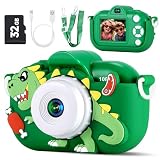
- Best Gifts for Ages 3-9 Girls and Boys: Are you still worried about choosing gifts or toys for your kids? Our toddler cameras are so cute and powerful, making them the best Christmas, Easter, and Birthday gifts. It’s a great introduction for young children into the world of photography, providing endless fun and creativity for any child who loves to explore, create and capture memories
- New Upgraded 48MP Dual Lens Selfie Camera: This kids digital camera is upgraded to 48MP front rear dual lens and 1080P HD videos, which greatly improves the clarity of photos and videos. Kids can take the most vibrant pictures and make the funniest videos to capture the best memories with friends! This kid camera also has fun stickers for kids to decorate their pictures, so they can make their photos special! It also has a selfie mode and a timer shooting function for taking group photos
- Multifunctional and 16X Digital Zoom: This digital camera has so many amazing features that make taking pictures, recording videos, and playing back your memories a blast! Kids also can add photo stickers, play games, and listen to MP3 music. The 16X digital zoom lets kids bring distant objects right up close and take pictures from a whole new perspective, letting them create their own unique photo compositions! Just press and hold the UP button to start 16X digital zoom
- Powerful Rechargeable Battery and Silicone Soft Case: This toy camera with a built-in rechargeable battery lets kids take non-stop photos for hours on end! And here's another cool feature: You can even charge it with a power bank, so you're never without power when you're on the go. This silicone soft case is made of friendly materials! It's safe for children's skin and will protect the camera if it drops
- 32GB TF Card and USB Transfer: This kids camera comes with a 32GB TF card already installed. That's more than enough space to store thousands of photos and meet your child's every need, no matter what the situation. No more worrying about running out of memory. And there's more! You can also upload photos and videos to the computer with the included USB cable and instantly share the children's photographic work with family and friends
That said, this isn’t indestructible. Repeated hard drops onto concrete can eventually leave deeper marks, and the plastic lens will scratch over time. It survives normal kid chaos, but it won’t look new for long.
Water resistance: splash-safe, not swim-proof
VTech rates the DX2 as splash-resistant rather than fully waterproof. Hand washing, light rain, and accidental spills were non-issues, and the watch continued working after brief exposure to moisture.
It is not designed for swimming, baths, or full submersion. Buttons and speaker openings are potential entry points for water, and there’s no sealing comparable to even basic adult sports watches.
For parents, this means setting clear rules early. The DX2 can handle everyday mess, but it should come off before pool time, beach days, or bath play, especially with younger kids who may forget.
Materials and child-safe construction
The case is made entirely of lightweight plastic with rounded edges, and that’s a deliberate choice. There are no sharp corners, exposed metal parts, or fragile glass components that could cause injury during play.
The screen uses a plastic lens rather than glass, which reduces shatter risk but increases susceptibility to scratches. From a safety perspective, plastic is the right call, even if it sacrifices long-term cosmetic durability.
The strap is a soft silicone material that flexes easily and doesn’t pinch skin. It stayed comfortable even when worn tightly, though the large case means pressure is still noticeable on very small wrists.
Comfort vs protection: the bulk trade-off
Much of the DX2’s durability comes from its size. Thick casing, wide lugs, and deep button guards all add protection but also contribute to the watch feeling oversized for kids under six.
On smaller arms, the case can bump into tables or toys, which increases the chance of knocks despite the protective build. Ironically, its toughness makes it more noticeable, not less.
Older kids benefit most from this design. For six- to eight-year-olds who are active and less likely to chew, drop, or throw the watch, the balance between protection and comfort makes more sense.
Long-term wear and safety peace of mind
There’s no internet connectivity, no camera sharing, and no external communication features, which removes a major category of digital safety concerns. From a privacy standpoint, the DX2 is refreshingly simple.
Battery charging uses a standard cable rather than exposed contacts, and the charging port is recessed enough to avoid accidental damage. Heat buildup during charging was minimal in testing.
Overall, the Kidizoom DX2 prioritizes physical safety and resilience over sleekness. It’s a watch you don’t have to worry about surviving childhood, but that same ruggedness reinforces why it often feels more like a durable gadget than a comfortable everyday watch for smaller kids.
Battery Life, Charging, and Everyday Practicality
All that physical protection and childproofing would mean little if the watch became a daily charging headache. Thankfully, the Kidizoom DX2 takes a very different approach from adult smartwatches, and that has a big impact on how practical it is for families.
Battery life in real kid usage
The DX2 uses a built-in rechargeable battery rather than replaceable cells, and in everyday testing it consistently lasted several days between charges. With moderate use—photos, games, step tracking, and occasional video—the watch typically ran for four to five days before needing a top-up.
Heavy camera use drains it faster, especially video recording, which is one of the biggest power draws on the device. If your child spends an afternoon filming short clips or rapidly flipping between games, expect closer to two days of battery life.
For parents, this longer endurance is a quiet win. You’re not dealing with nightly charging routines or a dead watch every school morning, which makes the DX2 feel more like a toy that happens to tell time rather than a gadget demanding constant maintenance.
No always-on screen, no constant drain
A major reason the battery lasts as long as it does is what the DX2 doesn’t do. There’s no always-on display, no background syncing, and no wireless radios running all day.
The screen wakes only when a button is pressed or the watch is tilted, and it goes back to sleep quickly. That behavior fits how kids actually use the watch—short bursts of interaction followed by long periods of inactivity.
From a practicality standpoint, this design makes sense for the age group. Kids aren’t checking notifications or tracking workouts, so conserving battery takes priority over instant responsiveness.
Charging process and parental involvement
Charging is done via a proprietary USB cable that clips securely into the back of the watch. It’s not magnetic, but it seats firmly enough that it won’t disconnect if bumped on a desk or nightstand.
A full charge from near-empty took roughly two hours in testing using a standard USB wall adapter. The watch doesn’t support fast charging, but given how infrequently it needs power, that’s rarely an issue.
This is not a watch most young kids can charge independently. Aligning the connector and remembering to plug it in still requires adult help, especially for children under six.
Everyday routines: school, play, and weekends
In day-to-day life, the DX2 fits best into a “wear it when you want” routine rather than an all-day wearable. Many parents will find it comes off for school, bath time, and bedtime, then goes back on for afternoons or weekends.
Because the battery doesn’t drain quickly while idle, it’s perfectly fine to leave the watch unused for a day or two. You won’t come back to a completely dead device after a short break, which is ideal for younger kids who forget about it.
The downside of its size shows up again here. Kids are more likely to take it off during seated activities like writing or eating, which means it’s not always worn long enough to take full advantage of the step counter or time-learning features.
Practical pros and trade-offs for parents
From a parent’s perspective, the DX2 is refreshingly low-maintenance. You’re not managing apps, syncing data, or troubleshooting connectivity issues, and the battery life supports that simplicity.
The trade-off is that it lacks the “set it and forget it” convenience of slimmer watches designed to be worn all day. Bulkier comfort and occasional removal mean its battery efficiency is sometimes underused rather than fully appreciated.
Ultimately, the Kidizoom DX2’s battery and charging setup match its overall philosophy. It’s built to survive childhood and minimize adult intervention, even if its chunky design limits how seamlessly it fits into a child’s everyday routine.
Age Suitability: Which Kids Will Love It—and Which Will Find It Too Big
All of the size, battery, and daily-wear trade-offs really come into focus when you look at who the Kidizoom DX2 is actually built for. While VTech markets it broadly to young kids, real-world fit and comfort narrow that range more than the box suggests.
Best fit: confident kids around 6–8 years old
The DX2 makes the most sense for kids in the six-to-eight range, especially those with slightly larger wrists or a higher tolerance for chunky accessories. At this age, children are more patient with a thicker case and better able to adjust the strap comfortably on their own.
Kids in this bracket also get more out of what the watch offers. The dual cameras, motion-based games, and basic time-learning features feel engaging rather than overwhelming, and the bulk reads as “toy-like” in a good way rather than awkward.
Importantly, older kids are less likely to constantly remove it during seated activities. That makes the step counter and games more relevant, even if the watch still isn’t worn from morning to night.
Rank #4

- HD DUAL LENS KIDS CAMERA: This kids camera offers impressive resolution with 48MP, and HD video. The toddler camera also offers a front and rear lens - so can use it to shoot selfies, which children will love
- 4 PUZZLE GAMES AND MUSIC PLAYER: The camera for kids has a lot of impressive features, it can play games, download music via a computer and play it from camera. And can also 16x zoom by long pressing the up and down buttons
- FUN STICKERS AND FRAMES: Kids will enjoy fun stickers and frames when taking pictures, it certainly sparked kids interest in taking more artistic shots. The kids camera comes with a shockproof case with a cute design - this both against drops, and gives it more kiddie appeal
- RIGHT SIZE FOR LITTLE HANDS: The user-friendly controls make it great for toddler and helps to get her to stop asking for your phone while still allowing her to express her creativity
- EXCELLENT CHRISTMAS OR BIRTHDAY GIFT: Kids' cameras are the go-to gift for little humans eager to explore! The kids digital camera provide hours of entertainment while encouraging artistic expression and exploration. Hooray for kid art. Kids christmas gifts, toddler kids toys for ages 5-7, toddler girls toys age 6-8
Borderline territory: ages 4–5 depend heavily on wrist size
For younger kids, fit becomes a much bigger variable. On a four- or five-year-old with slim wrists, the DX2 can look and feel oversized, with the thick case pressing into the wrist when bending the hand back.
This is where comfort complaints usually start. Writing, eating, or resting their arm on a table can make the watch feel intrusive, leading kids to take it off frequently or abandon it altogether after the novelty wears off.
That said, some younger kids love the exaggerated, rugged feel. If your child already enjoys chunky toy watches or doesn’t mind bulky plastic accessories, the DX2 can still work—but it’s far from a safe universal recommendation at this age.
Why smaller kids often struggle with the size
The DX2 isn’t just wide; it’s tall. The case sits high off the wrist, which amplifies the feeling of bulk and makes it more noticeable during everyday movements.
The silicone strap helps, but it can only do so much. Even when properly tightened, the watch tends to shift on smaller wrists, especially during active play, which can be distracting rather than fun.
This physical presence also affects how long kids want to wear it. As noted earlier, frequent removal during the day means the watch becomes more of an occasional toy than a wearable habit.
Maturity matters as much as age
Beyond wrist size, temperament plays a major role. Kids who enjoy structured play, puzzles, and digital pets tend to stick with the DX2 longer, regardless of age.
More active or sensory-sensitive children may find the bulk frustrating. For them, the watch’s durability doesn’t offset the constant awareness of something heavy on their arm.
Parents should also consider expectations. If you want a watch that teaches time and gets worn daily, the DX2 can disappoint younger or more sensitive kids purely because of comfort.
When slimmer alternatives make more sense
If your child is under six or has very slim wrists, a thinner kids’ smartwatch or even a basic digital watch can be a better starting point. Slimmer designs are more likely to stay on all day, which matters for habit-building and time learning.
The trade-off is usually fewer games and less rugged construction. What you gain in comfort, you often lose in durability and built-in entertainment.
The DX2 sits firmly on the “fun-first, comfort-second” end of the spectrum. For the right kid, that balance works beautifully; for others, the size alone can be a dealbreaker before the features ever get a chance to shine.
Pros and Cons After Hands-On Testing
After spending extended time with the Kidizoom DX2 on real kids’ wrists—not just on a desk—the strengths and weaknesses become very clear. Much of what the DX2 does well ties directly to its size and toy-like build, while most of its shortcomings stem from the same design choices.
Pros: Where the Kidizoom DX2 gets it right
The biggest win is durability. The thick plastic case, raised bezel, and recessed screen can take drops, desk knocks, and playground tumbles without visible damage, which is exactly what parents want at this age.
The touchscreen is responsive enough for kids, even with imperfect taps. Icons are large, menus are simple, and kids quickly learn where things live without constant adult help.
Games and activities are genuinely engaging. Built-in motion games, mini puzzles, and the virtual pet encourage interaction beyond passive screen time, which keeps kids coming back longer than a basic digital watch would.
The dual cameras are a standout at this price. Front and side-mounted cameras let kids take photos, record short videos, and apply goofy filters, which consistently proved to be the most-used feature during testing.
Battery life is solid for a kids’ smartwatch. With casual daily use—photos, a few games, and time checks—it comfortably lasts several days, reducing the need for frequent charging and parental oversight.
Parental controls are simple but effective. Time limits, content management, and download restrictions are easy to access, which helps keep usage predictable rather than chaotic.
Cons: The size problem never really goes away
The case thickness is the DX2’s biggest drawback. It sits high off the wrist, making it feel more like a chunky toy strapped on than a watch meant to disappear during wear.
On smaller wrists, the weight becomes noticeable during play. Kids often complained about it bumping into tables, toys, or their own arm when bending their wrist.
The silicone strap, while soft and durable, can’t fully compensate for the tall case. Even when snug, the watch tends to rotate or slide, especially during running or climbing.
Comfort issues lead to inconsistent wear. Several kids removed it during the day and forgot to put it back on, which undercuts its usefulness as a time-learning tool.
The screen, while durable, is relatively small compared to the body. This exaggerates the feeling that the watch is oversized without fully using the available space.
There’s no connectivity beyond USB. No GPS, no messaging, and no app syncing means this is firmly a toy-first smartwatch, which may disappoint parents expecting even light communication features.
Trade-offs parents should understand before buying
The DX2’s bulk directly enables its toughness. Thinner watches in this category almost never survive the same level of abuse, so comfort is clearly sacrificed for longevity.
Its learning value leans toward engagement rather than education. While it reinforces time awareness and basic problem-solving, it won’t replace structured learning tools.
Age suitability matters more than the box suggests. While marketed broadly, it works best for kids closer to the upper end of the 4–8 range, especially those with larger wrists or a tolerance for chunky accessories.
The DX2 rewards kids who see it as a gadget or toy. For kids who simply want a watch to wear all day, the size and weight can overshadow the fun.
Value depends on expectations. If you want maximum entertainment and durability in one device, the DX2 delivers. If daily comfort is the priority, slimmer alternatives often make more sense even if they offer fewer features.
Slimmer and Smarter Alternatives to Consider Before Buying
If the DX2’s size gives you pause, you’re not alone. Several competing kids’ watches trade some ruggedness or onboard games for a slimmer case and better all-day wearability, which can matter more once the novelty wears off.
These alternatives approach the “first smartwatch” idea from different angles. Some focus on comfort and simplicity, others add light connectivity or health tracking while staying noticeably smaller on young wrists.
VTech Kidizoom Smartwatch DX3
The most obvious alternative comes from VTech itself. The DX3 keeps the playful, camera-first formula but trims the overall thickness and refines the shape so it sits flatter on the wrist.
💰 Best Value

- Funny Instant Print Camera : This kids digital camera with an instant printing function can have a black and white paper photo only 1 second after pressing the shutter. At the same time, you can get color photos to store on the SD card.Our camera have 15 kinds of scene filters and 16 kinds of sticker.There are 3 volumes of printing paper, which can print 372 photos.Children can take interesting pictures and doodle pictures to stimulate imagination
- Multifunctional Kids Digital Camera :This mini camera with instant print,2.4 inch large screen,1080P video,16X the digital zoom,flash,time -lapse,continuous shooting,games,filters frame,mp3.This can meet the different needs of children. It is a good choice to accompany children to grow up happily.Bring a wonderful moment to you and your family
- Safe Print Paper : Kids instant camera materials are safe, use high -quality soft plastic and advanced thermal printing technology, no carbon powder, odor-free.more safe and comfortable for children’s skin. Shockproof shell provides effective anti-fall protection. Children play in a environment, which is conducive to healthy growth. Parents need not worry
- Portable & Powerful Battery Life : The travel camera adopts Type-C charging technology, which can charge faster and save time.Continuously taking photos or listening to music for 2-3 hours after fully charged. Come with 1 x USB Type-C cable & 1 x lanyard&1x 32GB SD card to store thousands of photos!Take as many pictures as you want at anytime,any where, and seize every wonderful moment of joy
- Ideal Gift for Kids : More educational excitement and interactive fun, this mini camera toy is the perfect birthday, Easter, Christmas, holiday gifts for boys and girls aged 3-12. In addition, your child will have their first own toy camera, and you will never have to worry about your child using your smartphone again
In daily wear, the DX3 feels less top-heavy and rotates less during play. The case still uses thick plastic and a soft silicone strap, but the reduced height makes it easier for kids to forget they’re wearing it, which is a meaningful improvement over the DX2.
Functionally, it’s still very much a toy-first smartwatch. There’s no GPS or messaging, but the interface is snappier, the screen is brighter, and battery life typically stretches a bit longer due to more efficient hardware.
This is the better pick for parents who like the DX2’s concept but want something that’s more wearable for smaller wrists. It still suits ages 5–8 best, but younger kids tolerate it more comfortably.
Garmin Vivofit Jr. 3
Garmin takes a very different approach. The Vivofit Jr. 3 is closer to a fitness band than a traditional smartwatch, and that’s exactly why it works so well for all-day wear.
The body is slim, lightweight, and sealed into the strap, which eliminates the bulky “watch head” feeling entirely. On small wrists, it sits flat, doesn’t wobble, and never feels in the way during running, climbing, or school activities.
There’s no touchscreen and no camera, which keeps things simple and durable. Activity tracking, step goals, and app-based adventures tied to characters provide motivation without overstimulation.
Battery life is measured in months rather than days, which is a huge win for parents. The trade-off is obvious: this is not a toy-packed device, and kids expecting games and selfies may find it boring.
It’s best suited for kids aged 4–7 who mainly need a comfortable watch and gentle activity encouragement rather than entertainment.
Xplora XGO2 or XGO3
For parents willing to step slightly beyond the “toy” category, Xplora’s entry-level GPS watches offer a slimmer profile with real communication features.
Compared to the DX2, the XGO models sit lower on the wrist and feel more like a traditional digital watch. The plastic case isn’t as thick, and the strap design keeps the watch centered during movement.
These watches introduce GPS location tracking, voice calling, and preset text messages, all controlled through a parent app. For many families, that added peace of mind outweighs the loss of games and cameras.
Battery life is shorter than the DX2, usually one to two days depending on usage. Durability is good but not “throw it at a wall” good, so rougher kids may test its limits.
This option works best for ages 6–8, especially kids starting school or activities where basic communication matters more than onboard entertainment.
TickTalk 4 (for slightly older kids)
TickTalk’s watches are more advanced and still relatively compact given their feature set. While not tiny, the case is better balanced and less toy-like than the DX2.
The screen is larger and easier to read, making better use of the watch’s footprint. Video calling, GPS tracking, and robust parental controls make it feel like a serious tool rather than a novelty.
That sophistication comes with trade-offs. It’s heavier than fitness-style bands, requires regular charging, and costs more upfront plus a monthly plan.
This is not ideal for younger kids or those who struggle to keep devices charged. It makes the most sense for kids 7–9 who are ready for responsibility and whose wrists can handle a slightly larger watch.
Simple Digital Watches Still Matter
It’s also worth considering whether a smartwatch is necessary at all. A slim digital watch with a resin case and soft strap often teaches time better than any touchscreen device.
These watches are extremely light, sit flat, and disappear on the wrist, which encourages consistent wear. There’s no battery anxiety, no menus, and no distractions.
For kids overwhelmed by bulky smartwatches, starting with a simple time-only watch can build comfort and habit. A smartwatch can always come later once wrist size and tolerance catch up.
Choosing the Right Alternative for Your Child
The key difference between the DX2 and its slimmer rivals isn’t just size, but philosophy. The DX2 prioritizes durability and self-contained fun, while most alternatives prioritize comfort, consistency, or connectivity.
If your child removes watches because they feel heavy or awkward, a thinner option will likely see more real-world use. A watch that stays on the wrist all day teaches time better than one packed with features that lives in a backpack.
Before buying, consider wrist size, tolerance for bulk, and whether your child values games, movement, or communication most. The right choice depends less on specs and more on how your child actually wears a watch day to day.
Final Verdict: Is the Fun Worth the Bulk?
After spending real time watching kids live with the Kidizoom DX2, the answer comes down to expectations. This is not a “first watch that disappears on the wrist,” but rather a rugged, self-contained toy that happens to tell time. If you approach it as an interactive gadget instead of a traditional watch, its strengths make far more sense.
Who the Kidizoom DX2 Is Right For
The DX2 shines for younger kids, roughly ages 4 to 6, who care more about games, photos, and silly effects than wearing comfort or learning time precisely. The chunky plastic case, integrated lugs, and thick silicone strap feel overbuilt in a good way, shrugging off drops, spills, and playground abuse. For kids with larger wrists or those already used to bulky toys, the size quickly fades into the background.
Parents who want a screen-based device without connectivity will also appreciate the closed ecosystem. There’s no GPS, no calling, and no internet access, which keeps expectations clear and eliminates many safety concerns. Battery life is predictable, charging is simple, and the software remains stable because it’s doing far less than modern kids’ smartwatches.
Where the Bulk Becomes a Dealbreaker
That same durability is also the DX2’s biggest drawback. On smaller wrists, the tall case and wide footprint cause the watch to rock side to side, especially during active play. Kids who are sensitive to how things feel on their body may remove it frequently, which undermines its role as a watch.
The thickness also makes it harder to slide under sleeves, and the overall toy-like profile can feel awkward for kids closer to 7 or 8 who are starting to want something that looks more grown-up. If your child already complains about heavy shoes, stiff jackets, or tight hats, the DX2’s bulk is something to take seriously.
Fun vs. Function: What You’re Really Buying
As a learning tool, the DX2 does a decent job introducing time concepts and encouraging creativity through photos and motion-based games. The touchscreen is responsive, the menus are intuitive for young fingers, and the physical buttons are easy to find. However, it’s not the best device for building the habit of wearing a watch all day.
Compared to slimmer kids’ watches or even basic digital models, the DX2 feels more like a play session than a constant companion. Many kids treat it as something to put on at home or during downtime rather than a watch that stays on from breakfast to bedtime.
The Bottom Line for Parents and Gift Buyers
The VTech Kidizoom DX2 delivers exactly what it promises: fun, durability, and independence from phones or subscriptions. For the right child, it’s engaging, tough, and endlessly entertaining, especially as a first wearable experience. Its size is not a flaw so much as a trade-off that needs to be acknowledged upfront.
If your priority is comfort, slimness, and all-day wear, there are better options that will quietly do their job on a child’s wrist. But if you want a self-contained, kid-proof gadget that can survive real childhood and spark excitement, the DX2 still earns its place. The fun is real, but only worth the bulk if your child is built—and inclined—to wear it.