For more than a decade, consumer AR has promised a future where digital information simply appears when you need it, without friction or spectacle. The problem was never imagination or software ambition, but physics, comfort, and the social reality of wearing computers on your face. Until AR could disappear into daily life, it was always going to remain a demo rather than a device.
Heavy optics, heat, awkward battery packs, and designs that screamed “prototype” kept earlier smart glasses stuck in niche roles. Even technically impressive systems asked users to tolerate pressure points, limited wear time, and constant self-awareness in public. The missing ingredient wasn’t another killer app, it was wearability.
Vuzix Ultralite Pro enters this conversation at exactly the right moment, not by trying to outgun headsets, but by rethinking what AR needs to be to earn a place in everyday routines. To understand why this matters, you have to look at where AR went wrong, and why lightness changes everything.
Weight Is the First Interface
Before display resolution, field of view, or gesture controls, weight determines whether AR can exist beyond novelty. Anything worn on the face magnifies discomfort quickly, especially across the nose bridge and ears, where even a few extra grams become fatiguing over time. This is why many early AR glasses felt tolerable for minutes, but unbearable for hours.
🏆 #1 Best Overall
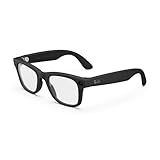
- #1 SELLING AI GLASSES - Tap into iconic style for men and women, and advanced technology with the newest generation of Ray-Ban Meta glasses. Capture photos and videos, listen to music, make hands-free calls or ask Meta AI questions on-the-go.
- UP TO 8 HOURS OF BATTERY LIFE - On a full charge, these smart AI glasses can last 2x longer than previous generations, up to 8 hours with moderate use. Plus, each pair comes with a charging case that provides up to 48 hours of charging on-the-go.
- 3K ULTRA HD: RECORD SHARP VIDEOS WITH RICH DETAIL - Capture photos and videos hands-free with an ultra-wide 12 MP camera. With improved 3K ultra HD video resolution you can record sharp, vibrant memories while staying in the moment.
- LISTEN WITH OPEN-EAR AUDIO — Listen to music and more with discreet open-ear speakers that deliver rich, quality audio without blocking out conversations or the ambient noises around you.
- ASK YOUR GLASSES ANYTHING WITH META AI - Chat with Meta AI to get suggestions, answers and reminders straight from your smart AI glasses.
Ultralight designs shift the equation by reducing constant physical awareness. When a device no longer reminds you it’s there, your brain stops treating it as technology and starts treating it as eyewear. That transition is critical for AR to move from intentional use to ambient utility.
Battery Life Isn’t About Capacity, It’s About Intent
Bulky AR glasses chased all-day computing, stuffing batteries into frames or tethering users to external packs. The result was heat, imbalance, and anxiety about managing power rather than using information. Lightweight AR reframes battery life around moments, not marathons.
By designing for glanceable interactions instead of continuous immersion, devices like Ultralite Pro can rely on smaller batteries without feeling compromised. This approach aligns better with real-world behavior, where users want quick navigation cues, notifications, or contextual data, not an always-on overlay.
Social Acceptability Has Always Been the Real Bottleneck
No matter how advanced the tech, AR glasses fail if people feel awkward wearing them. Thick frames, visible sensors, and overt camera modules trigger self-consciousness and social friction, especially in public spaces. Lightweight AR prioritizes visual subtlety, blending into the language of traditional eyewear.
When glasses look and feel normal, users stop negotiating whether to put them on. That psychological shift matters as much as any hardware breakthrough. Ultralite Pro’s direction suggests AR that earns trust by staying out of the way.
Comfort Unlocks Software Possibility
Developers can’t build meaningful experiences if users won’t wear the hardware long enough to encounter them. Heavy or uncomfortable glasses force software to justify itself immediately, creating pressure for flashy, intrusive features. Lightweight AR allows software to be calmer, more contextual, and genuinely helpful.
This opens the door to interfaces that behave more like a watch complication than a smartphone app. Information appears when relevant, disappears when not, and never demands attention for its own sake. That philosophy only works when the hardware supports effortless wear.
What Lightweight AR Still Can’t Do
Reducing weight doesn’t magically solve field of view limitations, display brightness in direct sunlight, or the absence of rich input methods. Ultralight glasses trade immersive visuals for practicality, which means they won’t replace headsets for gaming or complex spatial work. That limitation is real and important to acknowledge.
But it’s also the point. Lightweight AR isn’t trying to be everything, it’s trying to be something you actually keep on your face. Ultralite Pro signals that the future of consumer AR may arrive not as a revolution, but as a quiet, comfortable presence you stop thinking about entirely.
What the Vuzix Ultralite Pro Actually Is (And Why It’s Not Another Failed Smart Glasses Experiment)
Seen through the lens of everything lightweight AR can’t do, the Vuzix Ultralite Pro makes more sense when you focus on what it very deliberately chooses to be. This isn’t a headset pretending to be glasses, and it’s not a smartphone replacement fighting physics. It’s a tightly scoped, purpose-built display accessory designed to live comfortably on your face for hours at a time.
That distinction alone separates it from most of the smart glasses experiments that collapsed under their own ambition. Ultralite Pro isn’t trying to overwhelm you with immersion, cameras, or spatial mapping. It’s trying to quietly earn a place in your daily routine.
Not a Headset, Not a Toy, Not a Camera
At its core, the Ultralite Pro is a monocular waveguide display integrated into what looks and feels like normal eyewear. Information appears in your peripheral vision rather than dominating your field of view, more like a heads-up complication than a screen demanding focus. That design choice immediately frames it as an augmentation tool, not an attention sink.
Crucially, it avoids the social landmines that doomed earlier smart glasses. There’s no conspicuous front-facing camera staring back at people, no bulky visor, and no obvious “recording device” cues. In public settings, it reads as glasses first and technology second.
This matters more than raw specs. Google Glass failed less because of hardware limitations and more because it made wearers and bystanders uncomfortable. Ultralite Pro is clearly designed with that lesson internalized.
The Display Philosophy: Less Field of View, More Relevance
Rather than chasing wide field-of-view numbers, Vuzix prioritizes clarity, legibility, and restraint. The display is meant for glanceable content: notifications, navigation cues, basic prompts, and contextual data that complements what you’re already doing. You don’t “enter” AR; it quietly checks in when needed.
This makes the Ultralite Pro feel closer to a smartwatch for your eyes than a mixed reality device. Like a well-designed watch complication, it provides value without demanding interaction. When there’s nothing to show, it effectively disappears.
That approach acknowledges a hard truth about everyday AR. Constant overlays aren’t just distracting, they’re exhausting. Ultralite Pro’s strength is knowing when not to speak.
Weight, Balance, and Why This Actually Gets Worn
One of the most underappreciated reasons smart glasses fail is neck and nose fatigue. Even small weight increases become uncomfortable over a full day, especially when unevenly distributed. Ultralite Pro’s defining feature is how aggressively it attacks that problem.
By offloading processing and battery responsibilities to a companion device rather than packing everything into the frame, Vuzix keeps the glasses themselves genuinely light. Balance matters as much as total weight, and the Ultralite Pro avoids the front-heavy feel that makes many glasses intolerable after an hour.
The result is eyewear you can forget you’re wearing. That’s not a glamorous achievement, but it’s a foundational one. Software potential only matters if the hardware stays on your face long enough to use it.
Battery Life by Design, Not by Marketing Claim
Instead of promising unrealistic all-day endurance from tiny frame-mounted batteries, Ultralite Pro takes a more honest approach. The glasses sip power because they’re only doing one thing: displaying information. Processing, connectivity, and heavy lifting happen elsewhere.
This separation allows for longer usable sessions without thermal issues or aggressive power management. It also means the glasses don’t need vents, fans, or bulky housings that would compromise comfort and aesthetics.
It’s not glamorous, but it’s pragmatic. And pragmatism is exactly what everyday AR has been missing.
Software That Respects the Hardware’s Limits
Ultralite Pro’s software story is intentionally modest, and that’s a strength. Instead of promising fully spatial apps or immersive environments, it leans into utilities that benefit from quick visual access. Navigation, messaging previews, task prompts, and contextual notifications are the obvious sweet spots.
This aligns with how people actually use wearables. Just as smartwatches succeeded by doing less than phones, lightweight AR succeeds by doing less than headsets. When the expectations are realistic, the experience feels coherent rather than compromised.
It also gives developers clearer constraints. Designing for a small, glanceable display encourages focus, restraint, and relevance rather than feature sprawl.
Where the Ultralite Pro Is Still Honest About Its Limits
It’s important to be clear about what this isn’t. Ultralite Pro won’t deliver cinematic AR visuals, rich spatial computing, or complex gesture-based interaction. Input remains limited, and immersion is intentionally shallow.
But that’s not a failure; it’s a boundary. By drawing a firm line around its purpose, Ultralite Pro avoids the identity crisis that plagued so many earlier devices. It doesn’t overpromise, and therefore doesn’t underdeliver.
In that sense, it feels less like an experiment and more like a foundation. Not the final form of consumer AR, but a realistic step toward something people might actually choose to wear every day.
Design, Weight, and Wearability: The First Time AR Glasses Feel Socially Acceptable
Once you accept the Ultralite Pro’s deliberately narrow ambitions, its physical design suddenly makes complete sense. This is what happens when AR glasses are built around human comfort first, not around a spec sheet.
Instead of shouting “future tech,” the Ultralite Pro does something far more radical: it disappears.
Eyewear First, Hardware Second
At a glance, the Ultralite Pro reads as modern eyewear rather than experimental electronics. The frame geometry, lens proportions, and temple thickness all sit comfortably within the range of contemporary glasses you’d see in a café or on a commuter train.
That matters more than it sounds. Previous AR attempts failed socially long before they failed technically, because no one wants to wear something that advertises itself as a prototype on their face. The Ultralite Pro doesn’t trigger that reflexive double-take.
The absence of visible cameras, oversized housings, or aggressive branding helps here. It feels intentionally understated, closer in spirit to premium optical frames than to a developer kit.
Weight Distribution That Finally Makes Sense
Lightweight AR isn’t just about total mass, it’s about balance. By offloading processing and battery demands elsewhere, Vuzix keeps the center of gravity where it belongs, close to the face rather than pulling forward or outward.
The result is a pair of glasses that don’t constantly remind you they’re there. Pressure points on the bridge and behind the ears are minimal, even during longer sessions, and there’s no creeping fatigue that forces you to take them off after 20 minutes.
This is one of the first times AR glasses feel compatible with all-day wear, not just short demos. That alone separates Ultralite Pro from an entire generation of predecessors.
No Heat, No Noise, No Distractions
Thermals are an underrated part of wearability, and this is where the Ultralite Pro’s architectural restraint pays dividends. With no onboard processing generating heat, the frames remain comfortable even during extended use.
Rank #2
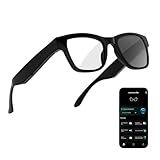
- 3-in-1 AI Glasses: Enjoy ① AI Voice Assistant (Powered by ChatGPT, Gemini & Deepseek), ② Stylish Photochromic Lenses Glasses, and ③ Bluetooth Open-Back Headphones, all in one.
- Free Talk Translation: Automatically detects and translates over 160 languages in real-time, allowing seamless work and translation without touching your phone or glasses.
- Voice, Video & Photo Translation: Supports over 98% of global languages, offering fast and accurate translations—ideal for international travel, business meetings, or cross-cultural communication.
- AI Meeting Assistant: Converts recordings from smart glasses into text and generates mind maps, making it easier to capture and organize meeting insights.
- Long Battery Life, Bluetooth 5.4 & Eye Protection: Up to 10 hours of music and 8 hours of talk time, with easy Type-C charging. Bluetooth 5.4 ensures stronger, stable connections, while photochromic lenses block UV rays and blue light, protecting your eyes in any environment.
There are no fans, no vents, and no subtle buzzing that breaks immersion or draws attention. The glasses behave like passive objects until information appears, which is exactly how something worn on your face should behave.
This absence of sensory friction reinforces the idea that AR doesn’t need to feel “active” to be useful. Sometimes, neutrality is the feature.
Designed to Be Seen Without Being Noticed
Social acceptability is as much about other people as it is about the wearer. The Ultralite Pro avoids the awkwardness that plagued earlier smart glasses by making it immediately clear that it’s not recording, scanning, or watching anyone.
That psychological comfort matters. When people around you aren’t suspicious or uncomfortable, you’re far more likely to actually wear the device in public, which is the real test of any wearable.
In that sense, Ultralite Pro succeeds where flashier designs failed. It earns trust by looking boring in the best possible way.
Comfort as a Strategic Advantage
What’s striking is how deliberately unambitious the physical design is, and how powerful that choice becomes in daily use. There’s no attempt to reinvent eyewear ergonomics, no experimental fit systems, and no exotic materials that compromise durability or serviceability.
Instead, it relies on familiar optical principles refined just enough to support lightweight displays. Adjustability, stability, and compatibility with prescription solutions feel like foundational considerations, not afterthoughts.
That practicality reinforces the broader theme of the Ultralite Pro. This isn’t AR trying to impress you in a demo room; it’s AR trying to survive your daily routine.
Display Technology and Visual Experience: How Subtle AR Beats Full Immersion
That philosophy of restraint carries directly into how the Ultralite Pro shows information. Instead of chasing cinematic immersion, Vuzix is clearly betting that the future of everyday AR is quiet, glanceable, and intentionally limited.
The result is a visual experience that feels closer to checking a mechanical watch than strapping a screen to your face. It’s there when you need it, and almost invisible when you don’t.
MicroLED Waveguides Over Screens on Your Face
At the heart of the Ultralite Pro is a MicroLED-based waveguide display, and that choice tells you almost everything about Vuzix’s priorities. MicroLED offers extremely high brightness and efficiency, which is essential when you’re projecting information into real-world lighting conditions without draining a tiny battery.
Unlike full-panel displays or birdbath-style optics used in bulkier AR headsets, the Ultralite Pro’s waveguide only introduces light where information needs to appear. The rest of your field of view remains completely unobstructed, preserving natural vision rather than competing with it.
This is not about replacing reality. It’s about annotating it, selectively and sparingly.
A Display Designed for Glances, Not Stares
The visual field is intentionally constrained, both in size and placement. Information appears in a small, fixed zone rather than floating dynamically across your entire view, which keeps cognitive load low and prevents the visual fatigue common in more aggressive AR systems.
In practice, this means navigation cues, notifications, or contextual data feel closer to a HUD than a virtual environment. You glance, absorb, and move on, much like reading the time on a watch or a notification on a phone lock screen.
That design choice won’t excite anyone expecting sci-fi overlays, but it’s exactly what makes the Ultralite Pro wearable for hours rather than minutes.
Brightness and Contrast Where It Actually Matters
One of the most underrated challenges in AR is outdoor usability. Displays that look impressive indoors often wash out the moment you step into daylight, forcing manufacturers to either crank brightness at the expense of battery or accept limited real-world usefulness.
MicroLED gives the Ultralite Pro a meaningful advantage here. High peak brightness ensures text and icons remain legible against bright skies, while strong contrast keeps visuals crisp without overpowering the scene in front of you.
The display doesn’t need to be large when it’s always readable, and that trade-off feels intentional rather than compromised.
Monocular AR as a Feature, Not a Limitation
The Ultralite Pro’s monocular approach will immediately raise eyebrows among AR enthusiasts. But in daily use, presenting information to a single eye reduces visual clutter and preserves depth perception, which is crucial for walking, driving, or simply navigating crowded spaces.
By avoiding stereoscopic rendering, Vuzix sidesteps many of the alignment, calibration, and eye-strain issues that plague binocular AR systems. It also allows the hardware to stay dramatically lighter and more power-efficient.
This isn’t AR meant to transport you somewhere else. It’s AR designed to coexist with reality without demanding constant attention.
Why This Feels More Like a Watch Than a Headset
There’s an interesting parallel here with traditional watchmaking. Just as a well-designed mechanical movement doesn’t shout about its complexity, the Ultralite Pro’s display doesn’t advertise its technical sophistication.
The finishing is subtle, the presentation restrained, and the value lies in consistency rather than spectacle. Like a good daily watch, it prioritizes legibility, comfort, and reliability over novelty.
That comparison may sound unexpected, but it highlights why this approach could finally stick where others haven’t.
The Trade-Offs Are Real—and Deliberate
None of this comes without compromise. You won’t get immersive AR games, spatial computing interfaces, or cinematic overlays, and anyone expecting a lightweight Vision Pro alternative will be disappointed.
The field of view is narrow, interaction is minimal, and the experience depends heavily on companion devices and software maturity. This is not a standalone computing platform, and it doesn’t pretend to be one.
But those limitations feel like guardrails rather than shortcomings, keeping the product focused on what actually works today.
A Visual Philosophy Built for Daily Life
What ultimately sets the Ultralite Pro apart is not raw display specs, but visual philosophy. By choosing subtlety over immersion, Vuzix is making a case that AR succeeds not when it overwhelms, but when it disappears into routine.
The display supports the broader design goal: to create something you forget you’re wearing until it quietly proves useful. In a category obsessed with the future, that kind of present-day usability feels quietly radical.
The Distributed Architecture: Battery, Compute, and Why Ultralite’s Split Design Matters
If the Ultralite Pro’s display philosophy is about restraint, its internal architecture is about discipline. Vuzix didn’t just slim things down; it fundamentally rethought where weight, heat, and power should live.
Instead of forcing everything into the frame, Ultralite Pro embraces a distributed system. The glasses focus on optics and sensors, while battery and compute are offloaded elsewhere.
Why Splitting the System Changes Everything
Traditional AR glasses try to be self-contained computers, and that’s where most of them fail. Cramming processors, batteries, radios, and thermal solutions into a frame that sits on your nose creates immediate trade-offs in comfort and wear time.
By contrast, Ultralite Pro treats the glasses more like a peripheral. The optics handle display output and input sensing, while heavy lifting is delegated to a companion device.
That single decision dramatically reduces front-loaded weight, which is the fastest way to make smart glasses intolerable over long sessions.
Battery Placement and Real-World Comfort
Battery mass is one of the biggest enemies of all-day wearability. Even a few extra grams at the temples can cause pressure points, slippage, or fatigue after an hour or two.
In Ultralite Pro’s split design, the battery is external, typically integrated into a small puck or worn accessory. That means the glasses themselves remain closer to conventional eyewear in balance and feel.
It’s a philosophy borrowed more from wearables like smartwatches with paired phones than from standalone headsets, and it shows a clear prioritization of comfort over spec-sheet bravado.
Rank #3

- 【AI Real-Time Translation & ChatGPT Assistant】AI glasses break language barriers instantly with AI real-time translation. The built-in ChatGPT voice assistant helps you communicate, learn, and handle travel or business conversations smoothly—ideal for conferences, overseas trips, and daily use.
- 【4K Video Recording & Photo Capture 】Smart glasses with camera let you capture your world from a first-person view with the built-in 4K camera. Take photos and record videos hands-free anytime—perfect for travel moments, vlogging, outdoor adventures, and work documentation.
- 【Bluetooth Music & Hands-Free Calls 】Camera glasses provide Bluetooth music and crystal-clear hands-free calls with an open-ear design. Stay aware of your surroundings while listening—comfortable for long wear and safer for commuting, cycling, and outdoor use.
- 【IP65 Waterproof & Long Battery Life】 Recording glasses are designed for daily wear with IP65 waterproof protection against sweat, rain, and dust. The built-in 290mAh battery provides reliable performance for workdays and travel—no anxiety when you’re on the go.
- 【Smart App Control & Object Recognition】Smart glasses connect to the companion app for easy setup, file management, and feature control. They support AI object recognition to help identify items and improve your daily efficiency—perfect for travel exploration and a smart lifestyle.
Compute Offloading and Thermal Sanity
Compute isn’t just about performance; it’s about heat. On-face thermals are especially unforgiving, both from a comfort standpoint and a regulatory one.
By relying on external compute, whether from a smartphone or dedicated module, Ultralite Pro avoids the thermal throttling that plagues self-contained AR glasses. No hot spots near your temples, no fans, no bulky heat spreaders disguised as design features.
This also opens the door to iterative performance improvements without redesigning the eyewear itself, a long-term advantage that most early AR products ignore.
A More Honest Take on Standalone AR
There’s a quiet honesty in Vuzix admitting that truly standalone, all-day AR glasses aren’t realistic yet. Battery energy density, thermal limits, and social acceptance simply aren’t there.
Rather than pretending otherwise, Ultralite Pro leans into a modular approach that works within today’s constraints. It acknowledges that your phone is already a powerful, pocketable computer and uses it instead of fighting it.
That realism makes the product feel less like a prototype and more like a transitional device designed to survive multiple hardware cycles.
Trade-Offs You Can’t Ignore
The split architecture does introduce friction. You’re now managing at least two devices, sometimes three, and the experience is only as good as the companion software and connection stability.
Latency, battery drain on the host device, and ecosystem dependency are all real considerations. This isn’t the frictionless future AR marketing loves to promise.
But compared to the alternative of bulky, short-lived, overheating glasses, these trade-offs feel manageable, especially for early adopters who already live with multi-device setups.
Why This Signals a Smarter AR Trajectory
Ultralite Pro’s architecture suggests a future where AR glasses evolve more like audio peripherals than computers. Lightweight, purpose-built, and deeply integrated with devices you already own.
It’s a shift away from spectacle and toward infrastructure. Less “look what this can do” and more “this fits into your life without negotiation.”
That may not sound glamorous, but it’s exactly how transformative consumer tech usually wins.
Interaction Without the Awkwardness: Inputs, Controls, and Everyday Usability
If Ultralite Pro’s split architecture solves the hardware problem, interaction is where it tries to solve the social one. AR glasses have repeatedly stumbled not because displays were impossible, but because controlling them made users look, and feel, out of place.
Vuzix’s approach here is noticeably restrained. Instead of chasing sci‑fi gestures or floating mid-air keyboards, Ultralite Pro leans into inputs people already understand and tolerate in public.
Physical Controls That Respect Muscle Memory
On the glasses themselves, interaction appears to center on minimal, tactile inputs rather than touch-everywhere surfaces. A small, discreet control area along the temple gives you basic navigation without turning the frame into a fingerprint magnet.
This matters more than it sounds. Physical buttons provide confirmation without requiring visual attention, which is critical when information is layered onto your real-world view rather than replacing it.
It’s the same reason watch enthusiasts still value a well-machined crown over pure touchscreens. Precision, feedback, and reliability beat novelty when the device is meant to be worn all day.
Letting the Phone Do the Heavy Lifting
Because Ultralite Pro depends on a host device, much of the interaction logic naturally shifts to your phone. App selection, notification management, content layouts, and deeper settings live where they already make sense.
That division reduces cognitive load while wearing the glasses. You’re not forced to fumble through complex menus hovering in space just to adjust brightness or change apps.
In practice, this mirrors how people already use wireless earbuds or smartwatches. Quick interactions happen on-device, while configuration lives on the phone, where precision input is easy and socially invisible.
Voice Control, Used Sparingly
Voice remains part of the interaction story, but Vuzix appears careful not to make it mandatory. That restraint is important in a category where voice-first control has often been oversold and under-delivered.
Used for simple commands or hands-free moments, voice can feel natural. Used as the primary interface, it quickly becomes awkward in shared spaces, offices, or public transport.
Ultralite Pro’s design philosophy suggests voice as an option, not a crutch. That balance is key if AR glasses are ever going to escape niche use cases.
No Grand Gestures, and That’s the Point
Notably absent is any emphasis on exaggerated mid-air gestures. There’s no expectation that you’ll swipe at invisible panels or pinch the air while ordering coffee.
Gesture-based control looks impressive in demos but collapses under real-world conditions. Lighting, fatigue, social discomfort, and inconsistent recognition all add friction.
By avoiding that trap, Ultralite Pro feels grounded in how people actually behave. Interaction happens subtly, close to the body, and without drawing attention.
Notifications That Behave Like a Watch, Not a Billboard
Everyday usability ultimately comes down to how information is presented and dismissed. Ultralite Pro seems positioned to treat notifications as glanceable, time-bound overlays rather than persistent visual clutter.
This is where lessons from smartwatches clearly carry over. The goal isn’t to replicate your phone screen in front of your eyes, but to surface what matters, when it matters, then get out of the way.
When done right, this reduces the temptation to constantly interact at all. The best wearable interfaces are the ones that require the least input to feel useful.
The Social Test Is the Real Benchmark
What makes Ultralite Pro’s interaction model compelling isn’t any single input method. It’s the absence of behaviors that make people self-conscious.
You’re not talking to your glasses constantly. You’re not waving your hands. You’re not pecking at a visible touch panel like a tiny tablet strapped to your face.
That restraint signals maturity. Vuzix isn’t trying to redefine how humans interact with technology overnight; it’s trying to make AR fit quietly into habits we already have.
Where Friction Still Exists
None of this eliminates friction entirely. Relying on a phone means connectivity must be rock-solid, and switching contexts between devices can still interrupt flow.
Battery management also becomes part of the interaction story. You’re implicitly negotiating usage between glasses and host device, much like early LTE smartwatches forced users to think about power in new ways.
But these are familiar frictions, not alien ones. And familiarity is exactly what AR needs if it wants to move beyond demos and into daily wear.
Battery Life, Power Management, and Real-World Endurance
If interaction design is where AR earns social acceptance, battery life is where it earns permission to exist at all. Ultralite Pro’s approach to power feels like a direct extension of its broader philosophy: don’t fight physics, design around it.
Instead of cramming a large battery into the frame and paying the price in weight, heat, and comfort, Vuzix leans into a distributed power model. The glasses are designed to sip power, not guzzle it, with heavy lifting offloaded to a paired smartphone.
Why Offloading Power Is the Right Call
On-device processing has been the downfall of many early smart glasses. As soon as you ask a lightweight frame to run cameras, AI, radios, and a bright display continuously, battery life collapses and heat becomes impossible to ignore.
Rank #4
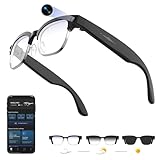
- 【8MPW Camera & 1080P Video and Audio】:These camera glasses feature an 800W camera that outputs sharp 20MP photos and smooth 1080P 30fps videos. Ultra-Clear Video + Powerful Anti-Shake tech+ Built-in dual microphones, you can capture crystal-clear video and audio together -sharply restoring details, perfect for vlogging, travel, and everyday moments
- 【Real-time AI translation Smart Glasses with Camera】:Instantly translate multiple major languages, breaking down language barriers in an instant—no phone required. Ideal for office settings, travel, academic exchanges, international conferences, watching foreign videos, and more
- 【Voice Assistant Recognition and Announcement】:Powered by industry-leading AI large models such as Doubao AI and OpenAI's GPT-4.0. AI voice wake-up lets you ask questions, recognize objects, and get answers on the go. Automatically recognizes objects, menus, landmarks, plants, and more, quickly analyzing the results and announcing them in real time. It instantly becomes your mobile encyclopedia on the go
- 【Bluetooth 5.3 Connection and Automatic Sync to Phone】:Equipped with a low-power BT5.3 chip and Wi-Fi dual transmission technology, offering ultra-low power and high-speed transmission. Captured images and videos are transferred to your phone in real time, eliminating manual export and eliminating storage worries
- 【290mAh Ultra-Long Battery Life】:Ultra-light at 42g, it's made of a durable, skin-friendly material, as light as a feather. Lenses are removable. Its simple, versatile design makes it a comfortable and comfortable wearer. 290mAh ultra-long battery life, 12 hours of music playback and 2 hours of photo or video recording, making it a perfect travel companion
Ultralite Pro avoids this by treating the glasses as an intelligent display and sensor endpoint. Computation, connectivity, and application logic live primarily on the phone, which already has a far larger battery and more aggressive thermal headroom.
This mirrors how early successful smartwatches evolved. Once wearables stopped trying to be tiny phones and instead became extensions of devices you already carry, endurance improved dramatically.
Glance-Based Usage Changes the Battery Math
Battery estimates for AR devices are often misleading because they assume continuous display usage. That’s not how Ultralite Pro is meant to be used.
Notifications appear briefly, navigation cues surface when needed, and contextual information fades away quickly. The display isn’t persistently lit, and that alone has an outsized impact on real-world endurance.
In practice, this means battery drain aligns more closely with smartwatch behavior than with head-mounted displays. You’re spending seconds at a time looking at information, not minutes watching content.
Thermals, Comfort, and Long Sessions
Power management isn’t just about runtime; it’s about how the device feels after hours on your face. Smaller batteries and lower sustained draw mean less heat buildup around the temples and bridge of the nose.
That matters more than spec sheets suggest. Even mild warmth becomes distracting when it’s inches from your eyes, and thermal discomfort has quietly killed more wearables than poor software ever did.
Ultralite Pro’s restraint here suggests Vuzix understands that endurance includes comfort over time, not just how long the device stays powered on.
Charging Habits and Everyday Practicality
Because the glasses aren’t designed to last days on their own, they fit naturally into existing charging routines. Top them up when you charge your phone, or keep them docked when not in use, much like wireless earbuds.
This is a subtle but important distinction from earlier AR attempts that demanded new rituals and constant battery anxiety. Ultralite Pro doesn’t ask you to rethink how you manage power; it slots into habits you already have.
The trade-off, of course, is dependency. If your phone is nearly dead, your glasses are effectively on borrowed time too.
The Limits of the Model
Relying on a host device means endurance is shared, not isolated. Long navigation sessions, heavy notification days, or continuous contextual overlays will tax both devices faster than casual use.
There’s also a ceiling to how capable the glasses can be without local processing. Certain advanced AR use cases will remain out of reach until battery density and thermal solutions improve.
But those are future problems, not present failures. For an everyday AR device meant to be worn casually, Ultralite Pro’s power strategy feels honest, intentional, and refreshingly realistic.
Use Cases That Finally Make Sense: Navigation, Notifications, Workflows, and Glanceable AR
Once you accept Ultralite Pro’s power model and comfort-first design, the use cases snap into focus. These aren’t cinematic AR moments or productivity fantasies lifted from developer demos. They’re practical, repeatable interactions that justify wearing glasses in the first place.
Navigation That Stays Out of the Way
Turn-by-turn navigation is where lightweight AR finally feels inevitable rather than experimental. Instead of pulling your phone out every few seconds or relying on haptic-only smartwatch cues, Ultralite Pro can keep directional prompts floating just inside your peripheral vision.
The key is restraint. You’re not following a glowing path down the street; you’re getting subtle arrows, distance ticks, or street names that appear when needed and disappear instantly after.
Because the rendering and GPS processing live on the phone, battery drain stays manageable on the glasses themselves. More importantly, your head stays up, your hands stay free, and the experience feels additive rather than distracting.
Notifications Without the Wrist Acrobatics
Smartwatch notifications solved one problem and created another: the constant, socially awkward wrist check. Ultralite Pro shifts that same glanceable information to a more natural line of sight, where it can be acknowledged or ignored in under a second.
Incoming messages, calendar reminders, and alerts don’t need full previews to be useful. Seeing who’s pinging you or what’s coming up next is often enough to decide whether to engage now or later.
This is where Ultralite Pro’s display philosophy matters. By avoiding dense layouts and long dwell times, notifications feel less intrusive than phone alerts and less demanding than smartwatch interactions.
Workflows That Benefit From Heads-Up Awareness
For light professional and enthusiast workflows, Ultralite Pro quietly makes sense in ways bulkier AR headsets never did. Think checklists during repairs, order picking confirmations, live translation cues, or glanceable instructions during hands-on tasks.
These are scenarios where stopping to check a screen breaks flow. A floating step indicator or confirmation prompt can keep momentum going without pulling attention away from the task itself.
Because the glasses remain phone-tethered, most of the heavy lifting happens elsewhere. The Ultralite Pro’s role is simply to surface the right information at the right moment, then get out of the way.
Glanceable AR as a New Interaction Layer
What Ultralite Pro really introduces is a new category of interaction that sits between phones and watches. It’s not about depth or immersion; it’s about immediacy and context.
Weather updates before stepping outside, transit timing as you approach a station, or fitness cues during a walk all benefit from being visible without becoming focal. These are micro-interactions measured in seconds, not sessions.
That framing also explains why past consumer AR struggled. They tried to replace screens, when the real opportunity is to complement them with faster, lighter touchpoints.
Where the Use Cases Still Break Down
There are clear boundaries to what works. Anything requiring sustained visual focus, complex manipulation, or rich media still belongs on a phone, tablet, or dedicated headset.
Battery impact also scales with ambition. Continuous overlays or extended navigation will drain both the glasses and the host device faster than casual use, reinforcing the need for disciplined interaction design.
Ultralite Pro doesn’t erase these limitations, but it does make them explicit. By focusing on use cases that fit its physical and technical realities, it avoids the trap of overpromising and underdelivering.
Why These Scenarios Feel Different This Time
The difference isn’t a single killer app, but alignment. The hardware’s weight, thermals, and power draw are finally matched to software experiences that don’t ask too much of them.
That alignment is what makes these use cases believable as everyday habits rather than demos. You can imagine wearing Ultralite Pro on a commute, during errands, or through a workday without constantly thinking about the device itself.
And that, more than any headline feature, is what signals real progress for consumer AR.
Where the Ultralite Pro Still Falls Short (And Why That’s Okay for Gen-One Consumer AR)
For all the progress Vuzix has made with Ultralite Pro, it’s still very much a first-generation consumer AR product. That shows up not as fatal flaws, but as clear boundaries around what this class of device can realistically deliver today.
Understanding those limits is crucial, because they also explain why Ultralite Pro feels more honest, and more viable, than many of its predecessors.
The Display Is Purpose-Built, Not Spectacular
Ultralite Pro’s display is optimized for clarity at a glance, not cinematic immersion. The field of view is narrow by design, prioritizing legibility and comfort over visual presence.
This means text, icons, and simple graphics work well, but anything resembling rich media or spatial visualization quickly feels constrained. You’re not going to watch video, browse photos, or meaningfully multitask across virtual windows here.
That limitation is actually aligned with the product’s intent. By resisting the temptation to chase bigger visuals, Vuzix avoids the weight, heat, and battery penalties that have sunk many earlier smart glasses.
💰 Best Value

- #1 SELLING AI GLASSES - Move effortlessly through life with Ray-Ban Meta glasses. Capture photos and videos, listen to music, make hands-free calls or ask Meta AI* questions on-the-go. Ray-Ban Meta glasses deliver a slim, comfortable fit for both men and women.
- CAPTURE WHAT YOU SEE AND HEAR HANDS-FREE - Capture exactly what you see and hear with an ultra-wide 12 MP camera and a five-mic system. Livestream it on Facebook and Instagram.
- LISTEN WITH OPEN-EAR AUDIO — Listen to music and more with discreet open-ear speakers that deliver rich, quality audio without blocking conversations or the ambient noises around you.
- GET REAL-TIME ANSWERS FROM META AI — The Meta AI* built into Ray-Ban Meta’s wearable technology helps you flow through your day. When activated, it can analyze your surroundings and provide context-rich suggestions - all from your smart AI glasses.
- CALL AND MESSAGE HANDS-FREE — Take calls, text friends or join work meetings via bluetooth straight from your glasses.
Battery Life Rewards Restraint
Battery life remains one of the defining constraints. Used as intended, in short bursts of contextual information, Ultralite Pro can comfortably last through a day of intermittent use.
Push it into continuous navigation, always-on notifications, or frequent interactions, and that margin narrows quickly. This is still a device that depends on disciplined usage patterns.
What matters is that the battery behavior is predictable. Ultralite Pro doesn’t lure users into heavy use it can’t sustain, which reinforces healthier expectations for how AR fits into daily routines.
Software Maturity Lags the Hardware Vision
The hardware points clearly toward a future interaction model, but the software ecosystem isn’t fully there yet. App selection is limited, and experiences vary in polish depending on how well developers embrace glanceable design principles.
Some integrations still feel like scaled-down phone notifications rather than experiences designed specifically for the glasses. That can make early use feel more experimental than seamless.
This is less a failure of Ultralite Pro than a reflection of where consumer AR software stands today. Hardware has finally become wearable enough to justify investment, but the ecosystem needs time to catch up.
Input and Interaction Are Still Minimal
Interaction remains intentionally simple, relying heavily on paired devices and basic controls rather than rich gesture systems or voice-first workflows. That keeps the glasses light and socially unobtrusive, but it also limits expressiveness.
There’s no illusion here of typing, drawing, or manipulating complex interfaces in midair. Ultralite Pro assumes you’ll complete tasks elsewhere and simply consume timely information through the display.
For a device positioned as an auxiliary interface layer, that’s a reasonable compromise. Trying to do more would likely undermine the very comfort and discretion that make it wearable.
Design Still Signals “Tech,” Just Subtly
While Ultralite Pro is far more understated than past AR attempts, it doesn’t completely disappear as an object. The design reads as tech-forward eyewear rather than neutral fashion.
For early adopters, that’s unlikely to be an issue. For mass-market consumers, true invisibility remains a future goal rather than a present reality.
The important shift is that the device no longer demands attention. It’s noticeable, but not intrusive, which is a meaningful step toward social acceptability.
Price Reflects Early-Stage Reality
Pricing will likely limit Ultralite Pro to enthusiasts and professionals rather than casual buyers. That’s consistent with where the technology sits today, even if it narrows the immediate audience.
What buyers are paying for isn’t feature density, but refinement in weight, optics, and ergonomics. Those are harder to appreciate on a spec sheet, but they matter deeply in daily wear.
As manufacturing scales and competition increases, this is one of the areas most likely to improve in subsequent generations.
Why These Gaps Don’t Undermine the Bigger Picture
None of these shortcomings contradict Ultralite Pro’s core promise. In fact, they reinforce it by keeping the device focused on what lightweight AR can realistically do well right now.
By drawing clear lines around capability, Vuzix avoids repeating the mistakes of earlier consumer AR pushes that tried to be everything at once. The result is a product that feels incomplete only if you expect it to replace existing devices.
Seen instead as a new layer in the wearable stack, Ultralite Pro’s constraints feel less like failures and more like evidence of a maturing category that’s finally learning to respect its own limits.
What the Vuzix Ultralite Pro Signals About the Realistic Future of Consumer AR
Taken as a whole, Ultralite Pro feels less like a moonshot and more like a course correction. It accepts the constraints outlined earlier and turns them into guiding principles rather than obstacles to overcome at all costs.
That mindset shift may be its most important contribution, because it reframes what success actually looks like for consumer AR in the near term.
Lightweight First, Everything Else Second
Ultralite Pro reinforces the idea that weight and balance are non-negotiable. No amount of features can compensate for something that feels fatiguing after an hour, especially on the face.
By prioritizing a glasses-like form factor and pushing processing and power elsewhere in the wearable stack, Vuzix is acknowledging that AR has to earn the right to be worn all day. This is a lesson earlier generations learned too late, often after shipping devices that felt impressive but exhausting.
Future consumer AR is likely to follow this distributed model, with glasses acting as a display and sensor endpoint rather than a self-contained computer.
AR as an Interface Layer, Not a Destination
Ultralite Pro makes a strong case for AR glasses as a companion interface rather than a standalone platform. Notifications, glanceable data, navigation cues, and contextual prompts are its natural strengths.
That positions AR closer to the role smartwatches carved out a decade ago. Watches didn’t replace phones; they reduced friction by surfacing the right information at the right moment.
This framing lowers the bar for usefulness while raising the odds of habitual use, which is exactly what consumer AR has been missing.
Battery Reality Shapes Honest Product Design
Battery life remains one of the hardest problems in wearable computing, and Ultralite Pro doesn’t pretend otherwise. Instead of chasing headline-grabbing endurance claims, it designs around realistic usage patterns.
Short bursts of interaction, efficient displays, and limited onboard processing all contribute to a device that fits into a day rather than dominating it. That’s not glamorous, but it’s practical.
The signal here is clear: meaningful progress in AR will come from energy discipline, not just battery breakthroughs.
Social Acceptability Is a Design Constraint Now
Earlier AR efforts often treated social acceptance as something to be solved later, once the technology matured. Ultralite Pro flips that assumption by treating it as a core requirement from the start.
While it still reads as tech-forward eyewear, it avoids the visual aggression that made past devices polarizing. Cameras, displays, and sensors are present, but they’re not the headline.
This suggests the next wave of consumer AR will evolve visually in small, careful steps rather than dramatic redesigns that demand cultural adjustment overnight.
Incremental Progress Beats Grand Promises
Ultralite Pro doesn’t promise a fully augmented world, holographic workspaces, or spatial apps that replace your laptop. What it offers is narrower, but also far more believable.
That restraint signals a healthier market trajectory. Instead of overhyping capabilities and underdelivering on comfort and reliability, companies are starting to ship products that do fewer things well.
For consumers, this builds trust. For the category, it creates a foundation that can actually support future expansion.
What This Means for the Next Five Years of AR
If Ultralite Pro is representative of where things are headed, consumer AR will likely advance through refinement rather than reinvention. Lighter frames, better optics, tighter software integration, and clearer use cases will matter more than raw compute power.
The path forward looks evolutionary, not revolutionary. Glasses will slowly become less noticeable, more useful, and more integrated into existing ecosystems.
Ultralite Pro doesn’t deliver the AR future we were once promised, but it points to a future we might actually wear. And at this stage, that’s a far more meaningful milestone.