Water resistance should be one of the simplest specifications on a watch or wearable, yet it is consistently one of the most misunderstood. Buyers see labels like “50 meters,” “5 ATM,” or “IP68” and reasonably assume they describe how deep, how long, or how safely a device can be used around water. In practice, those numbers often describe laboratory test conditions that feel disconnected from real-world activities like swimming, showering, or washing dishes.
The confusion is amplified because modern wearables sit at the intersection of traditional watchmaking and consumer electronics. A mechanical dive watch, a touchscreen smartwatch, and a slim fitness band may all claim water resistance, but they are tested under different standards, built with different materials, and designed for very different usage patterns. Add marketing shorthand and inconsistent language across brands, and even careful buyers struggle to know what is actually safe.
This section exists to bridge that gap. Before diving into what IP and ATM ratings technically mean, it’s important to understand why those ratings so often fail to answer the simple question users actually care about: can I wear this watch while doing the things I do every day?
Laboratory tests don’t match daily use
Most water-resistance ratings are determined under controlled conditions using static pressure. That means the device is tested while stationary, at a specific pressure, for a limited time. Real life introduces motion, temperature changes, impacts, and repeated exposure, all of which stress seals far more aggressively than a single lab test.
🏆 #1 Best Overall
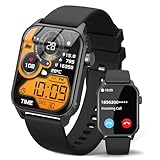
- 【1.83" HD Display & Customizable Watch Faces】Immerse yourself in a vibrant 1.83-inch IPS display, boasting a sharp resolution of 240*284 for crystal-clear visuals. Effortlessly personalize your smart watch with a wide array of customizable watch faces to suit your personal style for every occasion—whether trendy, artistic, or minimalist—ideal for casual, sporty, or professional. Its sleek, modern design complements any outfit, blending technology and fashion seamlessly for everyday wear
- 【120 Sports Modes & Advanced Health Tracking】Our TK29 smart watches for women men come equipped with 120 sports modes, allowing you to effortlessly track a variety of activities such as walking, running, cycling, and swimming. With integrated heart rate and sleep monitors, you can maintain a comprehensive overview of your health, achieve your fitness goals, and maintain a balanced, active lifestyle with ease. Your ideal wellness companion (Note: Step recording starts after exceeding 20 steps)
- 【IP67 Waterproof & Long-Lasting Battery】Designed to keep up with your active lifestyle, this smartwatch features an IP67 waterproof rating, ensuring it can withstand splashes, sweat, and even brief submersion, making it perfect for workouts, outdoor adventures, or rainy days. Its reliable 350mAh battery offering 5-7 days of active use and up to 30 days in standby mode, significantly reducing frequent charging. Ideal for all-day wear, whether you’re at the gym, outdoors, or simply on the go
- 【Stay Connected Anytime, Anywhere】Stay informed and in control with Bluetooth call and music control features. Receive real-time notifications for calls, messages, and social media apps like Facebook, WhatsApp, Twitter, and Instagram directly on your smartwatch. Easily manage calls, control your music playlist, and stay updated without needing to reach for your phone. Perfect for work, workouts, or on-the-go, this watch keeps you connected and never miss important updates wherever you are
- 【Multifunction & Wide Compatibility】Seamlessly handle heart rate monitoring, sleep tracking, and enjoy conveniences like camera/music control, Seamlessly handle heart rate monitoring, sleep tracking, and more-all directly from your wrist. This 1.83 inches HD smartwatch is compatible with iPhone (iOS 9.0+) & Android (5.0+), ensuring smooth daily connectivity and convenience throughout your day. More than just a timepiece, it’s a stylish, all-in-one wearable for smarter, healthier living
For example, swimming involves arm movement that creates dynamic pressure spikes, even in shallow water. Showering combines heat, steam, and soap, which can degrade gaskets over time. These factors are not reflected in a simple depth or ATM number printed on a spec sheet.
Depth ratings are not literal depth limits
One of the most persistent myths is that a “50 meter” or “100 meter” watch can safely be taken to that depth in water. In reality, those numbers correspond to pressure equivalents used during testing, not practical dive limits. A 50-meter-rated watch is typically intended for splashes and brief immersion, not active swimming.
This misunderstanding is especially common among first-time smartwatch buyers, who may assume that a slim, touchscreen device with a 5 ATM rating behaves like a chunky dive watch. Case thickness, button construction, speaker openings, and charging ports all influence how a wearable handles water, even when the rating appears similar on paper.
IP and ATM ratings describe different things
Adding to the confusion, IP and ATM ratings come from entirely different standards bodies and test philosophies. ATM ratings originate from traditional horology and focus solely on water pressure. IP ratings, used widely in electronics, evaluate resistance to both solids and liquids, often using sprayed or submerged water at specific angles and durations.
Because these systems are not directly interchangeable, a device rated IP68 is not automatically “better” or “worse” than one rated 5 ATM. Without context, consumers are left comparing apples to oranges, often guided more by marketing claims than by meaningful durability differences.
Marketing language blurs important limitations
Terms like “waterproof,” “swim-proof,” or “water-resistant for everyday use” sound reassuring but are rarely precise. Many brands explicitly exclude water damage from warranty coverage, even when the device is advertised as suitable for swimming. That disconnect creates frustration when a watch fails after exposure the user believed was allowed.
Smartwatches and fitness trackers are particularly vulnerable here because they include microphones, speakers, and haptic motors. These features improve daily usability but introduce additional entry points for moisture, making long-term water resistance more dependent on seal condition and user care.
Water resistance changes over time
Unlike battery life or software features, water resistance is not permanent. Gaskets compress, adhesives age, and minor impacts can compromise seals without any visible damage. This matters for wearables worn daily, exposed to sweat, temperature swings, and frequent charging cycles.
Traditional watches often allow for pressure testing during servicing, but many smartwatches are not designed to be resealed once opened. As a result, a device that was safe for swimming when new may not offer the same protection after a year or two of heavy use, even if the rating printed on the box never changes.
User behavior plays a bigger role than most realize
Pressing buttons underwater, wearing a watch into hot tubs, or rinsing it with high-pressure water can all exceed what the rating assumes. Saltwater introduces corrosion risk, while chlorine can accelerate gasket wear. These are everyday scenarios for active users, yet they are rarely explained clearly at the point of sale.
Understanding water resistance, then, is not just about memorizing numbers. It’s about understanding how standards, construction, and real-world habits intersect, so you can choose a watch or wearable that fits your lifestyle and use it confidently without accidental damage.
Two Different Systems, Two Different Worlds: IP Ratings vs ATM / Bar Ratings
Once you understand that water resistance fades over time and depends heavily on how a device is used, the next confusion point becomes obvious. Why do some devices list IP68, others say 5 ATM or 10 bar, and a few use both without explaining the difference?
These markings come from two entirely separate testing systems designed for different industries, different products, and different assumptions about how water exposure happens. Treating them as interchangeable is one of the most common reasons people misjudge what their watch or wearable can safely handle.
IP ratings: Electronics-first protection, not swimming performance
IP ratings come from the IEC 60529 standard and were created for consumer electronics, not watches. The system focuses on protection against solid particles like dust and against water ingress under controlled, static conditions.
An IP rating has two digits. The first relates to dust protection, while the second refers to water exposure, typically from splashes, jets, or short-term immersion.
IP67 and IP68 are the ratings most often seen on smartwatches and fitness trackers. IP67 means protection against immersion in up to 1 meter of fresh water for 30 minutes, while IP68 usually indicates deeper or longer immersion, but the exact depth and duration are set by the manufacturer, not the standard itself.
That flexibility is a critical limitation. One brand’s IP68 watch may be tested at 1.5 meters for 30 minutes, while another may claim 3 meters for a shorter time, yet both legally use the same label.
Just as important, IP testing assumes still water and a brand-new device. It does not account for arm movement while swimming, button presses, water temperature changes, soap, chlorine, or salt.
For wearables with microphones, speakers, and pressure-equalizing membranes, IP ratings focus on preventing immediate failure, not long-term durability. A watch may survive a brief dunk and still degrade internally over repeated exposure.
ATM and bar ratings: Pressure-based testing rooted in watchmaking
ATM and bar ratings come from traditional watchmaking and are based on ISO pressure testing methods. These ratings describe how much static pressure a watch case can withstand, expressed as atmospheres (ATM) or bar, where 1 ATM is roughly equal to 10 meters of water pressure.
A 5 ATM or 50-meter watch is tested to withstand pressure equivalent to 50 meters of depth, but not to be worn while actually diving to that depth. This distinction is often misunderstood and poorly explained in marketing materials.
Unlike IP ratings, ATM testing is specifically concerned with sealing the case against pressure. This includes the crystal, caseback, crown, pushers, and gasket system, all of which are critical in mechanical and quartz watches.
Because these tests are pressure-based, they better reflect the stresses caused by arm movement in water. Swimming strokes, sudden immersion, and minor impacts all create pressure spikes that static depth numbers alone do not describe.
Why 50 meters does not mean 50 meters of swimming
A 3 ATM or 30-meter watch is generally suitable only for splashes and rain. Washing hands or getting caught in a downpour is fine, but submersion is risky.
A 5 ATM or 50-meter rating is commonly considered safe for surface swimming in a pool. It is not appropriate for snorkeling, diving, or high-impact water sports.
At 10 ATM or 100 meters, a watch is usually safe for swimming, snorkeling, and frequent water exposure. Many modern sport watches and some rugged smartwatches sit here, balancing everyday wearability with genuine water confidence.
Ratings of 20 ATM or 200 meters and above are designed with diving in mind. These watches often feature screw-down crowns, thicker cases, reinforced crystals, and bracelets designed to stay secure over wetsuits.
Why smartwatches often avoid ATM ratings
Smartwatches live in a design space that traditional watches never had to consider. Touchscreens, microphones, speakers, heart rate sensors, and charging contacts all complicate sealing a case against pressure.
Many smartwatches are water-resistant enough for swimming, yet manufacturers rely on IP ratings because they align better with electronics certification and regulatory processes. This also allows more flexibility in how water resistance is described and tested.
Battery life, speaker performance, and haptic feedback all require pressure-equalizing membranes. These components can pass IP tests while still being vulnerable to degradation from soap, sweat, or salt over time.
Some higher-end sport-focused smartwatches now list both IP and ATM ratings. When that happens, the ATM number is usually the more useful indicator for swimming and water sports, assuming the manufacturer stands behind it with clear usage guidance.
Why the numbers cannot be compared directly
IP68 does not equal 5 ATM, and 5 ATM does not equal IP68. They measure different risks under different assumptions using different test methods.
IP ratings are about preventing ingress under short-term exposure. ATM ratings are about surviving pressure as part of normal use in water.
For everyday wearable buyers, this means an IP68 fitness tracker may be fine for a quick swim but less forgiving of years of pool use. A 10 ATM watch, even without an IP label, is usually better suited to repeated water exposure and active swimming.
What to prioritize when choosing between them
If you mainly wear a smartwatch for notifications, health tracking, and occasional workouts, an IP68 rating with explicit swim support may be sufficient. Pay close attention to the brand’s guidance on showering, saltwater, and button use.
If swimming, snorkeling, or watersports are part of your routine, an ATM rating of at least 5 ATM, and ideally 10 ATM, offers more real-world confidence. Case construction, crown design, and strap material matter just as much as the number itself.
Understanding which system a manufacturer is using, and why, is the difference between trusting a rating and being misled by it.
Understanding IP Ratings (IEC 60529): What IP67, IP68, and IPX8 Really Mean for Smartwatches
To make sense of why IP ratings behave so differently from ATM numbers, it helps to understand what the IP system was actually designed to measure. IP ratings come from the IEC 60529 standard, originally created to classify how well electrical enclosures protect sensitive electronics from dust and water ingress.
In other words, IP ratings exist to answer a simple engineering question: can water or solid particles get inside the device under controlled test conditions. They are not a promise of long-term survivability, nor are they tailored specifically to watches worn on a moving wrist.
Breaking down the IP code: what the letters and numbers mean
IP stands for Ingress Protection. The two characters that follow it describe protection against solids first, and liquids second.
The first digit ranges from 0 to 6 and refers to dust and solid particles. A 6 is the highest commonly used rating, meaning the device is dust-tight with no ingress after testing.
The second digit ranges from 0 to 9 and refers to water. This is where most smartwatch confusion begins, because higher numbers do not simply mean “more waterproof” in everyday use.
What IP67 actually certifies
IP67 means the device is fully dust-tight and can survive temporary immersion in water. Under the standard, that immersion is up to 1 meter of fresh water for up to 30 minutes, with the device stationary.
For a smartwatch, this usually covers hand washing, rain, sweat, and the occasional accidental dunk. It does not assume arm movement, water pressure from swimming, or repeated exposure day after day.
In real-world terms, IP67 is a baseline durability rating rather than a green light for regular swimming. Many manufacturers still advise against pool use, especially if the watch has a speaker, microphone, or physical buttons.
What changes with IP68
IP68 builds on IP67 by allowing immersion beyond 1 meter, but this is where the standard becomes less specific. The actual depth and duration are defined by the manufacturer, not the IEC.
Rank #2
![Apple Watch Series 11 [GPS 46mm] Smartwatch with Jet Black Aluminum Case with Black Sport Band - M/L. Sleep Score, Fitness Tracker, Health Monitoring, Always-On Display, Water Resistant](https://m.media-amazon.com/images/I/312K597M2uL._SL160_.jpg)
- HYPERTENSION NOTIFICATIONS — Apple Watch Series 11 can spot signs of chronic high blood pressure and notify you of possible hypertension.*
- KNOW YOUR SLEEP SCORE — Sleep score provides an easy way to help track and understand the quality of your sleep, so you can make it more restorative.
- EVEN MORE HEALTH INSIGHTS — Take an ECG anytime.* Get notifications for a high and low heart rate, an irregular rhythm,* and possible sleep apnea.* View overnight health metrics with the Vitals app* and take readings of your blood oxygen.*
- STUNNING DESIGN — Thin and lightweight, Series 11 is comfortable to wear around the clock — while exercising and even when you’re sleeping, so it can help track your key metrics.
- A POWERFUL FITNESS PARTNER — With advanced metrics for all your workouts, plus features like Pacer, Heart Rate Zones, training load, Workout Buddy powered by Apple Intelligence from your nearby iPhone,* and more. Series 11 also comes with three months of Apple Fitness+ free.*
One brand’s IP68 smartwatch may be tested at 1.5 meters for 30 minutes, while another may claim 3 meters for an hour. Both are technically correct under the same label, which makes direct comparisons unreliable.
This flexibility is why IP68 appears so often on modern smartwatches with swim tracking. It signals higher water tolerance than IP67, but it still does not define repeated dynamic use, water pressure from strokes, or long-term chemical exposure.
IPX8 and why the missing digit matters
When you see IPX8, the X means the device was not tested or not rated for dust ingress. This does not necessarily mean it lets dust in, only that dust protection is not part of the certification.
IPX8 water testing follows the same open-ended approach as IP68, allowing immersion beyond 1 meter under manufacturer-defined conditions. Many fitness bands and swim-focused trackers use IPX8 because dust protection is less critical for their intended use.
For everyday wear, especially in sandy or dusty environments, IPX8 is not automatically superior to IP68. The missing dust rating can matter just as much as the water claim.
Why IP testing does not reflect swimming and showering
IP water tests are performed with the device at rest in clean, fresh water. There is no wrist movement, no temperature change, and no pressurized water jets unless explicitly tested under a different rating.
Swimming introduces dynamic pressure as the arm moves through water, often exceeding static immersion pressure at shallow depths. Showering adds heat, steam, and soap, all of which are more aggressive on seals and membranes than cold water immersion.
This is why a smartwatch can pass IP68 testing yet still fail prematurely when exposed to hot showers or frequent pool sessions. The standard was never designed to simulate those conditions.
The role of speakers, microphones, and pressure membranes
Modern smartwatches rely on acoustic membranes to let sound and air pass while blocking water. These membranes are essential for calls, alerts, barometric sensors, and accurate altimeter readings.
IP testing confirms that water does not pass through these membranes during short exposure. It does not measure how those materials age after months of sweat, chlorine, sunscreen, or saltwater.
Over time, membrane performance can degrade, leading to muffled speakers, microphone failure, or slow water ingress even if the watch once met its IP rating.
How software features can mislead buyers
Swim tracking, water lock modes, and eject-water features often give users a false sense of security. These features help manage accidental water exposure but do not change the physical rating of the case.
A water lock prevents unintended screen touches and may vibrate water out of the speaker afterward. It does not reinforce seals, improve gaskets, or increase pressure resistance.
This is why two smartwatches with identical IP68 ratings can have very different real-world durability depending on case construction, button design, and long-term quality control.
How to interpret IP ratings when buying a smartwatch
IP ratings are best viewed as a minimum safety net rather than a usage license. They tell you what the device survived in a lab, not what it will tolerate for years on your wrist.
For casual users who want protection from rain, sweat, and occasional splashes, IP67 or IP68 is usually sufficient. For regular swimmers, surfers, or open-water users, an IP rating alone should never be the deciding factor.
This is why manufacturers that clearly state swimming depth, water temperature limits, and button usage guidelines are often more trustworthy than those relying solely on an IP label.
Understanding ATM / Bar Ratings (ISO 22810 & ISO 6425): From 3 ATM to Professional Dive Watches
If IP ratings describe resistance to brief, controlled exposure, ATM and bar ratings are meant to communicate pressure tolerance. These ratings are more common on traditional watches and higher-end smartwatches, and they are often misunderstood in exactly the same way.
ATM (atmospheres) and bar are essentially interchangeable units. 1 ATM equals roughly 1 bar, which corresponds to the static pressure exerted by 10 meters of water at rest.
The key word is static. Just like IP testing, ATM testing does not replicate real human movement, temperature changes, or repeated stress over time.
What ISO 22810 actually tests
Most everyday watches marked 3 ATM, 5 ATM, or 10 ATM are tested under ISO 22810, the modern general-purpose water-resistance standard. This applies to both quartz and mechanical watches, as well as many hybrid and smartwatch designs.
ISO 22810 involves exposing the watch to overpressure, condensation testing, and shallow immersion. The goal is to confirm that water does not enter the case during controlled laboratory conditions.
What it does not test is dynamic motion, arm impact while swimming, button presses underwater, or repeated exposure to soap, shampoo, chlorine, or salt. This limitation explains why real-world failures can occur well below the stated depth rating.
Why depth numbers do not mean usable depth
A 50-meter or 5 ATM watch is not designed for swimming to 50 meters. That number reflects pressure resistance, not permission.
When you move your arm through water, dive in, or even tread water, localized pressure spikes far exceed static depth pressure. Warm water can also soften gaskets, while soap reduces surface tension and encourages water ingress.
This is why manufacturers often publish conservative usage guidance that contradicts the marketing-friendly depth number on the dial or spec sheet.
3 ATM (30 meters): Splash resistance, not swimming
Watches rated at 3 ATM are designed to survive rain, hand washing, and accidental splashes. They are not built for swimming, showering, or prolonged exposure to water.
This rating is common on fashion watches, dress watches, and slim smartwatches prioritizing comfort and low profile over durability. Thin cases, snap-on casebacks, and minimal gasket systems are typical here.
Using a 3 ATM watch in the shower is especially risky. Heat, steam, and soap are far more likely to cause ingress than cold freshwater splashes.
5 ATM (50 meters): Light swimming with caveats
A 5 ATM rating generally indicates suitability for surface swimming in cool, freshwater conditions. Many fitness trackers and entry-level smartwatches fall into this category.
However, this assumes no button presses underwater unless explicitly allowed by the manufacturer. Buttons and crowns are often the weakest point in the sealing system.
Pool chemicals, saltwater, and hot tubs accelerate seal degradation. Rinsing with fresh water after swimming is not optional if you care about longevity.
10 ATM (100 meters): Recreational water use
At 10 ATM, watches are typically considered safe for swimming, snorkeling, and regular water exposure. This is where case construction, gasket quality, and crown design become visibly more robust.
Many sports watches and swim-focused smartwatches sit at this level. You often see screw-down crowns on analog watches and reinforced button membranes on digital ones.
Even here, ISO 22810 does not require testing with repeated underwater button actuation. If a manufacturer allows it, that guidance matters more than the raw ATM number.
20 ATM (200 meters): Serious water resistance, but not yet a dive watch
A 20 ATM rating signals a watch built for sustained water exposure and higher pressure margins. Cases are thicker, crystals are stronger, and tolerances are tighter.
This level is often used for rugged outdoor watches and advanced multisport smartwatches that support open-water swimming, surfing, and extended aquatic use.
Despite the depth rating, 20 ATM alone does not make a watch a certified dive watch. That distinction belongs to a different standard entirely.
ISO 6425 and what defines a true dive watch
ISO 6425 is the professional dive watch standard. It goes far beyond simple pressure resistance.
Watches certified under ISO 6425 must withstand at least 100% of their rated depth plus a safety margin, endure thermal shock, resist saltwater corrosion, and remain legible in low light. They must also feature a unidirectional timing bezel or equivalent dive-time tracking system.
Very few smartwatches meet ISO 6425 in full. Most rely on digital depth tracking and software features rather than mechanical redundancy, which the standard emphasizes for safety.
Smartwatches, ATM ratings, and software promises
When a smartwatch advertises 5 ATM or 10 ATM, that refers to the physical case resistance, not the long-term reliability of speakers, microphones, or haptic motors. Those components remain vulnerable to aging and contamination.
Swim tracking, depth sensors, and water lock modes improve usability, not structural resilience. A watch can log a swim perfectly and still suffer gradual seal degradation over months of use.
Battery life and charging design also matter. Exposed charging contacts and magnetic connectors introduce additional corrosion risk that traditional watches simply do not have.
How to use ATM ratings when choosing a watch or wearable
Treat ATM ratings as a baseline, not a guarantee. Always read the manufacturer’s usage guidance, especially regarding swimming, showering, and button operation.
If swimming is part of your weekly routine, 5 ATM should be considered a minimum, with 10 ATM offering a much safer margin. For frequent saltwater use, surfing, or open-water training, construction quality and brand transparency matter more than the number alone.
Rank #3

- Bluetooth Call and Message Alerts: Smart watch is equipped with HD speaker, after connecting to your smartphone via bluetooth, you can answer or make calls, view call history and store contacts through directly use the smartwatch. The smartwatches also provides notifications of social media messages (WhatsApp, Twitter, Facebook, Instagram usw.) So that you will never miss any important information.
- Smart watch for men women is equipped with a 320*380 extra-large hd full touch color screen, delivering exceptional picture quality and highly responsive touch sensitivity, which can bring you a unique visual and better interactive experience, lock screen and wake up easily by raising your wrist. Though “Gloryfit” app, you can download more than 102 free personalised watch faces and set it as your desktop for fitness tracker.
- 24/7 Heart Rate Monitor and Sleep Tracker Monitor: The fitness tracker watch for men has a built-in high-performance sensor that can record our heart rate changes in real time. Monitor your heart rate 26 hours a day and keep an eye on your health. Synchronize to the mobile phone app"Gloryfit", you can understand your sleep status(deep /light /wakeful sleep) by fitness tracker watch develop a better sleep habit and a healthier lifestyle.
- IP68 waterproof and 110+ Sports Modes: The fitness tracker provides up to 112+ sports modes, covering running, cycling, walking, basketball, yoga, football and so on. Activity trackers bracelets meet the waterproof requirements for most sports enthusiasts' daily activities, such as washing hands or exercising in the rain, meeting daily needs (note: Do not recommended for use in hot water or seawater.)
- Multifunction and Compatibility: This step counter watch also has many useful functions, such as weather forecast, music control, sedentary reminder, stopwatch, alarm clock, timer, track female cycle, screen light time, find phone etc. The smart watch with 2 hrs of charging, 5-7 days of normal use and about 30 days of standby time. This smart watches for women/man compatible with ios 9.0 and android 6.2 and above devices.
For buyers torn between a slim everyday smartwatch and a more rugged sports model, water resistance is often the deciding factor that determines how long the device will survive real life, not just how it performs on day one.
Static Tests vs Real Life: Why Water Pressure Ratings Don’t Equal Real-World Use
By this point, it should be clear that ATM and IP numbers describe how a watch survives a lab test, not how it behaves on your wrist over months or years. The gap between those two realities is where most water damage actually happens.
To understand why, you need to know how water resistance is tested and how differently water behaves once you start moving, flexing, heating, and cooling a wearable in daily life.
What “static pressure” really means in testing
ATM ratings are derived from static pressure tests. The watch is placed in a chamber, water pressure is increased gradually, and the case is observed for leaks over a set period.
Nothing moves during this test. No arms swing, no buttons are pressed, no straps flex the lugs, and no temperature changes cause materials to expand or contract.
A 5 ATM watch survives the pressure equivalent of 50 meters of still water, not the forces created by swimming, jumping, or high-velocity water hitting the case.
Dynamic pressure: the force water ratings don’t show
When you swim, water hits the watch at speed. That creates dynamic pressure, which can momentarily exceed the static pressure used in lab testing.
A strong arm stroke, a dive into a pool, or even pushing off the wall can generate localized pressure spikes at seals and buttons. These spikes are brief but repeated, and over time they stress gaskets in ways the original test never simulated.
This is why a watch rated for 3 ATM can survive rain but fail during casual swimming, despite the depth being shallow.
Temperature changes quietly weaken seals
Water resistance testing is typically done at controlled room temperature. Real life is not so gentle.
Hot showers cause the air inside a watch to expand, increasing internal pressure and pushing outward on seals. When the watch cools rapidly afterward, it can create a slight vacuum that actively pulls moisture inside.
This is why showering is one of the most common causes of water damage, even on watches that seem “waterproof enough” on paper.
Buttons, crowns, and touchscreens are weak points
Static tests usually assume that crowns are fully screwed down and buttons are untouched. In real use, that assumption often breaks down.
Pressing a button underwater momentarily distorts the seal around it. On smartwatches, speaker membranes, microphone ports, and pressure equalization vents introduce additional entry points that mechanical watches simply do not have.
Touchscreens add another layer of complexity. Repeated pressure, soap residue, and fine sediment can degrade coatings and seals around the display over time, especially on larger cases with thinner profiles.
Straps, fit, and wrist movement matter more than most people think
How a watch fits on your wrist influences water resistance more than most buyers realize. A tight strap increases case flex during movement, while a loose fit allows more sudden impacts with water.
Heavier smartwatches with large displays and flat casebacks experience more torque as your wrist rotates, subtly stressing gaskets at the caseback and lugs. This is one reason rugged sports watches tend to be thicker, with reinforced cases and simpler geometry.
Comfort-focused designs prioritize slimness and lightness, which improves daily wearability but reduces long-term tolerance for repeated water exposure.
Aging turns a rating into a moving target
Water resistance is not permanent. Gaskets dry out, adhesives fatigue, and microscopic debris accumulates around seals.
On traditional watches, regular pressure testing and gasket replacement can restore protection. On smartwatches, sealed construction often means there is no practical way to service water resistance once it begins to degrade.
Battery aging, heat from charging, and constant skin contact all accelerate this process, making a two-year-old smartwatch less water-resistant than it was on day one, even if it still powers on and tracks workouts perfectly.
Why real-world use favors margins, not minimums
This is why experienced buyers treat water resistance ratings conservatively. A 5 ATM smartwatch may survive swimming, but it has little margin for error once aging, temperature shifts, and dynamic pressure are factored in.
Choosing 10 ATM instead is not about diving deeper. It is about reducing stress on seals during ordinary activities like lap swimming, ocean exposure, and frequent rinsing.
In practice, the watches that last longest are not the ones that barely meet your needs, but the ones whose construction exceeds them comfortably.
Common Myths and Costly Mistakes: Showering, Swimming, Hot Water, and Saltwater Exposure
Once you understand why margins matter more than minimum ratings, many everyday habits start to look riskier than they seem. Most water damage does not come from dramatic failures, but from routine use that quietly exceeds what the seals were designed to tolerate over time.
The following are the most common myths that lead to premature failures in smartwatches and modern watches, even when the specs appear reassuring on paper.
Myth: “If it’s water-resistant, it’s safe to shower with”
Showering is one of the most damaging things you can do to a wearable, even if it carries a 5 ATM or IPX8 rating. Hot water causes gaskets to expand and soften, while cooling afterward makes them contract, pumping moisture inward over repeated cycles.
Soap, shampoo, and body wash are an even bigger problem than the water itself. These liquids reduce surface tension, allowing moisture to slip past seals more easily, and they leave residues that degrade rubber gaskets and adhesives over time.
Smartwatches are especially vulnerable because microphones, speakers, pressure vents, and charging contacts are intentionally open or membrane-covered. These areas are designed for brief exposure, not daily chemical baths.
Myth: “Hot water doesn’t matter if the depth is shallow”
Water resistance ratings are measured using cool, static water, not steam or high-temperature flow. Heat lowers the viscosity of water and increases internal air pressure inside the case, encouraging moisture to migrate through seals.
Steam is particularly dangerous because it can penetrate microscopic gaps that liquid water cannot. Once inside, it condenses as the watch cools, often leading to corrosion or display fogging days later rather than immediate failure.
This is why manufacturers routinely warn against saunas, steam rooms, hot tubs, and hot showers, regardless of ATM or IP rating.
Myth: “Swimming is fine as long as I don’t dive”
Swimming introduces dynamic pressure, not static depth. Each arm stroke creates sharp pressure spikes against the case, crown, and buttons that far exceed what a shallow depth number suggests.
Pools add another layer of risk due to chlorine, which aggressively attacks gaskets, metal finishes, and coatings. Over time, it dulls polished surfaces, weakens seals, and accelerates corrosion around buttons and speaker grilles.
Fitness-focused smartwatches are designed with swimming in mind, but they still rely on intact seals and proper rinsing afterward. Older devices or those near the end of their battery lifespan are far less tolerant than when new.
Myth: “Saltwater is no worse than freshwater”
Saltwater is significantly more destructive than freshwater. Salt crystals form as water dries, expanding inside tiny gaps and physically forcing seals apart over repeated exposure.
Salt also accelerates galvanic corrosion, especially where different metals meet, such as charging contacts, case screws, and button assemblies. On smartwatches, this can interfere with charging reliability and sensor accuracy long before the watch fails outright.
Even watches rated for ocean swimming should be rinsed thoroughly with fresh water after every exposure. Skipping this step is one of the most common causes of long-term water resistance failure.
Myth: “Water Lock makes it fully waterproof”
Water Lock features on smartwatches do not improve water resistance. They simply disable the touchscreen to prevent accidental inputs and, in some cases, play a tone afterward to expel water from the speaker cavity.
The seals, gaskets, and membranes are doing all the real work. If those components are already compromised by age, heat, or chemical exposure, Water Lock cannot prevent moisture ingress.
This misunderstanding often leads users to overestimate what their watch can safely handle, especially during showers or extended water exposure.
Myth: “Buttons and crowns are always safe underwater”
On most watches and smartwatches, pressing buttons underwater is a high-risk action unless the manufacturer explicitly states otherwise. Actuating a button temporarily breaks the seal, creating a direct path for water to enter under pressure.
Screw-down crowns on traditional watches offer better protection, but only when fully secured. On smartwatches, digital crowns and side buttons are sealed but not designed for repeated underwater use unless specifically engineered for diving.
This is why many swim-ready wearables lock controls automatically during workouts, reducing the chance of accidental presses.
The quiet cost of repeated “almost safe” exposure
The most expensive water damage does not happen the first time. It happens after dozens of showers, swims, and rinses that each slightly weaken the seals without causing immediate symptoms.
By the time fogging, corrosion, or sensor failure appears, the internal damage is already done. On sealed smartwatches, repair often means full replacement rather than service.
Rank #4
![Apple Watch Series 11 [GPS 42mm] Smartwatch with Rose Gold Aluminum Case with Light Blush Sport Band - S/M. Sleep Score, Fitness Tracker, Health Monitoring, Always-On Display, Water Resistant](https://m.media-amazon.com/images/I/31J+F-pXaWL._SL160_.jpg)
- HYPERTENSION NOTIFICATIONS — Apple Watch Series 11 can spot signs of chronic high blood pressure and notify you of possible hypertension.*
- KNOW YOUR SLEEP SCORE — Sleep score provides an easy way to help track and understand the quality of your sleep, so you can make it more restorative.
- EVEN MORE HEALTH INSIGHTS — Take an ECG anytime.* Get notifications for a high and low heart rate, an irregular rhythm,* and possible sleep apnea.* View overnight health metrics with the Vitals app* and take readings of your blood oxygen.*
- STUNNING DESIGN — Thin and lightweight, Series 11 is comfortable to wear around the clock — while exercising and even when you’re sleeping, so it can help track your key metrics.
- A POWERFUL FITNESS PARTNER — With advanced metrics for all your workouts, plus features like Pacer, Heart Rate Zones, training load, Workout Buddy powered by Apple Intelligence from your nearby iPhone,* and more. Series 11 also comes with three months of Apple Fitness+ free.*
Understanding these myths is not about avoiding water entirely. It is about matching real-world use to what your watch or wearable can reliably tolerate over years, not just what it survived once.
Smartwatches vs Traditional Watches: How Design, Seals, Speakers, and Buttons Change the Risk
Once you understand how small compromises add up over time, the difference between a smartwatch and a traditional watch becomes much clearer. They may share similar water-resistance numbers on paper, but the way they are built—and how they age—changes the real-world risk dramatically.
Different design goals, different vulnerabilities
Traditional watches are designed around a single core function: timekeeping. Whether mechanical or quartz, the movement is passive, generates little heat, and requires no airflow, sound, or wireless signals.
Smartwatches, by contrast, are miniature computers strapped to your wrist. They rely on speakers, microphones, antennas, pressure sensors, charging contacts, and optical health sensors, each of which creates a potential entry point for moisture.
This difference in complexity means that even with similar IP or ATM ratings, a smartwatch is defending many more openings than a traditional watch ever has to.
Seals: fewer, thicker, and serviceable vs thin and permanent
A traditional watch typically relies on a small number of relatively thick gaskets. These are found at the caseback, crystal, crown, and sometimes pushers, and they are designed to be replaced during routine servicing.
Because mechanical watches are serviceable by design, degraded seals can be swapped before they fail completely. This is why a well-maintained dive watch can remain water-resistant for decades.
Smartwatches usually rely on thinner, flatter seals combined with adhesives and membranes. These are optimized for compact size, light weight, and mass production, not long-term serviceability.
Once a smartwatch seal degrades, there is often no practical way to replace it without replacing the entire device. This is a major reason manufacturers are conservative with warranty coverage for water damage.
Speakers and microphones: necessary openings that watches never needed
Speakers and microphones are one of the biggest structural differences between smartwatches and traditional watches. They require acoustic ports that must remain open to air while still resisting water ingress.
Manufacturers use fine mesh screens, hydrophobic membranes, and internal chambers to manage this. These systems work well when new, but they are sensitive to soap residue, salt crystals, sunscreen, and mineral buildup.
Traditional watches do not need any of these openings. A solid case with no sound ports is inherently easier to seal, especially under repeated exposure to water.
Buttons and crowns: mechanical certainty vs sealed electronics
On a traditional watch, crowns and pushers are mechanical components with defined sealing strategies. Screw-down crowns physically compress gaskets, creating a predictable barrier that improves resistance when properly secured.
Chronograph pushers are more complex, and unless explicitly designed for underwater use, they remain a known weak point. However, their behavior is well understood and relatively consistent across decades of watchmaking.
Smartwatch buttons and digital crowns are electronic components sealed with membranes rather than mechanical compression. They are designed for occasional use in wet conditions, not repeated actuation underwater unless specifically stated by the manufacturer.
This is why pressing buttons underwater is more dangerous on smartwatches than many users realize, even when the device is rated for swimming.
Sensors and casebacks: constant skin contact adds stress
Smartwatches rely on optical heart-rate sensors, skin temperature sensors, and electrical contacts that sit flush against the wrist. These areas are exposed to sweat, oils, heat, and movement all day, every day.
That constant contact accelerates seal wear and chemical degradation, especially during workouts, showers, and hot environments. Sweat is particularly aggressive because it combines salt, moisture, and heat in a confined space.
Traditional watches may have exhibition casebacks or solid steel backs, but they do not rely on exposed sensors. This reduces both chemical exposure and mechanical stress at one of the largest sealing surfaces.
Software safeguards help usability, not structure
Features like Water Lock, swim modes, and depth tracking are valuable usability tools on smartwatches. They prevent accidental screen inputs, log activity accurately, and sometimes help clear water from speaker cavities.
What they do not do is reinforce seals or compensate for aging materials. The physical water resistance of the device is fixed at the hardware level from the moment it leaves the factory.
Traditional watches have no software layer at all, but they also do not depend on software to remain safe in water. Their protection is purely mechanical, which makes its limitations easier to understand and respect.
Why similar ratings do not mean similar outcomes
A 5 ATM traditional watch and a 5 ATM smartwatch are tested under broadly similar static conditions. In daily life, however, the smartwatch experiences more thermal cycling, more chemical exposure, and more frequent interaction with seals and buttons.
Battery heat during charging, rapid cooling during swimming, and repeated rinsing all place stress on smartwatch materials in ways traditional watches rarely encounter. Over time, this increases the likelihood of seal fatigue even without a single dramatic failure.
This does not mean smartwatches are fragile, but it does mean their water resistance should be treated as a consumable characteristic rather than a permanent one.
How Water Resistance Degrades Over Time: Gaskets, Aging, Impacts, and Maintenance
Once you understand that water resistance is a fixed hardware property, the next step is recognizing that it is not permanent. Whether it is a mechanical dive watch or a modern smartwatch, the ability to keep water out slowly diminishes from the first day of use.
This degradation is usually invisible and gradual, which is why many water-related failures feel sudden or “out of nowhere” to owners.
Gaskets are consumable parts, not lifetime components
At the heart of every water-resistant watch or wearable are gaskets: thin rings of rubber, silicone, fluoropolymer, or similar elastomers that create pressure-tight seals. These sit around the caseback, crown, buttons, speaker membranes, microphone ports, and sometimes the display itself.
Over time, gaskets lose elasticity as they are compressed, heated, cooled, and exposed to air and moisture. Once a gasket hardens or takes a permanent set, it no longer rebounds to maintain a tight seal under changing pressure.
Traditional watches often use fewer gaskets in simpler locations, which makes inspection and replacement straightforward during servicing. Smartwatches rely on multiple ultra-thin seals around complex components, many of which are not designed to be serviced or replaced at all.
Aging happens even if you never get the watch wet
Water resistance does not only degrade through water exposure. Oxygen, UV light, body heat, and time alone slowly change the chemical structure of sealing materials.
A watch worn daily experiences constant thermal cycling as it moves from wrist temperature to room temperature, then to charging heat, then back again. Each cycle causes microscopic expansion and contraction of the case and seals.
For smartwatches, this effect is amplified by internal heat from processors, batteries, and wireless charging coils. Even without swimming or showering, the sealing system is under more stress than that of a purely mechanical watch.
Impacts and shocks create invisible leak paths
A single drop, knock, or sharp impact does not need to crack the case to compromise water resistance. Micro-deformation of the case, caseback, or bezel can reduce gasket compression enough to create a leak path.
This is especially relevant for large, thin smartwatches with wide displays and lightweight cases. Aluminum and polymer cases absorb shocks differently than steel or titanium, and repeated minor impacts add up over time.
Buttons and crowns are particularly vulnerable. Each press or rotation slightly shifts internal components, and after thousands of interactions, tolerances widen even if the watch still looks and feels normal.
Chemicals are more damaging than water itself
Fresh water is relatively benign. The real enemies of seals are soaps, shampoos, detergents, sunscreen, insect repellent, and saltwater.
Hot showers are especially problematic because heat causes seals to expand while soaps reduce surface tension, making it easier for moisture to pass through microscopic gaps. This is why many manufacturers explicitly warn against showering even when swimming is allowed.
Sweat deserves special mention for wearables. It is salty, acidic, warm, and trapped between the watch and the wrist, attacking seals and adhesives for hours at a time during workouts and daily wear.
Smartwatch construction limits long-term serviceability
Most traditional watches are designed with periodic gasket replacement in mind. During a routine service, seals are swapped, pressure-tested, and restored close to original performance.
Smartwatches are rarely built this way. Displays are often glued, batteries are sealed in, and sensors are bonded to the case with adhesives that double as structural elements.
As a result, once water resistance begins to decline on a smartwatch, there is often no practical way to fully restore it. Manufacturers typically rate water resistance for the expected lifespan of the device rather than decades of use.
Maintenance helps, but it cannot reverse time
Rinsing a watch with fresh water after swimming, especially in saltwater, reduces chemical exposure and slows gasket degradation. Drying it thoroughly before charging helps prevent moisture from being drawn inside by temperature changes.
Avoiding hot showers, steam rooms, and saunas significantly extends seal life for both watches and wearables. These environments combine heat, pressure changes, and chemicals in the worst possible way.
For traditional watches, periodic pressure testing is the only reliable way to confirm ongoing water resistance. For smartwatches, the safest assumption is that water resistance gradually declines, even if the device continues to function perfectly in every other way.
Choosing the Right Rating for Your Lifestyle: Everyday Wear, Fitness, Swimming, and Diving
Once you understand that water resistance is temporary, conditional, and affected by heat, chemicals, and time, the question becomes practical rather than theoretical. The right rating is not about buying the highest number available, but about matching the device to how you actually live, train, and travel.
💰 Best Value
![Apple Watch Series 11 [GPS 42mm] Smartwatch with Jet Black Aluminum Case with Black Sport Band - S/M. Sleep Score, Fitness Tracker, Health Monitoring, Always-On Display, Water Resistant](https://m.media-amazon.com/images/I/31ybzrJZckL._SL160_.jpg)
- HYPERTENSION NOTIFICATIONS — Apple Watch Series 11 can spot signs of chronic high blood pressure and notify you of possible hypertension.*
- KNOW YOUR SLEEP SCORE — Sleep score provides an easy way to help track and understand the quality of your sleep, so you can make it more restorative.
- EVEN MORE HEALTH INSIGHTS — Take an ECG anytime.* Get notifications for a high and low heart rate, an irregular rhythm,* and possible sleep apnea.* View overnight health metrics with the Vitals app* and take readings of your blood oxygen.*
- STUNNING DESIGN — Thin and lightweight, Series 11 is comfortable to wear around the clock — while exercising and even when you’re sleeping, so it can help track your key metrics.
- A POWERFUL FITNESS PARTNER — With advanced metrics for all your workouts, plus features like Pacer, Heart Rate Zones, training load, Workout Buddy powered by Apple Intelligence from your nearby iPhone,* and more. Series 11 also comes with three months of Apple Fitness+ free.*
For most buyers, confusion starts when marketing language blurs everyday exposure with active water use. Breaking usage into clear lifestyle categories makes the decision far easier and avoids expensive mistakes.
Everyday Wear: Rain, Handwashing, and Accidental Splashes
If your watch or wearable will only see rain, occasional splashes, and regular handwashing, an IPX4 or IPX5 rating is generally sufficient. This covers water sprayed from different directions but does not allow submersion.
Many slim smartwatches, hybrid watches, and fashion-oriented fitness trackers sit in this category. They prioritize comfort, thin cases, lighter materials, and longer battery life over sealing depth.
This level is appropriate for office wear, commuting, and casual daily use, but it assumes restraint. You should remove the device before showering, bathing, dishwashing, or any activity involving prolonged water exposure.
Fitness and Sweat-Heavy Use: Gym Workouts and Running
For regular workouts, sweat becomes a more important factor than water depth. An IP67 or IP68 rating, or a 3 ATM to 5 ATM watch rating, provides a stronger safety margin against prolonged moisture trapped against the wrist.
Fitness-focused smartwatches in this range usually feature reinforced case backs, sealed buttons, and sensors designed to tolerate salt and heat better than entry-level devices. Comfort also matters here, as softer straps and curved case backs reduce sweat pooling.
While these ratings handle sweat, rain, and post-workout rinsing, they still do not make the watch shower-safe. Hot water and soaps remain a risk even when the rating looks reassuring on paper.
Swimming and Pool Use: Laps, Leisure, and Open Water
If swimming is part of your routine, 5 ATM or higher is the practical baseline for both traditional watches and smartwatches. This rating accounts for full submersion and moderate water movement during swimming strokes.
Most swim-capable smartwatches also include water-lock features, which disable touchscreens and use speakers or vibration to expel water afterward. These are usability features, not sealing upgrades, but they reduce accidental inputs and long-term moisture retention.
Pool water introduces chlorine, while open water adds salt, both of which accelerate gasket and adhesive aging. Rinsing with fresh water after every swim is not optional if you want the rating to last beyond the first year or two.
Diving and High-Pressure Activities: What Ratings Actually Matter
Recreational diving requires more than marketing numbers. A minimum of 10 ATM is advisable for frequent snorkeling or shallow dives, while true dive watches follow ISO 6425 standards, which include shock resistance, condensation testing, and legibility requirements.
Most smartwatches, even those rated to 10 ATM, are not designed for repeated depth changes or prolonged pressure exposure. Their ratings assume controlled conditions and limited lifespan, not decades of service.
Dedicated dive computers or ISO-certified mechanical dive watches remain the safer choice for serious underwater use. They are thicker, heavier, and less sleek, but the trade-off is reliability when pressure, temperature, and water chemistry become unpredictable.
Matching Ratings to Real-World Wearability
Higher water resistance often means thicker cases, stiffer buttons, heavier construction, and sometimes reduced speaker or microphone performance. For smaller wrists or all-day wear, this can impact comfort more than buyers expect.
Smartwatches with higher ratings may also sacrifice battery access or repairability, since stronger sealing often relies on permanent adhesives. This aligns with the reality that many wearables are designed for a defined service life rather than long-term ownership.
The smartest purchase balances rating, comfort, software experience, and how often water exposure truly happens. Overbuying resistance does not make a device immune, but underbuying almost guarantees frustration.
A Practical Rule of Thumb
If water exposure is incidental, prioritize comfort and features over depth ratings. If water exposure is intentional and frequent, choose a rating that comfortably exceeds your needs, not one that merely meets them on paper.
Always assume water resistance declines over time, especially for smartwatches worn daily during workouts. Treat the rating as a safety buffer, not a promise of invulnerability.
Choosing the right rating is ultimately about respecting the limits of seals, adhesives, and materials, and selecting a watch or wearable that fits your lifestyle without asking it to survive conditions it was never designed to endure.
Best Practices for Using, Cleaning, and Protecting Your Watch or Wearable Around Water
Understanding ratings is only half the equation. How you use, clean, and care for your watch or wearable around water ultimately determines whether that rating remains meaningful over time.
Water resistance is a condition, not a permanent trait. Treating it as something that can be preserved rather than relied upon blindly will dramatically reduce the risk of damage.
Use the Rating as a Limit, Not a Target
If your watch is rated to 5 ATM or IPX7, that does not mean it wants to be submerged every day. Those ratings represent controlled test ceilings, not encouragement for regular exposure.
Repeated swimming, showering, or high-motion water activities push seals, buttons, and adhesives closer to failure. Staying comfortably below the rating in daily use is the safest long-term approach.
Avoid Hot Water, Steam, and Showers
Hot water is one of the fastest ways to defeat water resistance. Heat causes case materials, gaskets, and adhesives to expand at different rates, creating microscopic gaps water can exploit.
Steam is especially dangerous because vapor penetrates more easily than liquid. A watch that survives swimming can still fail in a shower or sauna, even with a higher ATM or IP rating.
Never Operate Buttons or Crowns Underwater
Pressing buttons or rotating crowns underwater compromises seals at their weakest point. Many smartwatches advertise swim tracking but still recommend minimizing button use during immersion.
Mechanical watches with screw-down crowns should always be fully secured before water exposure. Unscrewing a crown, even briefly, defeats the entire sealing system.
Rinse After Saltwater, Chlorine, or Sweat
Saltwater and chlorine are far more aggressive than fresh water. They accelerate gasket degradation, corrode metal components, and damage speaker membranes and charging contacts.
After swimming in the ocean or a pool, rinse the watch gently with fresh water and dry it with a soft cloth. This simple habit dramatically extends the life of seals, finishes, and straps.
Pay Attention to Straps, Not Just the Case
Straps often fail long before the watch head does. Leather absorbs water and degrades quickly, while fabric straps can trap salt and bacteria against the case.
For frequent water exposure, silicone, fluoroelastomer, rubber, or metal bracelets are the most durable options. Comfort, drying speed, and skin sensitivity matter just as much as water resistance ratings.
Drying Matters More Than People Think
After water exposure, remove the watch from your wrist and allow it to air dry fully. Trapped moisture between the caseback and skin can migrate toward seals over time.
Avoid heat sources like hair dryers or radiators. Slow, natural drying protects adhesives, batteries, and internal sensors, especially in smartwatches.
Be Cautious With Charging After Water Exposure
Never charge a smartwatch while it is wet unless the manufacturer explicitly states it is safe to do so. Moisture on charging contacts increases corrosion risk and can short electronic components.
Most modern wearables detect moisture and disable charging temporarily, but this is a safeguard, not a guarantee. Waiting until the device is fully dry is always the safest move.
Understand That Water Resistance Degrades Over Time
Daily wear exposes watches to temperature swings, impacts, skin oils, and chemicals that slowly compromise seals. Even without visible damage, resistance declines year after year.
Mechanical watches benefit from periodic pressure testing during servicing. Smartwatches typically do not offer resealing, reinforcing the idea that their resistance is finite by design.
Inspect After Impacts or Case Damage
A drop, knock, or hard impact can compromise water resistance without leaving obvious marks. Case deformation, crystal shifts, and gasket displacement are not always visible.
If a watch takes a significant hit, avoid water exposure until it can be inspected. This matters as much for a rugged sports watch as it does for a slim everyday wearable.
Know When Not to Trust the Rating
Older watches, refurbished devices, and secondhand purchases should never be assumed water resistant without verification. Age, prior repairs, and improper servicing all affect sealing integrity.
If the device’s history is unknown, treat it as splash-resistant at best. Conservatism around water is cheaper than replacement or data loss.
What to Do If Water Ingress Is Suspected
Fogging under the crystal, muffled speakers, or erratic sensor behavior are warning signs. Power the device off immediately and avoid charging it.
Do not attempt home drying methods involving heat or desiccants unless explicitly recommended by the manufacturer. Professional inspection is the safest path, especially for watches with batteries.
Smart Ownership Is the Final Layer of Protection
Water resistance ratings set expectations, but behavior determines outcomes. Using the right strap, avoiding heat and steam, rinsing after exposure, and respecting wear over time matter more than numbers on a spec sheet.
When treated as a buffer rather than a promise, water resistance becomes a reliable safety net instead of a costly gamble. The most durable watch is not the one with the highest rating, but the one used within its limits and cared for accordingly.