A decade ago, a wearable was little more than a digital pedometer strapped to your wrist. Today’s smartwatches are always‑on computers that track heart rhythm, blood oxygen, sleep stages, stress, temperature trends, location, and in some cases generate alerts that users treat as medical signals. Once a device starts influencing health decisions, storing intimate biometric data, and communicating wirelessly at all times, governments stop treating it like a novelty gadget.
Regulation exists because wearables now sit at the intersection of consumer electronics, health products, and personal data vaults. A modern smartwatch combines sensors that touch the body, software that interprets biological signals, radios that transmit continuously, and cloud services that retain years of personal history. That combination creates risks around safety, accuracy, misuse of data, and user harm if something goes wrong.
This section explains why lawmakers care, what changed as wearables evolved, and how a step counter quietly became something closer to a regulated health computer. Understanding this shift makes it easier to see why privacy policies, regulatory labels, and regional differences matter when choosing or using a wearable.
From simple activity tracking to continuous biological monitoring
Early fitness trackers counted steps using basic accelerometers and stored data locally, often syncing only when connected to a computer. Errors were inconvenient but rarely consequential, and the data itself revealed little beyond general activity levels. Regulators had little reason to intervene.
🏆 #1 Best Overall
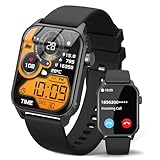
- 【1.83" HD Display & Customizable Watch Faces】Immerse yourself in a vibrant 1.83-inch IPS display, boasting a sharp resolution of 240*284 for crystal-clear visuals. Effortlessly personalize your smart watch with a wide array of customizable watch faces to suit your personal style for every occasion—whether trendy, artistic, or minimalist—ideal for casual, sporty, or professional. Its sleek, modern design complements any outfit, blending technology and fashion seamlessly for everyday wear
- 【120 Sports Modes & Advanced Health Tracking】Our TK29 smart watches for women men come equipped with 120 sports modes, allowing you to effortlessly track a variety of activities such as walking, running, cycling, and swimming. With integrated heart rate and sleep monitors, you can maintain a comprehensive overview of your health, achieve your fitness goals, and maintain a balanced, active lifestyle with ease. Your ideal wellness companion (Note: Step recording starts after exceeding 20 steps)
- 【IP67 Waterproof & Long-Lasting Battery】Designed to keep up with your active lifestyle, this smartwatch features an IP67 waterproof rating, ensuring it can withstand splashes, sweat, and even brief submersion, making it perfect for workouts, outdoor adventures, or rainy days. Its reliable 350mAh battery offering 5-7 days of active use and up to 30 days in standby mode, significantly reducing frequent charging. Ideal for all-day wear, whether you’re at the gym, outdoors, or simply on the go
- 【Stay Connected Anytime, Anywhere】Stay informed and in control with Bluetooth call and music control features. Receive real-time notifications for calls, messages, and social media apps like Facebook, WhatsApp, Twitter, and Instagram directly on your smartwatch. Easily manage calls, control your music playlist, and stay updated without needing to reach for your phone. Perfect for work, workouts, or on-the-go, this watch keeps you connected and never miss important updates wherever you are
- 【Multifunction & Wide Compatibility】Seamlessly handle heart rate monitoring, sleep tracking, and enjoy conveniences like camera/music control, Seamlessly handle heart rate monitoring, sleep tracking, and more-all directly from your wrist. This 1.83 inches HD smartwatch is compatible with iPhone (iOS 9.0+) & Android (5.0+), ensuring smooth daily connectivity and convenience throughout your day. More than just a timepiece, it’s a stylish, all-in-one wearable for smarter, healthier living
Modern wearables continuously monitor biological signals using optical heart sensors, electrical ECG electrodes, skin temperature sensors, and blood oxygen estimation. These measurements can influence behavior in real time, such as prompting medical follow‑ups, adjusting training loads, or flagging irregular heart rhythms. When a device begins shaping health decisions, accuracy and reliability stop being optional.
Always on, always connected, always collecting
Smartwatches are not passive devices; they collect data 24/7, often including sleep patterns, location, movement habits, and physiological trends. This data is frequently uploaded to company servers, analyzed using algorithms, and sometimes shared with third parties like insurers, researchers, or app developers. That creates privacy and security risks that go far beyond a traditional wristwatch or even a smartphone.
Regulators step in to ensure users know what data is collected, how it is used, and what rights they have over it. Laws like GDPR in Europe exist because biometric and health‑adjacent data can reveal sensitive insights about lifestyle, medical conditions, and even future health risks. Once collected, this information is difficult or impossible to truly anonymize.
Health claims trigger higher scrutiny
The moment a wearable claims to detect a medical condition, provide diagnostic insight, or support clinical decision‑making, it enters a different regulatory category. Features like ECG readings, atrial fibrillation notifications, sleep apnea detection, and fall detection are not just wellness features in the eyes of regulators. They can influence when someone seeks care or ignores symptoms.
This is why some features are enabled in certain countries but not others, even on identical hardware. Regulatory agencies assess whether claims are supported by evidence, whether risks are adequately disclosed, and whether users understand the device’s limitations. A watch can be beautifully finished, comfortable to wear all day, and have excellent battery life, but a misleading health claim can still cause harm.
Physical safety still matters
Even non‑medical wearables are regulated because they sit on the body for long periods. Materials must be safe for prolonged skin contact, batteries must not overheat, and chargers must meet electrical safety standards. Comfort, weight distribution, case size, strap materials, and ventilation are not just usability concerns but safety considerations when devices are worn during sleep or exercise.
Wireless components like Bluetooth, Wi‑Fi, LTE, and NFC are also regulated to prevent interference and ensure exposure remains within accepted limits. A smartwatch with excellent real‑world wearability still needs to prove it communicates safely and reliably in crowded radio environments. That’s why certification marks and regional approvals exist, even for devices that never mention health.
Software updates can change a product’s risk profile
Unlike traditional watches, wearables evolve after purchase through software updates. A firmware update can add new sensors, enable health features, or change how data is interpreted. Regulators care because a device sold as a basic fitness tracker can later become something that behaves like a health monitor.
This creates ongoing oversight challenges. Companies are expected to manage updates responsibly, communicate changes clearly, and ensure new features don’t introduce unassessed risks. For consumers, this means the regulatory status of a wearable is not frozen at launch, and laws exist to keep that evolution in check.
Why this matters when choosing a wearable
Regulation is not about limiting innovation; it’s about setting guardrails so innovation doesn’t harm users. When a wearable complies with data protection laws, health regulations, and safety standards, it signals that the manufacturer has invested in testing, transparency, and accountability. That often correlates with better long‑term software support, clearer privacy controls, and more trustworthy health insights.
Understanding why wearables are regulated helps explain why some devices cost more, why features differ by region, and why privacy settings deserve as much attention as display quality or battery life. The laws exist because wearables quietly became one of the most personal technologies people own, and the stakes are higher than counting steps ever was.
Data Is the New Heartbeat: Privacy and Personal Data Laws Governing Wearables (GDPR, CCPA, and Beyond)
If safety regulation governs how a wearable sits on your wrist, privacy law governs what happens after it starts listening to your body. Once sensors begin collecting heart rate, sleep stages, movement patterns, and location, the device stops being just hardware and becomes a data processor with legal obligations attached.
This shift matters because wearable data is unusually intimate. Unlike a phone app you open intentionally, a smartwatch tracks passively, often 24/7, including during sleep, workouts, and moments you are not consciously interacting with the device.
Why wearable data is legally sensitive by default
Most privacy laws treat wearable data as high-risk personal information because it can reveal health status, routines, stress levels, fertility patterns, and even early signs of illness. A heart rate trend paired with timestamps and GPS data can be more revealing than a medical questionnaire.
Even design choices like all-day comfort, lightweight materials, curved cases, and breathable straps increase data sensitivity. The more comfortable and unobtrusive a wearable is, the more continuously it collects, and the more responsibility the manufacturer carries.
GDPR: The global gold standard shaping wearables worldwide
The EU’s General Data Protection Regulation sets the tone for wearable privacy globally, even for companies not based in Europe. If a smartwatch or fitness tracker is sold to EU residents, GDPR applies regardless of where the company is headquartered.
Under GDPR, most wearable data qualifies as personal data, and health metrics often fall into special category data with stricter rules. This means companies must have a clear legal basis to collect it, usually explicit user consent or a narrowly defined legitimate purpose.
Consent under GDPR must be informed, specific, and revocable. In practical terms, a one-time setup screen buried in an app is not enough if the watch later adds new health features via software updates.
What GDPR requires wearable brands to do in practice
Manufacturers must clearly explain what data is collected, why it is collected, and how long it is stored. This information must be accessible, not hidden behind dense legal language, and easy to find within the companion app or account dashboard.
Users have enforceable rights, including access to their data, the ability to correct it, request deletion, or export it to another platform. If a brand locks health data into a closed ecosystem without portability, it risks falling afoul of GDPR expectations.
Security is also non-negotiable. Encryption, secure cloud storage, and safeguards against unauthorized access are not optional extras, even for budget fitness trackers with long battery life and minimalist displays.
CCPA and CPRA: California’s consumer-first approach
In the United States, privacy regulation is fragmented, but California sets the most influential standard through the California Consumer Privacy Act and its expansion, the California Privacy Rights Act. These laws apply to many wearable companies operating in the US market.
CCPA focuses on transparency and control rather than consent. Users have the right to know what data is collected, why it is collected, and whether it is shared or sold to third parties, including advertisers or analytics providers.
For wearables, this directly affects features like personalized insights, third-party fitness integrations, and insurance-linked wellness programs. If data flows beyond the core product experience, it must be disclosed clearly.
Sensitive personal information and biometric data
Under CPRA, health and biometric data receive additional protection. Heart rate variability, blood oxygen levels, sleep metrics, and stress indicators often fall into this category.
Consumers can limit how this sensitive data is used, even if they continue using the device. This creates a practical tension for wearable brands that rely on aggregated data to improve algorithms and health insights.
Well-designed privacy controls matter here. A wearable with excellent sensors but poor data controls can become less attractive than a slightly less advanced device that gives users confidence and clarity.
HIPAA: Often misunderstood, rarely applicable
Many consumers assume HIPAA automatically protects their smartwatch data, but in most cases, it does not. HIPAA applies to healthcare providers, insurers, and their direct partners, not consumer electronics companies.
If wearable data is shared directly with a doctor or integrated into a clinical care system, HIPAA may apply at that point. Until then, privacy protections come from consumer data laws, not medical confidentiality rules.
This distinction explains why privacy policies and app permissions deserve scrutiny. A watch can feel medical in function without being legally treated as a medical record.
Beyond Europe and California: A tightening global net
Countries worldwide are adopting GDPR-inspired laws. Brazil’s LGPD, China’s PIPL, South Korea’s PIPA, and Japan’s APPI all regulate how wearable data is collected, stored, and transferred across borders.
For global smartwatch brands, this means designing privacy compliance into the product from day one. Firmware, cloud infrastructure, and app architecture must support regional differences without fragmenting the user experience.
Consumers may notice features launching later in certain regions or being disabled entirely. These are often legal decisions rather than technical limitations.
Children, teens, and family wearables
Wearables designed for children or marketed with family tracking features face stricter rules. GDPR, CCPA, and other laws impose heightened consent requirements when minors are involved.
Parental dashboards, location tracking, and health summaries must be handled carefully. A lightweight, durable kids’ watch with long battery life may still require complex legal safeguards behind the scenes.
This is why reputable brands are cautious with child-focused health metrics and limit data sharing by default.
Data retention, deletion, and the right to move on
Privacy laws increasingly require companies to justify how long they keep wearable data. Data collected for daily fitness tracking cannot be stored indefinitely without reason.
Users also have the right to leave. If you switch platforms or sell a watch, you should be able to delete your account and have your historical data erased or exported.
From a buying perspective, this affects long-term value. A premium wearable with durable materials, polished finishing, and years of software support should also respect that ownership of data ultimately belongs to the wearer.
What this means when choosing a smartwatch or fitness tracker
Privacy compliance is invisible when it works well, but it shows up in the details. Clear consent prompts, granular data controls, transparent privacy dashboards, and prompt breach notifications are signs of a mature product.
Battery life, comfort, sensor accuracy, and software experience still matter, but they now sit alongside legal trust. A wearable that respects privacy laws is more likely to age well, survive regulatory changes, and continue receiving meaningful updates without putting users at risk.
As wearables become more capable and more personal, privacy law becomes the quiet framework that determines whether innovation feels empowering or intrusive.
When a Watch Becomes a Medical Device: Health, Wellness, and FDA / MDR Regulatory Boundaries
As privacy laws shape how wearable data is handled, health regulations determine what a watch is allowed to say about your body in the first place. The moment a smartwatch crosses from general wellness into diagnosing, treating, or monitoring a medical condition, an entirely different legal framework applies.
This boundary explains why two watches with similar sensors can be marketed very differently. One may promise fitness insights and trends, while another carries clinical language, regulatory clearances, and far stricter development requirements.
Wellness features vs medical claims
Most wearables live comfortably in the wellness category. Step counting, activity rings, sleep stages, stress trends, and heart rate during workouts are generally considered lifestyle features, even when the sensors are sophisticated.
Rank #2
![Apple Watch Series 11 [GPS 46mm] Smartwatch with Jet Black Aluminum Case with Black Sport Band - M/L. Sleep Score, Fitness Tracker, Health Monitoring, Always-On Display, Water Resistant](https://m.media-amazon.com/images/I/312K597M2uL._SL160_.jpg)
- HYPERTENSION NOTIFICATIONS — Apple Watch Series 11 can spot signs of chronic high blood pressure and notify you of possible hypertension.*
- KNOW YOUR SLEEP SCORE — Sleep score provides an easy way to help track and understand the quality of your sleep, so you can make it more restorative.
- EVEN MORE HEALTH INSIGHTS — Take an ECG anytime.* Get notifications for a high and low heart rate, an irregular rhythm,* and possible sleep apnea.* View overnight health metrics with the Vitals app* and take readings of your blood oxygen.*
- STUNNING DESIGN — Thin and lightweight, Series 11 is comfortable to wear around the clock — while exercising and even when you’re sleeping, so it can help track your key metrics.
- A POWERFUL FITNESS PARTNER — With advanced metrics for all your workouts, plus features like Pacer, Heart Rate Zones, training load, Workout Buddy powered by Apple Intelligence from your nearby iPhone,* and more. Series 11 also comes with three months of Apple Fitness+ free.*
The legal trigger is not the hardware but the claim. If a manufacturer says a feature can detect, diagnose, or help manage a disease, regulators treat the watch as a medical device regardless of its size, comfort, or consumer-friendly design.
This is why marketing language matters so much. “Helps you stay active” is legally safer than “prevents heart disease,” even if both rely on the same optical heart rate sensor.
How the FDA draws the line in the United States
In the US, the Food and Drug Administration regulates medical devices under a risk-based system. Many smartwatch health features fall under “general wellness,” which the FDA explicitly chooses not to actively regulate as long as they avoid medical claims.
Once a feature claims to detect conditions like atrial fibrillation, irregular heart rhythms, or sleep apnea, FDA oversight begins. Depending on risk, the manufacturer must pursue clearance, authorization, or approval, often through pathways like 510(k) clearance or De Novo classification.
This process affects everything from sensor validation to software updates. Even small algorithm changes can require review, which is why medically cleared features often evolve more slowly than fitness features, despite identical hardware.
The European MDR and stricter medical classification
In Europe, the Medical Device Regulation (MDR) takes a more conservative approach. Software intended for medical purposes is more readily classified as a medical device, even when embedded in a consumer smartwatch.
Under MDR, manufacturers must demonstrate clinical evidence, risk management, post-market surveillance, and traceability. This raises development costs and compliance burdens, particularly for smaller brands.
As a result, some features available in US models arrive later in Europe or ship with reduced functionality. From a buyer’s perspective, identical watches can behave differently depending on region, despite matching cases, displays, and battery life.
ECG, SpO2, and the rise of borderline features
Electrocardiogram functionality is the clearest example of a watch becoming a medical device. ECG apps are regulated because they provide actionable cardiac information, even if the watch remains comfortable, slim, and designed for daily wear.
Blood oxygen saturation sits in a greyer area. When framed as a fitness or altitude acclimation metric, it often avoids medical classification. When linked to respiratory disease or sleep disorders, regulation quickly follows.
This explains why SpO2 readings may be hidden in background trends, limited to nighttime use, or accompanied by careful disclaimers. The same sensor can feel either empowering or restricted depending on how the law defines its purpose.
Blood pressure, glucose, and features still on the edge
Cuffless blood pressure and non-invasive glucose monitoring are often teased but rarely delivered with full regulatory approval. These measurements carry high clinical risk if inaccurate, which places them firmly in medical device territory.
Manufacturers must prove not just accuracy in controlled settings, but reliability across skin tones, wrist sizes, movement, and long-term wear. Comfort, strap tension, and daily usability become regulatory concerns, not just design choices.
Until approvals are granted, most brands avoid shipping these features broadly. When they do appear, they may be region-locked, limited to studies, or require recalibration with traditional medical equipment.
Software, updates, and long-term support obligations
Once a watch includes regulated medical features, software updates are no longer just quality-of-life improvements. Bug fixes, algorithm changes, and even UI adjustments may require validation to ensure they do not affect medical performance.
This has implications for long-term ownership. A watch with stainless steel finishing, sapphire glass, and a comfortable bracelet may physically last years, but its medical features depend on continued regulatory support.
From a value standpoint, medically enabled watches tend to receive longer official support, but slower feature expansion. Buyers trade rapid innovation for regulatory stability and trust.
What this means for everyday users
For consumers, medical regulation is a form of protection, not a guarantee. FDA clearance or MDR compliance means a feature meets defined standards, not that it replaces a doctor or medical-grade equipment.
At the same time, unregulated wellness features are not useless. They excel at spotting trends, encouraging healthier habits, and fitting seamlessly into daily life thanks to lightweight cases, comfortable straps, and all-day battery life.
Understanding where a watch sits on the wellness-to-medical spectrum helps set realistic expectations. It clarifies what the data can responsibly tell you, how much trust to place in alerts, and why some features feel cautiously limited despite impressive hardware.
Accuracy, Claims, and Liability: What Wearable Makers Are Legally Allowed to Promise
Once you understand where a wearable sits on the wellness-to-medical spectrum, the next question naturally follows: what are brands actually allowed to say about accuracy, health insights, and outcomes. This is where marketing, regulation, and legal liability collide.
Smartwatches may look like consumer electronics, but the moment they make measurable claims about your body, they step into a tightly governed legal space. Regulators care less about how advanced the sensors look on a spec sheet and more about what the company promises those sensors can reliably do in the real world.
Accuracy is regulated through claims, not hardware
There is no global law that says a heart rate sensor must be accurate to a specific percentage. What regulators evaluate is whether the manufacturer can substantiate the accuracy claims it chooses to make.
If a brand says heart rate tracking is “for fitness and wellness,” it can rely on internal validation, user studies, and benchmarking against reference devices. If it says the watch can detect arrhythmias, sleep apnea, or cardiovascular risk, regulators expect clinical-grade evidence collected across diverse users, skin tones, wrist sizes, movement patterns, and long-term wear.
This is why two watches with similar optical sensors, stainless steel cases, and sapphire lenses may be marketed very differently. The limitation is rarely hardware alone; it is the legal exposure created by how results are framed.
Why disclaimers matter more than you think
Phrases like “not intended for medical use,” “for informational purposes only,” or “does not replace professional diagnosis” are not filler text. They are legal guardrails designed to keep a feature classified as wellness rather than medicine.
In the US, these disclaimers help companies stay within FDA enforcement discretion for low-risk wellness features. In the EU, they support positioning under the General Product Safety Regulation instead of the Medical Device Regulation, which carries far higher compliance costs and post-market obligations.
For consumers, this explains why a watch can show detailed graphs, trend lines, and alerts while still telling you not to act on them medically. The data may be precise, but the claim is intentionally limited.
False precision and the problem of “medical-sounding” metrics
One growing regulatory concern is false precision: presenting health data with clinical-style numbers, charts, or scores that imply diagnostic reliability without regulatory backing.
Metrics like “stress score,” “readiness,” “body battery,” or “cardio age” are typically composite algorithms combining heart rate variability, activity, sleep, and recovery. Legally, they must be framed as estimates or guidance, not measurements of a medical condition.
Regulators are increasingly attentive to how these metrics are explained in-app. Clear explanations, uncertainty ranges, and educational prompts reduce legal risk, while opaque scores with medical language raise red flags.
Advertising law and performance claims
Accuracy claims are also governed by advertising and consumer protection law, not just health regulation. In the US, the Federal Trade Commission requires that any objective claim be truthful, non-misleading, and backed by evidence. In the EU and UK, similar standards apply under unfair commercial practices law.
This affects statements like “most accurate heart rate tracker,” “clinically proven,” or “detects conditions earlier.” If challenged, the brand must produce data that matches the exact wording, context, and comparison used.
From a buyer’s perspective, vague superiority claims are less meaningful than transparency about testing conditions, battery life during continuous tracking, and how motion, strap tightness, or daily wear affect readings.
Liability: when things go wrong
Wearable makers generally try to limit liability by positioning their products as decision-support tools rather than decision-makers. If a user ignores a health issue because a watch failed to alert them, or panics over a false alert, companies rely on disclaimers and intended-use statements as legal protection.
However, liability risk increases sharply once a feature is cleared or certified as a medical device. At that point, manufacturers can be held accountable for design flaws, software errors, inadequate instructions, or failures to warn users of known limitations.
This is why regulated features often feel conservative. Alerts may require repeated confirmation, calibration with traditional equipment, or manual user input. The goal is not just accuracy, but defensibility.
Software updates and shifting claims over time
Claims are not frozen at launch. A firmware update that improves algorithms, adds new health insights, or changes how data is presented can alter a product’s legal classification.
For non-medical features, updates are relatively low risk. For regulated ones, even small changes may require new validation, regulatory notification, or reapproval. This is one reason medically enabled watches receive slower, more cautious updates despite powerful processors and ample storage.
From an ownership standpoint, this affects long-term value. A well-built watch with a comfortable bracelet, durable materials, and excellent daily wearability may outlast the legal permission tied to its most advanced features.
What consumers should realistically expect
Legally compliant wearables are designed to inform, not diagnose, unless explicitly approved to do so. Accuracy is contextual, dependent on fit, movement, skin contact, battery level, and consistent wear.
When choosing a smartwatch or fitness tracker, it is worth looking past headline claims and asking how the data is framed, what limitations are acknowledged, and whether the brand explains accuracy in everyday conditions. Transparency is often a better signal of trustworthiness than ambitious promises.
Understanding these boundaries helps users interpret alerts calmly, use trends constructively, and appreciate why some of the most advanced-looking features are also the most carefully restrained.
Wireless on Your Wrist: Bluetooth, Cellular, GPS, and Radio Compliance (FCC, CE, UKCA)
As wearables add more radios, regulation shifts from what the watch measures to how it communicates. Bluetooth syncing, GPS positioning, Wi‑Fi updates, and cellular connectivity all place a smartwatch under strict radio and electromagnetic exposure rules, regardless of whether it tracks health at all.
These requirements exist to prevent interference, protect networks, and limit human exposure to radiofrequency energy. Unlike software-based health claims, wireless compliance is non‑negotiable and must be in place before a watch can be sold.
Rank #3

- Bluetooth Call and Message Alerts: Smart watch is equipped with HD speaker, after connecting to your smartphone via bluetooth, you can answer or make calls, view call history and store contacts through directly use the smartwatch. The smartwatches also provides notifications of social media messages (WhatsApp, Twitter, Facebook, Instagram usw.) So that you will never miss any important information.
- Smart watch for men women is equipped with a 320*380 extra-large hd full touch color screen, delivering exceptional picture quality and highly responsive touch sensitivity, which can bring you a unique visual and better interactive experience, lock screen and wake up easily by raising your wrist. Though “Gloryfit” app, you can download more than 102 free personalised watch faces and set it as your desktop for fitness tracker.
- 24/7 Heart Rate Monitor and Sleep Tracker Monitor: The fitness tracker watch for men has a built-in high-performance sensor that can record our heart rate changes in real time. Monitor your heart rate 26 hours a day and keep an eye on your health. Synchronize to the mobile phone app"Gloryfit", you can understand your sleep status(deep /light /wakeful sleep) by fitness tracker watch develop a better sleep habit and a healthier lifestyle.
- IP68 waterproof and 110+ Sports Modes: The fitness tracker provides up to 112+ sports modes, covering running, cycling, walking, basketball, yoga, football and so on. Activity trackers bracelets meet the waterproof requirements for most sports enthusiasts' daily activities, such as washing hands or exercising in the rain, meeting daily needs (note: Do not recommended for use in hot water or seawater.)
- Multifunction and Compatibility: This step counter watch also has many useful functions, such as weather forecast, music control, sedentary reminder, stopwatch, alarm clock, timer, track female cycle, screen light time, find phone etc. The smart watch with 2 hrs of charging, 5-7 days of normal use and about 30 days of standby time. This smart watches for women/man compatible with ios 9.0 and android 6.2 and above devices.
Why wireless regulation is unavoidable
Any device that intentionally emits radio waves is regulated, even if the transmission power is low. A smartwatch quietly syncing steps over Bluetooth is subject to the same legal framework as a smartphone or wireless headset.
This is why even simple fitness bands carry regulatory markings and why teardown photos often show carefully shielded antennas squeezed between sensors, battery cells, and metal cases. Comfort, case material, thickness, and even strap design can affect antenna performance and compliance margins.
FCC compliance in the United States
In the U.S., the Federal Communications Commission governs wearable radios under Title 47 of the Code of Federal Regulations. Most consumer wearables fall under Part 15, which covers unlicensed low-power transmitters like Bluetooth, Wi‑Fi, and GPS receivers.
Before sale, manufacturers must test emissions, interference behavior, and radio stability, then file results for FCC certification or Supplier’s Declaration of Conformity. The FCC ID printed on the caseback or software settings menu links to public test data, including transmission power and frequency bands.
RF exposure and SAR limits
Because wearables are worn directly against the body, radiofrequency exposure limits matter. The FCC enforces Specific Absorption Rate thresholds that cap how much energy human tissue may absorb during normal use.
Smartwatches are tested on standardized wrist phantoms under worst‑case conditions, including maximum transmission power and prolonged contact. This testing influences battery size, antenna placement, and how aggressively a watch can maintain cellular or GPS locks during workouts.
CE marking and EU radio equipment rules
In the European Union, wireless wearables must comply with the Radio Equipment Directive. CE marking confirms that the device meets safety, electromagnetic compatibility, and spectrum efficiency requirements.
Unlike the FCC’s centralized approval system, CE compliance relies on manufacturer self‑declaration backed by technical documentation. This places legal responsibility squarely on the brand, which is why established manufacturers invest heavily in pre‑compliance testing and conservative antenna designs.
UKCA after Brexit
In the UK, CE marking is being replaced by UKCA for radio equipment sold domestically. While the technical requirements closely mirror EU rules, products must now carry UK‑specific conformity markings and documentation.
For consumers, this mainly affects availability and regional model differences. Some watches launch later in the UK or ship with temporarily disabled radios until local approvals are finalized.
Cellular smartwatches and carrier oversight
Once a smartwatch adds LTE or 5G, regulation extends beyond government agencies to mobile network operators. Carriers require extensive certification to ensure network compatibility, emergency calling reliability, and safe power management.
This is why cellular models often lag behind Bluetooth-only versions and why battery life on LTE watches is carefully managed. Maintaining a slim, comfortable case while meeting antenna performance and thermal limits is one of the hardest engineering challenges in wearable design.
GPS, GNSS, and positioning accuracy
GPS receivers are regulated differently because they primarily receive signals rather than transmit them. However, assisted GPS, multi-band GNSS, and satellite emergency features can trigger additional compliance requirements.
Accuracy claims are also scrutinized. Environmental factors like wrist movement, case thickness, sapphire crystal coatings, and even bracelet articulation can affect signal reception, which is why brands often describe positioning as “typical” rather than guaranteed.
Bluetooth standards and interoperability
While government agencies regulate emissions, Bluetooth functionality itself is overseen by the Bluetooth SIG. Certification ensures interoperability, power efficiency, and predictable behavior across phones, headphones, and sensors.
For users, this translates into stable pairing, consistent battery drain, and fewer dropouts during workouts. Poorly implemented Bluetooth stacks may still be legal, but they quickly reveal themselves in daily wear.
Software updates and radio behavior
Wireless compliance does not end at launch. Firmware updates that change transmission behavior, add new frequency bands, or enable dormant radios may require additional testing or regulatory notification.
This is one reason some features remain region-locked or disabled despite capable hardware. From a longevity perspective, a well-built watch with solid ergonomics may outlast its wireless permissions if regulations or carrier policies change.
What this means when buying and wearing a smartwatch
Regulatory markings are not marketing fluff. They indicate that a watch has passed baseline safety and interoperability checks that directly affect comfort, reliability, and daily usability.
If a device lacks clear FCC, CE, or UKCA identification, or if its wireless features feel unstable or heavily restricted, that often reflects unresolved compliance challenges rather than conservative design. Understanding these constraints helps explain why some watches feel effortless on the wrist while others struggle despite impressive specifications.
Consumer Safety and Product Standards: Batteries, Skin Contact, and Durability Requirements
Once wireless compliance is satisfied, regulators turn their attention to something far more personal: how a wearable behaves when it lives on your wrist all day, every day. This is where battery safety, materials that touch skin, and real-world durability move from engineering considerations into legally enforced consumer protections.
Unlike software features that can be updated or region-locked, these requirements are tied to physical design decisions. Case thickness, battery capacity, strap materials, sealing methods, and even clasp geometry can determine whether a watch is legally sellable in a given market.
Battery safety: preventing the risks you never see
Nearly all modern smartwatches and fitness trackers rely on lithium-ion or lithium-polymer batteries, which are tightly regulated because failures can be catastrophic. In most global markets, wearables must comply with standards such as IEC 62133, UL 2054, and the UN 38.3 transport testing regime.
These standards govern how batteries are designed, tested, charged, and protected against overheating, short circuits, swelling, or thermal runaway. This is why smartwatch batteries are usually smaller than what pure capacity math would allow, and why aggressive fast charging is carefully managed by firmware.
For consumers, this directly affects battery life claims and charging behavior. A watch that charges slightly slower or caps its maximum charge rate is often doing so to stay within certified thermal limits, especially in slim cases with sapphire crystals and metal backs that retain heat.
Airline transport rules also play a role. Compliance with UN 38.3 is mandatory for shipping wearables globally, which is why replacement batteries are rarely user-accessible and why brands discourage third-party battery swaps. From a safety standpoint, sealed designs reduce fire risk even if they frustrate repairability.
Skin contact and materials: comfort, allergies, and chemical exposure
Any wearable that maintains prolonged contact with skin must comply with chemical safety and biocompatibility regulations. In the EU and UK, this is governed largely by REACH regulations, while globally many manufacturers align with ISO 10993 biocompatibility testing standards.
These rules limit substances such as nickel, chromium, certain dyes, and plasticizers that can trigger allergic reactions or long-term skin irritation. That is why reputable brands specify materials like stainless steel grades, ceramic case backs, fluororubber straps, or coated aluminum rather than bare alloys.
Nickel release is one of the most tightly monitored factors. Even premium metal bracelets, clasps, and case backs must stay below strict thresholds, which influences finishing techniques like PVD coating, brushing, and polishing. A smooth finish is not just aesthetic; it reduces friction, sweat trapping, and dermatitis risk.
For buyers with sensitive skin, regulatory compliance explains why some watches feel comfortable during 24/7 wear while others cause redness after workouts. Poorly regulated devices often cut corners on strap materials or coatings, which becomes obvious during long sessions, sleep tracking, or hot weather use.
Durability standards: water, dust, shock, and daily abuse
Durability claims are regulated far more strictly than marketing language suggests. Water resistance is typically assessed under standards such as IEC 60529 for IP ratings or ISO 22810 for watches, each with different test conditions and limitations.
An IP68 rating, common on fitness trackers, focuses on dust ingress and static water immersion. ISO 22810 water resistance, more familiar to traditional watches, emphasizes pressure resistance but assumes limited movement. Neither standard guarantees safety during high-impact water sports unless explicitly stated.
This is why brands carefully word claims like “swim-proof” or “suitable for shallow water activities.” Regulatory testing does not account for dynamic wrist movement, temperature shocks from showers, or aging gaskets, all of which affect real-world performance over time.
Shock and vibration testing is less standardized for consumer wearables. Some brands reference military-style testing protocols, but these are usually internal benchmarks rather than legally enforced certifications. Still, drop tests, button fatigue tests, and strap tensile strength testing are required to demonstrate basic product safety.
What durability rules mean for everyday wear
From a usability standpoint, compliance shapes how a watch feels on the wrist months or years after purchase. Thicker cases often exist to protect batteries and seals, while integrated straps reduce failure points but limit customization.
Button placement, crown guards, and recessed sensors are not purely ergonomic decisions. They are often driven by ingress protection requirements and impact testing outcomes, which explains why some designs prioritize comfort over slimness.
If a wearable lacks clear water resistance markings, material disclosures, or battery certifications, that is not minimalist design; it is a warning sign. Regulatory compliance is what allows a smartwatch to survive workouts, showers, sleep tracking, and daily knocks without becoming a safety liability.
These standards do not guarantee perfection, but they establish a baseline of trust. When a watch meets them, you can focus on software experience, health tracking accuracy, and long-term value rather than worrying about what might go wrong against your skin or under the caseback.
Regional Regulation Breakdown: How the US, EU, UK, China, and Other Markets Differ
Once durability, water resistance, and basic product safety are addressed, regulation becomes deeply regional. Where a smartwatch is sold can affect how its health features work, how data is stored, which sensors are enabled, and even how often software updates arrive.
For consumers, this explains why the same watch can feel more capable in one country and more limited in another. For brands, it dictates everything from caseback labeling and wireless radios to which health algorithms can legally run on-device.
United States: Feature-rich, but legally fragmented
The US takes a sector-based approach rather than a single unified wearable law. Smartwatches are regulated through a combination of consumer electronics rules, medical device oversight, wireless certification, and health data laws that depend on how the device is marketed.
The Food and Drug Administration becomes involved only when a wearable makes medical claims. Features like ECG, atrial fibrillation detection, blood oxygen alerts, or sleep apnea notifications require FDA clearance or authorization, which is why these tools often launch later in the US or arrive via software updates.
Most fitness metrics remain unregulated as “wellness” features. Step counting, heart rate trends, calorie estimates, and VO2 max predictions are allowed as long as brands avoid diagnostic language, even if users rely on them for health decisions.
Data privacy in the US is weaker and inconsistent compared to Europe. HIPAA applies only when health data is handled by healthcare providers or insurers, not when it lives inside a consumer wearable ecosystem.
This gap means smartwatch data is typically governed by company privacy policies and state laws. California’s Consumer Privacy Act offers stronger rights, including data access and deletion, but these protections are not universal nationwide.
Rank #4
![Apple Watch Series 11 [GPS 42mm] Smartwatch with Rose Gold Aluminum Case with Light Blush Sport Band - S/M. Sleep Score, Fitness Tracker, Health Monitoring, Always-On Display, Water Resistant](https://m.media-amazon.com/images/I/31J+F-pXaWL._SL160_.jpg)
- HYPERTENSION NOTIFICATIONS — Apple Watch Series 11 can spot signs of chronic high blood pressure and notify you of possible hypertension.*
- KNOW YOUR SLEEP SCORE — Sleep score provides an easy way to help track and understand the quality of your sleep, so you can make it more restorative.
- EVEN MORE HEALTH INSIGHTS — Take an ECG anytime.* Get notifications for a high and low heart rate, an irregular rhythm,* and possible sleep apnea.* View overnight health metrics with the Vitals app* and take readings of your blood oxygen.*
- STUNNING DESIGN — Thin and lightweight, Series 11 is comfortable to wear around the clock — while exercising and even when you’re sleeping, so it can help track your key metrics.
- A POWERFUL FITNESS PARTNER — With advanced metrics for all your workouts, plus features like Pacer, Heart Rate Zones, training load, Workout Buddy powered by Apple Intelligence from your nearby iPhone,* and more. Series 11 also comes with three months of Apple Fitness+ free.*
For everyday wear, US rules favor innovation speed over uniform safeguards. Battery life, sensor density, and aggressive health feature rollouts are common, but consumer protections depend heavily on brand trust and transparency rather than federal mandate.
European Union: Privacy-first and medically cautious
The EU enforces the most comprehensive wearable regulation globally, with a strong emphasis on data protection and medical accuracy. Any smartwatch sold in the EU must comply with the General Data Protection Regulation, regardless of whether the brand is based in Europe.
GDPR treats health and biometric data as highly sensitive. This affects how long data can be stored, whether it can be processed in the cloud, and how easily users can export or delete it, often shaping the software experience as much as the hardware.
From a hardware perspective, EU compliance influences sensor placement, continuous tracking behavior, and battery optimization. Always-on monitoring is allowed, but only with explicit consent and clear disclosure, which is why some watches default to less aggressive tracking modes.
Medical features are governed by the EU Medical Device Regulation. If a smartwatch claims to detect heart conditions, sleep disorders, or respiratory issues, it may be classified as a medical device, triggering clinical validation and ongoing compliance audits.
This regulatory burden slows feature launches but increases trust. When an EU-approved health feature appears, it usually reflects more conservative thresholds and clearer user guidance rather than experimental algorithms.
United Kingdom: EU legacy with growing divergence
Post-Brexit, the UK has retained much of the EU’s regulatory structure while gradually redefining its own framework. Wearables still follow UK GDPR, which closely mirrors EU data protection rules, particularly around health and biometric information.
Medical oversight now falls under the Medicines and Healthcare products Regulatory Agency. Watches with ECG or diagnostic features require UKCA marking rather than CE marking, although many devices currently carry both.
In practice, the UK sits between the US and EU models. Health features often arrive faster than in continental Europe but with stricter labeling and clearer disclaimers than in the US.
For consumers, this means strong privacy rights combined with relatively broad access to advanced health tracking. Battery life, comfort, and daily usability remain similar to EU models, but software permissions and data sharing controls are often more explicit.
China: Hardware freedom, software control
China’s wearable regulations prioritize state oversight, cybersecurity, and domestic data control. Devices must comply with Chinese radio certification, battery safety rules, and manufacturing standards that emphasize durability and thermal stability.
Data regulation is governed by the Personal Information Protection Law and related cybersecurity laws. Health and location data collected by wearables may be restricted from leaving the country, which affects cloud syncing, cross-border accounts, and international app compatibility.
This is why Chinese-market watches sometimes run different operating systems or use region-locked apps. Sensor hardware may be identical, but features like ECG or advanced sleep analysis can be disabled or processed locally.
From a wearability standpoint, Chinese regulations allow aggressive hardware experimentation. Larger batteries, thicker cases, and more frequent sensor sampling are common, often resulting in excellent battery life but heavier, less refined designs.
Japan, South Korea, and other advanced Asian markets
Japan and South Korea blend strict medical oversight with strong consumer electronics standards. Health features that imply diagnosis require regulatory approval, but fitness tracking and wellness tools face fewer restrictions.
Privacy laws in these regions are robust but more flexible than GDPR. Users generally have data access rights, but consent mechanisms are less disruptive to the software experience.
Wearables sold here often emphasize comfort, long-term reliability, and conservative health insights. Slimmer cases, lighter materials, and polished finishing are favored, reflecting cultural expectations around all-day wearability.
India, Latin America, and emerging markets
In many emerging markets, wearable regulation focuses primarily on electrical safety, battery compliance, and wireless certification. Data protection laws are evolving, but enforcement remains inconsistent.
This creates a mixed landscape. Consumers gain access to feature-rich devices at aggressive price points, but with fewer guarantees around data handling, algorithm transparency, or long-term software support.
Brands often ship the same hardware globally but adjust software features regionally. Health tracking accuracy may be identical, but legal disclaimers, cloud storage locations, and data retention policies can differ significantly.
What these regional differences mean when buying or using a smartwatch
Regional regulation explains why your watch may have excellent battery life but limited health alerts, or advanced sensors that feel underutilized. These are rarely technical limitations and almost always legal ones.
A watch that feels conservative in Europe may be intentionally restrained to protect user data and avoid medical overreach. A feature-rich US model may offer more insights but place greater responsibility on the user to understand limitations.
Understanding where a wearable is regulated helps set realistic expectations. It clarifies which features you can trust, which are experimental, and how your data is treated once it leaves your wrist.
Grey Areas and Emerging Risks: AI Health Insights, Continuous Monitoring, and Algorithmic Transparency
As wearables mature, regulation increasingly lags behind how these devices are actually used. Smartwatches now offer AI-generated insights that feel medical, operate continuously rather than episodically, and change behavior through software updates rather than hardware revisions.
These advances sit in legal grey zones. They challenge how regulators define diagnosis, how privacy law treats constant biological surveillance, and how much transparency users can realistically expect from proprietary algorithms running on their wrists.
AI-generated health insights: wellness guidance or unregulated medical advice?
Most wearable laws draw a sharp line between wellness tracking and medical diagnosis. The problem is that modern AI blurs that line by turning raw sensor data into interpretive insights that feel authoritative, personalized, and urgent.
A smartwatch that tracks heart rate or sleep duration is clearly a wellness device. A watch that flags “possible atrial fibrillation,” predicts illness risk, or suggests behavioral changes based on multi-day trends begins to resemble a clinical decision-support tool, even if it avoids diagnostic language.
Manufacturers manage this risk through disclaimers, conservative phrasing, and user-controlled alerts. Legally, many of these features survive by framing outputs as “informational” rather than prescriptive, but for users, the practical impact can still influence medical decisions.
Continuous monitoring and the shift from snapshots to surveillance
Traditional medical regulation assumes measurements taken at specific moments, often by trained professionals. Wearables invert this model by collecting passive, continuous data during sleep, exercise, stress, and daily wear.
This raises unresolved questions. If a watch silently monitors oxygen saturation overnight or stress indicators throughout the workday, when does data collection become health surveillance rather than personal tracking?
From a privacy standpoint, continuous monitoring increases sensitivity. Trends over weeks can reveal chronic conditions, pregnancy, mental health patterns, or lifestyle behaviors that single measurements cannot, even if the sensors themselves are consumer-grade.
Battery life, comfort, and the compliance tradeoff
Continuous sensing is not just a software issue; it shapes hardware design. Longer battery life enables round-the-clock monitoring, but it also means larger batteries, thicker cases, or reduced display refresh rates.
Slimmer watches with polished finishing and lighter materials often limit sensor frequency to preserve comfort and wearability. That design choice can also reduce regulatory exposure by avoiding claims tied to uninterrupted monitoring.
Users should understand that a watch’s size, weight, and charging cadence are not only comfort decisions. They influence how much data is collected, how actionable insights can be, and how closely the device approaches medical territory.
Algorithm updates and the moving regulatory target
Unlike traditional medical devices, wearables evolve after purchase. Firmware updates can change how sensors are interpreted, how alerts are triggered, and how risk thresholds are defined.
Regulators struggle with this dynamic model. A watch approved or marketed under one feature set may quietly gain new capabilities through software, sometimes across regions with very different legal standards.
For consumers, this means the watch you bought for fitness tracking can become meaningfully different over time. Accuracy may improve, but accountability becomes harder to trace if outcomes change without explicit re-consent or regulatory review.
Algorithmic transparency and the limits of explanation
Most wearable health algorithms are proprietary. Companies disclose sensor types and general methodologies but rarely explain how data is weighted, filtered, or translated into specific alerts.
Data protection laws like GDPR grant rights to explanation and contestation, but in practice, these rights are difficult to exercise when algorithms rely on machine learning models trained on population-level data.
Users are left trusting brand reputation, validation studies, and regulatory signals rather than clear technical disclosure. This trust gap is one of the largest unresolved risks in wearable health technology.
Bias, data drift, and unequal accuracy
AI health insights are only as good as the data used to train them. Differences in skin tone, wrist size, movement patterns, and regional health profiles can affect sensor accuracy and algorithmic interpretation.
Regulation rarely addresses these disparities directly. A watch may be legally compliant while still performing better for some users than others, especially in emerging markets where validation data is limited.
From a consumer perspective, inconsistent accuracy is not just a technical flaw. It can influence behavior, anxiety, and healthcare decisions without clear recourse or accountability.
What this means when choosing or using a smartwatch
Features that feel advanced or reassuring may operate in legal grey zones rather than under strict medical oversight. Conservative alerts, limited notifications, or delayed insights are often intentional safeguards, not shortcomings.
Understanding these emerging risks helps set realistic expectations. Your watch can be an excellent long-term companion for fitness, sleep, and general awareness, but it is not a regulated medical authority, no matter how intelligent the software feels.
💰 Best Value
![Apple Watch Series 11 [GPS 42mm] Smartwatch with Jet Black Aluminum Case with Black Sport Band - S/M. Sleep Score, Fitness Tracker, Health Monitoring, Always-On Display, Water Resistant](https://m.media-amazon.com/images/I/31ybzrJZckL._SL160_.jpg)
- HYPERTENSION NOTIFICATIONS — Apple Watch Series 11 can spot signs of chronic high blood pressure and notify you of possible hypertension.*
- KNOW YOUR SLEEP SCORE — Sleep score provides an easy way to help track and understand the quality of your sleep, so you can make it more restorative.
- EVEN MORE HEALTH INSIGHTS — Take an ECG anytime.* Get notifications for a high and low heart rate, an irregular rhythm,* and possible sleep apnea.* View overnight health metrics with the Vitals app* and take readings of your blood oxygen.*
- STUNNING DESIGN — Thin and lightweight, Series 11 is comfortable to wear around the clock — while exercising and even when you’re sleeping, so it can help track your key metrics.
- A POWERFUL FITNESS PARTNER — With advanced metrics for all your workouts, plus features like Pacer, Heart Rate Zones, training load, Workout Buddy powered by Apple Intelligence from your nearby iPhone,* and more. Series 11 also comes with three months of Apple Fitness+ free.*
As AI-driven health features expand, regulation will evolve unevenly across regions. Until then, informed users remain the most important safeguard in interpreting what their wearable is truly telling them.
What These Laws Mean for Buyers: Practical Protections, Limitations, and Red Flags to Watch For
All of the regulatory frameworks discussed so far only matter insofar as they change your real-world experience as a buyer and daily wearer. From how your health data is handled to how much you can trust alerts on your wrist, the law shapes what companies must do, what they can avoid doing, and where responsibility ultimately lands.
For consumers, regulation provides meaningful protections, but it also creates blind spots. Understanding both sides helps you evaluate not just features and specs, but the hidden trade-offs behind them.
What you are genuinely protected against
Data privacy laws like GDPR, CCPA, and similar regional frameworks give you concrete rights over your personal data. In practice, this means brands must tell you what data they collect, why they collect it, and who they share it with, usually through privacy dashboards or account portals.
You generally have the right to access your raw data, request deletion, and withdraw consent for certain types of processing. For smartwatch users, this often includes heart rate history, sleep records, activity logs, and location data generated during workouts.
Consumer protection and product safety laws also require wearables to meet basic electrical safety, battery safety, and materials standards. Whether it is a titanium smartwatch case, a resin sports watch, or a steel-backed fitness band, manufacturers are responsible for ensuring it will not pose unreasonable risks during normal wear.
Why medical disclaimers still dominate health features
One of the most confusing areas for buyers is why advanced health features still come with heavy disclaimers. Even when a watch can record ECGs, detect irregular rhythms, or flag potential sleep apnea, the legal classification often limits how those insights can be presented.
Unless a feature is formally cleared or approved as a medical device in your region, companies must frame it as informational rather than diagnostic. This is why alerts are often conservative, delayed, or phrased in non-urgent language, even when the underlying data seems serious.
For buyers, this means legal compliance prioritizes avoiding harm and liability over immediacy. Your watch may technically detect an issue, but the law requires the brand to encourage follow-up with a professional rather than present itself as a medical authority.
Where regulation does not protect you as much as you think
Despite strong privacy language, many data protections are limited by consent. Tapping “agree” during setup often allows broad internal data use, including algorithm training, product improvement, and anonymized analytics.
Anonymized does not always mean risk-free. Large datasets can sometimes be re-identified, and cross-platform ecosystems can infer sensitive patterns even when individual data points seem harmless.
Accuracy is another weak point. A legally compliant smartwatch can still deliver uneven results depending on wrist size, skin tone, movement habits, or how snugly the strap fits. Regulation rarely requires brands to disclose these limitations clearly at the point of sale.
What compliance signals are actually useful when shopping
Certain regulatory indicators are more meaningful than marketing claims. FDA clearance, CE medical marking, or region-specific health approvals signal that a feature has been independently evaluated for a defined use case.
It is important to distinguish between the watch as a whole and individual features. A single smartwatch model may include both regulated medical functions and unregulated wellness tools running side by side.
Battery life, sensor placement, and physical comfort also intersect with compliance in subtle ways. A watch that lasts only one day may technically meet health tracking requirements, but missed charging windows can undermine long-term monitoring reliability.
Red flags that deserve closer scrutiny
Be cautious of brands that promise diagnosis, treatment, or guaranteed outcomes without clear regulatory backing. Language that sounds medical but avoids naming approvals is often designed to sit just outside regulatory reach.
Vague explanations of data handling are another warning sign. If you cannot easily find where your data is stored, how long it is retained, or how to delete it, legal compliance may be minimal rather than robust.
Finally, watch for ecosystems that lock data behind proprietary platforms with limited export options. While not illegal, this reduces your practical control and makes it harder to change brands without losing years of health history.
How to interpret health data responsibly as a user
Regulation assumes a degree of user judgment, and this is where informed buyers matter most. Treat smartwatch insights as trend indicators rather than absolute truth, especially for sleep quality, stress metrics, and readiness scores.
Cross-check unusual alerts with context. Poor strap fit, cold skin, tattoos, or high-motion activities can all distort readings, even on premium devices with advanced sensors and polished software.
The most reliable value comes from long-term patterns rather than single events. Laws are designed to protect against harm, but meaningful insight still depends on how thoughtfully you use the data.
The practical bottom line for everyday wear
Legal frameworks shape why your smartwatch feels cautious, why permissions matter, and why certain features are region-locked or delayed. They also explain why two watches with similar hardware can behave very differently depending on software and jurisdiction.
For buyers, compliance should be viewed as a baseline, not a seal of excellence. Comfort, durability, strap quality, battery endurance, and software usability still determine whether a wearable fits into daily life without friction.
Understanding what the law does and does not guarantee allows you to evaluate wearables more realistically. In a market where trust often substitutes for transparency, informed skepticism is not a flaw, it is a form of consumer protection in itself.
The Road Ahead: How Regulation Is Likely to Shape the Next Generation of Smartwatches and Wearables
As regulation moves from catching up to actively steering the market, the next wave of smartwatches and wearables will feel more deliberate by design. What users experience as slower feature rollouts, clearer permissions, or region-specific limitations is increasingly the visible edge of deeper legal and ethical shifts.
Rather than stifling innovation, regulation is quietly redefining where meaningful innovation happens. The focus is moving away from collecting more data at any cost and toward collecting better data with clearer purpose, accountability, and user control.
From feature velocity to validated functionality
Expect a continued split between lifestyle wearables and devices that pursue regulated health claims. Brands that want to advertise clinical relevance for metrics like ECG, blood pressure, or sleep apnea detection will face longer development cycles and higher validation costs.
This will likely reduce speculative or experimental health features on mass-market watches. In return, approved features should feel more trustworthy, with fewer false alarms and clearer guidance about what a reading does and does not mean.
For consumers, this means fewer headline-grabbing sensor launches and more refinement of existing hardware. Battery life, sensor stability, strap fit, and skin contact consistency will matter more than adding another metric that cannot be legally supported.
Privacy-by-design becoming a competitive differentiator
Data protection laws are pushing wearables toward privacy-by-design rather than privacy-as-an-afterthought. Local data processing, on-device trend analysis, and optional cloud sync are becoming safer defaults rather than premium exceptions.
We are likely to see more granular controls baked into setup flows. Users will be asked not just whether data can be collected, but how it can be reused, shared across services, or retained over time.
This has real implications for daily usability. Watches that handle more processing on-device may trade some cloud-powered features for better battery efficiency, faster responsiveness, and reduced dependency on constant connectivity.
Clearer boundaries between wellness, health, and medical use
Regulators are increasingly uncomfortable with the grey zone where consumer wellness claims drift toward medical implication. The next generation of wearables will likely use more precise language, visual cues, and disclaimers to separate lifestyle insights from health risk indicators.
User interfaces may evolve to reinforce this distinction. Expect clearer thresholds, contextual explanations, and prompts that encourage professional consultation rather than self-diagnosis.
For buyers, this clarity is a net benefit. It reduces the pressure to interpret complex data without support and helps set realistic expectations about what a smartwatch can replace and what it cannot.
Regional divergence shaping software experiences
Global hardware platforms will increasingly ship with region-specific software behavior. Features may be enabled, limited, or disabled depending on local approvals, data residency requirements, or wireless standards.
This explains why identical watches can behave differently across markets despite sharing the same case dimensions, sensors, and materials. It also means software updates may arrive unevenly, not due to neglect, but compliance sequencing.
For frequent travelers or cross-border users, interoperability and data portability will become more important purchasing considerations. A polished ecosystem will need to manage these transitions with minimal friction.
Greater accountability for algorithms and AI-driven insights
As wearables rely more on machine learning to interpret health trends, regulators are beginning to scrutinize not just the data collected, but how conclusions are generated. Expect more pressure on brands to explain, validate, and monitor algorithmic behavior over time.
This could slow the rollout of opaque readiness scores or stress metrics that cannot be meaningfully explained. In exchange, users may gain clearer insight into what influences a score and how to improve it through behavior rather than guesswork.
From a product perspective, this favors companies willing to invest in long-term software support. Algorithm tuning, transparency updates, and post-launch validation will become part of the value proposition, not invisible backend work.
Hardware design responding to compliance realities
Regulation does not stop at software. Materials, skin contact surfaces, strap adjustability, and durability standards all influence sensor accuracy and user safety, especially as wearables are worn longer and tighter.
Expect continued emphasis on biocompatible materials, improved finishing on sensor housings, and more adaptable strap systems. Comfort and fit are no longer just ergonomic concerns, they are compliance enablers.
Battery life will also remain a regulatory-adjacent issue. Devices that die mid-day or require aggressive power-saving modes risk data gaps that undermine validated health features.
What this means for buyers and the industry
For consumers, the regulated future of wearables should feel calmer and more predictable. Fewer experimental promises, clearer boundaries, and more consistent behavior across updates will reward long-term use rather than novelty.
For manufacturers, compliance will increasingly separate serious platforms from disposable gadgets. The brands that succeed will be those that treat regulation as part of product design, not a hurdle to clear after launch.
Ultimately, regulation is shaping wearables into quieter, more trustworthy companions. When done well, the law fades into the background, and what remains is a device that fits comfortably, lasts all day, respects your data, and earns its place on your wrist through reliability rather than hype.