Sexual assault was never a problem technology could simply “fix,” yet wearables found their way into the conversation because of a gap that felt painfully obvious. Smartphones were powerful but often inaccessible in moments of panic, buried in bags or dead from battery drain at the wrong time. Wearables promised something closer to the body, always on, always reachable, and capable of reacting faster than human hesitation.
At the same time, cultural awareness around personal safety was shifting. Movements that brought survivor stories into public view coincided with rapid growth in smartwatches, fitness trackers, and connected jewelry, creating a moment where social urgency met technical possibility. For the wearable industry, safety became both a moral talking point and a practical use case that went beyond counting steps.
What followed was not a single breakthrough device, but a convergence of trends that made sexual assault prevention and response feel like a solvable design problem. Understanding why wearables entered this space requires looking at those forces clearly, without assuming intent equals impact.
The limits of smartphones in real-world danger
Phones are incredibly capable safety tools on paper, yet real assaults rarely unfold in ways that allow for calm interaction with a touchscreen. Unlocking a phone, opening an app, or even holding it visibly can escalate risk or simply be impossible when hands are restrained or adrenaline takes over. Wearables reframed safety as something passive or one-gesture simple, like a long press, rapid tap, or automatic trigger.
🏆 #1 Best Overall
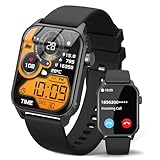
- 【1.83" HD Display & Customizable Watch Faces】Immerse yourself in a vibrant 1.83-inch IPS display, boasting a sharp resolution of 240*284 for crystal-clear visuals. Effortlessly personalize your smart watch with a wide array of customizable watch faces to suit your personal style for every occasion—whether trendy, artistic, or minimalist—ideal for casual, sporty, or professional. Its sleek, modern design complements any outfit, blending technology and fashion seamlessly for everyday wear
- 【120 Sports Modes & Advanced Health Tracking】Our TK29 smart watches for women men come equipped with 120 sports modes, allowing you to effortlessly track a variety of activities such as walking, running, cycling, and swimming. With integrated heart rate and sleep monitors, you can maintain a comprehensive overview of your health, achieve your fitness goals, and maintain a balanced, active lifestyle with ease. Your ideal wellness companion (Note: Step recording starts after exceeding 20 steps)
- 【IP67 Waterproof & Long-Lasting Battery】Designed to keep up with your active lifestyle, this smartwatch features an IP67 waterproof rating, ensuring it can withstand splashes, sweat, and even brief submersion, making it perfect for workouts, outdoor adventures, or rainy days. Its reliable 350mAh battery offering 5-7 days of active use and up to 30 days in standby mode, significantly reducing frequent charging. Ideal for all-day wear, whether you’re at the gym, outdoors, or simply on the go
- 【Stay Connected Anytime, Anywhere】Stay informed and in control with Bluetooth call and music control features. Receive real-time notifications for calls, messages, and social media apps like Facebook, WhatsApp, Twitter, and Instagram directly on your smartwatch. Easily manage calls, control your music playlist, and stay updated without needing to reach for your phone. Perfect for work, workouts, or on-the-go, this watch keeps you connected and never miss important updates wherever you are
- 【Multifunction & Wide Compatibility】Seamlessly handle heart rate monitoring, sleep tracking, and enjoy conveniences like camera/music control, Seamlessly handle heart rate monitoring, sleep tracking, and more-all directly from your wrist. This 1.83 inches HD smartwatch is compatible with iPhone (iOS 9.0+) & Android (5.0+), ensuring smooth daily connectivity and convenience throughout your day. More than just a timepiece, it’s a stylish, all-in-one wearable for smarter, healthier living
This design logic made sense from a human-centered perspective. A device worn on the wrist or body reduces cognitive load, shortens reaction time, and stays accessible even when a phone is knocked away or intentionally hidden. Early safety-focused wearables leaned heavily on this advantage, often sacrificing advanced features for immediacy and reliability.
The rise of always-on sensors and emergency software
As smartwatches matured, they gained accelerometers, gyroscopes, heart rate sensors, microphones, GPS, and constant connectivity. These components, originally meant for fitness and health tracking, created an ecosystem where detecting distress no longer seemed far-fetched. Fall detection, irregular heart rate alerts, and crash detection quietly normalized the idea that a device could infer emergencies without explicit user input.
Once those features existed, applying them to personal safety felt like a logical extension. If a watch could recognize a car crash or sudden impact, why not signs of a physical struggle or panic response? This shift moved wearables from being reactive panic buttons to devices that claimed situational awareness, raising expectations about what technology might intervene in.
Marketing safety to women, students, and urban users
Wearables entered the sexual assault conversation partly because of who was being marketed to. Women, students, and city dwellers were already key demographics for smaller smartwatches, slim bands, and discreet smart jewelry that prioritized comfort, aesthetics, and all-day wearability. Safety features fit naturally into branding that emphasized independence, confidence, and control.
The hardware followed suit, with lighter cases, softer materials, adjustable straps, and designs meant to blend into daily life rather than look tactical. Battery life was often tuned for multi-day wear so devices wouldn’t need nightly charging, reinforcing the idea of constant protection. In practice, this positioning blurred the line between empowerment and expectation, subtly suggesting that personal safety could be worn like an accessory.
A broader trust shift toward technology as a safety net
Wearables also benefited from a wider societal trust in technology to monitor, predict, and respond to risk. Health trackers promised early warnings, smart homes promised security, and location sharing became normalized among families and friends. In that context, it felt reasonable to expect a watch or band to act as a silent witness or first responder.
This trust helped wearables enter conversations traditionally dominated by policy, education, and community action. The question was no longer whether technology belonged in discussions about sexual assault, but how much responsibility it could realistically carry. That tension, between genuine utility and overextended promises, is where the debate truly begins.
Smartwatches vs Dedicated Safety Devices: Design Trade-offs That Matter in Real Emergencies
As expectations around wearable safety rose, two very different design philosophies began competing for the same promise. On one side were mainstream smartwatches, already on millions of wrists and increasingly loaded with emergency features. On the other were dedicated safety devices, purpose-built around a single moment of crisis rather than a full day of notifications, fitness rings, and app alerts.
The tension between these approaches isn’t about which category cares more about safety. It’s about how design priorities shape what actually works when stress, fear, and seconds matter.
Accessibility under stress: gestures, buttons, and muscle memory
In an emergency, fine motor control deteriorates quickly. Heart rate spikes, hands shake, and cognitive load narrows, which makes interaction design far more than a UX nicety.
Smartwatches typically rely on multi-step gestures such as long-pressing a side button, tapping a touchscreen countdown, or using voice commands. These interactions are elegant in everyday use, but they assume clarity, coordination, and time. Even well-designed emergency SOS flows can fail if the wearer hesitates or fumbles.
Dedicated safety devices often strip interaction down to a single, oversized physical trigger. Products like safety pendants, keychain alarms, or discreet clips prioritize immediate tactile feedback over elegance. The trade-off is obvious: these devices may look less refined, but their interaction models are closer to instinct than instruction.
Always-on vs always-worn: the problem of presence
Smartwatches win decisively on presence. People already wear them to work, to class, to the gym, and while commuting, which makes them more likely to be on the body when something happens. A 40–45mm aluminum or steel case with a comfortable fluoroelastomer or woven strap becomes part of daily routine, not a special precaution.
Dedicated safety devices often struggle here. Even with lighter housings and softer materials, many are forgotten, left uncharged, or deliberately left behind because they feel situational or stigmatizing. A device designed only for danger risks being absent when danger appears.
But presence cuts both ways. A smartwatch removed at night to charge, or swapped for a mechanical watch during a social event, silently opts the wearer out of protection. Multi-day battery life helps, but the assumption that a smartwatch is always worn is often more marketing than reality.
Battery life and reliability: different definitions of readiness
Battery philosophy reveals a lot about intent. Smartwatches balance bright displays, sensors, wireless radios, and app ecosystems, which means safety features share power with everything else. A low-battery warning doesn’t care whether the remaining charge is needed for step tracking or an SOS call.
Dedicated safety devices frequently sacrifice screens, processors, and app flexibility to achieve weeks or even months of standby time. Their definition of readiness is simple: does it still send a signal when pressed? This single-minded focus reduces points of failure, but it also limits adaptability.
In real emergencies, reliability is binary. A beautifully machined smartwatch with sapphire glass and refined case finishing offers little reassurance if battery anxiety has already changed how it’s worn or charged.
Connectivity assumptions: phones, networks, and real-world gaps
Most smartwatch safety features assume proximity to a smartphone or access to cellular networks. Even LTE-enabled watches rely on carrier coverage, location accuracy, and backend services functioning as intended. Urban environments help, but they are not immune to dead zones, congestion, or software hiccups.
Dedicated devices sometimes bypass phones entirely, using narrow-purpose cellular modules or alternative signaling methods. This independence can be lifesaving, but it also introduces its own vulnerabilities, including subscription dependence, regional compatibility, and limited data richness.
Neither approach is immune to infrastructure failure. The difference lies in how many invisible dependencies exist between a panic action and an actual response.
Discretion, aesthetics, and the visibility paradox
Smartwatches benefit from normalcy. A stainless steel case on a bracelet or a slim polymer watch on a soft strap draws little attention, which can matter in situations where overt signaling could escalate risk. Their discretion is a byproduct of mass adoption.
Dedicated safety devices often market discretion, but many still signal purpose through form factor or placement. Even subtle pendants or clips can feel like declarations of vulnerability, which affects whether people choose to wear them consistently.
Yet visibility can also be protective. Audible alarms and obvious signaling may deter some threats or attract bystanders. Smartwatches, designed to be socially neutral, rarely prioritize this kind of outward disruption.
Data richness vs action speed
Smartwatches excel at context. Accelerometers, heart rate sensors, GPS, microphones, and even skin temperature create a layered picture of what happened before and after an incident. This data can be invaluable for post-event review, medical response, or legal documentation.
Dedicated devices usually capture far less, focusing instead on rapid alerts and location pings. They trade narrative depth for immediacy, which aligns with their core mission but limits what comes after the initial response.
The uncomfortable truth is that data alone doesn’t guarantee protection or justice. It can support outcomes, but it cannot substitute for timely human intervention.
False confidence and the cost of convergence
As smartwatches absorb safety features, they risk overpromising simply by existing. When emergency tools sit alongside sleep scores and message previews, it’s easy to assume equal reliability and importance.
Dedicated safety devices are more honest about their scope. They rarely pretend to prevent harm; they focus on signaling distress. That clarity can foster more realistic expectations, even if adoption remains lower.
The convergence of safety into everyday wearables reflects optimism about technology’s role in personal protection. Whether that optimism translates into real-world safety depends less on features lists and more on how design decisions hold up when nothing goes according to plan.
The Illusion of Protection: When Wearable Safety Features Create False Confidence
As safety tools migrate into devices we already trust with our health, finances, and daily routines, their presence can quietly reshape behavior. The danger isn’t that wearable safety features don’t work at all, but that they can feel more protective than they truly are in unpredictable, high-stress situations.
Rank #2
![Apple Watch Series 11 [GPS 46mm] Smartwatch with Jet Black Aluminum Case with Black Sport Band - M/L. Sleep Score, Fitness Tracker, Health Monitoring, Always-On Display, Water Resistant](https://m.media-amazon.com/images/I/312K597M2uL._SL160_.jpg)
- HYPERTENSION NOTIFICATIONS — Apple Watch Series 11 can spot signs of chronic high blood pressure and notify you of possible hypertension.*
- KNOW YOUR SLEEP SCORE — Sleep score provides an easy way to help track and understand the quality of your sleep, so you can make it more restorative.
- EVEN MORE HEALTH INSIGHTS — Take an ECG anytime.* Get notifications for a high and low heart rate, an irregular rhythm,* and possible sleep apnea.* View overnight health metrics with the Vitals app* and take readings of your blood oxygen.*
- STUNNING DESIGN — Thin and lightweight, Series 11 is comfortable to wear around the clock — while exercising and even when you’re sleeping, so it can help track your key metrics.
- A POWERFUL FITNESS PARTNER — With advanced metrics for all your workouts, plus features like Pacer, Heart Rate Zones, training load, Workout Buddy powered by Apple Intelligence from your nearby iPhone,* and more. Series 11 also comes with three months of Apple Fitness+ free.*
This gap between perceived and actual protection is where well-intentioned design risks doing harm by implication rather than failure.
When a feature feels like a shield
Emergency SOS shortcuts, fall detection, and location sharing benefit from the halo effect of the smartwatch itself. A device that reliably tracks sleep stages, workouts, and notifications creates an assumption that its safety features are equally robust under duress.
In reality, most smartwatch-based safety tools are secondary functions layered onto hardware optimized for comfort, battery life, and daily wear. A slim aluminum or stainless steel case, a soft fluoroelastomer band, and a low-profile touchscreen are excellent for all-day usability, but they are not purpose-built for violent interruption.
The result is a psychological upgrade rather than a physical one. Users may take comfort in knowing help is “one press away,” even if the conditions required to trigger that help are fragile.
The friction problem under stress
Many wearable safety features depend on precise gestures: holding a side button for several seconds, tapping a screen, or performing a sequence that avoids accidental activation. These safeguards are necessary in everyday use, but they assume fine motor control at the exact moment it may be compromised.
During panic, shock, or physical restraint, interaction accuracy collapses. Touchscreens become unreliable with sweat, rain, gloves, or injury, and buttons designed to prevent false positives can become impossible to activate.
Dedicated safety devices often sacrifice elegance for immediacy, using oversized mechanical triggers or single-purpose hardware. Smartwatches, by contrast, must balance safety against the inconvenience of accidental emergency calls during meetings, workouts, or sleep.
Battery life doesn’t care about intent
Safety features only exist while the device is powered. Many mainstream smartwatches deliver one to two days of battery life under normal use, less if GPS, LTE, or background health tracking is active.
A watch that is dead, charging, or deliberately left at home to save weight or preserve battery during a night out offers no protection at all. The more a device asks of its battery through fitness tracking, always-on displays, and app notifications, the more fragile its availability becomes at critical moments.
Dedicated safety wearables often last weeks or months on a charge precisely because they do almost nothing until needed. That endurance is not glamorous, but it is foundational to reliability.
Assumptions baked into detection algorithms
Automatic incident detection sounds reassuring, but it relies on patterns that rarely map cleanly onto real-world assaults. Fall detection and crash detection are trained on sudden deceleration and impact, not prolonged struggle, coercion, or forced compliance.
Heart rate spikes, erratic movement, or abrupt stops can indicate danger, but they can also signal exercise, intimacy, or stress unrelated to threat. To avoid constant false alarms, systems are tuned conservatively, which means many real emergencies pass unnoticed.
When a feature exists but rarely triggers in ambiguous scenarios, it can create a false belief that “the watch would know” if something went wrong.
The quiet trade-off between discretion and deterrence
Smartwatches are socially invisible by design. Their neutral aesthetics, polished finishing, and familiar form factor help them blend into professional and social settings without drawing attention.
That same discretion limits their ability to interrupt a situation. Alarms are often silent by default, notifications are routed privately to contacts, and audible alerts may require deliberate activation that the user cannot perform.
In contrast, overt signaling devices can disrupt an environment, attract bystanders, or escalate attention in ways that feel uncomfortable but potentially protective. Smartwatches prioritize personal control over public interruption, which shifts responsibility back onto the wearer at the worst possible moment.
Responsibility drift and behavioral risk
When safety features are marketed as part of a premium lifestyle device, responsibility subtly shifts. The burden of preparedness moves from institutions and environments onto individuals and their wrists.
This can influence behavior in small but meaningful ways, from walking alone later at night to assuming a backup plan exists when situational awareness drops. The technology does not encourage risk-taking outright, but it can soften the perceived consequences of vulnerability.
In this way, wearable safety features risk becoming emotional armor rather than functional protection, offering reassurance without materially changing outcomes.
What wearables can’t fix by design
No wearable can prevent intent, predict human behavior with certainty, or replace timely third-party intervention. Sensors can document, alert, and contextualize, but they cannot negotiate, de-escalate, or physically intervene.
Expecting wearables to meaningfully reduce sexual assault risk without parallel changes in social norms, urban design, policing, and education places unrealistic weight on consumer technology. The device becomes a stand-in for systemic solutions it was never designed to provide.
Understanding these limits doesn’t make wearable safety features worthless. It makes their role clearer, narrower, and less comforting than marketing would suggest.
Battery Life, Connectivity, and Failure Points: How Safety Tech Breaks Down in the Real World
If wearable safety features are already constrained by design intent, they are further undermined by far more mundane realities. Power, signal, and software reliability turn abstract limitations into concrete points of failure, often at the exact moment a device is needed most.
These are not edge cases or rare glitches. They are predictable outcomes of how modern wearables are built, worn, and maintained in daily life.
Battery anxiety is not a theoretical problem
Most mainstream smartwatches deliver one to two days of battery life under normal use, and significantly less once GPS, LTE, continuous heart-rate tracking, and background safety monitoring are active. Emergency features are rarely energy-prioritized, competing instead with notifications, fitness tracking, and always-on displays.
In real-world use, many users conserve battery subconsciously by disabling background features or delaying charges, creating an invisible failure mode. A safety feature that works only when the wearer remembered to charge it that morning is not a safety system; it is a conditional convenience.
Connectivity gaps undermine emergency promises
Many safety workflows assume persistent connectivity, either through a paired smartphone or built-in cellular radios. Bluetooth disconnections, phone battery depletion, weak LTE coverage, or overloaded networks can silently break the emergency chain.
Urban environments, ironically where many safety concerns are concentrated, are also dense with signal interference, underground transit, and dead zones. When an SOS relies on cloud servers, location triangulation, and third-party routing, every additional hop introduces delay or failure potential.
LTE wearables add cost, complexity, and fragility
Cellular-enabled watches promise independence from smartphones, but they introduce their own compromises. LTE models are typically thicker, heavier, and more expensive, with noticeably shorter battery life and recurring subscription fees.
For smaller wrists, especially among women and younger users, this can mean poorer comfort and lower adoption. A safety feature embedded in a device that feels bulky, drains quickly, or costs extra every month is less likely to be worn consistently, especially in informal or late-night settings.
Software friction at the worst possible moment
Activating emergency features often requires specific gestures, button combinations, or screen interactions that assume calm, coordination, and familiarity. Under stress, fine motor control degrades, and muscle memory fails.
Rank #3

- Bluetooth Call and Message Alerts: Smart watch is equipped with HD speaker, after connecting to your smartphone via bluetooth, you can answer or make calls, view call history and store contacts through directly use the smartwatch. The smartwatches also provides notifications of social media messages (WhatsApp, Twitter, Facebook, Instagram usw.) So that you will never miss any important information.
- Smart watch for men women is equipped with a 320*380 extra-large hd full touch color screen, delivering exceptional picture quality and highly responsive touch sensitivity, which can bring you a unique visual and better interactive experience, lock screen and wake up easily by raising your wrist. Though “Gloryfit” app, you can download more than 102 free personalised watch faces and set it as your desktop for fitness tracker.
- 24/7 Heart Rate Monitor and Sleep Tracker Monitor: The fitness tracker watch for men has a built-in high-performance sensor that can record our heart rate changes in real time. Monitor your heart rate 26 hours a day and keep an eye on your health. Synchronize to the mobile phone app"Gloryfit", you can understand your sleep status(deep /light /wakeful sleep) by fitness tracker watch develop a better sleep habit and a healthier lifestyle.
- IP68 waterproof and 110+ Sports Modes: The fitness tracker provides up to 112+ sports modes, covering running, cycling, walking, basketball, yoga, football and so on. Activity trackers bracelets meet the waterproof requirements for most sports enthusiasts' daily activities, such as washing hands or exercising in the rain, meeting daily needs (note: Do not recommended for use in hot water or seawater.)
- Multifunction and Compatibility: This step counter watch also has many useful functions, such as weather forecast, music control, sedentary reminder, stopwatch, alarm clock, timer, track female cycle, screen light time, find phone etc. The smart watch with 2 hrs of charging, 5-7 days of normal use and about 30 days of standby time. This smart watches for women/man compatible with ios 9.0 and android 6.2 and above devices.
False positives are treated as a design flaw, so systems err toward deliberate activation rather than immediacy. The result is a safety mechanism optimized to avoid embarrassment rather than maximize intervention speed.
Hardware design choices shape usability under stress
Physical buttons can be hard to locate by feel alone, especially on slim cases with flush profiles and polished finishes. Touchscreens become unreliable with sweat, rain, gloves, or trembling hands.
Strap materials and fit also matter. A loosely worn watch can rotate, obscuring buttons, while a tightly worn device can become uncomfortable during prolonged wear, encouraging removal precisely when safety coverage would matter most.
Single-point failure is baked into the ecosystem
Most wearable safety systems depend on a chain: charged device, functional sensors, stable software, network access, and responsive contacts. Break any one link, and the entire promise collapses.
There is rarely redundancy. Few devices offer fallback audible alarms if silent alerts fail, or offline protocols if networks are unavailable, reinforcing how fragile these systems are outside ideal conditions.
The quiet normalization of partial protection
Perhaps the most concerning failure point is psychological rather than technical. When safety features work intermittently, users adapt expectations downward without consciously acknowledging it.
What remains is a sense of partial coverage that feels better than nothing, yet far less reliable than assumed. In that gap between perception and performance, wearable safety tech risks becoming another layer of hopeful technology that functions best in demos, not in the disorder of real life.
Data, Consent, and Surveillance: The Hidden Privacy Costs of ‘Always-On’ Safety
The fragility of wearable safety systems does not end with hardware or activation failures. It extends into what happens before, during, and after an incident, when devices quietly collect, store, and transmit some of the most sensitive data a person can generate.
In trying to close the gap between perception and performance, many safety-focused wearables drift toward being always-on observers. That shift raises uncomfortable questions about who is watching, who controls the data, and who bears the risk when something goes wrong.
What safety wearables actually collect when they’re “idle”
To function instantly, many devices continuously monitor motion patterns, heart rate variability, GPS location, ambient sound, and sometimes even contextual data like time of day or habitual routes. On a smartwatch with optical heart rate sensors, multi-band GPS, microphones, and accelerometers, this creates a rolling behavioral profile even when no alert is triggered.
Unlike step counts or workout logs, this data can reveal routines, relationships, and vulnerabilities. Where you slow down, where your heart rate spikes, which routes you take home at night, and how often you deviate from them can all be inferred without a single emergency event occurring.
Consent is rarely as informed as it appears
Most users technically agree to this collection through onboarding screens and dense privacy policies. In practice, consent is bundled, abstract, and difficult to revoke without disabling core features or abandoning the device altogether.
Safety features are often framed as opt-in protections layered on top of standard smartwatch functionality. The reality is that enabling them can silently expand data access for companion apps, cloud services, third-party emergency platforms, and sometimes even insurers or institutional partners.
Who sees your data in an emergency—and afterward
When an alert is triggered, data sharing escalates rapidly. Live location, audio snippets, sensor readings, and movement timelines may be transmitted to designated contacts, monitoring centers, or local authorities, depending on the service model.
What happens after resolution is far less clear. Retention periods vary widely, deletion controls are often buried, and some platforms reserve the right to anonymize and reuse incident data for “service improvement,” a phrase broad enough to mean almost anything.
The gendered risk of surveillance creep
For women and marginalized users, the privacy stakes are not theoretical. Location histories and behavioral data can be misused by abusive partners, stalkers, or employers if access controls fail or accounts are compromised.
Even well-intentioned safety sharing can backfire. A device designed to reassure parents or partners can slide into constant monitoring, turning a tool of protection into one of pressure or control, especially when social dynamics make “opting out” emotionally costly.
Always-on microphones and the problem of ambient capture
Some safety wearables and companion phone apps rely on passive audio detection to identify distress cues like shouting or sudden noise spikes. While battery-efficient microphones and edge processing help, they still raise the risk of capturing conversations involving bystanders who never consented.
In public or shared spaces, this blurs legal and ethical boundaries. The user may accept the trade-off, but the people around them rarely have that choice, complicating the promise of discreet, non-intrusive safety.
Security promises versus real-world attack surfaces
Manufacturers often emphasize encryption and secure cloud storage, but wearable ecosystems are sprawling. A single device may sync with a phone, multiple apps, third-party APIs, and backend servers across regions, each adding potential points of failure.
Battery constraints and lightweight operating systems also limit on-device processing. That means more data leaves the wrist than users might assume, particularly on entry-level safety wearables with minimal local storage and shorter battery life that rely heavily on cloud offloading.
The trade-off nobody advertises
The unspoken bargain of wearable safety tech is this: faster intervention requires deeper visibility into a person’s life. The more context a system has, the better it can guess when something is wrong, but that same context makes users legible in ways they may not fully anticipate.
What’s missing from most product marketing is a candid discussion of limits. Wearables can signal distress and share location, but they cannot guarantee protection, and the data they collect persists long after the moment of fear has passed, shaping risks that are quieter, slower, and harder to undo.
Detection Is Not Prevention: Why Sensors and Alerts Can’t Address Root Causes
If the previous trade-off is about how much of a person’s life a device must see to act quickly, the deeper problem is what action actually means. Detection-centric wearables intervene only after a threshold is crossed, when fear is already present and harm may already be underway.
That distinction matters because sexual assault is not a sudden, sensor-friendly event. It is often contextual, gradual, and shaped by power dynamics that no accelerometer or microphone can reliably interpret.
Alerts trigger after danger, not before it
Most safety wearables operate on simple logic: a button press, a sharp motion, a sudden sound, or an abnormal physiological spike. These signals are optimized for clarity, not nuance, because battery life, on-device processing limits, and the need to avoid false alarms all constrain how sophisticated detection can be.
The result is a system that activates once a user recognizes imminent danger, not one that meaningfully reduces the likelihood of that danger arising. In scenarios where freezing, dissociation, or social pressure prevent obvious gestures, even well-designed alerts can fail silently.
False confidence can change behavior in risky ways
A discreet ring or slim wristband can feel empowering, especially when it promises one-tap access to help. But research across personal safety tech consistently shows that perceived protection can subtly alter behavior, encouraging users to tolerate situations they might otherwise avoid.
This is not a design flaw so much as a human one. When a device is comfortable enough for all-day wear, has a multi-day battery, and blends into jewelry or a watch strap, it can become psychologically invisible, quietly shifting risk calculations without actually changing the environment.
Sensors struggle with social and situational ambiguity
Sexual assault rarely looks like a clean data pattern. Raised voices, elevated heart rate, or erratic movement can just as easily signal consensual intimacy, crowded nightlife, or intense conversation, especially in urban settings where wearables are most marketed.
To minimize false positives, manufacturers often tune sensitivity downward. That improves daily usability and reduces embarrassing alerts, but it also means the system is least responsive in precisely the gray zones where many assaults occur.
Rank #4
![Apple Watch Series 11 [GPS 42mm] Smartwatch with Rose Gold Aluminum Case with Light Blush Sport Band - S/M. Sleep Score, Fitness Tracker, Health Monitoring, Always-On Display, Water Resistant](https://m.media-amazon.com/images/I/31J+F-pXaWL._SL160_.jpg)
- HYPERTENSION NOTIFICATIONS — Apple Watch Series 11 can spot signs of chronic high blood pressure and notify you of possible hypertension.*
- KNOW YOUR SLEEP SCORE — Sleep score provides an easy way to help track and understand the quality of your sleep, so you can make it more restorative.
- EVEN MORE HEALTH INSIGHTS — Take an ECG anytime.* Get notifications for a high and low heart rate, an irregular rhythm,* and possible sleep apnea.* View overnight health metrics with the Vitals app* and take readings of your blood oxygen.*
- STUNNING DESIGN — Thin and lightweight, Series 11 is comfortable to wear around the clock — while exercising and even when you’re sleeping, so it can help track your key metrics.
- A POWERFUL FITNESS PARTNER — With advanced metrics for all your workouts, plus features like Pacer, Heart Rate Zones, training load, Workout Buddy powered by Apple Intelligence from your nearby iPhone,* and more. Series 11 also comes with three months of Apple Fitness+ free.*
Response chains depend on systems outside the device
Even when detection works, alerts only matter if someone responds quickly and effectively. That response usually relies on phone connectivity, GPS accuracy, cellular coverage, and the availability of trusted contacts or emergency services, none of which are guaranteed.
A safety wearable with excellent build quality, water resistance, and a reliable button means little if the paired phone battery is dead or the alert goes to someone who cannot intervene. The weakest link is rarely the hardware; it is the social and infrastructural network around it.
Technology can’t correct cultural and power imbalances
Perhaps the most uncomfortable limitation is that wearables are built for the potential victim, not the potential perpetrator. They place the burden of readiness, compliance, and activation on the person at risk, reinforcing a model where safety is an individual responsibility rather than a shared one.
No firmware update can address coercion, entitlement, or environments that normalize boundary violations. Sensors can witness moments of distress, but they cannot dismantle the conditions that make those moments likely in the first place.
What wearables realistically do, and what they cannot
At their best, safety-focused wearables are fast communication tools. They compress the time between recognizing danger and reaching help, which can matter in specific situations, particularly for users who want discreet, wearable access without pulling out a phone.
What they cannot do is prevent assault through detection alone. Treating sensors and alerts as solutions risks overselling reassurance while underplaying the harder work of prevention, education, and systemic change that no device, however well-designed, can replace.
Who Is Being Protected—and Who Is Being Missed? Gender, Accessibility, and Bias in Safety Tech
If wearables are not neutral tools, it is worth asking who they are actually designed around. Safety-focused devices often claim universality, but their assumptions about bodies, behaviors, environments, and resources quietly narrow who benefits most.
Gendered design solves some problems while creating others
Much of the current safety wearable market is implicitly designed for women, particularly young, urban, phone-connected women. That focus reflects real risk patterns, but it also produces a narrow definition of vulnerability that leaves others less well served.
Panic buttons disguised as jewelry, slim bracelets with soft-touch silicone, and pastel colorways prioritize discretion and comfort, yet they also assume the user wants to hide the device rather than assert its presence. For some, visibility itself can be a deterrent, but that design philosophy is rarely explored.
Men, non-binary users, and gender-nonconforming people often face different threat dynamics, including violence tied to homophobia or transphobia, yet few safety wearables acknowledge those contexts. A one-size-fits-all alert flow rarely accounts for who the user feels safe contacting or how authorities may respond differently based on identity.
Accessibility is treated as an add-on, not a foundation
Many safety wearables rely on precise motor actions like pressing a small recessed button or performing a specific gesture. For users with limited dexterity, tremors, arthritis, or disabilities affecting fine motor control, those interactions can be unreliable under stress.
Voice activation is sometimes offered as an alternative, but that assumes the user can speak clearly and safely in the moment. In situations involving coercion or close proximity, voice triggers can escalate risk rather than reduce it.
Physical comfort also matters. Devices with rigid housings, sharp edges, or poorly finished case backs can irritate skin during all-day wear, especially for users with sensory sensitivities. If a wearable is uncomfortable, it will not be worn consistently, undermining its purpose.
Cost, connectivity, and the hidden price of safety
Many safety wearables appear affordable at first glance, but their full functionality often depends on subscription fees, cloud services, or cellular add-ons. That creates a tiered system where faster response times and broader coverage are reserved for those who can pay monthly.
Battery life is another quiet divider. Devices that require daily charging may fit into the routines of tech-savvy professionals, but they are less practical for users with irregular schedules, multiple jobs, or limited access to charging infrastructure.
Connectivity assumptions matter too. GPS accuracy drops in dense housing, underground transit, or rural areas, and cellular coverage is uneven across regions. Safety tech optimized for well-connected cities can underperform precisely where other resources are already scarce.
Bias travels through data, defaults, and escalation paths
Algorithms that detect distress are trained on limited datasets, often reflecting narrow definitions of panic or danger. Elevated heart rate, sudden movement, or abrupt stops may trigger alerts for some users while missing others whose stress responses differ.
Response chains can reinforce bias as well. Escalation flows that default to law enforcement may feel reassuring to some users, but threatening to others based on past experiences with policing. Few devices allow nuanced customization of who responds first and how.
Even emergency contacts assume a stable support network. Not everyone has trusted people who are reachable, nearby, or able to intervene. In those cases, the wearable functions as a signal without a receiver.
Protection is shaped by who gets to be imagined
Ultimately, safety wearables reflect the people their designers imagine using them. Those imagined users tend to be physically able, digitally literate, financially stable, and socially supported, which leaves many real-world users at the margins.
When a device fails to account for cultural context, disability, or uneven access to infrastructure, it does not simply work less well. It quietly communicates whose safety is prioritized and whose is considered an edge case.
This does not negate the value of safety wearables, but it complicates their promise. Protection is not just a feature set; it is a design stance, and right now, that stance remains unevenly distributed.
What Wearables Can Realistically Contribute to Sexual Assault Response and Recovery
If safety wearables fall short as tools of prevention, their value shifts downstream. Where they can matter is in shortening response times, preserving fragments of evidence, and supporting recovery in ways that are quieter and more incremental than marketing suggests.
That contribution is narrower than many product pages imply, but it is not insignificant when designed and used with realistic expectations.
Faster alerts when users can still act
In situations where a person retains some agency, wearables can reduce the friction between recognizing danger and asking for help. A discreet button press, squeeze gesture, or prolonged tap is faster than unlocking a phone, opening an app, and explaining what is wrong.
This speed advantage is practical rather than heroic. It depends on muscle memory, comfort with the device, and whether the wearer remembers the feature under stress, all of which improve only when the wearable is part of daily routine rather than an emergency-only accessory.
Battery life and reliability matter here more than advanced sensors. A device that needs nightly charging or regularly drops Bluetooth connections is less useful than one that lasts a week and quietly stays paired in the background.
Location sharing as context, not rescue
Live location sharing can help responders orient themselves, but it does not replace human intervention. GPS accuracy varies widely, and indoors or in dense urban environments, location data often resolves to a building rather than a specific room or floor.
Where it helps is after an alert has been received and acknowledged. For friends, campus safety teams, or private security services, even approximate location data can reduce confusion and wasted time during the first critical minutes.
This contribution is contingent on consent and control. Wearables that allow users to define who sees location data, for how long, and under what conditions support autonomy better than systems that default to continuous tracking.
Time-stamped data that may support memory gaps
After an assault, memory can be fragmented or distorted by trauma. Wearables that log time, movement, and physiological changes can sometimes help survivors reconstruct timelines, especially when combined with phone logs or transit records.
💰 Best Value
![Apple Watch Series 11 [GPS 42mm] Smartwatch with Jet Black Aluminum Case with Black Sport Band - S/M. Sleep Score, Fitness Tracker, Health Monitoring, Always-On Display, Water Resistant](https://m.media-amazon.com/images/I/31ybzrJZckL._SL160_.jpg)
- HYPERTENSION NOTIFICATIONS — Apple Watch Series 11 can spot signs of chronic high blood pressure and notify you of possible hypertension.*
- KNOW YOUR SLEEP SCORE — Sleep score provides an easy way to help track and understand the quality of your sleep, so you can make it more restorative.
- EVEN MORE HEALTH INSIGHTS — Take an ECG anytime.* Get notifications for a high and low heart rate, an irregular rhythm,* and possible sleep apnea.* View overnight health metrics with the Vitals app* and take readings of your blood oxygen.*
- STUNNING DESIGN — Thin and lightweight, Series 11 is comfortable to wear around the clock — while exercising and even when you’re sleeping, so it can help track your key metrics.
- A POWERFUL FITNESS PARTNER — With advanced metrics for all your workouts, plus features like Pacer, Heart Rate Zones, training load, Workout Buddy powered by Apple Intelligence from your nearby iPhone,* and more. Series 11 also comes with three months of Apple Fitness+ free.*
This data is not evidence in a legal sense, and it should not be framed as such. Heart rate spikes or abrupt movement patterns can suggest stress, but they cannot explain cause, intent, or consent.
Used carefully, these records can support personal understanding or early conversations with healthcare providers. Used carelessly, they risk being misinterpreted, overemphasized, or weaponized against the wearer.
Lowering barriers to reaching trusted contacts
For many users, the most meaningful function is not contacting authorities but notifying someone they trust. Wearables excel at this when they prioritize simplicity: one action, one outcome, no decision trees.
Customization matters here. Devices that let users choose different contacts for different contexts, such as friends at night and family during travel, acknowledge that support networks are situational rather than static.
The hardware itself plays a role. Rings, pendants, and slim bracelets are often easier to keep on overnight or during social events than bulky watches, especially for users sensitive to weight, size, or visibility.
Supporting recovery through continuity, not crisis mode
Beyond the immediate aftermath, wearables can assist with recovery in subtle ways. Sleep tracking, stress trends, and gentle activity reminders can help survivors notice patterns without forcing constant reflection on the event itself.
This is where mainstream smartwatches quietly outperform many niche safety devices. Their health platforms are more mature, their sensors more refined, and their software ecosystems better integrated with healthcare and wellness services.
The benefit is indirect. These features do not treat trauma, but they can provide a sense of continuity when routines have been disrupted, especially if the device is comfortable enough to wear day and night without becoming a physical reminder of danger.
What wearables cannot carry on their own
No wearable can substitute for social infrastructure. Devices cannot ensure belief, compassion, or access to care, and they cannot resolve the systemic factors that shape vulnerability in the first place.
They also cannot guarantee safety once control is lost. Automatic triggers based on motion or biometrics may fail, misfire, or be disabled by an attacker, and no amount of sensor sophistication changes that reality.
Understanding these limits is not pessimism. It is what allows wearables to be evaluated as tools that can assist response and recovery in specific moments, rather than as technological stand-ins for prevention, justice, or healing.
Beyond the Wrist: What Meaningful Progress Would Actually Look Like for Tech and Society
If wearables are to move beyond symbolic reassurance, progress has to start with a more honest framing of their role. The question is no longer whether a device can trigger an alert, but whether it fits into the realities of how people move through the world, seek help, and recover afterward.
Meaningful change sits at the intersection of better technology, clearer expectations, and stronger social systems. Without all three moving together, even the most advanced wearable risks becoming another well-intentioned object that promises more than it can deliver.
Designing for real-world behavior, not ideal scenarios
Many safety features still assume a calm user with full control over their body and environment. In reality, moments of danger are chaotic, disorienting, and often physically restrictive, which makes multi-step interactions or precise gestures unreliable.
Progress looks like devices that prioritize passive readiness over active input. Long battery life measured in days rather than hours, consistent cellular connectivity without a phone, and hardware buttons that work even when fine motor control is compromised matter more than flashy feature lists.
Comfort and wearability are not aesthetic concerns here; they are functional ones. A slim ring with a week-long battery, a soft-touch pendant that does not dig into the chest when lying down, or a lightweight watch that does not need nightly charging is more likely to be worn consistently, which is the first prerequisite for usefulness.
From isolated alerts to integrated response systems
An alert that goes nowhere is not protection. Too many safety wearables stop at notifying a contact, without considering whether that person can realistically respond, or what happens next if they cannot.
Real progress means deeper integration with local services, campus safety networks, rideshare platforms, and emergency response infrastructure. This is less about replacing 911 and more about creating graduated layers of response that reflect different contexts, from feeling unsafe walking home to an active emergency.
This also requires transparency. Users should know exactly who receives data, how long it is stored, and what level of action is triggered, without digging through legal disclaimers. Trust is part of safety, and opaque systems erode it quickly.
Shifting the narrative away from personal responsibility
One of the quiet risks of safety wearables is the way they can shift responsibility onto the user. When protection is framed as something you wear, failure can be misinterpreted as a lapse in preparation rather than a societal failing.
Technology companies need to be careful about how they market these products. Devices should be positioned as supportive tools, not moral safeguards, and certainly not as substitutes for consent education, bystander intervention, or institutional accountability.
This is especially important for younger users and students, who are often targeted by safety tech messaging. Empowerment should not come bundled with the implication that harm is preventable through better gadget choices alone.
Data ethics and the long tail of vulnerability
Safety data is among the most sensitive data a wearable can collect. Location trails, biometric stress markers, audio snippets, and timestamps can be deeply revealing, especially when stored long term or shared across platforms.
Meaningful progress requires privacy-first architectures, local processing where possible, and clear opt-in controls for post-incident data use. Survivors should not have to trade autonomy for assistance, or wonder whether their most vulnerable moments are feeding future algorithms.
There is also a need for restraint. Not every spike in heart rate or sudden movement needs to be analyzed, categorized, or monetized. Sometimes the most ethical design choice is to collect less, not more.
Measuring success beyond adoption rates
The wearable industry often equates success with units sold or features shipped. In the context of personal safety, those metrics are inadequate and sometimes misleading.
A more meaningful measure would look at sustained usage, false alert rates, user trust over time, and how often devices are quietly abandoned after the novelty fades. It would also consider whether wearables are being recommended by support organizations, not just influencers.
Mainstream smartwatches already have an advantage here. Their broader health tracking, smoother software updates, and better customer support mean they remain part of daily life long after a specific safety feature is forgotten, which paradoxically may make them more reliable in rare critical moments.
Technology as a companion, not a solution
Ultimately, the most honest vision for safety-focused wearables is a modest one. These devices can shorten response times, preserve evidence, and provide continuity during recovery, but they cannot eliminate risk or replace human care.
Progress looks like alignment rather than substitution. Wearables that complement education, infrastructure, and social change, instead of pretending to stand in for them, are more likely to earn lasting trust.
If the industry can accept those limits and design within them, wearable tech may finally move from symbolic defense to meaningful support. Not as a shield against harm, but as a quiet companion that respects the complexity of safety, vulnerability, and human resilience.