Temperature tracking sounds simple until you try to use it. Many people buy a smartwatch expecting a wrist-based thermometer that works like a medical device, only to find charts full of decimals, baselines, and “deviations from normal.” The gap between expectation and reality is where most frustration starts.
The misunderstanding isn’t caused by bad hardware or misleading data alone. It’s rooted in how the human body regulates heat, how wearables are physically worn, and how brands present temperature information to avoid overclaiming medical accuracy. This section unpacks why temperature tracking feels confusing, what your wearable is actually measuring, and why the data still matters when interpreted correctly.
Skin temperature is not body temperature
Every mainstream wearable measures skin temperature, not core body temperature. That distinction matters because skin temperature can swing several degrees throughout the day based on environment, blood flow, and activity, even when your internal body temperature is stable.
A watch worn on the wrist sits on an exposed, vascular area that reacts quickly to cold air, warm bedding, exercise, or even how tight the strap is. This is why Apple Watch, Samsung Galaxy Watch, Fitbit, Garmin, Oura, and Whoop all avoid presenting wrist temperature as a single “you are X degrees” number.
🏆 #1 Best Overall
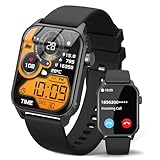
- 【1.83" HD Display & Customizable Watch Faces】Immerse yourself in a vibrant 1.83-inch IPS display, boasting a sharp resolution of 240*284 for crystal-clear visuals. Effortlessly personalize your smart watch with a wide array of customizable watch faces to suit your personal style for every occasion—whether trendy, artistic, or minimalist—ideal for casual, sporty, or professional. Its sleek, modern design complements any outfit, blending technology and fashion seamlessly for everyday wear
- 【120 Sports Modes & Advanced Health Tracking】Our TK29 smart watches for women men come equipped with 120 sports modes, allowing you to effortlessly track a variety of activities such as walking, running, cycling, and swimming. With integrated heart rate and sleep monitors, you can maintain a comprehensive overview of your health, achieve your fitness goals, and maintain a balanced, active lifestyle with ease. Your ideal wellness companion (Note: Step recording starts after exceeding 20 steps)
- 【IP67 Waterproof & Long-Lasting Battery】Designed to keep up with your active lifestyle, this smartwatch features an IP67 waterproof rating, ensuring it can withstand splashes, sweat, and even brief submersion, making it perfect for workouts, outdoor adventures, or rainy days. Its reliable 350mAh battery offering 5-7 days of active use and up to 30 days in standby mode, significantly reducing frequent charging. Ideal for all-day wear, whether you’re at the gym, outdoors, or simply on the go
- 【Stay Connected Anytime, Anywhere】Stay informed and in control with Bluetooth call and music control features. Receive real-time notifications for calls, messages, and social media apps like Facebook, WhatsApp, Twitter, and Instagram directly on your smartwatch. Easily manage calls, control your music playlist, and stay updated without needing to reach for your phone. Perfect for work, workouts, or on-the-go, this watch keeps you connected and never miss important updates wherever you are
- 【Multifunction & Wide Compatibility】Seamlessly handle heart rate monitoring, sleep tracking, and enjoy conveniences like camera/music control, Seamlessly handle heart rate monitoring, sleep tracking, and more-all directly from your wrist. This 1.83 inches HD smartwatch is compatible with iPhone (iOS 9.0+) & Android (5.0+), ensuring smooth daily connectivity and convenience throughout your day. More than just a timepiece, it’s a stylish, all-in-one wearable for smarter, healthier living
Core body temperature requires invasive probes, ingestible sensors, or clinical-grade equipment. No consumer wearable can do this reliably from the wrist, regardless of price or brand.
Why most wearables hide absolute numbers
Many users are confused when their device shows temperature changes rather than a raw value. This isn’t a software limitation; it’s a deliberate design choice.
Absolute skin temperature varies dramatically between individuals. One person’s normal nighttime wrist temperature might be 30°C, another’s 34°C, and both can be perfectly healthy. Showing deviations from your own baseline removes that variability and highlights meaningful physiological change.
Apple shows wrist temperature deviations during sleep, Samsung uses overnight baselines, Fitbit emphasizes nightly variation, Oura focuses on long-term trends, and Whoop frames temperature within recovery context. Garmin often records skin temperature quietly in the background, using it more as a contextual signal than a headline metric.
Nighttime measurement is not a coincidence
Temperature tracking is most reliable during sleep because the body is still, the environment is stable, and blood flow patterns are more predictable. This is why nearly all wearables limit temperature insights to overnight data.
During the day, movement, sunlight, airflow, exercise, and stress can overwhelm the signal. A stainless steel case, sapphire crystal, or thick polymer housing doesn’t change this reality, even if the watch feels premium or rugged.
This is also why devices with excellent sleep tracking, long battery life, and consistent overnight wear tend to produce better temperature insights than watches optimized for daytime sports or notifications.
The sensor is accurate, but the context is fragile
Modern temperature sensors in wearables are surprisingly precise. The challenge isn’t resolution; it’s interpretation.
A slightly loose strap, a different sleeping position, a new mattress, or a colder bedroom can all shift skin temperature readings. Even strap material matters, with silicone, fabric, and leather affecting airflow and heat retention differently.
This is why brands emphasize trends over weeks rather than single-night spikes. One elevated night usually means nothing. A sustained deviation over several nights is where the signal becomes meaningful.
Where temperature tracking actually works
Temperature tracking excels at detecting subtle physiological changes over time. Elevated nighttime skin temperature often correlates with illness onset, increased training load, poor recovery, alcohol consumption, or hormonal shifts.
Menstrual cycle tracking is one of the strongest use cases, particularly with devices like Apple Watch, Fitbit, and Oura that integrate temperature trends into cycle predictions. Recovery-focused platforms like Whoop use temperature as one piece of a broader readiness model rather than a standalone metric.
Sleep quality analysis also benefits indirectly, as temperature changes often align with restlessness, elevated heart rate, or reduced HRV.
Where temperature tracking does not work
Wearables are not fever detectors. They cannot reliably tell you that you have a fever or diagnose illness on demand.
They also don’t work well for real-time monitoring during workouts, outdoor exposure, or short-term stress. If you expect temperature tracking to behave like heart rate or GPS, it will disappoint you.
Understanding these limits prevents misinterpretation and unnecessary anxiety, especially when users see a sudden deviation without context.
Brand differences add to the confusion
Each ecosystem frames temperature data differently, which can make comparisons difficult. Apple emphasizes privacy-first, on-device analysis with limited raw access. Fitbit prioritizes user-friendly insights with longer-term health dashboards. Garmin treats temperature as a secondary physiological signal, often overshadowed by performance metrics. Oura and Whoop build temperature deeply into recovery and readiness scoring.
None of these approaches are wrong, but they serve different users. A runner focused on training load may barely notice temperature data on a Garmin, while a sleep- and recovery-focused user may find it central on Oura or Whoop.
Privacy and health anxiety play a role
Temperature is a sensitive biometric because it can hint at illness, reproductive health, and recovery status. Brands intentionally avoid presenting it as diagnostic data to reduce legal risk and user misinterpretation.
For some users, constant access to physiological signals can increase health anxiety rather than improve awareness. This is another reason platforms emphasize long-term patterns and contextual insights instead of real-time alerts.
Understanding why the data is framed conservatively helps explain why temperature tracking feels indirect, even when the underlying measurements are solid.
What Wearables Actually Measure: Skin Temperature vs. Core Body Temperature
Once you understand why brands present temperature cautiously, the next critical step is understanding what is actually being measured. This distinction explains nearly every frustration, misunderstanding, and unrealistic expectation around temperature tracking on modern wearables.
Smartwatches and rings do not measure your internal body temperature. They measure skin temperature at the surface of your wrist or finger, then interpret changes over time using algorithms and context.
Skin temperature is not body temperature
Core body temperature refers to the temperature of vital organs, tightly regulated around 37°C (98.6°F). Measuring it accurately requires invasive probes, ingestible sensors, or clinical-grade equipment, none of which are practical for consumer wearables.
Wearables instead measure skin temperature, which fluctuates constantly based on blood flow, environment, sleep stage, clothing, and movement. At the wrist, skin temperature can swing several degrees without any change in actual health status.
This is why your watch cannot tell you “your temperature is 38°C” in the same way a thermometer can. The sensor is doing its job, but it is measuring a fundamentally different signal.
How temperature sensors in wearables actually work
Most wearables use infrared thermistors or thermopile sensors positioned against the skin. These sensors detect heat radiating from the skin surface, not from inside the body.
Placement matters. Devices like Oura Ring and Samsung Galaxy Ring sit on the finger, where blood vessels are closer to the skin and temperature signals are more stable. Wrist-based devices like Apple Watch, Fitbit, Garmin, and Whoop deal with more ambient interference and motion artifacts.
Materials and fit also play a role. Titanium cases, ceramic backs, and snug silicone or fabric bands improve thermal consistency, while loose metal bracelets or third-party straps can degrade readings.
Why temperature is captured mostly during sleep
You will rarely see temperature data recorded during daytime activity, and that is intentional. While awake, skin temperature is heavily distorted by movement, airflow, sunlight, exercise, and changes in circulation.
During sleep, your body is still, ambient conditions are stable, and peripheral blood flow follows predictable circadian patterns. This makes nighttime the only window where skin temperature becomes a meaningful physiological signal rather than noise.
This is why Apple Watch, Fitbit, Oura, Whoop, and Samsung all emphasize overnight temperature tracking and largely ignore daytime values.
Why brands show deviations instead of absolute numbers
Because skin temperature varies so widely between individuals, absolute values are not very useful. One person’s normal nighttime skin temperature might be 32°C, another’s 35°C, with both being perfectly healthy.
Instead, wearables establish a personal baseline over several nights, then show deviations from that baseline. A +0.3°C or +0.5°C shift relative to your normal range is far more meaningful than a raw temperature reading.
This approach improves accuracy, reduces anxiety, and aligns better with how temperature reflects physiological change rather than static health status.
How skin temperature relates to core temperature indirectly
While wearables do not measure core temperature, skin temperature often moves in parallel with internal changes. When your immune system activates, blood flow patterns shift, often raising nighttime skin temperature.
Hormonal changes, particularly progesterone during the menstrual cycle, reliably elevate baseline temperature after ovulation. Illness, alcohol, poor sleep, and overtraining can all cause detectable deviations without reaching fever thresholds.
Think of wearable temperature as a trend amplifier, not a thermometer. It highlights when your body is behaving differently, not exactly what your internal temperature is.
Accuracy, reliability, and what “good data” looks like
Under controlled conditions, modern wearable temperature sensors are surprisingly consistent. Night-to-night repeatability is strong when the device fits well, battery is sufficient, and sleep duration is adequate.
Accuracy breaks down with irregular sleep, cold bedrooms, loose straps, low battery, or inconsistent wear. Missing nights matter more for temperature than for steps or heart rate.
This is why platforms often require multiple nights before displaying insights, and why skipping wear for a few days can temporarily disable temperature-based features.
Brand-specific implementation differences
Apple Watch measures wrist temperature overnight and presents it as deviations inside the Health app, with strong privacy controls and limited third-party access. The hardware is excellent, but Apple intentionally keeps interpretation conservative and hands-off.
Fitbit surfaces temperature variation alongside sleep, readiness, and health metrics, making it easier for casual users to spot trends. Its longer battery life on devices like Sense and Charge improves consistency for temperature tracking.
Garmin includes temperature sensors primarily for environmental data and training context, with skin temperature playing a minor role in health insights. For performance-focused athletes, temperature often feels secondary or hidden.
Oura and Whoop build temperature deeply into readiness, recovery, and strain models. Their form factors, finger ring and fabric wrist band, provide stable overnight contact that tends to produce cleaner temperature trends over time.
What skin temperature is genuinely useful for
Skin temperature excels at identifying slow physiological shifts. It is particularly valuable for sleep quality trends, recovery assessment, menstrual cycle tracking, and early signs of illness when viewed retrospectively.
It is less useful for real-time decisions, acute diagnosis, or workout optimization. Expecting instant feedback or precise numbers will always lead to disappointment.
When interpreted correctly, temperature is a quiet background signal that adds context to heart rate, HRV, sleep stages, and subjective how-you-feel data rather than replacing any of them.
How Temperature Sensors Work Inside Smartwatches, Rings, and Straps
Once you understand that wearable temperature is a slow, trend-based signal rather than a live metric, the next logical question is how these devices measure anything meaningful at all from the wrist or finger. The answer sits at the intersection of sensor physics, industrial design, and software correction layers working quietly in the background.
Skin temperature, not core body temperature
Every consumer wearable on the market today measures skin temperature, not true core body temperature. Core temperature requires invasive probes or medical-grade ingestible sensors, which are far beyond what a watch or ring can realistically do.
Skin temperature is heavily influenced by blood flow, ambient conditions, and where the sensor sits on your body. This is why wearables avoid presenting single absolute values and instead focus on how your skin temperature changes relative to your own baseline.
The sensors themselves: tiny thermistors and infrared elements
Most smartwatches, rings, and straps rely on high-precision thermistors, essentially temperature-sensitive resistors embedded near the skin-facing surface. As temperature changes, electrical resistance shifts in a predictable way that can be translated into temperature data.
Some devices, including recent Apple Watch models, combine contact thermistors with infrared temperature sensors. Infrared elements do not touch the skin directly and instead estimate temperature by measuring emitted thermal radiation, which helps cross-check readings during sleep.
Why multiple sensors are often used
A single temperature sensor would be nearly useless on its own. To compensate, many wearables include at least two sensors: one facing the skin and one exposed to ambient air.
By comparing the difference between skin-side and external temperature, the device can filter out environmental noise like cold bedrooms or warm blankets. This differential approach is one of the biggest reasons overnight temperature tracking is more reliable than daytime readings.
Placement matters more than sensor quality
Where the sensor sits on your body has a larger impact on data quality than the raw component itself. Wrist-based devices have to contend with bone, tendons, and variable strap tension, all of which disrupt heat transfer.
Rings like Oura benefit from the finger’s dense capillary network and consistent contact, which stabilizes readings during sleep. Fabric-based straps like Whoop reduce pressure points and maintain uniform skin contact, though they can be more sensitive to room temperature swings.
Why devices wait until you are asleep
Temperature tracking is overwhelmingly biased toward sleep because sleep minimizes confounding variables. Movement drops, blood flow stabilizes, and environmental conditions change more slowly.
Most platforms discard daytime temperature entirely or flag it as low confidence. This is also why inconsistent sleep schedules, naps, or late-night charging can interrupt temperature trend generation.
From raw numbers to deviations and baselines
Raw skin temperature values vary wildly between individuals. One person’s normal overnight skin temperature could look like a fever on someone else.
To solve this, wearables build a personal baseline over multiple nights, often five to fourteen, depending on the platform. Daily values are then shown as deviations from that baseline, which is far more meaningful for spotting changes in recovery, illness, or hormonal shifts.
Rank #2
![Apple Watch Series 11 [GPS 46mm] Smartwatch with Jet Black Aluminum Case with Black Sport Band - M/L. Sleep Score, Fitness Tracker, Health Monitoring, Always-On Display, Water Resistant](https://m.media-amazon.com/images/I/312K597M2uL._SL160_.jpg)
- HYPERTENSION NOTIFICATIONS — Apple Watch Series 11 can spot signs of chronic high blood pressure and notify you of possible hypertension.*
- KNOW YOUR SLEEP SCORE — Sleep score provides an easy way to help track and understand the quality of your sleep, so you can make it more restorative.
- EVEN MORE HEALTH INSIGHTS — Take an ECG anytime.* Get notifications for a high and low heart rate, an irregular rhythm,* and possible sleep apnea.* View overnight health metrics with the Vitals app* and take readings of your blood oxygen.*
- STUNNING DESIGN — Thin and lightweight, Series 11 is comfortable to wear around the clock — while exercising and even when you’re sleeping, so it can help track your key metrics.
- A POWERFUL FITNESS PARTNER — With advanced metrics for all your workouts, plus features like Pacer, Heart Rate Zones, training load, Workout Buddy powered by Apple Intelligence from your nearby iPhone,* and more. Series 11 also comes with three months of Apple Fitness+ free.*
Software correction does most of the heavy lifting
The sensor hardware is only half the story. Algorithms filter motion artifacts, adjust for ambient temperature, account for strap pressure, and exclude nights with low confidence data.
This is why two devices with similar sensors can produce very different results. Battery life, processor capability, and software philosophy all influence how aggressively data is filtered or discarded.
Battery life and thermal stability are closely linked
Temperature sensors themselves consume very little power, but maintaining consistent sampling overnight does not. Devices with longer battery life can afford to sample more frequently and discard bad data without risking gaps.
This is one reason rings and bands often outperform smartwatches for temperature trends. A thinner device with fewer daytime demands can dedicate more resources to overnight physiological monitoring.
Materials, comfort, and real-world wearability
Sensor accuracy depends on consistent skin contact, which is directly influenced by case shape, weight, and materials. Titanium and ceramic cases manage heat differently than aluminum or stainless steel, subtly affecting thermal transfer.
Strap design matters just as much. Stretchy fabric and well-designed elastomer bands maintain even pressure, while loose metal bracelets or poorly fitted straps can introduce air gaps that degrade temperature readings.
Calibration, drift, and long-term reliability
Temperature sensors can drift over time due to material aging and repeated thermal cycling. Most consumer wearables quietly recalibrate using long-term averages rather than formal user-triggered calibration.
This makes temperature trends reliable within an ecosystem but less comparable across devices. Switching brands often resets your baseline entirely, even if the underlying physiology has not changed.
Privacy and on-device processing considerations
Temperature data is considered sensitive health information, especially when linked to menstrual cycle tracking or illness detection. Some platforms process temperature trends entirely on-device before syncing summaries to the cloud.
Others rely more heavily on cloud-based analysis to refine baselines and detect patterns. This difference affects not just privacy posture, but also how quickly insights update and whether third-party apps can access raw temperature signals.
Why no wearable gives you “real” body temperature
Even with multiple sensors, advanced algorithms, and stable overnight conditions, skin temperature will never equal core body temperature. The physics simply do not allow it without medical-grade intervention.
What wearables offer instead is something arguably more useful for everyday health: consistent, passive detection of change. Understanding how that signal is captured helps explain both its strengths and its hard limitations, which become even clearer when you start comparing how brands choose to use it.
Why Most Brands Show Temperature Changes, Not Absolute Numbers
Once you understand that wearables are measuring skin temperature under highly variable conditions, the way brands present that data starts to make more sense. Absolute numbers imply a level of precision and universality that wrist-worn hardware simply cannot guarantee in daily life.
Most platforms therefore pivot toward change over time rather than raw temperature. This isn’t a marketing trick or a legal workaround—it’s a direct response to the physics, biology, and industrial design constraints discussed earlier.
Skin temperature is inherently personal, not universal
Baseline skin temperature varies significantly between individuals, even at rest and under identical environmental conditions. Factors like circulation efficiency, subcutaneous fat, hydration status, age, and hormonal profile all shift what “normal” looks like on a wrist.
Two people wearing the same Apple Watch Series or Galaxy Watch model overnight can see baseline differences of more than a full degree Celsius without either being sick or stressed. Showing a single absolute number would invite false comparisons that have no physiological meaning.
Environmental noise overwhelms single-point readings
Skin temperature is extraordinarily sensitive to ambient conditions. Room temperature, bedding, pajamas, airflow, and even which arm you sleep on can nudge readings up or down.
By averaging data across many nights and anchoring it to your own historical baseline, wearables can mathematically cancel out much of that noise. A deviation of +0.4°C relative to your norm is far more informative than seeing “33.1°C” in isolation.
Sensor placement and hardware design limit absolute accuracy
Unlike medical thermometers that target consistent anatomical sites, smartwatch temperature sensors sit in compromised locations. The underside of a watch case is influenced by case thickness, curvature, material thermal conductivity, and how evenly the strap maintains contact overnight.
A slim aluminum Apple Watch with a soft fluoroelastomer band will shed heat differently than a thick stainless steel Garmin with a stiff silicone strap. Brands know these design variables introduce bias, so they avoid presenting absolute values that could be misinterpreted as clinically precise.
Regulatory and liability realities shape data presentation
Presenting a number that resembles body temperature invites medical interpretation. That raises regulatory expectations around accuracy, validation, and clinical disclaimers that most consumer wearables are neither designed nor certified to meet.
By framing temperature as a personal deviation rather than a diagnostic metric, companies stay within wellness-focused regulatory categories. This is one reason Apple, Fitbit, and Oura all emphasize overnight “changes from baseline” instead of daytime temperature readouts.
Baselines are built over time, not factory-calibrated
Wearables do not ship with a universal temperature reference. Instead, they quietly observe you over days or weeks to establish what normal looks like for your physiology, your sleep environment, and your wearing habits.
This is why temperature features often remain hidden or inactive during the first few nights. The device needs enough stable data to distinguish signal from noise before deviations become meaningful.
Why deviations are more actionable for health insights
Small shifts in skin temperature often correlate with meaningful physiological changes. Illness onset, menstrual cycle phase changes, overreaching in training, and sleep deprivation all tend to move temperature in consistent directions relative to baseline.
Seeing that your temperature was elevated compared to your own norm is far more actionable than knowing the absolute value. It allows algorithms to surface insights like “possible illness,” “recovery strain,” or “cycle phase transition” without pretending the watch knows your core temperature.
How major brands implement this differently
Apple calculates wrist temperature during sleep and reports nightly deviations relative to a personal baseline, with no access to raw numbers. The system is deeply integrated into iOS health frameworks, prioritizing privacy and conservative interpretation over transparency.
Fitbit and Google follow a similar model but expose slightly more context around nightly ranges and trend direction, particularly for menstrual health features. Garmin, traditionally more training-focused, uses temperature trends indirectly to inform recovery and sleep metrics rather than presenting them as a primary health signal.
Oura and Whoop lean heavily into deviation-based temperature analysis. Their ring and strap form factors improve thermal stability, allowing more confident trend detection, but even these platforms avoid absolute values because the underlying physiology remains skin-based, not core.
Why you shouldn’t try to compare numbers across brands
Each ecosystem builds its own baseline using proprietary algorithms, sensor sampling rates, and filtering techniques. Even if two devices use similar thermistors, the data pipelines are fundamentally different.
Switching from a Galaxy Watch to an Apple Watch often resets your temperature history entirely. That doesn’t mean your body changed—it means the reference frame did.
What this means for everyday users
If your wearable shows temperature change instead of a number, it’s not hiding information—it’s protecting you from misinterpreting it. The real value lies in noticing when your pattern shifts, not chasing a specific degree reading.
Understanding this framing helps set realistic expectations. Temperature tracking is a long-term trend tool, not a daily stat to optimize, and brands design their software accordingly.
Accuracy, Calibration, and Real-World Limitations You Need to Know
Once you accept that wearables are tracking temperature change rather than body temperature itself, the next question becomes how accurate those changes really are. This is where calibration, sensor placement, and everyday wear habits quietly matter more than brand marketing.
What “accuracy” means for skin-based temperature sensors
In a clinical setting, accuracy usually means how close a reading is to true core temperature measured internally. Wearables cannot meet that standard because they sit on the skin, which is highly sensitive to environment, blood flow, and movement.
Most modern wearables can detect relative skin temperature changes within roughly 0.1 to 0.3 °C under stable conditions. That level of precision is meaningful for trend analysis over days or weeks, but it is not suitable for diagnosing fever or replacing a thermometer.
Why calibration happens silently and over time
Unlike heart rate sensors that can be validated instantly, temperature sensors require multiple nights of data to become useful. Brands quietly collect baseline data during sleep, when motion is minimal and the wrist or finger is thermally stable.
Apple typically requires around five nights of sleep data before temperature deviation insights appear. Oura and Whoop may surface trends sooner, but their confidence improves noticeably after two to three weeks of consistent overnight wear.
The role of fit, materials, and form factor
Sensor accuracy depends heavily on consistent skin contact. Loose-fitting watches, metal bracelets, or heavy cases that shift overnight can introduce noise into temperature readings.
This is where rings and fabric-based straps gain an advantage. Oura’s lightweight titanium ring and Whoop’s soft knit strap maintain steady contact and reduce airflow, improving thermal consistency compared to larger watches like the Apple Watch Ultra or Garmin Fenix with thick cases and rigid lugs.
Environmental factors that quietly distort your data
Skin temperature is easily influenced by room temperature, bedding, and even how close your arm is to your body during sleep. A cold bedroom or sleeping with your arm outside the covers can lower readings without reflecting any internal change.
Post-exercise heat, late showers, alcohol, and illness all affect peripheral blood flow. Wearables may correctly detect a temperature deviation, but the cause is not always physiological stress or sickness.
Motion, battery life, and sampling trade-offs
Temperature sensors work best when sampling slowly and continuously during rest. Aggressive battery-saving modes, irregular sleep, or devices with short battery life can reduce data quality.
Apple Watch models prioritize daytime performance and rely on overnight charging habits, while Oura and Whoop are designed around uninterrupted multi-day wear. Garmin devices sit in between, offering long battery life but often downplaying temperature as a primary metric to conserve processing and power.
Why daytime temperature tracking is still unreliable
Some wearables technically measure skin temperature during the day, but almost none present that data meaningfully. Movement, sunlight, airflow, and sweat overwhelm the signal during normal activity.
This is why brands restrict temperature insights to sleep and recovery contexts. If a device promises real-time daytime temperature monitoring for health decisions, it is likely overselling what the sensor can realistically deliver.
Interpreting “bad data” versus meaningful anomalies
A single night of unusual temperature deviation rarely means anything on its own. The value emerges when elevated or suppressed readings persist across multiple nights alongside changes in heart rate, HRV, or sleep quality.
Platforms like Whoop and Oura explicitly contextualize temperature with recovery strain and readiness scores. Apple and Fitbit are more conservative, surfacing insights only when patterns cross predefined thresholds to reduce false alarms.
Privacy, processing, and why raw numbers are often hidden
Temperature data is processed on-device or within tightly controlled health frameworks because it can imply sensitive health states. Apple’s Health architecture emphasizes local processing and encrypted storage, while Google and Fitbit rely on cloud-based analytics with anonymization layers.
Hiding raw temperature values is not just about avoiding confusion. It also reduces the risk of users or third-party apps drawing medical conclusions that the data cannot support.
What temperature tracking is genuinely good at today
Wearables are strongest at detecting subtle physiological shifts tied to recovery, immune response, and hormonal cycles. Menstrual cycle phase estimation, illness onset trends, and training load tolerance are all areas where temperature deviation adds real value.
They are far less effective for acute health decisions, fever detection, or performance optimization on a day-to-day basis. Understanding this boundary is what separates useful insight from false confidence.
How this should influence your buying decision
If temperature tracking is a priority, consistency and comfort matter more than raw sensor specs. A smaller device you can wear every night will outperform a feature-rich watch that comes off at bedtime.
For users already invested in Apple, Samsung, or Garmin ecosystems, temperature tracking should be viewed as a supporting signal rather than a headline feature. For those focused on recovery, sleep, or long-term health trends, dedicated wearables like Oura or Whoop currently extract more practical value from the same underlying science.
When Temperature Tracking Is Genuinely Useful: Sleep, Recovery, Illness, and Stress Trends
Once you understand that wearables are tracking skin temperature trends rather than core body temperature, their real value becomes clearer. Temperature data shines when it is interpreted slowly, in context, and alongside other physiological signals collected under stable conditions.
This is why most platforms emphasize overnight tracking, multi-day averages, and deviations from your personal baseline. The goal is not to tell you how warm you are, but to detect when your body is behaving differently than usual.
Sleep: where temperature data is most stable and meaningful
Sleep is the most controlled environment a wearable has access to. Movement is minimal, ambient conditions are relatively consistent, and skin perfusion increases, improving sensor contact and signal quality.
During sleep, small shifts in skin temperature can reflect changes in circadian rhythm, metabolic rate, and autonomic nervous system balance. This is why Apple Watch, Fitbit, Oura Ring, and Whoop all anchor temperature insights to sleep sessions rather than daytime activity.
Devices worn tightly and consistently tend to perform better here. Rings like Oura benefit from constant finger contact and minimal rotation, while watches with curved casebacks and softer straps often outperform heavier, flat-backed designs that can lift off the wrist overnight.
Recovery and training readiness trends
Temperature deviations become especially useful when paired with heart rate, heart rate variability, and sleep quality. A sustained elevation from baseline often coincides with reduced HRV and higher resting heart rate, signaling that the body is under recovery stress.
Whoop and Oura are the most aggressive in using temperature to influence daily readiness or recovery scores. Garmin integrates temperature more conservatively, typically surfacing it indirectly through Body Battery and training readiness rather than calling it out explicitly.
Rank #3

- Bluetooth Call and Message Alerts: Smart watch is equipped with HD speaker, after connecting to your smartphone via bluetooth, you can answer or make calls, view call history and store contacts through directly use the smartwatch. The smartwatches also provides notifications of social media messages (WhatsApp, Twitter, Facebook, Instagram usw.) So that you will never miss any important information.
- Smart watch for men women is equipped with a 320*380 extra-large hd full touch color screen, delivering exceptional picture quality and highly responsive touch sensitivity, which can bring you a unique visual and better interactive experience, lock screen and wake up easily by raising your wrist. Though “Gloryfit” app, you can download more than 102 free personalised watch faces and set it as your desktop for fitness tracker.
- 24/7 Heart Rate Monitor and Sleep Tracker Monitor: The fitness tracker watch for men has a built-in high-performance sensor that can record our heart rate changes in real time. Monitor your heart rate 26 hours a day and keep an eye on your health. Synchronize to the mobile phone app"Gloryfit", you can understand your sleep status(deep /light /wakeful sleep) by fitness tracker watch develop a better sleep habit and a healthier lifestyle.
- IP68 waterproof and 110+ Sports Modes: The fitness tracker provides up to 112+ sports modes, covering running, cycling, walking, basketball, yoga, football and so on. Activity trackers bracelets meet the waterproof requirements for most sports enthusiasts' daily activities, such as washing hands or exercising in the rain, meeting daily needs (note: Do not recommended for use in hot water or seawater.)
- Multifunction and Compatibility: This step counter watch also has many useful functions, such as weather forecast, music control, sedentary reminder, stopwatch, alarm clock, timer, track female cycle, screen light time, find phone etc. The smart watch with 2 hrs of charging, 5-7 days of normal use and about 30 days of standby time. This smart watches for women/man compatible with ios 9.0 and android 6.2 and above devices.
This is not about deciding whether to train based on a single night. It is about spotting patterns where elevated temperature aligns with declining performance, poor sleep, or prolonged soreness over several days.
Early illness detection and immune response patterns
One of the most validated consumer uses of skin temperature tracking is early illness trend detection. Many users notice temperature elevations one to three nights before subjective symptoms like fatigue, sore throat, or congestion appear.
Fitbit and Apple take a cautious approach here, flagging significant deviations without labeling them as illness. Oura and Whoop are more interpretive, often linking elevated temperature to “recovery strain” or recommending additional rest.
This data should never be treated as a fever reading or diagnostic tool. Its strength lies in prompting behavioral adjustments, such as prioritizing sleep or delaying intense training, before symptoms fully develop.
Stress, nervous system load, and lifestyle strain
Chronic stress can subtly elevate nighttime skin temperature through hormonal and autonomic pathways. Elevated cortisol, poor sleep timing, alcohol consumption, and late meals all influence thermoregulation during the night.
Wearables cannot label stress directly from temperature alone, but temperature trends often reinforce what HRV and sleep fragmentation already suggest. A pattern of warmer nights paired with reduced deep sleep and elevated resting heart rate is a common signal of lifestyle overload.
This is where longitudinal data matters more than precision. Even if the absolute temperature reading is imperfect, consistent directional changes can still be actionable.
Menstrual cycle tracking and hormonal pattern recognition
Temperature tracking has long been used in fertility awareness, and wearables automate this process at scale. Post-ovulation progesterone increases cause a sustained rise in basal temperature, which skin temperature sensors can detect as a multi-day deviation.
Apple Watch, Fitbit, and Oura all use this principle to retrospectively estimate ovulation timing and cycle phase. None of these platforms claim real-time fertility prediction, and most emphasize trend confirmation rather than day-specific guidance.
Accuracy improves dramatically with consistent nightly wear and stable sleep schedules. Rings and lightweight watches tend to perform better here simply because users are more likely to wear them uninterrupted.
Why temperature works better as a supporting signal than a headline metric
Temperature tracking is most powerful when it confirms what other metrics are already hinting at. On its own, it is noisy, context-dependent, and easily influenced by environment, bedding, room temperature, and device fit.
This is why platforms rarely surface temperature as a standalone dashboard metric. Instead, it quietly informs readiness scores, cycle estimates, and health insights that rely on multiple data streams.
For buyers evaluating wearables, this means temperature tracking should not be judged by sensor specs alone. Comfort, overnight wearability, battery life that supports uninterrupted sleep tracking, and thoughtful software interpretation matter far more than raw measurement capability.
Real-world expectations across major brands
Apple Watch integrates temperature elegantly into Health and Cycle Tracking, but only on newer models with dual temperature sensors and sufficient overnight wear time. Battery life requires daily charging, which can limit data continuity for some users.
Fitbit balances accessibility and automation, making temperature insights easy to understand but intentionally restrained. Garmin supports temperature sensing across many models, yet emphasizes performance metrics over direct temperature insights.
Oura and Whoop remain the most temperature-centric platforms, both in hardware placement and in how deeply temperature informs recovery guidance. Their subscription-based software models reflect this focus, prioritizing long-term trend analysis over instant feedback.
In practical use, the best temperature data comes from the device you can wear every night without thinking about it. Consistency beats sophistication, and trends beat numbers every time.
Menstrual Cycle and Fertility Tracking: Where Temperature Sensors Shine (and Where They Don’t)
If temperature works best as a quiet supporting signal, menstrual cycle tracking is where that support becomes genuinely meaningful. This is one of the few consumer-facing health features where small, consistent temperature shifts have a well-understood biological explanation and decades of clinical context behind them.
At the same time, wearables do not reinvent fertility awareness. They automate parts of it, smooth the data, and reduce user error, but they do not bypass physiology, timing constraints, or the need for realistic expectations.
What temperature is actually capturing across the menstrual cycle
All modern wearables measure skin temperature, not core body temperature, typically at the wrist or finger during sleep. What matters is not the absolute value, but how that value changes relative to a personal baseline over many nights.
After ovulation, progesterone causes a sustained rise in resting temperature, usually around 0.3–0.5°C. Wearables look for this shift retrospectively, confirming that ovulation likely occurred rather than predicting it in advance.
This is why platforms present temperature as nightly deviations or trends instead of degrees. Absolute skin temperature varies wildly based on circulation, bedding, ambient room temperature, alcohol, illness, and device fit.
Why sleep-based measurement matters more than daytime readings
Cycle-related temperature signals are subtle and easily drowned out by daytime movement and environmental exposure. Measuring during deep, relatively motionless sleep dramatically improves signal quality.
Devices that prioritize overnight wear, such as rings and lightweight watches, tend to produce cleaner cycle data simply because users tolerate them better through the night. Battery life plays a critical role here, as missing nights breaks trend continuity.
This is one reason Apple, Oura, Fitbit, and Whoop all restrict cycle-related temperature analysis to sleep periods rather than all-day averages.
Apple Watch: retrospective clarity, not prediction
Apple Watch Series 8 and newer models use dual temperature sensors to estimate wrist temperature changes during sleep. In the Health app, these deviations feed directly into Cycle Tracking and retrospective ovulation estimates.
Apple’s approach is conservative by design. Ovulation estimates are backward-looking and clearly labeled as such, reflecting Apple’s emphasis on health insight rather than fertility forecasting.
The trade-off is battery life and charging cadence. Daily charging can reduce data continuity, especially for users who forget to wear the watch overnight, which directly impacts cycle accuracy.
Oura and Natural Cycles: temperature-first fertility tracking
Oura’s finger-based sensor placement offers a more stable thermal environment than the wrist, particularly during sleep. This allows Oura to build highly consistent long-term temperature baselines.
Through integration with Natural Cycles, Oura supports FDA-cleared cycle and fertility insights in certain regions. The system still relies on retrospective confirmation, but its long battery life and ring form factor make consistent wear easier for many users.
Comfort and materials matter here. Oura’s lightweight titanium construction and low-profile design reduce nighttime awareness, which directly improves data quality over months rather than days.
Fitbit and Garmin: capable, but philosophically restrained
Fitbit uses skin temperature variation primarily as a supporting signal within its Cycle Tracking and health insights. The data is accessible and easy to understand, but intentionally simplified to avoid overinterpretation.
Garmin includes skin temperature sensing on several models, yet treats it as secondary to performance and recovery metrics. Cycle tracking exists, but it is not the centerpiece of Garmin’s health ecosystem.
In both cases, the hardware is rarely the limitation. Software framing and platform priorities define how actionable the data feels to the end user.
Where temperature tracking genuinely helps cycle awareness
Temperature excels at confirming patterns over time. It can validate cycle regularity, highlight delayed or absent ovulation, and provide reassurance that physiological rhythms are behaving as expected.
For users transitioning off hormonal contraception, temperature trends can help identify when natural cycles begin to normalize. It can also flag anomalies during illness, travel stress, or major lifestyle changes.
These insights are most useful when viewed monthly and seasonally, not night by night.
Where wearables fall short for fertility planning
Temperature-based ovulation detection is inherently retrospective. By the time the temperature rises, ovulation has already occurred, limiting usefulness for conception timing without additional data.
Wearables also cannot account for all confounding variables. Poor sleep, alcohol, disrupted circadian rhythms, and inconsistent wear can all distort the signal without obvious warnings.
For users with irregular cycles, PCOS, or postpartum hormonal shifts, temperature trends may be slower to stabilize and easier to misinterpret without clinical guidance.
Privacy, control, and data sensitivity
Menstrual and fertility data is among the most sensitive health information a wearable can collect. Platforms differ significantly in how transparently they communicate data use, storage, and sharing.
Apple emphasizes on-device processing and user-controlled sharing within the Health ecosystem. Subscription-based platforms like Oura, Whoop, and Fitbit rely more heavily on cloud analysis, which places greater importance on trust and policy clarity.
Before committing to temperature-based cycle tracking, it is worth reviewing not just the feature set, but also how easily data can be exported, deleted, or kept private.
Choosing a device with realistic expectations
The best wearable for cycle tracking is the one that disappears at night. Comfort, strap or ring fit, weight, materials, and battery life directly influence data quality more than sensor specifications.
Temperature tracking can meaningfully support menstrual health awareness, but it is not a diagnostic tool and not a replacement for medical advice. When used as intended, it adds context and confidence rather than certainty.
Understanding these boundaries is what turns temperature data from a source of confusion into a genuinely useful long-term health signal.
Brand-by-Brand Breakdown: Apple, Samsung, Fitbit, Garmin, Oura, Whoop, and Emerging Players
With realistic expectations set, the differences between brands become less about who has a temperature sensor and more about how that signal is collected, processed, and framed. Comfort, ecosystem priorities, and the story each platform tells around temperature data matter just as much as raw sensor capability.
Apple Watch
Apple measures wrist skin temperature overnight using two sensors, one facing the skin and one exposed to ambient air. The system focuses on relative change, showing nightly deviations from your personal baseline rather than absolute temperature values.
This approach minimizes confusion and reduces false precision. Apple explicitly positions temperature as a contextual signal that supports sleep insights, cycle tracking, and illness trend detection, not as a standalone metric to check daily.
Integration with Apple Health is a key strength. Temperature trends can inform menstrual tracking and, in some regions, FDA-cleared cycle prediction when paired with approved partners, while still keeping most processing on-device with granular sharing controls.
From a wearability standpoint, Apple Watches are relatively thin, smooth-backed, and comfortable for sleep, though daily charging remains the biggest limiter for consistent overnight data.
Samsung Galaxy Watch
Samsung uses an infrared skin temperature sensor that activates during sleep when conditions are stable. Like Apple, data is presented as variation from baseline, not a literal temperature readout.
Samsung leans harder into environmental context, occasionally pairing skin temperature with room temperature estimates to explain anomalies. This can be helpful, but it also adds layers that some users find opaque.
Recent Galaxy Watches have pushed deeper into cycle tracking partnerships and broader health insights, though much of the analysis remains cloud-based. Privacy controls are improving, but they are less transparent than Apple’s for users who want fine-grained data control.
In terms of hardware, Galaxy Watches are lightweight with soft fluoroelastomer straps that work well overnight. Battery life is typically one to two days, making nightly consistency achievable but not effortless.
Fitbit
Fitbit was one of the earliest consumer platforms to normalize temperature variation rather than absolute values. Its nightly skin temperature changes are tightly integrated into readiness, stress, and menstrual health features.
The strength of Fitbit lies in long-term trend visualization. Weekly and monthly views make it easier to spot illness patterns or cycle-related shifts without obsessing over nightly noise.
However, most meaningful interpretation sits behind a subscription. Fitbit’s cloud-first model means temperature insights are algorithm-heavy, which is convenient but requires trust in how data is processed and stored.
Fitbit devices are generally slim and comfortable, especially for sleep, with multi-day battery life that supports consistent overnight tracking better than most full-featured smartwatches.
Garmin
Garmin approaches temperature cautiously and conservatively. On supported models, skin temperature is captured overnight and shown as a deviation from baseline, primarily framed as a recovery and training context signal.
Garmin does not heavily market temperature for menstrual or fertility tracking. Instead, it quietly feeds into broader metrics like sleep quality, stress, and training readiness, where subtle physiological changes matter more than interpretation.
Rank #4
![Apple Watch Series 11 [GPS 42mm] Smartwatch with Rose Gold Aluminum Case with Light Blush Sport Band - S/M. Sleep Score, Fitness Tracker, Health Monitoring, Always-On Display, Water Resistant](https://m.media-amazon.com/images/I/31J+F-pXaWL._SL160_.jpg)
- HYPERTENSION NOTIFICATIONS — Apple Watch Series 11 can spot signs of chronic high blood pressure and notify you of possible hypertension.*
- KNOW YOUR SLEEP SCORE — Sleep score provides an easy way to help track and understand the quality of your sleep, so you can make it more restorative.
- EVEN MORE HEALTH INSIGHTS — Take an ECG anytime.* Get notifications for a high and low heart rate, an irregular rhythm,* and possible sleep apnea.* View overnight health metrics with the Vitals app* and take readings of your blood oxygen.*
- STUNNING DESIGN — Thin and lightweight, Series 11 is comfortable to wear around the clock — while exercising and even when you’re sleeping, so it can help track your key metrics.
- A POWERFUL FITNESS PARTNER — With advanced metrics for all your workouts, plus features like Pacer, Heart Rate Zones, training load, Workout Buddy powered by Apple Intelligence from your nearby iPhone,* and more. Series 11 also comes with three months of Apple Fitness+ free.*
This restraint reduces misuse but can feel underwhelming for users specifically seeking temperature-driven health insights. Garmin’s strength is reliability rather than narrative.
Physically, Garmin watches are larger and thicker, especially outdoor-focused models. Battery life is excellent, but size and weight can affect sleep comfort and, by extension, data quality for some users.
Oura Ring
Oura is the most temperature-centric consumer wearable on the market. Its finger-based sensors capture skin temperature every night, presenting deviations that are deeply embedded in readiness, recovery, and cycle insights.
Finger placement offers advantages for peripheral temperature sensitivity during sleep, especially when movement is minimal. Oura’s long-term baselines are stable and well-suited to detecting subtle shifts over weeks and months.
The trade-off is dependency on subscription analytics and limited daytime context. Oura is not designed for workouts or real-time health monitoring, which narrows how temperature data can be cross-referenced.
In terms of comfort, the ring form factor excels for sleep and multi-day battery life supports consistency. Fit accuracy is critical, and sizing mistakes directly affect temperature reliability.
Whoop
Whoop tracks skin temperature overnight and frames it almost entirely through recovery and strain. Temperature deviations feed into readiness scores rather than being presented as a standalone health metric.
This abstraction works well for athletes who want guidance without interpretation. For health-focused users, it can feel overly opaque, with limited ability to explore raw trends or export detailed data.
Whoop’s always-on design and long battery life make it one of the most consistent platforms for overnight temperature capture. Wearing it 24/7 reduces gaps that can distort baselines.
The fabric strap is comfortable for sleep, but the lack of a screen and reliance on subscription-based insights mean users must buy into Whoop’s philosophy rather than customize their own interpretation.
Emerging and expanding players
Google’s Pixel Watch line has added overnight skin temperature variation with a focus on passive health context rather than active monitoring. The implementation mirrors Fitbit’s philosophy, which is unsurprising given their shared ecosystem.
Brands like Huawei, Xiaomi, and Amazfit now include skin temperature sensors on select models, often emphasizing hardware capability without equally mature interpretation. Data may be available, but long-term baselines, education, and clinical framing lag behind.
Specialized health wearables and smart rings continue to emerge, many promising fertility or illness detection through temperature. The key differentiator is not sensor presence, but whether the platform explains uncertainty, variability, and limitations clearly.
As temperature tracking becomes table stakes, the real question is not which device measures it, but which one helps you understand when the signal matters and when it should be ignored.
Interpreting Your Data Correctly: What to Watch For and What to Ignore
Once you understand how different brands collect temperature data, the harder part begins: deciding what that data actually means for your health and training. Temperature tracking is subtle by design, and most platforms deliberately hide raw numbers to prevent misinterpretation. Reading it well requires patience, context, and knowing when not to react.
Focus on trends, not single nights
The most important rule is to ignore one-off spikes or dips. Skin temperature is influenced by room temperature, bedding, alcohol, late meals, stress, and even how tightly the device sat against your wrist or finger that night.
Apple, Fitbit, Oura, and Whoop all lean heavily on rolling baselines for this reason. A consistent deviation over three to five nights carries far more meaning than a dramatic-looking change on a single morning.
If your wearable flags a +0.5°C or +1.0°C shift once and then returns to normal, that is usually noise. Reacting to isolated data points is the fastest way to lose trust in the metric.
Understand what “baseline” actually means
Your baseline is not a universal healthy temperature, nor is it comparable to someone else’s. It is a personal average built over weeks of consistent overnight wear, factoring in your physiology, environment, and habits.
Garmin and Apple both require several nights before temperature insights even appear, while Oura and Whoop typically need longer to stabilize their models. If you frequently remove your device, switch wrists, or change wear schedules, your baseline becomes less reliable.
This is why temperature tracking rewards boring consistency more than perfect hardware. A slightly less advanced sensor worn every night beats a more capable one worn sporadically.
Pay attention to direction and duration
Meaningful insights usually show up as gradual shifts rather than sharp jumps. A slow rise over multiple nights often correlates with illness onset, accumulated fatigue, or hormonal changes, especially when paired with elevated resting heart rate or reduced HRV.
Fitbit and Whoop are particularly good at surfacing these multi-metric patterns through readiness and recovery scores. Apple and Garmin provide more raw context, but expect the user to connect the dots manually.
What matters is not just that temperature changed, but how long it stayed changed. Persistent elevation is far more informative than magnitude alone.
Use temperature as a supporting signal, not a diagnosis
No consumer wearable measures core body temperature, and none are approved to diagnose illness. Skin temperature variation can suggest that something is happening, but it cannot tell you what or why on its own.
If your temperature trend rises alongside poor sleep quality, higher resting heart rate, and lower training tolerance, it may be smart to rest or monitor symptoms. Treating temperature data as an early warning system rather than a verdict keeps expectations realistic.
Platforms that frame temperature within broader context, rather than as a headline metric, tend to produce better user outcomes over time.
Sleep consistency matters more than daytime data
Most wearables intentionally restrict temperature analysis to sleep. Overnight conditions are more controlled, your body is at rest, and external variables are reduced compared to daytime wear.
Devices like Apple Watch, Pixel Watch, and Fitbit explicitly ignore daytime temperature readings for health insights, even if the sensor is technically active. Garmin exposes more raw data, but still emphasizes overnight trends for interpretation.
If your sleep schedule is irregular or your device frequently loses skin contact overnight, temperature data becomes harder to trust regardless of brand.
Be cautious with menstrual and fertility insights
Temperature-based cycle tracking can be useful, but it demands consistency and humility. Skin temperature shifts lag ovulation rather than predict it, and disruptions like travel, illness, or poor sleep can obscure patterns.
Oura has invested heavily in cycle education and uncertainty messaging, while Fitbit and Apple integrate temperature into broader cycle-tracking frameworks. The most responsible platforms clearly communicate confidence levels rather than presenting precise predictions.
If fertility awareness is a priority, temperature tracking should complement, not replace, established methods or medical guidance.
Don’t compare across devices or users
Temperature deviations are calculated differently by each platform. A +0.3°C on Apple is not equivalent to a +0.3°C on Garmin, Oura, or Whoop, even if the number looks similar.
Hardware placement, sensor type, algorithm smoothing, and baseline windows all vary. Comparing results across devices or between people leads to false conclusions and unnecessary concern.
The only valid comparison is you versus your own historical data, on the same device, worn the same way.
Know when to ignore the metric entirely
There are periods when temperature data is simply not useful. Short-term travel across time zones, switching devices, changing strap materials, or sleeping in extreme environments can all temporarily invalidate trends.
Metal bracelets, loose fabric straps, or cold bedrooms can reduce sensor contact and skew readings. Comfort and fit, often overlooked in spec sheets, directly affect data quality in real-world wear.
Ignoring bad data is not failure; it is good interpretation.
Privacy and data sensitivity deserve attention
Temperature trends can reveal illness patterns, menstrual cycles, and recovery states, making them more sensitive than step counts or workout logs. Platforms differ in how transparently they explain data usage, storage, and sharing.
Apple keeps most processing on-device, while Fitbit, Whoop, and Oura rely more heavily on cloud-based analysis. Subscription models often fund deeper insights, but also require greater trust in how your data is handled.
Understanding where your data lives and who can access it should factor into how much weight you give the metric.
Temperature tracking rewards patience, not obsession
The users who benefit most from temperature tracking are those who check it periodically, not compulsively. Weekly or monthly reviews reveal patterns that daily scrutiny often obscures.
Wearables excel at highlighting slow, meaningful changes that humans struggle to notice on their own. Letting the data accumulate before acting is how temperature tracking becomes useful rather than stressful.
Interpreted calmly and in context, temperature is one of the quietest but most revealing signals modern wearables can offer.
Battery Life, Wearability, and Practical Trade-Offs of Temperature Tracking
Temperature tracking does not exist in isolation. It pulls on battery capacity, sensor placement, charging habits, and how willing you are to wear a device consistently through sleep, illness, travel, and recovery.
Once you move past the novelty of the metric, the real question becomes whether the hardware compromises required to capture temperature align with how you actually live and wear a device.
Why temperature tracking quietly taxes battery life
Unlike heart rate or steps, temperature sensors are most valuable during long, uninterrupted periods of rest. That usually means overnight sampling, often combined with continuous heart rate, HRV, and blood oxygen monitoring.
On wrist-based devices, this pushes manufacturers toward lower sampling rates, aggressive data smoothing, or limiting temperature measurement to sleep only. Apple Watch, Samsung Galaxy Watch, and Fitbit Sense all take this approach to preserve one-day battery life.
Devices designed around recovery, like Oura Ring and Whoop, can afford higher-resolution nighttime sampling because they are not powering bright displays, LTE radios, or frequent user interactions.
Charging frequency shapes data quality more than most users expect
Temperature trends rely on consistency. Missing nights due to charging gaps creates holes in baselines that algorithms struggle to interpret cleanly.
Daily-charged smartwatches encourage short charging windows, but those windows often happen at night, precisely when temperature data is most meaningful. Many users unintentionally trade convenience for degraded insights.
Longer-lasting devices, such as Garmin’s multisport watches, Oura Ring, and Whoop, reduce this friction by allowing charging during the day without sacrificing overnight data continuity.
Wearability during sleep is not a minor detail
Temperature sensors require stable skin contact and minimal micro-movement. A watch that feels acceptable during the day can become disruptive overnight, especially for side sleepers or people sensitive to wrist pressure.
Large cases, sharp casebacks, rigid lugs, or heavy metal bracelets reduce nighttime compliance. Even premium finishing and materials matter less here than ergonomics and strap flexibility.
This is where rings and fabric-based wrist straps shine. Oura’s lightweight titanium ring and Whoop’s soft textile bands are optimized for sleep, not aesthetics or daytime versatility.
Materials, fit, and thermal behavior affect readings
The materials touching your skin influence heat transfer. Metal bracelets feel premium but act as heat sinks, especially in cool bedrooms, increasing noise in temperature data.
Silicone, fluoroelastomer, and woven nylon straps provide better thermal insulation and more consistent sensor contact. Fit matters more than tightness; pressure hotspots can be just as problematic as loose wear.
Caseback materials also play a role. Ceramic and resin-backed wearables tend to stabilize faster than stainless steel, improving signal consistency across changing environments.
Form factor trade-offs across major brands
Apple and Samsung prioritize general-purpose smartwatch experiences. Temperature tracking is present, but deliberately constrained to avoid compromising battery life, size, and everyday usability.
Fitbit sits in the middle, offering more passive health insights with moderate battery life, though its reliance on cloud processing and subscriptions adds a different kind of trade-off.
💰 Best Value
![Apple Watch Series 11 [GPS 42mm] Smartwatch with Jet Black Aluminum Case with Black Sport Band - S/M. Sleep Score, Fitness Tracker, Health Monitoring, Always-On Display, Water Resistant](https://m.media-amazon.com/images/I/31ybzrJZckL._SL160_.jpg)
- HYPERTENSION NOTIFICATIONS — Apple Watch Series 11 can spot signs of chronic high blood pressure and notify you of possible hypertension.*
- KNOW YOUR SLEEP SCORE — Sleep score provides an easy way to help track and understand the quality of your sleep, so you can make it more restorative.
- EVEN MORE HEALTH INSIGHTS — Take an ECG anytime.* Get notifications for a high and low heart rate, an irregular rhythm,* and possible sleep apnea.* View overnight health metrics with the Vitals app* and take readings of your blood oxygen.*
- STUNNING DESIGN — Thin and lightweight, Series 11 is comfortable to wear around the clock — while exercising and even when you’re sleeping, so it can help track your key metrics.
- A POWERFUL FITNESS PARTNER — With advanced metrics for all your workouts, plus features like Pacer, Heart Rate Zones, training load, Workout Buddy powered by Apple Intelligence from your nearby iPhone,* and more. Series 11 also comes with three months of Apple Fitness+ free.*
Garmin provides temperature-adjacent data primarily for training context and recovery, but wrist-based ambient influence remains a limitation unless paired with external sensors.
Oura and Whoop are the most temperature-centric platforms. Their narrow focus allows superior trend detection, but at the cost of screens, app independence, and, for many users, subscription fatigue.
Durability, lifestyle, and long-term ownership considerations
Temperature tracking only works if the device survives your routine. Sweat, washing, travel, and seasonal changes all stress seals, adhesives, and sensors.
Rings face unique challenges with impacts and resizing, while watches must balance water resistance, thickness, and comfort. Battery degradation over time also matters; reduced capacity often leads to more frequent charging and less reliable nighttime coverage.
Before valuing temperature as a deciding feature, it is worth asking whether the device’s form factor will still support consistent wear a year from now.
The real trade-off: insight versus intrusion
Every additional sensor asks something of the wearer. Temperature tracking demands patience, consistency, and a willingness to prioritize comfort and charging discipline over convenience.
For some users, that trade-off pays dividends in recovery awareness, illness detection, and long-term health patterns. For others, it becomes one more metric undermined by friction and fatigue.
Understanding these practical realities is just as important as knowing what the sensor measures.
Privacy, Data Ownership, and Medical Claims: What Temperature Data Is (and Isn’t)
As temperature tracking becomes more central to health narratives, it quietly crosses from a technical feature into sensitive personal data. That shift raises questions that go beyond accuracy and battery life, touching ownership, consent, and how far companies are allowed to interpret what your body is doing.
Understanding these boundaries is essential, because temperature data feels medical even when it is not treated as such by regulators.
Who actually owns your temperature data?
In nearly all mainstream wearables, raw temperature readings are captured on-device but processed, interpreted, and stored in the cloud. That means Apple, Google (Fitbit), Samsung, Garmin, Oura, and Whoop all act as data custodians, even if they frame you as the “owner.”
Apple is the outlier in philosophy. Temperature deviations are encrypted end-to-end within Apple Health, tied to your Apple ID, and processed largely on-device, with minimal server-side interpretation unless you explicitly share data with third-party apps.
Fitbit, Samsung Health, Oura, and Whoop rely far more heavily on cloud analytics. Your temperature trends are uploaded, processed remotely, and then visualized in the app, which enables deeper insights but also creates a longer data trail outside your phone.
Subscriptions change the privacy equation
Subscription-based platforms do not just charge for features; they centralize data value. Oura and Whoop, in particular, gate advanced temperature insights behind ongoing payments, reinforcing that long-term trend data is part of the product, not just the hardware.
This model incentivizes retention and longitudinal analysis, which can benefit users, but it also means discontinuing a subscription may reduce access to historical interpretations even if raw data remains.
Garmin sits somewhere in between. It stores data in the cloud but does not charge a subscription, and its temperature-adjacent metrics are framed more conservatively, reducing the pressure to extract deeper biological meaning.
Can temperature data be shared, sold, or anonymized?
All major platforms state that they do not sell identifiable health data, but many reserve the right to use anonymized or aggregated data for research, product development, or partnerships. Anonymization sounds reassuring, but with long-term physiological datasets, re-identification risk is not zero.
Third-party app integrations are another weak point. Connecting fertility apps, coaching platforms, or corporate wellness programs often expands data access beyond the original manufacturer, sometimes under separate privacy policies users rarely read.
For users in employer-sponsored wellness programs or insurance-linked incentives, temperature trends may feel personal but can still influence external decision-making indirectly.
Temperature tracking is not a medical diagnosis
Despite how the data is presented, wrist and finger temperature tracking is not measuring core body temperature. It captures skin temperature at night, filtered through algorithms designed to reduce environmental noise.
That is why almost every platform reports deviations from your baseline rather than absolute values. A +0.3°C change matters because it is unusual for you, not because it reflects a clinically meaningful fever.
No mainstream smartwatch or ring is FDA-cleared to diagnose illness, infection, or hormonal disorders based on temperature alone. When platforms reference “illness detection” or “early signs,” they are describing probabilistic pattern recognition, not medical certainty.
Where regulatory language actually matters
Some temperature-related features exist in regulated gray zones. Apple’s retrospective ovulation estimates and Fitbit’s cycle insights rely on temperature trends but are explicitly labeled as non-diagnostic wellness features.
Oura’s partnership with Natural Cycles is different. Natural Cycles itself is FDA-cleared for fertility planning, but the clearance applies to the app and algorithm, not the ring hardware. The ring supplies data; the medical claim lives elsewhere.
Whoop avoids regulatory entanglement entirely by framing all outputs as performance and recovery coaching, even when temperature trends suggest illness or overtraining.
The risk of overinterpretation
Temperature deviations are seductive because they often move before you feel symptoms. A spike may precede a cold, poor sleep, or heavy training stress, but the signal is ambiguous.
Without context from sleep quality, heart rate variability, resting heart rate, and behavior, temperature alone can lead to false confidence or unnecessary anxiety. This is especially true during travel, alcohol consumption, or changes in bedroom climate.
Advanced users benefit most when temperature is treated as a corroborating signal rather than a trigger for action.
What manufacturers are careful not to say
Notice the language across platforms. You will see “may indicate,” “can be associated with,” or “helps provide insight,” but never definitive claims.
This restraint is not just legal caution. It reflects the current limits of skin-based sensing, sensor placement, and real-world variability caused by strap fit, ring sizing, materials, and overnight movement.
Until wearables can reliably measure core temperature without compromising comfort, thickness, or battery life, these constraints will remain.
Making an informed trust decision
Choosing a temperature-capable wearable is also choosing a data philosophy. Apple emphasizes containment and user control, Garmin emphasizes context without medical framing, and subscription platforms emphasize interpretation at the cost of long-term dependence.
None of these approaches are inherently wrong, but they are not interchangeable. The right choice depends on whether you value privacy isolation, deep pattern analysis, or minimal claims with maximal durability.
Temperature tracking can be powerful, but only when you understand exactly what is being measured, who interprets it, and how far those interpretations are allowed to go.
Should Temperature Tracking Influence Your Next Wearable Purchase?
By this point, it should be clear that temperature tracking is neither a gimmick nor a diagnostic breakthrough. It sits in an uncomfortable middle ground: genuinely informative when interpreted correctly, and misleading when treated as a standalone metric.
Whether it should influence your next purchase depends less on sensor presence and more on how that data is collected, contextualized, and integrated into your daily decisions.
When temperature tracking genuinely adds value
Temperature trends matter most during long, uninterrupted rest. Devices that prioritize overnight wear, stable skin contact, and low-profile comfort extract far more meaningful signals than those designed primarily for daytime activity.
Sleep-focused wearables like Oura Ring and Whoop excel here because their form factors minimize movement artifacts, maintain consistent contact, and bias analysis toward multi-night baselines rather than single readings.
If your primary goal is understanding recovery, sleep disruption, illness onset, or menstrual cycle patterns, temperature tracking can be a meaningful differentiator rather than a novelty.
Where temperature tracking offers limited return
For daytime fitness tracking, temperature adds little actionable value. Skin temperature fluctuates too rapidly with ambient conditions, sweat evaporation, strap tension, and airflow to support reliable exercise insights.
Even on premium multisport watches like Garmin Fenix, Apple Watch Ultra, or Samsung Galaxy Watch, temperature is intentionally de-emphasized during workouts because the signal-to-noise ratio collapses under exertion.
If your usage is dominated by training metrics, navigation, or smartwatch features, temperature tracking should be a secondary consideration at best.
Accuracy is about consistency, not precision
No consumer wearable is measuring your core temperature. What these devices detect is localized skin temperature or infrared-adjacent surface heat, filtered through algorithms designed to establish your personal baseline.
This is why nearly every platform reports deviations rather than absolute values. A +0.4°C trend over several nights is far more informative than a single number claiming to be “your temperature.”
Devices with better fit consistency, stable materials, and thoughtful sensor placement will outperform technically similar hardware worn inconsistently or loosely.
Comfort, materials, and wearability matter more than specs
Temperature sensors are unforgiving of poor ergonomics. A watch that shifts during sleep, a rigid caseback, or an ill-sized ring can quietly degrade data quality without obvious warning.
Lightweight cases, breathable straps, smooth ceramic or polymer sensor housings, and low-profile designs tend to deliver more stable readings than heavier metal-backed watches worn loosely overnight.
In real-world testing, comfort often outweighs sensor count. A device you sleep in every night will outperform a more advanced one you remove halfway through the week.
Software interpretation is the real differentiator
Hardware differences between major brands are narrower than marketing suggests. What separates platforms is how temperature data is framed and combined with other metrics.
Apple integrates temperature quietly into reproductive health, sleep trends, and cycle estimation, keeping interpretation largely on-device and under user control. Garmin contextualizes temperature alongside training load, recovery time, and sleep without pushing medical narratives.
Subscription platforms like Whoop and Oura provide richer interpretation layers, but at the cost of long-term access dependency and reduced raw data visibility.
Privacy and data ownership deserve more weight than features
Temperature data may seem innocuous, but it can reveal illness patterns, fertility windows, stress responses, and travel behavior. How that data is stored, shared, and monetized matters.
Ecosystems that emphasize on-device processing and local health silos offer more control but less narrative guidance. Cloud-dependent platforms offer deeper insights but require ongoing trust and financial commitment.
Your comfort with that trade-off should influence your buying decision as much as battery life or display quality.
Battery life and charging cadence affect data continuity
Temperature tracking only works when the device is worn consistently during sleep. Wearables with multi-day or week-long battery life naturally capture cleaner trends than those requiring daily charging.
Rings and strap-based recovery devices benefit here, while full-featured smartwatches often demand deliberate charging routines to avoid data gaps.
If your lifestyle already struggles with charging discipline, temperature tracking may quietly fail to deliver its promised insights.
Who should prioritize temperature tracking
Temperature tracking is most valuable for users interested in sleep quality, recovery management, illness awareness, hormonal cycle tracking, or long-term physiological trend analysis.
It is less compelling for users focused on notifications, third-party apps, or performance metrics like pace, power, and VO₂ max.
Understanding your primary use case will prevent you from paying for sensors that never meaningfully influence your behavior.
The bottom line for buyers
Temperature tracking should not be the reason you buy a wearable, but it can be a strong tie-breaker between otherwise similar devices.
The best implementations are quiet, conservative, and trend-focused, offering context rather than conclusions. When paired with good fit, strong battery life, thoughtful software, and a philosophy you trust, temperature data becomes a subtle but powerful companion.
If you expect certainty, diagnosis, or instant feedback, you will be disappointed. If you value slow signals that reward patience and self-awareness, temperature tracking is worth having—just not in isolation.