For more than a decade, smartwatches have been defined by steady, almost predictable iteration. Screens got brighter, processors faster, sensors more numerous, and battery life incrementally better, but the fundamental role of the smartwatch barely shifted: a companion screen, a fitness tracker, a notification hub on your wrist.
That period of gentle evolution is ending. The category is now facing constraints that can’t be solved by yearly spec bumps alone, from sensor saturation and form-factor fatigue to regulatory pressure around health features and growing consumer skepticism about whether a new model is truly worth upgrading to.
The next 2–5 years will determine whether the smartwatch matures into an indispensable health and lifestyle instrument, or plateaus as a nice-to-have accessory. Understanding why this moment matters helps explain where real innovation is likely to emerge, and where marketing noise should be treated with caution.
The easy wins are gone
Early smartwatch progress was driven by low-hanging fruit: adding GPS, improving heart rate accuracy, introducing LTE, or switching from LCD to OLED. Most mainstream watches now do all of these competently, whether you’re wearing an Apple Watch Series, a Galaxy Watch, a Pixel Watch, or a Garmin Venu.
🏆 #1 Best Overall
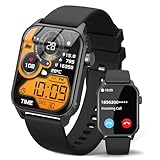
- 【1.83" HD Display & Customizable Watch Faces】Immerse yourself in a vibrant 1.83-inch IPS display, boasting a sharp resolution of 240*284 for crystal-clear visuals. Effortlessly personalize your smart watch with a wide array of customizable watch faces to suit your personal style for every occasion—whether trendy, artistic, or minimalist—ideal for casual, sporty, or professional. Its sleek, modern design complements any outfit, blending technology and fashion seamlessly for everyday wear
- 【120 Sports Modes & Advanced Health Tracking】Our TK29 smart watches for women men come equipped with 120 sports modes, allowing you to effortlessly track a variety of activities such as walking, running, cycling, and swimming. With integrated heart rate and sleep monitors, you can maintain a comprehensive overview of your health, achieve your fitness goals, and maintain a balanced, active lifestyle with ease. Your ideal wellness companion (Note: Step recording starts after exceeding 20 steps)
- 【IP67 Waterproof & Long-Lasting Battery】Designed to keep up with your active lifestyle, this smartwatch features an IP67 waterproof rating, ensuring it can withstand splashes, sweat, and even brief submersion, making it perfect for workouts, outdoor adventures, or rainy days. Its reliable 350mAh battery offering 5-7 days of active use and up to 30 days in standby mode, significantly reducing frequent charging. Ideal for all-day wear, whether you’re at the gym, outdoors, or simply on the go
- 【Stay Connected Anytime, Anywhere】Stay informed and in control with Bluetooth call and music control features. Receive real-time notifications for calls, messages, and social media apps like Facebook, WhatsApp, Twitter, and Instagram directly on your smartwatch. Easily manage calls, control your music playlist, and stay updated without needing to reach for your phone. Perfect for work, workouts, or on-the-go, this watch keeps you connected and never miss important updates wherever you are
- 【Multifunction & Wide Compatibility】Seamlessly handle heart rate monitoring, sleep tracking, and enjoy conveniences like camera/music control, Seamlessly handle heart rate monitoring, sleep tracking, and more-all directly from your wrist. This 1.83 inches HD smartwatch is compatible with iPhone (iOS 9.0+) & Android (5.0+), ensuring smooth daily connectivity and convenience throughout your day. More than just a timepiece, it’s a stylish, all-in-one wearable for smarter, healthier living
As a result, annual upgrades increasingly feel cosmetic. Slightly thinner cases, marginal battery gains, and minor UI refinements are no longer enough to motivate informed buyers, especially as prices creep upward and entry-level models remain “good enough” for most daily use.
This forces brands to confront harder problems involving long-term value, real-world health impact, and how a watch earns its place on the wrist beyond novelty or habit.
Health promises are colliding with real-world limits
Health tracking has become the smartwatch industry’s primary growth narrative, but it’s also where expectations and reality diverge most sharply. Features like ECG, blood oxygen, skin temperature, and irregular rhythm notifications sound transformative, yet their usefulness depends heavily on accuracy, regulatory clearance, and how clearly insights are communicated to everyday users.
Many owners now have years of health data without clear guidance on what to do with it. Raw metrics are abundant, but actionable interpretation remains inconsistent, often buried behind subscriptions, confusing dashboards, or vague readiness scores.
Over the next few years, progress will hinge less on adding new sensors and more on improving signal quality, longitudinal analysis, and trust. This includes better calibration across skin tones and body types, smarter alerts that reduce anxiety, and software that understands context rather than flagging isolated data points.
Design and comfort are becoming strategic, not cosmetic
Smartwatches are also hitting a design inflection point. Larger displays improve usability, but they strain comfort, aesthetics, and wearability, especially for sleep tracking and 24/7 health monitoring. Heavier cases, thick sensor bumps, and rigid straps actively work against the promise of continuous use.
The next phase of design innovation is likely to be quieter but more meaningful. Expect renewed focus on thinner cases, lighter materials like titanium and advanced polymers, improved strap ergonomics, and better weight distribution rather than radical visual overhauls.
This shift matters because comfort directly affects data quality. A watch that’s annoying to sleep in, awkward during workouts, or visually out of place in everyday life will never deliver on its health ambitions, no matter how advanced the sensors inside.
Software intelligence is becoming the real battleground
Hardware parity is pushing smartwatch makers toward software differentiation, where intelligence, not features, defines the experience. The question is no longer what a watch can measure, but how well it understands patterns, adapts to behavior, and fits into a broader ecosystem of phones, services, and health platforms.
AI-driven coaching, personalized training plans, adaptive recovery guidance, and proactive health nudges are moving from experimental to essential. At the same time, battery life and on-device processing limits force difficult trade-offs between ambition and practicality.
How companies balance privacy, cloud reliance, battery efficiency, and genuinely helpful automation will shape user trust and long-term loyalty far more than another new metric on a spec sheet.
A market deciding what it wants to be
Ultimately, the smartwatch is at a crossroads because the market itself is undecided. Some users want medical-grade health tools, others want elegant digital watches with weeks of battery life, and many want something that quietly supports their routines without demanding attention.
The next 2–5 years will reveal whether the industry can meaningfully segment its offerings, or whether it continues chasing a one-size-fits-all device that satisfies no one completely. That outcome will influence not just what smartwatches look like, but how often people upgrade, how much they’re willing to pay, and whether the smartwatch becomes more personal or more disposable.
Health Tracking Evolves from Wellness to Clinical-Grade Insight
As software intelligence becomes the defining layer, health tracking is simultaneously undergoing its most consequential shift yet. Smartwatches are moving beyond generalized wellness signals toward measurements that aim to be actionable, longitudinal, and increasingly meaningful in a medical context, even if they stop short of replacing clinical equipment.
This evolution is not about adding more sensors for marketing appeal. It is about improving signal quality, consistency, and interpretation so the data holds value across months and years, not just individual workouts or nights of sleep.
From lifestyle metrics to medically relevant signals
Early smartwatch health features focused on motivation: steps, calories, basic heart rate trends. Over the next few years, the emphasis shifts toward metrics with clearer clinical relevance, such as atrial fibrillation detection, sleep apnea indicators, blood oxygen trends, and early warning signs for cardiovascular stress.
Apple, Samsung, and Huawei are already pushing regulatory-cleared features in select regions, while Garmin and Google are emphasizing depth and trend reliability over formal medical claims. The common thread is not perfection, but confidence that the watch can flag meaningful deviations from a personal baseline rather than population averages.
This baseline-first approach matters because wearables live on the wrist, not in a lab. A titanium-cased watch worn daily, including during sleep, exercise, and recovery, generates a richer picture of health than occasional clinical snapshots, assuming the hardware is comfortable enough to stay on.
Sensor quality, not sensor count, becomes the differentiator
The next phase of health tracking depends less on new sensor types and more on refinement of optical heart rate modules, skin temperature sensors, accelerometers, and electrical sensors. Improvements in LED placement, photodiode sensitivity, and sampling algorithms are already delivering more reliable readings from slimmer cases and lighter materials.
Expect continued investment in multi-wavelength optical sensors that better handle varied skin tones, tattoos, and motion-heavy activities. Combined with improved strap ergonomics and case geometry, these refinements directly influence data accuracy by ensuring consistent skin contact during real-world use.
Battery life plays a critical role here. Watches that can maintain continuous or near-continuous sensing without forcing daily charging are better positioned to deliver clinically meaningful trend data, which explains why efficiency gains are as important as raw processing power.
Passive monitoring replaces manual check-ins
One of the most underappreciated shifts is how passive health tracking is replacing user-driven measurement. Instead of prompting manual ECGs or spot checks, watches are increasingly monitoring in the background and surfacing insights only when something changes.
This model aligns better with everyday usability. A watch that quietly tracks respiratory rate, heart rate variability, and overnight recovery while remaining unobtrusive on the wrist fits naturally into daily life, whether paired with a silicone sport band or a leather strap worn to the office.
The challenge is restraint. As watches become more capable, the risk of alert fatigue grows, and manufacturers must decide when to speak up and when to stay silent. Getting this balance right will define trust in health-focused wearables.
The slow, complex path toward true medical integration
Despite ambitious marketing, smartwatches are not becoming diagnostic tools overnight. Regulatory approval, regional medical standards, and liability concerns ensure progress remains incremental, uneven, and market-dependent.
What is changing is how watches integrate with broader health ecosystems. Exportable data formats, partnerships with healthcare providers, and compatibility with electronic health records are quietly expanding, particularly in premium ecosystems where users are already invested in long-term tracking.
For consumers, this means future buying decisions may hinge less on flashy features and more on platform credibility. A watch that offers consistent updates, long-term software support, and transparent data handling may deliver more real value than one that chases experimental metrics.
Health insight as a long-term value proposition
As the smartwatch market matures, health tracking becomes a reason to keep a device longer, not upgrade faster. When trends, baselines, and historical data matter, continuity outweighs novelty.
This shift also reframes design priorities. Watches must balance clinical ambition with comfort, durability, and aesthetics that encourage constant wear. Slimmer cases, lighter materials, breathable straps, and understated finishing are not just design wins, but prerequisites for credible health insight.
In that sense, the move toward clinical-grade health tracking reinforces everything that came before it. Comfort enables consistency, consistency enables insight, and insight is what finally turns the smartwatch from a gadget into something genuinely personal.
The Sensor Arms Race: What New Hardware Will Actually Change Daily Use
If long-term health insight depends on comfort and consistency, then sensors are the quiet enablers that make or break that promise. Over the next few years, the most meaningful smartwatch upgrades will not come from adding more metrics, but from improving how, when, and how reliably data is captured during everyday wear.
We are already past the phase where heart rate, SpO₂, GPS, and basic motion tracking differentiate one watch from another. What matters now is signal quality, sensor fusion, and the ability to extract usable insight from imperfect real-world conditions like loose straps, wrist tattoos, cold weather, or all-day desk work.
Optical sensors grow up: accuracy over novelty
The biggest gains in daily use will come from next-generation optical heart rate modules rather than brand-new sensor types. Expect more LEDs at varied wavelengths, improved photodiode layouts, and smarter sampling that adapts to activity level, skin tone, and ambient light.
This matters because better optical data underpins almost every health feature users actually rely on, from calorie burn and training load to sleep staging and stress estimation. A watch that reads consistently during a commute, a strength session, and overnight wear is far more valuable than one that occasionally unlocks a new metric under ideal conditions.
We are also likely to see thinner sensor stacks paired with flatter casebacks. That has direct implications for comfort, case thickness, and how naturally a watch sits on smaller wrists, especially when worn 24/7 on softer sport bands or hybrid leather straps.
Temperature sensing moves from novelty to context
Skin temperature sensors are already present in several ecosystems, but their usefulness has been limited by interpretation rather than hardware. The next step is tighter integration with sleep, menstrual health, illness detection, and recovery metrics, where temperature trends matter more than spot readings.
What will change daily use is passive, low-power temperature tracking that works invisibly overnight without battery penalties. When combined with heart rate variability and respiratory rate, temperature becomes a contextual signal rather than a headline feature.
For consumers, this shifts expectations. The value is not in checking a temperature number, but in receiving a subtle prompt that something is off, whether that’s illness onset or accumulated fatigue, without needing to actively engage with the data.
Blood pressure, glucose, and the reality check
Non-invasive blood pressure and glucose monitoring remain the most hyped and misunderstood areas of smartwatch hardware. Over the next two to five years, expect limited, region-specific progress rather than universal breakthroughs.
Rank #2
![Apple Watch Series 11 [GPS 46mm] Smartwatch with Jet Black Aluminum Case with Black Sport Band - M/L. Sleep Score, Fitness Tracker, Health Monitoring, Always-On Display, Water Resistant](https://m.media-amazon.com/images/I/312K597M2uL._SL160_.jpg)
- HYPERTENSION NOTIFICATIONS — Apple Watch Series 11 can spot signs of chronic high blood pressure and notify you of possible hypertension.*
- KNOW YOUR SLEEP SCORE — Sleep score provides an easy way to help track and understand the quality of your sleep, so you can make it more restorative.
- EVEN MORE HEALTH INSIGHTS — Take an ECG anytime.* Get notifications for a high and low heart rate, an irregular rhythm,* and possible sleep apnea.* View overnight health metrics with the Vitals app* and take readings of your blood oxygen.*
- STUNNING DESIGN — Thin and lightweight, Series 11 is comfortable to wear around the clock — while exercising and even when you’re sleeping, so it can help track your key metrics.
- A POWERFUL FITNESS PARTNER — With advanced metrics for all your workouts, plus features like Pacer, Heart Rate Zones, training load, Workout Buddy powered by Apple Intelligence from your nearby iPhone,* and more. Series 11 also comes with three months of Apple Fitness+ free.*
Blood pressure estimation via optical sensors and pulse transit time may become more common, but it will likely require frequent calibration with a traditional cuff and clear disclaimers around accuracy. For daily use, that makes it more suitable for trend tracking than actionable decision-making.
Non-invasive glucose monitoring is even further out. While prototype sensors and research partnerships exist, consumer-ready solutions that are accurate, affordable, and battery-efficient are unlikely to arrive in mainstream watches soon. Buyers should be wary of treating near-term claims as anything more than early experimentation.
Motion and muscle sensing redefine fitness accuracy
Beyond optical sensors, improvements in inertial measurement units will quietly reshape fitness tracking. Higher-resolution accelerometers, gyroscopes, and barometric sensors allow watches to better distinguish between activities that currently blur together, such as strength training, mobility work, or mixed cardio sessions.
Some manufacturers are also exploring surface electromyography and advanced motion modeling to estimate muscle engagement and fatigue. While early implementations may appear in niche sports watches or premium tiers, the long-term impact is clearer workout classification and less manual correction after the fact.
For everyday users, this means workouts that feel better understood without extra taps, chest straps, or post-session editing. That reduction in friction is often more valuable than adding another stat to a crowded summary screen.
Sensor fusion and on-device intelligence
The real arms race is not individual sensors, but how effectively they work together. Combining optical data, motion, temperature, and contextual signals on-device allows watches to make smarter decisions about sampling rates, power usage, and when to surface insights.
This has direct implications for battery life and wearability. Watches that can dynamically throttle sensors during low-impact periods or sleep while maintaining accuracy will enable slimmer cases or smaller batteries without sacrificing endurance.
It also changes the software experience. Instead of raw metrics, users will increasingly see confidence-weighted insights, trend alerts, and explanations that reflect data quality, something essential for building trust in health-focused features.
What actually matters when buying your next watch
As sensor hardware evolves, spec sheets will become less helpful than real-world performance. A watch with fewer advertised sensors but better consistency, comfort, and battery efficiency may deliver more usable health insight than a feature-packed alternative.
Materials, caseback design, strap compatibility, and how tightly a watch can be worn without discomfort all influence sensor accuracy. Titanium cases, ceramic or sapphire-backed sensor windows, and breathable straps are not luxury flourishes, but functional components of better data.
In the end, the sensor arms race will be won by restraint. The watches that meaningfully improve daily use will be those that disappear on the wrist, work reliably in the background, and speak up only when the data truly deserves attention.
From Fitness Tracker to Health Companion: Smarter Coaching, AI and Predictive Insights
As sensors fade into the background, software is stepping forward as the defining factor. The next phase of smartwatches is less about recording what happened and more about interpreting what it means for you, in context, over time.
This shift is turning watches from passive logbooks into active health companions. Not just counting steps or flagging an elevated heart rate, but helping users understand patterns, risks, and trade-offs in everyday life.
From dashboards to decisions: coaching that adapts
Early smartwatch coaching focused on generic goals: close your rings, hit a step count, stand up once an hour. What’s coming next is coaching that adapts to your physiology, habits, and recovery trends rather than pushing the same targets every day.
Platforms from Apple, Garmin, Samsung, and Huawei are already moving this way with training readiness, recovery scores, and adaptive workout suggestions. Over the next few years, expect these systems to factor in sleep quality, recent illness markers, temperature deviation, and even calendar context before recommending intensity.
The key improvement is restraint. Smarter coaching will know when not to push, offering rest, mobility, or lighter activity when your body signals diminished capacity, something that builds long-term trust rather than short-term compliance.
On-device AI and the rise of predictive health signals
AI in wearables is quietly shifting from cloud-dependent analysis to on-device inference. This matters for privacy, latency, and battery life, but it also enables real-time pattern detection without constant connectivity.
Instead of reacting to threshold breaches, watches are beginning to identify trajectories. A slow drift in resting heart rate combined with reduced HRV and sleep fragmentation can surface as a gentle alert days before you feel unwell, rather than a retrospective insight after symptoms appear.
Predictive does not mean diagnostic, and regulators will keep that line firm. The practical value lies in early nudges: suggesting an easier training week, encouraging hydration, or flagging unusual fatigue trends that might justify paying closer attention to your health.
Mental health, stress, and the context problem
Stress tracking has long suffered from shallow interpretation. Elevated heart rate and reduced variability can mean anxiety, intense focus, caffeine, or simply climbing stairs.
Future systems are improving by layering context on top of physiology. Motion data, time of day, historical responses, and even user-confirmed labels help watches learn what stress actually looks like for an individual, not a population average.
This opens the door to more meaningful interventions. Instead of generic breathing prompts, watches may suggest a walk, reduced notifications, or an earlier bedtime based on patterns that have previously helped restore balance for that specific user.
Longitudinal health: where wearables gain real authority
The true power of smartwatches emerges over months and years, not days. Longitudinal data allows subtle changes to stand out, turning personal baselines into a reference point far more valuable than one-off measurements.
This is where ecosystem lock-in becomes a feature rather than a drawback. Staying within a single platform preserves continuity, making it easier for algorithms to understand your normal and spot meaningful deviations.
For buyers, this shifts the value equation. A watch that feels comfortable enough to wear daily, charges quickly, and lasts multiple days on a single charge may ultimately deliver better health insight than a more advanced model that spends too much time off the wrist.
Trust, transparency, and knowing when the watch should speak
As watches become more proactive, trust becomes the limiting factor. Users need to understand why an insight appears, how confident it is, and what action, if any, is appropriate.
Expect clearer explanations, confidence indicators, and language that avoids alarmism. The best systems will acknowledge uncertainty, explaining when data quality is limited by fit, motion, or missed wear time.
In practice, the smartest health companions will say less, not more. By surfacing insights only when patterns are persistent and actionable, future smartwatches will earn their place as quiet, reliable partners rather than anxious narrators of every heartbeat.
Design Maturity: Thinner Cases, Better Materials and the End of the ‘Tech Gadget Look’
As smartwatches learn when to speak and when to stay quiet, their physical presence is evolving in parallel. A device meant to be worn day and night, trusted with sensitive health data, cannot feel like a temporary gadget strapped to the wrist. Design maturity is becoming a prerequisite for credibility, not a cosmetic afterthought.
Thinner profiles and the engineering behind them
The most visible shift is thickness. Over the next few product cycles, case heights are steadily shrinking as components become more integrated and power management improves.
System-in-package designs, stacked PCBs, and more efficient displays allow manufacturers to reduce volume without sacrificing battery life. Apple’s push toward slimmer Apple Watch cases and Samsung’s refinement of the Galaxy Watch silhouette signal a category-wide focus on wearability over spec-sheet bravado.
For users, a reduction of even 1–2mm dramatically changes comfort. Thinner watches catch less on sleeves, distribute weight more evenly, and feel less intrusive during sleep, which directly supports the continuous wear needed for longitudinal health tracking.
Materials moving beyond aluminum and plastic
Material choice is quietly redefining perceived value. Titanium, stainless steel, ceramic, and sapphire are no longer reserved for luxury trims but are filtering into mainstream models as production scales and costs normalize.
Titanium offers an ideal balance of lightness and strength, improving all-day comfort while enhancing durability for active use. Ceramic backs improve skin contact and signal reliability in sensor performance, while sapphire or sapphire-coated glass improves scratch resistance for devices meant to be worn continuously.
This matters because wear is cumulative. A watch that looks pristine after a year of daily use reinforces trust in the device and the data it produces, whereas visible degradation subtly undermines confidence.
From gadget aesthetics to watchmaking language
Early smartwatches leaned heavily into a tech-forward look, prioritizing screens and sensors over proportion and finishing. That era is ending as brands increasingly borrow from traditional watch design rather than consumer electronics.
Case curvature, lug geometry, chamfered edges, and balanced bezels are now deliberate choices, not afterthoughts. Google’s Pixel Watch, Huawei’s Watch GT series, and Garmin’s higher-end models show how digital displays can coexist with forms that feel familiar to watch enthusiasts.
This shift does not mean imitation of mechanical watches, but rather respect for centuries of ergonomic and aesthetic refinement. The result is hardware that feels intentional, not experimental.
Straps, bracelets, and real-world wearability
Strap systems are becoming a core part of the design conversation. Quick-release mechanisms, broader third-party compatibility, and improved default straps acknowledge that comfort and style vary widely by user and context.
Rank #3

- Bluetooth Call and Message Alerts: Smart watch is equipped with HD speaker, after connecting to your smartphone via bluetooth, you can answer or make calls, view call history and store contacts through directly use the smartwatch. The smartwatches also provides notifications of social media messages (WhatsApp, Twitter, Facebook, Instagram usw.) So that you will never miss any important information.
- Smart watch for men women is equipped with a 320*380 extra-large hd full touch color screen, delivering exceptional picture quality and highly responsive touch sensitivity, which can bring you a unique visual and better interactive experience, lock screen and wake up easily by raising your wrist. Though “Gloryfit” app, you can download more than 102 free personalised watch faces and set it as your desktop for fitness tracker.
- 24/7 Heart Rate Monitor and Sleep Tracker Monitor: The fitness tracker watch for men has a built-in high-performance sensor that can record our heart rate changes in real time. Monitor your heart rate 26 hours a day and keep an eye on your health. Synchronize to the mobile phone app"Gloryfit", you can understand your sleep status(deep /light /wakeful sleep) by fitness tracker watch develop a better sleep habit and a healthier lifestyle.
- IP68 waterproof and 110+ Sports Modes: The fitness tracker provides up to 112+ sports modes, covering running, cycling, walking, basketball, yoga, football and so on. Activity trackers bracelets meet the waterproof requirements for most sports enthusiasts' daily activities, such as washing hands or exercising in the rain, meeting daily needs (note: Do not recommended for use in hot water or seawater.)
- Multifunction and Compatibility: This step counter watch also has many useful functions, such as weather forecast, music control, sedentary reminder, stopwatch, alarm clock, timer, track female cycle, screen light time, find phone etc. The smart watch with 2 hrs of charging, 5-7 days of normal use and about 30 days of standby time. This smart watches for women/man compatible with ios 9.0 and android 6.2 and above devices.
Silicone remains dominant for fitness due to durability and water resistance, but woven nylon, leather hybrids, and metal bracelets are increasingly engineered to accommodate sensors and charging requirements. Better articulation and tapering improve comfort, especially for smaller wrists, reducing pressure points during long wear.
This flexibility reinforces the idea of the smartwatch as a single device that adapts to work, training, and sleep rather than a tool that needs to be swapped out throughout the day.
Durability without visual bulk
Ruggedization is becoming subtler. Instead of oversized cases and exposed screws, brands are relying on internal shock absorption, reinforced glass, and smarter sealing to deliver water and impact resistance.
Garmin and Huawei continue to lead in this area, offering watches rated for extreme conditions that still sit comfortably under a cuff. Even Apple’s approach with the Ultra line is influencing mainstream models to borrow strength without inheriting size.
For buyers, this means fewer trade-offs. A watch can be resilient enough for outdoor training while still appropriate for everyday wear.
The end of the disposable look
As software support lengthens and health data gains value over years, the smartwatch is shedding its disposable identity. Design language is shifting toward longevity, with finishes and proportions meant to age gracefully rather than chase trends.
This evolution aligns with longer update cycles, improved repairability discussions, and higher resale value. When a watch looks and feels like a lasting object, users are more likely to stay within an ecosystem and maintain continuous data histories.
In the next phase of the category, design is no longer just about standing out in a store. It is about earning a permanent place on the wrist, quietly supporting health, comfort, and daily life without reminding the wearer that it is a piece of technology at all.
Battery Life Breakthroughs: Multi-Day Wear, Smarter Power Management and New Charging Ideas
As smartwatches evolve into devices meant to stay on the wrist around the clock, battery life has become less about endurance bragging rights and more about enabling continuity. Sleep tracking, recovery metrics, passive health monitoring, and safety features all lose value if the watch needs to come off every night.
This shift is quietly redefining expectations. For many buyers, a “good” smartwatch is no longer one that charges quickly, but one that simply does not need to be charged very often.
From daily charging to predictable multi-day wear
The most visible change is the slow but steady move away from single-day battery life in mainstream watches. Apple and Samsung still design around daily charging for their most feature-rich models, but efficiency gains are stretching real-world use into a day and a half or more for lighter users.
At the same time, Garmin, Huawei, and Amazfit are normalizing four to seven days of wear in thinner, lighter cases that no longer feel like pure sports instruments. This matters for comfort and aesthetics as much as endurance, because it allows smaller batteries to be paired with more wearable case dimensions and better weight distribution on the wrist.
Over the next two to five years, multi-day battery life is likely to become a baseline expectation for mid-range and premium smartwatches, not a niche advantage reserved for outdoor-focused models.
Smarter chips, displays, and operating systems
Battery breakthroughs are coming less from bigger cells and more from system-level efficiency. Custom silicon, such as Apple’s S-series and Google’s renewed interest in optimized Wear OS platforms, allows tighter control over background processes, sensor sampling, and wireless radios.
Displays are doing more of the heavy lifting as well. Low-temperature polycrystalline oxide OLEDs, adaptive refresh rates, and always-on modes that drop to near-static power draw mean the screen no longer dominates energy consumption the way it once did.
On the software side, operating systems are learning to prioritize intent. Watches increasingly know when the wearer is asleep, inactive, or in a familiar environment, and can dial down GPS, heart rate sampling, or connectivity without the user noticing any loss of functionality.
Context-aware power management replaces manual modes
Traditional battery saver modes are blunt instruments, often disabling key features in ways that feel restrictive. The next phase of power management is subtler and far more personal.
Future smartwatches will increasingly adjust behavior based on routines rather than presets. A watch may sample health metrics aggressively during a workout, reduce background tasks during office hours, and shift into ultra-low-power monitoring during sleep, all without user input.
This approach preserves data quality while extending battery life in ways that feel invisible. It also reduces the mental overhead of managing settings, reinforcing the idea of the smartwatch as a companion rather than a device that needs constant supervision.
Charging becomes faster, more flexible, and less intrusive
Even with longer battery life, charging remains a daily reality over the lifespan of a device. Here, the industry is exploring multiple paths rather than a single solution.
Fast charging is becoming table stakes, with many watches reaching a full day of use from a 10 to 15 minute top-up. This is especially valuable for sleep tracking, where brief charging windows during showers or morning routines can replace overnight downtime.
Wireless charging pads are also evolving, with stronger magnets, more forgiving alignment, and better integration into bedside and desk accessories. The goal is not just convenience, but habit formation, making charging feel like a natural part of the environment rather than a task.
Alternative energy ideas move closer to practicality
Solar-assisted charging, long a niche feature, is steadily improving. Garmin’s Power Glass and similar technologies do not eliminate charging, but they meaningfully extend battery life during outdoor use, particularly for GPS-heavy activities.
Looking further ahead, there is renewed interest in kinetic and thermal energy harvesting, though these remain supplementary rather than transformative. The real value lies in reducing dependency on chargers during travel or extended wear, not in creating fully self-powered watches.
These ideas align with the broader push toward sustainability and longevity, reinforcing the smartwatch as a device designed to live on the wrist, not cycle constantly between wrist and charger.
Why battery life may become the defining user experience metric
As health data becomes more longitudinal and software more predictive, battery life directly affects the quality of insights a watch can deliver. Gaps in data undermine trend analysis, recovery tracking, and early warning systems.
For buyers, this reframes the value equation. A slightly less flashy feature set paired with reliable multi-day wear may deliver more meaningful long-term benefits than a watch packed with capabilities that are rarely active due to power constraints.
In this sense, battery life is no longer a spec to compare on a chart. It is the foundation that allows every other promise of the smartwatch, from health to safety to convenience, to actually hold up in daily life.
Software Ecosystems and Platforms: Apple, Google, Samsung, Garmin and the Fragmentation Problem
As battery life becomes the foundation that makes continuous sensing possible, software determines whether that data actually becomes useful. A smartwatch that lasts days but lives inside a limited or confusing ecosystem still fails its promise. Over the next few years, platform strategy will quietly become one of the most important differentiators in wearables, even if it is the least visible on a spec sheet.
Unlike smartphones, smartwatches have never converged around a single dominant operating system. Instead, the category has fragmented into distinct philosophies, each optimized for different users, priorities, and business models.
Apple Watch and watchOS: The most cohesive ecosystem, still the most restrictive
Apple’s strength remains end-to-end integration. Hardware, silicon, sensors, operating system, and services are designed together, which is why features like ECG, fall detection, and sleep staging tend to feel polished and reliable when they arrive.
watchOS increasingly treats the Apple Watch as an extension of Apple Health rather than a standalone computer. Longitudinal health trends, medication reminders, and fitness load analysis are prioritized over raw customization. This aligns with Apple’s push into preventative health and clinical partnerships rather than hardcore sports performance.
The trade-off is flexibility. The Apple Watch still requires an iPhone, limits third-party sensor access in meaningful ways, and controls background behavior tightly to preserve battery life. For many users this creates a seamless experience; for power users it feels constrained.
Looking ahead, Apple is likely to deepen software intelligence rather than radically expand app freedom. Expect more on-device machine learning, better anomaly detection, and deeper integration with services like Fitness+, rather than a sudden explosion of independent watch apps.
Wear OS by Google: A platform still finding its identity
Wear OS has improved dramatically in stability, performance, and battery efficiency compared to its earlier iterations. Google’s renewed focus, alongside Samsung’s involvement, has given the platform relevance again after years of stagnation.
The challenge is coherence. Wear OS serves multiple hardware partners with different priorities, sensor packages, and design philosophies. A Pixel Watch feels fundamentally different from a Galaxy Watch or a Mobvoi device, even when running similar software.
Google’s strength lies in services. Google Assistant, Maps, Wallet, and Health Connect give Wear OS unmatched potential for cross-device intelligence. However, execution often lags behind ambition, with features rolling out unevenly and sometimes inconsistently across regions and devices.
Over the next two to three years, Wear OS will likely become more modular. Expect Google to lean into Health Connect as a neutral data layer, allowing watches to feed into broader Android health experiences without forcing uniform hardware design.
Samsung’s One UI Watch: Refinement through control
Samsung occupies a unique position, sitting on top of Wear OS while heavily reshaping it. One UI Watch prioritizes visual clarity, gesture navigation, and tight integration with Samsung phones and services.
Rank #4
![Apple Watch Series 11 [GPS 42mm] Smartwatch with Rose Gold Aluminum Case with Light Blush Sport Band - S/M. Sleep Score, Fitness Tracker, Health Monitoring, Always-On Display, Water Resistant](https://m.media-amazon.com/images/I/31J+F-pXaWL._SL160_.jpg)
- HYPERTENSION NOTIFICATIONS — Apple Watch Series 11 can spot signs of chronic high blood pressure and notify you of possible hypertension.*
- KNOW YOUR SLEEP SCORE — Sleep score provides an easy way to help track and understand the quality of your sleep, so you can make it more restorative.
- EVEN MORE HEALTH INSIGHTS — Take an ECG anytime.* Get notifications for a high and low heart rate, an irregular rhythm,* and possible sleep apnea.* View overnight health metrics with the Vitals app* and take readings of your blood oxygen.*
- STUNNING DESIGN — Thin and lightweight, Series 11 is comfortable to wear around the clock — while exercising and even when you’re sleeping, so it can help track your key metrics.
- A POWERFUL FITNESS PARTNER — With advanced metrics for all your workouts, plus features like Pacer, Heart Rate Zones, training load, Workout Buddy powered by Apple Intelligence from your nearby iPhone,* and more. Series 11 also comes with three months of Apple Fitness+ free.*
This approach solves some of Wear OS’s fragmentation issues but introduces new ones. Features like advanced sleep coaching, body composition tracking, and ECG are often locked to Samsung smartphones, reducing cross-brand appeal.
Samsung’s watches tend to balance comfort and capability well, with slim cases, bright displays, and good all-day wearability. Software mirrors this balance, focusing on daily health habits rather than elite training metrics.
Future development will likely deepen ecosystem exclusivity rather than relax it. Samsung sees wearables as anchors for its broader health, smart home, and services strategy, not as neutral accessories.
Garmin: Software built for endurance and specialization
Garmin sits outside the mainstream smartwatch OS conversation by design. Its proprietary platform prioritizes battery life, reliability, and deep sensor access over app ecosystems.
Garmin’s software philosophy is fundamentally athlete-centric. Training load, recovery time, VO2 max, and multi-band GPS accuracy are first-class citizens, not optional add-ons. This depth comes at the cost of polish in areas like notifications, voice assistants, and third-party apps.
The advantage is control. Garmin can optimize software for specific use cases, whether that is ultra-running, diving, aviation, or outdoor navigation. Watches feel purpose-built rather than generalized.
Over the next few years, expect Garmin to selectively adopt smarter health insights without abandoning its core identity. The company is more likely to improve interpretation of existing data than chase smartwatch-style convenience features.
Fragmentation as both a weakness and a feature
From a consumer perspective, fragmentation complicates buying decisions. Compatibility matters more than ever, with some watches locked to specific phones, services, or regions. Battery life, health features, and even basic functions can vary dramatically depending on ecosystem.
For developers, fragmentation limits innovation. Writing apps or health algorithms that work consistently across watchOS, Wear OS, and proprietary platforms remains difficult. As a result, many advanced features stay locked inside first-party apps.
Yet fragmentation also allows specialization. A runner, an iPhone user focused on wellness, and an Android user wanting smart convenience are not being forced into the same compromise. Each ecosystem optimizes for different definitions of value.
The risk is user lock-in. Health data, habits, and historical trends are difficult to migrate between platforms, making switching watches more disruptive over time.
Data portability and the slow push toward openness
One of the most important shifts happening quietly is the emphasis on data interoperability. Google’s Health Connect and Apple’s Health app both aim to centralize health data, even if they approach openness differently.
This matters because future smartwatch value lies in long-term insight, not daily metrics. A platform that traps data risks becoming obsolete as users demand flexibility across devices, services, and even healthcare providers.
Garmin, Apple, and Google are all moving cautiously toward selective sharing rather than full openness. The balance they strike will shape trust, especially as watches increasingly generate medical-adjacent insights.
The next phase: Software as an invisible differentiator
As hardware matures and sensors converge, software experience will matter less in flashy features and more in reliability, clarity, and restraint. Users will notice when insights feel timely, when notifications respect attention, and when battery life aligns with actual habits.
The platforms that succeed will be those that disappear into daily life, delivering value without demanding constant interaction. In that sense, fragmentation may persist, but expectations will converge around one core idea: software should serve the wrist, not dominate it.
Beyond the Wrist: How Smartwatches Will Integrate with Rings, Glasses and Health Platforms
If software is becoming quieter and more contextual, the next logical step is distributing that software across multiple devices. The smartwatch will remain central, but it will no longer be expected to do everything alone.
Over the next few years, the most meaningful advances will come from cooperation between wearables rather than competition for wrist space. Rings, glasses, and ambient health platforms will reshape what the watch is responsible for, and just as importantly, what it can stop doing.
The rise of the ring as a silent partner
Smart rings are not trying to replace smartwatches; they are filling in their blind spots. By living on a finger with minimal weight and no screen, rings can prioritize continuous metrics like sleep stages, resting heart rate, skin temperature trends, and recovery without compromising comfort.
This division of labor matters for battery life and wearability. A slim ring worn 24/7 allows a smartwatch to be taken off at night, sized more ergonomically for daytime use, or optimized for brighter displays and faster processors rather than all-day sensing.
Apple, Samsung, and Google are all expected to treat rings as extensions of their health stacks rather than standalone products. The watch becomes the interface and real-time coach, while the ring becomes the long-term data collector working quietly in the background.
Glasses shift interaction away from the wrist
Smart glasses will not replace watches either, but they will change how often you need to look down. Quick-glance information like navigation cues, workout pacing, translation, and message previews can move into the field of view, reducing wrist interactions during movement-heavy moments.
For athletes, this means fewer mid-run wrist twists and more continuous awareness. For everyday users, it means notifications become situational rather than constant, with the watch acting as a controller and sensor hub rather than the primary display.
The watch’s role here is technical and tactile. Physical buttons, haptics, and precise sensors still matter for control, durability, and accuracy, especially when glasses are limited by weight, heat, and battery constraints.
A layered approach to health platforms
As devices multiply, health platforms become the true product. Watches, rings, and even smart scales or blood pressure cuffs will increasingly feed into unified health timelines that prioritize trends over raw numbers.
This layered model allows each device to specialize. The watch excels at active metrics like workouts, ECGs, and on-demand checks, while rings and background sensors handle passive monitoring and long-term baselines.
The most important shift is interpretive. Platforms will move from showing daily scores to identifying meaningful deviations, nudging users only when patterns change rather than when numbers fluctuate within normal ranges.
From device ownership to ecosystem trust
Once health insights are generated across multiple wearables, trust in the platform matters more than attachment to any single device. Users will tolerate shorter battery life, higher prices, or slower hardware cycles if their data feels coherent, portable, and respected.
This is where openness becomes competitive. Platforms that allow selective sharing with clinicians, fitness apps, or insurance programs without locking users in will feel safer over time.
For buyers, this changes how value is judged. The best smartwatch will not be the one with the longest spec sheet, but the one that fits cleanly into a broader system that evolves without forcing constant upgrades.
What stays on the wrist and what moves off
Not everything should leave the watch. High-frequency interactions, precise timing, offline reliability, and tactile control still favor a wrist-based device with physical presence, durable materials, and a secure strap or bracelet.
But constant sensing, passive awareness, and ambient information are better handled elsewhere. Offloading those tasks allows future watches to slim down, improve comfort, and focus on moments when attention and accuracy truly matter.
The result is not a weaker smartwatch, but a more focused one. As wearables spread beyond the wrist, the watch becomes less cluttered, more intentional, and ultimately more valuable in daily life.
Privacy, Regulation and Trust: The Hidden Forces Shaping Future Features
As smartwatches become interpreters rather than mere collectors of health data, the quiet constraints shaping their evolution are no longer technical. Privacy expectations, medical regulation, and platform trust are now dictating which features ship, how fast they arrive, and what compromises brands are willing to make.
These forces rarely appear on spec sheets, yet they explain why some sensors take years to launch, why others remain region-locked, and why software decisions increasingly outweigh hardware ambition.
When health data stops being “fitness data”
The moment a smartwatch claims to detect atrial fibrillation, sleep apnea, or blood pressure trends, it crosses an invisible regulatory line. What once lived in the casual world of wellness apps now enters frameworks designed for medical devices, with approval pathways that vary wildly by country.
This is why ECG features arrived years apart across regions, and why blood pressure tracking still requires calibration in some markets. It is not a sensor problem, but a compliance one, involving clinical validation, liability exposure, and post-market surveillance obligations.
Over the next few years, expect fewer headline-grabbing sensor announcements and more quiet expansions of already-approved capabilities. Incremental improvements are safer, faster, and far more defensible than disruptive claims that trigger fresh regulatory scrutiny.
Privacy as a feature, not a policy page
As health timelines grow richer and more predictive, users are becoming acutely aware of what their watch knows about them. Heart rhythm anomalies, fertility indicators, stress patterns, and recovery trends are deeply personal, even if they are statistically anonymized.
💰 Best Value
![Apple Watch Series 11 [GPS 42mm] Smartwatch with Jet Black Aluminum Case with Black Sport Band - S/M. Sleep Score, Fitness Tracker, Health Monitoring, Always-On Display, Water Resistant](https://m.media-amazon.com/images/I/31ybzrJZckL._SL160_.jpg)
- HYPERTENSION NOTIFICATIONS — Apple Watch Series 11 can spot signs of chronic high blood pressure and notify you of possible hypertension.*
- KNOW YOUR SLEEP SCORE — Sleep score provides an easy way to help track and understand the quality of your sleep, so you can make it more restorative.
- EVEN MORE HEALTH INSIGHTS — Take an ECG anytime.* Get notifications for a high and low heart rate, an irregular rhythm,* and possible sleep apnea.* View overnight health metrics with the Vitals app* and take readings of your blood oxygen.*
- STUNNING DESIGN — Thin and lightweight, Series 11 is comfortable to wear around the clock — while exercising and even when you’re sleeping, so it can help track your key metrics.
- A POWERFUL FITNESS PARTNER — With advanced metrics for all your workouts, plus features like Pacer, Heart Rate Zones, training load, Workout Buddy powered by Apple Intelligence from your nearby iPhone,* and more. Series 11 also comes with three months of Apple Fitness+ free.*
Leading platforms are responding by pushing privacy controls into the product experience itself. On-device processing, encrypted health vaults, and granular sharing permissions are increasingly designed as user-facing features rather than legal abstractions.
In practice, this shapes hardware choices. Chips optimized for local AI inference, slightly thicker cases to accommodate secure enclaves, and battery trade-offs to support continuous encrypted processing all influence the physical watch you end up wearing.
Why trust slows innovation, and why that’s a good thing
It can be tempting to view regulatory caution as a brake on progress, especially when startups promise faster innovation through looser standards. But in wearables that live on the body, move with the wrist, and operate 24/7, restraint is often a sign of maturity.
False positives in health alerts erode trust faster than missing features. A watch that vibrates unnecessarily at 3 a.m. because of an unvalidated algorithm is worse than one that waits another year to launch the feature properly.
This is why established ecosystems are investing heavily in longitudinal studies rather than flashy demos. The future smartwatch will feel more conservative in its claims, but far more reliable in everyday use, especially for older users and those managing chronic conditions.
Data portability and the end of silent lock-in
As multi-device ecosystems expand, the question of who controls health data becomes unavoidable. Users increasingly expect to move between phones, watches, rings, and platforms without losing years of personal history.
Regulators are reinforcing this expectation. Data portability requirements in Europe and growing scrutiny elsewhere are pressuring platforms to support exports, standardized formats, and third-party integrations that were once deliberately awkward.
This has design consequences. Software architectures are being rebuilt to treat the watch as a node rather than a silo, which influences everything from setup flows to how much data is cached locally versus synced securely in the background.
Insurance, employers, and the trust threshold
One of the most sensitive frontiers for smartwatch data lies beyond the consumer tech space. Insurers, employers, and healthcare systems are eager to integrate wearable insights, but user acceptance remains fragile.
Future features will likely include clearer boundaries by default. Expect opt-in models with visible trade-offs, such as lower premiums or structured wellness programs, rather than opaque background sharing that undermines confidence.
From a hardware perspective, this reinforces the importance of comfort, durability, and unobtrusive wear. A watch that feels like a medical monitor will struggle, while one that looks refined, wears lightly on the wrist, and disappears under a cuff stands a better chance of daily compliance.
Regional rules, fragmented features
Smartwatch buyers will increasingly notice that features differ not just by model, but by geography. Blood oxygen trends, temperature-based fertility insights, and future metabolic indicators may be available in one country and restricted in another.
For manufacturers, this encourages modular software design and flexible sensor stacks. For consumers, it makes ecosystem choice more important than ever, since platform maturity often determines how quickly features expand into new regions.
Over time, expect global brands to favor conservative, widely approved features over aggressive experimentation. Smaller players may move faster, but longevity will favor those who can navigate regulation without compromising user trust.
Why trust will outlast hardware cycles
Smartwatches are already good enough at counting steps, tracking workouts, and displaying notifications. What differentiates them going forward is not raw capability, but whether users believe the device is acting in their best interest.
A well-finished case, a comfortable strap, and a reliable battery still matter, but they are no longer enough. Trust now extends into how data is interpreted, when alerts are delivered, and who else can see the results.
In this environment, the most successful watches will not feel invasive or experimental. They will feel steady, respectful, and quietly dependable, earning long-term loyalty in a category that once thrived on rapid upgrades and flashy promises.
What This Means for Buyers: Which Innovations Are Worth Waiting For—and Which Aren’t
All of this brings the conversation back to the wrist. If trust, regulation, and daily wearability are shaping the next generation of smartwatches, then buyers face a more nuanced decision than simply waiting for “the next big feature.” The real question is which advances will materially improve everyday use—and which will remain impressive demos with limited real-world payoff.
Worth waiting for: smarter health interpretation, not more sensors
The most meaningful near-term upgrades won’t be brand-new sensors, but better use of the ones already on board. Optical heart-rate arrays, skin temperature sensors, accelerometers, and electrical heart sensors are already capable of far more than most watches currently deliver.
What’s changing is interpretation. Expect clearer explanations, better context, and fewer panic-inducing alerts. Instead of raw metrics, future software will focus on trends, deviations from your baseline, and actionable guidance that respects uncertainty rather than overstating precision.
For buyers, this means a current-generation watch may already have the hardware needed for tomorrow’s features. Waiting only makes sense if you value improved software maturity, longer regulatory approval cycles, and cleaner presentation—especially within ecosystems like Apple, Garmin, and Samsung, where updates tend to roll out over several years.
Worth waiting for: longer battery life through efficiency, not size
Battery life remains one of the most tangible quality-of-life improvements on the horizon. Not through dramatically larger batteries, but through more efficient chipsets, smarter background processing, and better display management.
Expect incremental gains rather than miracles: an extra day on an Apple Watch, several more days on Wear OS, and further refinement of multi-week endurance watches from Garmin, Huawei, and Amazfit. These improvements directly affect comfort, charging anxiety, and sleep tracking reliability.
If daily charging already frustrates you, waiting for the next platform refresh may be justified. If your current watch comfortably lasts through your routine, dramatic leaps are unlikely in the next single product cycle.
Worth waiting for: thinner cases and better wearability
Design evolution is becoming less about bold shapes and more about refinement. Thinner cases, flatter casebacks, lighter materials, and better strap integration will matter more than flashy aesthetics.
As health tracking increasingly depends on overnight wear, comfort becomes critical. Watches that sit lower on the wrist, avoid pressure points, and work with breathable straps will see higher compliance and better data quality.
For buyers with smaller wrists or those who dislike bulky sports watches, the next two to three years should bring meaningful improvements. This is one area where waiting can genuinely change how a watch feels day to day, not just how it looks in marketing photos.
Probably not worth waiting for: non-invasive glucose and “medical-grade” claims
Despite frequent headlines, non-invasive blood glucose monitoring remains a long-term research challenge rather than an imminent consumer feature. Even when early versions appear, they are likely to be limited, heavily caveated, and regionally restricted.
Similarly, “medical-grade” positioning often obscures trade-offs. Regulatory approval usually narrows functionality, slows updates, and prioritizes consistency over innovation. For most consumers, well-explained wellness insights will be more useful than borderline clinical claims.
If a purchase decision hinges on revolutionary metabolic tracking arriving next year, it’s safer to recalibrate expectations. These developments may come eventually, but not on a predictable consumer upgrade schedule.
Probably not worth waiting for: radical form factors
Flexible displays, wraparound screens, and modular designs generate excitement, but they introduce durability, repairability, and comfort concerns. Most users still want a watch that survives daily knocks, works with standard straps, and fits under a sleeve.
Mainstream brands are likely to experiment cautiously, if at all. When radical designs do appear, they’ll likely target niche audiences rather than replacing conventional smartwatches.
For buyers, today’s established designs already represent a mature balance of usability, toughness, and visual restraint. Waiting for a form-factor revolution may mean waiting indefinitely.
Buy now if your priorities are stability and ecosystem depth
If you value reliable notifications, polished apps, predictable updates, and deep integration with your phone, there’s little reason to delay. Apple Watch, Galaxy Watch, Pixel Watch, and Garmin models are already delivering a stable, refined experience.
Health and fitness tracking will continue to improve through software updates, and most users won’t outgrow current hardware before their battery naturally degrades. In this sense, smartwatches are finally behaving more like long-term tools than disposable gadgets.
Buying now makes sense if your current device feels limiting, uncomfortable, or outdated in everyday use.
Wait if your priorities are comfort, endurance, or clarity
Waiting is most justified if your frustration lies with charging frequency, overnight comfort, or confusing health feedback. These are precisely the areas manufacturers are actively refining.
The next wave of watches won’t radically redefine what a smartwatch is, but they will feel calmer, more efficient, and more intentional. For many buyers, that evolution will be more valuable than any headline feature.
In the end, the smartest purchase won’t be the one with the longest spec sheet. It will be the watch that fits your wrist, your routine, and your comfort level with data—quietly supporting daily life rather than demanding attention. As smartwatches mature, that subtlety may become their most important upgrade of all.