For years, Whoop has occupied a very specific lane in the wearable world. It wasn’t trying to be a watch, a step counter, or a notification hub, but a physiological mirror focused on strain, recovery, and sleep. Whoop 5.0 arrives at a moment when that original identity is no longer enough, not because it failed, but because the conversation around health has shifted decisively toward longevity, metabolic health, and long-term resilience.
If you’re coming from a Whoop 4.0, the immediate question isn’t what this device does differently day to day, but whether it meaningfully reframes your data over years rather than weeks. For everyone else, especially those weighing Oura, Garmin, Apple Watch, or skipping subscriptions altogether, Whoop 5.0 forces a sharper question: is this still a strain coach, or has it become something closer to a continuous health operating system?
This section places Whoop 5.0 in its broader evolution, examining how the platform has moved from performance optimization toward longevity tracking, what that shift genuinely adds, and where the underlying philosophy and trade-offs remain stubbornly familiar.
Whoop’s original promise: physiology over features
Whoop’s rise wasn’t driven by hardware innovation, but by interpretation. From the earliest versions, it prioritized heart rate variability, resting heart rate, respiratory rate, and sleep consistency, long before most mainstream wearables made those metrics central to daily decision-making.
🏆 #1 Best Overall

- 24/7 Heart Rate Monitor :This blood pressure watch supports real-time dynamic heart rate, blood oxygen, blood pressure ,Sleep Tracking,temperature monitoring so you can know more about your physical condition
- 1.10 inch AMOLED HD Touch screen: The Stopwatch pairs flawlessly with the Skin-friendly fitness straps, while its 1.10 inch AMOLED HD Touch Color Screen design and multitude of invigorating watch faces blow you away any moment
- 25 Sport Modes Activity Tracker: you can select any number of sports modes in the app as your exclusive sports mode to record your sports data.can record all daily health data such as steps, distance, and calorie consumption in the App "Keep Health"
- 5 ATM Waterproof activity & fitness trackers :step counter for walking Designed according to waterproof and dustproof standard, you can wear it when washing hands, taking bath, swimming, diving or getting caught in the rain will not damage your watches
- Multiple Convenient Functions :This smart band has multiple functions such as remote photography, mobile search, drinking water reminder, sedentary reminder, menstrual reminder cycle, real-time weather display, etc
That focus came with deliberate sacrifices: no screen, no GPS, no onboard workouts, and no passive lifestyle gamification. In exchange, users got a recovery score designed to influence training load, alcohol intake, bedtime, and overall stress management.
Whoop 5.0 does not abandon this foundation. It still assumes the user is willing to engage cognitively with their data, rather than glance at a wrist and move on.
The shift from performance cycles to lifespan curves
What’s changed is the time horizon. Earlier Whoop versions framed data around daily readiness and weekly strain targets, which worked well for athletes but felt narrow for users focused on aging well rather than racing faster.
With Whoop 5.0, the platform increasingly contextualizes metrics across months and years. Trends in HRV baseline, sleep debt accumulation, cardiovascular strain tolerance, and recovery stability are framed as indicators of long-term health trajectory, not just training readiness.
This reframing aligns Whoop more closely with Oura’s healthspan narrative and Garmin’s growing wellness analytics, but Whoop remains distinct in how aggressively it ties behavior change to physiological response rather than surface-level activity metrics.
Longevity features without longevity theatrics
Unlike some competitors, Whoop 5.0 doesn’t lean heavily on buzzwords like biological age or proprietary health scores designed to impress rather than inform. Its longevity angle is quieter, built around consistency, resilience, and variability rather than single-number verdicts.
Sleep regularity, recovery trends, and strain tolerance over time are positioned as proxies for nervous system health and cardiovascular adaptability. This is scientifically defensible, but also less immediately gratifying than a “you’re 7 years younger” badge.
The trade-off is clarity versus motivation. Users who value nuance will appreciate the restraint, while others may find the lack of explicit longevity scoring underwhelming.
What’s genuinely new, and what’s structurally unchanged
From a hardware perspective, Whoop 5.0 refines rather than reinvents. The band remains lightweight, screenless, and comfortable enough for 24/7 wear, with materials that favor durability and skin tolerance over visual appeal.
Battery life continues to support uninterrupted wear, aided by the external charging puck system, which remains one of Whoop’s quiet strengths for longitudinal data capture. Compatibility stays tightly integrated with iOS and Android, but without the ecosystem leverage of Apple or the platform flexibility of Garmin.
What hasn’t changed is the reliance on a subscription model to unlock the device’s full value. Whoop 5.0 still makes little sense as a standalone product, and that economic reality colors every longevity promise it makes.
Context against competitors: philosophy over versatility
Compared to Apple Watch or Garmin, Whoop 5.0 remains intentionally narrow. There’s no screen-based interaction, no third-party apps, no maps, and limited real-time feedback during workouts.
Against Oura, Whoop offers richer strain modeling and continuous wear advantages, especially for strength training and mixed-intensity days. Oura, however, counters with superior sleep staging clarity and a more lifestyle-friendly form factor.
Fitbit sits somewhere in between but struggles to match Whoop’s depth of recovery interpretation. Whoop 5.0’s advantage isn’t better sensors across the board, but a more cohesive physiological narrative for users willing to commit long term.
The lingering drawbacks that define the experience
For all its evolution, Whoop 5.0 doesn’t escape its core frictions. Accuracy during high-intensity or strength-based workouts can still vary due to wrist-based optical sensing, particularly for users with larger forearms or frequent grip changes.
The absence of a screen remains polarizing. Some users love the psychological distance from constant checking, while others feel disconnected from their data until they open the app.
Most importantly, the subscription remains non-negotiable. Whoop 5.0 asks users to buy into an ongoing relationship, not a product, and that commitment only pays off if longevity insights genuinely influence behavior over time.
Hardware Evolution: Smaller, Lighter, Longer-Lasting – But Still Screenless
If Whoop 5.0 is meant to justify a long-term relationship rather than a transactional upgrade, the hardware changes matter less as headline features and more as quiet enablers of compliance. This generation doesn’t try to look different at a glance, but it feels meaningfully refined once you live with it day and night.
Form factor refinement: incremental, but impactful over months
Whoop 5.0 is noticeably smaller and lighter than 4.0, trimming bulk in both thickness and overall footprint on the wrist. The reduction doesn’t sound dramatic on paper, but over weeks of 24/7 wear it reduces pressure points, skin irritation, and subconscious awareness in a way frequent users will immediately appreciate.
The curved underside sits more naturally on slimmer wrists, while users with larger forearms benefit from a more even pressure distribution during sleep. This matters for optical heart rate consistency, but just as importantly, it improves long-term adherence, which is foundational to Whoop’s longevity narrative.
Materials and finishing remain understated and utilitarian. There’s no premium metal casing or decorative flourish here, but the soft-touch housing resists scuffs well, and the sensor window shows improved scratch resistance after prolonged wear.
Still screenless, still intentional
Whoop 5.0 remains resolutely screenless, and that decision continues to define the entire experience. There’s no time display, no notifications, no glanceable metrics during a workout, and no interaction beyond wearing it.
From a behavioral standpoint, this reinforces Whoop’s philosophy of deferred insight rather than reactive checking. You live your day, then review patterns later, which aligns well with recovery modeling and long-term health interpretation.
The downside is unchanged. Users accustomed to real-time heart rate zones, pace, or simple timekeeping will still feel friction, especially during structured training. Whoop has not softened this stance, and anyone hoping 5.0 would add even minimal visual feedback will be disappointed.
Battery life and charging: endurance over convenience
Battery life is one of the most meaningful hardware improvements in Whoop 5.0. Real-world use consistently pushes beyond five days, even with continuous heart rate, sleep, and strain tracking enabled.
This extended endurance reduces charging anxiety and lowers the odds of data gaps, which is critical for longitudinal health analysis. Fewer interruptions mean cleaner baselines for HRV, resting heart rate, and recovery trends.
The external charging puck returns, and it remains one of Whoop’s most user-centric design choices. Being able to charge while wearing the strap preserves uninterrupted data collection, something few wrist-based wearables can claim.
The puck itself feels slightly more secure and better balanced than previous generations, though it still requires some planning if you travel frequently. Forgetting it means accepting downtime, and there’s no fast-charge workaround.
Strap system and wearability across contexts
Whoop’s strap ecosystem remains a quiet strength, especially for users who wear the device beyond the wrist. The updated hardware integrates seamlessly with bicep bands, underwear, and specialty garments, expanding where and how data can be captured.
Comfort during sleep is excellent, and the smaller module reduces the likelihood of nocturnal pressure discomfort or unintended rotation. For strength training, alternate placement still improves heart rate stability compared to wrist-only wear.
The clasp mechanism feels more robust than before, with less micro-slippage during sweaty sessions. That said, strap aesthetics remain purely functional, and users seeking fashion-forward wearables will still find Whoop lacking personality.
Durability and daily abuse
Whoop 5.0 is built for continuous exposure to sweat, showers, and outdoor conditions. Water resistance is sufficient for swimming and daily wear, and the housing tolerates repeated impacts better than earlier models.
Long-term durability appears improved, particularly around the sensor array and charging contacts, which were previous failure points for some users. This is not indestructible hardware, but it’s clearly designed for years, not seasons.
Compatibility without ecosystem leverage
Hardware-wise, Whoop 5.0 remains platform-agnostic between iOS and Android, with a near-identical experience on both. There’s no onboard storage or independent functionality, reinforcing its reliance on the companion app for interpretation.
Unlike Apple Watch or Garmin, there’s no ecosystem halo effect here. The hardware exists solely to serve Whoop’s data model, not to replace or augment a broader digital lifestyle.
That singular focus is either a strength or a limitation, depending on expectations. Whoop 5.0’s hardware has matured into a near-invisible data collector, but it still refuses to be anything more than that.
Biometric Engine Deep Dive: HRV, Sleep Staging, and the New Longevity Signals
With the hardware receding further into the background, Whoop 5.0’s real story lives in its biometric engine. This is where the platform either justifies its subscription or exposes its limitations, particularly for users thinking beyond training readiness and toward long-term health trajectory.
HRV as the system’s primary nervous-system proxy
Heart rate variability remains the backbone of Whoop’s physiological model, and in 5.0 the emphasis has not changed so much as it has sharpened. Whoop continues to rely on nocturnal, slow-wave-adjacent HRV sampling rather than 24-hour averages, anchoring its interpretation to periods of parasympathetic dominance.
In practice, this approach reduces noise from daytime stressors and movement, but it also means HRV remains highly sensitive to sleep quality and timing. Users with inconsistent sleep schedules or fragmented nights may still see exaggerated swings that feel disproportionate to their perceived recovery.
Compared to Garmin’s multi-timepoint HRV Status or Oura’s rolling nighttime averages, Whoop’s HRV feels more opinionated. It tells you how your nervous system showed up at its most vulnerable moment, not how resilient you were across the day.
Accuracy in controlled testing remains competitive, especially when worn off-wrist using a bicep band during sleep. Wrist placement can still introduce compression artifacts for side sleepers, a reminder that placement choice meaningfully affects longitudinal HRV trends.
Rank #2

- 【Superb Visual Experience & Effortless Operation】Diving into the latest 1.58'' ultra high resolution display technology, every interaction on the fitness watch is a visual delight with vibrant colors and crisp clarity. Its always on display clock makes the time conveniently visible. Experience convenience like never before with the intuitive full touch controls and the side button, switch between apps, and customize settings with seamless precision.
- 【Comprehensive 24/7 Health Monitoring】The fitness watches for women and men packs 24/7 heart rate, 24/7 blood pressure and blood oxygen monitors. You could check those real-time health metrics anytime, anywhere on your wrist and view the data record in the App. The heart rate monitor watch also tracks different sleep stages for light and deep sleep,and the time when you wake up, helps you to get a better understanding of your sleep quality.
- 【120+ exercise modes & All-Day Activity Tracking】There are more than 120 exercise modes available in the activity trackers and smartwatches, covering almost all daily sports activities you can imagine, gives you new ways to train and advanced metrics for more information about your workout performance. The all-day activity tracking feature monitors your steps, distance, and calories burned all the day, so you can see how much progress you've made towards your fitness goals.
- 【Messages & Incoming Calls Notification】With this smart watch fitness trackers for iPhone and android phones, you can receive notifications for incoming calls and read messages directly from your wrist without taking out your phone. Never miss a beat, stay in touch with loved ones, and stay informed of important updates wherever you are.
- 【Essential Assistant for Daily Life】The fitness watches for women and men provide you with more features including drinking water and sedentary reminder, women's menstrual period reminder, breath training, real-time weather display, remote camera shooting, music control,timer, stopwatch, finding phone, alarm clock, making it a considerate life assistant. With the GPS connectivity, you could get a map of your workout route in the app for outdoor activity by connecting to your phone GPS.
Recovery scoring: refined logic, familiar rigidity
Recovery remains a composite of HRV, resting heart rate, respiratory rate, and sleep performance, but Whoop 5.0 subtly adjusts how these variables interact. The weighting feels slightly less punitive toward single-night disruptions, smoothing out the “red recovery spiral” that long-time users will recognize.
That said, the model is still conservative by design. A single night of alcohol, late meals, or travel can meaningfully suppress recovery even when subjective readiness feels intact, which some users will interpret as insight and others as overreach.
Unlike Apple’s vitals-based trend alerts or Garmin’s Training Readiness, Whoop does not attempt to contextualize recovery within broader life stress. It assumes physiology tells the full story, which works best for users already disciplined about routines.
Sleep staging: consistent trends over clinical precision
Sleep tracking on Whoop 5.0 prioritizes longitudinal consistency rather than lab-grade staging accuracy. Time in bed, sleep onset, wake events, and total sleep time remain reliable, particularly when compared against polysomnography-informed consumer benchmarks.
Sleep stage breakdowns, especially REM and deep sleep, are directionally useful but not definitive. Night-to-night variance can reflect algorithmic interpretation as much as true physiological change, a limitation shared by nearly all wrist-based wearables.
Where Whoop continues to excel is behavioral correlation. Sleep need calculations dynamically adjust based on recent strain, debt, and recovery, offering a pragmatic framework for users trying to align training load with real-world sleep capacity.
Compared to Oura, which leans harder into circadian rhythm framing, Whoop’s sleep model feels more utilitarian. It asks whether you slept enough to recover, not whether your sleep aligns with ideal chronobiology.
Respiratory rate and baseline drift as early warning signals
Respiratory rate remains one of Whoop’s quiet strengths, largely because it changes slowly and predictably in healthy individuals. Whoop’s ability to detect subtle baseline drift has proven useful during illness, altitude exposure, or periods of accumulated fatigue.
Whoop 5.0 improves visualization of these deviations, making it easier to distinguish short-term anomalies from meaningful trends. This is particularly valuable for users thinking in terms of health resilience rather than daily performance.
However, interpretation still requires user literacy. Unlike Fitbit or Apple, Whoop offers minimal in-app explanation of when a respiratory change warrants concern versus observation.
The longevity layer: healthspan signals without clinical claims
The most genuinely new aspect of Whoop 5.0 is how it reframes existing metrics into a longevity-oriented narrative. Rather than introducing entirely new sensors, Whoop emphasizes trend stability, baseline preservation, and recovery efficiency over time.
Metrics like HRV consistency, resting heart rate drift, sleep regularity, and strain tolerance are increasingly presented as proxies for biological age and healthspan. This is not clinical aging science, but it aligns with emerging research linking autonomic balance and sleep quality to long-term outcomes.
Unlike epigenetic clocks or VO2 max estimates on Garmin, Whoop avoids putting a single number on “biological age.” Instead, it nudges users toward maintaining favorable baselines, which is arguably more actionable but less satisfying for those seeking definitive scores.
The limitation is that these longevity insights remain inferential. There are no blood biomarkers, no glucose integration, and no direct cardiovascular risk modeling, which keeps Whoop firmly in the wellness domain rather than preventive medicine.
What’s still missing for a true health platform
Despite the improved framing, Whoop 5.0 still lacks several signals that competitors increasingly consider table stakes. There is no native ECG, no blood oxygen trend reporting beyond sleep, and no integration with external lab or medical data.
For users comparing Whoop to Apple Watch or Garmin, this absence matters. Whoop offers depth within a narrow lane, but it does not widen that lane to encompass broader health diagnostics.
The biometric engine is sophisticated, but it is also closed. Advanced users cannot export raw HRV or sleep stage data easily for independent analysis, reinforcing Whoop’s role as interpreter rather than instrument.
Who benefits most from Whoop’s biometric philosophy
Whoop 5.0’s biometric engine is best suited to users who value trend fidelity over feature breadth. Athletes, biohackers, and health-focused individuals who think in weeks and months rather than days will extract the most value.
Those expecting medical-grade insights or smartwatch versatility will continue to feel constrained. Whoop’s data is rich, but it demands trust in the model and tolerance for its blind spots.
As a longevity-oriented evolution, Whoop 5.0 meaningfully reframes familiar metrics rather than reinventing them. Whether that feels like progress or stagnation depends less on the data itself and more on how much responsibility you’re willing to give the algorithm in shaping your health decisions.
Healthspan Over Fitness: How Whoop 5.0 Reframes Recovery, Stress, and Aging
Taken together, those constraints clarify what Whoop 5.0 is really trying to be. Rather than chasing feature parity with smartwatch-heavy rivals, it doubles down on healthspan as a long-term behavioral outcome, using recovery, stress, and sleep as levers rather than endpoints.
This is not a pivot away from fitness, but a reframing of why fitness data exists in the first place. Whoop’s core assumption remains that how you adapt matters more than how much you do, and Whoop 5.0 sharpens that thesis with more explicit aging and resilience language.
Recovery as a long-term signal, not a daily verdict
Recovery has always been Whoop’s organizing principle, but in Whoop 5.0 it is positioned less as a green-yellow-red permission slip and more as a rolling indicator of physiological reserve. The score still draws heavily from overnight HRV, resting heart rate, respiratory rate, and sleep performance, but the app now places more emphasis on baseline stability over time.
This subtle shift matters for longevity-minded users. Rather than encouraging you to “chase green,” Whoop increasingly nudges users to notice when their personal baselines drift downward over weeks, which is often more meaningful than a single low score after a hard training day.
In practice, this makes recovery feel less punitive and more diagnostic. Chronic under-recovery, persistent HRV suppression, or elevated resting heart rate trends are framed as signals of accumulated stress, not personal failure.
Stress tracking moves from strain to load management
Whoop’s Strain metric has long blended cardiovascular load from exercise with incidental stress from daily life. In Whoop 5.0, that blended model remains, but its interpretation leans more heavily toward total stress load rather than performance output.
For aging and healthspan, this is a more honest approach. The cardiovascular system does not distinguish between a tempo run, a red-eye flight, or sustained cognitive stress, and Whoop’s continuous heart rate sampling captures that reality better than step counts or workout minutes.
The drawback is that Strain is still opaque. Users see the number, but not the precise weighting behind it, which can frustrate analytically minded users who want to separate productive training stress from lifestyle drag.
Sleep becomes the anchor, not the accessory
Sleep has quietly become the most important input in Whoop’s longevity narrative. Whoop 5.0 continues to offer detailed sleep staging, efficiency, and consistency metrics, but the emphasis shifts toward sleep regularity and debt as compounding factors.
This aligns with what we know about aging physiology. Irregular sleep timing and chronic sleep restriction are strongly associated with cardiometabolic risk, cognitive decline, and impaired recovery, even in physically active individuals.
Where Whoop excels is in contextualizing this over months. Seeing how inconsistent bedtimes correlate with suppressed HRV or elevated resting heart rate can be more motivating than generic sleep scores, especially for users who already train regularly.
Aging without an age score
Unlike competitors that assign a biological age or readiness-to-age metric, Whoop 5.0 remains deliberately non-committal. There is no single longevity score, no “years younger” badge, and no definitive aging verdict.
Instead, aging is implied through trend preservation. Stable or improving HRV baselines, consistent sleep duration, and manageable stress loads are presented as protective behaviors rather than quantifiable age reversal.
This approach avoids false precision, but it can feel unsatisfying. Users seeking a clear answer to “am I aging well?” may find Whoop’s restraint either refreshingly honest or frustratingly vague.
The role of HRV in a healthspan-first model
Heart rate variability remains Whoop’s most influential signal, and in Whoop 5.0 it is more clearly framed as a marker of adaptability rather than fitness. High HRV is not presented as a badge of superiority, but as a sign that the autonomic nervous system is coping well with current demands.
This is particularly relevant for older athletes and high-performing professionals. As training age and life stress increase, preserving HRV becomes less about pushing harder and more about managing recovery inputs intelligently.
The limitation, unchanged from prior generations, is transparency. Whoop does not provide raw HRV exports by default, which limits cross-platform analysis and reinforces dependence on Whoop’s interpretation layer.
Hardware invisibility supports behavior change
The screenless design of Whoop 5.0 plays an understated but important role in its healthspan orientation. By removing notifications, apps, and real-time metrics, the device reduces decision fatigue and keeps attention on post hoc reflection.
Comfort remains a strength. The lightweight module, soft textile bands, and low-profile form factor make 24/7 wear realistic, which is essential for capturing the longitudinal data that healthspan tracking depends on.
However, invisibility cuts both ways. Without real-time feedback, some users feel disconnected from their data, particularly during workouts, and may supplement with a watch or phone anyway.
What hasn’t changed still shapes the experience
Despite the reframing, many familiar drawbacks persist. Whoop 5.0 still requires a subscription, still lacks a display, and still offers limited data portability, all of which influence long-term value.
Rank #3

- Inspire 3 is the tracker that helps you find your energy, do what you love and feel your best. All you have to do is wear it.Operating temperature: 0° to 40°C
- Move more: Daily Readiness Score(1), Active Zone Minutes, all-day activity tracking and 24/7 heart rate, 20+ exercise modes, automatic exercise tracking and reminders to move
- Stress less: always-on wellness tracking, daily Stress Management Score, mindfulness sessions, relax breathing sessions, irregular heart rhythm notifications(2), SpO2(3), menstrual health tracking, resting heart rate and high/low heart rate notifications
- Sleep better: automatic sleep tracking, personalized Sleep Profile(1), daily detailed Sleep Score, smart wake vibrating alarm, sleep mode
- Comfortably connected day and night: calls, texts & smartphone app notifications(4), color touchscreen with customizable clock faces, super lightweight and water resistant to 50 meters, up to 10 day battery life(5)
Battery life remains strong, especially with on-the-go charging, which supports continuous wear and minimizes behavioral disruption. That reliability is crucial for trend-based insights, even if it does not feel exciting.
Accuracy is generally solid for heart rate and sleep, but it is not immune to wrist-based limitations. Users with tattoos, darker skin tones, or high movement during sleep may still see occasional inconsistencies.
Who this healthspan framing truly serves
Whoop 5.0’s approach resonates most with users who already exercise regularly and want to protect that capacity as they age. For them, understanding how stress, sleep, and recovery interact over time is more valuable than tracking every workout metric.
It is less compelling for users who want immediate feedback, clinical reassurance, or multifunction hardware. Without ECG, blood pressure, or external health integrations, Whoop remains a wellness interpreter rather than a comprehensive health monitor.
Ultimately, Whoop 5.0 does not redefine longevity tracking, but it does refine a specific philosophy. It asks users to trade certainty for consistency, features for focus, and daily validation for long-term pattern recognition. Whether that trade feels empowering or restrictive depends entirely on how you define progress in your own health journey.
Accuracy, Algorithms, and Trust: What the Data Gets Right (and Where It Still Wobbles)
All of Whoop’s longevity ambitions hinge on a simple question: can you trust the data enough to make long-term decisions from it. Without a screen, without manual spot checks, and without clinical-grade sensors, Whoop 5.0 lives or dies by algorithmic credibility rather than raw hardware novelty.
This is where Whoop’s philosophy becomes clearest, and also where its limitations are hardest to ignore.
Heart rate and HRV: Strong trends, occasional noise
For resting heart rate and overnight HRV, Whoop 5.0 remains broadly reliable when worn consistently and snugly. In controlled conditions and low-motion periods, its readings typically align well with chest straps and leading smartwatches, especially when averaged over weeks rather than hours.
Problems emerge during high-intensity, stop-start activities like CrossFit, racquet sports, or sprint intervals. Rapid arm movement and grip tension can still introduce lag or underreporting, a familiar limitation of wrist-based optical sensors rather than a unique Whoop failure.
From a longevity lens, this matters less than it would for performance purists. HRV trend direction, rolling baselines, and deviations from personal norms are where Whoop’s data remains most actionable, even if individual workouts are occasionally imperfect.
Sleep staging: Directionally useful, not diagnostically precise
Whoop’s sleep detection is generally excellent at identifying sleep onset, wake time, and total duration. For users focused on recovery consistency and circadian regularity, this alone provides substantial value over time.
Sleep stage breakdowns, however, should still be interpreted cautiously. Like most consumer wearables, Whoop infers REM, deep, and light sleep from movement and heart rate patterns, which can misclassify quiet wakefulness or restless deep sleep.
Where Whoop performs better than many competitors is in contextualizing sleep quality rather than fixating on stages. Respiratory rate, overnight heart rate trends, and sleep consistency often provide clearer signals for long-term health than chasing marginal gains in deep sleep minutes.
Recovery and strain scores: Algorithms over absolutes
Whoop’s recovery score remains its most distinctive and most controversial metric. It compresses HRV, resting heart rate, sleep performance, and recent strain into a single readiness indicator that is easy to follow but impossible to fully audit.
For experienced users, recovery trends often correlate well with subjective fatigue, illness onset, or overreaching. The score is especially effective at highlighting when stress accumulates quietly over several days rather than after a single hard workout.
The downside is opacity. Because users cannot see or weight the inputs dynamically, recovery can sometimes feel prescriptive or mismatched to lived experience, particularly for athletes with atypical HRV profiles or highly variable training blocks.
Strain tracking: Consistent internally, imperfect externally
Whoop’s strain model is internally consistent, meaning it reliably compares effort across your own days and weeks. That makes it useful for load management and long-term stress awareness, even if the absolute number lacks universal meaning.
Comparisons to Garmin training load or Apple’s calorie estimates often reveal discrepancies, especially for strength training and mixed-modality workouts. Whoop tends to underrepresent muscular fatigue because it prioritizes cardiovascular load over mechanical stress.
For longevity-focused users, this bias can be acceptable if understood. Chronic cardiovascular strain is easier to quantify than joint or connective tissue stress, but ignoring the latter can still distort recovery recommendations if resistance training dominates your routine.
Skin temperature and respiratory rate: Quietly valuable signals
Whoop’s skin temperature deviation and respiratory rate tracking rarely get daily attention, yet they are among its most defensible metrics. Changes in these signals often precede illness, poor sleep, or recovery dips by a day or two.
Because Whoop presents them as deviations from baseline rather than absolute values, they avoid false precision. This approach aligns well with healthspan thinking, where relative change matters more than population norms.
The limitation is context. Without integration into broader health platforms or clinician-facing tools, these early signals remain advisory rather than actionable for users seeking medical validation.
Algorithm updates: Improvement without transparency
Whoop frequently updates its algorithms, and over time many users notice gradual improvements in sleep detection and recovery stability. These changes usually happen quietly, without versioned changelogs or clear explanations of what shifted.
That ongoing refinement is a strength for long-term subscribers, but it complicates trust for skeptical users. When scores change without hardware updates, it becomes harder to disentangle physiological change from software reinterpretation.
In a platform asking users to commit years of data, greater transparency around algorithm evolution would meaningfully strengthen credibility.
Where trust ultimately comes from
Whoop 5.0 works best when treated as a personal trend engine rather than an objective truth machine. Its accuracy is strongest in low-motion, overnight, and averaged contexts, and weakest in short, chaotic, or strength-dominant scenarios.
For users willing to cross-check occasionally with other devices or subjective cues, Whoop’s data becomes more trustworthy over time, not less. For those seeking single-metric certainty or clinical reassurance, its probabilistic nature may remain a point of friction.
The real question is not whether Whoop is perfectly accurate, but whether its errors are consistent enough to still reveal meaningful patterns. For many long-term users, that consistency is exactly what keeps them subscribed.
Living With Whoop 5.0 Daily: Wearability, Battery Reality, and Lifestyle Friction
If Whoop’s data is only as good as the consistency of wear, then daily livability becomes just as important as sensor accuracy. Whoop 5.0 does not radically change the formula here, but it subtly reshapes the experience in ways that matter over months, not days.
The promise is still simple: wear it 24/7, forget it’s there, and let the trends accumulate. The reality is more nuanced, shaped by comfort, charging behavior, wardrobe compatibility, and how much friction you tolerate in exchange for deeper physiological insight.
Wearability: Smaller, lighter, and still intentionally invisible
Whoop 5.0 continues the brand’s screenless philosophy, and in daily life that remains its defining advantage. The module is slightly slimmer and lighter than previous generations, reducing pressure points during sleep and long sedentary periods.
On-wrist comfort is excellent for most users, particularly with the newer fabric bands that breathe better and dry faster. For sleep tracking and overnight HRV stability, this low-profile design remains one of Whoop’s strongest practical advantages over watches with rigid cases.
That said, invisibility cuts both ways. Without a screen, every interaction requires a phone, which can feel liberating or limiting depending on expectations. There is no glanceable feedback, no time display, and no subtle behavioral nudging throughout the day.
Alternative wear locations: Flexibility with trade-offs
Whoop’s expanded ecosystem of wear locations, including bicep bands, compression garments, and underwear, meaningfully reduces wrist fatigue and improves optical signal quality for some users. In higher-motion sports or strength training, upper-arm placement often produces cleaner heart rate data.
In daily life, though, these alternatives introduce friction of a different kind. Swapping garments to maintain 24/7 wear requires planning, laundry cycles, and tolerance for proprietary clothing at premium prices.
For users committed to maximal data quality, the flexibility is valuable. For minimalists, the wrist remains the least intrusive and most sustainable option.
Battery life: Improved endurance, unchanged charging philosophy
Whoop 5.0 extends real-world battery life modestly, typically landing around four to five days depending on strain frequency and sensor load. That is an improvement, but it does not fundamentally change charging behavior.
The slide-on battery pack remains one of Whoop’s most distinctive design choices. Charging while wearing the device avoids data gaps, but it also introduces a ritual that some users never fully warm to.
The pack adds bulk temporarily, can feel awkward during sleep, and is easy to misplace. Over long-term ownership, this charging system feels clever but not elegant, especially compared to magnetic docks or multi-week battery solutions from competitors.
Durability and daily abuse: Built for continuity, not aesthetics
Whoop 5.0 is designed to be worn through showers, workouts, and sleep without thought. Water resistance and scratch tolerance are solid, and the lack of a display removes a common failure point.
The device prioritizes resilience over visual appeal. Bands show wear over time, especially lighter colors, and the module itself carries a utilitarian finish rather than premium detailing.
Rank #4
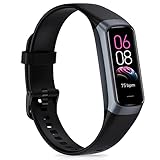
- 【All-day Health Monitor】The fitness tracker watch will automatically track your real-time heart rate, blood pressure and blood oxygen throughout the day to help you better understand your health. Equipped with a high-performance chipset, the fitness tracker automatically analyzes your overall sleep quality (deep/light/wake time) at night and gives you a nightly sleep score in the app to help you adjust your lifestyle and make you healthier.
- 【Smart Notification Remider】 With Bluetooth connection to your phone, it can support incoming calls/text alerts/APP message notifications (WhatsApp/Facebook/Instagram etc.), you will never miss your important messages. With the fitness watch, you can also perform sedentary reminder, water reminder, alarm clock, stopwatch, remote control photo, find devices, etc. to make your life healthier and smarter.
- 【25 Sports Modes】 Fitness tracker supports 25 professional sports modes, you can choose any number of sports modes as your exclusive sports modes in the app, such as walking, running, swimming, yoga, etc. and track your steps, heart rate, distance and calories to help you stay motivated, accomplish your sports goals, record your sports data, and make your sports more scientific.
- 【Long Battery Life】The fitness watch uses magnetic fast charging to provide a better battery life experience. It takes 1-2 hours to fully charge and can be used for up to 7 days of regular use and 15 days of standby. Compatible mobile phone system: android5.0 (inclusive) and IOS9.0 (inclusive) or above.
- 【1.1" AMOLED Touch Color Screen】AMOLED HD touch color screen is designed with clear and bright display, providing you with high quality touch and visual experience. This smartwatch includes a large number of original dials and supports custom dials.
This is not a wearable you admire; it is one you tolerate. For a longevity-focused tool meant to disappear into daily life, that trade-off is intentional.
Lifestyle friction: Subscription weight and cognitive load
Daily life with Whoop 5.0 is not physically demanding, but it is mentally present. The app delivers constant feedback on recovery, sleep debt, and strain balance, which can be motivating or quietly stressful.
For some users, recovery scores become guardrails that improve pacing and long-term adherence. For others, they become a background pressure that influences decisions more than intended.
Layered on top is the ongoing subscription cost, which turns daily wear into a long-term financial commitment. The device itself fades into the background, but the subscription never does.
Compatibility with modern routines
Whoop integrates reasonably well with training platforms, but it still operates as a closed-loop health system. Data export options remain limited, and integration with broader health records or clinician workflows is minimal.
In daily life, this reinforces Whoop’s role as a personal insight engine rather than a shared health tool. It works best for users who are comfortable interpreting trends independently rather than seeking validation from multiple platforms.
For Apple Watch or Garmin users accustomed to rich ecosystems and cross-app visibility, this isolation can feel restrictive. For focused users who value a single, consistent narrative, it can feel refreshingly contained.
The long-term wear test: What actually endures
Over weeks, Whoop 5.0 fades into routine. Over months, its friction points become clearer. Comfort remains excellent, data continuity is strong, but the absence of on-device interaction and the persistent subscription cost never fully disappear.
Living with Whoop 5.0 is less about daily excitement and more about quiet accumulation. It rewards patience, tolerance for abstraction, and a willingness to trust trends over moments.
For users aligned with that mindset, the daily experience becomes sustainable. For those seeking immediacy, versatility, or visible value each day, the friction may outweigh the benefits long before the data matures.
Subscription Economics: Is Whoop’s Ongoing Cost Justified in 2026?
That persistent financial layer becomes impossible to ignore over time. Whoop 5.0 is not purchased so much as entered into, and the longer you wear it, the more its value hinges on whether the subscription continues to earn its place in your routine.
In 2026, this question carries more weight than it did even two years ago. The wearable market has shifted toward longer hardware lifespans, deeper platform integrations, and increasingly capable health features that do not always sit behind a paywall.
What you actually pay for with Whoop 5.0
Whoop’s pricing structure remains fundamentally unchanged: the hardware is bundled into a recurring membership that typically lands in the range of a mid-tier streaming service multiplied several times over. There is no “lite” mode, no lifetime unlock, and no meaningful offline functionality if you cancel.
In practical terms, you are paying for continuous physiological interpretation rather than the sensor package itself. The value proposition is the strain-recovery-sleep triad, long-term trend analysis, and now a clearer tilt toward longevity markers rather than daily workout metrics.
Whoop 5.0 does add incremental value here, particularly in how it reframes cardiovascular load, sleep consistency, and recovery stability over months instead of days. But these gains are evolutionary, not transformational, and they sit atop a pricing model that demands patience and commitment.
Cost over time versus ownership-based wearables
Viewed over a three- or four-year horizon, Whoop becomes one of the more expensive wearables in regular use. The cumulative subscription cost often exceeds the price of an Apple Watch Ultra, a high-end Garmin, or multiple generations of Fitbit or Oura hardware.
Those alternatives typically combine upfront hardware cost with optional or lower-cost subscriptions, and they continue to function in a reduced capacity if payments stop. Whoop does not, which fundamentally changes the risk calculus for long-term users.
For users who value continuity above all else, Whoop’s model can still make sense. For anyone who upgrades hardware irregularly, takes breaks from tracking, or expects baseline functionality without ongoing fees, the economics become harder to defend.
Longevity data as a justification, not a guarantee
Whoop’s strongest argument in 2026 is its pivot toward longevity-oriented insights. HRV baselines, resting heart rate trends, sleep regularity, and recovery stability over years are areas where continuous data does matter, and Whoop remains unusually consistent in how it collects and presents that information.
However, longevity value is inherently deferred. You are paying today for insights that may only fully reveal their usefulness after months or years of disciplined wear, and that assumes the algorithms remain relevant, transparent, and scientifically grounded over time.
This places Whoop in a narrow sweet spot. Users deeply invested in long-term health optimization, who already understand HRV nuance and recovery context, are more likely to extract proportional value from the subscription. Casual users rarely will.
Software evolution versus subscription fatigue
One of the quieter tensions in Whoop’s model is the pace of software evolution relative to its cost. Updates arrive steadily, but rarely feel urgent or revelatory, and major features tend to refine existing frameworks rather than redefine them.
In contrast, competitors increasingly bundle new health capabilities into platform-wide updates that do not always raise subscription prices. Apple’s health ecosystem, Garmin’s training analytics, and even Oura’s expanding sleep and readiness features exert real pressure on Whoop’s perceived uniqueness.
Subscription fatigue is also real in 2026. For users already paying for cloud storage, fitness platforms, recovery apps, and health services, Whoop’s fee competes for attention as much as budget, and it must justify itself every month, not just at renewal.
Who the subscription makes sense for, and who it doesn’t
Whoop’s ongoing cost is easiest to justify for users who wear it continuously, trust its recovery framework, and actively adjust behavior based on its recommendations. For these users, the subscription becomes a form of coaching infrastructure rather than a device fee.
It makes far less sense for users who want occasional insight, visual feedback, or multipurpose utility. Without a screen, without timekeeping, and without independent functionality, Whoop offers no passive value when engagement drops.
The economic reality is simple but uncomfortable. Whoop 5.0 does not reward casual use, and it does not forgive disengagement. Its subscription model demands consistency, belief in its methodology, and a willingness to pay for interpretation rather than ownership.
Whoop 5.0 vs Oura, Garmin, Apple Watch, and Fitbit: Choosing Your Health Philosophy
At this point, the question is less about which device is “best” and more about which health worldview you are buying into. Whoop 5.0, Oura, Garmin, Apple Watch, and Fitbit all measure overlapping biometrics, but they interpret, prioritize, and surface that data in fundamentally different ways.
Whoop 5.0 sharpens this divide rather than blurring it. Its longevity framing, deeper recovery emphasis, and continued absence of a screen make it the most philosophically opinionated wearable in this group, for better and for worse.
Whoop 5.0 vs Oura Ring: Interpretation versus discretion
Whoop and Oura are often cross-shopped because both focus on recovery, HRV, sleep quality, and long-term trends rather than real-time performance metrics. The difference lies in how assertively they tell you what to do with that information.
Whoop 5.0 is directive. Its recovery score, strain targets, and behavioral nudges are designed to shape daily decisions, from training intensity to bedtime consistency. If you want your wearable to act like a coach that pushes back when you overreach, Whoop’s system remains more prescriptive.
Oura, by contrast, is observational. Its readiness and sleep scores provide context and correlations, but it leaves interpretation largely up to the user. For biohackers who prefer quiet data collection and minimal lifestyle friction, the ring form factor, multi-day battery life, and lower engagement demand often feel more sustainable long term.
From a hardware perspective, Whoop 5.0 is more versatile in placement, with bicep bands and clothing integrations improving signal stability during training. Oura remains unmatched for sleep comfort, but its finger-based measurements can struggle during strength work or temperature extremes.
Whoop 5.0 vs Garmin: Recovery science versus performance dominance
Garmin approaches health from the opposite direction. Its ecosystem is built around performance metrics first, with recovery and wellness layered on top to support training outcomes rather than govern lifestyle choices.
Garmin’s training load, VO2 max estimates, race predictions, and sport-specific profiles are leagues ahead for endurance athletes. Battery life on devices like the Fenix or Forerunner series can stretch into weeks, and the physical buttons, rugged materials, and sapphire options cater to demanding outdoor use.
Whoop 5.0, by comparison, strips away sport specificity to focus on physiological readiness. It does not care whether your strain came from cycling, CrossFit, or manual labor, only how your cardiovascular system responded. For users who train intuitively rather than to a plan, this abstraction can feel freeing.
The trade-off is agency. Garmin gives you raw tools and expects you to decide how hard to push. Whoop tells you when pushing is probably a bad idea. Athletes who value autonomy often gravitate to Garmin, while those prone to overtraining may find Whoop’s guardrails protective rather than limiting.
Whoop 5.0 vs Apple Watch: Depth versus versatility
Apple Watch remains the most capable general-purpose wearable on the market. It tells time, handles communication, runs third-party apps, supports ECG and blood oxygen measurements, and integrates deeply with the iOS ecosystem.
Where Apple Watch excels is breadth. Where Whoop 5.0 competes is depth. Apple’s Health app aggregates enormous amounts of data, but its interpretation remains fragmented across rings, trends, and third-party apps. Recovery insights exist, but they are not unified into a single daily readiness framework.
Battery life is a defining difference. Apple Watch still requires daily or near-daily charging, which fragments sleep tracking for many users. Whoop 5.0’s multi-day battery and on-wrist charging solution are optimized for uninterrupted data capture, reinforcing its 24/7 monitoring philosophy.
For users who want a smartwatch that also tracks health, Apple Watch is unmatched. For users who want health tracking to be the product, not a feature, Whoop’s singular focus remains compelling, albeit at the cost of versatility.
💰 Best Value
![SAMSUNG Galaxy FIT 3 [2024] 1.6' AMOLED Display | 14 Days Battery Life | 100+ Watchfaces | 100+ Exercise Modes | International Model - (Gray)](https://m.media-amazon.com/images/I/41nTjvUQRPL._SL160_.jpg)
- Vibrant 1.6” AMOLED Display – Large, high-res screen with smooth touch for easy navigation
- 5ATM & IP68 Water Resistance – Swim-ready and dust-resistant for active lifestyles
- Up to 14 Days Battery Life – Powerful 208mAh battery for long-lasting performance
- 101+ Workout Modes with Auto Detection – Automatically tracks common workouts for seamless fitness tracking. Advanced Health Tracking – Includes sleep coaching, SpO2, heart rate, and snore detection
- International Model No Warranty in the US. Compatible with Android and iOS devices. Samsung Pay - Not Supported.
Whoop 5.0 vs Fitbit: Coaching intensity versus accessibility
Fitbit occupies a more accessible middle ground. Its devices are affordable, visually intuitive, and increasingly polished in sleep tracking and daily readiness scoring, particularly under the Google-led software evolution.
Fitbit’s readiness metrics and stress tracking are easy to understand, but they lack the granularity and longitudinal depth that Whoop emphasizes. HRV trends, for example, are present but less central to daily decision-making, and advanced users may outgrow the platform’s surface-level insights.
Whoop 5.0 demands more attention and literacy from its user. Fitbit is more forgiving of sporadic wear and casual engagement. This makes Fitbit a better on-ramp to health tracking, while Whoop functions more like a long-term laboratory for users already fluent in their own physiology.
Subscription costs also differ in psychological impact. Fitbit Premium feels optional. Whoop’s subscription is inseparable from the experience, reinforcing its coaching identity but also magnifying frustration when insights feel incremental rather than transformative.
Choosing the philosophy that matches your behavior
The most important distinction is not hardware, sensors, or even accuracy margins. It is how each platform expects you to behave.
Whoop 5.0 assumes you are willing to listen, adapt, and sometimes restrain yourself. It rewards consistency, humility, and long-term thinking. It punishes sporadic engagement and ignores users who want passive insights without behavior change.
Oura assumes curiosity without obligation. Garmin assumes ambition with discipline. Apple Watch assumes you want everything in one device. Fitbit assumes you want clarity without complexity.
Whoop 5.0 does not replace these alternatives so much as challenge them. It asks whether you want ownership of data, or guidance shaped by a specific interpretation of human performance and longevity. The right answer depends less on your fitness level and more on how much authority you are willing to hand over to your wearable.
Who Should Upgrade (and Who Shouldn’t): New Users vs Existing Whoop Members
Seen through the lens of behavior and philosophy rather than specs alone, the decision around Whoop 5.0 becomes less about novelty and more about alignment. The hardware has evolved, but the underlying contract between user and platform remains demanding, opinionated, and subscription-bound. Whether that feels like progress or stagnation depends heavily on where you are coming from.
Existing Whoop Members: When the Upgrade Makes Sense
For long-term Whoop users, especially those who have worn 3.0 or 4.0 continuously for multiple years, Whoop 5.0 feels like a refinement rather than a reinvention. The smaller, lighter chassis improves 24/7 comfort, particularly for sleep and non-dominant wrist wear, and reduces the subtle friction that accumulates over months of constant use.
Battery life is meaningfully better in practice, not just on paper. With more efficient internals and improved power management, most users will experience fewer charging interruptions, which matters because missed wear time disproportionately degrades Whoop’s longitudinal insights.
If you already trust Whoop’s recovery, strain, and sleep frameworks and have calibrated your training and lifestyle around them, 5.0 reinforces that ecosystem. The improved sensor stack marginally tightens HRV stability and overnight heart rate consistency, which benefits trend reliability even if day-to-day scores look familiar.
The upgrade also makes sense for users leaning harder into longevity-oriented tracking. Whoop’s increasing emphasis on long-term baselines, physiological age modeling, and behavior-linked health trajectories rewards continuity, and 5.0 is clearly designed to be worn for years rather than seasons.
Existing Whoop Members: When the Upgrade Feels Optional
If you are a satisfied Whoop 4.0 user who already charges efficiently, wears consistently, and feels well-served by current insights, the upgrade may feel incremental. The core experience, including the absence of a screen, the app-driven coaching model, and the interpretive tone of insights, remains largely unchanged.
Users who expected Whoop 5.0 to introduce radically new metrics, on-device feedback, or a philosophical shift toward more user-controlled analytics may feel underwhelmed. The platform still prioritizes interpretation over raw data access, and still nudges behavior rather than asking open-ended questions.
For some long-time members, the subscription calculus also comes into focus here. If your engagement has plateaued and your scores feel predictable rather than instructive, new hardware alone is unlikely to rekindle motivation.
New Users: Whoop 5.0 as an Entry Point
For first-time users, Whoop 5.0 is the best version of Whoop to start with. The improved comfort, lighter materials, and longer battery life reduce early-stage friction, which is critical during the initial calibration period when the platform is most demanding of patience and consistency.
New users interested in long-term health optimization rather than step counts or workout trophies are particularly well served. Whoop’s emphasis on HRV trends, sleep debt, and recovery-driven training decisions offers a depth that many screen-based wearables only approximate through simplified readiness scores.
The lack of a display, often cited as a drawback, can actually benefit newcomers who want fewer distractions and less performative fitness tracking. Whoop works best when treated as a background system quietly collecting data rather than a device constantly asking for attention.
New Users: Who Should Think Twice
Whoop 5.0 is not a forgiving platform for casual users. If you anticipate inconsistent wear, irregular sleep schedules without interest in correcting them, or a preference for quick-glance metrics, the experience may feel punitive rather than enlightening.
Users sensitive to ongoing subscription costs should also pause. Unlike Fitbit Premium or optional analytics tiers elsewhere, Whoop’s value is inseparable from its monthly fee, and the hardware alone offers nothing without it.
Those who enjoy visual interaction, real-time workout stats, or smartwatch conveniences like notifications and GPS mapping will likely find Whoop too austere. Apple Watch, Garmin, or even Oura provide a more flexible balance between insight and utility for these profiles.
Whoop 5.0 vs Alternatives: Decision Inflection Points
Compared to Oura, Whoop demands more behavioral compliance but offers richer training context. Compared to Garmin, it sacrifices autonomy and sport specificity for recovery-centric guidance. Compared to Apple Watch, it trades versatility and immediacy for focus and longitudinal depth.
Whoop 5.0 is best understood not as an upgrade race but as a commitment test. It rewards users who are willing to be measured continuously, judged against their own history, and nudged toward restraint as often as intensity.
The Bottom Line for Upgraders and First-Time Buyers
Upgrade if you already live inside the Whoop ecosystem and want a more comfortable, durable, and future-proof version of the same philosophy. Join if you are serious about long-term health tracking and willing to accept structure, subscription, and delayed gratification.
Hold back if you want flexibility, visual feedback, or a wearable that adapts to you rather than asking you to adapt to it. Whoop 5.0 is not trying to win everyone, and for the right user, that remains both its greatest strength and its most persistent limitation.
Final Verdict: A Serious Longevity Tool With Persistent Trade-Offs
Stepping back from comparisons and feature lists, Whoop 5.0 ultimately clarifies what the platform has always been trying to be. It is less a fitness tracker and more a behavioral measurement system designed to reward patience, consistency, and long-term thinking about health.
This fifth-generation hardware doesn’t reinvent Whoop’s philosophy, but it does reinforce it with better comfort, improved durability, and a clearer pivot toward longevity as the core value proposition rather than athletic performance alone.
What Whoop 5.0 Gets Right for Long-Term Health
Where Whoop 5.0 genuinely advances the conversation is in longitudinal health signal quality. The combination of continuous wear, improved sensor stability, and refined baselines allows trends in HRV, resting heart rate, sleep regularity, and recovery capacity to become more meaningful over months rather than days.
For users focused on lifespan-adjacent goals like cardiovascular resilience, nervous system balance, and sustainable training load, this slow-burn data model is powerful. Few wearables are as effective at discouraging overreach and reinforcing restraint when physiology suggests it matters.
The lighter, slimmer hardware also plays a quiet but critical role here. By reducing wrist fatigue, skin irritation, and sleep discomfort, Whoop 5.0 increases the likelihood of near-24/7 wear, which is the single biggest determinant of data quality in any passive health platform.
What Remains Fundamentally Unchanged
Despite the longevity-forward messaging, Whoop 5.0 still operates within the same constraints as its predecessors. There is no screen, no real-time feedback, no onboard GPS, and no independent utility without the app.
Workout tracking remains retrospective and contextual rather than instructional. You do not use Whoop to guide a run, lift session, or interval set in the moment; you use it to understand whether that session aligned with your broader recovery and health trajectory afterward.
Accuracy has improved at the margins, not in kind. Optical heart rate performance is solid for steady-state efforts and sleep but remains imperfect during high-intensity or highly dynamic movements, much like Oura and wrist-based competitors.
The Subscription Question, Revisited
Whoop 5.0 does not soften the subscription debate; it sharpens it. Because the hardware is functionally inert without ongoing membership, the real purchase decision is about committing to a data relationship, not buying a device.
For users who engage deeply with weekly and monthly trends, the cost can feel justified as a health analytics service rather than a gadget. For anyone prone to data fatigue, inconsistent wear, or periods of disengagement, the subscription quickly becomes friction rather than value.
This is where alternatives like Garmin or Apple Watch diverge philosophically. They may offer less coherence in recovery guidance, but they remain useful even when you stop caring about optimization.
Whoop 5.0 in the Broader Wearable Landscape
Viewed alongside Oura, Whoop 5.0 is more demanding but also more prescriptive, particularly for active users balancing training stress with long-term health. Compared to Garmin, it trades performance specificity and autonomy for behavioral accountability.
Against Apple Watch, the contrast is stark. Whoop abandons versatility, polish, and immediacy in favor of depth, focus, and a singular health narrative that unfolds slowly over time.
None of these approaches are objectively superior; they simply serve different psychologies. Whoop 5.0 works best for users who want fewer choices and stronger guardrails.
The Final Call
Whoop 5.0 is a compelling longevity-oriented wearable for a very specific type of user. If you value longitudinal insight over instant feedback, behavior change over performance badges, and consistency over convenience, it remains one of the most coherent platforms available.
At the same time, its familiar drawbacks have not disappeared. The lack of a screen, the ongoing cost, and the lifestyle friction it imposes will continue to exclude many otherwise health-conscious users.
In the end, Whoop 5.0 doesn’t try to be everything, and that restraint is intentional. As a serious tool for understanding how daily choices compound into long-term health outcomes, it succeeds, but only if you are willing to meet it on its own terms.