By 2026, Whoop 4.0 sits in a strange position. It remains one of the most comfortable and data-rich wearables you can wear 24/7, yet it increasingly feels like a specialist tool that hasn’t fully kept pace with how fast the rest of the market has evolved. Longtime members are still extracting value from Strain, Recovery, and Sleep, but the gaps are becoming harder to ignore if you’re cross-shopping Garmin, Apple Watch, or even Oura.
This is especially true for users who have stayed loyal through multiple hardware cycles. Whoop’s subscription-first model promised continuous improvement without constant upgrades, but hardware limitations now cap what software can realistically deliver. The result is a platform that feels analytically mature, but physically constrained.
Understanding where Whoop 4.0 still falls short is essential context before talking about what Whoop 5.0 should be. These aren’t superficial complaints or feature envy; they’re structural limitations that directly affect accuracy, usability, and long-term value for serious athletes and health-focused users.
Sensor hardware is reaching its ceiling
Whoop 4.0’s optical heart rate sensor and temperature tracking were competitive at launch, but by 2026 they are no longer class-leading. Apple and Garmin now routinely combine multi-wavelength optical sensors with ECG-grade electrodes and improved motion compensation, while Whoop remains limited to PPG-only measurements. That matters for HRV stability, high-intensity accuracy, and future health metrics like blood pressure trends or arrhythmia detection.
🏆 #1 Best Overall
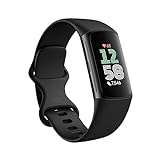
- Find your way seamlessly during runs or rides with turn-by-turn directions from Google Maps on Fitbit Charge 6[7, 8]; and when you need a snack break on the go, just tap to pay with Google Wallet[8, 9]
Skin temperature on Whoop 4.0 is useful directionally, but it lacks the contextual precision users now expect. Oura has pushed harder into temperature deviation insights tied to illness and hormonal cycles, while Whoop’s temperature data often feels underexplained and secondary. Without new sensor hardware, Whoop’s ability to expand its health scope is fundamentally capped.
No display is a strength, until it isn’t
The screenless design is still part of Whoop’s identity, and for sleep and recovery tracking it works. But in 2026, the lack of any onboard feedback increasingly feels like a trade-off rather than a philosophy. Even minimalist competitors now offer subtle displays or haptic cues that provide context without distraction.
For workouts, this becomes a real limitation. Athletes wanting live heart rate zones, pacing cues, or interval guidance must rely on a phone or secondary device. That undermines Whoop’s claim as a primary training companion and quietly pushes serious users back toward Garmin or Apple for day-to-day training execution.
Battery life is good, but not progressing
Whoop 4.0’s battery life remains solid at roughly four to five days, and the slide-on battery pack is still one of the most elegant charging solutions in wearables. Comfort, weight, and wearability are genuinely excellent, especially compared to bulky sports watches. However, battery performance hasn’t meaningfully improved in years.
Competitors are stretching into week-long or multi-week battery life while adding displays, GPS, and richer sensors. In that context, Whoop’s endurance no longer feels exceptional; it simply feels adequate. A next-generation device needs either longer runtime or new functionality that justifies the status quo.
Software insights are strong, but increasingly repetitive
Whoop’s coaching language, recovery scores, and strain targets are still among the best in the business for behavior change. The problem is stagnation. Long-term users often report seeing the same recommendations recycled, even as their training age and data history grow.
The absence of more adaptive intelligence is noticeable. There is limited progression in how Whoop responds to years of data, changing goals, or different athletic phases. Without more advanced personalization, predictive modeling, or deeper integrations with training plans, the software risks feeling static on top of a dynamic body.
Subscription value is harder to justify in a crowded market
Whoop’s subscription-only model made sense when the platform felt uniquely advanced. In 2026, the competitive landscape has shifted. Apple bundles increasingly sophisticated health features into a one-time hardware purchase, Garmin offers deep training analytics without ongoing fees, and Oura continues to expand its health insights with a lower monthly cost.
For new users, the value proposition still works if Whoop’s philosophy aligns with their priorities. For existing members, especially those paying for multiple years, the lack of tangible hardware evolution makes the subscription feel less future-proof. A Whoop 5.0 upgrade needs to clearly reset that equation.
Limited hardware flexibility and ecosystem growth
Whoop 4.0’s band system is comfortable and discreet, but it remains functionally narrow. There’s no true modularity, no expanded sensor accessories, and limited integration with external training tools beyond basic data syncing. In contrast, competitors are building broader ecosystems that adapt to different sports, recovery tools, and use cases.
This matters for athletes who train across disciplines or want deeper biomechanical and performance context. Without new hardware pathways, Whoop risks being boxed into a single use case: passive monitoring rather than active performance optimization.
All of these shortcomings point to the same conclusion. Whoop 4.0 isn’t failing; it’s aging. The core ideas still work, but the hardware and platform now need a reset to unlock the next phase of innovation, which is exactly why expectations around Whoop 5.0 are rising so quickly.
Wish List Item #1: A Next-Gen Sensor Stack (Improved HR Accuracy, SpO₂ Reliability, and True Skin Temperature Trends)
If Whoop 5.0 is going to reset the value equation discussed above, it starts with sensors. Software can only become more predictive if the raw physiological data underneath it becomes more precise, more stable, and more context-aware across different skin tones, body types, training intensities, and wearing positions.
Whoop has historically leaned hard into optics-first sensing, but the limitations of that approach are now clearer than ever when compared to Apple’s multi-wavelength arrays, Garmin’s sensor fusion strategy, and Oura’s increasing use of trend-based thermoregulation modeling. A true next-generation Whoop needs to move beyond incremental tuning and toward a fundamentally upgraded sensor stack.
Heart rate accuracy that holds up under load, not just at rest
Whoop 4.0 delivers solid resting heart rate and sleep HRV data, but accuracy still degrades during high-intensity intervals, rapid cadence changes, and strength training. This is not unique to Whoop, but it is more problematic for a platform that bases strain, recovery, and readiness almost entirely on heart-derived metrics.
A Whoop 5.0 sensor array should prioritize improved photodiode placement, additional LED wavelengths, and faster sampling during dynamic movement. Apple’s move toward multi-LED color mixing and Garmin’s Elevate Gen 5 sensor show that optical HR can be meaningfully improved without chest straps, but it requires hardware changes, not just firmware tweaks.
Equally important is motion compensation. Whoop’s strap-based form factor gives it an advantage in stability, yet the algorithms still struggle with grip-based exercises, kettlebells, and high-impact CrossFit-style workouts. Better inertial sensor fusion between accelerometer, gyroscope, and optical data would directly improve strain accuracy and make Whoop’s training insights feel more trustworthy for athletes who don’t just run and sleep.
SpO₂ that is reliable enough to matter outside sleep
Blood oxygen tracking on Whoop currently feels more like a checkbox feature than a fully integrated health signal. Nighttime averages are useful for altitude adaptation and illness detection, but the data lacks granularity and confidence compared to Apple Watch or even recent Garmin devices.
For Whoop 5.0, SpO₂ needs both hardware and software refinement. That means improved red and infrared LED calibration, better skin contact pressure sensing, and clearer differentiation between signal noise and genuine desaturation events. Without this, Whoop cannot credibly expand into respiratory health, altitude readiness, or illness forecasting in a way that justifies its subscription cost.
More importantly, SpO₂ should feed directly into recovery and strain recommendations. If oxygen saturation drops meaningfully after travel, illness, or heavy training blocks, Whoop should respond with adaptive guidance rather than simply logging the data. That kind of integration only works if the underlying sensor data is stable enough to trust day over day.
True skin temperature trends, not isolated deviations
Whoop’s skin temperature feature has potential, but it currently lives on the periphery of the experience. Single-night deviations are flagged, yet long-term thermoregulation trends are not meaningfully visualized or contextualized for training, hormonal cycles, or illness detection.
A next-gen sensor stack should include higher-resolution temperature sensors with better insulation from ambient conditions. Oura has shown that skin temperature is most valuable when treated as a rolling baseline, not a nightly metric, and Whoop needs to follow that model more aggressively.
This also opens the door to more advanced insights around overreaching, travel stress, and recovery debt. Subtle upward temperature drift over weeks can be just as informative as a single spike, but only if the sensor precision is consistent enough to avoid false positives caused by room temperature, bedding, or strap tightness.
Why sensor upgrades matter more for Whoop than its rivals
Apple and Garmin can afford sensor imperfections because their platforms are diversified. GPS, maps, workouts, and smartwatch features soften the impact of noisy health data. Whoop does not have that luxury.
When your entire product promise revolves around readiness, recovery, and long-term physiological insight, sensor quality becomes existential. Any ambiguity in heart rate, SpO₂, or temperature data ripples through strain scores, recovery percentages, sleep coaching, and ultimately the perceived intelligence of the platform.
Whoop 5.0 does not need to win spec-sheet comparisons outright, but it does need to deliver noticeably cleaner, more stable data than 4.0 across real-world conditions. Without that foundation, every future software ambition risks being undermined before it ever reaches the user.
Wish List Item #2: Meaningful Battery Life Gains Without a Bigger, Bulkier Strap
If sensor accuracy is the foundation of Whoop’s value, battery life is the quiet enabler that determines whether those sensors can operate consistently enough to matter. Longitudinal health data only works when wear is truly continuous, and every forced charging break introduces gaps that undermine trends, not just convenience.
Whoop has historically done better than most wrist-based wearables here, but the current reality is starting to feel dated. As competitors push into double-digit battery life without sacrificing comfort, Whoop 5.0 needs to make a clear leap forward rather than another marginal extension.
Why battery life matters more for Whoop than for smartwatches
Unlike Apple Watch or Garmin, Whoop does not offer an “off day” mode. There is no screen to turn off, no GPS session to consciously start or stop, and no meaningful low-power state that still delivers value.
Every hour the strap is off your wrist is an hour of missing heart rate variability, resting heart rate, skin temperature, and sleep data. Over weeks and months, those gaps compound into less reliable baselines, weaker readiness scoring, and reduced confidence in the coaching layer that sits on top.
This makes battery life a data integrity issue, not a spec-sheet flex. A Whoop that lasts meaningfully longer between charges is a Whoop that produces better insights by default.
The problem with simply making the strap bigger
Battery life gains cannot come at the expense of wearability. One of Whoop’s enduring strengths is how discreet it feels compared to a traditional watch, especially during sleep, strength training, or contact sports.
A thicker sensor puck, wider strap, or heavier housing would undermine that advantage. Comfort is not a luxury here; it directly affects compliance, and compliance determines data quality.
Whoop 4.0 already sits near the upper limit of what many users find acceptable on the wrist overnight. Whoop 5.0 needs to resist the temptation to solve battery limitations with physical bulk.
Rank #2

- Inspire 3 is the tracker that helps you find your energy, do what you love and feel your best. All you have to do is wear it.Operating temperature: 0° to 40°C
- Move more: Daily Readiness Score(1), Active Zone Minutes, all-day activity tracking and 24/7 heart rate, 20+ exercise modes, automatic exercise tracking and reminders to move
- Stress less: always-on wellness tracking, daily Stress Management Score, mindfulness sessions, relax breathing sessions, irregular heart rhythm notifications(2), SpO2(3), menstrual health tracking, resting heart rate and high/low heart rate notifications
- Sleep better: automatic sleep tracking, personalized Sleep Profile(1), daily detailed Sleep Score, smart wake vibrating alarm, sleep mode
- Comfortably connected day and night: calls, texts & smartphone app notifications(4), color touchscreen with customizable clock faces, super lightweight and water resistant to 50 meters, up to 10 day battery life(5)
Where real battery gains are most likely to come from
The most realistic path forward is not a larger battery, but a more efficient system. Newer low-power optical heart rate sensors, improved accelerometers, and next-generation temperature sensors can deliver higher fidelity data while drawing less energy per sample.
Equally important is silicon-level optimization. A more modern system-on-chip with better power gating and smarter sensor polling could extend battery life significantly without any external design changes.
Software matters too. Adaptive sampling that intelligently scales sensor frequency based on context, such as sleep versus high-movement periods, can reduce unnecessary power drain without compromising insight quality.
Rethinking the charging experience without breaking the ecosystem
Whoop’s slide-on battery pack remains one of its most user-friendly ideas, allowing uninterrupted wear during charging. That concept should stay, but its execution could improve.
A higher-capacity battery module paired with faster, more efficient charging would reduce how often users need to think about power at all. Even a modest jump from the current real-world experience to something approaching 7 to 10 days of effective uptime would be transformative.
There is also room for smarter charging feedback. Predictive alerts based on actual usage patterns, rather than static percentages, would help users avoid surprise drop-offs during sleep or travel.
What competitors are quietly raising the bar on
Oura’s multi-day battery life in a much smaller form factor has shifted expectations, particularly among users who prioritize sleep and recovery data. Garmin, while bulkier, regularly delivers two weeks or more by leaning heavily on power-efficient hardware and conservative sampling outside of workouts.
Even Apple is inching toward better endurance through silicon improvements, despite the energy demands of a full smartwatch. Against that backdrop, Whoop cannot afford to feel stagnant.
Whoop 5.0 does not need to win outright on battery life, but it does need to feel like it belongs in the same generation as its rivals, not the previous one.
What a meaningful upgrade actually looks like
A realistic, impactful target for Whoop 5.0 would be a true 30 to 50 percent improvement in real-world battery life without any noticeable increase in size or weight. That means fewer charging interruptions per week and, more importantly, fewer gaps in physiological baselines.
If Whoop can pair that endurance boost with the sensor stability discussed earlier, the platform’s core promise becomes much stronger. Better data, captured more consistently, over longer stretches of time.
Battery life is not the most glamorous upgrade on a spec sheet, but for Whoop’s model of continuous, subscription-driven health insight, it may be the most important one after sensor accuracy itself.
Wish List Item #3: On-Device Intelligence and Faster Insights (Less Cloud Lag, Smarter Recovery Scoring)
Longer battery life and better sensors only matter if the insights built on top of them arrive when they are still useful. Right now, Whoop’s biggest friction point is not data collection, but how long it can take for that data to turn into actionable guidance.
This is where Whoop 5.0 needs to make a generational leap. Less dependence on the cloud, more intelligence on the device itself, and recovery insights that adapt in near real time rather than hours later.
The current bottleneck: cloud-first processing
Today’s Whoop experience is heavily cloud-reliant. Sleep, recovery, and strain calculations often require a full sync cycle, meaning insights can lag behind real-world behavior by hours.
For users waking up early to train, travel, or make decisions before a commute, that delay matters. A recovery score that updates at 9 a.m. instead of 6 a.m. is already late.
This architecture made sense when on-device processing power was limited and battery efficiency was the overriding concern. But that tradeoff is starting to feel dated compared to what rivals are shipping now.
What on-device intelligence would actually change
Whoop 5.0 does not need to run everything locally, but it should handle first-pass analysis on the band itself. Core metrics like overnight HRV trends, resting heart rate deviations, and sleep-stage confidence can be computed on-device and refined in the cloud later.
That would allow Whoop to deliver a preliminary recovery score almost immediately upon waking. Even if it adjusts slightly later, the user would already have direction when it matters most.
Apple Watch already performs much of its sleep staging and heart-rate anomaly detection on-device, while Garmin increasingly uses edge processing for training readiness and body battery calculations. Whoop cannot remain an exception if it wants to feel modern.
Smarter recovery scoring, not just faster scoring
Speed alone is not enough if the recovery model itself remains rigid. Whoop’s recovery algorithm still leans heavily on fixed overnight windows and rolling baselines that can struggle with atypical schedules.
On-device intelligence opens the door to more adaptive scoring. Late-night travel, split sleep, naps, or sudden stress spikes could be factored in dynamically rather than waiting for a full day reset.
This is particularly important for athletes with irregular routines, shift workers, or users stacking high strain across multiple sessions. Recovery should feel responsive to what actually happened, not what the model expected to happen.
Context-aware insights instead of static recommendations
With more processing happening locally, Whoop 5.0 could deliver context-aware prompts in real time. That might mean flagging unusually high cardiovascular strain during a warm-up, or suggesting an earlier bedtime based on cumulative stress before the day ends.
Importantly, this does not require a screen. Subtle haptic alerts, app notifications triggered by on-device thresholds, or post-workout summaries that appear instantly would all improve daily usability.
Garmin has leaned into this with real-time stamina and training readiness adjustments, while Oura has improved its nap detection and mid-day readiness recalculations. Whoop’s insights still feel too locked to the overnight cycle.
Privacy, reliability, and offline resilience
More on-device processing also solves quieter but important issues around reliability. Sync failures, server delays, or limited connectivity should not prevent a user from seeing basic recovery guidance.
There is also a growing privacy argument here. Processing sensitive physiological data locally before uploading summarized results gives users more confidence in how their data is handled, even within a subscription model.
Whoop does not need to market this aggressively, but it would align with broader industry shifts toward edge computing and user trust.
What this likely requires in hardware terms
Delivering meaningful on-device intelligence implies a more capable system-on-chip and more efficient memory management. That does not necessarily mean a larger device, but it does mean smarter silicon choices.
Apple’s advantage comes from vertical integration, while Garmin relies on ultra-efficient low-power processors tuned for fitness workloads. Whoop 5.0 will likely need a custom-tuned chip focused on continuous sensor fusion and lightweight machine learning tasks.
If done right, this could actually improve battery efficiency by reducing constant data transmission, reinforcing the gains discussed in the previous section.
Why this upgrade matters more than new metrics
Whoop does not suffer from a lack of data points. It already tracks more than most users can meaningfully interpret.
What it lacks is immediacy and adaptability. On-device intelligence is the difference between feeling like a passive tracker and an active training partner.
Rank #3

- 【BUILT-IN GPS SMART WATCH – GO FURTHER, FREER, SMARTER】No phone? No problem. This fitness watch for women, featuring the latest 2025 technology, includes an advanced professional-grade GPS chip that precisely tracks every route, distance, pace (real-time & average), and calorie burned—completely phone-free. Whether you're chasing new personal records or exploring off the beaten path, your full journey is automatically mapped and synced in the app. Train smarter. Move with purpose. Own your progress. Own your journey.
- 【BLUETOOTH 5.3 CALLS & SMART NOTIFICATIONS】Stay effortlessly connected with this smart watch for men and women, featuring dual Bluetooth modes (BT 3.0 + BLE 5.3) and a premium microphone for crystal-clear calls right from your wrist—perfect for driving, workouts, or busy days. Receive instant alerts for calls, texts, and popular social apps like WhatsApp and Facebook. Just raise your wrist to view notifications and never miss an important moment.
- 【100+ SPORT MODES & IP68 WATERPROOF & DUSTPROOF】This sport watch is a versatile activity and fitness tracker with 100+ modes including running, cycling, yoga, and more. It features quick-access buttons and automatic running/cycling detection to start workouts instantly. Accurately track heart rate, calories, distance, pace, and more. Set daily goals on your fitness tracker watch and stay motivated with achievement badges. With IP68 waterproof and dustproof rating, it resists rain and sweat for any challenge. Not suitable for showering, swimming, or sauna.
- 【24/7 HEALTH ASSISTANT & SMART REMINDERS】This health watch continuously monitors heart rate, blood oxygen, and stress levels for comprehensive wellness tracking. Sleep monitoring includes deep, light, REM sleep, and naps to give you a full picture of your rest. Stay on track with smart reminders for sedentary breaks, hydration, medication, and hand washing. Women can also monitor menstrual health. Includes guided breathing exercises to help you relax. Your ultimate health watch with event reminders for a healthier life.
- 【ULTRA HD DISPLAY, LIGHTWEIGHT & CUSTOMIZABLE DIALS】This stylish wrist watch features a 1.27-inch (32mm) 360×360 ultra HD color display with a 1.69-inch (43mm) dial, offering vivid details and responsive touch. Its minimalist design fits both business and casual looks. Switch freely among built-in designer dials or create your own DIY watch face using photos, colors, and styles to showcase your unique personality. Perfect as a cool digital watch and fashion wrist watch.
If Whoop 5.0 can deliver faster, smarter recovery insights without increasing cognitive load or subscription complexity, it would fundamentally improve how the platform fits into daily decision-making.
Wish List Item #4: Expanded Health Metrics That Actually Matter (Blood Pressure Trends, Advanced Sleep Staging, and Stress Load)
If Whoop 5.0 delivers more capable on-device intelligence, the natural next step is using that horsepower to surface health metrics that go beyond novelty and actually influence behavior. This is where Whoop can separate itself from metric overload and focus on longitudinal signals that explain why recovery, strain, and readiness move the way they do.
The opportunity is not to add more charts, but to add context. Blood pressure trends, richer sleep staging, and a clearer picture of cumulative stress would directly connect physiology to training decisions in a way Whoop has only partially achieved so far.
Blood pressure trends, not medical claims
Blood pressure is one of the most requested metrics across wearables, but it is also one of the most misunderstood. Wrist-based devices are unlikely to deliver clinically accurate spot readings without a cuff, and Whoop should not chase that promise.
What Whoop could do, however, is trend-level blood pressure estimation using pulse wave analysis, overnight heart rate variability patterns, and changes in vascular stiffness. Apple and Huawei are already moving in this direction with calibration-assisted models, and Garmin is experimenting with related vascular load indicators.
For athletes and biohackers, trends matter more than absolutes. Seeing baseline shifts over weeks tied to alcohol intake, sleep debt, dehydration, or high training blocks would be immediately actionable, even if Whoop clearly positions this as wellness insight rather than a diagnostic tool.
This is also where Whoop’s form factor helps. Continuous, distraction-free wear increases overnight data quality, and a low-profile band worn during sleep is better positioned to detect subtle cardiovascular changes than a bulky smartwatch that gets taken off at night.
Advanced sleep staging that explains recovery, not just scores it
Whoop already does a solid job with sleep duration and consistency, but its staging still feels opaque compared to Oura’s increasingly nuanced breakdowns. Deep sleep, REM, and disturbances are shown, yet the link between those stages and next-day readiness often feels implied rather than explained.
Whoop 5.0 should push toward sleep architecture analysis rather than simple staging. That means tracking how sleep cycles evolve across the night, identifying fragmentation patterns, and showing how late-night disturbances or early awakenings impact autonomic recovery.
More importantly, sleep insights should adapt to the individual. An endurance athlete in a heavy aerobic block and a strength athlete in a hypertrophy phase do not need the same sleep composition to recover well, and Whoop’s coaching logic should reflect that.
With better on-device processing, Whoop could also recalculate sleep quality dynamically after naps or segmented sleep. This would close one of the biggest gaps versus Oura, which has made mid-day readiness updates feel far more responsive to real life.
Stress load as a cumulative signal, not a momentary alert
Whoop tracks stress in pieces today through strain, HRV, and recovery, but it lacks a unified view of cumulative physiological stress. Garmin’s Body Battery and Training Load concepts, while imperfect, resonate because they translate stress into a single, rolling capacity model.
Whoop 5.0 should introduce a true stress load metric that combines physical strain, sleep debt, autonomic stress, and lifestyle inputs like travel or illness. The key is not another daily score, but a rolling load curve that shows when the body is absorbing stress versus simply surviving it.
This would also allow Whoop to contextualize non-training stress more clearly. High cognitive load, poor sleep, or frequent alcohol intake could visibly compress stress capacity, even if workout strain remains low.
For users who wear Whoop primarily for health rather than performance, this kind of stress accounting may matter more than VO2 max estimates or marginal gains in strain accuracy.
Why these metrics only work with better intelligence
Expanded health metrics are only useful if they adapt in near real time and reflect individual baselines. Static dashboards updated once per night will not cut it, especially when competitors are moving toward dynamic recalculations throughout the day.
This ties directly back to on-device processing. Blood pressure trends, advanced sleep modeling, and stress load all benefit from continuous sensor fusion that does not rely entirely on cloud-side batch analysis.
It also improves reliability. If connectivity drops or sync is delayed, users should still see meaningful trend insights rather than empty graphs or outdated recovery scores.
Hardware and sensor implications
Delivering these metrics likely requires incremental sensor upgrades rather than radical new hardware. Improvements in optical sensor fidelity, sampling stability, and skin contact consistency would go a long way, especially during sleep.
A more capable processor would enable higher-frequency analysis without destroying battery life, particularly if raw data transmission is reduced. Whoop’s minimalist display-free design remains an advantage here, allowing resources to be spent on sensing and computation rather than UI.
Comfort also matters. If Whoop introduces tighter sensor tolerances for vascular metrics, strap materials and fit consistency become even more critical, reinforcing the need for breathable, stable fabrics that users actually keep on overnight.
Why this matters more than adding new headline features
Whoop does not need glucose tracking, skin temperature experiments, or speculative wellness scores to stay relevant. What it needs is depth in the metrics users already trust.
Blood pressure trends, meaningful sleep architecture, and cumulative stress load would directly explain readiness fluctuations instead of forcing users to guess. That clarity is what turns long-term subscribers into advocates.
If Whoop 5.0 gets this right, it would feel less like a passive data collector and more like a physiological narrative that evolves with the user, day by day, block by block.
Wish List Item #5: A More Flexible Hardware Ecosystem (Display Options, Modular Form Factors, and Smarter Accessories)
If Whoop is serious about becoming a long-term physiological platform rather than a single-purpose strap, the next frontier is not another sensor metric but hardware flexibility. Deeper on-device intelligence, as discussed earlier, naturally raises questions about how, where, and in what form that data is surfaced.
The current Whoop experience assumes a single, wrist-bound, display-free identity. That purity has strengths, but it is also becoming a constraint as users demand more context, more convenience, and more choice in how the device fits into daily life.
A minimal display option without becoming a smartwatch
A common misconception is that adding a display would turn Whoop into an Apple Watch competitor. It does not have to. A low-power, glanceable display—think e-ink or memory LCD rather than OLED—could show recovery status, battery level, and live strain accumulation without introducing notifications or app clutter.
From a power perspective, this is increasingly viable. Garmin and Polar have shown that ultra-low refresh displays can coexist with multi-day battery life, especially when interaction is limited and touch is optional.
The key is intent. Whoop should not show messages, calendars, or maps. It should surface physiological state in the moments users actually need it, such as pre-training or mid-session, without pulling out a phone.
Modular form factors beyond the wrist
Whoop has already experimented with non-wrist placements through garments and accessories, but these feel more like side projects than a core ecosystem. A more deliberate modular approach could make Whoop uniquely adaptable across sports and lifestyles.
A detachable sensor core that slots into different housings—wrist strap, bicep band, compression garment, or even a clip for non-exercise wear—would solve multiple pain points. It would improve data consistency during strength training, reduce wrist fatigue for all-day wear, and expand Whoop’s relevance beyond endurance-focused users.
From a hardware perspective, this would demand precise sensor alignment, consistent pressure, and robust waterproofing across modules. The upside is significant: better signal quality and fewer compromises between comfort, accuracy, and aesthetics.
Smarter accessories that actually add value
Whoop accessories today are largely passive: straps, bands, and apparel designed for comfort and style. Whoop 5.0 could redefine accessories as functional extensions of the system.
Imagine a strap with integrated temperature stabilization for cold sleepers, or a bicep band optimized for optical accuracy during high-movement lifting sessions. Even a charging band that meaningfully increases battery life without bulk would be a practical upgrade for heavy users.
Rank #4

- 24H Accurate Heart Rate Monitoring: Go beyond basic tracking. Our watch automatically monitors your heart rate, blood oxygen (SpO2), and sleep patterns throughout the day and night. Gain deep insights into your body's trends and make informed decisions for a healthier lifestyle.
- Practical Sports Modes & Smart Activity Tracking: From running and swimming to yoga and hiking, track a wide range of activities with precision. It automatically records your steps, distance, calories burned, and duration, helping you analyze your performance and crush your fitness goals.
- 1-Week Battery Life & All-Day Wear: Say goodbye to daily charging. With an incredible up to 7-10 days of battery life on a single charge, you can wear it day and night for uninterrupted sleep tracking and worry-free travel. Stay connected to your data without the hassle.
- Comfortable to Wear & IP68 Waterproof: The lightweight, skin-friendly band is crafted for all-day comfort, even while you sleep. With IP68 waterproof, it withstands rain, sweat, It is not suitable for swimming or showering.
- Ease of Use and Personalized Insights via Powerful App: The display is bright and easy to read, even outdoors. Unlock the full potential of your watch. Sync with our dedicated app to view detailed health reports, customize watch faces, set sedentary reminders, and manage your preferences with ease.
These accessories should not feel like gimmicks. Each one should exist to solve a specific data quality or usability problem, and Whoop should be explicit about what improves and why.
Materials, comfort, and long-term wearability
As Whoop pushes toward tighter sensor tolerances and more continuous analysis, comfort becomes a performance factor, not a lifestyle bonus. Strap materials need to manage sweat, skin compression, and overnight stability without causing irritation or drift.
Expectations are higher now. Users are accustomed to premium textiles, thoughtful finishing, and modular adjustability from both sports wearables and traditional watch brands. A next-generation strap system should feel closer to well-engineered sports equipment than a generic fabric band.
Dimensions matter too. Even small reductions in thickness or weight distribution can dramatically improve 24/7 wear compliance, especially for sleep-focused users.
Why flexibility matters for Whoop’s future
The deeper Whoop goes into real-time physiological modeling, the less sense it makes to lock that intelligence into a single, inflexible form. Different users, sports, and contexts demand different hardware expressions.
A flexible ecosystem would also future-proof the platform. New sensors, processors, or battery technologies could be introduced as modular upgrades rather than forcing full device replacements, aligning better with Whoop’s subscription-driven model.
Most importantly, this approach respects how people actually live and train. If Whoop 5.0 can adapt to the user instead of asking the user to adapt to the strap, it would quietly become one of the most mature and sustainable wearable platforms on the market.
The Subscription Question: How Whoop 5.0 Could Reshape Pricing, Features, and Member Value
If Whoop’s hardware ambitions are expanding toward modularity and deeper physiological modeling, the subscription model can’t stay static. Pricing, feature access, and perceived value will need to evolve in parallel, especially as competitors continue to blur the line between device ownership and service access.
Whoop has always positioned itself as a membership, not a gadget. Whoop 5.0 is an opportunity to reinforce that philosophy while fixing the friction points that long-time members increasingly vocalize.
Why the current model is starting to creak
Right now, Whoop’s flat subscription approach treats all users as if they extract the same value. A strength coach training twice daily, a biohacker obsessing over HRV trends, and a recreational runner checking recovery scores all pay essentially the same price for very different levels of engagement.
As Whoop’s algorithms become more sophisticated and compute-intensive, that one-size-fits-all pricing starts to feel misaligned. Advanced users are effectively subsidizing casual ones, while newcomers sometimes struggle to justify the cost relative to an Apple Watch or Garmin with no mandatory subscription.
Whoop 5.0 is likely to introduce features that widen this gap further, not narrow it.
Tiered subscriptions feel inevitable
A multi-tier membership structure would align far better with where Whoop is heading. A base tier could preserve core metrics like sleep, recovery, strain, and coaching insights, maintaining accessibility for users who want passive, always-on health tracking.
A higher tier could unlock advanced physiological modeling. This is where things like multi-day training load forecasting, deeper metabolic analysis, adaptive recovery targets, and sport-specific performance insights would logically live.
Crucially, this tier would justify its cost through depth, not exclusivity. The data would still be collected on-device, but the interpretive layer becomes the premium.
Hardware-inclusive pricing could change upgrade psychology
One of Whoop’s most distinctive advantages is its ability to decouple hardware upgrades from traditional retail cycles. Whoop 5.0 could push this further by explicitly bundling hardware refreshes into longer-term plans.
Imagine a 24-month membership that includes Whoop 5.0 at launch, plus one mid-cycle hardware upgrade or modular sensor add-on. That reframes the purchase decision from “Is this device worth it?” to “Is this platform worth committing to?”
This would also soften the impact of more frequent hardware iteration. Smaller, incremental improvements in sensor arrays, battery density, or processing power become less controversial when members don’t feel like they’re re-buying the same device every two years.
Feature gating needs to feel principled, not punitive
The biggest risk with tiered subscriptions is feature fragmentation. If core health insights feel artificially locked behind higher paywalls, trust erodes quickly.
Whoop has generally avoided this by gating depth rather than basics. Whoop 5.0 should continue that philosophy. Raw metrics, daily scores, and historical trends should remain universal, while advanced interpretation, predictive modeling, and customization tools become optional upgrades.
This mirrors how serious athletes already think. Everyone wants the data. Not everyone needs a system that actively rewrites their training plan based on subtle autonomic trends.
How Whoop could differentiate from Apple, Garmin, and Oura
Apple and Garmin increasingly bundle advanced health features into hardware margins. Oura leans heavily on subscription but limits hardware form factor and athletic depth.
Whoop sits uniquely in the middle. It can justify subscription pricing by offering insights that competitors simply cannot replicate without compromising battery life, comfort, or form factor.
If Whoop 5.0 delivers better optical accuracy during high-motion training, longer battery life through efficiency rather than size, and materially smarter coaching, the subscription becomes easier to defend. The value proposition shifts from features to outcomes.
Global pricing pressure and regional flexibility
As Whoop expands internationally, static pricing becomes another liability. Exchange rates, local competition, and purchasing power vary widely, and users notice.
Whoop 5.0 could quietly introduce regional pricing adjustments or student and team-based memberships. These don’t need to be heavily marketed to be effective, but they matter enormously for adoption outside North America.
For team sports, federations, and universities, volume-based pricing tied to analytics dashboards could become a meaningful growth lever.
Release timing and subscription changes are likely linked
Historically, Whoop has aligned major hardware launches with meaningful software and pricing shifts. Whoop 4.0 reset expectations around form factor and battery life. Whoop 5.0 is more likely to reset expectations around value structure.
Based on Whoop’s past cadence, a late 2026 launch window feels realistic, with subscription changes announced either at launch or shortly beforehand. Rolling out pricing changes without new hardware would invite backlash. Doing both together reframes the conversation around progress.
For existing members, expect upgrade incentives rather than forced migrations. Loyalty credits, extended memberships, or hardware-inclusive renewals would soften the transition and reinforce the idea that long-term commitment is rewarded.
If Whoop gets this right, the subscription stops being the most controversial part of the platform. It becomes the mechanism that makes rapid innovation, modular hardware, and genuinely personalized health insights financially sustainable.
Whoop vs Garmin, Oura, and Apple Watch in 2026: What Whoop 5.0 Must Do to Stay Competitive
By late 2026, Whoop will no longer be competing against single-purpose fitness trackers. It will be measured against fully mature ecosystems where hardware, software, and services are tightly integrated and increasingly differentiated by outcomes rather than raw features.
Garmin, Oura, and Apple are all converging on the same core promise: better health decisions with less friction. Whoop 5.0 has to sharpen its edge where those platforms still compromise, while closing gaps that have become harder to ignore.
Against Garmin: match physiological depth without chasing screens
Garmin’s advantage in 2026 is not just hardware breadth, but trust in its physiological metrics. Training Readiness, HRV Status, acute load, and recovery time are now deeply embedded in endurance and team sport culture.
💰 Best Value

- 【Superb Visual Experience & Effortless Operation】Diving into the latest 1.58'' ultra high resolution display technology, every interaction on the fitness watch is a visual delight with vibrant colors and crisp clarity. Its always on display clock makes the time conveniently visible. Experience convenience like never before with the intuitive full touch controls and the side button, switch between apps, and customize settings with seamless precision.
- 【Comprehensive 24/7 Health Monitoring】The fitness watches for women and men packs 24/7 heart rate, 24/7 blood pressure and blood oxygen monitors. You could check those real-time health metrics anytime, anywhere on your wrist and view the data record in the App. The heart rate monitor watch also tracks different sleep stages for light and deep sleep,and the time when you wake up, helps you to get a better understanding of your sleep quality.
- 【120+ exercise modes & All-Day Activity Tracking】There are more than 120 exercise modes available in the activity trackers and smartwatches, covering almost all daily sports activities you can imagine, gives you new ways to train and advanced metrics for more information about your workout performance. The all-day activity tracking feature monitors your steps, distance, and calories burned all the day, so you can see how much progress you've made towards your fitness goals.
- 【Messages & Incoming Calls Notification】With this smart watch fitness trackers for iPhone and android phones, you can receive notifications for incoming calls and read messages directly from your wrist without taking out your phone. Never miss a beat, stay in touch with loved ones, and stay informed of important updates wherever you are.
- 【Essential Assistant for Daily Life】The fitness watches for women and men provide you with more features including drinking water and sedentary reminder, women's menstrual period reminder, breath training, real-time weather display, remote camera shooting, music control,timer, stopwatch, finding phone, alarm clock, making it a considerate life assistant. With the GPS connectivity, you could get a map of your workout route in the app for outdoor activity by connecting to your phone GPS.
Whoop doesn’t need maps, AMOLED displays, or multisport profiles to compete here. What it does need is optical accuracy during high-motion activity that rivals chest-strap-level confidence, particularly for interval training, CrossFit, and field sports where wrist-based sensors traditionally struggle.
If Whoop 5.0 improves LED layout, sampling rates, and motion compensation, its Strain metric can reclaim credibility as a load proxy rather than a black box. Without that, advanced athletes will continue pairing Whoop with Garmin instead of choosing between them.
Battery life is another pressure point. Garmin’s solar-assisted models routinely exceed two weeks with GPS. Whoop still wins on wearability and passive tracking, but efficiency gains in 5.0 need to extend real-world runtime without increasing thickness or weight.
Against Oura: move beyond sleep leadership into daily decision-making
Oura has quietly become the default sleep and readiness ring for users who want insights without lifestyle disruption. Its Gen 3 and likely Gen 4 hardware emphasize comfort, temperature trends, and illness detection with minimal user input.
Whoop’s sleep staging and recovery metrics remain excellent, but Oura’s edge is clarity. Readiness scores are easier to interpret, and temperature deviations are increasingly actionable for cycle tracking and early illness signals.
Whoop 5.0 must respond by turning recovery into guidance, not just assessment. That means clearer cause-and-effect explanations, better longitudinal trend visualization, and proactive prompts that explain why today’s recovery is low and what realistically improves tomorrow’s.
Form factor still favors Whoop for 24/7 athletes who can’t or won’t wear a ring during training. But comfort refinements matter. Slight reductions in thickness, improved strap materials, and better breathability will be essential as Oura continues to win over users who prioritize invisibility.
Against Apple Watch: stay focused where Apple still compromises
Apple Watch in 2026 will be unmatched for smart features, app ecosystems, and consumer health integrations. ECG, AFib history, sleep apnea detection, and on-device coaching will continue to expand, backed by Apple’s silicon advantage.
Whoop cannot and should not try to compete here. Daily charging, heavier cases, and screen-first design remain dealbreakers for athletes who value uninterrupted data and minimal distraction.
Where Whoop 5.0 must hold the line is passive continuity. True 24/7 data capture without charging anxiety remains its strongest differentiator, especially for users tracking long-term recovery trends rather than daily notifications.
That advantage only holds if software keeps pace. Apple’s fitness insights are becoming more contextual and less manual. Whoop’s coaching engine needs to feel equally intelligent, with fewer sliders and more synthesized recommendations grounded in the user’s actual constraints.
The subscription question becomes unavoidable in this comparison
Garmin charges upfront and delivers years of updates. Apple monetizes through hardware margins and services bundling. Oura’s subscription is cheaper and easier to justify for sleep-first users.
Whoop’s subscription remains the most scrutinized in the category, and by 2026 it must clearly fund differentiation. Whoop 5.0 needs to make it obvious that members are paying for continuously improving algorithms, not just access to yesterday’s metrics.
If new features arrive locked behind higher tiers without visible gains in accuracy or usefulness, competitive pressure will intensify. If, however, members see tangible improvements in recovery prediction, injury risk flagging, and behavioral guidance, the model becomes defensible again.
What staying competitive actually means for Whoop 5.0
Whoop does not need to win spec sheets. It needs to win trust in its numbers, comfort in daily wear, and relevance in decision-making.
In 2026, athletes will tolerate fewer compromises. Whoop 5.0 must prove that a screenless wearable can still feel smarter than devices with infinitely more hardware, and that a subscription can feel like an investment rather than a toll.
The margin for error is narrower than it was for Whoop 4.0. But if execution matches ambition, Whoop can remain the platform for people who care less about tracking everything and more about knowing what actually matters.
Whoop 5.0 Release Date Predictions: Timeline Analysis Based on Past Launch Cycles and Industry Signals
If Whoop 5.0 is meant to defend the platform’s relevance rather than simply refresh it, timing becomes as strategic as features. The company has historically moved slower than smartwatch rivals, but that cadence has been intentional, prioritizing sensor validation and longitudinal data continuity over annual hardware churn.
To estimate when Whoop 5.0 is likely to arrive, it helps to look beyond rumors and focus on three concrete signals: past launch intervals, current software trajectory, and broader industry pressure.
What Whoop’s historical launch cadence actually tells us
Whoop 2.0 arrived in 2016, followed by Whoop 3.0 in 2019, and Whoop 4.0 in September 2021. That puts the company on a roughly two-to-three-year hardware refresh cycle, slower than Apple or Garmin but consistent for a subscription-first platform.
Importantly, Whoop 4.0 launched alongside a major sensor redesign, improved battery pack system, and slimmer enclosure, which reset the clock. That kind of foundational hardware change typically buys more time, especially when paired with ongoing algorithm updates.
By that pattern alone, a 2024 launch would have been aggressive, while 2025 would have required unusually early leaks or regulatory filings. Neither materialized.
Why software momentum suggests a later hardware release
Since late 2023, Whoop has focused heavily on software-layer expansion rather than hardware teasers. Strength Trainer, stress monitoring refinements, healthspan metrics, and coaching logic updates all point to a platform being extended, not replaced.
This mirrors Whoop’s historical behavior before 4.0, where meaningful algorithm work continued right up until hardware changes were unavoidable. When Whoop shifts attention toward sensors, battery architecture, or form factor, it tends to go quiet on feature launches, which has not happened yet.
In other words, the software roadmap still feels like it is extracting value from existing hardware rather than bumping into hard limits.
Industry pressure that could force Whoop’s hand
External competition matters more in 2026 than it did in 2021. Apple’s recovery and training load modeling is improving rapidly, Garmin continues to refine HRV-based readiness without subscriptions, and Oura is narrowing the gap in coaching clarity while undercutting Whoop on price.
If Whoop waits too long, especially into late 2027, the risk is not that competitors out-spec it, but that they normalize similar insights with less friction. That creates pressure for Whoop 5.0 to land while its differentiation still feels meaningful rather than defensive.
This competitive squeeze argues against an overly long delay.
Supply chain and regulatory signals worth watching
Historically, Whoop hardware launches are preceded by FCC filings, manufacturing partner leaks, or subtle accessory changes. As of now, none of those indicators have surfaced publicly.
Accessory continuity also matters. Whoop 4.0 straps, clasp tooling, and battery packs represent a mature ecosystem, and Whoop typically exhausts accessory cycles before major redesigns to avoid stranding inventory.
The absence of clearance sales, compatibility warnings, or member migration language strongly suggests that 4.0 is not in its final months.
Realistic release window: educated prediction, not guesswork
Taken together, the most plausible window for Whoop 5.0 is late 2026, with September to November being the strongest candidates. This aligns with a five-year lifecycle for 4.0, preserves continuity for long-term data users, and allows Whoop to integrate next-generation optical sensors without rushing validation.
An earlier mid-2026 launch is possible if competitive pressure accelerates, but would likely require visible signals by early 2026. A slip into early 2027 remains on the table if Whoop chooses to prioritize algorithm maturity over hardware iteration.
For existing members, this timeline suggests that waiting for Whoop 5.0 only makes sense if hardware limitations are currently a deal-breaker. For everyone else, the platform’s value over the next 12 to 18 months will hinge far more on software intelligence than on new silicon.
Ultimately, Whoop’s next release will not be judged by how soon it arrives, but by whether it feels inevitable. When Whoop 5.0 lands, it needs to feel like the hardware the platform has been quietly preparing for all along, not a reaction to market noise.