Whoop Advanced Labs represents a quiet but meaningful shift in how the company thinks about health data, moving beyond polished, consumer-ready scores toward a sandbox for emerging physiological insights. For users already fluent in Strain, Recovery, and Sleep, this is Whoop opening the door to what comes next before it is fully productized. The significance isn’t novelty for novelty’s sake, but early access to signals that could eventually redefine how readiness and health risk are quantified.
At a practical level, Advanced Labs reframes the Whoop app from a closed ecosystem into something closer to a living research platform. Instead of waiting for annual feature drops, members gain visibility into metrics that are still being validated, tuned, and stress-tested across real-world populations. If the rumored global rollout materializes, it would signal Whoop’s intent to make this experimental layer a core part of its subscription value, not a region-locked beta.
What follows is not a replacement for Whoop’s core experience, but an expansion of it, aimed squarely at athletes, biohackers, and data-literate users who want more than a single recovery number. Understanding Advanced Labs is key to understanding where Whoop believes the future of wearable health intelligence is heading.
From polished scores to raw physiological signals
At its foundation, Whoop Advanced Labs is a dedicated section within the app that surfaces metrics not yet folded into Whoop’s headline features. These include measurements like Health Monitor deviations, skin temperature trends, blood oxygen variability, respiratory rate dynamics, and early-stage cardiovascular indicators derived from optical heart rate sensing. The emphasis is on transparency rather than simplification, with users seeing directional changes and confidence ranges instead of definitive judgments.
🏆 #1 Best Overall
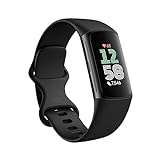
- Find your way seamlessly during runs or rides with turn-by-turn directions from Google Maps on Fitbit Charge 6[7, 8]; and when you need a snack break on the go, just tap to pay with Google Wallet[8, 9]
Unlike Strain or Recovery, which compress multiple data streams into a single actionable score, Advanced Labs exposes the building blocks themselves. This makes it inherently less beginner-friendly but far more powerful for users who want to contextualize training stress, illness risk, or travel fatigue at a deeper level. It is a philosophical departure from the “one number to rule your day” approach used by Apple Fitness or Garmin’s Body Battery.
The experimental framing is deliberate, with Whoop clearly labeling which insights are still under development. That honesty matters, because it sets expectations around accuracy, interpretation, and long-term reliability while still letting users learn how these signals behave in their own bodies.
How Advanced Labs expands Whoop’s health intelligence
Advanced Labs effectively extends Whoop’s sensing hardware without changing the device itself. Using the same wrist-worn sensor package, battery-efficient design, and multi-day wear comfort Whoop is known for, the platform extracts additional meaning through updated algorithms rather than new silicon. This software-first expansion is crucial for maintaining Whoop’s class-leading battery life and 24/7 wearability.
The real value lies in pattern detection over time. Metrics like temperature deviation or respiratory changes become far more meaningful when tracked continuously across weeks, training cycles, and seasonal stressors. Advanced Labs allows Whoop to test how these signals correlate with overreaching, illness onset, hormonal shifts, and recovery breakdowns before they are formalized into coaching guidance.
For athletes, this can mean earlier warning signs of compromised adaptation. For health-focused users, it hints at a future where wearables detect subtle physiological drift long before symptoms appear, narrowing the gap between fitness tracking and preventative health monitoring.
What a global rollout would change for members
Until now, access to Advanced Labs has been uneven, shaped by regulatory constraints, internal testing phases, and regional software approvals. A global rollout would standardize access, ensuring that Whoop’s international user base benefits from the same experimental features and data visibility. This matters particularly for elite and semi-elite athletes training across borders, where consistent metrics are essential.
It would also accelerate Whoop’s algorithm development by dramatically expanding its data pool. More users, across more climates, demographics, and training styles, means faster validation and refinement of experimental metrics. In effect, members become participants in a large-scale, opt-in research loop that directly informs future product updates.
From a subscription standpoint, global Advanced Labs availability strengthens Whoop’s value proposition at a time when competitors increasingly bundle advanced health features at no extra cost. Instead of competing on hardware upgrades, Whoop doubles down on software depth and continuous evolution.
Why this matters versus Apple, Garmin, and Oura
Compared to Apple Watch, which often hides experimental health features behind regulatory caution and polished UX, Whoop is choosing openness over restraint. Garmin offers depth in training load and performance physiology, but largely avoids presenting unvalidated health signals directly to users. Oura comes closest philosophically, yet still prioritizes simplified readiness and sleep scores over raw metric exploration.
Advanced Labs positions Whoop as the platform most willing to treat users as informed partners rather than passive consumers. It assumes a higher baseline of data literacy and rewards curiosity with insight rather than abstraction. For users who want to understand why their recovery dipped, not just that it did, this approach is uniquely compelling.
If rolled out globally, Advanced Labs would cement Whoop’s identity as a subscription-driven health intelligence platform rather than just another fitness tracker. It is less about competing on features today and more about shaping how wearable health data is introduced, tested, and trusted tomorrow.
Why a Global Rollout Matters: Moving Advanced Labs Beyond the US Beta
The implications of a global Advanced Labs rollout extend far beyond simple feature parity. It fundamentally changes who Whoop is building for, and how its health intelligence platform evolves over time.
Right now, Advanced Labs exists as a geographically limited beta, which constrains both its utility and its credibility. Expanding it globally would turn a promising experiment into a core pillar of the Whoop ecosystem.
From regional experiment to platform-wide capability
Keeping Advanced Labs US-only effectively fragments the Whoop experience. International members pay the same subscription, wear the same hardware, and generate the same physiological signals, yet lack access to the platform’s most forward-looking tools.
A global rollout would close that gap and standardize the Whoop experience across regions. That consistency matters for traveling athletes, multinational teams, and coaches who rely on longitudinal data that remains interpretable regardless of location.
It also signals that Advanced Labs is no longer a side project, but a supported layer of Whoop’s software stack that members can expect to persist and mature.
Richer data, faster validation, better algorithms
Advanced Labs lives or dies on data diversity. Metrics like respiratory rate trends, skin temperature deviations, or experimental strain modifiers behave differently across climates, training cultures, and baseline health profiles.
Rolling Labs out globally would dramatically expand Whoop’s real-world dataset. Hot-weather endurance athletes, altitude-trained runners, shift workers, and strength-focused users all introduce variables that improve model robustness.
For users, that translates into faster iteration and fewer edge cases where insights feel misaligned with lived experience. For Whoop, it shortens the feedback loop between hypothesis, deployment, and refinement.
Reframing regulatory caution versus user agency
One reason competitors move slowly with experimental health features is regulatory complexity, particularly outside the US. Apple tends to delay or region-lock features until they are clinically validated and regulator-approved. Garmin often avoids presenting ambiguous health signals altogether.
Whoop’s Advanced Labs approach is different. By clearly labeling features as experimental and positioning them as informational rather than diagnostic, Whoop shifts responsibility toward informed consent and user education.
Expanding this model globally suggests confidence in that philosophy. It assumes international users are equally capable of engaging with nuanced data, and that transparency can coexist with regulatory compliance when handled carefully.
Strengthening the subscription value equation
As more wearables bundle advanced metrics into the base purchase price, subscription platforms face increasing pressure to justify ongoing costs. A global Advanced Labs rollout materially strengthens Whoop’s argument that membership pays for evolution, not just access.
Instead of waiting a year for a new sensor or strap revision, members see tangible software progress delivered continuously. Experimental features appear, iterate, and sometimes graduate into the core experience, reinforcing the sense that the platform is alive.
For long-term subscribers, especially those already comfortable interpreting raw metrics, this ongoing depth becomes a retention driver rather than a nice-to-have.
Who benefits most when Advanced Labs goes global
Not every Whoop user will engage deeply with Advanced Labs, and that is by design. The biggest beneficiaries are performance-focused athletes, coaches, sports scientists, and biohackers who want to explore causal relationships rather than consume simplified scores.
International expansion also benefits users in underrepresented training environments. Metrics validated across seasons, hemispheres, and stressors are more likely to hold up when training blocks get unconventional.
Ultimately, moving Advanced Labs beyond a US beta reinforces Whoop’s positioning as a health intelligence platform first and a wearable second. It invites its global user base into the product development process, not as passive recipients, but as active contributors to what wearable health tracking becomes next.
Key Features Inside Advanced Labs: Blood Biomarkers, Hormonal Signals, and Deeper Recovery Insights
What makes Advanced Labs feel materially different from a typical feature drop is that it pushes beyond sensor-derived proxies and into domains traditionally reserved for clinical testing and sports science labs. This is where Whoop’s long-term vision becomes clearer: not just tracking how you train and sleep, but exploring why your physiology responds the way it does.
Rather than presenting polished readiness scores, Advanced Labs exposes raw or semi-processed signals and invites interpretation. That framing matters, especially as the feature set begins to resemble tools used by elite teams and research institutions rather than consumer fitness apps.
Blood-based biomarkers move from theory to platform
One of the most consequential elements inside Advanced Labs is the integration of blood biomarker data, typically collected through at-home test kits rather than the Whoop strap itself. Markers like cholesterol fractions, inflammation indicators such as CRP, and metabolic health signals can be ingested into the Whoop ecosystem and viewed alongside training load, sleep debt, and recovery trends.
The real value is not the standalone lab result, which users could already access through third-party services, but the contextualization. Seeing how elevated inflammation correlates with suppressed HRV after a high-volume training block, or how lipid markers shift across a season, reframes blood work as a dynamic input rather than an annual snapshot.
If rolled out globally, this positions Whoop closer to a longitudinal health record than a fitness tracker. Garmin and Apple currently stop at sensor-based health metrics, while Oura focuses on readiness interpretation rather than external data ingestion, giving Whoop a distinct lane for users willing to engage with lab-grade inputs.
Hormonal signals and cycle-aware performance tracking
Advanced Labs has also leaned into hormonal signal modeling, particularly around menstrual cycle tracking and its impact on recovery, strain tolerance, and sleep quality. Instead of treating cycle phases as calendar annotations, Whoop attempts to model how hormonal shifts influence autonomic nervous system behavior and perceived exertion.
This approach moves beyond reminder-based fertility tracking into performance-aware physiology. For athletes, it offers a framework for adjusting training intensity during luteal or follicular phases, grounded in observed recovery trends rather than assumptions.
A global rollout expands the data diversity underpinning these models. Hormonal responses vary across populations, stress environments, and training cultures, and broader participation improves signal validity. Apple has made strides in cycle tracking at scale, but it largely remains descriptive rather than performance-linked, leaving Whoop with a more applied, athlete-centric implementation.
Rank #2

- Inspire 3 is the tracker that helps you find your energy, do what you love and feel your best. All you have to do is wear it.Operating temperature: 0° to 40°C
- Move more: Daily Readiness Score(1), Active Zone Minutes, all-day activity tracking and 24/7 heart rate, 20+ exercise modes, automatic exercise tracking and reminders to move
- Stress less: always-on wellness tracking, daily Stress Management Score, mindfulness sessions, relax breathing sessions, irregular heart rhythm notifications(2), SpO2(3), menstrual health tracking, resting heart rate and high/low heart rate notifications
- Sleep better: automatic sleep tracking, personalized Sleep Profile(1), daily detailed Sleep Score, smart wake vibrating alarm, sleep mode
- Comfortably connected day and night: calls, texts & smartphone app notifications(4), color touchscreen with customizable clock faces, super lightweight and water resistant to 50 meters, up to 10 day battery life(5)
Deeper recovery analysis without simplifying the message
Recovery inside Advanced Labs becomes less about a single green-yellow-red indicator and more about dissecting the contributors behind it. Users can explore how sleep consistency, respiratory rate shifts, resting heart rate drift, and subjective inputs interact over time, rather than being collapsed into a single score.
This is where Whoop’s strap-first design still matters. Multi-day battery life, fabric-based comfort, and continuous wear enable dense data collection without the interruptions common to smartwatch charging cycles. That consistency is critical when interpreting subtle recovery signals that unfold over weeks rather than days.
Compared to rivals, the difference is philosophical. Garmin offers immense depth but often buries insight behind menus, while Oura prioritizes approachability. Advanced Labs intentionally leaves some complexity intact, trusting its audience to engage rather than be shielded from nuance.
Why this feature set scales globally better than it seems
At first glance, blood biomarkers and hormonal modeling appear niche, but their inclusion inside Advanced Labs is modular rather than mandatory. Users can opt in based on interest, resources, and training goals, which makes global expansion more feasible than a one-size-fits-all rollout.
In practical terms, this means Advanced Labs can adapt to regional availability of lab partners, healthcare norms, and regulatory constraints without fragmenting the core Whoop experience. The strap, app, and subscription remain the same; the depth simply scales with user intent.
For advanced users, especially those already comparing platforms like Apple Watch Ultra or Garmin Fenix for performance tracking, Advanced Labs reframes the decision. It is less about hardware specs or materials and more about whether the platform is willing to meet you at the edge of what wearable health data can currently support.
How Advanced Labs Expands Whoop’s Existing Platform (Strain, Recovery, Sleep, and Coaching)
What makes Advanced Labs compelling is not that it replaces Whoop’s familiar pillars, but that it deepens them without breaking their internal logic. Strain, Recovery, Sleep, and Coaching remain the core framework; Advanced Labs simply adds biological context that explains why those numbers move the way they do.
Rather than introducing a parallel “lab data” dashboard, Whoop appears to be threading these insights directly into existing trends, timelines, and coaching prompts. For long-time users, this feels like a natural evolution rather than a feature bolt-on.
Strain: Moving from cardiovascular load to physiological cost
Strain has always been one of Whoop’s differentiators, translating heart-rate–derived load into a single, comparable daily score. Advanced Labs expands this by tying external strain to internal response, helping users understand whether a given training load is producing productive adaptation or disproportionate stress.
By layering in biomarkers and longitudinal trends, identical strain scores can be interpreted very differently. A 15-strain day during a period of hormonal stability or optimal iron status may reinforce training readiness, while the same score alongside elevated inflammation markers or declining glucose control signals accumulating risk.
This reframes strain from a target to hit into a variable to interpret. Compared to Garmin’s training load metrics or Apple’s ring-based exertion model, Whoop’s approach becomes less about volume accumulation and more about individualized cost-benefit analysis.
Recovery: From readiness score to systems-level explanation
Recovery is where Advanced Labs most clearly extends Whoop’s original promise. Instead of asking users to trust the score, the platform increasingly shows its work, connecting day-to-day readiness to deeper physiological patterns that unfold over weeks or months.
Trends in resting heart rate or HRV can now be contextualized against lab-informed baselines, helping users distinguish between temporary fatigue and deeper maladaptation. This is especially relevant for athletes who train consistently and need to know when recovery plateaus are structural rather than situational.
Unlike Oura’s emphasis on daily wellness signals or Apple’s focus on passive health alerts, Whoop leans into recovery as a performance variable. Advanced Labs strengthens that identity by giving advanced users evidence, not reassurance.
Sleep: Explaining quality, not just duration and stages
Whoop’s sleep tracking has always prioritized consistency, efficiency, and timing over sleep-stage obsession. Advanced Labs builds on this by linking sleep outcomes to upstream biological drivers that wearables alone struggle to capture.
Changes in sleep quality can be examined alongside respiratory trends, metabolic markers, or hormonal signals, helping users understand why eight hours does not always equal recovery. This is particularly valuable for users dealing with travel, altitude exposure, caloric deficits, or high training volumes.
The result is a sleep model that feels less prescriptive and more investigative. Instead of telling users to simply go to bed earlier, Whoop increasingly helps them identify which levers actually move their recovery needle.
Coaching: From reactive nudges to anticipatory guidance
Whoop Coach has traditionally been reactive, responding to recent strain and recovery trends with training and rest suggestions. Advanced Labs pushes this toward a more anticipatory model, where coaching can flag emerging issues before they fully manifest in performance decline.
When deeper data suggests rising physiological stress despite stable behaviors, coaching prompts can shift tone earlier, recommending deloads, sleep adjustments, or nutritional attention before the recovery score turns red. This aligns closely with how human coaches operate, using patterns rather than single data points.
Compared to algorithmic coaching elsewhere in the market, this approach feels less generic. It also rewards long-term wear, reinforcing Whoop’s subscription-first model where insights compound with time rather than reset daily.
Why this integration matters more than adding new metrics
The real expansion here is conceptual. Advanced Labs does not ask users to learn a new system; it makes the existing one more truthful by acknowledging that strain, sleep, and recovery are downstream expressions of deeper biology.
This is where Whoop separates itself from hardware-led competitors. While Apple and Garmin continue to add sensors and features at the device level, Whoop is investing in interpretive depth, assuming the hardware is already good enough to support continuous context.
For users willing to engage with that depth, Advanced Labs turns Whoop from a tracker into a longitudinal health and performance record. The value is not in any single data point, but in how convincingly the platform connects them over time.
Subscription Strategy and Pricing Implications: Is Advanced Labs the Start of a Premium Tier?
Advanced Labs does more than deepen Whoop’s physiological modeling; it subtly reframes how the company thinks about monetizing insight. After positioning a single, all-inclusive subscription for years, Whoop now appears to be testing whether its most data-hungry users will pay for a higher ceiling of analysis.
That question becomes unavoidable if Advanced Labs expands globally, because pricing strategy, regulatory constraints, and perceived value will vary dramatically by market.
From one subscription to stratified access
Historically, Whoop’s value proposition has been unusually clean: one device, one subscription, everything unlocked. That simplicity differentiated it from Garmin’s feature-gated hardware and Apple’s hardware-first ecosystem, where advanced analytics are often fragmented across apps and services.
Advanced Labs introduces the first real pressure on that model. If deeper biomarker interpretation, longitudinal trend analysis, and experimental features remain limited to a subset of users, the logic of a premium tier becomes difficult to ignore.
This would not necessarily mean removing features from existing subscribers, but rather placing the most computationally expensive and clinically adjacent insights behind an additional paywall.
Why Advanced Labs likely cannot stay “free” at scale
Advanced Labs is software-driven, but it is not cheap software. Advanced modeling of sleep architecture, recovery dynamics, and stress signatures requires heavier cloud compute, larger datasets, and ongoing validation as models evolve.
A global rollout multiplies those costs. Supporting Advanced Labs across regions means adapting algorithms to different populations, sleep norms, training cultures, and potentially even regulatory frameworks around health data interpretation.
From a business standpoint, bundling that cost into the standard subscription risks compressing margins. A premium tier, even if optional, gives Whoop room to fund deeper R&D without raising prices across its entire user base.
How this compares to Garmin, Apple, and Oura
Garmin largely monetizes at the hardware level, selling higher-end watches with advanced metrics baked in, while keeping software subscriptions minimal. Apple monetizes indirectly through device upgrades and services bundles, with health insights treated as ecosystem glue rather than a direct revenue stream.
Oura is the closest analogue. Its shift to a subscription model normalized the idea that advanced recovery and sleep insights are ongoing services, not one-time purchases. Whoop simply takes that logic further by charging exclusively for interpretation rather than hardware.
If Advanced Labs becomes a premium layer, Whoop would be the first major wearable platform to explicitly tier insight depth rather than sensor access.
What a premium tier might actually include
Based on how Advanced Labs currently behaves, a higher tier would likely emphasize interpretation rather than raw metrics. Expect deeper trend detection, longer historical baselines, and earlier detection of subtle physiological drift that standard recovery scores might miss.
This could also be where experimental features live permanently. New models around overreaching risk, illness susceptibility, or adaptive sleep need could arrive here first, with wider rollout only after validation.
Rank #3

- 【BUILT-IN GPS SMART WATCH – GO FURTHER, FREER, SMARTER】No phone? No problem. This fitness watch for women, featuring the latest 2025 technology, includes an advanced professional-grade GPS chip that precisely tracks every route, distance, pace (real-time & average), and calorie burned—completely phone-free. Whether you're chasing new personal records or exploring off the beaten path, your full journey is automatically mapped and synced in the app. Train smarter. Move with purpose. Own your progress. Own your journey.
- 【BLUETOOTH 5.3 CALLS & SMART NOTIFICATIONS】Stay effortlessly connected with this smart watch for men and women, featuring dual Bluetooth modes (BT 3.0 + BLE 5.3) and a premium microphone for crystal-clear calls right from your wrist—perfect for driving, workouts, or busy days. Receive instant alerts for calls, texts, and popular social apps like WhatsApp and Facebook. Just raise your wrist to view notifications and never miss an important moment.
- 【100+ SPORT MODES & IP68 WATERPROOF & DUSTPROOF】This sport watch is a versatile activity and fitness tracker with 100+ modes including running, cycling, yoga, and more. It features quick-access buttons and automatic running/cycling detection to start workouts instantly. Accurately track heart rate, calories, distance, pace, and more. Set daily goals on your fitness tracker watch and stay motivated with achievement badges. With IP68 waterproof and dustproof rating, it resists rain and sweat for any challenge. Not suitable for showering, swimming, or sauna.
- 【24/7 HEALTH ASSISTANT & SMART REMINDERS】This health watch continuously monitors heart rate, blood oxygen, and stress levels for comprehensive wellness tracking. Sleep monitoring includes deep, light, REM sleep, and naps to give you a full picture of your rest. Stay on track with smart reminders for sedentary breaks, hydration, medication, and hand washing. Women can also monitor menstrual health. Includes guided breathing exercises to help you relax. Your ultimate health watch with event reminders for a healthier life.
- 【ULTRA HD DISPLAY, LIGHTWEIGHT & CUSTOMIZABLE DIALS】This stylish wrist watch features a 1.27-inch (32mm) 360×360 ultra HD color display with a 1.69-inch (43mm) dial, offering vivid details and responsive touch. Its minimalist design fits both business and casual looks. Switch freely among built-in designer dials or create your own DIY watch face using photos, colors, and styles to showcase your unique personality. Perfect as a cool digital watch and fashion wrist watch.
Crucially, this would preserve Whoop’s core experience for most users while rewarding those willing to engage more deeply with their data.
Global rollout complicates pricing psychology
In the US and Western Europe, premium subscriptions for health insights are increasingly normalized. In emerging markets, however, price sensitivity is higher, and perceived value must be immediate and tangible.
Whoop may respond with region-specific pricing or time-limited access to Advanced Labs features, allowing users to experience the added value before committing. Another possibility is bundling Advanced Labs with longer-term subscriptions to reduce monthly sticker shock.
How Whoop navigates this will signal whether it sees Advanced Labs as an enthusiast-only upsell or as the future core of the platform.
Who stands to benefit most from paying more
A premium Advanced Labs tier would not be for everyone, and that is likely intentional. The users who benefit most are those training at high volumes, managing complex stress loads, or actively experimenting with sleep, nutrition, and recovery interventions.
For these users, marginal gains in insight can translate into meaningful performance or health outcomes. For casual users focused on daily readiness and basic habit feedback, the standard subscription may remain entirely sufficient.
The strategic implication is clear: Whoop appears comfortable narrowing its focus to users who value depth over breadth, even if that means embracing a more segmented audience.
Global Availability Challenges: Regulations, Medical Compliance, and Data Privacy by Region
As soon as Advanced Labs shifts from a limited, experimental layer into something globally accessible, the conversation moves beyond pricing and power users. The moment Whoop begins offering deeper physiological interpretation across borders, it enters a regulatory landscape that is far less forgiving than standard fitness tracking.
Unlike step counts or generic recovery scores, Advanced Labs is positioned around predictive insights and early signal detection. That framing alone triggers different legal expectations depending on where a user lives, even if the underlying hardware, sensors, and battery life remain unchanged.
United States: wellness framing versus medical device scrutiny
In the US, Whoop has historically navigated regulation by positioning its platform as wellness-focused rather than diagnostic. Advanced Labs complicates that balance, particularly if features begin surfacing risk probabilities related to illness, overtraining, or cardiovascular strain.
The FDA tends to tolerate advanced analytics as long as they avoid explicit medical claims, but probabilistic language and trend-based alerts live in a gray zone. Whoop will need to be careful that Advanced Labs emphasizes decision support and pattern awareness rather than actionable medical advice.
This is an area where Apple has gone the opposite direction, securing FDA clearances for specific features like ECG while tightly controlling feature language. Whoop appears more likely to preserve flexibility by staying non-diagnostic, even if that limits how boldly insights can be presented in the US app experience.
European Union: MDR compliance and feature fragmentation risk
Europe presents a more complex challenge due to the Medical Device Regulation framework. Under MDR, software that interprets physiological data for health-related decision-making can qualify as a medical device, even without explicit diagnosis.
If Advanced Labs models begin influencing training load adjustments based on inferred health risk, Whoop could be required to pursue CE marking for certain features. That process is costly, slow, and often leads to feature gating by region.
Garmin has historically avoided this by keeping its training readiness and body battery metrics firmly in the performance domain. Whoop’s value proposition, however, leans more heavily on longitudinal health interpretation, increasing the likelihood that some Advanced Labs capabilities arrive later in the EU or in a reduced form.
United Kingdom and post-Brexit divergence
The UK now sits in an awkward middle ground. While broadly aligned with EU standards, the Medicines and Healthcare products Regulatory Agency has shown willingness to evaluate digital health tools independently.
For Whoop, this could result in the UK becoming an early test market for certain Advanced Labs features that are slower to clear EU-wide approval. It would not be surprising to see staggered rollouts where UK users receive deeper insights months ahead of their EU counterparts.
From a user perspective, this fragmentation risks confusion, especially for athletes who travel or compete internationally and expect consistent data interpretation.
Asia-Pacific: conservative regulators and cultural sensitivity
In regions like Japan, South Korea, and parts of Southeast Asia, regulators tend to be cautious about software that suggests health risk without clinical oversight. Advanced Labs’ emphasis on early detection may clash with local expectations around medical authority.
Language localization also becomes more than a translation exercise. Risk scores, strain interpretation, and recovery narratives must be culturally calibrated to avoid misinterpretation or unnecessary anxiety.
Oura has faced similar hurdles in Japan, where sleep insights required careful framing. Whoop’s challenge will be scaling Advanced Labs without diluting the nuance that makes it valuable in the first place.
Data privacy, cloud infrastructure, and regional trust
Beyond regulatory approval, data handling may be the biggest obstacle to a truly global Advanced Labs rollout. Deeper analytics require longer data retention, more granular biometrics, and increased cloud-based processing.
In the EU, GDPR imposes strict requirements on consent, data minimization, and explainability of automated decision-making. Advanced Labs models that operate as black boxes could face pushback if users cannot understand how conclusions are reached.
China and parts of the Middle East introduce additional constraints around data localization, potentially forcing Whoop to operate region-specific infrastructure. That increases cost and slows iteration, especially for experimental features that evolve rapidly.
What this means for users in practice
For athletes and biohackers, global availability may not mean feature parity on day one. Some users will gain access to Advanced Labs’ full interpretive depth, while others receive a pared-back version that prioritizes safety and compliance.
This stands in contrast to Apple’s tightly controlled, region-by-region feature launches and Garmin’s conservative, globally uniform approach. Whoop is attempting something more ambitious: a continuously learning platform that adapts to the user, not just the activity.
Whether Advanced Labs can deliver on that vision worldwide will depend less on sensor accuracy or strap comfort, and more on how skillfully Whoop navigates the invisible barriers of regulation, language, and trust.
Whoop Advanced Labs vs Rivals: How It Stacks Up Against Garmin, Apple Health, and Oura Labs
Seen through the lens of regulation, trust, and regional nuance, the competitive comparison becomes clearer. Whoop Advanced Labs is not trying to out-feature rivals on raw metrics; it is repositioning Whoop as an interpretive performance science platform rather than a tracker that simply reports numbers.
That distinction matters when stacked against Garmin, Apple, and Oura, all of whom approach advanced health insights from very different philosophical and technical foundations.
Whoop Advanced Labs: Interpretation-first, not metric-first
Advanced Labs functions as a gated experimentation layer inside the Whoop ecosystem, where new biomarkers, longitudinal correlations, and predictive models can be tested on live user data. Instead of adding isolated metrics, it reframes existing signals like HRV, respiratory rate, skin temperature deviation, and sleep architecture into adaptive health narratives.
Unlike standard Whoop features that are designed for broad stability, Advanced Labs is explicitly iterative. Models can change, confidence intervals can tighten or loosen over time, and insights evolve as user baselines deepen.
This makes it closer to a research platform than a consumer dashboard, and explains why Whoop is cautious about how widely and where it deploys these tools.
Garmin: Sensor breadth and conservative analytics
Garmin’s strength lies in hardware scale and physiological capture. Multi-band GPS, optical heart rate sensors tuned for endurance sport, pulse oximetry, ECG on select models, and long battery life give Garmin unmatched coverage across training contexts.
Where Garmin lags is interpretation. Metrics like Body Battery, Training Readiness, and HRV Status are calculated conservatively and change slowly by design. Garmin prioritizes global uniformity, meaning features behave nearly identically whether you are training in Colorado or commuting in Singapore.
Advanced Labs takes the opposite approach. Whoop is willing to tolerate variability and model evolution in exchange for deeper personalization, something Garmin largely avoids to minimize regulatory and support complexity.
Apple Health: Platform power, limited narrative cohesion
Apple Health aggregates more data than any other consumer health platform, especially when paired with Apple Watch hardware featuring ECG, temperature sensing, blood oxygen tracking, and movement analytics. Its advantage is ecosystem integration rather than physiological depth.
Rank #4

- 24H Accurate Heart Rate Monitoring: Go beyond basic tracking. Our watch automatically monitors your heart rate, blood oxygen (SpO2), and sleep patterns throughout the day and night. Gain deep insights into your body's trends and make informed decisions for a healthier lifestyle.
- Practical Sports Modes & Smart Activity Tracking: From running and swimming to yoga and hiking, track a wide range of activities with precision. It automatically records your steps, distance, calories burned, and duration, helping you analyze your performance and crush your fitness goals.
- 1-Week Battery Life & All-Day Wear: Say goodbye to daily charging. With an incredible up to 7-10 days of battery life on a single charge, you can wear it day and night for uninterrupted sleep tracking and worry-free travel. Stay connected to your data without the hassle.
- Comfortable to Wear & IP68 Waterproof: The lightweight, skin-friendly band is crafted for all-day comfort, even while you sleep. With IP68 waterproof, it withstands rain, sweat, It is not suitable for swimming or showering.
- Ease of Use and Personalized Insights via Powerful App: The display is bright and easy to read, even outdoors. Unlock the full potential of your watch. Sync with our dedicated app to view detailed health reports, customize watch faces, set sedentary reminders, and manage your preferences with ease.
Apple’s advanced features, such as AFib History or sleep stage tracking, are carefully siloed and heavily regulated. Insights are accurate, but rarely contextualized beyond static explanations or third-party apps.
Advanced Labs fills a gap Apple intentionally leaves open. Whoop provides continuous performance interpretation without medical positioning, offering actionable guidance Apple avoids due to regulatory exposure. The tradeoff is that Apple’s features are often more widely trusted by institutions, while Whoop’s insights are more behaviorally influential for athletes.
Oura Labs: Closest philosophical cousin
Oura Labs is the most comparable competitor in spirit. It operates as an opt-in testing ground for experimental features like resilience scoring, cardiovascular age estimates, and daytime stress insights.
The key difference is scope and ambition. Oura Labs experiments tend to ship as isolated concepts that may or may not graduate into the main app. Advanced Labs appears designed as a permanent layer, where experimentation is continuous and models are meant to coexist rather than compete.
Hardware also shapes the divergence. Oura’s ring form factor prioritizes sleep and passive health tracking, while Whoop’s strap-based system is optimized for continuous strain and recovery measurement across varied activity intensities.
Hardware context: why form factor still matters
Whoop’s lightweight, screenless strap enables near-constant wear, minimal sleep disruption, and multi-day battery life depending on charging habits. The lack of a display reinforces its interpretive model, pushing users toward summaries rather than real-time checking.
Garmin and Apple devices are heavier, more complex, and interaction-driven, with brighter displays, physical buttons, and higher power demands. This supports in-activity feedback but fragments long-term health interpretation across apps and menus.
Oura’s titanium ring offers unmatched comfort for sleep, but limited versatility during strength training or high-impact sport. Advanced Labs leans into Whoop’s wearability advantage by assuming continuous, uninterrupted data streams.
Subscription economics and access philosophy
Whoop’s entire value proposition is subscription-based, which aligns with Advanced Labs’ ongoing experimentation. New insights are not sold as upgrades; they are rolled into the evolving service, reinforcing long-term engagement.
Garmin largely monetizes upfront hardware sales, making it harder to justify frequent analytics overhauls post-purchase. Apple bundles health features into a broader device strategy, while Oura sits somewhere in between with a lower-cost subscription focused on readiness and sleep.
A global Advanced Labs rollout would amplify this differentiation. Users are not just buying a device, but enrolling in a living model of performance interpretation that changes with both science and personal data history.
Who benefits most from Advanced Labs going global
Elite and sub-elite athletes, coaches, and biohackers stand to gain the most, particularly those who already understand variability, uncertainty, and probabilistic feedback. Advanced Labs rewards users who engage with trends rather than fixating on daily scores.
Casual users may find Garmin or Apple more reassuring due to their static explanations and regulatory clarity. Oura remains the best fit for users whose primary concern is sleep quality without training complexity.
Advanced Labs does not aim to replace these platforms. It aims to occupy a different tier entirely, where health data is not just recorded or summarized, but continuously reinterpreted as part of an evolving performance model.
Real-World Use Cases: Who Actually Benefits from Advanced Labs Going Global?
If Advanced Labs expands beyond its current regional and cohort-based limits, its real impact will be felt less in headline features and more in how different types of users integrate probabilistic insights into daily decision-making. The shift is from static dashboards to adaptive interpretation, and that only matters if the user’s context rewards nuance.
A global rollout broadens not just access, but dataset diversity, model confidence, and longitudinal relevance. That combination changes who Advanced Labs meaningfully serves, and who may find it excessive or even counterproductive.
High-performance athletes managing load across seasons
For elite and sub-elite athletes, Advanced Labs functions as an early-warning layer rather than a coaching replacement. Metrics like strain tolerance, recovery volatility, and emerging fatigue signatures become more actionable when derived from uninterrupted, multi-month data streams.
Going global matters here because many athletes train and compete across borders. A cyclist on a European race circuit or a footballer moving between hemispheres benefits from continuity in interpretation rather than resetting baselines due to regional feature gaps or regulatory silos.
Unlike Garmin’s emphasis on activity-specific metrics or Apple’s session-centric summaries, Advanced Labs prioritizes how today’s workload alters next week’s capacity. That framing aligns with periodization, tapering, and injury-risk mitigation in ways few mainstream platforms attempt.
Coaches and performance staff working with distributed teams
Advanced Labs becomes far more compelling when it can be deployed consistently across an entire roster, regardless of geography. Coaches are less interested in individual scores than in patterns, outliers, and response asymmetry between athletes following similar programs.
A global rollout enables shared interpretation frameworks, where a recovery flag or sleep instability marker means the same thing for an athlete in Tokyo as it does for one in Toronto. That consistency is difficult to achieve when features are region-locked or rolled out unevenly.
Whoop’s form factor also matters here. Strap-based wearability, multi-day battery life, and the absence of a screen reduce compliance friction, especially in contact sports or during travel-heavy schedules.
Biohackers and self-experimenters testing cause and effect
Advanced Labs is arguably built for users who enjoy uncertainty rather than fearing it. Features that surface correlations, confidence intervals, and evolving hypotheses reward those willing to run controlled experiments on sleep timing, nutrition, supplements, or training intensity.
A global release expands the reference population, which improves model sensitivity for less common behaviors or edge-case physiologies. For biohackers outside North America, this removes a long-standing barrier to participating in Whoop’s most experimental layer.
Compared to Oura’s more conservative readiness framing or Apple’s clinically cautious trendlines, Advanced Labs invites interpretation rather than closure. That is powerful for the right user and overwhelming for everyone else.
Professionals balancing high cognitive load with inconsistent training
Not all beneficiaries are athletes. Founders, surgeons, traders, and other high-stress professionals often care less about VO2 max and more about how sleep debt, travel, and stress interact over time.
Advanced Labs’ strength is contextual fatigue modeling, especially when physical strain is sporadic but cognitive load is constant. A global rollout ensures that frequent travelers are not penalized by regional feature discrepancies or delayed updates.
Garmin’s training readiness and Apple’s mindfulness metrics offer reassurance, but they rarely adapt their interpretation as a user’s life circumstances change. Advanced Labs explicitly assumes volatility and attempts to model around it.
Health-conscious users managing chronic constraints
For users dealing with long COVID, autoimmune conditions, or recurring overuse injuries, Advanced Labs can provide a more forgiving lens than binary “ready or not” scores. The emphasis on trends, tolerance, and gradual adaptation aligns better with constrained capacity.
Global availability is critical here because many of these users sit outside the early adopter geographies Whoop has traditionally prioritized. It also increases the likelihood that the models incorporate a wider range of baseline variability.
That said, this is where Advanced Labs’ lack of regulatory framing may give some users pause. Apple’s clinical partnerships or Garmin’s conservative thresholds may feel safer, even if they are less personalized.
Who may not benefit, even with global access
Advanced Labs is not optimized for users seeking instant clarity or validation. If the goal is to close rings, hit step counts, or receive definitive daily judgments, the probabilistic language can feel evasive.
Casual exercisers may also struggle to justify the subscription if they are not engaging deeply with the insights. A global rollout removes access barriers, but it does not change the cognitive cost of interpretation.
In that sense, Advanced Labs going global is less about market domination and more about finding its people wherever they happen to live. The value emerges only when the user’s goals align with an evolving, data-driven model of human performance.
What This Signals for Whoop’s Long-Term Roadmap and Hardware Evolution
Taken together, the move toward a global Advanced Labs rollout reframes Whoop less as a passive recovery tracker and more as a continuously learning health platform. This shift has implications that extend well beyond software access, touching everything from sensor strategy to how future hardware generations may be designed and justified.
Rather than chasing feature parity with smartwatch incumbents, Whoop appears to be doubling down on depth, longitudinal modeling, and interpretation at scale. Advanced Labs going global is a prerequisite for that ambition.
💰 Best Value

- 【Superb Visual Experience & Effortless Operation】Diving into the latest 1.58'' ultra high resolution display technology, every interaction on the fitness watch is a visual delight with vibrant colors and crisp clarity. Its always on display clock makes the time conveniently visible. Experience convenience like never before with the intuitive full touch controls and the side button, switch between apps, and customize settings with seamless precision.
- 【Comprehensive 24/7 Health Monitoring】The fitness watches for women and men packs 24/7 heart rate, 24/7 blood pressure and blood oxygen monitors. You could check those real-time health metrics anytime, anywhere on your wrist and view the data record in the App. The heart rate monitor watch also tracks different sleep stages for light and deep sleep,and the time when you wake up, helps you to get a better understanding of your sleep quality.
- 【120+ exercise modes & All-Day Activity Tracking】There are more than 120 exercise modes available in the activity trackers and smartwatches, covering almost all daily sports activities you can imagine, gives you new ways to train and advanced metrics for more information about your workout performance. The all-day activity tracking feature monitors your steps, distance, and calories burned all the day, so you can see how much progress you've made towards your fitness goals.
- 【Messages & Incoming Calls Notification】With this smart watch fitness trackers for iPhone and android phones, you can receive notifications for incoming calls and read messages directly from your wrist without taking out your phone. Never miss a beat, stay in touch with loved ones, and stay informed of important updates wherever you are.
- 【Essential Assistant for Daily Life】The fitness watches for women and men provide you with more features including drinking water and sedentary reminder, women's menstrual period reminder, breath training, real-time weather display, remote camera shooting, music control,timer, stopwatch, finding phone, alarm clock, making it a considerate life assistant. With the GPS connectivity, you could get a map of your workout route in the app for outdoor activity by connecting to your phone GPS.
A software-first platform that pressures the hardware to evolve
Advanced Labs reinforces that Whoop’s primary differentiation now lives in algorithms, not industrial design. However, richer modeling places increasing demands on raw signal quality, consistency, and sampling density.
That has downstream implications for future Whoop hardware. Expect incremental but targeted sensor upgrades, particularly around optical heart rate fidelity during low perfusion states, skin temperature resolution, and motion artifact rejection during non-exercise wear.
Battery life will remain a non-negotiable constraint. Advanced Labs depends on uninterrupted longitudinal data, which means Whoop cannot afford to trade endurance for flashy new sensors in the way many smartwatches do.
Why this makes Whoop less likely to chase a screen
A global Advanced Labs rollout strengthens the case against adding a display. The product’s value increasingly lies in post-hoc analysis, trend interpretation, and probabilistic guidance, not real-time metrics glanced at mid-workout.
Adding a screen would compromise battery life, thermal stability, and wearability, all of which directly affect data quality. For a platform built on modeling tolerance and adaptation over weeks or months, that trade-off makes little sense.
Instead, Whoop’s hardware evolution is more likely to focus on comfort, materials, and form factor. Thinner housings, improved strap textiles for 24/7 wear, and better durability for global climates matter more than visual feedback.
Global data as a training ground for better models
From a platform perspective, global availability is not just about user growth. It dramatically expands the diversity of physiological baselines feeding Advanced Labs’ models.
Climate variation, altitude exposure, cultural differences in sleep timing, and regional training norms all influence recovery signals. Incorporating that variability makes Whoop’s interpretations more robust, particularly for users who do not fit Western, endurance-sport-centric norms.
This is an area where Whoop can quietly outpace rivals. Garmin and Apple have scale, but their models are often constrained by device heterogeneity or regulatory conservatism. Whoop’s narrower hardware stack allows it to iterate more aggressively once global data flows in.
Implications for future membership tiers and pricing
Advanced Labs going global also hints at deeper segmentation within Whoop’s subscription model. As insights become more specialized and cognitively demanding, it becomes easier to justify premium analytical layers without fragmenting the hardware lineup.
That could mean Advanced Labs evolving from an experimental feature set into a formal tier, especially if future tools incorporate biomarkers, predictive injury risk, or adaptive training tolerance thresholds. Global access ensures those tiers are viable beyond a handful of markets.
For users, this reinforces that Whoop’s value proposition is not static. The hardware you wear today is increasingly a conduit for capabilities that may arrive years later.
Positioning against Apple, Garmin, and Oura
Strategically, Advanced Labs underscores that Whoop is not trying to be a general-purpose health companion. Apple excels at breadth and polish, Garmin at structured training and device choice, and Oura at low-friction wellness tracking.
Whoop’s bet is that a subset of users want fewer answers, but better ones. Answers that change as life changes, rather than enforcing rigid thresholds.
A global rollout is essential to make that bet sustainable. It ensures that Whoop’s most advanced tools are informed by a wide range of human variability, not just elite athletes or early adopters in select regions.
What to watch for next
If Advanced Labs becomes a permanent, globally supported pillar, expect future hardware announcements to feel understated but purposeful. New sensors will likely arrive quietly, framed around improved modeling rather than headline metrics.
Equally important will be how Whoop communicates uncertainty. As the platform grows more complex, explaining why the model is cautious or inconclusive will matter as much as delivering confident insights.
In that sense, Advanced Labs going global is not a finish line. It is a declaration that Whoop’s roadmap prioritizes adaptive intelligence over instant gratification, and that its hardware will continue to evolve in service of that goal.
What to Expect Next: Timeline Clues, Feature Expansion, and Open Questions for Users
If Advanced Labs is the mechanism through which Whoop tests its most ambitious ideas, a broader rollout shifts the conversation from experimentation to expectation. The signals now suggest not if it expands, but how fast, how far, and how integrated it becomes within the core Whoop experience.
Timeline signals: reading between software updates
Whoop rarely telegraphs launches with traditional product timelines, but its software cadence offers clues. Advanced Labs features have increasingly appeared alongside routine app updates rather than as isolated betas, a strong indicator that internal confidence is rising.
A global rollout would likely happen in phases, starting with English-language markets and expanding as localization, regulatory review, and customer support scale up. For users, that means features may quietly appear in the app weeks before any formal announcement, especially if eligibility is determined by data quality rather than geography alone.
Feature expansion: from descriptive to predictive health
Today’s Advanced Labs tools already push beyond surface-level metrics, but the next step is likely predictive modeling rather than retrospective analysis. Expect deeper stress-response mapping, improved illness detection windows, and more nuanced interpretations of recovery that factor in long-term load, not just last night’s sleep.
There are also strong hints that biomarker-adjacent insights will expand without requiring new hardware immediately. By refining how heart rate variability, respiratory rate, skin temperature trends, and behavior patterns interact, Whoop can surface higher-order insights that feel new even on existing straps.
Hardware implications: subtle changes, meaningful impact
A global Advanced Labs strategy does not demand flashy new hardware, but it does influence future design priorities. Sensor fidelity, signal stability during movement, and all-day wear comfort become more important than adding one-off metrics.
That likely reinforces Whoop’s current design language: lightweight modules, soft fabric straps, and multi-day battery life that supports continuous data capture. Any next-generation hardware would probably focus on improved optical accuracy, thermal sensing consistency, or power efficiency rather than visible redesigns.
Subscription tiers and access: the unanswered question
One of the biggest unknowns is how Advanced Labs fits into Whoop’s subscription model long-term. If it evolves into a formal tier, users will need clarity on which insights are foundational and which are premium overlays.
A global rollout increases pressure for transparency here. Users in different regions will expect parity, not a fragmented feature map, especially when paying the same monthly fee. How Whoop balances accessibility with monetization will shape trust as much as the features themselves.
Data interpretation, not just data delivery
As Advanced Labs expands, the challenge shifts from collecting data to explaining it responsibly. More advanced models inevitably produce ambiguity, edge cases, and periods where the system cannot offer a definitive recommendation.
Whoop’s willingness to surface uncertainty, rather than forcing confident but shallow conclusions, will be a differentiator. For advanced users, understanding why the platform is unsure may be just as valuable as receiving a green or red recovery score.
Regulatory and regional considerations
Global availability also introduces regulatory complexity, particularly around health claims and data handling. Advanced Labs features that edge toward medical relevance may need region-specific framing or delayed release in certain markets.
For users, this means rollout speed could vary, but it also suggests that features which do arrive globally have passed a higher bar for robustness and compliance. That trade-off favors long-term credibility over rapid expansion.
Who benefits most from a global Advanced Labs rollout
Athletes managing high training loads, professionals balancing performance with limited recovery time, and biohackers seeking pattern-level insights stand to gain the most. These users already understand that trends matter more than single data points.
Casual users may not engage with every Advanced Labs feature, but they still benefit indirectly. Improvements in modeling tend to trickle down, making core metrics like strain, sleep, and recovery more context-aware and less reactive.
What users should watch for next
In the near term, keep an eye on eligibility prompts, opt-in notifications, and subtle changes in how insights are worded. These often precede broader availability and signal backend model updates.
Longer term, the real marker of success will be whether Advanced Labs feels essential rather than optional. If users begin to rely on these deeper insights to make training and lifestyle decisions, a global rollout will have accomplished more than expansion. It will have redefined what Whoop is fundamentally trying to be.
Taken together, the next phase of Advanced Labs is less about adding features and more about sharpening intent. For users willing to engage with complexity, a global rollout promises not more data, but better understanding, delivered through a platform that continues to evolve quietly but deliberately.