Whoop built its reputation by mastering what most wearables still struggle with: invisible stress. Sleep debt, recovery, cardiovascular load, and long-term strain modeling are all domains where heart rate, HRV, and time-under-load behave predictably enough for algorithms to shine. Strength training breaks that neat relationship almost immediately.
If you’ve lifted seriously while wearing Whoop, you’ve felt the disconnect. A brutal leg day can register as modest strain, while a long conditioning circuit spikes numbers despite being far less mechanically taxing. That gap isn’t a Whoop-specific failure so much as a fundamental problem with how strength training expresses physiological stress.
Understanding why strength has always been Whoop’s hardest problem explains both the limitations of its earlier tools and why this AI-driven Strength Trainer update matters more than it might initially appear.
Strength stress doesn’t look like cardio stress
Whoop’s core engine is built around cardiovascular signals. Heart rate trends, HRV suppression, respiratory rate shifts, and accumulated time at elevated intensity all map cleanly to endurance work. Running, cycling, rowing, and even CrossFit-style conditioning produce strain profiles that fit the model.
🏆 #1 Best Overall

- 24/7 Heart Rate Monitor :This blood pressure watch supports real-time dynamic heart rate, blood oxygen, blood pressure ,Sleep Tracking,temperature monitoring so you can know more about your physical condition
- 1.10 inch AMOLED HD Touch screen: The Stopwatch pairs flawlessly with the Skin-friendly fitness straps, while its 1.10 inch AMOLED HD Touch Color Screen design and multitude of invigorating watch faces blow you away any moment
- 25 Sport Modes Activity Tracker: you can select any number of sports modes in the app as your exclusive sports mode to record your sports data.can record all daily health data such as steps, distance, and calorie consumption in the App "Keep Health"
- 5 ATM Waterproof activity & fitness trackers :step counter for walking Designed according to waterproof and dustproof standard, you can wear it when washing hands, taking bath, swimming, diving or getting caught in the rain will not damage your watches
- Multiple Convenient Functions :This smart band has multiple functions such as remote photography, mobile search, drinking water reminder, sedentary reminder, menstrual reminder cycle, real-time weather display, etc
Traditional strength training doesn’t. Heavy sets rely on short bursts of high neural drive, intramuscular tension, and local fatigue that barely register on heart rate. Long rest periods further flatten cardiovascular load, even while muscular and connective tissue stress is accumulating rapidly.
The result is a mismatch where a maximal deadlift session can look “easy” to Whoop, while a light kettlebell circuit looks punishing. For a platform built on strain as its organizing metric, that’s a structural problem.
Mechanical load is invisible to optical sensors
Whoop’s sensor stack is excellent at what it measures, but it cannot see external load. It doesn’t know whether you squatted 60 kg or 180 kg, whether you were grinding near failure or cruising through warm-up sets, or whether bar speed collapsed on the final rep.
Mechanical tension, volume load, proximity to failure, and eccentric stress are the primary drivers of hypertrophy and strength adaptation. None of those are directly inferable from wrist-based optical data, no matter how refined the algorithm.
That’s why early strength tracking across wearables often felt cosmetic. Exercises were logged, sessions were tagged, but the underlying training signal never meaningfully fed back into recovery or readiness insights.
Exercise diversity breaks generic modeling
A five-kilometer run is broadly similar across athletes. A strength session is not. Exercise selection, set structure, tempo, rest, and intent vary wildly, even within the same program.
Two athletes can spend an hour in the gym with identical heart rate averages and come away with completely different adaptation costs. One might be accumulating neurological fatigue from heavy triples, while the other is chasing metabolic stress through high-rep accessories.
For Whoop, that variability made it extremely difficult to assign consistent strain values or to contextualize strength work alongside endurance training in a unified recovery model.
Manual logging friction killed long-term accuracy
Before Strength Trainer, serious lifters faced a choice: accept poor strain representation, or manually log everything and hope it mattered. Logging exercises, sets, and reps mid-workout is cognitively disruptive and unrealistic for most users training with intent.
Incomplete or inconsistent logging further degraded data quality. Missed sets, generic exercise labels, or skipped sessions meant the system never learned enough about the athlete’s actual training patterns to adapt intelligently.
That friction is one reason many advanced lifters quietly tolerated Whoop’s endurance-first bias while relying on separate platforms for strength programming and progression.
Recovery insights lacked strength-specific context
Perhaps the most frustrating limitation was downstream. Recovery scores, sleep recommendations, and weekly strain targets treated strength work as second-class input. A lifter deep into a hypertrophy block could feel beat up while Whoop suggested they were primed for more load.
Without understanding volume accumulation, muscle group fatigue, or repeated bout effects, Whoop couldn’t reliably distinguish productive fatigue from red-flag overload in strength cycles. That eroded trust for athletes whose primary goal wasn’t cardiovascular performance.
This is the problem the new AI-powered Strength Trainer is designed to confront directly, not by pretending heart rate tells the whole story, but by restructuring how strength sessions are built, captured, and interpreted inside the Whoop ecosystem.
From Manual Logging to Machine Intelligence: What’s New in Whoop’s AI Workout Builder
The shift from static logging to adaptive workout construction is the most meaningful evolution Whoop has made for strength athletes since Strength Trainer first launched. Instead of asking users to describe what they already did, the platform is now attempting to shape what they should do next, using accumulated training history as input rather than a blank template.
This reframes Strength Trainer from a passive recorder into an active planning layer. The AI Workout Builder sits upstream of strain calculation, recovery interpretation, and weekly load targets, which is why it matters far more than a simple convenience feature.
Goal-driven workout creation replaces blank-slate planning
At the surface level, the AI Workout Builder generates complete strength sessions based on a declared goal such as hypertrophy, maximal strength, or general conditioning. Users select training intent, available time, and equipment access, and the system produces a structured session with exercises, sets, and rep targets.
What’s different from earlier template-based approaches is that these sessions are not static presets. The builder references the athlete’s historical volume, recent strain trends, and recovery status to bias exercise selection and workload toward what Whoop believes is tolerable and productive right now.
For experienced lifters, this doesn’t replace programming knowledge, but it dramatically reduces planning overhead. It also ensures the workout is natively intelligible to Whoop’s strain engine before the first rep is even performed.
Exercise intelligence is now embedded before the workout starts
Previously, Strength Trainer relied on users to correctly label movements after the fact, which introduced inconsistency and ambiguity. With AI-built sessions, exercise identity, muscle group intent, and movement patterns are predefined, giving the system cleaner data from the outset.
That upfront structure matters because Whoop’s strength strain model depends on understanding what type of mechanical and metabolic stress is being applied. A squat session built by the system already carries assumptions about axial loading, muscle recruitment, and fatigue cost that generic “free lift” logging never captured well.
This is a subtle but critical change. The platform no longer has to infer intent from noisy data, because intent is declared and structured before the session begins.
Adaptive volume and progression logic begins to emerge
While Whoop is not positioning the AI Workout Builder as a full progressive overload engine, it does adjust volume recommendations based on recent exposure. Users who have accumulated high lower-body strain across the week will see moderated set counts or alternative movement patterns when generating new sessions.
This is where the machine intelligence starts to show practical value. Instead of repeating identical workouts regardless of fatigue, the builder nudges athletes away from accidental overreach without forcing rest days or blunt intensity caps.
For athletes training alongside endurance work, this adaptive bias is especially relevant. It reduces the chance that strength sessions silently push total weekly strain beyond what recovery metrics can realistically support.
Seamless capture improves downstream strain accuracy
Because AI-built workouts are fully structured inside Strength Trainer, live tracking becomes cleaner. Sets, rest intervals, and exercise transitions are already mapped, which minimizes missed inputs and reduces reliance on post-session correction.
Cleaner capture leads directly to better strain attribution. When Whoop knows how many working sets were performed, under what loading intent, and with what accumulated fatigue, it can weight that session more appropriately against endurance work in the recovery model.
This is the connective tissue that was missing before. The AI Workout Builder doesn’t just save time, it improves the fidelity of every metric that follows.
Who benefits most, and where the limits still are
Intermediate lifters and time-constrained athletes gain the most immediate value. They get structured, fatigue-aware sessions that integrate cleanly with recovery insights, without needing to manage multiple platforms or manually reconcile data.
Advanced lifters running highly specific periodized programs will still want external programming tools. The AI builder is not yet granular enough to manage peaking blocks, velocity-based prescriptions, or nuanced exercise sequencing.
What it does offer, however, is something Whoop has historically lacked: a strength workflow that starts with intelligence instead of correction. For the first time, the platform is building strength sessions in a way that its own physiology model can actually understand.
How the AI Actually Builds Strength Workouts (Inputs, Logic, and Constraints)
To understand why the AI Workout Builder feels more coherent than earlier Strength Trainer iterations, it helps to look at what the system actually ingests, how it makes decisions, and where its guardrails still exist. This is not free-form generative coaching, but a constrained builder designed to stay legible to Whoop’s physiology model.
The inputs: recovery, recent strain, and training history
The builder starts with the same recovery signals that already drive Whoop’s daily guidance. Heart rate variability trends, resting heart rate deviation, sleep performance, and recent cumulative strain all feed into the initial recommendation.
It then layers in strength-specific context. Recent Strength Trainer sessions, exercise frequency, approximate volume exposure, and the user’s selected training goal influence how aggressive or conservative the session becomes.
Importantly, the AI is not estimating one-rep maxes or inferring exact load capability. It works at the level of volume intent and muscular demand, not absolute performance prediction.
Goal framing sets the session’s boundaries
Before exercises are selected, the builder locks onto a goal frame such as full-body balance, upper or lower emphasis, or general strength maintenance. That framing acts as a constraint on movement selection, not a promise of hypertrophy or maximal strength outcomes.
Within that frame, the AI biases toward compound lifts first, then accessory movements that reinforce similar muscle groups. This ordering matters because it aligns better with how fatigue accumulates and how strain should be attributed across the session.
The result is a workout that looks familiar to experienced lifters, even though it is assembled algorithmically rather than manually.
Volume and set logic favors strain predictability
Set counts and rep ranges are chosen to keep sessions within a strain window that Whoop’s model can reasonably score. Instead of pushing high-rep burnout work or extreme density, the builder tends to favor moderate volumes with clear rest periods.
Rank #2

- 【Superb Visual Experience & Effortless Operation】Diving into the latest 1.58'' ultra high resolution display technology, every interaction on the fitness watch is a visual delight with vibrant colors and crisp clarity. Its always on display clock makes the time conveniently visible. Experience convenience like never before with the intuitive full touch controls and the side button, switch between apps, and customize settings with seamless precision.
- 【Comprehensive 24/7 Health Monitoring】The fitness watches for women and men packs 24/7 heart rate, 24/7 blood pressure and blood oxygen monitors. You could check those real-time health metrics anytime, anywhere on your wrist and view the data record in the App. The heart rate monitor watch also tracks different sleep stages for light and deep sleep,and the time when you wake up, helps you to get a better understanding of your sleep quality.
- 【120+ exercise modes & All-Day Activity Tracking】There are more than 120 exercise modes available in the activity trackers and smartwatches, covering almost all daily sports activities you can imagine, gives you new ways to train and advanced metrics for more information about your workout performance. The all-day activity tracking feature monitors your steps, distance, and calories burned all the day, so you can see how much progress you've made towards your fitness goals.
- 【Messages & Incoming Calls Notification】With this smart watch fitness trackers for iPhone and android phones, you can receive notifications for incoming calls and read messages directly from your wrist without taking out your phone. Never miss a beat, stay in touch with loved ones, and stay informed of important updates wherever you are.
- 【Essential Assistant for Daily Life】The fitness watches for women and men provide you with more features including drinking water and sedentary reminder, women's menstrual period reminder, breath training, real-time weather display, remote camera shooting, music control,timer, stopwatch, finding phone, alarm clock, making it a considerate life assistant. With the GPS connectivity, you could get a map of your workout route in the app for outdoor activity by connecting to your phone GPS.
This is a deliberate design choice. Whoop needs repeatable, interpretable patterns to assign muscular strain without drifting into noise, especially when strength work is mixed with endurance training.
From a training perspective, this makes sessions feel conservative but consistent, rather than randomly hard.
Exercise selection is constrained by capture fidelity
Another quiet input is trackability. The AI prefers movements that Strength Trainer already handles cleanly, with predictable set structures and minimal ambiguity around when work starts and stops.
Complex supersets, timed circuits, and highly individualized variations are largely avoided. Not because they are ineffective, but because they degrade capture quality and downstream strain accuracy.
This reinforces the platform-first nature of the tool. Exercises are chosen as much for data integrity as for muscular stimulus.
Rest periods are part of the prescription
Rest is not an afterthought in AI-built sessions. Rest intervals are explicitly defined because they influence heart rate behavior and strain accumulation during strength work.
By controlling rest, the builder narrows the range of physiological responses Whoop has to interpret. That makes muscular strain scoring more stable across users and sessions.
For athletes used to self-regulating rest intuitively, this can feel rigid. From a data perspective, it is foundational.
What the AI deliberately does not attempt
The builder does not manage long-term periodization across weeks or mesocycles. Each workout is generated in context, but not as part of a tightly scripted progression toward a peak.
It also avoids prescribing load percentages, velocity targets, or autoregulated effort scales beyond broad rep guidance. Those variables sit outside Whoop’s current sensing capabilities.
This keeps expectations aligned. The AI is optimizing for coherence between workout structure and recovery modeling, not replacing a human coach or advanced programming software.
Why these constraints are a feature, not a flaw
By narrowing the decision space, Whoop ensures that every AI-built session remains readable to its broader platform. Strain, recovery impact, and adaptation signals stay internally consistent instead of drifting as workouts become more complex.
For users, this means fewer spectacular sessions but more reliable longitudinal insight. The AI is not chasing novelty; it is enforcing discipline so the data remains meaningful.
That discipline is what allows the Strength Trainer to finally operate as a first-class citizen inside Whoop, rather than a disconnected logging tool.
Smarter Set Detection, Load Estimation, and Time-Under-Tension Tracking Explained
Once workouts are constrained into patterns the platform can reliably interpret, Whoop’s updated Strength Trainer can finally do something it previously struggled with: extract meaningful signal from messy gym movement.
The latest update focuses less on adding new exercises and more on sharpening how sets, effort, and muscular work are detected under real-world conditions.
How automatic set detection actually works now
Set detection is no longer driven by simple movement start-stop logic or broad heart rate spikes. Whoop is combining inertial data from the strap with exercise-specific motion signatures to identify when a working set begins, when it ends, and when rest truly starts.
This matters because strength training does not produce clean cardiovascular on-off patterns. Heart rate often stays elevated between sets, especially during compound lifts or short rest protocols, so relying on HR alone leads to overcounting work.
By anchoring detection to repeated acceleration patterns and tempo consistency, the system is better at ignoring chalking, racking, and pacing around the platform. The result is fewer phantom sets and more reliable volume accounting.
Why constrained exercise selection improves detection accuracy
The AI builder’s limited exercise library directly feeds into better set recognition. Each supported movement has a known kinematic profile, allowing Whoop to apply tighter thresholds for what counts as a rep versus noise.
Free-form or hybrid movements tend to break these models. That is why you will not see complex Olympic lift variations or highly individualized accessory work fully automated yet.
This is not about being conservative; it is about protecting downstream metrics. Set detection accuracy is foundational for every other strength insight Whoop generates.
Load estimation without touching the bar
Whoop still does not directly measure external load, but its estimation model has become more defensible. Instead of asking users to manually input weight as a primary driver of strain, the system infers relative load from movement velocity, repetition decay, and cardiovascular response within each set.
Slower concentric speeds, increased intra-set heart rate drift, and longer recovery curves all push estimated load higher. Conversely, crisp reps with stable tempo signal submaximal work, even if the absolute weight is unknown.
This approach favors consistency over precision. It cannot tell you that you lifted 100 kg, but it can tell you that today’s squats were materially harder than last week’s under similar conditions.
Why relative load matters more than absolute load in Whoop’s ecosystem
From a training science perspective, absolute load only matters when contextualized against readiness and fatigue. Whoop’s system is designed to answer whether a session was stressful for you, not whether it was impressive on paper.
By focusing on relative load, the platform can align muscular strain with recovery scores, sleep quality, and accumulated fatigue across days. That linkage is where Whoop’s value lives.
For athletes who already track bar weight elsewhere, this becomes complementary rather than redundant. Whoop is not replacing a lifting log; it is adding physiological interpretation to it.
Time-under-tension becomes a first-class metric
One of the quiet but meaningful upgrades is how time-under-tension is tracked and surfaced. Instead of treating reps as uniform units, Whoop now emphasizes how long muscles are actually working during a set.
Long eccentrics, pauses, and slow tempos increase TUT even when rep counts stay low. That additional muscular demand shows up clearly in strain calculations, especially for hypertrophy-focused sessions.
This is particularly useful for users who intentionally manipulate tempo. The platform no longer undervalues controlled training simply because it produces fewer reps.
Where time-under-tension feeds into strain and recovery
Higher TUT extends local muscular fatigue without necessarily driving heart rate sky-high. Whoop’s updated model accounts for this by weighting muscular strain independently from cardiovascular strain during strength sessions.
That separation helps explain why a slow leg day can feel devastating despite modest cardio load. It also improves next-day recovery predictions, which previously skewed optimistic after low-HR lifting sessions.
Over time, this allows patterns to emerge. Users can see whether high-TUT training impacts sleep, HRV, and readiness differently than faster, power-oriented work.
What this still cannot capture
Even with improved detection, Whoop cannot see intent. A grinder rep and a deliberately slow rep may look similar in raw motion data, even though their training purpose differs.
The system also cannot distinguish technical breakdown from strategic tempo changes. Poor form under fatigue may inflate perceived load in ways that are not always desirable.
These limitations are inherent to wrist- or arm-worn sensors. What has changed is not perfection, but reliability within known boundaries.
Why this upgrade meaningfully advances strength tracking on Whoop
Previously, Strength Trainer data often felt disconnected from the rest of the platform. Sets were logged, but confidence in their accuracy was uneven, which diluted trust in strain scores.
With smarter set detection, defensible load estimation, and true time-under-tension tracking, strength work now behaves more like endurance training inside Whoop’s analytics stack. Inputs are constrained, interpretation is consistent, and outputs align with recovery modeling.
Rank #3

- Inspire 3 is the tracker that helps you find your energy, do what you love and feel your best. All you have to do is wear it.Operating temperature: 0° to 40°C
- Move more: Daily Readiness Score(1), Active Zone Minutes, all-day activity tracking and 24/7 heart rate, 20+ exercise modes, automatic exercise tracking and reminders to move
- Stress less: always-on wellness tracking, daily Stress Management Score, mindfulness sessions, relax breathing sessions, irregular heart rhythm notifications(2), SpO2(3), menstrual health tracking, resting heart rate and high/low heart rate notifications
- Sleep better: automatic sleep tracking, personalized Sleep Profile(1), daily detailed Sleep Score, smart wake vibrating alarm, sleep mode
- Comfortably connected day and night: calls, texts & smartphone app notifications(4), color touchscreen with customizable clock faces, super lightweight and water resistant to 50 meters, up to 10 day battery life(5)
For users willing to operate within those constraints, this is the clearest step yet toward making strength training data as actionable as Whoop’s sleep and cardiovascular insights.
Strength Trainer vs Previous Whoop Versions: What’s Genuinely Improved
Seen in context, the AI workout builder and refined strain modeling are not surface-level additions. They directly address the core friction points that long-time Whoop strength users have been flagging since Strength Trainer first launched.
This is less about adding features and more about correcting structural weaknesses that previously limited trust in the data.
From manual logging to adaptive workout construction
Earlier versions of Strength Trainer treated workouts as static inputs. Users either selected pre-built templates or manually assembled sessions, with little guidance beyond exercise names and estimated loads.
The new AI-driven workout builder flips that relationship. Instead of asking users to define structure upfront, Whoop now proposes sessions based on recent strain history, recovery status, and accumulated muscular load across movement patterns.
Practically, this reduces setup friction while also nudging users away from redundant loading. If posterior chain strain has been high across multiple sessions, the builder deprioritizes heavy hinge patterns without needing the user to notice the trend themselves.
Load estimation that no longer feels detached from reality
Previously, Whoop’s load modeling relied heavily on user-entered weight and rep counts. That made the system brittle: missed entries or slight inaccuracies could meaningfully distort strain outcomes.
The updated Strength Trainer leans more aggressively on motion-derived metrics, including rep velocity decay and time-under-tension trends, to contextualize external load. Weight still matters, but it is no longer the sole anchor for muscular strain calculation.
This matters most during non-traditional sessions. Drop sets, tempo work, paused reps, and fatigue-driven load reductions now register more realistically than before, rather than flattening into similar-looking strain scores.
Cleaner separation between cardiovascular and muscular stress
Earlier iterations often blurred the line between heart-rate-driven exertion and local muscular fatigue. Slow, grinding sessions could appear deceptively light simply because heart rate never spiked.
The current model treats these stressors as parallel contributors rather than blended signals. Muscular strain can climb independently of cardiovascular demand, and recovery projections now reflect that distinction more consistently.
For users who periodize training or alternate hypertrophy and conditioning blocks, this change alone makes longitudinal data far more usable.
Better continuity across the wider Whoop platform
One of the most persistent complaints about early Strength Trainer versions was how siloed the data felt. Lifting sessions existed, but they did not always influence readiness and recovery in intuitive ways.
That gap has narrowed. Strength-derived strain now feeds into recovery modeling with clearer cause-and-effect, particularly following high-TUT or high-volume sessions that previously slipped under the radar.
Sleep need adjustments and next-day readiness scores are more likely to reflect muscular fatigue, not just systemic stress, which aligns better with how strength athletes actually experience training weeks.
Reduced cognitive load during training
Earlier versions demanded attention at precisely the wrong moments. Logging sets mid-session, correcting rep counts, or navigating exercise lists disrupted training flow.
The AI-assisted approach minimizes interaction once the session starts. Automatic set detection, smarter exercise recognition, and fewer required corrections mean the device behaves more like a passive observer than an active chore.
That shift matters for real-world adherence. Data quality improves when users are not tempted to skip logging simply because it is annoying.
What has not changed, and why that matters
Despite these upgrades, Strength Trainer is still constrained by wearable physics. Whoop cannot see joint angles, bar path, or intent, and it still infers rather than measures external load.
The improvements are therefore evolutionary, not absolute. What has changed is confidence: confidence that strain reflects effort, that recovery reflects fatigue, and that patterns observed over weeks are grounded in consistent logic.
For users who previously felt Strength Trainer was promising but undercooked, this version finally behaves like a first-class citizen inside the Whoop ecosystem rather than a bolt-on experiment.
How Whoop’s Strength AI Compares to Apple, Garmin, and Third-Party Lifting Apps
With Strength Trainer now behaving like a more integrated, lower-friction system, the obvious question is how this AI-driven approach stacks up against the wider strength-tracking landscape. The answer depends less on raw feature lists and more on philosophy: what each platform thinks strength training data is for.
Whoop’s latest update does not try to outgun everyone on exercise libraries or visual polish. Instead, it doubles down on translating lifting into physiological load, and that puts it on a very different axis from Apple, Garmin, and dedicated lifting apps.
Against Apple Watch: automation versus interpretation
Apple’s strength training experience remains intentionally lightweight. The Apple Watch can auto-detect sets, track heart rate, and log calories, but resistance sessions still live largely outside Apple’s deeper health logic.
There is no concept of muscular strain influencing recovery, no readiness score that meaningfully reacts to volume or time under tension, and no attempt to model how yesterday’s squats affect today’s training capacity. Strength sessions are recorded, not interpreted.
Whoop’s Strength AI fills exactly that gap. It cares less about presenting the workout and more about what that workout does to your system over time. The tradeoff is obvious: Apple offers richer on-watch visuals and broader third-party app access, while Whoop offers deeper context for athletes who care about cumulative load rather than session aesthetics.
Against Garmin: structured strength versus physiological realism
Garmin arguably offers the most mature native strength tools among mainstream sports watches. Users can build detailed workouts, define rest periods, track reps and weight, and review clean post-session summaries on-device.
Where Garmin still struggles is in translating that structure into recovery intelligence. Training Load and Body Battery respond well to endurance stress, but lifting remains partially abstracted, especially for hypertrophy-focused or high-volume programs.
Whoop’s AI-driven strain modeling does a better job capturing the invisible cost of strength work, particularly slow eccentrics, density blocks, and high-rep sets that barely move heart rate. Garmin excels at telling you what you did; Whoop is increasingly better at explaining what it cost.
Against third-party lifting apps: insight versus specificity
Dedicated lifting apps like Strong, Fitbod, or Trainerize still dominate when it comes to exercise databases, progression schemes, and program specificity. They know exactly what load you used, how it compares to last week, and how to progress your next session.
Whoop does not try to replace that layer. It does not prescribe periodization models or optimize rep ranges for hypertrophy versus strength. Instead, it observes how whatever program you follow accumulates stress and interferes, or aligns, with recovery.
For athletes already running structured programs, Whoop’s value is additive rather than substitutive. It answers a different question: not what should I lift next, but how much am I actually absorbing.
Workout building: generative guidance versus manual control
Apple and Garmin remain largely manual when it comes to workout creation. Users define exercises, sets, and reps explicitly, and the watch executes the plan.
Whoop’s AI workout builder takes a softer approach. It generates sessions based on past behavior, strain targets, and recovery status, with flexibility rather than prescription as the goal. This suits users who want guidance without rigid programming but may frustrate those who prefer total control.
The benefit is lower setup friction. Over weeks, the system learns what a “hard” or “easy” lift actually looks like for that individual, rather than relying on generic templates.
Daily wearability and hardware implications
Because Whoop has no screen, its strength AI lives entirely in the background. There is no mid-set interaction, no glancing at rep counters, and no temptation to micromanage during training.
Apple and Garmin, with their displays and buttons, invite more interaction but also more distraction. For some users, that is motivating; for others, it fragments focus during heavy or technical lifts.
Battery life also matters. Whoop’s multi-day endurance means strength sessions do not compete with charging cycles, whereas frequent gym users with Apple Watch often find battery management creeping into training logistics.
Who this comparison ultimately favors
Whoop’s Strength AI is not the best tool for planning a powerlifting peak or managing exact percentage-based progressions. That space still belongs to dedicated coaching platforms and lifting apps.
Rank #4
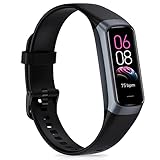
- 【All-day Health Monitor】The fitness tracker watch will automatically track your real-time heart rate, blood pressure and blood oxygen throughout the day to help you better understand your health. Equipped with a high-performance chipset, the fitness tracker automatically analyzes your overall sleep quality (deep/light/wake time) at night and gives you a nightly sleep score in the app to help you adjust your lifestyle and make you healthier.
- 【Smart Notification Remider】 With Bluetooth connection to your phone, it can support incoming calls/text alerts/APP message notifications (WhatsApp/Facebook/Instagram etc.), you will never miss your important messages. With the fitness watch, you can also perform sedentary reminder, water reminder, alarm clock, stopwatch, remote control photo, find devices, etc. to make your life healthier and smarter.
- 【25 Sports Modes】 Fitness tracker supports 25 professional sports modes, you can choose any number of sports modes as your exclusive sports modes in the app, such as walking, running, swimming, yoga, etc. and track your steps, heart rate, distance and calories to help you stay motivated, accomplish your sports goals, record your sports data, and make your sports more scientific.
- 【Long Battery Life】The fitness watch uses magnetic fast charging to provide a better battery life experience. It takes 1-2 hours to fully charge and can be used for up to 7 days of regular use and 15 days of standby. Compatible mobile phone system: android5.0 (inclusive) and IOS9.0 (inclusive) or above.
- 【1.1" AMOLED Touch Color Screen】AMOLED HD touch color screen is designed with clear and bright display, providing you with high quality touch and visual experience. This smartwatch includes a large number of original dials and supports custom dials.
Where it stands apart is in long-term load awareness. For athletes balancing lifting with endurance work, or anyone trying to understand why recovery feels off despite “reasonable” sessions, Whoop’s interpretation-first approach offers insight competitors still largely ignore.
Rather than chasing feature parity, Whoop has chosen to make strength matter inside its ecosystem. Compared to Apple’s passivity, Garmin’s structure-heavy logic, and third-party apps’ narrow focus, that choice makes Strength Trainer feel less like a workout logger and more like a system-level tool for training decisions.
Who Benefits Most: Powerlifters, Hypertrophy Athletes, Cross-Training Users, and Team Sports
Seen through that lens, Whoop’s updated Strength Trainer is less about replacing traditional programming and more about clarifying how different types of strength work actually tax the athlete. The value varies sharply by training style, and understanding those differences is key to deciding whether Whoop’s AI adds signal or just background noise.
Powerlifters: Useful context, limited prescription
For powerlifters, Whoop’s Strength Trainer is best understood as a secondary lens rather than a primary planning tool. The AI does not handle percentage-based loading, peaking blocks, or autoregulated top sets with the precision that competitive lifters expect from spreadsheets, coaching software, or RPE-driven apps.
Where it does help is in contextual load tracking. Heavy singles and doubles often look deceptively “short” on paper, but Whoop’s strain model captures the cardiovascular and neuromuscular stress those sessions impose, especially when recovery is already compromised.
Powerlifters who train alongside conditioning work, GPP, or sport practice will get the most value here. Whoop makes it easier to see when accessory volume or extra sessions are quietly eroding recovery, even if the main lifts still feel manageable.
Hypertrophy-focused athletes: Strong alignment with AI behavior
Hypertrophy training aligns far more naturally with Whoop’s AI assumptions. Moderate loads, higher time under tension, shorter rest periods, and consistent volume give the system richer heart-rate and movement data to work with.
The AI workout builder shines here by adapting session difficulty based on recent strain and recovery, rather than locking the user into rigid progression schemes. Over time, it becomes better at distinguishing a true high-volume leg day from a lighter pump-focused session, which improves weekly load accuracy.
For physique-focused athletes who care about managing fatigue across training splits, sleep, and lifestyle stress, this approach feels cohesive. It does not replace exercise selection or rep schemes, but it meaningfully improves awareness of cumulative stress, which is often the limiting factor in long-term hypertrophy progress.
Cross-training users: Where Whoop’s ecosystem advantage is clearest
Athletes mixing strength with endurance work are arguably the clearest winners. Whoop’s strength updates finally allow lifting to register as a first-class stressor alongside running, cycling, or rowing, instead of a vague recovery penalty.
The AI builder’s flexibility matters here. It adjusts expectations based on what else is happening in the training week, so a strength session following intervals is interpreted differently than the same session after a rest day.
This is where Whoop’s hardware and battery life also pay dividends. Multi-day wear, minimal interaction, and no screen-based prompts mean strength work integrates cleanly into an endurance-heavy routine without adding friction or decision fatigue.
Team sport athletes: Managing invisible fatigue
For team sport athletes, especially in-season, Whoop’s Strength Trainer functions as a load-management tool more than a performance optimizer. Weight room sessions are often short, dense, and squeezed around practices, travel, and games, which makes traditional volume metrics misleading.
Whoop’s strain and recovery modeling helps quantify how those lifts stack on top of sprinting, contact, and skill work. Over weeks, patterns emerge that can explain dips in readiness even when the weight room feels “light.”
The lack of a screen is a feature here, not a drawback. Athletes can wear Whoop comfortably under kit, during lifts, and through the entire training day, letting coaches and players alike see how strength work contributes to overall fatigue rather than existing in isolation.
Integration with Strain, Recovery, and Sleep: Does Strength Data Now Matter More?
What ultimately determines whether Whoop’s upgraded Strength Trainer is transformative or merely incremental is how deeply that strength data now feeds the platform’s core signals. Strain, Recovery, and Sleep have always been the pillars of the Whoop experience, and until recently, lifting lived at the margins of that model.
With AI-built workouts and more consistent set-level tracking, strength training is no longer treated as an approximate stressor. It now meaningfully influences the same readiness metrics endurance athletes have relied on for years.
From “logged” to load-bearing: how strength strain is now interpreted
Historically, Whoop strength sessions contributed to daily Strain, but the signal was blunt. Heart-rate-driven load struggled to capture high-force, low-cardiac-demand work like heavy squats or low-rep pressing.
The updated Strength Trainer improves this by anchoring strain to mechanical work and session structure rather than cardiovascular response alone. Volume, intensity distribution, rest periods, and exercise sequencing all shape how much strain Whoop assigns, which makes heavy but brief sessions register differently than long hypertrophy workouts.
The practical effect is that lifting days no longer vanish inside endurance strain or inflate it unpredictably. Strength work now occupies a clearer, more proportional slice of the daily load pie.
Recovery scores finally reflect the weight room
Recovery has always been Whoop’s most influential metric, pulling from HRV, resting heart rate, respiratory rate, and sleep quality. What was missing was context around why recovery dipped after certain training days that did not look stressful on paper.
By integrating richer strength data, Whoop’s recovery modeling better reflects neuromuscular fatigue and systemic stress from lifting. A high-volume lower-body session now has a more consistent next-day impact than an upper-body pump workout, even if both felt similar in the moment.
This matters for athletes managing training frequency. When recovery dips after repeated strength days, the signal now aligns more closely with what experienced lifters intuitively feel but could not previously quantify inside the app.
Sleep debt, strength density, and next-day readiness
Sleep has always been the quiet mediator in Whoop’s ecosystem, and strength training now interacts with it more transparently. Late-night sessions, high eccentric loads, or dense volume blocks show up more clearly in overnight recovery metrics.
Over time, Whoop’s insights can highlight patterns where sleep duration remains adequate, but sleep quality degrades following certain types of strength stress. That distinction is crucial for athletes who assume eight hours equals full recovery regardless of training content.
The system does not prescribe sleep interventions directly, but the feedback loop between strength load, sleep disruption, and next-day readiness is tighter and easier to interpret than before.
Weekly planning: where integration becomes actionable
The real payoff appears at the weekly level rather than day to day. Strength sessions now influence strain distribution across the week, making it easier to spot stacking errors like pairing heavy lifts with high-intensity conditioning too frequently.
For athletes using Whoop to guide rest days or active recovery, strength data now helps explain why a planned “easy” day may still require restraint. A low-strain endurance session after a demanding lift day is treated differently than the same workout after rest.
This shifts Whoop closer to being a true load-management platform for mixed training, not just a recovery dashboard reacting to cardio.
Does this make strength data as important as endurance data?
Strength data still does not dominate the model the way long-duration endurance work does, and that is appropriate given physiological cost. But it now carries enough weight to influence decisions rather than simply decorate the activity log.
For strength-first athletes, this means recovery scores finally feel earned or compromised for the right reasons. For endurance athletes, it means the weight room stops being a hidden tax on readiness.
The key change is credibility. Strength data now matters because it behaves predictably inside Whoop’s system, and when data behaves predictably, athletes are far more likely to trust it and act on it.
Limitations, Blind Spots, and Where the AI Still Falls Short
The improvements to Strength Trainer make Whoop far more credible for resistance work, but the system still operates within clear constraints. Understanding those limits is essential if athletes want to use the AI as a decision-support tool rather than a training authority.
What follows are not deal-breakers, but friction points where expectations need to be calibrated.
Exercise recognition still depends heavily on user input
Despite smarter workout building, Strength Trainer remains largely manual at the exercise level. Sets, reps, load, and movement selection still require confirmation, and auto-detection of lifts is not reliable enough to replace deliberate logging.
For complex sessions with supersets, clusters, or technique-driven accessory work, this adds friction compared to endurance activities that Whoop can passively capture. The AI can optimize structure, but it cannot yet infer intent without user cooperation.
This keeps Strength Trainer closer to a coached logbook than a fully automated tracker.
Velocity, tempo, and technique quality are invisible
Whoop’s strength model still treats load as a scalar, not a skill. Bar speed, eccentric control, range of motion, and technical breakdowns do not register in strain or muscular load calculations.
A grinding triple at RPE 9 and a fast, crisp triple at RPE 7 look nearly identical if the external load matches. That limits the system’s usefulness for power-focused athletes or anyone using velocity-based training principles.
💰 Best Value
![SAMSUNG Galaxy FIT 3 [2024] 1.6' AMOLED Display | 14 Days Battery Life | 100+ Watchfaces | 100+ Exercise Modes | International Model - (Gray)](https://m.media-amazon.com/images/I/41nTjvUQRPL._SL160_.jpg)
- Vibrant 1.6” AMOLED Display – Large, high-res screen with smooth touch for easy navigation
- 5ATM & IP68 Water Resistance – Swim-ready and dust-resistant for active lifestyles
- Up to 14 Days Battery Life – Powerful 208mAh battery for long-lasting performance
- 101+ Workout Modes with Auto Detection – Automatically tracks common workouts for seamless fitness tracking. Advanced Health Tracking – Includes sleep coaching, SpO2, heart rate, and snore detection
- International Model No Warranty in the US. Compatible with Android and iOS devices. Samsung Pay - Not Supported.
Without accelerometer-driven bar path analysis or peripheral sensor integration, Whoop remains blind to how a lift was executed, not just how heavy it was.
Muscle-level resolution remains coarse
While the AI is better at distributing muscular load across sessions, it still lacks true anatomical precision. Primary muscle group tagging works, but synergists, stabilizers, and overlapping fatigue patterns are simplified.
This becomes noticeable in split programs where indirect fatigue accumulates quietly, such as posterior chain stress bleeding across squat, hinge, and sprint work. Whoop may understate cumulative fatigue because the model bins stress too cleanly.
For bodybuilders or rehab-focused athletes managing specific tissue recovery, this abstraction can feel limiting.
Progression logic is conservative by design
The AI tends to favor sustainable, low-risk progression over aggressive overload. That aligns with Whoop’s recovery-first philosophy, but it may frustrate advanced lifters accustomed to peaking cycles, overreaching blocks, or intentional fatigue accumulation.
Suggested progressions often lag behind what experienced athletes know they can tolerate, especially during short-term specialization phases. The system is excellent at preventing mistakes, less comfortable endorsing calculated risk.
This makes Strength Trainer better suited to long-term consistency than competitive peaking.
Strain still underrepresents short, brutal sessions
Even with the update, Whoop’s strain metric struggles to fully capture the cost of brief, high-intensity lifting. Heavy singles, Olympic lifts, and neural-dominant sessions can feel devastating while registering modest strain scores.
The downstream impact shows up in recovery and sleep metrics, but the activity-level signal remains muted. For athletes judging session difficulty in real time, this can create a mismatch between perceived effort and reported load.
Whoop explains fatigue well after the fact, less so in the moment.
No real-time coaching or mid-workout adaptation
Workout building happens before the session, not during it. The AI does not adjust volume, intensity, or rest intervals based on live heart rate, fatigue trends, or failed reps.
Once the workout starts, Strength Trainer becomes a recorder, not an active coach. Competing platforms experimenting with adaptive rest timers or live readiness cues feel more interactive by comparison.
Whoop’s strength intelligence remains asynchronous, powerful in hindsight but quiet during execution.
Subscription value depends on ecosystem buy-in
Strength Trainer’s AI gains make the Whoop subscription easier to justify for mixed-discipline athletes, but less compelling for strength-only users. Without smartwatch features, screens, or rep-count automation, the value lives entirely in the data interpretation layer.
Athletes unwilling to engage daily with recovery scores, sleep insights, and weekly planning will not extract the full benefit. The AI assumes the user wants to think systemically about training, not just log workouts.
If that mindset is absent, the sophistication goes unused.
Who benefits least from the current version
Highly advanced lifters with established coaching, velocity tools, or spreadsheet-driven programming may find the AI redundant. Beginners may also struggle, as Strength Trainer does not teach technique or movement literacy.
The system is strongest in the middle ground: athletes who understand training principles but want a tighter feedback loop between lifting, recovery, and readiness. Outside that zone, the blind spots become more noticeable.
Whoop’s AI is sharpening quickly, but it still expects the athlete to meet it halfway.
Big Picture Verdict: Does This Update Finally Make Whoop a Serious Strength-Training Platform?
Taken as a whole, this update marks a clear inflection point for Whoop’s strength ambitions. It does not turn Whoop into a rep-counting smartwatch or a live coaching device, but it finally elevates strength training from a secondary activity into a first-class citizen within the platform’s performance model.
The key shift is intent. Strength Trainer is no longer just a post-session analyzer bolted onto a recovery product; it is now a planning tool that meaningfully shapes how athletes structure training before they lift.
From passive logging to structured programming
The AI workout builder closes one of Whoop’s most obvious historical gaps: getting athletes from readiness insights to actionable training decisions. By translating recovery trends, recent load, and movement patterns into suggested volume and exercise selection, Whoop now participates in the programming conversation rather than observing it from the sidelines.
This is especially important for users who lift alongside endurance work. The platform’s ability to account for accumulated strain across disciplines gives its strength recommendations context that most standalone lifting apps simply do not have.
It still requires manual input and confirmation, but the direction of travel is clear. Whoop is moving from “tell me what happened” to “help me decide what to do next.”
Strength intelligence, not strength automation
Whoop’s approach remains fundamentally different from smartwatch-led strength platforms. There is no screen on the wrist, no automatic rep detection, no live prompts between sets, and no form feedback.
Instead, the value sits in load modeling, muscular strain estimation, and longitudinal trend analysis. Over weeks and months, Strength Trainer builds a clearer picture of how different lifts tax the athlete, how volume accumulates, and how recovery responds.
For athletes who care about managing fatigue, avoiding overreaching, and aligning lifting with broader performance goals, this is arguably more valuable than set-by-set micromanagement. It rewards consistency and reflection rather than in-session optimization.
Serious platform, but still ecosystem-dependent
Yes, this update makes Whoop a credible strength-training platform, but only within its own ecosystem logic. The experience assumes the athlete is wearing Whoop nearly 24/7, engaging with sleep and recovery data, and thinking in weekly or monthly cycles rather than individual workouts.
Battery life remains a quiet strength here. Multi-day wear with no charging anxiety supports uninterrupted data collection, which is essential for the strength models to work as intended. Comfort and low-profile hardware also matter, particularly for lifters who dislike bulky watches during barbell work.
However, for users who want a device to actively guide their sets, count reps, or replace a coach during sessions, Whoop still falls short by design.
How it stacks up against competitors
Compared to smartwatch platforms from Garmin or Apple, Whoop lags in real-time interactivity but pulls ahead in cross-domain fatigue modeling. Compared to dedicated strength apps, it lacks exercise-level depth but compensates with recovery-aware context those apps rarely match.
This update narrows the gap without copying competitors outright. Whoop is not chasing feature parity; it is doubling down on its philosophy that understanding readiness and load over time matters more than optimizing any single workout.
That makes Strength Trainer feel opinionated, not incomplete.
The bottom line for strength-focused athletes
Does this update finally make Whoop a serious strength-training platform? For the right athlete, the answer is yes.
If you are a hybrid athlete, a data-driven lifter, or someone trying to balance strength gains with overall recovery and health, this is the most compelling version of Whoop to date. The AI workout builder adds structure, coherence, and intent that were previously missing.
If you are a purist lifter seeking live coaching, technique feedback, or hands-free automation, Whoop still asks too much manual engagement. But as a strength intelligence layer that integrates lifting into a broader performance picture, Whoop has crossed an important threshold.
It is no longer just watching you lift. It is starting to understand why, when, and how much you should.