Whoop adding VO₂ max was inevitable—and overdue. For a platform built around recovery, strain, and cardiovascular load, not having an explicit measure of aerobic capacity always felt like a philosophical gap rather than a technical limitation. VO₂ max is the ceiling that contextualizes everything Whoop already tracks: how hard a given strain actually is, why two athletes can accumulate identical training loads with very different physiological costs, and whether long-term adaptations are moving in the right direction.
At the same time, Whoop didn’t just add VO₂ max quietly. The company is positioning its estimate as being close to lab testing, which immediately raises the stakes. Among endurance athletes and data-literate users, VO₂ max isn’t a vanity stat—it’s a reference anchor used to set zones, evaluate progress, and justify training decisions. Claiming near-lab accuracy invites scrutiny not just of the number itself, but of how it’s derived and how stable it is over time.
This matters because lab-measured VO₂ max occupies a very specific scientific space. It’s not just another performance metric; it’s a direct measurement of oxygen consumption under maximal exertion, typically captured with a metabolic cart, controlled protocols, and strict criteria for validity. Any wearable estimate isn’t measuring oxygen uptake directly—it’s inferring it from proxies—so the question becomes how much inference error is acceptable before the number stops being actionable.
Why VO₂ max has been the missing puzzle piece in Whoop’s ecosystem
Whoop has historically leaned away from headline metrics in favor of trends and readiness signals. That approach works well for sleep, HRV, and recovery, but aerobic fitness is harder to infer indirectly. Without VO₂ max, users had no real way to normalize strain across different fitness levels or interpret whether rising cardiovascular load reflected improved capacity or just accumulating fatigue.
🏆 #1 Best Overall
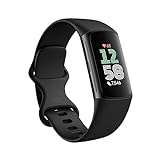
- Find your way seamlessly during runs or rides with turn-by-turn directions from Google Maps on Fitbit Charge 6[7, 8]; and when you need a snack break on the go, just tap to pay with Google Wallet[8, 9]
Adding VO₂ max allows Whoop to anchor its entire strain model to an individual’s physiological ceiling. In theory, that means daily strain scores, training recommendations, and recovery guidance can be scaled to what your cardiovascular system can actually handle, not just how elevated your heart rate happens to be. For endurance athletes, that’s a meaningful upgrade in how the platform could eventually prescribe intensity rather than just react to it.
Why “lab-level accuracy” is a loaded claim
When wearable companies talk about lab-level accuracy, they’re rarely saying their numbers match a metabolic cart point-for-point. What they usually mean is that, across a population, their estimates fall within a certain error range compared to lab tests—often expressed as a mean absolute percentage error. In VO₂ max estimation, even high-quality wearables typically fall within about 5–10 percent of lab values under ideal conditions.
That margin matters more than marketing suggests. A 5 percent error on a VO₂ max of 60 is a three-point swing, which is the difference between trained and highly trained in many classification systems. For training zones, race predictions, or longitudinal tracking, that’s not trivial. So when Whoop implies near-lab accuracy, the critical question isn’t whether the average looks good on a slide deck, but how consistent the estimate is for an individual user across weeks, conditions, and training phases.
Why Whoop’s approach invites both optimism and skepticism
Whoop has advantages most wrist-based wearables don’t. Its continuous heart rate sampling, strong sleep detection, and long battery life mean it captures far more contextual data than a watch worn only for workouts. In theory, that gives its models a richer dataset to infer aerobic fitness, especially for users who train frequently and consistently.
But inference is still inference. VO₂ max estimates depend heavily on accurate heart rate response to known workloads, which becomes trickier without GPS-verified pacing, power data, or standardized test efforts. Variability in sensor placement, optical heart rate drift during high-intensity work, and changes in training modality all introduce noise that a lab test explicitly controls for.
Why accuracy alone isn’t the whole story
Even a perfectly accurate VO₂ max snapshot can be misleading if it’s not stable, interpretable, and clearly contextualized. Athletes don’t just want to know their number—they want to know whether a one-point change is meaningful or just day-to-day variance. They want to know how much confidence to place in small improvements, and whether the metric should drive decisions like increasing volume or shifting intensity.
This is where Whoop’s credibility will ultimately be tested. If its VO₂ max estimate integrates cleanly into strain, recovery, and long-term trend analysis—and behaves predictably in response to training and detraining—it becomes a powerful tool even if it’s not a perfect lab replacement. If it fluctuates unpredictably or overpromises precision, skepticism from experienced users will be justified.
The real question, then, isn’t whether Whoop can estimate VO₂ max. It’s whether users should trust that estimate enough to act on it—and under what conditions that trust makes sense.
What a ‘True’ VO₂ Max Test Measures in the Lab (and Why It’s the Gold Standard)
To understand what Whoop is claiming with its new VO₂ max estimate, you first have to be clear about what the benchmark actually is. In exercise physiology, VO₂ max isn’t a modeled fitness score or a training proxy—it’s a direct measurement of how much oxygen your body can consume, transport, and use at maximal effort.
Everything else, including wearables, is trying to approximate this reference point.
Direct measurement of oxygen in and carbon dioxide out
A true VO₂ max test is performed with open-circuit spirometry, typically in a sports science lab or clinical setting. You breathe through a sealed mask connected to a metabolic cart that analyzes the volume and composition of every breath in real time.
The system measures how much oxygen you inhale and how much carbon dioxide you exhale, breath by breath, allowing technicians to calculate oxygen consumption in milliliters per kilogram of bodyweight per minute. There’s no inference here—this is direct gas exchange measurement at the lungs.
A progressively increasing workload to force physiological failure
The test is usually done on a treadmill or cycle ergometer using a graded exercise protocol. Speed, incline, or resistance increases every one to three minutes until you physically cannot continue, even with verbal encouragement.
The goal isn’t comfort or sustainability; it’s to push the cardiovascular and metabolic systems to their absolute ceiling. This matters, because VO₂ max is defined as the maximum rate of oxygen uptake achievable, not a hard effort or a tough workout.
Physiological criteria that confirm a true maximum
Reaching exhaustion alone isn’t enough for the data to count as VO₂ max. Labs look for specific physiological markers that confirm you’ve actually hit your limit.
These typically include a plateau in oxygen uptake despite increasing workload, a respiratory exchange ratio above ~1.10–1.15, heart rate approaching age-predicted maximum, and often elevated blood lactate measured via finger prick. When multiple criteria align, confidence in the result is extremely high.
Why heart rate alone can’t replicate this
This is where the gap between lab testing and wearables becomes unavoidable. Heart rate is a response variable, not the thing being measured, and it’s influenced by temperature, hydration, fatigue, altitude, stimulants, and sensor accuracy.
Two athletes can show identical heart rates at a given workload while consuming meaningfully different amounts of oxygen. In the lab, that difference is captured directly; on the wrist, it has to be guessed based on population models and assumptions about efficiency.
Control, standardization, and repeatability
Lab VO₂ max testing tightly controls variables that wearables can’t. Environmental conditions are stable, equipment is calibrated before each test, and the protocol is standardized so results can be compared across time.
That control is what makes a one-point change meaningful in a lab context. When someone improves from 55 to 57 ml/kg/min under identical conditions, coaches and physiologists can be confident that change reflects a real physiological adaptation, not noise.
What “lab-level accuracy” actually means in practice
When companies claim lab-like accuracy, they’re usually referring to statistical agreement across groups, not individual-level precision. A wearable can be very close on average while still being off by several points for a specific user, especially outside the conditions it was trained on.
The lab doesn’t have that problem because it isn’t predicting VO₂ max—it’s measuring it. That distinction is critical when evaluating whether a wearable metric is informative, directional, or actionable for training decisions.
Why the lab remains the reference point, not the goal
None of this means athletes need frequent lab tests to train well. Lab VO₂ max testing is expensive, uncomfortable, time-consuming, and impractical to repeat often.
But it remains the gold standard because it defines the ceiling of accuracy that every wearable estimate is compared against. Understanding what the lab measures, and how tightly it controls uncertainty, is the only way to judge whether a wrist-based estimate is close enough to trust—or simply close enough to look convincing.
How Whoop Estimates VO₂ Max: Sensors, Inputs, and the Physiological Model Under the Hood
If lab testing defines what “true” VO₂ max looks like, Whoop’s job is to approximate that signal using imperfect, indirect data collected in the real world. Understanding how it does that—and where the assumptions live—is essential for deciding how much weight to give the number.
At a high level, Whoop is not measuring oxygen consumption. It is inferring aerobic capacity by modeling the relationship between cardiovascular strain, external workload, and how efficiently your body appears to respond over time.
The raw signals: optical heart rate, motion, and context
The foundation of Whoop’s VO₂ max estimate is continuous optical heart rate data collected at the wrist. Whoop uses multi-wavelength PPG sensors sampling at high frequency, optimized for both steady-state and dynamic movement rather than short spot checks.
That heart rate stream is paired with inertial data from the accelerometer and gyroscope. This allows Whoop to infer activity type, intensity changes, and relative workload even when GPS is unavailable or intentionally excluded.
Contextual inputs also matter. User-entered characteristics like age, sex, height, weight, and training history act as priors in the model, anchoring predictions within physiologically plausible ranges before any activity data is layered on top.
Why Whoop doesn’t rely on a single “test”
Unlike watches that estimate VO₂ max from a specific outdoor run or walk, Whoop’s approach is cumulative. The estimate updates as the system observes repeated cardiovascular responses across many training sessions, intensities, and recovery states.
This matters because VO₂ max is not just about peak heart rate or speed. It is about how heart rate scales with increasing demand, how quickly it stabilizes at submaximal workloads, and how much strain is required to sustain a given output.
By aggregating data across days and weeks, Whoop attempts to filter out one-off anomalies caused by poor sleep, dehydration, heat stress, or sensor noise. In theory, this improves signal stability at the cost of slower responsiveness to sudden fitness changes.
The physiological assumption doing most of the work
At the core of Whoop’s model is a well-established but imperfect principle: for a given individual, heart rate and oxygen consumption maintain a roughly linear relationship across a wide range of submaximal intensities.
If Whoop can observe how much cardiovascular strain you accumulate to sustain known or inferred workloads, it can estimate how much oxygen you would likely consume at maximal effort. That inferred ceiling is then normalized to body mass to produce a VO₂ max value.
The risk is obvious. Mechanical efficiency varies widely between athletes. Two people can show identical heart rates at the same pace or power while consuming meaningfully different amounts of oxygen, especially across different sports and movement patterns.
How strain, not pace or power, becomes the proxy
Whoop’s unique contribution is its strain framework. Instead of anchoring VO₂ max to speed, grade, or wattage, it looks at cumulative cardiovascular load relative to your own historical baseline.
This makes the estimate more device-agnostic. You can lift, cycle indoors, ruck, or train without GPS, and the model still accumulates evidence about how hard your cardiovascular system has to work to meet external demands.
The tradeoff is that strain is a relative metric. If your historical baseline is skewed by inconsistent wear, suppressed heart rates from fatigue, or stimulants that elevate pulse without increasing oxygen demand, the VO₂ max estimate can drift.
Population models and individual calibration
Whoop trains its VO₂ max model on large datasets that include lab-tested reference values. This allows the system to learn population-level relationships between heart rate behavior, activity patterns, and measured aerobic capacity.
Your personal estimate emerges as the model gradually weights your own data more heavily than the population average. Early estimates tend to be conservative; confidence increases with consistent wear, varied training intensities, and clean signal quality.
This is where “lab-level accuracy” claims usually live. Across thousands of users, the average error may be small, even if individual errors remain meaningful for certain athletes or edge cases.
Sensor placement, comfort, and why it matters here more than usual
Because Whoop is worn tightly on the wrist or bicep for 24/7 monitoring, comfort and stability directly affect VO₂ max estimation quality. A loose strap, excessive arm hair, or high-impact movement can degrade optical heart rate accuracy in ways that compound over time.
Rank #2

- Inspire 3 is the tracker that helps you find your energy, do what you love and feel your best. All you have to do is wear it.Operating temperature: 0° to 40°C
- Move more: Daily Readiness Score(1), Active Zone Minutes, all-day activity tracking and 24/7 heart rate, 20+ exercise modes, automatic exercise tracking and reminders to move
- Stress less: always-on wellness tracking, daily Stress Management Score, mindfulness sessions, relax breathing sessions, irregular heart rhythm notifications(2), SpO2(3), menstrual health tracking, resting heart rate and high/low heart rate notifications
- Sleep better: automatic sleep tracking, personalized Sleep Profile(1), daily detailed Sleep Score, smart wake vibrating alarm, sleep mode
- Comfortably connected day and night: calls, texts & smartphone app notifications(4), color touchscreen with customizable clock faces, super lightweight and water resistant to 50 meters, up to 10 day battery life(5)
Whoop’s bicep band option is not a lifestyle accessory; it is a data quality tool. For users serious about VO₂ max tracking, upper-arm placement often produces cleaner heart rate signals during dynamic or strength-heavy sessions.
Battery life also plays a role. With multi-day endurance and on-body charging, Whoop minimizes data gaps, which helps the model distinguish real physiological change from missing or fragmented inputs.
What the model can’t see—and never will
No wrist-based system can directly observe ventilation, respiratory exchange ratio, or true oxygen uptake. Whoop cannot tell whether your heart rate rose because your muscles demanded more oxygen or because heat, caffeine, anxiety, or illness pushed it higher.
Altitude exposure, beta blockers, and changes in movement economy all complicate the relationship between heart rate and VO₂. The model can partially adjust if those factors are consistent, but sudden changes will temporarily distort the estimate.
This is not a flaw unique to Whoop. It is the unavoidable consequence of replacing a metabolic cart with a wearable sensor and a probabilistic model.
What this means before we even talk about accuracy
Whoop’s VO₂ max estimate is best understood as a continuously refined physiological inference, not a test result. Its strength lies in trend detection and internal consistency rather than absolute precision on any given day.
Before comparing the number to a lab value—or to another wearable—it’s worth remembering what the system is actually observing. Whoop is measuring how your cardiovascular system behaves in the wild, then projecting what that behavior implies about your aerobic ceiling.
Whether that projection is close enough to trust depends less on the headline accuracy claim and more on how well your real-world training aligns with the assumptions baked into the model.
‘Close to Lab Accuracy’: What Whoop’s Validation Data Actually Shows (and What It Doesn’t)
Once you accept that Whoop is inferring VO₂ max rather than measuring it, the obvious next question is whether the inference holds up against a metabolic cart. This is where Whoop’s “close to lab accuracy” claim lives—and where careful reading matters more than the headline.
The company has published internal validation comparing Whoop’s VO₂ max estimates to graded exercise tests with indirect calorimetry. On the surface, the results look reassuring, but the details define how much confidence you should actually place in the number on your dashboard.
What “close” means in statistical terms
Whoop’s validation shows strong agreement between its estimates and lab-measured VO₂ max at the group level, with correlations that are broadly in line with what we see from high-end endurance watches. In practical terms, this means that fitter people tend to get higher values, and less fit people lower ones, in roughly the right proportions.
Error is typically reported in the single-digit percentage range when averaged across participants. That sounds impressive until you translate it into absolute terms, where a few milliliters per kilogram per minute can easily separate “very good” from “excellent” in endurance sport classification.
This level of accuracy is genuinely competitive with other best-in-class wearables. It is also still meaningfully less precise than a properly executed lab test, which directly measures oxygen consumption rather than inferring it from cardiovascular behavior.
Who was tested—and who wasn’t
The validation cohorts skew toward healthy, recreationally active adults performing structured treadmill or cycle protocols. These are conditions where heart rate rises predictably with oxygen demand and where motion artifacts are minimal.
That matters because the further your training environment drifts from those assumptions, the more uncertainty creeps in. Trail runners, strength-focused athletes, hybrid CrossFit-style trainees, and people whose aerobic work is irregular or intermittent are less well represented in this kind of dataset.
Whoop’s model can still function for those users, but the confidence intervals widen. The accuracy claim is strongest for steady-state endurance athletes and weakest at the edges of training variability.
Protocol alignment quietly does a lot of the work
Lab VO₂ max testing follows a tightly controlled ramp protocol designed to push the cardiovascular system to exhaustion in a predictable way. Whoop’s model performs best when your real-world training occasionally resembles that structure.
Frequent maximal or near-maximal aerobic efforts give the algorithm clear anchor points. Long blocks of submaximal training without intensity, or workouts dominated by strength and power, give it far less signal to work with.
This does not mean Whoop “fails” in those scenarios. It means the estimate becomes more model-driven and less data-driven, even though the user experience looks the same.
Agreement is not the same as interchangeability
One subtle but important detail in Whoop’s validation is that agreement with lab testing does not imply interchangeability. You should not expect your Whoop VO₂ max to exactly match a lab result, nor should you expect them to change at the same rate over short timeframes.
Lab VO₂ max is acutely sensitive to protocol choice, pacing, motivation, and tester judgment. Whoop’s estimate is smoothed over time and intentionally resistant to day-to-day noise.
This makes the wearable number more stable, but also means it may lag behind rapid fitness changes, especially during aggressive training blocks or detraining phases.
What the data does not prove
Whoop’s validation does not demonstrate equal accuracy for every individual. Some users will see estimates that track lab values closely, while others will consistently sit a few points high or low.
It also does not show that Whoop can replace lab testing for clinical decision-making, performance diagnostics, or research-grade assessment. There is no ventilation data, no respiratory exchange ratio, and no direct confirmation of maximal effort.
Most importantly, the data does not prove that absolute accuracy is the most important outcome for training decisions. A consistently biased but internally stable metric can still be extremely useful if it responds reliably to changes in workload, recovery, and aerobic development.
The practical takeaway for serious users
Whoop’s validation supports the idea that its VO₂ max estimate is directionally trustworthy and competitively accurate within the wearable landscape. It does not support treating the number as a definitive physiological ceiling.
If you are using the metric to track trends, compare training phases, or sanity-check whether your aerobic fitness is moving in the right direction, the data backs that use case. If you need a precise, defensible value for testing, qualification, or medical evaluation, the lab still wins.
Understanding that distinction is the difference between being misled by “close to lab accuracy” and actually benefiting from it.
Whoop vs Other Wearables: How Its VO₂ Max Estimates Compare to Garmin, Apple, Polar, and Coros
Once you accept that wearable VO₂ max is an estimate shaped by modeling choices rather than direct gas exchange, the more useful comparison becomes relative performance. How does Whoop’s approach stack up against the dominant players most serious athletes already use?
The answer depends less on raw accuracy claims and more on how each platform collects data, constrains noise, and decides when an estimate is “valid enough” to show you.
Garmin: Activity-driven estimates with broad sport support
Garmin’s VO₂ max estimates are the most widely used reference point, largely because of their long history and integration across running, cycling, and multisport devices. The core model is based on Firstbeat algorithms, using the relationship between heart rate, pace or power, and known energy cost models.
In practice, Garmin’s strength is responsiveness. A hard, well-paced run or power-meter–based ride can move your VO₂ max quickly, sometimes within a single session. That makes it feel alive and motivating, but also more vulnerable to pacing errors, heat stress, fatigue, or cardiac drift.
Compared to Whoop, Garmin tends to be noisier but faster to react. Whoop’s estimate typically changes more slowly, because it aggregates across many sessions and daily cardiovascular signals rather than keying off individual “qualifying” workouts.
Apple Watch: Conservative, tightly filtered, and user-dependent
Apple’s VO₂ max estimates are deliberately cautious. The algorithm relies primarily on outdoor walking, hiking, and running with good GPS and heart rate data, and Apple aggressively filters sessions it considers submaximal or unreliable.
For general users, this leads to stable but often underestimated values, especially for trained athletes whose easy runs do not elicit high heart rates. For consistency, Apple behaves more like Whoop than Garmin, but with far fewer opportunities to update the estimate.
Whoop’s advantage here is exposure. Because it passively monitors across sleep, recovery, and training without requiring specific workout types, it accumulates more usable data for endurance-trained users who do not log frequent steady-state runs.
Polar: Physiology-first, but context-sensitive
Polar has long emphasized physiological modeling, and its VO₂ max estimates sit somewhere between lab-derived assumptions and field-based data. Some Polar devices also offer guided fitness tests, which can improve individual calibration if performed correctly.
When conditions are controlled, Polar’s estimates often align well with lab values. The tradeoff is practicality. Test quality depends heavily on user compliance, freshness, and pacing, and many users do not repeat them consistently.
Whoop sidesteps this by never asking for a test at all. The cost is slower adaptation, but the benefit is fewer catastrophic errors caused by one bad effort or a poorly executed protocol.
Coros: Performance-oriented, power-aware, and athlete-biased
Coros targets endurance athletes who train with structure, and its VO₂ max estimates reflect that. The algorithms lean heavily on high-quality running and cycling data, particularly when paired with power metrics.
For athletes training near threshold regularly, Coros can deliver sharp, plausible numbers. For users with more varied training or inconsistent intensity distribution, estimates can stagnate or fluctuate unexpectedly.
Whoop’s model is less sensitive to sport specificity, which makes it more forgiving for hybrid athletes, strength-focused users, or those with irregular endurance training patterns.
Rank #3

- 【BUILT-IN GPS SMART WATCH – GO FURTHER, FREER, SMARTER】No phone? No problem. This fitness watch for women, featuring the latest 2025 technology, includes an advanced professional-grade GPS chip that precisely tracks every route, distance, pace (real-time & average), and calorie burned—completely phone-free. Whether you're chasing new personal records or exploring off the beaten path, your full journey is automatically mapped and synced in the app. Train smarter. Move with purpose. Own your progress. Own your journey.
- 【BLUETOOTH 5.3 CALLS & SMART NOTIFICATIONS】Stay effortlessly connected with this smart watch for men and women, featuring dual Bluetooth modes (BT 3.0 + BLE 5.3) and a premium microphone for crystal-clear calls right from your wrist—perfect for driving, workouts, or busy days. Receive instant alerts for calls, texts, and popular social apps like WhatsApp and Facebook. Just raise your wrist to view notifications and never miss an important moment.
- 【100+ SPORT MODES & IP68 WATERPROOF & DUSTPROOF】This sport watch is a versatile activity and fitness tracker with 100+ modes including running, cycling, yoga, and more. It features quick-access buttons and automatic running/cycling detection to start workouts instantly. Accurately track heart rate, calories, distance, pace, and more. Set daily goals on your fitness tracker watch and stay motivated with achievement badges. With IP68 waterproof and dustproof rating, it resists rain and sweat for any challenge. Not suitable for showering, swimming, or sauna.
- 【24/7 HEALTH ASSISTANT & SMART REMINDERS】This health watch continuously monitors heart rate, blood oxygen, and stress levels for comprehensive wellness tracking. Sleep monitoring includes deep, light, REM sleep, and naps to give you a full picture of your rest. Stay on track with smart reminders for sedentary breaks, hydration, medication, and hand washing. Women can also monitor menstrual health. Includes guided breathing exercises to help you relax. Your ultimate health watch with event reminders for a healthier life.
- 【ULTRA HD DISPLAY, LIGHTWEIGHT & CUSTOMIZABLE DIALS】This stylish wrist watch features a 1.27-inch (32mm) 360×360 ultra HD color display with a 1.69-inch (43mm) dial, offering vivid details and responsive touch. Its minimalist design fits both business and casual looks. Switch freely among built-in designer dials or create your own DIY watch face using photos, colors, and styles to showcase your unique personality. Perfect as a cool digital watch and fashion wrist watch.
Where Whoop is genuinely different
Whoop’s VO₂ max estimate is not anchored to any single workout type, GPS trace, or power curve. It is derived from longitudinal cardiovascular behavior, combining heart rate dynamics, recovery state, and accumulated training stress over time.
This makes it less reactive than Garmin or Coros, but also less brittle. A bad run, poor sleep, or hot day is unlikely to meaningfully distort the estimate. The tradeoff is lag, particularly during rapid fitness gains or losses.
From a materials and wearability standpoint, this difference matters. Whoop’s lightweight, screenless band can be worn 24/7 with minimal interference to sleep, strength training, or daily life. That continuous wear is not just a comfort advantage; it directly feeds the data density that the VO₂ max model depends on.
Comparative accuracy in real-world use
Across platforms, most serious users see all of these devices land within a similar band, often within 5–10 percent of lab results under good conditions. Differences between wearables are frequently smaller than differences between lab protocols themselves.
Whoop’s validation data suggests its estimates cluster competitively within that range, particularly when evaluated over weeks rather than single sessions. It does not consistently beat Garmin, Apple, Polar, or Coros, but it does not meaningfully lag them either.
The practical distinction is philosophical. Garmin and Coros reward well-executed workouts. Apple prioritizes safety and conservatism. Polar leans on testing discipline. Whoop bets on volume, continuity, and trend fidelity over time.
What this means for training decisions
If you want a VO₂ max number that reacts quickly to a breakthrough workout, Whoop will feel slow. If you want a number that does not overreact to fatigue, illness, or environmental stress, it will feel refreshingly restrained.
Relative to other wearables, Whoop’s estimate is best interpreted as a long-term signal rather than a performance badge. It excels at answering whether your aerobic capacity is generally improving, stagnating, or eroding across training blocks.
In that context, its competitiveness with Garmin, Apple, Polar, and Coros is less about claiming superiority and more about offering a different, arguably more stable lens on the same underlying physiology.
Where Wrist-Based VO₂ Max Estimation Breaks Down: Known Limitations and Edge Cases
The stability that makes Whoop’s VO₂ max estimate appealing over long horizons is also what exposes its weak points. Wrist-based estimation is fundamentally an inference problem, and there are situations where the inputs become less representative of true aerobic capacity.
Understanding these edge cases is critical if you plan to act on the number rather than simply observe it.
Non-steady-state training and power-dominant athletes
VO₂ max models assume a reasonably predictable relationship between external workload and cardiovascular response. That relationship weakens in athletes whose training is highly anaerobic, intermittent, or power-focused.
CrossFit athletes, Olympic lifters, sprinters, and field sport players often generate high heart rates with relatively low oxygen consumption, or vice versa. In these populations, Whoop can misinterpret cardiovascular strain as aerobic demand, leading to inflated or noisy estimates.
The band’s comfort and unobtrusive design make it easy to wear during these sessions, but data density does not fully compensate for physiology that falls outside endurance norms.
Limited exposure to sustained aerobic efforts
Whoop’s VO₂ max estimation benefits from repeated exposures to steady or progressive aerobic work. If your training rarely includes sustained efforts at moderate to high intensity, the model has less signal to work with.
Strength-only programs, short HIIT sessions, or highly fragmented cardio do not provide the heart rate kinetics needed to anchor aerobic capacity reliably. In these cases, the estimate may stagnate despite genuine improvements in conditioning.
This is not a Whoop-specific flaw, but the platform’s long-term averaging can make the lack of suitable input less obvious.
Environmental stressors that alter heart rate independently of fitness
Heat, altitude, dehydration, and illness all elevate heart rate for a given workload. Whoop’s strain and recovery models attempt to contextualize these factors, but VO₂ max estimation is still sensitive to them.
Extended training blocks in hot or high-altitude environments can temporarily depress the estimate, even if true sea-level VO₂ max is unchanged or improving. Because Whoop resists short-term fluctuations, these depressions can linger longer than users expect.
Lab testing is not immune to these effects, but controlled conditions make them easier to isolate and interpret.
Mechanical and optical constraints of wrist-based sensing
Photoplethysmography remains the weakest link in wrist-based physiology. Skin tone, tattoos, arm hair, sweat, motion artifact, and strap tension all influence signal quality.
Whoop’s fabric strap and low-profile housing improve comfort and sleep wearability, but they also rely heavily on consistent placement. Small shifts during training, particularly during kettlebells, rowing, or mixed-modality work, can degrade heart rate fidelity.
Inaccurate heart rate in means inaccurate VO₂ max out, regardless of how sophisticated the downstream model may be.
Rapid fitness changes and short-term feedback loops
As discussed earlier, Whoop prioritizes trend stability over reactivity. This becomes a limitation during periods of rapid adaptation or detraining.
New runners, athletes returning from injury, or users entering a focused aerobic block may experience real VO₂ max gains weeks before the estimate reflects them. Conversely, short layoffs or illness may not immediately register as declines.
For users who want immediate validation that a new program is working, this lag can feel misleading rather than protective.
Population averages versus individual outliers
All wearable VO₂ max models are trained on population-level data. They work best when your physiology behaves like the average of that population.
Athletes with unusually low or high heart rate responses, atypical efficiency, or nonstandard biomechanics may sit outside the model’s comfort zone. In these cases, consistency over time may still be good, but absolute accuracy can drift.
This is where lab testing retains its value, not as a weekly tool, but as a calibration reference for individuals who suspect they are statistical outliers.
The illusion of precision
Perhaps the most subtle failure mode is psychological rather than technical. A single-number VO₂ max estimate, updated regularly, invites overinterpretation.
Decimal-level changes can reflect noise, context shifts, or model smoothing rather than meaningful physiological change. Whoop’s app presentation is clean and confidence-inspiring, but it does not change the underlying uncertainty.
Treating the estimate as a directional signal rather than a diagnostic truth is essential, especially when training decisions carry real fatigue or injury risk.
In these edge cases, Whoop’s VO₂ max estimate does not become useless, but it does require interpretation. The more your training, environment, or physiology deviates from steady-state endurance norms, the more important it is to contextualize the number alongside performance, perception, and, when necessary, lab-based testing.
Interpreting Your Whoop VO₂ Max: Trend Tracking vs Absolute Accuracy
Taken together, these limitations set up the core question most users actually care about: what should you do with the number Whoop gives you.
The answer depends less on whether Whoop’s VO₂ max estimate is “right” in a lab sense, and more on whether it is useful in the way you plan to apply it.
Why trend direction matters more than the headline number
For most users, the strongest value of Whoop’s VO₂ max estimate is not the absolute value, but the slope of the line over time. When the underlying model and sensor inputs remain consistent, changes in the estimate tend to reflect real shifts in aerobic fitness, even if the baseline is offset from lab testing.
If your VO₂ max trends upward during a sustained aerobic block and stabilizes during maintenance, that pattern is often more actionable than whether the number reads 52 or 56 ml·kg⁻¹·min⁻¹. The physiology driving those trends—stroke volume, mitochondrial density, peripheral oxygen extraction—changes slowly, which aligns well with Whoop’s smoothing bias.
This is why Whoop’s VO₂ max is best interpreted as a rolling fitness indicator rather than a performance badge. It behaves more like a long-term signal than a real-time gauge.
Understanding “lab-level accuracy” in practical terms
When Whoop claims accuracy close to a lab test, that statement lives in a statistical context, not an individual guarantee. In validation studies, this usually means average error across a group falls within a certain margin, often 5–10 percent, compared to indirect calorimetry.
For a user with a true VO₂ max of 60, that range spans several full points. That difference is invisible in daily training but massive if you are comparing yourself to age-group norms or using VO₂ max as a status metric.
The important distinction is that lab testing measures oxygen uptake directly at the mouth under maximal effort, while Whoop infers it from heart rate dynamics, motion, and historical behavior. These are fundamentally different measurement classes, even when the outputs share a label.
When absolute accuracy actually matters
There are scenarios where the absolute number is more than trivia. Coaches setting training zones based on VO₂ max percentages, athletes qualifying for performance categories, or users tracking age-adjusted decline may need tighter calibration.
Rank #4

- 24H Accurate Heart Rate Monitoring: Go beyond basic tracking. Our watch automatically monitors your heart rate, blood oxygen (SpO2), and sleep patterns throughout the day and night. Gain deep insights into your body's trends and make informed decisions for a healthier lifestyle.
- Practical Sports Modes & Smart Activity Tracking: From running and swimming to yoga and hiking, track a wide range of activities with precision. It automatically records your steps, distance, calories burned, and duration, helping you analyze your performance and crush your fitness goals.
- 1-Week Battery Life & All-Day Wear: Say goodbye to daily charging. With an incredible up to 7-10 days of battery life on a single charge, you can wear it day and night for uninterrupted sleep tracking and worry-free travel. Stay connected to your data without the hassle.
- Comfortable to Wear & IP68 Waterproof: The lightweight, skin-friendly band is crafted for all-day comfort, even while you sleep. With IP68 waterproof, it withstands rain, sweat, It is not suitable for swimming or showering.
- Ease of Use and Personalized Insights via Powerful App: The display is bright and easy to read, even outdoors. Unlock the full potential of your watch. Sync with our dedicated app to view detailed health reports, customize watch faces, set sedentary reminders, and manage your preferences with ease.
In these cases, a lab test can serve as a reference anchor rather than a replacement. If you know your lab-measured VO₂ max and observe that Whoop consistently reads three points lower, that offset can be mentally corrected while still benefiting from trend tracking.
This hybrid approach mirrors how many endurance athletes already use lactate testing alongside wearables. One establishes ground truth; the other monitors direction and consistency between check-ins.
Comparing Whoop to other wearable VO₂ max estimates
Relative to GPS watches from Garmin, Polar, or Coros, Whoop’s VO₂ max behaves more conservatively. It updates less frequently, reacts more slowly to short-term changes, and is less influenced by single standout workouts.
That makes it less satisfying for athletes who want immediate feedback after a breakthrough session, but potentially more stable for users prone to overreacting to noise. Watches that estimate VO₂ max from outdoor running pace can swing dramatically with terrain, weather, or GPS quality, whereas Whoop’s model is less exposed to those variables.
The tradeoff is specificity. Whoop’s estimate is more general-purpose and less tied to sport-specific performance, which matters if your primary training mode is cycling, rowing, or mixed-modal work.
How daily usability shapes interpretation
Whoop’s hardware design subtly influences how its VO₂ max should be read. The lightweight strap, fabric materials, and 24/7 wear philosophy improve data continuity, especially during sleep and recovery periods.
Consistent wear reduces missing data and contextual gaps, which improves trend reliability over weeks and months. That reliability matters more for VO₂ max interpretation than peak sensor precision during a single hard effort.
Battery life and charging behavior also play a role. Because Whoop can be charged on-body, long data gaps are less common, which helps preserve the integrity of long-term trend analysis.
What to do when the number conflicts with performance
One of the most common friction points is seeing VO₂ max stagnate or decline while race times or power outputs improve. This is not automatically a model failure.
Aerobic efficiency, economy, and anaerobic contribution can improve performance without materially changing VO₂ max. In trained athletes, especially, performance gains often come from doing more with the same oxygen uptake rather than increasing the ceiling.
In these cases, Whoop’s VO₂ max may be accurately reflecting a plateau in central capacity while your sport-specific metrics move forward. The mistake is assuming VO₂ max must validate every performance gain.
Using VO₂ max alongside strain and recovery
Whoop’s ecosystem encourages interpreting VO₂ max in context rather than isolation. Long-term increases in VO₂ max paired with stable recovery scores and manageable strain suggest sustainable adaptation.
If VO₂ max trends upward while recovery metrics degrade, the fitness gain may be fragile or debt-funded by fatigue. Conversely, stable VO₂ max with improving recovery can indicate consolidation before the next adaptation phase.
This systems-level view is where Whoop’s estimate fits best. It is not the hero metric, but one component in a broader physiological narrative.
Who should trust it most—and who should be cautious
Recreational endurance athletes, consistent trainers, and users with stable routines are the best match for Whoop’s VO₂ max model. Their physiology and training patterns align closely with the assumptions baked into population-level modeling.
Highly specialized athletes, extreme responders, or users with irregular schedules should be more cautious about absolute interpretation. For them, Whoop’s VO₂ max is still useful, but primarily as a directional compass rather than a map.
In other words, the closer your life looks like the dataset the model was trained on, the more comfortable you can be acting on the number.
Can You Train Off Whoop’s VO₂ Max Number? Practical Use for Endurance, Hybrid, and Gym Athletes
The logical next question after accuracy is usability. Even if Whoop’s VO₂ max estimate tracks closely to a lab test, that does not automatically mean it should drive day-to-day training decisions in the same way.
The answer depends less on the number itself and more on how you integrate it with the rest of Whoop’s ecosystem. Used correctly, it can inform training direction. Used naively, it can distract from more actionable signals.
For endurance athletes: a ceiling, not a steering wheel
For runners, cyclists, rowers, and triathletes, VO₂ max represents a physiological ceiling rather than a pacing or programming tool. Whoop’s estimate is best used to understand whether that ceiling is moving over months, not to prescribe intervals on a given Tuesday.
If your VO₂ max trend is rising alongside improving race results, the signal is confirming that your aerobic system is still adapting. If race times improve while VO₂ max stays flat, you are likely gaining economy, threshold durability, or anaerobic efficiency rather than expanding central capacity.
Where Whoop’s VO₂ max becomes useful is in identifying when that ceiling has clearly stopped moving. A prolonged plateau can justify a deliberate block focused on high-intensity aerobic work, provided recovery and strain data support the added stress.
Why it should not replace thresholds or power-based training
VO₂ max is not a proxy for lactate threshold, critical power, or functional threshold pace. Those metrics remain far more sensitive to training adaptations that matter for performance outcomes.
Whoop does not currently anchor VO₂ max to sport-specific outputs like power meters or GPS-derived pace zones. As a result, using the VO₂ max number itself to set intensities risks misalignment with what actually limits performance.
In practice, endurance athletes should let power, pace, or heart rate zones guide sessions, while VO₂ max provides a high-level check on whether the aerobic ceiling is still trending in the right direction.
For hybrid athletes: trend validation, not optimization
Hybrid athletes sit in a gray zone where VO₂ max is informative but inherently noisy. Concurrent strength and endurance training can blunt VO₂ max increases even when work capacity and conditioning improve.
In this context, Whoop’s VO₂ max works best as a validation tool. If conditioning feels better, workloads increase, and recovery remains stable, a flat VO₂ max is not a red flag.
Conversely, a declining VO₂ max alongside rising strain and worsening recovery may signal that endurance capacity is being crowded out by accumulated fatigue or excessive lifting volume. That directional insight is more valuable than the absolute number.
For gym-focused athletes: limited leverage, some guardrails
For strength-focused users, VO₂ max is rarely a primary target. Resistance training alone does not reliably drive increases in maximal oxygen uptake, and Whoop’s model is not optimized around barbell-dominant workloads.
That said, the metric can still act as a guardrail. A gradual decline in VO₂ max over time may indicate that general cardiovascular conditioning is eroding, which can affect work capacity between sets and long-term health markers.
In this population, VO₂ max is less about chasing improvements and more about preventing unintentional regression, especially during long hypertrophy or maximal strength phases.
How to actually train with it inside Whoop’s ecosystem
The most effective way to use Whoop’s VO₂ max is as a slow-moving anchor within its strain and recovery framework. Look at it on a multi-week or multi-month timeline, not daily or weekly.
Meaningful changes in VO₂ max should align with periods of structured aerobic stress that recovery metrics can tolerate. When strain rises but recovery collapses, any short-term VO₂ max bump is unlikely to be durable.
This is where Whoop’s continuous wear and long battery life quietly matter. Consistent data capture across sleep, training, and recovery improves the stability of trend interpretation, even if the VO₂ max estimate itself updates infrequently.
When lab testing still makes sense
If you are using VO₂ max to calibrate race pacing models, validate elite-level training interventions, or inform return-to-play decisions, lab testing remains the gold standard. Direct gas exchange provides precision that wearables cannot yet replicate.
Whoop’s estimate is most valuable between lab tests, not instead of them. It fills the long gaps with directional insight, helping you decide whether a formal reassessment is warranted.
For most serious recreational athletes, that hybrid approach offers the best balance: lab testing for calibration, Whoop for continuity.
The bottom line on acting on the number
You can train with Whoop’s VO₂ max, but you should not train to it. Its strength lies in trend detection, context, and integration with recovery, not in prescribing specific workouts.
Athletes who treat it as a slow, confirming signal tend to extract value. Those who expect it to function like a lab-derived control dial are more likely to be frustrated.
In that sense, Whoop’s VO₂ max behaves like much of the platform itself: powerful when interpreted systemically, misleading when isolated.
Who Benefits Most—and Least—from Whoop’s VO₂ Max Estimates
Once you accept Whoop’s VO₂ max as a contextual, trend-driven signal rather than a precision instrument, the next question becomes practical: who actually gets actionable value from it, and who is likely to hit its limits fastest.
The answer depends less on how fit you are, and more on how you train, how consistently you wear the device, and what decisions you expect the number to inform.
💰 Best Value

- 【Superb Visual Experience & Effortless Operation】Diving into the latest 1.58'' ultra high resolution display technology, every interaction on the fitness watch is a visual delight with vibrant colors and crisp clarity. Its always on display clock makes the time conveniently visible. Experience convenience like never before with the intuitive full touch controls and the side button, switch between apps, and customize settings with seamless precision.
- 【Comprehensive 24/7 Health Monitoring】The fitness watches for women and men packs 24/7 heart rate, 24/7 blood pressure and blood oxygen monitors. You could check those real-time health metrics anytime, anywhere on your wrist and view the data record in the App. The heart rate monitor watch also tracks different sleep stages for light and deep sleep,and the time when you wake up, helps you to get a better understanding of your sleep quality.
- 【120+ exercise modes & All-Day Activity Tracking】There are more than 120 exercise modes available in the activity trackers and smartwatches, covering almost all daily sports activities you can imagine, gives you new ways to train and advanced metrics for more information about your workout performance. The all-day activity tracking feature monitors your steps, distance, and calories burned all the day, so you can see how much progress you've made towards your fitness goals.
- 【Messages & Incoming Calls Notification】With this smart watch fitness trackers for iPhone and android phones, you can receive notifications for incoming calls and read messages directly from your wrist without taking out your phone. Never miss a beat, stay in touch with loved ones, and stay informed of important updates wherever you are.
- 【Essential Assistant for Daily Life】The fitness watches for women and men provide you with more features including drinking water and sedentary reminder, women's menstrual period reminder, breath training, real-time weather display, remote camera shooting, music control,timer, stopwatch, finding phone, alarm clock, making it a considerate life assistant. With the GPS connectivity, you could get a map of your workout route in the app for outdoor activity by connecting to your phone GPS.
Endurance athletes training below the elite level
Serious recreational runners, cyclists, rowers, and triathletes are the clearest winners. Their training includes enough steady-state and progressive aerobic work for Whoop’s modeling to latch onto meaningful signal.
For these athletes, VO₂ max trends tend to move in believable directions during base phases, tempo blocks, and aerobic rebuilds after layoffs. You are not using the number to fine-tune race pace to the second, but to confirm that months of work are actually raising your aerobic ceiling.
This group also benefits from Whoop’s near-constant wear and long battery life. Fewer data gaps mean fewer modeling artifacts, which matters more for VO₂ max estimation than many users realize.
Hybrid athletes and CrossFit-style trainers
Athletes blending conditioning with strength work can still extract value, but expectations need tightening. VO₂ max movement will be slower and sometimes flat during hypertrophy-heavy or maximal strength cycles.
Where Whoop helps is in preventing false narratives. If your VO₂ max holds steady during a strength block instead of crashing, that is often a success signal, not a failure.
This is especially useful for hybrid athletes who struggle to balance aerobic decay against strength gains. Whoop’s estimate acts as an early warning system rather than a performance trophy.
Data-driven fitness users focused on long-term health
For biohacking-oriented users and health-focused trainees, VO₂ max is one of the strongest predictors of longevity and cardiometabolic resilience. In that context, absolute precision matters less than directionality.
Whoop’s ability to track slow improvements or declines over years fits well here. You are less concerned with whether your VO₂ max is 47 or 49, and more with whether it is trending up at all.
This group also tends to value Whoop’s software experience: sleep tracking, recovery scoring, and strain context all reinforce behavioral consistency, which indirectly improves aerobic fitness regardless of the exact number.
Athletes already near their aerobic ceiling
Highly trained endurance athletes, especially those with years of structured training, will see diminishing returns. When true VO₂ max changes are small, wearable estimates struggle to distinguish signal from noise.
In these cases, Whoop may correctly show stagnation, but it will rarely detect marginal gains that matter at the competitive edge. That is not a flaw unique to Whoop; it is a limitation of non-lab estimation in general.
For these athletes, Whoop’s VO₂ max is more of a confirmation tool than a discovery tool. It tells you when things are going wrong more reliably than when they are going slightly right.
Strength-first lifters and physique-focused trainees
If your training rarely elevates heart rate into sustained aerobic zones, Whoop’s VO₂ max estimate will be under-informed. The algorithm cannot infer maximal oxygen uptake from brief, anaerobic spikes alone.
This does not mean the estimate is wrong; it means it is incomplete. The number may stagnate or drift downward even as gym performance improves, which can create unnecessary confusion.
For this population, VO₂ max should be treated as a background health metric, not a performance KPI. Whoop still offers value through recovery, sleep, and load management, but VO₂ max will not be the headline feature.
Users seeking diagnostic or clinical precision
If you need VO₂ max to make medical, return-to-play, or high-stakes competitive decisions, Whoop is not the endpoint. Even with strong validation claims, wearable estimates operate within confidence intervals that matter in these contexts.
Lab testing remains essential when the consequences of being off by a few percent are meaningful. Whoop’s role is to inform whether such testing is timely, not to replace it.
For these users, frustration often comes from expecting lab-grade certainty from a system designed for continuity and behavior shaping.
People inconsistent with wear or training
VO₂ max estimation is unforgiving of inconsistency. Irregular wear, sporadic workouts, or long gaps in data reduce the model’s ability to stabilize.
Whoop’s design assumes near-continuous use. When that assumption breaks, the estimate becomes less reflective of physiology and more reflective of data quality.
In these cases, the issue is not algorithmic failure but input degradation. Without consistent inputs, even the best modeling collapses.
Ultimately, Whoop’s VO₂ max rewards users who think in trends, tolerate ambiguity, and train with patience. Those expecting instant validation, sharp week-to-week feedback, or lab-level control will find its strengths misaligned with their needs.
Bottom Line: Should You Trust Whoop’s VO₂ Max Enough to Replace a Lab Test?
The answer depends less on Whoop’s claimed accuracy and more on what you need VO₂ max to do for you. Framed correctly, Whoop’s estimate is trustworthy enough to guide training decisions, track aerobic development, and flag meaningful changes over time.
Framed incorrectly, it risks being asked to deliver certainty it was never designed to provide.
The short answer
Whoop’s VO₂ max is good enough to replace a lab test for trend tracking and training guidance. It is not good enough to replace a lab test when you need a definitive, single-point physiological measurement.
That distinction matters. Most athletes and serious recreational trainees fall squarely into the first category, even if they believe they are in the second.
Where Whoop’s VO₂ max earns real trust
If your goal is to understand whether your aerobic capacity is improving, stagnating, or regressing, Whoop’s estimate is fit for purpose. The strength of the system is not the absolute number, but its stability and sensitivity to long-term change when wear and training inputs are consistent.
Because Whoop collects data across sleep, recovery, resting heart rate, HRV, and real-world training intensity, it avoids the single-test volatility that plagues many wearable VO₂ max estimates. In practice, this makes it more reliable for longitudinal analysis than many GPS-watch algorithms that hinge on isolated runs or rides.
For endurance athletes managing training load, illness risk, or seasonal fitness cycles, that continuity is often more valuable than lab precision.
Where a lab test still wins—decisively
If you need VO₂ max as a diagnostic anchor, Whoop cannot replace indirect calorimetry. Lab testing directly measures oxygen consumption and carbon dioxide production, capturing ventilatory thresholds, substrate utilization, and true maximal uptake in a controlled environment.
Those details matter when VO₂ max informs medical clearance, return-to-play decisions, elite talent identification, or fine-grained race modeling. In those scenarios, even a small estimation error can cascade into poor decisions.
Whoop’s estimate, no matter how well validated, remains a modeled output constrained by wearable sensors and probabilistic inference.
What “lab-level accuracy” actually means in real life
When Whoop claims accuracy close to a lab test, the implication is population-level agreement within a modest error band, not perfect individual alignment. This is common in sports science validation and often misunderstood by users expecting one-to-one equivalence.
In practical terms, this means your Whoop VO₂ max may be slightly higher or lower than a lab result, but it should move in the same direction and at a similar magnitude over time. For training adaptation, that directional fidelity is what matters most.
The problem arises when users treat the wearable number as a credential rather than a compass.
How to use Whoop’s VO₂ max without fooling yourself
Treat the number as a slow-moving signal, not a weekly scorecard. Meaningful changes occur over months, not days, and short-term fluctuations should be ignored unless they align with changes in training volume, intensity, or health.
Cross-reference VO₂ max trends with other Whoop metrics. When rising VO₂ max coincides with improved recovery, lower resting heart rate, and sustainable strain, confidence in the signal increases dramatically.
And if the number plateaus while performance improves in the gym or on the field, remember that VO₂ max is only one dimension of fitness, not a universal proxy.
So—should you skip the lab?
For most Whoop users, yes, at least most of the time. The wearable provides enough fidelity to guide aerobic training, monitor progress, and inform when a lab test might actually be worth the expense and effort.
For those who truly need maximal precision, Whoop should be seen as a screening and monitoring tool, not a replacement. Its value lies in telling you when your physiology is changing, not in defining its absolute limits.
Used with that mindset, Whoop’s VO₂ max estimate is not just trustworthy—it is genuinely useful.