For years, Whoop has trained its users to think in trends rather than snapshots, using continuous wearable data to explain how sleep, strain, and recovery interact over time. But even the most advanced optical sensors can only infer what’s happening beneath the surface. Advanced Labs is Whoop’s attempt to close that gap by bringing periodic, clinical-grade blood data directly into the same platform that already contextualizes your daily physiology.
At its core, Whoop Advanced Labs is not a new wearable feature but an integrated diagnostic service, now live in the US, that connects venous blood testing with Whoop’s existing recovery and performance models. It’s designed for users who already understand HRV, resting heart rate, sleep consistency, and training load, and want to anchor those metrics to objective biochemical markers like hormones, lipids, inflammation, and micronutrients.
This section breaks down exactly what Advanced Labs is, how the blood testing process works in practice, what biomarkers are currently included, and how Whoop translates lab results into app-level insights without pretending your wrist can replace a lab or a physician.
From inferred physiology to measured biology
Whoop’s wearable excels at continuous measurement: heart rate variability overnight, resting heart rate trends, respiratory rate shifts, skin temperature deviation, and sleep staging across weeks and months. These metrics are powerful for pattern recognition, but they’re proxies, not direct measurements of hormonal status, nutrient sufficiency, or cardiometabolic risk.
🏆 #1 Best Overall
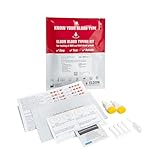
- Learn your blood type in just a couple of minutes.
- Easily understand your blood type group.
- Keep as a permanent record of your blood type.
- Offers a reliable and accurate way to learn your blood type.
- Can be used conveniently at home.
Advanced Labs adds discrete but high-fidelity biological data points into that system. Instead of guessing whether low recovery scores are driven by iron deficiency, thyroid dysfunction, chronic inflammation, or under-fueling, users can now measure those variables directly and view them alongside their existing Whoop trends.
This is a philosophical shift for the platform. Whoop isn’t trying to replace continuous tracking with labs, but rather to create a feedback loop where labs explain why certain wearable trends exist and whether they represent adaptation, deficiency, or risk.
How the Advanced Labs testing process works in the US
Advanced Labs is currently available to US-based Whoop members and operates through a clinician-ordered lab testing model. Users select a test panel inside the Whoop app, complete a brief intake, and are then directed to a national network of partner lab locations for a standard venous blood draw.
There’s no at-home finger-prick kit involved here. The emphasis is on clinical-grade accuracy, which is particularly important for biomarkers like testosterone, ferritin, LDL particle metrics, and inflammatory markers that are notoriously unreliable from capillary samples.
Once results are processed, they are delivered directly into the Whoop app, typically within a few days. From the user’s perspective, the experience is fully integrated, with no PDFs to download, no separate portals, and no manual data entry.
What biomarkers are included and why they matter
Whoop has structured Advanced Labs around themed panels rather than single-marker testing. These panels focus on domains that directly influence recovery, training adaptation, and long-term health, such as hormonal health, metabolic health, cardiovascular risk, inflammation, and nutrient status.
Depending on the panel, biomarkers may include total and free testosterone, estradiol, cortisol, thyroid markers, lipid profiles, fasting glucose, HbA1c, C-reactive protein, ferritin, vitamin D, B12, and other clinically standard measures. These are not experimental biomarkers, but widely accepted lab values with clear reference ranges.
The real value lies in pairing these markers with wearable data. Elevated CRP alongside rising resting heart rate and suppressed HRV tells a very different story than elevated CRP in an otherwise stable recovery profile.
How lab results integrate into the Whoop app experience
Lab results don’t sit in isolation inside the app. Whoop maps each biomarker against personalized reference ranges and explains how values may influence sleep quality, recovery scores, training readiness, and perceived fatigue.
Instead of medical diagnosis, the app focuses on physiological context. For example, low ferritin may be linked to persistent low recovery despite adequate sleep, or suboptimal testosterone may be framed in relation to strength adaptation and training tolerance rather than clinical deficiency alone.
Importantly, Whoop maintains a clear boundary here. Advanced Labs provides education and trend interpretation, not treatment plans or prescriptions, reinforcing that this data is meant to inform conversations with healthcare providers, not replace them.
Who Advanced Labs is actually for
This service is best suited to experienced Whoop users who already understand their baseline patterns and want to move beyond surface-level optimization. Competitive athletes, endurance-focused users, strength athletes tracking hormonal health, and biohackers managing nutrition or supplementation strategies will benefit the most.
It’s less compelling for users still learning how sleep consistency or basic strain management affects recovery. Blood data is powerful, but without a foundation in daily behavior tracking, it risks becoming expensive information without actionable context.
Advanced Labs also makes sense for users frustrated by unexplained plateaus. When training, sleep, and stress management appear dialed in, labs can reveal hidden constraints that no wearable sensor can detect.
Benefits and limitations in the broader wearable ecosystem
The biggest advantage of Advanced Labs is coherence. Rather than juggling lab portals, spreadsheets, and wearable dashboards, users get a unified view of how behavior, physiology, and biology intersect over time.
The limitations are equally important to acknowledge. Blood tests are snapshots, not continuous signals, and cannot capture daily variability the way HRV or resting heart rate can. They also introduce cost and logistical friction compared to passive wearable tracking.
In the broader landscape of health wearables, Advanced Labs positions Whoop closer to a performance health platform than a fitness tracker. It doesn’t make the wearable more powerful on its own, but it makes the data you’re already collecting significantly more interpretable.
How the Advanced Labs Service Works in the US: Ordering, Testing, and Data Flow
From a user perspective, Advanced Labs is designed to feel like a natural extension of the Whoop app rather than a separate medical workflow. The goal is to reduce friction while preserving clinical-grade testing and data integrity.
Instead of pushing users to external lab portals or PDFs, Whoop centralizes ordering, results, and interpretation inside the same environment where recovery, strain, and sleep already live.
In-app ordering and panel selection
US users access Advanced Labs directly from the Whoop app, where available test panels are presented based on performance and health focus rather than medical diagnoses. Panels are grouped around themes like metabolic health, hormonal status, micronutrients, cardiovascular risk markers, and inflammation.
Each panel clearly lists included biomarkers, expected turnaround time, and pricing before checkout. This upfront transparency matters for experienced users who already understand what they are testing and why.
Whoop does not require a separate physician visit to place an order. Instead, testing is facilitated through US-based, CLIA-certified lab partners operating under standing medical oversight, which keeps the process compliant without turning it into a traditional clinical encounter.
Testing options: lab draw versus at-home collection
Depending on the panel and geography, users may choose between in-person blood draws at partner lab locations or at-home collection kits. Larger panels and hormone assays typically require venous draws, while smaller micronutrient or lipid-focused panels may support capillary collection.
In-lab testing offers higher sample volume and consistency, which matters for biomarkers like testosterone, ferritin, or inflammatory markers. At-home kits trade some precision for convenience, making them better suited for trend tracking rather than single-point diagnostics.
Whoop clearly flags which option is recommended for each panel, helping users avoid mismatched expectations around accuracy, comfort, and logistical effort.
What biomarkers are included and why they matter
Advanced Labs panels focus on biomarkers that meaningfully complement wearable data rather than duplicating what sensors already estimate. Common inclusions span lipids, glucose-related markers, iron status, vitamin D, B12, thyroid hormones, sex hormones, and inflammation indicators like hs-CRP.
These markers fill critical blind spots in wearables. HRV may drop, but blood work can reveal whether iron deficiency, low energy availability, or chronic inflammation is contributing to that change.
Importantly, Whoop emphasizes longitudinal relevance. These are biomarkers that change slowly enough to contextualize weeks or months of training data, not daily noise that would conflict with continuous sensor metrics.
Result processing and turnaround time
Once a sample is collected, results are typically returned within a few days to two weeks, depending on panel complexity. Users are notified in-app as soon as data is available, eliminating the need to monitor email or lab portals.
Raw lab values are preserved rather than abstracted away. This is a key distinction for advanced users who want to see exact numbers, reference ranges, and historical comparisons rather than simplified scores alone.
Whoop’s interpretation layer sits on top of this raw data, not instead of it. Users retain access to the full dataset while benefiting from contextual guidance.
How lab data flows into the Whoop platform
Once processed, lab results are ingested directly into the Whoop app and anchored to the user’s timeline. This allows blood markers to be viewed alongside sleep debt, strain cycles, recovery trends, and behavioral changes.
Rather than treating labs as static reports, Whoop frames them as reference points. A ferritin result, for example, becomes a lens through which subsequent HRV stability, perceived exertion, and recovery consistency can be evaluated.
Over time, repeated tests build a biological baseline. This is where Advanced Labs becomes most powerful, turning isolated blood draws into a longitudinal dataset aligned with daily physiological signals.
Interpretation, education, and guardrails
Whoop provides plain-language explanations for each biomarker, including why it matters for performance and recovery and how it typically responds to training load, nutrition, and stress. These explanations are educational, not prescriptive.
The app avoids supplement dosages, treatment protocols, or medical directives. Instead, it highlights patterns and flags out-of-range values as conversation starters with qualified healthcare professionals.
This boundary is intentional. It keeps Advanced Labs positioned as a performance intelligence tool rather than a telemedicine service, which aligns with Whoop’s broader philosophy.
Privacy, data ownership, and regulatory considerations
Lab data is handled under US health data regulations and stored within the same account framework as other Whoop metrics. Users control whether results are shared externally, exported, or kept entirely within the platform.
Rank #2

- What is the EldonCard: You can learn your blood type in just a couple of minutes using the Eldon Blood Typing Kit. The EldonCard is used for ABO-and RHD blood grouping. The card is perfect for individuals to understand what their blood group is. The Blood Typing cards are accurate and can be used in the home and once completed the card can be covered for future reference.
- Why do I need the EldonCard: Your blood type is inherited from your parents and determined by the presence or absence of certain antigens and antibodies. The EldonCard is made of a special type of plastic upon which dried antibody formulations are placed. The EldonCard at home test kit is a reliable, durable, and a flexible point-of-care blood typing system.
- How EldonCard Works: The type of antigen you have tells us what your blood type is. While there are more than 20 blood-type systems, A, B, O and Rh (Rhesus) factors are by far the most important types. The blood is drawn by using a single-use safety lancet, which prevents accidental piercing by anyone picking up the lancet after it has been used. This home medical test is an essential part of blood testing supplies.
- EldonCard Accuracy: The EldonCard is extremely accurate. It has been tested against the standard blood typing procedure using directly agglutinating antibodies. Tests have been performed at several laboratories in different countries and the results are in-line with laboratory-based tests.
- Where and Who can use it: EldonCard health test kit is used by hospitals, blood banks, blood centers, where it can be used for general blood typing and for bedside testing. Given the flexibility, durability and accuracy of the EldonCard, it can be used outside hospitals and clinic environments. Often it is used within practitioner clinics, humanitarian settings, remote locations, battlefields, classrooms, private homes, and in many emergency situations calling for a speedy and reliable test.
Advanced Labs does not automatically share results with insurers or employers, a concern common among biohackers and competitive athletes. Data portability remains intact, allowing users to download results if they want to integrate them into other health workflows.
For a wearable company stepping into lab diagnostics, this privacy posture is critical. Trust in data handling is as important as accuracy when biological data enters the picture.
Biomarkers Included: What Whoop Actually Measures (and Why Each One Matters)
With the guardrails and data integration model established, the obvious next question is what Advanced Labs is actually testing. Whoop has been deliberate here, focusing on biomarkers that meaningfully contextualize recovery, strain tolerance, and long-term health rather than offering an exhaustive clinical panel.
The result is a curated set of blood markers that map cleanly onto signals Whoop already tracks on the wrist. Each marker earns its place by helping explain why recovery trends look the way they do, or why training capacity shifts despite unchanged habits.
Inflammation and immune stress markers
High-sensitivity C-reactive protein (hs-CRP) is one of the most important inclusions. It serves as a systemic inflammation marker, rising with infection, chronic stress, insufficient recovery, or excessive training load.
When viewed alongside resting heart rate, HRV, and sleep disruption, hs-CRP helps distinguish between short-term fatigue and deeper inflammatory strain. For endurance athletes or high-volume trainers, this is often the missing signal that explains why recovery scores stall even when sleep duration looks adequate.
Iron status and oxygen transport
Ferritin is a cornerstone marker, particularly for runners, cyclists, and menstruating athletes. It reflects iron stores rather than just circulating iron, making it far more relevant to endurance capacity and perceived exertion.
Low or declining ferritin often correlates with elevated heart rate at submaximal efforts, suppressed HRV, and slower recovery between sessions. Seeing ferritin trends alongside strain data allows users to identify whether performance plateaus are physiological rather than motivational.
Metabolic health and blood sugar regulation
Advanced Labs includes markers tied to metabolic efficiency, typically fasting glucose and related indicators depending on the selected panel. These values help contextualize energy stability, sleep quality, and morning readiness scores.
Poor glucose control can subtly degrade recovery, increasing nighttime awakenings and elevating resting heart rate. When metabolic markers drift out of range, Whoop’s daily data often shows increased strain sensitivity and reduced resilience to late meals, alcohol, or poor sleep timing.
Lipid profile and cardiovascular risk context
Cholesterol markers, including LDL, HDL, and triglycerides, are included not as performance metrics but as long-term health context. While they do not directly influence daily recovery scores, they matter for users using Whoop as a multi-year health platform rather than a pure training tool.
These markers become especially relevant when paired with longitudinal trends in resting heart rate, sleep consistency, and aerobic strain. Whoop positions lipid data as background intelligence that informs lifestyle decisions rather than short-term training adjustments.
Hormonal signals tied to recovery capacity
Select hormone markers are included to provide insight into systemic stress and recovery potential. Depending on the panel, this may include thyroid-related markers or other foundational hormones that influence energy availability and adaptation.
Hormonal imbalances often manifest first as stubbornly low recovery scores, disrupted sleep, or declining training response. Blood data helps validate when those trends are rooted in physiology rather than overreaching or behavioral inconsistency.
Micronutrients and foundational health markers
Vitamin D is one of the most practically useful inclusions, particularly for indoor athletes or users in northern latitudes. Low levels are associated with impaired immune function, fatigue, and reduced training adaptation.
When vitamin D status is low, users often notice higher illness frequency reflected in Whoop’s respiratory rate and recovery volatility. Tracking this marker alongside seasonal changes in sleep and outdoor activity adds context that wearables alone cannot capture.
Complete blood count and systemic readiness
A standard complete blood count provides insight into red and white blood cell levels, hemoglobin, and hematocrit. While these are foundational clinical markers, they have real implications for oxygen delivery, immune readiness, and fatigue resistance.
Shifts in these values can help explain why perceived effort increases or why recovery deteriorates after travel, illness, or extended training blocks. In the Whoop ecosystem, CBC data serves as a biological snapshot that anchors day-to-day wearable signals in physical capacity.
Why these markers, and why this scope
What stands out is not the sheer number of biomarkers, but how intentionally they are chosen. Each one has a plausible, evidence-backed relationship with metrics Whoop already tracks continuously, from HRV to sleep staging.
Advanced Labs avoids niche or speculative markers that would sit disconnected from daily data. Instead, it prioritizes biomarkers that gain meaning when layered onto strain cycles, recovery trends, and behavioral patterns already visible in the app.
This design choice reinforces Whoop’s core value proposition. Blood tests are not positioned as answers on their own, but as amplifiers that sharpen interpretation of the signals users are already relying on every day.
Inside the Whoop App: How Blood Test Results Integrate with Recovery, Strain, and Sleep
Once blood results are available, they do not live in a separate clinical silo inside the Whoop app. Instead, they are layered directly into the same recovery, strain, and sleep views that users already rely on daily, reinforcing the idea that lab data exists to explain patterns, not replace them.
The integration is designed to be longitudinal rather than reactive. Blood biomarkers become reference points that help interpret why certain trends have been emerging over weeks or months, rather than triggering day-to-day score fluctuations on their own.
From lab draw to app-level context
After a US-based blood draw is completed through Whoop’s Advanced Labs workflow, results are processed and synced back into the app when finalized. Turnaround times vary by panel, but once data lands, it is timestamped and anchored to the surrounding training and sleep history.
Instead of being presented as raw lab printouts, results are contextualized within Whoop’s interface. Each biomarker is shown alongside educational ranges, personalized flags, and links to recent recovery and strain patterns from the same period.
This approach matters because blood values are inherently static snapshots. Whoop’s value comes from placing that snapshot against continuously measured physiology like resting heart rate, HRV, respiratory rate, and sleep consistency.
Recovery scores informed by underlying physiology
Whoop’s recovery score is primarily driven by HRV, resting heart rate, and sleep performance, but blood markers add interpretive depth. For example, low ferritin or hemoglobin can help explain chronically suppressed recovery despite adequate sleep duration and conservative strain.
Inflammation-related markers, when elevated, often align with periods of reduced HRV stability and increased resting heart rate. Seeing that relationship inside the app helps users distinguish between training fatigue, immune stress, and lifestyle-driven recovery issues.
Crucially, blood results do not directly alter recovery scores. They function as explanatory overlays, helping users understand why the algorithm has been trending a certain way rather than overriding it.
Strain tolerance and training capacity over time
Strain is where blood data becomes especially useful for athletes pushing volume or intensity. Markers related to oxygen transport, metabolic health, and systemic stress provide insight into why similar workouts may feel harder across different training blocks.
If strain tolerance declines despite consistent programming, blood data can reveal contributors such as iron deficiency, inadequate carbohydrate availability reflected in metabolic markers, or lingering inflammation. This helps users adjust expectations and training load without blindly chasing higher strain targets.
Over multiple testing cycles, trends matter more than single results. Whoop’s interface emphasizes changes relative to previous labs, allowing users to see whether interventions like dietary changes or reduced volume actually translate into improved physiological capacity.
Sleep quality, hormonal signals, and overnight recovery
Sleep is one of Whoop’s strongest domains, and blood biomarkers add another layer to understanding sleep quality beyond duration and staging. Hormone-related markers and metabolic indicators can help explain persistent sleep fragmentation or poor overnight recovery.
For example, disrupted glucose regulation often aligns with elevated overnight heart rate and reduced deep sleep consistency. Seeing those connections inside the app helps users understand why optimizing sleep hygiene alone may not fully resolve recovery issues.
The app also allows users to correlate blood results with historical sleep trends. This makes it easier to spot whether poor sleep is a short-term behavioral issue or part of a broader physiological pattern.
What the integration deliberately does not do
Whoop is careful not to position blood data as a diagnostic tool. The app does not provide medical diagnoses, prescribe treatment, or suggest supplement protocols beyond general educational guidance.
Blood markers do not trigger automatic training bans or forced recovery days. Decision-making remains user-driven, with the data acting as a guide rather than an authority.
This restraint is intentional. By avoiding over-automation, Whoop preserves trust in its core metrics while giving advanced users deeper insight without crossing into medical decision-making.
Rank #3
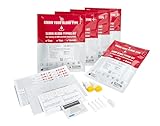
- What is the EldonCard: You can learn your blood type in just a couple of minutes using the Eldon Blood Typing Kit. The EldonCard is used for ABO-and RHD blood grouping. The card is perfect for individuals to understand what their blood group is. The Blood Typing cards are accurate and can be used in the home and once completed the card can covered for future reference.
- Why do I need the EldonCard: Your blood type is inherited from your parents and determined by the presence or absence of certain antigens and antibodies. The EldonCard is made of a special type of plastic upon which dried antibody formulations are placed. The EldonCard is a reliable, durable, and a flexible point-of-care blood typing system.
- How EldonCard Works: The type of antigen you have tells us what your blood type is. While there are more than 20 blood-type systems, A, B, O and Rh (Rhesus) factor are by far the most important types. The blood is drawn by using a single-use safety lancet, which prevents accidental piercing by anyone picking up the lancet after it has been used.
- EldonCard Accuracy: The EldonCard is extremely accurate. It has been tested against the standard blood typing procedure using directly agglutinating antibodies. Tests have been performed at several laboratories in different countries and the results are in-line with laboratory-based tests.
- Where and Who can use it: EldonCard is used by hospitals, blood banks, blood centres, where it can be used for general blood typing and for bed side testing. Given the flexibility, durability and accuracy of the EldonCard, it can be used outside hospitals and clinic environments. Often it is used within practitioner clinics, humanitarian settings, remote locations, battlefields, classrooms, private homes, and in many emergency, situations calling for a speedy and reliable test.
Why this feels different from standalone lab platforms
Traditional lab services often stop at reference ranges and PDF-style reports. Whoop’s integration is fundamentally different because it embeds blood data into a living behavioral dataset.
The value is not in seeing whether a marker is technically “normal,” but in understanding how it interacts with sleep debt, travel, training density, and recovery volatility. That contextualization is what turns labs into something actionable for athletes and serious fitness users.
For users already invested in Whoop’s ecosystem, the experience feels additive rather than overwhelming. Blood tests become another lens through which recovery, strain, and sleep finally make sense as a unified physiological story.
Actionability Explained: What Insights You Can (and Can’t) Act On Today
What ultimately determines whether Whoop’s Advanced Labs integration is worth using comes down to actionability. Not whether the biomarkers are interesting, but whether they change how you train, recover, sleep, or structure your week in a meaningful way.
This is where Whoop’s restraint becomes important. The platform is not trying to replace a clinician or turn lab work into instant prescriptions, but it does enable several concrete, behavior-level decisions that weren’t previously grounded in hard physiology.
What you can act on immediately
The most actionable insights today sit at the intersection of blood markers and recovery trends. When markers like ferritin, vitamin D, HbA1c, fasting glucose, or inflammatory indicators land outside optimal ranges, the app frames them alongside recent changes in resting heart rate, HRV, sleep consistency, and recovery volatility.
For athletes, this is particularly useful during periods of unexplained underperformance. If recovery scores have been suppressed despite conservative strain, blood data can help confirm whether the issue is nutritional, metabolic, or systemic rather than training-related.
Users can act by adjusting training density rather than intensity. For example, spacing hard sessions further apart, prioritizing lower-strain aerobic work, or proactively inserting extra recovery days when lab markers suggest limited physiological resilience.
Sleep, nutrition, and lifestyle adjustments with clearer justification
Sleep optimization becomes more targeted once blood markers enter the picture. Low ferritin or suboptimal vitamin D levels often align with fragmented sleep or difficulty maintaining deep sleep, making earlier bedtimes or longer sleep opportunities more than just generic advice.
Nutritional changes are another practical lever. Elevated glucose markers paired with overnight heart rate elevation may prompt users to experiment with meal timing, carbohydrate distribution, or alcohol reduction, then validate those changes through subsequent sleep and recovery data.
The key difference is feedback. Instead of guessing whether a change is helping, users can track whether recovery stability, resting heart rate, and sleep efficiency improve in the weeks following the adjustment.
Training load decisions informed by internal readiness
Whoop does not automatically cap strain based on blood results, but experienced users can use labs to guide training blocks. If inflammatory markers or metabolic indicators suggest the body is under chronic stress, pushing for peak strain scores may be counterproductive even if day-to-day recovery looks acceptable.
This is especially relevant for endurance athletes and high-volume trainers who rely on cumulative load. Blood data helps contextualize whether declining HRV is a short-term response to hard training or a signal that the system needs a longer reset.
In practice, this leads to smarter periodization rather than reactive deloads. Users can plan recovery weeks with intention instead of waiting for performance or sleep to collapse.
What you cannot act on yet
There are clear limits to what the integration enables today. Whoop does not provide personalized supplementation plans, dosage recommendations, or medical treatment pathways based on lab results.
Hormonal markers, where included, are presented for awareness rather than intervention. The app may explain how testosterone, cortisol-related patterns, or thyroid-adjacent indicators influence recovery trends, but it will not suggest corrective actions beyond general education.
You also cannot use the service for acute decision-making. Blood tests are snapshots, not real-time signals, and they are not designed to dictate whether you should train on a specific day.
Why this is not diagnostic—and why that matters
Whoop deliberately avoids diagnostic framing, even when markers fall outside standard reference ranges. This protects users from overreacting to single data points and reinforces the idea that blood data is most powerful when viewed longitudinally.
For users accustomed to wearable immediacy, this can feel limiting at first. However, it aligns better with how physiology actually changes and reduces the risk of making aggressive adjustments based on incomplete information.
The platform consistently nudges users toward discussion with healthcare professionals when results warrant it, without positioning itself as a substitute for that relationship.
The type of user who benefits most right now
Advanced Labs is best suited for users who already understand Whoop’s recovery, strain, and sleep mechanics. If you regularly adjust training based on HRV trends or use sleep consistency as a performance lever, blood data adds meaningful depth.
It is less valuable for casual users who primarily check daily recovery colors. Without an interest in pattern analysis or behavior experimentation, the additional data may feel informative but inert.
For data-driven athletes, biohackers, and long-term health optimizers, the service fills a critical gap between wearable metrics and internal physiology, even with its current limitations.
How this fits into the broader wearable ecosystem
Most wearables infer internal state indirectly through heart rate, motion, and temperature. Whoop’s lab integration does not replace those signals; it anchors them.
The real actionability comes from seeing whether changes you make to training, sleep, nutrition, or lifestyle actually move both surface-level metrics and deeper biological markers in the same direction. That alignment is what transforms wearable data from descriptive to genuinely instructive.
Who Advanced Labs Is For — Athletes, Biohackers, and Long-Term Health Optimizers
Advanced Labs makes the most sense when wearable data already guides decisions, and blood data is being added to refine those decisions rather than replace them. It is designed for users who think in trends, baselines, and cause-and-effect loops, not one-off readings.
The service effectively rewards patience, consistency, and curiosity about how internal physiology responds to external behaviors over weeks and months.
Performance-focused athletes looking beyond daily readiness
For competitive and serious recreational athletes, Advanced Labs adds context that daily recovery scores cannot fully capture. Markers related to iron status, inflammation, lipids, and metabolic health help explain why recovery trends may plateau despite disciplined training and sleep.
Endurance athletes, in particular, benefit from longitudinal tracking of ferritin, hemoglobin-related markers, and inflammatory signals alongside HRV and resting heart rate. When training volume increases but blood markers stagnate or regress, it provides an early signal to adjust load, fueling, or recovery strategies before performance declines.
Strength and mixed-sport athletes gain a different lens, using metabolic and hormonal-adjacent markers as guardrails rather than targets. The value is not in chasing optimal lab numbers, but in seeing whether training blocks and lifestyle changes are pushing physiology in a sustainable direction.
Biohackers running structured self-experiments
Advanced Labs aligns naturally with users who already run controlled experiments on nutrition, supplementation, sleep timing, or environmental exposure. Blood data gives those experiments a deeper readout than subjective feel or wearable metrics alone.
For example, changes in lipid profiles, glucose regulation, or inflammatory markers can validate whether a dietary shift is doing what it claims beyond short-term weight or energy changes. When paired with Whoop’s behavioral tagging and trend views, it becomes easier to separate placebo effects from meaningful physiological shifts.
This is also where Whoop’s non-diagnostic framing matters. Biohackers who understand variance, biological noise, and regression to the mean will extract far more value than those looking for definitive answers from a single draw.
Long-term health optimizers thinking in decades, not seasons
Users focused on longevity and disease risk reduction are arguably the most natural fit for Advanced Labs. Wearables excel at daily behavior shaping, but blood markers are where long-term risk trajectories actually show themselves.
Tracking lipids, metabolic markers, and inflammation over time creates a health record that is proactive rather than reactive. When sleep consistency improves or alcohol intake drops, seeing those choices reflected internally reinforces habits in a way step counts and recovery scores alone often cannot.
This group tends to appreciate Whoop’s slower cadence for lab testing. Quarterly or semi-annual trends align better with how chronic risk evolves, reducing the temptation to micromanage biology that changes gradually.
Users who may find limited value right now
Advanced Labs is less compelling for users who primarily want immediate training directives or daily green-light indicators. Blood testing does not tell you whether today should be a rest day, and Whoop does not attempt to translate labs into short-term strain guidance.
It may also feel underwhelming for users uncomfortable interpreting data without clear prescriptions. If you prefer platforms that deliver explicit recommendations rather than contextual insights, the responsibility placed on the user here can feel heavy.
Rank #4

- Safe and easy Home Blood Typing Kit - now with Improved lancet
- Results in minutes at home to determine your blood type and Rhesus factor (positive or negative)
- Perfect for those interested in Dr. Peter D'Adamo's Blood Type Diet
- Read instructions carefully before you begin for accurate results
- Each Blood Typing Kit is good for one use (enough for 1 test for a single individual)
Cost and commitment matter as well. The value compounds over repeated tests, meaning the return is modest if used once without follow-up or behavior change.
How to decide if it fits your Whoop usage
Advanced Labs works best when layered onto an already consistent Whoop routine, not used as a standalone feature. If you wear the strap daily, maintain stable sleep habits, and review trends rather than snapshots, the lab data slots naturally into that workflow.
Think of it as upgrading the resolution of your internal dashboard rather than adding a new control system. The more disciplined and longitudinal your approach to health and training already is, the more clearly Advanced Labs will reflect the impact of the choices you are making.
Limitations and Realistic Expectations: Where Blood Data Complements Wearables (and Where It Doesn’t)
The most important adjustment users need to make is mental, not technical. Advanced Labs does not turn Whoop into a medical device or replace the real-time feedback loop that wearables are built around.
Blood biomarkers and sensor-based metrics operate on different biological clocks, and understanding that separation is what prevents disappointment while unlocking real value.
Blood data is slow, directional, and context-heavy
Wearables excel at high-frequency signals like heart rate variability, sleep staging, respiratory rate, and overnight temperature trends. These metrics are designed to move daily and respond quickly to stress, illness, travel, or training load.
Blood markers such as lipids, HbA1c, ferritin, or inflammatory indicators change over weeks to months. They are not meant to validate yesterday’s workout or last night’s sleep, but to show whether your overall lifestyle trajectory is moving in the right direction.
This is why Advanced Labs feels deliberately “quiet” once results arrive. The absence of daily alerts is not a flaw; it reflects the underlying physiology.
Labs won’t tell you how hard to train tomorrow
One common misconception is that blood data can enhance daily readiness scoring. In practice, labs are poorly suited for short-term training decisions.
Markers like cholesterol, vitamin D, or insulin sensitivity do not fluctuate meaningfully in response to a single hard session or recovery day. Whoop correctly avoids forcing these results into strain or recovery guidance, because doing so would create false precision.
Where labs help is at the planning layer. They inform how aggressive or conservative your long-term approach to training, fueling, weight management, or alcohol intake should be, not whether today is a green or yellow day.
Interpreting results still requires literacy and patience
While Whoop contextualizes lab results inside the app, it does not fully abstract away the complexity. Reference ranges, trends, and peer comparisons are presented, but interpretation remains the user’s responsibility.
For experienced users, this is a strength. It allows you to see how changes in sleep consistency, body composition, or training volume correlate with internal markers over time.
For less experienced users, the lack of explicit prescriptions can feel unsettling. Advanced Labs does not replace clinical guidance, and Whoop is careful not to position itself as providing diagnosis or treatment.
Biological variability can mask short-term improvements
Even with consistent behavior changes, blood markers can lag behind expectations. Lipids may improve slowly despite weight loss, and inflammation markers can fluctuate due to factors unrelated to training or recovery, including minor illness or life stress.
This can be frustrating for users accustomed to the immediate reinforcement of wearable metrics. It is also why single tests are of limited value.
Advanced Labs makes the most sense when used repeatedly, under similar conditions, and interpreted as a rolling trend rather than a pass-fail result.
Not every biomarker integrates cleanly with wearable data
Some lab values map intuitively to wearable insights. Resting heart rate trends alongside inflammation or iron status often tell a coherent story, especially in endurance athletes.
Others are more abstract. Lipoprotein subfractions or metabolic markers may be critically important for long-term health but have no obvious wearable counterpart.
Whoop does not force artificial connections where none exist. Instead, the app presents labs as an additional layer of internal state, sitting alongside sleep, recovery, and strain rather than merging into them.
Advanced Labs is not a substitute for medical care
Although testing is clinician-ordered and processed through certified labs in the US, this service is designed for health optimization, not diagnosis. Abnormal results are flagged, but follow-up and treatment decisions still belong with a healthcare professional.
This distinction matters. Advanced Labs can surface risks earlier and provide better questions to bring to a doctor, but it does not close the loop on its own.
For users expecting turnkey medical oversight, the experience may feel incomplete. For those who want ownership of their data and informed autonomy, it fits naturally.
Where blood data truly earns its place
The real strength of Advanced Labs is not in replacing wearable insights, but in validating them over time. When improved sleep regularity aligns with better glucose control, or reduced alcohol intake shows up in liver or lipid markers, behavior change becomes harder to ignore.
Wearables shape daily decisions. Blood data confirms whether those decisions are actually improving your internal health landscape.
Used together, they create a feedback system that is both immediate and longitudinal, which is something neither approach delivers well on its own.
Advanced Labs vs Other Health Data Platforms: How Whoop’s Approach Compares
Seen in context, Advanced Labs is Whoop’s attempt to close a long-standing gap between daily biometric tracking and slower-moving internal health markers. To understand what it does well, it helps to compare it with how other platforms handle lab data, coaching, and real-world usability.
Whoop vs Apple Health and Google Health Connect
Apple Health and Google Health Connect act as data warehouses rather than interpreters. They can ingest lab results from supported providers, but the responsibility for making sense of that data falls almost entirely on the user.
Whoop takes the opposite approach. Advanced Labs results are not just stored; they are framed against recovery, sleep debt, strain patterns, and recent behavioral changes already measured by the strap.
The tradeoff is openness. Apple and Google allow broader third-party integrations and exports, while Whoop prioritizes depth of interpretation within its own ecosystem.
Whoop vs Oura and Fitbit
Oura and Fitbit both excel at passive wellness tracking, particularly sleep staging, HRV, and readiness-style scoring. However, neither currently offers native, clinician-ordered blood testing embedded directly into their subscription experience.
Some users manually upload lab results into Oura’s Trends view or reference them alongside Fitbit metrics, but these are parallel workflows. There is no structured narrative connecting ferritin to night-time heart rate or metabolic markers to recovery quality.
Whoop’s Advanced Labs is designed to sit inside the same decision loop as strain targets and recovery scores, reducing friction for users who want labs to inform training and lifestyle choices.
Whoop vs Garmin’s performance-first ecosystem
Garmin dominates in training load, VO2 max estimation, and sport-specific performance metrics, especially for endurance athletes. Its strength is external output and physiological modeling rather than internal health status.
Garmin does not currently offer native lab testing or meaningful integration of blood biomarkers. Users often rely on spreadsheets or third-party coaching platforms to reconcile lab results with training data.
Whoop’s approach is less about performance prediction and more about readiness sustainability, making Advanced Labs a better fit for athletes managing cumulative stress, iron status, or recovery plateaus rather than race-day optimization.
Whoop vs metabolic platforms like Levels and January AI
Continuous glucose monitoring platforms such as Levels focus intensely on a single biomarker, delivering granular, meal-by-meal feedback. The insight density is high, but the scope is narrow.
Advanced Labs takes a broader snapshot approach. Instead of real-time glucose excursions, it provides periodic checks on metabolic, inflammatory, hormonal, and nutrient-related markers that influence recovery and resilience.
💰 Best Value
- What is the EldonCard: You can learn your blood type in just a couple of minutes using the Eldon Blood Typing Kit. The EldonCard is used for ABO-and RHD blood grouping. The card is perfect for individuals to understand what their blood group is. The Blood Typing cards are accurate and can be used in the home and once completed the card can covered for future reference.
- Why do I need the EldonCard: Your blood type is inherited from your parents and determined by the presence or absence of certain antigens and antibodies. The EldonCard is made of a special type of plastic upon which dried antibody formulations are placed. The EldonCard is a reliable, durable, and a flexible point-of-care blood typing system.
- How EldonCard Works: The type of How EldonCard Works: The type of antigen you have tells us what your blood type is. While there are more than 20 blood-type systems, A, B, O and Rh (Rhesus) factor are by far the most important types. The blood is drawn by using a single-use safety lancet, which prevents accidental piercing by anyone picking up the lancet after it has been used.you have tells us what your blood type is. While there are more than 20 blood-type systems, ABO and Rh are by far the most important. The blood is drawn by using a single-use safety lancet, which prevents accidental piercing by anyone picking up the lancet after it has been used for blood typing.
- EldonCard Accuracy: The EldonCard is extremely accurate. It has been tested against the standard blood typing procedure using directly agglutinating antibodies. Tests have been performed at several laboratories in different countries and the results are in-line with laboratory-based tests.
- Where and Who can use it: EldonCard is used by hospitals, blood banks, blood centres, where it can be used for general blood typing and for bed side testing. Given the flexibility, durability and accuracy of the EldonCard, it can be used outside hospitals and clinic environments. Often it is used within practitioner clinics, humanitarian settings, remote locations, battlefields, classrooms, private homes, and in many emergency, situations calling for a speedy and reliable test.
For users already wearing a Whoop strap, Advanced Labs complements daily trends without adding another wearable, sensor adhesive, or app ecosystem to manage.
Whoop vs lab-first platforms like InsideTracker and Function Health
InsideTracker and Function Health are built around blood testing first, with wearables as optional context. Their reports are often more exhaustive, covering a wider biomarker range with detailed longevity framing.
Whoop’s Advanced Labs is narrower by design. Biomarkers are selected for relevance to training adaptation, recovery capacity, cardiovascular risk, and metabolic health rather than comprehensive medical screening.
The advantage is cohesion. Results are interpreted through the lens of sleep consistency, autonomic balance, and strain history already measured by the device on your wrist or arm.
Software experience and day-to-day usability
A key differentiator is where users encounter their data. With Advanced Labs, results appear inside the same app used daily to check recovery, log behaviors, and plan training.
There is no separate dashboard or static PDF to revisit once and forget. Lab values become another reference point that gains meaning over weeks and months as trends accumulate.
This tight integration favors consistency over novelty, especially for users who already rely on Whoop as their primary health interface.
Cost, commitment, and value alignment
Advanced Labs operates as an add-on to an existing Whoop membership, with testing paid per panel rather than bundled into the subscription. This makes it more flexible than all-inclusive lab services but less hands-off.
Users who want frequent, physician-led interpretation may prefer concierge-style health platforms. Those who want selective testing aligned to training cycles or lifestyle experiments will likely find Whoop’s model more economical and practical.
The value proposition hinges on intent. Advanced Labs rewards users who already act on recovery data, rather than those looking for a one-time health report.
Who this approach serves best
Whoop’s Advanced Labs is not trying to replace medical portals, sports science labs, or longevity clinics. It is designed for people who already think in trends, baselines, and marginal gains.
For athletes managing load, professionals balancing stress and sleep, and biohackers testing interventions over time, Whoop’s integrated model offers clarity without overwhelming complexity.
For users who want maximum biomarker breadth or diagnostic depth, other platforms may be a better starting point.
The Bigger Picture: What Advanced Labs Signals About the Future of Wearable Health Ecosystems
Taken in context, Advanced Labs is less about adding blood tests and more about redefining what a wearable platform can responsibly own. Whoop is positioning itself not as a device-plus-app, but as a continuously learning health system that expands outward from the wrist when sensors alone reach their limits.
This move signals a broader shift across wearables: from passive measurement toward integrated interpretation, where different data sources reinforce each other instead of competing for attention.
From sensor-first to system-first health platforms
For years, wearable innovation focused on hardware breakthroughs: better optical heart rate sensors, longer battery life, lighter materials, and more comfortable form factors. Whoop largely solved those fundamentals early with its minimalist, screenless design, multi-day battery life, and fabric-based straps optimized for sleep and training.
Advanced Labs shows what happens after the hardware plateau. The value now comes from how data is contextualized, layered, and acted upon, not just how it is collected.
By treating blood biomarkers as an extension of existing recovery and strain models, Whoop reinforces a system-first approach where the platform, not the sensor, is the primary product.
Bridging the gap between consumer wearables and clinical data
Most wearables sit firmly on the “wellness” side of the regulatory line, while blood testing lives in a separate, medicalized ecosystem with different incentives and user experiences. Advanced Labs carefully bridges that gap without trying to erase it.
Whoop does not attempt diagnosis, treatment, or physician replacement. Instead, it reframes lab results as longitudinal signals that can explain or validate patterns already visible in wearable data, such as suppressed HRV during heavy training blocks or elevated resting heart rate during periods of chronic stress.
This hybrid model may become the template for future platforms: clinically sourced data, interpreted through consumer-grade behavioral and physiological context.
Trend intelligence over snapshot diagnostics
One of the most important implications of Advanced Labs is its emphasis on trends rather than one-off numbers. A single blood draw has limited value in isolation, especially for active individuals whose biomarkers fluctuate with training load, sleep debt, illness, and nutrition.
Whoop’s ecosystem is built around baselines, deviations, and recovery trajectories. Lab data fits naturally into that philosophy, turning biomarkers into checkpoints rather than conclusions.
This approach favors users who test periodically with intent, such as before and after a training phase, lifestyle change, or supplementation protocol, and it subtly discourages health anxiety driven by isolated out-of-range values.
Software as the primary health interface
Advanced Labs reinforces a key reality of modern wearables: the app is where health decisions actually happen. Whoop’s software experience already acts as a daily command center for sleep planning, training readiness, and behavior logging.
By embedding lab results into the same interface, Whoop avoids the fragmentation that plagues many health stacks, where users juggle wearables, PDFs, lab portals, and note-taking apps that never fully connect.
As wearable ecosystems mature, platforms that centralize interpretation and reduce cognitive load will likely outperform those that simply offer more data.
Implications for competitors and the wider market
Whoop’s move puts pressure on both sides of the market. Traditional wearables will need to think beyond on-device metrics, while lab-first health platforms will need to improve day-to-day engagement and behavioral relevance.
Apple, Garmin, Oura, and others already collect vast physiological datasets, but Advanced Labs highlights a missing piece: selective, intentional clinical inputs that validate and enrich wearable-derived insights.
The future is unlikely to be about who offers the most metrics, but who builds the most coherent feedback loop between biology, behavior, and recovery.
What this means for users deciding whether to opt in
For current Whoop members, Advanced Labs represents a natural extension rather than a new product category. It makes the existing subscription more powerful for users who already trust and act on recovery scores and strain guidance.
For prospective users, it clarifies Whoop’s identity. This is not a smartwatch competing on screens, apps, or notifications, but a purpose-built health system optimized for comfort, durability, and long-term wearability, where external data sources plug into a consistent interpretive framework.
The trade-off remains focus. Users seeking comprehensive diagnostics, physician oversight, or medical-grade reporting may still need additional services. Users seeking clarity, continuity, and actionable trends will find this model increasingly compelling.
Closing perspective
Advanced Labs is not a flashy feature, and that is precisely its strength. It represents a quieter, more mature phase of wearable health, where progress comes from integration rather than invention.
By thoughtfully incorporating blood biomarkers into an already cohesive recovery ecosystem, Whoop is outlining a future where wearables are not standalone gadgets, but evolving health platforms that grow with the user’s goals, training demands, and self-awareness.
For data-driven athletes and health-focused users, this is a meaningful step toward a more unified, less fragmented way of understanding the body over time.