We obsess over heart rate variability, sleep stages, VO₂ max estimates, and even skin temperature trends, yet one of the most fundamental drivers of all those metrics remains largely invisible on our wrists. Hydration status influences cardiovascular strain, thermoregulation, cognitive performance, and recovery, but today’s wearables still treat it as a manual checkbox or a generic reminder to “drink more water.”
For anyone who trains, works long hours, travels frequently, or simply wants to feel consistently sharp, this gap is becoming harder to ignore. The next wave of health wearables is not just about adding another data point, but about closing a physiological blind spot that affects nearly every system the smartwatch already measures. Understanding why hydration is so hard to track, and why brands keep chasing it anyway, sets the stage for why this category is gaining serious momentum.
Why hydration matters more than most metrics we track
Water makes up roughly 50–70 percent of the human body, and even mild dehydration can measurably alter heart rate, blood pressure, perceived exertion, and reaction time. A fluid loss of just 1–2 percent of body mass has been shown to impair endurance performance and cognitive function, often before thirst becomes obvious.
This matters because wearables already flag changes caused by dehydration, but misattribute them. Elevated resting heart rate, reduced heart rate variability, poorer sleep efficiency, and higher skin temperature can all be downstream effects of inadequate hydration rather than stress, illness, or overtraining.
🏆 #1 Best Overall

- so whenever you’re on the move, working out, or need a quiet moment for yourself, smartwater is a smart way to hydrate.
- pure, vapor-distilled water
- premium bottled water with added electrolytes for a pure, crisp taste
- refreshing hydration at the office, on your commute, or anywhere you need to take a beat to recharge
- 100% recyclable bottle
Without hydration context, users may chase the wrong intervention. They rest when they should rehydrate, or assume poor sleep is a training issue when fluid balance is the real culprit.
Why current hydration tracking is mostly guesswork
Most consumer wearables today handle hydration as a behavioral log, not a biometric. You manually enter how much water you drank, often with generic daily targets that ignore body size, sweat rate, climate, altitude, or exercise intensity.
This approach assumes intake equals hydration status, which is physiologically untrue. Fluid absorption, electrolyte balance, renal function, and sweat loss vary dramatically between individuals and even day to day for the same person.
As a result, current “hydration tracking” feels more like a digital water bottle than a health metric, offering reminders and streaks but little actionable insight into what your body actually needs.
The technical challenge: measuring hydration without needles
True hydration status is traditionally assessed via blood osmolality, urine concentration, or body mass changes, none of which translate cleanly to a wrist-worn device. Wearables are constrained to non-invasive sensors that must work through skin, motion, and varying environmental conditions.
Emerging approaches focus on indirect signals such as bioimpedance, sweat composition, optical sensing, and changes in tissue properties. Each has promise, but each also faces accuracy hurdles related to skin tone, sensor placement, temperature, movement, and calibration drift over time.
This is why hydration has lagged behind heart rate and SpO₂, which benefited from decades of clinical validation and relatively stable signal acquisition.
Why brands keep investing despite slow progress
From a product strategy perspective, hydration is a keystone metric. It directly influences exercise readiness, recovery scores, heat strain alerts, and even battery-intensive features like continuous heart rate and GPS tracking by affecting physiological noise in the data.
Major smartwatch and fitness brands see hydration monitoring as a force multiplier rather than a standalone feature. Accurate hydration insights would make existing metrics more reliable, personalize training guidance, and reduce false-positive health alerts.
There is also growing interest from occupational health, military, and clinical monitoring sectors, where dehydration is a safety risk rather than a performance inconvenience. That broader applicability makes the long R&D timelines more justifiable.
What early hydration wearables get right and wrong
Some early devices and prototypes can estimate sweat loss trends or relative hydration changes during exercise, which is valuable for endurance athletes and heat-exposed workers. These systems often perform best in controlled conditions, with tight straps, stable temperatures, and consistent activity profiles.
Where they struggle is all-day accuracy. Daily life introduces confounding variables like meals, alcohol, air conditioning, stress, and inconsistent wear, all of which muddy the signal and challenge battery life and comfort constraints.
This explains why most current solutions frame hydration as “trend-aware” rather than absolute, focusing on directional guidance instead of precise milliliter targets.
Why hydration could become as essential as heart rate
If wearables can reliably detect hydration changes, the implications ripple across the entire user experience. Training load recommendations could adjust dynamically in hot conditions, recovery advice could distinguish fatigue from fluid deficit, and heat illness warnings could become proactive rather than reactive.
For everyday users, hydration-aware devices could explain afternoon energy crashes, frequent headaches, or restless sleep with far more nuance than today’s generalized wellness tips. In medical contexts, they could support older adults, kidney patients, or those on diuretics with passive, continuous monitoring.
We are not fully there yet, but the convergence of better sensors, machine learning models, and multi-signal fusion suggests hydration tracking is moving from “nice idea” to inevitable feature. The question is no longer whether wearables will track hydration meaningfully, but how soon they can do it well enough to trust.
What Do We Actually Mean by ‘Hydration Monitoring’ in Wearables?
When brands and researchers talk about hydration monitoring in wearables, they are not claiming your watch knows exactly how much water is in your body at any given moment. What they are really describing is the ability to infer hydration status indirectly, using physiological signals that change in predictable ways as fluid balance shifts.
This distinction matters, because hydration is not a single measurable variable like heart rate. It is a dynamic state influenced by fluid intake, sweat loss, electrolyte balance, kidney function, hormones, and even ambient temperature.
Hydration status vs. water intake
One of the biggest misconceptions is that hydration monitoring is about counting how many glasses of water you drank. Manual water logging apps have existed for years, but they say nothing about whether your body actually needs more fluid.
Hydration wearables aim to assess hydration status, not intake. That means detecting whether your body is trending toward dehydration or adequate balance, regardless of how much you think you have consumed.
This is why hydration is fundamentally different from step counting or calorie tracking. The signal lives inside the body, not in an external behavior.
Why hydration is so hard to measure non-invasively
Clinically, hydration is assessed using blood osmolality, urine concentration, or body mass changes under controlled conditions. None of those methods translate cleanly to a wrist-worn device that has to be comfortable, waterproof, and run for days on a small battery.
There is no single sensor today that can directly measure total body water from the skin surface. Every wearable approach relies on proxies, combining multiple imperfect signals to estimate what is happening systemically.
This is why hydration tracking has lagged behind heart rate, SpO2, and sleep, despite its obvious importance.
Relative hydration, not absolute numbers
Most current and near-term hydration wearables focus on relative change rather than absolute values. The goal is to detect deviations from your personal baseline, not to declare that you are exactly 2.3 percent dehydrated.
From a user perspective, this is closer to how readiness or stress scores work today. The device learns what “normal” looks like for you, then flags meaningful departures from that state.
This approach is more realistic for all-day wear, where diet, caffeine, alcohol, and environmental exposure constantly shift the baseline.
Sweat loss is only part of the picture
Many early hydration systems focus heavily on sweat rate and sweat composition. During exercise or heat exposure, sweat loss is one of the most immediate drivers of dehydration.
Wearables can estimate sweat loss using skin temperature, motion, heart rate, and in some cases galvanic skin response or sweat sensors embedded in patches. This works reasonably well during steady-state activity like running or cycling.
Outside of exercise, however, sweat becomes a noisy signal. Air conditioning, stress-induced sweating, and skin contact variability all complicate interpretation.
Bioimpedance and tissue conductivity
Another promising avenue is bioelectrical impedance, where a tiny electrical current is passed through the body to estimate fluid distribution. Changes in tissue conductivity can reflect shifts in extracellular and intracellular water.
Some smart scales already use this technique, but translating it to a wrist form factor introduces challenges. The current path is shorter, signal-to-noise ratio is lower, and placement consistency becomes critical.
Still, advances in electrode design and signal processing are making wrist-based impedance increasingly viable, especially when combined with other sensors.
Heart rate, temperature, and hydration interplay
Hydration status subtly affects cardiovascular dynamics. As dehydration progresses, heart rate often increases for a given workload, and heart rate variability can decline.
Core and skin temperature regulation also becomes less efficient when fluid levels drop. Wearables already track these signals with high resolution, making them valuable inputs for hydration inference.
On their own, none of these metrics are specific enough. Together, they begin to form a pattern that machine learning models can recognize.
Multi-sensor fusion is the real breakthrough
The future of hydration monitoring is not a single new sensor, but sensor fusion. Modern wearables already collect heart rate, HRV, skin temperature, motion, sleep data, and sometimes SpO2 or impedance.
Hydration algorithms look for coordinated shifts across these signals rather than isolated changes. This dramatically improves robustness in real-world conditions.
It also explains why hydration tracking is arriving later than simpler metrics. The computational and data science demands are significantly higher.
Why daily life is harder than workouts
In structured exercise, the context is clear. The user is moving continuously, sweating predictably, and wearing the device snugly.
Daily life introduces variability that algorithms must learn to ignore or reinterpret. Meals change blood volume, alcohol alters vasodilation, stress mimics dehydration signals, and loose wear degrades sensor contact.
This is why many early hydration features will likely appear first as workout-specific insights before expanding into passive, all-day guidance.
What hydration monitoring will look like in practice
In the near term, hydration insights will not appear as a simple percentage or water recommendation. They will show up as context-aware prompts, such as increased fluid needs during heat exposure or elevated dehydration risk during long meetings or poor sleep.
Athletes may see hydration-adjusted training load suggestions or recovery warnings after hard sessions. Everyday users may receive explanations for fatigue or headaches that previously felt vague or random.
The experience will be woven into existing dashboards, not presented as a standalone metric demanding constant attention.
Why major brands are investing despite the challenges
Hydration sits at the intersection of performance, safety, and long-term health. It influences endurance, cognitive function, kidney health, cardiovascular strain, and thermoregulation.
For wearable companies, it also leverages hardware they already ship, improving perceived value without radically changing form factors. Software-driven hydration features can differentiate ecosystems without sacrificing battery life or comfort.
Perhaps most importantly, hydration monitoring opens doors to regulated health applications, occupational safety use cases, and clinical partnerships that extend beyond fitness.
Understanding the current limitations
No consumer wearable today can diagnose dehydration or replace medical testing. Accuracy varies by individual, environment, and wear habits, and false positives remain a real risk.
Battery life, sensor drift, and long-term calibration are still active areas of development. Regulatory clearance will also shape how explicitly brands can communicate hydration insights.
Rank #2

- so whenever you’re on the move, working out, or need a quiet moment for yourself, smartwater is a smart way to hydrate.
- pure, vapor-distilled water
- premium bottled water with added electrolytes for a pure, crisp taste
- refreshing hydration at the office, on your commute, or anywhere you need to take a beat to recharge
- 100% recyclable bottle
Recognizing these limitations helps set realistic expectations while appreciating how far the technology has progressed.
Why definition matters for adoption
Calling this “hydration monitoring” sets a high bar, but it is also aspirational. The real value lies in trend detection, early warning, and context-aware guidance rather than precision measurement.
As with early sleep tracking, usefulness will arrive before perfection. Over time, accuracy will improve as datasets grow and models personalize further.
Understanding what hydration monitoring truly means today makes it easier to see why it is poised to become a core pillar of next-generation wearables.
The Sensor Science: How Wearables Are Trying to Measure Hydration
If hydration is going to earn a permanent place alongside heart rate and sleep, it has to be inferred from the body in ways that are passive, continuous, and wearable-friendly. That constraint shapes every technical approach on the market today.
Rather than measuring water directly, modern wearables estimate hydration status through a combination of physiological signals, environmental context, and personalized modeling. The science is less about a single breakthrough sensor and more about how multiple imperfect signals are fused into something useful.
Why direct hydration measurement is so difficult on the wrist
True hydration is traditionally assessed through blood osmolality, urine concentration, or body mass changes, none of which are practical for a smartwatch. The skin is a noisy interface, constantly affected by sweat, temperature, pressure, and movement.
Unlike heart rate, hydration does not have a single, clean physiological proxy. Any wrist-based solution has to infer fluid balance indirectly, accepting trade-offs between accuracy, comfort, battery life, and cost.
This is why most companies frame hydration as a trend or risk signal rather than a precise percentage. The engineering challenge is knowing when “close enough” becomes meaningful.
Bioimpedance: measuring how water changes electrical flow
Bioelectrical impedance analysis works by sending a very small electrical current through the body and measuring how easily it travels. Because water conducts electricity better than fat or bone, changes in impedance can reflect shifts in total body water.
Some research-grade wearables and experimental consumer devices use multi-frequency impedance to separate intracellular and extracellular fluid. In theory, this provides a powerful window into hydration dynamics.
On the wrist, however, impedance paths are short and heavily influenced by skin hydration, strap tightness, and electrode placement. That makes long-term repeatability harder than in smart scales or chest-worn sensors.
Sweat sensing and electrolyte analysis
Another approach focuses on what the body is actively losing rather than what remains inside it. Sweat contains water, sodium, potassium, and other electrolytes that change with hydration status and exertion.
Advanced patches and select sports wearables use microfluidic channels or chemical sensors to analyze sweat composition in real time. This is especially attractive for endurance athletes, where sweat rate and sodium loss vary dramatically between individuals.
The downside is that sweat-based sensing only works reliably during activity and in warm conditions. For everyday users sitting at a desk or sleeping, the signal often disappears entirely.
Optical signals beyond heart rate
The same optical sensors used for heart rate and blood oxygen can reveal subtle hydration-related changes. Variations in blood volume, tissue scattering, and vascular tone can all shift as hydration status changes.
Photoplethysmography data can also reflect cardiovascular strain, which tends to increase with dehydration. Elevated resting heart rate, reduced heart rate variability, and slower recovery are indirect but consistent markers.
These signals are already captured by most smartwatches, making them attractive from a hardware standpoint. The challenge lies in separating hydration effects from stress, illness, caffeine, or poor sleep.
Thermal sensing and skin temperature trends
Hydration plays a critical role in thermoregulation. As dehydration progresses, the body’s ability to dissipate heat through sweating and blood flow becomes less efficient.
Wearables with skin temperature sensors can detect deviations from personal baselines, especially during exercise or heat exposure. When paired with ambient temperature data, these trends can highlight increased dehydration risk.
Skin temperature alone is not specific enough to stand on its own. Its value emerges when combined with heart rate, activity intensity, and environmental context.
Contextual data: the silent multiplier
Sensors do not operate in isolation. Activity level, altitude, humidity, sleep quality, illness, menstrual cycle phase, and even alcohol intake all influence hydration needs and physiological responses.
Modern hydration algorithms increasingly rely on context engines rather than raw sensor thresholds. A brisk walk in cool weather and a tempo run in the heat may produce similar heart rates but vastly different fluid demands.
This is where smartwatch platforms shine, pulling together GPS, accelerometers, weather data, and long-term user history without additional hardware.
Machine learning and personalization
Hydration models improve dramatically when they learn what “normal” looks like for a specific person. Baseline heart rate, sweat response, recovery patterns, and daily routines vary more than most users realize.
Machine learning allows wearables to shift from population averages to individualized expectations. Over weeks or months, the system can flag deviations that matter for that user, not just statistically unusual ones.
This personalization is also why hydration features often improve silently over time through software updates rather than visible sensor changes.
Why multi-sensor fusion matters more than any single breakthrough
No single sensor has proven capable of delivering reliable hydration measurement at the wrist. The industry consensus is that meaningful hydration insight will come from combining partial truths rather than chasing a perfect sensor.
Heart rate trends, impedance shifts, sweat loss estimates, thermal strain, and behavior patterns each contribute a piece of the picture. When aligned, they can identify risk states that are actionable even if they are not clinically diagnostic.
This mirrors how sleep tracking evolved, from crude motion-based estimates to nuanced staging through sensor fusion and modeling.
Hardware realities: comfort, battery life, and wearability
Adding hydration-relevant sensors must not compromise daily wear. Watches still need to be thin, lightweight, skin-safe, and comfortable during sleep and workouts.
Bioimpedance and thermal sensors consume power, forcing careful duty cycling to preserve multi-day battery life. Materials, electrode coatings, and strap design also affect signal quality and user compliance.
The most successful hydration features will be those users forget are running in the background, not ones that demand new rituals or charging habits.
From experimental to consumer-ready
Many hydration-sensing techniques have existed in labs for years. What is changing now is the ability to miniaturize them, stabilize them on the wrist, and interpret their outputs at scale.
Regulatory pathways, sensor reliability, and user education remain hurdles. Still, the trajectory is clear: hydration is shifting from a vague wellness concept to a quantified physiological signal.
Understanding the sensor science makes it easier to appreciate why progress feels incremental yet inevitable.
Why Hydration Is So Hard to Track Accurately on the Wrist
If hydration were as straightforward as counting steps or tracking heart rate, it would already be a standard smartwatch metric. The reality is that hydration is not a single signal but a moving physiological state influenced by behavior, environment, and individual biology, all of which complicate wrist-based measurement.
What makes hydration so appealing as a health metric is exactly what makes it difficult: it sits at the intersection of cardiovascular strain, thermoregulation, kidney function, and fluid balance, none of which are directly observable from the skin surface.
Hydration is a state, not a substance you can directly sense
Unlike heart rate or blood oxygen, there is no sensor that can directly “read” hydration levels in the body. Hydration is inferred through proxies such as plasma volume, electrolyte concentration, sweat rate, or fluid loss over time.
These proxies shift constantly based on exercise intensity, heat exposure, altitude, illness, alcohol intake, and even menstrual cycle phase. A wrist-worn device has to distinguish between meaningful dehydration and normal short-term fluctuations without access to blood or urine samples.
The wrist is a noisy measurement environment
From a biomedical perspective, the wrist is one of the most challenging places to collect clean physiological data. Blood vessels are smaller than at the finger or chest, skin thickness varies widely, and motion artifacts are unavoidable during daily activity.
Optical sensors struggle with changes in perfusion during heat stress, while electrical signals are affected by sweat accumulation, strap tightness, and skin contact quality. Even premium materials like titanium cases, ceramic backs, and advanced electrode coatings can only mitigate, not eliminate, these issues.
Sweat does not equal hydration status
Sweat sensing is often misunderstood as a shortcut to hydration tracking. While sweat rate and composition can indicate fluid loss, they say little about how well-hydrated someone actually is at that moment.
Two users can lose the same amount of sweat and experience very different physiological strain depending on fitness, acclimatization, and prior fluid intake. On the wrist, sweat sensors also face contamination from lotions, sunscreen, and environmental moisture, further complicating interpretation.
Bioimpedance is powerful, but highly context-sensitive
Bioelectrical impedance analysis is one of the most promising approaches for hydration monitoring on wearables. By sending a tiny electrical current through the body, it estimates fluid distribution based on resistance and reactance.
On a watch, however, impedance readings are heavily influenced by posture, electrode placement, skin temperature, and even how recently the device was charged or removed. That is why consumer-grade implementations rely on trend detection over days rather than absolute hydration values.
Thermal strain and cardiovascular drift blur the signal
As dehydration progresses, heart rate tends to rise and skin temperature regulation becomes less efficient. These effects are measurable, but they are also triggered by heat, stress, poor sleep, and illness.
Disentangling dehydration-driven cardiovascular drift from other stressors requires longitudinal data and behavioral context. This is why hydration insights often appear as risk flags or reminders rather than precise percentages.
Individual baselines matter more than population averages
Hydration needs vary dramatically between individuals of the same size and age. Genetics, sweat sodium concentration, kidney efficiency, training status, and climate adaptation all influence how dehydration manifests.
A one-size-fits-all hydration algorithm would generate false alarms for some users and miss risk in others. Modern wearables attempt to solve this by building personal baselines over weeks of wear, which delays usefulness but improves relevance.
Rank #3

- IDEAL FOR YOUR LOVERS: Given its combination of smart features, excellent insulation, and stylish design, the BOOST water tracker bottle is not only a practical tool but also a wonderful product for anyone prioritizing health and wellness. Earn points with every sip to redeem for discounts—making hydration an engaging and rewarding daily habit.
- REMINDER TO REACH GOAL: WaterH smart water bottle is a game-changer, featuring built-in hydration reminders and tracking capabilities. The light ring on the lid, the LED display, and the notifications on your phone or smartwatch help you avoid the negative effects of dehydration caused by forgetting to drink water—such as dizziness, increased blood pressure, and fatigue. It also helps you reach your wellness goals and develop lasting hydration habits.
- PRACTICAL USE DESIGNED: Stay cool with our leak-proof vacuum water bottles, keeping carbonated drinks fizzy. The wide-mouth design makes it easy to add ice cubes and fruit. The unique twill front grooves provide a secure, slip-resistant grip. With excellent battery life, a single charge lasts up to two weeks. The cap handle also flips 180 degrees, making it convenient and reassuring to carry anywhere.
- WATER TRACKER TIPS: Our bluetooth water bottles have an advanced AI algorithm that tracks your intake based on flow and bottle angle. It has passed SGS inspection with only about 15% accuracy tolerance. Following the correct usage method allows you to enjoy a smart life easily: Refill after emptying, drink within a consistent angle (90-135 degrees), and take regular sips (13-20 per session).
- WORRY-FREE SERVICE: Please don't worry about accidentally encountering a situation you can't track. You can first check it out in the following ways: 1. Disconnect, delete the bottle, and repair it. 2. After successful pairing, you will be prompted to calibrate the bottle on a flat surface or table with an empty bottle. If you still can't solve the problem, please don't hesitate to contact our technical engineers through the store or [email protected] for professional guidance and help.
Battery life and comfort impose hard limits
Continuous hydration-relevant sensing is power-intensive. Bioimpedance measurements, skin temperature tracking, and high-frequency heart rate sampling all compete with GPS, displays, and cellular radios for battery capacity.
To preserve multi-day battery life and all-day comfort, watches must sample intermittently and intelligently. This forces hydration tracking to be probabilistic and trend-based rather than continuous and definitive.
Clinical hydration standards do not translate cleanly to wearables
In medical settings, hydration assessment relies on lab tests, body mass changes, or controlled impedance measurements under standardized conditions. None of these are feasible on a consumer smartwatch worn during workouts, sleep, and showers.
As a result, wearable hydration features are designed as guidance tools, not diagnostic instruments. This distinction shapes everything from regulatory positioning to how insights are presented in companion apps.
Software interpretation is doing more work than hardware
Most advances in hydration tracking today come from modeling rather than new sensors. Machine learning systems correlate sensor patterns with known dehydration outcomes across millions of user-days.
This approach improves with scale but remains vulnerable to edge cases, unusual behaviors, and lifestyle changes. It explains why hydration features often launch conservatively and expand in capability through firmware and algorithm updates.
The challenge is knowing when “good enough” is good enough
Perfect hydration accuracy may be unattainable at the wrist, but actionable insight does not require perfection. For athletes, knowing when dehydration risk is rising can prevent performance drops or heat illness.
For everyday users, timely reminders based on physiological strain may be more valuable than exact fluid deficit numbers. The industry’s challenge is defining thresholds that are trustworthy without overstating precision.
Why Big Wearable Brands Are Betting on Hydration Tracking Now
The limitations outlined earlier are exactly why hydration tracking is emerging now rather than a decade ago. The hardware may still be imperfect, but the surrounding ecosystem has finally reached a point where probabilistic hydration insights are useful, defensible, and commercially attractive.
Big wearable brands are not chasing perfect hydration measurement. They are betting that being directionally right, at the right time, for the right user, is enough to change behavior and deepen platform value.
Hydration is one of the last major health blind spots at the wrist
Heart rate, sleep, steps, blood oxygen, skin temperature, and even ECG have become familiar metrics on modern smartwatches. Hydration stands out as a daily physiological variable that users intuitively understand but cannot see reflected in their data.
This gap matters because hydration directly affects cardiovascular strain, thermoregulation, cognitive performance, and exercise output. From a product roadmap perspective, hydration connects multiple existing sensors into a single, relatable insight.
For brands that already track workouts, recovery, and readiness, hydration becomes the missing layer that explains why two identical days can feel radically different.
Heat, endurance sports, and climate change are forcing the issue
Rising global temperatures are changing how wearables are used, especially for outdoor activity. Heat stress, sweat loss, and dehydration risk are becoming mainstream concerns, not niche endurance topics.
Marathons, cycling events, military training, and even recreational hiking increasingly happen under conditions where hydration status can mean the difference between finishing strong and medical intervention. Brands see an opportunity to provide safety-oriented guidance without crossing into clinical diagnosis.
From a positioning standpoint, hydration alerts fit naturally alongside heat acclimation scores, sweat loss estimates, and recovery metrics already familiar to performance-focused users.
Sensor stacks are finally rich enough to support hydration modeling
Earlier wearables lacked the sensor density to infer hydration reliably. Today’s flagship watches combine optical heart rate, skin temperature, accelerometers, altimeters, GPS, and in some cases bioimpedance electrodes.
Individually, none of these can measure hydration directly. Together, they can detect physiological patterns associated with fluid loss, such as elevated heart rate drift, reduced heart rate variability, rising skin temperature, and changes in impedance trends.
Brands are betting that these multi-sensor correlations, sampled intelligently to preserve battery life, are now strong enough to justify consumer-facing features.
Software platforms want metrics that improve with long-term wear
Hydration tracking benefits disproportionately from longitudinal data. The longer a watch is worn, the better the system understands a user’s baseline sweat response, fitness level, and thermal tolerance.
This creates a powerful lock-in effect. A hydration model trained on six months of your data is more valuable than one trained on six days, reinforcing brand ecosystems rather than one-off device usage.
From a business standpoint, hydration is attractive because it rewards consistency, encourages daily wear, and strengthens the perceived intelligence of the platform over time.
Regulatory positioning favors guidance over diagnosis
Unlike ECG or blood pressure features, hydration tracking can be framed as wellness guidance rather than medical measurement. This reduces regulatory friction while still delivering meaningful user value.
Most brands are careful to present hydration insights as risk indicators, reminders, or trend summaries rather than precise fluid deficit numbers. This aligns with how the technology actually performs and avoids overpromising accuracy.
The result is a feature that can launch globally, evolve through software updates, and improve quietly without waiting years for clinical validation pathways.
Hydration insights fit naturally into existing daily workflows
Asking users to log water manually has always suffered from low adherence. Passive hydration monitoring, even if imperfect, fits seamlessly into how people already use their watches.
Subtle prompts triggered by rising strain, long workouts, or hot conditions feel contextual rather than nagging. When paired with familiar rings, scores, or readiness indicators, hydration becomes another signal users learn to trust.
This usability advantage is critical. Brands are betting not just on accuracy, but on whether hydration insights can be delivered without adding friction to daily life.
Battery life and comfort have reached a viable compromise
Earlier concerns about power consumption are being mitigated through intermittent sampling and event-based analysis. Hydration-relevant measurements do not need to run continuously to be useful.
Modern watches with efficient chipsets, larger batteries, and optimized firmware can support these models without sacrificing multi-day wear or comfort. Slimmer cases, improved strap materials, and better skin contact also improve signal quality without compromising wearability.
For manufacturers, this means hydration features can be added without redesigning the watch from scratch, making them a logical evolution rather than a risky overhaul.
Hydration connects performance, wellness, and preventive health
Few metrics sit at the intersection of athletic performance, daily wellbeing, and long-term health as cleanly as hydration. Dehydration affects workout output, sleep quality, mood, and cardiovascular strain.
For everyday users, hydration reminders can prevent headaches, fatigue, and poor sleep. For athletes, they can preserve performance and reduce injury risk. For older users, hydration awareness can support circulation and thermoregulation.
Big brands see hydration as a rare metric that scales across demographics without needing entirely different messaging or hardware.
The competitive landscape rewards being early, not perfect
No brand currently offers clinically definitive hydration measurement at the wrist. But waiting for perfection risks ceding mindshare to competitors willing to ship good-enough guidance now.
Early hydration features help shape user expectations and language around what hydration data should look like. Over time, algorithms improve, sensors evolve, and accuracy tightens under an already-established feature umbrella.
This is the same playbook that heart rate variability, sleep staging, and recovery scores followed. Hydration is simply the next frontier where being present early matters more than being flawless on day one.
From Athletes to Office Workers: Real-World Use Cases That Actually Matter
If hydration monitoring is going to justify its place alongside heart rate, sleep, and activity, it has to prove value outside of lab conditions and elite sports. The real test is whether it meaningfully improves daily decisions for people wearing these devices 12 to 16 hours a day.
That spectrum is wide, and it’s precisely why hydration is so compelling. Unlike niche performance metrics, hydration stress shows up in almost every lifestyle once you know how to look for it.
Endurance athletes and high-volume trainers
For runners, cyclists, triathletes, and CrossFit athletes, hydration is one of the biggest hidden variables in performance decay. Even mild dehydration can elevate heart rate at a given pace, increase perceived effort, and degrade power output long before thirst kicks in.
Wearables won’t tell athletes exactly how many milliliters to drink, at least not yet. What they can do is flag abnormal sweat loss patterns, rising cardiovascular strain relative to workload, or delayed recovery signals that correlate strongly with fluid deficits.
This becomes especially useful during long outdoor sessions where temperature, humidity, and pace vary constantly. When hydration data is layered into existing training load, heart rate variability, and recovery scores, athletes get earlier warnings instead of post-workout regret.
Battery life and comfort matter here more than novelty. A lightweight watch with good thermal stability, breathable straps, and reliable skin contact will outperform a bulkier device trying to sample aggressively and draining overnight.
Gym-goers and recreational fitness users
For people lifting weights, attending fitness classes, or doing short cardio sessions, hydration tracking shifts from performance optimization to consistency and safety. Dehydration increases injury risk, worsens cramps, and contributes to dizziness during high-intensity intervals.
In this group, hydration reminders tied to workout volume or sweat response are more valuable than raw numbers. A watch that quietly nudges a user to rehydrate after a high-sweat session fits naturally into existing fitness workflows without demanding behavior changes.
These users also benefit from watches that balance durability with comfort. Soft-touch case backs, flexible silicone or woven straps, and minimal added thickness ensure hydration features don’t compromise wearability during daily use.
Outdoor workers, travelers, and heat exposure scenarios
Hydration monitoring may end up being most impactful for people who aren’t thinking about fitness at all. Construction workers, delivery drivers, warehouse employees, and frequent travelers all experience dehydration stress that goes unnoticed until symptoms appear.
Wearables can identify rising dehydration risk during long shifts, flights, or heat waves by combining sweat indicators, skin temperature trends, and cardiovascular response. This is less about optimization and more about prevention.
In these scenarios, ruggedness and battery endurance matter more than sleek design. Watches with reinforced cases, sapphire or hardened glass, and multi-day battery life are better suited to sustained environmental stress monitoring.
Office workers and remote professionals
Sedentary users are often the most chronically dehydrated group, despite being surrounded by water. Long stretches of screen time suppress thirst cues, while caffeine intake increases fluid loss.
Rank #4
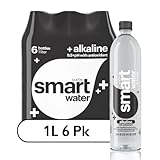
- Alkaline 9.5+pH ionized water with antioxidant from selenium
- Vapor-distilled with electrolytes for taste
- Recyclable water bottle
- Perfect for on-the-go
- The same crisp, clean taste of smartwater that you love
For office workers, hydration tracking works best as a background health signal. Subtle alerts tied to time, indoor climate, and physiological trends help prevent headaches, fatigue, and afternoon energy crashes without becoming intrusive.
This is where smartwatch integration shines. When hydration insights are woven into existing wellness dashboards alongside sleep quality and stress metrics, users start seeing hydration as a productivity tool rather than a fitness chore.
Comfort is non-negotiable here. Slim cases, lightweight materials, and straps that don’t trap heat make hydration monitoring feel invisible rather than burdensome during all-day wear.
Older adults and preventive health users
As people age, thirst sensitivity decreases while dehydration risks increase. This makes hydration awareness particularly valuable for older adults managing blood pressure, circulation, or medications that affect fluid balance.
Wearables can provide passive monitoring and gentle reminders without requiring manual logging. Over time, trends become more important than single-day readings, helping caregivers or clinicians spot patterns that warrant attention.
Accuracy expectations must be handled carefully in this group. Brands will need to communicate hydration insights as risk indicators, not diagnoses, especially until more clinical validation is achieved.
Why these use cases matter for the industry
The strength of hydration monitoring lies in its universality. Unlike niche biomarkers, it doesn’t require a specific sport, condition, or demographic to be relevant.
From a product perspective, this allows brands to justify hydration features across multiple price tiers and form factors without fragmenting their lineup. A mid-range smartwatch with solid battery life and good skin contact can deliver meaningful hydration insights just as effectively as a flagship model.
Most importantly, these use cases anchor hydration tracking in everyday decisions. When users start associating better workouts, fewer headaches, improved sleep, or steadier energy with hydration awareness, the metric stops being experimental and starts becoming expected.
How Hydration Data Could Transform Training, Recovery, and Everyday Health
Once hydration insights are framed as a daily decision-making tool rather than a novelty metric, their impact becomes much clearer. This is where hydration monitoring starts to influence how people train, recover, and function across an entire day, not just during workouts.
The real shift is contextualization. Hydration data only becomes powerful when it is layered alongside heart rate, temperature trends, sleep quality, workload, and recovery signals that users already understand.
Smarter training decisions in real time
Even mild dehydration can elevate heart rate, reduce stroke volume, and accelerate perceived exertion, often before users consciously feel thirsty. When a wearable detects hydration-related physiological drift, it can explain why a pace suddenly feels harder or why power output is dropping despite unchanged effort.
For endurance athletes, this opens the door to pacing adjustments mid-session. A smartwatch that correlates rising heart rate, skin temperature, and sweat-related biomarkers could suggest backing off intensity or increasing fluid intake before performance degrades.
In strength and high-intensity training, hydration data could influence session quality rather than duration. Suboptimal hydration is linked to reduced muscular endurance and slower recovery between sets, making hydration feedback relevant even for gym-focused users.
Recovery metrics that go beyond sleep alone
Recovery has traditionally been inferred from sleep duration, heart rate variability, and resting heart rate. Hydration adds another layer by helping explain why recovery scores fluctuate even when sleep looks “good” on paper.
Inadequate hydration can impair glycogen replenishment, slow muscle repair, and increase cardiovascular strain the following day. Wearables that detect lingering dehydration signals overnight could contextualize poor readiness scores instead of leaving users guessing.
Over time, trends matter more than daily fluctuations. Seeing repeated correlations between low hydration status, poor recovery metrics, and next-day fatigue can drive behavior change more effectively than generic drink-more-water reminders.
Reducing injury risk and overtraining signals
Dehydration increases the risk of cramps, heat illness, and connective tissue strain, especially in hot or prolonged training conditions. Hydration-aware wearables could act as early-warning systems when cumulative strain and fluid loss intersect.
This is particularly relevant for runners, cyclists, and field sport athletes who train multiple days in a row. When hydration data trends downward while training load remains high, the risk profile changes even if other metrics appear stable.
From a sports science perspective, this shifts hydration from a reactive strategy to a preventative one. The wearable becomes less about tracking what happened and more about flagging when adjustments are needed before problems emerge.
Everyday energy, focus, and cognitive performance
Outside of formal training, hydration status has a measurable effect on alertness, mood, and cognitive performance. Even small fluid deficits can contribute to headaches, brain fog, and afternoon energy crashes that many users already associate with stress or poor sleep.
When hydration insights sit alongside stress tracking and sleep data, patterns become visible. Users may notice that low hydration days align with higher perceived stress or reduced focus, reframing hydration as a productivity tool rather than a fitness metric.
This matters for all-day wearable use. Devices with lightweight cases, breathable straps, and reliable battery life are better positioned to capture hydration-relevant data continuously without becoming uncomfortable or intrusive.
Long-term health awareness and preventive insights
Hydration plays a role in cardiovascular health, kidney function, thermoregulation, and blood pressure stability. Yet it remains one of the least objectively tracked health behaviors in everyday life.
Wearables won’t diagnose dehydration-related conditions, but they can surface patterns that warrant attention. Repeated low hydration signals combined with elevated resting heart rate or blood pressure trends could prompt earlier lifestyle adjustments or clinical conversations.
For older adults or users managing medications that affect fluid balance, passive hydration monitoring is particularly valuable. The emphasis shifts from daily targets to longitudinal trends that support preventive care rather than acute intervention.
Why integration matters more than raw accuracy
Hydration monitoring today is still an indirect measurement, often inferred through bioimpedance, sweat composition proxies, skin temperature, and cardiovascular responses. Absolute precision is less important than consistency and meaningful interpretation.
A hydration trend that is directionally reliable and well-integrated into a smartwatch’s software experience can still drive better decisions. Clear explanations, confidence ranges, and context-aware nudges matter more than claiming clinical-grade accuracy.
This is why major wearable brands are investing heavily in software, algorithms, and ecosystem integration alongside sensor development. Hydration data doesn’t live in isolation, and its value increases exponentially when it informs training load, recovery guidance, and daily wellness insights users already trust.
From experimental metric to expected feature
Hydration monitoring is following a familiar path seen with sleep staging and stress tracking. Early implementations feel limited, but the usefulness grows as sensors improve, validation expands, and users learn how to apply the data.
As battery life improves and sensor packages become more efficient, hydration tracking won’t require bulkier cases or specialized hardware add-ons. It will quietly exist in the background, captured through comfortable materials, stable skin contact, and all-day wearability.
When hydration insights start answering real questions about performance dips, recovery setbacks, or daily fatigue, they stop feeling optional. At that point, hydration data becomes not just another metric, but a foundational signal shaping how people understand their bodies day to day.
Battery Life, Comfort, and Wearability: The Practical Challenges Ahead
As hydration monitoring shifts from an experimental signal to an always-on background metric, the conversation inevitably turns from algorithms to ergonomics. A hydration feature that drains the battery, irritates the skin, or forces users to change how they wear their watch will struggle to gain traction, no matter how compelling the data looks in a dashboard.
This is where hydration tracking faces a tougher real-world test than heart rate or step counting ever did. The sensing methods that make hydration inference possible tend to be more power-hungry, more sensitive to placement, and less forgiving of poor skin contact.
Battery life: the hidden cost of “always-on” hydration
Most hydration monitoring approaches rely on frequent sampling of bioimpedance, skin temperature, or optical signals layered on top of existing sensors. Unlike heart rate, which modern watches can sample efficiently at low power, impedance-based measurements often require higher currents and more complex signal processing.
On today’s hardware, that translates to trade-offs. Brands may reduce sampling frequency, limit hydration tracking to certain periods, or bundle it with workout modes to protect battery life, especially on slim cases that already struggle to hit two days of use.
This is a critical hurdle because hydration trends are most valuable when captured continuously. Missing overnight data, long sedentary periods, or hot-weather daily wear creates blind spots that undermine the very longitudinal insights hydration monitoring promises.
Case size, internal space, and sensor stacking
Smartwatches are already densely packed with components: optical heart rate modules, ECG electrodes, temperature sensors, GNSS antennas, speakers, and increasingly larger batteries. Adding hydration-related sensing often means either expanding the sensor array or reengineering existing modules.
For brands known for compact case dimensions and everyday comfort, this is a delicate balancing act. A thicker caseback or more aggressive sensor protrusion can improve skin contact and signal quality, but it also changes how the watch wears over a long day.
This challenge mirrors earlier transitions in wearable history. Optical heart rate accuracy improved dramatically once manufacturers accepted slightly thicker cases and refined caseback geometry, and hydration monitoring is likely to follow the same path.
Skin contact, strap choice, and real-world fit
Hydration inference is unusually sensitive to how consistently the watch sits against the skin. Bioimpedance and sweat-related proxies are affected by micro-movements, loose straps, and even wrist anatomy.
This puts new emphasis on strap materials and fastening systems. Soft elastomer, fluoroelastomer, or textile sports bands with even pressure distribution tend to outperform metal bracelets or stiff leather straps for hydration-related sensing.
For users accustomed to swapping straps for style or comfort, this may require education rather than restriction. Expect software prompts that explain when hydration data quality may be compromised, rather than outright disabling the feature.
Comfort during long-term wear
Hydration tracking only delivers value when the watch is worn all day and all night. That raises issues around skin irritation, pressure points, and heat buildup, particularly as sensors draw more power and operate more frequently.
Some early prototypes and niche devices have already shown that aggressive sensing can lead to warmer casebacks or increased moisture under the watch. Over time, this affects compliance, especially for users with sensitive skin or those wearing the device in hot, humid environments.
Manufacturers are responding with smoother caseback finishes, improved coatings, and better thermal management. These details may seem minor, but they are foundational to making hydration monitoring a passive, forget-it’s-there experience.
Durability and environmental interference
Hydration signals are also vulnerable to environmental noise. Cold weather alters skin impedance, hot showers spike skin temperature, and swimming introduces water contact that confounds sweat-related measurements.
From a wearability perspective, this means watches must be robust enough to handle constant exposure while intelligently flagging compromised data. Users should not feel penalized for living their lives normally, whether that means sauna sessions, open-water swimming, or long travel days.
This places additional strain on software and battery resources, as the device must both detect these conditions and compensate for them without excessive power draw.
The path forward: invisible improvements, not visible sacrifices
The long-term success of hydration monitoring hinges on progress users may never consciously notice. More efficient chipsets, smarter sampling schedules, and tighter integration between sensors will reduce the battery impact without changing how the watch looks or feels.
💰 Best Value

- IDEAL GIFTS FOR FESTIVAL: Given its combination of smart features, excellent insulation, and stylish design, the BOOST Smart Water Bottle is not only a practical tool but also an excellent gift for anyone prioritizing health and wellness. You can earn points for every sip, which can be redeemed for discounts on future purchases—a rewarding way to stay hydrated and healthy!
- GOAL REMINDER: Our WaterH Smart Bottle is a game-changer with built-in hydration reminders and tracking. The halo on the lid, LED display and notifications on your phone or smartwatch help you avoid the side effects of dehydration such as dizziness, increased blood pressure and fatigue that come with forgetting to drink water. It also helps you reach your health goals and develop a lasting hydration habit.
- PRACTICAL DESIGN: Our leak-proof stainless steel bottle keeps you refreshed while drinking water. The wide mouth makes it easy to add ice cubes and fruit. The compact 24-ounce design easily fits into a car cup holder, and the refined grooves on the front ensure a secure and non-slip fit. It lasts up to two weeks per charge, and is durable and easy to carry. Plus, the bottle cap handle rotates 180 degrees for easy portability during outdoor activities.
- Tips for Using a Water Tracker: The WaterH 24-ounce (about 797 ml) water bottle uses an advanced artificial intelligence algorithm to track your water intake based on flow rate and bottle angle. It has passed the SGS test with an accuracy error of only about 15%. Follow the correct usage method to make your smart life easier: please refill water after use, maintain a constant drinking angle (90-135 degrees), and drink water regularly in small sips (13-20 sips each time).
- Worry-free Service: No need to worry about unexpected untracking situations. You can do the following checks first: 1. Disconnect, remove the water bottle, and then repair it. 2. After pairing is successful, the system will prompt you to calibrate the water bottle on a flat surface or table with an empty bottle. If you still can't solve the problem, please feel free to contact our technical engineers through the store or [email protected] for professional guidance and help.
Just as heart rate monitoring evolved from a workout-only novelty into a 24/7 baseline metric, hydration tracking must earn its place through quiet reliability. The goal is not a watch that feels like a medical device, but one that disappears on the wrist while still capturing meaningful physiological trends.
Until battery life, comfort, and wearability reach that threshold, hydration monitoring will remain a feature users experiment with rather than depend on. Solving these practical challenges is not glamorous, but it is the difference between hydration data being interesting and being indispensable.
Medical-Grade Potential vs Consumer Reality: What’s FDA-Cleared and What Isn’t
After solving the physical challenges of comfort, durability, and battery life, hydration monitoring runs headlong into a harder barrier: medical validation. This is where expectations often outpace reality, especially for users accustomed to FDA-cleared ECGs or sleep apnea detection appearing on their wrists.
Hydration feels like it should be a medical-grade metric, but today it largely lives in a gray zone between wellness insight and clinical ambition. Understanding that distinction is essential before trusting any hydration number a watch presents.
The current FDA landscape: no hydration metric has clearance
As of now, no consumer wearable has FDA clearance or approval for directly measuring hydration status. That includes smartwatches, rings, patches, and clip-on sensors marketed to athletes.
This is not a technical oversight or a regulatory delay unique to one brand. It reflects a deeper issue: hydration is not a single measurable parameter like heart rhythm or blood oxygen saturation.
Clinical hydration assessment typically relies on lab-based markers such as plasma osmolality, urine specific gravity, body mass changes, or blood sodium levels. None of these are directly accessible through non-invasive wrist-based sensors.
Why hydration is harder than ECG or SpO2
ECG and SpO2 succeeded in wearables because they measure relatively direct physiological signals. Electrical cardiac activity and light absorption through blood have well-established clinical correlates and decades of validation.
Hydration, by contrast, is inferred. Wearables attempt to estimate it using proxy signals like sweat composition, skin impedance, heart rate variability, skin temperature trends, and activity context.
Each of these inputs is influenced by multiple non-hydration factors. Heat, stress, caffeine, illness, altitude, and even strap tightness can skew the data, making regulatory-grade accuracy extremely difficult to prove.
Wellness features vs medical claims: the line manufacturers cannot cross
Because of these challenges, current hydration features are positioned as wellness tools, not diagnostic instruments. This distinction is deliberate and legally significant.
Wellness features can suggest trends, offer reminders, or encourage behavior changes without claiming to detect dehydration or guide medical treatment. The moment a device claims to diagnose dehydration or replace clinical assessment, it enters FDA-regulated territory.
That is why hydration features are often framed as “hydration insights,” “fluid balance trends,” or “sweat loss estimates,” with language carefully chosen to avoid medical claims.
What exists today: adjacent FDA-cleared technologies
Some wearable-adjacent technologies do have FDA clearance, but they stop short of solving hydration monitoring as consumers imagine it.
Continuous glucose monitors, for example, are FDA-cleared but invasive, using subcutaneous sensors and disposable components. Sweat patches used in research settings can measure electrolytes accurately, but they are single-use, exercise-specific, and not designed for continuous daily wear.
Smartwatches that estimate sweat loss during workouts or suggest fluid replacement are extrapolating from population models, not performing individualized medical measurement.
Why accuracy claims are especially tricky for hydration
Even defining “ground truth” hydration is controversial in medicine. A person can be mildly dehydrated by one marker and normal by another.
This creates a validation problem for wearable companies. To gain FDA clearance, a device would need to demonstrate consistent agreement with accepted clinical standards across diverse populations, environments, and activity levels.
For a wrist-worn device that moves, sweats, cools, heats, and shifts position throughout the day, that bar is exceptionally high.
What consumers should realistically expect today
In their current form, hydration wearables are best understood as behavioral aids. They can highlight when your body is under higher fluid stress, correlate hydration habits with performance or recovery, and prompt more mindful intake.
They are not precise gauges of body water percentage, nor are they reliable indicators of clinical dehydration. Treating them as such risks both false reassurance and unnecessary alarm.
Used alongside subjective cues like thirst, urine color, and activity context, they can still add value without pretending to be medical devices.
The path to medical-grade hydration is longer than most features
Hydration monitoring may eventually reach regulatory-grade reliability, but it will likely require multi-sensor fusion, longer-term baseline modeling, and possibly new sensing modalities altogether.
This could include combining wrist-based data with smart bottles, ingestible sensors, or periodic calibration against lab-grade measurements. None of that fits neatly into today’s minimalist smartwatch designs or battery budgets.
Until then, hydration tracking will evolve the same way sleep tracking once did: years of refinement as a wellness metric before any serious medical claims become viable.
Why brands are still investing heavily despite no clearance
The lack of FDA clearance has not slowed investment because hydration sits at the intersection of performance, prevention, and daily health relevance. Few metrics affect energy, cognition, cardiovascular strain, and recovery as broadly.
For manufacturers, even non-medical hydration insights deepen ecosystem engagement. They tie together activity tracking, temperature sensing, recovery scoring, and coaching features into a more holistic narrative.
From a consumer standpoint, hydration monitoring does not need to be medical-grade yet to be useful. But knowing exactly what it is and is not today prevents misplaced trust and sets realistic expectations for where this technology is headed.
When Hydration Tracking Will Become Mainstream — and What to Expect First
Given those limitations, the more interesting question is not whether hydration wearables will ever be perfect, but when they will become common enough that users stop thinking of them as experimental. That inflection point is closer than many expect, but it will look far more incremental than revolutionary.
Hydration tracking is unlikely to arrive as a single headline feature that suddenly matches heart rate or SpO₂ in perceived reliability. Instead, it will quietly embed itself into existing health dashboards, first as context, then as coaching, and only much later as a trusted standalone metric.
The likely timeline: wellness first, guidance second, precision much later
In the near term, hydration monitoring will remain firmly positioned as a wellness and performance-adjacent signal. Expect it to appear alongside metrics like training load, heat acclimation, recovery readiness, and stress, rather than as its own primary tile.
This mirrors how sleep tracking matured. Early sleep scores were noisy and controversial, but over time they gained credibility through better sensors, longer baselines, and tighter integration with daily behavior insights.
Hydration will follow the same arc, with mainstream adoption driven less by accuracy breakthroughs and more by usefulness. When users feel that hydration prompts genuinely improve workouts, reduce fatigue, or help them recover faster, precision becomes a secondary concern.
What the first “mainstream” hydration features will actually do
The earliest widely adopted implementations will not estimate total body water or tell you how many milliliters to drink. Instead, they will flag elevated hydration strain relative to your personal baseline.
This may show up as alerts during long workouts, hot days, travel, illness, or poor sleep, when cardiovascular drift, skin temperature, and sweat-related signals suggest higher fluid demand. The insight will be comparative, not absolute.
In practice, this looks like guidance rather than measurement. Think “you may benefit from increased fluid intake today” instead of “you are 2.1 percent dehydrated,” which current wrist-based technology cannot reliably support.
Why athletes and outdoor users will drive early adoption
Endurance athletes, hikers, military personnel, and outdoor workers are likely to normalize hydration tracking before everyday office users do. Their fluid needs fluctuate dramatically based on heat, duration, and intensity, making relative hydration stress far more actionable.
For these users, hydration monitoring complements GPS, heart rate, altitude, and temperature data already collected by watches from Garmin, Polar, Suunto, and COROS. Battery life measured in days, not hours, is critical here, as hydration modeling improves with longer continuous datasets.
Importantly, these groups are already comfortable interpreting imperfect metrics. They understand that data trends matter more than single readings, which makes hydration tracking easier to accept despite its current constraints.
How everyday smartwatch users will encounter it
For mainstream smartwatch buyers, hydration tracking will likely arrive through software updates rather than new hardware purchases. Brands will leverage existing sensors, improved algorithms, and cloud-based modeling to introduce hydration insights gradually.
Expect to see hydration context baked into daily readiness scores, workout summaries, and recovery recommendations rather than a dedicated hydration app. The experience will feel passive, with minimal manual input, because friction kills adoption.
Comfort and wearability will matter more than raw sensor sophistication here. Thin cases, breathable straps, skin-friendly materials, and reliable overnight wear are essential, since hydration models depend heavily on continuous data across sleep, activity, and rest.
The role of ecosystems, not just watches
Hydration tracking will become mainstream only when it works across devices and habits. Smart bottles, connected scales, food logging, and even environmental data will quietly feed into broader hydration models.
This ecosystem approach allows watches to stay compact and energy-efficient while still improving insight quality. It also aligns with how users already interact with health platforms, switching between phone, watch, and accessories without thinking about data boundaries.
Brands with strong software ecosystems and long-term user data, rather than just the best sensors, will have a decisive advantage here.
What not to expect anytime soon
Despite optimistic marketing, medical-grade hydration assessment is still a distant goal. Regulatory clearance would require consistent accuracy across skin tones, climates, body types, and health conditions, something no wrist wearable currently achieves.
You should not expect hydration wearables to diagnose dehydration, replace clinical testing, or guide fluid restriction in medical conditions. Any brand suggesting otherwise is overselling today’s capabilities.
The more realistic outcome is something subtler but still valuable: hydration becoming a background signal that improves decision-making without demanding blind trust.
Why hydration tracking will eventually feel indispensable
Once hydration insights are reliable enough to influence how you train, sleep, travel, and recover, turning them off will feel like losing context rather than losing a feature. That is the same psychological shift that made heart rate and sleep tracking feel essential.
Hydration affects nearly every physiological system that wearables already monitor. As those systems become better connected through software, hydration naturally emerges as the missing link rather than a novelty metric.
Mainstream adoption will not arrive with fanfare. It will arrive the day users realize their watch understands why they feel off before they do, and hydration quietly becomes part of the explanation.