For health‑focused buyers burned out on bulky smartwatches or opaque wellness scores, Evie arrived with exactly the right message at exactly the right time. A discreet ring promising clinically grounded insights, no monthly subscription, and a clear emphasis on women’s health felt like a long‑overdue correction to a category dominated by fitness-first priorities. On paper, Evie wasn’t trying to out‑feature incumbents; it was trying to out‑focus them.
The appeal went deeper than specs. Movano positioned Evie as a device built for people who care about health trends over months and years, not just daily step counts or workout badges. For buyers comparing Oura, Ultrahuman, or Circular, Evie looked like the ring that finally took medical credibility, affordability, and comfort seriously.
Understanding why Evie initially resonated is essential to understanding why its real‑world shortcomings are so disappointing. The gap between promise and execution is what ultimately defines the product’s trajectory.
A health‑first ring, not a lifestyle accessory
Evie’s core pitch centered on being health‑led rather than performance‑led, a distinction that matters to buyers who don’t want their data gamified. Instead of focusing on readiness scores or athletic recovery, Movano emphasized vitals like resting heart rate, respiratory rate, sleep stages, and blood oxygen trends in plain language. This framing spoke directly to users tracking long‑term wellbeing rather than optimizing training cycles.
🏆 #1 Best Overall
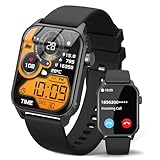
- 【1.83" HD Display & Customizable Watch Faces】Immerse yourself in a vibrant 1.83-inch IPS display, boasting a sharp resolution of 240*284 for crystal-clear visuals. Effortlessly personalize your smart watch with a wide array of customizable watch faces to suit your personal style for every occasion—whether trendy, artistic, or minimalist—ideal for casual, sporty, or professional. Its sleek, modern design complements any outfit, blending technology and fashion seamlessly for everyday wear
- 【120 Sports Modes & Advanced Health Tracking】Our TK29 smart watches for women men come equipped with 120 sports modes, allowing you to effortlessly track a variety of activities such as walking, running, cycling, and swimming. With integrated heart rate and sleep monitors, you can maintain a comprehensive overview of your health, achieve your fitness goals, and maintain a balanced, active lifestyle with ease. Your ideal wellness companion (Note: Step recording starts after exceeding 20 steps)
- 【IP67 Waterproof & Long-Lasting Battery】Designed to keep up with your active lifestyle, this smartwatch features an IP67 waterproof rating, ensuring it can withstand splashes, sweat, and even brief submersion, making it perfect for workouts, outdoor adventures, or rainy days. Its reliable 350mAh battery offering 5-7 days of active use and up to 30 days in standby mode, significantly reducing frequent charging. Ideal for all-day wear, whether you’re at the gym, outdoors, or simply on the go
- 【Stay Connected Anytime, Anywhere】Stay informed and in control with Bluetooth call and music control features. Receive real-time notifications for calls, messages, and social media apps like Facebook, WhatsApp, Twitter, and Instagram directly on your smartwatch. Easily manage calls, control your music playlist, and stay updated without needing to reach for your phone. Perfect for work, workouts, or on-the-go, this watch keeps you connected and never miss important updates wherever you are
- 【Multifunction & Wide Compatibility】Seamlessly handle heart rate monitoring, sleep tracking, and enjoy conveniences like camera/music control, Seamlessly handle heart rate monitoring, sleep tracking, and more-all directly from your wrist. This 1.83 inches HD smartwatch is compatible with iPhone (iOS 9.0+) & Android (5.0+), ensuring smooth daily connectivity and convenience throughout your day. More than just a timepiece, it’s a stylish, all-in-one wearable for smarter, healthier living
That philosophy extended to the app experience, which promised interpretive guidance instead of abstract scores. For many buyers, especially those coming from Apple Watch fatigue, this sounded refreshingly adult and intentional.
FDA ambitions and clinical credibility
One of Evie’s most compelling differentiators was Movano’s public commitment to FDA‑cleared health features. While most smart rings carefully avoid regulated territory, Evie was marketed as a platform being built toward clinical validation, particularly around heart health and blood pressure estimation. Even without immediate clearance, that direction signaled seriousness.
For consumers wary of wellness theater, this suggested a device designed with regulatory discipline, data accuracy, and future medical relevance in mind. It created trust before the ring ever shipped.
A rare focus on women’s health data gaps
Evie stood out by directly addressing areas where mainstream wearables have historically underperformed or ignored users entirely. Cycle tracking, symptom logging, and contextual health insights were framed not as add‑ons, but as core pillars of the experience. That alone differentiated Evie from competitors that treat women’s health as a checkbox feature.
The physical design reinforced this inclusivity. The open‑gap ring structure was marketed as more size‑flexible, lighter, and less prone to swelling discomfort, a practical consideration for all‑day wear that many buyers appreciated in theory.
No subscription, transparent value
In a market increasingly defined by monthly fees, Evie’s no‑subscription promise carried real weight. Buyers were told that the full health experience would be included with the hardware purchase, not unlocked through recurring payments. For cost‑conscious consumers comparing total ownership costs, this made Evie appear unusually consumer‑friendly.
Combined with a competitive upfront price, the value proposition looked strong against Oura’s ongoing fees and the still‑maturing ecosystems of newer rivals.
A form factor that promised true all‑day wearability
Smart rings live or die by comfort, and Evie’s lightweight build and titanium construction suggested a device you could forget you were wearing. The thinner profile and lower visual presence appealed to users who wanted health tracking without a visible gadget. For those who sleep poorly with watches or dislike wrist‑based sensors, Evie seemed like the ideal compromise.
In concept, Evie aligned beautifully with what health‑focused ring buyers say they want. The problem is that translating that promise into reliable daily use is far harder than articulating it, and that’s where the story begins to unravel.
From Positioning to Practice: Where Evie’s Real‑World Experience Starts to Fray
The challenge for Evie isn’t vision or intent, but execution under daily, imperfect conditions. Once the ring leaves the marketing page and enters real wrists, real sleep, and real phones, the gaps between promise and performance become harder to ignore.
What initially feels like a thoughtful, values‑driven alternative to subscription‑heavy competitors begins to reveal friction points that compound over time, especially for users who expect reliability from a health device they wear continuously.
Onboarding friction and software instability
Evie’s setup process is not as seamless as its positioning suggests. Pairing can be inconsistent across supported smartphones, with reports of repeated connection drops during initial syncing and after firmware updates.
The app itself feels early‑stage in daily use. Navigation between health views lacks the polish seen in more mature ecosystems, and occasional sync delays mean data doesn’t always feel trustworthy in the moment it’s most relevant.
For a device that emphasizes daily health awareness, any uncertainty about whether last night’s sleep or today’s activity has fully registered undermines confidence quickly.
Data consistency issues that undercut trust
Smart rings live and die by passive accuracy, and Evie struggles here compared to category leaders. Heart rate trends can show abrupt gaps, sleep staging often feels overly generalized, and recovery or readiness‑style insights lack the contextual nuance users now expect.
Cycle tracking, while conceptually strong, relies heavily on manual input and pattern estimation rather than robust physiological modeling. For users hoping Evie would meaningfully outperform smartwatch‑derived cycle estimates, the real‑world advantage is smaller than advertised.
This isn’t about individual bad readings, but about cumulative reliability. Over weeks of wear, the data simply doesn’t inspire the same confidence as Oura or even newer competitors refining their algorithms aggressively.
Battery life and charging reality
Evie’s battery performance lands closer to “acceptable” than impressive. While marketed as multi‑day, real‑world usage with continuous tracking often pushes users into a frequent charging rhythm that feels disruptive for a ring meant to be worn around the clock.
Charging itself is not particularly fast, and the need to remove the ring more often increases the chances of missed sleep or activity data. Over time, this erodes one of the core benefits of choosing a ring over a watch.
In comparison, rivals with longer endurance or more predictable battery curves feel less demanding in daily life.
The open‑gap design: comfort vs durability trade‑offs
Evie’s open‑gap form factor does deliver on comfort for some users, particularly during swelling or extended wear. However, that same design introduces new concerns around durability, fit stability, and sensor consistency.
Because the ring isn’t a closed loop, micro‑shifts during sleep or exercise can affect skin contact. That variability likely contributes to the inconsistent readings many users notice over time.
There’s also a psychological factor. The open design feels less structurally secure than traditional rings, making wearers more cautious during workouts, manual tasks, or even sleep, which again interrupts continuous tracking.
A limited ecosystem with slow iteration
Perhaps the most significant long‑term concern is ecosystem momentum. Firmware updates and feature expansions arrive slowly, and communication around timelines has been vague.
In a category evolving as fast as smart rings, standing still is effectively falling behind. Competitors are adding advanced temperature analysis, readiness scoring, and third‑party integrations at a pace Evie has not matched.
Without rapid iteration, Evie’s no‑subscription model starts to feel less like consumer generosity and more like a constraint on ongoing development.
Why these issues matter more than they seem
None of Evie’s shortcomings are catastrophic in isolation. But smart rings are intimate, long‑term devices, and small reliability issues compound into daily frustration.
When users begin to question whether the data is complete, whether the ring stayed connected, or whether charging disrupted their baseline, the core value proposition weakens. At that point, the strong positioning that initially drew buyers in can no longer carry the experience.
Against more stable, better‑refined alternatives, Evie asks for patience that many health‑focused consumers simply shouldn’t have to give.
Data Reliability and Sensor Consistency: The Core Trust Problem
All of the earlier trade‑offs ultimately funnel into a single, unavoidable question: can you trust the data. For a health‑focused smart ring, that trust is not a bonus feature, it is the entire product.
This is where the Evie Ring struggles the most in real‑world use, not because its sensors are fundamentally incapable, but because their outputs are too often inconsistent, incomplete, or difficult to interpret with confidence.
Inconsistent readings undermine long‑term insight
Evie tracks the expected core metrics for a modern smart ring: heart rate, sleep stages, blood oxygen, activity, and trends over time. On paper, that puts it in direct competition with category leaders.
In practice, users frequently report night‑to‑night variability that feels disconnected from how they actually slept or moved. Resting heart rate baselines can shift abruptly, sleep duration may appear truncated, and blood oxygen readings can drop out without clear explanation.
One bad night of data is forgivable. Repeated uncertainty forces users to question whether changes reflect their body or the ring’s contact quality.
Ring form factor magnifies sensor placement errors
Smart rings live or die by stable skin contact. Unlike watches, they cannot compensate with size, weight, or strap tension to stabilize sensors during movement.
Evie’s open‑gap design, while more forgiving for finger swelling, introduces more opportunities for micro‑rotation and lift‑off. During sleep, when fingers flex and relax, this can subtly shift optical sensors away from optimal positioning.
Rank #2
![Apple Watch Series 11 [GPS 46mm] Smartwatch with Jet Black Aluminum Case with Black Sport Band - M/L. Sleep Score, Fitness Tracker, Health Monitoring, Always-On Display, Water Resistant](https://m.media-amazon.com/images/I/312K597M2uL._SL160_.jpg)
- HYPERTENSION NOTIFICATIONS — Apple Watch Series 11 can spot signs of chronic high blood pressure and notify you of possible hypertension.*
- KNOW YOUR SLEEP SCORE — Sleep score provides an easy way to help track and understand the quality of your sleep, so you can make it more restorative.
- EVEN MORE HEALTH INSIGHTS — Take an ECG anytime.* Get notifications for a high and low heart rate, an irregular rhythm,* and possible sleep apnea.* View overnight health metrics with the Vitals app* and take readings of your blood oxygen.*
- STUNNING DESIGN — Thin and lightweight, Series 11 is comfortable to wear around the clock — while exercising and even when you’re sleeping, so it can help track your key metrics.
- A POWERFUL FITNESS PARTNER — With advanced metrics for all your workouts, plus features like Pacer, Heart Rate Zones, training load, Workout Buddy powered by Apple Intelligence from your nearby iPhone,* and more. Series 11 also comes with three months of Apple Fitness+ free.*
The result is data that may look plausible at a glance but lacks the consistency needed for trend‑based health interpretation.
Optical sensors are only as good as their algorithms
Most of Evie’s metrics rely on optical photoplethysmography, the same foundational technology used by competitors. The difference is not hardware alone, but how aggressively the software filters noise, fills gaps, and flags uncertainty.
Evie’s platform tends to present data without enough contextual confidence indicators. When readings are missing or smoothed, users are rarely told why or how much estimation is involved.
For health‑oriented consumers, especially those tracking recovery, cycle patterns, or cardiovascular trends, that opacity weakens trust quickly.
Sleep tracking feels especially fragile
Sleep is where smart rings should shine, and it is also where Evie feels least dependable. Variability in sleep stage breakdowns and wake detection is more noticeable than with leading alternatives.
Short awakenings can be missed entirely, while longer restless periods may be underrepresented. Over time, this makes nightly sleep scores feel more like approximations than actionable reflections.
When sleep is the anchor metric for recovery, readiness, and hormonal insight, fragile sleep data destabilizes the entire health stack built on top of it.
Battery and charging behavior quietly distort baselines
Evie’s battery life is adequate on paper, but frequent charging cycles introduce subtle disruptions to continuity. Missed hours, partial nights, or delayed syncs can skew rolling averages.
Because the app does not always clearly separate estimated data from recorded data, users may unknowingly interpret incomplete information as physiological change.
Over weeks and months, those small gaps compound, especially for users trying to correlate lifestyle changes with health outcomes.
Why this matters more than feature count
Evie’s appeal has always been about intent: women‑focused design, no subscription, and a promise of health empowerment. But empowerment requires dependable feedback.
When users start cross‑checking Evie against other devices, or dismissing its alerts as “probably wrong,” the relationship breaks down. A health wearable that cannot earn quiet, unconscious trust becomes a device you manage, rather than one that supports you.
At that point, even well‑intentioned features lose value, because the foundation they rely on never feels fully solid.
Battery Life, Charging Behavior, and Power Management Trade‑offs
Battery behavior is where Evie’s reliability concerns become most tangible, because power management quietly governs everything that comes after. When charging cadence, drain consistency, and background power decisions are unpredictable, even good sensors struggle to deliver stable longitudinal data.
Advertised endurance versus lived reality
On paper, Evie’s battery life lands in the acceptable range for a modern smart ring, typically framed as multiple days between charges. In real‑world use, that figure proves optimistic, especially once continuous sleep tracking, temperature sensing, and frequent app syncs are factored in.
Many users find themselves charging closer to every two to three days rather than comfortably stretching longer cycles. That alone is not disqualifying, but it puts Evie at a disadvantage against category leaders that can sustain five to seven days with less variance.
Inconsistent drain patterns undermine trust
More concerning than absolute battery life is how uneven Evie’s drain can feel from day to day. Identical routines may produce noticeably different remaining battery percentages by evening, suggesting aggressive background processes or inefficient sensor duty cycling.
This variability makes it harder to plan charging around sleep, which is the one window smart ring users are least willing to sacrifice. Missing even part of a night because the ring died early has an outsized impact when sleep underpins most downstream health insights.
Charging speed and ergonomics add friction
Evie relies on a proprietary charging solution rather than a widely compatible standard, which limits flexibility for travel or desk charging. The charging process itself is not especially fast, often requiring well over an hour to meaningfully replenish the battery.
Because partial top‑ups are less effective when drain is unpredictable, users are nudged toward full charging sessions more often. Over time, that rhythm starts to feel like maintenance rather than passive ownership.
Power management choices affect data continuity
Evie appears to prioritize battery preservation in ways that are not always transparent to the user. Sensor sampling rates, background syncing, and data uploads can shift dynamically, but the app rarely explains when or why this happens.
When battery levels drop, data gaps may be filled with estimation rather than clearly flagged absences. This ties directly back to the earlier concern around opacity, where users are left guessing whether changes reflect physiology or power‑saving behavior.
Firmware updates and background sync costs
Firmware updates and app reconnects can trigger short bursts of accelerated drain, sometimes catching users off guard. If this coincides with overnight wear, the result may be truncated sleep sessions or delayed syncing the following morning.
These moments highlight a broader ecosystem issue rather than a single hardware flaw. A health wearable needs conservative, predictable power governance, especially when positioned as a set‑and‑forget companion rather than a gadget to babysit.
Ring size, comfort, and battery capacity trade‑offs
As with most smart rings, smaller Evie sizes inherently contain smaller batteries, which further compress usable endurance. For users with slimmer fingers, this can turn an already modest battery profile into a daily consideration.
Comfort and fit remain strong points, but the physical constraints of the form factor make efficient power management non‑negotiable. When efficiency falls short, the wearer absorbs the cost through disrupted routines and compromised data continuity.
Why this matters more for health rings than watches
Smartwatches can compensate for charging friction with fast chargers, larger batteries, and explicit low‑power modes. Smart rings cannot, because their value depends on uninterrupted, long‑term passive capture.
When Evie’s power behavior forces users to think about charging windows, battery anxiety, or missed nights, it breaks the illusion of invisibility that rings are supposed to provide. That erosion of effortlessness is subtle, but over months of wear, it becomes one of the clearest reasons the device feels harder to live with than it should.
App Experience and Ecosystem Gaps: Software That Undermines the Hardware
The battery and reliability friction described earlier would be easier to forgive if the Evie app consistently added clarity, confidence, and long-term value. Instead, the software layer often amplifies uncertainty, turning hardware limitations into day-to-day usability problems rather than smoothing them over.
For a health ring that positions itself as clinically serious and consumer-friendly, the app experience becomes the deciding factor. This is where Evie struggles most to justify itself against more mature smart ring ecosystems.
Data presentation that prioritizes promise over precision
Evie’s app leans heavily into clean visuals and reassuring language, but often at the expense of analytical depth. Metrics are presented as definitive even when underlying data quality may be compromised by battery behavior, partial wear, or background estimation.
There is limited contextual flagging to indicate when readings are incomplete, interpolated, or affected by power-saving states. For health-focused users, this creates a false sense of confidence rather than informed trust.
Limited historical depth and trend interpretation
While day-to-day snapshots are easy to scan, longer-term trend analysis remains underdeveloped. Weekly and monthly views exist, but they lack the layered insights that help users understand causality, adaptation, or regression over time.
Compared to leading competitors, Evie offers fewer explanations that connect behavior changes to physiological shifts. The result is data that looks polished but struggles to answer the question of “why” in a meaningful way.
Health insights without actionable guidance
Evie emphasizes empowerment, but the app often stops short of actionable coaching. Insights tend to describe what happened rather than guide what to do next, leaving users to interpret changes on their own.
For a ring marketed toward women’s health and long-term wellness, this passivity feels like a missed opportunity. Without clearer recommendations or adaptive feedback loops, the app becomes a passive dashboard rather than an active health companion.
Rank #3

- Bluetooth Call and Message Alerts: Smart watch is equipped with HD speaker, after connecting to your smartphone via bluetooth, you can answer or make calls, view call history and store contacts through directly use the smartwatch. The smartwatches also provides notifications of social media messages (WhatsApp, Twitter, Facebook, Instagram usw.) So that you will never miss any important information.
- Smart watch for men women is equipped with a 320*380 extra-large hd full touch color screen, delivering exceptional picture quality and highly responsive touch sensitivity, which can bring you a unique visual and better interactive experience, lock screen and wake up easily by raising your wrist. Though “Gloryfit” app, you can download more than 102 free personalised watch faces and set it as your desktop for fitness tracker.
- 24/7 Heart Rate Monitor and Sleep Tracker Monitor: The fitness tracker watch for men has a built-in high-performance sensor that can record our heart rate changes in real time. Monitor your heart rate 26 hours a day and keep an eye on your health. Synchronize to the mobile phone app"Gloryfit", you can understand your sleep status(deep /light /wakeful sleep) by fitness tracker watch develop a better sleep habit and a healthier lifestyle.
- IP68 waterproof and 110+ Sports Modes: The fitness tracker provides up to 112+ sports modes, covering running, cycling, walking, basketball, yoga, football and so on. Activity trackers bracelets meet the waterproof requirements for most sports enthusiasts' daily activities, such as washing hands or exercising in the rain, meeting daily needs (note: Do not recommended for use in hot water or seawater.)
- Multifunction and Compatibility: This step counter watch also has many useful functions, such as weather forecast, music control, sedentary reminder, stopwatch, alarm clock, timer, track female cycle, screen light time, find phone etc. The smart watch with 2 hrs of charging, 5-7 days of normal use and about 30 days of standby time. This smart watches for women/man compatible with ios 9.0 and android 6.2 and above devices.
Ecosystem isolation and weak third-party integration
Evie operates largely as a closed system. Integration with broader health platforms is limited, making it harder to combine ring data with smartwatch metrics, fitness equipment, or nutrition tracking tools.
This isolation matters more over time, as many users evolve toward multi-device health stacks. Competing rings increasingly recognize this reality, while Evie feels designed for a more siloed, first-generation usage model.
Platform parity and update cadence concerns
Feature rollout and performance consistency between iOS and Android have not always been aligned. Some users experience delayed updates, inconsistent syncing behavior, or minor UI regressions following app revisions.
These issues are rarely catastrophic on their own, but they compound the sense that the software stack is still stabilizing. For a device meant to disappear into the background, any friction becomes disproportionately noticeable.
Transparency gaps around regulated features
Movano’s FDA-facing ambitions are a core part of Evie’s identity, yet the app does not always clearly separate regulated capabilities from wellness-oriented estimates. This blurring can confuse users about what is clinically validated versus what is still evolving.
Clearer labeling, deeper methodology disclosures, and stronger in-app education would go a long way toward aligning expectations. Without that, Evie risks overpromising seriousness while underdelivering clarity.
Why software maturity matters more than ring design
Physically, Evie succeeds in comfort, finish, and wearability, which makes the software shortcomings more frustrating. The ring is light, unobtrusive, and easy to live with, but the app repeatedly pulls the user back into friction and doubt.
In the smart ring category, hardware earns the first impression, but software determines long-term loyalty. Right now, Evie’s app experience feels like a work in progress attached to hardware that deserves a more capable ecosystem.
Feature Execution vs Marketing Claims: Health Insights That Don’t Fully Deliver
All of these software maturity concerns come into sharper focus when you look at how Evie’s headline health features actually perform day to day. Movano’s marketing positions Evie as a clinically grounded, insight-forward alternative to existing smart rings, but the lived experience often feels less resolved than those claims suggest.
This is not a case of features being entirely absent. Rather, it is a pattern where measurements exist, dashboards look promising, and explanations sound reassuring, yet the resulting insights stop short of being actionable, reliable, or clearly differentiated from less ambitious competitors.
Sleep tracking that looks complete but lacks interpretive depth
Evie tracks the expected sleep metrics: total sleep time, stages, restlessness, and overnight heart rate. On paper, this aligns with category norms, and in controlled nights the data often falls within reasonable ranges when compared against a smartwatch.
Where Evie struggles is in interpretation. Sleep insights tend to be descriptive rather than diagnostic, telling you what happened without meaningfully explaining why or what to adjust. Competing rings increasingly contextualize sleep with behavior, temperature trends, or long-term baselines, while Evie’s feedback often feels static.
For a ring marketed around health clarity, the absence of deeper longitudinal analysis makes sleep tracking feel unfinished rather than insufficient.
Readiness and recovery signals that lack consistency
Evie surfaces readiness-style indicators derived from heart rate, sleep, and activity inputs, but these scores can fluctuate in ways that are difficult to reconcile with lived experience. Similar nights of sleep or similar activity loads sometimes produce noticeably different readiness outputs.
This inconsistency erodes trust over time. Users begin checking the data less for guidance and more out of curiosity, which defeats the purpose of a background health device.
More mature platforms have learned that readiness scores must be boringly consistent before they can be meaningfully useful. Evie is not quite there yet.
Women’s health features with strong intent but limited payoff
Movano has positioned Evie as especially attuned to women’s health, including cycle tracking and temperature-based insights. The inclusion of skin temperature sensing is a genuine strength, and the hardware is capable of supporting nuanced analysis.
In practice, the app often underutilizes this data. Cycle predictions and correlations are present but conservative, offering limited personalization beyond basic phase labeling. Temperature trends are shown, but not deeply integrated into broader recovery or readiness guidance.
The result is a feature set that feels respectful and careful, but also restrained to the point of underwhelming for users expecting richer insight.
Vitals tracking without enough context to build confidence
Evie tracks heart rate, blood oxygen, and respiratory rate, and Movano frequently emphasizes its clinical ambitions around these measurements. However, the app experience does not consistently communicate confidence intervals, sensor conditions, or data quality indicators.
When readings vary or appear out of pattern, users are left guessing whether this reflects physiology, sensor placement, motion artifacts, or software smoothing. Other platforms increasingly surface data confidence cues to help users interpret anomalies.
Without that transparency, Evie’s vitals feel less authoritative than the marketing implies.
Battery life tradeoffs that quietly affect data fidelity
Evie’s battery life is competitive for a smart ring, typically lasting several days between charges. What is less clear to users is how power management influences sampling frequency and background monitoring.
Some metrics appear less granular than expected, particularly during active days or fragmented sleep. While this may be an intentional balance between comfort and longevity, it is not well explained in the app.
For a product positioned as health-first, any ambiguity around what is being measured, when, and how often becomes a meaningful trust issue.
Insights that feel like placeholders rather than conclusions
Across features, a recurring theme emerges: Evie is good at collecting data, decent at visualizing it, but hesitant to draw strong conclusions. Notifications and insights often stop short of telling users what to change, avoid, or prioritize.
This conservative approach likely reflects Movano’s regulatory caution, but it creates a gap between promise and experience. Users are sold on clarity and empowerment, yet frequently receive neutral observations instead.
Over time, that gap makes the ring feel less like a guide and more like a passive recorder.
Why execution matters more than ambition
None of these shortcomings exist in isolation, and none render Evie unusable. The issue is cumulative: small inconsistencies, shallow insights, and cautious framing slowly undermine the confidence required for long-term reliance.
In a category where competitors are aggressively refining algorithms, expanding ecosystems, and sharpening insights, Evie’s health features feel perpetually one iteration behind. The ambition is credible, but the execution has not yet caught up to the message.
For consumers choosing a smart ring as a primary health device, that mismatch makes Evie increasingly hard to justify, no matter how compelling the vision sounds.
Fit, Comfort, and Wearability Over Time: Smart Ring Ergonomics Matter
If confidence in the data is already fragile, comfort becomes the final gatekeeper for long-term use. A health wearable that is even slightly annoying to wear will eventually be worn less, and once adherence drops, every metric becomes less meaningful.
Smart rings are uniquely unforgiving in this regard. Unlike watches, they cannot be loosened, shifted, or ignored when discomfort sets in.
Sizing precision is not optional for a health-first ring
Movano offers a sizing kit, but Evie’s fit tolerance feels narrow compared to category leaders. Half-size gaps and subtle inner geometry differences mean many users land in a compromise size rather than a perfect one.
That compromise shows up quickly during real-world wear, especially with natural finger swelling from heat, exercise, or sleep. A ring that feels fine in the morning can feel restrictive by evening, encouraging removal at exactly the times continuous tracking matters most.
Ring thickness and profile create awareness, not invisibility
Evie is not unusually large on paper, but its vertical thickness and overall profile make it more noticeable than expected. The ring does not disappear on the hand in the way the best smart rings do.
Rank #4
![Apple Watch Series 11 [GPS 42mm] Smartwatch with Rose Gold Aluminum Case with Light Blush Sport Band - S/M. Sleep Score, Fitness Tracker, Health Monitoring, Always-On Display, Water Resistant](https://m.media-amazon.com/images/I/31J+F-pXaWL._SL160_.jpg)
- HYPERTENSION NOTIFICATIONS — Apple Watch Series 11 can spot signs of chronic high blood pressure and notify you of possible hypertension.*
- KNOW YOUR SLEEP SCORE — Sleep score provides an easy way to help track and understand the quality of your sleep, so you can make it more restorative.
- EVEN MORE HEALTH INSIGHTS — Take an ECG anytime.* Get notifications for a high and low heart rate, an irregular rhythm,* and possible sleep apnea.* View overnight health metrics with the Vitals app* and take readings of your blood oxygen.*
- STUNNING DESIGN — Thin and lightweight, Series 11 is comfortable to wear around the clock — while exercising and even when you’re sleeping, so it can help track your key metrics.
- A POWERFUL FITNESS PARTNER — With advanced metrics for all your workouts, plus features like Pacer, Heart Rate Zones, training load, Workout Buddy powered by Apple Intelligence from your nearby iPhone,* and more. Series 11 also comes with three months of Apple Fitness+ free.*
This becomes more apparent during grip-heavy activities like weight training, cycling, or even carrying bags. Instead of fading into the background, Evie often reminds you that it is there, which subtly undermines its promise of passive health monitoring.
Sensor placement increases rotation sensitivity
Like all smart rings, Evie relies on consistent sensor-to-skin contact, but its comfort balance makes rotation more likely. When the ring shifts during daily movement, readings can degrade or become inconsistent.
Users may find themselves subconsciously adjusting the ring throughout the day to maintain alignment. That behavior signals a design that demands attention rather than quietly earning trust.
Sleep comfort exposes ergonomic weaknesses
Nighttime wear is where smart rings either succeed or fail. Evie’s inner surface and sensor housing can create pressure points for side sleepers or those who curl their hands during sleep.
Even minor discomfort at night leads to removal, and once sleep tracking becomes inconsistent, one of the ring’s core value propositions collapses. Competing rings have invested heavily in smoothing inner contours, and Evie feels behind that curve.
Material and finish show wear faster than expected
Evie’s finish looks clean and modern out of the box, but it does not age gracefully. Scratches and scuffs accumulate quickly during normal daily use, especially for users who do not remove the ring during chores or workouts.
For a device meant to be worn continuously, cosmetic durability matters more than it seems. Visible wear reinforces the sense that this is a prototype-like product rather than a polished, long-term companion.
Comfort tradeoffs intersect with data reliability
All of these ergonomic issues compound the execution concerns raised earlier. When a ring is removed for comfort, adjusted for fit, or worn inconsistently due to annoyance, the resulting data gaps are not always clearly explained in the app.
The user is left questioning whether a missing insight reflects their body or the device itself. That uncertainty, combined with conservative software interpretations, further erodes trust in the overall system.
Why wearability is where Evie’s vision struggles most
Movano’s ambitions depend on Evie being worn nearly all the time, across sleep, stress, and daily activity. Yet its fit and comfort profile makes that level of adherence harder than it should be.
In a category where competitors are refining millimeters, contours, and coatings to maximize invisibility, Evie still feels like a device you wear rather than one that blends into your life. For a health-first smart ring, that distinction matters more than any spec sheet.
Firmware Updates, Bugs, and Long‑Term Support Concerns
The comfort and wearability issues outlined above would be easier to forgive if Evie’s software layer felt consistently stable and responsive to real‑world feedback. Instead, firmware behavior and update cadence introduce a new set of uncertainties that compound the physical limitations of the ring.
For a health‑first device that positions itself as clinically minded, reliability over months and years matters more than feature count. This is where Evie’s execution raises harder questions.
Firmware cadence feels reactive rather than strategic
Movano has pushed firmware and app updates since launch, but the pattern feels reactive rather than guided by a clear long‑term roadmap. Updates often address isolated issues without fully resolving the underlying user experience problems that cause them.
In practice, this means improvements arrive unevenly and sometimes introduce new quirks alongside fixes. For users wearing Evie continuously, even small regressions in sync stability or sensor behavior become immediately noticeable.
Bug fixes lag behind real‑world usage patterns
Several commonly reported issues, including inconsistent sleep session detection, delayed data syncing, and occasional sensor dropouts, persist across firmware revisions. These are not edge cases; they reflect how people actually wear rings in daily life.
When bugs linger across multiple update cycles, confidence erodes quickly. Health wearables rely on trust, and repeated friction trains users to second‑guess the data before they even open the app.
Software interpretation remains conservative to a fault
Evie’s firmware and algorithms tend to err heavily on the side of caution, often suppressing insights when confidence thresholds are not met. While this approach aligns with Movano’s clinical aspirations, it creates a frustrating experience when data exists but is withheld without clear explanation.
The result is an app that feels quiet rather than insightful. Competing rings have learned how to communicate uncertainty transparently, while Evie often defaults to silence, leaving users unsure whether the issue is their body, their wear habits, or the device itself.
Firmware stability directly affects battery predictability
Smart rings live or die by battery consistency, and Evie’s firmware has not always delivered predictable performance. Some updates subtly alter battery drain patterns, forcing users to relearn charging habits they thought were already established.
When battery life fluctuates without warning, it undermines one of the category’s biggest advantages over smartwatches. A ring that dies early during sleep or runs out mid‑day breaks the continuity Evie depends on for meaningful health tracking.
App reliability magnifies firmware shortcomings
Firmware issues are amplified by an app experience that occasionally struggles with syncing and state awareness. When the ring and app fall out of alignment, users may see partial data, delayed insights, or repeated prompts to resync.
This creates a feedback loop where hardware, firmware, and software each appear to blame the other. From the user’s perspective, it simply feels unreliable, regardless of where the technical fault actually lies.
FDA‑adjacent ambitions complicate update priorities
Movano has publicly emphasized regulatory‑grade aspirations, which inevitably slows iteration and encourages conservative firmware behavior. While this may make sense strategically, it places Evie in an awkward middle ground for consumers.
Users are asked to tolerate early‑stage software limitations today in exchange for future clinical credibility that may or may not arrive in a consumer‑friendly form. That tradeoff is difficult to justify when competitors are delivering more polished experiences right now.
Long‑term support remains an open question
Smart rings are not disposable accessories; they are expected to last years, not upgrade cycles. Evie’s current pace of refinement does not yet inspire confidence that it will receive sustained, meaningful improvements over the long haul.
With Movano still evolving its business focus and regulatory strategy, it is unclear how consumer firmware support will be prioritized once initial momentum fades. For buyers evaluating long‑term value, that uncertainty carries real weight.
Why software reliability matters more for Evie than most rings
Evie’s core promise rests on trust, consistency, and health interpretation rather than raw activity metrics. That makes firmware stability and long‑term software support non‑negotiable, not optional.
When combined with the wearability challenges discussed earlier, software instability doesn’t just inconvenience users; it actively undermines the device’s foundational purpose. In a category defined by invisible, always‑on reliability, Evie’s firmware story remains one of its most difficult hurdles to overlook.
How Evie Compares to Oura, RingConn, and Ultrahuman in Daily Use
All of the concerns around firmware stability, data gaps, and long-term support become much clearer when Evie is placed alongside its closest smart ring competitors. On paper, these devices often look similar, but daily use quickly exposes where execution, not ambition, separates them.
What follows is not a spec-sheet comparison, but a lived one: how these rings feel to wear, how reliably they capture data, and how confidently they turn that data into something actionable.
Oura Ring: A Mature Ecosystem That Prioritizes Consistency
Oura’s biggest advantage is not any single sensor or metric, but how rarely it reminds you that you are wearing a piece of technology at all. Nightly sleep, readiness, and recovery scores appear predictably each morning, with minimal syncing friction and few unexplained gaps.
Compared to Evie, Oura’s software feels settled. Firmware updates are infrequent but meaningful, and backward compatibility is handled carefully so older rings don’t feel abandoned after a major app revision.
In daily wear, Oura’s low-profile shape, refined inner coating, and predictable battery behavior reduce cognitive load. You don’t think about whether it tracked your sleep correctly; you assume it did, because it almost always does.
That reliability is exactly what Evie struggles to match, especially for users who want health insights without having to troubleshoot syncing, recalibration, or incomplete data days.
RingConn: Less Ambitious, More Dependable
RingConn takes a different approach than both Oura and Evie by intentionally limiting interpretive complexity. Its app focuses on core sleep, heart rate, HRV, and activity metrics without trying to frame them as medical-adjacent insights.
💰 Best Value
![Apple Watch Series 11 [GPS 42mm] Smartwatch with Jet Black Aluminum Case with Black Sport Band - S/M. Sleep Score, Fitness Tracker, Health Monitoring, Always-On Display, Water Resistant](https://m.media-amazon.com/images/I/31ybzrJZckL._SL160_.jpg)
- HYPERTENSION NOTIFICATIONS — Apple Watch Series 11 can spot signs of chronic high blood pressure and notify you of possible hypertension.*
- KNOW YOUR SLEEP SCORE — Sleep score provides an easy way to help track and understand the quality of your sleep, so you can make it more restorative.
- EVEN MORE HEALTH INSIGHTS — Take an ECG anytime.* Get notifications for a high and low heart rate, an irregular rhythm,* and possible sleep apnea.* View overnight health metrics with the Vitals app* and take readings of your blood oxygen.*
- STUNNING DESIGN — Thin and lightweight, Series 11 is comfortable to wear around the clock — while exercising and even when you’re sleeping, so it can help track your key metrics.
- A POWERFUL FITNESS PARTNER — With advanced metrics for all your workouts, plus features like Pacer, Heart Rate Zones, training load, Workout Buddy powered by Apple Intelligence from your nearby iPhone,* and more. Series 11 also comes with three months of Apple Fitness+ free.*
The result is a system that feels simpler but steadier. Data syncs reliably, trends are easy to follow, and the ring itself rarely demands attention outside of charging every few days.
Where Evie positions itself as a women’s health intelligence platform, RingConn positions itself as a background health monitor. In real-world use, that restraint works in its favor.
Evie’s broader ambitions introduce more opportunities for friction, and when even baseline metrics occasionally falter, the value of advanced interpretation becomes difficult to trust.
Ultrahuman Ring: Fast Iteration with Visible Momentum
Ultrahuman sits closer to Evie philosophically, especially in its willingness to iterate quickly and experiment with new health insights. The difference is that Ultrahuman’s iteration cadence feels additive rather than corrective.
Firmware updates frequently improve accuracy, battery optimization, or clarity of metrics, rather than patching fundamental reliability concerns. When features evolve, users generally see clearer explanations, not new ambiguities.
In daily wear, Ultrahuman’s slightly larger profile is offset by consistent tracking and responsive app updates. The experience feels like an actively supported product, even if not every feature is perfect.
Evie, by contrast, often feels like it is still stabilizing its foundation while promising future sophistication. For users living with the ring every day, that imbalance is hard to ignore.
Battery Life and Charging Behavior in Context
Battery life is one of the most tangible daily-use differentiators among smart rings. Oura and RingConn typically deliver predictable multi-day usage, with charging patterns that quickly become routine.
Ultrahuman’s battery life varies more by feature usage, but remains transparent about what impacts longevity. You understand why the ring needs charging when it does.
Evie’s battery performance is not catastrophic, but it is less predictable. Combined with syncing inconsistencies, charging can feel less like maintenance and more like troubleshooting, especially when missing data prompts users to question whether the ring was worn correctly or functioning properly.
Comfort, Fit, and Long-Term Wearability
Smart rings succeed or fail on whether users forget they are wearing them. Oura’s internal contouring and RingConn’s smooth inner finish excel here, especially during sleep and extended wear.
Ultrahuman’s slightly thicker profile is noticeable, but its balance and edge finishing make it tolerable for most users after an adjustment period.
Evie’s open-ring design is conceptually interesting, but in practice it introduces fit sensitivity. Finger swelling, rotation, and pressure changes can all affect comfort and sensor consistency, which again feeds back into reliability concerns.
When a ring requires more conscious adjustment throughout the day, it undermines the promise of passive, always-on health tracking.
Data Confidence Matters More Than Feature Breadth
Across all three competitors, the common thread is confidence. Users may not understand every algorithm, but they trust that the data is complete, timely, and internally consistent.
Evie’s challenge is that its most compelling differentiators depend on that trust being absolute. Cycle tracking, symptom correlation, and long-term trend analysis are only as valuable as the stability of the underlying data.
In daily use, Oura, RingConn, and Ultrahuman feel like finished products refining their edges. Evie still feels like a product refining its core, and for health-focused consumers, that distinction carries real consequences when deciding what to wear every day.
Verdict: Why Evie’s Current Issues Make It Too Risky to Recommend Right Now
Taken in isolation, none of Evie’s shortcomings are fatal. Battery life is acceptable on paper, comfort can work for some users, and the mission behind the product is genuinely differentiated in a crowded smart ring market.
The problem is how consistently those issues intersect in daily use. Reliability, confidence, and effort all compound, and for a category built on passive, long-term health tracking, that combination is difficult to overlook.
Health Wearables Live or Die on Trust
Smart rings ask users to surrender visibility in exchange for consistency. You are not checking a screen throughout the day, so you must trust that the device is quietly collecting complete, accurate data in the background.
Evie has not yet earned that level of trust. Sync gaps, delayed updates, and moments of uncertainty around whether data was captured correctly undermine the core promise of a health ring, regardless of how compelling the feature list appears.
For users tracking cycles, recovery, or long-term health trends, even occasional doubt erodes the value of the entire dataset. A week of questionable data can invalidate months of careful tracking.
Execution Matters More Than Intent
Evie’s positioning around women’s health is important, and its attempt to address gaps left by legacy wearables deserves credit. Few companies are even attempting to design a ring-first experience around cycle insights and symptom awareness.
But good intentions do not offset inconsistent execution. When core sensors, comfort, and software stability are still being refined, advanced health features feel premature rather than empowering.
By contrast, competitors have built their health insights on top of stable hardware, predictable battery behavior, and mature apps. Evie is attempting to differentiate before fully stabilizing the foundation.
An Ecosystem Still Finding Its Footing
Beyond the ring itself, Evie’s broader ecosystem feels unfinished. App polish, data visualization clarity, and long-term trend confidence lag behind category leaders that have spent years iterating on user feedback.
There is also limited reassurance today that issues encountered now will be resolved quickly or transparently. Firmware updates and software improvements are expected in this space, but consumers need confidence that progress will be steady, not reactive.
When a wearable becomes something you have to actively monitor rather than rely on, it stops feeling like a health companion and starts feeling like a project.
Why This Matters More for Rings Than Watches
Smartwatches can survive imperfections because users interact with them constantly. You can manually check sensors, restart apps, or notice issues immediately.
Smart rings do not have that margin for error. They succeed only when they disappear, physically and mentally, while delivering dependable data day after day.
Evie’s current experience asks for too much attention, adjustment, and patience. That alone places it at a disadvantage compared to rings that have already solved these fundamentals.
The Bottom Line
Right now, Movano Evie feels like a promising concept still in its proving phase. It is not a bad product, but it is not yet a dependable one, and that distinction matters enormously in health-focused wearables.
For early adopters willing to tolerate friction and trust future updates, Evie may eventually become compelling. For most consumers seeking a reliable smart ring they can wear, forget, and trust, there are safer, more mature options available today.
Until Evie demonstrates sustained improvements in reliability, comfort consistency, and ecosystem stability, recommending it alongside category leaders would require asking readers to accept risks that simply are not necessary anymore.