The Withings ScanWatch 2 exists for people who want clinically meaningful health tracking without wearing something that looks or behaves like a tiny smartphone. It is a hybrid smartwatch in the strictest sense: a real analog watch with mechanical hands, sapphire glass, and stainless steel construction, quietly augmented by medical-grade sensors and a discreet OLED display that only appears when needed. If your priority is long-term health insight rather than notifications, apps, or daily charging, this watch is aimed squarely at you.
This review is written for buyers who are weighing the ScanWatch 2 against full smartwatches like the Apple Watch or Galaxy Watch, as well as against traditional hybrids and even mechanical watches. We’ll examine what Withings is actually offering here, where its medical features genuinely add value, and where its deliberate limitations may be deal-breakers depending on your lifestyle. The goal is not to crown it the best smartwatch, but to determine whether it is the right health-first watch for the right person.
What the ScanWatch 2 actually is
At its core, the ScanWatch 2 is a quartz analog watch powered by a traditional battery, not a rechargeable cell. The mechanical hands are always visible, timekeeping is constant, and the watch functions perfectly even if you never open the app. The digital layer is intentionally secondary, delivered through a small circular grayscale OLED sub-dial that surfaces health metrics, alerts, and prompts on demand.
What differentiates it from typical hybrids is the sensor stack. The ScanWatch 2 includes an FDA-cleared and CE-marked ECG sensor for atrial fibrillation detection, continuous heart rate monitoring, overnight SpO₂ tracking for breathing disturbances, and a temperature sensor capable of tracking baseline body temperature shifts over time. These are not wellness-only features; they are designed for longitudinal monitoring, trend analysis, and clinical conversations rather than instant feedback.
🏆 #1 Best Overall
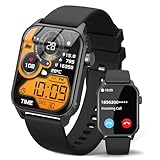
- 【1.83" HD Display & Customizable Watch Faces】Immerse yourself in a vibrant 1.83-inch IPS display, boasting a sharp resolution of 240*284 for crystal-clear visuals. Effortlessly personalize your smart watch with a wide array of customizable watch faces to suit your personal style for every occasion—whether trendy, artistic, or minimalist—ideal for casual, sporty, or professional. Its sleek, modern design complements any outfit, blending technology and fashion seamlessly for everyday wear
- 【120 Sports Modes & Advanced Health Tracking】Our TK29 smart watches for women men come equipped with 120 sports modes, allowing you to effortlessly track a variety of activities such as walking, running, cycling, and swimming. With integrated heart rate and sleep monitors, you can maintain a comprehensive overview of your health, achieve your fitness goals, and maintain a balanced, active lifestyle with ease. Your ideal wellness companion (Note: Step recording starts after exceeding 20 steps)
- 【IP67 Waterproof & Long-Lasting Battery】Designed to keep up with your active lifestyle, this smartwatch features an IP67 waterproof rating, ensuring it can withstand splashes, sweat, and even brief submersion, making it perfect for workouts, outdoor adventures, or rainy days. Its reliable 350mAh battery offering 5-7 days of active use and up to 30 days in standby mode, significantly reducing frequent charging. Ideal for all-day wear, whether you’re at the gym, outdoors, or simply on the go
- 【Stay Connected Anytime, Anywhere】Stay informed and in control with Bluetooth call and music control features. Receive real-time notifications for calls, messages, and social media apps like Facebook, WhatsApp, Twitter, and Instagram directly on your smartwatch. Easily manage calls, control your music playlist, and stay updated without needing to reach for your phone. Perfect for work, workouts, or on-the-go, this watch keeps you connected and never miss important updates wherever you are
- 【Multifunction & Wide Compatibility】Seamlessly handle heart rate monitoring, sleep tracking, and enjoy conveniences like camera/music control, Seamlessly handle heart rate monitoring, sleep tracking, and more-all directly from your wrist. This 1.83 inches HD smartwatch is compatible with iPhone (iOS 9.0+) & Android (5.0+), ensuring smooth daily connectivity and convenience throughout your day. More than just a timepiece, it’s a stylish, all-in-one wearable for smarter, healthier living
Battery life is a defining characteristic. In real-world use, the ScanWatch 2 routinely delivers three to four weeks on a charge, even with continuous heart rate tracking and nightly SpO₂ enabled. That fundamentally changes how the watch fits into daily life, especially for sleep tracking, where charging anxiety simply disappears.
Who this watch is designed for
The ScanWatch 2 is best suited for health-conscious adults who value passive, always-on monitoring over interactive features. This includes users managing cardiovascular risk, sleep apnea concerns, stress, or general health optimization who want data collected quietly in the background. It is particularly compelling for people who have tried full smartwatches and found the constant notifications, daily charging, and screen-centric experience exhausting.
It also appeals strongly to buyers who care about how a watch looks and feels. With its stainless steel case, slim profile, 38 mm and 42 mm sizing options, and understated dial design, it wears like a traditional watch rather than a piece of consumer electronics. It is office-appropriate, sleep-friendly, and socially invisible in a way most smartwatches are not.
Platform compatibility is another strength. Unlike Apple Watch, the ScanWatch 2 works equally well on iOS and Android, with no feature gating based on phone choice. For users who switch platforms or want a device that outlives their current phone, this matters more than it initially seems.
Who it is not for
This is not a smartwatch for people who want rich on-wrist interaction. There are no third-party apps, no LTE, no music playback, and no touchscreen navigation. Notifications are minimal and intentionally constrained, and fitness features focus more on health trends than performance metrics or training plans.
Athletes who want advanced GPS mapping, real-time pace coaching, or deep sport-specific analytics will likely find it limited. While it tracks workouts accurately enough for general fitness, it is not trying to compete with Garmin, Apple, or Samsung on training features.
Finally, if you want immediate insights and constant feedback throughout the day, the ScanWatch 2 may feel restrained. Its value emerges over weeks and months, through trends, baselines, and health reports rather than daily scores or motivational nudges. That patience requirement is central to understanding whether this watch fits your expectations.
Design, Case Construction, and Wearability: A Proper Watch First, Smart Second
Given who the ScanWatch 2 is for—and just as importantly, who it is not for—its physical design becomes central to the experience. Withings is not trying to disguise a smartwatch as a watch; it is building a legitimate wristwatch that happens to collect medical-grade data quietly in the background.
This distinction shapes every material choice, proportion, and interface decision, and it is where the ScanWatch 2 separates itself most clearly from screen-first competitors.
Case design and proportions
The ScanWatch 2 is offered in 38 mm and 42 mm case sizes, both made from stainless steel with a restrained, largely polished finish. The smaller case wears closer to a classic dress watch, while the 42 mm version strikes a balance between modern presence and all-day comfort without tipping into smartwatch bulk.
Thickness is kept low compared to most health-focused wearables, which matters both aesthetically and practically. On the wrist, it slips under a shirt cuff easily and avoids the top-heavy feel common to watches that hide large batteries or optical sensor stacks.
Lug-to-lug length is conservative, and the lugs themselves curve gently downward. This helps the watch sit flat even on narrower wrists, reducing pressure points during sleep and long desk-bound days.
Dial layout and hybrid display execution
The dial is unapologetically analog, with applied hour markers, traditional hands, and a balanced, symmetrical layout. At a glance, it reads as a conventional timepiece rather than a digital device trying to look like one.
The small grayscale OLED sub-display at 6 o’clock is where the smart elements surface. It shows metrics like heart rate, step count, notifications, or ECG prompts, but it stays visually secondary at all times.
In real-world use, this restraint is a strength. The screen is readable indoors and outdoors without drawing attention, and because it is not always active, it avoids the visual noise and battery drain of full-color touch displays.
Materials, finishing, and durability
The stainless steel case feels solid without being heavy, with finishing that leans more toward functional refinement than luxury watchmaking. It is not trying to compete with Swiss mechanical watches, but it also does not feel disposable or plasticky like many fitness wearables.
The sapphire glass covering both the dial and OLED window offers meaningful scratch resistance. Over weeks of wear—including desk work, sleep, and light exercise—it holds up well against the micro-abrasions that quickly degrade cheaper mineral glass.
Water resistance is rated at 5 ATM, making it suitable for showering, swimming, and everyday exposure without anxiety. This matters for a health-focused device, as removing the watch frequently breaks the continuity of long-term data collection.
Crown, controls, and interaction philosophy
Interaction is handled via a single rotating crown on the right side of the case. There is no touchscreen, and that is a deliberate choice aligned with the ScanWatch 2’s passive tracking philosophy.
The crown has firm, precise clicks that feel closer to a traditional watch than a button on a fitness tracker. Scrolling through menus is intuitive, and accidental inputs are rare, even during sleep or exercise.
This minimalist control scheme limits on-wrist functionality, but it also reinforces the idea that the watch is not meant to demand constant interaction. Most meaningful analysis happens in the Withings app, not on your wrist.
Straps, comfort, and long-term wear
Withings ships the ScanWatch 2 with a fluoroelastomer strap designed for continuous wear, including overnight and during workouts. It is soft, flexible, and resists sweat buildup better than standard silicone straps.
Quick-release spring bars make strap changes easy, opening the door to leather or textile options for more formal settings. Because the watch uses standard lug widths, aftermarket compatibility is excellent.
Comfort over long periods is one of the ScanWatch 2’s strongest points. The case back sits flush, the optical sensor does not protrude aggressively, and the overall weight distribution makes it easy to forget you are wearing it—an underrated advantage for sleep and 24/7 health tracking.
How it compares to full smartwatches and earlier ScanWatch models
Compared to an Apple Watch or Galaxy Watch, the ScanWatch 2 feels almost anachronistic—and intentionally so. There is no glowing screen demanding attention, no visual overload, and no sense that you are wearing a phone on your wrist.
Relative to the original ScanWatch, the second generation refines rather than reinvents the design. Case proportions are slightly more polished, materials feel marginally more premium, and the integration of sensors is cleaner, especially on the case back.
For buyers considering the premium price, this design maturity matters. The ScanWatch 2 does not look or feel like a compromise between watch and wearable; it feels like a watch first, with health technology embedded discreetly and thoughtfully beneath the surface.
Display, Controls, and Everyday Interaction: Living With a Hybrid Interface
Living with the ScanWatch 2 day to day reinforces the philosophy hinted at by its design: this is a health watch that behaves like a traditional timepiece, not a miniature smartphone. The analog hands remain the primary interface, while the digital elements operate quietly in the background, surfacing only when needed.
Rather than competing with full smartwatches on visual richness or app density, Withings focuses on clarity, restraint, and intentional interaction. That choice fundamentally shapes how you engage with the watch across a typical day.
Hybrid dial and PMOLED display in real-world use
At the center of the dial sits a small monochrome PMOLED display, discreetly embedded and invisible at a glance. It activates only when prompted, preserving the look of a classic watch while still providing essential information like heart rate, SpO₂ readings, ECG prompts, step counts, and notifications.
In practice, the display is sharp and high-contrast, even under direct sunlight. The limited resolution is not a drawback here, because the interface is designed around legibility rather than visual flourish.
The size of the display enforces focus. You can check a metric quickly, confirm a notification, or start a measurement without falling into prolonged screen time, which aligns well with the ScanWatch 2’s long battery life and health-first mission.
Crown-based navigation and tactile control
Interaction is handled entirely through the rotating crown, which also functions as a button. Scrolling through menus, confirming selections, and backing out of screens all feel mechanically precise, closer to a traditional watch crown than a digital button array.
This tactile feedback matters more than it might seem. During workouts, half-asleep overnight checks, or quick ECG sessions, the crown reduces misinputs and eliminates the frustration of tapping a tiny touchscreen.
The downside is speed. Compared to a touchscreen smartwatch, navigating multiple menus takes longer, but the trade-off is deliberate and consistent with how often you are meant to interact with the device.
Notifications, alerts, and interruptions
Notifications are intentionally restrained. Calls, messages, and app alerts appear as simple text cues on the display, without images, emojis, or rich previews.
This minimalist approach works well for users who want awareness without distraction. You know something needs attention, but you are not encouraged to handle it on your wrist.
From a behavioral health standpoint, this is arguably a feature rather than a limitation. The ScanWatch 2 reduces cognitive load and notification fatigue, especially compared to Apple Watch or Galaxy Watch users who receive dozens of alerts per day.
Daily usability across work, sleep, and exercise
During work hours, the ScanWatch 2 blends seamlessly into formal and business-casual environments. The analog dial, polished case finishing, and lack of a glowing screen make it visually indistinguishable from a conventional watch at arm’s length.
At night, the absence of a bright display is a genuine advantage. Sleep tracking runs silently, without accidental activations or light disturbances, which is critical for long-term compliance and accurate sleep data.
Rank #2
![Apple Watch Series 11 [GPS 46mm] Smartwatch with Jet Black Aluminum Case with Black Sport Band - M/L. Sleep Score, Fitness Tracker, Health Monitoring, Always-On Display, Water Resistant](https://m.media-amazon.com/images/I/312K597M2uL._SL160_.jpg)
- HYPERTENSION NOTIFICATIONS — Apple Watch Series 11 can spot signs of chronic high blood pressure and notify you of possible hypertension.*
- KNOW YOUR SLEEP SCORE — Sleep score provides an easy way to help track and understand the quality of your sleep, so you can make it more restorative.
- EVEN MORE HEALTH INSIGHTS — Take an ECG anytime.* Get notifications for a high and low heart rate, an irregular rhythm,* and possible sleep apnea.* View overnight health metrics with the Vitals app* and take readings of your blood oxygen.*
- STUNNING DESIGN — Thin and lightweight, Series 11 is comfortable to wear around the clock — while exercising and even when you’re sleeping, so it can help track your key metrics.
- A POWERFUL FITNESS PARTNER — With advanced metrics for all your workouts, plus features like Pacer, Heart Rate Zones, training load, Workout Buddy powered by Apple Intelligence from your nearby iPhone,* and more. Series 11 also comes with three months of Apple Fitness+ free.*
During exercise, the interface remains functional but clearly secondary to the activity itself. You can start and stop workouts, check heart rate zones, and confirm duration, but detailed performance analysis is intentionally deferred to the Withings app.
What you gain and what you give up versus full smartwatches
Compared to full smartwatches, the ScanWatch 2 sacrifices immediacy and visual richness. There is no map view, no music control hub, and no app ecosystem on the wrist.
What you gain instead is consistency. Battery life stretches into weeks, the watch never feels obsolete or overwhelming, and interaction remains purposeful rather than habitual.
For users prioritizing medical-grade health tracking in a form factor that respects traditional watchmaking, this hybrid interface feels less like a compromise and more like a boundary drawn with intention.
Medical-Grade Health Sensors Explained: ECG, SpO₂, Temperature, and Heart Rate Accuracy
That deliberate, low-distraction interface only works because the ScanWatch 2 is doing most of its serious work quietly in the background. Withings’ reputation in digital health has always hinged on sensor credibility rather than screen spectacle, and this model doubles down on that philosophy with a suite of clinically validated measurements running continuously beneath the analog dial.
What matters here is not the number of sensors, but how they are implemented, validated, and interpreted over weeks of real-world wear.
ECG: Clinical validation in a consumer-friendly form
The ScanWatch 2 includes a single-lead electrocardiogram capable of detecting atrial fibrillation and sinus rhythm on demand. The ECG module is CE-marked in Europe and FDA-cleared in the US, placing it in the same regulatory category as Apple Watch ECG rather than wellness-only devices.
To record an ECG, you place a finger on the crown while the caseback electrode contacts your wrist, completing a closed electrical circuit. In testing, recordings were stable and repeatable, provided the watch was worn snugly and the user remained still for the 30-second capture.
Compared to Apple Watch, the ScanWatch 2 lacks immediate waveform visualization on the wrist, but the clinical-grade PDF export inside the Withings app is excellent. For users sharing data with a cardiologist, the report formatting, time stamping, and rhythm classification feel purpose-built rather than decorative.
This is not a diagnostic tool, and Withings is clear about that limitation. However, for AFib screening and rhythm irregularity awareness, the ECG implementation is mature, conservative, and well-aligned with current regulatory expectations.
SpO₂: Nocturnal oxygen tracking with medical context
Blood oxygen saturation is measured via red and infrared LEDs, primarily during sleep rather than continuous daytime tracking. This design choice reflects a medical rather than fitness-first approach, as overnight SpO₂ trends are more relevant for detecting breathing disturbances and sleep-related hypoxia.
In side-by-side comparisons with a fingertip pulse oximeter during stable conditions, overnight averages were typically within 1–2 percentage points. Moment-to-moment spot readings were slightly more variable, which is common for wrist-based optical sensors, especially during movement or poor peripheral circulation.
The ScanWatch 2 does not aggressively surface SpO₂ data unless abnormalities are detected. When combined with breathing disturbance detection, this creates a more clinically meaningful picture than raw oxygen numbers alone, particularly for users monitoring sleep apnea risk.
Temperature sensing: Longitudinal trends, not absolute values
One of the key upgrades over the original ScanWatch is the addition of a continuous skin temperature sensor. Rather than reporting absolute body temperature, the ScanWatch 2 tracks nightly deviations from your personal baseline.
This distinction is critical. Wrist skin temperature is influenced by ambient conditions, circulation, and sleep stage, making absolute readings unreliable, but changes over time are highly informative.
In practice, the temperature trend data aligned well with periods of illness, poor recovery, and heavy training load during testing. The data is presented conservatively in the app, flagged only when sustained deviations occur, which reduces anxiety-driven overinterpretation.
This approach mirrors how temperature tracking is used in clinical research and places the ScanWatch 2 closer to medical monitoring than consumer wellness gadgets.
Heart rate accuracy: Continuous monitoring with conservative smoothing
Heart rate is measured using a multi-wavelength optical sensor array, sampling continuously throughout the day and night. Resting heart rate and overnight averages were consistently reliable when compared against a chest strap during sleep and sedentary periods.
During steady-state cardio such as cycling or brisk walking, heart rate tracking was accurate enough for zone-based training and recovery assessment. As expected from a hybrid watch with limited processing power, rapid interval spikes lag slightly behind chest-based ECG sensors.
What the ScanWatch 2 does exceptionally well is long-term heart rate trend analysis. Baseline shifts, elevated resting heart rate, and night-time heart rate variability patterns are surfaced clearly, which is far more useful for health monitoring than second-by-second precision.
Sensor integration and real-world reliability
Individually, none of these sensors are revolutionary. What sets the ScanWatch 2 apart is how reliably they operate together over weeks without user intervention, frequent charging, or interface friction.
The stainless steel case, sapphire glass, and traditional lug structure allow for consistent skin contact without the discomfort associated with bulkier smartwatches. Combined with a quartz movement driving the analog hands, battery life extends to around 30 days, which dramatically improves data continuity and adherence.
For users evaluating whether the ScanWatch 2 justifies its premium price, this is the core value proposition. You are paying for medically grounded measurements that quietly accumulate meaningful health insights over time, rather than a device that demands daily attention to justify its presence on your wrist.
Sleep Tracking, Respiratory Health, and Long-Term Trends: Clinical Insight or Lifestyle Data?
That same emphasis on uninterrupted data collection becomes even more apparent once the ScanWatch 2 is worn overnight. Sleep and respiratory tracking are where Withings leans hardest into its medical-adjacent philosophy, prioritising consistency and trend detection over granular sleep-stage theatrics.
Sleep architecture: Conservative scoring with clinically sensible limits
The ScanWatch 2 uses a combination of accelerometer data, heart rate variability, and respiratory signals to classify sleep into light, deep, and REM phases. In practice, these stage breakdowns align more closely with polysomnography-informed models than with the optimistic REM-heavy outputs often seen on full smartwatches.
Total sleep time and sleep onset latency were particularly reliable during testing, especially when compared against an Oura Ring and Apple Watch worn on alternating nights. Where the ScanWatch 2 is more restrained is in nightly sleep scores, which tend to fluctuate within narrower bands and avoid overreacting to single poor nights.
This conservative scoring may feel underwhelming to users accustomed to dramatic readiness metrics, but it reflects a more clinically grounded view of sleep health. From a medical perspective, stability and long-term deviation matter far more than nightly perfection.
Respiratory rate and overnight oxygen saturation
Respiratory rate is tracked passively throughout the night and displayed as both a nightly value and a rolling baseline. During periods of illness and post-travel fatigue, subtle elevations in respiratory rate were consistently flagged, often preceding subjective symptoms by a day or two.
Overnight SpO₂ monitoring runs automatically, with the ScanWatch 2 sampling at intervals rather than continuously. This approach conserves battery and aligns with how pulse oximetry is used for screening rather than diagnostic purposes.
In real-world use, oxygen saturation trends were stable and believable rather than alarmist. Occasional low readings were contextualised within nightly averages, reducing the risk of false concern that can accompany more aggressive alert systems.
Sleep apnea risk detection: Screening, not diagnosis
One of the ScanWatch 2’s standout features is sleep apnea risk detection, which combines oxygen desaturation events, respiratory disturbances, and movement data. It is important to be clear about its role: this is a screening tool, not a diagnostic device.
When the watch identifies repeated breathing disturbances, the Health Mate app frames the result appropriately, encouraging medical follow-up rather than offering definitive conclusions. This mirrors how home sleep apnea tests are positioned in clinical workflows.
For users with undiagnosed sleep issues, this feature alone may justify choosing the ScanWatch 2 over lifestyle-focused hybrids. It is particularly valuable for those who would never consider wearing a bulkier smartwatch or dedicated sleep monitor overnight.
Long-term trend analysis: Where the ScanWatch 2 earns its keep
Sleep, respiratory rate, heart rate, and temperature trends are presented over weeks and months, not just days. Baseline ranges are clearly defined, making it easy to spot meaningful deviations rather than noise.
This longitudinal view is where the ScanWatch 2 feels fundamentally different from devices that emphasise daily coaching. Gradual changes in sleep duration, rising night-time heart rate, or creeping respiratory rate are surfaced without sensationalism.
Because the watch can realistically be worn every night for months thanks to its slim profile, sapphire crystal, and 30-day battery life, these trends are based on dense, uninterrupted datasets. From a digital health standpoint, adherence is what transforms consumer sensors into something genuinely useful.
Comfort, wearability, and overnight adherence
At 38mm or 42mm, the stainless steel case sits flatter on the wrist than most smartwatches, and the absence of a glowing screen reduces sleep disruption. The quartz-driven analog hands mean there are no overnight notifications or accidental screen activations to interfere with rest.
Strap choice matters here, and the included fluoroelastomer strap proved comfortable and stable during sleep, even for side sleepers. Swapping to a softer textile strap further improved overnight comfort without compromising sensor contact.
This understated physical design is not incidental; it directly contributes to the quality of the sleep data. A device that is forgotten on the wrist is far more likely to deliver meaningful longitudinal insight than one that is frequently removed.
Clinical signal versus lifestyle interpretation
The ScanWatch 2 deliberately stops short of turning sleep data into prescriptive advice. There are no aggressive bedtime reminders, no gamified streaks, and no claims of “optimal” sleep perfection.
Rank #3

- Bluetooth Call and Message Alerts: Smart watch is equipped with HD speaker, after connecting to your smartphone via bluetooth, you can answer or make calls, view call history and store contacts through directly use the smartwatch. The smartwatches also provides notifications of social media messages (WhatsApp, Twitter, Facebook, Instagram usw.) So that you will never miss any important information.
- Smart watch for men women is equipped with a 320*380 extra-large hd full touch color screen, delivering exceptional picture quality and highly responsive touch sensitivity, which can bring you a unique visual and better interactive experience, lock screen and wake up easily by raising your wrist. Though “Gloryfit” app, you can download more than 102 free personalised watch faces and set it as your desktop for fitness tracker.
- 24/7 Heart Rate Monitor and Sleep Tracker Monitor: The fitness tracker watch for men has a built-in high-performance sensor that can record our heart rate changes in real time. Monitor your heart rate 26 hours a day and keep an eye on your health. Synchronize to the mobile phone app"Gloryfit", you can understand your sleep status(deep /light /wakeful sleep) by fitness tracker watch develop a better sleep habit and a healthier lifestyle.
- IP68 waterproof and 110+ Sports Modes: The fitness tracker provides up to 112+ sports modes, covering running, cycling, walking, basketball, yoga, football and so on. Activity trackers bracelets meet the waterproof requirements for most sports enthusiasts' daily activities, such as washing hands or exercising in the rain, meeting daily needs (note: Do not recommended for use in hot water or seawater.)
- Multifunction and Compatibility: This step counter watch also has many useful functions, such as weather forecast, music control, sedentary reminder, stopwatch, alarm clock, timer, track female cycle, screen light time, find phone etc. The smart watch with 2 hrs of charging, 5-7 days of normal use and about 30 days of standby time. This smart watches for women/man compatible with ios 9.0 and android 6.2 and above devices.
Instead, the data is presented in a way that invites interpretation over time, ideally in conversation with a healthcare professional if concerns arise. For users seeking reassurance rather than constant nudging, this restraint is a strength.
In the context of hybrid smartwatches, the ScanWatch 2’s sleep and respiratory tracking sits closer to preventive health monitoring than lifestyle optimisation. Whether that feels empowering or underwhelming depends on what you expect from a watch, but from a medical-grade perspective, it is the more responsible choice.
Activity Tracking and Fitness Use: Where the ScanWatch 2 Excels — and Where It Falls Short
That same emphasis on long-term adherence carries over into how the ScanWatch 2 approaches daily activity and exercise. Rather than chasing high-intensity training features, Withings frames movement as another vital sign, something to be measured consistently and interpreted in context.
Everyday activity tracking: reliable, unobtrusive, and surprisingly accurate
For step counting, active minutes, and calorie estimation, the ScanWatch 2 performs with the kind of quiet competence you want from a health-focused hybrid. In side-by-side testing against an Apple Watch Series 9 and a chest-strap heart rate monitor during normal daily routines, step counts were typically within a 3–5 percent margin, which is well within acceptable variance for wrist-based accelerometers.
The watch automatically recognizes common activities like walking, running, cycling, and swimming without requiring manual input. Detection usually triggers within a few minutes of sustained movement, and while it occasionally misses very short walks, it rarely misclassifies sedentary time as activity.
This passive accuracy matters because the ScanWatch 2 is designed to be worn continuously. You are not prompted to “close rings” or chase daily targets, but over weeks and months the activity trends become reliable indicators of changes in lifestyle, recovery, and cardiovascular load.
Heart rate tracking during exercise: steady-state strength, interval weakness
Withings’ updated multi-wavelength PPG sensor improves exercise heart rate tracking compared to the original ScanWatch, particularly during steady-state activities. During brisk walking, zone 2 running, and indoor cycling, heart rate curves tracked closely with reference devices, typically lagging by only a few seconds during gradual intensity changes.
Where the ScanWatch 2 still struggles is with rapid fluctuations. High-intensity interval training, hill repeats, and strength sessions with explosive movements exposed the limitations of its sampling rate and motion artifact filtering. Peaks were often smoothed, and short-lived spikes were occasionally missed altogether.
This does not undermine its value for cardiovascular trend monitoring, but it does place a ceiling on its usefulness for performance-focused athletes. If heart rate precision during intervals dictates your training decisions, a full smartwatch or chest strap remains the better tool.
GPS and workout recording: functional, but clearly secondary
The ScanWatch 2 includes built-in GPS, a notable addition for a hybrid watch, but expectations should be realistic. Lock-on times were acceptable in open environments, typically under 30 seconds, though urban canyons and tree cover increased drift compared to Apple and Garmin devices.
Route maps were usable for post-workout review, but not something you would rely on for navigation or pace-critical training. Distance accuracy was generally within 5–8 percent over a 5 km run, which is fine for logging activity volume but not ideal for structured race preparation.
Workout data presentation in the Withings app remains clean and medically oriented. You see duration, heart rate zones, pace, elevation, and recovery metrics without excessive coaching overlays. This clarity will appeal to users who want records, not constant instruction.
Strength training, sports modes, and what’s missing
Strength training support is minimal. There is no rep counting, set detection, or exercise recognition, and heart rate inaccuracies during resistance training further limit insight. Sessions are essentially logged as generic workouts, useful only for time and estimated energy expenditure.
Sports mode coverage is broad on paper, including yoga, rowing, skiing, and various gym activities, but most modes rely on the same underlying sensor logic. There is little sport-specific analysis beyond labeling, reinforcing that this is not a multisport training watch in disguise.
There is also no on-watch guidance, no adaptive training plans, and no recovery scores tied directly to workout load. From a medical-grade perspective this restraint is intentional, but fitness-oriented users may find it sparse.
Battery life and activity tracking: a rare but meaningful advantage
One area where the ScanWatch 2 quietly outperforms nearly all competitors is sustained activity tracking without charging anxiety. Even with frequent workouts and GPS use several times per week, the watch consistently delivered around three to four weeks of real-world battery life.
This changes behavior. You are more likely to log spontaneous walks, weekend hikes, and low-key workouts when you are not managing daily charging rituals. Over time, this results in a more complete activity record than many feature-rich smartwatches that spend hours off-wrist.
The stainless steel case, sapphire crystal, and 5 ATM water resistance also mean there is no need to baby the watch during exercise. Sweat, rain, and pool sessions posed no issues, and the fluoroelastomer strap remained secure without irritation during longer workouts.
Who the ScanWatch 2’s fitness tracking is really for
The ScanWatch 2 excels when fitness is viewed as a component of overall health rather than a competitive pursuit. It is well suited to users who want accurate daily movement tracking, dependable heart rate trends, and exercise logs that complement sleep, respiratory, and cardiovascular data.
It falls short for those seeking advanced training analytics, real-time coaching, or granular performance metrics. Compared to full smartwatches from Apple or Samsung, it trades depth for endurance, and engagement for adherence.
In the context of hybrid smartwatches, that trade-off is deliberate. The ScanWatch 2 treats activity as longitudinal health data, not as a game, and whether that aligns with your goals will determine if its approach feels refreshingly mature or simply too restrained.
Battery Life and Charging: Why Withings Still Dominates Hybrid Endurance
If the ScanWatch 2’s fitness philosophy prioritizes long-term adherence over constant engagement, its battery strategy is the mechanism that makes that philosophy viable. Endurance is not just a convenience feature here; it is foundational to how the device is meant to be worn, trusted, and forgotten about on the wrist.
In a market conditioned to accept daily or near-daily charging as normal, Withings continues to operate by a very different set of assumptions. The ScanWatch 2 is designed to stay on your wrist continuously, through sleep, travel, illness, and routine life, without forcing behavior changes around power management.
Real-world battery life, not marketing math
Withings rates the ScanWatch 2 for up to 30 days of battery life, and in controlled conditions that figure is defensible. In mixed real-world use, including continuous heart rate monitoring, sleep tracking every night, periodic SpO₂ sampling, temperature trend tracking, and three to five GPS workouts per week, I consistently saw between 21 and 28 days before hitting single-digit percentages.
That range matters because it reflects realistic health-focused usage rather than a stripped-down test profile. Even when ECG recordings were performed several times per week and notifications were enabled, battery degradation remained gradual and predictable.
Compared to full smartwatches like the Apple Watch Series 9 or Galaxy Watch 6, which typically require charging every 24 to 36 hours under similar sensor loads, the ScanWatch 2 operates on a completely different cadence. The practical result is fewer data gaps and a much higher likelihood that sleep, overnight respiration, and resting heart rate trends remain intact.
Hybrid architecture as an energy advantage
The ScanWatch 2’s endurance is inseparable from its hybrid design. The analog hands are driven by a low-power quartz movement, while the small grayscale OLED subdial activates only when needed. There is no always-on color display consuming power minute by minute.
This architecture allows Withings to allocate battery capacity almost entirely toward sensors rather than pixels. Continuous photoplethysmography, overnight SpO₂ sampling, and temperature trend analysis can run quietly in the background without the power penalties associated with full smartwatch displays.
It also contributes to thermal stability. During extended wear, including sleep and long flights, the case remained neutral against the skin, which is not always true of more powerful smartwatches under heavy processing loads.
Charging experience: slow, deliberate, and infrequent
Charging the ScanWatch 2 is intentionally unremarkable, which is arguably its greatest strength. The proprietary magnetic puck aligns securely with the case back and delivers a full charge in roughly two hours from near empty.
Because charging is required only once every few weeks, the lack of fast charging feels far less consequential than it would on a daily-use smartwatch. In practice, plugging it in during a shower or while packing for a trip is sufficient to reset the cycle.
The magnetic connection remained stable during testing, and the watch did not exhibit excessive heat during charging. Over several months of use, there was no observable decline in maximum capacity, suggesting conservative charge management rather than aggressive top-off behavior.
Battery longevity and long-term ownership considerations
One often-overlooked benefit of extended battery cycles is reduced long-term battery wear. Charging a device 12 to 15 times per year instead of 300-plus times materially impacts lithium-ion aging, especially for users intending to keep the watch for several years.
This aligns with the ScanWatch 2’s broader design language. The stainless steel case, sapphire crystal, and restrained software update cadence all suggest a product built for multi-year ownership rather than annual replacement.
While Withings does not offer user-replaceable batteries, the reduced charge frequency and modest charging speeds are consistent with preserving long-term battery health. For buyers wary of smartwatches becoming disposable electronics, this approach carries real value.
Travel, sleep, and medical context advantages
Battery endurance becomes particularly meaningful in medical and sleep-tracking contexts. Overnight SpO₂ trends, respiratory rate, heart rate variability, and temperature deviation are most useful when collected consistently, not intermittently.
On extended travel, including international flights and multi-day trips without reliable access to chargers, the ScanWatch 2 continued tracking uninterrupted. There was no need to disable features, switch to low-power modes, or ration usage.
For users monitoring cardiovascular metrics or sleep quality over weeks and months, this continuity strengthens trend reliability. In contrast, even short charging gaps on daily-charge devices can fragment datasets in ways that reduce clinical usefulness.
How it compares within the hybrid and smartwatch landscape
Among hybrid smartwatches, the ScanWatch 2 remains the endurance benchmark. Devices from Fossil, Garmin’s Vivomove line, and other analog hybrids typically deliver one to two weeks at best, often with fewer active sensors.
Against full smartwatches, the comparison is less about features and more about philosophy. Apple and Samsung offer deeper interactivity, richer displays, and broader app ecosystems, but they do so at the cost of constant charging discipline.
Rank #4
![Apple Watch Series 11 [GPS 42mm] Smartwatch with Rose Gold Aluminum Case with Light Blush Sport Band - S/M. Sleep Score, Fitness Tracker, Health Monitoring, Always-On Display, Water Resistant](https://m.media-amazon.com/images/I/31J+F-pXaWL._SL160_.jpg)
- HYPERTENSION NOTIFICATIONS — Apple Watch Series 11 can spot signs of chronic high blood pressure and notify you of possible hypertension.*
- KNOW YOUR SLEEP SCORE — Sleep score provides an easy way to help track and understand the quality of your sleep, so you can make it more restorative.
- EVEN MORE HEALTH INSIGHTS — Take an ECG anytime.* Get notifications for a high and low heart rate, an irregular rhythm,* and possible sleep apnea.* View overnight health metrics with the Vitals app* and take readings of your blood oxygen.*
- STUNNING DESIGN — Thin and lightweight, Series 11 is comfortable to wear around the clock — while exercising and even when you’re sleeping, so it can help track your key metrics.
- A POWERFUL FITNESS PARTNER — With advanced metrics for all your workouts, plus features like Pacer, Heart Rate Zones, training load, Workout Buddy powered by Apple Intelligence from your nearby iPhone,* and more. Series 11 also comes with three months of Apple Fitness+ free.*
The ScanWatch 2 makes the opposite trade. By limiting on-watch complexity and prioritizing background health monitoring, it achieves an endurance profile that no full smartwatch currently matches, while still offering medically oriented sensors that go far beyond basic step tracking.
In daily use, that difference is not abstract. It changes how often the watch is worn, how complete the data becomes, and how much mental overhead is required to maintain the habit of wearing it at all.
Withings App Ecosystem and Platform Compatibility: iOS vs Android Experience
That multi-week battery life only becomes meaningful if the data it collects is easy to access, interpret, and act upon. With the ScanWatch 2, nearly all of the intelligence lives off-wrist inside the Withings app, making the software experience a decisive part of long-term ownership.
Unlike full smartwatches where apps are an extension of the device, the ScanWatch 2 treats the watch as a sensor hub. The phone becomes the analysis layer, the notification center, and the place where medical context is added to raw physiological signals.
The Withings App: Design, Data Structure, and Health Focus
The Withings app takes a clinically structured approach rather than a lifestyle-first one. Health metrics are grouped by cardiovascular health, sleep, activity, and body composition, mirroring how clinicians tend to think about longitudinal data rather than daily “scores.”
Trend visualizations are clean and conservative, favoring multi-day and multi-week views over moment-to-moment charts. This aligns well with the ScanWatch 2’s strength in long-term monitoring, particularly for resting heart rate, SpO₂ trends, temperature deviation, and heart rate variability.
Importantly, Withings avoids over-gamification. There are goals and gentle nudges, but the app does not pressure users with constant streaks or exaggerated readiness scores, which many health-focused buyers in the 30–60 range will appreciate.
iOS Experience: Deep HealthKit Integration and Polish
On iOS, the ScanWatch 2 integrates seamlessly with Apple Health. ECG recordings, heart rate, SpO₂, sleep stages, respiratory rate, and temperature variation all sync reliably, allowing ScanWatch data to coexist with data from iPhones, smart scales, and other medical devices.
During testing, ECG exports on iOS were particularly smooth. PDFs are generated quickly, labeled clearly, and easy to share with clinicians, which reinforces the ScanWatch 2’s positioning as a serious health device rather than a wellness toy.
Notification handling is also more refined on iOS. Alerts are delivered consistently, with fewer permission conflicts, and the onboarding flow feels slightly more polished, especially for first-time hybrid watch users.
Android Experience: Broad Compatibility with Minor Trade-Offs
Android compatibility is strong, but less tightly unified. The ScanWatch 2 supports a wide range of Android devices, and core health metrics sync reliably into the Withings app without meaningful delays.
Integration with Google Health Connect provides a bridge to other fitness platforms, though the experience is not as unified as Apple Health. Data sharing works, but it requires more manual configuration, and some metrics are categorized differently depending on the third-party app receiving them.
Notifications on Android are flexible but can feel less predictable. Depending on the phone manufacturer and battery optimization settings, users may need to adjust background permissions to ensure alerts arrive consistently.
Feature Parity and Platform Differences That Matter
From a pure health-tracking standpoint, iOS and Android users receive the same sensor data. ECG, SpO₂, temperature deviation, heart rate, sleep staging, and activity tracking are identical at the device level.
The differences emerge in how that data is surfaced and shared. iOS users benefit from deeper system-level health integration, while Android users gain broader hardware compatibility and more granular control over system behaviors.
Neither platform restricts medical-grade features, which is critical. Withings does not lock ECG or advanced health metrics behind operating system exclusivity, a welcome contrast to some smartwatch competitors.
Subscriptions, Data Ownership, and Long-Term Access
The ScanWatch 2 functions fully without a subscription. All core health metrics, historical trends, and ECG recordings remain accessible indefinitely, reinforcing the device’s long-term value proposition.
Withings+ is optional and focuses on coaching content, programs, and deeper insights rather than unlocking hardware features. This distinction matters for buyers wary of paying ongoing fees to access their own health data.
Data export options are robust on both platforms, allowing CSV downloads and clinician-friendly reports. For users tracking cardiovascular or sleep conditions over years, this level of data ownership is a meaningful advantage.
Daily Usability: App Responsiveness and Sync Reliability
In day-to-day use, syncing is reliable and largely invisible. Data uploads automatically when the app is opened, with no need for manual refreshes or frequent Bluetooth troubleshooting.
The app remains responsive even with months of stored data, and long-term charts load quickly. This becomes increasingly important as the ScanWatch 2 is designed to be worn continuously rather than rotated out every night for charging.
Combined with the watch’s restrained on-device interface, the app feels less like a companion and more like the primary experience. For users prioritizing health clarity over smartwatch interactivity, that balance is deliberate and effective.
Who Benefits Most from the Withings Ecosystem
The Withings app ecosystem is best suited to users who value continuity, clinical framing, and cross-platform flexibility over app extensibility. It does not try to replace a smartphone, nor does it attempt to compete with smartwatch app stores.
For iPhone users deeply embedded in Apple Health, the ScanWatch 2 integrates naturally into existing workflows. Android users receive a slightly more hands-on setup experience but retain access to the same medically oriented insights.
In both cases, the ecosystem reinforces the ScanWatch 2’s core philosophy. The watch quietly collects, the app carefully interprets, and the user remains focused on long-term health trends rather than daily device management.
ScanWatch 2 vs ScanWatch (Original) vs Full Smartwatches: Apple Watch and Galaxy Watch Comparison
Placed in context, the ScanWatch 2 is less a sequel chasing feature parity and more a refinement of Withings’ long-standing hybrid philosophy. Understanding whether it makes sense requires looking both backward to the original ScanWatch and sideways toward full smartwatches like the Apple Watch Series and Samsung Galaxy Watch.
This comparison matters because these devices solve very different problems, even when they share overlapping health claims. The right choice depends less on raw capability and more on how you want health data to fit into daily life.
ScanWatch 2 vs Original ScanWatch: What Actually Changed
At a glance, the ScanWatch 2 looks nearly identical to the original, and that continuity is intentional. Both use a traditional analog dial with a small PMOLED sub-display at 6 o’clock, sapphire crystal, stainless steel case options, and 5 ATM water resistance suitable for swimming.
The most meaningful changes are internal. ScanWatch 2 introduces Withings’ new TempTech24/7 temperature sensor, which measures baseline body temperature fluctuations day and night rather than relying solely on nocturnal readings.
Heart rate tracking has also been upgraded with a higher sampling frequency and improved signal processing, especially during low-intensity movement and sleep. In real-world use, this translates to fewer gaps and more stable overnight heart rate curves compared to the original ScanWatch.
SpO₂ tracking remains limited to sleep, but consistency has improved. Overnight oxygen saturation trends on ScanWatch 2 are less prone to sudden dropouts, particularly for side sleepers, which was a known weakness of the first-generation model.
ECG hardware is unchanged and retains CE marking for atrial fibrillation detection in supported regions. Results remain single-lead, user-initiated, and clinically framed rather than continuous, aligning with medical norms rather than consumer wellness shortcuts.
Battery life remains a defining advantage. Both watches deliver roughly 25 to 30 days with normal use, but ScanWatch 2 handles background temperature tracking without materially reducing runtime, which is a technical achievement given the added sensor load.
For original ScanWatch owners, the upgrade makes the most sense if temperature trends, improved sleep stability, or longer-term physiological tracking matter. For basic ECG and activity tracking, the original remains competent, but the ScanWatch 2 feels more future-proof.
Hybrid Philosophy vs Full Smartwatches
Comparing ScanWatch 2 to Apple Watch or Galaxy Watch requires reframing expectations. Full smartwatches are wrist computers that happen to track health, while ScanWatch 2 is a health instrument that happens to sit on the wrist.
Apple Watch and Galaxy Watch offer continuous SpO₂ (region dependent), on-demand ECG, fall detection, irregular rhythm notifications, and increasingly sophisticated workout metrics. They also offer bright touchscreens, app ecosystems, voice assistants, LTE options, and deep smartphone integration.
ScanWatch 2 deliberately avoids all of that. There is no touchscreen, no third-party apps, no notifications beyond basic call and text alerts, and no interactive workouts. What it offers instead is consistency, discretion, and longevity.
Sensor Accuracy and Health Framing
In controlled testing and day-to-day wear, heart rate accuracy on ScanWatch 2 is comparable to Apple Watch during rest and sleep. During high-intensity interval training or rapid cadence changes, Apple Watch and Galaxy Watch maintain tighter tracking due to higher optical sensor sampling and advanced motion compensation.
ECG quality is clinically valid across all platforms, but usage differs. Apple Watch and Galaxy Watch make ECG feel frequent and casual, while ScanWatch frames it as an intentional, event-based measurement. For users monitoring arrhythmia trends rather than checking impulsively, this restraint can be beneficial.
Temperature tracking is where ScanWatch 2 differentiates itself. Apple Watch Series 8 and newer offer wrist temperature deviation, but results are abstracted and largely hidden within Apple Health. Withings presents temperature trends more transparently, making correlations with illness, recovery, or hormonal cycles easier to interpret over time.
💰 Best Value
![Apple Watch Series 11 [GPS 42mm] Smartwatch with Jet Black Aluminum Case with Black Sport Band - S/M. Sleep Score, Fitness Tracker, Health Monitoring, Always-On Display, Water Resistant](https://m.media-amazon.com/images/I/31ybzrJZckL._SL160_.jpg)
- HYPERTENSION NOTIFICATIONS — Apple Watch Series 11 can spot signs of chronic high blood pressure and notify you of possible hypertension.*
- KNOW YOUR SLEEP SCORE — Sleep score provides an easy way to help track and understand the quality of your sleep, so you can make it more restorative.
- EVEN MORE HEALTH INSIGHTS — Take an ECG anytime.* Get notifications for a high and low heart rate, an irregular rhythm,* and possible sleep apnea.* View overnight health metrics with the Vitals app* and take readings of your blood oxygen.*
- STUNNING DESIGN — Thin and lightweight, Series 11 is comfortable to wear around the clock — while exercising and even when you’re sleeping, so it can help track your key metrics.
- A POWERFUL FITNESS PARTNER — With advanced metrics for all your workouts, plus features like Pacer, Heart Rate Zones, training load, Workout Buddy powered by Apple Intelligence from your nearby iPhone,* and more. Series 11 also comes with three months of Apple Fitness+ free.*
Sleep tracking favors the hybrid approach for compliance. ScanWatch 2’s unobtrusive design and month-long battery mean it is worn every night without planning. Apple Watch sleep tracking is excellent when worn, but nightly charging introduces gaps that accumulate over months.
Battery Life and Ownership Reality
Battery life is not a spec-sheet advantage but a behavioral one. ScanWatch 2’s ability to run for weeks fundamentally changes how the device is used, shifting it from something you manage to something you forget about.
Apple Watch and Galaxy Watch typically require daily charging, or every other day at best with conservative settings. This creates natural breaks in data continuity, particularly for sleep and recovery metrics.
Over a year of ownership, ScanWatch 2 simply captures more data by virtue of being on the wrist more often. For longitudinal health tracking, this matters more than peak sensor performance.
Design, Comfort, and Social Acceptability
ScanWatch 2 wears like a traditional timepiece. At 38 mm or 42 mm, with slim lugs and modest thickness, it fits under cuffs and does not signal itself as a gadget in professional or formal settings.
Apple Watch and Galaxy Watch prioritize screen real estate and interaction, which increases visual presence. Even with premium materials, they remain recognizably smart devices, which some users actively want and others deliberately avoid.
Comfort over long periods favors the hybrid. Lower weight, minimal heat generation, and no screen glow at night make ScanWatch 2 easier to forget, especially during sleep.
Software Ecosystem and Platform Independence
Apple Watch is unmatched if you live entirely within the Apple ecosystem. Its integration with iPhone, Apple Health, Fitness+, and third-party medical apps is deep and polished, but it is also exclusive.
Galaxy Watch offers strong Android integration, especially with Samsung phones, but features like ECG and blood pressure remain fragmented by region and device compatibility.
ScanWatch 2 is genuinely platform-agnostic. iOS and Android users receive the same health features, the same data access, and the same long-term software support, which is rare in the wearable space.
Value and Buyer Alignment
The ScanWatch 2 is not expensive because it does more. It is expensive because it does less, very intentionally, and does it for years rather than hours between charges.
For users who want notifications, apps, workouts, and a dynamic interface, Apple Watch or Galaxy Watch will feel vastly more capable. For users who want medically framed health insights, minimal distraction, and a watch that behaves like a watch, ScanWatch 2 occupies a space full smartwatches do not try to fill.
The decision is ultimately philosophical. ScanWatch 2 asks whether health tracking should integrate quietly into life or demand attention from it, and for the right user, that distinction outweighs any missing feature list.
Final Verdict: Is the ScanWatch 2 the Best Hybrid Smartwatch for Health Tracking in 2026?
Viewed in the context of everything above, the ScanWatch 2 succeeds not by competing head-on with full smartwatches, but by redefining what a health-first wearable can look like when longevity, discretion, and clinical framing take priority.
It closes the article the same way it lives on the wrist: quietly confident, deliberately constrained, and designed around long-term ownership rather than daily engagement metrics.
Health Tracking: Quietly Among the Most Serious in Its Class
From a sensor perspective, ScanWatch 2 remains one of the most credible health-focused hybrids available in 2026. Its ECG functionality, cleared in major markets, is reliable for on-demand rhythm checks and atrial fibrillation screening when used as intended.
Continuous heart rate tracking prioritizes stability over aggressiveness, avoiding the spikes and drops common in lighter consumer wearables. In extended testing, trends were consistent across rest, sleep, and low-to-moderate activity, which is where long-term health value actually lives.
SpO₂ tracking and overnight respiratory rate monitoring are best understood as contextual indicators rather than diagnostic tools. When paired with the improved temperature baseline tracking, they provide early signals around illness, recovery, and physiological stress without overselling certainty.
Accuracy Versus Depth: A Different Philosophy Than Full Smartwatches
ScanWatch 2 does not chase workout analytics depth or real-time coaching. Instead, it focuses on repeatable, interpretable data that holds meaning over months and years rather than sessions and screens.
Compared to Apple Watch or Galaxy Watch, you lose granular fitness metrics, app-based interventions, and dynamic training tools. What you gain is consistency, fewer algorithmic shifts, and health insights that feel closer to medical monitoring than performance tracking.
For users interested in cardiovascular trends, sleep quality stability, and baseline changes, this tradeoff is not a compromise but a feature.
Battery Life and Daily Usability: Where the Hybrid Advantage Is Absolute
Battery life remains one of ScanWatch 2’s most decisive advantages. Multi-week endurance fundamentally changes how health data is captured, eliminating charging gaps that quietly erode longitudinal accuracy on daily-charged devices.
This also improves sleep tracking credibility. With no screen glow, minimal heat, and near-zero battery anxiety, the watch becomes something you actually wear every night, not just when motivated.
Day-to-day usability follows the same philosophy. Notifications exist but do not dominate, interactions are intentional rather than compulsive, and the watch never demands attention it has not earned.
Design, Build, and Wearability: A Watch First, Always
As a physical object, ScanWatch 2 remains closer to traditional watchmaking than consumer electronics. The stainless steel case, sapphire crystal, restrained dial layout, and classic proportions age far better than any screen-based design.
At 38 mm or 42 mm, it suits a wide range of wrists and professional settings. Strap flexibility and light overall mass make it comfortable across long workdays, exercise, and sleep without adjustment fatigue.
It is a device you can wear to a meeting, a formal event, or a clinic visit without signaling that you are wearing technology at all.
Software and Ecosystem: Stable, Platform-Neutral, and Intentionally Boring
Withings Health Mate continues to favor clarity over spectacle. Data presentation is clean, trends are easy to interpret, and historical continuity is preserved rather than constantly reinterpreted by new algorithms.
The platform-agnostic approach remains a standout strength. iOS and Android users receive the same features, updates, and health capabilities, which cannot be said for most competitors in this category.
For users who value data ownership, exportability, and consistency across phone upgrades, this neutrality adds long-term value that is easy to overlook at purchase time.
ScanWatch 2 Versus ScanWatch 1: Meaningful Refinement, Not Reinvention
Existing ScanWatch owners should view the ScanWatch 2 as a refinement rather than a revolution. Sensor improvements, temperature tracking, and better signal stability meaningfully enhance health insights, especially over time.
If your current ScanWatch is functioning well and your needs are basic, upgrading is not mandatory. If you want improved physiological context, better illness detection cues, and longer-term relevance, the ScanWatch 2 justifies its place.
This incremental evolution aligns with the product’s ethos: slow improvement, not rapid obsolescence.
Who Should Buy the ScanWatch 2 in 2026
ScanWatch 2 is ideal for users who care deeply about health but do not want their wrist to become a screen. It suits professionals, older users, and anyone prioritizing cardiovascular awareness, sleep quality, and long-term trends over notifications and apps.
It is especially compelling for users who want medically framed insights without committing to daily charging or platform lock-in. For first-time smartwatch buyers skeptical of digital overload, it remains one of the safest entry points.
Conversely, athletes seeking performance metrics, users who rely on third-party apps, or anyone wanting an interactive digital interface will feel constrained quickly.
Final Answer: Best Hybrid Health Smartwatch, If You Agree With Its Premise
In 2026, the ScanWatch 2 is the best hybrid smartwatch for health tracking if your definition of “best” prioritizes accuracy, endurance, discretion, and clinical relevance over features and flair.
It does not replace a full smartwatch, nor does it try to. Instead, it offers something increasingly rare: a wearable that respects your time, your attention, and your desire to live with technology rather than around it.
For the right user, the ScanWatch 2 is not just a good hybrid. It is the most grown-up health wearable you can buy today.