Withings Omnia is not a product you can buy, preorder, or even meaningfully spec out yet. It is a concept reveal, deliberately framed to signal where Withings believes consumer health monitoring is headed next: away from single-purpose devices and toward ambient, whole-body assessment that blends hardware, AI, and long-term health context.
At its most basic level, Omnia is envisioned as a full-length smart mirror that passively and actively analyzes your body each time you stand in front of it. The mirror is designed to act as a centralized health interface, pulling together data from Withings’ existing devices while adding new layers of visual and physiological insight that today’s smart scales and wearables can’t easily provide.
Rather than replacing a smartwatch or scale, Omnia is positioned as a hub. It’s meant to contextualize everything those devices already collect and present it in a more intuitive, body-centric way, with the mirror acting as both sensor and dashboard.
A mirror that claims to “see” health, not just measure it
According to Withings’ early description, Omnia would use a combination of advanced cameras, embedded sensors, and AI-driven analysis to assess physical metrics simply by standing in front of it. This reportedly includes posture analysis, body composition visualization, cardiovascular indicators, and visible markers of metabolic or musculoskeletal health.
🏆 #1 Best Overall

- Renpho smart app works in connection with fitness apps. Easy setup app works with Samsung Health, Fitbit and Apple Health. Renpho already has millions of happy global users (FSA/HSA eligible)
- 13 essential body measurements. Body weight shows on the scale, other body composition data including weight, BMI, body fat percentage stored in the app. Track everybody's metrics change on Renpho Health app
- User-friendly app. Download Renpho Health at App Store or Google Play, also works with Apple Watch (Except for Apple Watch Series 1). Renpho Health App works with Bluetooth 4.0 and above
- High-Quality Innovation. Auto calibration, high precision sensors measure in increments of 0.2 lb, 0.05 kg with 400 lbs, 180 kg capacity. 4 high sensitive electrodes. DO NOT let the sides of the digital weight scale, especially the four corners of the surface tempered glass hit any object, and it is recommended to wrap the four corners of the glass with soft objects
- Monitor your progress, unlimited users and baby weighing mode. Renpho bathroom scale connects with apps to help motivate toward your goals, save historical data, and track your daily, weekly, and monthly progress. Use baby weighing mode for weighing baby or pets, 1 scale for whole family, support for adding unlimited users
The key shift here is visual correlation. Smart scales can estimate body fat and muscle mass, and watches can track heart rate variability or ECG, but Omnia aims to tie those numbers directly to how your body looks and moves. The promise is a clearer link between data and physical reality, something many users struggle to interpret through charts alone.
Importantly, Withings is framing this as non-clinical, consumer-grade insight rather than medical diagnosis. The mirror would highlight trends, changes, and potential red flags, then nudge users toward lifestyle adjustments or professional follow-up rather than offering definitive conclusions.
How Omnia fits into the existing Withings ecosystem
Omnia only makes sense when viewed as an extension of Withings’ current portfolio. The company already offers smart scales with multi-frequency bioelectrical impedance, hybrid smartwatches with ECG and SpO₂, blood pressure monitors, sleep trackers, and a unified Health Mate platform that aggregates long-term data.
In this ecosystem, Omnia would function as a high-level synthesis layer. Data from a Withings Body Scan scale, ScanWatch, or sleep mat would feed into the mirror, allowing Omnia to display not just today’s snapshot but longitudinal trends across weeks, months, or years.
This approach aligns with Withings’ long-standing emphasis on passive health tracking and minimal user friction. The mirror doesn’t require wearing anything or stepping on a device; it’s designed to integrate into daily routines like getting dressed or winding down for the evening.
What makes Omnia different from existing smart mirrors
Smart mirrors are not new. Products from companies like Mirror, Tempo, and various fitness-focused startups have used reflective displays for guided workouts, form correction, or connected training sessions. Omnia is different in both intent and scope.
Rather than prioritizing fitness classes or interactive coaching, Omnia is framed as a health assessment tool first. The emphasis is on measurement, visualization, and interpretation, not performance or motivation. It’s less Peloton-in-a-mirror and more health dashboard disguised as furniture.
Another key difference is integration depth. Most smart mirrors operate as standalone systems with limited cross-device data sharing. Withings is explicitly positioning Omnia as deeply interoperable with its wearables, scales, and medical-grade peripherals, which could give it a more holistic understanding of the user than camera-only systems.
How realistic is the technology behind the concept?
Some aspects of Omnia are already technically feasible. Posture analysis, gait assessment, and body shape tracking via computer vision are well-established in both research and consumer fitness products. AI-driven trend detection across multiple health signals is also something Withings already does at a software level.
Other claims are more speculative. Accurately inferring cardiovascular health or metabolic markers purely from visual data remains an emerging field, often requiring controlled conditions and large datasets. In a home environment with variable lighting, clothing, and positioning, consistency becomes a major challenge.
This is why Omnia is best understood as a directional statement rather than a near-term product. Withings appears to be testing how far consumers are willing to trust ambient, camera-based health monitoring and whether the company’s credibility in medical-adjacent devices can extend into more interpretive territory.
What users should realistically expect right now
There is no announced launch window, pricing, or final feature set for Omnia. Withings has not committed to commercializing the mirror in its current form, and significant hurdles remain in terms of cost, privacy safeguards, and regulatory clarity.
If Omnia does eventually reach consumers, it is unlikely to be a mass-market device at first. Expect something closer to a premium, early-adopter product with tight ecosystem lock-in and a strong emphasis on data security, given the sensitivity of full-body imaging.
For now, Omnia serves as a glimpse into how Withings envisions the future of connected health: less about checking stats on your wrist and more about understanding your body as a system, reflected back at you in the most literal way possible.
What Omnia Claims to Measure: Body Composition, Posture, Cardiovascular Signals, and Beyond
If Omnia is Withings’ most ambitious concept to date, it’s because the company is trying to collapse multiple categories of health measurement into a single, ambient interface. Rather than replacing the smartwatch or smart scale, Omnia positions itself as an interpretive layer that synthesizes what those devices collect, while also adding visual analysis that they simply cannot provide.
The result, at least conceptually, is a mirror that doesn’t just reflect your body, but contextualizes it within long-term trends, asymmetries, and potential health signals that are otherwise easy to miss.
Body composition beyond the scale
Omnia’s most grounded claim is its ability to visualize body composition changes over time. Withings already has deep experience here through its smart scales, which estimate fat mass, lean mass, visceral fat, and water percentage using bioelectrical impedance.
What the mirror adds is spatial context. Instead of abstract percentages, Omnia could show how weight or muscle changes manifest across different regions of the body, highlighting shifts in symmetry, muscle balance, or fat distribution that a scale cannot localize.
This doesn’t mean Omnia is directly measuring body fat optically. Rather, it appears to be combining scale-derived data with 3D body mapping to create a more intuitive, visual narrative of physical change, something especially relevant for users focused on recomposition rather than weight loss alone.
Posture, alignment, and movement patterns
Posture analysis is where camera-based systems are already proving their value, and Omnia leans heavily into this territory. The mirror claims to assess spinal alignment, shoulder height, hip balance, and forward head posture, likely using skeletal modeling similar to what’s seen in sports science and physical therapy tools.
In practice, this could surface slow-developing issues tied to desk work, asymmetric training, or injury compensation. Unlike a one-off posture snapshot from a phone app, a fixed mirror has the advantage of consistency, analyzing the body from the same distance and angle over months or years.
Withings also hints at movement and gait assessment, which opens the door to detecting changes in walking patterns, balance, or stability. This is particularly relevant for aging users or those managing musculoskeletal conditions, though accuracy would depend heavily on calibration and user positioning.
Cardiovascular signals, interpreted rather than measured
The most provocative aspect of Omnia is its suggestion that cardiovascular health can be inferred through visual signals. This does not imply direct measurement in the way a blood pressure cuff or ECG does, and Withings is careful not to frame it as such.
Instead, Omnia appears to rely on indirect indicators. Subtle changes in skin tone, breathing patterns, chest movement, and posture may be analyzed alongside existing data from Withings wearables, such as resting heart rate, heart rate variability, and blood pressure trends.
This kind of multimodal interpretation is an emerging area of research, but it remains probabilistic rather than diagnostic. In other words, Omnia may be able to flag patterns that warrant attention or correlate with cardiovascular strain, without claiming clinical certainty.
Metabolic health, recovery, and long-term trend detection
Beyond individual metrics, Omnia’s real ambition seems to lie in longitudinal analysis. By observing how body shape, posture, and movement evolve alongside sleep quality, activity levels, and weight trends, the system could surface insights about recovery, fatigue, or metabolic health.
For example, changes in abdominal volume paired with rising resting heart rate and declining sleep scores could be contextualized as a broader health signal rather than isolated data points. This aligns closely with Withings’ existing software philosophy, which already emphasizes trend-based insights over daily fluctuations.
What Omnia adds is immediacy. Seeing those trends mapped onto your physical form, rather than buried in charts, may make the data more actionable for some users, and more confronting for others.
What Omnia deliberately does not replace
Despite its expansive claims, Omnia is not positioned as a standalone medical device. It does not replace blood tests, imaging, or clinician-led diagnostics, and it does not eliminate the need for wearables that provide continuous physiological monitoring.
Instead, Omnia appears designed to sit at the center of the Withings ecosystem, pulling in data from watches, scales, blood pressure monitors, and sleep trackers, then reflecting it back through a spatial, visual interface. Its value depends less on raw sensor accuracy and more on how intelligently it synthesizes existing inputs.
This distinction matters, because it frames Omnia not as a miracle sensor, but as a new way of understanding data users are already generating, with all the limitations and responsibilities that come with interpreting the human body through algorithms.
How Omnia Fits Into the Withings Health Ecosystem (Scales, Watches, App, and Data Layer)
Seen through that lens, Omnia only really makes sense as an extension of Withings’ existing ecosystem rather than a standalone product category. Almost everything it claims to visualize already exists, in fragmented form, across Withings’ scales, watches, and medical devices.
Rank #2

- 𝑼𝒏𝒑𝒂𝒓𝒂𝒍𝒍𝒆𝒍𝒆𝒅 𝑨𝒑𝒑 𝑬𝒙𝒑𝒆𝒓𝒊𝒆𝒏𝒄𝒆: Elevate your fitness journey with us. Our scale stands out with the free vesync app, offering a customized diet and exercise plans based on your life habits. Achieve your fitness goals scientifically with ease (FSA/HSA eligible)
- 𝑼𝒑𝒈𝒓𝒂𝒅𝒆 𝑷𝒓𝒆𝒄𝒊𝒔𝒊𝒐𝒏: Benefit from our 10 years of professional experience and join over 5 million satisfied customers across 30 countries, our scale boasts high-precision sensors for accuracy in increments as small as 0.05 lb
- 𝑽𝒆𝒓𝒔𝒂𝒕𝒊𝒍𝒆 𝑾𝒆𝒊𝒈𝒉𝒊𝒏𝒈 𝑺𝒐𝒍𝒖𝒕𝒊𝒐𝒏: Our scale offers 3 different modes designed to cater to all your needs. Zero-Current Mode ensures a safe weigh-in option, Baby Mode tracks baby or pet growth, and For Light Items weighs items as light as 100g
- 𝑼𝒔𝒆 𝒘𝒊𝒕𝒉 𝑬𝒂𝒔𝒆: Seamlessly integrate our scale into your fitness routine. Compatible with APPLE WATCH and syncs data with popular fitness apps like Apple Health, Samsung Health, Google Fit, FitBit, and MyFitnessPal. Supports unlimited users for convenience
- 𝑾𝒆𝒊𝒈𝒉 𝑺𝒎𝒂𝒓𝒕𝒆𝒓: Beyond analyzing 13 biometrics, setting goals, and viewing progress graphs, our scale offers even more intelligence. Connect the app to Alexa for hands-free voice control and quick answers. Rest assured, VeSync prioritizes your privacy
The difference is not new raw data, but how that data is centralized, contextualized, and surfaced to the user.
The smart scale as Omnia’s physiological anchor
Withings’ smart scales, particularly the Body Scan and Body Comp models, are arguably the backbone of Omnia’s health logic. These devices already capture weight, body fat percentage, segmental composition, vascular age estimates, nerve health indicators, and electrodermal signals, all from a daily, low-friction interaction.
Omnia appears designed to spatially map those measurements onto a visual body model. Instead of reading that trunk fat percentage has increased, users would see how that change manifests across their torso over time.
This reframing matters because scales, for all their sophistication, remain abstract. Omnia turns them into a reference point for visual continuity, helping users connect numbers to physical change rather than chasing daily fluctuations.
Smartwatches and continuous context
Where the scale provides snapshots, Withings’ watches supply continuity. Devices like the ScanWatch and ScanWatch Light track heart rate trends, sleep stages, SpO₂, breathing disturbances, and activity load across days and weeks.
Omnia doesn’t replace that continuous monitoring. Instead, it acts as a lens through which those trends are interpreted. Elevated resting heart rate, reduced HRV, or poor sleep consistency could be overlaid against visible posture shifts, changes in gait, or body symmetry.
This is where the concept becomes more than cosmetic. The mirror format allows Withings to visually correlate internal signals with external expression, reinforcing the idea that recovery, stress, and metabolic strain leave physical traces.
The Withings app as the true control center
Despite the theatrical presence of a smart mirror, the Withings app remains the ecosystem’s operational core. All device data already funnels into a unified platform with longitudinal tracking, trend scoring, and health insights designed to be interpreted over weeks and months.
Omnia appears to function as a secondary interface rather than a replacement. Settings, permissions, historical charts, and data exports would almost certainly still live in the app, not on the mirror itself.
This separation is important for usability. Mirrors are inherently shared household devices, while the app remains personal, private, and portable. Omnia becomes a place to review and reflect, not manage or configure.
Data synthesis, not sensor escalation
Crucially, Omnia does not signal a dramatic expansion of Withings’ sensor portfolio. There’s no indication of blood chemistry analysis, non-invasive glucose monitoring, or clinical-grade imaging embedded in the mirror itself.
Instead, Withings is doubling down on synthesis. Omnia aggregates inputs from scales, watches, sleep mats, and blood pressure monitors, then applies computer vision and modeling to contextualize them.
This approach is more realistic than it may first appear. By avoiding claims of new biological measurements, Withings sidesteps regulatory complexity while focusing on interpretation, which is where consumer health platforms increasingly differentiate.
Interoperability and ecosystem lock-in
From a strategic standpoint, Omnia reinforces Withings’ preference for a vertically integrated but platform-agnostic ecosystem. Withings devices already sync with Apple Health, Google Health Connect, and third-party fitness platforms.
Omnia would likely inherit that openness at the data layer, even if its visualizations remain proprietary. Users switching watches or phones wouldn’t lose their historical body models, because those models are derived from stored data rather than live hardware dependencies.
At the same time, Omnia subtly increases ecosystem gravity. The more devices feeding into it, the more complete and compelling the mirror experience becomes, incentivizing users to stay within the Withings family.
Privacy, visibility, and the mirror problem
A body mirror introduces privacy questions that a scale or watch does not. Visual representations of the body, even abstracted, are more emotionally and socially sensitive than charts or scores.
Withings’ existing emphasis on on-device processing, encrypted cloud storage, and explicit user consent will be tested here. Expect features like user recognition, private profiles, and selective metric visibility to be essential rather than optional.
This is where Omnia’s ecosystem positioning matters again. By anchoring identity and permissions in the app, Withings can keep the mirror as a display endpoint, not a surveillance device.
A central hub, not a daily driver
Perhaps the most important contextual detail is frequency of use. Watches are worn daily. Scales are used frequently. Omnia, realistically, would sit somewhere in between.
Its role is closer to a weekly or monthly check-in point, a place where accumulated data is reviewed holistically rather than continuously tracked. That cadence fits neatly into Withings’ broader philosophy of trend-first health monitoring.
In that sense, Omnia feels less like a gadget competing for attention and more like an ecosystem checkpoint, a physical space where the invisible data generated by Withings devices becomes tangible, interpretable, and, for better or worse, harder to ignore.
Smart Mirror vs Smart Scale: What Omnia Adds That Existing Devices Can’t
Placed after the discussion of cadence and ecosystem gravity, the real question becomes less about novelty and more about differentiation. Withings already makes some of the most data-rich smart scales on the market, so Omnia has to justify why a mirror exists at all.
The answer isn’t raw measurement accuracy. It’s context, synthesis, and the way humans actually interpret health information when it’s no longer reduced to numbers on a phone screen.
From point measurements to spatial understanding
A smart scale excels at capturing precise, repeatable snapshots: weight, body fat percentage, muscle mass, water retention, and trends over time. What it cannot do is show where change is happening, or how different metrics relate to one another spatially.
Omnia’s mirror format allows Withings to present body composition as a mapped model rather than a list of values. Instead of seeing muscle mass as a percentage, users could see distribution changes across limbs or torso, tied back to training load, activity patterns, or injury recovery.
This is a subtle but meaningful shift. Humans understand bodies visually first, numerically second, and mirrors are a native interface for that mental model.
Longitudinal modeling rather than daily scoring
Smart scales tend to encourage frequent check-ins, sometimes daily, with small fluctuations that can feel discouraging or misleading. Omnia appears designed to pull users out of that loop.
By aggregating weeks or months of scale, watch, and sleep data into a single visual checkpoint, the mirror reframes health as progression rather than performance. Changes are viewed over time, not judged in isolation.
That makes Omnia less about motivation through scores and more about reflection through trends, aligning closely with Withings’ long-standing emphasis on long-term cardiovascular and metabolic health.
Integration across metrics scales can’t reconcile
Even the most advanced smart scales operate largely in isolation, pulling in limited context from wearables after the fact. Omnia flips that relationship.
Heart rate variability from a watch, sleep consistency from a mattress sensor, activity volume from step tracking, and body composition from a scale can all be layered onto a single body-centric visualization. The mirror becomes the place where disparate metrics are reconciled into a coherent narrative.
Rank #3
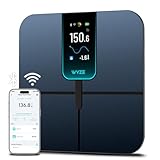
- FSA/HSA Eligible
- EXTRA-LARGE 4.3-INCH DISPLAY - This smart scale features a huge, customizable screen to view your body weight, body fat, and more at a glance. Choose the metrics you want to display on your scale on the app. Dimensions of the scale - 11.8*11.8*1.18 inch.
- WI-FI & BLUETOOTH CONNECTIVITY - Sync your data automatically via Wi-Fi or Bluetooth. Step on the scale without your phone nearby and still track your progress in the app. Perfect for busy, on-the-go users.
- 13 ESSENTIAL BODY METRICS - Track your weight, BMI, body fat percentage, muscle mass, heart rate, and more. Get precise, real-time results that help you stay on top of your fitness goals. Heart rate can only be displayed in the Wyze app.
- TRACK YOUR PROGRESS - Review trends on your weight and body composition changes right on the screen. Perfect for those focused on weight loss or muscle building. Beforing measuring, make sure the ground is flat or the smart scale is in a horizontal state when placed.
This is something phone dashboards attempt, but the physicality of a mirror changes how that information is received. Standing in front of a representation of your own body carries more cognitive weight than scrolling through tabs.
A different emotional contract than the scale
Scales are transactional. You step on, you get a result, you step off. Mirrors are personal, and sometimes confrontational.
Omnia’s value depends heavily on how carefully Withings manages that emotional layer. Abstracted avatars, softened visual transitions, and emphasis on change rather than absolute appearance will matter more than sensor specs.
If done poorly, the mirror risks amplifying anxiety in a way scales already struggle with. If done well, it could help users separate health progress from aesthetic judgment.
Why existing smart mirrors don’t quite overlap
Fitness-focused smart mirrors have historically centered on guided workouts, coaching, and live classes. Their health data, when present at all, is secondary and often shallow.
Omnia, at least conceptually, inverts that priority. It is not a trainer, not a replacement for a gym mirror, and not a screen begging for daily engagement. Its primary function is interpretation, not instruction.
That positioning places it closer to a diagnostic interface than a fitness device, even if it remains firmly in the consumer category.
What Omnia still can’t replace
For all its promise, Omnia does not make scales obsolete. Scales remain faster, cheaper, easier to place, and more suitable for frequent measurement.
Nor does a mirror solve accuracy constraints inherent in consumer-grade bioimpedance or optical estimation. Omnia’s intelligence will only ever be as good as the data feeding it.
The distinction, then, is not capability but perspective. The scale measures. The mirror explains.
Is the Technology Realistic? Breaking Down the Sensors, AI, and Feasibility
Once you strip away the visual polish, Omnia lives or dies on a more practical question: can the underlying sensing and intelligence actually deliver what the mirror implies without drifting into science fiction.
The encouraging part is that Withings is not proposing entirely new measurement science. It is proposing a new interface for technologies that already exist, with varying degrees of maturity.
The sensor stack: mostly evolutionary, not revolutionary
At the core of Omnia is Withings’ familiar ecosystem of connected devices, most notably its smart scales and wearables. Body composition, weight trends, heart rate, vascular age estimates, and metabolic indicators would still originate from hardware users already own.
That matters because consumer-grade bioimpedance, optical heart rate sensing, and overnight tracking are known quantities. They are imperfect, but they are stable, repeatable, and increasingly well understood by regulators and clinicians.
The mirror itself would likely add computer vision via RGB and possibly depth cameras, similar to what smartphones already use for face ID or body scanning. These sensors are realistic at consumer cost levels and can estimate posture, body shape changes, and gross movement patterns, but not internal health metrics.
What the mirror can infer versus what it cannot measure
It is important to separate measurement from inference. Omnia would not directly measure muscle mass distribution, visceral fat, or metabolic health through the mirror glass itself.
Instead, it would infer trends by combining scale data, wearable-derived metrics, and visual changes over time. That is a fundamentally different claim, and a much more defensible one.
As long as Withings frames Omnia as a synthesis layer rather than a diagnostic tool, the technology aligns with what current sensors can realistically support.
AI as interpreter, not oracle
The most ambitious part of Omnia is not the hardware, but the AI layer that translates raw metrics into something emotionally and cognitively legible.
Withings already uses machine learning for trend detection, anomaly flagging, and long-term pattern recognition in its app. Extending that logic to a spatial, body-centric visualization is a software challenge, not a scientific leap.
Where risk enters is explainability. If Omnia tells a user their “body health score” has declined, the system must clearly show which inputs changed and why, or trust erodes quickly.
Accuracy ceilings and regulatory boundaries
Even with advanced modeling, Omnia remains constrained by consumer-device accuracy limits. Bioimpedance varies with hydration, optical sensors struggle with motion and skin tone variance, and vision-based body analysis is sensitive to lighting and positioning.
That places Omnia firmly outside medical diagnosis territory. It can contextualize trends, not confirm conditions.
This distinction is likely deliberate. By avoiding claims around disease detection, Withings can innovate faster without triggering the regulatory overhead that medical devices demand.
Latency, cadence, and real-world usability
One under-discussed feasibility issue is update cadence. Scales and wearables generate discrete data points, not continuous streams.
Omnia would need to gracefully handle days with missing inputs, partial data, or conflicting signals. A mirror that feels stale or inconsistent risks becoming decorative rather than habitual.
Battery life and always-on readiness also matter. Unlike a watch, a wall-mounted mirror must feel instant, reliable, and maintenance-light to earn daily engagement.
Privacy implications of a camera-first health device
A health mirror introduces a new privacy vector: persistent visual sensing in a personal space. Even if images are processed locally, user perception matters as much as technical safeguards.
Withings’ credibility here will hinge on transparency around on-device processing, data retention, and explicit user control. Cloud dependency, especially for visual data, could be a deal-breaker for many households.
This is one area where Withings’ conservative, data-first brand identity may work in its favor compared to fitness-first mirror competitors.
So is Omnia feasible, or just aspirational?
Technically, nothing about Omnia appears impossible with near-term consumer technology. The sensors exist, the AI frameworks are proven, and the ecosystem integration plays to Withings’ strengths.
What remains uncertain is execution at scale. Making a mirror that feels insightful rather than judgmental, informative rather than overwhelming, and trustworthy rather than invasive is far harder than assembling the components.
Rank #4

- The Renpho Health app syncs with Apple Health, Samsung Health, and MyFitnessPal.
- 7 Key Body Metrics on Display: Step onto the Elis 2X scale to get an immediate reading of your body weight, water percentage, muscle mass, BMI, bone mass, body fat, and metabolic age - all displayed clearly on the scale's surface for quick assessment.
- Sleek Design, Accurate Results: The modern, minimalist design with a high-precision ITO-coated surface not only complements your home decor but also enhances measurement accuracy, surpassing regular four-electrodes scales. Achieve accuracy down to 0.05kg/0.2lb.
- Detailed Body Analysis: Expand your health tracking by connecting this smart scale with the Renpho Health App, where you can analyze 13 detailed body metrics, observe long-term body trends, and set customized weight or body fat goals for a seamlessly integrated health management experience.
- For Family & Pet-Friendly: Seamlessly connect to the app through the body fat scale, offering pet and baby weighing modes, unlimited user profiles for household use, and a specialized athlete mode to cater to diverse individuals and lifestyles.
Omnia’s realism, then, is not a question of physics or silicon. It is a question of restraint, software design, and whether Withings can resist the temptation to overpromise what a mirror can truly know about the body.
How Omnia Would Be Used Day to Day: Use Cases for Consumers, Families, and Preventive Health
If Omnia is to avoid becoming a novelty, its value would have to emerge in ordinary routines rather than special sessions. The concept only makes sense if it fits naturally into moments that already exist, replacing friction rather than adding another step.
The most credible vision is Omnia as a passive checkpoint in the home, not an active workout device or a diagnostic tool. It would work best when users engage without feeling like they are “doing a scan.”
The individual user: a contextual health snapshot, not a daily report card
For a single adult user, Omnia would likely function as a visual companion to the morning or evening routine. You step in front of the mirror while brushing teeth or getting dressed, and the system quietly confirms that new data has synced.
Instead of surfacing raw numbers, Omnia would contextualize trends already captured elsewhere in the Withings ecosystem. Weight shifts from a Withings scale, resting heart rate trends from a ScanWatch, or sleep debt from the app could be reflected as simple cues rather than dashboards.
The key here is restraint. A mirror that greets users with red flags every morning would quickly become aversive, while one that offers gentle nudges when patterns drift would feel supportive rather than judgmental.
Fitness-oriented users: visualizing adaptation over time
For fitness-focused users, Omnia’s value would not be real-time coaching but longitudinal insight. Visual body composition estimates, posture changes, or muscle symmetry trends could help validate training consistency without requiring gym-grade scans.
Paired with wearable data, Omnia could highlight mismatches between effort and recovery. A user logging high training volume but showing poor sleep trends or rising resting heart rate would see that tension reflected visually, not as a scolding metric but as a prompt to adjust.
This positions Omnia as a reflection tool rather than a motivator. It would not replace a coach or a connected fitness mirror, but it could add context those tools lack.
Families and shared households: personalized without becoming intrusive
In a multi-user household, Omnia would need seamless, near-invisible identity recognition. The mirror should know who is present without requiring logins, gestures, or voice commands, or it risks friction that undermines daily use.
For families, the most compelling use case is trend monitoring rather than individual optimization. Parents might notice gradual changes in posture or activity patterns in teens, or track general wellness trends without exposing sensitive metrics on a shared display.
Privacy boundaries would matter here. Omnia would need strict profile separation and the ability to suppress certain data categories entirely in shared modes to avoid becoming socially awkward or invasive.
Aging users and preventive health: noticing drift before symptoms
One of Omnia’s most plausible long-term roles is subtle preventive health awareness for older adults. Changes in balance, posture, or movement symmetry over time can be early indicators of declining mobility or fall risk.
Unlike medical devices, Omnia would not diagnose or alert clinicians. Instead, it could encourage earlier conversations by flagging sustained deviations from a user’s own baseline.
This kind of passive monitoring aligns with Withings’ history of wellness-first positioning. The mirror would act as an early warning lens rather than a medical authority, lowering barriers to adoption among users wary of clinical surveillance.
The ecosystem effect: where Omnia fits best
Crucially, Omnia only makes sense as an extension of Withings’ existing platform. On its own, a mirror offers limited value, but as a synthesis layer for scale data, wearable metrics, and lifestyle trends, it becomes a narrative device.
Day to day, users would still rely on watches and scales for primary data capture. Omnia’s role would be to make that data feel human, spatial, and easier to interpret at a glance.
If executed carefully, Omnia would not demand attention. It would earn it, quietly reinforcing habits users already have rather than asking them to adopt new ones.
Privacy, Data Ownership, and the Risks of Always-On Visual Health Tech
If Omnia is meant to fade into the background of daily life, privacy cannot be an afterthought bolted on later. A mirror that quietly interprets posture, body composition trends, or movement patterns is only acceptable if users trust that observation does not become surveillance.
This is where Omnia’s ambition collides with its biggest risk. Visual health tech lives at the intersection of biometric data, household intimacy, and always-on hardware, a far more sensitive zone than wrist-based wearables or bathroom scales.
The camera problem: perception matters as much as reality
Even if Omnia relies primarily on depth sensors or low-resolution visual inputs, the presence of any camera-facing hardware in a private space changes user psychology. A mirror is not a phone that can be pocketed or a watch that leaves the room when you do.
For widespread adoption, Withings would need to be exceptionally clear about what Omnia does not record. No raw video storage, no cloud-uploaded imagery, and no secondary uses beyond health analysis would need to be explicit, verifiable, and technically enforced.
This is less about reassuring power users and more about reducing friction for everyone else in the household. Trust here is social, not just technical.
On-device intelligence vs cloud dependency
The most credible path forward for Omnia is heavy reliance on on-device processing. If posture detection, body scanning, and movement trend analysis can happen locally, with only abstracted metrics leaving the mirror, the privacy equation shifts dramatically in Omnia’s favor.
Withings’ existing ecosystem already leans toward long-term trend analysis rather than real-time intervention. Extending that philosophy to Omnia would mean syncing derived insights, not visual data, into the Health Mate platform.
Anything less risks pushing Omnia into the same category as abandoned smart home cameras, impressive at launch but unplugged once novelty gives way to discomfort.
Data ownership in shared physical spaces
Unlike watches or even smart scales, a mirror is inherently communal. That makes data ownership and profile boundaries more complex, especially in families, multi-generational households, or shared apartments.
Omnia would need robust, automatic user differentiation without forcing explicit logins or constant confirmations. Equally important is the ability for users to define hard limits, such as opting out of certain analyses entirely or preventing specific data types from ever appearing on the shared display.
Without these controls, Omnia risks becoming either socially awkward or silently ignored, neither of which supports its long-term value.
Children, aging users, and regulatory gray zones
Visual health data involving minors or elderly users introduces additional ethical and regulatory pressure. Even if Omnia avoids medical claims, long-term body trend tracking can edge close to sensitive biometric territory under frameworks like GDPR.
Withings, as a European company, is better positioned than many competitors to navigate this landscape. Still, compliance alone is not enough when the device itself encourages passive, longitudinal observation inside the home.
Clear consent models, age-aware profiles, and transparent data lifecycles would need to be designed into the system from the start, not introduced after public scrutiny.
💰 Best Value
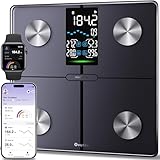
- Smart Fitness Tracking: You can monitor 14 key health metrics with Ovutek’s app, including body fat and BMI. Set goals and track progress daily, weekly, or monthly. The app also syncs effortlessly with Apple Health, Google Fit, and Fitbit for streamlined fitness management.
- Enhanced Visuals & Colorful Indicator: The 5" LED screen provides users with clear readings of core metrics, including BMI, body fat, water, and muscle percentages, while also displaying weekly weight trends. You can customize RGB breathing lights according to your personal style.
- Privacy Protection: Our scale supports No-number mode, where your body fat data will no longer display specific numbers, but only present health trends, allowing you to focus on long-term improvement with greater peace of mind. At the same time, each user's data is stored in a separate account, and we fully protect your privacy.
- Ultimate Precision & Security Guarantee: With advanced SaluOptim technology and high-precision sensors, users can enjoy accuracy down to 0.05 lbs. Packages starting at 100g can also be accurately weighed in 0.05 lb increments. With our best-in-class data privacy standards, your data is always safe.
- Multiple Needs: 1) Unlimited users, Suitable for family use;2) Zero current mode ensures safe weighing of expectant mothers; 3) Family model cares for the growth of infants or pets; 4) The athlete mode focuses on professionalism; 5) Light item mode measures items as small as 100g accurately; 6)No-number mode focus health trends; 7)Guest mode(no sign-up needed).
The cost of getting it wrong
If Omnia mishandles privacy, the failure would not be subtle. Unlike a buggy app update or an inaccurate step count, a breach of trust in visual health tech tends to be permanent.
This is why Omnia’s concept phase matters. The mirror’s success depends less on sensor accuracy or AI sophistication than on Withings’ ability to prove restraint, showing what it deliberately chooses not to measure, store, or monetize.
In that sense, Omnia is as much a test of Withings’ philosophy as it is of its technology.
Concept vs Product Reality: Timelines, Pricing Expectations, and Market Readiness
All of this leads to a more grounded question: even if Withings gets the philosophy right, how far is Omnia from becoming something you can actually buy, install, and live with every day?
Concept videos are designed to compress years of iteration into minutes. The gap between what Omnia shows and what a shippable product requires is where most smart home health concepts quietly stall.
What Withings has actually committed to
At this stage, Omnia is explicitly positioned as a concept, not a soft-launch product with a hidden preorder button. Withings has not announced production timelines, regional availability, or certification targets, which strongly suggests this is still an exploratory platform rather than a near-term SKU.
That matters because Withings’ track record is conservative by industry standards. The company tends to ship slower than startups but faster than medical-adjacent giants, usually once hardware, algorithms, and regulatory positioning are aligned rather than aspirational.
Technical feasibility versus integration reality
Individually, none of Omnia’s core technologies are science fiction. Withings already sells smart scales capable of multi-frequency bioimpedance, connected blood pressure monitors, sleep mats, and ECG-capable watches.
The challenge is not measurement, but orchestration. A wall-mounted mirror that passively pulls data from multiple sensors, performs visual analysis, identifies users reliably, and presents results without friction is exponentially harder than building another connected scale.
Hardware complexity and installation friction
Unlike watches or bathroom scales, Omnia introduces physical permanence. A mirror implies wall mounting, power management, camera placement, lighting consistency, and long-term durability in humid environments.
That alone narrows the addressable market. Renters, small apartments, and users unwilling to commit wall space to a single-purpose device are immediate friction points that Withings cannot solve with software updates.
Pricing expectations and the danger zone
Pricing will likely determine Omnia’s fate more than its feature set. If it lands below the psychological threshold of premium smart scales and entry-level fitness equipment, curiosity may convert into adoption.
If it approaches the price of connected workout mirrors or home gym systems, Omnia risks being perceived as a health dashboard rather than a health necessity. A mirror that visualizes data must justify why it deserves its own hardware category instead of living on a phone, tablet, or TV.
Market readiness versus market curiosity
There is a difference between interest and readiness. Early adopters may be intrigued by the idea of seeing posture, body trends, or cardiovascular indicators reflected back at them, but daily engagement is harder to earn.
Health mirrors have struggled historically because insight does not automatically translate to habit change. Without clear, ongoing value that feels supportive rather than judgmental, Omnia risks becoming an impressive object that users stop noticing.
Where Omnia fits in the Withings ecosystem
Strategically, Omnia only makes sense as an ecosystem amplifier, not a standalone hero product. Its strongest role would be as a connective interface, surfacing insights already collected by Withings watches, scales, and sleep devices in a more contextual, spatial way.
That also means Omnia’s success is dependent on users already being invested in Withings hardware. For newcomers, the mirror alone would feel incomplete; for existing users, it could deepen engagement if the experience feels additive rather than redundant.
A realistic timeline, not a hype cycle
Given regulatory considerations, hardware complexity, and Withings’ historically cautious rollout style, Omnia is unlikely to reach consumers quickly. A limited pilot, developer platform, or enterprise-facing iteration would not be surprising before any mass-market release.
The more realistic expectation is that Omnia informs the next generation of Withings products, shaping interfaces and data presentation long before it becomes a mirror on your wall. In that sense, the concept’s real value may be less about when it ships and more about how it reshapes what connected health looks like inside the home.
What Omnia Signals About the Future of Consumer Health Monitoring
Stepping back from Omnia as a single product, the more interesting takeaway is what Withings is signaling about where consumer health is headed. The concept suggests a shift away from isolated metrics toward environments that contextualize health data as part of daily life, not just during workouts or weigh-ins.
Rather than asking users to check numbers on a phone after the fact, Omnia imagines health monitoring as something ambient, visual, and spatial. That framing matters, because it points to a future where engagement comes from awareness rather than alerts.
From point measurements to continuous context
Most consumer health devices today operate on snapshots. You step on a scale, wear a watch, or run a sleep session, then interpret the data later on a screen designed for charts and trends.
Omnia hints at a model where those point measurements are stitched together into a broader narrative. By combining body composition, posture, cardiovascular indicators, and historical trends into a single visual reference, the mirror becomes less about precision readings and more about longitudinal understanding.
The rise of interface-first health hardware
What differentiates Omnia from smart scales or even advanced wearables is that it is primarily an interface, not a sensor-first device. The mirror’s value would come from how it displays, prioritizes, and explains data already captured elsewhere in the ecosystem.
This reflects a broader industry realization that the bottleneck in digital health is no longer data collection. The harder problem is interpretation, motivation, and making insights feel human rather than clinical.
Why mirrors keep reappearing in health tech
Health mirrors have appeared repeatedly over the last decade, often tied to fitness coaching or premium home gym experiences. Most have struggled because they focused on instruction or novelty rather than long-term health relevance.
Withings’ take is different in tone, aiming for assessment rather than performance. If Omnia works, it would be because it frames the body as something to understand over time, not something to optimize aggressively every day.
Feasibility versus aspiration
From a technical standpoint, much of what Omnia implies is achievable using existing technologies. Body composition estimation, posture analysis, trend visualization, and device integration already exist separately within Withings’ portfolio and the broader health-tech market.
The challenge is reliability and restraint. Translating complex physiological signals into a mirror-based experience that is accurate, non-alarming, and genuinely useful is far harder than building a prototype that demos well.
Privacy becomes more visible, not less
A wall-mounted health mirror also makes data privacy feel more tangible. Unlike a phone or watch, Omnia would live in shared space, raising questions about who sees what, when, and how data is secured locally versus in the cloud.
For Withings, a brand built on medical credibility and regulatory caution, this could be an advantage. Any real-world Omnia implementation would likely emphasize on-device processing, granular user profiles, and explicit consent in ways that set expectations early.
What consumers should realistically expect
In the near term, Omnia is best understood as a directional concept rather than an imminent product. It shows how Withings is thinking about interfaces, data storytelling, and the role of the home as a health environment.
For consumers, the practical impact may arrive sooner through subtler changes: richer dashboards, more spatial visualizations, and less reliance on raw numbers across existing Withings devices. If a mirror eventually follows, it will likely feel like a natural extension of that evolution rather than a sudden new category.
Ultimately, Omnia is less about replacing your smartwatch or scale and more about redefining how those tools speak to you. Whether or not the mirror ever ships, the idea it represents suggests that the future of consumer health monitoring will be quieter, more integrated, and more reflective in every sense of the word.