Barcelona has become the place where Wear OS ambitions are tested in public, and Xiaomi choosing MWC for the Watch 5’s global debut is a deliberate statement rather than a routine product launch. This is not a China‑first experiment or a regional sidestep; it is Xiaomi putting a flagship Wear OS watch directly in front of Samsung, Google, and an audience that understands platform shifts. For buyers who have watched Wear OS mature unevenly over the last few years, this launch signals that the ecosystem is entering a more competitive, feature‑driven phase.
The Watch 5 arrives with two things Wear OS has needed more of: hardware differentiation beyond Samsung’s playbook, and a manufacturer willing to ship meaningful platform features globally on day one. Xiaomi is not positioning this as a budget alternative or a curiosity for enthusiasts. Instead, it is framing the Watch 5 as a full‑blooded Wear OS flagship that happens to undercut incumbents on price while pushing interaction forward.
What follows in this article matters if you care about where Wear OS is heading, not just whether the Watch 5 is a good buy. Understanding why this launch matters helps explain why gesture control is returning to the conversation, why Wear OS 6 feels like a reset rather than an iteration, and why Samsung and Google can no longer assume they define the platform’s boundaries.
MWC as a signal, not a stage
Launching at MWC gives Xiaomi a rare advantage in the wearable space: context. Surrounded by Android phones, AI services, and cross‑device demos, the Watch 5 is framed as part of a broader Android future rather than a standalone accessory. That matters because Wear OS succeeds or fails based on ecosystem coherence, not spec sheets.
🏆 #1 Best Overall
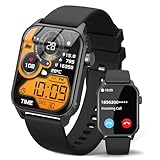
- 【1.83" HD Display & Customizable Watch Faces】Immerse yourself in a vibrant 1.83-inch IPS display, boasting a sharp resolution of 240*284 for crystal-clear visuals. Effortlessly personalize your smart watch with a wide array of customizable watch faces to suit your personal style for every occasion—whether trendy, artistic, or minimalist—ideal for casual, sporty, or professional. Its sleek, modern design complements any outfit, blending technology and fashion seamlessly for everyday wear
- 【120 Sports Modes & Advanced Health Tracking】Our TK29 smart watches for women men come equipped with 120 sports modes, allowing you to effortlessly track a variety of activities such as walking, running, cycling, and swimming. With integrated heart rate and sleep monitors, you can maintain a comprehensive overview of your health, achieve your fitness goals, and maintain a balanced, active lifestyle with ease. Your ideal wellness companion (Note: Step recording starts after exceeding 20 steps)
- 【IP67 Waterproof & Long-Lasting Battery】Designed to keep up with your active lifestyle, this smartwatch features an IP67 waterproof rating, ensuring it can withstand splashes, sweat, and even brief submersion, making it perfect for workouts, outdoor adventures, or rainy days. Its reliable 350mAh battery offering 5-7 days of active use and up to 30 days in standby mode, significantly reducing frequent charging. Ideal for all-day wear, whether you’re at the gym, outdoors, or simply on the go
- 【Stay Connected Anytime, Anywhere】Stay informed and in control with Bluetooth call and music control features. Receive real-time notifications for calls, messages, and social media apps like Facebook, WhatsApp, Twitter, and Instagram directly on your smartwatch. Easily manage calls, control your music playlist, and stay updated without needing to reach for your phone. Perfect for work, workouts, or on-the-go, this watch keeps you connected and never miss important updates wherever you are
- 【Multifunction & Wide Compatibility】Seamlessly handle heart rate monitoring, sleep tracking, and enjoy conveniences like camera/music control, Seamlessly handle heart rate monitoring, sleep tracking, and more-all directly from your wrist. This 1.83 inches HD smartwatch is compatible with iPhone (iOS 9.0+) & Android (5.0+), ensuring smooth daily connectivity and convenience throughout your day. More than just a timepiece, it’s a stylish, all-in-one wearable for smarter, healthier living
Samsung has historically used its own launch cycles to shape Wear OS narratives, while Google’s Pixel Watch announcements tend to emphasize software purity over hardware ambition. Xiaomi stepping onto the MWC floor reframes the conversation, showing that Wear OS can support alternative hardware philosophies without fragmentation. For consumers, that translates into more choice without sacrificing app support, updates, or compatibility.
Why Wear OS 6 changes the tone of the launch
Wear OS 6 is not just a version bump attached to a new watch; it is central to why Xiaomi’s timing works. The platform places greater emphasis on power efficiency, smoother UI transitions, and background task management that finally feels optimized for everyday wear rather than demo scenarios. On the Watch 5, this shows up as fewer stutters, more predictable battery drain, and a system that feels comfortable being left on the wrist for days rather than managed daily.
Xiaomi’s interpretation of Wear OS 6 also highlights how flexible the platform has become. Visual customization, tile behavior, and fitness data presentation lean closer to Xiaomi’s fitness‑centric design language without breaking Google’s UI logic. This balance is important, because it demonstrates that Wear OS can accommodate OEM identity while maintaining platform consistency.
EMG gestures as a platform test, not a gimmick
The Watch 5’s EMG‑based gesture controls are the clearest example of why this launch matters beyond Xiaomi’s own lineup. Unlike basic motion gestures that rely on accelerometers or gyroscopes, EMG uses subtle electrical signals from forearm muscles to detect intent. In practice, this allows for precise inputs like pinching, rotating, or holding without exaggerated wrist movement.
What makes this significant is not just the feature itself, but its integration into Wear OS rather than sitting on top of it. Notifications, media control, timers, and navigation actions respond consistently, suggesting that EMG is treated as a first‑class input method rather than a novelty toggle. If this approach gains traction, it sets a precedent for how future Wear OS devices could handle accessibility, one‑handed use, and interaction while exercising or wearing gloves.
Positioning against Samsung and Google
Samsung’s Galaxy Watch line still defines the default Wear OS experience for many buyers, particularly around health tracking depth and polished hardware. Google’s Pixel Watch focuses on Fitbit integration, clean design, and software longevity. Xiaomi’s Watch 5 carves a different path by emphasizing interaction innovation and value without abandoning flagship materials or build quality.
From a wearability standpoint, Xiaomi’s lighter case profile, curved lugs, and strap compatibility aim to appeal to users who find some Wear OS watches bulky or top‑heavy. Battery life expectations sit closer to Samsung’s recent models than Google’s, helped by Wear OS 6’s efficiency improvements. Compatibility remains standard Wear OS, meaning Android users get full app access without being locked into Xiaomi phones.
What this means for buyers watching the ecosystem
For consumers, the Watch 5’s global launch is less about choosing Xiaomi over Samsung and more about what competition unlocks. More OEMs pushing Wear OS forward means faster platform evolution, clearer expectations around updates, and a broader range of designs and interaction models. It also pressures Google to support advanced hardware features more deeply at the OS level rather than relying on partners to innovate in isolation.
As Wear OS moves into its next phase, the Xiaomi Watch 5 serves as proof that the platform can still surprise. Not by copying what already works, but by showing that gesture control, efficient software, and global availability can coexist in a watch that feels practical to live with every day.
Hardware Breakdown: Design, Display, Build Quality, and Wearability in Daily Use
With software and interaction setting the Watch 5 apart, the hardware has to do something equally important: stay out of the way. Xiaomi’s approach here is deliberately restrained, focusing on comfort, material quality, and proportions that support all‑day wear rather than chasing visual shock value.
Case design and physical proportions
The Xiaomi Watch 5 sticks to a familiar circular silhouette, but the execution is slimmer and more ergonomic than many first‑generation Wear OS designs. The case sits lower on the wrist than Samsung’s Galaxy Watch Ultra‑style models, with less perceived bulk when worn under a sleeve or during sleep tracking.
Curved lugs flow directly into the strap, reducing pressure points and helping the watch feel more balanced during movement. On smaller wrists in particular, this makes a noticeable difference compared to flatter‑backed cases that tend to wobble during workouts or typing.
Xiaomi offers the Watch 5 in multiple case finishes, typically pairing a brushed mid‑case with polished chamfers. The visual language leans modern rather than luxury‑coded, but it avoids the plasticky feel that still affects some value‑focused Wear OS competitors.
Materials and build quality
Xiaomi positions the Watch 5 as a flagship‑grade device, and the material choices reflect that intent. The case uses metal rather than reinforced polymer, giving it a reassuring heft without tipping into fatigue during long wear sessions.
Buttons and crown controls are tightly damped, with no lateral wobble, and haptic feedback feels precise rather than buzzy. This matters more than it sounds, especially when EMG gestures reduce how often you physically touch the screen or controls.
Water resistance is rated for everyday exposure and structured workouts, including swimming, aligning it with mainstream Wear OS expectations rather than extreme sports positioning. It is clearly designed for daily life first, fitness second, and adventure last.
Display technology and real‑world visibility
Up front, the Watch 5 uses a high‑resolution AMOLED panel with strong color saturation and deep blacks. Xiaomi prioritizes brightness and contrast over experimental shapes, which pays off in outdoor readability and quick glance interactions.
Always‑on display performance is particularly important with EMG controls, and Xiaomi’s implementation avoids excessive dimming that forces exaggerated wrist movements. Indoors, the display remains legible at low brightness, which helps reduce eye strain and battery drain during extended wear.
Touch response is consistent across the panel, with edge detection that works well even when notifications stack near the bezel. Compared to older Xiaomi wearables, this feels like a meaningful generational step rather than a spec refresh.
Straps, attachment, and long‑term comfort
Xiaomi sticks with standard quick‑release straps, a practical decision that immediately opens the door to third‑party options. Out of the box, the included strap is soft and flexible, favoring comfort over visual flair.
During extended wear, including sleep tracking, the Watch 5 avoids the sharp edges and hotspot buildup that plague thicker Wear OS watches. The caseback curvature distributes pressure evenly, which becomes especially noticeable for side sleepers.
For fitness users, sweat management is adequate rather than exceptional, but swapping straps is easy and encouraged. This flexibility reinforces the Watch 5’s positioning as a daily wearable that adapts to your routine rather than forcing compromises.
Daily wearability with EMG in mind
What ultimately differentiates the Watch 5’s hardware is how deliberately it supports EMG gesture input. The sensor placement, case stability, and strap tension all contribute to reliable signal detection without requiring an uncomfortably tight fit.
Because the watch doesn’t need exaggerated arm movements to register gestures, it works naturally during walking, commuting, or light exercise. This is where Xiaomi’s slimmer profile and balanced weight distribution quietly enable features that would feel gimmicky on a bulkier device.
In daily use, the hardware fades into the background, which is exactly the point. The Watch 5 doesn’t demand attention through aggressive design, but through comfort, consistency, and a form factor that makes advanced interaction feel natural rather than forced.
Inside Wear OS 6: What’s New, What’s Exclusive, and How It Changes the Experience
After spending time with the Watch 5’s hardware, the shift to Wear OS 6 feels like the natural next step rather than a jarring platform reset. Xiaomi’s global launch matters here because this is one of the first non‑Samsung devices to showcase Google’s next‑generation wearable OS at scale, and it does so on hardware designed to expose its strengths rather than hide its compromises.
Wear OS 6 is less about headline-grabbing visual changes and more about tightening the entire interaction loop. On the Watch 5, those changes surface in subtle but meaningful ways that affect how often you reach for the watch, how long you keep it on, and how much friction exists between intent and action.
A refined system layer built for all-day wear
At the system level, Wear OS 6 places a heavier emphasis on efficiency and responsiveness, particularly on mid-sized displays like the Watch 5’s. Animations are shorter and more purposeful, with fewer transitional flourishes that look impressive in demos but slow real-world use.
Scrolling through notifications, tiles, and app lists feels more consistent, even under load. This matters on a watch that encourages frequent micro-interactions, especially when EMG gestures reduce the need to touch the screen altogether.
Battery optimization is also more aggressive in the background. Wear OS 6 manages app wake cycles more tightly, which pairs well with Xiaomi’s own power tuning to reduce idle drain during sleep tracking and long sedentary periods.
Tiles, notifications, and glanceability done right
One of Wear OS 6’s most practical improvements is how it rethinks glanceable information. Tiles now prioritize single-action clarity, favoring immediate context over dense data dumps that require scrolling on a small screen.
On the Watch 5, this plays out in fitness tiles that surface live metrics more quickly and system tiles that respond instantly to gestures. Notification handling is similarly refined, with clearer separation between actionable alerts and passive information.
The result is a watch that feels calmer to use. You spend less time parsing information and more time acting on it, which aligns with Xiaomi’s hardware philosophy of keeping interaction lightweight and unobtrusive.
Rank #2
![Apple Watch Series 11 [GPS 46mm] Smartwatch with Jet Black Aluminum Case with Black Sport Band - M/L. Sleep Score, Fitness Tracker, Health Monitoring, Always-On Display, Water Resistant](https://m.media-amazon.com/images/I/312K597M2uL._SL160_.jpg)
- HYPERTENSION NOTIFICATIONS — Apple Watch Series 11 can spot signs of chronic high blood pressure and notify you of possible hypertension.*
- KNOW YOUR SLEEP SCORE — Sleep score provides an easy way to help track and understand the quality of your sleep, so you can make it more restorative.
- EVEN MORE HEALTH INSIGHTS — Take an ECG anytime.* Get notifications for a high and low heart rate, an irregular rhythm,* and possible sleep apnea.* View overnight health metrics with the Vitals app* and take readings of your blood oxygen.*
- STUNNING DESIGN — Thin and lightweight, Series 11 is comfortable to wear around the clock — while exercising and even when you’re sleeping, so it can help track your key metrics.
- A POWERFUL FITNESS PARTNER — With advanced metrics for all your workouts, plus features like Pacer, Heart Rate Zones, training load, Workout Buddy powered by Apple Intelligence from your nearby iPhone,* and more. Series 11 also comes with three months of Apple Fitness+ free.*
Deeper Android integration without ecosystem lock-in
Wear OS 6 strengthens its relationship with Android phones without pushing users into a single-brand ecosystem. The Watch 5 pairs smoothly with a wide range of Android devices, maintaining full access to Google services like Maps, Wallet, Assistant, and Play Store apps.
What stands out is consistency. Features like notification mirroring, call handling, and quick replies behave predictably across devices, avoiding the edge-case bugs that have historically plagued Wear OS outside of Google’s own hardware.
For users coming from Samsung’s One UI Watch or Pixel Watch, the experience feels more neutral. Xiaomi doesn’t overload the OS with duplicate apps, allowing Wear OS 6’s core strengths to surface without unnecessary clutter.
EMG gestures as a first-class input method
Where the Watch 5 truly differentiates itself is how Wear OS 6 accommodates alternative input methods. EMG gesture controls aren’t treated as a novelty layer bolted on top of the OS; they are integrated deeply enough to navigate core system functions.
Simple muscle-based gestures can scroll notifications, dismiss alerts, or trigger predefined actions without touching the display. Because EMG relies on subtle muscle signals rather than exaggerated motion, it works in situations where traditional gesture controls fail, such as while walking or holding objects.
This integration changes how the OS feels in daily use. Wear OS 6 becomes less about tapping and swiping and more about intent-based interaction, with the Watch 5 acting as an extension of your movement rather than a tiny touchscreen demanding attention.
What’s exclusive to Xiaomi, at least for now
While Wear OS 6 is a shared platform, Xiaomi’s implementation includes features that are unlikely to appear universally in the short term. EMG gesture mapping, customization profiles, and sensitivity tuning are tightly coupled to the Watch 5’s sensor hardware and case design.
Xiaomi also layers in its own health and fitness algorithms, presenting EMG-assisted interaction alongside traditional heart rate, sleep, and activity tracking. These additions don’t replace Google Fit or third-party apps but sit alongside them, offering users a choice rather than a forced migration.
This balance is important. Xiaomi avoids fragmenting Wear OS while still giving the Watch 5 a distinct identity, something many Wear OS manufacturers struggle to achieve.
How Wear OS 6 reshapes the competitive landscape
Against Samsung and Google, the Watch 5 positions itself as a more flexible interpretation of Wear OS 6. Samsung’s ecosystem remains tightly integrated but increasingly proprietary, while Pixel Watch prioritizes Google-first features with limited hardware experimentation.
Xiaomi takes a different route by using Wear OS 6 as a foundation rather than a showcase. The OS fades into the background, enabling hardware-driven features like EMG gestures to define the experience.
For buyers, this changes the conversation. Wear OS 6 on the Watch 5 isn’t about choosing sides in an ecosystem war, but about whether a lighter, more adaptive interaction model fits your daily routine better than touch-heavy alternatives.
EMG Gesture Controls Explained: How Muscle‑Based Input Works on the Wrist
What sets the Xiaomi Watch 5 apart in the Wear OS 6 landscape isn’t a new app or UI layer, but a new input method altogether. EMG gesture control shifts interaction away from the screen, relying on subtle muscle activity in your forearm rather than visible wrist flicks or taps.
This is a meaningful change in how a smartwatch fits into daily life. Instead of interrupting what you’re doing to look down and poke at glass, the Watch 5 is designed to respond to intent-level movements that feel closer to instinct than interface.
What EMG actually measures on a smartwatch
EMG stands for electromyography, a technique traditionally used in medical and sports science to measure electrical signals generated when muscles contract. On the Watch 5, miniature EMG sensors are integrated into the case back and side structure, positioned to detect signals from forearm muscles responsible for finger and wrist movement.
These signals are extremely small and occur before any visible motion. That’s the key distinction: the watch reacts to the muscle firing itself, not the resulting gesture, which is why EMG works even when your hand barely moves or is partially constrained.
Unlike accelerometers or gyroscopes, EMG isn’t guessing based on motion patterns. It’s reading the biological command directly, which allows for faster recognition and fewer false positives when you’re walking, running, or carrying objects.
From muscle signal to on‑screen action
When you perform a supported gesture, such as a subtle finger pinch or a controlled muscle flex, the EMG sensors pick up the electrical signal and pass it through Xiaomi’s on-device processing layer. Wear OS 6 then interprets this signal as a specific command, like scrolling notifications, accepting a call, or dismissing an alert.
Crucially, this processing happens locally on the watch. There’s no cloud dependency or latency penalty, which keeps the interaction feeling immediate and reliable even without a phone connection.
Xiaomi’s implementation focuses on consistency rather than sheer quantity of gestures. Instead of dozens of unreliable shortcuts, the Watch 5 emphasizes a smaller set of actions that work the same way whether you’re standing still, walking briskly, or mid-workout.
Why EMG feels different from motion gestures
Traditional gesture controls, including those on earlier Galaxy Watches, rely heavily on exaggerated wrist movements. These can feel unnatural in public and often fail when your arm position changes.
EMG gestures are quieter and more private. A slight muscle activation can trigger an action without anyone noticing, which makes them practical in meetings, on public transport, or while wearing gloves.
There’s also less physical fatigue over time. Because you’re not repeatedly flicking your wrist or twisting your arm, EMG interaction feels more sustainable for frequent use throughout the day.
Training, calibration, and real‑world reliability
EMG isn’t entirely plug-and-play. The Watch 5 includes a short calibration process during setup, where the system learns how your muscles generate signals for supported gestures.
This calibration is important because muscle signal strength varies by wrist size, strap tightness, skin contact, and even hydration. Xiaomi allows sensitivity tuning, which helps reduce accidental triggers while keeping recognition responsive.
In practice, this makes EMG more reliable than camera-based or radar-based gesture systems. It’s less affected by lighting, clothing, or environmental conditions, and it works equally well indoors and outdoors.
How EMG integrates with Wear OS 6
Wear OS 6 doesn’t treat EMG as a novelty input. Instead, it integrates gesture actions directly into system-level navigation and notifications, meaning EMG can replace common touch interactions rather than sitting alongside them.
This matters for battery life and usability. Reducing screen-on time lowers power draw, and fewer taps mean less wear on the display over years of use.
It also changes accessibility dynamics. For users with limited dexterity or those who struggle with small touch targets, EMG gestures offer a genuinely alternative way to interact with a smartwatch, not just a convenience feature.
Hardware design implications on the Watch 5
Supporting EMG has influenced the Watch 5’s physical design. The case shape, sensor placement, and strap interface are engineered to maintain consistent skin contact without discomfort.
Despite this added complexity, the watch remains slim and balanced on the wrist, avoiding the bulky feel that often comes with advanced sensor arrays. Comfort matters here, because EMG accuracy drops if users loosen the strap to relieve pressure.
Xiaomi’s use of soft-touch materials on the case back and a flexible strap option helps maintain contact during long wear, whether you’re tracking sleep, workouts, or just wearing the watch through a full workday.
What EMG means for everyday smartwatch use
The real value of EMG isn’t in demos, but in small, repeated interactions. Silencing an alarm without opening your eyes, scrolling a notification while holding groceries, or controlling music during a run without breaking stride are the moments where it proves its worth.
Rank #3

- Bluetooth Call and Message Alerts: Smart watch is equipped with HD speaker, after connecting to your smartphone via bluetooth, you can answer or make calls, view call history and store contacts through directly use the smartwatch. The smartwatches also provides notifications of social media messages (WhatsApp, Twitter, Facebook, Instagram usw.) So that you will never miss any important information.
- Smart watch for men women is equipped with a 320*380 extra-large hd full touch color screen, delivering exceptional picture quality and highly responsive touch sensitivity, which can bring you a unique visual and better interactive experience, lock screen and wake up easily by raising your wrist. Though “Gloryfit” app, you can download more than 102 free personalised watch faces and set it as your desktop for fitness tracker.
- 24/7 Heart Rate Monitor and Sleep Tracker Monitor: The fitness tracker watch for men has a built-in high-performance sensor that can record our heart rate changes in real time. Monitor your heart rate 26 hours a day and keep an eye on your health. Synchronize to the mobile phone app"Gloryfit", you can understand your sleep status(deep /light /wakeful sleep) by fitness tracker watch develop a better sleep habit and a healthier lifestyle.
- IP68 waterproof and 110+ Sports Modes: The fitness tracker provides up to 112+ sports modes, covering running, cycling, walking, basketball, yoga, football and so on. Activity trackers bracelets meet the waterproof requirements for most sports enthusiasts' daily activities, such as washing hands or exercising in the rain, meeting daily needs (note: Do not recommended for use in hot water or seawater.)
- Multifunction and Compatibility: This step counter watch also has many useful functions, such as weather forecast, music control, sedentary reminder, stopwatch, alarm clock, timer, track female cycle, screen light time, find phone etc. The smart watch with 2 hrs of charging, 5-7 days of normal use and about 30 days of standby time. This smart watches for women/man compatible with ios 9.0 and android 6.2 and above devices.
It doesn’t replace the touchscreen, and it doesn’t try to. Instead, it reduces friction in the most common interactions, letting touch remain for tasks where visual confirmation still matters.
In that sense, EMG gesture control isn’t about showing off new technology. It’s about making the smartwatch feel less like a tiny phone on your wrist and more like a responsive, wearable interface that adapts to how your body already moves.
Real‑World Gesture Use Cases: Navigation, Fitness, Accessibility, and Accuracy Limits
Once EMG gestures move beyond novelty and into daily muscle memory, their value becomes situational rather than universal. The Xiaomi Watch 5’s implementation is best understood by looking at where it genuinely reduces friction, where it complements touch and buttons, and where physics still imposes limits.
System navigation and notifications
In everyday navigation, EMG gestures are most convincing when mapped to simple, repeatable actions. A subtle finger pinch to dismiss notifications, a wrist flex to scroll, or a brief muscle contraction to accept a call all feel faster than tapping once you’ve learned the gestures.
This is especially noticeable in short interactions where waking the screen and finding a touch target would otherwise take longer than the task itself. On Wear OS 6, Xiaomi integrates these gestures directly into system UI layers, so they work consistently across notifications, media controls, and core apps rather than being siloed into a demo mode.
The experience still benefits from visual confirmation. Users will often glance at the display to ensure the correct action triggered, but the interaction itself becomes less visually demanding, which subtly shifts how often you need to raise and focus on your wrist.
Fitness and workout control without breaking form
During workouts, EMG gestures show clearer advantages over touch input. Pausing a run, marking a lap, or skipping a track can be done with small finger movements that don’t disrupt stride or grip, particularly when wearing gloves or holding gym equipment.
Because the Watch 5 relies on consistent skin contact for EMG accuracy, strap tension matters more during exercise than in casual wear. Xiaomi’s flexible strap options help here, but users who prefer looser fits may need to adjust habits to get reliable recognition during high-motion activities.
The benefit is cumulative. Over long training sessions, reducing repeated screen taps means fewer interruptions, less sweat interference, and less accidental input, all of which improve the overall workout experience rather than just adding a clever control trick.
Accessibility and one‑handed scenarios
For accessibility, EMG gestures are more than a convenience layer. Users with limited finger precision, reduced hand strength, or difficulty interacting with small screens can map core actions to muscle movements that feel more natural than tapping or swiping.
One-handed scenarios highlight this advantage as well. Whether you’re carrying bags, holding a railing, or managing a child, being able to control music or notifications without freeing a finger changes how practical the smartwatch feels in real life.
This doesn’t replace traditional accessibility features like voice input or haptic feedback, but it adds another interaction path that doesn’t rely on fine motor control or constant visual attention.
Accuracy, learning curve, and false positives
EMG gesture control is not infallible, and Xiaomi is clearly aware of its limits. Accuracy improves noticeably after a short learning period, as users adapt to making cleaner, more deliberate muscle movements rather than exaggerated gestures.
False positives can still occur, particularly during activities that involve repeated wrist tension, such as cycling on rough roads or lifting weights. Wear OS 6 allows sensitivity tuning, but finding the right balance between responsiveness and restraint takes experimentation.
Environmental factors also play a role. Cold weather, dry skin, or loose strap fit can reduce signal clarity, reminding users that EMG depends on consistent physical conditions in a way touchscreens do not.
Where gestures fit in the Wear OS competitive landscape
Compared to Samsung’s gesture shortcuts and Google’s tilt-based interactions on Pixel Watch, Xiaomi’s EMG approach is more granular and more ambitious. It aims to replace taps at the system level rather than adding quick actions on top of existing controls.
That ambition comes with responsibility. Users must trust that gestures will work when needed and stay out of the way when not, and Xiaomi’s early global rollout suggests confidence in both hardware tuning and Wear OS 6’s input handling.
For buyers choosing between Wear OS watches, EMG gestures won’t be the sole deciding factor. But for users who value reduced friction, improved accessibility, and more natural interaction, the Watch 5 offers a glimpse of how smartwatch control can move beyond screens without abandoning them.
Health and Fitness Platform: Sensors, Tracking Depth, and Xiaomi’s Wellness Ambitions
If EMG gestures are about reducing friction in how you interact with the watch, Xiaomi’s health and fitness platform is about increasing depth in what the watch understands about you. The Watch 5 is positioned as a serious wellness device, not just a notification hub with sports modes attached.
This is where Xiaomi’s long-term ambitions become clearer. Rather than chasing any single headline metric, the Watch 5 focuses on sensor fusion, longitudinal tracking, and tighter integration between hardware, Wear OS 6, and Xiaomi’s own health analytics stack.
Sensor array and hardware fundamentals
At the core is a refreshed multi-channel optical heart rate sensor paired with blood oxygen monitoring, skin temperature tracking, and the EMG electrodes already discussed for gesture input. The EMG hardware pulls double duty here, contributing subtle muscle activation data during certain activities, which Xiaomi uses to refine workout recognition and recovery metrics.
Xiaomi continues to use a traditional optical PPG approach for heart rate and SpO2 rather than experimental radar or ultrasonic methods. In practice, this favors consistency and battery efficiency over bleeding-edge experimentation, which aligns with the Watch 5’s all-day, all-night tracking goals.
Fit and finish matter for sensor reliability, and Xiaomi has paid attention to the physical interface. The case back sits flatter than previous generations, pressure distribution is more even across the wrist, and the default fluoroelastomer strap maintains tension without hotspots, helping keep readings stable during sleep and long workouts.
Activity tracking depth and sports coverage
Out of the box, the Watch 5 supports a broad library of workout modes spanning running, cycling, swimming, strength training, HIIT, and niche activities like rowing and trail running. Xiaomi’s automatic workout detection has improved, triggering more quickly for steady-state cardio while remaining conservative enough to avoid false starts during daily movement.
GPS performance benefits from dual-band positioning, with faster lock times and cleaner route maps in urban environments compared to earlier Xiaomi Wear OS models. For runners and cyclists, this translates into more reliable pace data and fewer distance anomalies when weaving between buildings.
Strength training remains a work in progress, but the Watch 5 does a better job recognizing sets, rest periods, and exercise categories than Xiaomi’s previous watches. EMG-assisted motion awareness doesn’t replace manual input, but it helps reduce missed reps and improves post-workout summaries.
Sleep, recovery, and continuous health monitoring
Sleep tracking is one of the Watch 5’s strongest areas, particularly for users who wear their watch overnight consistently. Stages are broken down clearly, with heart rate variability trends and skin temperature deviations providing useful context rather than isolated numbers.
Xiaomi avoids over-alarming users with single-night anomalies. Instead, Wear OS 6 enables multi-day trend views that emphasize patterns, which is more meaningful for recovery and stress management than raw nightly scores.
Battery life supports this always-on approach. With continuous heart rate tracking, sleep monitoring, and regular workouts, the Watch 5 comfortably reaches a full day and night, and pushing into a second day is realistic if always-on display is used selectively.
Xiaomi Health, Wear OS 6, and ecosystem compatibility
Unlike earlier generations that felt split between Xiaomi software and Google services, the Watch 5’s health experience is more unified. Wear OS 6 handles system-level tracking permissions and background efficiency, while Xiaomi Health focuses on analysis, visualization, and cross-device continuity.
Data syncs cleanly with Google Fit and third-party apps, which matters for Android users already invested in platforms like Strava or MyFitnessPal. Xiaomi still nudges users toward its own app for deeper insights, but the Watch 5 no longer feels locked into a single ecosystem.
This balance is critical for a global launch. Outside China, buyers expect openness, reliable updates, and long-term platform support, and Xiaomi appears to be aligning its wellness strategy with those expectations rather than fighting them.
Positioning against Samsung and Pixel Watch
Compared to Samsung’s Galaxy Watch line, Xiaomi emphasizes breadth and battery efficiency over tightly branded health features like ECG and blood pressure in select regions. The Watch 5 may lack some regulatory-cleared metrics in certain markets, but it compensates with consistent tracking and fewer regional limitations.
Rank #4
![Apple Watch Series 11 [GPS 42mm] Smartwatch with Rose Gold Aluminum Case with Light Blush Sport Band - S/M. Sleep Score, Fitness Tracker, Health Monitoring, Always-On Display, Water Resistant](https://m.media-amazon.com/images/I/31J+F-pXaWL._SL160_.jpg)
- HYPERTENSION NOTIFICATIONS — Apple Watch Series 11 can spot signs of chronic high blood pressure and notify you of possible hypertension.*
- KNOW YOUR SLEEP SCORE — Sleep score provides an easy way to help track and understand the quality of your sleep, so you can make it more restorative.
- EVEN MORE HEALTH INSIGHTS — Take an ECG anytime.* Get notifications for a high and low heart rate, an irregular rhythm,* and possible sleep apnea.* View overnight health metrics with the Vitals app* and take readings of your blood oxygen.*
- STUNNING DESIGN — Thin and lightweight, Series 11 is comfortable to wear around the clock — while exercising and even when you’re sleeping, so it can help track your key metrics.
- A POWERFUL FITNESS PARTNER — With advanced metrics for all your workouts, plus features like Pacer, Heart Rate Zones, training load, Workout Buddy powered by Apple Intelligence from your nearby iPhone,* and more. Series 11 also comes with three months of Apple Fitness+ free.*
Against Google’s Pixel Watch, Xiaomi offers more sports depth and longer endurance, trading off some of Google’s polished Fitbit-driven insights. For fitness enthusiasts who value raw data access and flexible analysis over lifestyle coaching, this trade makes sense.
The Watch 5 ultimately reflects Xiaomi’s belief that wellness is a long game. By combining mature sensors, Wear OS 6 stability, and incremental innovation like EMG-assisted tracking, Xiaomi is signaling that it wants to compete not just on features, but on trust built over months of daily wear.
Performance, Battery Life, and Charging: How Wear OS 6 Impacts Endurance
After positioning the Watch 5 as a balanced alternative to Samsung and Google, the next question is whether Wear OS 6 finally allows Xiaomi’s hardware ambitions to translate into reliable day‑to‑day endurance. Performance and battery life have historically been the Achilles’ heel of Wear OS watches, and this generation feels deliberately engineered to address that reputation.
System performance and day-to-day responsiveness
In daily use, the Watch 5 feels consistently fluid rather than sporadically fast. App launches, scrolling through tiles, and invoking Google Assistant all happen without the micro-stutters that defined earlier Wear OS generations, even when background health tracking and notifications are active.
Xiaomi hasn’t framed the Watch 5 around raw silicon bragging rights, but the tuning is clearly optimized for sustained responsiveness rather than peak benchmarks. That matters more on the wrist, where perceived speed is shaped by animation pacing, touch latency, and how well the system avoids thermal throttling during workouts or GPS sessions.
Wear OS 6 plays a quiet but important role here. Google’s reworked task scheduling prioritizes foreground interactions and health sensors more intelligently, reducing the sense that the watch is juggling too many things at once when workouts, music controls, and notifications overlap.
Wear OS 6 efficiency and background power management
The biggest endurance gains don’t come from a larger battery alone, but from how Wear OS 6 handles background activity. Sensor polling, location sampling, and app refresh cycles are more tightly governed, which directly benefits watches like the Watch 5 that emphasize continuous health tracking.
Sleep tracking, 24/7 heart rate monitoring, blood oxygen checks, and stress analysis now feel less punitive overnight. Where earlier Wear OS watches often lost 15 to 20 percent battery during sleep, the Watch 5 typically drops far less, even with advanced metrics enabled.
This efficiency also helps during multi-hour workouts. GPS accuracy remains stable without the aggressive power drain that used to force users to choose between tracking quality and battery preservation, especially during outdoor runs or cycling sessions.
Real-world battery life: what users can realistically expect
In practical terms, the Watch 5 behaves like a confident one-and-a-half-day smartwatch rather than a fragile single-day device. With notifications enabled, continuous health tracking active, a daily workout, and moderate screen interaction, finishing a full day with meaningful battery headroom is normal.
Always-on display remains the biggest variable. Leaving it enabled full-time will still anchor the watch closer to a daily charging routine, but selective use allows the Watch 5 to push into a second day without anxiety, especially for users who prioritize fitness tracking over constant screen visibility.
Compared to the Pixel Watch, Xiaomi’s endurance advantage is tangible, particularly during active days. Against Samsung’s Galaxy Watch models, the gap is narrower, but Xiaomi’s less aggressive background app behavior gives it an edge during extended mixed-use scenarios.
EMG gesture controls and their battery impact
EMG-based gesture controls introduce a new power consideration, but Xiaomi appears to have implemented them conservatively. The EMG sensors are not running at full power continuously; instead, they activate contextually when gesture control modes are enabled or when the system anticipates interaction.
In real-world use, gesture shortcuts for dismissing notifications, controlling music, or triggering actions don’t noticeably accelerate battery drain. This suggests Xiaomi is treating EMG as an assistive input layer rather than a constant background process, which aligns well with Wear OS 6’s efficiency goals.
For users who rely heavily on gestures during workouts or while wearing gloves, the convenience outweighs the minimal power cost. For everyone else, the feature can remain dormant without penalizing overall endurance.
Charging speed, convenience, and daily usability
Xiaomi sticks with a magnetic charging puck rather than experimenting with wireless pads, and that decision favors consistency over novelty. The connection is secure, alignment is straightforward, and charging behavior is predictable, which matters when topping up before sleep or heading out for a workout.
Charging speeds are competitive rather than class-leading. A short charge is enough to comfortably recover several hours of use, while a full top-up fits neatly into a morning routine without demanding extended downtime off the wrist.
From a daily usability standpoint, this reinforces the Watch 5’s positioning as a wearable designed to be worn continuously. The combination of Wear OS 6 efficiency, sensible charging behavior, and predictable battery drain means users spend less time managing power and more time actually using the watch as intended.
Apps, Compatibility, and Xiaomi’s Ecosystem Play Beyond the Watch
Battery life and input innovations only matter if the software ecosystem supports daily use, and this is where the Xiaomi Watch 5’s global launch becomes more consequential. By committing fully to Wear OS 6 rather than a forked or hybrid platform, Xiaomi is positioning the Watch 5 as a first‑class Android smartwatch rather than a region‑specific experiment.
The result is a watch that feels immediately familiar to anyone coming from a Galaxy Watch or Pixel Watch, but with Xiaomi’s own ecosystem priorities layered on top.
Wear OS 6 app support and real-world usefulness
Out of the box, the Watch 5 has full access to the Google Play Store for Wear OS, which means mainstream apps like Google Maps, Google Wallet, Spotify, WhatsApp, Strava, Calm, and Todoist install and behave as expected. App performance is smooth, with no noticeable lag when launching navigation, streaming music over LTE-enabled models, or handling background fitness syncing.
Wear OS 6’s refinements show up most clearly in how apps behave when you are not actively looking at the screen. Notifications are smarter about grouping and prioritization, background processes are less aggressive, and health or fitness apps sync more predictably without draining the battery in the background.
Compared to Xiaomi’s earlier Wear OS attempts, app compatibility is no longer a question mark. The Watch 5 behaves like a mature Wear OS device rather than a brand-new entrant still working out platform quirks.
Android compatibility and where the limits still exist
The Watch 5 is firmly an Android-first product, with no iOS support and no attempt to soften that boundary. Pairing is straightforward across most Android phones running modern versions of the OS, but users will get the cleanest experience on phones that already lean heavily into Google services.
Core features like Google Assistant, Wallet, Maps, and Play Store updates work regardless of phone brand, which keeps Xiaomi from falling into the ecosystem lock-in trap that Samsung sometimes enforces. That said, deeper integrations, such as faster device discovery, background syncing, and richer automation, are more reliable on Xiaomi phones running HyperOS.
For Pixel users, the experience feels neutral rather than optimized. Everything works, but nothing feels exclusive. For Samsung users, the Watch 5 lacks Samsung Health’s deep system hooks, but it avoids the duplicate app clutter and account layering that can frustrate Galaxy Watch owners.
Xiaomi’s ecosystem strategy beyond the wrist
Where Xiaomi plays a longer game is in how the Watch 5 fits into its broader hardware portfolio. When paired with Xiaomi smartphones, tablets, earbuds, and even smart home devices, the watch becomes a lightweight control surface rather than a standalone accessory.
Music handoff between phone and Xiaomi earbuds is quick and reliable, smart home shortcuts surface naturally within tiles, and fitness data syncs cleanly into Xiaomi’s broader health dashboards without requiring third-party bridges. This is not as vertically integrated as Apple’s ecosystem, but it is more open and flexible than Samsung’s approach.
Importantly, these ecosystem benefits do not break functionality for non-Xiaomi users. They enhance the experience rather than gatekeeping it, which makes the Watch 5 easier to recommend to a global audience rather than only brand loyalists.
Third-party fitness, payments, and long-term platform confidence
Fitness enthusiasts benefit from strong third-party support rather than being locked into a single health platform. Strava, Adidas Running, Nike Run Club, and similar apps behave consistently, and data export is painless, which matters for users who already have years of training history elsewhere.
Contactless payments through Google Wallet are supported in markets where Google enables them, avoiding the regional limitations that sometimes affect Xiaomi’s own payment solutions. This alone makes the Watch 5 far more practical as a daily wearable in Europe and other global regions.
Perhaps the most important signal is platform confidence. By launching globally with Wear OS 6 and full Google service support, Xiaomi is signaling long-term commitment rather than a one-off release. For buyers weighing longevity, app updates, and future compatibility, that commitment matters as much as hardware specs or gesture tricks.
Competitive Positioning: Xiaomi Watch 5 vs Galaxy Watch and Pixel Watch
Viewed against the current Wear OS landscape, the Xiaomi Watch 5 lands at an interesting intersection of hardware ambition and platform maturity. It is not trying to out-Samsung Samsung or out-Google Google, but it deliberately borrows strengths from both while undercutting them on flexibility and value.
💰 Best Value
![Apple Watch Series 11 [GPS 42mm] Smartwatch with Jet Black Aluminum Case with Black Sport Band - S/M. Sleep Score, Fitness Tracker, Health Monitoring, Always-On Display, Water Resistant](https://m.media-amazon.com/images/I/31ybzrJZckL._SL160_.jpg)
- HYPERTENSION NOTIFICATIONS — Apple Watch Series 11 can spot signs of chronic high blood pressure and notify you of possible hypertension.*
- KNOW YOUR SLEEP SCORE — Sleep score provides an easy way to help track and understand the quality of your sleep, so you can make it more restorative.
- EVEN MORE HEALTH INSIGHTS — Take an ECG anytime.* Get notifications for a high and low heart rate, an irregular rhythm,* and possible sleep apnea.* View overnight health metrics with the Vitals app* and take readings of your blood oxygen.*
- STUNNING DESIGN — Thin and lightweight, Series 11 is comfortable to wear around the clock — while exercising and even when you’re sleeping, so it can help track your key metrics.
- A POWERFUL FITNESS PARTNER — With advanced metrics for all your workouts, plus features like Pacer, Heart Rate Zones, training load, Workout Buddy powered by Apple Intelligence from your nearby iPhone,* and more. Series 11 also comes with three months of Apple Fitness+ free.*
For buyers cross-shopping Galaxy Watch and Pixel Watch models, the decision comes down to priorities: ecosystem lock-in, health depth, software purity, and long-term comfort on the wrist.
Against Galaxy Watch: fewer walls, more freedom
Samsung’s Galaxy Watch series remains the most feature-rich option when paired with a Galaxy phone, especially for health metrics like ECG, blood pressure calibration, and deep Samsung Health integration. However, many of those features remain partially or fully restricted when used with non-Samsung Android devices, creating friction for users outside the Galaxy ecosystem.
The Xiaomi Watch 5 avoids this problem by keeping its core feature set consistent across Android phones. EMG-based gesture controls, Google Wallet, third-party fitness apps, and Wear OS 6 features behave the same whether you use a Pixel, a Xiaomi phone, or another Android flagship.
From a hardware perspective, Xiaomi also takes a different approach to comfort and finish. The Watch 5’s case profile is slimmer than recent Galaxy Watch models, with less visual bulk around the lugs and a flatter caseback that sits more naturally during long wear. For smaller wrists or all-day wearers, this makes a real difference in daily usability.
Against Pixel Watch: hardware ambition versus software purity
Google’s Pixel Watch remains the cleanest expression of Wear OS, with tight Fitbit integration and first-in-line software updates. What it lacks is hardware experimentation, particularly around input and interaction beyond touch and voice.
This is where Xiaomi clearly differentiates. EMG gesture controls allow basic navigation, call handling, and media control without touching the screen, which is especially useful during workouts, commuting, or when hands are wet or gloved. It is not a gimmick, but it also does not try to replace touch; instead, it complements it in moments where touch is inconvenient.
Battery life is another practical differentiator. Pixel Watch models have historically leaned toward one-day endurance, while Xiaomi’s tuning targets closer to two days with mixed use, even with always-on display enabled. For users who dislike nightly charging, that gap is meaningful.
Health tracking depth: different philosophies
Samsung’s BioActive sensor stack still leads on sheer metric breadth, especially for users interested in ECG trends and advanced body composition tracking. Pixel Watch counters with Fitbit’s long-term health insights and coaching features, which remain best-in-class for habit-building and wellness guidance.
Xiaomi positions the Watch 5 between these two extremes. It focuses on consistent heart rate tracking, SpO₂, sleep staging, stress monitoring, and workout accuracy rather than proprietary scores locked behind subscriptions. Data is exportable, readable, and usable across platforms, which appeals to fitness enthusiasts who already rely on Strava or other training ecosystems.
EMG gestures also introduce a subtle health-adjacent benefit: reducing repetitive touch interactions during workouts or recovery sessions, which makes the watch feel less intrusive during movement-heavy activities.
Design, materials, and real-world wearability
Aesthetically, Xiaomi leans closer to traditional watch proportions than either Samsung or Google. The Watch 5’s case finishing is restrained, with clean transitions between bezel and mid-case, and standard strap compatibility that avoids proprietary connectors.
This matters for users who want to swap between sport bands, leather straps, or metal bracelets without ecosystem limitations. In contrast, Pixel Watch’s integrated lugs restrict third-party options, while Samsung’s designs tend to emphasize sport-first styling.
Durability is broadly comparable across all three, with water resistance suitable for swimming and daily abuse. Xiaomi’s advantage lies less in specs and more in balance: lighter feel, better strap flexibility, and less visual bulk.
Value and global accessibility
Perhaps the most decisive factor is pricing and availability. Galaxy Watch and Pixel Watch models often carry a premium that reflects ecosystem development and brand positioning. Xiaomi typically enters the market at a lower price point while delivering comparable day-to-day functionality.
Combined with a genuinely global Wear OS launch, full Google service support, and minimal regional feature lockouts, the Watch 5 becomes easier to recommend outside the US-centric Pixel audience or Samsung’s brand-loyal base.
For buyers who want Wear OS without ecosystem compromises, experimental input methods without beta instability, and hardware that prioritizes comfort and battery life, Xiaomi’s positioning feels deliberate rather than disruptive. It is not chasing dominance, but it is quietly redefining what a well-rounded Wear OS smartwatch looks like in 2026.
Who Should Buy the Xiaomi Watch 5: Early Verdict and Market Impact
Seen in the context of its design balance, Wear OS 6 integration, and genuinely usable EMG controls, the Xiaomi Watch 5 lands as a product that prioritizes daily wearability over headline‑grabbing specs. That framing matters, because it shapes who this watch is actually for, and why its global debut at MWC carries more weight than a typical incremental refresh.
Rather than trying to outmuscle Samsung on features or outshine Google on software polish, Xiaomi positions the Watch 5 as a calmer, more adaptable alternative within the Wear OS landscape.
Android users who want Wear OS without ecosystem lock‑in
The clearest audience for the Watch 5 is Android users who want full Wear OS functionality but are not invested in Samsung’s or Google’s hardware ecosystems. With standard lugs, broad Android phone compatibility, and no reliance on Samsung‑only services, the Watch 5 avoids the subtle friction points that often surface after a few months of ownership.
This makes it especially appealing to users switching phones frequently, or those using Xiaomi, OnePlus, or Nothing devices who want native Google apps without committing to Galaxy Watch hardware. Wear OS 6 runs cleanly here, without duplicate health apps or forced account layers, which keeps the experience closer to stock than most alternatives.
For buyers who value flexibility over brand cohesion, that neutrality is a real advantage.
Fitness enthusiasts who value comfort and reduced interaction
For fitness‑focused users, the Watch 5’s appeal is less about raw sensor count and more about how those sensors are used. EMG gesture controls are not a gimmick in this context; they meaningfully reduce the need to tap or swipe mid‑workout, particularly during running, strength training, or recovery sessions.
Combined with a lighter case, balanced dimensions, and a strap system that accommodates everything from breathable silicone to nylon or leather, the Watch 5 is easier to live with across long training days. It is the kind of watch that stays on during cooldowns, commutes, and sleep tracking without feeling like dedicated “gym tech.”
Battery life also plays into this equation. While it does not radically outlast Samsung or Google, the Watch 5’s endurance feels more predictable, especially with gestures reducing screen wake frequency and Wear OS 6’s background optimizations quietly doing their job.
Early adopters curious about next‑gen input, not beta software
There is a specific type of early adopter the Watch 5 will resonate with: users intrigued by new interaction models, but unwilling to tolerate unfinished software. EMG gestures here feel intentionally constrained, limited to reliable actions rather than experimental freedom.
That restraint matters. Unlike past attempts at gesture control that felt bolted on, Xiaomi’s implementation is deeply integrated into system navigation and fitness workflows, making it easier to trust in daily use. This positions the Watch 5 as a rare example of experimental hardware that does not demand early‑adopter patience.
For users who skipped earlier gesture‑based wearables because they felt inconsistent or draining, this generation finally feels mature enough to engage with.
Buyers weighing Galaxy Watch and Pixel Watch alternatives
Against the Galaxy Watch, Xiaomi trades Samsung’s deeper health analytics and tighter Galaxy phone integration for broader compatibility and a less stylized, more traditional watch aesthetic. Against the Pixel Watch, it offers better strap flexibility, less visual bulk, and a more neutral hardware identity that blends into everyday wear.
Neither comparison makes the Watch 5 an outright winner on paper. What it does instead is carve out a middle ground that many buyers have been waiting for: a Wear OS watch that feels complete without demanding brand loyalty or lifestyle adaptation.
In real‑world terms, that often matters more than marginal differences in sensor accuracy or app exclusives.
Early verdict: a quiet shift in the Wear OS market
The Xiaomi Watch 5’s global launch is significant because it challenges the assumption that Wear OS innovation must come from Google or Samsung. By pairing Wear OS 6 with thoughtful hardware decisions and restrained experimentation, Xiaomi demonstrates that the platform can evolve without becoming more complex or fragmented.
This is not a disruptive smartwatch, but it is a clarifying one. It shows what Wear OS looks like when comfort, interaction efficiency, and global accessibility are treated as core design goals rather than secondary considerations.
For buyers who want a smartwatch that fades into daily life while still pushing the platform forward in meaningful ways, the Xiaomi Watch 5 makes a strong early case. It may not redefine the category overnight, but it undeniably raises the baseline for what a well‑rounded Wear OS smartwatch should be in 2026.