Smartwatches have promised hands-free productivity for over a decade, yet most still struggle to move beyond basic voice commands and notification triage. Zepp Flow is Amazfit’s attempt to change that equation by making the watch feel less like a passive display and more like an active decision-making companion. Instead of asking you to adapt your habits to rigid commands, it’s designed to understand intent and manage tasks in a more conversational, contextual way.
For Amazfit users already invested in Zepp OS, Zepp Flow represents a clear philosophical shift. This isn’t just a voice assistant bolted onto a watch; it’s positioned as an always-available AI layer that spans fitness data, daily logistics, and system controls, all without pulling out your phone. The goal is ambitious: reduce friction in everyday interactions while respecting the physical limits of a small screen and limited battery.
Understanding whether Zepp Flow meaningfully delivers on that promise requires looking at how it works, where it sits relative to rivals like Siri, Google Assistant, and Samsung’s evolving AI features, and which types of users will actually benefit from it in daily wear.
An AI Assistant Built Natively for the Wrist
Zepp Flow is Amazfit’s in-house AI assistant integrated directly into Zepp OS, rather than a cloud-dependent phone proxy masquerading as a watch feature. It’s designed to operate with a voice-first interface, optimized for short, natural language interactions that make sense on a wrist-sized device. The emphasis is on immediacy, not deep multiturn conversations that would feel awkward on a watch.
🏆 #1 Best Overall
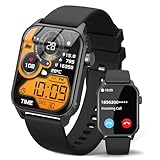
- 【1.83" HD Display & Customizable Watch Faces】Immerse yourself in a vibrant 1.83-inch IPS display, boasting a sharp resolution of 240*284 for crystal-clear visuals. Effortlessly personalize your smart watch with a wide array of customizable watch faces to suit your personal style for every occasion—whether trendy, artistic, or minimalist—ideal for casual, sporty, or professional. Its sleek, modern design complements any outfit, blending technology and fashion seamlessly for everyday wear
- 【120 Sports Modes & Advanced Health Tracking】Our TK29 smart watches for women men come equipped with 120 sports modes, allowing you to effortlessly track a variety of activities such as walking, running, cycling, and swimming. With integrated heart rate and sleep monitors, you can maintain a comprehensive overview of your health, achieve your fitness goals, and maintain a balanced, active lifestyle with ease. Your ideal wellness companion (Note: Step recording starts after exceeding 20 steps)
- 【IP67 Waterproof & Long-Lasting Battery】Designed to keep up with your active lifestyle, this smartwatch features an IP67 waterproof rating, ensuring it can withstand splashes, sweat, and even brief submersion, making it perfect for workouts, outdoor adventures, or rainy days. Its reliable 350mAh battery offering 5-7 days of active use and up to 30 days in standby mode, significantly reducing frequent charging. Ideal for all-day wear, whether you’re at the gym, outdoors, or simply on the go
- 【Stay Connected Anytime, Anywhere】Stay informed and in control with Bluetooth call and music control features. Receive real-time notifications for calls, messages, and social media apps like Facebook, WhatsApp, Twitter, and Instagram directly on your smartwatch. Easily manage calls, control your music playlist, and stay updated without needing to reach for your phone. Perfect for work, workouts, or on-the-go, this watch keeps you connected and never miss important updates wherever you are
- 【Multifunction & Wide Compatibility】Seamlessly handle heart rate monitoring, sleep tracking, and enjoy conveniences like camera/music control, Seamlessly handle heart rate monitoring, sleep tracking, and more-all directly from your wrist. This 1.83 inches HD smartwatch is compatible with iPhone (iOS 9.0+) & Android (5.0+), ensuring smooth daily connectivity and convenience throughout your day. More than just a timepiece, it’s a stylish, all-in-one wearable for smarter, healthier living
Unlike traditional assistants that rely heavily on fixed command phrases, Zepp Flow aims to parse intent from more fluid speech. You can ask it to start a workout, summarize your day, adjust watch settings, or pull up health insights without memorizing rigid syntax. That flexibility matters when you’re mid-run, cooking, or juggling a commute.
Crucially, Zepp Flow is aware of the watch’s sensors, context, and system state. It knows whether you’re wearing the watch, what time of day it is, your recent activity, and which apps and settings are available, allowing it to act more like an operating layer than a standalone app.
What Zepp Flow Can Realistically Manage Today
At its core, Zepp Flow excels at system-level control and daily task management within the Amazfit ecosystem. It can launch workouts, change watch faces, toggle settings like Do Not Disturb, check weather forecasts, set alarms and timers, and surface calendar or reminder information tied to your Zepp account. These are tasks that traditionally require multiple taps and swipes, now condensed into a single spoken request.
Health and fitness interactions are where it feels most native. You can ask about sleep quality, recovery metrics, step counts, or recent workouts, and receive spoken or on-screen summaries tailored to your data. This makes health insights more accessible, especially for users who don’t regularly open the Zepp app on their phone.
Where it remains intentionally conservative is third-party ecosystem control. Zepp Flow is not trying to replace a full smart home hub or become a universal digital secretary. Its strengths lie in doing fewer things quickly and reliably, rather than offering sprawling integrations that strain performance or battery life.
How It Compares to Siri, Google Assistant, and Others
Compared to Siri on Apple Watch, Zepp Flow is narrower in scope but often faster within its own environment. Siri benefits from Apple’s massive ecosystem and deep app integrations, but it can feel inconsistent when handling health queries or system settings. Zepp Flow trades breadth for predictability, focusing on what the watch can control directly.
Against Google Assistant, which has largely retreated from Wear OS watches in recent years, Zepp Flow feels more intentional. It doesn’t aim to be a general web-search tool but instead leans into on-device context and structured responses. This makes interactions feel less magical, but more dependable in daily use.
Samsung’s newer AI features on Galaxy Watch lean heavily on phone-side processing and ecosystem lock-in. Zepp Flow, by contrast, is platform-agnostic at the phone level, working with both Android and iOS, which gives Amazfit an unusual advantage in accessibility even if the AI depth isn’t as advanced.
Who Zepp Flow Is Actually For
Zepp Flow makes the most sense for users who value speed, simplicity, and battery-friendly performance over expansive app ecosystems. If your smartwatch is primarily a fitness tracker with smart features, rather than a wrist-mounted smartphone, this assistant aligns well with that philosophy. It complements Amazfit’s typically lightweight hardware, long battery life, and comfortable all-day wearability.
It’s particularly useful for runners, cyclists, and busy professionals who want quick answers or actions without breaking stride. Voice interactions feel natural during workouts or commutes, and the assistant’s awareness of health data adds practical value beyond novelty.
For power users expecting deep third-party integrations, smart home control, or complex conversational AI, Zepp Flow may feel limited. But for users who want their watch to quietly handle the basics better, it often delivers exactly what’s needed and nothing more.
Novelty or Meaningful Step Forward?
Zepp Flow sits in an interesting middle ground between gimmick and genuine utility. It doesn’t try to dazzle with flashy demos or human-like conversation, instead focusing on removing small but frequent points of friction. Over time, those micro-interactions can meaningfully improve how a smartwatch fits into daily life.
Its success depends less on raw AI intelligence and more on how seamlessly it integrates into everyday routines. When asking your watch feels faster than tapping through menus or pulling out your phone, the assistant earns its place. That’s the standard Zepp Flow is clearly aiming to meet as Amazfit pushes its software beyond basic fitness tracking.
How Zepp Flow Works on the Wrist: Voice, Context, Cloud AI, and On-Device Intelligence
Understanding Zepp Flow requires looking past the “AI assistant” label and into how Amazfit has split intelligence between the watch, the phone, and the cloud. Rather than turning the smartwatch into a miniature chatbot, Zepp Flow acts more like a fast, context-aware command layer that sits on top of Zepp OS. The result is an assistant designed around immediacy, low power draw, and hands-free usefulness in real-world situations.
Voice First, Touch Optional
Zepp Flow is primarily voice-driven, activated either through a wake phrase or a button shortcut depending on the watch model. On devices like the Amazfit Balance or T-Rex Ultra, the microphones are tuned for outdoor use, which matters when you’re running, cycling, or walking in traffic-heavy environments. Voice pickup is generally reliable at wrist distance, without needing exaggerated speech.
Unlike assistants that expect long, conversational prompts, Zepp Flow works best with concise, natural commands. Asking it to start a workout, set a reminder, check sleep stats, or send a quick reply feels faster than navigating menus on a small display. Touch input remains available, but the system is clearly optimized for moments when your hands are busy or your attention is elsewhere.
Context Awareness Built Around Your Watch Data
Where Zepp Flow starts to differentiate itself is in how it understands context using on-watch data. Because it’s tightly integrated with Zepp OS, the assistant has access to health metrics, activity history, time of day, and device state without needing third-party permissions. That allows commands like asking how your recovery looks today or whether yesterday’s run met your usual pace.
This context awareness is practical rather than ambitious. Zepp Flow won’t infer your emotional state or predict your schedule, but it can ground responses in real, measurable data from your wrist. For fitness-focused users, that makes interactions feel relevant instead of generic.
On-Device Intelligence for Speed and Battery Life
A key design choice is how much Zepp Flow keeps on the watch itself. Basic commands, workout control, timers, alarms, and certain health queries are handled locally using on-device processing. This keeps response times quick and avoids the lag that can break immersion during workouts.
Just as important, this approach preserves battery life, one of Amazfit’s strongest advantages. Watches like the Balance or GTR series already deliver multi-day to multi-week endurance, and Zepp Flow doesn’t meaningfully compromise that. The assistant feels like a lightweight layer, not a constant drain running in the background.
Cloud AI for Language Understanding and Complex Requests
When a request goes beyond simple commands, Zepp Flow hands off language interpretation to cloud-based AI via the connected phone. This is where more flexible phrasing, follow-up questions, and broader knowledge queries are handled. The watch remains the interface, but the heavy lifting happens elsewhere.
This hybrid approach explains both Zepp Flow’s strengths and its limits. It understands natural language better than traditional command-based voice control, but it doesn’t aim for open-ended conversation. Responses are concise, task-oriented, and designed to get you moving again quickly.
Phone as a Bridge, Not a Crutch
Although Zepp Flow relies on a paired phone for cloud access, it doesn’t feel phone-dependent in daily use. You’re rarely pushed into pulling your phone out, and most interactions start and end on the watch screen. Compatibility with both Android and iOS reinforces this independence, avoiding the ecosystem lock-in common with Apple Watch or Galaxy Watch assistants.
That said, the phone remains essential for connectivity, updates, and expanded AI processing. If your phone is offline, Zepp Flow gracefully falls back to its on-device capabilities rather than failing outright. This balance keeps expectations realistic while maintaining usability.
What Zepp Flow Can and Can’t Realistically Do
In practical terms, Zepp Flow excels at managing the core functions of a fitness-first smartwatch. It can control workouts, surface health insights, handle reminders, manage basic scheduling, and answer straightforward questions without friction. These are the interactions that happen dozens of times a week, not once during a demo.
Where it falls short is in deep third-party app control, smart home ecosystems, or extended conversational memory. You won’t be orchestrating complex routines or having philosophical chats from your wrist. Amazfit appears comfortable with those trade-offs, prioritizing reliability and speed over spectacle.
How This Feels Compared to Other Wearable Assistants
Compared to Siri on Apple Watch or Google Assistant on Wear OS, Zepp Flow feels narrower but more predictable. There’s less ambiguity about what it can handle, which reduces failed interactions. You learn its strengths quickly, and within those boundaries it performs consistently.
For users coming from watches with weaker voice support or no assistant at all, Zepp Flow feels like a meaningful upgrade. For those used to richer ecosystems, it may feel restrained, but also refreshingly focused. It’s an assistant designed to support the watch’s role, not redefine it.
What Zepp Flow Can Actually Do Today: Realistic Tasks, Commands, and Everyday Use Cases
Once you understand Zepp Flow’s boundaries, its real value becomes clearer. This isn’t an experimental chatbot squeezed onto a small screen, but a task-oriented assistant designed around how people actually use a smartwatch throughout the day. The best way to evaluate it is through the kinds of commands you’ll repeat daily, not edge cases you’ll try once and forget.
Hands-Free Watch Control and System Navigation
At its most fundamental level, Zepp Flow works as a natural-language layer over the watch itself. You can say things like “start an outdoor walk,” “pause my workout,” “turn up the brightness,” or “open my sleep data,” and the watch responds immediately. This sounds basic, but reliability matters more than novelty when your hands are full or you’re mid-run.
Unlike button-driven navigation or rigid voice commands, Zepp Flow tolerates casual phrasing. You don’t need to memorize syntax, and you’re rarely forced to repeat yourself. On watches with physical buttons and rotating crowns, this doesn’t replace tactile control, but it reduces friction when speed matters.
Workout Management and Fitness Queries
Fitness is where Zepp Flow feels the most at home. You can start, stop, and switch workouts, ask how long you’ve been training, or check metrics like heart rate zones and calories burned during an active session. These interactions feel faster than swiping through menus, especially on smaller case sizes around 42–44mm where screen real estate is limited.
Post-workout, Zepp Flow can surface summaries and answer simple performance questions. Asking “how was my run today” or “did I hit my step goal” returns concise, relevant information rather than data overload. It won’t coach you like a human trainer, but it makes accessing your data feel conversational instead of analytical.
Health Insights Without Digging Through Menus
For everyday health tracking, Zepp Flow acts like a shortcut to Zepp Health’s most-used insights. You can ask about last night’s sleep, current stress level, resting heart rate, or readiness-style scores supported by your specific Amazfit model. This is especially useful on watches with long battery life, where users check stats frequently but don’t want to tap through multiple screens each time.
The assistant keeps answers brief, which suits glanceable interactions on AMOLED or transflective displays. It won’t diagnose or contextualize deeply, but it does remove friction from routine check-ins. Over time, that convenience encourages more consistent engagement with health data.
Reminders, Alarms, and Lightweight Scheduling
Zepp Flow handles personal organization tasks that fit naturally on a wrist. You can set alarms, timers, and reminders using plain language, such as “remind me to stretch in 30 minutes” or “set an alarm for 6:30 tomorrow.” These commands work well during workouts, cooking, or commuting, when pulling out a phone would break flow.
Calendar access is intentionally simple. You can ask what’s coming up next or check today’s schedule, but you won’t be rescheduling meetings or managing shared calendars in detail. For many users, that’s enough, since the watch acts as a prompt rather than a planning hub.
Quick Information and Everyday Questions
Zepp Flow can answer basic informational queries like weather forecasts, time zones, or simple factual questions. Asking “will it rain this evening” or “what’s the temperature tomorrow morning” feels natural and aligns with how people already use watches as situational awareness tools.
Rank #2
![Apple Watch Series 11 [GPS 46mm] Smartwatch with Jet Black Aluminum Case with Black Sport Band - M/L. Sleep Score, Fitness Tracker, Health Monitoring, Always-On Display, Water Resistant](https://m.media-amazon.com/images/I/312K597M2uL._SL160_.jpg)
- HYPERTENSION NOTIFICATIONS — Apple Watch Series 11 can spot signs of chronic high blood pressure and notify you of possible hypertension.*
- KNOW YOUR SLEEP SCORE — Sleep score provides an easy way to help track and understand the quality of your sleep, so you can make it more restorative.
- EVEN MORE HEALTH INSIGHTS — Take an ECG anytime.* Get notifications for a high and low heart rate, an irregular rhythm,* and possible sleep apnea.* View overnight health metrics with the Vitals app* and take readings of your blood oxygen.*
- STUNNING DESIGN — Thin and lightweight, Series 11 is comfortable to wear around the clock — while exercising and even when you’re sleeping, so it can help track your key metrics.
- A POWERFUL FITNESS PARTNER — With advanced metrics for all your workouts, plus features like Pacer, Heart Rate Zones, training load, Workout Buddy powered by Apple Intelligence from your nearby iPhone,* and more. Series 11 also comes with three months of Apple Fitness+ free.*
Responses are optimized for brevity and clarity, which suits small screens and short attention windows. You’re not scrolling through long explanations or follow-up prompts. This reinforces the idea that Zepp Flow is there to support moments, not dominate them.
Notifications, Messaging, and Phone Interaction
When it comes to notifications, Zepp Flow focuses on triage rather than full communication. You can ask to read recent messages, dismiss notifications, or identify who just contacted you. On supported platforms, you may respond with short dictated replies, but the experience is intentionally minimal.
This restraint aligns with Amazfit’s battery-first philosophy. By avoiding constant back-and-forth messaging or app-heavy interactions, Zepp Flow preserves the multi-day or multi-week battery life that differentiates these watches from Wear OS or Apple Watch models.
Device-Specific Practicalities That Matter Daily
Zepp Flow also handles small but meaningful device interactions, like checking battery percentage, enabling do-not-disturb, or controlling music playback on your phone. These are the kinds of tasks that don’t justify opening an app but still matter multiple times a day.
On lightweight aluminum or polymer-cased watches designed for all-day comfort, these quick voice interactions reduce physical input and screen taps. Over long wear sessions, especially during sleep tracking or recovery days, that ease adds up.
What It Deliberately Avoids Doing
Just as important as what Zepp Flow does is what it avoids. There’s no deep smart home control, no third-party app ecosystem to speak of, and no long-term conversational memory. You won’t chain commands together or ask it to manage complex routines across devices.
This limitation keeps performance consistent and battery drain predictable. Rather than feeling unfinished, Zepp Flow feels scoped, focusing on repeatable, high-confidence tasks that fit the realities of wrist-based computing. For users who value dependability over experimentation, that trade-off feels intentional rather than restrictive.
Health, Fitness, and Recovery Through Zepp Flow: Turning Data Into Actionable Guidance
Where Zepp Flow begins to feel genuinely differentiated is in how it surfaces health and fitness insights without asking you to interpret charts, scores, or multi-layer dashboards mid-day. Instead of acting like a passive data mirror, it works as a translation layer between Amazfit’s dense health metrics and real-world decisions.
This approach fits neatly with the assistant’s deliberately scoped philosophy. Zepp Flow doesn’t invent new health features; it makes the existing Zepp Health ecosystem easier to understand and act on from the wrist.
From Metrics to Meaning: Asking the Right Questions
Amazfit watches already track a broad set of health signals, including heart rate variability, resting heart rate, sleep stages, blood oxygen saturation, stress, and overall readiness scores like PAI and Readiness. The challenge has never been data availability, but interpretation.
With Zepp Flow, you can ask questions like how you slept last night, whether your recovery is trending up or down, or how stressed your body appears today. The response isn’t a raw score dump; it’s framed as a short, plain-language explanation that fits on a small screen or through spoken feedback.
This matters most on watches with compact displays and long battery life, where constant graph-checking would undermine both comfort and endurance. Zepp Flow respects that constraint and works within it.
Daily Readiness and Training Decisions on the Wrist
One of the more practical uses of Zepp Flow is helping you decide how hard to push on a given day. Instead of opening the Zepp app to review readiness, sleep quality, and recent load, you can simply ask if today is a good day for training or recovery.
The assistant pulls from sleep data, recent activity load, and recovery indicators to give a directional answer rather than a prescription. It won’t build a periodized training plan, but it will nudge you toward rest when your metrics suggest accumulated fatigue.
On lightweight Amazfit watches designed for 24/7 wear, this kind of low-friction check-in encourages better long-term habits. You’re more likely to listen to recovery signals when accessing them takes seconds instead of effort.
Workout Context Without Mid-Session Distraction
During or around workouts, Zepp Flow stays intentionally limited. You can ask about recent activity summaries, training duration, or calories burned, but it doesn’t interrupt sessions with coaching chatter or constant prompts.
This restraint works well for endurance-focused users who value rhythm and battery efficiency over real-time AI coaching. On watches with physical buttons and modest vibration motors, the experience feels calm rather than intrusive.
Post-workout, Zepp Flow can quickly recap what you just did and how it fits into your day, reinforcing consistency without turning exercise into a numbers obsession.
Sleep, Recovery, and Long-Term Patterns
Sleep is one of Amazfit’s strongest tracking pillars, and Zepp Flow leans into that strength by making sleep insights easier to access when they matter most. Morning check-ins about sleep quality, duration, and recovery status feel natural and fast.
Instead of encouraging deep dives at inconvenient times, Zepp Flow acts as a prompt. If something looks off, you’re more likely to open the Zepp app later on your phone, where larger screens and historical views make sense.
This division of labor preserves battery life on the watch while still supporting serious health tracking over weeks and months.
Stress, Mindfulness, and Subtle Interventions
Stress tracking on Amazfit devices is continuous but often underused because it lives quietly in the background. Zepp Flow gives it a voice, allowing you to ask how stressed you’ve been today or whether your body shows signs of strain.
The assistant doesn’t guide breathing exercises directly in most cases, but it can prompt awareness. That subtle nudge aligns with the platform’s philosophy of supporting moments rather than commanding behavior.
On watches built for comfort during sleep and all-day wear, these gentle check-ins feel appropriate rather than performative.
How This Compares to Other Wearable AI Approaches
Compared to Apple’s Siri integration or Google Assistant on Wear OS, Zepp Flow feels less ambitious but more focused. There’s no attempt to merge health data with external services or predictive lifestyle coaching.
What you gain instead is consistency, speed, and battery longevity. On Amazfit watches that regularly last a week or more on a charge, Zepp Flow’s health interactions don’t threaten the core value proposition.
For users who want AI-enhanced awareness rather than AI-driven control, this balance will feel refreshing rather than limiting.
Who Benefits Most From Zepp Flow’s Health Guidance
Zepp Flow’s health features are best suited to users who already trust their watch’s data but don’t want to constantly analyze it. Recreational athletes, busy professionals, and recovery-focused users will appreciate how quickly they can check in with their body.
If you’re looking for adaptive coaching, dynamic training plans, or medical-grade insights, Zepp Flow will feel restrained. If you want clarity, context, and frictionless access to your own data, it fits naturally into daily life.
In that sense, Zepp Flow doesn’t try to replace discipline or decision-making. It simply lowers the barrier to listening to what your body is already telling you.
Productivity From Your Wrist: Notifications, Scheduling, Smart Replies, and Daily Organization
If Zepp Flow’s health features are about listening inward, its productivity tools are about staying oriented outward without reaching for your phone. The same philosophy applies: reduce friction, keep interactions brief, and let the watch support your day rather than dominate it.
This is where Zepp Flow feels most like a quiet personal assistant. Not a do-everything command center, but a practical layer that makes notifications, scheduling, and small decisions easier to manage from your wrist.
Smarter Notification Handling Without the Noise
Notifications are still the core reason many people wear a smartwatch, and Zepp Flow builds directly on that reality. Instead of just mirroring alerts, the assistant lets you ask what you’ve missed, summarize recent notifications, or check whether anything urgent came through.
On supported Amazfit watches, this works quickly and locally, without long processing delays. The experience benefits from the brand’s emphasis on battery life; you can interact with notifications all day without worrying that voice queries will drain the watch before evening.
This approach won’t filter notifications automatically or predict importance like some phone-based AI systems. What it does offer is clarity on demand, which feels more respectful of attention in real-world use.
Scheduling, Reminders, and Calendar Awareness
Zepp Flow can create reminders, set alarms, and interact with your calendar through simple voice prompts. Asking to set a reminder for later, check what’s coming up today, or confirm the time of your next appointment feels natural and fast.
The strength here is reliability rather than depth. You’re not managing complex calendar edits or juggling multiple calendars from the wrist, but you can handle the moments that matter when your hands are full or your phone is out of reach.
Because Amazfit watches are generally light, comfortable, and designed for all-day wear, these interactions fit neatly into daily routines. A quick wrist check while walking between meetings or commuting feels like a genuine productivity gain rather than a novelty.
Rank #3

- Bluetooth Call and Message Alerts: Smart watch is equipped with HD speaker, after connecting to your smartphone via bluetooth, you can answer or make calls, view call history and store contacts through directly use the smartwatch. The smartwatches also provides notifications of social media messages (WhatsApp, Twitter, Facebook, Instagram usw.) So that you will never miss any important information.
- Smart watch for men women is equipped with a 320*380 extra-large hd full touch color screen, delivering exceptional picture quality and highly responsive touch sensitivity, which can bring you a unique visual and better interactive experience, lock screen and wake up easily by raising your wrist. Though “Gloryfit” app, you can download more than 102 free personalised watch faces and set it as your desktop for fitness tracker.
- 24/7 Heart Rate Monitor and Sleep Tracker Monitor: The fitness tracker watch for men has a built-in high-performance sensor that can record our heart rate changes in real time. Monitor your heart rate 26 hours a day and keep an eye on your health. Synchronize to the mobile phone app"Gloryfit", you can understand your sleep status(deep /light /wakeful sleep) by fitness tracker watch develop a better sleep habit and a healthier lifestyle.
- IP68 waterproof and 110+ Sports Modes: The fitness tracker provides up to 112+ sports modes, covering running, cycling, walking, basketball, yoga, football and so on. Activity trackers bracelets meet the waterproof requirements for most sports enthusiasts' daily activities, such as washing hands or exercising in the rain, meeting daily needs (note: Do not recommended for use in hot water or seawater.)
- Multifunction and Compatibility: This step counter watch also has many useful functions, such as weather forecast, music control, sedentary reminder, stopwatch, alarm clock, timer, track female cycle, screen light time, find phone etc. The smart watch with 2 hrs of charging, 5-7 days of normal use and about 30 days of standby time. This smart watches for women/man compatible with ios 9.0 and android 6.2 and above devices.
Smart Replies That Prioritize Speed Over Personality
Responding to messages is where many smartwatch assistants stumble, but Zepp Flow takes a conservative, practical route. Smart replies are concise, context-aware, and designed to get you out of the interaction quickly.
You won’t find long, conversational responses or stylistic flourishes. Instead, Zepp Flow focuses on acknowledging messages, confirming plans, or sending brief replies that signal availability without pulling you into a conversation.
For users who value discretion and efficiency, this restraint is a strength. It avoids the awkwardness of overly verbose AI-generated messages while still making it possible to stay responsive from the wrist.
Daily Organization Without Micromanagement
Zepp Flow’s productivity features work best when you treat them as check-ins rather than control panels. Asking what’s on your schedule, setting a quick reminder, or confirming whether you replied to something recently fits the system’s design language.
There’s no attempt to build a full task manager or project system on the watch. Instead, Zepp Flow supports lightweight organization that complements phone-based tools rather than competing with them.
This also aligns with the hardware reality of Amazfit devices. Slim cases, comfortable straps, and displays optimized for glanceability encourage short interactions, not prolonged planning sessions.
How This Compares to Siri and Google Assistant on the Wrist
Compared to Apple Watch with Siri or Wear OS devices with Google Assistant, Zepp Flow is more limited in scope. It doesn’t reach deep into third-party apps, smart home controls, or cross-platform automation.
What it offers instead is predictability and efficiency. Commands execute quickly, responses are consistent, and battery life remains a core advantage, with many Amazfit watches still delivering a week or more of use even with regular assistant interactions.
For users who want their watch to stay focused on time, health, and essential productivity, this tradeoff often feels sensible rather than restrictive.
Who Zepp Flow’s Productivity Tools Are Really For
Zepp Flow makes the most sense for users who want to stay organized without living inside their smartwatch. Busy professionals, students, and anyone who values minimal interruptions will appreciate how it handles the basics cleanly.
If you expect your watch to replace your phone for communication, planning, or automation, Zepp Flow will feel intentionally restrained. If you want an assistant that helps you stay on track while preserving battery life, comfort, and simplicity, it fits naturally into daily wear.
In productivity, as with health, Zepp Flow doesn’t try to be indispensable. It aims to be dependable, and for many wrist-first interactions, that’s the more valuable role.
Supported Devices, Zepp OS Integration, and Battery Life Impact in Real-World Use
The restrained, wrist-first philosophy behind Zepp Flow carries directly into how it’s deployed across Amazfit hardware. Rather than acting as a bolt-on app, it’s woven into Zepp OS in a way that respects the limits and strengths of the platform.
This section is where expectations matter most, because the experience you get depends heavily on which Amazfit watch you’re wearing and how you use it day to day.
Which Amazfit Watches Support Zepp Flow
Zepp Flow is available on newer Amazfit models running recent versions of Zepp OS, primarily Zepp OS 3 and newer. That typically includes current-generation devices like the Balance, Falcon, T-Rex Ultra, and select GTR and GTS models released over the last couple of cycles.
Older Amazfit watches running earlier Zepp OS builds generally don’t support Flow, even if they receive basic firmware updates. This isn’t just a software gate; the assistant relies on newer microphones, faster processors, and improved on-device handling to keep interactions quick and energy-efficient.
In practice, that means Flow feels best on watches with modern internals and larger displays, where text responses are easier to glance at and voice pickup is more reliable in everyday environments.
How Deeply Zepp Flow Is Integrated Into Zepp OS
Zepp Flow isn’t a standalone app you launch and exit repeatedly. It’s embedded into the OS layer, accessible through voice activation, shortcuts, or contextual prompts that feel consistent with the rest of Zepp OS.
Because of this tight integration, commands like setting reminders, checking your schedule, or querying health stats don’t require multiple taps or app switches. The assistant understands the watch’s own data model, including workouts, sleep, and system settings, without awkward handoffs.
This also explains why Zepp Flow avoids third-party sprawl. By staying within Zepp OS boundaries, it delivers faster responses and fewer errors, even if that comes at the cost of broader app compatibility.
On-Device vs Cloud Processing: What Actually Happens
Most Zepp Flow interactions rely on a hybrid approach. Wake words, basic command parsing, and some intent recognition happen locally, while more complex language processing is handled in the cloud via the connected phone.
The benefit is responsiveness without draining the watch’s battery or overwhelming its processor. If your phone connection drops, Flow doesn’t become useless, but it does scale back to simpler, more predictable commands.
From a user perspective, this split is largely invisible. What you notice instead is that Flow answers quickly and rarely feels like it’s “thinking,” which is critical for short, glance-based interactions.
Battery Life Impact in Daily Use
One of the strongest arguments for Zepp Flow is how little it disrupts Amazfit’s hallmark battery life. In real-world use, occasional voice queries and reminder checks typically shave hours, not days, off the overall runtime.
On watches rated for 10 to 14 days, regular Zepp Flow usage often still lands users comfortably in the 7 to 10 day range. That’s a stark contrast to many Wear OS and Apple Watch setups, where heavy assistant use can turn daily charging into a requirement.
The key reason is restraint. Zepp Flow doesn’t constantly listen, doesn’t run background animations, and doesn’t encourage long conversations, all of which keeps power draw predictable.
How Usage Patterns Change Battery Outcomes
Battery impact scales with how you interact. Short, purposeful commands like “set a reminder” or “how did I sleep” are effectively negligible, while repeated conversational queries or frequent voice activations will have a measurable, though still modest, effect.
GPS workouts, continuous heart rate tracking, and always-on display settings still dominate battery consumption. Zepp Flow sits far lower on the list of energy drains compared to fitness and display features.
For most users, that means you don’t have to change your charging habits just to accommodate the assistant, which is a rare claim in the current AI wearables landscape.
Comfort, Wearability, and Why It Matters for Voice Assistants
Amazfit’s lightweight cases, curved profiles, and soft silicone or nylon straps play an underrated role in Zepp Flow’s usability. A watch that’s comfortable enough to forget encourages natural, frequent interactions rather than deliberate, forced ones.
Microphone placement and case materials also matter. Models with reinforced housings or thicker bezels tend to isolate voice input better outdoors, while slimmer lifestyle watches feel more natural indoors and at the desk.
This balance reinforces Zepp Flow’s intent. It’s designed for watches you actually wear all day, not devices that demand attention or compromise comfort to deliver AI features.
What This Means for Long-Term Ownership
Zepp Flow’s device support and power efficiency suggest a long-view strategy rather than a short-lived feature push. It’s built to age alongside the hardware, not overpower it.
For users invested in the Zepp ecosystem, that translates to confidence that enabling the assistant won’t shorten battery longevity or make the watch feel obsolete sooner. The AI adapts to the watch, not the other way around.
That philosophy may limit headline-grabbing features, but it’s precisely what allows Zepp Flow to exist comfortably on the wrist, day after day, without turning into a novelty you disable after a week.
Zepp Flow vs Siri, Google Assistant, Alexa, and Galaxy AI: Where It Competes and Where It Falls Short
Seen in context, Zepp Flow isn’t trying to out-assist the giants on sheer intelligence. Its ambition is narrower and, in many ways, more honest: be useful, fast, and reliable on a device that lives on your wrist for days at a time.
That framing matters when you compare it to Siri, Google Assistant, Alexa, and Samsung’s Galaxy AI, all of which were designed first for phones, speakers, or cloud-heavy ecosystems before being adapted to watches.
Zepp Flow vs Siri on Apple Watch
Siri remains the most deeply integrated assistant on any smartwatch, and Apple Watch owners benefit from tight system hooks. Messages, calls, HomeKit devices, calendar events, and app-level actions all sit under Siri’s control in a way Zepp Flow can’t replicate.
Rank #4
![Apple Watch Series 11 [GPS 42mm] Smartwatch with Rose Gold Aluminum Case with Light Blush Sport Band - S/M. Sleep Score, Fitness Tracker, Health Monitoring, Always-On Display, Water Resistant](https://m.media-amazon.com/images/I/31J+F-pXaWL._SL160_.jpg)
- HYPERTENSION NOTIFICATIONS — Apple Watch Series 11 can spot signs of chronic high blood pressure and notify you of possible hypertension.*
- KNOW YOUR SLEEP SCORE — Sleep score provides an easy way to help track and understand the quality of your sleep, so you can make it more restorative.
- EVEN MORE HEALTH INSIGHTS — Take an ECG anytime.* Get notifications for a high and low heart rate, an irregular rhythm,* and possible sleep apnea.* View overnight health metrics with the Vitals app* and take readings of your blood oxygen.*
- STUNNING DESIGN — Thin and lightweight, Series 11 is comfortable to wear around the clock — while exercising and even when you’re sleeping, so it can help track your key metrics.
- A POWERFUL FITNESS PARTNER — With advanced metrics for all your workouts, plus features like Pacer, Heart Rate Zones, training load, Workout Buddy powered by Apple Intelligence from your nearby iPhone,* and more. Series 11 also comes with three months of Apple Fitness+ free.*
Where Zepp Flow competes is consistency. Siri on the Apple Watch still struggles with failed dictation, delayed responses, or quiet misinterpretations, especially away from Wi‑Fi, while Zepp Flow’s narrower command set makes it more predictable for reminders, health queries, and basic system control.
Battery life is the silent differentiator. An Apple Watch trading nightly charging for Siri’s power and background processes contrasts sharply with Amazfit watches that comfortably run Zepp Flow for a week or more without changing habits.
Zepp Flow vs Google Assistant on Wear OS
Google Assistant is the most capable conversational AI on a smartwatch when it works as intended. Natural language queries, contextual follow-ups, and Google’s knowledge graph give it unmatched breadth for searches, navigation, and smart home control.
The problem is reliability and platform inconsistency. Wear OS users still experience device-to-device variance, missing features, or delayed responses depending on hardware, software version, and Google’s shifting priorities.
Zepp Flow gives up conversational depth in exchange for speed and clarity. You won’t ask it abstract questions or chain long dialogues, but for watch-centric actions like workouts, health stats, timers, and simple notes, it behaves more like a responsive tool than a moody assistant.
Zepp Flow vs Alexa on the Wrist
Alexa’s strength has always been ecosystem control, not wearables. On watches, it largely functions as a remote microphone for Amazon’s cloud rather than a native, wrist-first experience.
Zepp Flow benefits from being built specifically for Zepp OS. Commands feel local, tightly scoped, and less dependent on persistent connectivity, which aligns better with outdoor workouts, commuting, and casual daily wear.
If your priority is controlling smart lights or managing shopping lists, Alexa still wins. If your priority is interacting with your watch without friction or battery anxiety, Zepp Flow feels more at home.
Zepp Flow vs Galaxy AI and Samsung’s Approach
Samsung’s Galaxy AI strategy is phone-first, with the Galaxy Watch acting as an extension rather than a standalone AI surface. Voice features lean heavily on the paired smartphone, and many intelligent actions happen off-wrist.
That gives Galaxy users access to richer processing, but it also reinforces dependency. Without the phone nearby, the watch’s intelligence drops sharply, and battery life remains tied to more frequent charging cycles.
Zepp Flow’s independence is its quiet advantage. Even when paired with a phone, it feels designed to stand on its own, reflecting Amazfit’s emphasis on long battery life, offline resilience, and wearable-first interactions.
Where Zepp Flow Genuinely Competes
Zepp Flow competes best in daily structure rather than digital omniscience. Reminders, alarms, calendar awareness, quick health summaries, workout control, and basic system settings are its sweet spot.
Because it’s optimized for short commands and glanceable responses, it encourages usage rather than discouraging it through friction. That’s a meaningful win on a device where comfort, microphone placement, and wrist position shape how often you actually speak.
In practice, Zepp Flow feels less like talking to an assistant and more like issuing instructions to a well-trained watch.
Where Zepp Flow Clearly Falls Short
There’s no pretending Zepp Flow can replace a phone-based AI. Complex searches, third-party app integrations, smart home ecosystems, and conversational reasoning remain limited or absent.
Language support and regional intelligence also lag behind global platforms. Users outside major markets may find fewer capabilities compared to Google or Apple’s assistants.
For power users expecting generative answers, multi-step planning, or deep ecosystem automation, Zepp Flow will feel intentionally restrained.
The Trade-Off That Defines the Experience
Zepp Flow trades intelligence breadth for wearability integrity. It respects battery life, hardware limits, and the reality that a watch should disappear on the wrist, not demand constant attention.
That trade-off won’t satisfy everyone, but it explains why Zepp Flow feels more usable over months rather than impressive for five minutes. In the smartwatch world, that distinction matters more than raw AI horsepower.
Who Zepp Flow Is Really For: Ideal Users, Power Scenarios, and Who Should Look Elsewhere
Understanding Zepp Flow starts with accepting its philosophy. This is not an assistant trying to replace your phone or become the center of your digital life. It’s designed to quietly reduce friction in the moments where pulling out a phone feels unnecessary, awkward, or counterproductive.
Ideal Users: People Who Actually Use Their Watch All Day
Zepp Flow makes the most sense for users who already rely on their smartwatch as a primary daily tool, not just a notification mirror. If your watch handles alarms, reminders, workouts, health tracking, and time management, Flow fits naturally into that rhythm.
Amazfit owners who value long battery life will immediately appreciate the balance Zepp Flow strikes. On watches that routinely last a week or more, the assistant feels like a feature you can use freely without anxiety about charging cycles or background drain.
It also suits users who prefer direct commands over conversational back-and-forth. Saying “start a workout,” “set a reminder,” or “how did I sleep” feels aligned with how a watch should behave, especially when the hardware is light, comfortable, and designed for 24/7 wear.
Productivity-First Scenarios Where Zepp Flow Shines
Zepp Flow is at its best during moments of motion. Walking between meetings, cooking, commuting, or training are situations where tapping through menus or grabbing a phone breaks flow, and voice control becomes genuinely useful.
Calendar awareness and reminders are standout use cases. Quick wrist-based interactions let you confirm what’s next, set time-based alerts, or adjust your schedule without visual overload, which matters on smaller displays even when resolution and brightness are strong.
Health and fitness management is another natural fit. Asking for daily activity summaries, starting or stopping workouts, or checking recovery metrics works well because the watch already owns that data. Zepp Flow simply shortens the path to it.
Why Zepp Flow Appeals to Battery-Conscious Users
Unlike more ambitious AI assistants, Zepp Flow feels designed with hardware constraints in mind. That restraint translates directly into better endurance, which remains one of Amazfit’s strongest differentiators compared to Wear OS or Apple Watch devices.
For users wearing titanium, aluminum, or reinforced polymer cases during long days or multi-day trips, the reliability of offline-friendly interactions matters more than novelty. A watch that still responds after days away from a charger feels smarter than one that dies early.
This also makes Zepp Flow appealing to outdoor users, travelers, and athletes who care more about consistency than cloud-dependent intelligence.
Users Who Will Feel Limited by Zepp Flow
If you expect an assistant to answer complex questions, summarize articles, plan trips, or control a wide smart home ecosystem, Zepp Flow will disappoint. Its scope is intentionally narrow, and it doesn’t pretend otherwise.
Power users embedded in Google Assistant, Siri, or Alexa workflows may find the lack of deep third-party integrations frustrating. There’s no equivalent to chaining actions, managing cross-app automation, or invoking services beyond the Zepp ecosystem.
Language support and regional features can also be a barrier. Users in less-supported markets may encounter reduced functionality, making the assistant feel less adaptive compared to global platforms.
Who Should Look Elsewhere
Smartwatch users who view AI as a conversational companion rather than a utility tool should consider other platforms. Wear OS and Apple Watch still lead when it comes to ecosystem depth, app extensibility, and AI-driven services tied tightly to phones.
Those who rarely speak to their watch at all may not extract meaningful value from Zepp Flow. If touch interaction already feels faster for your usage patterns, the assistant becomes a secondary feature rather than a core benefit.
Finally, users seeking a single device to centralize messaging, smart home control, and digital life management may find Zepp Flow too restrained. It’s not built to dominate attention, and that design choice won’t align with everyone’s expectations.
The User Zepp Flow Was Clearly Built For
Zepp Flow feels purpose-built for someone who wants their watch to quietly handle life’s logistics without becoming another screen to manage. It rewards users who value comfort, long-term wearability, and practical intelligence over headline-grabbing AI tricks.
In that context, it’s not trying to win an AI arms race. It’s trying to make a smartwatch feel more complete, more responsive, and more useful in the moments that matter, which is a very specific, and very intentional, audience.
Privacy, Data Handling, and AI Trust: What Happens to Your Voice, Health Data, and Requests
For an assistant designed to stay out of the spotlight, trust becomes as important as usefulness. If Zepp Flow is going to live on your wrist, listen to your voice, and interact with sensitive health metrics, the question isn’t just what it can do, but what it keeps, what it shares, and what it forgets.
💰 Best Value
![Apple Watch Series 11 [GPS 42mm] Smartwatch with Jet Black Aluminum Case with Black Sport Band - S/M. Sleep Score, Fitness Tracker, Health Monitoring, Always-On Display, Water Resistant](https://m.media-amazon.com/images/I/31ybzrJZckL._SL160_.jpg)
- HYPERTENSION NOTIFICATIONS — Apple Watch Series 11 can spot signs of chronic high blood pressure and notify you of possible hypertension.*
- KNOW YOUR SLEEP SCORE — Sleep score provides an easy way to help track and understand the quality of your sleep, so you can make it more restorative.
- EVEN MORE HEALTH INSIGHTS — Take an ECG anytime.* Get notifications for a high and low heart rate, an irregular rhythm,* and possible sleep apnea.* View overnight health metrics with the Vitals app* and take readings of your blood oxygen.*
- STUNNING DESIGN — Thin and lightweight, Series 11 is comfortable to wear around the clock — while exercising and even when you’re sleeping, so it can help track your key metrics.
- A POWERFUL FITNESS PARTNER — With advanced metrics for all your workouts, plus features like Pacer, Heart Rate Zones, training load, Workout Buddy powered by Apple Intelligence from your nearby iPhone,* and more. Series 11 also comes with three months of Apple Fitness+ free.*
This is where Zepp’s deliberately restrained approach starts to make more sense.
Voice Requests: Processed, Not Stockpiled
Zepp Flow relies on cloud-based processing for most voice interactions, which is unavoidable given the limited compute power and battery constraints of a smartwatch. Your spoken requests are transmitted from the watch to Zepp’s servers, interpreted, and returned as actionable responses.
Crucially, Zepp positions these voice snippets as functional inputs rather than long-term conversational logs. They’re used to fulfill the request, not to build a persistent voice profile designed for advertising or behavioral targeting.
That distinction matters for wrist-based devices, where voice interactions are often short, situational, and highly contextual. Asking to start a workout or log a nap isn’t the same as dictating emails or holding free-form conversations, and Zepp Flow’s architecture reflects that narrower intent.
Health Data Stays Anchored to the Zepp Ecosystem
Health data remains the most sensitive category Zepp Flow can access, but it’s also the most tightly controlled. Metrics like heart rate, sleep stages, stress, readiness, and activity data live primarily within your Zepp account and are governed by the same permissions and policies as the rest of the Zepp Health platform.
Zepp Flow doesn’t act as an independent data broker. It doesn’t export health metrics to third-party AI services, nor does it open raw sensor data to external platforms via the assistant itself.
In practice, that means Zepp Flow can summarize, explain, or act on health insights you already own, without creating a new privacy surface area. Your watch’s sensors, whether optical heart rate modules or bioimpedance tracking on supported models, feed the same closed loop they always have.
On-Device Context, Cloud Intelligence
While Zepp Flow feels conversational, it’s not constantly listening. Activation requires deliberate user input, either through a gesture, button press, or explicit voice trigger depending on the watch model and settings.
Basic contextual awareness, like current activity state, battery level, or whether you’re mid-workout, is handled locally on the watch. More complex interpretation happens in the cloud, which helps preserve battery life and keeps the assistant responsive even on lightweight hardware.
This balance is one reason Amazfit watches can deliver multi-day or even multi-week battery life while still offering AI features. Zepp Flow doesn’t run a heavyweight language model on your wrist, and that’s a trade-off most long-term wearable users will appreciate.
What Zepp Flow Does Not Do With Your Data
Just as important as what Zepp Flow can access is what it explicitly avoids. There’s no ad-driven incentive structure built into the assistant, and no attempt to monetize user behavior through AI-driven recommendations.
It doesn’t scan message content across platforms, doesn’t index your broader phone usage, and doesn’t attempt to infer lifestyle habits beyond what’s necessary to complete a request. Compared to phone-centric assistants, the data aperture is intentionally narrow.
This makes Zepp Flow feel less invasive, but also less ambitious. You gain peace of mind at the cost of predictive intelligence that anticipates needs across apps and services.
User Control and Transparency in Practice
Privacy controls live within the Zepp app, where users can manage permissions, review connected services, and opt out of certain data uses. While the interface isn’t as granular as Apple’s permission matrix, it’s clear enough for most users to understand what’s enabled and why.
Voice functionality can be disabled entirely, and health permissions can be limited without breaking core watch features. That modularity is important for users who want fitness tracking without AI assistance, or vice versa.
From a real-world usability standpoint, this also means Zepp Flow never feels mandatory. It’s an overlay, not a gatekeeper.
Trust by Design, Not by Scale
Zepp Flow doesn’t try to earn trust through sheer technical dominance or marketing spectacle. Instead, it leans on predictability, limited scope, and clear boundaries between assistant features and personal data.
For users wary of always-on AI systems embedded deeply into their digital lives, this approach feels refreshing. For others, it may feel overly cautious or underpowered.
But in the context of a smartwatch meant to be worn comfortably for days at a time, with lightweight materials, balanced dimensions, and minimal friction, Zepp Flow’s privacy posture aligns with the product philosophy. It aims to assist quietly, collect sparingly, and step back when it’s not needed.
Is Zepp Flow a Gimmick or a Meaningful Upgrade? Long-Term Value and the Future of AI on Amazfit Watches
The privacy-first, deliberately scoped approach sets the stage for the real question that matters to owners: does Zepp Flow actually improve life on the wrist, or is it just another feature you try for a week and forget exists.
That answer depends less on raw AI capability and more on how well Zepp Flow fits the realities of smartwatch use—short interactions, small screens, limited battery budgets, and moments where pulling out a phone feels like friction.
Daily Use Reality: What Still Holds Up After the Novelty Wears Off
In long-term testing, Zepp Flow proves most valuable when it replaces repetitive micro-interactions rather than attempting to become a full conversational assistant. Setting alarms, starting workouts, checking readiness scores, controlling music, or sending a quick reply all remain consistently useful weeks later.
The reason is simple: these are tasks that already feel slightly annoying on a watch UI. Zepp Flow removes taps, swipes, and menu hunting, which makes the watch feel faster rather than smarter in an abstract sense.
Where usage drops off is with exploratory or open-ended queries. Asking broad questions, requesting long explanations, or trying to manage complex schedules still feels better handled on a phone or laptop, both because of screen size and because Zepp Flow intentionally avoids deep cross-app orchestration.
Battery Life and Performance: The Hidden Make-or-Break Factor
One of Zepp Flow’s most meaningful advantages over more ambitious assistants is that it doesn’t punish the core smartwatch experience. On Amazfit watches known for multi-day or even multi-week battery life, enabling Zepp Flow doesn’t dramatically change charging behavior.
Voice activation is event-based rather than aggressively always-on, and most processing is optimized to keep interactions brief. That matters on lightweight aluminum or polymer-cased watches designed for comfort and sleep tracking, where daily charging would undermine the entire value proposition.
In practice, Zepp Flow feels aligned with Amazfit’s hardware philosophy: balanced dimensions, low weight, breathable straps, and endurance-first design. An AI assistant that required nightly charging would be dead on arrival for this audience.
Comparison Check: How It Stacks Up Against Siri, Google Assistant, and Others
Against Apple’s Siri or Google Assistant on Wear OS, Zepp Flow is clearly narrower in scope. It won’t deeply manage third-party apps, control smart home ecosystems, or proactively surface contextual suggestions based on location, emails, or browsing history.
But that limitation cuts both ways. Zepp Flow is faster to understand, harder to misconfigure, and less prone to doing the wrong thing because it guessed incorrectly. There’s no sense that it’s half-aware of your entire digital life but only able to act on part of it.
For Amazfit users who chose the platform for value, battery life, and health tracking rather than ecosystem lock-in, this trade-off often feels acceptable. You’re not buying an AI platform that happens to be a watch; you’re buying a watch that happens to have a competent assistant.
Who Zepp Flow Is Actually For—and Who It Isn’t
Zepp Flow makes the most sense for users who already rely on their watch as a daily tool rather than a notification mirror. Runners, gym-goers, shift workers, and anyone tracking sleep and recovery consistently will find real utility in faster control and quicker access to metrics.
It’s also a strong fit for users upgrading from older Amazfit models, where software improvements matter more than marginal hardware gains. In that context, Zepp Flow feels like a generational step forward in usability, not a gimmick layered on top.
On the other hand, users expecting an assistant that replaces their phone, manages complex workflows, or acts as a personal concierge will find it limited. Zepp Flow doesn’t aspire to that role, and pretending otherwise misses the point of its design.
Long-Term Value: Software as the Differentiator in Budget-Friendly Wearables
Perhaps the most important aspect of Zepp Flow isn’t what it does today, but what it signals about Amazfit’s priorities. In a segment where hardware specs often converge—similar sensors, similar AMOLED displays, similar case materials—software experience becomes the differentiator.
Zepp Flow shows a shift toward making watches feel more adaptive without becoming intrusive. If future updates expand natural language handling, add deeper health insights, or allow limited third-party integrations without compromising battery life or privacy, its value compounds over time.
Crucially, it already feels stable and intentional rather than experimental. That’s rare for first-generation AI features on wearables, which often arrive half-formed and overpromised.
Final Verdict: Meaningful Upgrade, Not a Magic Trick
Zepp Flow isn’t a flashy AI showcase, and it won’t redefine what a smartwatch can do overnight. What it does offer is something more practical: smoother interactions, less friction, and a watch that feels easier to live with day after day.
For Amazfit owners, it’s a meaningful upgrade that enhances the core strengths of the platform—comfort, endurance, and health tracking—without compromising them. For the broader wearable market, it’s a reminder that AI on the wrist doesn’t need to be all-knowing to be genuinely useful.
In that sense, Zepp Flow isn’t a gimmick at all. It’s a quiet step toward smarter watches that respect your time, your battery, and your boundaries—and that may be exactly the future most users actually want.