Some links on this page are affiliate links: if you buy through them we may earn a commission, at no extra cost to you.
The best headphones for hearing aids depend on whether you want to wear headphones over your aids, keep your ears open, or stream audio directly into compatible hearing devices. There is no universal hearing-aid-compatible headphone standard. Ear-cup pressure, feedback, hearing-aid style, phone platform, firmware and Bluetooth protocol all matter.
This guide separates conventional headphones from open-ear designs and hearing-device alternatives. The products below are researched candidates, not hands-on test winners; confirm fit and compatibility with your exact hearing-aid model before buying.
Quick recommendations
| Product | Best for | Format | Connection or feature | Main caution |
|---|---|---|---|---|
| Bose QuietComfort Headphones | Comfort-focused conventional listening | Over-ear | Bluetooth, wired fallback, Aware mode, up to 24 hours | Cushions may press on BTE microphones or cause feedback |
| Sony WH-1000XM5 | Travel and premium ANC | Over-ear | LE Audio candidate | LE Audio does not guarantee direct hearing-aid streaming |
| Shokz OpenComm2 | Calls and work | Open-ear/bone conduction | Leaves the ear canal open | Speech clarity varies with hearing loss |
| Bose Ultra Open Earbuds | Open-ear earbud-style listening | Open-ear | LE Audio listed in available compatibility coverage | May interfere with tubing, glasses or CROS hardware |
| Avantree Ensemble | Dedicated TV listening | TV headphone system | Purpose-built transmitter system | May be less useful than a hearing-aid TV streamer |
| Jabra Enhance Pro 30 | Direct streaming into a hearing device | Hearing aid | Bluetooth LE Audio and Auracast | Not a conventional headphone |
Important: “Bluetooth-compatible” does not mean that headphones will pair directly with hearing aids. Ordinary headphones usually receive audio from a phone, TV or computer; they do not transmit that audio into another hearing device.
The three kinds of solutions
1. Headphones worn over existing hearing aids
Over-ear headphones send sound through their ear cups and may work physically with some behind-the-ear (BTE) or receiver-in-canal (RIC) aids. The fit is highly individual. Cushions can press on microphones, tubing or receivers, trap sound around the ear and trigger whistling.
#1 Best Overall
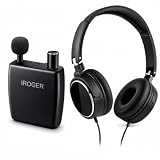
- Automatically Adjusts to Your Surroundings – The built-in Auto Gain Control automatically changes the amplification as your environment changes, helping voices stay clear and comfortable. Delivers up to 65dB of sound gain for everyday listening.
- One Knob Does It All – No complicated buttons or menus. Just turn the knob to power the device on or off and adjust the volume to the level that's comfortable for you.
- Recharge Fast, Use for Days – A full charge takes about 1 hour, and the battery can last up to 120 hours on a single charge. Spend more time using it and less time charging.
- Hear Conversations More Clearly – The directional microphone is designed to focus on the person speaking in front of you while helping reduce distracting background noise around you.
- Small Enough to Take Anywhere – Lightweight and easy to carry in your pocket, purse, or bag. Comfortable for everyday use whether you're at home, shopping, or traveling.
They are generally a poor match for large BTE devices, custom earmolds or hardware that extends far behind the ear. A roomy, soft ear cup and moderate clamp are more important than a headphone’s Bluetooth version.
2. Open-ear and bone-conduction headphones
Open-ear designs sit outside the ear canal, while bone-conduction headsets transmit vibration through the cheekbones. They can avoid direct pressure on an earmold and leave hearing-aid microphones more exposed. They are not automatically compatible, however: some users may find speech too quiet, bass too light or outdoor sound too intrusive.
3. Direct-streaming hearing devices
Compatible hearing aids can sometimes receive audio directly from a phone, computer, TV accessory or Auracast broadcast. This may be clearer and more comfortable than placing headphones over hearing aids, but compatibility depends on the hearing-aid model, phone, operating system, firmware, region and app.
What’s actually slowing this PC down?
Pick the symptom - the matching free tool is one click away.
Our 15 picks by scenario
The labels below describe the product’s most defensible role, not a universal ranking. Specifications and compatibility should be checked on the linked manufacturer page before purchase.
1. Bose QuietComfort Headphones — best conventional over-ear starting point
Best for: users who want adjustable noise control, wireless listening and a wired fallback.
Bose documents an around-ear design, Bluetooth, multipoint, Quiet and Aware modes, and up to 24 hours of battery life. Aware mode can be preferable when you need to hear speech, alarms or your own voice rather than block the environment.
Hearing-aid fit: test the cushions over your aids with the aids switched on. Pressure around microphones can create feedback, especially with larger BTE devices.
Main drawback: it is a conventional headphone, not a direct hearing-aid streamer.
See Bose QuietComfort Headphones.
2. Bose QuietComfort Ultra Headphones — best premium ANC candidate
Best for: listeners prioritizing premium noise cancellation and immersive listening.
The QuietComfort Ultra range is a premium alternative for travel and noisy environments. It belongs on a hearing-aid shortlist because ANC, ambient modes and large over-ear cups can be useful, but none of those features proves that the headphones will fit over a particular aid.
Hearing-aid fit: verify ear-cup clearance and test Quiet, aware and wired modes. A premium headphone can still whistle if the cushion presses on a microphone.
Main drawback: higher cost does not guarantee more clearance or better hearing-aid compatibility.
3. Sony WH-1000XM5 — best premium travel shortlist candidate
Best for: travel, conventional over-ear listening and readers investigating LE Audio.
The WH-1000XM5 is listed in an available compatibility roundup among LE Audio-capable over-ear headphones. That makes it relevant to readers researching newer standards, but it does not establish direct streaming to every hearing aid.
Verify: the exact headphone firmware, source device, operating system and hearing-aid model. LE Audio support must exist at both ends of the connection.
Quick wins for a faster PC:
Repair Windows errors before they cause bigger problemsFix Now →Fix the driver behind crashes, sound loss and screen glitchesFind Drivers →Clear out junk files and repair common Windows errorsFree Scan →Main drawback: the fit may still cause pressure or feedback with BTE or RIC aids.
Rank #2

- 2-in-1 CHIP TECH: SEAMLESS AUDIO FREEDOM – Experience the future of sound with our bluetooth hearing aids. Powered by a dual-mode chip, this device functions as high-performance otc hearing aids and premium bluetooth neckband headphones. Whether you’re engaging in a face-to-face conversation or switching to your favorite playlist, our technology ensures a smooth transition. These hearing aids with bluetooth are fully compatible with iOS and Android, allowing you to answer calls or stream TV audio with crystal-clear precision.
- ADVANCED NOISE CANCELLING & VOICE CLARITY – Equipped with a professional 16-channel DSP chip, these hearing aids for seniors rechargeable with noise cancelling intelligently filter out background chaos while amplifying human voices. Our smart anti-feedback technology eliminates annoying whistling, making them the ideal hearing aids for seniors who want to enjoy natural, crisp dialogue in crowded restaurants or windy parks. It’s professional-grade hearing support in a stylish, discreet package.
- ALL-DAY COMFORT & IP54 DURABILITY – These otc hearing aids feature an ergonomic, skin-friendly silicone neckband that stays secure and comfortable all day long. As perfect hearing aids for women and men alike, they come with three sizes (S/M/L) of soft ear caps to ensure a custom fit. With an IP54 waterproof rating, you don’t have to worry about sweat or light rain, making these bluetooth neckband headphones your reliable companion for morning walks or daily chores.
- ULTRA-LONG BATTERY LIFE & SMART ALERTS – These hearing aids rechargeable units offer a staggering 30 hours of hearing assistance on a single 2-hour charge, or 20 hours when used as headphones bluetooth. Our rechargeable hearing aids include intuitive voice prompts for volume adjustments and low-battery alerts, ensuring you are never left in silence. Reliability meets modern convenience in these long-lasting rechargeable hearing aids.
- USER-FRIENDLY DESIGN FOR MILD TO MODERATE LOSS – These otc hearing aids with bluetooth feature intuitive physical buttons for volume and mode control, making them much easier to operate than tiny in-ear models. Specifically tailored for adults with mild to moderate hearing loss, our bluetooth hearing aids offer a non-intimidating, high-tech solution to stay connected to the world. Reclaim your confidence and never miss a word again.
4. Sennheiser Momentum 4 Wireless — best music-focused over-ear candidate
Best for: listeners who want a music-oriented wireless over-ear model.
The Momentum 4 is included in available LE Audio compatibility coverage. Its relevance here is as a candidate for users who need conventional headphones and are also exploring newer Bluetooth audio features.
Hearing-aid fit: evaluate ear-cup space, headband pressure and whether music or speech becomes distorted when the aids are active.
Recommended Free Tools
Main drawback: direct LE Audio compatibility remains dependent on the complete device combination.
See Sennheiser Momentum 4 Wireless.
5. Technics EAH-A800 — best alternative LE Audio research candidate
Best for: readers comparing over-ear headphones with documented LC3 or LE Audio relevance.
The EAH-A800 appears in available coverage of over-ear headphones with LC3 support. Treat that as a starting point rather than a guarantee of hearing-aid streaming.
Verify: regional availability, current firmware, source-device support and the hearing aid’s specific LE Audio profile.
The Tool Desk
Outbyte PC Repair FREEClear out junk files and repair common Windows errorsFree Scan →Outbyte Driver Updater FREEFix the driver behind crashes, sound loss and screen glitchesFind Drivers →Main drawback: availability and compatibility may vary by market and device combination.
6. Sony WH-CH720N — best lower-cost ANC alternative to investigate
Best for: readers who want a lighter, less expensive conventional over-ear design.
The WH-CH720N is a logical lower-cost candidate for users who find heavier premium headphones uncomfortable. Its value is primarily physical and practical; do not assume direct hearing-aid streaming or LE Audio support without current Sony confirmation.
Hearing-aid fit: try it with your normal hearing-aid program, including speech and phone calls.
Free tools Windows power users keep installed
One-click scans. No signup required.
Main drawback: lower weight does not eliminate feedback or ear-cup pressure.
7. Anker Soundcore Space Q45 — best value over-ear comparison
Best for: readers seeking a budget-oriented ANC headphone format.
The Space Q45 provides a practical value comparison for users who want conventional over-ear headphones without beginning with a premium model.
Hearing-aid fit: focus on cushion depth, clamp and whether the ear cup touches your hearing aid. Start at low volume and test ANC and ambient conditions separately.
Main drawback: no direct hearing-aid compatibility should be assumed.
Rank #3

- Rechargeable Hearing Aids: 1.5 Hours Type-C cable charging offers over 24 Hours Digging sound Hearing aids, eliminating the need for disposable batteries, which can improve the quality of life
- 2 in 1 Bluetooth Hearing Aids: The hearing assist devices with the latest Bluetooth 5.3 technology, can be compatible with IOS devices or Android devices. Hearing aids with Bluetooth easily connecting hearing aid mode and Bluetooth mode, easily switch between watching TV, making phone calls, listening to blogs and so on
- Convenient Adjustable Controls: Easy-access buttons on DIGGINGSOUND necklace hearing aids allow you to control music, calls, and voice assistant without reaching for your device
- Comfortable Neckband Design: Lightweight neckband rests securely around your neck for a stable, all-day fit at home, outdoors, or on the go. Two noise reduction modes can be switched as you needs for enhanced speech clarity to meet your different scenes of use needs. Let you no longer missing any conversations with friends or families
- All-In-One Convenience: Diggingsound hearing amplifiers for seniors provide hearing compensation up to 35dB. DIGGINGSOUND sound amplifiers is a good hearing device for the elderly, friends or families
8. Shokz OpenComm2 — best open-ear headset for calls
Best for: work calls and communication while keeping the ear canal relatively open.
The OpenComm2 is designed around voice communication and avoids placing a sealed earbud in the canal. This can be helpful for some BTE and RIC users who cannot tolerate ear cups.
Hearing-aid fit: check the position of the transducer, hearing-aid microphones and boom microphone. Test speech with your normal hearing-aid program.
Main drawback: open-ear or bone-conduction audio may not provide enough clarity for every degree or configuration of hearing loss.
9. Shokz OpenRun Pro 2 — best open-ear sports candidate
Best for: active users who dislike ear cups and want more environmental awareness.
The OpenRun Pro 2 is a sports-oriented open-ear option. Its design can leave the ear canal and hearing-aid microphones less obstructed than conventional headphones.
Check: speech intelligibility, outdoor leakage, maximum volume and stability during movement. Open-ear does not mean that it will work with every hearing aid.
PC Slower Than It Used to Be?
A free scan shows the junk files, broken settings and background clutter dragging Windows down - then fixes them in one click.Free scan · Windows 10 & 11Crashes, No Sound, or Screen Glitches?
Random freezes, missing sound and display glitches usually trace back to one bad driver. Find and replace yours safely.Free scan · under a minuteMain drawback: noisy environments can overwhelm the audio, and nearby people may hear some of the sound.
10. Bose Ultra Open Earbuds — best open-ear earbud-style candidate
Best for: listeners who want an earbud-like product without sealing the ear canal.
These earbuds sit around the ear rather than inside the canal. Available compatibility coverage lists them as an LE Audio product, while Auracast capability should be confirmed against current firmware and manufacturer documentation.
Hearing-aid fit: test the ear hook with tubing, receiver wires, glasses and CROS hardware.
Do these 3 things before closing this tab:
1Repair Windows errors before they cause bigger problems2Fix the driver behind crashes, sound loss and screen glitches3Clear out junk files and repair common Windows errorsMain drawback: the around-ear geometry can interfere with some hearing-aid hardware even though the ear canal remains open.
11. Sony WF-1000XM5 — best compact LE Audio earbud candidate
Best for: readers investigating compact earbuds with LE Audio and Auracast relevance.
The WF-1000XM5 is listed in available compatibility coverage as supporting LE Audio and Auracast with current firmware. It is a poor physical assumption for many hearing-aid wearers because it occupies the ear canal.
Hearing-aid fit: receiver-in-canal aids, custom molds and in-ear hearing aids may leave no room for the ear tip.
Main drawback: a standards match cannot overcome physical interference or occlusion.
Rank #4

- Double-Certified Safety】Certified to ANSI S3.19-1974 & CE EN 352-1 for reliable hearing protection. We combined the 22mm porous sound-absorbing sponge and custom-made honeycomb acoustic sponge together to absorb and reduce noises while ensuring comfy wearing, achieving an SNR of 29dB and offering reductions up to 46dB under certain scenarios. Please note that earmuffs cannot 100% eliminate noise.
- 【Kid-Friendly】Designed for children with autism or sensory sensitivities, The kids ear muffs reduces sensory overload and blocks external triggers. Uses BPA-free ABS material and silicone-free earcups, just use these hearing protection ear muffs with peace of mind.
- 【Multi-scenario Applicable】Did you know 1 in 8 kids suffers permanent hearing damage from loud noise? Concerts, fireworks, monster jam shows, sporting events, even parties — noise can get dangerous fast. These foldable ear muffs provide reliable protection in all these situations and store compactly for easy travel.
- 【Absolute Comfortable Wearing】Hours of wearing ear muffs can hurt, which is why we've designed this hearing protection with 18mm-thick slow rebound sound-absorbing acoustic sponge padding covered with skin-friendly leather for greater comfort, the snug-fit headband provides 1/3 less pressure than other average ear muffs. In addition, the holeless pivot frees your worry of hair getting stuck.
- 【Multi-Age & Durability】Stop Replacing Ear Muffs Every Few Months. Kids grow quickly. That's why iClever ear muffs for noise reduction come with ergonomics telescopic arms, stretching up to 38mm on each side. Perfect for ages 5 and up. Armed with tough 301 stainless steel and 2mm-thick steel bars, these noise cancelling headphones for kids withstand any twist and bend by little hands.
12. Sennheiser Momentum True Wireless 4 — best premium LE Audio earbud candidate
Best for: users comparing premium earbuds with LE Audio and Auracast support.
The Momentum True Wireless 4 is listed as supporting full LE Audio and Auracast in available compatibility coverage.
Verify: the phone, hearing aid, firmware and intended connection path. Ordinary Bluetooth pairing to a phone is not the same as streaming into a hearing aid.
Main drawback: the in-ear fit may be impossible alongside receiver molds or custom hearing devices.
See Sennheiser Momentum True Wireless 4.
13. LG TONE Free T90Q — best alternative LE Audio earbud candidate
Best for: readers wanting another in-ear LE Audio option to compare.
The TONE Free T90Q appears in available compatibility coverage among LE Audio earbuds. Its suitability depends more on ear-canal space and the complete connection chain than on the product label alone.
Main drawback: ear-tip pressure, occlusion and receiver interference can rule it out for existing hearing-aid users.
Free tools Windows power users keep installed
One-click scans. No signup required.
14. Audio-Technica ATH-TWX9 — best audiophile-oriented LE Audio earbud candidate
Best for: readers comparing a sound-focused in-ear design with LE Audio relevance.
The ATH-TWX9 is included in available lists of LE Audio-compatible earbuds. It should be treated as a technical candidate, not a universal hearing-aid solution.
Hearing-aid fit: custom ITE, ITC or CIC devices and receiver molds may prevent simultaneous use.
Main drawback: the in-ear design can create occlusion and physical interference.
Do these 3 things before closing this tab:
1Scan for outdated or missing drivers - takes under a minute2Clear out junk files and repair common Windows errors3Fix the driver behind crashes, sound loss and screen glitches15. Avantree Ensemble — best dedicated TV-headphone system to investigate
Best for: television listening where latency and independent volume control matter.
A dedicated TV system can be easier to configure than ordinary Bluetooth headphones. Before buying, check the included transmitter and the television’s available optical, AUX, RCA, USB or HDMI ARC connections.
Hearing-aid fit: confirm that the headset can sit comfortably over your aids without pressing microphones or causing feedback.
Main drawback: it does not automatically provide personalized hearing-aid amplification or direct streaming into your aids.
Quick wins for a faster PC:
Clear out junk files and repair common Windows errorsFree Scan →Scan for outdated or missing drivers - takes under a minuteDriver Scan →When a hearing-device alternative may be better
Sennheiser All-Day Clear
The Sennheiser All-Day Clear is an OTC hearing aid, not a headphone worn over existing aids. Sennheiser describes it for mild-to-moderate hearing loss, with iOS and Android Bluetooth streaming and up to 24 hours of battery life. The U.S. page listed $999.95 on August 18, 2026; price and availability can change.
Best Value
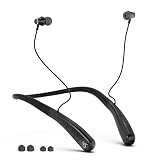
- 【Crystal Clear Hearing for Seniors】Experience the world in rich detail with our 32-channel sound processing and 35dB gain, specifically designed for mild to moderate hearing loss. This neckband hearing aid amplifies conversations and TV audio clearly, helping you reconnect with loved ones and daily life without missing a beat.
- 【Smart Noise Reduction for Focused Listening】 This hearing aids for seniors advanced dynamic noise cancellation technology isolates speech while suppressing background interference. Whether you're at a family gathering, on the phone, or enjoying music, these hearing aids ensures you hear what matters most, providing a significantly clearer and less frustrating listening experience.
- 【All-Day Comfort & Easy Operation】Designed for effortless use, these hearing aids for women and men feature soft silicone eartips for a secure, all-day fit. With its simple one-hand operation and 4 adjustable volume levels, you can easily control the sound to your preference without complex settings or fumbling.
- 【Rechargeable with Long-Lasting Power】As convenient rechargeable hearing aids, they eliminate the hassle of small batteries. The 300mAh battery charges fully in 1.5 hours for up to 60 hours of use. These rechargeable hearing aids for seniors offer reliable, daily power with easy USB charging.
- 【Convenient Neckband Design】This hearing amplifier combines functionality with ease. The neckband hearing aids comfortable neckband keeps the device secure and readily accessible around your neck, preventing loss and making it easy to put on and take off. It's your discreet and practical companion for a more active, connected lifestyle.
It may make sense for someone who needs amplification and streaming but does not require prescription hearing aids. It is not a general replacement for every prescription device or degree of hearing loss.
Apple AirPods Pro 3
Apple AirPods Pro 3 is a separate iPhone-oriented category. Apple documents a Hearing Test, Hearing Aid feature, Conversation Boost, Hearing Protection and up to 10 hours in Transparency mode when using the Hearing Aid feature. Apple describes the feature as intended for mild-to-moderate hearing loss.
They are not designed to be worn alongside existing hearing aids. Eligibility, fit, Apple-device requirements and regional availability must be checked before treating them as a hearing solution.
Compatible hearing aids and accessories
Some hearing aids stream from phones without headphones. Jabra says Enhance Pro 30 supports Bluetooth LE Audio and Auracast, with Auracast Assistant requiring Jabra Enhance Pro app version 1.39 or later. Jabra also lists up to 30 hours of battery life, or up to 25 hours when streaming.
Starkey distinguishes ASHA one-way streaming from LE Audio two-way streaming and Auracast. Its compatibility documentation also warns that support can vary by individual device, country, carrier and hardware. A StarLink Edge LE Audio Adapter may be required for compatible Starkey hearing aids with USB-C phones, tablets or computers.
For single-sided deafness, CROS or BiCROS users should ask whether the audio routing preserves sound from the poorer side. A headphone’s left-right stereo output may not behave like a CROS system.
Bluetooth, MFi, ASHA, LE Audio and Auracast explained
| Term | What it means here | What it does not guarantee |
|---|---|---|
| Bluetooth Classic | Common wireless audio connection used by many headphones and accessories. | Direct streaming into a hearing aid. |
| MFi | Apple-oriented hearing-aid connectivity. | Compatibility with every iPhone, hearing aid or ordinary headphone. |
| ASHA | Android Audio Streaming for Hearing Aids. | Support on every Android phone or two-way audio. |
| Bluetooth LE Audio | Newer low-energy audio architecture using the LC3 codec and enabling newer hearing-aid connections. | Automatic pairing between any LE Audio product and any hearing aid. |
| Auracast | Broadcast audio based on LE Audio, potentially available in public venues or private streams. | Being the same as ordinary Bluetooth pairing, or being available everywhere. |
| Telecoil | A hearing-aid input that can receive compatible loop or assistive-listening signals. | Universal support in every venue or hearing aid. |
A product page that says “LE Audio” does not prove that a particular phone, computer, TV and hearing aid will connect. Confirm the exact models, firmware, operating-system version, app requirements and region. Auracast also depends on a compatible broadcast source or venue; it is not simply a replacement name for Bluetooth.
What’s actually slowing this PC down?
Pick the symptom - the matching free tool is one click away.
Choosing by hearing-aid style
- BTE: start with open-ear designs or roomy over-ear cups. Large cushions can press on microphones and tubing.
- RIC or open-fit: over-ear headphones may work, but receiver wires and retention pieces need clearance. Feedback testing is essential.
- ITE, ITC or CIC: over-ear headphones may be easier physically than earbuds. In-ear headphones may compete for the same space.
- CROS or BiCROS: test left-right routing and whether the headphone output masks or bypasses the CROS signal.
- Cochlear implant processor: use the processor maker’s documented accessories and clearance guidance rather than assuming ordinary headphones will fit.
- Telecoil-equipped aids: consider compatible loops or assistive-listening systems for public venues, while treating Auracast as a separate, device-dependent option.
How to test headphones with hearing aids
- Put your hearing aids in their normal program and confirm that the batteries or rechargeable cells are adequately charged.
- With the headphones powered off, put them on slowly. Check pressure on microphones, receivers, tubing, retention wires, processors and glasses.
- Turn the headphones on at low volume. Play speech, music and a podcast.
- Test ANC, transparency or Aware mode and wired mode separately.
- Turn your head, walk, chew and adjust the headband. Listen for whistling, chirping, buzzing, muffled speech or distortion.
- Make a phone call and check whether your voice and the other person’s voice are clear.
- Check volume controls on the phone, headphones and hearing aids. Increase only the control that improves clarity.
- Stop if sound becomes uncomfortably loud or feedback continues. Persistent feedback may require a different dome, earmold, program or professional adjustment.
- Test the battery and charging routine, including whether the headphones remain usable in wired mode.
- Use the return period to repeat the test in the environments where you actually listen.
Testing for TV
TV use has different priorities from music. Check for lip-sync delay, independent volume controls, simultaneous TV-speaker output and whether the television mutes its speakers when Bluetooth is connected.
Identify the TV’s available connection: optical, AUX, RCA, USB or HDMI ARC. If several people watch together, a dedicated TV transmitter or a hearing-aid TV streamer may be preferable because it can provide personalized volume without making the room louder.
ANC, feedback and own-voice problems
Headphone ANC reduces some external sound before it reaches the ear cup. It does not automatically improve the speech signal processed by a hearing aid. Hearing-aid noise reduction is a separate function programmed by the hearing-care professional.
Some users prefer Aware or transparency mode, no ANC or direct hearing-aid streaming because they need to hear conversation, traffic, alarms or their own voice. Closed earbuds and tightly sealed cups can also make the wearer’s voice sound boomy or blocked.
Feedback can result from cushion pressure, excessive volume, acoustic leakage, a damaged earmold, poor positioning or hearing-aid gain that needs adjustment. Buying a different headphone is not always the correct fix.
Safety and returns checklist
- Begin at low volume and avoid increasing every volume control simultaneously.
- Use volume limits, hearing-protection settings or notifications where available.
- Take listening breaks and keep enough environmental awareness for traffic, alarms and other hazards.
- Do not treat persistent feedback, sudden hearing changes, pain, drainage, severe distortion or one-sided symptoms as a headphone-shopping problem; seek hearing-care or medical advice.
- Confirm the retailer’s return period, including whether opened earbuds can be returned.
- Check warranty coverage, replacement cushions or tips and charging support.
- Ask whether the exact hearing-aid model, phone and operating-system version are supported.
- For a hearing-aid purchase, use an audiologist or licensed hearing-care professional when fitting, programming or medical evaluation is required.
A simple decision tree
- Need headphones over existing BTE or RIC aids? Start with a roomy over-ear model such as Bose QuietComfort, then test for pressure and feedback.
- Ear cups cause whistling or discomfort? Try Shokz OpenComm2, Shokz OpenRun Pro 2 or Bose Ultra Open Earbuds, but verify speech clarity and hardware clearance.
- Need clear TV audio? Compare Avantree Ensemble with your hearing-aid manufacturer’s TV streamer; prioritize latency and independent volume over ANC.
- Want audio directly in your hearing aids? Check the exact hearing-aid model for MFi, ASHA, LE Audio or Auracast support before considering a source device.
- Use an iPhone and have mild-to-moderate hearing loss? Investigate AirPods Pro 3’s Hearing Aid feature, subject to Apple’s eligibility and ecosystem requirements.
- Use Android? Confirm whether the phone supports the hearing aid’s ASHA or LE Audio requirements; “Android” alone is not a sufficient compatibility claim.
- Have mild-to-moderate loss and want an all-in-one hearing device? Consider an OTC option such as Sennheiser All-Day Clear rather than adding headphones to existing aids.
Frequently Asked Questions
Can I wear noise-cancelling headphones over hearing aids?
Often, but not universally. Test ear-cup pressure, feedback and speech in both ANC and ambient modes; ANC does not automatically improve hearing-aid processing.
Will LE Audio headphones stream directly to my hearing aids?
Only if the hearing aid, source device, firmware and required profile support the same LE Audio connection. Confirm the exact models rather than relying on a Bluetooth version number.
Are open-ear headphones better for hearing-aid users?
They can reduce ear-cup pressure and leave the canal open, but they may offer less speech clarity, more leakage or less control in noisy environments.
Recommended Free Tools
What is usually best for hearing the TV with hearing aids?
A hearing-aid TV streamer or dedicated TV system may be better than ordinary Bluetooth headphones, especially when you need low latency, independent volume or simultaneous speaker output.
Quick Recap
Product prices and availability are accurate as of the date/time indicated and are subject to change. Any price and availability information displayed on Amazon at the time of purchase will apply.

