The Fenix line has always been Garmin’s statement piece, but the Fenix 8 feels less about brute-force feature stacking and more about refinement under real-world pressure. If you’re coming from a Fenix 6 or 7, or weighing it against an Epix Pro, Enduro, or even Apple’s Ultra line, this generation matters because it’s targeting the friction points that only long-term users notice. Battery anxiety during multi-day adventures, training metrics that are powerful but sometimes opaque, and navigation tools that still feel too “device-first” rather than “athlete-first” are all squarely in focus.
This is not expected to be a radical reinvention of what a Fenix is. Instead, the Fenix 8 represents Garmin tightening the screws on performance, usability, and intelligence, while quietly future-proofing the platform for the next several years of software-driven gains. Understanding why this generation matters means looking beyond spec sheets and into how these watches are actually used at mile 80 of an ultra, three days into a trek, or during the daily grind between workouts.
A shift from raw capability to smarter execution
Garmin already won the hardware arms race with the Fenix 7 generation: multi-band GNSS, solar-assisted battery life, sapphire titanium builds, and a sensor suite that rivals anything on the market. The Fenix 8 is about making that power feel more accessible, more contextual, and less overwhelming. Expect a heavier emphasis on features that surface the right data at the right moment, rather than simply adding more metrics to scroll through.
This is where training guidance, recovery insights, and adaptive recommendations start to matter more than peak VO2 max charts. The Fenix 8 is widely expected to lean further into predictive analytics and trend-based coaching, helping athletes understand not just what happened, but what to do next. For experienced Garmin users, this could be the biggest quality-of-life upgrade of all.
🏆 #1 Best Overall

- Stylish Design, Vibrant Display: The lightweight aluminum build blends effortless style with workout durability, while the vivid 1.97" AMOLED display keeps your data easy to read, even under bright sunlight.
- All-in-One Activity Tracking: The Amazfit Bip 6 fitness tracker watch offers 140+ workout modes including HYROX Race and Strength Training, plus personalized AI coaching and 50m water resistance.
- Up to 14 Days Battery Life: The Amazfit Bip 6 smart watch powers through your training and recovery for up to two weeks at a time - no nightly charging needed.
- Accurate GPS Tracking & Navigation: Stay on course with free downloadable maps and turn-by-turn directions. Support from 5 satellite systems ensures precise tracking of every move and fast GPS connection.
- 24/7 Health Monitoring: The Amazfit Bip 6 smartwatch provides precise, real-time monitoring of heart rate, sleep, blood-oxygen and stress, empowering you with actionable insights to optimize your health and fitness.
Battery life as a strategic advantage, not just a headline number
Battery longevity has always been a Fenix calling card, but expectations have shifted as AMOLED displays, brighter backlights, and always-on sensors become more common. The Fenix 8 generation appears focused on preserving Garmin’s endurance advantage while supporting more demanding features, rather than chasing flashy screen tech at the expense of runtime.
For expedition users, ultrarunners, and cyclists who treat charging as an inconvenience rather than a habit, this balance is critical. Smarter power management, more granular battery profiles, and solar efficiency improvements matter more than simply quoting days on a spec sheet. The Fenix 8’s importance lies in how confidently you can leave a charger behind.
Navigation and outdoor tools growing up
Mapping and navigation are core reasons people buy a Fenix, yet they’ve historically felt like scaled-down versions of Garmin’s handheld GPS devices. This generation is shaping up to narrow that gap. Faster map rendering, clearer route guidance, and more intuitive interaction while moving are expected to be central themes.
For hikers, climbers, and backcountry skiers, the Fenix 8 matters because navigation isn’t a backup feature anymore; it’s often the primary one. The emphasis appears to be on reducing cognitive load when you’re tired, cold, or moving fast, turning the watch into a quiet partner rather than a device you have to manage.
Health tracking moving from passive to actionable
Garmin’s health metrics have long been comprehensive, but not always cohesive. The Fenix 8 generation is important because it’s likely to tighten the feedback loop between sleep, stress, training load, and recovery. Rather than treating health stats as background noise, the watch increasingly uses them to influence training readiness and daily recommendations.
For users wearing their Fenix 24/7, comfort, sensor reliability, and software clarity all become part of the upgrade conversation. Small refinements in fit, materials, and sensor accuracy can have outsized impacts on data quality, making the Fenix 8 feel less like a workout tool you tolerate and more like a watch you live with.
Why this generation is a real decision point
If you’re on a Fenix 7 or Epix Pro, the Fenix 8 isn’t automatically a must-upgrade. Its importance lies in whether you value smarter software, improved efficiency, and long-term platform support over headline-grabbing hardware changes. For Fenix 6 users or those coming from rival ecosystems, however, this generation could represent the most polished entry point yet into Garmin’s flagship experience.
What follows are the features that define that polish. Not gimmicks, not checkbox additions, but the upgrades that meaningfully change how the watch trains you, guides you, and fits into everyday life.
Feature 1: Next-Gen AMOLED or Solar Display Tech — Brighter, Smarter, More Efficient
If the Fenix 8 is about reducing cognitive load, the display is where that promise becomes immediately visible. Garmin’s recent split strategy—AMOLED on Epix, solar MIP on Fenix—has worked, but it has also created hesitation for buyers who want clarity and endurance in equal measure. The Fenix 8 looks poised to narrow that trade-off, not by choosing one camp, but by meaningfully advancing both.
AMOLED evolves from luxury to practical tool
Garmin’s AMOLED panels have already proven their value on the Epix Pro, especially for maps, structured workouts, and glanceable metrics. What’s expected with the Fenix 8 generation is not just higher peak brightness, but smarter brightness behavior. Adaptive dimming that reacts more precisely to ambient light could reduce battery penalties during long outdoor sessions while keeping data readable at speed.
Resolution gains aren’t about vanity here. Sharper text and cleaner contour lines directly affect navigation confidence, particularly when following complex routes or ski tracks. For trail runners and cyclists, faster map refresh combined with AMOLED contrast can make turn prompts and elevation cues easier to interpret without breaking rhythm.
Solar MIP gets more efficient, not just incremental
For endurance-first users, the solar Fenix remains non-negotiable. The expectation for Fenix 8 isn’t a dramatic redesign, but a refinement of the Power Glass concept that squeezes more usable energy out of real-world conditions. Improved solar efficiency, paired with lower baseline power draw from the chipset and display driver, could translate to tangible gains during multi-day expeditions.
The real win would be consistency rather than headline numbers. Current solar models can feel weather-dependent, with performance swinging based on exposure. A more efficient panel that meaningfully offsets GPS and mapping drain—even modestly—would reinforce the Fenix 8’s role as a reliable backcountry instrument rather than a watch that merely extends standby time.
Smarter always-on behavior for 24/7 wear
Garmin’s always-on display philosophy has matured, but there’s room for nuance. The Fenix 8 is expected to further differentiate between glanceable data and background visuals, keeping essentials like time, alerts, and training status visible without lighting up the entire panel. This matters for sleep tracking and overnight wear, where excessive brightness undermines comfort and data quality.
Material choices around the display also play a role. Sapphire crystal remains likely on premium variants, balancing scratch resistance with clarity. Combined with slimmer bezels and refined case geometry, the display should feel less like a rugged window and more like an integrated part of a watch you’re comfortable wearing all day, not just during training.
Why the display upgrade matters more than specs suggest
On paper, brighter screens and better solar efficiency can sound iterative. In practice, the display governs how often you interact with the watch and how much effort that interaction requires. When maps load faster, text is instantly legible, and battery anxiety fades into the background, the Fenix becomes less demanding and more supportive.
For Fenix 6 users, this alone could feel like a generational leap. For Fenix 7 owners, the question is whether those small daily frictions are worth removing. Either way, the Fenix 8’s display direction signals Garmin’s intent to make its flagship feel less like a technical tool you manage and more like a responsive companion that quietly keeps up.
Feature 2: Meaningful Battery Life Gains — Especially in GPS, Maps, and Multiband Modes
If the display sets the tone for daily usability, battery life determines whether the Fenix 8 earns trust in demanding conditions. Garmin has long dominated headline endurance figures, but the real opportunity here is not another standby record. It’s reducing the steep battery penalty that still comes with high-accuracy GPS, full-color maps, and multiband tracking.
Efficiency gains where Fenix users actually feel them
On recent Fenix generations, the gap between “smartwatch mode” and “full navigation day” remains dramatic. Switch on multiband GNSS with maps during a long mountain run or all-day hike, and even a Fenix 7X can start to feel finite. The expectation with Fenix 8 is that Garmin focuses less on idle longevity and more on lowering active drain.
This likely comes from a combination of a newer, more efficient GNSS chipset and improved power management at the firmware level. Garmin has already shown it can tune GPS sampling dynamically, and extending that intelligence to mapping refresh rates and sensor polling would deliver gains that matter on the trail, not just on a spec sheet.
Multiband GPS without the punishment
Multiband GNSS has become a must-have for urban running, dense forest routes, and technical alpine terrain. The problem is that on current watches, it’s still something many users hesitate to enable unless accuracy is absolutely critical. If Fenix 8 can make multiband the default choice rather than a guilty pleasure, that alone reshapes the ownership experience.
Early expectations point toward better signal fusion and smarter satellite prioritization, allowing the watch to maintain accuracy without brute-force power use. For athletes training with pace, distance, and elevation data they genuinely rely on, this would feel like a quiet but profound upgrade.
Maps that don’t feel like a battery liability
Garmin’s onboard mapping is one of the Fenix line’s defining strengths, yet it’s also one of the biggest energy drains. Continuous panning, zooming, and route recalculation demand frequent screen refreshes and processor wake-ups. The Fenix 8 is expected to benefit from a more efficient system-on-chip that handles these tasks with less overhead.
In practical terms, this could mean following a GPX route for six or seven hours without watching the battery percentage drop uncomfortably fast. For ultrarunners, ski tourers, and multi-day hikers, that changes how confidently they rely on the watch versus carrying backup navigation.
Solar support that complements, not compensates
Solar charging is likely to remain part of the Fenix 8 story, particularly on larger case sizes. The key difference this time would be intent. Rather than using solar to prop up aggressive power consumption, improved efficiency allows solar input to genuinely extend active use during GPS-heavy days.
That distinction matters. When solar gains offset mapping and tracking drain instead of merely slowing standby loss, the watch becomes more predictable across changing weather and light conditions.
What this means for real-world wearability
Battery improvements are not just about endurance sports. Better efficiency reduces heat, allows slimmer internal layouts, and supports more consistent always-on behavior overnight. For a watch built from titanium or steel, with sapphire crystal and substantial water resistance, that balance between ruggedness and comfort is critical for 24/7 wear.
For Fenix 6 users, these gains would feel immediately liberating. For Fenix 7 owners, the appeal lies in using every feature Garmin offers without budgeting battery like a scarce resource. In both cases, the Fenix 8’s battery strategy looks less about endurance bravado and more about removing friction from how the watch is actually used.
Feature 3: Improved GPS Accuracy with Smarter Multiband and SatIQ Evolution
All of that battery efficiency sets the stage for what many Fenix users care about most: how precisely the watch knows where you are. Garmin has already raised expectations with multiband GNSS on the Fenix 7, but the Fenix 8 is shaping up to be less about raw satellite access and more about how intelligently that access is managed.
The promise here is not just cleaner tracks, but accuracy you can trust without constantly thinking about which GPS mode you selected before pressing start.
From “multiband on” to multiband that thinks ahead
On the Fenix 7, multiband GNSS is undeniably effective, especially in cities, forests, and mountain valleys. The tradeoff has always been power draw, which forced users to choose between maximum accuracy and maximum battery life.
What we expect with the Fenix 8 is an evolved SatIQ system that makes that choice for you more intelligently. Instead of simply toggling multiband on or off based on signal quality, the watch should better anticipate upcoming conditions using motion data, route context, and environmental complexity.
Rank #2

- Stylish Design, Bright Display: The sleek stainless steel build blends classic style with workout durability, while the bright 1.32" AMOLED display keeps your data easy to read, even under bright sunlight.
- Precise Heart Rate and Sleep Tracking: Amazfit's BioTracker technology tracks your heart rate and sleep data with accuracy that previous sensors just can't match.
- Up to 10 Days of Battery Life: With long battery life that lasts up to 10 days with typical use, nightly recharges are a thing of the past.
- Free Maps with Turn Directions: Stay on-track with free downloadable maps, and get turn-by-turn guidance on-screen or via your Bluetooth headphones. Enjoy ski maps for global resorts, including guidance for cable cars, slopes, and more.
- Faster and More Accurate GPS Tracking: 5 satellite positioning systems ensure fast GPS connection and accurate positioning whenever you're out running, walking, cycling or hiking.
In practical terms, that could mean briefly engaging full dual-frequency tracking as you approach a narrow canyon or dense urban block, then scaling back to a lower-power mode once the sky opens up again. The end result is accuracy where it matters, without paying a constant battery penalty.
Cleaner tracks in the places that usually expose weaknesses
This evolution matters most in the environments where GPS errors actually affect training and navigation. Tight switchbacks on mountain trails, urban runs with frequent direction changes, and wooded singletrack are where older Fenix models can still show wobble or distance inflation.
With smarter multiband behavior, the Fenix 8 should produce tracks that hug the trail more faithfully and maintain consistent pacing data. That has a knock-on effect for training metrics like pace, grade-adjusted pace, and VO2 max estimates, all of which depend on clean positional data.
For athletes following preloaded courses, improved accuracy also reduces false off-course alerts and unnecessary map redraws. That keeps navigation calmer and less distracting, especially when you are fatigued and relying on quick glances rather than deep screen interaction.
Better accuracy without sacrificing all-day wearability
Accuracy gains are only meaningful if they do not compromise how the watch fits into daily use. The expected efficiency improvements in the Fenix 8’s GNSS chipset should allow higher-quality tracking without increased heat or noticeable battery anxiety.
That matters for comfort during long efforts, particularly with larger case sizes in titanium or steel where thermal buildup can be felt against the wrist. It also supports consistent overnight wear, which is critical for recovery, sleep, and HRV tracking that many Fenix users now consider non-negotiable.
For those coming from a Fenix 6, the jump in GPS fidelity would be immediately obvious. For Fenix 7 owners, the upgrade appeal is more subtle but still compelling: fewer compromises, fewer settings to micromanage, and a watch that simply records what happened with less second-guessing.
Why this matters for upgrade decisions
Garmin’s rivals have caught up in headline GPS specs, but real-world performance is where the Fenix line still earns its reputation. If the Fenix 8 delivers on a more predictive, context-aware SatIQ system, it reinforces Garmin’s advantage where it counts: reliability across unpredictable terrain and long days.
This is not about chasing laboratory-perfect tracks. It is about trusting your data on race day, during a remote hike, or in the middle of a long training block when consistency matters more than novelty.
For anyone who relies on GPS as the backbone of their training and navigation, this evolution may be one of the most quietly important reasons to wait for, or move to, the Fenix 8.
Feature 4: Training Metrics That Actually Change How You Train (New Load, Readiness & Recovery Insights)
With cleaner GPS and more reliable physiological baselines in place, Garmin can finally push its training metrics from informative to genuinely directive. This is where the Fenix 8 looks set to matter most for athletes who already trust the ecosystem but want clearer answers about when to push, when to hold back, and when to stop pretending a session was “easy.”
Rather than adding more charts for the sake of depth, the expected focus here is refinement: better context, fewer contradictions, and insights that feel grounded in how your body actually responds over time.
A smarter definition of training load, not just more numbers
Garmin’s current Acute and Chronic Load framework works, but it can feel abstract, especially for multi-sport athletes mixing long endurance days with intensity blocks. The Fenix 8 is expected to introduce a more adaptive load model that weighs effort types differently depending on your recent history, sport mix, and recovery trends.
In practice, that should mean a hard interval run after a rest day is interpreted very differently from the same workout buried at the end of a heavy week. Instead of simply flagging “high load,” the watch should better explain whether that load is productive, risky, or mistimed.
For anyone coming from a Fenix 6, this would feel like a major evolution. Fenix 7 owners may recognize the structure, but with fewer edge cases where the data feels technically correct yet practically unhelpful.
Training Readiness that reflects reality, not just last night’s sleep
Training Readiness is one of Garmin’s most promising ideas, but it has sometimes been overly sensitive to single data points. A slightly poor night of sleep can tank readiness even when overall fatigue is low, which experienced athletes often learn to ignore.
The expectation with Fenix 8 is a rebalanced Readiness score that leans more heavily on multi-day HRV trends, cumulative load, and recovery debt. Sleep still matters, but it becomes part of a bigger picture rather than the dominant voice.
This is especially important for endurance athletes who train early, travel frequently, or sleep imperfectly during high-volume blocks. A readiness metric you can trust is one you are more likely to follow, even when it tells you something you do not want to hear.
Recovery insights that connect effort to adaptation
Recovery time estimates have long been a Garmin staple, but they often feel conservative or disconnected from how athletes actually feel. The Fenix 8 is expected to improve this by tying recovery guidance more closely to training intent and physiological response, not just intensity labels.
That means a long, steady Zone 2 ride may register as taxing in volume but lighter in recovery demand than a short, sharp threshold session. Over time, the watch should get better at recognizing what kind of fatigue you accumulate, not just how much.
For daily wear, this also reinforces the importance of comfort and overnight tracking. Titanium case options, refined case backs, and strap ergonomics matter here because recovery insights are only as good as the data captured while you sleep and move through normal life.
HRV and long-term trends, finally treated as first-class signals
HRV has become central to modern endurance training, and Garmin has steadily improved how it presents that data. With Fenix 8, the expectation is that HRV status plays a more active role in guiding training suggestions, load tolerance, and even readiness scoring.
Rather than sitting in a separate health dashboard, HRV trends should increasingly influence what the watch recommends you do today. When HRV is suppressed over several nights, the system should respond proactively, not retroactively after performance drops.
This is where battery life and sensor efficiency quietly matter. Longer battery endurance supports uninterrupted overnight tracking, while improved optical sensor performance reduces noise that can skew HRV interpretation, especially for users who toss and turn.
Why this feels like a real upgrade, not just a software tweak
Some of these changes will likely arrive via firmware, but the Fenix 8’s newer processing platform and sensor suite should allow faster analysis and fewer compromises. Training insights can update more quickly after sessions, feel more responsive, and adapt sooner as your fitness changes.
For athletes deciding whether to upgrade, this is less about flashy new metrics and more about trust. When your watch consistently aligns with how you feel and perform, you stop second-guessing it and start using it as intended.
That shift—from data observer to training partner—is subtle, but once you experience it, going back to less coherent guidance becomes surprisingly difficult.
Feature 5: Navigation and Mapping Upgrades for Serious Outdoor Use (Routing, Maps, On-Wrist Usability)
As training insights become more adaptive and context-aware, navigation is the other half of the equation that determines whether a Fenix truly earns its place on your wrist. For trail runners, hikers, mountaineers, and ultra athletes, maps are not a “nice to have” feature; they are core infrastructure.
With Fenix 8, the expectation is not just more maps, but smarter, faster, and more usable navigation that feels integrated rather than bolted on. This is where hardware capability, software refinement, and real-world usability finally need to align.
Faster routing and recalculation, especially when plans change
One of the consistent pain points with earlier Fenix generations has been on-watch route recalculation. It works, but it can feel slow and occasionally clumsy when you deviate from a planned course or miss a turn in technical terrain.
Fenix 8 is expected to benefit from a more capable processor and refined mapping engine, enabling quicker rerouting and more reliable turn-by-turn guidance. That matters when you are tired, off-course, and making decisions under pressure rather than following a perfectly scripted GPX file.
Garmin’s recent software direction suggests more dynamic routing logic as well. Think fewer “U-turn” loops and more practical alternatives that reflect how people actually move through trail networks, especially when using popularity routing or heatmap-informed paths.
Rank #3
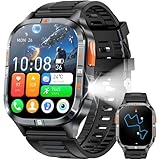
- BUILT-IN GPS & COMPASS– This military smartwatch features high-precision GPS to pinpoint your location while hiking, cycling, or traveling, keeping you safely on track without extra gear. Tap the compass icon and it locks your bearing within three seconds—engineered for pro-level outdoor adventures like camping, climbing, and trekking.
- BLUETOOTH CALLING & MESSAGES – Powered by the latest Bluetooth tech, the men’s smartwatch lets you answer or make calls right from your wrist—no need to pull out your phone. Get real-time alerts for incoming texts and app notifications so you never miss an invite. (Replying to SMS is not supported.)
- BIG SCREEN & DIY VIDEO WATCH FACE – The 2.01" military-spec display is dust-proof, scratch-resistant, and forged from high-strength glass with an aluminum alloy bezel, passing rigorous dust and abrasion tests so the screen stays crystal-clear. Upload a short family video to create a dynamic, one-of-a-kind watch face that keeps your memories alive.
- 24/7 HEALTH MONITORING – Equipped with a high-performance optical sensor, this Android smartwatch tracks heart rate and blood-oxygen levels around the clock. It also auto-detects sleep stages (deep, light, awake) for a complete picture of your health, ensuring you always know how your body is doing.
- MULTI SPORT MODES & FITNESS TRACK – Choose from running, cycling, hiking, basketball, and more to log every workout. Set goals, monitor progress, and sync data to the companion app. Bonus tools include photo gallery, weather, alarm, stopwatch, flashlight, hydration reminder, music/camera remote, find-my-phone, mini-games, and other everyday essentials.
Maps that are easier to read at a glance, not just more detailed
Garmin’s full-color topographic maps are already among the most detailed available on a multisport watch. The challenge has never been data density, but clarity on a small screen while moving.
With Fenix 8, improvements are expected in map rendering, contrast management, and label prioritization. Trails, contour lines, and junctions should be easier to distinguish at a glance, even in poor light or harsh sun, without constant zooming and panning.
This is where display technology and UI tuning intersect. Whether Garmin sticks with MIP, introduces an AMOLED variant, or offers both, the key upgrade will be how effectively the map communicates essential information in motion, not how impressive it looks when standing still.
On-wrist usability that respects gloves, sweat, and fatigue
Touch-enabled mapping has improved dramatically on recent Garmin models, but real outdoor use is unforgiving. Cold fingers, gloves, rain, and sweat quickly expose weak interaction design.
Fenix 8 is expected to further refine the balance between physical buttons and touch controls. Button-driven panning, zooming, and quick access to navigation functions should feel faster and more predictable, while touch remains an optional enhancement rather than a requirement.
Subtle changes matter here. Larger touch targets, fewer nested menus, and smarter defaults reduce cognitive load when you are already managing effort, terrain, and conditions.
Course creation and sync that feels less dependent on your phone
Garmin has steadily improved course creation tools within Garmin Connect, but once a route reaches the watch, flexibility drops. Editing, reversing, or selecting alternates mid-activity is still more limited than many users would like.
With Fenix 8, there is strong reason to expect expanded on-device course handling. Faster syncing, easier course selection, and more intuitive previews can make last-minute decisions less stressful, especially when traveling or racing in unfamiliar areas.
This also ties into storage and performance. More onboard memory and faster access speeds allow larger regional maps and more saved courses without compromising responsiveness.
Navigation features that justify the Fenix’s size and weight
The Fenix line has always been unapologetically substantial on the wrist. That size needs to earn its keep, particularly for users who also wear the watch daily.
Advanced navigation is one of the clearest justifications. When the larger case enables better battery life during multi-day GPS use, clearer maps, and more confident routing, the trade-off feels worthwhile rather than excessive.
Titanium case options, improved caseback comfort, and better strap ergonomics also matter here. Long days with active navigation expose pressure points quickly, and Garmin’s recent hardware refinements suggest Fenix 8 will continue to prioritize all-day and multi-day wearability.
Why these mapping upgrades matter more than raw specs
On paper, it is easy to list features like multi-band GNSS, topo maps, and routing algorithms. In practice, navigation quality is defined by how often you trust the watch enough to leave your phone in your pack.
If Fenix 8 delivers faster routing, clearer maps, and less friction in real-world use, it becomes a genuine navigation tool rather than a backup reference. That confidence changes how people plan routes, explore new terrain, and push deeper into unfamiliar environments.
For anyone upgrading from a Fenix 6 or early Fenix 7, this could be one of the most immediately noticeable quality-of-life improvements, not because it adds something entirely new, but because it finally makes navigation feel as capable as the rest of Garmin’s training ecosystem.
Feature 6: Expanded Health Tracking with Deeper Sleep, Stress, and Recovery Intelligence
After spending all day trusting the Fenix to guide you through unfamiliar terrain, the next question becomes simpler but more personal: how well did your body handle it. This is where Garmin’s recent focus has quietly shifted, from pure performance metrics to round-the-clock physiological context.
Fenix 8 is widely expected to build on that shift, turning sleep, stress, and recovery data into something more actionable rather than just more detailed. For athletes who already train by power, pace, or heart rate, this deeper health layer is increasingly what determines how hard tomorrow should be.
More granular sleep tracking that connects directly to training decisions
Garmin’s sleep tracking has improved significantly since the Fenix 6 era, but it has often felt slightly detached from daily training guidance. With Fenix 8, the expectation is tighter integration between sleep stages, overnight HRV trends, respiration, and next-day readiness.
Rather than simply reporting sleep duration and a score, Garmin appears to be moving toward clearer explanations of why your sleep helped or hurt recovery. Poor REM consistency, elevated overnight stress, or late-night heart rate suppression could all feed directly into Training Readiness and suggested intensity adjustments.
This matters for endurance athletes because it reduces guesswork. When the watch can explain why a planned hard session is being downgraded, compliance improves, and long-term consistency usually follows.
Stress and HRV tracking that feels continuous, not fragmented
Body Battery and all-day stress tracking have long been Garmin staples, but they have sometimes felt like background data rather than core guidance. Fenix 8 is expected to treat stress and HRV as primary signals, especially when layered over multi-day training blocks or heavy travel periods.
More sensitive optical heart rate hardware, combined with refined algorithms, should improve stress detection during low-level activity and rest. That makes the data more useful for people who balance training with demanding jobs, poor sleep schedules, or frequent time zone changes.
The real upgrade is likely how this information is surfaced. Instead of isolated graphs, stress trends may directly influence recovery estimates, intensity minutes, and even suggested workout types, making the watch feel more like a coach than a dashboard.
Recovery intelligence that adapts to real life, not perfect training weeks
Garmin’s Training Readiness score was a major step forward, but it still assumes a relatively clean input environment. Fenix 8 is expected to refine this by better accounting for cumulative stress, illness signals, and sleep disruption that do not show up as obvious training load spikes.
For users coming from a Fenix 6, this will feel like a significant leap. Recovery is no longer just about yesterday’s workout, but about how your nervous system has been coping over several days.
This kind of intelligence is especially valuable on long trips, during race weeks, or in high-volume blocks where the cost of getting recovery wrong is much higher than missing a single workout.
Daily wear comfort and battery life remain critical to health accuracy
All of this health tracking only works if the watch is worn nearly 24/7. Garmin’s continued refinement of caseback shaping, sensor flushness, and strap ergonomics plays a quiet but essential role here.
Titanium variants, improved weight distribution, and softer QuickFit strap options help reduce pressure points during sleep, which directly improves optical sensor reliability. Even small comfort gains can meaningfully improve data quality when multiplied across months of wear.
Battery life is the final enabler. If Fenix 8 maintains multi-week smartwatch endurance while running continuous health monitoring, it reinforces Garmin’s advantage over rivals that still require frequent charging interruptions.
Why this health expansion may justify upgrading even without new sensors
Not every improvement here requires brand-new hardware. In many cases, smarter interpretation of existing data is what turns metrics into meaningful guidance.
For Fenix 7 owners, the appeal may not be a single headline feature, but the sense that the watch finally understands the full cost of training, stress, and sleep combined. For Fenix 6 users, the jump in health intelligence alone could feel transformative.
As Garmin continues to blur the line between performance tool and health companion, Fenix 8’s expanded recovery intelligence looks set to become one of its most quietly impactful upgrades.
Rank #4

- 【Built-in GPS & Multi-System Positioning】Stay on track with the Tiwain smartwatch’s built-in GPS. Featuring military-grade single-frequency and six-satellite support (GPS, GLONASS, Beidou, Galileo, NAVIC, QZSS), this watch offers fast and accurate location tracking wherever you go. It also includes a compass, altimeter, and barometer, giving you real-time data on your altitude, air pressure, and position.
- 【Military-Grade Durability】Engineered to withstand the toughest conditions, the Tiwain smartwatch meets military standards for extreme temperatures, low pressure, and dust resistance. Crafted from tough zinc alloy with a vacuum-plated finish, this watch is also waterproof and built to resist wear and tear. The 1.43-inch AMOLED HD touchscreen offers clear visibility in all environments, and the watch supports multiple languages for global users.
- 【170+ Sport Modes & Fitness Tracking】Track your fitness journey with 170+ sport modes, including walking, running, cycling, hiking, basketball, and more. Set exercise goals, monitor progress, and sync your data to the companion app. The smartwatch also offers smart features like music control, camera remote, weather updates, long-sitting reminders, and more.
- 【LED Flashlight for Outdoor Adventures】The Tiwain smartwatch comes equipped with a built-in LED flashlight that can illuminate up to 20 meters. Activate it with the side button for added convenience during nighttime activities or outdoor adventures.
- 【Comprehensive Health Monitoring】Monitor your health with real-time heart rate, sleep, blood pressure, and blood oxygen level tracking. The smartwatch will vibrate to alert you of any abnormal readings. You can also make and receive calls directly from the watch, and stay connected with message and app notifications (receive only, no sending capability) – perfect for when you’re driving or exercising.
Feature 7: Faster Performance, Smoother UI, and Better Everyday Smartwatch Usability
All of the deeper health and recovery intelligence discussed earlier depends on something more fundamental: a watch that feels responsive enough to interact with constantly. If Fenix 8 delivers here, it may be one of the most meaningful quality-of-life upgrades in the series, especially for users who wear their watch as an all-day, every-day device rather than just a training tool.
Garmin has traditionally prioritized stability and battery life over raw speed. The expectation with Fenix 8 is not smartphone-level performance, but a noticeable reduction in friction across every interaction.
Noticeably faster chipset and memory headroom
While Garmin rarely advertises processor specifications, internal leaks and platform trends strongly suggest a more capable chipset paired with increased RAM. The practical impact should be faster menu transitions, quicker widget loading, and less hesitation when jumping between data-heavy screens.
On Fenix 6 and, to a lesser extent, Fenix 7, small pauses add up: opening maps, scrolling long widgets, or syncing after workouts can feel sluggish. A faster platform would make the watch feel more modern without compromising Garmin’s hallmark stability.
This also matters for future-proofing. As Garmin continues layering more metrics, background analytics, and on-device processing, Fenix 8 needs enough headroom to avoid feeling bogged down two years into its software lifecycle.
Smoother animations and a more fluid interface
One of the quiet complaints about older Fenix models is that the UI feels functional but dated. Fenix 8 is widely expected to refine animations, transitions, and scrolling behavior to better match what users now expect from premium smartwatches.
Smoother motion doesn’t just look nicer; it improves perceived speed and reduces cognitive load when navigating quickly mid-activity or during daily use. Subtle animation improvements can make swiping through widgets, glancing at notifications, or adjusting settings feel less mechanical and more intuitive.
Importantly, this is unlikely to come at the expense of battery life. Garmin has consistently optimized UI refresh behavior to keep power draw low, even on AMOLED-equipped models.
Faster maps, routing, and on-watch navigation
Performance gains matter most when maps are involved. Rendering detailed topo layers, recalculating routes, or panning during navigation remains one of the most demanding tasks for any outdoor watch.
Fenix 8 is expected to improve map redraw speed, zoom responsiveness, and route recalculation times. For trail runners, hikers, and cyclists, this could mean fewer pauses when checking a junction or rejoining a course after a wrong turn.
Combined with multi-band GNSS and refined sensors, faster navigation performance makes the watch feel more confident in the field. It reduces the sense that you’re waiting on the device at moments when attention should be on terrain and movement.
Touch and button interaction that finally feels cohesive
Garmin’s hybrid button-plus-touch approach has matured, but it still feels uneven on some current models. Fenix 8 is expected to further refine gesture recognition, touch sensitivity, and context-aware input switching.
The ideal outcome is simple: touch works smoothly for maps, scrolling, and casual use, while buttons remain rock-solid for workouts, gloves, rain, and cold conditions. Faster processing should help eliminate missed swipes, delayed responses, or accidental inputs.
For everyday wear, this makes the watch feel less like a specialized instrument and more like a polished wearable you enjoy interacting with dozens of times per day.
Improved notification handling and daily smartwatch tasks
While no one buys a Fenix primarily for notifications, they still matter when the watch is worn 24/7. Faster UI performance should improve notification scrolling, message previews, and quick dismissal without lag.
Small things add up here: faster wake times, smoother glance behavior, and less delay when checking the time or calendar. These micro-interactions shape how “smart” the watch feels outside of training.
If Garmin also refines vibration tuning and notification grouping, Fenix 8 could feel significantly more refined in daily use without chasing full smartwatch parity.
Payments, music, and connectivity that feel less compromised
Garmin Pay, offline music, and Bluetooth stability are all areas where performance improvements pay dividends. Faster app loading, quicker payment authentication, and smoother headphone connections reduce the sense that these features are add-ons rather than core functions.
Music syncing and playback, in particular, benefit from better memory management. Less stuttering when browsing playlists or resuming playback makes Fenix 8 more viable as a phone-light companion during workouts or commutes.
These improvements won’t turn Fenix 8 into an Apple Watch competitor, but they narrow the gap enough that fewer users feel forced to choose between performance watch and daily smartwatch.
Why this matters more than headline features
A new sensor or training metric grabs attention, but speed and usability shape every single interaction with the watch. Faster performance amplifies the value of all the other upgrades by making them easier to access and more pleasant to use.
For Fenix 6 users, the jump in responsiveness alone could feel dramatic. For Fenix 7 owners, especially those using maps and health features heavily, smoother performance may be the difference between appreciating the watch and genuinely enjoying it.
If Garmin gets this right, Fenix 8 won’t just track more intelligently. It will feel like a watch that finally keeps up with how often and how deeply users rely on it throughout the day.
Feature 8: Hardware Refinements — Case Design, Buttons, Durability, and Wearability Improvements
If performance upgrades define how Fenix 8 feels in motion, hardware refinements determine whether that performance remains comfortable and reliable hour after hour. This is where Garmin tends to iterate quietly, but the cumulative impact often matters more than any single headline spec.
For a watch worn through long training blocks, sleep, travel, and recovery days, small changes to case geometry, controls, and materials can fundamentally change the ownership experience.
Refined case geometry without losing the Fenix identity
Expect Garmin to preserve the unmistakable Fenix silhouette while subtly refining proportions. Based on Fenix 7 revisions and Epix Gen 2 feedback, Fenix 8 is likely to continue slimming the mid-case and softening lug transitions to reduce wrist overhang, especially on smaller wrists.
Thickness reduction, even by a millimeter, has an outsized effect on comfort during sleep tracking and long desk hours. For endurance athletes who wear the watch 24/7, this matters more than raw diameter numbers on a spec sheet.
Garmin’s titanium variants should again play a central role here. Lighter case materials paired with revised internal stacking can lower overall mass without sacrificing structural rigidity, preserving that “tool watch” feel while improving wearability.
Button redesign focused on tactile consistency
Buttons remain non-negotiable on a serious multisport watch, and Fenix 8 is expected to refine rather than reinvent them. After mixed feedback on button stiffness and sealing in earlier generations, Garmin appears to be prioritizing more consistent actuation across all five buttons.
Improved spring mechanisms and revised gaskets could deliver firmer, more predictable clicks without increasing force. That translates directly to better usability with gloves, cold fingers, or under fatigue late in a race.
Durability matters here as much as feel. Buttons that maintain consistent resistance after years of sweat, saltwater, and dirt exposure are a quality-of-life upgrade that heavy users notice long before reviewers do.
Enhanced durability where it actually counts
Fenix watches already exceed most durability standards, but Garmin tends to reinforce stress points rather than chase new certifications. Expect continued MIL-STD-810 compliance alongside incremental improvements to bezel protection and case sealing.
💰 Best Value

- Smart Watch with GPS and Offline Map: This smart watch connects to multiple satellite systems for accurate real-time positioning, and includes a professional-grade compass, altimeter, and barometer for precise data, ensuring you maintain your sense of direction in any outdoor environment. The map version supports downloading offline maps; select a route or destination to view the route even without a signal, eliminating the risk of getting lost.
- Bluetooth Call & Message Functionality: This smart watches for men allows you to make and receive calls; receive text and social media notifications (Facebook, WhatsApp, Instagram, Twitter, etc.); and reply to text messages with voice-to-text or set up quick replies (text reply functionality is available for Android phones).
- Sports & Health Monitoring: This 5ATM waterproof fitness watch supports over 100 sports modes and tracks daily activity data, calories, distance, steps, and heart rate. You can use it to monitor your health metrics (blood oxygen, heart rate, stress, and sleep), monitor your fatigue and mood, and perform PAI analysis. You can also use this smartwatch to set water intake and sedentary reminders. Stay active and healthy with this fitness tracker watch.
- Customizable Watch Faces & AI Functionality: This smart watch features a 1.46-inch HD touchscreen and over 100 downloadable and customizable watch faces. You can even use your favorite photos as your watch face. Equipped with AI technology, it supports voice descriptions in multiple languages to generate personalized AI watch faces. The watch's AI Q&A and AI translation features provide instant answers to questions and break down language barriers, making it an ideal companion for everyday life and travel.
- Large Battery & High Compatibility & More Features: This smart watch for android phones and ios phone features a large 550ml battery for extended battery life. It's compatible with iOS 9.0 and above and Android 5.0 and above. It offers a wealth of features, including an AI voice assistant, weather display, music control, camera control, calculator, phone finder, alarm, timer, stopwatch, and more. (Package Includes: Smartwatch (with leather strap), spare silicone strap, charging cable, and user manual)
Sapphire crystal options should remain central to the lineup, likely with refined coatings to reduce glare without compromising scratch resistance. This is especially important as AMOLED variants become more common and display clarity becomes part of the premium pitch.
Water resistance is unlikely to change on paper, but gasket improvements and button sealing refinements can improve long-term reliability for open-water swimmers and divers who regularly push the watch beyond casual exposure.
Improved strap system and real-world comfort
Garmin’s QuickFit system is already one of the better strap ecosystems in sports wearables, but comfort still hinges on material choice and lug integration. Fenix 8 may introduce revised silicone blends or textured backing to improve breathability during long efforts.
For titanium models, better bracelet tapering and clasp refinement could make metal options more viable for daily wear, not just lifestyle use. A lighter, better-balanced bracelet reduces top-heaviness and improves stability during movement.
These changes may sound subtle, but strap comfort directly affects sensor accuracy, sleep tracking reliability, and willingness to wear the watch continuously.
Weight distribution and balance over raw specs
One of the most underappreciated aspects of wearability is how weight is distributed across the wrist. Even if Fenix 8 doesn’t dramatically drop grams on paper, internal layout changes can reduce the pendulum effect during running and hiking.
Better balance means less micro-movement, which improves optical heart rate consistency and reduces the need to overtighten the strap. Over long distances, that translates into less wrist fatigue and fewer hot spots.
This is especially relevant for users choosing larger case sizes for battery life. A well-balanced large watch can feel smaller than a poorly balanced compact one.
Why these refinements matter for upgrades
For Fenix 6 users, hardware refinements alone could justify an upgrade when paired with modern sensors and performance gains. The difference in comfort, responsiveness, and long-term durability becomes obvious after a few weeks of daily wear.
Fenix 7 owners may not see a dramatic visual change, but cumulative improvements to buttons, balance, and materials can make Fenix 8 feel more mature and intentional. This is the kind of upgrade that reveals its value over months, not minutes.
Garmin rarely shouts about these changes, but they’re often the reason a watch stays on the wrist year after year. If Fenix 8 nails the fundamentals here, it strengthens every other feature by making the watch easier to live with, train with, and trust in demanding conditions.
Who Should Upgrade to the Fenix 8 (and Who Can Stick with a Fenix 6 or 7)
All of those comfort, balance, and materials refinements only matter if they meaningfully change how the watch fits into your training and daily life. This is where the Fenix 8 story becomes less about headline features and more about whether those incremental gains compound enough to justify a new watch on your wrist.
The answer depends heavily on what you do with your Fenix today, how long you wear it each day, and which generation you’re coming from.
Fenix 6 owners: this is the most clear-cut upgrade cycle
If you’re still on a Fenix 6 or 6 Pro, Fenix 8 represents a generational leap rather than a refinement. You’re likely missing multiple hardware and software layers that have become core to Garmin’s current training and health ecosystem.
Modern GNSS performance alone is a major factor. The jump from single-band GPS to multi-band GNSS in later generations dramatically improves track accuracy in cities, forests, and mountainous terrain, and Fenix 8 is expected to continue refining this with better antenna tuning and power efficiency.
Health and training insights are another gap. Newer optical heart rate sensors, improved sleep staging, HRV status trends, training readiness, and recovery metrics all work together in a way Fenix 6 simply can’t replicate, even with firmware updates.
Add to that faster UI responsiveness, more efficient battery management, improved display legibility, and the physical refinements discussed earlier, and Fenix 8 becomes an easy recommendation for Fenix 6 users who train consistently or wear their watch 24/7.
Fenix 7 owners: upgrade only if the refinements solve a real frustration
For Fenix 7 and 7 Pro users, the decision is more nuanced. You already have multi-band GPS, advanced training metrics, solar charging options, and a mature software platform that Garmin continues to support.
This means Fenix 8 doesn’t need to be “better” in every way to be compelling. It needs to be better in the ways that matter most to you.
If rumored improvements to sensor accuracy, button durability, weight distribution, or display technology address things you’ve noticed over long-term use, the upgrade starts to make sense. Small annoyances like inconsistent optical heart rate during intervals, slight wrist bounce on long runs, or fatigue from top-heavy metal models can add up over months of training.
However, if your Fenix 7 feels comfortable, reliable, and still meets your battery life and navigation needs, Fenix 8 may feel like a luxury rather than a necessity. In that case, waiting another cycle is a perfectly rational choice.
Endurance athletes and ultra-distance users gain the most
Athletes who push battery limits, rely heavily on navigation, or train with high weekly volume stand to benefit disproportionately from Fenix 8. Even modest gains in GPS efficiency, solar charging performance, or power management can translate into hours of extra runtime during multi-day events or expeditions.
Navigation refinements, faster map rendering, and smoother course recalculation matter more when you’re tired, moving slowly, or making decisions in poor weather. If Fenix 8 improves usability under stress rather than just adding features, that’s a meaningful upgrade for serious outdoor users.
Comfort also becomes non-negotiable at high volumes. Better balance, strap materials, and case ergonomics reduce cumulative irritation and help maintain sensor accuracy when fatigue sets in.
Everyday wearers and lifestyle users should weigh size and value carefully
If your Fenix spends as much time in meetings and sleep tracking as it does in training, Fenix 8’s refinement story is more relevant than its raw performance. Improved materials, slimmer profiles, better bracelet tapering, and quieter button feel all contribute to a watch that’s easier to live with day and night.
That said, the Fenix line remains unapologetically large and rugged. If you’ve already downsized to an Epix, Forerunner, or Venu-style watch for comfort reasons, Fenix 8 may not change that equation unless Garmin significantly rethinks case proportions.
For users who value long-term durability, sapphire glass, titanium construction, and an “everything watch” approach, Fenix 8 still offers strong value despite its premium pricing.
Who can confidently skip this generation
If you’re a Fenix 7 Pro owner who primarily trains indoors, uses basic GPS tracking, and charges your watch weekly without issue, Fenix 8 likely won’t transform your experience. The gains may be real, but they won’t feel dramatic.
Similarly, users who upgrade primarily for new sport profiles or niche metrics may find those additions arrive via software on existing hardware, at least for another cycle.
Garmin’s ecosystem rewards patience as much as early adoption, and skipping a generation often leads to a more noticeable jump later.
The bottom line on upgrading to Fenix 8
Fenix 8 isn’t about reinventing Garmin’s flagship, it’s about refining it in ways that reveal themselves through daily use, long training blocks, and years of wear. For Fenix 6 users, it’s a clear step into the modern Garmin experience. For Fenix 7 owners, it’s a decision driven by comfort, confidence, and cumulative gains rather than missing features.
If the idea of better balance, more reliable sensors, smarter power use, and a watch that quietly gets out of your way sounds appealing, Fenix 8 will likely feel like Garmin at its most mature. And if your current Fenix already does that job well, there’s no rush, which is exactly what a strong platform should allow.