Some links on this page are affiliate links: if you buy through them we may earn a commission, at no extra cost to you.
Apple’s AirPods Pro 2 Hearing Aid feature is already available. The “next week” wording referred to the October 21, 2024 announcement cycle; Apple released iOS 18.1 on October 28, 2024. The regulated Hearing Aid, Hearing Test and Hearing Protection functions require compatible AirPods firmware, an updated iPhone or iPad, an authorized region and, for Hearing Test and Hearing Aid, a user aged 18 or older.
At launch, the supported earbuds were both AirPods Pro 2 versions (Lightning and USB-C cases). Apple’s current support documentation also lists AirPods Pro 3, but that is a later expansion—not part of the original 2024 announcement.
What iOS 18.1 added
Apple announced the hearing-health experience in September 2024 and enabled it with iOS 18.1 and iPadOS 18.1. AirPods Pro 2 also needed firmware 7B19 or later; updating the iPhone alone was not sufficient. Apple’s announcement and contemporary reporting from 9to5Mac document the launch requirements.
The Tool Desk
Outbyte PC Repair FREERepair Windows errors before they cause bigger problemsFix Now →Outbyte Driver Updater FREEScan for outdated or missing drivers - takes under a minuteDriver Scan →Hearing Test
The AirPods conduct a tone-based test at home. You respond when you hear tones at different frequencies, producing an audiogram-like profile that can be used to personalize amplification. Apple describes the test as scientifically validated, but it is not a universal substitute for a complete medical evaluation.
#1 Best Overall

- WORLD’S BEST IN-EAR ACTIVE NOISE CANCELLATION — Removes up to 2x more unwanted noise than AirPods Pro 2* so you can stay fully immersed in the moment.*
- BREAKTHROUGH AUDIO PERFORMANCE — Experience breathtaking, three-dimensional audio with AirPods Pro 3. A new acoustic architecture delivers transformed bass, detailed clarity so you can hear every instrument, and stunningly vivid vocals.
- HEART RATE SENSING — Built-in heart rate sensing lets you track your heart rate and calories burned for up to 50 different workout types.* With iPhone, you will have access to the Move ring, step count, and the new Workout Buddy,* powered by Apple Intelligence.*
- LIVE TRANSLATION — Communicate across language barriers using Live Translation,* enabled by Apple Intelligence.*
- EXTENDED BATTERY LIFE — Get up to 8 hours of listening time with Active Noise Cancellation on a single charge. Or up to 10 hours in Transparency using the Hearing Aid feature.*
Hearing Aid
This applies personalized amplification to environmental sound for adults with perceived mild-to-moderate hearing loss. You can use the result of Apple’s test or an audiogram supplied by a hearing professional. Apple markets the capability as clinical-grade support and, in authorized markets, it is an over-the-counter hearing-aid function—not merely the older Headphone Accommodations accessibility setting.
Hearing Protection
This reduces exposure to loud environmental sound across supported listening modes. Its availability has been more geographically restricted than the other functions.
Eligibility checklist
- Earbuds: AirPods Pro 2 at the original launch. Current Apple support pages also cover AirPods Pro 3.
- Firmware: Version 7B19 or later was required for the iOS 18.1 launch.
- Device: iOS 18.1/iPadOS 18.1 or later. Apple’s original U.S. regulatory instructions listed iPhone XS or later, plus supported recent iPad models; current pages simplify this to a compatible iPhone or iPad running the latest software.
- Age: 18 or older for Hearing Test and Hearing Aid.
- Hearing profile: Hearing Aid is intended for perceived mild-to-moderate loss.
- Location: The feature requires regulatory authorization and is not available in every country or region. Check Apple’s current regional and feature guidance.
Regular AirPods, AirPods Pro (first generation) and other older models should not be treated as compatible unless Apple’s live compatibility documentation explicitly says otherwise. Installing iOS 18.1 did not turn unsupported earbuds into hearing aids.
Crashes, No Sound, or Screen Glitches?
Random freezes, missing sound and display glitches usually trace back to one bad driver. Find and replace yours safely.Free scan · under a minutePC Slower Than It Used to Be?
A free scan shows the junk files, broken settings and background clutter dragging Windows down - then fixes them in one click.Free scan · Windows 10 & 11Rank #2
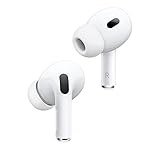
- This pre-owned product is not Apple certified, but has been professionally inspected, tested and cleaned by Amazon-qualified suppliers.
How to turn on Hearing Aid
- Update the paired iPhone or iPad to the latest available operating system.
- Put the AirPods Pro 2 in your ears and connect them. AirPods firmware normally installs automatically while the earbuds charge near a connected Apple device; there is generally no manual “update now” button.
- Open Settings and tap the connected AirPods near the top of the screen.
- Under Hearing Health, tap Hearing Assistance.
- Choose Hearing Test, or select the option to use an audiogram from a hearing professional.
- Complete the prompts and enable Hearing Aid. Amplification can then be adjusted from Control Center by opening the volume control and moving the Hearing Aid control.
For media-specific processing, go to Settings > connected AirPods > Hearing Assistance > Adjustments, then enable Media Assist for music, video, calls or FaceTime as needed. Apple’s labels have changed between software releases, so a 2024 screenshot may not exactly match the current menu.
If the option is missing
- Verify that the earbuds are AirPods Pro 2, not first-generation AirPods Pro.
- Connect the earbuds before opening Settings.
- Install the required iOS or iPadOS update.
- Check the AirPods firmware and allow time for an automatic update while charging near the Apple device.
- Confirm that your country or region authorizes the Hearing Aid feature.
- Confirm that the user is at least 18 and that a Hearing Test result or eligible audiogram is available.
- Restart the iPhone, reconnect the AirPods and check again after the firmware update.
Do not rely on a VPN, changing Apple Account regions or similar workarounds. Regulatory restrictions may still apply, and such methods are neither reliable nor a compliant solution. The most common mistake is assuming an iOS update replaces the separate AirPods firmware requirement.
AirPods Pro 2 versus conventional hearing aids
| AirPods Pro 2 Hearing Aid | Conventional hearing aids |
|---|---|
| Also functions as premium wireless earbuds with music, calls, noise cancellation and Transparency mode. | Primarily designed for hearing assistance. |
| Requires regular charging; Apple rates current AirPods Pro 2 for up to six hours of listening with ANC and up to 30 hours with the case. | Many models are designed around longer daily wear and hearing-specific power systems. |
| Strong integration with iPhone and iPad. | Broader clinical, accessory and fitting ecosystems. |
| May be a lower-cost entry point for an existing Apple user. | Professional fitting and follow-up can better address complex needs. |
| Availability depends on regional software authorization. | Availability and fitting depend on the product, provider and local rules. |
AirPods Pro 2 can make sense for an adult Apple user with mild-to-moderate perceived loss who also wants everyday earbuds. They are a poor match for severe or complex loss, custom earmold requirements, tinnitus programs, extensive clinical follow-up, all-day wear without charging, or anyone who does not use a compatible Apple device. Android users should not buy them solely for this feature.
Rank #3
- Active Noise Cancellation reduces unwanted background noise
- Adaptive Transparency lets outside sounds in while reducing loud environmental noise
- Personalized Spatial Audio with dynamic head tracking places sound all around you
- Multiple ear tips (XS, S, M, L)
- Touch control lets you swipe to adjust volume, press to direct media playback, answer or end calls, and press and hold to switch between listening modes
When professional care matters
The Hearing Aid feature does not diagnose the cause of hearing loss or replace an audiologist. Arrange professional evaluation for severe, asymmetric, rapidly worsening or otherwise unusual results. Sudden hearing loss, pain, drainage or neurological symptoms require prompt medical attention, not experimentation with an earbud setting.
An existing professional audiogram can be used, so taking Apple’s in-app test is not mandatory. If you experience whistling or squealing, check ear-tip fit and possible feedback; the regulatory instructions include troubleshooting guidance. Also distinguish media volume from Hearing Aid amplification: music, calls and environmental sound can have separate controls.
Price and buying context
Apple’s U.S. store listed AirPods Pro 2 at $249 as checked on August 16, 2026; price and availability can change. The software feature itself is included for compatible hardware, but an iOS update does not provide the earbuds for free. Apple notes that some insurers may reimburse an order when the Hearing Aid feature is used for perceived mild-to-moderate loss; verify eligibility directly with your insurer.
Rank #4

- REBUILT FOR COMFORT — AirPods 4 have been redesigned for exceptional all-day comfort and greater stability. With a refined contour, shorter stem, and quick-press controls for music or calls.
- PERSONALIZED SPATIAL AUDIO — Personalized Spatial Audio with dynamic head tracking places sound all around you, creating a theater-like listening experience for music, TV shows, movies, games, and more.*
- IMPROVED SOUND AND CALL QUALITY — AirPods 4 feature the Apple-designed H2 chip. Voice Isolation improves the quality of phone calls in loud conditions. Using advanced computational audio, it reduces background noise while isolating and clarifying the sound of your voice for whomever you’re speaking to.*
- MAGICAL EXPERIENCE — Just say “Siri” or “Hey Siri” to play a song, make a call, or check your schedule.* And with Siri Interactions, now you can respond to Siri by simply nodding your head yes or shaking your head no.* Pair AirPods 4 by simply placing them near your device and tapping Connect on your screen.* Easily share a song or show between two sets of AirPods.* An optical in-ear sensor knows to play audio only when you’re wearing AirPods and pauses when you take them off. And you can track down your AirPods and Charging Case with the Find My app.*
- LONG BATTERY LIFE — Get up to 5 hours of listening time on a single charge. And get up to 30 hours of total listening time using the case.*
For comparison, over-the-counter hearing aids are a better fit when hearing assistance—not premium earbuds—is the main goal. Prescription devices and an audiologist are preferable for complex, severe, asymmetric or medically significant hearing loss.
Independent reader supportYour contribution helps us test, update, and keep practical guides available for everyone.Frequently Asked Questions
Was the AirPods Pro 2 Hearing Aid feature coming in 2026?
No. “Next week” referred to October 21, 2024 coverage; iOS 18.1 shipped on October 28, 2024. The feature is now an established capability in authorized markets.
Free tools Windows power users keep installed
One-click scans. No signup required.
Do I need both an iOS update and an AirPods update?
Yes. At launch, iOS/iPadOS 18.1 and AirPods Pro 2 firmware 7B19 or later were both required.
Best Value
- REBUILT FOR COMFORT — AirPods 4 have been redesigned for exceptional all-day comfort and greater stability. With a refined contour, shorter stem, and quick-press controls for music or calls.
- ACTIVE NOISE CANCELLATION — AirPods 4 with Active Noise Cancellation help reduce outside noise before it reaches your ears, so you can immerse yourself in what you’re listening to.*
- HEAR THE WORLD AROUND YOU — The powerful H2 chip comes to AirPods 4. Adaptive Audio seamlessly blends ANC and Transparency mode — which lets you comfortably hear and interact with the world around you exactly as it sounds — to provide the best listening experience in any environment.* And when you’re speaking with someone nearby, Conversation Awareness automatically lowers the volume of what’s playing.*
- IMPROVED SOUND AND CALL QUALITY — Voice Isolation improves the quality of calls in loud conditions. Using advanced computational audio, it reduces background noise while isolating and clarifying the sound of your voice for whomever you’re speaking to.*
- MAGICAL EXPERIENCE — Just say “Siri” or “Hey Siri” to play a song, make a call, or check your schedule.* And with Siri Interactions, now you can respond to Siri by simply nodding your head yes or shaking your head no.* Pair AirPods 4 by simply placing them near your device and tapping Connect on your screen.* Easily share a song or show between two sets of AirPods.* An optical in-ear sensor knows to play audio only when you’re wearing AirPods and pauses when you take them off. And you can track down your AirPods and Charging Case with the Find My app.*
Can AirPods Pro 2 replace hearing aids?
Not universally. They may suit adults with perceived mild-to-moderate loss, but they do not replace professional evaluation, fitting or specialized devices for every hearing condition.
The Bottom Line
Bottom line: AirPods Pro 2’s Hearing Aid feature is real and launched on October 28, 2024 with iOS 18.1, but it requires compatible firmware, an authorized region and the right hearing profile. It is a compelling multifunction option for some adult Apple users—not a universal replacement for clinical hearing care or conventional hearing aids.
Quick Recap
Product prices and availability are accurate as of the date/time indicated and are subject to change. Any price and availability information displayed on Amazon at the time of purchase will apply.

