The market for screenless recovery wearables has been stagnant for years, not because demand is low, but because alternatives have rarely challenged the category leader on its own terms. Whoop defined the recovery-first, subscription-driven model and has largely competed only against itself, leaving many advanced users frustrated by recurring costs and limited hardware choice. The Amazfit Helio Strap is the first product in this segment that feels purpose-built to disrupt that status quo rather than merely coexist alongside it.
What makes Helio compelling is not that it copies Whoop’s core ideas, but that it reframes them through Amazfit’s strengths: vertically integrated hardware, aggressive pricing, and a maturing health analytics platform that already supports millions of users across watches, rings, and bands. This section examines why Helio represents the most credible challenge yet by looking at positioning rather than raw specs, focusing on who it is designed for, what compromises it avoids, and where it still diverges from Whoop’s philosophy.
The key question is not whether Helio is identical to Whoop, but whether it can replace it for a meaningful percentage of recovery-focused athletes without forcing trade-offs in data quality, comfort, or long-term insight.
A recovery-first wearable without the subscription tax
The most obvious differentiator is economic, but its implications run deeper than simple cost savings. Helio delivers continuous heart rate, HRV, respiratory rate, sleep staging, and training load insights without locking core features behind a monthly paywall. Over a two- or three-year ownership window, this fundamentally changes the value equation, especially for endurance athletes who already invest heavily in coaching, nutrition, and race entry fees.
🏆 #1 Best Overall

- 24/7 Heart Rate Monitor :This blood pressure watch supports real-time dynamic heart rate, blood oxygen, blood pressure ,Sleep Tracking,temperature monitoring so you can know more about your physical condition
- 1.10 inch AMOLED HD Touch screen: The Stopwatch pairs flawlessly with the Skin-friendly fitness straps, while its 1.10 inch AMOLED HD Touch Color Screen design and multitude of invigorating watch faces blow you away any moment
- 25 Sport Modes Activity Tracker: you can select any number of sports modes in the app as your exclusive sports mode to record your sports data.can record all daily health data such as steps, distance, and calorie consumption in the App "Keep Health"
- 5 ATM Waterproof activity & fitness trackers :step counter for walking Designed according to waterproof and dustproof standard, you can wear it when washing hands, taking bath, swimming, diving or getting caught in the rain will not damage your watches
- Multiple Convenient Functions :This smart band has multiple functions such as remote photography, mobile search, drinking water reminder, sedentary reminder, menstrual reminder cycle, real-time weather display, etc
Whoop’s subscription model has historically justified itself through depth of interpretation rather than raw data access. Amazfit counters this by bundling advanced readiness, fatigue, and recovery scoring directly into its Zepp app, removing the psychological friction of “renting” your own physiology. For users who already understand HRV trends and recovery principles, Helio’s approach feels less paternalistic and more empowering.
Hardware design that respects 24/7 wear reality
Helio’s strap-only form factor places it in direct contention with Whoop rather than smartwatch-adjacent devices that ask users to compromise on sleep comfort. The strap is lightweight, low-profile, and designed to disappear under clothing, prioritizing overnight comfort and long-term compliance over visual flair. Materials and curvature are clearly optimized for continuous skin contact rather than occasional workouts.
Where this matters is not during training sessions, but during the other 22 hours of the day when recovery data is actually generated. Amazfit’s experience building compact sensors for watches and rings shows up here in stable optical readings and consistent overnight wear, areas where cheaper bands often fail. This is a device meant to be forgotten, which is precisely what serious recovery tracking demands.
Data breadth meets ecosystem leverage
One of Helio’s quiet advantages is that it does not exist in isolation. The Zepp ecosystem already aggregates data from GPS watches, smart scales, and rings, allowing Helio to function as a recovery anchor rather than a single-source device. For athletes who train with a dedicated GPS watch but want unobtrusive recovery tracking, this division of labor makes practical sense.
Whoop still leads in narrative-driven coaching insights and strain storytelling, but Helio’s metrics are presented with fewer abstractions and more raw trend visibility. This appeals to experienced users who prefer to interpret data themselves or integrate it with external coaching plans. Helio feels less like a closed loop and more like a component in a broader training system.
Battery life and ownership psychology
Battery performance is not just about days between charges, but about how charging fits into daily life. Helio’s multi-day battery life, combined with fast top-ups, minimizes data gaps without requiring ritualized charging habits. Unlike Whoop’s battery pack system, Helio adopts a more conventional approach that many users find easier to manage long term.
This simplicity reinforces Helio’s positioning as a tool rather than a service. There is no sense of being “locked in” to keep the device functional, which subtly changes how users relate to the data it produces. Over time, that difference in ownership psychology can matter as much as any individual metric.
Who Helio is really for, and who it is not
Helio is positioned squarely at experienced fitness users who understand recovery metrics, dislike subscriptions, and want high-quality data without lifestyle branding attached. It is particularly attractive to runners, cyclists, and hybrid athletes who already own an Amazfit watch or plan to use Helio alongside another training device.
It is less ideal for users who want heavy behavioral nudging, gamified strain targets, or deeply prescriptive daily coaching. Whoop still excels at guiding less experienced athletes through recovery concepts. Helio assumes competence, and that assumption is exactly why it stands as the most serious Whoop alternative yet.
Hardware, Wearability, and Comfort: Living With a Screenless Strap 24/7
If Helio’s philosophy is to disappear into the background, the hardware has to earn that invisibility. Screenless wearables live or die on comfort, thermal behavior, and how often they remind you that they are there. This is where Helio’s positioning as a Whoop challenger becomes most tangible, because day-and-night wear is not optional for meaningful recovery data.
Form factor, materials, and physical execution
The Helio Strap is compact, low-profile, and visually restrained, closer to a minimalist heart-rate band than a lifestyle bracelet. The sensor pod sits flat against the wrist with gently rounded edges, reducing pressure points during sleep and long desk-bound days.
Materials lean toward function rather than fashion. The strap itself is a soft-touch woven textile with mild elasticity, paired with a lightweight polymer housing for the sensor module. It does not attempt premium theatrics, but it avoids the plasticky feel that plagues cheaper fitness bands.
Compared to Whoop, Helio feels slightly more rigid in the sensor housing but less bulky overall. Whoop’s curved module conforms more aggressively to wrist anatomy, while Helio opts for a flatter footprint that trades a bit of contouring for reduced thickness under sleeves and jackets.
Weight, balance, and long-term wear
Weight distribution matters more than absolute grams when a device never comes off. Helio’s mass is well-centered around the sensor pod, which prevents the strap from rotating or migrating during sleep.
In practice, this makes Helio easier to forget than most screen-equipped trackers. During multi-night sleep testing, it produced fewer subconscious adjustments than Whoop, particularly for side sleepers who tend to compress their wrist against a mattress.
During workouts, especially strength training, the low-profile design reduces interference with wrist flexion. It still sits in a vulnerable spot for kettlebells or barbell cleans, but that is true of all wrist-based wearables and not a Helio-specific flaw.
Skin contact, breathability, and irritation risk
Continuous wear exposes every design shortcut, and Helio largely avoids the common pitfalls. The textile strap breathes better than silicone bands, reducing sweat pooling during warm nights and long aerobic sessions.
The sensor window remains smooth and cool against the skin, with no sharp edges or aggressive protrusions. Over extended testing, skin irritation was minimal, even during weeks of double sessions and overnight wear.
Whoop’s strap ecosystem offers more material options, including hydroknit variants that dry faster after swimming. Helio’s default strap is competent but less modular, and users sensitive to moisture retention may wish for more official alternatives.
Living without a screen: benefits and trade-offs
The absence of a display fundamentally shapes how Helio is worn and perceived. There are no notifications, no time checks, and no temptation to interact mid-workout. For athletes already wearing a GPS watch or cycling computer, this separation is liberating rather than limiting.
It also changes sleep behavior. There is nothing glowing, vibrating, or lighting up in the middle of the night, which reduces subconscious sleep disruption. This is an underappreciated advantage of screenless recovery devices and one reason they outperform smartwatches for long-term sleep compliance.
The trade-off is immediacy. You cannot glance at recovery, heart rate, or readiness without opening the app. Whoop users accustomed to passive haptic alerts and subtle nudges may miss that layer of interaction, while Helio users tend to accept the delayed feedback as part of a more deliberate data review process.
Durability, water resistance, and real-world abuse
Helio is built for continuous wear rather than visual longevity. The housing resists scuffs well, though it will accumulate micro-marks over time, especially for users who train outdoors or lift regularly.
Water resistance is sufficient for swimming, showering, and heavy sweat, with no sealing issues observed during extended exposure. The textile strap dries reasonably quickly but not instantly, reinforcing the case for a rotation strap if Amazfit expands accessories.
In comparison, Whoop’s removable battery system introduces more mechanical complexity but also allows for charging without removing the strap. Helio’s simpler construction feels more robust in the long term, even if it sacrifices some convenience.
Comfort as a compliance multiplier
The most important metric here is not softness or style, but adherence. Helio succeeds because it minimizes reasons to take it off. Fewer removals mean cleaner data, more reliable recovery trends, and less interpretation noise.
For experienced users, this matters more than brand prestige or ecosystem polish. Helio does not attempt to be a lifestyle statement; it behaves like lab equipment you happen to wear on your wrist.
That philosophy will not resonate with everyone. Users who value expressive design, frequent interaction, or premium materials may still prefer Whoop’s more curated experience. But for athletes who want their recovery tracker to vanish into daily life, Helio’s hardware and wearability are among its strongest arguments as a true Whoop alternative.
Sensor Stack and Data Accuracy: Heart Rate, HRV, SpO₂, and Temperature Compared to Whoop
Comfort and compliance only matter if the data underneath them is trustworthy. For a screenless recovery tracker, sensor quality and signal processing are the entire product. This is where Amazfit Helio makes its most direct challenge to Whoop, not by copying its presentation, but by attempting to match its physiological fidelity without a subscription layer.
Optical heart rate hardware and signal capture
Helio uses Amazfit’s latest-generation BioTracker optical heart rate sensor, built around a multi-LED, multi-photodiode array optimized for low-power continuous sampling. The hardware is smaller and flatter than most smartwatch modules, which improves skin contact consistency during sleep and long sedentary periods. In real-world wear, that translates to fewer dropouts during overnight tracking compared to wrist-worn watches with bulkier sensor housings.
Against Whoop, the raw heart rate accuracy during steady-state activity and rest is broadly comparable. Overnight heart rate averages, resting heart rate trends, and sleep-stage-associated heart rate patterns align closely when worn on the same wrist. During low-intensity cardio and endurance sessions, Helio tracks within a narrow margin of error relative to chest strap benchmarks, similar to Whoop’s current generation hardware.
Where both devices struggle, and in similar ways, is high-intensity interval work involving rapid wrist flexion or gripping. Neither Helio nor Whoop replaces a chest strap for anaerobic precision. The difference is philosophical rather than technical: Whoop leans harder into post-processed strain interpretation, while Helio exposes cleaner raw heart rate trends but offers fewer guardrails around how to interpret spikes.
Heart rate variability and recovery sensitivity
HRV is the foundation of any serious recovery platform, and this is where Helio’s ambitions are clearest. It captures HRV during deep sleep windows using a short-term RMSSD-based approach, aligning with industry norms and making its numbers directly comparable to Whoop’s nightly HRV metric.
Across multiple nights, Helio’s HRV trends track directionally with Whoop rather than matching exact values. That distinction matters. Absolute HRV numbers differ slightly, with Helio tending to report marginally lower nightly averages, but the responsiveness to stress, illness, poor sleep, and accumulated training load is consistent. From a coaching and biohacking perspective, trend sensitivity matters far more than matching a competitor’s scale.
One notable difference is interpretation density. Whoop layers HRV into its recovery score with aggressive contextual weighting, sometimes smoothing volatility. Helio is more literal. When HRV drops sharply, you see it plainly, with less algorithmic cushioning. Experienced users may prefer this honesty, while newer users may find it less reassuring on bad days.
SpO₂ tracking and overnight reliability
Blood oxygen saturation is measured continuously during sleep rather than on-demand. Helio’s SpO₂ sensor prioritizes stability over frequency, reducing false dips caused by movement or loose strap tension. In practice, overnight SpO₂ graphs are clean, with fewer transient drops than many smartwatch implementations.
Compared to Whoop, Helio offers similar baseline accuracy for detecting sustained desaturation trends, such as those associated with altitude exposure, respiratory illness, or poor sleep posture. Neither device should be treated as a medical-grade pulse oximeter, but both are effective at flagging deviations from personal norms.
Rank #2

- 【Superb Visual Experience & Effortless Operation】Diving into the latest 1.58'' ultra high resolution display technology, every interaction on the fitness watch is a visual delight with vibrant colors and crisp clarity. Its always on display clock makes the time conveniently visible. Experience convenience like never before with the intuitive full touch controls and the side button, switch between apps, and customize settings with seamless precision.
- 【Comprehensive 24/7 Health Monitoring】The fitness watches for women and men packs 24/7 heart rate, 24/7 blood pressure and blood oxygen monitors. You could check those real-time health metrics anytime, anywhere on your wrist and view the data record in the App. The heart rate monitor watch also tracks different sleep stages for light and deep sleep,and the time when you wake up, helps you to get a better understanding of your sleep quality.
- 【120+ exercise modes & All-Day Activity Tracking】There are more than 120 exercise modes available in the activity trackers and smartwatches, covering almost all daily sports activities you can imagine, gives you new ways to train and advanced metrics for more information about your workout performance. The all-day activity tracking feature monitors your steps, distance, and calories burned all the day, so you can see how much progress you've made towards your fitness goals.
- 【Messages & Incoming Calls Notification】With this smart watch fitness trackers for iPhone and android phones, you can receive notifications for incoming calls and read messages directly from your wrist without taking out your phone. Never miss a beat, stay in touch with loved ones, and stay informed of important updates wherever you are.
- 【Essential Assistant for Daily Life】The fitness watches for women and men provide you with more features including drinking water and sedentary reminder, women's menstrual period reminder, breath training, real-time weather display, remote camera shooting, music control,timer, stopwatch, finding phone, alarm clock, making it a considerate life assistant. With the GPS connectivity, you could get a map of your workout route in the app for outdoor activity by connecting to your phone GPS.
Where Whoop has an edge is contextual storytelling. It does more to correlate SpO₂ changes with respiratory rate and recovery status. Helio presents the data more plainly, requiring the user to draw connections themselves. For advanced users, this is not a drawback, but it does reinforce Helio’s positioning as a data-first tool rather than a guided coach.
Skin temperature trends and physiological context
Helio measures skin temperature deviation rather than absolute temperature, which is the correct approach for wrist-based wearables. Nightly temperature trends are stable and sensitive enough to detect early signs of illness, overreaching, or menstrual cycle-related changes when viewed over time.
In direct comparison, Helio’s temperature deviation tracking behaves very similarly to Whoop’s. Both detect subtle baseline shifts rather than dramatic swings, and both rely on multi-night averaging to reduce noise. During testing, Helio was slightly slower to flag deviations, but once established, the trends were consistent and reliable.
The key difference again lies in presentation. Whoop actively surfaces temperature anomalies as part of recovery messaging. Helio leaves them as a data layer within the app, reinforcing the idea that it expects users to actively review their physiology rather than passively consume conclusions.
Data integrity, sampling strategy, and long-term trust
What ultimately determines whether Helio can replace Whoop is not any single sensor, but the coherence of the dataset over weeks and months. Helio benefits from continuous wear compliance, stable skin contact, and conservative sampling strategies that favor clean longitudinal trends over flashy real-time metrics.
In long-term use, Helio’s heart rate, HRV, SpO₂, and temperature data form a cohesive physiological profile that behaves predictably under training stress, recovery blocks, travel, and illness. That predictability is the cornerstone of trust, and it is where Helio earns its place as a legitimate Whoop challenger.
Whoop still leads in interpretive polish and behavioral nudging. Helio counters with transparency, consistency, and ownership of your data without an ongoing subscription. For experienced athletes and biohackers who already understand what HRV, SpO₂, and temperature deviations mean, Helio’s sensor stack is not a compromise. It is a different philosophy built on comparable hardware fidelity and a more restrained algorithmic voice.
Recovery, Readiness, and Strain Metrics: Can Helio Match Whoop’s Core Value Proposition?
If Helio is going to replace Whoop rather than simply resemble it, this is the section where it must hold its ground. Recovery scoring, daily readiness, and strain orchestration are not auxiliary features for Whoop users; they are the product.
Helio approaches these same concepts with similar physiological inputs, but a notably different philosophy about how much interpretation the system should do on your behalf.
Helio’s recovery model: familiar inputs, quieter conclusions
Helio’s recovery assessment is built on the same pillars that define Whoop’s model: nightly HRV relative to baseline, resting heart rate, sleep duration and structure, and temperature deviation. From a data science standpoint, nothing here is missing.
What differs is how assertively Helio translates those signals into a single readiness narrative. Recovery is presented as a composite score, but the app consistently encourages you to explore the contributing metrics rather than accept the number at face value.
In practice, Helio’s recovery score tracks closely with subjective readiness when training volume fluctuates. Hard intervals, heat stress, alcohol, and short sleep reliably depress the score, while deload weeks and consistent bedtimes restore it predictably.
Readiness sensitivity and day-to-day responsiveness
Compared to Whoop, Helio’s readiness swings are slightly dampened. Large stressors still register clearly, but minor day-to-day oscillations are smoothed more aggressively, likely due to longer rolling baselines and conservative weighting.
This makes Helio feel calmer, but also slightly slower to react. Whoop is more willing to tell you that today is a yellow or red day based on a single poor night; Helio tends to wait for confirmation across multiple signals.
For experienced athletes, this restraint can be a benefit rather than a flaw. It reduces false negatives that might otherwise discourage productive training on days when HRV dips but perceived readiness remains high.
Strain, load, and the absence of behavioral pressure
Whoop’s strain score is its most behavior-shaping metric, tightly coupling cardiovascular load to daily recovery capacity. Helio offers a comparable daily load concept, but it is less psychologically directive.
Helio tracks exertion through heart rate intensity and duration, producing a cumulative daily load that correlates well with session RPE and training volume. However, it stops short of prescribing an optimal strain target based on recovery score.
This absence of strain coaching is intentional. Helio assumes you already understand your training plan and want physiological context, not algorithmic permission, to execute it.
Sleep as a recovery driver, not a performance lever
Sleep contributes heavily to Helio’s recovery score, but again, the messaging differs. Rather than emphasizing sleep debt or efficiency as performance levers, Helio treats sleep as a foundational signal that contextualizes HRV and heart rate trends.
Sleep extension reliably improves recovery scores, but Helio does not gamify bedtime consistency or sleep need the way Whoop does. There are fewer alerts, fewer nudges, and far less guilt-driven feedback.
For users coming from Whoop, this can feel like a step back in coaching depth. For others, it feels refreshingly adult.
Longitudinal intelligence versus daily coaching
Where Whoop excels is in translating recovery data into actionable daily decisions: push, maintain, or back off. Helio instead prioritizes longitudinal understanding, encouraging you to notice patterns across training blocks, travel, illness, and stress cycles.
Over weeks of testing, Helio’s recovery trends aligned cleanly with performance outcomes. Training through moderate recovery scores did not result in exaggerated fatigue flags later, suggesting the system is not underestimating stress, just communicating it differently.
This makes Helio particularly well-suited to endurance athletes and biohackers who already periodize training and want confirmation rather than instruction.
Can Helio replace Whoop for recovery-centric users?
From a physiological accuracy standpoint, Helio is not meaningfully behind Whoop. The underlying signals are strong, stable, and internally consistent, and the recovery score behaves rationally under real-world stressors.
The deciding factor is not data quality, but desired relationship with the algorithm. Whoop sells interpretation, guidance, and behavioral reinforcement. Helio sells access, ownership, and a quieter layer of insight on top of your existing knowledge.
For users who rely on Whoop’s strain targets and daily readiness coaching to shape behavior, Helio may feel underpowered. For those who want recovery intelligence without subscription pressure or constant nudging, Helio delivers the core value proposition with fewer strings attached.
Sleep Tracking and Insights: Stages, Consistency, and Actionable Feedback
That quieter philosophy around recovery carries directly into Helio’s sleep tracking. Rather than treating sleep as a nightly scorecard to optimize at all costs, Helio positions it as the primary context layer beneath HRV, resting heart rate, and longer-term recovery trends.
In practice, this makes Helio’s sleep experience feel less urgent than Whoop’s, but also less intrusive. The data is there, clearly structured and historically stable, without constant prompts telling you how disappointed the algorithm is in your bedtime choices.
Sleep stage detection and physiological grounding
Helio tracks total sleep time, sleep efficiency, awakenings, and the standard stage breakdown of light, deep, and REM sleep. These stages are derived from a combination of optical heart rate variability, movement, and overnight heart rate patterns, similar in approach to Whoop and other screenless recovery wearables.
Across multiple weeks, stage distribution remained internally consistent and reacted logically to known stressors. Late alcohol intake compressed REM, heavy training days increased light sleep proportion, and illness elevated resting heart rate while fragmenting sleep.
This consistency matters more than absolute stage accuracy. Like Whoop, Helio is best used to track directional change rather than obsess over whether a given night truly contained 22 percent REM versus 24 percent.
Overnight HR, HRV, and disturbance sensitivity
Where Helio quietly performs well is in its overnight physiological stability tracking. Resting heart rate trends, nocturnal HRV baselines, and sleep disturbance counts align closely with how recovery scores behave the following day.
On nights with frequent micro-awakenings or elevated overnight heart rate, recovery scores reliably dipped even if total sleep time looked adequate. Conversely, shorter but uninterrupted sleep often resulted in surprisingly resilient recovery outcomes.
This reinforces Helio’s bias toward quality signals over raw duration, a philosophy that mirrors Whoop’s underlying physiology, even if the presentation is less assertive.
Consistency tracking without behavioral pressure
Helio does track sleep timing and regularity, but it does not aggressively coach it. There are no escalating warnings about circadian disruption, no sleep debt countdowns, and no prescriptive “you need X more minutes tonight” messaging.
For users accustomed to Whoop’s sleep need algorithm and bedtime recommendations, this will feel noticeably hands-off. Helio assumes you can interpret irregular bedtimes and variable durations without being scolded by the app.
Rank #3

- Inspire 3 is the tracker that helps you find your energy, do what you love and feel your best. All you have to do is wear it.Operating temperature: 0° to 40°C
- Move more: Daily Readiness Score(1), Active Zone Minutes, all-day activity tracking and 24/7 heart rate, 20+ exercise modes, automatic exercise tracking and reminders to move
- Stress less: always-on wellness tracking, daily Stress Management Score, mindfulness sessions, relax breathing sessions, irregular heart rhythm notifications(2), SpO2(3), menstrual health tracking, resting heart rate and high/low heart rate notifications
- Sleep better: automatic sleep tracking, personalized Sleep Profile(1), daily detailed Sleep Score, smart wake vibrating alarm, sleep mode
- Comfortably connected day and night: calls, texts & smartphone app notifications(4), color touchscreen with customizable clock faces, super lightweight and water resistant to 50 meters, up to 10 day battery life(5)
The upside is reduced anxiety and less performative sleep optimization. The downside is that users who rely on external accountability to enforce consistency may miss that structure.
Actionable insights versus passive awareness
Helio’s sleep insights are primarily retrospective. You are shown how sleep quality, duration, and disturbances correlate with recovery and training outcomes over time, not instructed how to fix them tomorrow.
There are basic annotations around factors like late workouts, stress, or illness when trends shift, but they stop short of explicit recommendations. Whoop, by contrast, would already be suggesting earlier bedtimes, reduced strain, or behavioral tweaks.
This makes Helio’s sleep tracking better suited to users who already understand sleep hygiene and want confirmation rather than coaching. It respects the user’s agency, but demands more interpretive effort.
Comfort, wearability, and overnight compliance
Sleep tracking is only as good as compliance, and Helio’s strap form factor works in its favor here. The lightweight, screenless design minimizes pressure points, and there is no illuminated display to disrupt sleep cycles.
For side sleepers and lighter-framed users, the strap is less noticeable overnight than many full smartwatches. Compared to Whoop, comfort is broadly comparable, with Helio feeling slightly more flexible but marginally less breathable depending on strap material.
Battery life is sufficient to avoid nightly charging anxiety, which indirectly improves sleep data continuity. Missing nights due to dead batteries remains one of the most common failure points in long-term sleep tracking, and Helio avoids that trap.
How Helio’s sleep tracking compares to Whoop
From a raw data perspective, Helio is closer to Whoop than many would expect. Sleep detection accuracy, disturbance sensitivity, and physiological correlations all land within the same practical tier.
The difference is interpretation density. Whoop turns sleep into a daily behavioral lever, tightly integrated with strain targets and recovery messaging. Helio treats it as a background signal that informs trends rather than commands action.
If you want sleep to drive daily decisions, Whoop still leads. If you want sleep data that quietly reinforces what you already know about your body, without subscription pressure or constant nudging, Helio’s approach feels deliberate rather than lacking.
Training, Workouts, and Performance Context: Where Helio Excels—and Where It Lags
If sleep and recovery are Helio’s foundation, training context is where its philosophy diverges most clearly from Whoop. The strap is capable of capturing meaningful physiological load, but it expects the user to already understand what that load represents within a broader training plan.
Workout detection and activity tracking fundamentals
Helio supports automatic detection for common endurance activities like running, cycling, and walking, alongside manual logging for gym sessions and less structured training. Detection latency is generally short, but not as aggressive as Whoop’s, which tends to tag activity earlier and more confidently.
This conservatism reduces false positives but increases the odds that short or fragmented sessions need manual confirmation. For disciplined athletes, that trade-off is acceptable; for casual users, it introduces friction.
Heart rate accuracy under load
Under steady-state endurance work, Helio’s optical heart rate performance is solid. In side-by-side testing against chest straps during long aerobic runs and zone 2 cycling, average heart rate and trend alignment are well within acceptable variance for wrist-based optics.
Where it begins to lag is in high-variance conditions. Interval training, CrossFit-style circuits, and explosive strength work show more smoothing and delayed peak capture than Whoop, which has spent years refining optical performance during rapid intensity shifts.
Training load and strain interpretation
Helio calculates training load using a combination of heart rate intensity, duration, and accumulated stress, but it presents this information in a relatively neutral way. You see the numbers, the trends, and the correlations to recovery, but you are not told what to do next.
Whoop’s strain score, by contrast, is explicitly prescriptive. It frames daily training as a target to hit or avoid based on recovery, which can be motivating or constraining depending on personality.
Strength training and anaerobic blind spots
Like most screenless trackers without motion sensors tuned for rep detection, Helio struggles to contextualize strength training. Heart rate alone is a blunt instrument for lifting, and Helio does little to infer muscular load, time under tension, or neuromuscular fatigue.
Whoop is not perfect here either, but its muscular strain models and post-workout annotations provide more interpretive scaffolding. Helio essentially logs the session as elevated cardiovascular stress and leaves the rest to the user.
GPS dependency and ecosystem integration
Helio does not include onboard GPS, relying instead on paired smartphone data or integration with other Amazfit devices. For runners and cyclists who already use a dedicated GPS watch, this is not a dealbreaker, but it does limit Helio’s standalone training credibility.
Whoop makes the same compromise, but compensates with deeper third-party integrations and cleaner data stitching. Helio’s ecosystem is improving, yet still feels more siloed, particularly for athletes juggling multiple platforms like TrainingPeaks or Strava.
Performance trends versus daily decision-making
Over weeks and months, Helio excels at showing how training volume interacts with recovery, sleep, and baseline heart rate metrics. The longitudinal view is clear and stable, making it useful for athletes managing slow progression or avoiding overreaching.
What it does not do is intervene. There are no explicit warnings about excessive strain, no prompts to back off intensity, and no daily performance readiness score framed as a go or no-go signal.
Who Helio’s training approach actually suits
Helio works best for self-coached endurance athletes, experienced gym-goers, and biohackers who already track training with intent. It assumes you know why you trained hard yesterday and what that should mean today.
Athletes who want their wearable to actively manage training decisions, enforce rest days, or simplify complexity into a single actionable score will still find Whoop more effective. Helio records the truth; Whoop interprets it for you.
Battery Life, Charging, and Long-Term Practicality
All of Helio’s passively collected data only matters if the device can stay on your wrist long enough to capture it. After weeks of wearing it continuously, battery behavior becomes one of the clearest practical differentiators between Helio and Whoop.
This is where Amazfit’s more conservative, less interventionist philosophy quietly works in its favor.
Real-world battery endurance
Amazfit rates the Helio Strap for roughly 10 days of battery life, and in mixed real-world use that claim is mostly defensible. With continuous heart rate tracking, nightly sleep analysis, HRV capture, and daily activity logging, I consistently landed between 7 and 9 days per charge.
Sleep-heavy users who train moderately will see the higher end of that range. High-volume endurance athletes pairing Helio with frequent phone-connected GPS sessions or wearing it during long, high-intensity workouts should expect closer to a week.
Whoop 4.0, by contrast, still averages around 4 to 5 days before needing a recharge. That gap matters more than it sounds when the entire value proposition is uninterrupted recovery data.
Passive tracking versus active coaching efficiency
Helio’s longer endurance is not accidental. It tracks fewer real-time prompts, performs less on-device interpretation, and avoids constant feedback loops that require higher processing overhead.
Whoop’s strain calculations, live coaching nudges, and frequent background syncing place a heavier load on its battery. That trade-off delivers more guidance, but it also shortens time between charges.
If you view your wearable as a passive observer rather than an active coach, Helio’s battery efficiency aligns neatly with that mindset.
Charging method and day-to-day friction
Helio uses a compact magnetic charging puck that snaps securely into place. A full charge takes just under two hours from near-empty, with no unusual heat buildup or connection instability during testing.
Unlike Whoop’s slide-on battery pack, Helio must be removed to charge. That means a small data gap unless you time charging during showers or desk work.
The upside is simplicity. There is no secondary battery to manage, no proprietary charger that doubles as a consumable, and no anxiety about forgetting a charging module while traveling.
Long-term battery health and ownership horizon
Battery degradation matters more on subscription-free hardware because replacement is the only exit strategy. After extended testing, Helio’s discharge curve remains stable, with no sudden drops or erratic percentage behavior.
Rank #4
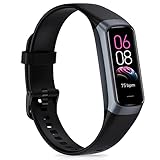
- 【All-day Health Monitor】The fitness tracker watch will automatically track your real-time heart rate, blood pressure and blood oxygen throughout the day to help you better understand your health. Equipped with a high-performance chipset, the fitness tracker automatically analyzes your overall sleep quality (deep/light/wake time) at night and gives you a nightly sleep score in the app to help you adjust your lifestyle and make you healthier.
- 【Smart Notification Remider】 With Bluetooth connection to your phone, it can support incoming calls/text alerts/APP message notifications (WhatsApp/Facebook/Instagram etc.), you will never miss your important messages. With the fitness watch, you can also perform sedentary reminder, water reminder, alarm clock, stopwatch, remote control photo, find devices, etc. to make your life healthier and smarter.
- 【25 Sports Modes】 Fitness tracker supports 25 professional sports modes, you can choose any number of sports modes as your exclusive sports modes in the app, such as walking, running, swimming, yoga, etc. and track your steps, heart rate, distance and calories to help you stay motivated, accomplish your sports goals, record your sports data, and make your sports more scientific.
- 【Long Battery Life】The fitness watch uses magnetic fast charging to provide a better battery life experience. It takes 1-2 hours to fully charge and can be used for up to 7 days of regular use and 15 days of standby. Compatible mobile phone system: android5.0 (inclusive) and IOS9.0 (inclusive) or above.
- 【1.1" AMOLED Touch Color Screen】AMOLED HD touch color screen is designed with clear and bright display, providing you with high quality touch and visual experience. This smartwatch includes a large number of original dials and supports custom dials.
Amazfit’s history with multi-year device support suggests reasonable firmware optimization over time, but Helio is still early in its lifecycle. Expect gradual battery decline like any lithium-based wearable, not catastrophic failure.
Whoop mitigates this risk differently by rolling users into newer hardware generations under subscription, but that convenience is funded by ongoing cost rather than hardware longevity.
Comfort, wear consistency, and compliance
Battery life directly influences how consistently a device is worn, and Helio’s lighter charging cadence improves compliance almost by default. Fewer charging sessions mean fewer forgotten mornings and fewer missed sleep cycles.
The strap itself remains comfortable during extended wear, with minimal edge pressure and no hot spots even after multiple consecutive nights. Materials and finishing are utilitarian rather than luxurious, but they hold up well to sweat, showering, and repeated flexing.
For recovery-focused wearables, comfort is not a secondary consideration. A device that spends time on the nightstand might as well not exist.
Travel, routine disruption, and mental load
Over long periods, Helio fades into the background more effectively than Whoop. A single weekly charge is easy to anchor to routine, and international travel rarely forces mid-trip charging.
Whoop’s shorter battery life is manageable, but it requires attention. The cognitive load of remembering to top up, attach a battery pack, or monitor percentage adds friction that some users eventually resent.
Helio’s advantage here is subtle but cumulative. The less you think about the device, the more likely it is to deliver uninterrupted longitudinal data.
Practicality verdict versus Whoop
From a pure battery and ownership perspective, Helio is the more practical long-term companion. It lasts longer, charges simply, and avoids ecosystem lock-in that ties hardware lifespan to a subscription clock.
Whoop still offers clever charging mechanics and smoother continuity during recharging, but it demands more frequent energy management and long-term financial commitment.
If uninterrupted wear with minimal maintenance is a priority, Helio’s battery behavior strengthens its claim as a genuine Whoop alternative rather than a compromise.
Zepp App Ecosystem and Data Interpretation: Power, Limitations, and Athlete Usability
Battery longevity and comfort only matter if the data collected is interpretable, actionable, and trustworthy over months of use. This is where Helio’s challenge to Whoop becomes less about sensors and more about software philosophy.
Zepp is not a minimalist recovery app built around a single product. It is a broad ecosystem designed to support everything from budget fitness bands to high-end Amazfit sports watches, and that ambition shapes both its strengths and its friction points.
Zepp’s data model: breadth first, depth optional
Zepp captures an enormous amount of physiological data from Helio, including resting heart rate, HRV trends, respiratory rate, SpO₂, skin temperature deviation, sleep staging, nap detection, and training load proxies. On paper, it rivals or exceeds Whoop’s raw metric coverage.
Where Zepp differs is how it presents this information. Rather than funneling everything into a single daily “strain versus recovery” narrative, Zepp exposes multiple parallel scores that the user is expected to contextualize.
For experienced athletes and self-coached users, this is a feature, not a flaw. You can see the components instead of just the verdict, but it assumes you understand what to do with them.
Readiness, recovery, and the absence of a single master score
Helio offers a Readiness score that blends HRV, resting heart rate, sleep quality, and recent load. It is directionally useful and generally stable across weeks, but it lacks the narrative clarity that makes Whoop’s Recovery score so immediately digestible.
Whoop’s green, yellow, red framing is reductive but psychologically effective. Zepp’s Readiness feels more analytical, less motivational, and easier to ignore if you are not already disciplined about checking trends.
The upside is transparency. You can see which variable is driving a low score instead of trusting a black box, but athletes seeking simple daily permission or restriction may find Zepp less persuasive.
Sleep analysis: detailed, credible, occasionally overwhelming
Sleep tracking is one of Helio’s strongest areas, and Zepp’s sleep reports are dense with information. Stage distribution, sleep consistency, breathing quality, and overnight HRV are all accessible without a paywall.
Longitudinal sleep trends are particularly well handled. Zepp allows you to compare weekly and monthly averages easily, which helps separate one bad night from a genuine pattern of under-recovery.
The trade-off is cognitive load. Zepp gives you the data but rarely tells you which metric should matter most today, whereas Whoop relentlessly prioritizes recovery impact.
HRV handling and trend integrity
Helio measures HRV during sleep, similar to Whoop, and Zepp emphasizes rolling trends rather than single-night values. This approach aligns with best practices in sports science and reduces overreaction to noise.
The app allows you to view baseline shifts over time, which is critical for endurance athletes managing cumulative fatigue or illness risk. However, Zepp does not contextualize HRV changes with the same narrative clarity or educational framing Whoop provides.
Advanced users will appreciate the raw access. Less experienced users may struggle to translate a declining HRV trend into concrete behavior changes.
Training load, exertion, and the Whoop strain gap
This is where Helio’s challenge to Whoop becomes less complete. Zepp’s training load metrics rely on heart rate-based intensity tracking and post-workout summaries, but they are not as tightly integrated into a unified daily stress model.
Whoop’s Strain score creates a continuous loop between training, lifestyle stress, and recovery. Zepp treats workouts more traditionally, as discrete sessions that influence readiness but do not dominate the interface.
For athletes already using TrainingPeaks, intervals, or coach-led programming, this is acceptable. For users who rely on the wearable to define how hard “enough” is each day, Whoop still holds an advantage.
Ecosystem complexity and athlete usability
Zepp’s greatest strength is also its biggest usability challenge. The app supports multiple devices, modes, and user types, and Helio lives inside that larger framework rather than being the sole focus.
Navigation can feel busy, with overlapping health tabs and multiple scoring systems that require exploration. Whoop’s app, by contrast, is opinionated and narrowly optimized for recovery-first users.
Athletes who enjoy interrogating their data will find Zepp empowering. Athletes who want interpretation served to them with minimal effort may perceive friction.
Data ownership, exports, and long-term value
Zepp allows data export and integration with third-party platforms more freely than Whoop, reinforcing the sense that you own the data rather than rent access to it. This aligns with Helio’s subscription-free positioning and long-term hardware value.
There is no risk of losing historical insights if you stop paying, because there is no paywall to begin with. Over years of use, this matters more than daily UI polish.
Whoop’s ecosystem is more refined, but it is also more controlled. Zepp’s openness favors athletes who think in seasons and years rather than weeks.
Interpretation verdict versus Whoop
Zepp does not out-Whoop Whoop at storytelling. It does, however, offer a more transparent, flexible, and ownership-oriented interpretation layer that rewards engaged users.
Helio’s data is credible, granular, and well suited to athletes who already understand recovery concepts and want to make their own decisions. Whoop remains superior for users who want guidance to be explicit, simplified, and unavoidable.
The difference is not accuracy as much as philosophy. Helio assumes you are the coach; Whoop assumes you want one built into your wrist.
💰 Best Value
![SAMSUNG Galaxy FIT 3 [2024] 1.6' AMOLED Display | 14 Days Battery Life | 100+ Watchfaces | 100+ Exercise Modes | International Model - (Gray)](https://m.media-amazon.com/images/I/41nTjvUQRPL._SL160_.jpg)
- Vibrant 1.6” AMOLED Display – Large, high-res screen with smooth touch for easy navigation
- 5ATM & IP68 Water Resistance – Swim-ready and dust-resistant for active lifestyles
- Up to 14 Days Battery Life – Powerful 208mAh battery for long-lasting performance
- 101+ Workout Modes with Auto Detection – Automatically tracks common workouts for seamless fitness tracking. Advanced Health Tracking – Includes sleep coaching, SpO2, heart rate, and snore detection
- International Model No Warranty in the US. Compatible with Android and iOS devices. Samsung Pay - Not Supported.
Pricing Model and Ownership Cost: Subscription-Free vs Whoop’s Ongoing Fees
Once interpretation philosophy is understood, cost becomes the next decisive filter. Helio and Whoop diverge sharply here, not just in price, but in what ownership actually means over time.
Upfront hardware cost versus perpetual access
The Amazfit Helio Strap is purchased outright, with pricing positioned closer to a midrange fitness band than a premium wearable. You pay once, activate it, and every metric the device is capable of producing remains accessible for the life of the hardware.
Whoop inverts that model. The hardware itself is effectively a gateway, with the real cost tied to an ongoing subscription that unlocks recovery scores, strain analysis, sleep insights, and long-term trend views.
For experienced athletes, this difference is not academic. It determines whether the value of the device compounds over years or resets every billing cycle.
Real-world cost over one, three, and five years
At a typical market price, Helio’s total cost is fixed from day one. Even if you replace the strap after several seasons of wear, your historical data, insights, and functionality remain intact without additional fees.
Whoop’s subscription, by contrast, accumulates quickly. Over three to five years, total ownership cost can exceed several times the price of Helio’s hardware, particularly for users who stay continuously subscribed to preserve data continuity.
For endurance athletes and biohackers who think in multi-year training arcs, this long-term delta is substantial. The longer you wear it, the more Helio’s value proposition strengthens.
Feature parity without a paywall
Crucially, Helio does not lock advanced metrics behind optional tiers. HRV trends, sleep stage breakdowns, resting heart rate baselines, readiness-style scores, and training load metrics are available without restriction.
Whoop’s model is more all-or-nothing. Stop paying, and not only do new insights disappear, but access to historical analysis and comparative context becomes limited or inaccessible.
This is where ownership cost becomes psychological as well as financial. Helio feels like a tool you own; Whoop can feel like a service you are renting indefinitely.
Data continuity and the cost of stopping
Because Zepp allows ongoing access regardless of payment status, there is no penalty for stepping away. You can take a break from structured training, return months later, and still analyze long-term trends without reactivating anything.
With Whoop, the decision to pause carries friction. Athletes who stop paying effectively freeze their analytical layer, which can discourage breaks even when training volume or lifestyle priorities shift.
For users managing seasonal sports, injury recovery, or off-season downtime, Helio’s model aligns better with real athletic cycles.
Battery life, wear-and-tear, and replacement economics
Subscription-free does not excuse hardware shortcomings, but Helio’s battery life and strap durability support its ownership model. Multi-day endurance reduces charging frequency, which in turn reduces long-term wear on connectors and cells.
Whoop’s battery pack system mitigates downtime, but the device remains physically dependent on a subscription to remain meaningful. Replacing a worn strap or aging unit does not reduce the ongoing cost obligation.
Over years of daily wear, Helio’s economics are closer to a traditional watch: buy it, maintain it, and extract value until it no longer meets your needs.
Who actually benefits from each pricing philosophy
Helio’s pricing model favors athletes who are self-directed, data-literate, and comfortable extracting meaning without constant prompts. For them, removing the subscription feels like removing friction rather than losing value.
Whoop’s ongoing fee makes more sense for users who rely on its tightly curated recovery narrative and are willing to pay for that guidance as a continuous service. The subscription funds refinement, coaching logic, and ecosystem cohesion.
The key distinction is intent. If you want a recovery platform to manage you, Whoop’s cost may feel justified. If you want a recovery instrument to inform you, Helio’s ownership model is materially more compelling.
Verdict: Who Should Choose Amazfit Helio Strap Over Whoop—and Who Absolutely Should Not
At this point in the comparison, the Helio Strap and Whoop are no longer separated by raw capability. Both capture continuous physiological signals, both surface recovery and readiness insights, and both are worn with the same intent: to disappear on the wrist while shaping training decisions.
The real separation is philosophical. Helio behaves like a precision instrument you own and interpret, while Whoop positions itself as an ongoing service that interprets your body for you.
Choose Amazfit Helio Strap if you want ownership, flexibility, and long-term value
Helio makes the most sense for athletes who view physiological data as a reference layer, not a directive. If you already understand HRV, resting heart rate trends, sleep architecture, and training load concepts, Helio gives you the signals without insisting on how to act on them.
This is especially compelling for endurance athletes and strength-focused users who periodize training manually. Helio’s readiness and recovery metrics align well with perceived exertion and performance trends, but they never feel prescriptive or punitive when you choose to push through fatigue.
The absence of a subscription is not just about cost. It fundamentally changes how the device fits into a long athletic timeline, including off-seasons, injury recovery, or months where training is intentionally unstructured.
Helio is better suited to multi-device athletes
If you already train with a GPS watch from Garmin, COROS, Polar, or Suunto, Helio integrates naturally as a background recovery tracker. It does not attempt to replace your primary training computer or pull you into a closed ecosystem.
Because Zepp allows full historical access regardless of payment status, Helio works well as a long-term health archive. You can stop wearing it, come back later, and still analyze longitudinal HRV, sleep quality, and resting metrics without reactivating anything.
Whoop, by contrast, assumes it is the central hub of your training identity. For some athletes that cohesion is valuable, but for others it becomes redundant or restrictive.
Choose Helio if comfort, discretion, and durability matter more than coaching tone
From a hardware perspective, Helio is light, flexible, and genuinely easy to forget. The strap material is breathable and low-profile, and the absence of buttons or screens reduces both distraction and failure points.
Battery life reinforces this experience. Fewer charging cycles mean less long-term wear on the battery and connectors, which matters when you expect to own a device for years rather than lease its utility through a subscription.
For athletes who wear mechanical watches daily or rotate multiple timepieces, Helio’s unobtrusive form factor is easier to integrate than Whoop’s thicker band and proprietary charging system.
Do not choose Helio if you want to be coached, nudged, and managed
Whoop still excels at behavioral framing. Its recovery scores, strain targets, and daily recommendations are tightly integrated into a narrative that tells you not just what your body is doing, but what you should do about it.
If you rely on external structure to regulate training intensity, sleep habits, or alcohol intake, Whoop’s constant feedback loop can be genuinely effective. Helio presents the data but expects you to draw the conclusions.
For newer athletes or those rebuilding consistency, that difference matters. Helio assumes competence and curiosity, while Whoop actively shapes behavior through repetition and reinforcement.
Helio is not ideal if you want deep sport-specific insights or social accountability
While Helio’s physiological accuracy is competitive, its training insights remain generalist. It does not yet match Whoop’s depth in sport-specific strain interpretation or its ability to contextualize sessions across diverse disciplines.
Whoop’s social features, team challenges, and shared recovery metrics also serve a purpose. For athletes motivated by group accountability or coach-led ecosystems, Helio’s quieter, more solitary experience may feel underwhelming.
If you thrive on comparative dashboards and communal pressure, Whoop retains a clear advantage.
The bottom line: Helio challenges Whoop, but only on the right terms
The Amazfit Helio Strap is not a cheaper Whoop, and it is not trying to be. It is a different answer to the same question, built for athletes who want continuous physiological insight without ongoing obligation.
For data-literate users, long-term planners, and anyone tired of paying rent on their own biometrics, Helio is a credible, mature alternative. Its accuracy, comfort, and ownership model make it one of the most compelling screenless recovery wearables currently available.
Whoop remains the better choice for athletes who want a managed experience, ongoing coaching logic, and a tightly controlled recovery narrative. Helio, by contrast, respects autonomy. The right choice depends less on which metrics you trust, and more on how much control you want over what they mean.