Some links on this page are affiliate links: if you buy through them we may earn a commission, at no extra cost to you.
The most compelling wearable devices from CES 2026 were not conventional smartwatches. Smart glasses, personal display glasses, AI recorders, smart rings and screenless health trackers dominated the show, which ran January 6–9, 2026, in Las Vegas. The strongest practical picks are Even Realities G2 for lightweight smart glasses, XREAL 1S for affordable wearable displays, RayNeo Air 4 Pro for entertainment, ASUS ROG XREAL R1 for gaming, RingConn Gen 3 for subscription-free health tracking and Plaud’s wearable recorder for transcription and summaries.
Availability matters, however. CES coverage often places retail products, preorders, prototypes and platform announcements side by side. This guide separates those categories and explains the phone, accessory, subscription, privacy and compatibility compromises behind each recommendation.
CES’s 2026 program information confirms the event dates and location.
Do these 3 things before closing this tab:
1Repair Windows errors before they cause bigger problems2Scan for outdated or missing drivers - takes under a minute3Clear out junk files and repair common Windows errorsQuick verdict
| Device | Best for | Category | Availability | Main compromise |
|---|---|---|---|---|
| Even Realities G2 | Best overall smart glasses | Lightweight information-display glasses | Availability and US pricing require confirmation | Not a full VR or mixed-reality headset |
| XREAL 1S | Best value wearable display | Personal display glasses | Listed in the US XREAL shop; confirm live stock and price | Compatibility depends on USB-C video and accessories |
| RayNeo Air 4 Pro | Best for entertainment | Large virtual-screen glasses | Market-specific availability and pricing | Better understood as a display than transparent AR |
| ASUS ROG XREAL R1 | Best gaming glasses | Gaming-focused display glasses | Announced/show-floor product; retail status requires confirmation | High refresh rate does not make it a standalone VR headset |
| RingConn Gen 3 | Best smart-ring value | Health-tracking ring | Availability and final US pricing require confirmation | Wellness data is not the same as medical diagnosis |
| Plaud wearable | Best AI note-taking wearable | Recorder, transcription and summarization device | Availability and plan details require confirmation | Cloud dependence, subscription limits and consent issues |
| Luna Band | Most interesting emerging health tracker | Screenless fitness band | Launch date and price unconfirmed in cited coverage | Not yet a straightforward buy |
| Android XR | Most important platform story | XR ecosystem | Future ecosystem; not automatically a current product | Hardware, price and software availability may still change |
These are editorial category leaders, not results from a uniform laboratory test. The ranking combines product maturity, practical usefulness, availability, ecosystem, wearability, privacy and total ownership considerations with CES reporting from Wareable, TechTimes, Android Central and other cited sources.
#1 Best Overall

- 【Biggest. Boldest. Smartest. — A Viewing Experience Like Never Before】This isn't just another pair of XR glasses — it's The Beast. The BIGGEST screen in XR (174″, 58° FOV). The BOLDEST display ever (1250 nits, Powerd by Latest Sony Micro-OLED). And the SMARTEST glasses on the planet — Your Screen, You Rules. Built-in 3DoF, screen customizations, Auto Transparency, and Smart Re-Centering that just work. No software needed. One glance and you'll never go back.
- 【SMARTEST: YOUR SCREEN, YOU RULES — No Software Needed】 Your Screen. You Rules! Built-in VisionPair 3DoF lets you pin, resize, and lock a 174″ screen in mid-air — no software, no dongles, no drift. Full screen customizations built right into the glasses: Anchor, Smooth Follow, 32:9 UltraWide, Side Mode. Auto Transparency switches between immersion and the real world with one tap. Smart Re-Centering snaps your view back instantly.
- 【BIGGEST: THE ULTIMATE IMMERSIVE GIANT — 174″ Screen, 58° FOV, 1200p】The largest virtual display in consumer XR. Period. A 174″ screen powered by Sony's latest-generation Micro-OLED panel pushes 1200p per eye at a class-leading 58° field of view with a 120 Hz refresh rate. Every frame is edge-to-edge sharp, silky-smooth, and jaw-droppingly vivid. It's like strapping an IMAX to your face.
- 【SMARTEST: 9-LEVEL DIMMING + AUTO TRANSPARENCY — No Software Needed】 Another reason The Beast is the smartest XR glasses ever made. One tap shifts between crystal-clear AR and full cinematic blackout across 9+ electrochromic levels — no app, no software, just hardware intelligence. Auto Transparency adapts between immersion and awareness on its own. Bright office, dim plane, pitch-dark bedroom — The Beast reads the moment for you. No glare. No reflections. Just pure immersion.
- 【BOLDEST: NEXT-LEVEL CLARITY & AUDIO — 1250 Nits + HARMAN AudioEFX】1250 nits of peak brightness — over 2× brighter than the competition — means you can actually see your screen outdoors, in sunlight, no squinting required. Pair that with HARMAN AudioEFX: deeper bass, wider soundstage, and crystal-clear highs tuned by the world's leading audio engineers. Other XR glasses make you choose between picture and sound. The Beast gives you both — cranked to eleven.
First, understand what CES meant by “AR”
“Smart glasses” covers several very different products:
- AI smart glasses use cameras, microphones, speakers and voice assistants for functions such as recording, translation, visual identification and notifications.
- Display glasses put a large virtual screen in front of the wearer. They are often useful for films, laptops and handheld consoles, but may simply receive a video signal rather than understand the surrounding world.
- True AR glasses use optical-see-through displays to place digital information into the physical environment. They are generally more technically demanding and less common than marketing language suggests.
- XR, MR and VR headsets provide immersive or spatial experiences using cameras, positional tracking, passthrough and virtual environments.
- Health wearables include rings, bands, watches, earbuds and sensors that monitor wellness metrics.
- Wearable AI recorders capture speech or notes and use software to transcribe, organize or summarize them.
That distinction is crucial. XREAL and RayNeo products may be excellent personal screens without being transparent AR systems. Even Realities G2 is aimed at discreet information access rather than room-scale gaming. None should be evaluated as though it were a lightweight replacement for a standalone VR headset.
Best overall smart glasses: Even Realities G2
Even Realities G2 is the most convincing overall smart-glasses candidate from CES 2026 for people who want information on the move without wearing a bulky headset. Android Central selected it as its best VR/XR device at CES, and the broader show reflected the growing emphasis on smart glasses with translation, recording, voice assistance, navigation and alerts. Android Central’s CES coverage and CES’s own show summary document that context.
Quick wins for a faster PC:
Clear out junk files and repair common Windows errorsFree Scan →Fix the driver behind crashes, sound loss and screen glitchesFind Drivers →Its appeal is the eyewear form factor: a product intended to provide discreet overlays and assistance while remaining closer to ordinary glasses than to a VR headset. That makes it a more plausible daily companion than immersive XR hardware for notifications, translation or quick contextual information.
Why it stands out
- More conventional-looking and wearable than a full headset.
- Better suited to lightweight information access than immersive entertainment.
- Potentially useful for navigation, translation, notifications and accessibility-oriented prompts.
- Fits the CES 2026 trend toward practical AI assistance rather than purely experimental spatial computing.
What to verify before buying
The cited CES coverage does not establish a uniform independent test of battery life, optical performance or AI accuracy. Buyers should confirm the current US shipping status, price, prescription-lens options, phone requirements, supported languages, service fees and actual battery performance.
G2 should not be treated as equivalent to a full AR, MR or VR headset. It is best for people who value discreet information access; it is a poor choice for room-scale games, immersive films or users who want a large virtual display.
Best value wearable display: XREAL 1S
XREAL 1S is the strongest value pick for private screens on a trip, laptop or handheld console. CES coverage described it as bringing features from the larger XREAL One family at a lower price, while the official US shop describes 6DoF spatial-screen functionality.
Outdated Drivers Are Slowing You Down
One free scan finds every outdated or missing driver and matches the right update for your exact hardware.Free scan · exact hardware matchWindows Errors? Fix Them Before They Spread
Repair common Windows errors and clear accumulated junk for a smoother, more stable PC - no reinstall needed.Free scan · no reinstallRank #2
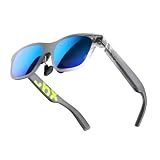
- YOUR PRIVATE 147” BIG SCREEN, ANYWHERE — Plug the a01+ into your phone, tablet, handheld, or laptop and a giant 147” screen appears in front of you—for movies, gaming, or getting work done on the couch, on a flight, or in bed. A true portable display you wear, in a soda-can-sized 210g case that drops in your pocket.
- ALWAYS RIGHT IN FRONT OF YOU — The screen follows your view with smooth, stabilized tracking and stays centered as you look around—nothing to anchor or set up, and no drift to reset. Press play and your big screen is simply there.
- 62G — LIGHT ENOUGH TO FORGET — At just 62g, with three nose-pad sizes and flexible temples, the a01+ stays comfortable through a long movie or flight, even lying down.
- LOOKS LIKE SUNGLASSES, NOT A GADGET — A slim, sunglasses-style frame with a signature semi-transparent chassis and neon logo—light and low-profile enough to actually wear out.
- WORKS WITH YOUR USB-C GEAR — No Battery to Charge — Connects and powers over a single USB-C DisplayPort cable: iPhone 15/16/17, iPad, DP-capable Android phones, Steam Deck, ROG Ally, Mac and PC. Nintendo Switch/Switch 2 and older (Lightning) iPhones need an adapter. For long phone sessions, add the XREAL Hub to charge and watch at once.
In practical terms, this is closer to a wearable monitor than to general-purpose transparent AR. The glasses can create a large personal display without the bulk of a conventional VR headset, making them attractive for flights, hotel rooms, Steam Deck-style handhelds, laptops and compatible phones.
Buy it if
- You want a more affordable entry into spatial personal displays.
- Your phone, laptop or handheld can output video over compatible USB-C DisplayPort.
- You primarily watch content or play games rather than interact with room-scale virtual objects.
- You accept that cables, adapters or an external battery may be part of the setup.
Check these details first
Confirm the live US price, stock, included accessories, supported phones and operating systems, refresh rate, resolution, field of view, brightness, prescription-lens support, warranty and return policy. “6DoF spatial screen” does not mean that every connected device supports every spatial feature, and it does not turn the glasses into a standalone VR system.
Best for entertainment: RayNeo Air 4 Pro
RayNeo Air 4 Pro is the better fit for buyers who mainly want a bright, cinema-like virtual screen. TechRadar identified it as a standout entertainment option and reported a $299 price point, but pricing varied by market. Treat that figure as a reported CES-era price rather than a confirmed current price unless the manufacturer’s live listing says otherwise. TechRadar’s roundup provides the relevant qualification.
Its strengths are straightforward: a large private image in a compact form, with potential appeal for movies, television and console gaming. It should not be selected by someone specifically seeking hands-free visual AI, transparent overlays or a self-contained spatial-computing platform.
Important compatibility questions
- Does the source device provide video over USB-C?
- Is a proprietary adapter or hub required for iPhone, consoles or older laptops?
- Does HDR work with every input source or only selected devices?
- How usable is the image in bright rooms?
- Are tint, glare, edge clarity and prescription options acceptable?
As with other display glasses, resolution alone does not determine the experience. Stability while moving your head, brightness, comfort, text legibility and the total cost of adapters matter just as much.
Best gaming glasses: ASUS ROG XREAL R1
ASUS ROG XREAL R1 is the most gaming-specific display product in this group. Coverage from Windows Central emphasized a reported 240Hz target, which could appeal to competitive players and handheld users who want a large private screen.
A 240Hz specification is not a guarantee of 240 frames per second. The console or handheld, cable, source mode, GPU and game must all support the required signal. A high refresh rate also does not prove low motion-to-photon latency, excellent optics, high brightness or good battery life.
Rank #3

- 【AI Real-Time Translation】The INMO GO3 smart glasses is equipped with a powerful AI translation engine that supports real-time translation for two-way conversations. Text display instantly in your eyes, and with rapid response times and ultra-low latency, freeing you from phone so you can focus on natural conversation
- 【98 Languages Covered】Beyond common languages such as English, Spanish, French, and German, these translation glasses also support real-time translation for a wider range of languages, including Kinyarwanda, Tongan, and Icelandic—for a total of 98 languages
- 【Invisible Teleprompter Glasses】Utilizing IMAR optical technology, the downward angle of the waveguide and the forward angle of the frame have been adjusted so that others cannot see the screen content whether you are looking straight ahead, down, or to the side. Perfect for speeches and presentations
- 【Navigation & Hearing Assistance】With built-in HERE Maps, you don’t have to keep looking down at your phone—the navigation arrows are right in front of you through the AR glasses. Plus, the real-time captioning feature provides truly convenient communication assistance for the hearing impaired
- 【8MP HD】The inmo GO3 glasses are equipped with an 8MP HD camera that allows you to take POV videos and images. You can also use the camera for photo translation—simply snap a photo of a menu, street sign, or document, and get an instant translation.
R1 is therefore best for competitive gaming and portable-screen use—not for buyers seeking hand tracking, passthrough, room-scale interaction or a standalone VR library. Its commercial status should be confirmed because the CES reporting described an announced gaming collaboration rather than establishing broad retail availability.
Best smart-ring value: RingConn Gen 3
RingConn Gen 3 is the most interesting value-oriented health wearable for buyers who want to avoid a recurring subscription. TechTimes described it as a subscription-free smart ring introduced at CES 2026. TechTimes’ roundup is the basis for that positioning.
The no-subscription approach can make long-term ownership more predictable, particularly for users focused on sleep, heart-rate, blood-oxygen or temperature trends. But “subscription-free” does not automatically mean the best software, most advanced analytics or lowest total cost. Confirm whether all historical data, insights and future features remain included.
Before ordering, confirm
- The final sensor list and metrics available at launch.
- iOS and Android compatibility.
- Charging frequency and replacement options.
- Whether a sizing kit is included and how exchanges work.
- Data export, account requirements and privacy controls.
- US availability and final price.
Ring data should be treated as wellness information unless a particular feature has a specific regulatory authorization. It is not a substitute for clinical testing or medical advice.
Best wearable AI recorder: Plaud
Plaud’s CES wearable is the most compelling option for hands-free note capture, transcription and summarization. CES highlighted Plaud among its wearable-related exhibitors, and Wareable reported that the CES package included both a wristband and a lanyard.
Free tools Windows power users keep installed
One-click scans. No signup required.
This category can be genuinely useful for meetings, interviews, lectures and personal voice notes, but its value depends heavily on software. Buyers should establish whether recording is started by a physical button, whether transcription is local or cloud-based, which languages are supported, whether speaker identification works reliably, and how recordings are exported and deleted.
The privacy checklist is not optional
- Tell participants when recording is required by law, policy or basic consent expectations.
- Check whether the device shows a recording indicator.
- Understand cloud retention and account deletion controls.
- Review free transcription limits and paid-plan requirements.
- Do not use it in workplaces, classrooms or jurisdictions that prohibit recording without appropriate permission.
Expect weaker results in noisy rooms, with overlapping speakers or when the battery runs out. “AI-powered” also does not mean the device works offline; it may require a paired phone, internet connection and vendor account.
Rank #4

- [Quantum Leap in Image Quality]:RayNeo's latest HueView empowers vision with 98% DCI-P3, ΔE <2 color accuracy, 200,000:1 infinite contrast, and 145% sRGB vibrant colors. Enjoy incredible detail on a 201" mega screen while watching the movies, TV shows, and games you love.
- [Rest-Assured OptiCare️]:Eye comfort is enhanced with RayNeo's exclusive OptiCare, which intelligently utilizes 3840 Hz DC dimming and PWM dimming to eliminate flickering and unstable color displays under varying brightness conditions. Additionally, the stepless brightness control satisfies various needs in different settings. TÜV SÜD Low Blue Light & Flicker-Free Certification guarantees low blue light emission, flicker-free operation, and comfort for long-term use.
- [Game, Movie & Standard: Magic among All]:Feel games come alive with infinite color details and a 120 Hz smooth refresh rate, delivering fluid, lag-free animations. Connect deeply with the movie characters and immerse yourself in captivating storylines. Or swipe to standard mode for everyday use.
- [Better Sound Surrounding]:Stronger bass from drums, clearer mids from vocals, and crisper highs from violin, all achieved through the world's first dual opposing acoustic chamber design like no others. And even more precise audio cues to win in the final moment.
- [Comfort Reminder]:For your comfort and the best viewing experience, we suggest giving your eyes (and yourself) a 10-minute break after every 30 minutes of use.
Most promising emerging health tracker: Luna Band
Luna Band is worth watching, but it is not a firm buy recommendation yet. Tom’s Guide described it as a wallet-friendly screenless fitness tracker, while TechRadar reported that the launch date and price were not established in its CES coverage. See Tom’s Guide and TechRadar.
A screenless design could suit people who want passive fitness and wellness tracking without another notification display. Until a confirmed retail listing, final sensor specification, app strategy, battery claim, warranty and price are available, it belongs in an emerging-products section rather than beside shipping products.
Quick wins for a faster PC:
Scan for outdated or missing drivers - takes under a minuteDriver Scan →Clear out junk files and repair common Windows errorsFree Scan →Fix the driver behind crashes, sound loss and screen glitchesFind Drivers →Most important XR platform development: Samsung and Android XR
Android XR may be CES 2026’s most consequential platform story, but it is not automatically the best device to buy. CES coverage highlighted Samsung’s Project Moohan-related hardware and the Google-Samsung Android XR ecosystem. The CES XR and spatial-computing coverage explains its platform significance.
The opportunity is an alternative XR ecosystem for headsets and glasses, with the possibility of broader Android integration and developer support. The buyer’s risk is timing: a platform announcement, reference design or forthcoming headset is not the same as a product shipping with a confirmed price, app catalogue, support policy and return window.
Wait for Android XR if ecosystem choice matters more than buying immediately. Do not purchase based only on a launch window or concept demonstration.
Which CES 2026 wearable should you choose?
- Choose Even Realities G2 if you want lightweight smart glasses for discreet information, alerts and assistance, and you do not need immersive VR.
- Choose XREAL 1S if you want the best-value route to a private large screen for travel, laptops or handheld gaming.
- Choose RayNeo Air 4 Pro if entertainment and a cinema-style virtual display matter more than transparent AR.
- Choose ASUS ROG XREAL R1 if you are a competitive gamer who can provide a compatible high-refresh-rate source.
- Choose RingConn Gen 3 if you want discreet wellness tracking without a recurring subscription and are comfortable verifying final availability.
- Choose Plaud if transcription and summaries solve a real meeting, study or research problem—and you can obtain consent.
- Wait for Luna Band if a screenless health tracker appeals to you but you are willing to wait for confirmed launch details.
- Wait for Android XR if you want a new spatial-computing ecosystem and are not buying immediately.
- Choose a conventional VR/MR headset instead if you want immersive games, positional tracking, passthrough and room-scale interaction.
- Choose a conventional smartwatch instead if you need a mature notification, app and fitness ecosystem today.
Costs and dependencies buyers often miss
The advertised device price is only part of the decision. Display glasses may need a USB-C video-capable phone or laptop, a proprietary adapter, a battery pack or prescription lenses. AI recorders may become dependent on paid transcription plans. Smart rings may require a sizing kit and replacement service. International buyers may also face different pricing, shipping, taxes, AI features and warranty coverage.
Do these 3 things before closing this tab:
1Scan for outdated or missing drivers - takes under a minute2Repair Windows errors before they cause bigger problems3Fix the driver behind crashes, sound loss and screen glitchesFor XREAL products, use the official XREAL 1S listing and compare it with the higher-end XREAL One and XREAL One Pro. Confirm whether a displayed price is MSRP, a temporary sale price or a bundle price before treating it as a fair comparison. For products without a verified current official buying page, availability and pricing should be considered unconfirmed.
Privacy, comfort and compatibility checklist
Before buying any CES wearable, check:
- Phone dependence: identify which features stop working without the paired phone, Wi-Fi or cloud service.
- Optics: compare field of view, brightness, contrast, edge clarity, glare, stability and interpupillary adjustment—not just resolution.
- Comfort: check weight, nose and ear pressure, heat, cable routing and whether prescription lenses are supported.
- Battery: distinguish manufacturer claims from independent testing and note whether an external battery is required.
- Software: verify iOS and Android support, app quality, update policy, data export and country-specific AI features.
- Privacy: understand camera and microphone indicators, cloud processing, retention and deletion controls.
- Total ownership: add lenses, adapters, battery packs, subscriptions, import costs, replacement parts and warranty limitations.
- Product reality: confirm whether the listing says available, preorder, announced, prototype or demonstration only.
Availability snapshot
| Product | What the cited research establishes | What buyers must still confirm |
|---|---|---|
| Even Realities G2 | Prominent CES smart-glasses candidate | US stock, price, prescription support, battery and service costs |
| XREAL 1S | Listed in XREAL’s US shop with 6DoF spatial-screen positioning | Live stock, current price, accessories, compatibility and returns |
| RayNeo Air 4 Pro | Reported as a large-screen option at $299 in CES coverage | Current regional MSRP, retail stock, adapters and HDR compatibility |
| ASUS ROG XREAL R1 | Announced as a gaming-focused product with a reported 240Hz emphasis | Shipping date, final specifications, price and source-device support |
| RingConn Gen 3 | Described as subscription-free | Final US listing, sensors, app features, sizing and warranty |
| Plaud wearable | Shown as a wearable note-taking product; wristband and lanyard were highlighted | Retail listing, recording workflow, plan limits, privacy and retention |
| Luna Band | Shown as an emerging screenless health tracker | Launch date, price, sensors, app and warranty |
| Android XR/Project Moohan | Important platform and forthcoming-hardware story | Exact retail model, shipping date, price, apps and support |
Bottom line
CES 2026’s best wearable story was the widening gap between useful lightweight devices and headline-grabbing XR concepts. Even Realities G2 is the leading smart-glasses candidate, XREAL 1S is the most practical value display, RayNeo Air 4 Pro is the entertainment specialist, ROG XREAL R1 targets high-refresh gaming, RingConn Gen 3 is the value smart-ring pick and Plaud is the most useful AI recorder. Treat Luna Band and Android XR as promising developments until their retail details are confirmed.
Quick Recap
Product prices and availability are accurate as of the date/time indicated and are subject to change. Any price and availability information displayed on Amazon at the time of purchase will apply.

