The Tool Desk
Outbyte PC Repair FREERepair Windows errors before they cause bigger problemsFix Now →Outbyte Driver Updater FREEScan for outdated or missing drivers - takes under a minuteDriver Scan →Some links on this page are affiliate links: if you buy through them we may earn a commission, at no extra cost to you.
The “new ultra-low-power IMU announced for wearables” is Bosch Sensortec’s BMI270, a six-axis accelerometer-and-gyroscope device unveiled at CES in January 2019. It is not a new 2026 announcement. Bosch still lists the part, and distributors continue to offer it, so it remains relevant to smartwatch, fitness-band and hearable designs—but its headline power figures need careful interpretation.
Bosch positioned the BMI270 as an evolution of its BMI260 family, moving gesture, activity and step-counting tasks into the sensor’s low-power domain so a host processor can sleep more often. The original announcement is available from Bosch Sensortec.
What Bosch announced
The BMI270 combines a three-axis accelerometer and three-axis gyroscope in one 14-pin LGA package. Bosch targeted smartwatches, wristbands, fitness trackers, hearables, smart clothing and shoes, smart glasses, ankle bands and some AR/VR equipment. Bosch described application-specific versions for gesture functions and for context and activity recognition.
The product was announced in January 2019 and reported as scheduled for second-quarter availability. EE Times covered the launch on January 11, 2019, while Mouser announced stocking the component on June 13, 2019. In 2026, it is best described as an established, still-listed component rather than a current product launch.
#1 Best Overall

- 1PCS BMI270 6DoF For IMU Sensor Breakout Board, 3-Axis Accelerometer 3-Axis Gyroscope Module, I2C SPI Dual Interface, for Arduino Raspberry Pi
- Supply Voltage: DC 1.8–3.3V,Operating Current: 4mA
- Accelerometer: 16-bit 3-axis, measurement range ±2g/±4g/±8g/±16g
- Gyroscope: 16-bit 3-axis, measurement range ±125dps/±250dps/±500dps/±1000dps/±2000dps
Why the BMI270 is “smart”
A conventional IMU continuously supplies acceleration and angular-rate samples for a microcontroller to interpret. The BMI270 adds embedded functions that can classify routine motion inside the sensor or its low-power operating domain:
- Gesture recognition, including wrist motions such as flick in/out, arm up/down and wrist tilt.
- Context and activity recognition, including changes such as standing or walking.
- Step counting optimized for wrist-worn products.
- Motion-triggered interrupts and interrupts after a configured number of steps.
- Processor-independent monitoring that can wake another system function only when a relevant event occurs.
This architecture can reduce host wake-ups and data transfers, but it does not make a finished watch autonomous. The device maker still has to configure the sensor, integrate Bosch’s driver and algorithms, select thresholds, connect interrupts to its firmware and validate false positives and missed events in the final enclosure. Bosch’s launch material also described gesture functionality intended for Wear OS; that is not a guarantee that every Wear OS device supports the BMI270 automatically.
The 30-µA claim versus the 685-µA specification
Bosch’s launch announcement claimed 30 µA for the BMI270’s ultra-low-power gesture and activity-recognition functions. That number is a feature-domain operating condition, not a universal current rating for the complete IMU.
Rank #2

- The SparkFun BMI270 Micro 6DoF IMU Breakout is a Qwiic-enabled breakout board based on the ultra-low power BMI270 from Bosch.
- The SparkFun BMI270 Micro 6DoF IMU Breakout is a Qwiic-enabled breakout board based on the ultra-low power BMI270 from Bosch. This chip is a highly integrated, low-power IMU optimized for wearables providing precise acceleration, angular rate measurement, and intelligent on-chip motion-triggered interrupt features.
- Micro 6DoF Features: Qwiic Micro Sized Board (0.75in x 0.30in / 19.05mm x 7.62mm) 16-bit 3-axis accelerometer with ±2g/±4g/±8g/±16g range, 16-bit 3-axis gyroscope with ±125dps/±250dps/±500dps/±1000dps/±2000dps range, 400kHz AUX sensor interface with hardware synchronization. I2C Addresses: 0x68 (default), 0x69, 1.8V and 3.3V operation, Ultra-low current consumption.
- Our Micro-sized 0.3in. x 0.75in. footprint makes this breakout board an ideal option for your smallest projects using our solderless Qwiic cables and compatible controllers. On-board solder jumpers allow you to easily select the device address, remove the I²C pull-ups, and disable the power LED if need be.
- The 6-axis sensor combines a 16-bit tri-axial gyroscope and a 16-bit tri-axial accelerometer featuring Bosch’s automotive-proven gyroscope technology. BMI270 includes several functionalities, such as an integrated plug-and-play step counter/detector and gesture detection for wrist-worn devices. Moreover, the IMU suits wearables, smart clothes, smart shoes, smart glasses, and ankle bands.
Bosch’s current product page specifies 685 µA typical for full, aliasing-free output-data-rate operation. The figures describe different workloads:
| Figure | What it describes | How to use it |
|---|---|---|
| 30 µA | Bosch’s launch claim for ultra-low-power embedded gesture/activity operation | Useful when the sensor is performing those low-power functions rather than continuously streaming raw data |
| 685 µA typical | Current at full ODR and aliasing-free operation on Bosch’s current product page | Relevant to a high-rate, full-output operating mode |
Neither value predicts watch battery life by itself. Average system consumption also includes the host processor, display, radio, memory, regulators and the number of interrupts generated. A design that polls continuously or streams high-rate data can lose much of the benefit of embedded processing.
Key BMI270 specifications
The following values come from Bosch’s current BMI270 product information; consult the datasheet for register behavior, timing and electrical limits.
Rank #3

- 1PCS BMI323 For 6-Axis IMU Breakout Board, 16-bit Accelerometer and Gyroscope, Digital Temperature Sensor Module
- Fast Response: Quick startup time of 2.5 ms, group delay less than 1 ms
- Supply Voltage: VDD: 3.3V to 5.0V
- Gyroscope Configurable range: ±125°/s, ±250°/s, ±500°/s, ±1000°/s, ±2000°/s
- Accelerometer Configurable range: ±2g, ±4g, ±8g, ±16g
| Specification | Value |
|---|---|
| Sensor | Six-axis accelerometer and gyroscope |
| Resolution | 16-bit accelerometer; 16-bit gyroscope |
| Accelerometer ranges | ±2 g, ±4 g, ±8 g, ±16 g |
| Gyroscope ranges | ±125, ±250, ±500, ±1,000 and ±2,000 dps |
| Accelerometer ODR | 12.5 Hz to 1.6 kHz |
| Gyroscope ODR | 25 Hz to 6.4 kHz |
| Supply (VDD) | 1.7–3.6 V |
| Supply (VDDIO) | 1.2–3.6 V |
| Interfaces | SPI, I²C, auxiliary interface and OIS interface |
| Interrupts | Two digital interrupt pins |
| Package | 14-pin LGA, 2.5 × 3.0 × 0.8 mm |
| Operating temperature | −40°C to +85°C |
| Full-ODR current | 685 µA typical in aliasing-free operation |
Bosch lists accelerometer sensitivity from 16,384 LSB/g at ±2 g to 2,048 LSB/g at ±16 g, and gyroscope sensitivity from approximately 262.1 LSB/dps at ±125 dps to approximately 16.4 LSB/dps at ±2,000 dps. The current product page gives an accelerometer zero-g offset of ±20 mg, gyroscope zero-rate offset of ±0.5 dps, accelerometer noise density of 160 µg/√Hz and gyroscope noise density of approximately 0.007 dps/√Hz.
Crashes, No Sound, or Screen Glitches?
Random freezes, missing sound and display glitches usually trace back to one bad driver. Find and replace yours safely.Free scan · under a minutePC Slower Than It Used to Be?
A free scan shows the junk files, broken settings and background clutter dragging Windows down - then fixes them in one click.Free scan · Windows 10 & 11Integration considerations for a smartwatch or tracker
Choose the operating mode first
Decide whether the product needs low-power step and gesture events, continuous six-axis output, or a combination. Enable only the axes, rates and embedded functions required by the use case; the 30-µA claim should not be used as a substitute for a measured duty-cycle budget.
Use interrupts and FIFO deliberately
Interrupt-driven operation lets the host remain asleep until a configured event occurs. FIFO settings can reduce bus transactions, but an interrupt storm or firmware that polls the sensor will increase system current. Validate wake frequency with the actual application firmware.
Rank #4

- 【6-DOF ADVANCED MOTION TRACKING】Built around the BMI270 platform this compact module supports high precision orientation and motion measurement for embedded electronics that need clean attitude data
- 【I2C AND SPI DIGITAL INTEGRATION】Dual common digital interfaces give flexible controller pairing for prototype platforms helping simplify installation when your project needs practical motion input with clean board to board communication
- 【COMPACT 0.7x0.6IN MINI FOOTPRINT】The small 18 x 15 mm board size fits tight layouts and supports cleaner installation in wearable electronics and motion focused builds with limited mounting space
- 【PROTOTYPE READY LAYOUT WITH PIN】An onboard chip through hole pin interface and mounting holes support straightforward wiring and positioning helping developers go from early testing to installed project layouts with less setup friction
- 【BUILT IN STEP COUNTING ACCELERATION】Suited for portable project concepts where integrated step counting significant motion detection and orientation recognition support feature planning compatible with mainstream microcontrollers
Validate the mechanical design
The 2.5 × 3.0 mm package saves board area, while also making placement and assembly important. PCB strain, soldering, sensor orientation, enclosure vibration and mounting location can affect offsets and gesture classification. Test in the finished watch, band or earbud—not only on a laboratory breakout.
Tune algorithms against real users
Walking style, wrist position, strap looseness and vibration can produce false positives or missed events. Bosch provides a software driver, context and activity-recognition guidance and FIFO documentation through its BMI270 documentation page, but product teams remain responsible for application-level validation.
Do these 3 things before closing this tab:
1Clear out junk files and repair common Windows errors2Scan for outdated or missing drivers - takes under a minute3Repair Windows errors before they cause bigger problemsAvailability and 2026 relevance
Bosch continues to list the BMI270 and its documentation. DigiKey listed the part as active on August 18, 2026, and Mouser announced distribution in 2019. Distributor stock, price, packaging and lead time vary by region and date, so purchasing teams should verify current listings directly at DigiKey or Mouser. “Active” distributor status is not a guarantee of a long-term supply agreement.
Best Value
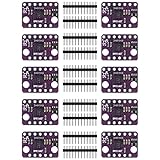
- ★Module Model: GY-BMI160; Power Supply: 3-5V; Communication: standard IIC communication protocol; Chip: BMI160.
- ★This sensor module is a small, 3 a-xis accelerometer and 3 ax-is gyroscope integrated in a single package.
- ★The BMI160 is a small, low-power, low-noise 16-bit inertial measurement unit designed for use in mobile applications such as augmented reality or inland navigation, which require high-precision, real-time sensor data.
- ★In full operation mode, with both the accelerometer and gyroscope enabled, allowing always-on applications in battery-powered devices.
- 【Applications】: Augmented Reality, Indoor navigation, 3D scanning / indoor mapping, Advanced gesture recognition, Immersive gaming, 9-axis motion detection, Air mouse applications and pointers.
For a production design, the BMI270’s mature documentation, small footprint and embedded wearable functions can be more valuable than being the newest device. It is less compelling when a design needs a magnetometer for absolute heading, more than ±16 g or ±2,000 dps, or newer on-sensor machine-learning and eyewear-specific features.
How newer alternatives compare
| Part | Where it may fit | Published points to check |
|---|---|---|
| TDK InvenSense ICM-45686 | Newer wearable and battery-powered IoT designs | BalancedGyro technology, 2.5 × 3 × 0.81 mm package, I³C/I²C/SPI, up to 32 g and 4,000 dps, and approximately 200 µA six-axis low-power current as described by TDK |
| TDK ICM-45685 | Smart glasses and specialized eyewear | Wear detection, head-orientation tracking, vocal-vibration detection and on-chip fusion |
| ST LSM6DSOX | Designs needing an ML core, finite-state machine or sensor hub | I²C, SPI and I³C support, embedded pedometer functions and a cited 14-µA accelerometer condition at 100-Hz ODR |
These numbers are not directly interchangeable with the BMI270’s 30-µA feature-domain claim. Compare identical axes, output rates, bandwidth, supply conditions and embedded functions, then measure the complete duty cycle. The ICM-45686 information is at TDK’s wearable page; smart-eyewear features are described in TDK’s announcement. ST’s cited LSM6DSOX material is available in its presentation PDF.
Who should choose the BMI270?
- Good fit: a compact, battery-powered wearable that needs always-on step, activity or gesture detection and can benefit from a mature SPI or I²C component.
- Plan carefully: products requiring custom activity classes, unusual gestures, very high dynamic range or aggressive new-generation noise and power targets.
- Look elsewhere: devices needing absolute magnetic heading, advanced smart-eyewear sensing or a different algorithm and evaluation ecosystem.
The Bottom Line
The BMI270 remains a practical wearable IMU, but the accurate headline is “Bosch’s 2019 ultra-low-power IMU,” not a 2026 launch. Its advantage is the combination of a tiny six-axis sensor, embedded gesture/activity functions and continued availability. Evaluate it using the intended duty cycle—not the 30-µA figure alone—and confirm that its ranges, algorithms and supply status match the product you are building.
Recommended Free Tools
Quick Recap
Product prices and availability are accurate as of the date/time indicated and are subject to change. Any price and availability information displayed on Amazon at the time of purchase will apply.

