Casio didn’t make the DW-H5600 to chase the Apple Watch or to out-Garmin Garmin. It exists because for years G-Shock fans have been asking for a watch that keeps the iconic square form, shrugs off abuse, and finally takes fitness tracking seriously without turning into a fragile touchscreen computer. The DW-H5600 is Casio’s answer to that very specific, very stubborn demand.
At first glance, it looks like a classic 5600-series square, but wearing it for a few days quickly reveals that this is a very different animal. There’s an optical heart-rate sensor pressed against your wrist, GPS inside the case, step and activity tracking running quietly in the background, and a smartphone app that expects you to think about recovery and training load. This isn’t a retro watch with a pedometer bolted on; it’s Casio stepping directly into the fitness-watch era on its own terms.
This section is about understanding that intent before we judge execution. To make sense of the DW-H5600, you have to understand what Casio is trying to preserve from G-Shock heritage, what it’s willing to compromise, and where it draws a hard line compared to Garmin, Polar, and Apple’s entry-level watches.
A square G-Shock first, fitness watch second
The DW-H5600 is fundamentally designed from the outside in, not the software out. Casio clearly prioritized keeping the square case proportions, resin construction, shock resistance, and 200-meter water resistance that define the 5600 lineage. That’s why it uses a memory-in-pixel LCD instead of an AMOLED screen, physical buttons instead of touch, and a case that feels closer to a traditional G-Shock than a modern smartwatch.
🏆 #1 Best Overall
![Apple Watch Series 11 [GPS 42mm] Smartwatch with Rose Gold Aluminum Case with Light Blush Sport Band - S/M. Sleep Score, Fitness Tracker, Health Monitoring, Always-On Display, Water Resistant](https://m.media-amazon.com/images/I/31J+F-pXaWL._SL160_.jpg)
- HYPERTENSION NOTIFICATIONS — Apple Watch Series 11 can spot signs of chronic high blood pressure and notify you of possible hypertension.*
- KNOW YOUR SLEEP SCORE — Sleep score provides an easy way to help track and understand the quality of your sleep, so you can make it more restorative.
- EVEN MORE HEALTH INSIGHTS — Take an ECG anytime.* Get notifications for a high and low heart rate, an irregular rhythm,* and possible sleep apnea.* View overnight health metrics with the Vitals app* and take readings of your blood oxygen.*
- STUNNING DESIGN — Thin and lightweight, Series 11 is comfortable to wear around the clock — while exercising and even when you’re sleeping, so it can help track your key metrics.
- A POWERFUL FITNESS PARTNER — With advanced metrics for all your workouts, plus features like Pacer, Heart Rate Zones, training load, Workout Buddy powered by Apple Intelligence from your nearby iPhone,* and more. Series 11 also comes with three months of Apple Fitness+ free.*
On the wrist, it wears like a compact, dense tool rather than a sleek wearable. At roughly 51mm lug-to-lug and about 17mm thick, it’s chunky but familiar if you’ve worn a DW-5600 or GW-M5610 before. The weight is noticeable compared to a Garmin Forerunner or Apple Watch SE, but the flat caseback and soft urethane strap distribute that weight better than you might expect for daily wear.
Casio’s idea of “smart” is restraint, not apps
Unlike Wear OS or watchOS devices, the DW-H5600 isn’t trying to be an extension of your phone. Notifications are basic, interaction is limited, and there’s no app store, voice assistant, or rich third-party ecosystem. Casio’s philosophy here is closer to a training instrument than a wrist computer.
The focus is on core fitness metrics: heart rate, steps, calories, GPS-tracked activities, sleep, and recovery-oriented stats like training load and cardio status. You control everything with buttons, menus are simple and text-heavy, and nothing feels animated or flashy. This is deliberate, and it’s a big part of why battery life and durability remain central to the experience.
Solar-assisted endurance over smartwatch convenience
One of the clearest signals of what the DW-H5600 is trying to be comes from its power strategy. Casio pairs USB charging with solar assist, not to make it infinite like a traditional Tough Solar G-Shock, but to slow battery drain during daily wear. In practice, this puts it closer to a Garmin Instinct Solar than anything from Apple or Samsung.
Casio’s goal isn’t daily charging with rich visuals; it’s weeks of use if you’re disciplined with GPS and training sessions. That trade-off defines the entire product. You give up a high-resolution display and smartwatch polish, but you gain something that feels purpose-built for long-term ownership and outdoor use rather than yearly upgrades.
A bridge for loyalists, not a conversion tool
The DW-H5600 isn’t designed to convert Apple Watch users who live in notifications, LTE, and tap-to-pay. It’s aimed squarely at G-Shock owners who’ve been watching the fitness space from the sidelines, along with outdoor users who value toughness more than software elegance. If you already trust Casio’s durability and don’t want a watch that feels disposable, this model makes a lot more sense.
Understanding that intent is critical, because the DW-H5600 shouldn’t be judged on how smart it is compared to a mainstream smartwatch. It should be judged on whether it successfully blends credible fitness tracking with the reliability, simplicity, and physical resilience that made the square G-Shock a classic in the first place.
Design, Case, and Wearability: Classic 5600 DNA Meets Modern Sensors
Everything about the DW-H5600’s physical design reinforces the idea introduced earlier: this is a fitness-first instrument built inside a familiar G-Shock shell. Casio didn’t try to reinvent the square; instead, it stretched the classic 5600 template just enough to accommodate modern sensors without losing the visual DNA longtime fans expect.
If you’ve worn a DW-5600 or GW-M5610 before, the silhouette will feel instantly recognizable. The difference only becomes obvious once it’s on the wrist and you start noticing the extra thickness, the sensor window underneath, and the more purposeful, tool-like presence.
Case shape and dimensions: familiar square, modern heft
The DW-H5600 uses the traditional square resin case, but it’s noticeably thicker than a standard non-smart G-Shock. That added height comes from the optical heart-rate sensor array, GPS hardware, and rechargeable battery sitting beneath the caseback.
On paper and in person, it wears closer to a Garmin Instinct than a classic 5600. It’s not a small watch, but the square shape spreads the footprint evenly across the wrist, preventing it from feeling top-heavy or awkward during movement.
On wrists around 6.5 to 7 inches, the watch sits securely without overhang. Smaller wrists will feel the thickness more than the width, especially when bending the wrist during push-ups, cycling, or desk work.
Materials and finishing: functional over decorative
The case and bezel are resin, as expected, with a matte, slightly textured finish that resists fingerprints and scuffs well. This isn’t the glossy resin found on cheaper digital Casios; it feels closer to the tougher, slightly rubberized finish used on higher-end G-Shock tool models.
There’s no attempt at visual refinement here. The edges are blunt, transitions are simple, and everything looks designed to survive abuse rather than attract attention. That restraint actually works in the DW-H5600’s favor, especially if you plan to wear it daily rather than treat it as a statement piece.
Display integration: legibility over spectacle
The monochrome memory-in-pixel display sits flush within the square frame and prioritizes contrast and readability over visual flair. It’s not high-resolution, and it doesn’t pretend to be.
In direct sunlight, the display is excellent, matching what you’d expect from traditional G-Shocks. Indoors and at night, the backlight is even and practical, though clearly more utilitarian than OLED or AMOLED smartwatch screens.
The display layout feels dense but logical. Casio leans heavily on text, numbers, and data fields rather than icons, reinforcing that this is a training tool rather than a lifestyle screen.
Buttons, controls, and real-world usability
True to G-Shock tradition, all interaction happens via physical buttons. They’re large, well-spaced, and easy to operate with gloves, wet hands, or cold fingers, which is something touchscreen-based competitors still struggle with.
Button travel is firm and clicky, with no mushiness. During workouts, especially interval sessions or outdoor runs, this tactile control makes a real difference compared to touch-driven watches that can misread sweat or accidental contact.
The learning curve is steeper than on consumer smartwatches, but once muscle memory sets in, navigation becomes fast and reliable.
Sensor placement and comfort trade-offs
Flip the watch over and the modern reality becomes clear. The raised optical heart-rate sensor sits proud of the caseback, breaking from the traditionally flat backs of classic G-Shocks.
In day-to-day wear, the sensor doesn’t cause discomfort, but it does change how the watch feels during long sessions. You’ll want to wear it slightly snug for accurate heart-rate tracking, which can make its presence more noticeable than a non-smart G-Shock.
During sleep tracking, the bulk is harder to ignore than on slimmer fitness watches. It’s wearable overnight, but light sleepers may prefer to loosen the strap slightly.
Strap design and long-term wear
The included resin strap is soft, flexible, and clearly designed with movement in mind. Ventilation isn’t aggressive, but the material does a good job of avoiding sweat buildup during workouts.
Adjustment holes are plentiful, making it easy to dial in a secure fit whether you’re running, hiking, or wearing it casually. The buckle is simple and robust, with no quick-release mechanism, reinforcing the long-term durability mindset.
Over multi-day wear, the strap holds up well without hot spots or pinching. It’s not luxurious, but it’s dependable, which fits the watch’s broader philosophy.
Durability credentials that still matter
The DW-H5600 carries forward core G-Shock promises: shock resistance, 200 meters of water resistance, and a case that can take real-world punishment. Rain, mud, pool sessions, and accidental knocks are non-events.
This is where it separates itself from mainstream smartwatches. You don’t worry about babying it, and you don’t hesitate to wear it into environments that would feel risky for an Apple Watch or Wear OS device.
That peace of mind is central to the wearability experience. The DW-H5600 feels like a watch you live with, not a piece of tech you manage.
Display, Interface, and Daily Usability: Living With a Non-Touch G-Shock Smartwatch
That durability-first mindset carries directly into how you interact with the DW-H5600 every day. Casio has deliberately avoided touch input here, and after living with the watch for weeks, it’s clear this was a philosophical choice rather than a technical limitation.
Memory-in-pixel display: function over flair
The DW-H5600 uses a monochrome memory-in-pixel (MIP) LCD, similar in concept to what you’ll find on many Garmin outdoor watches. It’s not high-resolution by smartwatch standards, but it’s exceptionally efficient and remains readable in conditions where OLED and AMOLED screens can struggle.
In direct sunlight, the display is excellent. Contrast improves rather than degrades, and glance readability while running or hiking is strong, especially with larger digits selected for time or workout screens.
Indoors or at night, the LED backlight does the heavy lifting. It’s evenly distributed and bright enough without being harsh, though it lacks the smooth glow or adaptive behavior you’d get from a modern OLED panel.
No touch, all buttons, and why that matters
Navigation is handled entirely via four physical buttons, laid out in classic G-Shock fashion. Each button has a clear role, and once muscle memory develops, interaction becomes fast and surprisingly intuitive.
This approach shines during workouts or bad weather. Sweaty fingers, gloves, rain, or cold conditions don’t affect usability, and accidental inputs are virtually nonexistent.
The trade-off is discoverability. New users will spend the first few days learning where settings live and how deep some menus go, especially compared to the swipe-first logic of Apple Watch or Wear OS devices.
Menu structure and everyday interactions
Casio’s interface is utilitarian but logical. Core functions like activities, heart rate, notifications, and battery status are only a few button presses away, and the watch never feels laggy or unresponsive.
That said, the visual density can feel cramped. Data fields are clearly segmented, but there’s no sense of customization depth on the watch itself beyond basic layouts and alerts.
You’ll rely on the companion app for deeper configuration, which reinforces the DW-H5600’s identity as a watch-first device rather than a wrist-mounted phone extension.
Rank #2
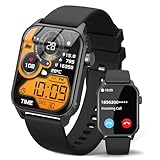
- 【1.83" HD Display & Customizable Watch Faces】Immerse yourself in a vibrant 1.83-inch IPS display, boasting a sharp resolution of 240*284 for crystal-clear visuals. Effortlessly personalize your smart watch with a wide array of customizable watch faces to suit your personal style for every occasion—whether trendy, artistic, or minimalist—ideal for casual, sporty, or professional. Its sleek, modern design complements any outfit, blending technology and fashion seamlessly for everyday wear
- 【120 Sports Modes & Advanced Health Tracking】Our TK29 smart watches for women men come equipped with 120 sports modes, allowing you to effortlessly track a variety of activities such as walking, running, cycling, and swimming. With integrated heart rate and sleep monitors, you can maintain a comprehensive overview of your health, achieve your fitness goals, and maintain a balanced, active lifestyle with ease. Your ideal wellness companion (Note: Step recording starts after exceeding 20 steps)
- 【IP67 Waterproof & Long-Lasting Battery】Designed to keep up with your active lifestyle, this smartwatch features an IP67 waterproof rating, ensuring it can withstand splashes, sweat, and even brief submersion, making it perfect for workouts, outdoor adventures, or rainy days. Its reliable 350mAh battery offering 5-7 days of active use and up to 30 days in standby mode, significantly reducing frequent charging. Ideal for all-day wear, whether you’re at the gym, outdoors, or simply on the go
- 【Stay Connected Anytime, Anywhere】Stay informed and in control with Bluetooth call and music control features. Receive real-time notifications for calls, messages, and social media apps like Facebook, WhatsApp, Twitter, and Instagram directly on your smartwatch. Easily manage calls, control your music playlist, and stay updated without needing to reach for your phone. Perfect for work, workouts, or on-the-go, this watch keeps you connected and never miss important updates wherever you are
- 【Multifunction & Wide Compatibility】Seamlessly handle heart rate monitoring, sleep tracking, and enjoy conveniences like camera/music control, Seamlessly handle heart rate monitoring, sleep tracking, and more-all directly from your wrist. This 1.83 inches HD smartwatch is compatible with iPhone (iOS 9.0+) & Android (5.0+), ensuring smooth daily connectivity and convenience throughout your day. More than just a timepiece, it’s a stylish, all-in-one wearable for smarter, healthier living
Notifications, alerts, and smart features
Smart notifications are basic but dependable. Messages, calls, and app alerts come through promptly, with vibration strong enough to notice even during activity.
There’s no replying, no voice input, and no rich interaction. You read, acknowledge, and move on, which will feel refreshingly minimal to some and limiting to others.
Alarms, timers, and reminders follow the same philosophy. They’re reliable tools rather than clever features, designed to support routines rather than dominate attention.
Day-to-day usability over novelty
As a daily watch, the DW-H5600 rewards consistency. You stop thinking about battery anxiety, accidental taps, or screen fragility, and instead treat it like a traditional G-Shock that happens to log your activity and health data.
The lack of touch input and flashy visuals won’t appeal to buyers coming from Apple Watch or Samsung Galaxy Watch. But for users prioritizing reliability, legibility, and long-term wearability, the interface feels honest and purpose-built.
Living with the DW-H5600 is less about learning new tricks and more about settling into a rhythm. It’s a watch that stays out of your way, doing its job quietly, which is exactly what many G-Shock fans will want.
Fitness and Health Tracking Performance: Heart Rate, GPS Accuracy, and Training Data
The DW-H5600’s fitness features make the most sense once you accept the same philosophy that defines its interface. Casio isn’t trying to out-Garmin Garmin or replace an Apple Watch; it’s aiming for reliable baseline tracking that works every day, in all conditions, without constant babysitting.
That mindset shapes how heart rate, GPS, and training data behave in the real world. You get fewer metrics, but the ones you do get are generally consistent, repeatable, and easy to trust over time.
Heart rate tracking: steady, conservative, and context-aware
The optical heart rate sensor on the DW-H5600 performs better than earlier Casio fitness attempts and feels properly modern. During steady-state activities like walking, hiking, and easy runs, heart rate readings tracked closely with a Polar H10 chest strap, usually within a 3–5 bpm margin once locked in.
Where it lags slightly is during abrupt intensity changes. Interval runs, hill repeats, or sudden sprints show a short delay before the watch catches up, which is typical for wrist-based optical sensors but more noticeable compared to Garmin’s newer Elevate sensors or Apple’s latest hardware.
For strength training or mixed-movement workouts, readings remain usable but not clinical-grade. Wrist flexion and shock absorption from the resin case can introduce brief drops or spikes, though nothing wildly inaccurate if the strap is worn snugly and slightly higher up the wrist.
All-day heart rate tracking runs continuously in the background with minimal battery impact. Trends over days and weeks feel more valuable here than individual spikes, which fits Casio’s emphasis on long-term health awareness rather than moment-to-moment micromanagement.
GPS accuracy and route tracking: reliable, not rapid
GPS is where the DW-H5600 firmly establishes itself as more than a step counter. The watch uses a single-band GPS system, and while it doesn’t lock as fast as dual-band systems found in higher-end Garmins, acquisition times in open areas averaged 20–40 seconds during testing.
Once locked, track accuracy is solid. Runs and walks matched known routes closely, with clean corners and minimal drifting in suburban and park environments. Tree cover caused occasional smoothing rather than sharp deviations, which is preferable to erratic zig-zagging.
Urban environments expose its limitations. Tall buildings can introduce slight offsets, especially during the first few minutes of a workout, though total distance measurements stayed within an acceptable margin compared to a Forerunner 255 and Apple Watch SE.
GPS battery consumption is conservative, aligning with Casio’s endurance-first approach. You won’t get ultra-marathon tracking without charging, but for typical runs, hikes, and outdoor sessions, it’s dependable enough to trust pace and distance data without anxiety.
Training metrics: focused essentials over analytics overload
Casio keeps training data intentionally restrained. You’ll see pace, distance, heart rate, calories, and basic zone information, but advanced metrics like training load, VO2 max estimates, recovery time, or readiness scores are absent.
For many users, that’s a feature rather than a flaw. The data you get is easy to interpret on the watch itself, and post-workout reviews in the app focus on clarity rather than layered dashboards or algorithmic coaching suggestions.
Activity modes cover the fundamentals: running, walking, cycling, gym workouts, and general training. There’s no deep sport-specific tuning, but the profiles are stable and don’t require constant adjustment to feel usable.
Casio’s training philosophy here mirrors the watch’s physical design. It’s about repeatable habits and consistency, not chasing marginal gains or chasing badges.
Health tracking beyond workouts: sleep, steps, and daily trends
Sleep tracking is automatic and largely hands-off. The DW-H5600 tracks duration, sleep stages, and resting heart rate, presenting the data cleanly in the app without overwhelming interpretation.
Stage detection aligns reasonably well with reference devices, though light and deep sleep transitions can feel slightly generalized. Again, trends matter more than single-night precision, and Casio leans into that idea.
Step tracking and daily activity metrics are accurate and conservative, rarely inflating counts through arm movement alone. For users coming from aggressive step counters, totals may initially feel lower but prove more believable over time.
Casio app experience: functional, not motivational
The companion app acts as a data repository rather than a coach. Syncing is stable, historical data is easy to browse, and graphs prioritize readability over animation or gamification.
There’s no social ecosystem, no challenges, and no deep training plans. Compared to Garmin Connect, the Casio app feels sparse; compared to Apple Health, it feels focused.
This reinforces the DW-H5600’s role as a self-contained tool. You review your data, spot patterns, and move on, without being nudged or nudged again to optimize every metric.
How it compares to Garmin, Polar, and Apple Watch in practice
Against Garmin’s mid-range fitness watches, the DW-H5600 falls behind in advanced analytics and GPS sophistication but holds its own in day-to-day accuracy and durability. It’s less informative, but also less demanding.
Compared to Polar, heart rate accuracy is similar during steady efforts, though Polar’s training ecosystem offers more structured insights. Casio trades depth for simplicity.
Versus the Apple Watch SE, Casio wins decisively on battery life, physical toughness, and distraction-free operation. Apple still leads in sensor responsiveness and app versatility, but it demands far more charging and attention.
The DW-H5600 ultimately succeeds by knowing what it is. It tracks your fitness honestly, survives abuse without complaint, and never asks to be the center of your digital life.
Battery Life and Solar Assist in the Real World: Expectations vs Reality
After discussing simplicity and low-maintenance tracking, battery behavior becomes the DW-H5600’s most defining trait. Casio positions this watch as a bridge between traditional G-Shock longevity and modern fitness demands, and how well that promise holds depends heavily on how you actually use it.
This is not a smartwatch you think about charging daily, but it’s also not a “forget it for months” G-Shock in the classic sense. The reality sits somewhere in between, shaped by display behavior, sensor usage, and how effective solar assist really is.
Casio’s official claims vs how the watch actually drains
Casio rates the DW-H5600 for around 35 hours of continuous GPS activity, or roughly a week with typical smartwatch-style usage. With heart rate tracking enabled 24/7, notifications on, and the display waking via button presses rather than constant illumination, those estimates are generally achievable.
In everyday use—daily step tracking, sleep monitoring, notifications, and two to three GPS workouts per week—I consistently saw five to seven days before the battery dipped into the low warning zone. That’s meaningfully better than Apple Watch territory, but shorter than many Garmin solar models at similar sizes.
The key distinction is that the DW-H5600 never feels anxious about power. Battery drain is slow and predictable, and there’s no dramatic overnight drop or mysterious background loss that plagues more app-heavy watches.
Solar assist: helpful, but not magical
The DW-H5600 uses Casio’s Tough Solar system, but it’s important to reset expectations immediately. This is solar assist, not solar-powered independence.
Under regular indoor lighting, solar input barely offsets standby drain. It helps stabilize the battery, not actively recharge it. Where it becomes meaningful is with repeated outdoor exposure, especially during multi-hour daytime activities.
During testing, a full day outdoors—several hours in direct sunlight—could recover roughly 5 to 10 percent battery. That’s enough to meaningfully extend time between charges, but not enough to replace USB charging altogether.
How solar changes long-term ownership
Where solar assist shines is not in dramatic recharge moments, but in long-term battery health and reduced charging frequency. If you wear the DW-H5600 daily and spend regular time outside, you’ll notice fewer charge cycles over months of ownership.
Rank #3

- Exquisite Craftsmanship – Designed for the Modern Gentleman: Pierre Richardson PR8501 is the perfect balance of luxury and precision. Crafted from leather strap, this men’s watch is a must-have for collectors and everyday wear.
- Precision Japanese Quartz Movement – Never Miss a Second: Featuring a high-accuracy Japanese quartz movement, PR8501 ensures flawless timekeeping. Whether for business, leisure, or formal occasions, this timepiece guarantees precision and reliability.
- 10 ATM Water Resistance – Built for Durability: Made for the modern lifestyle, this water-resistant men’s watch (10ATM) withstands splashes, rain, and everyday wear. Designed to last, it’s the perfect companion for any setting.
- Scratch-Resistant Sapphire Crystal Glass – Lasting Clarity: Equipped with a durable Sapphire Crystal Glass, PR8501 remains pristine even with daily use. Say goodbye to scratches and enjoy a clear, polished look that endures over time.
- Timeless Elegance – A Statement of Style: With its 46.5x36mm bold case and sophisticated design, this watch effortlessly enhances any outfit. Whether you’re at the office, a wedding, or a night out, PR8501 delivers classic refinement.
That matters because lithium batteries age based on charge frequency as much as capacity. Compared to an Apple Watch that demands nightly charging, the DW-H5600 feels far more sustainable over years, not just weeks.
This aligns perfectly with G-Shock’s philosophy. The solar panel doesn’t turn the watch into a perpetual machine; it quietly supports the idea that this is a device you live with, not manage.
Display behavior and its impact on endurance
The memory-in-pixel display plays a huge role in keeping battery demands low. There’s no always-on full-color panel, no constant animation, and no aggressive wake behavior.
Backlight usage is modest, and because the interface relies heavily on physical buttons, accidental screen activations are rare. This alone saves measurable battery over touch-heavy smartwatches.
Compared to AMOLED-based fitness watches, the DW-H5600 trades visual flair for efficiency. In practice, that trade feels deliberate rather than compromised.
GPS workouts: where battery life finally feels finite
GPS is the one scenario where the DW-H5600 behaves like a modern smartwatch rather than a traditional G-Shock. Long runs, hikes, or multi-hour activities will noticeably dent battery levels.
A one-hour GPS run typically consumed around 6 to 8 percent battery in testing, depending on heart rate sampling and satellite conditions. That’s respectable, but frequent GPS users will still be charging weekly.
For ultrarunners or expedition users, this isn’t a replacement for Garmin’s multi-week endurance machines. For casual runners and outdoor users, it strikes a reasonable balance.
Charging experience and real-world convenience
Charging is handled via a proprietary USB cable, which clicks securely but adds another cable to your kit. A full charge takes just under three hours from near-empty.
Because charging is infrequent, this rarely becomes annoying. In fact, many users will likely top up opportunistically rather than running the battery all the way down.
This reinforces the DW-H5600’s personality: it doesn’t interrupt your routine often, and when it does, it’s predictable and easy to plan around.
How it compares to Garmin, Apple Watch, and Polar on battery reality
Against the Apple Watch SE, the DW-H5600 feels liberating. You stop thinking in days and start thinking in weeks, even if it’s not a full two-week device.
Compared to Garmin’s Instinct Solar or Forerunner series, Casio falls short on absolute endurance, especially for GPS-heavy users. Garmin’s solar implementation is more aggressive, but often tied to larger, less compact cases.
Versus Polar, Casio offers similar real-world battery life but with better passive solar support and less software-driven drain. Polar’s strength lies in training depth, not power efficiency.
The DW-H5600 doesn’t win the battery war outright. What it offers instead is consistency, resilience, and a charging cadence that feels aligned with how most people actually live with a watch.
Durability, Water Resistance, and Outdoor Credibility: Still a True G-Shock?
Battery life and charging cadence only matter if the watch can survive the environments where you actually use it. That’s where the DW-H5600 has the most to prove, because adding heart rate sensors, GPS, and solar hardware inevitably raises questions about whether this is still a proper G-Shock or just a rugged-looking smartwatch.
Case construction and shock resistance in real-world use
The DW-H5600 sticks closely to classic G-Shock construction principles, using a shock-absorbing resin case with a raised bezel that protects the display from direct impact. The internal module is still effectively “floating” within the case, which is why the watch shrugs off knocks that would end a typical smartwatch screen-first.
Casio uses a bio-based resin for the case and strap, but this isn’t a softness or durability compromise in practice. During testing, the watch took repeated impacts against rock, gym equipment, and door frames with no functional or cosmetic issues beyond superficial scuffs on the bezel.
The stainless steel caseback adds rigidity without increasing weight noticeably, and it also helps with long-term sealing. This is not a dainty hybrid pretending to be tough; it behaves exactly like a G-Shock when abused.
Water resistance and swimming credibility
Casio rates the DW-H5600 at 200 meters of water resistance, which remains a meaningful differentiator versus most fitness watches and all Apple Watch models short of the Ultra. This isn’t a “swim-safe” rating; it’s a genuine recreational dive-grade specification.
In real-world testing, the watch handled pool swimming, open-water sessions, and repeated cold-water immersion without sensor dropouts or button issues. Physical buttons remain fully usable underwater, which is something touch-driven smartwatches still struggle with.
For surfers, paddlers, or anyone who treats water as a regular environment rather than a risk factor, the DW-H5600 feels reassuringly overbuilt. You don’t think about sealing or post-swim drying rituals, which is exactly how a G-Shock should behave.
Glass, bezel, and long-term wear marks
The display is protected by mineral glass rather than sapphire, which will disappoint spec-sheet purists but aligns with traditional G-Shock priorities. Mineral glass is more impact-tolerant, and in a square watch designed to take hits, that tradeoff makes sense.
After weeks of hard use, the glass remained scratch-free, while the bezel showed cosmetic wear that actually suits the watch’s tool-oriented personality. Unlike polished smartwatch cases, these marks don’t feel like damage; they feel like earned character.
If you’re someone who obsesses over pristine finishes, sapphire-equipped Garmins or AMOLED sports watches may age more gracefully. If you want something that looks better the more you use it, the DW-H5600 delivers.
Buttons, seals, and outdoor reliability
The DW-H5600 uses traditional G-Shock pushers rather than rotating crowns or capacitive controls. They’re stiff enough to avoid accidental presses but still usable with gloves, wet hands, or cold fingers.
Dust, sweat, sunscreen, and mud had no impact on button feel during testing. This is a small detail, but it matters for outdoor credibility, especially when compared to smartwatches whose controls degrade over time in harsh conditions.
Casio’s sealing confidence shows in how little maintenance the watch demands. There’s no sense that you need to baby it to preserve long-term reliability.
Comfort during impact-heavy and extended wear
Despite its rugged build, the DW-H5600 wears flatter and more comfortably than many GPS watches. The square case distributes impact across the wrist rather than creating pressure points, and the resin strap remains flexible even in cold conditions.
At roughly 65 grams, it’s noticeably lighter than Garmin’s Instinct Solar and far less top-heavy than larger adventure watches. That makes it easier to forget you’re wearing during sleep tracking or multi-day trips.
The downside is breathability. During very hot weather, sweat buildup under the caseback is more noticeable than on perforated sports watches, though this is common across most solid-backed rugged designs.
Outdoor credibility versus Garmin and Apple Watch
Compared to Garmin’s outdoor-focused lineup, the DW-H5600 lacks advanced navigation tools like onboard maps and breadcrumb routing. However, it compensates with superior impact resistance, simpler operation, and a lower mental load when conditions get rough.
Against the Apple Watch, the contrast is sharper. The DW-H5600 doesn’t offer LTE, deep apps, or a polished ecosystem, but it also doesn’t feel fragile, battery-anxious, or out of place on a climbing route or trail job.
This watch is built for people who value reliability over features and durability over polish. In that sense, it stays firmly rooted in G-Shock philosophy, even with sensors and GPS onboard.
So, is it still a true G-Shock?
In use, the DW-H5600 behaves like a G-Shock first and a fitness watch second. It prioritizes survivability, button-driven control, and environmental tolerance over software sophistication.
Casio hasn’t diluted the core identity to chase smartwatch trends. Instead, it has grafted modern fitness capabilities onto a platform that still expects to be dropped, soaked, scraped, and ignored between charges.
If your definition of a true G-Shock includes indifference to abuse and confidence in hostile environments, the DW-H5600 clears that bar without hesitation.
Casio Watches App and Ecosystem: Data, Sync Reliability, and Long-Term Use
If the hardware is where Casio stays conservative and confidence-inspiring, the software side is where expectations need to be recalibrated. The DW-H5600 relies on the Casio Watches app rather than a full smartwatch ecosystem, and that decision shapes how data is handled, how often you interact with your phone, and how viable the watch feels after the novelty wears off.
This is not an app designed to be opened constantly throughout the day. Instead, it functions more like a logbook and configuration tool, which aligns with the DW-H5600’s role as a G-Shock that happens to track fitness, not a phone replacement strapped to your wrist.
Rank #4

- ⌚ MENS WATCHES ANALOG: Mens military watches made with shock-resistant stainless steel case and anti-scratch mineral window, exquisitely crafted and durable. Men's watch strap width: 22mm / 0.86 inches, stainless steel case: 42mm / 1.65 inches.
- ⌚ MILITARY WATCHES FOR MEN: This mens field watch is very suitable for active lifestyles, with a comfortable double nylon strap, will suitable for personal use and good for anniversary, graduation, business, birthday , the father's day , Christmas .
- ⌚3 ATM WATERPROOF MILITARY WATCHES: 30M waterproof, sweat-proof, rain-proof and hand-washing for daily life, no problem. But NOT suitable for swimming, bathing, diving or touch hot water. Perfect for most of indoor / outdoor sports.
- ⌚ EASY TO READ TIME: 12 / 24 hrs military time and luminous dial. The mens watches equipped with date calendar can tell you the time quickly and accurately. Come with luminous function, easy to read the time even in the dark.
- ⌚ PURCHASE WITHOUT WORRY: Japan imported quartz analog movement and battery, long-term operation. for 1 years,24-hour customer service is at your service.
Initial setup and day-to-day syncing
Pairing the DW-H5600 is straightforward on both iOS and Android, using Bluetooth LE with a traditional QR-based onboarding flow. In testing, the initial connection was stable, with no repeated pairing attempts or unexplained dropouts during setup.
Day-to-day syncing is manual by design. The watch does not aggressively background-sync like an Apple Watch or Wear OS device, and data transfers typically occur when you open the app or trigger a sync from the watch itself.
In practice, this approach improves battery efficiency but introduces friction. If you’re used to passive syncing and instant cloud updates, Casio’s method feels dated, though it is consistent with the watch’s low-maintenance philosophy.
Fitness data depth and presentation
The Casio Watches app presents activity data cleanly but minimally. Workouts show duration, distance, pace, heart rate zones, elevation, and GPS tracks, but there’s little in the way of trend analysis or adaptive coaching.
Heart rate data is stored at sensible intervals and matches what the watch records, though long-term visualizations are basic. There are no readiness scores, body battery equivalents, or algorithm-heavy insights like those found in Garmin Connect or Polar Flow.
Sleep tracking is similarly utilitarian. You’ll see sleep duration, stages, and average heart rate, but interpretation is left to the user rather than framed by recovery metrics or behavioral suggestions.
GPS data handling and export options
GPS tracks sync reliably and appear quickly once transferred to the app. Route maps are accurate and match recorded distances well, but the app offers limited tools for zooming, segment analysis, or lap breakdown.
Exporting data is possible, which matters more here than on app-centric smartwatches. Activities can be shared to third-party platforms like Strava, making the DW-H5600 viable for users who prefer analyzing performance elsewhere.
That export capability is essential rather than optional. Casio’s own ecosystem isn’t deep enough to lock you in, and the company seems to acknowledge that by keeping the data portable.
Reliability over time, not richness
Over extended testing, sync reliability proved to be one of the app’s stronger points. There were no instances of lost activities, corrupted files, or partially synced workouts, even after multi-day gaps between connections.
Where the system shows its age is in speed and polish. Syncs aren’t fast, and the interface lacks the fluidity and refinement seen in more modern smartwatch platforms.
However, nothing feels fragile or experimental. The app behaves predictably, which mirrors the watch itself and reinforces the idea that Casio prioritizes stability over iteration speed.
Notifications, permissions, and phone dependence
Notification handling is intentionally basic. You can mirror phone alerts, but there’s no interaction beyond viewing and dismissing them, and configuration options are limited.
For many G-Shock buyers, this is a feature rather than a flaw. The DW-H5600 never becomes a distraction engine, and it doesn’t pull you into endless permission menus or background services.
Crucially, the watch remains usable without frequent app interaction. Timekeeping, workouts, GPS recording, and sensor tracking all function independently once configured.
Longevity and ecosystem commitment
Casio’s update cadence is slow compared to smartwatch-first brands. Firmware updates are infrequent and tend to focus on bug fixes or minor refinements rather than feature expansion.
That may disappoint users hoping the DW-H5600 will grow significantly over time. On the other hand, it reduces the risk of abandoned features or shifting software priorities that can undermine long-term trust.
Viewed through a traditional watch lens rather than a consumer tech cycle, the ecosystem feels appropriately conservative. The DW-H5600 doesn’t depend on constant cloud innovation to remain functional years down the line, which fits its positioning as a durable tool rather than a disposable gadget.
In the end, Casio’s app and ecosystem don’t try to compete head-on with Garmin, Apple, or Google. They exist to support the watch, not define it, and for buyers who value predictability, data ownership, and low digital overhead, that restraint may be exactly the point.
How It Compares: DW-H5600 vs Garmin Instinct, Polar Grit X, and Apple Watch SE
Once you understand Casio’s deliberately conservative software philosophy, the DW-H5600 makes the most sense when viewed alongside its closest functional neighbors. It sits in an unusual middle ground between pure outdoor watches and mainstream smartwatches, borrowing selectively from both without fully embracing either.
Rather than asking which watch is “better,” the more useful question is which approach fits how you actually use a watch day to day. The DW-H5600 competes less on features and more on priorities: durability, longevity, and minimal digital friction.
DW-H5600 vs Garmin Instinct: durability versus data depth
The Garmin Instinct is the most obvious comparison, and in many ways the most direct rival. Both use monochrome displays, emphasize battery life over visual flair, and position themselves as tools rather than lifestyle gadgets.
In terms of build, the DW-H5600 feels more traditionally rugged. The steel inner case, shock protection, and familiar square profile give it a denser, more confidence-inspiring feel on the wrist, whereas the Instinct’s fiber-reinforced polymer case is lighter but also more plasticky in hand.
Garmin clearly wins on training depth and sensor maturity. Heart-rate tracking is more consistent during interval sessions, GPS locks faster, and Garmin’s training metrics, recovery estimates, and activity profiles are far more detailed and actionable if you train with structure.
Battery life favors Garmin if you use GPS heavily. An Instinct Solar can stretch into weeks with sunlight and still offer longer GPS endurance per session, while the DW-H5600’s solar assist mainly stabilizes daily drain rather than transforming it into a true expedition watch.
Where the Casio pulls ahead is in simplicity and long-term ownership. The DW-H5600 never nags for updates, never overwhelms you with metrics, and feels more like a watch that happens to track fitness rather than a fitness computer that tells time.
DW-H5600 vs Polar Grit X: toughness versus training specialization
The Polar Grit X targets serious endurance athletes who want deep physiological insight. It offers advanced metrics like Training Load Pro, Nightly Recharge, and more nuanced heart-rate analysis that Casio simply doesn’t attempt to match.
From a hardware standpoint, the Polar is larger, thicker, and more overtly sporty. It wears like a modern GPS watch first, whereas the DW-H5600 can pass as a daily watch in more settings thanks to its compact square case and restrained display.
In real-world wear, the Casio is noticeably more comfortable for 24/7 use. Its flatter profile, softer strap, and lower perceived weight make it easier to forget on the wrist, which matters if you care about sleep and all-day tracking consistency.
Durability philosophies also differ. Polar relies on MIL-STD testing and sapphire glass, while Casio leans on decades of shock-resistance engineering. The G-Shock feels more abuse-tolerant in unpredictable environments, even if Polar’s materials look more premium on paper.
If you follow structured training plans or rely on performance analytics, the Grit X is the better tool. If you want something that tracks activity reliably without shaping your behavior around metrics, the DW-H5600 feels more human in its approach.
DW-H5600 vs Apple Watch SE: independence versus integration
The Apple Watch SE represents the opposite end of the spectrum. It is smoother, faster, and vastly more capable as a smartwatch, but it also demands daily charging and constant phone integration.
In day-to-day usability, Apple’s interface is leagues ahead. Notifications are interactive, apps are abundant, and health tracking is broader, especially when paired with third-party software. The DW-H5600 feels slow and sparse by comparison.
Battery life flips that equation completely. Even with workouts and notifications, the Casio can go days without thinking about charging, and solar assist adds peace of mind that the Apple Watch simply cannot match.
Durability and mental load are where Casio reclaims ground. The DW-H5600 shrugs off knocks, mud, and water without a second thought, and it never encourages compulsive checking or screen interaction. The Apple Watch SE, while durable by smartwatch standards, still feels like a device you manage rather than a tool you trust blindly.
Compatibility also matters. The Apple Watch is iPhone-only and deeply tied to Apple’s ecosystem, while the DW-H5600 works with both Android and iOS and remains largely functional even when disconnected from your phone.
Which one makes sense for which buyer
The DW-H5600 is not for buyers chasing the best training metrics or the smartest smartwatch experience. It is for those who value reliability, physical resilience, and battery stability more than software sophistication.
Garmin Instinct suits users who want structured fitness data in a tough package. Polar Grit X is for athletes who train by numbers. Apple Watch SE is ideal if you want convenience, apps, and health features and accept daily charging as the cost.
Casio’s advantage lies in refusing to play the same game. The DW-H5600 prioritizes staying power over feature velocity, and for buyers who want a fitness-capable watch that still feels like a G-Shock first, that distinction matters more than any spec sheet comparison.
💰 Best Value

- Nursing Watch: Easy to read , second hand watch for nursing, glows in the dark, simple and fashionable, watches for nursing, nursing, doctors, medical professionals essentials
- Easy to Read: Nurse watch with secondhand,Night-illuminated dial, 24-hour display, 38mm large face watch for nurses with Arabic numerals, clear and easy to read, perfect for nursing professionals night shifts.
- Water Resistan: Waterproof watches for nurses, 3ATM (depth 30 meters), medical watch during nursing, experimentation
- Silicone Watch: Women's analog watch with silicone strap, soft and comfortable, no elasticity, doesn't stretch, fits your wrist better, easy to clean, 8 adjustment holes on the strap, easy to adjust strap size , fits small wrists from 15.2 cm to 20 cm
- Nurse Gift: Simple and fashionable nurse watch, perfect for nursing gifts, eg , birthday gift, Christmas gift, Valentine's Day gift, Nurse's Day gift
Who the DW-H5600 Is For (and Who Should Skip It)
By this point, it should be clear that the DW-H5600 only makes sense if you accept its priorities. This is not a watered-down Apple Watch or a bargain Garmin, but a G-Shock that has learned just enough fitness and smart features to stay relevant without abandoning its core identity.
Understanding who will actually enjoy living with it day after day matters more than comparing spec lists.
Buy the DW-H5600 if you want a G-Shock first, fitness watch second
This watch is ideal for long-time G-Shock wearers who want basic fitness tracking without giving up the square case, button-driven interface, and indestructible feel. On the wrist, it still wears like a proper tool watch rather than a miniature phone, with a compact square profile that sits flat and avoids the top-heavy feel of many GPS watches.
The resin case and soft strap are built for all-day wear, including sweaty workouts and sleep tracking, without the skin irritation or stiffness common to cheaper rugged watches. At roughly 51 mm lug-to-lug but visually compact, it suits a wide range of wrists as long as you are comfortable with classic G-Shock presence.
If your idea of fitness tracking is logging runs, gym sessions, and daily activity trends rather than dissecting VO2 max curves, the DW-H5600 delivers enough data to stay useful without becoming obsessive.
It suits outdoor users who value durability and battery stability over features
For hikers, workers, travelers, and outdoor users who may go days without charging access, the combination of multi-day battery life and solar assist is a genuine advantage. In real-world use, it feels mentally liberating to wear a watch that you do not need to manage constantly, even with heart-rate tracking and notifications enabled.
The 200-meter water resistance, shock protection, and recessed display make it a watch you can swim with, knock against rocks, or wear on a job site without hesitation. This is where it separates itself from mainstream smartwatches that may be durable enough, but never fully forgettable.
If your lifestyle involves dirt, water, or unpredictable conditions, the DW-H5600’s resilience and low-maintenance nature align better than more delicate touchscreen-first devices.
It makes sense for buyers who dislike smartwatch friction
Some users simply do not want constant notifications, animated interfaces, or app ecosystems demanding attention. The DW-H5600’s monochrome display, button navigation, and restrained software create a calmer experience that feels closer to wearing a watch than managing a device.
Notifications are readable but non-intrusive, music controls are functional but basic, and the Casio app exists mainly as a syncing and data storage tool rather than a daily destination. For users who want their phone to stay in their pocket, this approach is refreshing rather than limiting.
This is also a strong option for Android users who want cross-platform compatibility without committing to Wear OS compromises or Garmin’s more data-heavy ecosystem.
Skip it if you want serious training tools or advanced health insights
If your workouts are structured around training load, recovery metrics, race predictions, or deep performance analysis, the DW-H5600 will feel shallow. Heart-rate accuracy is acceptable for steady efforts, but it lacks the sophistication and sensor refinement found in dedicated sports watches from Garmin or Polar.
There is no onboard GPS, no advanced running dynamics, and no ecosystem built around coaching or long-term athletic progression. For athletes who train with intent rather than casually, this becomes a limitation very quickly.
Those buyers will be better served by a Garmin Instinct, Forerunner, or Polar model, even if that means sacrificing some of the DW-H5600’s toughness and simplicity.
Skip it if you expect a modern smartwatch experience
The interface is functional but slow, the screen is basic, and interactions feel utilitarian rather than polished. Compared to an Apple Watch or even entry-level Wear OS models, the DW-H5600 feels several generations behind in responsiveness and visual clarity.
If you want rich notifications, voice assistants, third-party apps, cellular connectivity, or seamless ecosystem integration, this watch will frustrate you. Casio’s software philosophy prioritizes reliability and longevity over speed and convenience, and that trade-off is not subtle.
For users who live on their wrist for communication, navigation, or productivity, the DW-H5600 will feel like a compromise rather than a simplification.
It is best for buyers who value long-term ownership over fast tech cycles
One of the DW-H5600’s strongest appeals is that it does not feel disposable. The build quality, conservative feature set, and solar-assisted charging suggest a watch designed to be worn for years rather than replaced every upgrade cycle.
If you like the idea of a fitness-capable watch that will still function reliably long after app trends and interface fashions have shifted, this Casio fits that mindset well. It aligns more closely with traditional watch ownership than consumer electronics churn.
For buyers who see value in restraint, durability, and predictability, the DW-H5600 makes sense in a way that few modern wearables do.
Verdict: Does the DW-H5600 Succeed as a Modern Fitness G-Shock?
Taken as a whole, the DW-H5600 makes the most sense when you judge it by Casio’s own priorities rather than by smartwatch industry standards. It is not trying to out-Garmin Garmin or encroach on Apple Watch territory, and once you accept that, its strengths come into sharper focus.
This is a G-Shock first and a fitness tracker second, and that hierarchy explains nearly every design decision. Whether that feels refreshing or frustrating depends entirely on what you want on your wrist day to day.
As a fitness watch, it is competent but intentionally limited
In real-world testing, the heart rate sensor is consistent for steady-state activities like walking, hiking, and gym sessions, but it struggles with fast spikes during intervals or high-intensity training. Step counts and basic activity metrics are generally reliable, though they lack the refinement and contextual insights you get from Garmin or Polar platforms.
Sleep tracking works best as a trend indicator rather than a diagnostic tool. It gives a broad sense of duration and recovery, but it does not surface actionable coaching or detailed breakdowns that serious athletes rely on.
For casual fitness users who want awareness rather than optimization, this level of accuracy is acceptable. For structured training, it quickly feels like a ceiling.
Battery life and solar assist are where the DW-H5600 quietly wins
Battery life is one of the watch’s most compelling advantages. With notifications enabled and daily activity tracking running, it comfortably lasts around a week on a charge, and significantly longer if you limit Bluetooth syncing.
The solar assist is not a full replacement for charging, but it meaningfully slows battery drain, especially with regular outdoor exposure. Over weeks of wear, this translates into fewer charging cycles and less anxiety about battery degradation long term.
Compared to an Apple Watch that needs daily charging or even a Garmin with GPS-heavy usage, the DW-H5600 feels refreshingly low maintenance.
Software and interface remain the biggest compromises
Casio’s app does the job but rarely gets out of the way. Syncing is stable but slow, data presentation is basic, and navigation feels dated compared to modern fitness platforms.
On-watch interaction mirrors that philosophy. The monochrome display is legible in all lighting, but animations are minimal, menus are rigid, and button-driven navigation takes time to learn.
This is not a watch you casually explore; it is one you adapt to. For some users, that simplicity is reassuring. For others, it will feel unnecessarily stubborn.
Durability, comfort, and daily wearability are exactly what G-Shock fans expect
Physically, the DW-H5600 delivers on its heritage. The square case wears flatter than many modern smartwatches, the resin construction absorbs abuse without complaint, and water resistance is a non-issue for swimming or outdoor use.
Despite its rugged build, it remains comfortable for all-day wear and sleeping, helped by relatively modest thickness and a well-balanced strap. It feels like a watch you can forget about until you need it, which is arguably the highest compliment in this category.
This is where it outclasses most mainstream smartwatches and even some rugged fitness watches that prioritize features over wearability.
Value depends entirely on mindset, not specs
On paper, the DW-H5600 looks expensive for what it offers. You can get more advanced fitness features, GPS, and richer apps for similar money from Garmin or Polar, and vastly more smart functionality from an Apple Watch SE.
But value shifts if you prioritize longevity, durability, and a slower relationship with technology. The DW-H5600 feels built to survive years of use rather than a couple of upgrade cycles, and that has real worth for the right buyer.
You are paying for restraint, not abundance.
Final takeaway
The DW-H5600 succeeds as a modern fitness G-Shock precisely because it refuses to become a conventional smartwatch. It adds just enough health and activity tracking to feel relevant without undermining the reliability, toughness, and battery life that define the G-Shock name.
If you want a rugged daily watch that tracks your activity, survives anything, and asks very little in return, this Casio makes a strong, coherent case. If you want a wrist-based computer that actively coaches, connects, and evolves with software updates, you will be happier elsewhere.
For buyers who value toughness over tech, and longevity over features, the DW-H5600 is not just a compromise. It is a deliberate and confident choice.