Do these 3 things before closing this tab:
1Clear out junk files and repair common Windows errors2Fix the driver behind crashes, sound loss and screen glitches3Repair Windows errors before they cause bigger problemsSome links on this page are affiliate links: if you buy through them we may earn a commission, at no extra cost to you.
Halliday’s CES 2025 glasses offered something Ray-Ban Meta did not: a small, camera-free visual display. The DigiWindow system was designed to show translation, notifications, navigation prompts, notes and AI responses in the wearer’s peripheral vision. Ray-Ban Meta, by contrast, focused on cameras, open-ear audio, calls, livestreaming and voice-controlled AI.
That makes Halliday an interesting competitor in the broader smart-glasses market, but not a feature-for-feature replacement for Ray-Ban Meta. Halliday’s concept was more distinctive; Ray-Ban Meta was the more familiar and mature all-purpose wearable.
What Halliday announced at CES 2025
Halliday presented a fairly conventional-looking pair of glasses built around a tiny optical module called DigiWindow. The module sat inside the frame above the right eye and projected what the company described as a virtual 3.5-inch round display into the wearer’s upper-right peripheral vision.
Quick wins for a faster PC:
Clear out junk files and repair common Windows errorsFree Scan →Fix the driver behind crashes, sound loss and screen glitchesFind Drivers →Unlike full augmented-reality headsets, DigiWindow was not intended to cover the world with large, immersive graphics. It was closer to a discreet text and notification window: small, peripheral and intended to be glanced at rather than stared through.
#1 Best Overall
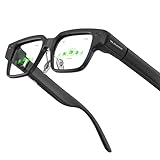
- Dual-Lens Waveguide Display Technology: Engineered with an advanced binocular waveguide optical system, these AR smart glasses deliver a truly immersive viewing experience. The ultra-bright 1200-nit MicroLED display produces crisp, vivid visuals, allowing you to view notifications clearly, real-time data, and digital content. Includes translation of more than 40 languages.
- All-Day Comfort, Virtually Weightless: Designed to feel natural from the moment you put them on, these ultralight 37g AR smart glasses combine an ergonomic frame with two soft nose pads for lasting comfort. From focused work sessions to active evenings, they stay comfortable, secure, and effortlessly wearable throughout your day.
- Your Personal AI Assistant, Always On: Designed for seamless everyday use, these AI AR agent glasses put a powerful AI assistant at your fingertips. Easy access to leading AI models delivers instant answers, intelligent recommendations, and hands-free support, helping professionals, students, and innovators stay informed and productive wherever they go.
- Live Basketball Updates Anywhere: Stay connected with real-time, text-based basketball scores and game updates displayed directly in your field of view. Designed for sports fans on the go, these smart glasses let you follow live games hands-free while commuting, working, traveling, or staying active. It's the ultimate basketball fan-themed gift for sports lovers!
- Real-Time Communication, Translation, Messaging, Music, Teleprompter, Navigation: These smart AR glasses act as a companion, offering real-time multilingual translation. Integrated messaging alerts keep you informed instantly, while the built-in teleprompter supports meetings, presentations, or content creation. Enjoy immersive access to music, notifications, and information suitable for global travelers, business professionals, and presenters who need efficiency and convenience on the go. (Auxiliary route guidance, prioritizing safe observation of the real-world environment.)
Halliday demonstrated or described several uses, including:
- Live translation subtitles
- Phone notifications
- Navigation prompts
- Meeting notes and conversational “cheat sheets”
- Audio playback
- AI assistance
The company also promoted an optional finger-worn control ring. Halliday said the glasses supported translation across 40 languages, although that figure was a company claim rather than an independently verified result.
TechCrunch’s CES report provides the clearest account of the announcement and demonstration: Halliday’s $489 smart glasses beam a tiny screen to your eye.
What the CES demonstration actually showed
The most concrete demonstration was a short Chinese-to-English conversation. English subtitles appeared in the display while Halliday’s founder spoke Chinese. TechCrunch reported roughly a one-second delay during the demonstration.
That was promising, but it should not be confused with proof of reliable everyday translation. A quiet, controlled conversation between two people is very different from a crowded restaurant, a fast-moving meeting or a discussion involving overlapping speakers, accents and unstable connectivity.
Several other claims were not fully tested. The proactive AI assistant was not ready for the TechCrunch reporter to try, and the reporter did not test the control ring. The demonstration therefore established that Halliday could show text and that translation was being demonstrated—not that every advertised AI feature was production-ready.
The biggest practical issue: display alignment
DigiWindow’s usefulness depended on placing the optical module in exactly the right position relative to the wearer’s eye. The module could slide and tilt, but TechCrunch reported difficulty finding the correct position because of the reporter’s high nose bridge. The glasses had to be worn lower on the nose before the display appeared properly.
This is more important than the headline “3.5-inch display” description. A virtual display is only useful if it remains visible when the frame is worn naturally and while the user is walking, talking or moving their head.
Potential trouble spots include:
- Different nose bridges and face shapes
- Frames sliding during movement
- Prescription lenses changing the glasses’ position
- Repeated manual adjustment
- Only one precise eye position producing a usable image
Anyone considering a display-first pair of glasses should prioritize fit, prescription compatibility and the return policy over resolution claims. Halliday said prescription lenses were supported, but support does not guarantee that every face shape will achieve a comfortable, stable image.
Halliday DigiWindow versus Ray-Ban Meta
| Feature | Halliday DigiWindow at CES 2025 | Ray-Ban Meta, CES 2025-era model |
|---|---|---|
| Display | Small peripheral DigiWindow display | No in-lens or near-eye display |
| Camera | No front-facing camera | 12-megapixel ultra-wide camera |
| Video | Not a core feature | 1080p clips up to 60 seconds |
| AI interface | Visual display plus audio and companion-device functions | Voice access to Meta AI |
| Translation | Advertised and demonstrated in a Chinese-English conversation | Primarily voice and audio-oriented at the time |
| Livestreaming | Not reported as a core feature | Facebook and Instagram livestreaming |
| Prescription lenses | Supported | Supported |
| Price signal | $369 early preorder; $489 announced full price | From $299 at launch |
Meta’s official launch announcement lists the Ray-Ban Meta’s camera, 1080p video, improved open-ear speakers, five microphones, calls, music, messaging, livestreaming, Meta AI, prescription compatibility and IPX4 water resistance. Meta also claimed up to 36 total hours of use when including the charging case. See Meta’s Ray-Ban Meta announcement.
Rank #2

- #1 SELLING AI GLASSES - Tap into iconic style for men and women, and advanced technology with the newest generation of Ray-Ban Meta smart AI glasses. Capture photos and video recordings, listen to music, make hands-free calls or ask Meta AI questions on-the-go.
- UP TO 8 HOURS OF BATTERY LIFE - On a full charge, these smart AI glasses can last 2x longer than previous generations, up to 8 hours with moderate use. Plus, each pair comes with a charging case that provides up to 48 hours of charging on-the-go.
- 3K ULTRA HD: RECORD SHARP VIDEOS WITH RICH DETAIL — Hands-free video recording with an ultra-wide 12 MP camera in up to 3K resolution. Record clips up to 3 minutes per session. Capture sharp, vibrant memories while staying in the moment.
- LISTEN WITH OPEN-EAR AUDIO — Listen to music and more with discreet open-ear speakers that deliver rich, quality audio without blocking out conversations or the ambient noises around you.
- ASK YOUR GLASSES ANYTHING WITH META AI — Get real-time suggestions, answers, object identification, and reminders hands-free. Requires Bluetooth connection to your smartphone and the Meta AI app. Ensure your phone has internet connectivity.
The CES 2025-era Ray-Ban Meta did not include a display. That was not necessarily a weakness: its design deliberately emphasized familiar eyewear, camera capture, audio and voice interaction rather than augmented-reality visuals.
The Tool Desk
Outbyte PC Repair FREERepair Windows errors before they cause bigger problemsFix Now →Outbyte Driver Updater FREEScan for outdated or missing drivers - takes under a minuteDriver Scan →Which glasses are better for different jobs?
Choose Halliday if you want text in your field of view
Halliday’s strongest case was for people who wanted information without reaching for a phone. Translation subtitles, notifications, navigation cues and short notes could be more useful as visual prompts than as spoken audio.
A camera-free design could also be preferable in meetings, classrooms, workplaces and private conversations where recording hardware makes people uncomfortable. Halliday’s glasses could show information without offering the obvious photo and video capability of Ray-Ban Meta.
These advantages remain dependent on the display being correctly aligned, the software working as promised and the phone or cloud connection being available.
Choose Ray-Ban Meta if you want a camera and audio wearable
Ray-Ban Meta was the stronger choice for first-person photography, video recording, livestreaming, calls, music and voice-first AI. Its camera was not an incidental feature; it was central to the product’s purpose.
Do these 3 things before closing this tab:
1Repair Windows errors before they cause bigger problems2Fix the driver behind crashes, sound loss and screen glitches3Clear out junk files and repair common Windows errorsIt also benefited from the Ray-Ban frame identity and Meta’s broader consumer ecosystem. For someone who primarily wants smart audio and hands-free capture in a recognizable pair of glasses, the lack of a display may be an intentional advantage rather than a missing feature.
Neither is a full AR headset
Halliday’s DigiWindow was a small peripheral text display, not an immersive mixed-reality overlay. Ray-Ban Meta had no display at all. Neither product should be described as a standalone, phone-free spatial computer or a mature enterprise AR platform.
Privacy: Halliday wins one argument, Ray-Ban Meta wins another
Halliday’s camera-free construction was its clearest privacy advantage. There was no front-facing camera intended to capture photos or video, and therefore less concern about accidentally recording people nearby.
But that same decision removed capabilities that many buyers want. Ray-Ban Meta users could document a first-person moment, record video and livestream without holding a phone. The camera also creates a path to richer image-based AI features.
Recommended Free Tools
Neither design is automatically better. Halliday is more appropriate when bystander privacy is the priority; Ray-Ban Meta is more capable when capture and visual documentation matter.
Rank #3
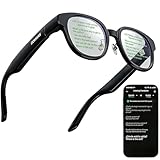
- 【AI Translation Glasses for Global Business & Travel】Communicate naturally across languages with premium AI translation glasses designed for meetings, travel, study abroad, trade shows, and daily multilingual conversations. These smart glasses deliver real-time translation directly on the AR display, helping you read live subtitles, understand conversations faster, and stay confident without constantly checking your phone. Ideal bluetooth smart glasses for professionals, travelers, students, and global communication.
- 【Private AR Display Glasses with Floating Visual Prompts】Experience information that appears before your eyes with advanced AR display glasses built for private, hands-free viewing. These smart glasses with display project translations, text prompts, notifications, navigation cues, and AI responses into your line of sight, creating a discreet HUD-style experience for work, communication, and everyday productivity. Unlike ordinary bluetooth glasses, they are built as true augmented reality glasses for real-world use.
- 【Invisible Teleprompter Glasses for Speech & Presentations】Turn every speech, meeting, livestream, lecture, sales pitch, or training session into a more confident performance with invisible teleprompter glasses for speech. Upload your script through the app and view private prompts while facing your audience naturally. These AI smart glasses with display work as professional teleprompter glasses for executives, creators, teachers, speakers, and anyone who needs smooth, discreet presentation support.
- 【AI Assistant, Voice Control & Smart Notifications】Stay productive hands-free with built-in AI assistant smart glasses that support intelligent Q&A, text processing, voice interaction, reminders, and real-time information prompts. Pair with iPhone or Android via Bluetooth to view messages, answer calls, receive navigation guidance, and reply by voice. These bluetooth smart glasses for men and women combine voice control, open-ear speakers, and AR prompts for a more effortless digital lifestyle.
- 【Lightweight Smart Glasses for All-Day Comfort & AR Navigation】Built for premium daily wear, these lightweight smart glasses feature a 43g frame, simple touchpad gestures, open-ear audio, and a balanced design that feels comfortable from work to travel. Use them as navigation glasses for walking, cycling, commuting, business trips, and outdoor exploration, with real-time HUD-style route prompts shown in your field of view. Stylish smart glasses for men and women, designed for productivity, communication, and all-day comfort.
Price and availability: do not mix the 2025 announcement with current listings
At CES 2025, TechCrunch reported a planned March 2025 shipment, a $489 full price and a $369 early preorder price tied to a $9.90 Kickstarter pledge. Those were announced plans, not proof that all orders shipped on schedule.
The current listing for the original DigiWindow glasses is materially different. Halliday’s product page shows a regular price of $648 and currently marks the glasses “Currently Out of Stock.” The page lists prescription, sunglasses and photochromic options and describes iOS and Android compatibility through a Bluetooth companion app. See the current original Halliday product page.
So “Halliday costs $369” is accurate only when referring to the early CES-era preorder offer. It is not the current regular price.
What happened after CES: Halliday G2 is a different product
Halliday’s current website presents the Halliday G2 as a newer product, not as the same CES 2025 DigiWindow model. The G2 uses binocular waveguide displays and dual microLED optical engines rather than the original single-eye DigiWindow approach.
The company currently lists the G2 with a $599 MSRP and a $499 price after a $100 Priority Access discount, requiring a $10 deposit. Its listed specifications include:
- 600 × 300 pixels per eye
- 25.2-degree field of view
- Up to 1,600 nits peak brightness
- Four speakers and four microphones
- Bluetooth 5.4 with LE Audio
- 2.4GHz Wi-Fi for over-the-air updates
- IP54 rating
- 210mAh battery
- Claimed 12-hour regular-use battery life
- No built-in camera
- iOS and Android compatibility
- Prescription support
The G2 page also describes paid plans, including a Pro tier at $19.90 per month and a Max tier at $99 per month. Meeting and summary functions use credits; the company says credits reset monthly and do not roll over. These G2 terms should not be retroactively treated as specifications or pricing for the original 2025 glasses.
For current G2 details, consult Halliday’s official website.
Questions buyers should ask before purchasing
- Does the display fit your face? Try the frame if possible, especially if you have a high or low nose bridge.
- What requires a phone or cloud connection? Confirm how translation, AI, navigation and notifications behave when Bluetooth or cellular service fails.
- What is the real battery life? Ask how usage changes when translation or the display is active continuously.
- Are the safety claims independently documented? Halliday said the green display was safe, but the brief CES demonstration did not establish long-term eye-safety performance.
- What happens if the startup’s services change? Cloud-dependent AI hardware can lose functionality if accounts, servers or subscription terms change.
- What is included? Check whether the control ring, prescription lenses and charging accessories are included or optional.
- Can you return them? A clear return and warranty policy matters more for an unusual display product than for conventional audio glasses.
Verdict
Halliday was not really poised to replace Ray-Ban Meta. It challenged a different assumption: that smart glasses must communicate through a camera, speakers and voice assistant. At CES 2025, Halliday’s more interesting proposition was a discreet visual layer that could show text while avoiding a front-facing camera.
That makes Halliday the more compelling concept for translation, notifications and privacy-sensitive use. Ray-Ban Meta remained the better all-purpose choice for photos, video, calls, music, livestreaming and voice AI. The original Halliday product’s alignment challenge, untested proactive AI, uncertain launch fulfillment and later out-of-stock status also made it a riskier purchase.
Quick Recap
Product prices and availability are accurate as of the date/time indicated and are subject to change. Any price and availability information displayed on Amazon at the time of purchase will apply.

