For the past decade, health tracking has lived almost entirely on the wrist, and most readers here know both its strengths and frustrations. Smartwatches made continuous heart rate monitoring mainstream, but they also normalized compromises: optical sensors fighting motion artefacts, loose fits during exercise, cold skin reducing signal quality, and data that is good enough for trends but rarely trusted for clinical insight. Emglare’s smart clothing enters this conversation by questioning a basic assumption: that the wrist is the best place to measure the heart at all.
What makes Emglare’s approach matter is not novelty for novelty’s sake, but the attempt to realign sensor placement with human physiology. By embedding heart rate sensors directly into garments that sit close to the chest, Emglare is aiming to bridge the long-standing gap between consumer wearables and medical-grade monitoring, a space historically occupied by chest straps and clinical ECG leads rather than lifestyle products. This section explains why that shift is technically meaningful, where it could outperform wrist-based devices, and where expectations still need to be grounded.
The promise on the table is ambitious: medical-grade heart rate accuracy without chest straps, adhesive electrodes, or daily device management. Understanding whether that promise is realistic requires unpacking how wrist wearables work, why apparel-based sensing changes the signal quality equation, and how Emglare positions itself between fitness hardware and regulated medical devices.
Why the wrist became the default, and why it’s a compromise
Smartwatches rely almost exclusively on optical photoplethysmography, using green LEDs to detect blood volume changes through the skin. The wrist is convenient and socially acceptable, but it is also a challenging site with thin arteries, frequent movement, and variable strap tension throughout the day.
🏆 #1 Best Overall
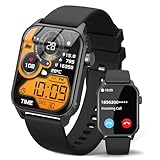
- 【1.83" HD Display & Customizable Watch Faces】Immerse yourself in a vibrant 1.83-inch IPS display, boasting a sharp resolution of 240*284 for crystal-clear visuals. Effortlessly personalize your smart watch with a wide array of customizable watch faces to suit your personal style for every occasion—whether trendy, artistic, or minimalist—ideal for casual, sporty, or professional. Its sleek, modern design complements any outfit, blending technology and fashion seamlessly for everyday wear
- 【120 Sports Modes & Advanced Health Tracking】Our TK29 smart watches for women men come equipped with 120 sports modes, allowing you to effortlessly track a variety of activities such as walking, running, cycling, and swimming. With integrated heart rate and sleep monitors, you can maintain a comprehensive overview of your health, achieve your fitness goals, and maintain a balanced, active lifestyle with ease. Your ideal wellness companion (Note: Step recording starts after exceeding 20 steps)
- 【IP67 Waterproof & Long-Lasting Battery】Designed to keep up with your active lifestyle, this smartwatch features an IP67 waterproof rating, ensuring it can withstand splashes, sweat, and even brief submersion, making it perfect for workouts, outdoor adventures, or rainy days. Its reliable 350mAh battery offering 5-7 days of active use and up to 30 days in standby mode, significantly reducing frequent charging. Ideal for all-day wear, whether you’re at the gym, outdoors, or simply on the go
- 【Stay Connected Anytime, Anywhere】Stay informed and in control with Bluetooth call and music control features. Receive real-time notifications for calls, messages, and social media apps like Facebook, WhatsApp, Twitter, and Instagram directly on your smartwatch. Easily manage calls, control your music playlist, and stay updated without needing to reach for your phone. Perfect for work, workouts, or on-the-go, this watch keeps you connected and never miss important updates wherever you are
- 【Multifunction & Wide Compatibility】Seamlessly handle heart rate monitoring, sleep tracking, and enjoy conveniences like camera/music control, Seamlessly handle heart rate monitoring, sleep tracking, and more-all directly from your wrist. This 1.83 inches HD smartwatch is compatible with iPhone (iOS 9.0+) & Android (5.0+), ensuring smooth daily connectivity and convenience throughout your day. More than just a timepiece, it’s a stylish, all-in-one wearable for smarter, healthier living
Even the best wrist-based systems struggle during high-intensity exercise, strength training, or activities involving grip and wrist flexion. This is why athletes and clinicians still reach for chest straps when accuracy matters, accepting inconvenience in exchange for cleaner signals and faster response to heart rate changes.
Sensor-integrated clothing changes the signal-to-noise equation
Smart clothing shifts sensors closer to the heart, typically across the sternum or ribcage, where electrical and mechanical signals are stronger and more stable. Emglare’s garments are designed to maintain consistent skin contact through fabric tension rather than relying on user-adjusted straps, reducing one of the biggest variables in wearable accuracy.
Depending on implementation, this allows for electrical heart sensing similar to single-lead ECG or hybrid approaches combining electrical and optical data. The result is not just potentially higher accuracy, but more reliable data during movement, sweating, and long-duration wear, areas where wrist devices often falter.
What “medical-grade” means in this context, and what it does not
Medical-grade heart rate monitoring does not automatically mean hospital certification or diagnostic approval. In practice, it refers to signal fidelity that approaches clinical reference devices, with low latency, minimal dropouts, and consistent beat-to-beat detection across activity levels.
Emglare’s positioning suggests a focus on ECG-adjacent accuracy rather than consumer-grade optical estimates. That matters for use cases like heart rate variability analysis, recovery tracking, stress monitoring, and potential arrhythmia screening, but it does not replace full multi-lead ECGs or physician-supervised diagnostics.
Comfort, wearability, and the compliance problem
Chest straps deliver excellent data, but few people wear them all day. Adhesive electrodes are even less practical outside medical settings. Smart clothing attempts to solve the compliance problem by embedding sensors into garments users already wear, turning high-quality monitoring into a passive experience.
Fit, fabric choice, breathability, and wash durability become as important as sensor specs. If Emglare can maintain accurate contact without discomfort, chafing, or thermal buildup, it addresses one of the biggest barriers to long-term health monitoring that watches alone have not solved.
How smart clothing compares to watches in daily use
Wrist wearables excel at versatility: notifications, apps, GPS, battery life measured in days, and quick glances at data. Smart clothing is inherently more specialized, focusing on signal quality rather than multifunction computing.
Emglare’s value proposition is not replacing a smartwatch, but complementing or, for some users, surpassing it in heart-focused monitoring. For athletes, cardiac rehab patients, or users frustrated by inconsistent wrist readings, sensor-integrated apparel represents a fundamentally different trade-off: fewer features, potentially better data.
Why this shift signals a broader evolution in wearables
The move toward sensor-integrated apparel reflects a maturation of the wearable market, where incremental smartwatch updates no longer satisfy users chasing deeper health insight. As expectations rise, placement and physiology matter more than screen resolution or case materials.
Emglare’s approach aligns with a growing recognition that next-generation health tracking may look less like a gadget and more like infrastructure woven into daily life. Whether the execution lives up to the ambition will depend on validation data, long-term durability, and how seamlessly the clothing integrates into real-world routines, questions the rest of this analysis will examine closely.
What Does ‘Medical-Grade’ Heart Rate Monitoring Actually Mean? Regulatory, Clinical, and Accuracy Benchmarks Explained
As smart clothing shifts the sensor closer to the heart, the phrase “medical-grade” inevitably enters the conversation. It sounds authoritative, but it is often used imprecisely, blending regulatory status, clinical validation, and raw accuracy into a single marketing shorthand.
To evaluate Emglare’s claim responsibly, it helps to separate what medical-grade can mean in three distinct contexts: regulatory clearance, clinical validation against gold standards, and real-world measurement performance across conditions where wrist wearables often struggle.
Regulatory reality: clearance, registration, and what they do and don’t imply
In strict terms, a medical-grade heart rate monitor is one that meets the requirements of a regulated medical device in a given market. In the U.S., this typically involves FDA clearance or approval under a specific device classification, while in Europe it means CE marking under the Medical Device Regulation.
Most heart rate monitors fall under low-risk classifications when used for general monitoring rather than diagnosis. FDA clearance in this category often indicates that a device is substantially equivalent to an existing product, not that it delivers hospital-level ECG diagnostics.
For smart clothing like Emglare’s, regulatory status will depend heavily on intended use. If marketed for wellness or fitness optimization, it may bypass formal clearance entirely, even if its underlying accuracy rivals regulated devices.
Clinical validation: comparison against gold standards
Where medical-grade claims gain substance is in clinical validation studies. These involve comparing heart rate output against a reference standard, typically a multi-lead ECG system, under controlled and semi-controlled conditions.
Key benchmarks include mean absolute error, correlation coefficients, and Bland–Altman limits of agreement across rest, movement, and exercise intensities. For context, chest-strap ECG monitors used in sports science often achieve mean absolute errors below 1–2 beats per minute when tested properly.
If Emglare has conducted or publishes studies showing similar performance versus ECG, especially during motion and long-duration wear, that would place its smart clothing closer to clinical instrumentation than to consumer wrist trackers.
Accuracy benchmarks: how “medical-grade” differs from smartwatch tracking
Most smartwatches rely on optical photoplethysmography at the wrist, a location prone to motion artifacts, variable skin contact, and perfusion changes. Even high-end watches can show noticeable error spikes during interval training, weightlifting, or cold exposure.
Medical-grade heart rate monitoring prioritizes signal stability and electrode contact over convenience. Textile-based electrodes integrated into clothing sit closer to the thorax, reducing motion-induced noise and improving electrical coupling compared to wrist optics.
In practical terms, this means fewer dropouts, smoother heart rate curves, and tighter agreement with ECG during high-movement scenarios. That performance gap is the core technical rationale behind Emglare’s positioning.
Sensor technology: why smart clothing can plausibly reach clinical accuracy
Smart clothing typically uses dry textile electrodes to capture electrical cardiac signals rather than optical proxies. This approach resembles chest straps, but distributes pressure more evenly across fabric, potentially improving comfort during all-day wear.
The challenge lies in maintaining consistent skin contact across different body shapes, postures, and garment sizes. Fabric elasticity, panel placement, and electrode surface treatment all directly affect signal quality, making garment design as critical as the electronics.
If Emglare has optimized these variables and paired them with robust signal processing, the hardware foundation for medical-grade performance is realistic. Without that integration, even the best algorithms cannot compensate for inconsistent contact.
Standards that matter: IEC, ISO, and performance testing
Beyond regulatory clearance, several international standards define how heart rate monitors should be tested. ISO 80601-2-61 covers pulse oximeter equipment, while IEC 60601 addresses electrical safety and basic performance for medical electrical devices.
Although not all standards apply directly to smart clothing, adherence signals a higher engineering bar. Transparent reporting of test conditions, motion protocols, and subject diversity matters more than a simple compliance badge.
For consumers, the absence of published standards data does not automatically disqualify a product, but it should temper expectations. Medical-grade is not a binary label; it exists on a spectrum of evidence.
Use cases where medical-grade accuracy actually matters
For casual activity tracking or calorie estimates, smartwatch-level accuracy is usually sufficient. Medical-grade heart rate monitoring becomes meaningful when trends, variability, or thresholds drive decisions.
Athletes monitoring training load, patients in cardiac rehabilitation, and users tracking arrhythmia-related metrics benefit most from consistent, low-noise data. In these contexts, a stable heart rate baseline can be more valuable than a feature-rich interface.
Emglare’s smart clothing appears aimed squarely at these scenarios, where compliance and data fidelity outweigh notifications, app ecosystems, or multi-day battery life.
Limitations that “medical-grade” does not eliminate
Even clinically accurate heart rate monitoring does not equate to diagnostic capability. Textile electrodes without multiple leads cannot replace a full ECG for detecting complex arrhythmias or ischemic changes.
Wash durability, electrode degradation, and long-term fit consistency also affect performance over time. A garment that measures accurately on day one may drift if materials stretch or conductive surfaces degrade after repeated laundering.
Understanding these constraints is essential when interpreting Emglare’s claims. Medical-grade accuracy is achievable, but it remains contingent on design execution, validation transparency, and realistic expectations about what heart rate data alone can and cannot reveal.
Emglare’s Core Claim Under the Microscope: What the Company Says Its Smart Clothing Can Do
Coming out of the discussion around standards and evidence, Emglare positions its smart clothing as a response to the gaps left by wrist-worn devices. The company’s central claim is straightforward but ambitious: continuous, medical-grade heart rate monitoring delivered through garments that users can wear all day, not just during workouts.
Rather than competing on app features or lifestyle polish, Emglare frames its product as a data-first platform. Accuracy, signal stability, and long-duration wear are presented as the primary value propositions.
What Emglare means by “medical-grade” heart rate monitoring
According to Emglare, its garments capture heart rate using electrical signals from the chest, similar in principle to clinical ECG leads and traditional chest straps. This contrasts with the optical photoplethysmography sensors used in most smartwatches, which infer heart rate indirectly by measuring blood volume changes at the wrist.
The company claims that this electrical approach reduces motion artifacts, skin tone variability, and perfusion-related errors. In practical terms, Emglare suggests its readings remain stable during exercise, recovery, and low-intensity daily movement where wrist sensors often struggle.
Rank #2
![Apple Watch Series 11 [GPS 46mm] Smartwatch with Jet Black Aluminum Case with Black Sport Band - M/L. Sleep Score, Fitness Tracker, Health Monitoring, Always-On Display, Water Resistant](https://m.media-amazon.com/images/I/312K597M2uL._SL160_.jpg)
- HYPERTENSION NOTIFICATIONS — Apple Watch Series 11 can spot signs of chronic high blood pressure and notify you of possible hypertension.*
- KNOW YOUR SLEEP SCORE — Sleep score provides an easy way to help track and understand the quality of your sleep, so you can make it more restorative.
- EVEN MORE HEALTH INSIGHTS — Take an ECG anytime.* Get notifications for a high and low heart rate, an irregular rhythm,* and possible sleep apnea.* View overnight health metrics with the Vitals app* and take readings of your blood oxygen.*
- STUNNING DESIGN — Thin and lightweight, Series 11 is comfortable to wear around the clock — while exercising and even when you’re sleeping, so it can help track your key metrics.
- A POWERFUL FITNESS PARTNER — With advanced metrics for all your workouts, plus features like Pacer, Heart Rate Zones, training load, Workout Buddy powered by Apple Intelligence from your nearby iPhone,* and more. Series 11 also comes with three months of Apple Fitness+ free.*
Importantly, Emglare does not claim diagnostic ECG capability. Its language focuses on heart rate accuracy and consistency rather than arrhythmia detection or medical diagnosis.
The sensor technology embedded in the fabric
Emglare’s smart clothing reportedly integrates textile-based electrodes directly into areas of the garment that maintain close, consistent skin contact. These electrodes are designed to pick up bioelectrical signals without the gels or adhesives used in clinical settings.
The company emphasizes electrode placement as a key differentiator. By anchoring sensors around the thoracic region, the garment aims to minimize micro-shifts caused by arm movement or wrist rotation, a known weakness of wrist-based wearables.
Signal acquisition is paired with a compact electronics module, typically detachable, that handles amplification, filtering, and wireless transmission. Emglare positions this architecture as closer to a chest strap than a smartwatch, but with greater comfort and longer wear tolerance.
How Emglare says this differs from smartwatches
Emglare draws a clear line between convenience-driven wearables and measurement-driven ones. Smartwatches prioritize versatility, offering notifications, GPS, apps, and multi-sensor health tracking at the cost of occasional data noise.
By contrast, Emglare’s garments are positioned as single-purpose instruments optimized for heart rate fidelity. The company argues that removing the need to balance display, battery size, and wrist ergonomics allows for cleaner physiological data.
Battery life expectations are framed accordingly. Rather than multi-day smartwatch endurance, Emglare suggests enough runtime to support continuous daily monitoring, with charging patterns more akin to fitness straps than lifestyle watches.
Comparison with chest straps and clinical monitors
Chest straps are often considered the gold standard for consumer heart rate accuracy, and Emglare openly benchmarks itself against them. The company claims comparable signal quality, with the added advantage of improved comfort during extended wear and reduced pressure points.
Unlike rigid straps, smart clothing distributes contact across a larger surface area. Emglare argues this reduces localized discomfort and improves adherence for users who need long-term monitoring rather than short workout sessions.
Compared to clinical monitors, the trade-off is complexity and scope. Emglare’s system captures fewer data channels but aims to do so continuously, outside controlled environments, and without clinical supervision.
Intended use cases and realistic expectations
Emglare highlights athletes, cardiac rehabilitation patients, and health-conscious users tracking long-term trends as its core audience. The company’s messaging suggests that heart rate variability, resting heart rate, and recovery metrics are central outputs.
At the same time, Emglare acknowledges that its smart clothing is not a replacement for hospital-grade diagnostics. The emphasis remains on longitudinal data quality rather than acute medical alerts.
Taken at face value, the promise is not revolutionary but deliberate. Emglare is betting that users who care deeply about heart rate accuracy will accept a narrower feature set in exchange for cleaner, more trustworthy data collected where the heart’s signal is strongest.
Inside the Fabric: Electrode-Based ECG vs Optical PPG and the Sensor Technologies Likely Powering Emglare
To understand why Emglare believes smart clothing can deliver medical-grade heart rate data, it helps to look beneath the fabric and examine how the signals are captured in the first place. The company’s positioning only makes sense when contrasted with the optical sensors that dominate wrist-worn wearables today.
At its core, Emglare’s approach appears to favor electrical measurement over optical inference. That distinction is foundational, not incremental.
Optical PPG: convenient, versatile, and fundamentally indirect
Most smartwatches rely on photoplethysmography, or PPG, which estimates heart rate by shining LEDs into the skin and measuring changes in reflected light caused by blood volume pulses. It is elegant, compact, and well-suited to devices that must balance screens, radios, processors, and batteries on a small wrist.
The trade-off is that PPG measures a proxy for cardiac activity rather than the heart’s electrical signal itself. Motion artifacts, skin tone, ambient light leakage, strap tightness, sweat, and temperature all influence signal quality, especially during exercise or sleep.
Advanced algorithms can mitigate some of these issues, but they cannot eliminate them entirely. This is why even high-end smartwatches often struggle with rapid heart rate changes, high-intensity intervals, or accurate heart rate variability under real-world conditions.
Electrode-based ECG: measuring the signal at the source
Electrocardiography works by detecting the tiny electrical impulses generated when the heart contracts. Chest straps, Holter monitors, and clinical ECG systems all rely on electrodes making stable contact with the skin near the torso, where the signal is strongest.
Emglare’s smart clothing appears to adopt a similar principle by embedding textile electrodes directly into garments that sit close to the chest. Instead of inferring cardiac activity optically, the system measures it electrically, which is why the company draws comparisons to chest straps rather than watches.
This approach inherently favors signal fidelity over versatility. It is less forgiving of poor fit or dry skin, but when contact is consistent, it can deliver cleaner R-R interval data and more reliable heart rate variability metrics than wrist-based PPG.
Textile electrodes and conductive fabrics: what likely sits inside Emglare’s garments
While Emglare has not disclosed full sensor schematics, the most plausible implementation involves knitted or printed conductive fibers acting as dry electrodes. These materials are commonly silver-plated nylon or carbon-based yarns designed to maintain conductivity under flex and stretch.
Unlike gel-based clinical electrodes, dry textile electrodes rely on surface area and pressure rather than adhesives. Smart clothing compensates by spreading contact across a wider region of the chest, reducing sensitivity to small shifts in position.
This design aligns with Emglare’s emphasis on comfort and long-term wear. By avoiding rigid modules and point pressure, the garment can maintain electrode contact during daily activities without the discomfort associated with tight chest straps.
Signal conditioning, noise rejection, and the hidden electronics layer
Capturing an ECG signal in clothing is only half the challenge. The raw electrical signal is extremely low amplitude and highly susceptible to noise from muscle movement, respiration, and external electromagnetic interference.
To function as claimed, Emglare’s system would require on-garment amplification, filtering, and analog-to-digital conversion before any data reaches a companion device. This processing likely lives in a small removable module rather than being fully woven into the fabric.
Effective motion artifact rejection is where the system either succeeds or fails. Chest-mounted ECG benefits from proximity to the heart, but without robust filtering and adaptive algorithms, everyday movement can still overwhelm the signal.
Why placement matters more than sensor type alone
Emglare’s strongest technical argument is not simply that it uses ECG rather than PPG, but that it places sensors where physiology favors measurement. The chest offers higher signal amplitude, less bone interference, and more consistent contact than the wrist.
This advantage becomes especially relevant for resting heart rate, overnight monitoring, and HRV trends, where small timing errors compound into misleading insights. Wrist-based devices often trade precision for convenience, while chest-based systems invert that priority.
Smart clothing sits between clinical monitors and consumer wearables, borrowing placement and sensing principles from the former while trying to maintain the wearability of the latter.
Medical-grade claims: accuracy, context, and regulatory reality
When Emglare uses the term medical-grade, it is best interpreted as signal quality rather than diagnostic authority. ECG-based heart rate measurement can reach clinical-level accuracy under the right conditions, but that does not automatically confer medical device status.
True medical-grade systems undergo regulatory validation, controlled testing, and defined use cases. Emglare’s clothing is more realistically positioned as research-grade or clinically adjacent, suitable for trend analysis, rehabilitation support, and performance monitoring rather than diagnosis.
This distinction matters because ECG accuracy is not binary. A system can produce excellent heart rate and HRV data while still falling short of clinical diagnostic standards for arrhythmia detection or acute alerts.
Comparative realism: smart clothing versus watches and chest straps
Against smartwatches, Emglare’s likely advantage is consistency of heart rate data, particularly during sleep and low-motion periods. Against chest straps, the advantage shifts toward comfort, wear duration, and reduced friction in daily life.
Chest straps remain hard to beat during high-intensity workouts, where tight fit and minimal fabric movement favor signal stability. Smart clothing trades some of that peak accuracy for wearability, making it better suited to continuous monitoring rather than short training sessions.
In that context, Emglare’s sensor strategy appears coherent rather than ambitious. It prioritizes physiology, placement, and signal integrity over feature breadth, betting that users who care about heart rate accuracy will value how the data is captured as much as what the app eventually displays.
Signal Quality in the Real World: Motion Artefacts, Skin Contact, Sweat, and Fit Challenges Unique to Smart Clothing
If Emglare’s credibility rests on ECG signal quality rather than feature volume, the real test begins outside controlled conditions. Daily movement, inconsistent fit, sweat, and long wear cycles introduce failure modes that wrist-based wearables largely avoid by rigid housing and fixed pressure.
Smart clothing inherits some advantages from chest straps, but it also introduces new variables tied directly to fabric behavior and human anatomy. Understanding those variables is essential to judging whether medical-grade signal quality is sustainable beyond ideal scenarios.
Rank #3

- Bluetooth Call and Message Alerts: Smart watch is equipped with HD speaker, after connecting to your smartphone via bluetooth, you can answer or make calls, view call history and store contacts through directly use the smartwatch. The smartwatches also provides notifications of social media messages (WhatsApp, Twitter, Facebook, Instagram usw.) So that you will never miss any important information.
- Smart watch for men women is equipped with a 320*380 extra-large hd full touch color screen, delivering exceptional picture quality and highly responsive touch sensitivity, which can bring you a unique visual and better interactive experience, lock screen and wake up easily by raising your wrist. Though “Gloryfit” app, you can download more than 102 free personalised watch faces and set it as your desktop for fitness tracker.
- 24/7 Heart Rate Monitor and Sleep Tracker Monitor: The fitness tracker watch for men has a built-in high-performance sensor that can record our heart rate changes in real time. Monitor your heart rate 26 hours a day and keep an eye on your health. Synchronize to the mobile phone app"Gloryfit", you can understand your sleep status(deep /light /wakeful sleep) by fitness tracker watch develop a better sleep habit and a healthier lifestyle.
- IP68 waterproof and 110+ Sports Modes: The fitness tracker provides up to 112+ sports modes, covering running, cycling, walking, basketball, yoga, football and so on. Activity trackers bracelets meet the waterproof requirements for most sports enthusiasts' daily activities, such as washing hands or exercising in the rain, meeting daily needs (note: Do not recommended for use in hot water or seawater.)
- Multifunction and Compatibility: This step counter watch also has many useful functions, such as weather forecast, music control, sedentary reminder, stopwatch, alarm clock, timer, track female cycle, screen light time, find phone etc. The smart watch with 2 hrs of charging, 5-7 days of normal use and about 30 days of standby time. This smart watches for women/man compatible with ios 9.0 and android 6.2 and above devices.
Motion artefacts: fabric movement versus electrode stability
Motion artefacts remain the dominant enemy of ECG accuracy, and smart clothing fights them differently than watches or chest straps. Instead of minimizing limb motion, Emglare relies on torso placement, where relative movement between skin and garment is typically lower during daily activities.
The challenge is micro-shift rather than macro movement. Fabric stretch, torsional twisting, and garment drift can all alter electrode pressure just enough to distort the ECG waveform, especially during dynamic actions like bending, reaching, or running.
Advanced filtering can clean up some noise, but signal processing cannot fully recover data lost at the electrode-skin interface. Emglare’s success here depends more on mechanical design and textile engineering than on software algorithms.
Skin contact consistency: the silent determinant of ECG quality
ECG sensors demand stable, low-impedance contact with the skin, and smart clothing must maintain that contact without rigid structures. Conductive textile electrodes or embedded sensor pads need sufficient pressure to reduce impedance while remaining comfortable over hours or days.
Unlike chest straps, which rely on elastic tension and direct skin contact, smart garments distribute pressure over a wider area. This can improve comfort but makes consistent contact more sensitive to body shape, posture, and garment sizing.
For users between sizes or with less uniform chest geometry, signal quality may vary more than marketing implies. This is not a flaw unique to Emglare, but a structural reality of clothing-based biosensing.
Sweat: friend, foe, and calibration challenge
Sweat complicates ECG sensing in contradictory ways. A small amount of moisture can improve conductivity and reduce skin-electrode impedance, often stabilizing the signal once the body warms up.
Excessive sweat, however, can create conductive bridges between electrodes, introduce motion-related slippage, or saturate textile sensors. During intense workouts or hot conditions, this can lead to transient signal dropouts or inflated noise levels.
Emglare’s real-world performance will hinge on how well its materials manage moisture dispersion rather than absorption. Breathable fabrics, hydrophobic sensor encapsulation, and intelligent baseline recalibration all matter more here than raw sensor sensitivity.
Fit variability: why one-size accuracy does not exist
Smart clothing exposes a truth often hidden by wrist wearables: physiological accuracy is deeply personal. Chest circumference, tissue composition, posture, and even breathing patterns influence electrode placement and pressure.
A garment that delivers near-clinical ECG traces for one user may struggle with another whose anatomy shifts electrode alignment by a few centimeters. This variability challenges blanket claims of medical-grade performance across a broad population.
Emglare’s sizing system, adjustability, and guidance on optimal fit will be as important as its electronics. Without precise fit education, users may unknowingly compromise signal quality while assuming the technology is at fault.
Long-duration wear: signal drift over hours and days
Continuous monitoring introduces a different class of signal degradation: drift rather than disruption. Over time, fabrics relax, posture changes, and subtle shifts in contact pressure accumulate, slowly altering baseline ECG characteristics.
Watches counteract this with constant optical recalibration and tight casing tolerances. Smart clothing must rely on adaptive algorithms that recognize gradual changes without misclassifying them as physiological events.
This is where Emglare’s positioning makes sense for trend tracking rather than acute alerts. Long-term heart rate and HRV trends tolerate minor drift better than moment-to-moment diagnostic interpretation.
Comparative reality check: where smart clothing still wins and loses
Against wrist-based PPG, smart clothing enjoys a structural advantage in signal fidelity, especially during sleep, recovery, and low-motion states. ECG sensing on the torso simply accesses a cleaner physiological signal than optical sensors on the wrist.
Against chest straps, the trade-off becomes more nuanced. Chest straps still dominate high-intensity exercise due to their tight, minimal design, while smart clothing prioritizes comfort, wear time, and passive compliance.
Emglare’s promise is not perfect signal under all conditions, but a higher average quality across more hours of real life. Whether that promise holds depends less on lab-grade electronics and more on how the garment behaves when worn, washed, sweated in, and lived with day after day.
How Emglare Compares to Chest Straps, Smartwatches, and Clinical ECGs for Heart Rate Accuracy
Placed in context, Emglare’s smart clothing sits between consumer wearables and clinical instrumentation rather than directly replacing either. Its value depends on how its textile-based ECG sensing performs relative to the tools people already trust for heart rate data.
Against chest straps: accuracy versus compliance
Chest straps remain the gold standard for consumer heart rate accuracy during exercise because they combine direct electrical sensing with tight, stable skin contact. Their rigid electrode placement and elastic tension minimize motion artifacts during sprinting, lifting, and rapid cadence changes.
Emglare’s smart clothing approaches this sensing method but trades compression for wearability. The looser, garment-based fit introduces more variability under high strain, yet it dramatically increases the likelihood of long-duration wear outside workouts, where chest straps are rarely tolerated.
For steady-state activity, recovery, and daily living, Emglare’s ECG-derived heart rate should closely track chest strap data when fit is correct. During maximal intervals or explosive movement, chest straps are still likely to lead in moment-to-moment precision.
Against smartwatches: electrical signals versus optical inference
Smartwatches rely primarily on photoplethysmography, inferring heart rate from blood volume changes at the wrist. This approach works well at rest but degrades with motion, cold skin, loose fit, tattoos, and changes in perfusion.
Emglare bypasses these limitations by measuring the heart’s electrical activity directly through the torso. This structural advantage typically yields cleaner interbeat intervals, more stable resting heart rate, and more reliable HRV during sleep and low-motion periods.
Where watches win is convenience and consistency. A watch’s rigid housing, known dimensions, and repeatable strap tension produce predictable results across users, while smart clothing depends heavily on sizing accuracy, fabric condition, and how the garment is worn each day.
Clinical ECGs: the benchmark Emglare does not replace
Clinical ECG systems use adhesive gel electrodes, controlled lead placement, and calibrated amplifiers to capture diagnostic-grade waveforms. They are designed for arrhythmia detection, ischemic changes, and waveform morphology analysis, not just heart rate.
Emglare’s system is better understood as ECG-derived heart rate monitoring rather than full diagnostic ECG. It can approximate R–R intervals accurately under stable conditions but lacks the lead redundancy, placement precision, and regulatory validation required for medical diagnosis.
This distinction matters because “medical-grade” in consumer wearables typically refers to signal type, not clinical decision-making authority. Emglare may share the same physiological source as hospital ECGs without matching their diagnostic reliability.
Accuracy across real-world scenarios
In sleep tracking, Emglare may outperform most smartwatches due to reduced optical noise and consistent torso contact. Heart rate and HRV trends during overnight recovery are a natural strength of garment-based ECG sensing.
In desk work, light movement, and daily routines, accuracy should remain stable provided the fabric maintains electrode contact. This is an area where chest straps are impractical and wrist sensors often fluctuate with posture and temperature.
During intense sport, especially activities involving torso rotation or heavy sweating, results will depend on garment design and fit retention. Chest straps remain the safer choice for athletes prioritizing instantaneous accuracy during peak exertion.
What “medical-grade” realistically means here
Emglare’s claims should be interpreted as higher-fidelity heart rate data over longer wear periods, not hospital-equivalent diagnostics. The technology narrows the gap between consumer convenience and clinical signal quality without fully closing it.
For wellness monitoring, training load assessment, recovery analysis, and longitudinal heart rate trends, this positioning makes sense. For detecting acute cardiac events or making treatment decisions, traditional medical systems remain essential.
Ultimately, Emglare’s comparative advantage is not beating every alternative in every scenario. It lies in delivering better average data across more hours of everyday life than wrist wearables, while asking far less of the user than chest straps demand.
Potential Use Cases: Clinical Monitoring, Athletic Training, Recovery Tracking, and Everyday Wellness
Viewed through that lens, Emglare’s value becomes clearer when mapped to scenarios where continuous, high-quality heart rate data matters more than moment-to-moment diagnostics. Smart clothing shifts the emphasis from spot checks to longitudinal insight, which opens different use cases than those served by watches or chest straps.
Clinical and semi-clinical monitoring outside the hospital
In clinical-adjacent contexts, Emglare is best understood as a monitoring aid rather than a diagnostic tool. Continuous ECG-derived heart rate and HRV trends could support remote patient monitoring programs, particularly for cardiac rehab, post-surgical follow-up, or chronic condition management where clinicians care about baseline drift rather than single abnormal beats.
For these use cases, comfort and wearability are as critical as signal quality. A garment that feels like everyday clothing has a higher chance of being worn for 12–20 hours a day, enabling datasets that wrist-worn devices often fail to capture due to overnight charging or skin irritation.
However, regulatory status remains the gating factor. Without FDA or CE medical certification, Emglare’s data would typically be used for contextual awareness, patient engagement, or clinician review rather than automated alerts or clinical decision-making.
Rank #4
![Apple Watch Series 11 [GPS 42mm] Smartwatch with Rose Gold Aluminum Case with Light Blush Sport Band - S/M. Sleep Score, Fitness Tracker, Health Monitoring, Always-On Display, Water Resistant](https://m.media-amazon.com/images/I/31J+F-pXaWL._SL160_.jpg)
- HYPERTENSION NOTIFICATIONS — Apple Watch Series 11 can spot signs of chronic high blood pressure and notify you of possible hypertension.*
- KNOW YOUR SLEEP SCORE — Sleep score provides an easy way to help track and understand the quality of your sleep, so you can make it more restorative.
- EVEN MORE HEALTH INSIGHTS — Take an ECG anytime.* Get notifications for a high and low heart rate, an irregular rhythm,* and possible sleep apnea.* View overnight health metrics with the Vitals app* and take readings of your blood oxygen.*
- STUNNING DESIGN — Thin and lightweight, Series 11 is comfortable to wear around the clock — while exercising and even when you’re sleeping, so it can help track your key metrics.
- A POWERFUL FITNESS PARTNER — With advanced metrics for all your workouts, plus features like Pacer, Heart Rate Zones, training load, Workout Buddy powered by Apple Intelligence from your nearby iPhone,* and more. Series 11 also comes with three months of Apple Fitness+ free.*
Athletic training and structured performance analysis
For endurance athletes and serious trainers, Emglare sits between chest straps and smartwatches in the performance stack. It offers ECG-based heart rate data without the pressure points, strap creep, or single-purpose inconvenience that often limit chest strap compliance during long sessions.
This makes it particularly well-suited for steady-state training, zone-based endurance work, and multi-hour activities where consistent contact and minimal motion artifacts are more important than millisecond-level responsiveness. Runners, cyclists, and rowers who prioritize comfort over sprint-level precision may find this balance appealing.
That said, elite athletes focused on interval training, HIIT, or explosive movements may still prefer chest straps. Peak exertion accuracy, especially during rapid heart rate transitions, remains a known strength of traditional straps with rigid electrode placement.
Recovery tracking and physiological load management
Where smart clothing truly differentiates itself is recovery monitoring. Overnight heart rate, resting HRV, respiratory-linked variability, and subtle changes in baseline physiology are areas where optical sensors struggle but garment-based ECG can excel.
Because Emglare maintains stable skin contact across the torso, it is better positioned to capture clean nocturnal data without the pressure changes and blood flow variability that affect wrist sensors. For athletes managing training load, this could translate into more reliable readiness scores and trend-based recovery insights.
The key advantage here is not a single night’s data, but consistency over weeks. Recovery analysis depends on detecting small deviations from personal baselines, and smart clothing is structurally optimized for that kind of longitudinal signal stability.
Everyday wellness and passive health awareness
For non-athletes, Emglare’s most compelling use case may be passive wellness tracking that fades into the background of daily life. Wearing a sensor-integrated garment during work, commuting, or leisure allows heart rate trends to be captured without the constant interaction demanded by watches.
This opens the door to stress pattern recognition, daily exertion profiling, and long-term cardiovascular awareness without turning health tracking into a chore. Battery life and charging routines become less intrusive when the sensing hardware is distributed across clothing rather than concentrated in a wrist-mounted device.
The trade-off is visibility and feedback. Smart clothing depends heavily on companion apps and post-hoc analysis, which may feel less immediate than a watch face glance, but more informative for users who care about patterns rather than numbers in the moment.
Data Handling, Apps, and Ecosystem Considerations: From Raw ECG Signals to Actionable Insights
If smart clothing is the sensing layer, software is where Emglare’s medical-grade promise either holds up or falls apart. Continuous ECG capture produces far more raw data than optical heart rate ever could, and the value lies in how that signal is filtered, contextualized, and translated into insights users can trust.
The transition from passive wellness tracking to clinically meaningful monitoring depends less on the garment itself and more on the data pipeline sitting behind it.
From textile electrodes to clean ECG signals
Garment-based ECG starts messy. Motion artifacts, variable skin impedance, sweat, and fabric stretch all introduce noise that must be addressed before heart rate is even calculated.
Emglare’s approach appears to rely on multi-point electrode redundancy across the torso combined with adaptive filtering, similar in principle to clinical Holter systems but scaled down for consumer use. By capturing multiple ECG vectors, the system can algorithmically reject corrupted segments rather than averaging flawed data, which is a key difference from chest straps that typically rely on a single electrical path.
This preprocessing stage determines whether “medical-grade” is a marketing label or a defensible technical claim. Clean R–R interval detection is non-negotiable for accurate HRV, arrhythmia screening, and recovery analysis.
On-device processing versus cloud dependency
One of the quieter but more important design decisions is where Emglare processes data. Early indications suggest a hybrid model, with basic beat detection and heart rate calculations handled locally, while higher-order analytics are computed in the cloud.
Local processing reduces latency and power consumption, enabling all-day or overnight monitoring without constant Bluetooth transmission. Cloud-based analysis, however, allows more sophisticated models for trend detection, anomaly flagging, and long-term baseline building that would overwhelm a garment-sized processor.
The trade-off is dependency. Users need reliable app connectivity and server uptime to access deeper insights, making the companion software as critical as the clothing itself.
The companion app as the primary interface
Unlike a smartwatch, Emglare’s garment has no screen, no haptics, and no real-time feedback. The app is the product.
A well-executed interface must balance clinical seriousness with usability, presenting ECG-derived metrics like resting heart rate, HRV trends, and respiratory-linked variability without overwhelming non-medical users. Expect dashboards that emphasize baselines, deviations, and trend arrows rather than absolute numbers, which aligns better with how ECG data should be interpreted outside a hospital.
The risk is overinterpretation. If Emglare exposes raw ECG waveforms or flags irregularities without sufficient context, it could create unnecessary anxiety rather than empowerment.
Medical-grade claims and regulatory boundaries
“Medical-grade” does not automatically mean “medical device.” The distinction matters.
If Emglare positions its heart rate and HRV metrics as wellness indicators rather than diagnostic outputs, it avoids regulatory approval requirements but also limits how its data can be used clinically. Claims around arrhythmia detection, atrial fibrillation screening, or clinical decision support would place the system in a different regulatory category entirely.
For users, this means the data may be physiologically accurate while still not intended for diagnosis. Transparency in labeling and app language will be essential to avoid blurring that line.
Integration with existing health ecosystems
Smart clothing does not exist in isolation. For Emglare to be viable long term, it must integrate cleanly with platforms users already rely on.
Synchronization with Apple Health, Google Health Connect, or third-party training platforms determines whether ECG-derived metrics can complement smartwatch data rather than compete with it. For athletes, this could mean pairing Emglare’s overnight recovery data with daytime GPS and workload metrics from a watch.
Without strong export and API support, the garment risks becoming a siloed experiment rather than a foundational health sensor.
Data ownership, privacy, and long-term storage
Continuous ECG data is among the most sensitive biometric information a consumer device can collect. How Emglare stores, encrypts, and anonymizes this data matters as much as accuracy.
Users should expect clear controls over data retention, deletion, and sharing, especially if cloud processing is involved. Longitudinal value depends on storing months or years of baseline data, but that must not come at the expense of user autonomy or security.
Trust, once lost in health tech, is almost impossible to rebuild.
Battery life, firmware updates, and real-world usability
Smart clothing introduces practical questions that traditional wearables do not. Charging modules, firmware updates, and sensor calibration must be intuitive enough to avoid friction.
If battery life supports multiple days or several nights per charge, compliance improves dramatically, especially for recovery tracking. Over-the-air updates are also crucial, as ECG algorithms evolve over time and benefit from iterative refinement.
In this sense, Emglare is less like a static garment and more like a living medical instrument embedded in fabric, one whose value compounds only if the software ecosystem keeps pace with the hardware’s ambition.
Limitations, Open Questions, and What Emglare Must Prove Before ‘Medical-Grade’ Claims Hold Up
The ambition is clear, but ambition alone does not confer clinical credibility. Moving from promising sensor architecture to defensible medical-grade claims requires evidence across validation, usability, and regulatory alignment, not just impressive demos.
Several unresolved questions sit at the intersection of physiology, textiles, and real-world behavior, where smart clothing historically struggles the most.
What “medical-grade” actually means in practice
Medical-grade heart rate monitoring is not a marketing adjective; it implies traceability to clinical reference standards such as multi-lead ECG systems used in hospitals. That typically means quantified accuracy under controlled conditions, reported as error metrics like mean absolute error or limits of agreement against gold-standard ECG.
For Emglare, this would require publishing validation data that shows consistent performance across resting, sleep, and movement conditions. Without peer-reviewed or regulator-reviewed evidence, the claim remains aspirational rather than substantiated.
Regulatory status and the absence of clearance
As of now, there is no public indication that Emglare’s garments have received FDA clearance, CE medical marking, or equivalent regulatory approval. This does not make the product ineffective, but it does define how its data can be used and how claims should be framed.
True medical-grade devices operate within strict labeling, risk management, and post-market surveillance requirements. Until Emglare engages with that process, its output should be interpreted as high-fidelity wellness data, not diagnostic information.
💰 Best Value
![Apple Watch Series 11 [GPS 42mm] Smartwatch with Jet Black Aluminum Case with Black Sport Band - S/M. Sleep Score, Fitness Tracker, Health Monitoring, Always-On Display, Water Resistant](https://m.media-amazon.com/images/I/31ybzrJZckL._SL160_.jpg)
- HYPERTENSION NOTIFICATIONS — Apple Watch Series 11 can spot signs of chronic high blood pressure and notify you of possible hypertension.*
- KNOW YOUR SLEEP SCORE — Sleep score provides an easy way to help track and understand the quality of your sleep, so you can make it more restorative.
- EVEN MORE HEALTH INSIGHTS — Take an ECG anytime.* Get notifications for a high and low heart rate, an irregular rhythm,* and possible sleep apnea.* View overnight health metrics with the Vitals app* and take readings of your blood oxygen.*
- STUNNING DESIGN — Thin and lightweight, Series 11 is comfortable to wear around the clock — while exercising and even when you’re sleeping, so it can help track your key metrics.
- A POWERFUL FITNESS PARTNER — With advanced metrics for all your workouts, plus features like Pacer, Heart Rate Zones, training load, Workout Buddy powered by Apple Intelligence from your nearby iPhone,* and more. Series 11 also comes with three months of Apple Fitness+ free.*
Accuracy under motion and daily life conditions
ECG quality is highly sensitive to motion artifacts, skin-electrode impedance changes, and muscle noise. While smart clothing has the advantage of stable electrode placement compared to wrist-based optics, dynamic activities like running, strength training, or even turning in bed remain challenging.
Emglare must demonstrate that its signal processing can reliably distinguish cardiac electrical activity from noise during these scenarios. Chest straps have decades of refinement here, and matching or exceeding that benchmark is non-trivial.
Fit variability and body diversity
Unlike watches or chest straps, garments introduce sizing complexity that directly affects signal quality. Electrode alignment, fabric tension, and torso shape all influence ECG capture, and one size rarely performs equally across different bodies.
To uphold medical-grade claims, Emglare must show that accuracy holds across a wide range of body types, genders, skin tones, and ages. This includes edge cases such as very lean athletes, higher BMI users, and older adults with less elastic skin.
Durability, washing, and long-term signal stability
Smart textiles face degradation risks that traditional wearables do not. Repeated washing, sweat exposure, and fabric stretching can alter electrode conductivity and baseline noise over time.
Medical-grade credibility requires proof that performance remains stable after dozens or hundreds of wash cycles. A sensor that performs well in week one but drifts subtly by month three undermines longitudinal health tracking.
Battery constraints and continuous monitoring trade-offs
Continuous ECG sampling is power-intensive, especially if raw data or high-resolution waveforms are retained. If battery limitations force aggressive duty cycling or reduced sampling rates, the resulting data may miss transient events.
Emglare must be transparent about how often it samples, what is stored locally versus in the cloud, and how battery-saving strategies impact data fidelity. Medical-grade monitoring prioritizes completeness and reliability over convenience.
Arrhythmia detection versus basic heart rate accuracy
Accurate heart rate is only the first rung on the clinical ladder. Claims often drift toward arrhythmia detection, heart rate variability analysis, or stress metrics, each of which demands higher signal quality and validated algorithms.
Without explicit validation for conditions like atrial fibrillation or ectopic beats, Emglare should avoid implying diagnostic capability. Many consumer wearables blur this line, but smart clothing will be scrutinized more closely because of its ECG-based positioning.
Transparency of algorithms and update pathways
Medical-grade systems document how signals are filtered, processed, and interpreted. Black-box algorithms may be acceptable for fitness insights, but they limit clinical trust.
Emglare will need to explain how firmware updates alter signal processing and whether historical data is reinterpreted under new models. Consistency and auditability matter when users build long-term baselines.
How it truly compares to chest straps and smartwatches
Chest straps remain the reference standard for non-clinical ECG-derived heart rate during exercise, offering tight skin contact and minimal motion drift. Smartwatches trade some accuracy for convenience and multi-sensor versatility.
Emglare must prove it offers a meaningful advantage over both, whether through comfort during sleep, superior overnight HRV accuracy, or reduced signal dropout. Being different is not enough; it must be demonstrably better in specific use cases.
Claim discipline and user communication
Finally, what Emglare says may matter as much as what it builds. Overstated claims risk regulatory pushback and user mistrust, especially in health technology.
Clear language that distinguishes wellness insights from medical diagnosis will protect both users and the product’s long-term credibility. Medical-grade status is earned through evidence and restraint, not implication.
Bottom Line for Consumers and Athletes: Who Should Care, What Expectations Are Realistic, and Where Smart Clothing Fits Today
After unpacking signal quality, validation gaps, and how Emglare stacks up against chest straps and smartwatches, the real question becomes practical rather than technical. Who actually benefits from smart clothing today, and what should buyers realistically expect from it?
The answer sits somewhere between genuine promise and necessary restraint. Emglare’s concept is compelling, but its value depends heavily on how, when, and why you plan to use it.
Who should pay close attention
Endurance athletes and structured trainers are the most obvious audience. If you already understand the limitations of wrist-based optical heart rate and regularly rely on chest straps for intervals, threshold work, or HRV-guided training, smart clothing offers a credible alternative form factor.
The appeal here is not novelty but consistency. A garment that maintains stable electrode contact across long sessions, warm-ups, and recovery could deliver chest-strap-level data with less pressure, fewer strap adjustments, and better comfort during extended wear.
Health-conscious consumers tracking trends over weeks rather than moments should also care. Resting heart rate, overnight variability, and recovery patterns benefit more from stable, repeatable signals than from flashy features, and this is where garment-based ECG sensing has theoretical advantages.
Who should temper expectations
Casual fitness users expecting smartwatch-style versatility may be disappointed. Smart clothing does not replace notifications, GPS mapping, app ecosystems, or multi-day battery life baked into modern watches.
Likewise, anyone looking for clinical diagnosis should pause. Even if Emglare’s heart rate accuracy approaches medical reference devices, accuracy alone does not equal diagnostic clearance, and the product should be treated as a high-quality monitoring tool, not a medical instrument.
Early adopters should also expect iteration. Fit sensitivity, sizing tolerances, wash durability, firmware refinement, and software interpretation typically take multiple hardware generations to mature in smart textiles.
What “medical-grade” realistically means in daily use
In consumer wearables, medical-grade should be interpreted as signal-first, not diagnosis-first. It suggests ECG-derived heart rate, lower susceptibility to motion artifacts, and more reliable inter-beat interval data compared to optical sensors.
For users, this translates into better confidence during steady-state exercise, improved HRV stability overnight, and fewer unexplained spikes or dropouts. It does not automatically unlock atrial fibrillation detection, arrhythmia alerts, or clinical reports unless explicitly validated and regulated.
If Emglare delivers consistently clean raw data and communicates its limits clearly, that alone would mark a meaningful step forward compared to many smartwatch implementations.
How smart clothing fits alongside watches and chest straps
Smart clothing should be viewed as complementary, not competitive, at least for now. A smartwatch still makes sense as the daily interface for time, notifications, GPS workouts, and general activity tracking.
Chest straps remain the gold standard for race-day accuracy and high-intensity sessions where absolute precision matters. Smart clothing sits between them, offering higher signal quality than the wrist with greater comfort and wear time flexibility than a strap.
The strongest use case is continuous or semi-continuous monitoring: sleep, recovery days, long aerobic sessions, and training blocks where consistency matters more than peak responsiveness.
Comfort, durability, and real-world ownership considerations
Unlike watches, smart clothing must be worn, washed, and fitted correctly to perform. Fabric stretch, electrode placement, and sizing accuracy directly affect data quality, making comfort and garment engineering just as important as electronics.
Battery life expectations should also be grounded. Detachable modules, limited recording windows, or session-based tracking are more realistic than always-on monitoring, especially in early generations.
Long-term value will depend on software support. Data export options, platform compatibility, firmware updates, and transparency around algorithm changes will determine whether early adopters feel supported or stranded.
The realistic takeaway
Emglare’s smart clothing does not need to replace your smartwatch to be valuable. Its promise lies in offering a more physiologically faithful way to capture heart data when accuracy, comfort, and consistency matter most.
For athletes, it could reduce reliance on chest straps without sacrificing data integrity. For health-focused users, it may offer a clearer window into recovery and cardiovascular trends than optical sensors allow.
The technology is not yet a clinical solution, but it does not need to be. If Emglare delivers disciplined claims, validated accuracy, and a thoughtful user experience, smart clothing can earn a legitimate place in today’s wearable ecosystem as a serious, signal-driven tool rather than a gimmick.