Some links on this page are affiliate links: if you buy through them we may earn a commission, at no extra cost to you.
Verdict: The Even Realities G1 is best understood as a discreet pair of prescription-style glasses with a small monochrome heads-up display—not as a camera, audio, or full augmented-reality headset. Its sharp text overlay, teleprompter, captions, translation, and glanceable navigation are genuinely useful, but the G1 has no camera, no speakers, no video, and heavy dependence on a smartphone. At the current observed US price of $499 before prescription lenses, it makes sense only if its text display solves a specific problem for you.
What the Even G1 actually is
The Even Realities G1 is a smartphone-connected pair of display glasses. It projects green text and simple graphics into both lenses using a binocular optical-waveguide system. The glasses are designed to look broadly like conventional eyewear and are available in two general frame shapes, commonly identified as G1 A and G1 B, with non-prescription and prescription configurations.
That distinction matters. The G1 is not a full-color AR headset, a virtual monitor, or a camera-equipped assistant. It is a narrow, text-first interface for information you want to glance at without taking out your phone.
Do these 3 things before closing this tab:
1Repair Windows errors before they cause bigger problems2Fix the driver behind crashes, sound loss and screen glitches3Clear out junk files and repair common Windows errors- No camera: it cannot take photos, record video, or visually inspect an object, sign, document, or scene.
- No speakers: it cannot play music or provide normal audio for calls and spoken directions.
- Phone-connected: the Even app, your phone, an Even account, and wireless connectivity are central to the experience.
- Text-focused display: it is designed for prompts, captions, notifications, simple navigation, and short lines of text.
Even lists compatibility with iOS and most Android smartphones, but that wording does not guarantee support for every Android handset.
#1 Best Overall
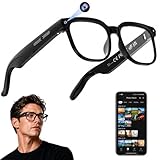
- 【AI Real-Time Translation & ChatGPT Assistant】AI glasses break language barriers instantly with AI real-time translation. The built-in ChatGPT voice assistant helps you communicate, learn, and handle travel or business conversations smoothly—ideal for conferences, overseas trips, and daily use.
- 【4K Ultra HD】 Smart glasses feature 4K resolution for clear, detailed visuals, making them suitable for travel, outdoor activities, everyday moments, and daily use.
- 【Bluetooth Music & Hands-Free Calls 】Smart glasses provide Bluetooth music and crystal-clear hands-free calls with an open-ear design. Stay aware of your surroundings while listening—comfortable for long wear and safer for commuting, cycling, and outdoor use.
- 【IP65 Waterproof & Long Battery Life】 AI glasses are designed for daily wear with IP65 waterproof protection against sweat, rain, and dust. The built-in 290mAh battery provides reliable performance for workdays and travel—no anxiety when you’re on the go.
- 【Smart App Control & Object Recognition】Smart glasses connect to the companion app for easy setup, file management, and feature control. They support AI object recognition to help identify items and improve your daily efficiency—perfect for travel exploration and a smart lifestyle.
Price, prescription lenses, and buying risk
As observed on Even’s official US product page in August 2026, the G1 A frame costs $499. Non-prescription lenses are listed as free, while single-vision prescription lenses start at $159. The separately listed G1 Clip & Pouch accessory costs $119 on Even’s regional product page.
That puts a prescription configuration above the headline price, before optional accessories. Older reviews quoted a $599 starting price, so launch-era coverage should not be used as the current price reference.
Prescription buyers should be especially careful. Even’s purchase guidance says custom prescription products generally cannot be returned or exchanged except for manufacturing defects, and prescription orders can be canceled only within 24 hours. Non-prescription glasses are listed as eligible for return within 14 days of receipt. Progressive or ADD prescriptions may require a partner optician rather than the standard online ordering process.
Before ordering, confirm your current prescription, pupillary distance, frame dimensions, and fit. The display depends on the glasses sitting correctly, so optical adjustment is more important than it is with ordinary frames.
See the current G1 A configuration and pricing and review Even’s prescription purchase and return guidance before committing.
Design and comfort
The G1’s strongest hardware decision is restraint. The frames use magnesium construction with titanium and silicone elements at the temple tips, screwless hinges, and adjustable nose pads. Batteries, controls, antennas, and other electronics are concentrated in the temples, which are thicker than those of ordinary glasses.
There is no visible camera bump, speaker grille, or obviously futuristic visor. That makes the G1 substantially less conspicuous than many smart-glasses designs, and independent reviews found that people did not always immediately recognize them as smart glasses.
What’s actually slowing this PC down?
Pick the symptom - the matching free tool is one click away.
The trade-off is fit sensitivity. Display alignment depends on the frame’s position relative to your eyes. A poor fit, incorrect nose-pad adjustment, or unsuitable prescription can make text less comfortable to read. Even recommends professional optical adjustment for the best result.
Rank #2

- First-Person Photos & Videos with 8MP Camera: DPVR G1 camera glasses feature a 8MP sensor that captures vibrant first-person photos and videos with enhanced contrast and clarity. AI image optimization, CCD noise reduction, and electronic stabilization reduce motion blur for smoother footage. These smart glasses with camera are perfect for travel, outdoor adventures, and everyday moments.
- AI Smart Glasses with Helpful Assistant Features: These ai smart glasses combine wearable technology with practical tools. Using the companion app, your ai glasses support translation, voice interaction, note recording, and more. The built-in translation glasses feature supports 141 language regions, helping you communicate easily while traveling or meeting people from different cultures.
- AI Visual Recognition for Everyday Discovery: DPVR G1 ai glasses with camera include intelligent visual recognition that identifies objects, landmarks, and scenes you look at, then provides helpful information instantly. Whether you're exploring a new city or learning about your surroundings, these wearable tech glasses act as a hands-free knowledge assistant.
- Voice Photo & Video Recording – Capture Moments Instantly: Never miss a great moment again. Simply say “Hey Sunny, take a photo” or press the temple button to instantly capture photos or start recording. These video recording glasses make it easy to document life hands-free, whether you're traveling, exploring, or sharing everyday experiences.
- Enhanced 32Gb Storage + 64MB DDR Buffer: G1’s 32Gb(4GB) built-in storage pairs with a dedicated 64MB DDR camera buffer to ensure smoother, more reliable photo and video capture. This high-speed architecture helps reduce frame drops, save errors, and missed shots — especially in fast-moving scenes where lower-spec devices often struggle.
A charging case is included. The optional clip-on sunglasses accessory can make the clear-lens glasses more practical outdoors, but it adds considerably to the total cost.
Display: crisp text, limited ambition
Even lists the G1’s display as a green micro-LED optical-waveguide system with:
- 640 × 200 resolution
- 25-degree field of view
- 20Hz refresh rate
- Up to 1,000 nits brightness
- 98% passthrough
- Automatic brightness adjustment
These specifications describe a display optimized for short text and simple symbols—not a phone-sized screen floating in front of you. Navigation arrows, captions, reminders, teleprompter lines, and notifications are the natural use cases. Video, photos, games, rich color, large maps, and 3D graphics are not.
Independent testing praised the sharpness and the floating-text effect. However, bright sunlight can expose the projector area or create reflections, even though Even says the display is intended to work in bright and dim environments. Treat outdoor performance as situational rather than assuming that the 1,000-nit figure makes the display universally effortless to read.
The G1’s green monochrome presentation is also a functional limitation. It is legible for information, but it does not provide the visual richness or contextual space associated with display-focused glasses from Xreal or Rokid.
What you can do with the G1
Navigation
The G1 can show simplified turn-by-turn prompts and directional icons. This is useful for a quick glance while walking, but it is not a complete map. Use your phone for route planning, traffic information, place details, and recovery if you miss a turn.
Translation
Even’s support documentation lists 22 translation languages, but the implementation needs careful qualification: Arabic, Hindi, and Bengali are identified as languages whose translated text cannot be displayed, although translated text is available in the overall feature workflow.
Quick wins for a faster PC:
Scan for outdated or missing drivers - takes under a minuteDriver Scan →Repair Windows errors before they cause bigger problemsFix Now →Fix the driver behind crashes, sound loss and screen glitchesFind Drivers →Translation depends on the phone, microphones, speech recognition, and likely network availability. Background noise, speaker distance, accents, and rapid conversation can all affect the result. The available documentation does not establish universal offline translation, so do not treat the G1 as an independent offline interpreter.
Rank #3

- First-Person Photos & Videos with 8MP Camera: DPVR G1 camera glasses feature a 8MP sensor that captures vibrant first-person photos and videos with enhanced contrast and clarity. AI image optimization, CCD noise reduction, and electronic stabilization reduce motion blur for smoother footage. These smart glasses with camera are designed for capturing everyday moments naturally—whether you're walking through the city, traveling, or simply living in the moment.
- AI Smart Glasses with Helpful Assistant Features: These ai smart glasses combine wearable technology with practical tools that fit seamlessly into your daily routine. Using the companion app, your ai glasses support translation, voice interaction, note recording, and more. The built-in translation glasses feature supports 141 language regions, helping you stay connected effortlessly while traveling or interacting across cultures.
- AI Visual Recognition for Everyday Discovery: DPVR G1 ai glasses with camera include intelligent visual recognition that identifies objects, landmarks, and scenes you look at, then provides helpful information instantly. Whether you're exploring a new neighborhood or noticing something interesting around you, these wearable tech glasses offer a subtle, hands-free way to stay informed.
- Voice Photo & Video Recording – Capture Moments Instantly: Never miss a moment. Simply say “Hey Sunny, take a photo” or press the temple button to instantly capture photos or start recording. These video recording glasses let you capture life as it happens—effortlessly and without interrupting the experience.
- Enhanced 32Gb Storage + 64MB DDR Buffer: G1’s 32Gb(4GB) built-in storage pairs with a dedicated 64MB DDR camera buffer to ensure smoother, more reliable photo and video capture. This high-speed architecture helps reduce frame drops, save errors, and missed shots — especially in fast-moving scenes where lower-spec devices often struggle.
Check Even’s current language and feature documentation before relying on a specific translation pair.
Teleprompter
The teleprompter is one of the G1’s clearest reasons to buy it. Even says the display can show approximately four to eight lines at a time, making it suitable for presentations, interviews, speeches, short scripts, and talking points.
It is not a confidence monitor. You cannot see a full page at once, and reading comfort depends on scrolling behavior, text formatting, and precise frame alignment. For short prompts it can be genuinely convenient; for long scripts, a larger display remains better.
Crashes, No Sound, or Screen Glitches?
Random freezes, missing sound and display glitches usually trace back to one bad driver. Find and replace yours safely.Free scan · under a minuteWindows Errors? Fix Them Before They Spread
Repair common Windows errors and clear accumulated junk for a smoother, more stable PC - no reinstall needed.Free scan · no reinstallCaptions and transcription
The glasses can display live captions or transcribed speech. That could help in meetings, lectures, noisy environments, language-learning situations, and conversations for people who are hard of hearing.
Accuracy is not guaranteed. Microphone pickup, background noise, speaker distance, accents, network access, and the limited display area all matter. The G1 has two microphones, but that hardware specification alone does not establish a particular transcription accuracy.
QuickNote
QuickNote lets you capture spoken notes and later view or manage them in the app. It is best considered a voice-note and reminder workflow, not a replacement for a full note-taking computer.
Notifications and dashboard
The companion app can surface notifications, reminders, schedules, and related information. This is useful only if you configure it carefully. A controlled stream of calendar or priority alerts can be helpful; mirroring every phone notification turns the display into clutter.
Free tools Windows power users keep installed
One-click scans. No signup required.
Even AI
Even AI is voice-driven on the G1. Because the glasses have no camera, the assistant cannot look at a document, object, sign, or scene and interpret it visually. That makes it fundamentally different from camera-enabled multimodal glasses.
Rank #4
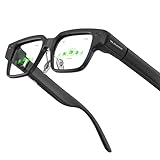
- Dual-Lens Waveguide Display Technology: Engineered with an advanced binocular waveguide optical system, these AR smart glasses deliver a truly immersive viewing experience. The ultra-bright 1200-nit MicroLED display produces crisp, vivid visuals, allowing you to view notifications clearly, real-time data, and digital content. Includes translation of more than 40 languages.
- All-Day Comfort, Virtually Weightless: Designed to feel natural from the moment you put them on, these ultralight 37g AR smart glasses combine an ergonomic frame with two soft nose pads for lasting comfort. From focused work sessions to active evenings, they stay comfortable, secure, and effortlessly wearable throughout your day.
- Your Personal AI Assistant, Always On: Designed for seamless everyday use, these AI AR agent glasses put a powerful AI assistant at your fingertips. Easy access to leading AI models delivers instant answers, intelligent recommendations, and hands-free support, helping professionals, students, and innovators stay informed and productive wherever they go.
- Live Basketball Updates Anywhere: Stay connected with real-time, text-based basketball scores and game updates displayed directly in your field of view. Designed for sports fans on the go, these smart glasses let you follow live games hands-free while commuting, working, traveling, or staying active. It's the ultimate basketball fan-themed gift for sports lovers!
- Real-Time Communication, Translation, Messaging, Music, Teleprompter, Navigation: These smart AR glasses act as a companion, offering real-time multilingual translation. Integrated messaging alerts keep you informed instantly, while the built-in teleprompter supports meetings, presentations, or content creation. Enjoy immersive access to music, notifications, and information suitable for global travelers, business professionals, and presenters who need efficiency and convenience on the go. (Auxiliary route guidance, prioritizing safe observation of the real-world environment.)
Controls and app experience
The G1 uses touch controls on the temple arms. The documented gestures include:
- Single tap right: cycle through QuickNotes.
- Single tap left: cycle through notifications.
- Teleprompter single taps: move to the next or previous page.
- Even AI scrolling: right-side scrolling down and left-side scrolling up.
- Double tap: exit the current application.
- Triple tap: activate or deactivate Silence Mode.
- Long press left: activate Even AI.
- Long press right: access QuickNote.
These controls are compact but require memorization. The practical questions are whether taps register consistently, whether gestures activate accidentally, and how quickly the display responds while walking or wearing gloves. WIRED’s review criticized slow operation, glitchy controls, and limited customization. TechRadar and other hands-on coverage also raised concerns about software maturity.
Those findings came from earlier software and firmware conditions, and updates may have changed behavior by 2026. They remain relevant as a category warning, however: the hardware can be impressive while the phone app, voice input, connectivity, and firmware determine whether the product feels dependable.
Battery, charging, and connectivity
Even claims up to 1.5 days per charge, approximately two to three hours for a full charge, and about 2.5 additional charges from the wireless charging case. These are usage-dependent figures, not a guaranteed runtime.
Brightness, AI use, translation, transcription, notification volume, Bluetooth activity, and phone signal can all affect battery life. Light notification use may be easier to sustain than frequent AI and transcription sessions. The charging case should make overnight and travel charging manageable, but the important question is whether the glasses cover your normal workday with your preferred features enabled.
The G1 is not self-contained. You need a compatible phone, the Even app, an Even account, and wireless connectivity for the broader experience. The official documentation does not provide a complete current Android handset matrix or establish that every feature continues working when the phone is offline or out of Bluetooth range. Assume that advanced navigation, translation, AI, and cloud-backed functions are vulnerable to connection loss.
Independent reader supportYour contribution helps us test, update, and keep practical guides available for everyone.Privacy and missing hardware
The absence of a camera is the G1’s clearest privacy advantage. There is no obvious image-capture function, and the glasses do not create the same social concern as camera-equipped smart eyewear. The absence of speakers also avoids audio leakage from open-ear playback.
The Tool Desk
Outbyte Driver Updater FREEFix the driver behind crashes, sound loss and screen glitchesFind Drivers →Outbyte PC Repair FREEClear out junk files and repair common Windows errorsFree Scan →But no camera does not mean no data processing. The app and associated services may handle voice input, preferences, notifications, and account-linked information. Even says it uses encryption and references GDPR and CPRA compliance, but privacy-sensitive buyers should read the company’s current privacy documentation rather than treating the hardware design as a complete data-privacy guarantee.
Best Value

- 【4K Hands-Free Camera with EIS Stabilization】Capture ultra-HD 4K videos and 32MP photos using the 8MP lens with IMX219 sensor and Electronic Image Stabilization, ensuring smooth, shake-free first-person footage for vlogging, driving, hiking, cycling, cooking, or outdoor adventures – simply use voice command ("Hey star, take a photo") or tap the shutter button while keeping your hands completely free.
- 【Smart Bluetooth Calling】Enjoy high-fidelity stereo sound with four advanced speakers embedded in the eyeglass arms. The open-ear design allows you to listen to music or podcasts while remaining completely aware of your environment—ideal for safe commuting or jogging. With seamless Bluetooth connectivity and dual-mic ENC (Environmental Noise Cancellation), background noise is effectively filtered out, giving you crystal-clear, hands-free calls no matter where you are.
- 【Dual-Lens Protection for Smart Eyewear】Adaptive visual technology for your modern lifestyle. Our sunglass lenses block harsh light outdoors, and we've also included a dedicated anti-blue light lens featuring no-blue-reflection technology, ensuring zero color distortion while you use the device. One smart frame, two pro lenses — designed for all-day wear.
- 【Built-in AI Assistant】Discover AI-powered smart glasses featuring a built-in intelligent assistant. Simply say "Hey Star" to activate it hands-free — get real-time answers, current weather, and tailored help whenever you need it. Just aim the camera at landmarks, menus, or objects for on-the-spot recognition. Your own personal AI guide, always by your side
- 【REAL-TIME AI TRANSLATOR & No Additional Fees】Supporting over 165 languages. iONCT Smart Glasses offers a comprehensive translation matrix for various scenarios: includes real-time translation mode, glasses-to-phone mode, Photo translation via the app, and seamless video call translation for remote clients. Whether during travel or international business, it instantly breaks down language barriers.
Weather resistance and durability
Even describes the G1 as suitable for splashes and light rain. It is not intended for swimming, water sports, heavy rain, or prolonged water exposure. The available material does not establish a waterproof certification, so do not treat the glasses as waterproof.
G1 versus the main alternatives
Even G2
The G2 is the most important comparison for a new Even buyer in 2026. It launched in November 2025 and has been reported to offer a larger display, a newer optical system, faster AI, and support for the Even R1 smart ring.
The G1’s lower price may make sense if your needs are limited to text, teleprompting, captions, and discreet prescription wear. At or near full price, however, the newer G2 deserves serious consideration because the G1 is now the older platform. Compare the display area, AI speed, battery behavior, comfort, software support horizon, and final prescription price—not just the frame discount.
Recommended Free Tools
See current reporting on the Even G2 before choosing the older model.
Ray-Ban Meta
Ray-Ban Meta is the better choice for cameras, music, calls, open-ear audio, voice-assistant features, and social-media capture. It is not a direct replacement for the G1 because it does not solve the same in-lens display and teleprompter problem.
View Ray-Ban Meta if audio and camera features matter more than a heads-up display.
Xreal and Rokid
Xreal and Rokid are better suited to large virtual screens, video, gaming, and laptop or phone display extension. They are less convincing as discreet everyday prescription glasses. Their visual experience is broader, but their form factor and social footprint are less conventional than the G1’s.
See Xreal and Rokid for display-focused alternatives.
Ordinary glasses plus a phone or smartwatch
This remains the value option. A phone provides better maps, translation context, AI interaction, and readability, while a smartwatch handles many notifications and quick controls. The G1’s justification is hands-free glanceability and reduced phone-checking—not more functionality per dollar.
Who should buy the Even G1?
Buy it if:
- You already wear prescription glasses and want discreet text in your field of view.
- Teleprompter lines, captions, reminders, translation, or simple navigation solve a specific recurring problem.
- You prefer no camera and no speakers.
- You value conventional styling more than a long feature list.
- You accept smartphone, account, and cloud-service dependence.
- You are comfortable with a small green monochrome display.
Skip it if:
- You want music, calls, spoken directions, photos, or video.
- You expect visual AI to inspect objects, signs, documents, or scenery.
- You want a large virtual monitor, full-color AR, or gaming display.
- You need dependable readability in direct sunlight.
- You dislike companion apps, account requirements, or connection-dependent features.
- You need progressive lenses with flexible returns.
- You are comparing it with the G2 at similar pricing.
Final verdict
The Even G1 is an unusually wearable display product, and its combination of conventional styling, prescription support, privacy-friendly hardware, sharp text, and teleprompter functionality remains distinctive. Its limitations are just as central: no camera, no speakers, no media, no full-color AR, a small display, phone dependence, sunlight caveats, restrictive prescription returns, and software that early reviewers found immature.
In 2026, buy the G1 only when its discreet text display is the feature you specifically want—and only after checking the prescription fit, return policy, final price, and G2 comparison. For general-purpose smart glasses, Ray-Ban Meta is the stronger audio-and-camera choice; for large-screen AR, Xreal or Rokid is more appropriate; for value, ordinary glasses plus a phone or smartwatch remains hard to beat.
Quick Recap
Product prices and availability are accurate as of the date/time indicated and are subject to change. Any price and availability information displayed on Amazon at the time of purchase will apply.

