Do these 3 things before closing this tab:
1Repair Windows errors before they cause bigger problems2Scan for outdated or missing drivers - takes under a minute3Clear out junk files and repair common Windows errorsSome links on this page are affiliate links: if you buy through them we may earn a commission, at no extra cost to you.
Short answer: Fitbit users have repeatedly reported sleep records shifting by about one hour after daylight saving time changes. The strongest evidence points to a time-zone, timestamp, or synchronization problem—not proof that Fitbit’s sleep sensors universally stopped detecting sleep. Google’s official fix is to check the app’s time-zone setting, select the correct zone if necessary, and sync the device.
If the record is still wrong, you can edit the sleep session, but edited entries may have incomplete sleep-stage data or an inaccurate or unavailable Sleep Score.
What Fitbit users are seeing
Reports after clock changes include more than a simple inaccurate sleep score. Users have described:
- Bedtimes or wake times shifted roughly one hour early or late.
- Sleep duration gaining or losing an hour.
- A repeated hour appearing in the sleep graph after the autumn clock change.
- A blank or missing hour during the sleep period.
- Sleep assigned to the wrong calendar day.
- Sleep stages appearing to overlap, disappear, or line up with the wrong clock hour.
- The Fitbit device showing the correct time while the historical record in the app is wrong.
- Much larger offsets, including several hours, which are more suggestive of an incorrect time zone, UTC-related reconciliation, travel, or an account problem.
Similar complaints have appeared across multiple clock changes, including reports covered in November 2022 and user reports from 2024, 2025, and 2026. That establishes a recurring pattern of complaints, but not a universal failure affecting every Fitbit model or every user.
#1 Best Overall

- 【All-day Activity Tracker】: ENGERWALL IP68 Waterproof fitness tracker can record and track your daily steps, calories burned, exercise distance and time. It can also monitor your Body Temp, Heart Rate, Blood Oxygen and Blood Pressure. IP68 waterproof ensures that you don't need to take it off for daily hand washing and swimming, but don't soak it in water for a long time or wear it for hot baths, saunas.
- 【Slim and simple band design】The design concept of this tracker’s band is slim and unique, offering a comfortable and lightweight wearing experience. Suitable for men, women and the elderly.
- 【Heart Rate Monitor and Sleep Tracker】: Smart tracker can detect heart rate, blood pressure, blood oxygen, and body temperature in daily life. Monitor your sleep and analyze your sleep quality through Fall Sleep, Deep Sleep, Light Sleep, REM Sleep. You can view daily, weekly, and monthly data in the APP "Runmefit" to help you better understand your health status and lead a healthy lifestyle. [IMPORTANT] The blood pressure measurement feature must be downloaded and enabled within the app.
- 【Call and message notifications】: You can receive text messages and SNS notifications (including Facebook, Twitter, WhatsApp and Instagram) directly on your wrist. When your phone's Bluetooth is turned on, if you receive a message, the watch will vibrate to remind you and you can view the specific message. This function is very practical whether in work or life.
- 【Working Time】: Smart Fitness Watch is the best partner at work, you can set it on the mobile APP ‘Runmefit’: up to 5 sets of alarms, you don’t have to worry about being late for appointments or forgetting important things. You can set drinking Water Reminders and Sedentary Reminders to establish a healthy way of working.
9to5Google reported that Fitbit sleep reports were off by approximately an hour after the November 2022 change. MobileSyrup reported similar user complaints. Reddit discussions provide additional anecdotal examples, but they cannot establish how common the problem is.
Why a clock change can distort a sleep record
Daylight saving time creates an unusual relationship between elapsed time and the local clock displayed on a phone or wearable.
In spring, the local clock skips an hour. In autumn, one clock hour occurs twice. A sleep session may cover continuous physical time, but the app still has to label that session with local clock times, calculate duration, assign it to a calendar date, and map sleep stages onto the graph.
If that reconciliation goes wrong, the result can look like a duplicated hour, a missing hour, a shifted sleep boundary, or an incorrect duration. The important distinction is between elapsed sleep time and wall-clock labels. Someone sleeping through the repeated hour during the autumn transition may experience more elapsed time than the clock labels appear to show. During the spring transition, the opposite can happen.
The exact way Fitbit stores and reconciles every sleep timestamp is not established by the available public documentation, so it would be incorrect to claim that Fitbit definitely stores sleep in local wall-clock time or that a particular database migration causes the problem. The evidence supports describing this as a time-zone or timestamp-handling issue.
Rank #2
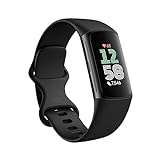
- Fitbit Charge 6 tracks key metrics from calories and Active Zone Minutes to Daily Readiness and sleep; move more with 40+ exercise modes, built-in GPS, all-day activity tracking, 24/7 heart rate, automatic exercising tracking, and more[1]
- See your heart rate in real time: Just link your Charge 6 to compatible exercise machines, like treadmills, ellipticals, and more[2]; and stay connected with YouTube Music controls[3]
- Tune into your body: Track your response to stress with a stress management score; learn about the quality of your sleep with a personalized nightly Sleep Score; and wake up more naturally with the Smart Wake alarm
- Run your routine with Google essentials: Find your way seamlessly during runs or rides with turn-by-turn directions from Google Maps on Fitbit Charge 6; and when you need a snack break on the go, just tap to pay with Google Wallet[1,4]
- Unlock more with Google Health Premium: With a premium membership, get personalized coaching that’s built with Gemini and adapts to your life[7]; get a 3-month trial at no cost to you[5] (Google Health Premium subscription sold separately)
Is Fitbit’s sleep sensor actually broken?
Not necessarily. Google says Fitbit sleep is inferred from movement and heart-rate data and that the device’s data is processed after syncing into sleep stages. That means a timestamp or time-zone error can affect how a sleep session is displayed, assigned to a day, or used in calculations even if the device collected some underlying measurements.
Google’s explanation of sleep tracking is available in its sleep-stage and data-handling documentation.
That does not mean every incorrect record can be recovered. If the device was not worn, failed to record, failed to sync, ran out of battery, or discarded a data segment, changing the time zone cannot recreate the missing sensor measurements.
How to fix a Fitbit sleep record after a time change
1. Force a fresh sync
- Keep the Fitbit close to your phone.
- Open the Google Health or Fitbit app.
- On the Today tab, touch and hold the screen, then pull down to refresh.
- If your app shows it, use Connections > Sync.
Fitbit devices normally sync automatically when nearby and when the app is opened. Google’s instructions are in its syncing help page and sleep-tracking guidance. Sync before editing the record; otherwise, a later sync could overwrite or complicate the correction.
2. Check the app’s time zone
In the current Google Health interface, use this path:
Rank #3

- Google Fitbit Air is the unbelievably comfortable, exceptionally smart way to transform your health[1]; and Google Health brings together effortless tracking and adaptive coaching to help make the most of your everyday[2]
- Unlock more with Google Health Premium: With a premium membership, get personalized coaching that’s built with Gemini and adapts to your life[2]; get a 3-month trial at no cost to you[5] (Google Health Premium subscription sold separately)
- Comfortable fit - One Size Tracker (130-210 mm): The lightweight, micro-adjustable fit sits comfortably and quietly, so you can wear Google Fitbit Air through work, play, and sleep; advanced sensors and new algorithms power more accurate, precise health tracking, 24/7[1]
- Designed for every occasion: With no screen to distract you or disrupt your style, your tracker moves seamlessly from bracelet to workout band to sleep band, and you can change looks in seconds – just press the pebble in, click, and go
- Long battery life: Google Fitbit Air’s battery lasts up to a week, and fast charging gets you one day of battery life in just five minutes[6,7]
- Open the Google Health app.
- Tap your profile picture or initials.
- Open Google Health settings.
- Under App Settings, tap Date, time & units.
- Tap Time Zone.
- Confirm that it matches your actual location.
If automatic detection selected the wrong zone, turn off Set Automatically, choose the correct time zone manually, and sync the Fitbit again. Older Fitbit-branded app versions may use labels such as Today > profile picture/settings > Fitbit settings > App Settings > Automatic time zone or Select time zone. Menu names can vary during the Google Health interface transition.
Google specifically advises checking the time zone after travel and when clocks change for daylight saving time. See the official time troubleshooting instructions.
3. Check the phone and connection
If the device time remains wrong:
- Confirm the phone’s date, time, time zone, and automatic time settings.
- Check that the app has Bluetooth and, on Android, Nearby Devices permission.
- Close and reopen the app.
- Log out, log back in, and sync again.
- Restart the phone and Fitbit.
- Check that the tracker has sufficient battery.
Google’s permissions guidance explains why the app needs the relevant device connection permissions.
How to edit an incorrect sleep session
If the sleep record exists but its start or end time is wrong, Google’s current instructions allow manual editing:
- Open the Sleep tab.
- Tap the Sleep duration tile.
- Go to the affected date.
- Open the menu in the upper-right corner.
- Choose Edit sleep.
- Tap the pencil icon.
- Correct the start or end time, then save.
If no sleep was recorded, use the app’s add button to enter a sleep session manually. This creates a log; it does not reconstruct the original movement, heart-rate, or sleep-stage measurements.
What’s actually slowing this PC down?
Pick the symptom - the matching free tool is one click away.
Rank #4
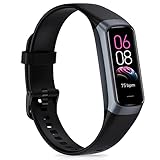
- 【All-day Health Monitor】The fitness tracker watch will automatically track your real-time heart rate, blood pressure and blood oxygen throughout the day to help you better understand your health. Equipped with a high-performance chipset, the fitness tracker automatically analyzes your overall sleep quality (deep/light/wake time) at night and gives you a nightly sleep score in the app to help you adjust your lifestyle and make you healthier.
- 【Smart Notification Remider】 With Bluetooth connection to your phone, it can support incoming calls/text alerts/APP message notifications (WhatsApp/Facebook/Instagram etc.), you will never miss your important messages. With the fitness watch, you can also perform sedentary reminder, water reminder, alarm clock, stopwatch, remote control photo, find devices, etc. to make your life healthier and smarter.
- 【25 Sports Modes】 Fitness tracker supports 25 professional sports modes, you can choose any number of sports modes as your exclusive sports modes in the app, such as walking, running, dancing, yoga, etc. and track your steps, heart rate, distance and calories to help you stay motivated, accomplish your sports goals, record your sports data, and make your sports more scientific.
- 【Long Battery Life】The fitness watch uses magnetic fast charging to provide a better battery life experience. It takes 1-2 hours to fully charge and can be used for up to 7 days of regular use and 15 days of standby. Compatible mobile phone system: android5.0 (inclusive) and IOS9.0 (inclusive) or above.
- 【1.1" AMOLED Touch Color Screen】AMOLED HD touch color screen is designed with clear and bright display, providing you with high quality touch and visual experience. This smartwatch includes a large number of original dials and supports custom dials.
Take a screenshot before editing. Google warns that changing the duration can create gaps at the beginning or end of the sleep-stage record. The Sleep Score may be recalculated, may not be fully accurate, or may not be generated at all. Some edited records may also be excluded from coaching analyses. Read the official Sleep Score limitations before treating an edited score as authoritative.
Independent reader supportYour contribution helps us test, update, and keep practical guides available for everyone.How to tell a daylight saving issue from another problem
| Symptom | More likely explanation | Next step |
|---|---|---|
| Exactly one hour wrong immediately after the clock change | Time-zone or timestamp reconciliation problem | Sync, verify the time zone, then edit if needed |
| Several hours wrong | Incorrect time zone, UTC-related sync, travel, phone settings, or account migration | Check all time settings and integrations; do not assume DST alone caused it |
| Correct times but poor or missing stages | Separate sleep-detection or data-quality issue | Check fit, battery, syncing, and device wear |
| Entire sleep session missing | Sync failure, battery failure, device connection problem, or missing sensor data | Refresh, manually sync, restart, and add the session only if necessary |
| Only Apple Health or another service disagrees | Third-party synchronization or duplicate records | Check which service is reading or writing the data |
A one-hour error that begins immediately after a clock change is the clearest match for the reported pattern. A problem continuing for many days, affecting multiple metrics, or producing a multi-hour shift deserves broader troubleshooting.
Other causes to check
Travel can leave the device, phone, and account working with different time zones. A Google Health or Fitbit account migration can also produce confusing historical labels. If steps, workouts, or daily boundaries are wrong as well as sleep, the issue is more likely to involve the app’s time-zone or synchronization state rather than sleep detection alone.
For genuine sleep-detection problems, check how the tracker is worn. Google recommends wearing it securely and positioning it higher on the wrist, about two to three finger widths above the wrist bone. A loose device, unusual movement, low battery, or poor contact can produce bad sleep-stage data independently of a time change.
The Tool Desk
Outbyte Driver Updater FREEFix the driver behind crashes, sound loss and screen glitchesFind Drivers →Outbyte PC Repair FREEClear out junk files and repair common Windows errorsFree Scan →Do not try to correct a stage-detection problem by changing the time zone when the timestamps are already correct.
Best Value

- Inspire 3 is the tracker that helps you find your energy, do what you love and feel your best – all you have to do is wear it;
- Compatible with Apple iOS 16.4 or higher and Android OS 11.0 or higher
- Move more: Stay motivated with a Daily Readiness Score, Active Zone Minutes, all-day activity tracking and 24/7 heart rate, 40+ exercise modes, automatic exercise tracking, and reminders to move
- Stress less: Keep an eye on your well-being with a daily Stress Management Score, mindfulness sessions, relax breathing sessions, irregular heart rhythm notifications, SpO2, menstrual health tracking, resting heart rate, and more[1,2]
- Sleep better: Automatic sleep tracking, a daily detailed Sleep Score, smart wake vibrating alarm, and sleep mode help you improve your sleep quality[3]
What to record before contacting support
If the problem survives a correct time-zone selection and a fresh sync, save:
- Fitbit device model.
- Phone model and operating system.
- App name and version, if visible.
- Date and location of the clock change.
- Your actual time zone and the times shown by the app.
- Actual versus reported bedtime and wake time.
- Screenshots of the sleep graph and device clock.
- Whether the phone changed time automatically.
- Whether you recently traveled.
- Whether steps, workouts, heart rate, or only sleep are affected.
- Whether manual time-zone selection and syncing changed the result.
This information helps separate a timestamp problem from a sensor, Bluetooth, battery, account, or third-party integration problem. Community answers can be useful troubleshooting evidence, but they should not be treated as formal Fitbit engineering statements.
What to do before the next clock change
- Confirm the phone is using the correct automatic date, time, and time-zone settings.
- Open the app and sync after waking on the first morning following the change.
- Screenshot an obviously incorrect sleep record before editing it.
- Use manual time-zone selection if automatic detection repeatedly chooses incorrectly.
- Check whether other health platforms are importing or exporting overlapping sleep data.
For U.S. readers, the 2026 daylight saving transitions occurred on March 8 and are scheduled for November 1. Those dates do not apply globally, and some U.S. jurisdictions do not observe daylight saving time. Use the local rule for your location.
Quick wins for a faster PC:
Clear out junk files and repair common Windows errorsFree Scan →Fix the driver behind crashes, sound loss and screen glitchesFind Drivers →Should you replace your Fitbit?
Not solely because one sleep record shifted after a clock change. The available evidence does not show that a newer Fitbit model reliably avoids time-zone or daylight-saving timestamp problems. Troubleshooting and, where appropriate, manual correction are the sensible first steps.
Replacement becomes more reasonable if you also have repeated hardware or sync failures, a failing battery, poor wearability, or feature requirements your current device cannot meet. A new tracker should not be presented as a guaranteed fix for an app or account time-zone problem.
Quick Recap
Product prices and availability are accurate as of the date/time indicated and are subject to change. Any price and availability information displayed on Amazon at the time of purchase will apply.

