If you’re weighing up the Fitbit Versa 3 against the older Versa 2, you’re probably trying to answer a simple question: is the newer watch genuinely better, or just slightly different. On paper they look similar, but the real-world experience diverges in a few important ways that affect workouts, daily convenience, and long-term value.
This comparison focuses on what actually changed between generations and, more importantly, whether those changes will matter to how you use a smartwatch day to day. By the end of this section, you should have a clear sense of whether the Versa 3’s upgrades justify the higher price, or if the Versa 2 still makes more sense for your needs.
Built-in GPS: the single biggest upgrade
The headline difference is GPS. The Versa 3 has built-in GPS, while the Versa 2 relies entirely on your phone for route tracking.
In practical terms, this means the Versa 3 can track runs, walks, and cycles independently, recording pace and distance without carrying your phone. If you train outdoors even a couple of times a week, this alone can fundamentally change how useful the watch feels.
🏆 #1 Best Overall

- Receive a Daily Readiness Score that reveals if you’re ready to exercise or should focus on recovery (requires Fitbit Premium membership. Premium content recommendations are not available in all locales and may be in English only).Water resistance depth:50 meters
- Run, bike, hike and more phone-free—and see your real-time pace & distance—with built-in GPS. Then check out your workout intensity map in the Fitbit app
- Active Zone Minutes uses your resting heart rate to gauge exercise effort and gives you a buzz when you step up the intensity so you can make the most of your workouts. Fitbit Versa 3 is water resistant to 50 meters
- Better track heart rate 24/7 with PurePulse 2.0, Fitbit’s enhanced heart rate technology
- Use Google Assistant or Amazon Alexa Built-in to get quick news, set bedtime reminders and alarms, control your smart home devices and more just by speaking to your watch
Health sensors and sleep tracking refinements
Both watches cover Fitbit’s core health metrics, including heart rate tracking, sleep stages, stress management, and blood oxygen saturation during sleep. However, the Versa 3 handles these features more seamlessly, with continuous overnight SpO2 tracking built in rather than relying on specific watch faces.
Day-to-day accuracy for heart rate is similar between the two, but the Versa 3 tends to be more consistent during higher-intensity workouts. For casual fitness users the difference is subtle, but data-focused users may notice fewer dropouts during intervals.
Design changes and real-world comfort
At a glance, the Versa 3 looks more modern thanks to slimmer bezels and a slightly larger AMOLED display. Text is easier to read, and workout screens feel less cramped, especially when glancing mid-run.
The switch from a physical side button on the Versa 2 to a capacitive button on the Versa 3 is more controversial. It looks cleaner, but it’s less reliable when your hands are sweaty or you’re wearing gloves, which can be frustrating during workouts.
Smarter smartwatch features, not just fitness
The Versa 3 adds a speaker and microphone, enabling Bluetooth phone calls directly from the watch when connected to your phone. This isn’t something everyone will use daily, but it’s genuinely useful for quick calls while cooking, walking, or mid-errand.
Voice assistant support also improves. The Versa 3 supports both Google Assistant and Amazon Alexa, while the Versa 2 is limited to Alexa. That flexibility matters if you’re already embedded in Google’s ecosystem.
Battery life and charging improvements
Battery life is rated at up to six days on both watches, and in everyday use that estimate holds up similarly. GPS use drains the Versa 3 faster, but that’s the trade-off for untethered tracking.
Where the Versa 3 clearly pulls ahead is charging speed. Fast charging can deliver roughly a full day’s use in about 12 minutes, which makes a real difference if you forget to charge overnight.
Software support and long-term value
Both watches run Fitbit’s own operating system and work with Android and iOS, but newer features tend to arrive on the Versa 3 first. Fitbit’s shift toward Google services also makes the Versa 3 feel more future-proof.
That said, the Versa 2 remains significantly cheaper and still delivers the core Fitbit experience. If GPS and calling aren’t priorities, it continues to offer strong value for everyday fitness and health tracking.
Design, Build Quality, and Everyday Wearability
After looking at features and long-term support, it’s worth stepping back to something you’ll interact with every single day. Design, materials, and comfort matter just as much as GPS or smart features, especially for a watch meant to be worn from sleep tracking to workouts and workdays.
Case design and dimensions
The Versa 3 refines the familiar Versa shape with slightly softer edges and slimmer display bezels, giving it a more contemporary, less chunky appearance on the wrist. Both watches use a square case with rounded corners, but the Versa 3’s larger 1.58-inch AMOLED screen feels more immersive without significantly increasing overall size.
In terms of dimensions, the difference is subtle rather than dramatic. The Versa 3 is marginally thinner and a touch lighter, which helps it disappear more easily under long sleeves and makes it less noticeable during all-day wear.
Materials and build quality
Both models use an aluminum case, which keeps weight down while still feeling solid and well-finished. The Versa 3’s casing feels slightly more refined, with cleaner transitions between the case and the glass that give it a more polished look.
Neither watch is designed to feel like a luxury timepiece, but build quality is appropriate for their price range. They’re sturdy enough for daily knocks, gym use, and outdoor workouts without feeling fragile or toy-like.
Buttons, controls, and daily interaction
One of the most noticeable design differences remains the side control. The Versa 2 uses a traditional physical button, which provides consistent feedback and is easy to press during workouts or when your hands are wet.
The Versa 3 replaces this with a capacitive button that blends seamlessly into the case. It looks cleaner, but in real-world use it can be hit-or-miss during sweaty sessions or in cold weather, which may matter if you frequently interact with the watch mid-exercise.
Comfort during workouts and sleep
Both watches are light enough to wear overnight without causing discomfort, making them suitable for sleep tracking. The flatter profile of the Versa 3 helps reduce pressure points, especially for side sleepers.
During workouts, neither watch shifts excessively on the wrist when properly tightened. The Versa 3’s slightly reduced weight and improved balance make it feel a bit more stable during runs and high-movement activities.
Straps and customization
Fitbit uses the same proprietary strap system on both models, which makes swapping bands quick and tool-free. Silicone bands are included by default and are comfortable for exercise, though they can feel sweaty during longer sessions.
There’s a wide ecosystem of third-party straps, including woven, leather-style, and metal options. This makes it easy to dress either watch up or down, reinforcing their role as all-day wearables rather than fitness-only devices.
Water resistance and durability for daily life
Both the Versa 2 and Versa 3 are water-resistant up to 50 meters, making them safe for swimming, showering, and sweaty workouts. They handle everyday exposure well, from rain to handwashing, without requiring special care.
In practical terms, durability is comparable between the two. The Versa 3 doesn’t dramatically improve toughness, but its slightly updated construction and slimmer profile help it feel more refined while maintaining the same everyday resilience.
Display and Interface: Screen Quality, Buttons, and User Experience
Coming off the physical design and durability, the day-to-day experience of using either Versa really comes down to the screen and how you interact with it. This is where the two watches feel closely related on paper, but noticeably different in practice.
Screen quality and readability
Both the Fitbit Versa 2 and Versa 3 use a 1.58-inch AMOLED display with the same 336 x 336 resolution. Colors are rich, blacks are properly deep, and text remains sharp enough for notifications and workout stats without squinting.
The Versa 3 does get slightly brighter in real-world use, particularly outdoors. In direct sunlight, it’s easier to glance at pace or heart rate on the Versa 3 without needing to tilt your wrist repeatedly, while the Versa 2 can feel a touch dimmer by comparison.
Always-on display and watch faces
Always-on display is available on both models, but it behaves more efficiently on the Versa 3. Animations feel smoother when waking the screen, and the always-on mode dims more gracefully rather than abruptly switching states.
Watch face options are identical across both models, with a mix of digital-heavy fitness layouts and more traditional analog-style designs. In daily use, the Versa 3 feels a bit more responsive when switching faces or long-pressing to customize complications.
Touch responsiveness and navigation
Swipe navigation is the primary way you move through menus, stats, and apps on both watches. The Versa 3’s newer processor makes scrolling through notifications and workout summaries feel more fluid, especially when you’ve accumulated a long list of alerts.
On the Versa 2, touch response is still reliable, but heavier menus can occasionally feel a fraction slower. It’s not laggy, but side-by-side, the Versa 3 simply feels more modern and polished.
Buttons and physical interaction
The difference between the physical button on the Versa 2 and the capacitive button on the Versa 3 becomes more noticeable once you start navigating daily menus. The Versa 2’s button offers consistent tactile feedback, making it easier to wake the screen or back out of menus without looking.
Rank #2

- Get inspired and stay accountable with Versa 4 + Premium - learn when to work out or recover, see real-time stats during exercise and find new ways to keep your routine fresh and fun.Operating temperature: -14° to 113°F.
- Built for better fitness results: Daily Readiness Score(1), built-in GPS and workout intensity map, Active Zone Minutes, all-day activity tracking and 24/7 heart rate, 40+ exercise modes and automatic exercise tracking, water resistant to 50 meters
- Tools to measure and improve sleep quality: personalized Sleep Profile(1), daily sleep stages & Sleep Score, smart wake alarm and do not disturb mode
- Maintain a healthy body and mind: daily Stress Management Score, reflection logging, SpO2(2), health metrics dashboard(3), guided breathing sessions, menstrual health tracking and mindfulness content
- Designed for fitness & beyond: on-wrist Bluetooth calls, texts and phone notifications(4), customizable clock faces, Fitbit Pay(5), Amazon Alexa built-in(6), Google Wallet & Maps (Google Maps Android only, coming Spring 2023 to iOS), 6+ day battery(7)
The Versa 3’s capacitive button keeps the case cleaner and slimmer, but it relies on pressure and finger placement rather than a click. During workouts or with wet hands, this can occasionally interrupt the otherwise smooth interface experience.
Software features and interface extras
Both watches run Fitbit OS, but the Versa 3 supports on-device GPS and voice assistants from both Google Assistant and Alexa. That adds more interactive options directly from the watch, including starting workouts or checking information hands-free.
The Versa 2 is limited to Alexa and relies more heavily on the phone for certain actions. For users who want quicker interactions without pulling out their phone, the Versa 3’s expanded software capabilities make the interface feel more self-sufficient.
Haptics, wake gestures, and daily usability
Haptic feedback is subtle on both watches, but the Versa 3’s vibrations feel slightly more refined and better tuned for notifications. Silent alarms are easier to notice without being jarring, which matters for sleep tracking and early-morning workouts.
Raise-to-wake works reliably on both models, though the Versa 3 responds faster and more consistently. Over a full day of use, those small interface improvements add up, making the Versa 3 feel less like a fitness tracker with a screen and more like a true smartwatch.
Health and Fitness Tracking: Sensors, Accuracy, and Insights
Once you move past the interface differences, the real separation between the Versa 3 and Versa 2 shows up in how they track your body and your workouts. Both are built around Fitbit’s health-first philosophy, but the newer hardware in the Versa 3 changes how independent and informative the tracking experience feels day to day.
Core health sensors and what they measure
Both watches use Fitbit’s optical heart rate sensor for continuous heart rate tracking, resting heart rate trends, and heart rate zones during workouts. In everyday use, heart rate readings on both models are stable and consistent, especially during low to moderate intensity activities like walking, cycling, and gym sessions.
Sleep tracking is also identical at a feature level. You get sleep stages, sleep duration, sleep score, and overnight heart rate metrics on both devices, with data syncing into the Fitbit app for long-term trends and coaching insights.
Neither the Versa 2 nor the Versa 3 includes ECG or EDA stress sensors. Those are reserved for higher-end Fitbit models, which keeps expectations realistic for this mid-range comparison.
Built-in GPS vs connected GPS
The biggest fitness-related upgrade on the Versa 3 is built-in GPS. This allows you to track runs, walks, and outdoor workouts without bringing your phone, recording distance, pace, and route directly on the watch.
The Versa 2 relies entirely on connected GPS through your phone. That works fine if you always carry your phone, but it adds friction and increases the chance of dropped or incomplete workout data if the phone connection isn’t stable.
In real-world testing, the Versa 3’s GPS accuracy is solid rather than elite. Distances generally align well with phone-based tracking and popular fitness apps, though tight turns and tree-covered paths can introduce minor variations. For casual runners and walkers, it’s accurate enough to trust without second-guessing your stats.
Workout tracking and exercise recognition
Both watches support a wide range of workout modes, including running, cycling, swimming, treadmill, weights, yoga, and interval training. Automatic exercise recognition works well for common activities like walking and running, typically kicking in after about 10 minutes.
During structured workouts, heart rate zone tracking is clear and easy to follow on both displays. The Versa 3’s smoother interface and quicker screen response make it easier to glance at stats mid-workout, especially when sweat or motion would normally slow interactions.
Neither watch is designed for advanced performance metrics like training load or recovery readiness. Instead, they focus on consistency, trends, and approachable insights that make sense for beginners and regular fitness users.
Daily activity tracking and movement insights
Step counting, distance estimation, calories burned, and active minutes are handled equally well on both models. Over long-term use, step counts remain consistent between the two, with no noticeable overcounting during normal daily activities.
Fitbit’s Active Zone Minutes system is one of the stronger motivational tools here. It rewards time spent in elevated heart rate zones rather than just raw steps, and both watches benefit equally from this approach.
Hourly movement reminders, goal celebrations, and daily summaries feel more engaging on the Versa 3 simply because of its faster interactions and slightly better haptics. The underlying data, however, is the same.
Sleep tracking accuracy and recovery context
Sleep tracking remains one of Fitbit’s strongest areas, and there’s no meaningful accuracy gap between the Versa 2 and Versa 3. Both reliably detect sleep start and end times, with stage breakdowns that feel believable when compared to how rested you actually feel.
The Fitbit app does most of the heavy lifting here. Trends like sleeping heart rate, sleep consistency, and sleep score averages provide useful context over weeks and months, regardless of which watch you use.
Premium features like detailed sleep insights and sleep profile comparisons require a Fitbit Premium subscription on both models. That cost is worth factoring in, especially if sleep tracking is a major reason you’re buying a Fitbit.
Health trends, long-term insights, and app experience
Both watches feed into the same Fitbit app ecosystem, which is clean, intuitive, and focused on habit-building rather than raw data overload. Health Metrics dashboards, including resting heart rate and breathing rate, are available on both devices when worn consistently.
The Versa 3 doesn’t unlock new health metrics, but it does make them easier to collect during outdoor workouts thanks to onboard GPS. That independence encourages more consistent tracking, especially for people who prefer leaving their phone behind.
If your priority is reliable health tracking with minimal setup, the Versa 2 still delivers the full Fitbit experience. The Versa 3 simply removes a few practical limitations, making fitness tracking feel more complete and flexible in everyday use.
GPS and Sports Performance: Built-In vs Phone-Connected Tracking
That added independence in health tracking leads directly into the biggest functional difference between the Versa 3 and Versa 2 for active users: how they handle outdoor exercise. Both watches track the same core fitness metrics, but the way they record distance, pace, and routes can feel very different in real-world use.
Built-in GPS on Versa 3: freedom without your phone
The Fitbit Versa 3 includes built-in GPS, allowing it to track runs, walks, hikes, and outdoor rides without relying on your smartphone. You can head out with just the watch on your wrist and still get a full route map, distance accuracy, and pace data saved to the Fitbit app afterward.
In practice, GPS lock times are reasonably quick for a mid-range smartwatch, typically taking under a minute in open areas. Accuracy is solid rather than class-leading, with route maps that stay close to the road or trail but may smooth corners or slightly undercut sharp turns compared to higher-end sports watches.
For everyday runners and walkers, that level of precision is more than sufficient. Pace consistency feels reliable, and distance totals line up closely with known routes, which makes the Versa 3 easy to trust for casual training and weekly mileage tracking.
Connected GPS on Versa 2: capable, but more restrictive
The Versa 2 lacks onboard GPS and instead uses connected GPS through your phone. This means you’ll need to carry your smartphone during outdoor workouts to record route maps, distance, and pace data.
When paired with a phone, tracking accuracy is largely dependent on your phone’s GPS quality and signal strength. With a modern smartphone, results can be just as accurate as the Versa 3, but the experience is less seamless and more prone to dropouts if Bluetooth connection falters.
For users who already run with a phone for music or safety, this limitation may not matter much. However, it does add friction, and spontaneous walks or short runs can easily go untracked if you forget your phone.
Rank #3
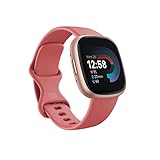
- Get inspired and stay accountable with Versa 4 + Premium - learn when to work out or recover, see real-time stats during exercise and find new ways to keep your routine fresh and fun
- Built for better fitness results: Daily Readiness Score(1), built-in GPS and workout intensity map, Active Zone Minutes, all-day activity tracking and 24/7 heart rate, 40+ exercise modes and automatic exercise tracking, water resistant to 50 meters
- Tools to measure and improve sleep quality: personalized Sleep Profile(1), daily sleep stages & Sleep Score, smart wake alarm and do not disturb mode
- Maintain a healthy body and mind: daily Stress Management Score, reflection logging, SpO2(2), health metrics dashboard(3), guided breathing sessions, menstrual health tracking and mindfulness content
- Designed for fitness & beyond: on-wrist Bluetooth calls, texts and phone notifications(4), customizable clock faces, Fitbit Pay(5), Amazon Alexa built-in(6), Google Wallet & Maps (Google Maps Android only, coming Spring 2023 to iOS), 6+ day battery(7)
Sports modes and workout versatility
Both watches support a similar lineup of exercise modes, including running, walking, cycling, swimming, treadmill workouts, and general gym sessions. Automatic exercise recognition works well on both, reliably detecting longer walks and runs without manual input.
The difference again comes down to execution. On the Versa 3, outdoor activities feel more self-contained, with distance and pace displayed directly on the wrist using GPS data, even when offline from your phone.
Swimming performance is equal between the two, with water resistance rated at 5 ATM and reliable lap counting for pool sessions. Neither watch is designed for advanced swim metrics like stroke detection or open-water swimming accuracy, which keeps expectations realistic.
Heart rate reliability during workouts
Both the Versa 2 and Versa 3 use Fitbit’s optical heart rate sensor, and performance is broadly similar across the two models. During steady-state activities like walking, jogging, and cycling, heart rate tracking is consistent and aligns well with perceived effort.
High-intensity intervals can introduce slight lag, especially during rapid heart rate changes. This is a common limitation for wrist-based optical sensors and not unique to either watch.
The Versa 3 benefits indirectly from its smoother performance and faster interface, making it easier to glance at heart rate zones mid-workout. The data itself, however, remains effectively the same on both models once synced to the app.
Battery impact during GPS workouts
GPS usage has a noticeable impact on battery life, and this is where the two watches diverge in daily behavior. The Versa 3 typically delivers around 10 to 12 hours of continuous GPS tracking, which is enough for long runs, hikes, or weekend activities but not multi-day endurance events.
The Versa 2 avoids this drain entirely by offloading GPS work to your phone, which can help preserve watch battery life. In return, your phone takes the hit, and you’re managing two devices instead of one.
For most users, the Versa 3 still comfortably lasts several days between charges even with regular GPS workouts. The convenience of leaving your phone behind often outweighs the slightly higher power consumption.
Which tracking approach fits your routine?
If your workouts are mostly outdoors and you value simplicity, the Versa 3’s built-in GPS is a meaningful upgrade that changes how you use the watch day to day. It encourages more consistent tracking and makes the watch feel like a complete fitness tool rather than a companion device.
The Versa 2 remains a perfectly capable fitness tracker for indoor workouts, gym sessions, and phone-assisted outdoor exercise. Its limitations are practical rather than technical, and for budget-focused buyers, connected GPS may be an acceptable trade-off.
Ultimately, this section highlights the clearest line between the two models. The Versa 3 prioritizes independence and convenience, while the Versa 2 delivers similar fitness insights with a few more strings attached.
Smart Features and Ecosystem: Voice Assistants, Apps, and Payments
Once you move beyond fitness tracking, the day-to-day experience of living with a smartwatch depends heavily on how smart it feels off the workout screen. This is where the Versa line has always aimed to balance simplicity with just enough convenience features to replace frequent phone checks.
Both the Versa 3 and Versa 2 run Fitbit OS, so the overall look and navigation logic will feel familiar regardless of which model you choose. The differences show up in responsiveness, assistant support, and how future-proof each watch feels within Fitbit’s ecosystem.
Voice assistants: Alexa vs Google Assistant
The Versa 2 launched with Amazon Alexa built in, and it remains Alexa-only throughout its lifespan. You can ask for weather updates, set timers, control smart home devices, or add items to a shopping list, all via voice dictation.
The Versa 3 supports both Amazon Alexa and Google Assistant, although you can only enable one at a time. In practical use, Google Assistant tends to feel more tightly integrated with Android phones, especially for reminders and quick questions, while Alexa remains broadly useful across platforms.
Response speed is noticeably better on the Versa 3 thanks to its faster processor and improved microphone performance. On the Versa 2, voice requests can feel a touch slower and occasionally require repetition, especially in noisier environments.
App ecosystem and everyday functionality
Fitbit’s app ecosystem is intentionally curated rather than expansive. You’ll find essentials like weather, timers, alarms, Spotify and Deezer controls, Starbucks, and a handful of fitness and lifestyle apps, but this is not an Apple Watch or Wear OS-style app playground.
Both watches handle notifications similarly, showing alerts from your phone with the ability to read messages at a glance. Android users can send quick replies or voice responses, while iPhone users are limited to viewing notifications only.
The Versa 3 again benefits from smoother scrolling and quicker app launches, which makes interacting with notifications and widgets feel less sluggish. It doesn’t add new apps over the Versa 2 so much as make the existing ones more pleasant to use repeatedly throughout the day.
Music controls and storage limitations
Music handling is identical in concept on both watches but limited in scope. You can control music playback on your phone using Spotify or other media apps, but offline playback support is restricted.
Both models support storing music locally for playback with Bluetooth headphones, but syncing files is slow and relies on desktop software. There is no true offline Spotify playback, which is an important limitation for runners hoping to leave their phone behind.
In practice, most users treat the Versa 2 and Versa 3 as music remotes rather than standalone music players. The Versa 3’s GPS encourages phone-free workouts, but the music experience doesn’t fully keep pace with that independence.
Fitbit Pay and contactless convenience
Fitbit Pay is available on both the Versa 2 and Versa 3, using NFC for contactless payments. Setup is handled through the Fitbit app, and payments are secured with a PIN entered on the watch.
Bank support varies by region, and this remains Fitbit Pay’s biggest limitation compared to Apple Pay or Google Wallet. If your bank is supported, the system works reliably and is convenient for quick purchases after workouts or during errands.
There is no difference in payment speed or reliability between the two models. The experience is identical, and neither watch has an advantage here beyond general hardware responsiveness.
Platform compatibility and long-term support
Both watches work with Android and iOS, syncing through the Fitbit app for health data, notifications, and settings. Core features remain consistent across platforms, but Android users get slightly more flexibility with replies and assistant integration.
The Versa 3 feels better positioned for long-term software relevance, particularly with Google’s increasing influence over Fitbit. While the Versa 2 is still supported, its older hardware and single-assistant limitation may age faster as new features roll out.
From a daily usability standpoint, the smart features on both watches are about convenience rather than power. The Versa 3 refines the experience with faster interactions and more assistant flexibility, while the Versa 2 delivers the essentials at a lower cost, without feeling stripped back for most everyday tasks.
Battery Life and Charging: Real-World Endurance Compared
After looking at smart features and long-term software support, battery life becomes the next practical consideration. For many Fitbit buyers, charging frequency matters more than raw performance, especially if the watch is worn overnight for sleep tracking.
On paper, both the Versa 2 and Versa 3 promise similar longevity. In daily use, however, the way you interact with each watch can lead to noticeably different outcomes.
Rank #4

- 1.59in l x 1.59in w x 0.49in h. You can also get call, text and app notifications, use amazon Alexa built-in and control Spotify, freezer and Pandora when your phone is nearby.
- Compatibility: Apple iOS 12.2 or higher, Android OS 7.0 or higher, Syncing range: Up to 30ft, Music control via Bluetooth Classic on Android and Bluetooth LE on iOS devices.
- Built-in GPS + GLONASS, Speaker, Microphones, Optical heart rate sensor, Red and infrared sensors for oxygen saturation (SpO2) monitoring
- Water-resistant to 50 meters. Battery life up to 6+ days. Heart rate tracking technology. Saves 7 days of detailed motion data – minute by minute.
- International Model - No warranty in the US. In Box: Fitbit Versa 3, Classic wristband (both small & large), Charging cable
Rated battery life vs everyday usage
Fitbit rates both the Versa 2 and Versa 3 at up to six days of battery life, and that figure is achievable under light use. This typically means notifications enabled, heart rate tracking running continuously, a few short workouts per week, and no always-on display.
The Versa 2 tends to get closer to that six-day mark more consistently for many users. Without built-in GPS, it avoids one of the biggest battery drains found in modern fitness watches, which makes its endurance feel more predictable from day to day.
The Versa 3 can still last five to six days in similar conditions, but only if GPS use is minimal. Once you start tracking outdoor runs or walks regularly using onboard GPS, real-world battery life drops more quickly.
Impact of GPS and workouts
GPS is the single biggest differentiator in battery behavior between these two models. On the Versa 3, a long outdoor workout with GPS can consume a significant chunk of the battery, especially if paired with continuous heart rate tracking and screen wake-ups.
Expect roughly 10 to 12 hours of continuous GPS tracking on a full charge, which aligns with other mid-range fitness watches. For runners training several times per week, that usually translates to two to three days between charges rather than five or six.
The Versa 2 relies on connected GPS through your phone, which shifts most of the power drain away from the watch itself. If you always run with your phone, the Versa 2’s battery holds up better over time despite offering fewer tracking features.
Always-on display and background sensors
Both watches support an always-on display mode, but enabling it has a noticeable impact on battery life. With always-on active, the Versa 2 typically drops to around two to three days of use, while the Versa 3 can dip closer to two days, particularly if GPS workouts are mixed in.
Sleep tracking, SpO2 monitoring during sleep, and continuous heart rate tracking are handled efficiently on both models. These background sensors do contribute to overnight drain, but neither watch struggles to make it through a full day and night when properly charged.
In practice, users who prioritize sleep tracking often end up charging both models every three to four days regardless of advertised maximums.
Charging speed and convenience
Charging is one area where the Versa 3 clearly pulls ahead. It supports fast charging, delivering roughly a full day of use in about 10 to 15 minutes, which is extremely useful when you forget to charge before bed or head out for a workout.
A full charge on the Versa 3 takes just over an hour, and the improved charging puck is more secure than previous Fitbit designs. This makes short top-up sessions genuinely practical rather than a stopgap.
The Versa 2 charges more slowly and lacks fast charging entirely. A full charge typically takes close to two hours, which is fine overnight but less forgiving if you are trying to squeeze in power during the day.
Long-term battery health and ownership experience
Over months of use, both watches hold up well in terms of battery degradation, assuming standard charging habits. Neither model is known for severe battery decline within the first couple of years, which is important given their sealed designs.
The Versa 2’s simpler power demands may help it age slightly more gracefully for users who avoid heavy screen usage. Meanwhile, the Versa 3’s faster charging partially offsets its higher drain, making it easier to live with even as the battery naturally wears down.
From a real-world ownership perspective, the Versa 2 feels like the more hands-off option for battery management. The Versa 3 asks a bit more attention, but rewards you with quicker charging and greater flexibility for GPS-based training.
Compatibility and Software Support: Fitbit OS, Updates, and Google Integration
Battery life and charging convenience matter day to day, but long-term satisfaction with either Versa model is just as dependent on software support and phone compatibility. This is where the age gap between the Versa 2 and Versa 3 becomes more noticeable, especially as Fitbit continues its transition under Google ownership.
Phone compatibility and setup experience
Both the Fitbit Versa 2 and Versa 3 work with Android and iPhone, pairing through the Fitbit mobile app rather than directly through the phone’s system settings. Setup is straightforward on both, guided clearly through account creation, firmware updates, and health permissions.
In daily use, Android users tend to get a slightly richer experience, particularly around notifications and quick replies. iPhone users still receive core alerts and health syncing, but are more limited in how they can interact with messages, which is a platform restriction rather than a Fitbit-specific issue.
Neither watch supports cellular connectivity, so both rely on a paired phone for notifications, music syncing, and voice assistant features. As long as your phone stays nearby, compatibility is stable and generally hassle-free on both platforms.
Fitbit OS experience and performance differences
Both watches run Fitbit OS, which prioritizes simplicity, health data clarity, and long battery life over deep app ecosystems. Navigation is gesture-based, with swipe controls that feel intuitive even for first-time smartwatch users.
The Versa 3 benefits from a newer processor and slightly refined software optimizations, which translate into smoother scrolling, faster app launches, and more responsive touch input. The Versa 2 is still perfectly usable, but side-by-side it feels a touch slower, especially when moving through menus or waking the screen.
Core features such as heart rate tracking, sleep scores, SpO2 trends, guided breathing, and on-watch workouts behave the same on both models. From a health-tracking standpoint, Fitbit OS delivers a consistent experience regardless of which Versa you choose.
App support, watch faces, and ecosystem limitations
The Fitbit App Gallery is shared between the Versa 2 and Versa 3, offering a modest selection of third-party apps, utilities, and watch faces. Popular options like Spotify controls, weather apps, timers, and fitness-focused tools are available on both.
That said, the ecosystem is clearly more limited than what you get from Apple Watch or Wear OS devices. App updates arrive slowly, and many third-party developers have shifted focus away from Fitbit in recent years.
Watch faces remain a strong point, with plenty of clean, fitness-first designs that emphasize steps, heart rate, and battery life. Both models use the same strap system and display resolution, so visual customization and comfort feel nearly identical in everyday wear.
Software updates and long-term support outlook
This is where the Versa 3 holds a meaningful advantage. As a newer model, it continues to receive firmware updates and feature refinements, including stability improvements and newer Fitbit services as they roll out.
The Versa 2 still receives basic maintenance updates, but it is clearly closer to the end of its active support lifecycle. Major new features are unlikely, and update frequency has slowed compared to the Versa 3.
For buyers planning to keep their watch for several years, the Versa 3 offers more confidence in ongoing compatibility and bug fixes. The Versa 2 is better viewed as a mature, stable platform rather than a forward-looking one.
Voice assistants and the shift toward Google services
One of the clearest software differences lies in voice assistant support. The Versa 2 launched with Amazon Alexa only, and that remains its sole option today.
The Versa 3 supports both Amazon Alexa and Google Assistant, reflecting Fitbit’s transition under Google. In practice, Google Assistant feels more naturally integrated for Android users, offering faster responses and better compatibility with Google services like calendars and reminders.
This dual-assistant support also signals where Fitbit’s software direction is headed. While neither watch offers the deep system-level integration of a Wear OS device, the Versa 3 is better positioned as Fitbit gradually aligns its services with Google’s ecosystem.
💰 Best Value

- 1.59in l x 1.59in w x 0.49in h. You can also get call, text and app notifications, use amazon Alexa built-in and control Spotify, freezer and Pandora when your phone is nearby.
- Compatibility: Apple iOS 12.2 or higher, Android OS 7.0 or higher, Syncing range: Up to 30ft, Music control via Bluetooth Classic on Android and Bluetooth LE on iOS devices.
- Built-in GPS + GLONASS, Speaker, Microphones, Optical heart rate sensor, Red and infrared sensors for oxygen saturation (SpO2) monitoring
- Water-resistant to 50 meters. Battery life up to 6+ days. Heart rate tracking technology. Saves 7 days of detailed motion data – minute by minute.
- International Model - No warranty in the US. In Box: Fitbit Versa 3, Classic wristband (both small & large), Charging cable
What this means for everyday usability and value
In daily use, both watches deliver a familiar, reliable Fitbit experience that focuses on health tracking rather than app overload. The Versa 2 remains perfectly functional for users who want a simple smartwatch with strong fitness fundamentals.
The Versa 3, however, feels more future-proof. Faster performance, longer software support, and deeper Google integration make it the safer choice for users who care about updates and ecosystem longevity.
If you plan to use your smartwatch mainly as a fitness companion and keep costs down, the Versa 2’s software remains sufficient. If you want a smoother experience that is more likely to age gracefully alongside Google’s evolving Fitbit strategy, the Versa 3 clearly justifies its edge.
Price, Value, and Deals in 2026: Which Versa Makes More Sense
All of the differences around software longevity, GPS, and assistant support ultimately funnel into one practical question: how much are these watches actually worth to buy today. In 2026, the Versa 3 and Versa 2 sit in very different places in Fitbit’s pricing hierarchy, and that gap has become a key part of the decision.
Current pricing reality in 2026
The Fitbit Versa 3 is no longer sold at full retail by Fitbit itself, but it remains widely available through third-party retailers and refurbished programs. New-old-stock units typically sit in the mid-range smartwatch bracket, while certified refurbished models often undercut that price significantly.
The Versa 2, by contrast, has firmly transitioned into budget territory. It is frequently discounted, bundled with extra bands, or sold refurbished at prices closer to basic fitness trackers than modern smartwatches.
What you’re really paying for with Versa 3
At its current market price, the Versa 3 is best understood as a feature-complete fitness smartwatch rather than a discounted leftover. Built-in GPS alone changes how you use the watch day to day, especially if you run or walk without your phone.
You are also paying for a longer support runway. In 2026, that still matters, because compatibility with newer Android and iOS versions, cloud services, and Google’s evolving Fitbit backend will shape how usable the watch feels over time.
Where the Versa 2 still delivers strong value
The Versa 2’s appeal is almost entirely about cost efficiency. For significantly less money, you still get Fitbit’s core strengths: reliable heart-rate tracking, sleep metrics, solid battery life, and a comfortable, lightweight case that works well for all-day wear.
If you mainly track steps, workouts at the gym, and sleep, the real-world experience is not dramatically worse than the Versa 3. The OLED display remains sharp, the aluminum case holds up well, and the watch still feels refined rather than cheap.
Refurbished and second-hand considerations
In 2026, refurbished units are often the smartest way to buy either model. A refurbished Versa 3 with a fresh battery and warranty can narrow the price gap enough that GPS and better software support feel like obvious upgrades.
With the Versa 2, refurbished purchases make sense if the price is very low. Because it is closer to the end of its support lifecycle, the savings need to be meaningful to justify choosing it over the newer model.
Hidden costs: subscriptions and longevity
Both watches rely on the same Fitbit app and optional Fitbit Premium subscription. That means ongoing costs are identical regardless of which Versa you choose, and the hardware price is only part of the equation.
This is where the Versa 3 quietly gains value. Paying a bit more upfront can translate into fewer frustrations later, especially as app updates and platform changes increasingly assume newer hardware capabilities.
Which Versa makes more sense for different buyers
If your priority is spending as little as possible while still getting a polished smartwatch with strong health tracking, the Versa 2 remains a rational buy in 2026. It works best for users who want stability, not expansion, and are comfortable with aging hardware.
The Versa 3 makes more sense if you want better outdoor tracking, longer relevance, and a smartwatch that feels less like it is on borrowed time. Even at a higher price, its broader feature set and extended usability tilt the value equation in its favor for most active users.
Final Verdict: Which Fitbit Versa Should You Buy or Upgrade To?
Stepping back from the specs and price charts, the Versa 2 vs Versa 3 decision comes down to how you actually use a smartwatch day to day. Both still deliver Fitbit’s core promise of approachable health tracking in a slim, comfortable case, but their long-term value is no longer equal in 2026.
Buy the Fitbit Versa 3 if you want the most future-proof experience
The Versa 3 is the safer buy for most people, even now. Built-in GPS fundamentally changes how the watch works for runners, walkers, and cyclists, letting you leave your phone behind without sacrificing route or pace data.
Beyond GPS, the Versa 3 benefits from newer internals, better sensor support, and longer software relevance. In daily use, it simply feels less constrained, whether that’s faster syncing, smoother navigation, or broader compatibility with newer Fitbit features.
If you are buying your first Fitbit smartwatch or replacing an older tracker, the Versa 3 strikes a better balance between price, capability, and longevity. It is the model that still feels current rather than “good for its age.”
Buy the Fitbit Versa 2 if budget is your top priority
The Versa 2 remains viable if the price difference is significant and your expectations are modest. For gym workouts, step tracking, sleep analysis, and basic smartwatch notifications, it still performs reliably and comfortably.
Its aluminum case, lightweight design, and OLED display hold up well, and battery life remains strong for everyday use. As long as you do not need onboard GPS or the latest software features, the real-world experience is still polished.
That said, the Versa 2 makes sense mainly as a discounted or refurbished purchase. At anything close to the Versa 3’s price, its aging hardware and shorter remaining support window are harder to justify.
Should you upgrade from Versa 2 to Versa 3?
Upgrading from a Versa 2 to a Versa 3 is worthwhile if you have started doing more outdoor activities or feel limited by phone-dependent GPS tracking. The improvement is immediately noticeable the moment you log your first untethered run or walk.
If your Versa 2 is still meeting your needs and you mostly train indoors or casually, the upgrade is not urgent. The health metrics, comfort, and battery life will feel familiar rather than transformative.
Think of the Versa 3 upgrade as a lifestyle shift rather than a performance leap. It matters most when your habits have outgrown what the Versa 2 was designed to handle.
The bottom line
In 2026, the Fitbit Versa 3 is the better all-around smartwatch for most buyers, offering stronger fitness independence, better longevity, and fewer compromises. It costs more, but that extra spend buys relevance and flexibility that the Versa 2 cannot match anymore.
The Versa 2 still earns its place as a budget-friendly entry point into Fitbit’s ecosystem, provided the savings are meaningful. Choose it with clear expectations, and it can still be a satisfying, dependable companion.
If you want the simplest advice: buy the Versa 3 if you can afford it, and only choose the Versa 2 when price outweighs future-proofing. That clarity, more than any spec sheet, is what ultimately makes the decision easy.