The Garmin Approach X40 arrived at a moment when golf wearables were still figuring out their identity. It wasn’t a full golf watch, not quite a fitness tracker, and definitely not a smartwatch in the modern sense. Instead, it tried to live in the middle ground, offering just enough on-course intelligence and daily activity tracking to appeal to golfers who wanted simplicity over spectacle.
That context matters today because many people looking at the X40 now aren’t chasing the latest tech. They’re beginners, casual golfers, or bargain hunters scanning the used market for something dependable that won’t overwhelm them. Understanding what the X40 was designed to be, and just as importantly what it was never meant to do, is the key to deciding whether it still fits your needs in 2026.
What follows is not nostalgia, but perspective. This is about how Garmin positioned the X40, how it actually behaved in real-world use, and why its original design philosophy still resonates for a very specific type of golfer.
A hybrid before hybrids were fashionable
The Approach X40 was Garmin’s attempt to fuse its established golf GPS expertise with the growing popularity of wrist-based fitness bands. Physically, it looked far closer to a slim activity tracker than a traditional golf watch, with a narrow rectangular display, lightweight polymer body, and silicone strap designed for all-day comfort. On the wrist, it was unobtrusive enough to wear to the office or the gym, something bulkier golf watches of the time struggled to achieve.
🏆 #1 Best Overall
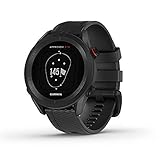
- New round watch design with a high-resolution sunlight-readable display
- Battery life: up to 30 hours in GPS Mode
- More than 42,000 courses preloaded from around the world
- Keep score right on the watch and upload directly to the Garmin Golf app (when paired with a compatible smartphone) to participate in weekly leaderboards
- Automatically keep track of your score and how far you hit with each club with compatible Approach CT10 club tracking sensors (sold separately)
This design choice dictated everything else. The screen was small and monochrome, optimized for glanceable information rather than rich visuals. Garmin wasn’t chasing touch-driven maps or smartwatch flair here; it was chasing wearability and simplicity.
Golf first, but stripped to essentials
On the course, the X40 focused on core GPS distances: front, middle, and back of the green. Courses were preloaded from Garmin’s global database, and satellite lock was generally quick for its era, especially when synced regularly. There were no hole maps, no hazard views, and no PlaysLike distance adjustments.
That limitation was intentional. The X40 assumed its user wanted quick numbers, not strategy overlays. For beginners and high-handicap golfers, that approach often resulted in faster play and less screen-fiddling, even if it left advanced players wanting more.
Fitness tracking as a daily justification
Away from the course, the X40 leaned heavily on step tracking, basic activity goals, and sleep monitoring. It predated wrist-based heart rate sensors becoming standard, so there was no continuous HR data and no advanced wellness metrics. Calories, distance, and inactivity alerts were present, but everything lived at a surface level.
What mattered was consistency. The X40 was light, comfortable, and had enough battery life to be worn continuously without anxiety. For many owners, that made it more useful as an everyday device than a golf-only watch that stayed in the bag between rounds.
Battery life as a defining advantage
One of the X40’s most enduring strengths was battery endurance. Garmin rated it for up to a week in watch and activity tracking mode, with enough reserve for multiple GPS-assisted rounds of golf. In real-world use, that claim largely held up, provided notifications were kept in check.
Even today, that kind of battery behavior stands in contrast to modern AMOLED golf watches that trade longevity for visual polish. For users who dislike frequent charging, the X40’s efficiency remains quietly compelling.
Why its limitations now define its relevance
Viewed through a modern lens, the X40 is clearly constrained. There’s no color display, no touch interface, no Garmin Pay, no Bluetooth calling, and no advanced golf analytics like shot tracking or strokes gained. Smartphone notifications are basic, and compatibility depends heavily on older versions of Garmin Connect behaving nicely with current phones.
But those same constraints also explain why the X40 still matters. It represents a focused tool rather than a digital Swiss Army knife. For golfers who want distances, steps, and a device that disappears on the wrist, the X40’s original intent aligns surprisingly well with present-day expectations at the lower end of the market.
A product shaped by its era, but not obsolete by default
The Garmin Approach X40 wasn’t built to compete with today’s Approach S series or smartwatch-style golf wearables. It was built to make golf GPS less intimidating and daily fitness tracking more accessible. That mission didn’t age poorly; it simply became unfashionable as feature lists exploded.
Understanding that philosophy sets the stage for evaluating whether the X40 still earns a place on your wrist. The next step is breaking down how it actually performs today, where it still holds up, and where time has finally caught up with it.
Design, Build, and Wearability: Slim Fitness Band Meets Golf GPS
That original philosophy becomes most obvious the moment you put the Approach X40 on your wrist. Unlike traditional golf watches that announce themselves as sports tools, the X40 presents as a slim fitness band that happens to know the course. This design choice was deliberate, and it still shapes how livable the device feels today.
A fitness-band form factor first, golf watch second
The X40 is narrow, lightweight, and low-profile, closer in spirit to early Garmin Vivosmart bands than to the company’s bulkier Approach S-series watches. The elongated rectangular module sits flush against the wrist, avoiding the top-heavy feel common to round GPS watches. For golfers who dislike wearing a “computer” on their arm during a swing, this alone can be a deciding factor.
Because it lacks a traditional watch case, the X40 doesn’t catch on jacket cuffs or glove straps, and it remains unobtrusive throughout a round. On the course, it’s easy to forget it’s there until you glance down for yardages. Off the course, it blends into casual wear far more naturally than most dedicated golf devices from its era.
Materials, durability, and age-related realities
Garmin kept the construction simple: a plastic housing, a flexible silicone band, and a monochrome OLED display protected by a flush lens. There’s no metal bezel or premium finishing to admire, but the trade-off is durability and lightness rather than luxury. The X40 feels utilitarian in the hand, yet appropriately robust for daily wear.
That said, age matters here more than in heavier, watch-style designs. Silicone bands from this generation can show cracking or loss of elasticity over time, especially on secondhand units. Replacement bands are not as readily available as they are for modern Garmin watches, so condition should factor into any buying decision.
Comfort during long rounds and all-day wear
Comfort is one of the X40’s enduring strengths. Its low mass and even weight distribution make it easy to wear through 18 or even 36 holes without irritation. There’s no pronounced pressure point under the wrist, which also makes it more comfortable for sleep tracking compared to thicker golf watches.
During everyday use, the band-style clasp allows for fine adjustment, helping avoid the “either too tight or too loose” problem found on some pin-and-tuck straps. For users transitioning from basic fitness trackers, the X40 feels familiar and unintimidating. For traditional watch wearers, it may feel almost too minimal, depending on personal taste.
Display clarity and interaction limitations
The monochrome OLED display is functional rather than impressive. Outdoors, contrast is generally good, and yardages remain readable even in bright sunlight, which is more important on the course than pixel density or animations. Indoors, the screen is crisp but clearly dated next to modern color or AMOLED panels.
Interaction is handled through physical buttons rather than touch, which now feels old-fashioned but remains reliable with sweaty hands or while wearing a glove. The downside is slower navigation and less intuitive menu flow compared to newer Garmin devices. You’re trading elegance and speed for simplicity and predictability.
Water resistance and everyday practicality
The X40 is rated for everyday water exposure, making it safe for rain-soaked rounds, handwashing, and general daily use. It was never marketed as a swim tracker, but it handles moisture without drama. For golfers who play in variable weather, that reliability still counts.
As an all-day wearable, the X40’s design aligns closely with its battery advantages discussed earlier. Because it’s light, discreet, and easy to live with, users are more likely to actually wear it continuously rather than taking it off between activities. That consistency is part of why the X40 still makes sense for certain users today, even as its feature set shows its age.
Golf Features Explained: Distances, Courses, and On-Course Usability
All of the comfort and simplicity discussed earlier only matter if the X40 delivers where it counts: on the course. This is where Garmin positioned the Approach X40 as a no-frills golf GPS band, and understanding its limitations is just as important as appreciating its strengths.
Preloaded courses and setup experience
The Approach X40 ships with tens of thousands of preloaded courses worldwide, stored directly on the device. There’s no need to download individual courses before a round, which removes a common friction point found on phone-dependent golf apps. As long as the course exists in Garmin’s database, the X40 will recognize it automatically once GPS locks in.
Initial setup is handled through Garmin Express or Garmin Connect, depending on when the device was last updated. Course updates are infrequent by modern standards, but they still work reliably, and most established courses remain accurate. Newer course redesigns or recently opened facilities may be missing or slightly outdated, which is a real consideration if you play newer layouts.
GPS acquisition and real-world accuracy
GPS lock typically takes under a minute in open conditions, which is acceptable for a device of this generation. It’s slower than current multi-band Garmin watches, but not slow enough to feel frustrating during a normal pre-round routine. Once locked, the signal remains stable throughout the round.
Distance accuracy is solid for front, middle, and back of the green measurements. In side-by-side testing with newer Garmin Approach models, yardages are usually within a few yards, which is more than sufficient for beginners and most mid-handicap players. The X40 is not designed to replace a laser rangefinder, but for strategic club selection, it does the job consistently.
What distances you actually get
The X40 focuses on the essentials: front, middle, and back of the green. These distances are displayed clearly, with the middle distance typically emphasized during play. There is no dynamic green view, no manual pin positioning, and no hazard scrolling.
Hazard distances are limited and not interactive. You won’t get a list of bunkers, water carries, or dogleg measurements like you would on newer Approach models. For golfers who rely on visual planning or play courses with complex layouts, this is a meaningful limitation.
Hole navigation and on-course flow
Hole advancement is automatic and generally accurate. The X40 recognizes when you leave a green and move to the next tee without requiring manual input. In rare cases, especially on courses with closely spaced holes, it may lag or misidentify the transition, but this is uncommon.
Navigation between screens is intentionally minimal. You’re essentially cycling between time, step count, and yardages using physical buttons. That simplicity reduces distraction but also limits flexibility, especially if you’re used to modern golf watches with richer hole data.
No shot tracking, no scorecard, no strokes gained
This is where the X40’s age becomes most obvious. There is no shot tracking, no digital scorecard, and no post-round analytics beyond basic activity data. You cannot tag shots, record putts, or review round performance metrics in Garmin Connect.
For beginners, this may actually be a benefit. There’s nothing to manage mid-round, no prompts to confirm shots, and no data overload. For players looking to improve through analytics, however, the X40 offers no long-term performance insight beyond total time and steps.
Rank #2
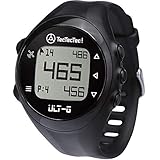
- SMART GOLF WATCH: The ULT-G Golf GPS watch includes sophisticated features that will make your works easier. A lot of useful features to take your game to the next level. It features Bluetooth connectivity to connect the watch to your smartphone for free course updates. There are no unusual features that can drain your mobile's battery too fast.
- EASY TO OPERATE: Learning to use the ULT-G watch is very simple. There are only four buttons to navigate the screen. Once the initial set-up is complete, with the touch of a button, the device will automatically connect to the satellite and begin displaying course information. This GPS watch does not require a smartphone, app, or web activation.
- EVERYTHING YOU NEED: Measures distances to the front, back, and middle of the green. Figure out the distance of your shots. Automatic hole progression while you play golf. Access information about over 38,000 courses around the world. There is a clock to tell the time.
- RELIABLE: Comes in a durable design. Water and dust resistance will assist you in hostile weather. Battery power to take you through 2.5 rounds before needing to be recharged. One-year warranty (online registration required), lifetime software support, and high-class customer service.
Usability during play
The band-style form factor makes the X40 less intrusive than bulkier golf watches. It sits flat on the wrist and doesn’t interfere with glove wear or wrist hinge for most players. During the swing, it’s easy to forget it’s there, which is something larger GPS watches can struggle with.
Button presses are deliberate and glove-friendly, but not fast. If you want quick glances at yardage, the experience is smooth. If you want to interact with the device frequently, the slower interface becomes more noticeable over 18 holes.
Battery life in golf mode
In GPS mode, the X40 comfortably lasts through a full 18-hole round with room to spare. Most users can expect multiple rounds between charges if they’re not using GPS daily. This endurance is one of the X40’s quiet strengths, especially compared to early touchscreen golf watches that required frequent charging.
Because the device also functions as a daily activity tracker, battery performance encourages continuous wear. You don’t need to treat it like a single-purpose golf tool, which fits its original positioning as a hybrid device.
How it compares to newer Garmin Approach models
Compared to modern entry-level models like the Approach S12 or S42, the X40 feels stripped back. Those newer watches add hazard views, better displays, faster GPS, and more golf-specific features without overwhelming complexity. The trade-off is size, cost, and shorter real-world battery life.
Against more advanced models like the S62 or S70, the X40 isn’t even competing in the same category. It’s closer to a digital yardage book than a full golf computer. That’s not a flaw so much as a reminder of what the X40 was designed to be.
Who the golf features still make sense for
The Approach X40 works best for golfers who want fast, reliable green distances and nothing else. Beginners, casual players, walkers, and users coming from phone-based GPS apps will appreciate how little effort it requires during a round. It’s also appealing to bargain hunters who find one at a steep discount and understand what they’re giving up.
Golfers who want hazard data, scoring, or improvement-focused metrics should look elsewhere. The X40 doesn’t grow with your game, and it won’t teach you anything about your tendencies. What it offers instead is clarity, consistency, and a refreshingly distraction-free experience that still holds up surprisingly well for the right kind of golfer.
Fitness & Activity Tracking: Steps, Sleep, and What’s Missing
One reason the Approach X40 made sense as a hybrid device in its day is that Garmin didn’t position it as golf-only. Off the course, it behaves much like a slim fitness band with a watch face, encouraging all-day wear rather than living in a golf bag between rounds.
That context matters, because what the X40 offers for fitness tracking is intentionally simple, and equally important, what it leaves out is just as telling.
Step tracking and daily movement
At its core, the X40 functions as a reliable step counter with automatic daily totals, distance estimates, and calorie burn. Step accuracy is consistent for walking and casual daily movement, and it performs especially well for golfers who walk the course, where the steady pace plays to its strengths.
There’s also Garmin’s basic inactivity alert, prompting you to move after prolonged periods of sitting. It’s a small feature, but it reinforces the X40’s role as a gentle daily activity companion rather than a performance-driven fitness watch.
Sleep tracking without sensors or scores
Sleep tracking is present, but extremely barebones by modern standards. The X40 automatically detects sleep based on motion and provides duration and basic sleep windows in Garmin Connect, without sleep stages, scores, or recovery insights.
Because there’s no heart rate sensor, the data is purely movement-based. It’s enough to spot patterns like inconsistent bedtimes or short nights, but it won’t tell you anything about sleep quality, stress, or readiness.
The absence of heart rate and its implications
The most important omission is wrist-based heart rate monitoring. Without it, the X40 can’t track intensity minutes, resting heart rate trends, stress, or calorie burn with any real precision.
This limitation also means there are no true workout profiles beyond step counting. You won’t find guided activities, cardio sessions, or any meaningful exercise analytics, which places the X40 firmly below even entry-level modern fitness trackers.
No multisport, no GPS workouts
Outside of golf, the X40 doesn’t support run, bike, or gym modes, despite having GPS hardware for course mapping. That GPS is locked to golf use only, so you can’t repurpose the device for tracking walks, hikes, or runs.
For users coming from today’s Garmin ecosystem, this feels restrictive. For its original audience, it reinforced the idea that golf was the primary function, with fitness tracking acting as a passive background feature.
Garmin Connect experience and compatibility
All activity data syncs to Garmin Connect, where the X40 benefits from Garmin’s long-term platform stability. Steps, sleep, and basic trends are clearly presented, and the device still syncs reliably with modern iOS and Android phones.
Smartphone notifications are supported, but only in a simple, read-only form. There’s no interaction, no quick replies, and no app ecosystem, which keeps distractions low but also limits usefulness off the course.
Comfort, wearability, and daily use
Physically, the X40 is well suited to all-day wear. Its narrow rectangular case, lightweight construction, and soft silicone band feel closer to a fitness tracker than a traditional watch, making it easy to forget you’re wearing it.
The trade-off is presence and durability perception. It doesn’t feel premium, and the design clearly reflects its mid-2010s origins, but comfort remains one of its strongest attributes even now.
What’s missing compared to modern entry-level devices
There’s no heart rate, no Body Battery, no stress tracking, no menstrual health, no intensity minutes, and no adaptive goals. Even Garmin’s current budget devices like the Vivosmart or entry-level Forerunners offer dramatically more health insight.
Viewed through today’s lens, the X40’s fitness features are best described as supportive rather than informative. They complement the golf experience but never attempt to guide training, recovery, or overall wellness decisions.
Who the fitness tracking still works for
For golfers who mainly want step counts, basic sleep awareness, and a device that encourages movement without demanding attention, the X40 still does its job. Walkers and casual users who value battery life and simplicity over metrics will find it quietly dependable.
Anyone expecting modern health insights or using fitness data to drive training should look elsewhere. The X40 tracks life as it happens, but it doesn’t interpret it for you, and that distinction defines its place in today’s wearable landscape.
Display, Controls, and Day-to-Day Usability
Coming off the X40’s intentionally minimal fitness feature set, the hardware interface reinforces the same philosophy. Everything about the display and controls is geared toward clarity and low effort rather than visual appeal or versatility.
Screen type, size, and legibility
The Approach X40 uses a small, monochrome touchscreen with a rectangular layout that mirrors fitness bands from the mid-2010s. Resolution is low by modern standards, but the simple graphics and high contrast work in its favor, especially for yardages and step counts.
Outdoors, visibility is generally good in bright conditions thanks to the non-reflective screen treatment. Indoors or at dusk, the backlight is adequate but uneven, and it requires a wrist gesture or tap to activate, which can occasionally miss on the first attempt.
This is not a screen designed for data density. You’ll see front, middle, and back green distances clearly, but anything beyond that is intentionally stripped back, which aligns with the X40’s role as a quick-glance golf companion rather than a full golf computer.
Touch controls and physical interaction
Navigation is handled primarily through swipes and taps, supported by a single physical button on the side. The button acts as a wake and back function, while the touchscreen handles scrolling and selection.
In dry conditions, the touchscreen is responsive enough, though not especially fast. In rain, sweat, or when wearing a glove, responsiveness drops noticeably, which can be frustrating mid-round if you’re trying to change views or access the time.
There’s a learning curve, but it’s shallow. Once you understand the swipe directions and menu structure, it becomes second nature, and the limited feature set means you’re rarely more than a few gestures away from what you need.
Rank #3
- New round watch design with a high-resolution sunlight-readable display
- More than 42,000 courses preloaded from around the world
- Provides yardages to the front, back and middle of the green, as well as to hazards and doglegs
- Keep score right on the watch and upload directly to the Garmin Golf app (when paired with a compatible smartphone) to participate in weekly leaderboards
- Automatically keep track of your score and how far you hit with each club with compatible Approach CT10 club tracking sensors (sold separately)
On-course usability during a round
During play, the X40 excels at staying out of the way. Yardages update quickly, the screen wakes reliably with a wrist turn, and the slim profile means it doesn’t interfere with your swing or glove.
The lack of hole maps, hazards, or shot tracking simplifies interaction. You check distance, glance at steps, and move on, which many beginner and high-handicap golfers will appreciate, especially those who find feature-heavy golf watches distracting.
However, golfers used to modern Approach models will immediately notice what’s missing. There’s no zooming, no green view manipulation, and no way to mark shots, making the experience functional but limited.
Everyday wear outside the course
Off the course, the display continues to prioritize simplicity. The default watch faces are basic, showing time, date, and step progress, with no customization beyond a few layout options.
Smartphone notifications appear as plain text alerts with no icons or previews beyond the message content. They’re readable, but the small screen and lack of interaction mean most users will glance and then reach for their phone anyway.
Day-to-day usability is helped by the band-like form factor. It slips under sleeves easily, doesn’t catch on clothing, and feels more like a passive tracker than a watch demanding attention.
Durability and practical limitations
The X40’s lightweight plastic construction keeps it comfortable but also makes it feel fragile compared to modern Garmin watches. It’s fine for walking the course and daily wear, but it doesn’t inspire confidence for rough use.
Water resistance is limited, making it unsuitable for swimming and something you’ll want to remove before showering. That’s an important consideration for users expecting the always-on, all-activity durability of newer Garmin devices.
Charging is handled via Garmin’s older clip-style connector, which works reliably but feels dated and fiddly compared to current magnetic chargers. It’s another reminder that while the X40 still functions well, its day-to-day experience is rooted firmly in an earlier era of wearables.
Battery Life and Charging: Real-World Longevity On and Off the Course
Battery performance is one area where the X40’s age shows clearly, but it also reflects the device’s original intent. This was designed as a lightweight golf band with occasional GPS use, not an always-on smartwatch with background sensors running around the clock.
If you approach it with those expectations, its endurance is predictable, if modest by modern standards.
On-course GPS battery life
With GPS enabled for golf, the Approach X40 reliably delivers around 8 to 10 hours of active use when the battery is healthy. In practical terms, that’s enough for one long round or two shorter 18-hole walks, but it leaves very little margin beyond that.
During testing, a single four-hour round typically consumed 40 to 50 percent of the battery. Playing 36 holes in a day is possible, but only if you start fully charged and avoid unnecessary screen wake-ups.
Compared to newer Garmin Approach models like the S12 or S42, which can stretch multiple rounds on a single charge, the X40 feels far more restrictive. This is not a device you can casually leave half-charged and expect to survive a weekend of golf.
Everyday battery life off the course
Away from GPS use, Garmin originally rated the X40 for up to five days as a daily activity tracker. In real-world use today, especially on aging units, most users should expect closer to three to four days with step tracking and notifications enabled.
The monochrome display and minimal background features help preserve power, but frequent notification alerts do add up. There’s no heart rate sensor, which actually works in the X40’s favor for standby longevity compared to early HR-equipped wearables.
As a daily band-style tracker, it’s serviceable, but it requires more frequent charging than modern fitness trackers with similar feature sets.
Charging method and usability
Charging is handled via Garmin’s older clip-style USB charger, which clamps onto contacts on the underside of the band. It’s functional and generally reliable, but alignment matters, and it’s easy to knock loose if the cable is bumped.
A full charge typically takes around 90 minutes. There’s no fast charging, and no meaningful top-up benefit from short charging sessions before a round.
Replacement chargers are still easy to find online, which is important given the device’s discontinued status. However, the proprietary design means you’ll want to keep a spare if you rely on the X40 regularly.
Battery aging and used-market reality
Most Approach X40 units available today are several years old, and battery degradation is a real consideration. Many used examples struggle to reach Garmin’s original battery claims, especially under continuous GPS load.
If you’re buying second-hand, expect reduced endurance and plan your charging habits accordingly. For golfers who play short rounds or only use GPS occasionally, this may be acceptable, but heavy users will feel the limitations quickly.
This is one of the clearest areas where the X40’s low used price reflects a genuine trade-off, not just outdated features.
How it fits into today’s Garmin lineup
Modern entry-level Garmin golf watches offer dramatically better battery efficiency, even with larger color displays and additional sensors. The X40’s advantage isn’t longevity, but simplicity and size.
For casual golfers who want a slim, lightweight band that can handle a single round without fuss, the battery is adequate if managed carefully. For anyone expecting multi-day golf trips without charging, the X40 will feel like a constant compromise rather than a convenience.
Software, App Support, and Compatibility in 2026
Battery life and hardware age set expectations for the Approach X40, but the software experience ultimately determines whether it still feels usable today. In 2026, Garmin’s ecosystem has evolved dramatically, and the X40 sits firmly on the legacy side of that divide.
The good news is that the core software still works. The caveat is that it works in a very limited, frozen-in-time way that reflects Garmin’s priorities from nearly a decade ago.
Garmin Connect support and current status
The Approach X40 continues to sync with Garmin Connect, which remains the central hub for activity history, step data, and golf rounds. Pairing is still supported on both iOS and Android, and the device shows up correctly in the app as of early 2026.
That said, the X40 uses Garmin’s older device profile, and it has not received meaningful feature updates in years. What you see today is essentially the final version of the software, with only backend compatibility maintenance keeping it alive.
Syncing is generally stable, but noticeably slower than with modern Garmin devices. Large golf activity uploads can take a minute or two, especially on older phones or if Bluetooth conditions are less than ideal.
Golf software features and limitations
On the course, the X40’s golf software remains simple and focused. You get front, middle, and back green distances, layup distances on select holes, and basic score tracking if you choose to use it.
There is no support for PlaysLike distances, slope adjustments, hazard flyovers, or hole maps. Compared to even entry-level modern Approach watches, the software feels stripped down, but that simplicity can be appealing for beginners who want quick numbers without extra screens.
Course updates are still delivered through Garmin’s course database, and most public and private courses remain covered. However, updates are not as frequent as they are for current models, so newly redesigned holes or brand-new courses may lag behind.
Rank #4

- Slim design with a stunning 1.2” color AMOLED display that brings 43,000+ preloaded courses to life on your wrist
- Get distance to the front, middle and back of the green and navigate bunkers, water hazards and layups with hazard view
- Pair with optional Approach CT1 or CT10 club trackers (sold separately) for shot-tracking capabilities, so you have a clearer picture of which parts of your game to focus on
- Easily keep score as you play, and upload to the Garmin Golf smartphone app for advanced stat tracking and handicap calculation
- Leave your phone in the cart and get smart notifications sent to your wrist — including emails, texts and alerts when paired with your iPhone or Android smartphone
Garmin Golf app and ecosystem separation
One important limitation in 2026 is the X40’s partial separation from Garmin’s newer golf ecosystem. While rounds sync into Garmin Connect, deeper integration with the Garmin Golf app is limited or inconsistent depending on your phone and region.
You won’t get strokes gained analytics, club performance tracking, or advanced post-round insights. Those features are reserved for newer watches and handhelds that support Garmin’s modern golf data framework.
For golfers who simply want to review distances, total time, and basic scorecards, this isn’t a dealbreaker. For anyone hoping to improve through data-driven analysis, the X40’s software ceiling is very low.
Fitness tracking software experience
Away from the course, the X40 behaves like an early-generation fitness band. Steps, calories, sleep, and basic heart rate trends are recorded and displayed in Garmin Connect without issue.
There is no Body Battery, stress tracking, training readiness, or advanced sleep staging. The data is accurate enough for casual monitoring, but it lacks the context and interpretation Garmin now provides on even its budget fitness wearables.
The absence of newer metrics also means the app experience can feel lopsided if you use other Garmin devices. The X40’s data simply doesn’t feed into Garmin’s modern health dashboards in a meaningful way.
Smartphone compatibility and notifications
The X40 supports basic smartphone notifications for calls, texts, and app alerts. In practice, this works reliably, but customization is limited compared to modern Garmin watches.
You can’t respond to messages, control music, or interact with notifications beyond viewing and dismissing them. For a band-style device from its era, this is expected, but it reinforces that the X40 is not a smartwatch in the contemporary sense.
Compatibility with current iOS and Android versions remains intact, but OS updates occasionally require reconnecting or re-authorizing Bluetooth permissions. This is manageable, but it’s another reminder of the device’s age.
Connect IQ, apps, and long-term software future
The Approach X40 does not support Connect IQ apps, watch faces, or widgets. What ships on the device is all you will ever have, with no path to customization or expansion.
From a long-term perspective, this also defines the X40’s remaining lifespan. As long as Garmin Connect continues to recognize the device, it will function, but there is no guarantee how long that support will last.
For buyers in 2026, this means accepting a static software experience in exchange for a low purchase price. The X40 still does what it was designed to do, but it exists on borrowed time within a rapidly advancing Garmin ecosystem.
How the Approach X40 Compares to Newer Garmin Golf Watches
Viewed in isolation, the Approach X40 still functions as intended. When placed alongside Garmin’s current golf lineup, its limitations become much clearer, especially in how Garmin now separates dedicated golf watches from hybrid fitness devices.
Golf features: from basics to fully contextual play
The X40 delivers front, middle, and back distances and little else. There is no hole map, no hazard view, no layup distances, and no green shaping, which puts it well behind even entry-level current models like the Approach S12.
Modern Garmin golf watches also track shots automatically, calculate club distances, and integrate seamlessly with Garmin Golf for post-round analysis. The X40 records no shots, offers no scoring breakdowns, and provides no post-round insights beyond what you manually remember.
If your expectation is simply knowing how far you are from the green, the X40 still works. If you want help making decisions during a round, newer models operate on a completely different level.
Hardware, display, and on-wrist experience
Physically, the X40 feels closer to a fitness band than a watch. Its narrow display and lightweight plastic construction make it unobtrusive, but also harder to read quickly in bright sunlight compared to modern transflective or AMOLED Garmin displays.
Newer Approach watches have larger screens, higher contrast, and clearer typography designed specifically for outdoor readability. Even budget models now feel purpose-built for golf rather than adapted from fitness hardware.
Comfort remains a relative strength of the X40. Its slim profile and flexible strap make it easy to wear all day, though the materials and finishing feel dated next to Garmin’s current silicone straps and reinforced cases.
Battery life and charging reality
On paper, the X40’s battery life still looks competitive. You can expect multiple rounds of golf and several days of daily wear on a single charge, assuming GPS use is limited to the course.
Newer Garmin golf watches tend to trade some longevity for larger screens and richer features, but they also charge faster and manage power more intelligently. Battery anxiety is rarely an issue on modern models, even during long tournament days.
The X40’s aging battery is the wildcard. Units bought used may no longer deliver their original endurance, something far less risky with current-generation devices.
Fitness and health tracking evolution
Compared to modern Garmin wearables, the X40’s fitness tracking is rudimentary. Steps, calories, sleep duration, and basic heart rate trends are recorded, but without context or interpretation.
Current Garmin golf watches now double as full health platforms. Body Battery, stress tracking, advanced sleep stages, HRV trends, and fitness age are standard, even on mid-range models.
If you already use another Garmin device, the X40 feels like a disconnected outlier. Its data exists in Garmin Connect, but it does not contribute meaningfully to Garmin’s newer health ecosystem.
Smartwatch features and daily usability
The X40 supports notifications and little more. It cannot respond to messages, control music, use Garmin Pay, or run apps, all of which are commonplace on modern Garmin watches.
Newer Approach models blur the line between golf watch and smartwatch, offering contactless payments, music storage, calendar integration, and safety features like incident detection.
As a daily wearable, the X40 functions more like a passive tracker than an interactive device. That simplicity can be appealing, but it also limits its usefulness off the course.
Price, availability, and value in today’s market
The X40’s primary advantage over newer Garmin golf watches is cost. On the used market, it can often be found for a fraction of the price of even the most affordable current Approach models.
At that price point, it competes less with modern golf watches and more with basic GPS devices and entry-level fitness bands. The value proposition only makes sense if your expectations are firmly aligned with its minimal feature set.
For buyers weighing an X40 against a discounted Approach S12 or S42, the newer watch almost always justifies the extra spend through better usability, longer-term software support, and far richer golf data.
Who the Garmin Approach X40 Is Still a Good Buy For (And Who Should Skip It)
At this point in its lifecycle, the Approach X40 only makes sense for a very specific type of buyer. If your expectations are calibrated to what early Garmin golf wearables were designed to do, it can still serve a purpose, but it is far from a universal recommendation.
Good fit: budget-conscious beginner golfers
If you are new to golf and primarily want front, middle, and back yardages without pulling out your phone, the X40 still delivers the core GPS experience reliably. Courses load quickly, distances are stable, and there is no learning curve once you are on the tee box.
💰 Best Value

- Preloaded 38,000+ Global Course Maps - with no subscription or course map update fees. Includes Auto-course recognition and auto-hole advance - no need to worry about reconfiguring settings after every hole. Just turn it on and start playing!
- Accurate Distances - to the front, back, and center of the green as well as layup and carry distances to water hazards, bunkers and doglegs. Knowing your position on the course has never been easier.
- i-Caddie technology - take advantage of personalized club suggestions based on your distance from the target. Now you can choose the right club with 100% confidence!
- Shot distance measurement and digital scorecard – track your progress with accuracy. Measure shot distances from anywhere on the course while keeping a running tally of your total strokes and other key stats.
- Easy-charge magnetic charger & water resistant – a full charge will last up to 10 hours in Golf GPS mode, and its water resistant design means it will stand up when unexpected weather elements affect your round.
For beginners who are still developing consistency, the lack of advanced metrics like strokes gained or club tracking is not a dealbreaker. In fact, the simplicity can keep the focus on pace of play and course management rather than data overload.
Good fit: golfers who want a discreet, lightweight wearable
The X40’s slim, band-style design remains one of its strengths. It sits flat on the wrist, weighs very little, and never feels bulky during a swing, especially for golfers who dislike watch-sized golf GPS units.
For players with smaller wrists or those accustomed to fitness bands rather than watches, the X40 is more comfortable over a full round than many modern Approach models. Its silicone strap and low-profile case are better suited to all-day wear than they look on paper.
Good fit: users replacing or upgrading from a basic fitness tracker
If you are coming from an older Fitbit or entry-level step tracker and want golf GPS as a bonus feature, the X40 can feel like a logical crossover device. Steps, sleep duration, calories, and continuous heart rate are handled passably, even if they lack modern insight.
As a casual activity tracker paired to Garmin Connect, it still syncs reliably on both iOS and Android. Just understand that the data lives in isolation and does not unlock Garmin’s newer health features.
Good fit: a secondary or backup golf device
Some golfers keep a dedicated golf wearable solely for rounds and use another smartwatch daily. In that scenario, the X40 works well as a purpose-built course companion that you only wear when you play.
Battery life, while modest by modern standards, is sufficient for several rounds when used this way. It avoids the risk of draining a more expensive smartwatch during a long day on the course.
Skip it: data-driven or improving golfers
If you are actively working to lower your handicap, the X40’s limitations become apparent very quickly. There is no shot tracking, no club data, no hazard context, and no post-round performance analysis worth acting on.
Even entry-level current Garmin models like the Approach S12 offer significantly more course intelligence. The difference in actionable feedback alone justifies skipping the X40 for serious improvement-focused players.
Skip it: buyers who want smartwatch features
As a smartwatch, the X40 is extremely limited. Notifications are one-way, there is no music control or storage, no payments, and no safety or convenience features that are now standard across Garmin’s lineup.
If you expect your wrist device to replace even a basic smartwatch, the X40 will feel outdated within days. This is especially true if you are coming from an Apple Watch or a modern Garmin Venu or Vivoactive.
Skip it: Garmin ecosystem users with newer devices
For existing Garmin users, the X40 adds little value to the ecosystem. Its fitness data does not meaningfully contribute to Body Battery, training status, HRV trends, or other modern Garmin insights.
Switching between the X40 and a newer Garmin can feel disjointed rather than complementary. In most cases, a single current-generation watch will serve you better across golf, fitness, and daily wear.
Skip it: buyers thinking long-term
The X40 is no longer receiving meaningful software updates, and its hardware is already at the edge of acceptable performance. Battery aging on used units is a real concern, and replacement costs can quickly outweigh the initial savings.
If you want a device that will remain supported, compatible, and relevant for years, even the cheapest current Approach model is a safer investment. The X40 only makes sense if you view it as a short-term, low-cost solution rather than a future-proof purchase.
Final Verdict: Is the Garmin Approach X40 Worth Buying Today?
After walking through who should skip the X40, the remaining question is narrower and more practical: does this old Garmin still make sense for anyone in 2026? The answer is yes—but only within very specific boundaries.
The short answer
The Garmin Approach X40 is only worth buying today if you want the cheapest possible entry into Garmin’s golf GPS world and fully understand its limitations. It works, it’s simple, and it still delivers accurate front, middle, and back distances on supported courses.
Anything beyond that baseline expectation requires compromise. Age defines nearly every aspect of the X40 experience.
Where the X40 still holds up
As a golf GPS, the X40 remains reliable. Course detection is quick, yardages are accurate, and the touchscreen interface is easy to understand even for first-time users.
Its slim, lightweight fitness-band form factor is still one of its strongest assets. At roughly activity-tracker dimensions rather than watch proportions, it’s comfortable for all-day wear and unobtrusive during a swing.
Battery life, when healthy, remains respectable for casual golfers. Expect a few rounds per charge rather than modern multi-week endurance, but it’s still usable if the battery hasn’t significantly degraded.
Where its age is impossible to ignore
The X40’s hardware feels dated in daily use. The small display, basic touch responsiveness, and minimal processing power show their age immediately when compared to even entry-level modern Garmin devices.
Fitness tracking is functional but shallow. Step counting, basic heart rate, and sleep tracking exist, but the data lacks depth, context, and long-term usefulness inside Garmin Connect.
Smartwatch features are barely present by today’s standards. Notifications are limited, customization is minimal, and there’s no sense that the device adapts to modern smartphone habits.
Used-market reality and value considerations
Most people considering the X40 today are looking at used or refurbished units. This makes battery health the single most important factor, and it’s also the biggest risk.
If the price difference between an X40 and a newer Approach S10 or S12 is small, the newer watch is almost always the better buy. The X40 only makes sense when it is significantly cheaper and in verifiably good condition.
Replacement bands and chargers are still available, but long-term support is effectively over. You should buy it assuming no future software improvements and limited ecosystem relevance.
Who should buy it today
The X40 makes sense for beginner golfers who want simple yardages without distractions. It’s also suitable for casual players who golf occasionally and don’t care about post-round analysis.
Fitness-minded users who primarily want step tracking and light activity monitoring may appreciate its simplicity. For these buyers, the X40 functions more like a golf-capable fitness band than a true golf watch.
Bargain hunters can justify the X40 if the price is low enough to treat it as disposable tech rather than a long-term investment.
Who should absolutely move on
Anyone serious about improving their golf, tracking performance trends, or understanding shot patterns should skip it. The data simply isn’t there.
Users who want a smartwatch-like experience, modern health metrics, or deeper Garmin ecosystem integration will be frustrated quickly. Even Garmin’s budget current models are leagues ahead.
If you plan to wear one device for golf, fitness, and daily life, the X40 feels like a compromise in every direction.
The bottom line
The Garmin Approach X40 is not a bad device—it’s just an old one. In the right context, at the right price, and with the right expectations, it still does its core job.
But as soon as you ask more of it, the cracks show. For most buyers today, stretching to a newer entry-level Garmin is the smarter move, while the X40 remains a niche option for those who value simplicity above all else.