If you already know the Fenix line inside out, the existence of the Quatix 8 can look redundant at first glance. Same rugged case options, same AMOLED or MIP display choices depending on configuration, similar battery expectations, and the same core Garmin software DNA. The difference is not about capability in isolation, but about intent, workflow, and how deeply the watch embeds itself into a marine environment rather than just surviving one.
Quatix has always existed for people whose outdoor life is centered on a boat, not a trailhead. The Quatix 8 continues that philosophy by assuming your wrist is part of a larger Garmin marine system, not a standalone fitness computer that occasionally sees saltwater. This section is about clarifying that intent, so you can quickly decide whether Quatix 8 is the right tool, or whether a Fenix genuinely makes more sense for how you live and travel.
What follows is not a feature checklist, but a positioning breakdown. The goal is to show why Garmin keeps these two flagships separate, where they genuinely overlap, and which type of user actually benefits from choosing Quatix over Fenix.
Quatix 8 is designed as a remote control and data repeater, not just a wearable
The single most important distinction is that Quatix 8 is built to act as an extension of your helm electronics. It pairs natively with Garmin chartplotters, letting you control autopilot heading, engage tack assist, mark waypoints, manage Fusion audio, and view key navigation data directly from your wrist. This is not mirrored smartphone control, but direct integration using Garmin’s marine network logic.
🏆 #1 Best Overall
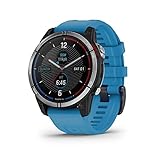
- Rugged, sophisticated design features an always-on 1.3” display, stainless steel bezel, buttons, rear case and QuickFit band system
- Traditional button controls that work in any environment are matched with a highly responsive touchscreen interface for quick, convenient access to selections
- Provides comprehensive connectivity with compatible Garmin chartplotters and remote control of key MFD features, including chart zoom, layout shortcut, Fusion stereo, autopilot and other compatible marine devices
- Access to key information such as tide data on watch face and new alarms to notify you of anchor drag or imminent tide changes on compatible marine devices
- Support for optional BlueChart g3 coastal charts and LakeVü g3 inland maps
On a moving deck, this matters more than most people expect. Being able to glance at wind shifts, depth, heading, speed, and ETA without leaving the cockpit or climbing back to the helm changes how you manage short-handed sailing or solo watchkeeping. A Fenix can record a sail activity; a Quatix is designed to help run the boat while that sail is happening.
This is also why Quatix 8 includes marine-first data pages out of the box. Tide tables, anchor drag alarms, race timers, and true wind calculations are treated as core functions, not optional widgets you have to build yourself.
The hardware overlap with Fenix is intentional, not accidental
Physically, Quatix 8 sits squarely in Fenix territory. You get the same premium materials, typically titanium or stainless steel with sapphire glass, the same water resistance expectations for serious exposure, and a case size that balances screen readability with all-day comfort. On the wrist, it wears like a high-end multisport watch, not a niche marine instrument.
Battery life follows the same philosophy. Expect multi-day endurance in smartwatch mode and strong longevity with GPS activities, which matters for offshore passages or long weekends where charging discipline becomes part of seamanship. Solar variants, where offered, make more sense on a Quatix than almost any other Garmin watch because of constant sun exposure on deck.
This overlap exists because Garmin does not want mariners to give up trail running, gym training, or health tracking. Quatix 8 still delivers full multisport profiles, advanced sleep and recovery metrics, and day-to-day smartwatch usability that mirrors the Fenix experience almost exactly.
Who should actually choose Quatix 8 over Fenix
Quatix 8 is for sailors, liveaboards, yacht owners, and marine professionals who already rely on Garmin marine electronics or plan to. If your boat has a Garmin chartplotter, radar, autopilot, or Fusion audio system, the value of Quatix compounds immediately because the watch becomes part of that ecosystem rather than a disconnected accessory.
It is also the better choice for people who spend long stretches on the water, where tide awareness, anchor alarms, and helm control are daily needs rather than occasional curiosities. In these scenarios, Quatix is not a luxury add-on; it is a redundancy and convenience tool that reduces unnecessary movement and cognitive load.
If your outdoor life is primarily land-based, with boating as a secondary hobby, Fenix remains the cleaner choice. But if the boat is home, workplace, or primary adventure platform, Quatix 8 exists because Fenix was never meant to be the nerve center of a vessel.
Design, Wearability, and Build: Life Aboard vs Life on the Trail
Once you accept that Quatix 8 and Fenix share the same internal platform, the real differentiation shifts to how each watch is physically tuned for its primary environment. On paper they look nearly identical, but on the wrist and in daily use aboard a boat, the design priorities diverge in subtle but meaningful ways.
Quatix 8 still looks like a premium multisport watch rather than a purpose-built deck instrument. The difference is that nearly every exterior decision makes more sense when salt spray, glare, and long hours on deck replace switchbacks and tree cover.
Case, Materials, and Saltwater Reality
Quatix 8 uses the same premium case materials you expect from Garmin’s top tier, typically titanium or stainless steel paired with sapphire glass. This matters more at sea than on land, where corrosion resistance and scratch tolerance are daily concerns rather than long-term wear considerations.
Titanium variants feel especially appropriate on a boat because they keep weight down while resisting salt exposure better over years of use. Stainless options still hold up well, but liveaboards and offshore sailors will appreciate titanium’s lower mass during long watches and night shifts.
Water resistance is effectively a non-issue for both Quatix and Fenix on paper, but in practice Quatix is designed with constant wet exposure in mind. Frequent rinsing, repeated immersion, and wet-button operation are normal use cases, not edge cases.
Bezel Design and Glove-Friendly Controls
The physical button layout mirrors Fenix, which is a good thing. Garmin’s five-button system remains far superior to touch-first interfaces when your hands are wet, cold, or gloved.
Quatix 8 leans into this by prioritizing tactile clarity over sleek minimalism. Button resistance feels deliberate rather than soft, reducing accidental presses when bracing yourself in rough water or moving quickly around the cockpit.
The bezel markings and overall visual language are also more utilitarian. Where Fenix bezels often emphasize elevation or compass cues for trail navigation, Quatix feels visually calmer and easier to read at a glance in high-glare marine environments.
Display Legibility: Sun, Spray, and Night Watches
Screen technology is effectively the same class as Fenix, but how it gets used is different. On deck, you are often glancing at the watch from odd angles, in direct sunlight, with polarized sunglasses.
Quatix 8 prioritizes contrast and readability over visual flair. Data fields, marine widgets, and sailing screens are optimized for quick interpretation rather than dense information stacking.
At night, the backlight behavior matters just as much. Quatix integrates cleanly into night mode workflows, especially when paired with Garmin chartplotters, reducing the need to manage brightness across multiple devices during night passages.
Size, Weight, and All-Day Wear Aboard
Quatix 8 sits firmly in the same size class as Fenix, large enough for excellent data visibility without becoming unmanageable for all-day wear. That balance matters more on a boat than on a trail because you are often wearing the watch continuously for days at a time.
Weight distribution feels slightly more intentional for long-duration use. When you are sleeping aboard, standing watches, or working lines, a top-heavy watch becomes noticeable faster than it does during a two-hour run.
For smaller wrists, the reality is the same as Fenix. If you already tolerate or enjoy the Fenix fit, Quatix will feel immediately familiar.
Straps, Comfort, and Wet Skin
Strap choice is one of the most underrated differences in marine wearability. Quatix ships with silicone straps that handle constant moisture better than fabric options and dry quickly between uses.
Salt, sunscreen, and sweat build up fast aboard a boat, and Quatix straps are designed to be rinsed frequently without degrading comfort. Aftermarket nylon straps may look good, but they stay wet longer and can cause irritation during multi-day passages.
Garmin’s standard quick-release system also makes practical sense here. Swapping straps between sailing, shore leave, and training sessions is easier than committing to a single do-everything setup.
Aesthetic Versatility: Marina to Mountain
Quatix 8 avoids looking overtly nautical, which is intentional. It does not scream “boat watch” in the way older marine instruments did, making it easier to wear ashore, at work, or during non-marine training.
Compared to Fenix, the aesthetic difference is subtle but noticeable to experienced Garmin users. Quatix feels more restrained and purpose-driven, while Fenix often leans into rugged outdoor styling cues.
If your life alternates between helm duty and trail running, Quatix does not feel out of place in either role. The difference is that Fenix feels borrowed on the boat, while Quatix feels native.
Durability Philosophy: Continuous Use vs Episodic Abuse
Fenix is designed to survive intense but intermittent abuse. Quatix is designed to live on your wrist continuously in a harsh environment.
That distinction shows up in small things like coating choices, button sealing confidence, and how the watch handles constant exposure rather than singular impacts. Neither is fragile, but Quatix feels optimized for longevity in conditions that never fully dry out.
For liveaboards and professionals, that long-term durability mindset is more important than headline toughness metrics. The watch is not something you put on for an activity; it is something you live with.
Marine-Native Features That Matter: Chartplotter Control, Autopilot, and Boat Data
All of the durability and comfort choices discussed earlier only matter if the watch genuinely reduces workload at sea. This is where Quatix 8 separates itself from Fenix in ways that are immediately obvious once you are underway.
Quatix is not just “marine themed.” It is designed to act as a distributed control and data node inside a Garmin boat network, something Fenix only approximates through generic widgets.
Chartplotter Control from the Helm or Foredeck
Quatix 8 can remotely control compatible Garmin chartplotters directly from the wrist, including waypoint marking, zooming, and basic navigation commands. When you are single-handing or moving around the boat, this becomes more than a convenience.
Dropping a waypoint while handling lines or calling out a hazard without leaving your position is a practical safety benefit. On a Fenix, you would be reaching for the plotter or your phone instead.
The interface is intentionally simplified, prioritizing large touch targets and button-driven navigation that works with wet fingers. It is not meant to replace the MFD, but it meaningfully reduces how often you need to interact with it.
Autopilot Interaction: Small Inputs, Big Impact
Autopilot control is one of the most underrated Quatix advantages for liveaboards and delivery skippers. From the watch, you can engage heading hold, adjust course increments, and tack or gybe when paired with compatible Garmin autopilot systems.
These are not gimmick controls. Being able to bump heading by a few degrees while trimming sails or checking traffic keeps you in control without breaking rhythm.
Fenix lacks this level of system awareness entirely. Even though both watches share hardware DNA, only Quatix is allowed to speak the same language as Garmin’s marine electronics.
Real-Time Boat Data via NMEA 2000
Once connected to a Garmin marine network, Quatix 8 becomes a live instrument repeater. Depth, speed through water, wind angle, wind speed, engine data, fuel levels, and battery status can all be displayed directly on the watch.
This is especially valuable on larger boats where the primary displays are not always in your line of sight. A quick glance at your wrist can confirm depth trends or wind shifts without walking back to the helm.
Rank #2

- This nautical smartwatch features a 1.4” stunning AMOLED display with a titanium bezel and built-in LED flashlight
- Keep your focus on the water, and control your compatible chartplotter via BLUETOOTH connectivity with voice commands
- Enjoy comprehensive connectivity and remote control capabilities with select compatible Garmin chartplotters, autopilots, Force trolling motors, Fusion stereos and more
- Onboard system connectivity with boat data streaming shows your heading, speed, water depth and more when paired with your compatible Garmin chartplotter or instrument
- Boating and sailing apps provide the data you need to track your time on the water; stay aware and get alarms for imminent tide changes or anchor drag
Fenix can display basic GPS-derived speed and heading, but it cannot tap into the boat’s sensor ecosystem. Quatix feels like part of the vessel rather than a self-contained device.
Sailing-Specific Tools That Go Beyond Fitness
Quatix includes Garmin’s sailing-focused tools such as SailAssist, tack assist, race start timers, layline guidance, and wind shift tracking. These are functional overlays built around real wind data, not abstract training metrics.
For cruisers, tide tables, tide graphs, and anchor drag alerts matter more than VO2 max. The watch understands that a bad anchoring alarm at 0200 is a more important notification than a missed workout goal.
Fenix technically offers some sailing activities, but they lack the depth and integration that make Quatix useful during actual passages rather than post-trip analysis.
Context-Aware Alerts Instead of Notification Noise
Marine alerts on Quatix are designed to be situational, not constant. Anchor drag, depth thresholds, wind changes, and system warnings are prioritized over generic smartphone notifications when configured properly.
This aligns with the durability philosophy discussed earlier. The watch is meant to stay on your wrist during watches, not distract you with irrelevant prompts.
Fenix can be configured to behave similarly, but it requires workarounds. Quatix starts from the assumption that your environment is dynamic, wet, loud, and occasionally unforgiving.
Where the Overlap with Fenix Still Exists
Underneath the marine specialization, Quatix 8 still shares much of its core platform with Fenix. GPS performance, multisport tracking, health metrics, battery life profiles, and general smartwatch behavior are broadly similar.
If you spend more time trail running than trimming sails, Fenix remains a strong choice. But once your daily reality includes chartplotters, wind instruments, and autopilot systems, Quatix stops feeling like a luxury and starts feeling like infrastructure.
The difference is not about features on a spec sheet. It is about whether your watch understands the boat you live on.
Sailing, Regatta, and Offshore Metrics: What Quatix Does That Fenix Simply Can’t
Once you move past general marine awareness, the real separation between Quatix 8 and Fenix shows up in how sailing data is calculated, contextualized, and acted on in real time. This is where Quatix stops behaving like a rugged smartwatch and starts acting like a wrist-mounted instrument repeater.
The difference is not raw sensor capability. It is how Quatix consumes data from the boat, understands sailing-specific geometry, and presents information that is meaningful while the boat is moving under wind and current.
SailAssist That Uses True Wind, Not Guesswork
Quatix’s SailAssist is fundamentally built around true wind, apparent wind, heading, and speed through water when paired with Garmin wind instruments and a compatible chartplotter. Laylines, tack assist, and wind shift alerts are calculated from live NMEA data, not GPS-only estimates.
On a Fenix, sailing activities rely heavily on GPS track and compass heading. You can record a sail, but the watch cannot meaningfully tell you whether you are sailing efficiently relative to the wind.
In practice, this means Quatix can show whether a tack was lifted or headed, while Fenix can only show where you went afterward.
Regatta Start Tools That Understand the Starting Line
Quatix includes a regatta race timer that integrates with GPS position to calculate distance to the line, time-to-burn, and line bias. When paired with a chartplotter, the watch understands which end of the line is favored and how current is affecting your approach.
This is not just a countdown timer. It is a dynamic positioning tool that updates continuously as the boat moves.
Fenix offers generic timers and activity starts, but it cannot spatially reference a start line or compensate for drift. For club racers and offshore starts, that difference is immediately obvious.
Polars, VMG, and Offshore Efficiency Metrics
Quatix supports polar plots and Velocity Made Good when connected to compatible Garmin systems. This allows you to see how close you are sailing to the boat’s theoretical performance for a given wind angle and speed.
VMG upwind and downwind becomes a live steering aid rather than something reviewed later in a logbook. Over long passages, this is how crews decide whether to crack off, foot, or pinch.
Fenix can record speed and heading, but it cannot contextualize them against wind or polars in real time.
Offshore Watchkeeping Data That Matches Real Watches
During offshore passages, Quatix allows customized data fields for depth, wind angle, wind speed, barometric trend, and GPS-based course over ground on a single screen. These fields update directly from the boat network, not from the watch’s internal sensors alone.
This matters at night, when you want confirmation without leaving the cockpit or waking the off-watch crew. A glance at the wrist replaces repeated trips below to check instruments.
Fenix remains a self-contained device here. It cannot act as a redundant display for ship’s data.
Autopilot and System Interaction During Maneuvers
Quatix can control Garmin autopilots directly from the wrist, including heading adjustments and tack commands on supported systems. During shorthanded sailing, this turns the watch into a practical control surface, not just a monitor.
This capability integrates directly with sailing workflows, especially during sail changes or reefing when leaving the helm unattended matters. It also reduces reliance on touchscreens in wet conditions.
Fenix has no native ability to interact with marine control systems at this level.
Battery Behavior Optimized for Multi-Day Passages
Quatix power profiles are tuned for continuous GPS use alongside constant data streaming from onboard systems. With appropriate settings, it can remain operational across multi-day passages without aggressive battery management.
This is different from expedition modes designed for hikers. The watch assumes access to ship’s power but prioritizes stability and readability over extreme power saving.
Fenix offers excellent battery life, but its assumptions are land-based, not watch-to-watch rotations at sea.
Why This Gap Matters More Than Specs
None of these features look dramatic on a comparison table. They reveal their value when wind shifts mid-leg, the tide turns early, or the start sequence gets chaotic.
Quatix understands sailing as a live problem to solve, not a workout to log. Fenix records the journey; Quatix helps you sail it better.
Navigation, Tides, and Situational Awareness at Sea
Once you move beyond basic boat data mirroring, the real separation between Quatix 8 and Fenix shows up in how each watch handles navigation and environmental context. This is where Garmin’s marine DNA becomes obvious, and where the Quatix stops behaving like a fitness watch that happens to be on a boat.
Marine Navigation Logic, Not Trail Navigation Repurposed
Quatix 8 treats navigation as a moving marine problem, not a preloaded route to follow. Bearing, course over ground, speed over ground, waypoint arrival, and layline awareness are framed around how a vessel behaves on water, not how a runner or hiker moves on land.
Fenix uses the same GPS fundamentals, but its navigation logic is optimized for tracks, courses, and turn prompts. It works offshore, but it does not adapt its presentation or alerts to sailing dynamics, leeway, or wind-driven course changes.
On a watch-sized display, those assumptions matter. Quatix surfaces the data you need to make a decision now, not to review the route later.
Tide, Current, and Environmental Awareness Built In
Quatix includes native tide data with graphical tide charts, high and low tide timing, and location-based predictions that can be referenced directly from the watch. For coastal cruising, anchoring, or bar crossings, this becomes a practical planning tool rather than a novelty glance screen.
Current awareness is handled in the same marine-first way, especially when paired with compatible Garmin chartplotters. The watch reflects what the boat is experiencing, not just what GPS movement suggests, which is critical in areas with strong tidal flow.
Fenix can display basic tide information depending on region and configuration, but it lacks the same depth and integration. It feels supplemental, whereas Quatix treats tides as a core navigational input.
Sailing-Specific Navigation Fields and Start-Line Awareness
Quatix offers sailing-specific navigation screens that combine time-to-burn, distance to line, favored end, and wind data when connected to onboard instruments. These are not generic data fields rearranged for sailing; they are purpose-built layouts designed for race starts and tactical sailing.
Even for non-racers, this logic improves situational awareness during harbor maneuvers, tight channels, or approaches in shifting wind. The watch helps you understand how the boat will arrive, not just where it is now.
Rank #3

- This nautical smartwatch features a 1.4” stunning AMOLED display with a titanium bezel and built-in LED flashlight
- Keep your focus on the water, and control your compatible chartplotter via BLUETOOTH connectivity with voice commands
- Enjoy comprehensive connectivity and remote control capabilities with select compatible Garmin chartplotters, autopilots, Force trolling motors, Fusion stereos and more
- Onboard system connectivity with boat data streaming shows your heading, speed, water depth and more when paired with your compatible Garmin chartplotter or instrument
- Boating and sailing apps provide the data you need to track your time on the water; stay aware and get alarms for imminent tide changes or anchor drag
Fenix lacks these dedicated sailing navigation modes. You can approximate some views manually, but the watch does not understand the context well enough to prioritize the right information automatically.
Alarms and Alerts That Reflect Marine Risk
Quatix supports anchor drag alerts, waypoint arrival alarms, and boundary-style notifications tied to marine navigation scenarios. These alerts are subtle but critical, especially overnight or when managing the boat solo.
Because the watch is integrated into the marine ecosystem, these alerts align with what the chartplotter and instruments are already tracking. The redundancy adds confidence rather than noise.
Fenix alarms are activity-based and time- or distance-driven. They work, but they are not designed to monitor a vessel’s relationship to its surroundings while stationary or drifting.
Situational Awareness Without Staring at Screens
At sea, situational awareness is as much about when not to look at a screen as when to look. Quatix’s vibration alerts, glanceable widgets, and marine-optimized data density reduce the need to hover over the chartplotter.
The physical design supports this role. The case size, button layout, and display brightness are tuned for quick checks in full sun or red-shifted night modes, and the silicone and nylon strap options remain comfortable when worn continuously for days.
Fenix shares the same rugged construction and excellent display technology, but its interface priorities are still land-based. It gives you information; Quatix gives you awareness that matches the rhythm of life aboard.
Battery Life and Power Management for Multi-Day Passages and Liveaboard Use
All of the situational awareness advantages discussed above only matter if the watch stays alive through long watches, night alarms, and days when charging is inconvenient. This is where Quatix earns its place as a true onboard instrument rather than just a wearable that happens to be worn on a boat.
While Quatix 8 shares its core hardware platform with the equivalent Fenix generation, the way it manages power in a marine context is meaningfully different in day-to-day use.
Real-World Endurance at Sea, Not Just Spec Sheet Numbers
On paper, Quatix 8 delivers battery life comparable to a same-size Fenix in smartwatch mode, multi-band GPS tracking, and expedition-style low-power modes. In practice, Quatix tends to last longer between charges for mariners because fewer background features are competing for power during normal onboard use.
A Fenix worn aboard often runs frequent health checks, sport-ready prompts, and training analytics that make sense on land but add steady drain. Quatix shifts that balance toward passive monitoring, marine widgets, and event-driven alerts, which are lighter on the battery when you are not actively recording a workout.
For liveaboards and passagemakers, this difference shows up over several days. You are more likely to reach for the charger because you want a full battery, not because the watch forced your hand.
GPS Use Patterns That Match Sailing Reality
Multi-day passages expose a weakness in how many outdoor watches assume GPS will be used. Continuous high-rate tracking is rarely necessary on a boat already running chartplotters, AIS, and instrument displays.
Quatix leans into this reality. You can log passages at longer GPS intervals, rely on vessel data streamed from onboard systems, or disable track recording entirely while still maintaining anchor alarms, waypoint alerts, and time-based notifications.
Fenix can be configured to do the same, but it defaults to athlete-first assumptions. Quatix starts from the premise that the boat already knows where it is, and the watch is there to alert you when something changes.
Anchor Watches, Night Alerts, and Sleep Without Anxiety
One of the most battery-sensitive scenarios onboard is overnight anchor monitoring. The watch must remain responsive, vibrate loudly enough to wake you, and do so without draining itself by morning.
Quatix is optimized for exactly this use. Anchor drag alerts rely on low-power background checks tied to vessel position rather than continuous GPS sampling at athletic rates. The display stays dark, vibrations do the work, and the watch conserves power while you sleep.
With Fenix, anchor-style alerts are possible but less elegant. They typically depend on activity modes or custom alerts that assume active GPS use, which increases overnight drain and requires more manual setup.
Charging Reality Aboard: Cabins, Cockpits, and Power Budgets
Liveaboards quickly learn that charging convenience matters as much as raw battery capacity. Quatix’s charging cadence aligns better with onboard power habits, where devices are topped up opportunistically rather than nightly.
The watch charges quickly enough from USB ports, power banks, or DC-USB converters that short charging windows are sufficient. Its power curve is predictable, so you learn how many days you can safely go before plugging in again.
Because Quatix is not constantly pushing training readiness or recovery calculations, it is less prone to surprise battery drops during periods of low activity, which is exactly when you least want to be troubleshooting electronics.
Solar Variants and Display Efficiency
If you opt for a solar-equipped Quatix 8 variant, the benefits are subtle but real in a marine environment. Long daylight exposure on deck, even without deliberate sun charging, slows battery decline during normal watch use.
The transflective display remains readable in harsh sun without requiring aggressive backlight levels, which further preserves battery life. This matters more at sea than on land, where shade and indoor time are more common.
Fenix solar models offer the same hardware advantage, but again the difference comes down to usage. Quatix spends more time idling intelligently and less time calculating athletic metrics you may not need while cruising.
Power Management That Matches the Rhythm of Life Aboard
What ultimately separates Quatix from Fenix is not maximum battery life, but battery predictability. On a boat, you want a watch that fades slowly and honestly, not one that looks fine until a background feature suddenly drains it.
Quatix is tuned for steady-state operation punctuated by meaningful alerts. That philosophy matches long passages, watch rotations, and the mental load of managing a vessel where fewer surprises are always better.
For mariners choosing between the two, this is a quiet but decisive advantage. Fenix is built to support intense days and hard training blocks. Quatix is built to stay awake with you, night after night, until the passage is done.
Health, Training, and Multisport Overlap with Fenix: What You’re Not Giving Up
One of the most persistent misconceptions around Quatix is that choosing the marine-first watch means sacrificing Garmin’s best health and fitness stack. In practice, the overlap with Fenix is far deeper than many expect, and for most boaters, nothing essential is left on the table.
The difference is not capability, but emphasis. Quatix carries the same physiological engine as Fenix, just without assuming your primary identity is that of a high-volume endurance athlete.
Core Health Tracking: Identical Where It Matters
Quatix 8 delivers the same 24/7 health metrics you’d expect from a Fenix-class device: wrist-based heart rate, Pulse Ox (manual or sleep-based), respiration, stress tracking, hydration logging, and body battery. Sleep tracking uses the same multi-stage algorithm, including sleep score, sleep stages, and overnight HRV trends.
In daily wear, the experience is indistinguishable. The sensors, sampling rates, and baseline accuracy are shared across the platform, so long-term health trends look the same whether you’re logging miles on land or watch rotations offshore.
For liveaboards, this matters because irregular sleep, night watches, and shifting time zones are handled just as competently as on Fenix. The watch doesn’t assume a neat 10 p.m. bedtime, and it adapts well to fragmented sleep common during passages.
HRV, Recovery, and Readiness Without the Pressure
Quatix supports HRV status and recovery metrics, but the presentation is quieter and less prescriptive than on Fenix. You still get insight into how your nervous system is responding over time, without the watch constantly nudging you to train harder or rest more.
For sailors who cross between active days and long sedentary stretches, this is a strength. You can monitor recovery and stress without feeling like the watch is judging your week because you haven’t logged a VO2 max workout recently.
Fenix users who live by Training Readiness and Daily Suggested Workouts may miss that level of coaching. Mariners who value awareness over optimization usually won’t.
Multisport Profiles: Nearly Full Parity
Quatix includes the same core activity profiles as Fenix: running, trail running, cycling, indoor training, strength, yoga, hiking, skiing, swimming (pool and open water), and general cardio. GPS accuracy, multi-band support, and track fidelity are on par.
You can still train for a race, log structured workouts, and analyze sessions in Garmin Connect with the same depth of charts and metrics. For most recreational athletes, the data output is functionally identical.
Where Fenix pulls ahead is at the extreme edge: ultra-specific running dynamics accessories, deeper race predictors, and more aggressive training load analysis. Those features matter if your watch is a training tool first and a lifestyle device second.
Strength, Mobility, and Onboard Fitness
Strength training on Quatix mirrors the Fenix experience, including rep counting, rest timers, and muscle group breakdowns. It works well for onboard workouts where space and equipment are limited.
Yoga, pilates, and mobility sessions feel particularly well-suited to Quatix users. These activities benefit from heart rate, stress, and breathing data without demanding intense post-workout analytics.
For liveaboards maintaining general fitness rather than chasing personal records, this balance feels intentional rather than compromised.
Rank #4
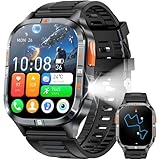
- BUILT-IN GPS & COMPASS– This military smartwatch features high-precision GPS to pinpoint your location while hiking, cycling, or traveling, keeping you safely on track without extra gear. Tap the compass icon and it locks your bearing within three seconds—engineered for pro-level outdoor adventures like camping, climbing, and trekking.
- BLUETOOTH CALLING & MESSAGES – Powered by the latest Bluetooth tech, the men’s smartwatch lets you answer or make calls right from your wrist—no need to pull out your phone. Get real-time alerts for incoming texts and app notifications so you never miss an invite. (Replying to SMS is not supported.)
- BIG SCREEN & DIY VIDEO WATCH FACE – The 2.01" military-spec display is dust-proof, scratch-resistant, and forged from high-strength glass with an aluminum alloy bezel, passing rigorous dust and abrasion tests so the screen stays crystal-clear. Upload a short family video to create a dynamic, one-of-a-kind watch face that keeps your memories alive.
- 24/7 HEALTH MONITORING – Equipped with a high-performance optical sensor, this Android smartwatch tracks heart rate and blood-oxygen levels around the clock. It also auto-detects sleep stages (deep, light, awake) for a complete picture of your health, ensuring you always know how your body is doing.
- MULTI SPORT MODES & FITNESS TRACK – Choose from running, cycling, hiking, basketball, and more to log every workout. Set goals, monitor progress, and sync data to the companion app. Bonus tools include photo gallery, weather, alarm, stopwatch, flashlight, hydration reminder, music/camera remote, find-my-phone, mini-games, and other everyday essentials.
Materials, Comfort, and All-Day Wear
From a physical standpoint, Quatix wears like a premium Fenix. Case materials, water resistance, sapphire options, and strap compatibility are equivalent, with the same rugged build that tolerates salt, sun, and repeated immersion.
On the wrist, the weight and dimensions are familiar to anyone who has worn a 47 mm or 51 mm Fenix. Comfort over long days is excellent, especially with silicone or nylon straps that dry quickly after spray or a swim.
This matters because health tracking only works if the watch stays on your wrist. Quatix doesn’t feel like a specialized instrument you put on for sailing; it feels like a daily watch that happens to speak fluent marine.
Software Experience: Same Engine, Different Priorities
Underneath, Quatix runs the same Garmin OS as Fenix, with the same responsiveness, widget system, and Connect IQ support. Third-party watch faces, data fields, and apps behave the same way.
The difference is what gets surfaced by default. Marine data, tides, barometer trends, and boat-related alerts take precedence, while advanced training nudges stay politely in the background.
For boaters who still run, lift, or hike ashore, nothing blocks you from doing so. Quatix simply assumes your life doesn’t revolve around peak week and taper cycles.
Who This Overlap Actually Serves
If you are a competitive endurance athlete who also sails, Fenix still makes sense. Its training-centric mindset is unmatched.
If you are a sailor, liveaboard, or marine professional who wants full-spectrum health tracking and solid multisport capability without living inside Garmin’s training ecosystem, Quatix hits a more natural equilibrium.
The key takeaway is simple: choosing Quatix is not stepping down from Fenix in health or fitness. It’s choosing a watch that understands your center of gravity is the boat, not the podium.
Garmin Ecosystem Integration: How Quatix 8 Becomes a Wrist-Based MFD
Once you step beyond fitness and daily wear, the real differentiation between Quatix 8 and Fenix happens inside the Garmin marine ecosystem. This is where Quatix stops behaving like a smartwatch with nautical apps and starts acting like a remote control and data repeater for your helm.
If Fenix is a self-contained multisport computer, Quatix is a node in a larger onboard system. That distinction matters immediately once your boat has a Garmin chartplotter, sensors, and networked electronics.
Chartplotter Pairing: The Center of Gravity Shifts to the Helm
Quatix 8 pairs directly with compatible Garmin chartplotters over Bluetooth and Wi‑Fi, effectively extending your MFD onto your wrist. You can mark waypoints, start and stop routes, and control core navigation functions without touching the screen at the helm.
In practice, this is most valuable when you are moving around the boat. From the foredeck, cockpit, or flybridge, you can interact with navigation without shouting back to the helm or climbing down a ladder.
Fenix can record tracks and display GPS navigation, but it does not become part of the chartplotter workflow. Quatix assumes the chartplotter is already doing the heavy lifting and positions itself as a companion interface rather than a parallel navigator.
Autopilot Control: Subtle, but Genuinely Transformative
One of the most underrated Quatix features is full Garmin autopilot control from the wrist. Heading adjustments, tack assist, route engagement, and steering commands can all be handled directly on the watch.
This sounds like a novelty until you are single-handing, docking short-handed, or reefing in building wind. Being able to make small heading changes without leaving your task changes how confidently you move around the boat.
Fenix does not offer autopilot control. For sailors and powerboat operators alike, this single capability often becomes the deciding factor once experienced firsthand.
Sailing-Specific Data That Is Actually Contextual
Quatix 8 surfaces sailing metrics that make sense in real-time rather than post-activity analysis. SailAssist features like tack angle, laylines, heading lift and header, and race countdown timers are available directly on the watch.
During a regatta or casual club race, the watch acts as a clean, readable secondary display. You are not staring at training load or VO2 max while trying to hit a start line; the watch shows what matters in that moment.
Fenix technically supports sailing activities, but the data presentation feels bolted on. Quatix prioritizes sailing first and treats fitness metrics as background context rather than the main event.
Marine Sensors, NMEA Data, and System Awareness
When connected through a Garmin chartplotter, Quatix 8 can display data coming from the boat’s NMEA 2000 network. Depth, speed through water, wind angle, wind speed, and engine data can all be mirrored to the wrist depending on your setup.
This turns the watch into a roaming repeater. While it will not replace a full MFD, it keeps critical situational data available when you are away from the helm.
Fenix remains isolated from this layer entirely. It knows where you are via GPS, but it does not know what the boat is doing as a system.
Fusion Audio and Onboard Convenience Controls
Quatix also integrates with Fusion marine stereos, allowing volume, source, and zone control directly from the watch. This is a small feature that ends up used constantly on cruising boats.
Whether you are swimming off the stern, cooking below, or anchored out for the evening, controlling audio without hunting for a remote becomes second nature.
This reinforces the broader theme: Quatix is designed around life aboard, not just activity tracking that happens to occur on water.
Tides, Anchoring, and Passive Awareness
Marine-focused widgets like tides, anchor drag alerts, barometric trends, and storm warnings are not buried or optional on Quatix. They sit prominently in the daily flow of the watch.
Anchor drag alerts in particular benefit from always-on wrist contact. You do not need to be asleep next to the chartplotter to be notified when conditions change.
Fenix offers some of these tools in isolation. Quatix connects them to real-world boat behavior and onboard systems, which is the difference between data and awareness.
Battery Life in a Networked Reality
Running as a connected marine remote does impact battery usage, but Quatix manages this intelligently. Passive data display and intermittent control barely move the needle compared to GPS-heavy activities.
In real-world cruising use, battery life remains measured in days rather than hours, even with chartplotter pairing enabled. Solar variants extend that further for long passages or liveaboard routines.
This is where Quatix feels purpose-built. It assumes long days, inconsistent charging opportunities, and constant exposure, not short training sessions followed by nightly charging.
Where Quatix Overlaps with Fenix, and Where It Cleanly Diverges
Health tracking, sleep, GPS accuracy, multisport profiles, and daily smartwatch behavior remain fundamentally identical to Fenix. You are not giving up Garmin’s core wearable strengths by choosing Quatix.
The divergence is philosophical. Fenix treats the watch as the primary instrument. Quatix treats the watch as part of a larger marine system.
If your Garmin chartplotter is the heart of your boat, Quatix 8 becomes its pulse on your wrist.
Quatix 8 vs Fenix: Decision Matrix for Boaters, Sailors, and Hybrid Users
At this point, the choice between Quatix 8 and Fenix is less about specifications and more about intent. Both share Garmin’s flagship hardware platform, but they prioritize different centers of gravity once you leave the spec sheet and start living with the watch day to day.
Think of this as a role-based decision rather than a feature checklist. The right answer depends on whether your wrist is supporting a boat, a body, or both equally.
If You Own or Regularly Operate a Garmin-Equipped Boat
Quatix 8 is the clear and uncomplicated choice if you spend meaningful time aboard a vessel with a Garmin chartplotter, autopilot, or marine sensors. The watch behaves as an extension of the helm, not a disconnected accessory.
Chartplotter control, autopilot engagement, waypoint marking, Fusion audio management, and real-time marine data are integrated at the OS level. These are not apps you remember to open; they are part of how the watch expects to be used.
Fenix can coexist with a boat, but it never truly joins it. You may track an activity or glance at weather, yet you remain dependent on fixed displays for actual vessel control and situational awareness.
If Sailing Metrics and Wind Awareness Matter
Quatix 8 treats sailing as a primary discipline rather than a niche sport profile. Regatta timers, tack assist, wind shift awareness, and layline guidance feel purpose-built rather than adapted.
💰 Best Value

- 【178 Sports Modes/GPS】Independent GPS chip + offline topographic maps (available in areas without signal). Covers all sports: mountaineering, skiing, diving, surfing, and other extreme sports. 5ATM water resistance (50 meters) with a water drain function for swimming. A barometer + high-precision compass assists with positioning, with a tracking error of <2.8% (certified by Savi P08 Pro advanced algorithms).
- 【AI Smart Ecosystem/Multimodal Interaction Hub】AI Voice Assistant: Voice-generated fitness plans, travel guides, and meeting summaries. 20 AI virtual companions: fitness trainer, language mentor, and psychological counselor. Real-time translation in 24 languages. The gps watch can connect via Bluetooth to control your phone's voice assistant to reply to text messages. Automatically generate daily fitness reports.
- 【Smart Health Monitoring】Evolved performance from a core upgrade. Powered by the STK8327 Gsensor dynamic chip, its graphics processing and computing speeds are 100% faster than typical Bluetooth watch chips. Equipped with the HX3691 sensor, it provides accurate 24/7 monitoring of heart rate, blood oxygen, stress, sleep, and mood. It also includes female health tracking and PAI vitality index analysis. It also intelligently identifies deep sleep, light sleep, and wakefulness.
- 【Smart Bluetooth Calling】Clear and Worry-Free Communication] Bluetooth 5.4 dual-microphone noise reduction (-42dB) ensures clear and stable calls even in noisy environments. Sync up to 150 favorite contacts, quickly return calls, and view call logs. Receive WhatsApp/SMS messages in real time, with voice-to-text responses, ensuring safe communication even during active driving. The flashlight activates SOS, automatically calling emergency contacts and triggering a red light warning.
- 【1.43" AMOLED Color Screen】1000-nit ultra-bright screen, 466x466 HD resolution, 7H hardness Panda Glass, scratch-resistant and wear-resistant. Zinc alloy frame and lightweight design weigh only 81.5g. Supports AI voice-generated watch faces, 280+ cloud-based watch faces to choose from, DIY photo/video backgrounds, exclusive bullet screen watch face function, and scrolling text display. Smart screen-off display + wrist-flip screen-on, configurable on-time, and automatic off-time when hands are off to save energy.
The difference becomes obvious mid-maneuver. Glances replace button sequences, and information arrives when it is useful rather than merely available.
Fenix offers sailing profiles and GPS accuracy that are technically sound, but they assume sailing is an activity you start and stop. Quatix assumes sailing is the environment you inhabit.
If You Are a Liveaboard or Long-Term Cruiser
Liveaboard use exposes the philosophical split more clearly than any spec comparison. Quatix is designed for passive monitoring across long days, variable schedules, and imperfect charging routines.
Tides, anchor status, barometric trends, and system alerts remain visible without deliberate interaction. The watch earns its place by reducing cognitive load, not by demanding attention.
Fenix excels at structured use. Training sessions, recovery metrics, and performance analytics are first-class citizens, but ambient marine awareness remains secondary.
If You Split Time Between Boat, Trail, and Training
This is where the decision becomes more nuanced. From a pure fitness and outdoor perspective, Quatix 8 and Fenix remain equals.
Both deliver identical GPS performance, training load analysis, heart rate accuracy, sleep tracking, mapping capabilities, and durability. Case dimensions, materials, water resistance, and display options track closely across equivalent models, including solar variants.
The tradeoff is mental rather than physical. With Quatix, marine functions are always present even when you are ashore. With Fenix, marine features fade into the background when you are not explicitly on the water.
If You Rarely Interact with Marine Electronics
If your boating involves rentals, barebones electronics, or occasional outings without an integrated Garmin system, Fenix often makes more sense. You avoid paying for deep integration you may never use.
Fenix also offers a broader cultural fit for users who primarily identify as runners, climbers, cyclists, or gym-focused athletes. Its default worldview is performance optimization rather than environmental management.
Quatix can still serve this user well, but some of its strengths will remain dormant.
Comfort, Wearability, and Daily Presence
In hand and on wrist, Quatix 8 does not feel more rugged or bulky than Fenix. Case finishing, button feel, strap comfort, and long-term wearability remain consistent across both lines.
What differs is how often you glance at the watch without intent. Quatix encourages passive checks throughout the day, especially aboard, while Fenix tends to be consulted with purpose.
Over time, this subtly changes how integrated the watch feels into your routine.
Value Is Defined by Integration, Not Price
On paper, Quatix 8 often carries a slight premium over an equivalent Fenix configuration. In practice, that premium only makes sense if you actively use Garmin marine systems.
If your boat is already built around Garmin electronics, Quatix replaces repeated trips to the helm, adds redundancy during critical moments, and delivers awareness when displays are not in view. In that context, it earns its cost quickly.
If your marine interaction is casual or infrequent, Fenix remains the better value simply by aligning more closely with how you actually live and train.
The decision matrix is ultimately simple. Choose Fenix if the watch is your primary instrument. Choose Quatix 8 if the boat is.
Who Should Buy the Quatix 8 (And Who Should Stick with Fenix)
At this point, the dividing line between Quatix 8 and Fenix should feel less like a spec-sheet difference and more like a difference in worldview. Both watches are built on the same physical platform, but they assume very different centers of gravity in your life.
What follows is not a list of features, but a set of usage profiles drawn from real-world time aboard and ashore.
Buy the Quatix 8 if Your Boat Is a Garmin-Centered System
If your helm is anchored by Garmin chartplotters, radar, autopilot, wind sensors, and engine data, Quatix 8 stops being a smartwatch and starts acting like a distributed control surface. You are no longer tied to the pedestal to make small but frequent decisions.
Being able to mark waypoints, change autopilot heading, acknowledge alarms, or monitor wind shifts from the cockpit, foredeck, or cabin changes how you move around the boat. On passage, that freedom reduces fatigue; at anchor or in tight quarters, it adds a layer of safety.
This is where Quatix earns its name. It feels designed to disappear into the workflow of seamanship rather than demand attention as a separate device.
Choose Quatix 8 if You Sail or Motor Regularly, Not Occasionally
Quatix 8 makes the most sense for owners, liveaboards, delivery skippers, instructors, and professionals who are on the water weekly or daily. Sailing metrics like tack assist, laylines, race timers, and wind data are not novelty screens when sailing is part of your routine.
Tide tables, anchor alarms, barometric trends, and MOB functions become passive safety tools rather than features you have to remember to open. Over time, you stop thinking about them as marine modes and start treating them as baseline awareness.
If boating is something you schedule rather than something you live with, these advantages still exist, but they will not compound in the same way.
Pick Quatix 8 if You Want the Watch to Stay “On Duty” Aboard
One of the quiet differences between Quatix and Fenix is how often the watch is useful without deliberate interaction. Quatix surfaces marine-relevant data more persistently, especially when it detects you are on the water or connected to onboard systems.
That means fewer menu dives and more glanceable context. Wind direction, heading, depth alerts, and system status feel ambient rather than buried.
For liveaboards, this changes the watch from a tool you activate into one that simply stays aware alongside you.
Stick with Fenix if Sport and Training Are Your Identity
If your primary relationship with a watch is structured training, recovery metrics, race preparation, and gym performance, Fenix still holds the cultural center. Its software defaults, activity prioritization, and visual language lean toward athletics first.
Fenix also integrates marine activities well enough for casual boating, paddle sports, or occasional sailing without feeling compromised. You lose helm-level control and deep system integration, but you retain excellent GPS, durability, and battery life.
For athletes who boat on weekends rather than mariners who train to stay fit, this balance often feels more natural.
Choose Fenix if You Rarely Touch Marine Electronics
If you sail charter boats, rentals, or vessels without integrated Garmin electronics, much of Quatix’s advantage remains unused. Without a chartplotter or autopilot to talk to, Quatix behaves very much like a Fenix with a different face.
In that scenario, the slight price premium and marine-first identity become harder to justify. Fenix simply aligns better with a generalist lifestyle that includes occasional water time.
Quatix does not penalize you for this choice, but it does not reward it either.
Comfort, Size, and Daily Wear Are a Wash
From a physical perspective, Quatix 8 and its Fenix equivalent wear the same. Case dimensions, materials, button feel, sapphire options, strap compatibility, and long-term comfort are effectively identical.
Both work as 24/7 watches, sleep trackers, and travel companions without feeling overly tactical or fragile. Battery life remains class-leading, whether you are tracking multi-day passages or week-long training blocks.
Your wrist will not decide for you. Your environment will.
The Real Question Is What You Orbit Around
If your days revolve around tides, weather windows, systems management, and time aboard, Quatix 8 feels purpose-built rather than adapted. It integrates into the boat as naturally as a handheld VHF or a cockpit display.
If your world revolves around training plans, finish times, and athletic progress with boating as a side chapter, Fenix remains the cleaner, more intuitive choice. It keeps marine tools available without letting them define the experience.
Both watches are excellent. The right one simply depends on whether the watch is your primary instrument, or whether the boat is.