Recommended Free Tools
Meta’s Aria Gen 2 is a research-glasses platform, not a consumer smart-glasses launch. Meta’s June 2025 overview describes a broader sensing system and on-device machine-perception capabilities; current Project Aria documentation explains the hardware and how qualified research partners can access the Research Kit.
The specifications below are manufacturer-reported, not independent test results. Aria Gen 2 should not be confused with Ray-Ban Meta glasses or treated as a product generally available to buy.
What is Meta Aria Gen 2?
Project Aria combines wearable research hardware with datasets, models, and software tools. Meta describes the platform as infrastructure for internal and external research, including work on egocentric AI, contextual AI, and robotics. The glasses capture signals from the wearer’s point of view, while their coprocessor can generate machine-perception signals for research and prototyping.
Aria Gen 2 is therefore a research instrument, not a finished AI assistant or augmented-reality product. Its sensors and perception functions provide research inputs; they do not establish a consumer feature set, medical capability, or general retail availability.
#1 Best Overall

- 【8MP HD Camera & 4K Ultra HD】Experience authentic first-person perspectives with an upgraded 8MP ultra HD camera. 4K resolution delivers clear, detailed imagery, while multi-frame noise reduction and advanced anti-shake technology help enhance image clarity for travel, cycling, outdoor sports, family gatherings and everyday adventures.
- 【AI Voice Assistant & Intelligent Object Recognition】Powered by the advanced ChatGPT model, the AI assistant supports real-time Q&A, daily planning and intelligent recommendations. These smart glasses also feature AI object recognition, which can instantly identify landmarks, plants, animals and everyday items, making them an ideal smart companion for travel, shopping, learning and exploring the world.
- 【139 Languages Real-Time AI Translation】Break down language barriers effortlessly with AI translation across 139 languages. Ideal for international travel, business communication, academic exchanges and cross-border socializing, these smart glasses help make multilingual conversations more natural, convenient and efficient.
- 【Open-Ear Hi-Fi Audio & Dual-Mic ENC Noise Cancellation】Enjoy immersive premium sound while staying fully aware of your surroundings with our open-ear headphone design. These bluetooth smart glasses are built with advanced dual-microphone ENC noise reduction technology, which effectively suppresses wind and ambient noise, ensuring crystal-clear hands-free calls and stable music playback even in noisy outdoor, cycling and commuting scenarios.
- 【Photochromic Lenses, Suitable for Any Scenes】Designed for all-day comfortable wear, AI glasses feature an ultra-lightweight frame and integrated photochromic lenses. The lenses automatically darken in sunlight for UV protection and return to a clear state indoors. A built-in 290mAh battery delivers long-lasting power for full-day use, fitting perfectly with all scenes of daily life, work and outdoor adventures.
Aria Gen 2 specifications at a glance
Meta’s June 2025 overview and current Project Aria hardware documentation describe the following features. The figures are manufacturer specifications or demonstrations, not independently verified measurements.
| Area | Documented details |
|---|---|
| Fit and weight | 74–76 g depending on size, eight size variations, and folding arms, according to Meta’s June 2025 overview. |
| Computer-vision cameras | Four global-shutter cameras. Project Aria hardware documentation lists a 119° × 119° field of view per camera. |
| Camera comparisons | Meta’s June 2025 overview reports 120 dB dynamic range for Gen 2 versus 70 dB for Gen 1, and 80° stereo overlap versus 35°. |
| RGB camera | A separate 12 MP Sony IMX681 camera; documentation lists full-resolution 4032 × 3024 capture at 24 fps, with 133° horizontal and 99° vertical field of view. |
| Eye tracking | Each eye has a 400 × 400 infrared camera and eight infrared LEDs. On-device gaze estimation can run at up to 90 Hz, according to Project Aria hardware documentation. |
| Audio | Seven acoustic or spatial microphones and two force-cancelling speakers. A contact microphone in the nosepad samples at up to 48 kHz. |
| Other sensors | Two IMUs, GNSS, a barometer, magnetometer, proximity and ambient-light sensors, and nosepad PPG and contact-microphone sensors. |
| Battery and connectivity | Project Aria hardware documentation lists 6–8 hours of continuous recording, Wi-Fi 6E, and Bluetooth 5.3. No independent battery test was identified. |
| Timing across devices | A Sub-GHz radio broadcasts timing information. Documentation reports measured time-offset error below 10 μs under stated operating assumptions, and says this aligns timing rather than synchronizing devices. |
What is different from Aria Gen 1?
Meta’s June 2025 overview describes changes to camera coverage, stereo vision, fit, and sensing. Current Project Aria documentation adds component-level detail and records battery and timing specifications.
| Comparison | Aria Gen 1 | Aria Gen 2 | Why it matters for research |
|---|---|---|---|
| Computer-vision cameras | Two, according to Meta’s overview. | Four global-shutter cameras. | Meta presents the expanded camera coverage as support for spatial perception and research into hands and objects. |
| Dynamic range | 70 dB, per Meta’s June 2025 comparison. | 120 dB, per the same overview. Current hardware documentation separately describes CV-camera dynamic-range capability as exceeding 110 dB. | Keep the overview comparison distinct from the technical documentation’s specification wording. |
| Stereo overlap | 35°, per Meta’s overview. | 80°, per Meta’s overview. | Greater overlap supports stereo depth-reconstruction research; it does not mean the glasses automatically produce a complete 3D map in every setting. |
| Fit and form | Meta’s overview gives the Gen 1 comparison but does not establish independent comfort results. | 74–76 g depending on size, eight sizes, folding arms. | These are design specifications, not proof from independent wear testing. |
| Additional sensing | Meta’s overview contrasts the Gen 1 setup with Gen 2’s expanded system. | Includes PPG, ambient-light, and contact-microphone sensors in the documented sensor mix. | These add research signals; PPG is not a claim of clinical accuracy or medical certification. |
| On-device perception | Gen 1 comparison is not fully specified in the current hardware documentation. | A custom coprocessor supports functions including visual-inertial odometry, gaze-related signals, and 3D hand tracking. | These are machine-perception capabilities for research, not proof of an end-user application. |
| Recording and timing | No directly comparable figures are established here. | Documentation lists 6–8 hours of continuous recording and Sub-GHz time alignment. | The radio timing feature aligns recordings; Meta’s documentation explicitly says it does not synchronize devices. |
Meta’s June 2025 overview reports 120 dB for Gen 2 and 70 dB for Gen 1; the current hardware page uses separate wording, describing CV-camera dynamic-range capability as exceeding 110 dB. Those statements should not be collapsed into one measurement.
What the sensors and processing are for
The four computer-vision cameras, separate RGB camera, eye-tracking cameras, microphones, and motion and location sensors let researchers study different aspects of first-person activity. Meta connects the camera system and stereo overlap to research such as hand and object tracking, depth maps, and spatial awareness. Hardware documentation also describes off-device depth reconstruction from the front-facing stereo pair, so readers should not assume all mapping happens automatically on the glasses.
Do these 3 things before closing this tab:
1Fix the driver behind crashes, sound loss and screen glitches2Repair Windows errors before they cause bigger problems3Scan for outdated or missing drivers - takes under a minuteRank #2

- #1 SELLING AI GLASSES - Tap into iconic style for men and women, and advanced technology with the newest generation of Ray-Ban Meta smart AI glasses. Capture photos and video recordings, listen to music, make hands-free calls or ask Meta AI questions on-the-go.
- UP TO 8 HOURS OF BATTERY LIFE - On a full charge, these smart AI glasses can last 2x longer than previous generations, up to 8 hours with moderate use. Plus, each pair comes with a charging case that provides up to 48 hours of charging on-the-go.
- 3K ULTRA HD: RECORD SHARP VIDEOS WITH RICH DETAIL — Hands-free video recording with an ultra-wide 12 MP camera in up to 3K resolution. Record clips up to 3 minutes per session. Capture sharp, vibrant memories while staying in the moment.
- LISTEN WITH OPEN-EAR AUDIO — Listen to music and more with discreet open-ear speakers that deliver rich, quality audio without blocking out conversations or the ambient noises around you.
- ASK YOUR GLASSES ANYTHING WITH META AI — Get real-time suggestions, answers, object identification, and reminders hands-free. Requires Bluetooth connection to your smartphone and the Meta AI app. Ensure your phone has internet connectivity.
The nosepad contact microphone offers another type of audio input. Meta’s overview demonstrates it picking up wearer speech through contact vibration in a wind-tunnel scenario where acoustic microphones pick up more wind. That is a company demonstration, not a guarantee of speech isolation in all environments.
Meta says the custom coprocessor can run machine-perception functions including visual-inertial odometry, gaze and eye signals, and articulated hand tracking. The platform also supports H.265/HEVC video and OPUS audio compression, according to the hardware documentation. These capabilities can support research prototypes; they are not evidence that Aria Gen 2 is a consumer assistant.
What the timing system does—and does not do
Researchers may need to compare recordings from more than one device. Aria Gen 2’s Sub-GHz radio broadcasts timing information to help align those recordings. Meta’s current documentation reports measured time-offset error below 10 μs under the stated system assumptions.
That function is time alignment, not device synchronization. The distinction matters: the documentation does not say the radio makes multiple glasses operate as one synchronized system.
Rank #3

- 【AI Smart Translation Glasses】 - These smart glasses(No Camera) with built-in ChatGPT voice assistant, support real-time translation over 160 languages, simultaneous interpretation, meeting audio recording transcription. Helps you to suit any scenario and effortlessly break language barriers. Note: This model has no camera, all functions run via audio.
- 【Bluetooth Audio & Hands-Free Calling 】 - With Bluetooth 5.4 stable connection and open-ear design, our AI smart glasses features 3D surround sound music, delivering immersive audio directly to your ears. Built-in HD microphone ensures crystal-clear hands-free calls.
- 【Ultra-Lightweight Design with Gradient Lenses】 - Our smart glasses using medical-grade skin-friendly material, featured ergonomic design, 3D facial fitting, C-shaped wrap-around temples, and apple-arc nose pads that reduce pressure by 50% for all-day comfort up to 8 hours. The lenses will turn gray when exposed to sunlight, instantly transforming into stylish sunglasses, shielding eyes from harsh light and keeping us comfortable at all times.
- 【Extra-long Battery Life】 - AI bluetooth audio glasses equipped with 220mAh high-quality battery that takes only 1 hour to fully charge and can play continuously for up to 11 hours, solving battery anxiety. IP65 waterproof protection against sweat, rain, and dust, ideal for daily use and travel.
- 【Practical Flashlight & All-in-one Button】 - The integrated flashlight in AI glasses provides hands-free illumination, supports long-time walking and reading in dark. While the all-in-one button enables seamless control of power/flashlight/answering/hanging up/playing/pausing and wake-up the voice assistant —all with intuitive presses.
Can you buy Aria Gen 2 glasses?
Aria Gen 2 is not presented as a general retail product. Meta’s current Project Aria documentation says qualified research partners can apply for the Aria Research Kit, which is the relevant access route for research use.
Meta’s June 4, 2025 announcement said applications for Aria Gen 2 would open “later this year.” That was a statement about 2025, not a current application timetable. The current documentation reviewed here does not specify application windows, qualification criteria, geography, pricing, or acceptance procedures.
What is included in the Project Aria research platform?
Meta’s current Project Aria overview describes two broad parts: open-science resources, including datasets and tools, and the Aria Research Kit for data collection and real-time prototyping. The documented kit ecosystem includes:
- Aria Gen 2 glasses
- A mobile companion app
- Dataset management tools and command-line utilities
- Machine Perception Services
- A Client SDK
Researchers comparing whether the platform fits a project should check partner eligibility, required sensor coverage, data collection and streaming workflows, software and API support, dataset availability, and whether their work needs one device or multiple time-aligned recordings. Meta’s documentation describes the tools and qualified-partner access route, but does not establish general consumer purchase access.
Rank #4
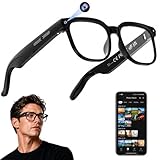
- 【AI Real-Time Translation & ChatGPT Assistant】AI glasses break language barriers instantly with AI real-time translation. The built-in ChatGPT voice assistant helps you communicate, learn, and handle travel or business conversations smoothly—ideal for conferences, overseas trips, and daily use.
- 【4K Ultra HD】 Smart glasses feature 4K resolution for clear, detailed visuals, making them suitable for travel, outdoor activities, everyday moments, and daily use.
- 【Bluetooth Music & Hands-Free Calls 】Smart glasses provide Bluetooth music and crystal-clear hands-free calls with an open-ear design. Stay aware of your surroundings while listening—comfortable for long wear and safer for commuting, cycling, and outdoor use.
- 【IP65 Waterproof & Long Battery Life】 AI glasses are designed for daily wear with IP65 waterproof protection against sweat, rain, and dust. The built-in 290mAh battery provides reliable performance for workdays and travel—no anxiety when you’re on the go.
- 【Smart App Control & Object Recognition】Smart glasses connect to the companion app for easy setup, file management, and feature control. They support AI object recognition to help identify items and improve your daily efficiency—perfect for travel exploration and a smart lifestyle.
Privacy and research considerations
Aria Gen 2’s documented sensors include cameras, microphones, eye tracking, location inputs, and PPG. Their presence makes participant consent and data handling important considerations for any study. The hardware and platform sources cited here describe sensors and research tools, but do not provide enough detail to make claims about current participant-consent rules, anonymization, or data-retention practices. Researchers should consult Project Aria’s current community guidelines and study requirements rather than infer those policies from the hardware specifications.
FAQ
What is Meta Aria Gen 2?
It is Meta’s research-glasses platform for collecting multimodal, first-person data and supporting machine-perception research. It is not a consumer smart-glasses launch.
Can you buy Aria Gen 2 glasses?
Meta’s current documentation describes access through the Aria Research Kit for qualified research partners. It does not describe general retail availability.
What sensors do Aria Gen 2 glasses have?
Project Aria hardware documentation lists four computer-vision cameras, a 12 MP RGB camera, eye-tracking cameras, seven microphones, two IMUs, GNSS, a barometer, magnetometer, proximity and ambient-light sensors, and nosepad PPG and contact-microphone sensors.
Crashes, No Sound, or Screen Glitches?
Random freezes, missing sound and display glitches usually trace back to one bad driver. Find and replace yours safely.Free scan · under a minutePC Slower Than It Used to Be?
A free scan shows the junk files, broken settings and background clutter dragging Windows down - then fixes them in one click.Free scan · Windows 10 & 11Best Value
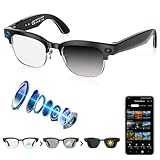
- 【4K Camera with EIS Stabilization】Smart glasses with camera feature a built-in 4K camera with EIS stabilization for clearer and steadier image performance during sports, cycling, travel, outdoor activities, and everyday use.
- 【Open-Ear Speakers & Clear Bluetooth Calling】Camera glasses feature built-in open-ear speakers for music and clear Bluetooth calls while helping you stay aware of your surroundings. Noise-reduction microphones provide clearer voice pickup and a comfortable listening experience for everyday use.
- 【AI Real-Time Translation & Voice Assistant】AI glasses support real-time translation in 139+ languages to make communication easier across different languages. The built-in AI voice assistant helps you access information and interact more efficiently—ideal for work, study, travel, and daily use.
- 【Photochromic Lenses & Lightweight Comfort】Smart sunglasses with camera feature photochromic lenses that respond to changing sunlight conditions for comfortable indoor and outdoor use while helping reduce UV exposure. The lightweight 35g frame provides a comfortable fit for extended everyday wear.
- 【IP66 Water Resistance & 290mAh Battery】AI sunglasses with camera feature IP66 water resistance for added protection against sweat, rain, and dust during active daily use. The built-in 290mAh battery provides convenient power for travel, outdoor activities, work, and everyday use.
How is Aria Gen 2 different from Gen 1?
Meta’s June 2025 overview reports four computer-vision cameras instead of two, 120 dB versus 70 dB dynamic range, and 80° versus 35° stereo overlap. Meta also lists a 74–76 g weight depending on size and eight size variations for Gen 2. These are manufacturer-reported comparisons, not independent test results.
Does Aria Gen 2 synchronize multiple devices?
No. Its Sub-GHz system broadcasts timing information to help align recordings. Meta’s hardware documentation explicitly distinguishes time alignment from synchronizing devices.
Is Aria Gen 2 a medical or health product?
No such status is established in the documentation reviewed. Although the glasses include a PPG sensor, its presence does not establish clinical accuracy, diagnosis, or wellness certification.
Quick Recap
Product prices and availability are accurate as of the date/time indicated and are subject to change. Any price and availability information displayed on Amazon at the time of purchase will apply.
Quick wins for a faster PC:
Repair Windows errors before they cause bigger problemsFix Now →Scan for outdated or missing drivers - takes under a minuteDriver Scan →